Epiphone Casino: The Guitar That Changed Rock History
The Epiphone Casino shaped rock history in The Beatles' hands — and it still does. Tone recipes, buying guide, and the full story.
There is a photograph taken on a grey January morning in 1969, on a London rooftop that would become one of the most iconic stages in rock and roll history. John Lennon stands in a fur coat, the biting winter wind cutting across the top of the Apple Corps building on Savile Row, and in his hands is a guitar that looks almost rough-hewn — its finish sanded off to bare wood, its pick guard removed, the whole thing stripped back to its essential self. It is an Epiphone Casino, and by any reasonable account, it is the most famous hollow-body electric guitar in the history of popular music.
To understand what the Casino is, you have to understand what it is not. It is not a Gibson — not technically, not spiritually, not in the way it sounds or the way it behaves in your hands. It shares DNA with the Gibson ES-335, in the sense that both are thin-line electrics with roots in Kalamazoo, Michigan, but the Casino is a fully hollow-body instrument. There is no centre block. The body breathes, resonates, lives. When you hit a chord through a pushed Vox or a cranked Fender, the Casino does not merely transmit the signal — it participates in it, adding a woody bloom and a slightly unpredictable warmth that no semi-hollow or solid body can replicate.
That fully hollow construction is, simultaneously, the Casino’s greatest strength and its most demanding characteristic. It feeds back. It howls when you get too close to the amp. And in the hands of John Lennon, who learned to use that feedback as a weapon, it became the sound of revolution — literally, as in the track “Revolution” from 1968, where Lennon’s fuzzed-out Casino intro announced that The Beatles were no longer writing love songs for teenagers. They were making noise that mattered.
This is the guitar that did all of that. And in 2026, it remains one of the most compelling, versatile, and historically significant electric guitars you can buy. Whether you want the real thing — a vintage 1960s original — or one of Epiphone’s current production models, the Casino offers something that very few guitars can: a direct, unbroken line back to the moment when rock and roll grew up.
Origins: Kalamazoo, 1961
The story of the Epiphone Casino begins not with The Beatles, but with the unlikely corporate marriage that preceded them. In 1957, Gibson’s parent company, Chicago Musical Instruments, purchased Epiphone — at the time a genuine rival, a New York-based instrument maker with its own distinguished history and loyal following. The acquisition gave CMI a second brand to work with, and in the years that followed, the combined operation in Kalamazoo produced instruments under both names, sometimes sharing designs, sometimes differentiating them strategically.
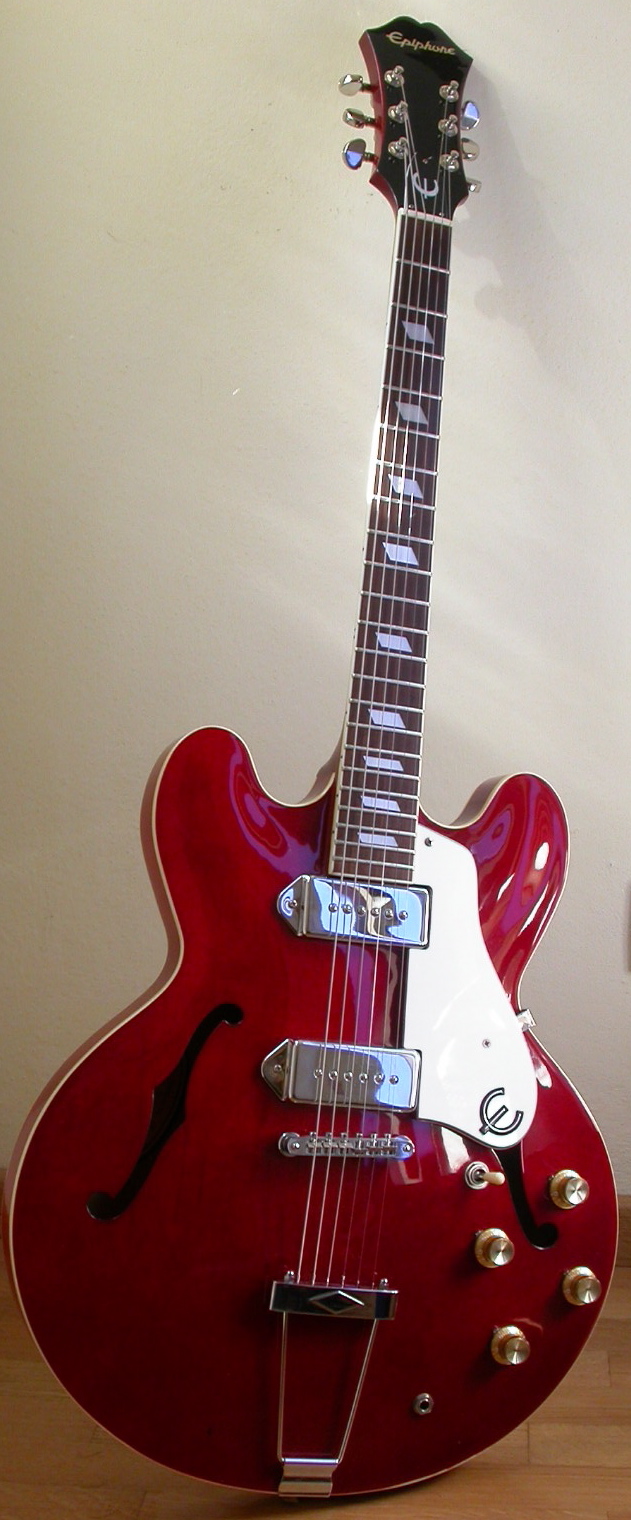
The Casino debuted in 1961 as part of Epiphone’s thinline series — a family of electrics that were thinner than traditional hollow-body archtops, designed to be more manageable on stage and less prone to the catastrophic feedback that plagued the big-bodied jazz guitars of the era. The Casino was essentially Epiphone’s counterpart to the Gibson ES-330: same 16-inch body width, same thinline depth, same twin P-90 pickup configuration, same fully hollow construction (unlike the ES-335, which had the centre block). The body was built from five layers of laminated maple and birch, with a mahogany neck set at a 17-degree headstock angle through the late 1960s — a detail that would become significant to collectors decades later.
The Casino’s designation, E230TD, suggests a straightforward catalogue entry. What it became was anything but. The guitar retailed in the UK through Rosetti, Epiphone’s British importer, and it was the Rosetti catalogue that put it in front of Paul McCartney in late 1964 — specifically because it was the only guitar in the catalogue fitted with a Bigsby vibrato tailpiece, which McCartney had been seeking. He paid 164 guineas for a 1962 sunburst model. Rock history pivoted.
The Beatle Connection: How Three Casinos Defined a Decade
Paul McCartney was the first Beatle to acquire a Casino, but the full story of how he got there involves John Mayall — the British blues godfather who, in the mid-1960s, was essentially running a finishing school for guitar heroes out of his living room in North London. Mayall would invite musicians over, pour drinks, and play them records: B.B. King, Eric Clapton, Otis Rush, Magic Sam. He had a hollowbody guitar he had acquired while stationed in Japan with the army in 1955, and he talked about tone and feedback and the way a hollow guitar participated in the sound rather than just transmitting it.
McCartney recalled the education vividly: Mayall sat him down and for hours played him records, showing him where Clapton’s style came from, tracing the lineage of blues guitar. “He gave me a little evening’s education,” McCartney told Vintage Guitar. “I was turned on after that, and bought an Epiphone.” He walked into a guitar shop on London’s Charing Cross Road asking specifically for a guitar that could feed back. The Casino was the answer.
McCartney put his Casino to work immediately. The memorable lead guitar on “Ticket to Ride” — those clipped, percussive fills that sit between Lennon’s rhythm chords — is McCartney on the Casino. He used it on “Taxman,” on “Good Morning Good Morning,” on “Being for the Benefit of Mr. Kite!”. By 1997, when asked to name his favourite electric guitar, he didn’t hesitate: “If I had to choose one electric guitar, it would be that guy.”
In the spring of 1966, during sessions for Revolver, John Lennon and George Harrison joined their bandmate. Both bought 1965 Casinos — Harrison’s came with a Bigsby vibrato factory-fitted, Lennon’s had the standard Epiphone trapeze tailpiece, and Lennon’s was unusual in having a small black ring mounted around the pickup selector switch. From this point forward, for the two most consequential years in the history of popular music, all three guitar-playing Beatles were playing Casinos.
They were the biggest band in the world. They could have had any guitar made. They chose these.
The Casino is an unusually light instrument for a hollow-body — a product of its thinline dimensions and laminate construction — and in the context of marathon studio sessions and the exhausting touring schedule The Beatles were maintaining, that mattered. But the more significant factor was sonic. The Casino’s P-90 pickups delivered a clarity and presence that cut through the complexity of the group’s increasingly layered arrangements. The guitar’s hollow body added warmth and a slightly unpredictable acoustic quality that interacted with amplifiers in ways that a solid body never would. And for feedback — intentional, controlled, musical feedback — there was nothing better.
Lennon and Harrison both took their Casinos to India in early 1968, where the folk singer Donovan told them that stripping the finish from the guitars would improve their tone. Both complied. Harrison eventually moved away from his Casino, but Lennon used his stripped, natural-wood instrument for the rest of the recording of The Beatles (the White Album), through the Let It Be sessions and the rooftop concert, and into his solo work. It is the guitar on the fuzzed, distorted intro of “Revolution.” It is the guitar on “Don’t Let Me Down.” It is the guitar Lennon played with the Dirty Mac — a one-off supergroup assembled for the Rolling Stones’ Rock and Roll Circus, featuring Eric Clapton on guitar, Keith Richards on bass and Mitch Mitchell on drums — when they tore through “Yer Blues” in December 1968. And it is the guitar you can see around his neck in every frame of the rooftop concert, as The Beatles played live in public for the last time.
P-90s and the Physics of Hollow
To understand the Casino’s tone, you need to understand two things: the P-90 pickup and what it means for a guitar to be truly, uncompromisingly hollow.
The P-90 is not a humbucker, and it is not a standard single-coil. It is wider and flatter than a Stratocaster-style single-coil, with a broader magnetic field and a different winding pattern that produces more output, more midrange mass, and a slightly rougher, more textured character. Where a Stratocaster pickup chimes and sparkles, a P-90 barks and growls. Where a humbucker smooths and compresses, a P-90 preserves the transients and lets the attack breathe. The result is a pickup that sounds, depending on your amp and your pick attack, simultaneously raw and refined — capable of genuine warmth on clean settings and genuine ferocity when pushed into overdrive.
On the Casino, those P-90s sit in a fully hollow body. Unlike the Gibson ES-335 or the Rickenbacker 360/12, there is no centre block to damp the vibration and prevent feedback. The Casino’s body resonates acoustically, and that acoustic resonance bleeds into the pickups. The result is a guitar that sounds slightly different depending on what room you are in, what amp you are playing through, and how loud you are playing. It is reactive in a way that studio-optimised solid bodies are not.
At bedroom levels, the Casino is warm and woody, with that characteristic P-90 growl softened by the acoustic bloom of the hollow body. At gigging volumes, it starts to add harmonic complexity to everything you play — sustained notes develop a singing quality, chords have a three-dimensional roundness that solid bodies rarely achieve. Push it harder, get close to the amp, and the Casino becomes a feedback machine: controllable, musical, expressive. This is what Lennon was exploiting. This is what makes the Casino irreplaceable.
Beyond the Beatles: British Invasion and the Decades That Followed
The Beatles were not the only musicians reaching for the Casino in the mid-1960s. During the height of the British Invasion, the instrument was everywhere. Keith Richards used his Casino as his main guitar for much of the Rolling Stones’ early period — and according to some accounts, the bass line and rhythm guitar on “Satisfaction” were tracked on a Casino. Brian Jones can be seen playing one on the cover of the Got Live If You Want It EP reissue. The Hollies had them. The Kinks had them. Dave Davies — the younger, angrier, more experimental of the two Davies brothers — played one. They would appear on Ready Steady Go! and Top of the Pops and BBC sessions, and for a stretch in the mid-1960s, the Casino was as much a signifier of a certain kind of British rock swagger as the Beatle haircut or the Chelsea boots.
Then, almost inexplicably, the Casino was discontinued through the 1970s. As the decade progressed and rock music moved toward the heavy, sustain-rich sounds of distorted humbuckers, the Casino’s bright, reactive P-90 voice fell out of fashion. The guitar went quiet.
It came back with a vengeance in the 1990s, and the players responsible for its renaissance were in many ways the natural inheritors of the Beatles’ legacy. Paul Weller — the Modfather, the man who had led The Jam and The Style Council and was now deep into a solo career that was reconnecting British rock with its roots — had been playing a 1966 Casino for years, and the sunburst hollowbody became as identified with his image as his Fred Perry shirts and his sharp suits. When interviewers asked him about his quintessential guitar, he described it without hesitation: the sunburst Casino with the trapeze tailpiece.

Noel Gallagher of Oasis bought a 1962 Casino in late 1995, on the advice of Paul Weller — who had, in that sense, played the same role John Mayall had played for McCartney three decades earlier: older musician, living room, late night, records. By the time Oasis were recording Dig Out Your Soul in 2008, Gallagher was working with two Casinos — the original vintage 1962 and a John Lennon reissue model — and described them as the main guitars throughout the entire record. “I don’t really use real hollow-body guitars with P90s, it’s not really my style,” he told one interviewer. “But they seemed to work best in the studio this time.”
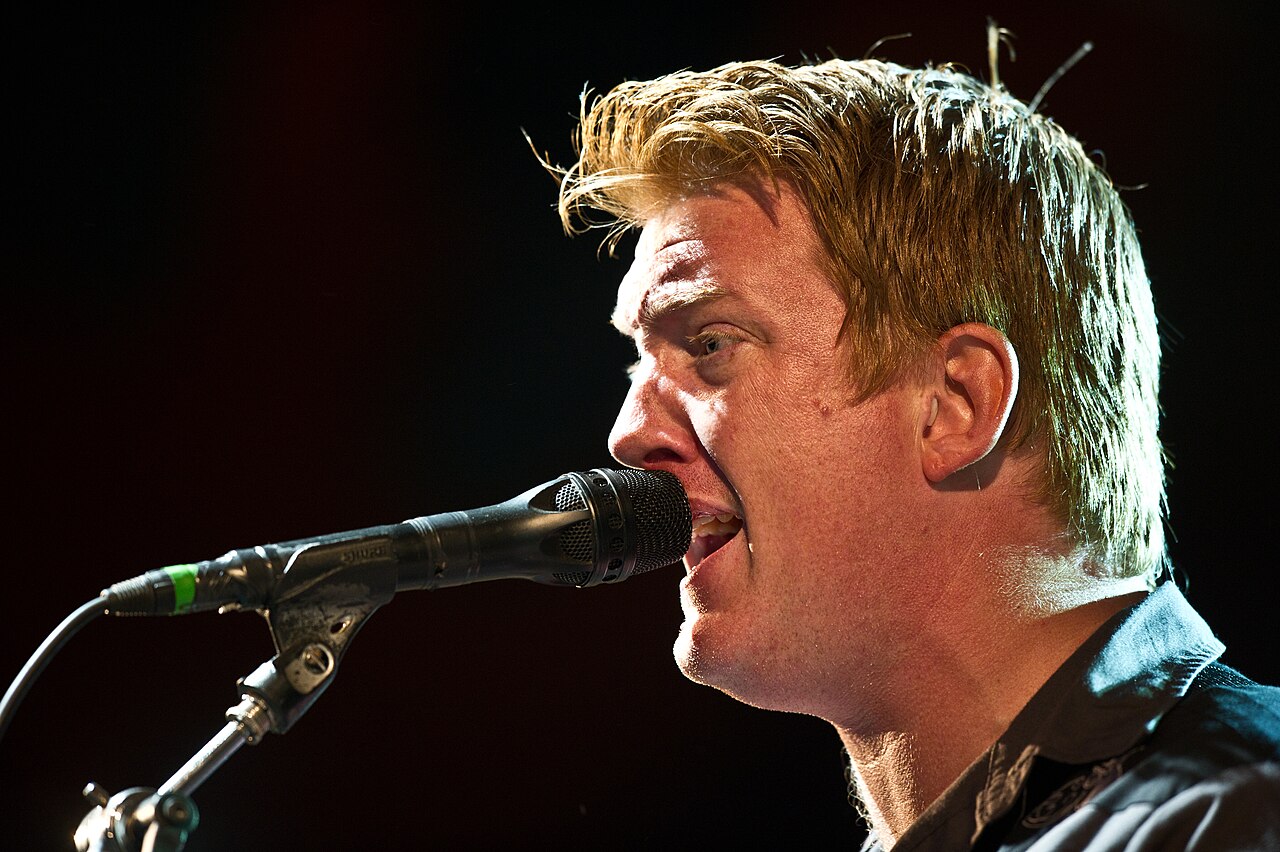
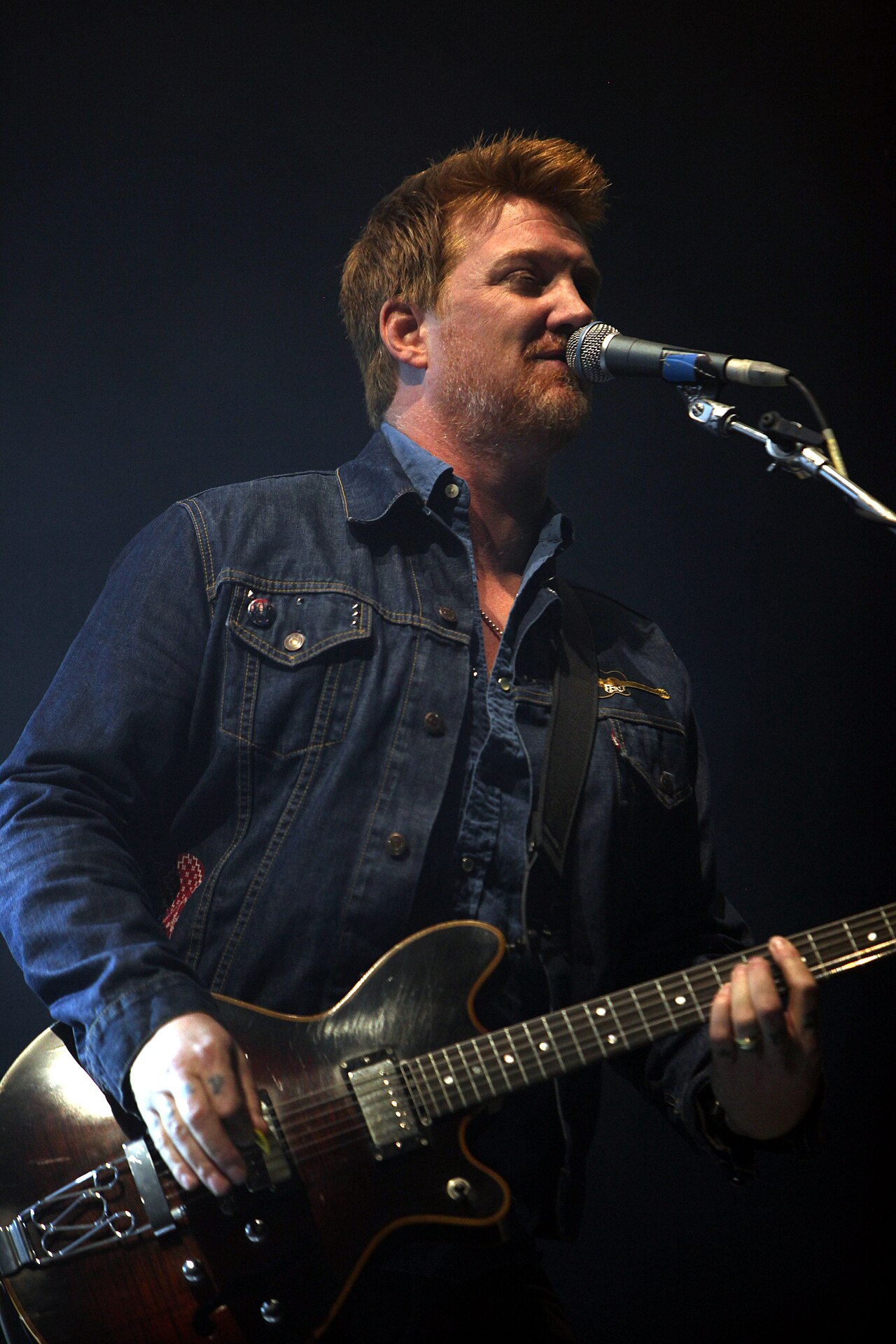
The pattern continued. Gary Clark Jr., one of the most compelling blues-rock guitarists to emerge in the 2010s, made the Casino a signature instrument. Thom Yorke and Ed O’Brien of Radiohead played them. Josh Homme reached for one when the Queens of the Stone Age needed a different texture. The Edge of U2. Jeff Tweedy of Wilco. Brendan Benson of The Raconteurs. John Mayer. The Casino kept finding its way into the hands of players who needed something that solid bodies could not provide — that quality of resonance, of bloom, of acoustic participation in the electric signal.
Tone Recipes: Getting the Casino Sound
The Lennon Rooftop — Controlled Crunch
Lennon ran his Casino through a solid-state Fender amp for much of the Let It Be period, pushing it for grit rather than crystal clean. The goal here is an open, slightly compressed clean with a pushed edge — not full distortion, but not sparkle either.
- Amp: Fender Twin Reverb or Blues Deluxe — Volume at 5–6
- Bass: 5, Mids: 6, Treble: 6
- Reverb: Light — 2–3
- Guitar volume: Full (10). Let the amp work.
- Pickup: Bridge for rhythm bite, neck for lead bloom
- Pro tip: The Casino feeds back easily at this volume — stand at an angle to the amp and use the feedback musically, as Lennon did on “Revolution”
Weller Mod Sparkle — Clean British Jangle
Paul Weller runs his Casino relatively clean through a Marshall, letting the P-90s and the hollow body do the tonal work. The result is bright, present, and authoritative — classic British rhythm guitar.
- Amp: Marshall 1987X or JTM45 — Volume at 4, just on the edge of break-up
- Bass: 4, Mids: 7, Treble: 7, Presence: 6
- Reverb: None, or room only
- Guitar: Both pickups, guitar volume at 7–8 (roll back slightly to clean up)
- Pro tip: The Casino’s P-90s have more output than most single-coils — you need less amp volume than you expect
Gallagher Britpop — P-90 Pushed
Noel Gallagher’s Casino sound on Dig Out Your Soul is the instrument pushed harder — heavier gain, more aggressive pick attack, the P-90s snarling rather than chiming.
- Amp: Vox AC30 — Volume at 6–7, Top Boost channel
- Bass: 5, Treble: 6, Cut (if available): 3
- Overdrive pedal: A light boost in front (Ibanez TS9 or similar) — Drive at 3, Tone at 6, Level at 8
- Guitar volume: Full (10)
- Pro tip: The Vox and the Casino’s hollow body interact beautifully — the AC30’s sag and the guitar’s resonance create a natural compression that adds thickness to every chord
Bluesy Hollow — Raw P-90 Grit
At its most elemental, the Casino is a blues guitar — full hollow body, P-90 bite, natural feedback response. This setting chases that primal territory.
- Amp: Fender Deluxe Reverb — Volume at 7, Vibrato channel
- Bass: 6, Treble: 5, Reverb: 4, Speed: 3, Intensity: 2
- No pedals — just guitar, cable, amp
- Guitar volume: Full. Roll it to 7 for clean, back to full for grit.
- Pro tip: Dig in hard with the pick for bark; play lightly for sweetness. The Casino rewards dynamic playing more than almost any other electric guitar.

The Casino is a reactive guitar, and that reactivity means that amp choice matters enormously. Here are four approaches that unlock different dimensions of the instrument.
Current Models: What to Buy in 2026
Epiphone produces several versions of the Casino in their current lineup, and the differences between them are worth understanding before you commit.
Epiphone Casino (Standard / Archtop Series)
The core Casino, made in China. Laminated maple and birch body in the original dimensions, mahogany neck, P-90T Classic dogear pickups, trapeze tailpiece. Available in Vintage Sunburst, Natural, and other finishes. This is the entry point — and it is a genuinely good guitar. The pickups are capable, the body resonates well, and the playability is solid for the price. If you are new to hollow bodies or want to understand what the Casino is about without a major investment, this is the place to start.
Epiphone Casino Coupe
A slightly smaller-bodied version of the Casino — shorter scale length, shallower body, single cutaway. The Coupe is more comfortable to play sitting down and generates somewhat less feedback than the full-size Casino. It is not the instrument Lennon played, but it is a useful gateway for players who find the full Casino unwieldy.
Epiphone Casino Inspired by John Lennon
The signature recreation of Lennon’s specific Casino — bare natural wood finish (replicating the stripped paint), no pick guard, Grover tuners to match the modifications Lennon made in the early 1970s, and a slightly heavier headstock profile matching his 1965 model. Gibson USA P-90 pickups on some versions. This is the guitar for Beatles obsessives and collectors. It plays identically to the standard Casino but carries the weight of its provenance in a way that the standard model cannot.
USA Epiphone Casino (USA Collection)
Made in the United States for the first time since the 1960s, the USA Collection Casino is the high-end tier — hand-wired electronics with Orange Drop capacitors, Gibson USA P-90 Dogear single-coil pickups, nitrocellulose lacquer finish in Royal Tan or Vintage Sunburst. This is the Casino at its most refined: premium build quality, exceptional pickups, and the kind of resonance that comes from decades of instrument-making refinement. The price reflects all of that, but for working players or serious collectors who want the definitive modern Casino experience, this is the instrument.
Vintage Casinos (1961–1969)
The originals command serious money — a genuine 1960s Casino in good condition, particularly one from the 1965–1969 Kalamazoo era, will cost several thousand dollars and rising. The 17-degree headstock angle (changed to 14 degrees in 1970) and the five-layer maple/birch body construction of the vintage models are specific details collectors seek. Serial numbers and original hardware are key — look for matching P-90s, original Kluson tuners (or period-correct Grovers if appropriate to the year), and signs of authentic wear rather than artificial ageing. Provenance documentation adds significant value. If you can play it before you buy it, do — vintage Casinos vary considerably in their resonance and setup quality.
Who Should Play the Epiphone Casino?
The Casino is not a guitar for everyone, and part of respecting the instrument is being honest about that. The fully hollow construction means it feeds back at high volumes — if you are playing high-gain metal through a stack turned to eleven, the Casino will become an uncontrollable noise machine. It is also physically light and acoustically resonant in a way that some players find unsettling: notes do not behave the way they do on a Stratocaster or a Les Paul. The guitar has its own ideas about sustain and decay, and those ideas change depending on the room and the amp.
With those qualifications in mind, the Casino is exceptional for:
- British Invasion and Beatles-influenced pop and rock — this is where the Casino is at home, producing jangle and warmth and that slightly ragged P-90 edge that defined a decade
- Blues — the P-90s and the hollow body are a classic blues combination, producing the kind of touch-sensitive, dynamic response that the genre demands
- Indie rock and alternative — Radiohead, Wilco, Josh Homme’s work in Queens of the Stone Age: the Casino adds texture and unpredictability to arrangements that might otherwise become too polished
- Vintage-voiced jazz — roll the tone knob back on the neck pickup, play with a lighter touch, and the Casino produces a warm, rounded jazz tone that competes with much more expensive archtops
- Studio work — the Casino’s acoustic resonance makes it record beautifully, adding dimensionality to tracks that solid bodies cannot contribute
What the Casino demands in return is engagement. This is not a set-and-forget instrument. You need to learn how it responds, where the feedback threshold is, how to manage the hollow body in a live environment. Players who make that investment discover a guitar that rewards them with a sonic complexity that is genuinely irreplaceable.
The Casino vs. the Competition
The Casino’s closest design relative is the Gibson ES-330, which it was modelled on. The ES-330 is a finer, more expensive instrument in its vintage form, but it never achieved the Casino’s cultural traction — partly because The Beatles didn’t play one, and partly because the Casino simply became the reference point for this type of guitar. Modern ES-330 reissues are excellent, but they cost significantly more than comparable Casinos for comparable performance.
The Gibson ES-335 is a fundamentally different instrument despite superficial similarities. The centre block eliminates much of the feedback tendency and changes the resonance character completely. The 335 is more versatile at high volumes; the Casino is more alive, more reactive, more itself. These are not interchangeable instruments.
The Gretsch G6120 occupies a similar hollow-body space but with Filter’Tron pickups rather than P-90s — a different kind of clarity and chime, more compressed and articulate. The Gretsch is the rockabilly and country choice; the Casino is the rock and blues choice.
The Rooftop and What It Means
It is worth returning, at the end, to that January morning in 1969 and the photograph that may be the most famous image of an electric guitar in rock and roll history. John Lennon on the Apple rooftop. The bare-wood Casino. The fur coat. The ending of something.
What the Casino represents in that image is not nostalgia — it is not a museum piece, not a relic. It is an instrument that was alive enough, reactive enough, demanding enough to be the choice of the most important musicians of their generation at the apex of their powers. They stripped it back to wood because they wanted more of it, not less. They wanted the guitar to participate more fully in the music, not less.
That quality — that refusal to be passive, that insistence on being part of the conversation — is still present in every Casino built today. It is present in the standard Chinese production model and in the USA Collection. It is present in the John Lennon signature recreation and in the beat-up vintage original. The Casino has never stopped being what it was in 1961 and what it became in 1964 and 1966 and 1969: a guitar that takes everything you give it and gives something back.
There are very few instruments you can say that about. The Epiphone Casino is one of them.
Buying Guide Summary
Here is how to navigate the Casino market in 2026:
Budget (under $500): The standard Epiphone Casino Archtop Series is the move. Made in China but built to a reliable standard, with genuine P-90T pickups and the correct hollow body construction. A setup from a good luthier will transform the out-of-box experience. Look for the Vintage Sunburst or Natural finish for the most classic look.
Mid-range ($500–$1,500): The John Lennon Inspired Casino, if you want the signature story attached to your instrument. Expect to pay a premium for the provenance and the specific hardware choices Lennon made to his own guitar. Also worth considering at this price point: recent used examples of higher-spec production models.
High-end ($1,500–$3,000): The USA Collection Casino. Hand-wired electronics, Gibson USA P-90s, nitro finish. This is the Casino as a serious professional instrument, built to a standard that will last decades with proper care.
Vintage ($3,000+): 1960s originals. Do your research, have it authenticated if possible, and be prepared for variation in playability and resonance. The 1965–1969 Kalamazoo-era models are the most sought-after. Expect to pay $4,000–$10,000 or more for a clean, all-original example.
Frequently Asked Questions
Is the Epiphone Casino a good guitar for beginners?
It can be, with some caveats. The Casino’s fully hollow construction means it feeds back more easily than a solid-body, which can be disconcerting for beginners who haven’t yet learned to manage volume and amp placement. The P-90 pickups are bright and sensitive, which means poor technique shows up clearly. That said, these are also excellent teaching tools — the Casino rewards dynamics and punishes laziness in a way that makes you a better player faster. If you are a beginner who is committed to the Beatles sound or British Invasion rock, start with the Casino. Just keep your bedroom amp at reasonable levels.
How does the Casino compare to other Epiphone hollowbodies?
The Casino is unique among Epiphone’s hollowbody lineup in being fully hollow with P-90 pickups — the Sheraton, the Dot, and the ES-339 all have centre blocks and humbuckers, which fundamentally changes the character. If you want the Casino’s specific sound — that P-90 bark combined with hollow-body resonance and genuine feedback potential — there is no substitute in Epiphone’s range. They are genuinely different instruments.
Can the Casino handle modern music styles?
Absolutely. The Casino has appeared in grunge-adjacent, indie, alternative, and even light fusion contexts. Josh Homme uses one in Queens of the Stone Age. Thom Yorke plays one with Radiohead. The guitar’s P-90 pickups have enough output for overdriven sounds, and the hollow body adds complexity to any style that benefits from texture. What it cannot do is handle very high-gain metal without feeding back uncontrollably — for that, a solid-body or a semi-hollow with a centre block is the better choice.
Why did John Lennon sand the finish off his Casino?
Donovan — the British folk singer with whom The Beatles spent time in Rishikesh, India in early 1968 — told Lennon and George Harrison that removing the finish from their guitars would improve the tone by allowing the wood to resonate more freely. Both complied. Whether it actually improved the tone is debatable — luthiers and acoustic scientists tend to be sceptical about the idea that a thin finish meaningfully restricts a laminate body’s resonance — but Lennon loved the result, and the stripped Casino became one of the most iconic guitar modifications in rock history. Modern John Lennon signature Casinos replicate the bare-wood finish as a tribute to this choice.
What amp works best with the Epiphone Casino?
The Casino was historically paired with British amps — Vox AC30s and early Marshall plexi amps dominated The Beatles’ studio and touring setups in the Casino era. The Vox AC30 is a particularly natural partner: its Top Boost channel has a characteristic warmth and sag that complements the Casino’s hollow-body bloom beautifully, and the natural compression of the EL84 power tubes helps manage the feedback tendency. Fender amps — particularly the Deluxe Reverb and the Twin Reverb — also pair excellently with the Casino, producing a brighter, more American character. For Lennon-era tones, stay with British voices. For Weller or Gallagher tones, Marshall or Vox. For blues, Fender.
What are the key differences between vintage and modern Casinos?
The most significant structural difference is the headstock angle: pre-1970 Casinos have a 17-degree angle, while all subsequent production (except the John Lennon signature models) uses a 14-degree angle. The vintage five-layer maple/birch construction versus the current all-maple laminates is another difference — both work well, but the vintage body may have slightly different resonance characteristics. The pickups on higher-end modern models (particularly the USA Collection, with Gibson USA P-90s) are excellent; entry-level production Casinos have serviceable pickups that benefit from an upgrade. Vintage Casinos vary enormously in condition and playability — the assumption that older equals better does not reliably hold for laminate instruments.
Is the Epiphone Casino prone to feedback?
Yes — more so than any semi-hollow or solid-body guitar at similar volumes. The fully hollow construction, with no centre block to damp resonance, means the body amplifies at the same frequencies as the pickups. At bedroom volumes with a low-gain setting, this is rarely a problem. At gigging volumes with an overdriven amp, it requires management — keeping the guitar at an angle to the amp, using the volume knob to control the gain, and learning where your feedback threshold is. Experienced Casino players learn to use this characteristic as a musical tool rather than fighting it. If feedback is a primary concern and you play at high volumes with heavy gain, a semi-hollow instrument like the ES-335 may be more practical.
Image credits
- Josh Homme: Rama, Wikimedia Commons, CC BY-SA 2.0 fr.
- Noel Gallagher: Freddyballo, Wikimedia Commons, CC BY-SA 4.0.
- Josh Homme: Bill Ebbesen, Wikimedia Commons, CC BY 3.0.
- Paul Weller: Frank Rockelein, Wikimedia Commons, CC BY-SA 2.5.
- Top image: “Epiphone Casino Cherry” (6 April 2003). Photo: Maxo. Source photograph · CC BY-SA 2.5. Source image unchanged.
Latest News
Related
On This Day
Tuesday 10 November
From this week: