The Gateway Drug to Orange: Why the Crush 35RT Is Where Thousands of Players Discovered British Tone
Orange Crush 35RT: 35W analogue combo with twin channels, built-in reverb, tuner and CabSim. Specs, tone recipes, and honest player history.
There is a very specific moment a lot of guitarists remember: the first time they plugged into an Orange amp and felt the mids hit them like a wall of carpet. Not the fizzy, scooped digital approximation of overdrive they’d grown up on. The real thing — warm, harmonically dense, mid-forward and just slightly woolly around the edges in a way that felt musical rather than broken. For a huge number of those players, the amp in question wasn’t a Rockerverb or a hand-wired Custom Shop relic. It was a Crush 35RT.
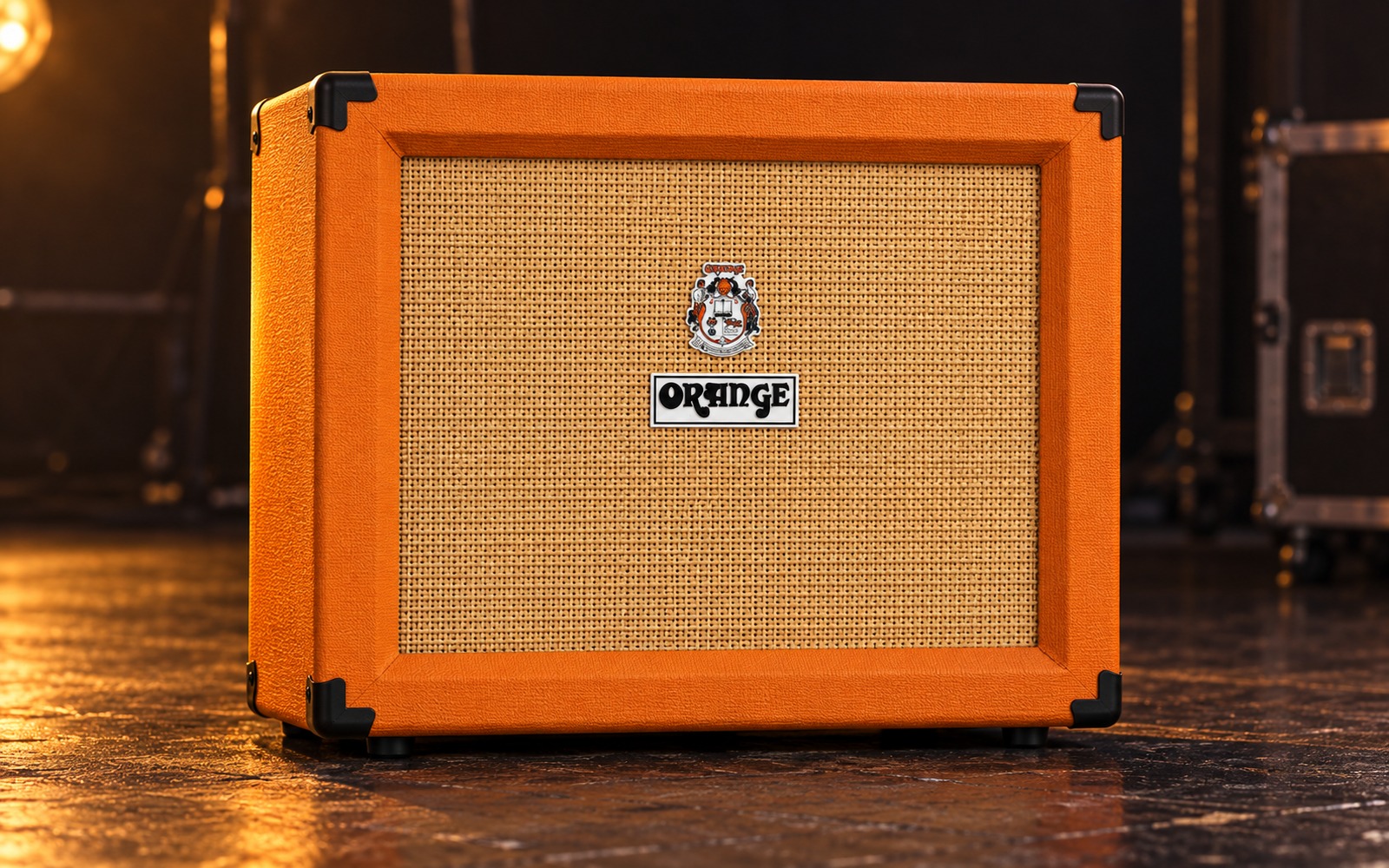
The Orange Crush 35RT is the company’s flagship solid-state practice combo: 35 watts, one 10-inch Voice of the World speaker, two footswitchable channels, a four-stage all-analogue preamp, built-in digital reverb, a chromatic tuner, a CabSim headphone output and a buffered effects loop, all wrapped in the unmistakable orange tolex cabinet that has graced stages and studios since 1968. It sells for around £289 in the UK and $299–$349 in the US. It weighs approximately 25 pounds. It has no valves. And yet, in a product category stuffed with digital modelling rigs that try to be everything, the Crush 35RT does something those amps rarely manage: it sounds specifically like Orange, without apology, from the first note.
This article covers the full history of the Crush line, the engineering philosophy behind the 35RT, an honest look at who actually uses this amp, five tone recipes, comparisons with the amp’s closest rivals and closest siblings, a buying guide, and everything you need to know before you own one.
Where the Crush Comes From: Orange’s Solid-State Story
Orange Amplification was founded by Cliff Cooper in London in 1968, initially as a music shop on Denmark Street — the Tin Pan Alley of British rock. The all-valve OR series amps that came out of that first factory era defined the Orange sound: thick midrange, aggressive top-end clarity, and a gain structure that rewarded players who played hard. The OR120 became the backbone of a generation of British rock stages in the 1970s, and the company’s reputation was built entirely on thermionic valve technology.
The Crush line emerged as Orange’s answer to the practical reality facing most guitarists: not everyone needs 100 watts of valve power, and not everyone can afford it. Solid-state technology, which had matured considerably by the 1980s and 1990s, offered a route to the same brand DNA in a more portable, more affordable, and more maintenance-free format. The key engineering challenge — and the one that separates good solid-state amps from mediocre ones — is replicating the dynamic compression and harmonic complexity that valves produce naturally. Orange’s approach with the Crush range has always been to prioritise the preamp stage, using multiple gain stages to approximate that character without a tube in sight.
The current Crush family, of which the 35RT is the flagship, was announced at NAMM 2015 and represented a significant refinement of that philosophy. The range spans from the 3-watt Crush Mini (a single-knob curiosity) through the 12-watt Crush 12 and 20-watt Crush 20RT up to the 35RT at the top of the stack. Each model in the “RT” tier adds the reverb and tuner that give the suffix its name. The 35RT sits at the transition point where the amp becomes genuinely usable in rehearsal rooms and small venues, not just bedrooms — a distinction Orange’s own marketing leans on heavily.
The amp is manufactured in China, like the majority of Orange’s mid-range solid-state and hybrid products. The boutique hand-wired Custom Shop instruments are still built in Bexleyheath, and some of the higher-end valveamps carry UK production, but the Crush line has always been a mass-market product and its price point reflects that honestly. There is no meaningful compromise in the circuit design — the preamp topology is a genuine Orange design, not a licensed generic board — but the build geography is worth knowing.
Specifications
| Parameter | Specification |
|---|---|
| Output power | 35 watts (solid-state) |
| Speaker | 1×10″ Orange Voice of the World |
| Channels | 2 (Clean / Dirty), footswitchable |
| Preamp | 4-stage, all-analogue signal path |
| Controls | Clean Volume, Dirty Gain, Bass, Middle, Treble, Dirty Volume, Channel Selector, Reverb |
| Reverb | Digital spring emulation, analogue dry-through path |
| Tuner | Built-in chromatic (fast-tracking) |
| Headphone/line out | CabSim circuit (emulates miked-up Orange 4×12) |
| Effects loop | Fully buffered series loop |
| Aux input | 3.5mm jack |
| Footswitch | Jack socket (footswitch sold separately) |
| Available finishes | Orange tolex / Black tolex |
| Weight | ~25 lbs (approx. 11.3 kg) |
| Current UK price | £289 GBP |
| Launch price (2015) | £199 / $319 USD |
| Manufactured | China |
The Circuit: What “All-Analogue” Actually Means Here
The phrase “all-analogue” appears prominently in Orange’s own Crush 35RT marketing, and it’s worth unpacking what that means in practice. The amp uses no digital processing in its main signal chain. From the instrument input through the four gain stages to the speaker output, every stage is a conventional electronic circuit using transistors and op-amps — not a DSP chip running a software model of an amp. The reverb is the one exception: it’s a digital module, but critically, it uses an analogue dry-through path. Your guitar signal never passes through the digital domain during normal playing; the digital reverb is blended in on top of the analogue signal rather than processing it. This matters sonically — it means the fundamental character of the amp’s gain structure is preserved regardless of the reverb setting.
The four-stage preamp is the centrepiece of the design. Each stage adds gain and, crucially, a degree of harmonic complexity as the signal clips at progressively lower levels. The result is an overdrive character that opens up across the gain knob’s range rather than switching abruptly from clean to distorted. At low Dirty Gain settings, you hear the effect of one or two stages; at higher settings, all four are contributing to the compression and saturation. It’s not the same as an EL84 or EL34 power stage breaking up — there’s no power-tube sag, no speaker interaction, none of the physical complexity of a valve amp pushed hard — but it’s genuinely better than the on/off clipper behaviour of cheaper solid-state designs.
The 10-inch Voice of the World speaker deserves a note. Orange uses this driver across several of its products, including the Rocker 32’s 2×10 configuration. In a 1×10 combo, it produces a sound that is mid-forward and moderately efficient but physically limited in the bass below roughly 120Hz. This is not a flaw in the design; it’s a trade-off that keeps the cabinet small and light. The 10″ driver is a better match for the amp’s voiced midrange than a 12″ would be, because the 35RT’s circuit prioritises the frequency range where Orange’s character lives — the 500Hz–3kHz zone that gives its tone its density and presence in a mix.
Famous Players: The Honest Account
The Crush 35RT’s notable users are listed as including Jimmy Page, Jim Root, Brent Hinds, Omar Rodríguez-López, and Matt Pike. It is not a list of Crush 35RT users. It is a list of famous Orange endorsees or historical Orange users, applied generically across the catalogue with no regard for which specific product any of those players actually uses. For the record:
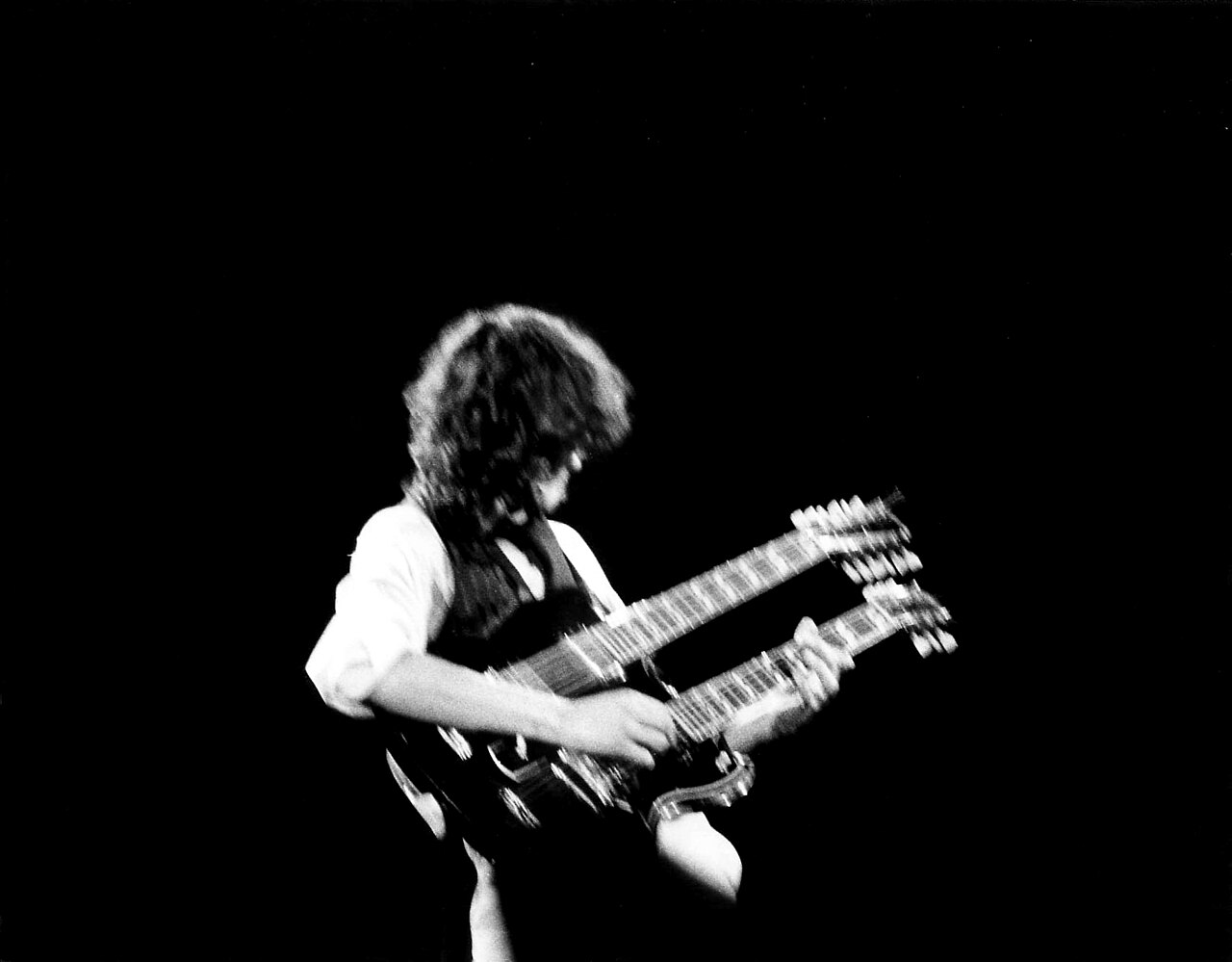
Jimmy Page used Orange amplifiers during 1971–1973 (OR200 and related heads) and revisited the brand in the late 1990s with the AD30. He has never been documented on a Crush 35RT or any solid-state Orange product. Brent Hinds (Mastodon) has his own signature Orange product — the Brent Hinds Terror — which is a 15-watt lunchbox head with a different voicing from the Crush entirely. Omar Rodríguez-López‘s Orange use centres on the AD140HTC, the 140-watt EL34 head that powered four simultaneous amp rigs on the Mars Volta’s arena tours. Matt Pike of High on Fire plays Dual Dark and Thunderverb heads at volumes that rattle structural ironwork. Jim Root’s Orange relationship is the Rockerverb 100 and the #4 Jim Root Terror. None of these players are connected to a 35-watt solid-state practice combo in any primary source.
This is not a criticism of the Crush 35RT. It is a structural observation about what a practice amp is and who uses one. The Equipboard database lists three users under the Crush 35RT entry: Twooba (documented via a video in which the amp appears on screen), Kody Havoc, and Christopher Escalante. The Equipboard commenter who added Escalante explicitly wrote “I also have no idea whether or not Chris actually owns this amp, but he is using it in the video” — meaning even the Equipboard community declined to claim this as a confirmed ownership connection. These are not famous players in the touring sense, and stating otherwise would be dishonest.
What the Crush 35RT actually is, in terms of who plays it, is a first or second amp for players who have developed taste before they have the budget for valves. Orange’s midrange voicing is something that plenty of musicians are drawn to early, and the Crush 35RT is the lowest price point at which you get a genuine, non-compromised version of that voicing with the features a serious player needs — two real channels, an effects loop that doesn’t degrade your signal, and a headphone output that doesn’t sound like a transistor radio. The players who discover it at £289 are frequently the players who move on to the OR15H or the Tiny Terror when the budget allows. The Crush is the door, not the destination.
Tone Recipes and Settings
1. Classic Orange Crunch (Late-60s / Early-70s British Rock)
This is the sweet spot at the lower end of the Dirty channel’s range, where the four-stage preamp is engaging without fully saturating. Set Dirty Gain to 9 o’clock, Bass at noon, Middle at 1 o’clock, Treble at 11 o’clock, Dirty Volume to match your Clean Volume level. The midrange lift gives you the density of the original OR-series character: thick on single notes, articulate on chords, with a slight natural compression on hard picks. Bridge pickup on a single-coil guitar produces the most accurate result. Reverb at 8 o’clock adds subtle room depth without smearing the attack. This is where the Crush sounds most like a small version of the valve amps that defined Orange’s 1970s identity.
2. Britpop Grind (Mid-90s to Modern Indie Rock)
MusicRadar’s original review noted that turning the gain past one o’clock moves the amp forward in time by two decades, and they were right. Set Dirty Gain to 1–2 o’clock, Bass at 10 o’clock (to prevent the midrange from getting muddy), Middle at noon, Treble at 1 o’clock. The Crush’s four-stage gain structure produces a compressed, vocal crunch in this range that sits well in a band mix — present enough to cut through a kit, controlled enough not to turn into noise. Humbuckers in the neck position with this setting produce the kind of rhythm tone that characterised British guitar bands from Oasis to Editors to Catfish and the Bottlemen.
3. Modern Metal Wall (High Gain, Mid-Scooped)
Dirty Gain maxed. Bass to 3 o’clock, Middle to 9 o’clock (hard scoop), Treble to 2 o’clock. The Crush 35RT’s preamp can produce a legitimately saturated wall of distortion at this setting — the character MusicRadar associated with Slipknot and Nightrage in their 2015 review. The limitation is the 10-inch speaker: very low frequencies are physically constrained, so the bass you dial in will feel tight and punchy rather than huge and rolling. This is actually an advantage for home use (better separation from the drum low-end on recordings), but it means this setting doesn’t translate to massive low-end devastation the way a 4×12 stack would. If you’re recording, the CabSim headphone output running into your interface will add the cabinet warmth the speaker can’t provide.
4. Clean Pedal Platform (For Pedal-First Players)
The Crush 35RT’s Clean channel has earned consistent praise for its neutrality and headroom. Set Clean Volume to your desired level, Bass at 11 o’clock, Middle at noon, Treble at noon. No reverb. This gives you a flat, accurate canvas for whatever you put in front of it — drive pedals, modulation, delays, anything. The community consensus is consistent: the Dirty channel’s voicing can get muddy with external drive pedals in front of it, but the Clean channel handles them with complete transparency. Plug your favourite overdrive into the front of the amp on the Clean channel and you’re using the Crush as a powered speaker for your own gain stages. This is how most pedal-heavy players actually run solid-state amps at this tier.
5. Late-Night Silent Practice (CabSim Headphone Mode)
Plug a set of headphones into the headphone output. The CabSim circuit activates automatically and the internal speaker is bypassed. Dirty Gain at 10 o’clock, Bass at noon, Middle at noon, Treble at 11 o’clock, Reverb at 9 o’clock. The CabSim emulates the response of an Orange 4×12 loaded with Voice of the World speakers, which is a materially different result from the raw DI sound the amp produces at the headphone jack without CabSim — more body, more cabinet resonance, and the natural high-frequency rolloff of a closed-back cab. The analogue dry-through means your guitar’s dynamics are preserved even when the reverb is engaged. This is genuinely useful for 11pm apartment playing or hotel room practice before a gig.
How the Crush 35RT Compares
vs Orange Crush 20RT (Smaller Sibling)
The Crush 20RT uses the same basic voicing architecture but at 20 watts through an 8-inch Voice of the World speaker. The 8-inch driver rolls off the low midrange earlier and produces a thinner sound that feels toy-like at band rehearsal levels. The 35RT’s 10-inch speaker adds meaningful low-mid weight and can keep up with an acoustic drummer in a small room at high volumes — the 20RT cannot. The 35RT also costs meaningfully more, but for anyone who uses the amp outside of a bedroom, the 35RT’s extra volume and headroom justify the price difference cleanly.
vs Orange Tiny Terror TT15H (Rank 496)
The Tiny Terror is a 15-watt, all-valve EL84 lunchbox head — the amp that launched a generation of players on Orange’s tube side. It costs considerably more (typically $699 new, often $300–$400 used), requires a separate speaker cabinet, and demands the kind of maintenance attention valves need. But the difference in feel is real and significant: the Tiny Terror’s EL84 power section produces dynamic compression, power-tube sag, and a sense of physical give under the pick that no solid-state amp in this price bracket can fully replicate. If you play with a band regularly and have the budget, the TT15H plus a used 1×12 cabinet is the step up. If you’re a bedroom player or a gigging musician who values reliability, the Crush 35RT’s consistency from night to night is a genuine practical advantage.
vs Orange OR15H (Rank 494)
The OR15H is the 15-watt, all-valve “Pics Only” head designed as a tribute to Orange’s original 1972 pictogram-panel OR-series. Its gain structure is derived from the Rockerverb’s dirty channel — four cascaded preamp stages that produce a fundamentally different sonic character from the Tiny Terror, closer to the JCM800 side of the British rock spectrum than the EL84 chime side. The OR15H needs a cab, needs valve maintenance, and costs two to three times the price of the Crush 35RT. It is a different instrument for a different use case, and comparing them is useful primarily to understand what you’re buying into when you move from the Crush to the valve side of Orange’s range.
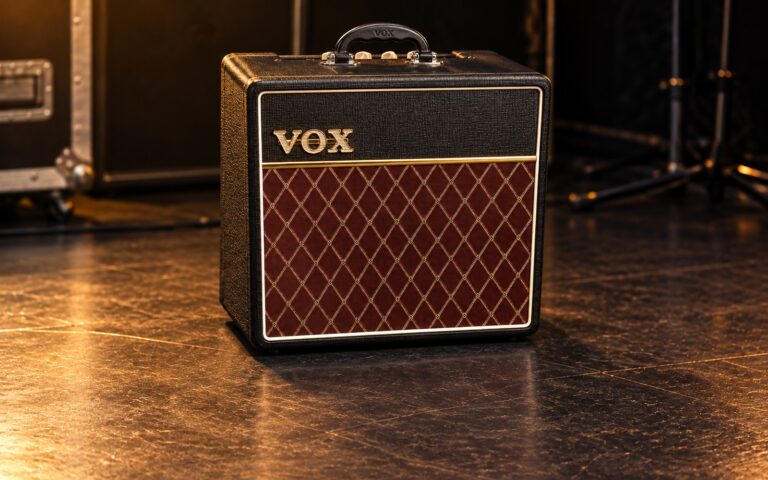
vs Vox AC15C1 (Rank 398)
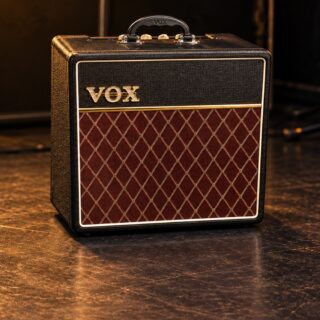
The Vox AC15C1 is a 15-watt, all-valve 1×12 combo using EL84 power tubes, positioned at a similar market price point to the OR15H and well above the Crush 35RT. The tonal character is fundamentally different from Orange’s: where Orange emphasises warm, dense midrange and a relatively forward harmonic structure, the AC15 produces chime, sparkle, and the Celestion Greenback warmth that defined British pop and early British invasion tones. The Crush 35RT draws directly on Orange’s heritage — its preamp stages are tuned to produce the Orange character, not the Vox character. If you want Vox tone, buy a Vox. If you want Orange tone at practice amp money, the Crush 35RT is the only legitimate choice.
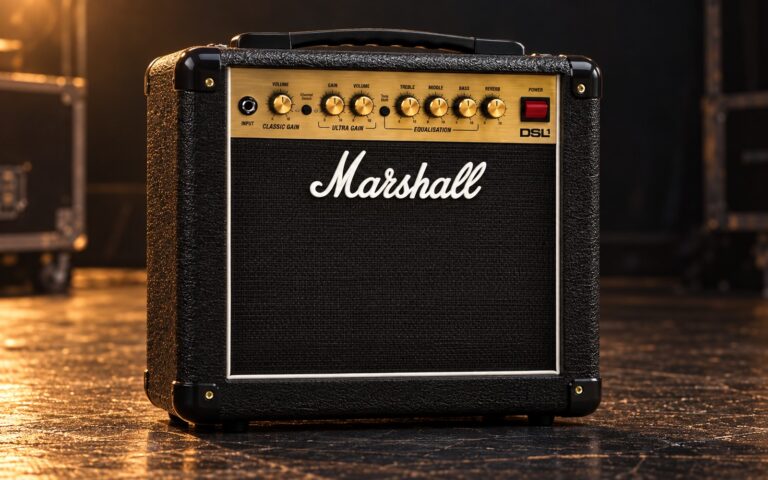
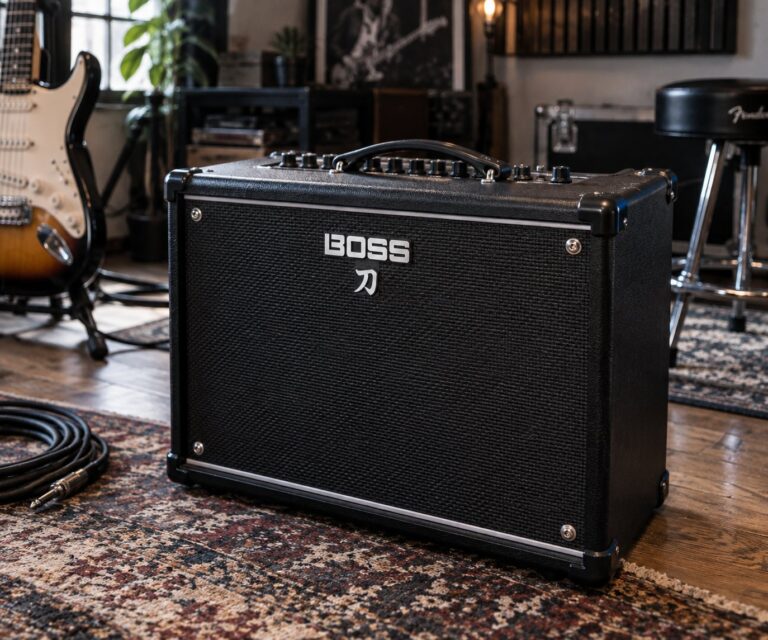
vs Boss Katana 50 (Digital Modelling Rival)
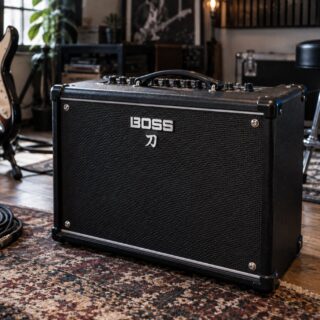
The Boss Katana 50 is the obvious comparison in the practice amp market: it offers five amp models, a built-in effects library, a USB recording interface, and power control down to 0.5 watts, all at a similar retail price. The Katana sounds technically proficient and is arguably more versatile — you can dial in Fender-style cleans, Marshall-style crunch, and heavy modern tones from the same amp. What it doesn’t do is sound specifically like anything. The Crush 35RT does one thing in exactly the way Orange intends it to be done: it sounds like an Orange amp. If you already know you want Orange tone, the Crush is a simpler, more satisfying choice. If you’re still working out what kind of sound you’re after, the Katana’s versatility may serve you better.
Buying Guide
The Crush 35RT is available new from all major Orange dealers in orange or black tolex finishes, at £289 in the UK and roughly $299–$349 in the US as of 2026. The black version shares the identical circuit and is purely a cosmetic choice — some players find the black less visually assertive on a stage that already has a lot going on.
Used examples come up regularly on Reverb and eBay, typically for £120–£180 in the UK and $150–$220 in the US. The solid-state design means there are no valves to replace and no bias to check, so the main thing to inspect on a used unit is the speaker (listen for rattles or buzzing, which indicate cone damage) and the input/output jacks (clean them with contact spray if they crackle). The effects loop is worth testing — plug something in and verify it is transparent in both bypass and engaged modes. Some user reports document the effects loop colouring the tone negatively when pedals are inserted in front of the amp rather than through the loop itself; use the loop as intended.
The footswitch for channel switching is sold separately — Orange lists the FS-1 single footswitch as the compatible accessory. This is a genuine omission at this price point, though the channel selector switch on the front panel is accessible enough for players who set a channel and stay on it for a whole set.
If you intend to run the Crush 35RT into an external speaker cabinet — which some users do by drilling a small hole in the cabinet back to expose the internal speaker terminal — use 8Ω or 16Ω cabinets and verify the connection is solid before anything else. This is a user modification and not an officially supported use case, though it works and it meaningfully changes the amp’s character by removing the 10-inch speaker limitation.
Ownership Notes
The 10-inch speaker is the Crush 35RT’s primary acoustic constraint. It has limited bass extension below roughly 120Hz and produces a mid-forward response that some players find too focused and others find exactly right. If the sound feels lacking in low end, try a 2dB boost at 200Hz on your EQ pedal before declaring the amp inadequate — the frequency is there, it just needs a push. The driver handles the amp’s 35-watt output without complaint and is robust enough for regular gigging in small venues.
The digital reverb’s analogue dry-through is a genuine engineering consideration worth understanding. Even when the Reverb control is set to zero, the circuit is technically in the signal path; it just adds nothing audible. The analogue dry-through means your tone remains unprocessed even when reverb is engaged, which keeps the amp’s feel natural. Do not expect anything resembling a spring reverb’s splash and drip — this is a clean, spatial digital reverb that does room, hall, and ambience rather than vintage surf. If you want authentic spring reverb, use an external pedal through the effects loop.
The CabSim headphone output is one of the genuinely useful features on this amp. It is not a gimmick: the circuit produces a convincing emulation of the frequency response of an Orange 4×12 cabinet, which compensates for the physical absence of a large speaker and makes headphone practice sound like a real rig rather than a transistor radio. The aux input (3.5mm) allows you to play along to music from a phone or laptop without an additional mixer, and the two signals sum before the CabSim circuit, so you hear the amp’s tone on headphones alongside your backing track.
The buffered effects loop is a proper series loop with correct impedance levels for rack effects and most stompboxes. Effects that are designed for line-level operation (rack delays, reverbs, chorus units) perform significantly better in the loop than in front of the amp. Effects that need to interact with the amp’s own gain stage — drives, fuzzes, overdrives — still belong in front of the input. The user report in the Equipboard community about “effects in the loop ruining the sound” likely reflects drives or fuzzes plugged into the loop instead of the front input.
Frequently Asked Questions
Is the Orange Crush 35RT loud enough to play with a drummer?
Yes, comfortably in a small rehearsal room or intimate venue. At its rated 35 watts, the Crush 35RT will not push a large stage, but it will hold its own against an unplugged acoustic drum kit in a room with reasonable acoustics. The 10-inch speaker limits the low-end projection somewhat, which means bass guitar will appear to dominate in a frequency contest, but the mid-forward character of the Crush actually helps it cut through rather than getting buried. For larger venues, you would run the CabSim output to a PA and use the amp as a stage monitor.
Does the Crush 35RT have any valves/tubes in it?
No. The Crush 35RT is a fully solid-state amplifier. The preamp and power section both use transistors and op-amps. The reverb is a digital module. There are no valves or tubes anywhere in the circuit, which means no re-biasing, no valve replacement, and completely consistent behaviour from the first day to the thousandth. This is a genuine practical advantage for players who need reliability above all else, including gigging musicians who cannot afford an amp to misbehave on stage.
What’s the difference between the Crush 35RT and the Crush 20RT?
Power output (35W vs 20W), speaker size (10-inch vs 8-inch), and volume headroom. The 20RT is strictly a bedroom amp; the 35RT can handle small rehearsal rooms and intimate gigs. The circuit topology and voicing are similar, but the 35RT’s larger speaker and higher output make a meaningful difference in real-world use. The 35RT is also the only Crush model with a fully buffered effects loop, which matters for players with significant pedalboards.
Can I connect the Crush 35RT to an external speaker cabinet?
Not through an officially designated speaker output — the internal 10-inch speaker is wired directly to the power stage with no external speaker jack on the rear panel in the standard configuration. Some users have modified their units by drilling a hole and fitting a jack socket to access the internal speaker terminals; this works and accepts 8Ω or 16Ω extension cabinets. This is a user modification that voids the warranty and requires basic electronics knowledge to execute safely. If an external speaker output is important to you, look at the Orange Crush 35RT Pro (if available) or one of the all-valve lunchbox heads that are designed for external cabinets from the ground up.
Is the built-in reverb any good?
It is useful and sonically decent, though it is not a spring reverb despite Orange’s “based on a classic spring design” description. The digital module produces a clean, spatial ambience — usable room and hall settings — with an analogue dry-through that keeps your core tone intact. For players who use reverb as a utility (a touch of room to make bedroom playing feel less airless), it works well. For players who want authentic spring reverb drip and splash (surf, vintage country, early 60s clean tones), an external spring reverb pedal will deliver a more convincing result. The tuner is fast, accurate, and chromatic — no complaints there.
Should I use pedals with the Crush 35RT?
Yes, and the Clean channel is your friend for this. The Clean channel on the Crush 35RT is consistently described as neutral and high-headroom, which makes it an excellent platform for drive pedals, modulation, and delays. The Dirty channel can muddy up when you put additional drive in front of it, particularly in the higher-gain range; if you want to use a drive pedal into overdrive, set the Dirty channel’s Gain at 9 o’clock or lower and let the pedal do the heavy lifting. Time-based and modulation effects (delay, chorus, flanger, reverb) belong in the effects loop rather than in front of the amp for cleanest operation.
How does the CabSim output work?
The CabSim is an analogue circuit that activates automatically when a plug is inserted into the headphone/line output jack. It emulates the frequency response and roll-off of an Orange 4×12 cabinet loaded with Voice of the World speakers, converting the amp’s raw output into something that sounds like a properly miked cabinet when monitored through headphones or fed into a recording interface. Your guitar signal passes through the entire amp circuit — including the Dirty channel’s four-stage preamp — and is then processed by the CabSim before reaching the headphone. The internal speaker is automatically bypassed when anything is plugged into the headphone output.
Is the Crush 35RT worth buying over a modelling amp at the same price?
It depends entirely on what you want to achieve. Modelling amps at this price point offer broader tonal variety — you can sound like a Fender, a Marshall, a Vox, and a Mesa from the same box. The Crush 35RT sounds like one thing: an Orange. If you already know Orange tone is what you’re after — that warm, mid-forward, slightly woolly British character — the Crush 35RT delivers it from the first note, without presets, without menus, without anything to configure beyond turning three knobs. If you’re still exploring what sound you want, a modelling amp’s breadth makes more sense at this stage of your development.
Image credits
- Top image: GuitarGangsters AI-generated reference illustration, not a photograph.
- An empty stage with an amp, drums and a guitar case: Keith, Wikimedia Commons, CC BY-SA 2.0.
- Two glowing power tubes in an amp: Rob Robinette, Wikimedia Commons, CC BY-SA 4.0.
- Jimmy Page: Andrew Smith, Wikimedia Commons, CC BY-SA 4.0.
Latest News
Related
On This Day
Friday 13 November
From this week: