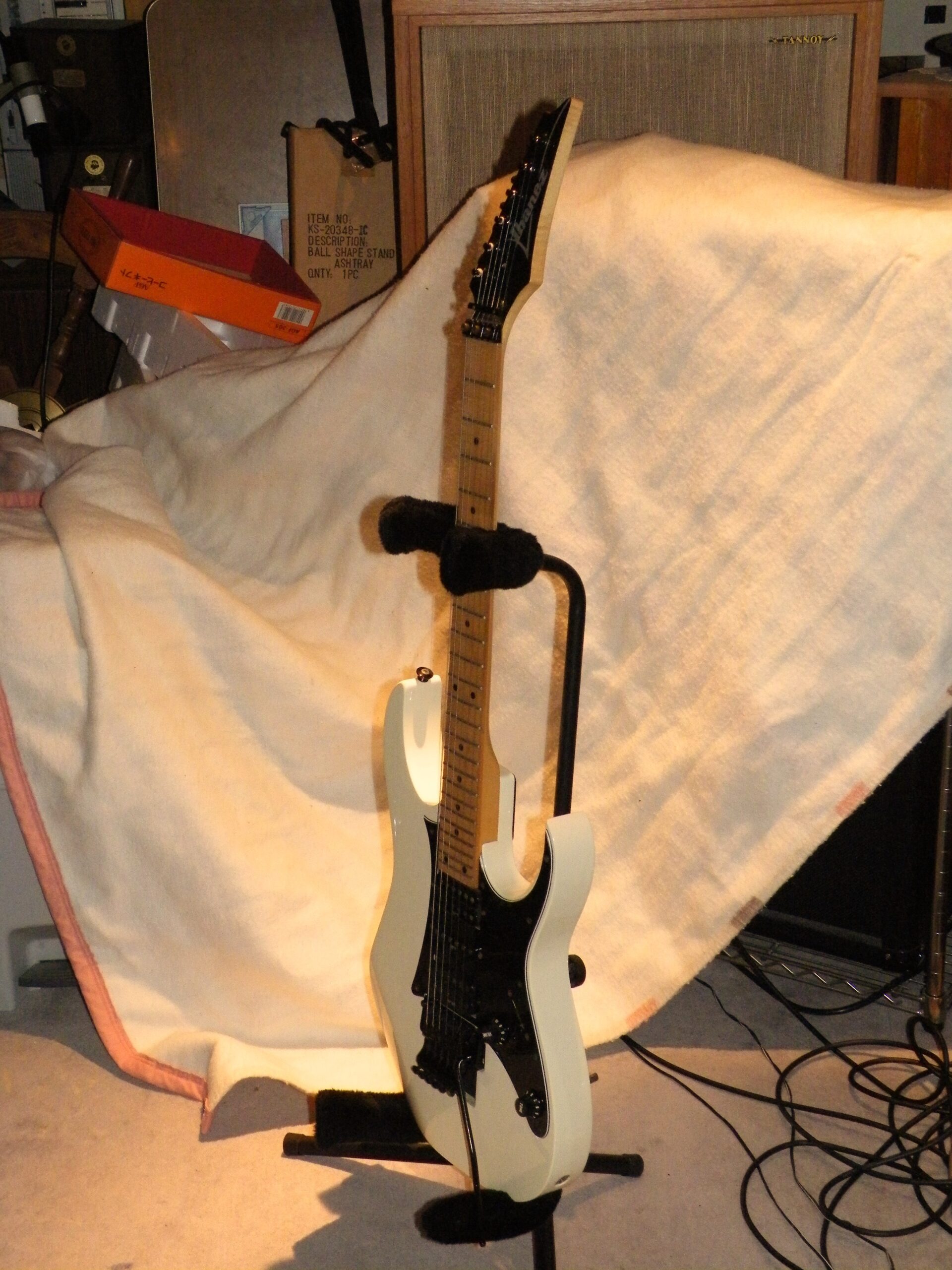
Ibanez RG550: The Guitar That Defined Shred and Saved Ibanez
Ibanez RG550, photographed in 2008. Photo: shooting-star1980. CC BY 3.0 (https://creativecommons.org/licenses/by/3.0/). Full source frame resized for web; no cropping or retouching. Source: https://commons.wikimedia.org/wiki/File:_198_(2).jpg
The complete Ibanez RG550 guide: history, Wizard neck, HSH specs, the shred sound, famous players, tone recipes, Genesis vs vintage, and buying advice.
By the mid-1980s, Ibanez was in trouble. The brand’s guitars sold steadily but were rapidly losing ground to hungry American superstrat makers like Charvel/Jackson, B.C. Rich, and especially Kramer. The era demanded speed, stability, and aggression — and Ibanez’s existing lineup wasn’t delivering it, even with endorsements from heavy hitters. The company needed something revolutionary. In 1987, it got it.
The Ibanez RG550 didn’t just rescue the brand — it redefined an entire category. Born from the same design DNA as Steve Vai‘s iconic JEM signature model, the RG550 brought genuinely high-performance, shred-ready guitar design to a price working musicians could actually afford. Its ultra-thin Wizard neck, lightning-fast playability, locking tremolo, and gloriously bonkers neon finishes made it the aspirational guitar of an entire generation. For countless players who came of age in the late ’80s and ’90s, the RG550 was the dream guitar — Fender and Gibson were what your dad played; the RG550 was the future.
This guide covers the full story: how the RG550 saved Ibanez, the Wizard neck and superstrat design, the full specs, the shred sound, the players, tone recipes, the Genesis-versus-vintage question, and whether this shred icon belongs in your hands.
The Origins: How Ibanez Reinvented Itself
The RG550’s story is one of a company forced to innovate or die. In the mid-1980s, Ibanez’s superstrat (Blazer and Roadstar) and pointy models failed to generate excitement, even with endorsements from Phil Collen, Allan Holdsworth, and Steve Lukather. A weakening US dollar made Japanese imports less of a bargain, and worse, Ibanez had simply fallen behind the rapidly evolving trends in guitar design.
The Steve Vai Catalyst
Facing disaster, Ibanez’s Japanese leadership turned to its US distributors and sparked a creative competition to redefine the brand. The team aggressively recruited rising shred talent — much of it from Mike Varney’s “Spotlight” column in Guitar Player magazine, the breeding ground for shred virtuosos. Their biggest coup was landing Steve Vai‘s endorsement.
Working with Vai, Ibanez luthier Mace Bailey built prototypes based on Vai’s input, resulting in the legendary JEM design. When the JEM was unveiled at NAMM, it blew the audience away — hailed as the ultimate alternative to buying a custom-made guitar. The completely revamped Ibanez lineup debuted at the 1987 Winter NAMM Convention in Anaheim and instantly generated huge buzz.
The RG550 Is Born
The most successful model to emerge from this new era was the RG550. It was, in essence, a more affordable variation of Vai’s JEM — sharing the same basic design and dimensions but eschewing the JEM’s more distinctive and costly features like the “monkey grip” handle and the “lion’s claw” tremolo rout. These changes both kept the JEM more exclusive and reduced production costs, putting genuine high-performance design within reach of ordinary players.
With its Edge tremolo, high-output pickups, and aggressive styling — deep cutaways with sharp horns and a six-on-a-side headstock based on Ibanez’s Iceman model — the RG550 boldly established Ibanez as a serious new contender in the competitive superstrat market. It transformed the brand’s perception from reliable also-ran to leader in innovative design. The RG550 pushed shred guitar further and faster, proving Japanese manufacturers could compete with American superstrats on their own terms.
Ibanez RG550: Full Specifications
Body and Construction
The RG550 features a lightweight basswood body. Basswood is a soft, light tonewood favored in the shred world for its comfortable weight and its balanced, slightly warm voice with strong midrange definition — it resonates with a warm growl and enough midrange to cut through a dense mix. The body’s deep cutaways and sharp, pointed horns give the RG550 its aggressive, unmistakable silhouette, and the headstock matches the body finish on most models.
And then there are the finishes. The original 1987 RG550 was available in a staggering seventeen color options, many of them garish, eye-popping neon hues that perfectly captured the visual excess of the late ’80s. Desert Sun Yellow, Road Flare Red, and Purple Neon became iconic. These bonkers colors are part of the RG550’s identity — though, as with the Flying V and Explorer, they admittedly won’t be for everyone.
The Wizard Neck
The RG550’s defining feature is its neck. The Wizard neck is ultra-thin and wide — built for speed. This thin, flat profile lets the fretting hand glide effortlessly, enabling the fast scalar runs, sweeps, and legato that define shred playing. Combined with a flat 16.9-inch fingerboard radius (much flatter than a vintage Fender’s 7.25″) and 24 jumbo frets, the Wizard neck made high-speed playing and big bends easier than almost any guitar before it. For a generation of aspiring shredders, the promise of “unrivalled speed” from that ultra-thin neck was the entire appeal.
The neck is maple, and early models (until 1989) offered a choice of maple or rosewood fingerboard; after 1989, all RG550s had maple boards. The 24 frets give a full two octaves on every string — essential for lead players. Modern Genesis reissues use a 5-piece maple/walnut Super Wizard neck for even greater stability.
Pickups: The HSH Configuration
The RG550 uses a versatile HSH (humbucker/single-coil/humbucker) pickup configuration. The original used American-designed Ibanez Vintage pickups; modern Genesis models use the Ibanez V7 (neck humbucker), S1 (middle single-coil), and V8 (bridge humbucker). Controls are stripped down for simplicity: a master volume, master tone, and a five-way blade selector. This layout provides a genuinely useful variety of tones — full humbucking power for heavy rhythm and lead, plus single-coil and split positions for cleaner, funkier sounds. The RG550 is more tonally versatile than its shred reputation suggests, capable of far more than just high-gain metal.
The Tremolo
A double-locking Floyd Rose-style tremolo — the Ibanez Edge — is central to the RG550’s identity. This super-stable system handles extreme divebombs, whammy acrobatics, and aggressive bends without losing tuning, a genuine game-changer for players pushing the boundaries of shred. Combined with quality locking hardware and Gotoh tuners (on modern models), the RG550 stays rock-solid in tune through the most violent whammy abuse. This tuning stability under extreme use was a key reason the RG550 dominated the shred world.
The Sound: What Makes an RG550 Special
The RG550’s voice is focused, cutting, and aggressive — purpose-built to slice through a dense, high-gain mix. The basswood body delivers a balanced tone with strong midrange and a slightly nasal, cutting character that, while different from the fat sound of a Les Paul or the bright thinner sound of a Strat, is genuinely ideal for lead guitar in a band setting. That midrange cut means your solos are heard, not buried.
In the bridge humbucker, the RG550 is a high-gain monster — tight, articulate, and aggressive, perfect for metal rhythm chug and screaming leads. The HSH layout and five-way switching unlock real versatility, though: the middle single-coil and split positions produce usable clean and funky tones that take the RG550 well beyond pure metal. It’s a shredder’s dream that can also handle rock, fusion, and cleaner styles when called upon.
The whole package — basswood resonance, cutting mids, hot pickups, and the rock-solid Edge tremolo — adds up to a guitar engineered for high-performance playing. It’s not trying to be a vintage tone machine; it’s a precision instrument built for speed, aggression, and reliability.
Famous Players: The Shred Hall of Fame
Steve Vai — The Design DNA
Steve Vai is foundational to the RG550’s existence. The guitar was designed based on his input for the JEM signature model, and the RG550 is essentially the JEM made affordable. Vai’s otherworldly, virtuosic playing and his collaboration with Ibanez didn’t just create one guitar — it created the entire RG platform and helped define the modern shred guitar. Every RG carries Vai’s design philosophy in its DNA.

Paul Gilbert — The Speed Demon
Paul Gilbert of Mr. Big and Racer X was one of the first major shredders to play an RG550, and several of his signature Ibanez PGM models over the years were based directly on the RG550. Gilbert’s blindingly fast, precise alternate picking is exactly the kind of playing the Wizard neck and flat radius were built for — he and the RG550 are inseparable in shred history.

Joe Satriani — Ibanez Royalty
Joe Satriani — “Satch” — is one of Ibanez’s most important artists, and while he has his own legendary JS signature line, his association cemented Ibanez (and the RG platform) as the brand of the instrumental shred virtuoso. Satriani’s melodic, expressive lead playing showed what these high-performance Ibanez guitars could do in the hands of a master.

The Modern Shred Generation
The RG550’s influence runs straight through to today’s players. Nita Strauss (Alice Cooper’s shredding virtuoso) and Tim Henson (Polyphia’s genre-bending innovator) carry the Ibanez high-performance tradition into the modern era, both with their own signature models. Marty Friedman (ex-Megadeth) and Dave Navarro (confirmed to have used an RG550 during Jane’s Addiction’s “Nothing’s Shocking” era) further demonstrate the guitar’s reach beyond pure shred into metal and alternative rock. Other notable RG550 players include Nili Brosh, Blues Saraceno, and Larry Mitchell.
Tone Recipes: Dialing In Classic RG550 Sounds
Recipe 1: High-Gain Shred Lead
The classic RG550 lead tone is searing, sustaining, and cutting — built for fast runs and expressive bends.
- Guitar: RG550, bridge humbucker, volume at 10
- Amp: High-gain amp (Marshall JVM, Mesa, or similar)
- Gain: 8
- Bass: 5, Mids: 6 (don’t fully scoop — you need the cut), Treble: 7
- Effects: Delay (essential for the soaring shred lead), reverb, optional chorus for the ’80s flavor
Recipe 2: Tight Metal Rhythm
The RG550’s tight, articulate bridge pickup is ideal for palm-muted metal chug.
- Guitar: RG550, bridge humbucker, volume at 10
- Amp: High-gain amp, optionally boosted with an overdrive for tightness
- Gain: 7–8
- Bass: 6, Mids: 5, Treble: 6
- Effects: Noise gate (essential for tight, silent palm mutes)
Recipe 3: Funky Clean (Split/Single-Coil Positions)
The HSH layout’s split and middle positions unlock clean, funky tones beyond metal.
- Guitar: RG550, position 2 or 4 (split) or middle single-coil, volume at 8–10
- Amp: Clean amp with headroom
- Gain: 2–3 (clean)
- Bass: 5, Mids: 6, Treble: 6
- Effects: Compression, light chorus, touch of reverb; percussive picking for funk
Recipe 4: ’80s Whammy Dive Mayhem
For the divebombs and squeals that define the shred era, the Edge tremolo is your weapon.
- Guitar: RG550, bridge humbucker, volume at 10
- Amp: High-gain amp
- Gain: 8
- Bass: 5, Mids: 6, Treble: 7
- Effects: Delay and reverb; technique is everything — pinch harmonics into divebombs via the Edge trem
RG550 vs. the Competition
RG550 vs. Steve Vai JEM
The RG550 is essentially the affordable JEM. They share the same body shape, Wizard neck, basswood construction, and Floyd-style tremolo. The JEM adds the distinctive monkey-grip handle, the lion’s-claw trem rout, premium DiMarzio pickups, and ornate inlays (vine or pyramid). The RG550 strips these back with simpler dot inlays and Ibanez pickups for a lower price. For most players, the RG550 delivers 90% of the JEM experience at a fraction of the cost.
RG550 vs. Jackson Soloist / Charvel
The Jackson Soloist and Charvel superstrats were the RG550’s main rivals — the American competition that Ibanez was chasing. These typically use different tonewoods (alder/basswood/poplar) and have their own neck feels. The RG550’s Wizard neck is often cited as thinner and faster than most competitors, and its build quality and value made it the import champion. The choice often comes down to neck feel and brand loyalty; all are excellent high-performance platforms.
RG550 vs. Charvel Pro-Mod / ESP / Schecter
The modern superstrat market is crowded with excellent options from Charvel, ESP, and Schecter. The RG550 stands out for its iconic status, the legendary Wizard neck, and its place in shred history. For pure modern metal with active pickups, an ESP/Schecter might appeal more, but for the classic ’80s/’90s superstrat shred experience, the RG550 is the reference point.
Genesis vs. Vintage: Which RG550 to Buy
One of the most important decisions for a buyer is whether to chase an original 1987–1994 example or buy the modern reissue.
Vintage (1987–1994)
Original RG550s have genuine collectible appeal and that authentic late-’80s magic. Early examples (1987–1989) offered maple or rosewood fingerboards; after 1989 all were maple. They came in seventeen wild colors. The downsides: vintage examples can have the older “box” neck heel that makes high-fret access less comfortable than modern guitars, the necks can warp over decades, and prices for clean examples have risen. Many vintage RGs have had pickup swaps (DiMarzios are common), which affects originality.
Genesis Collection (2018–present)
Ibanez reissued the RG550 as part of the Genesis Collection starting in 2018, faithfully recreating the late-’80s original with modern manufacturing refinements. These Japanese-made guitars feature the 5-piece maple/walnut Super Wizard neck (more stable than the original, won’t warp), V7/S1/V8 pickups, quality Gotoh tuners, and three classic neon finishes (Road Flare Red, Desert Sun Yellow, Purple Neon). Reviewers consistently praise the exemplary craftsmanship — perfect Wizard neck, flawless vibrato, low action with minimal buzzing.
The Verdict
Many experienced players actually prefer the Genesis reissue to vintage examples, citing the reinforced neck (no warping), improved consistency, and modern refinements — and Genesis models can often be found used for less than a vintage 550. Unless you specifically want a vintage collectible or a rosewood board, the Genesis Collection RG550 is the practical recommendation: it’s everything good about the original with modern reliability. New models typically run around $1,000, with used Genesis examples available for considerably less.
Living With an RG550: Practical Considerations
The Floyd Rose Learning Curve
The double-locking Edge tremolo is incredibly stable but requires understanding. String changes take longer than on a fixed-bridge guitar, tuning involves the locking nut and fine tuners, and setting up the floating bridge takes some knowledge. Once you learn the system, it’s rock-solid, but beginners should be prepared for the Floyd’s quirks. Blocking the trem is an option for those who never dive.
The Wizard Neck Feel
The ultra-thin Wizard neck is a love-it-or-hate-it feature. Shredders adore its speed; players used to chunkier necks may find it almost too thin at first. It’s worth playing one before buying to see if the profile suits your hands — though most players adapt quickly and many never go back.
Setup and Strings
The RG550 is built for low action and fast playing. It typically ships with .009 or .010 gauge strings; the flat radius supports very low action without buzzing when properly set up. A professional Floyd setup is worth it if you’re not experienced with locking trems.
The Finishes
The neon finishes are iconic but polarizing. If the wild colors aren’t your taste, Ibanez offers more subdued options across the broader RG line — but for the true RG550 experience, the neon is part of the package.
Frequently Asked Questions
What is the Ibanez RG550 known for?
The RG550 is known as one of the definitive shred and superstrat guitars. Introduced in 1987 as an affordable version of Steve Vai’s JEM, it’s famous for its ultra-thin Wizard neck built for speed, its lightweight basswood body, its HSH pickup configuration, its stable Floyd Rose-style Edge tremolo for divebombs, and its wild neon finishes. It saved Ibanez from decline and became the aspirational guitar for a generation of shredders.
What is the Wizard neck on the Ibanez RG550?
The Wizard neck is Ibanez’s ultra-thin, wide, flat neck profile built for high-speed playing. Combined with a flat 16.9-inch fingerboard radius and 24 jumbo frets, it lets the fretting hand glide effortlessly for fast runs, sweeps, and big bends — the defining feature that made the RG550 a shredder’s dream. Modern Genesis models use an even more stable 5-piece maple/walnut Super Wizard neck.
What’s the difference between the RG550 Genesis and the vintage 1987 model?
The vintage 1987–1994 RG550 is the original, with collectible appeal, a choice of maple or rosewood fingerboard (early models), and the older “box” neck heel. The Genesis Collection reissue (2018–present) faithfully recreates the original but adds modern refinements: a reinforced 5-piece Super Wizard neck that won’t warp, improved consistency, quality Gotoh tuners, and V7/S1/V8 pickups. Many players prefer the Genesis for its reliability, and it’s often cheaper used than a clean vintage example.
Is the Ibanez RG550 good for metal?
Absolutely — the RG550 is one of the definitive metal and shred guitars. Its tight, cutting bridge humbucker, fast Wizard neck, stable Floyd Rose-style tremolo for divebombs, and aggressive voice make it ideal for everything from ’80s shred to modern metal. That said, its HSH layout and five-way switching also give it genuine versatility for cleaner and funkier styles, so it’s far from a one-trick metal machine.
Is the RG550 only for shredders?
No. While the RG550 is built for and associated with high-speed shred and metal, its HSH pickup configuration and five-way switching make it surprisingly versatile. The middle single-coil and split positions deliver usable clean, funk, and rock tones, and the guitar’s cutting midrange works well for lead playing in any band context. It excels at shred but handles a wide range of styles.
How much does an Ibanez RG550 cost?
New Genesis Collection RG550s typically cost around $1,000. Used Genesis models can often be found for considerably less — sometimes as low as $450–$600 — making them exceptional value. Vintage 1987–1994 examples vary widely in price depending on condition, color, originality, and whether pickups have been swapped; clean original examples have risen in value as collectibles.
Why did the RG550 save Ibanez?
In the mid-1980s, Ibanez was losing market share to American superstrat makers and had fallen behind design trends. The RG550, born from the Steve Vai JEM collaboration, brought genuinely high-performance design — the Wizard neck, stable tremolo, hot pickups, aggressive styling — to an affordable price. It generated huge buzz at the 1987 NAMM show, became a massive seller, and repositioned Ibanez from a struggling also-ran to a leader in high-performance guitar design, a reputation it holds to this day.
Final Verdict: Should You Buy an Ibanez RG550?
The Ibanez RG550 is a genuine icon — the guitar that defined the superstrat, saved Ibanez from decline, and became the dream instrument for an entire generation of shredders. It offers a perfect blend of blistering playability, tonal versatility, rock-solid tremolo stability, and unmistakable ’80s attitude, all at a price working musicians can afford.
If you play shred, metal, hard rock, or fusion — or if you simply want one of the fastest, most reliable high-performance guitars ever made — the RG550 delivers like few guitars can. The Wizard neck is a revelation for fast players, the Edge tremolo handles any abuse, and the HSH layout gives you more versatility than the guitar’s shred reputation suggests. For most players, the modern Genesis Collection reissue is the smart buy: it’s everything great about the 1987 original with modern reliability and consistency.
The main considerations are the Floyd Rose learning curve, the ultra-thin neck (try before you buy), and those polarizing neon finishes. But none are dealbreakers for the player this guitar is built for. The RG550 didn’t just follow the shred trend — it helped create it. Decades later, it remains the benchmark by which all superstrats are measured, and a definitive piece of rock and metal history. Plug one in, and you’ll understand why it became the godfather of shred.
Image credits
- Top image: Ibanez RG550, photographed in 2008. Photo: shooting-star1980. Source photograph · CC BY 3.0. Full source frame resized for web; no cropping or retouching.
- Paul Gilbert: GS2019 – Paul Gilbert by Production Partner / Lars Horstmann, Wikimedia Commons, CC BY-SA 4.0.
- Steve Vai: Erjon (Dutch Wikipedia username; real name not disclosed), Wikimedia Commons, CC BY-SA 3.0.
- Joe Satriani: Wikimedia user ‘Vtpeters’, Wikimedia Commons, CC BY-SA 3.0.


Latest News
On This Day
Monday 9 November
From this week: