Ibanez RGA42FM: Built for Breakdowns, Not Shred Solos
Not a shred icon's guitar: the Ibanez RGA42FM is the arched-top budget RG quietly used by hardcore and metalcore players like Knocked Loose's Isaac Hale.
The RGA42FM has spent three articles’ worth of this Ibanez run getting filed under the same shred-icon list — Steve Vai, Joe Satriani, Paul Gilbert, Nita Strauss, Tim Henson — and for the third time in a row, none of them turn out to have anything to do with it. What actually shows up when you dig into who plays this guitar is a different genre entirely: hardcore and metalcore, riff-first music built around breakdowns rather than two-hand tapping. It’s a small but telling mismatch, and it points to something real about where budget RG-family guitars actually live.
A Different Body, A Different Story
The Arched Top Idea
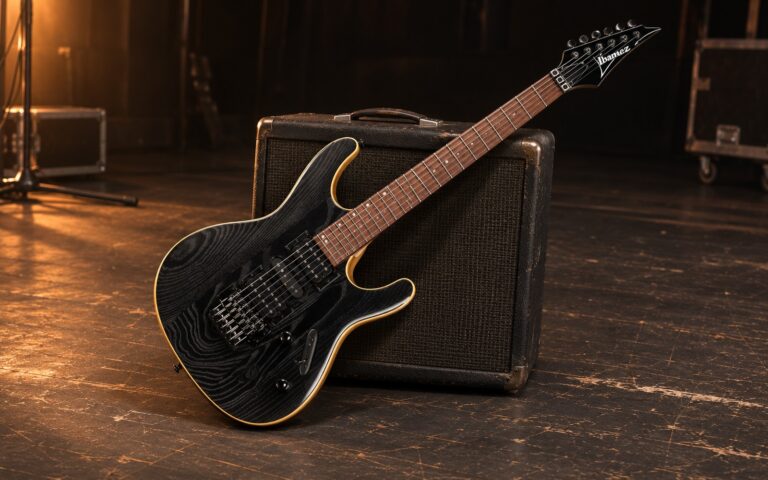
RGA stands apart from the standard RG shape in one specific way: instead of a flat top, it has a solid, carved arch — the “A” in the name refers directly to that arched construction. Ibanez toyed with the idea once before the series existed, building a tiny 1997 J.Custom run called the RG-ARCH1 with a similarly carved top; fewer than 20 are believed to have been made. The idea didn’t return in a full production line until 2005, when Ibanez launched the RGA121 and RGA321F as Prestige-only, hard-tail-only models aimed at players who wanted an RG-style superstrat without a tremolo. The line went non-Prestige in 2009, and that’s the point at which a model called the RGA42FM first appeared.
Two Guitars, One Name
This matters because there are genuinely two unrelated guitars sharing this name, built roughly a decade apart, and mixing them up is an easy mistake to make when reading old reviews or dealer listings. The original RGA42FM ran from 2009 to 2012: a mahogany body with an arched flamed maple top, a bound rosewood fingerboard, and — unusually for a budget-tier RGA — active humbucking pickups with a mid-cut Active EQ switch, mounted in metal rings and paired with a Gibraltar Standard hard-tail bridge. Ibanez discontinued that version after 2012, then revived the name in 2017 for an entirely different guitar: passive pickups, a plainer construction, and a build built to a lower price point. The RGA42FM this article covers is that 2017-onward model, still in production today. Anyone shopping the used market for one should check which era they’re actually looking at, since the two guitars behave quite differently — a distinction that turns out to matter for one of the famous-player claims below, too.
The RGA Series Actually Does Have Signature Artists — Just Not These Ones
The RGA platform has real signature history: Matt Bachand of Shadows Fall got two dedicated RGA-based models, the MBM1 in 2007 and the MBM2 in 2009, tying the arched-top body to New England metalcore well before Knocked Loose existed. Periphery’s Jake Bowen picked up an RGA-shaped signature line of his own starting in 2014 with the JBM100, later joined by the JBM20 and JBM27 — a connection to progressive metal’s more technical, djent-adjacent side. Chris Broderick, during his Megadeth years, had a custom RGA-shaped tremolo body that influenced Ibanez’s own Prestige RGA420Z design. Their presence confirms the RGA shape has a genuine home in metal artist endorsements — just built around different, less classic-shred names than Vai, Satriani, or Gilbert.
Anatomy of the RGA42FM
Body and Top
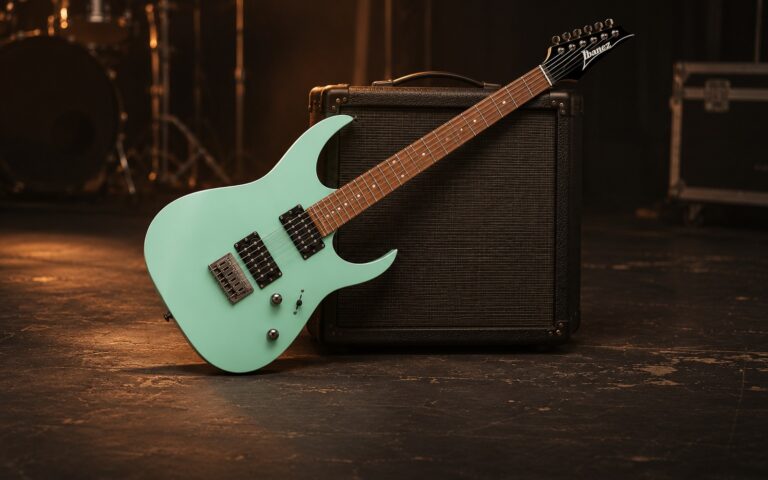
The current RGA42FM pairs a flamed maple veneer top with a sculpted body that started out as mahogany in 2017 and switched to meranti in 2019 — a cost-driven change typical of Ibanez’s Indonesian-built standard tier. The body keeps the RGA’s signature offset double cutaway with pointed horns and a genuinely arched top rather than a flat slab with a contour routed in, giving it a visually distinct silhouette next to a standard RG even before you plug it in.
Neck and Fingerboard
A bolt-on maple neck in Ibanez’s Wizard III profile keeps the RGA42FM in the same fast, thin-necked family as most budget RG-series guitars, with a 25.5-inch scale and a notably flat 15.7-inch fingerboard radius that favors soloing and bends over open-position chord work. The fingerboard itself changed wood partway through the model’s current run: rosewood at the 2017 launch, replaced by jatoba in 2018 and unchanged since. Both eras carry 24 jumbo frets and offset white dot inlays rather than the bound, more decorative markers found on pricier RGA models.
Electronics and Hardware
Two Ibanez Quantum humbuckers, passive and ceramic-loaded, handle the electronics — a fixed, uncomplicated neck-and-bridge pair with a single volume, single tone, and five-way switch wired for series, parallel, and split tones. The bridge changed once during this model’s run too: a simpler fixed bridge through 2019, replaced by the F106 hard-tail bridge with individually adjustable saddles starting in 2020. Everything else is straightforward budget-tier hardware — a plastic nut, die-cast tuners, and black hardware throughout, with no case or gig bag included at this price point.
The RGA42FM’s Immediate Family
Around the current RGA42FM, Ibanez fields a small set of close variants aimed at slightly different players. The RGA42FML is a left-handed version of the identical spec. Extended-range players get the RGA742FM, a seven-string built on the same platform. Budget-conscious buyers who don’t need the flamed maple top can step down to the RGA42EX, which keeps the same body and electronics without the figured veneer. And for anyone who wants the RGA body with a tremolo instead of a fixed bridge, the RGAR42MFMT pairs a reverse headstock and a maple fingerboard with a floating bridge — a meaningfully different playing experience built on the same arched-top foundation.
Zooming out to the RGA series as a whole, the family tree runs considerably deeper than this one budget corner suggests. The original 2005 launch pair, the Prestige RGA121 and RGA321F, were Japan-built, hard-tail-only instruments aimed at players who wanted RG performance without a tremolo to maintain — a genuinely different market position than the RGA42FM occupies today. Extended-range RGA models followed in 2010 with the seven-string RGA7 and eight-string RGA8, both featuring active pickups and an Active EQ preamp rather than the passive setup used here. More recently, Ibanez has folded several new RGA-bodied guitars into its metal-focused Iron Label line, producing what the Ibanez Wiki describes as the largest crop of RGA models in over a decade — a sign that the arched-top idea, more than 15 years after its wide release, is still finding new metal-adjacent audiences rather than fading into a niche.
Famous Players: Hardcore’s Budget Secret
What the research actually turned up came from a very different corner of guitar music.
Isaac Hale, guitarist and co-founder of the Kentucky hardcore band Knocked Loose, is confirmed on Ibanez’s own official artist roster, and Equipboard cites a YouTube video showing him playing riffs on an RGA42FM specifically. It’s worth being precise about what that connection is and isn’t: Hale’s current touring rig is built around far more premium gear — custom 7-string Ibanez Icemans and Prestige-tier RGD and AZ models loaded with Seymour Duncan Nazgul and Sentient pickups, the setup he uses on Knocked Loose’s most recent album cycle, which has taken the band from DIY touring to Coachella, Bonnaroo, and direct support slots on Slipknot’s anniversary tour. The RGA42FM appearance documents an earlier point in that trajectory rather than his current main instrument — but it’s a real, specific, verifiable connection to this exact guitar, in a genre that actually plays budget arched-top RGs.
Knocked Loose’s own rise gives that early-career detail some useful context. Formed in Oldham County, Kentucky, the band spent years grinding through DIY tours before their 2016 debut LP Laugh Tracks, building a reputation as one of hardcore’s most punishing live acts well before mainstream attention arrived. That attention eventually came on their own terms: a 2024 album made with pop producer Drew Fulk, festival slots at Coachella and Bonnaroo, a sold-out co-headline run with the hip-hop duo $uicideboy$, and a direct-support slot on Slipknot’s anniversary tour. Hale has been vocal in interviews about wanting his rig to stay passive-only, arguing that the contrast between soft and brutally heavy passages is central to the band’s sound — a stated preference that lines up naturally with a guitar like the passive-pickup RGA42FM, even if his current custom-shop instruments have long since moved past it.
The second connection loops back to the two-guitars-one-name problem raised earlier. Brian Leppke, guitarist for the metalcore band Bleeding Through, appeared in a 2009 promotional poster holding an RGA42FM, with a quote crediting the guitar’s mahogany body and road-ready construction for holding up under nightly touring abuse. That’s the original, active-pickup, 2009–2012 version of the RGA42FM — a genuinely different instrument from the passive Quantum-loaded model covered in this article, despite sharing a name. It’s a smaller, more honest kind of footnote than a current endorsement, but it’s worth including precisely because it illustrates how easy it is for gear content to conflate two different guitars just because Ibanez reused a model number.
Tone Recipes
Breakdown Rhythm
Bridge position, tone rolled back to around 4, gain pushed hard: this is the RGA42FM’s natural home. The Quantum bridge pickup’s ceramic output handles palm-muted low-string chugging cleanly, and the meranti/mahogany body keeps the low end reasonably tight rather than boomy — useful for drop-tuned riffing without a preamp doing all the work.
Lead and Melodic Runs
Neck pickup, tone opened up, moderate gain: a warmer, rounder voice that owners consistently rate as the guitar’s stronger side compared to its rhythm tones. The flat 15.7-inch radius makes wide bends and fast legato runs comfortable, even if the pickup itself won’t compete with a DiMarzio-loaded guitar for articulation at high gain.
Cleaning It Up
Position 2 or 4 on the five-way switch, engaging the coil-split wiring, thins the Quantum humbuckers out into a brighter, lower-output tone reasonably close to single-coil territory — a useful option for genres that alternate between heavy riffing and cleaner interludes without reaching for a second guitar.
How It Stacks Up
Against the flagship Ibanez models — the RG652AHMFX Prestige and the RG8570Z J.Custom — the RGA42FM sits at the opposite end of the RG family entirely: Indonesia-built rather than Japan-built, passive ceramic pickups rather than DiMarzios, and a price roughly a third of the Prestige and a tenth of the J.Custom. The more useful comparison is against the RGA42FM’s own budget RG cousins, the RG421 and RG470AHM — both flat-top standard RGs in a similar price bracket. The arched top and offset-horn body are the RGA42FM’s real point of difference against those two, along with a notably flatter fingerboard radius better suited to lead playing than either of its flat-top siblings.
Outside Ibanez, a fixed-bridge mahogany-adjacent superstrat at this price point invites comparison to entry-level offerings from Jackson and Schecter aimed at the same hardcore and metalcore market — guitars that similarly prioritize a fast neck and drop-tuning stability over premium electronics, on the assumption that most buyers will upgrade pickups eventually. Against the RG550 Genesis Collection that opened this Ibanez run, the RGA42FM makes an interesting historical bookend: one guitar chases 1987 nostalgia at a mid-tier price, the other represents Ibanez’s more utilitarian, unglamorous side — a guitar built to survive a hardcore tour rather than evoke one.
It’s also worth setting the RGA42FM against the two other J.Custom and Prestige-tier guitars covered in this Ibanez run purely on the question of who actually plays them. The RG8570Z found a genuine, if narrow, connection to a working touring musician in Andrew O’Connor of Lorna Shore, and the RG652AHMFX connected to Turkish rock musician Demir Demirkan — both real players, but neither one is the kind of household name a $3,000 flagship guitar might suggest it deserves. The RGA42FM’s connection to Isaac Hale runs in the opposite direction: a much cheaper guitar, tied to a considerably higher-profile, currently touring band. Price tier and player fame don’t track together in either direction across this entire run of Ibanez articles — a pattern worth remembering the next time a gear spec sheet implies that spending more money buys a more impressive artist story.
Buying Guide
New units run in the $400–480 range through Sweetwater, Guitar Center, and zZounds, with the current lineup finished in Blue Lagoon Burst Flat, Dragon Eye Burst Flat, and Transparent Gray Flat. Used examples on Reverb have traded for as little as the mid-$300s. Given the model’s two distinct eras, confirming which version a used listing actually is matters more than usual: passive Quantum pickups and a black hardware finish point to 2017 or later, while active pickups, metal pickup rings, and a mid-cut EQ switch mean you’ve found the older 2009–2012 version instead — a completely different guitar under an identical name.
Within the current-era guitars, there’s a second, smaller distinction worth checking: bridge generation. Anything from 2017 through 2019 uses an earlier, simpler fixed bridge, while 2020-onward production switched to the F106 bridge with individually adjustable saddles — a genuine improvement for intonation setup, and one more reason a specific production year is worth confirming on a used listing rather than assumed from photos alone. Body wood tells a similar story: 2017 and 2018 units are mahogany, while 2019-onward guitars use meranti, a lighter and generally less resonant wood that Ibanez has leaned on across several budget RG-family models covered elsewhere in this project.
Owner discussions consistently flag two recurring complaints on the current model: the stock Quantum pickups, which several forum threads and a widely cited Ultimate-Guitar review describe as muddy under heavy gain, especially in lower tunings, making a pickup swap to something like DiMarzio’s D-Activator or similar aftermarket humbucker a common first modification. The second is a design quirk rather than a manufacturing flaw — the volume knob sits close enough to the bridge pickup that some players find it interferes with aggressive strumming or palm-muting technique. Quality control has also come up as inconsistent across individual units, with a handful of owners reporting neck issues needing post-purchase adjustment, so a careful setup check is worth doing on arrival regardless of where you buy.
Living With an RGA42FM
Despite the pickup complaints, the Wizard III neck draws consistent praise — several long-term owners specifically compare its thinness favorably against Ibanez’s own entry-level Gio line, and note that the guitar’s light weight, in the neighborhood of six to seven pounds depending on the finish and hardware, makes it comfortable for the kind of physical, high-energy performance hardcore and metalcore shows demand. The flamed maple top is a recurring highlight in owner photos even at this price point, and more than one review has noted that its aesthetic appeal outpaces what buyers typically expect from a sub-$500 guitar. The absence of an included case is a minor but real added cost to budget in, since this tier of RGA doesn’t ship with one.
Reviews split fairly cleanly along one line: people who bought the RGA42FM expecting a finished, gig-ready metal guitar out of the box tend to come away disappointed by the pickups, while people who went in expecting a good platform for a future upgrade tend to rate it highly. One long-time owner reviewing the guitar after two years of regular use called it the best guitar available at its price point, with the caveat that the bridge pickup could be a little brash — a fairly representative summary of the model’s reputation as a whole. That framing is worth keeping in mind for anyone comparing this guitar directly against pricier RG-family options: the RGA42FM’s real selling point is the neck, the arched-top aesthetics, and a genuinely comfortable playing experience, not out-of-the-box tone.
FAQ
Is the current RGA42FM the same guitar as the one from 2009?
No. The original RGA42FM (2009–2012) had a mahogany body, active pickups, and a Gibraltar Standard bridge. Ibanez discontinued it, then reused the name in 2017 for an unrelated, passive-pickup guitar — the version covered in this article.
What does the “A” in RGA stand for?
Arched. The RGA series uses a solid, carved arched top rather than the flat top found on standard RG guitars, a body style Ibanez first tested on a tiny 1997 J.Custom run before launching it as a full series in 2005.
Are the stock pickups any good?
Opinions are mixed. The Quantum humbuckers are usable but frequently described as muddy under high gain, and swapping them for a more articulate aftermarket humbucker is one of the most common modifications owners make.
Does the RGA42FM come with a tremolo?
No — it uses a fixed bridge (the F106 on current production), which favors tuning stability for drop tunings over vibrato effects. A tremolo-equipped sibling with a reverse headstock, the RGAR42MFMT, exists separately.
Is this a good guitar for metal and hardcore specifically?
Yes — its fixed bridge, thin fast neck, and documented use by hardcore and metalcore guitarists like Isaac Hale of Knocked Loose make it a natural fit for riff-heavy, drop-tuned playing, even if the stock pickups may need an upgrade for serious gigging.
Image credits
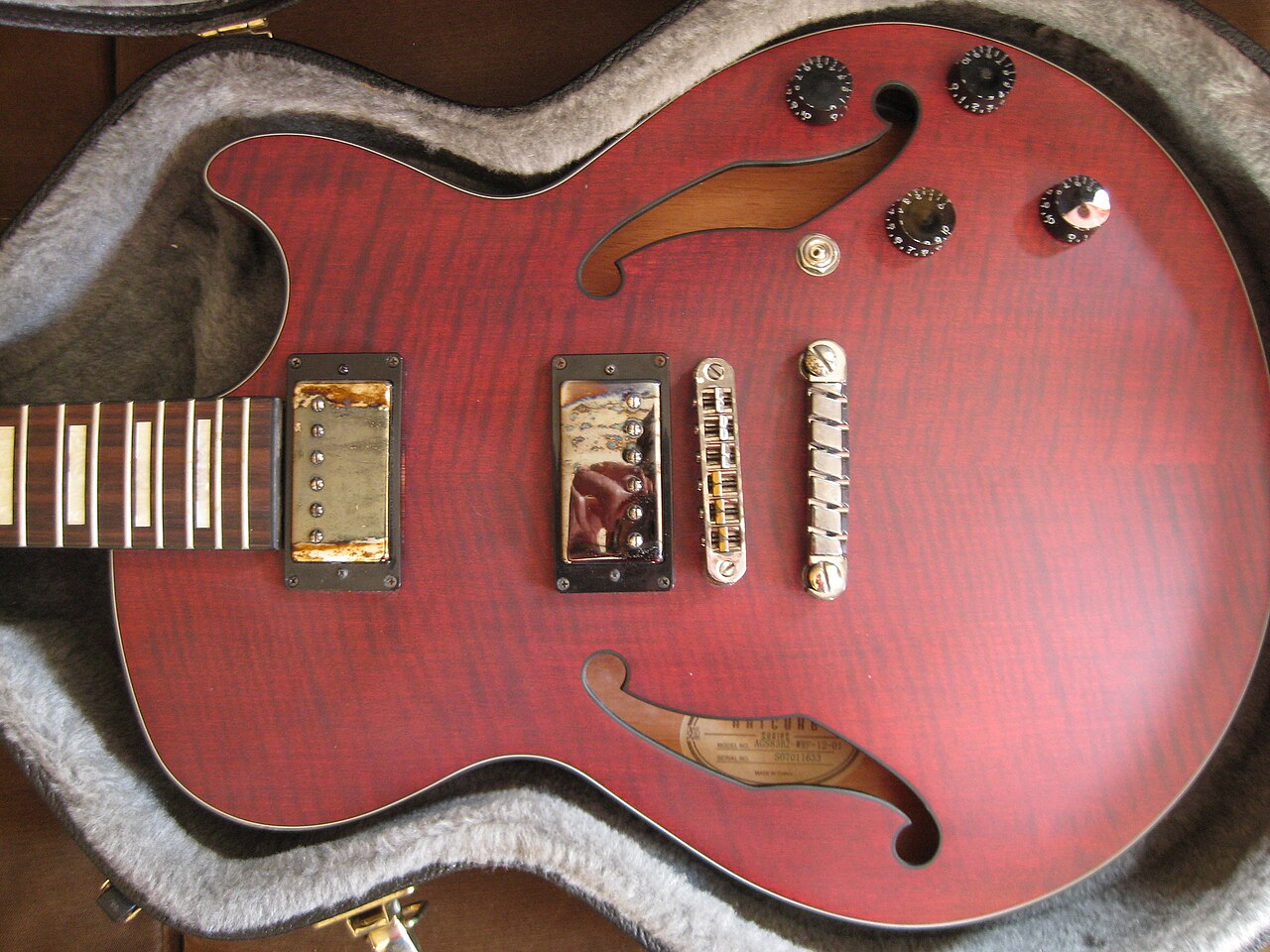
- An Ibanez Artcore semihollow electric guitar in its case: Scott Cranfill from Lexington, Kentucky, United States, Wikimedia Commons, CC BY 2.0.
- An Ibanez AEB5E acoustic bass headstock against a mountain view: Niranjan Arminius, Wikimedia Commons, Public domain.
Latest News
Related
On This Day
Monday 9 November
From this week: