Ibanez RG421: The Budget RG That CHON Actually Toured With
Vai, Satriani, and Gilbert never touched this budget RG. CHON's two guitarists actually toured with it — here's the real story behind the Ibanez RG421.
Steve Vai, Joe Satriani, Paul Gilbert, Nita Strauss, Tim Henson — all five are listed as players of the RG421. At $300–$400, the RG421 sits so far below what any of these five actually play or played that the pairing doesn’t even need much investigation to rule out: none of them built a career on a fixed-bridge, meranti-body budget guitar built in Indonesia starting in 2013, long after each of their own signature deals with Ibanez were already in place.
Mario Camarena and Erick Hansel, the two guitarists of instrumental math-rock band CHON, both confirmed in their own band AMA that the RG421 was their touring guitar, and it’s visible throughout the band’s widely-watched 2015 Audiotree Live session.
A Budget RG With a Real Family Tree
The RG421 was introduced in 2013 as a replacement for the similar RG321MH, produced in Indonesia as part of Ibanez’s mid-tier lineup — priced well below the Japanese-built Genesis Collection reissues and RG Prestige models covered elsewhere in this project, but built with enough of the same design DNA to earn genuine respect from budget-conscious players. Ibanez has revised the spec sheet steadily since launch: the original mahogany body and Ibanez Infinity humbuckers gave way to Quantum pickups and a one-piece neck in 2015, the rosewood fretboard switched to jatoba in 2018, the body wood changed from mahogany to meranti in 2019, and the bridge was updated to the current F106 design in 2020. Ibanez discontinued this version after 2023 and replaced it for 2024 with a version featuring direct-mounted pickups and a different output jack — the same model name covering a guitar that’s been quietly evolving under the hood for over a decade.

Full Specifications
Construction and Tone
The Wizard III neck is the RG421’s biggest selling point relative to its price, and reviewers consistently single it out as thinner and faster than most guitars in this bracket — flatter and less rounded than a Stratocaster-style neck, closer to the flat, shred-oriented feel of the RG line’s higher-tier models. The fixed F106 bridge, rather than a locking tremolo, was a deliberate choice aimed at players who wanted RG-style playability and tone without tremolo maintenance — Ibanez marketed it directly as an answer to fans who wanted more hardtail options in the RG catalog, with the fixed bridge design also credited for the guitar’s fuller sustain and more direct string-to-body energy transfer compared to a floating trem setup.
The Quantum humbuckers deliver a hot, versatile HH tone geared toward rock and metal, though owner forums are consistent on one point: the stock pickups are the guitar’s weakest link, frequently described as thin-sounding and a common first upgrade target, with Seymour Duncan and DiMarzio swaps mentioned repeatedly as the go-to fix. That’s a familiar budget-guitar tradeoff — a genuinely well-built neck and body paired with pickups that leave headroom for improvement, rather than pickups holding the rest of the guitar back.
The 5-way switch layout gives the RG421 more tonal range than a simple two-humbucker guitar might suggest: alongside the standard neck and bridge positions, the in-between settings split and blend the humbuckers in parallel, delivering thinner, more Strat-adjacent textures that owners note are a pleasant surprise on a guitar built primarily for rock and metal. Combined with the 25.5″ scale length and 16″ fretboard radius — flatter than a vintage Fender profile, ideal for low action and fast bends — the RG421 leans hard into lead-guitar playability without sacrificing the rhythm-chug tone the RG family is known for.
Famous Players: A Copy-Paste List Meets a Genuine Touring Guitar
None of the five names attached to this entry have any documented connection to the RG421, and the reason is straightforward: all five already had — or were about to have — their own Ibanez signature guitars by the time this budget model existed. Vai had JEM, Satriani had JS, Gilbert had PGM, and Strauss and Henson’s own signature deals (JIVA in 2018, the AZ-based THBB10 in 2019) arrived either around or after the RG421’s 2013 launch. A guitar built to sell for a few hundred dollars in Indonesia simply isn’t where any of their stories live.
The real story belongs to CHON. Mario Camarena and Erick Hansel, the band’s two guitarists, both confirmed in a Reddit AMA that the RG421 was the guitar they toured with, and it’s visible throughout their widely circulated 2015 Audiotree Live session — a performance still cited as a high-water mark of the modern instrumental math-rock scene CHON helped define. That scene sits directly adjacent to the world Tim Henson and Polyphia occupy — intricate, technically demanding instrumental guitar music built for a YouTube-and-streaming-native audience rather than arena stages — which makes the RG421’s real celebrity connection almost more fitting than a mismatched shred-icon list, even if it’s a smaller name.
Camarena has since moved on to other guitars in CHON’s setup, including an Ibanez RG565 with custom paintwork, but the RG421’s presence throughout that breakout 2015 tour period is well documented and easy to verify across multiple video sources.
Tone Recipes
- Math-Rock Clean Tapping: Neck pickup, clean amp channel, light delay and reverb — the intricate, articulate tone CHON built their sound around.
- Metal Rhythm Chug: Bridge pickup, high gain, tight noise gate — the tone Ibanez’s own marketing leans on hardest for this model.
- Blended Lead Tone: Middle switch position, moderate gain, slight compression — makes the most of the 5-way switch’s in-between voicings.
- Upgraded Pickup Rock: Either pickup post-swap (Seymour Duncan or DiMarzio, per the most common owner upgrade), moderate-to-high gain — the tone most long-term RG421 owners eventually land on.
Comparisons to Related Models
Against the RG550 Genesis Collection, the RG421 trades Japanese manufacturing, a locking tremolo, and vintage-accurate specs for a fixed bridge, Indonesian production, and a price roughly a third of the Genesis reissue’s cost — a genuinely different guitar aimed at a genuinely different budget, not a cut-rate imitation. The related RGRT421 swaps in neck-through construction for extra sustain at a moderate price increase, while the RG7421 offers a seven-string version of the same basic platform for extended-range players. Against Nita Strauss’s and Tim Henson’s actual pre-signature history — her RG770DX and his RG350 — the RG421 sits in roughly the same “affordable RG before the signature deal” territory, just under a different model number.
Buying Guide
- Check the production year: Specs have shifted repeatedly since 2013 — body wood, fretboard material, pickups, and bridge have all changed at least once, so a used RG421 from 2014 is a meaningfully different guitar from one bought new today.
- Budget for a pickup upgrade: The stock Quantum humbuckers are consistently cited as the component most owners eventually replace — factor that into the guitar’s real total cost if tone is a priority.
- Plastic nut: An easy, inexpensive first upgrade for players chasing better tuning stability and sustain.
- 2024+ models differ under the hood: The current-production RG421 uses direct-mounted pickups and a different output jack than pre-2024 examples — worth checking before assuming parts interchangeability with an older unit.
- Related model numbers worth comparing: The RG421G adds gold hardware, the RG421EX adds body and fretboard binding, and the RG421AHM swaps in an ash body with a maple fretboard — all variations on the same core platform at a similar price point, so it’s worth checking which cosmetic and material combination best fits a given budget before settling on the base RG421.
Practical Ownership Notes
The fixed bridge makes this one of the lower-maintenance guitars in the RG catalog — no locking nut to manage, no trem springs to balance, and restringing is as simple as any hardtail electric. The Wizard III neck’s flat radius and thin profile favor fast lead playing over chord-heavy rhythm work, consistent with the RG line’s shred-oriented design philosophy across every price tier. Reviewers and owners alike describe the guitar as arriving well set up out of the box, a genuine point of differentiation at this price point compared to some competing budget metal guitars.
FAQ
Did any of the well-known Ibanez artists actually play an RG421?
No — Vai, Satriani, Gilbert, Strauss, and Henson all had their own Ibanez signature deals in place either before or around the RG421’s 2013 launch, and none has a documented connection to this specific budget model.
Who actually plays the RG421?
CHON’s Mario Camarena and Erick Hansel both confirmed in their band’s own AMA that the RG421 was their touring guitar during the band’s breakout period, visible throughout their 2015 Audiotree Live session.
Is the RG421 a tremolo-equipped guitar?
No — it uses a fixed F106 bridge, a deliberate choice for tuning stability and lower maintenance compared to the locking trems found on higher-tier RG models.
What’s the biggest weakness of the stock guitar?
The Quantum humbuckers are consistently cited by owners as sounding thin compared to the rest of the build quality, making them the most common first upgrade.
How does the RG421 compare to the RG550 Genesis Collection?
It’s a different tier entirely — Indonesian-built, fixed-bridge, and roughly a third of the price, aimed at budget-conscious rock and metal players rather than players chasing a vintage-accurate flagship experience.
Image credits
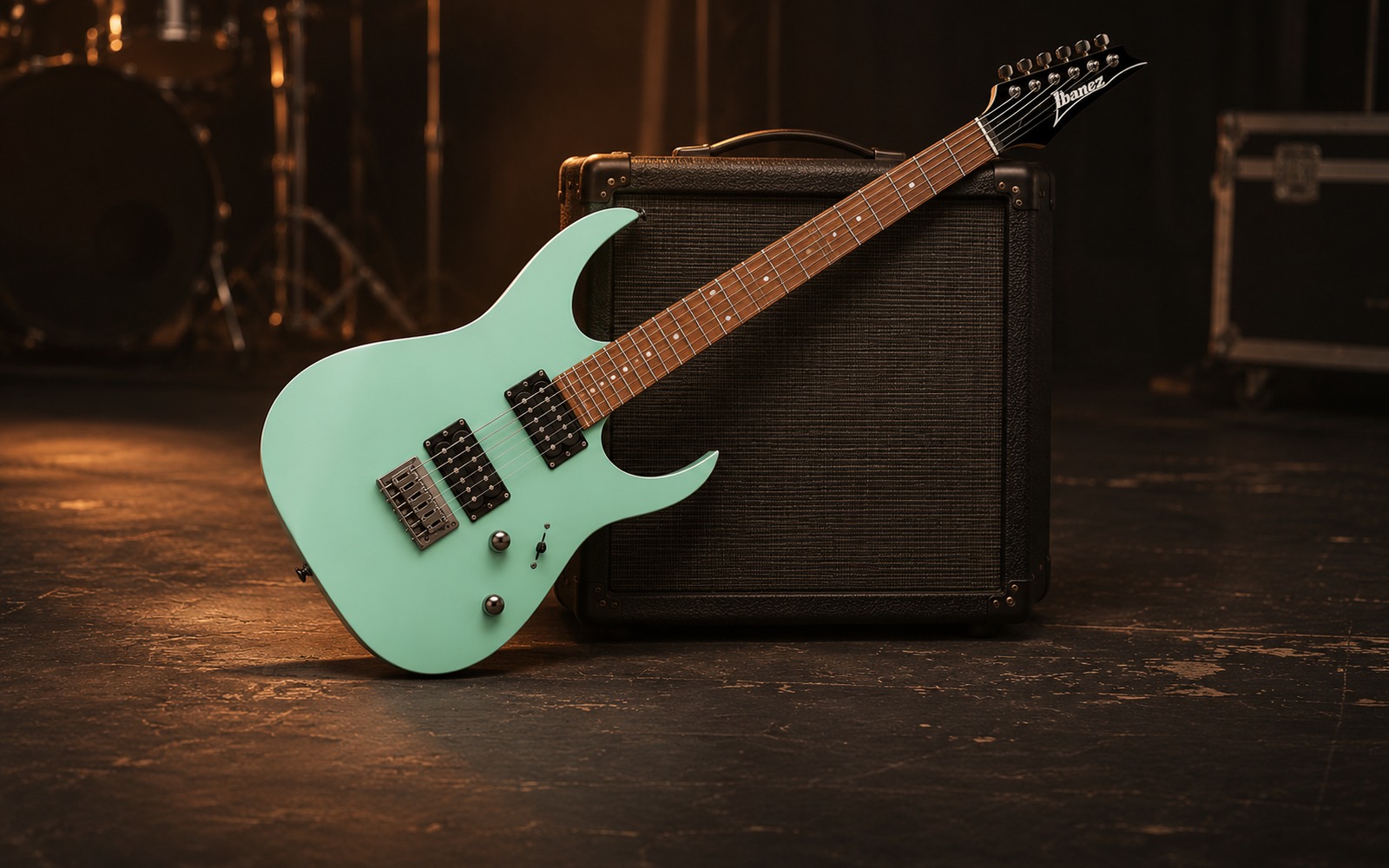
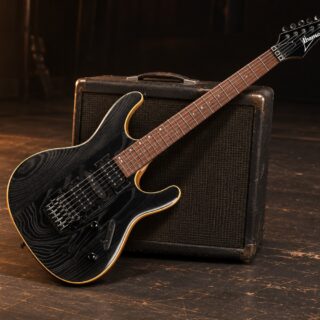
- Top image: GuitarGangsters AI-generated reference illustration, not a photograph.
- Nita Strauss: Raph_PH, Wikimedia Commons, CC BY 2.0.
Latest News
Related
On This Day
Monday 9 November
From this week: