Ibanez Iceman IC520: The Budget Reissue of Rock’s Most Recognizable Silhouette
Steve Miller played it first, Paul Stanley made it iconic, and Three Days Grace's Barry Stock still plays one. Full IC520 story, specs, buying guide.
Some guitar shapes get famous because a legend played one for decades. The Iceman is rarer than that — it’s a shape so instantly recognizable that a modern rock guitarist can pick one up specifically because of who played it fifty years earlier, and the choice still reads as fresh rather than nostalgic. That’s exactly what happened with the Ibanez Iceman IC520, a 2010s budget-tier reissue of a 1970s design, and it’s a story with a genuinely satisfying full circle: a shape Paul Stanley made iconic in 1977 is still winning over new players today for the same reason it won him over then.
A Shape Born to Break the Copy Machine
By the mid-1970s, Hoshino Gakki — the company behind Ibanez — had built a reputation on excellent copies of Fender and Gibson designs, good enough that American manufacturers eventually sued over it. But copying wasn’t a long-term identity, and the company wanted something distinctly its own. In the mid-1970s Hoshino Gakki wanted to make a distinctly Japanese guitar and to start breaking away from the Ibanez replicas of Fender and Gibson models, and a meeting between Hoshino, Kanda Shokai, and FujiGen resulted in the Iceman/Mirage design. The result — initially called the Artist 2663 — was unlike anything else on the market: an asymmetrical, sharp-horned single-cutaway silhouette that owed nothing to Kalamazoo or Fullerton.
Steve Miller: The Guitar’s First Western Believer
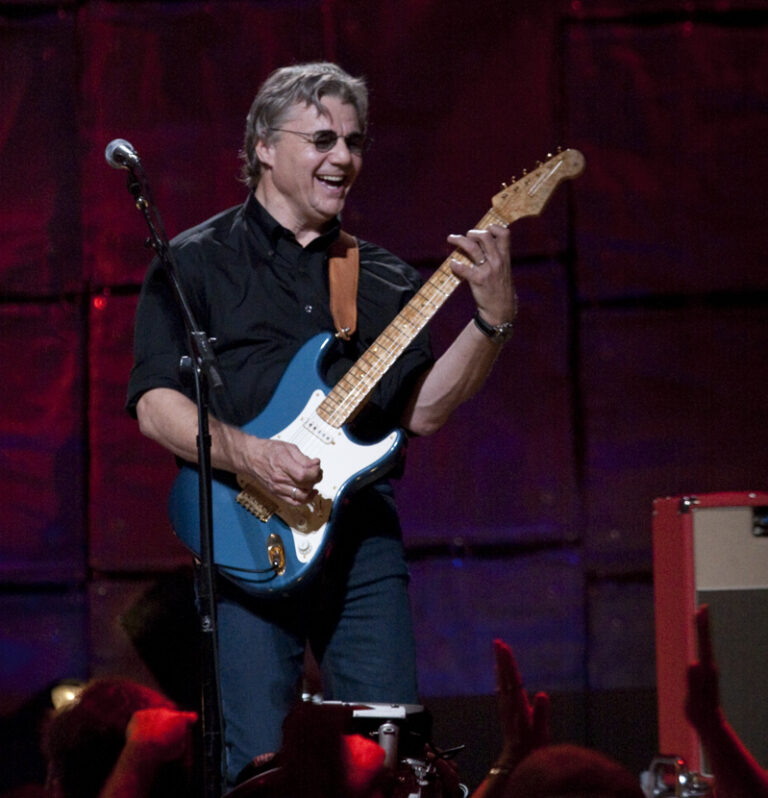
The name most associated with the Iceman today is Paul Stanley, but he wasn’t first. Steve Miller was the first Western artist to adopt the future Iceman model, using a 2663TC onstage and on his Book of Dreams album, favoring the bright, funky all-three-coils-in-parallel setting on tracks like “Jet Airliner” and “Swingtown”. Ibanez took the connection seriously enough to formalize it: in 1978, the triple-coil 2663TC model was officially named the IC210 Steve Miller model. It’s a footnote most Iceman owners never learn, but it means the guitar’s very first celebrity endorsement wasn’t a rock-and-roll cartoon character in makeup — it was a laid-back California blues-rocker chasing a funkier clean tone.
Paul Stanley and the PS10 That Defined the Shape
Stanley’s involvement came almost immediately after, and it’s the connection that stuck. Ibanez approached Paul Stanley while KISS was on tour in Japan in 1976 and offered him a chance to develop his own signature model; he liked the shape of the Artist 2663 and reworked it into what became the PS10, which first appeared in the 1978 Ibanez catalog as KISS’s popularity was skyrocketing. Stanley has been candid about how much of the finished PS10 was genuinely his own design work rather than a rebadge — construction details, fret and inlay choices, wiring, and hardware were all part of what he brought to the table, to the point that he’s said the PS10 and a stock Iceman share little beyond a silhouette. Stanley favored the Iceman from 1977 to 1980, returned to it as his primary guitar from 1992 to 1997, then moved to his own Washburn signature model before coming back to Ibanez in 2016. Between the album art on KISS’s live records and Stanley’s decades of stage use, the Iceman’s shape became inseparable from his image — which is precisely the reputation the IC520 covered here was built to cash in on, decades later, at a fraction of the price.
Iceman II and a Shape That Kept Evolving
The silhouette people picture today isn’t quite the one Miller and Stanley first played. The Ibanez Iceman II, released in 1982/1983, swapped the original three-a-side headstock for a six-in-line arrangement — a more modern, more RG-adjacent look that later Iceman generations, including the IC520, ultimately carried forward in spirit. The body’s sharp treble horn and asymmetrical lower bout have stayed remarkably consistent across five decades, but the headstock, hardware, and pickup choices have shifted with every era, which is part of why “an Iceman” can mean wildly different guitars depending on which decade you’re shopping.
Where the Iceman Sits Among Ibanez’s Extreme Shapes
The IC520 doesn’t exist in isolation — the Iceman line falls under Ibanez’s broader X series umbrella, which also covers other deliberately non-traditional body shapes like the Destroyer and Xiphos. Within that family, the Iceman has always been the most commercially durable of the “extreme shape” guitars, largely because it never fully committed to a single genre the way the more explicitly metal-coded Xiphos did. That flexibility — equally at home on a KISS stage in 1977, a Three Days Grace stage in 2025, or a System of a Down record in between — is a big part of why Ibanez keeps returning to the shape in its standard-tier catalog every few years rather than letting it fade into pure signature-model territory.
The IC520: A 2010s Budget Reissue of a 1970s Icon
The IC520 is an Iceman series solid body electric guitar introduced by Ibanez in late 2014 as part of the X series, produced in China. It arrived as a way to put the Iceman shape back in front of players who wanted the look and the history without paying signature-model money — a budget-tier standard-line guitar rather than anything endorsed by a specific artist.
Construction and Where It Sits in the Catalog
The IC520 features a mahogany body with binding mated to a mahogany set-in neck, a 24-fret fingerboard with binding and parallelogram inlays, dual DiMarzio humbuckers, and individual volume and tone controls per pickup. Reviewers consistently singled out the pickup pairing as the guitar’s strongest asset: the combination of a DiMarzio Tone Zone in the bridge and an Air Norton in the neck has become a genuinely winning pairing for Ibanez, delivering full, clear clean tones and impressively dynamic drive tones with plenty of low end. It’s not a versatile guitar in the modeling-amp sense — it’s built around essentially three core sounds and designed to rock with real authority rather than to cover every genre — but for players sold on the shape, that focus was rarely a complaint.
How the Spec Sheet Shifted Year to Year
Like a lot of Ibanez’s Chinese-built standard-tier guitars, the IC520 quietly changed components more than once during its five-year production run, which matters a lot if you’re shopping the used market. In mid-2017 the rosewood fingerboard was replaced with treated New Zealand pine; for 2018 the fingerboard changed again to jatoba; and for 2019 the mahogany body and neck were replaced with okoume, before the model was discontinued after 2019. A 2015 IC520 and a 2019 IC520 share a name, a shape, and a pickup pairing — but not the same wood in the neck, body, or fingerboard. That’s worth checking closely before buying used, especially if tonewood is part of what’s drawing you to this specific guitar rather than a later or earlier Iceman.
Barry Stock’s Full-Circle Iceman Story
The most interesting living connection to this exact guitar surfaced through a 2025 Guitar World interview and Getty Images photography rather than an official Ibanez artist page. Barry Stock, lead guitarist of Canadian rock band Three Days Grace since 2003, spent most of his career associated with Ibanez’s SZ series before making a very public, very deliberate switch.
Why He Switched From 7-Strings to Icemans
Around the band’s 2025 album Alienation — recorded with the tunings pushed unusually low — Stock started looking for a live guitar that could handle the down-tuned material without going the extended-range route. His reasoning, in his own words, ties the whole story together: he’d never used Icemans on the actual recordings, but he’d owned one for a while and was a genuine fan of the shape — and, tellingly, a longtime KISS and Paul Stanley fan going back to childhood — so after tracking was finished he decided to bring Icemans into his live rig instead of adding a 7-string. Ibanez responded by supplying him with a run of new Icemans built for the tour, including a custom Porsche GT Silver-finished model with matching automotive-style control knobs, a nod to Stock’s other well-documented hobby of restoring Porsches. A Getty Images photo from this period shows Stock playing an Ibanez IC520 Iceman in vintage brownburst — the exact finish and model covered in this article — confirming that among the “bunch of new Icemans” Ibanez sent him, at least one was this specific standard-line SKU rather than a costlier signature or custom-shop build.
The Wider Family of Iceman Players
Stock’s IC520 sits inside a much larger crowd of Iceman owners who mostly connect to the shape in general rather than to this particular budget model. Daron Malakian of System of a Down favored an Iceman from the band’s early days through the Mezmerize/Hypnotize era before switching to Gibson SGs, and later returned to custom Iceman-shaped instruments, eventually getting his own limited-edition DMM1 signature — a run of just 300, built on the ICX shape with artwork by Malakian’s father. Prong’s Tommy Victor is another metal-adjacent name tied to the shape, using it as evidence that the Iceman’s appeal extends well past classic rock into heavier territory. Muse’s Matt Bellamy played an orange Iceman during a handful of gigs in 2001 before both of his examples were destroyed on stage — a short but well-documented chapter that never touched the modern standard line. Pearl Jam’s Mike McCready has also been photographed with one in a one-off local Seattle club performance, well outside his usual Fender-dominated rig. None of these are IC520-specific claims, and this article treats them that way, but they’re worth knowing as context for just how far this one body shape has traveled across genres that have almost nothing else in common — glam rock, nu-metal, industrial metal, grunge, and post-Britpop arena rock all found a place for the same asymmetrical horn.
Full Specifications
How the IC520 Compares
Tonally, Ibanez’s own history places the Iceman shape closer to a Gibson SG than to a Les Paul — similar mahogany warmth, but with more low-end bulk thanks to the Iceman’s greater body mass and thickness, plus a neck-body joint that meets the fretboard further up than most single-cuts. That extra mass is also the reason side-by-side comparisons with an SG tend to favor the Iceman for sustain and low-end punch, at the cost of the lighter, more neck-forward balance SG players are used to. For players who like this project’s coverage of Ibanez’s other budget-to-mid-tier solidbodies, the DiMarzio Air Norton/Tone Zone pairing here is the same combination Ibanez has leaned on for reliable rock tone across other non-signature models, and it’s a genuinely different voicing from the ceramic ibanez-house pickups found on far cheaper GIO-tier guitars. Compared to the actual Paul Stanley signature line covered elsewhere in this project — the Ibanez PS10 — the IC520 trades gold hardware, a mirrored pickguard, and Stanley’s name at the 21st fret for a plain parallelogram-inlay fretboard and a price that’s a fraction of a genuine signature model. It’s the guitar for players who want the shape and the story without paying signature-guitar money, which is exactly the gap Stock’s own comments about “Paul Stanley fans who can’t afford the signature models” describe.
Tone Recipes
Classic Rock Rhythm
Neck-and-bridge combined position, amp pushed into light breakup, mids kept forward rather than scooped. This is the setting reviewers consistently praised as the IC520’s most natural home — full-bodied without becoming muddy.
Modern Down-Tuned Rock
Bridge Tone Zone alone, tighter noise gate, slightly scooped low-mids to keep the Iceman’s naturally big low end from turning to mush in drop tunings — the same territory Barry Stock reaches for when using Icemans live instead of a 7-string.
Funky Clean, Steve Miller-Style
Not achievable on a stock IC520’s two-humbucker layout, but worth knowing as the shape’s origin tone: the original 2663TC’s three-coil-parallel setting aimed for a bright, quacky clean sound closer to a Stratocaster’s in-between positions than a typical humbucker guitar — a reminder that the Iceman didn’t start life as a metal machine.
Buying Guide
- Pin down the production year. Fingerboard wood and even body/neck wood changed across the IC520’s short run — rosewood, then New Zealand pine, then jatoba on the board; mahogany, then okoume on the body and neck. Sellers rarely list the exact year, so ask directly or check serial number conventions before buying sight unseen.
- Don’t confuse IC520 with IC520SM. The SM variant adds a spalted maple top and was a US retailer exclusive with its own shorter production window, which also makes it noticeably scarcer on the used market today.
- Since 2019, the IC420 is Ibanez’s current standard-tier Iceman — a different spec sheet (okoume body/neck, Super 80 humbuckers, Gibraltar Performer bridge, 22 frets rather than 24) rather than a direct continuation, so don’t assume parts or tone carry over if you’re comparing new-vs-used options.
- Case shopping is a real consideration. The Iceman’s asymmetrical shape doesn’t fit standard Strat or Les Paul-style cases, so budget for an Iceman-specific hardshell case if you need one, and factor that extra cost into any used-guitar price comparison.
- Check binding and horn condition closely in photos. The sharp upper horn is the single most vulnerable point on the body during transport, and bound edges around the body and headstock show chips more readily than an unbound guitar would.
Practical Ownership Notes
The Iceman shape’s biggest recurring practicality complaint across the wider model family — not specific to the IC520 alone — is neck dive: with the guitar’s mass concentrated toward the body and less counterweight up at the headstock compared to something like a Les Paul, owners of related Iceman models note neck dive as a real issue and commonly suggest a thick leather strap to help mitigate it during standing play. It’s a manageable quirk rather than a dealbreaker, but worth trying before a gig rather than discovering it on stage. On the positive side, the guitar’s distinctive body shape earns consistent praise as more ergonomically comfortable in practice than its sharp-horned silhouette suggests at first glance — the sharp point is a visual signature, not something that digs into a player’s leg or strumming arm during normal use. Owners of the closely related IC500 also report the model runs on the heavier side for extended gigging, a trait that generally carries over to the same-era, similarly-constructed IC520 given the shared mahogany body and neck.
Frequently Asked Questions
Is the Ibanez Iceman IC520 the same guitar Paul Stanley plays?
No. Stanley’s own signature instruments — the vintage PS10 and the modern PS120/PS10 line — are separate models built to his specific design requests, including gold hardware and mirrored details. The IC520 shares the Iceman body shape but is a non-signature, standard-tier guitar built at a much lower price point.
Is the IC520 still in production?
No, it was discontinued after 2019. Ibanez’s current standard-tier Iceman is the IC420, introduced in 2023 with a different wood and pickup spec.
What was the first artist connection to the Iceman shape?
Steve Miller, who played a pre-production triple-coil prototype (the 2663TC) on his Book of Dreams album and tour before Paul Stanley’s involvement — Ibanez later named that same pickup configuration the IC210 “Steve Miller model” in his honor.
Why does the Iceman have a reputation for neck dive?
The body carries more mass relative to the headstock than a typical single-cutaway design, so without a wide or grippy strap, the neck can want to drop toward the floor when the guitar isn’t actively being held in playing position.
What genres does the IC520 suit best?
Its DiMarzio Tone Zone/Air Norton pairing was voiced for classic and modern rock rather than extreme metal or pristine jazz cleans — reviewers consistently describe roughly three core usable sounds rather than the sprawling tonal palette of a coil-split or multi-pickup guitar, which suits players who want a guitar that does rock convincingly rather than one built to cover every genre.
Does the IC520’s shape actually affect playability, or is it just visual?
Both. The sharp upper horn and offset lower bout are a visual signature, but the single-cutaway design genuinely does improve upper-fret access compared to a double-cutaway shape with less body mass behind the neck joint — a real functional benefit layered under the guitar’s most famous cosmetic feature.
– Guitars > Electric Guitars > Solidbody Guitars
– Guitar Styles > Flying V, Explorer & Radical Shapes (nearest match for the Iceman’s asymmetrical, non-traditional silhouette)
Image credits
- Steve Miller: Tim Brown, Wikimedia Commons, CC BY-SA 4.0.