Ibanez Q54: The Headless Guitar That Became a Signature Model’s Blueprint
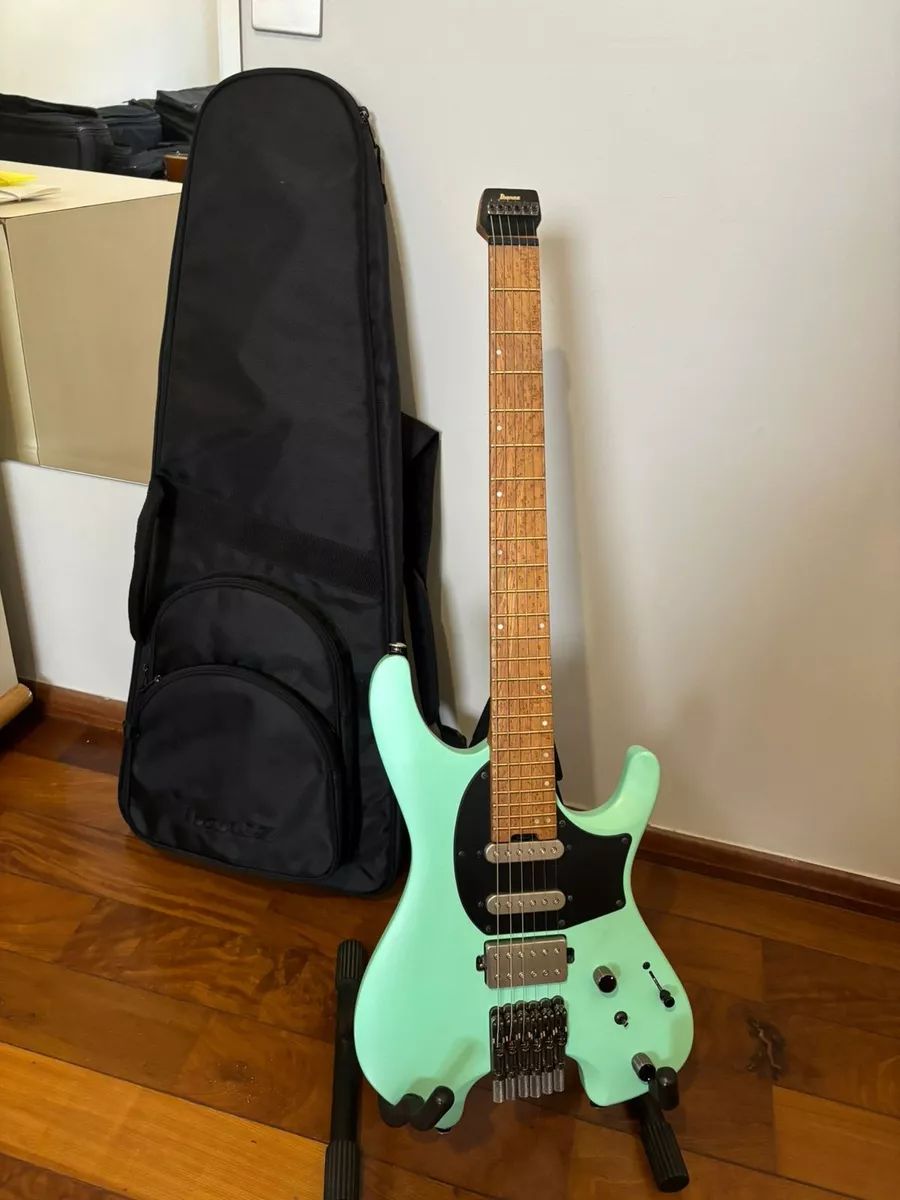
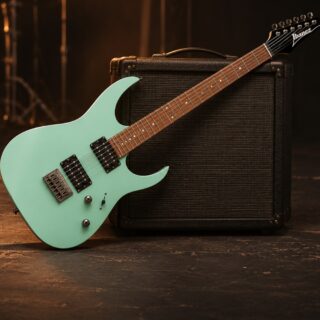
Ibanez Q54. Photo: Rachmaninoff, CC BY-SA 4.0, via Wikimedia Commons (File:Ibanez Q54 SFM.jpg).
The Ibanez Q54 became the literal blueprint for Ichika Nito's own signature guitar. Full headless history, specs, family tree, and buying guide.
Most guitars that end up with a name attached to them get there because a famous player already owned one, fell in love with it, and asked the company to put their name on the headstock. The Ibanez Q54 has no headstock to put a name on — and yet it managed to spawn a signature model anyway, because a Japanese YouTube guitarist with 1.5 million subscribers looked at Ibanez’s brand-new headless platform and decided it was close enough to perfect that he built his entire signature guitar directly on top of it. That guitarist is Ichika Nito, and understanding the Q54 means understanding how a guitar with no name attached to it became the reason one of the internet’s most technically dazzling players finally got his own signature instrument.
A Guitar Built From the Ground Up, Not Bolted On
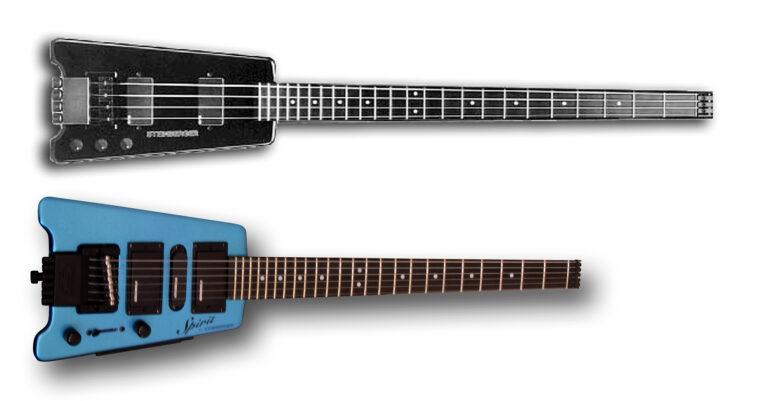
Ibanez had made headless basses for years before 2021, but it had never put a headless guitar into production. When the company finally did, it made a point of explaining that this wasn’t going to be a quick headless conversion of an existing model. Ibanez introduced the Q series of guitars, marking its first foray into headless instruments outside of their bass models, and the branding around the launch leaned hard into that distinction — this was a “Quest,” not a retrofit.
Why Ibanez Went Headless in 2021
Ibanez started producing headless instruments in 2021, when it first introduced the Quest series, arriving into a market where boutique headless brands like Strandberg had already built a passionate following among technical, tapping-heavy players. Rather than simply chase that trend with a stripped-down existing body shape, the Q or Quest series is an entirely new concept for Ibanez — the “Quest” in this case was to not just adapt an existing instrument into a headless design, but to develop an entirely new guitar from the ground up. Everything from the neck joint to the pickups to the bridge hardware was purpose-built for the headless format rather than adapted from Ibanez’s existing RG or S catalog.
Five Guitars, One Launch
The Q54 wasn’t a solo release. The Quest series is broken down into five separate offerings at launch: the HH-configured Q52, the HSS-configured Q54, the fret-slanted QX52 and QX54QM, and the seven-string QX527PB. Sitting alongside all of them — and headlining the announcement — was a sixth guitar that wasn’t really a Q54 at all, even though it was built on one.
From Q54 to ICHI10: How a Base Model Became a Signature Guitar
The name list attached to this rank — Steve Vai, Joe Satriani, Paul Gilbert, Nita Strauss, Tim Henson — is the same recycled Ibanez shred-artist roster that has now shown up incorrectly on more than a dozen straight Ibanez entries in this project, from the RG652AHMFX Prestige through the AZES40. None of the five have any documented connection to the Q54. All five had long since built their careers on conventional headstocked Ibanez signature platforms — Vai’s JEM and PIA, Satriani’s JS, Gilbert’s FLATV, Strauss’s JIVA, Henson’s THBB10 — years before Ibanez ever built a headless guitar at all.
Why Ichika Chose the Q Platform
The guitarist connected to the Q54 is Ichika Nito. Announced via a YouTube livestream, which features an in-depth interview with the Japanese virtuoso and an extended look at Ibanez’s take on the headless design, the Quest series is chief among which is social media sensation Ichika Nito’s debut signature model, the ICHI10. While there’s no official specification sheet for the ICHI10, we do know that it will have three single-coil pickups and be built on the Q series platform. It has bolt-on construction, and is not multi-scale — and critically, Ichika based his ICHI10 on the brand’s Q54 guitar, albeit with a few notable Nito-specific appointments.
Ibanez’s own product copy for the ICHI10 makes the relationship explicit rather than incidental: of all the options available to him, Ichika chose the headless Q (Quest) series from Ibanez on which to base his new signature model, and this guitar largely holds to the specifications and design of the Q54, with a few notable changes. In other words, the Q54 wasn’t just a similar guitar in the same catalog — it was the literal starting document that Ibanez’s own artist relations team handed a signature artist and said, “build from here.”
What Changed Between Q54 and ICHI10
The gap between the two guitars is narrow and instructive. Where the standard Q54 runs an HSS layout with a Q58 bridge humbucker, Ichika’s signature sports three R1 single-coils — the only model in the lineup to feature such a configuration — which aim to highlight his bright, pristine clean sound and glassy tonal clarity. Everything else — the nyatoh body, the three-piece maple/bubinga neck, the roasted birdseye maple fingerboard, the Mono-Tune bridge, the custom string lock — carried straight over. Ichika’s love of Ibanez’s Talman design is reflected in the ICHI10’s rounded neck profile and cream finish, a small personal touch layered onto an otherwise shared architecture. Ichika became a genuine milestone for the brand in the process: he is now Ibanez’s first-ever Japanese signature artist, and the guitar that got him there is, structurally, this one.
Guitar reviewers covering the Q series launch sometimes reached for other technical players’ names as illustrative comparisons rather than confirmed users. One review noted that a player “like Sarah Longfield, Yvette Young or lead Quest series artist Ichika Nito” would benefit from the ergonomic layout — but only Ichika is actually confirmed as playing the platform; Longfield and Young were invoked purely as examples of the kind of tapping-focused player the design targets, not as documented Q54 or Quest owners.
Full Specifications
How the Spec Sheet Has Quietly Evolved
For 2022 the magnets in the R1 and Q58 pickups were changed from alnico to ceramic. For 2024 the frets were changed from Jescar EVO gold to stainless steel. For 2026 the body material was changed to okoume. None of these are marketing-driven redesigns — they read more like a young platform being incrementally refined as Ibanez learned what players actually wanted from a budget-tier headless guitar: a slightly hotter, more modern-voiced pickup, frets that hold up to string-bending abuse without wearing flat, and a comparably-weighted tonewood swap as nyatoh supply tightened industry-wide. A guitar bought in 2021 and one bought today share a name but not an identical parts bin.
Why Go Headless At All?
For players who’ve never held one, the appeal of a headless guitar isn’t obvious from photos alone, and the trade-offs cut both ways. Removing the headstock shifts the guitar’s balance point back toward the body, which is the single biggest reason headless instruments feel so different strapped on — there’s less weight hanging off the far end of the neck fighting against a seated or standing player’s fretting hand. That shift is also why reviewers with larger frames sometimes report the opposite reaction: a guitar that feels compact and toy-like rather than balanced, simply because there’s less mass up top to counterbalance a bigger player’s arm.
The Tuning Stability Argument
The other headline benefit is mechanical rather than ergonomic. Conventional tuning machines sit at the far end of a long lever — the headstock — where small amounts of string slippage or nut friction get amplified into noticeable tuning drift, especially under aggressive bending or drop-tuned playing. Headless systems like the Q54’s Mono-Tune bridge and Custom String Lock move the fine-tuning mechanism to the bridge end and clamp the string at the nut, shortening that lever dramatically. It’s the same mechanical logic that made locking Floyd Rose systems popular decades earlier, applied without the trade-off of a floating trem’s own tuning quirks.
The Real Trade-Off: Restringing and Familiarity
What headless design gives back in stability, it takes in convenience for anyone used to a standard guitar. There’s no spinning a tuning peg by hand while a string is slack — headless systems generally require cutting strings to a specific length before clamping them in, a process that rewards a careful, repeatable routine far more than the old wind-and-tune method most players learned first. It’s a genuinely different skill, not a harder one, but it is one more thing standing between a curious player and their first headless guitar — which is exactly the friction Ibanez was trying to lower by keeping everything else about the Q54, from the neck profile to the pickup layout, as familiar as possible.
The Wider Quest Family
The Q54 is the middle sibling in a lineup that has grown steadily since 2021, and the differences between the variants are worth knowing before assuming any given Quest guitar in a photo is this one.
Straight Frets vs. Slanted Frets
Ibanez has now expanded the Quest series to include the Q54W, Q547, Q52 and QX52 models, with almost identical construction but different pickup configurations and, in one case, an increased number of strings. The core split in the family runs along one clear line: the Q52, Q54, and Q54W keep conventional straight frets, while every model wearing an “X” in its name — the QX52, QX54QM, and QX527PB — uses Ibanez’s 8-degree slanted fret system aimed squarely at players who spend serious time in the upper register. The QX subseries is also equipped with innovative 8-degree inward slanted frets, uniquely tailoring their ergonomics to the benefit of highly technical players. The straight-fretted Q54 covered here is deliberately the more conservative, easier-to-adjust-to option in the family — the guitar Ibanez built for players curious about headless design who didn’t want to relearn fretting-hand mechanics at the same time.
Secondary Players — On a Different SKU
Search results for “Quest series” and “Q54” turn up a handful of additional real-world players, but nearly all of them are documented specifically on the fanned-fret QX54QM rather than the straight-fretted Q54 covered in this article — an important distinction given how visually similar the two models are at a glance. Equipboard’s tracking for the QX54QM notes a guitarist identified as Manuel — widely believed to be Manuel Gardner Fernandes based on his other confirmed Ibanez gear — playing a custom coloured version from the new Ibanez Quest series, with the slanted frets and pickup configuration, as well as the fact he has been playing the standard Blue Sphere Burst version in other videos, meaning it is likely based on the QX54QM version of the guitar. A second player, Bill Vencil, is more straightforwardly documented: in a YouTube video from March 11, 2022, Bill Vencil plays his Blue Sphere Burst Ibanez QX54QM for the duration of the video. Both are genuine Quest-family connections — just not to this specific SKU.
Tone Recipes
Ambient Tapping / Neo-Soul Clean
Neck single-coil, volume near max, tone rolled back slightly for warmth. Clean amp channel or a transparent overdrive kept fully off, light plate reverb, subtle chorus. This is the sound the R1 pickups were voiced for — the same clarity Ichika built his signature around.
Technical Rhythm / Djent-Adjacent
Bridge Q58 humbucker, tight noise-gated high-gain amp or modeler patch, mids scooped moderately but not fully — the Q58 already leans slightly darker than a hot ceramic metal pickup, so over-scooping buries note definition on fast palm-muted passages.
Funk / Fusion Quack
Use the Alter mini-switch to bring in the parallel single-coil combination for a hollowed-out, quacky in-between tone. Compressor ahead of a clean-to-edge-of-breakup amp setting, light envelope filter for extra movement on chordal work.
The dyna-MIX9 system means the Q54 has more usable tonal ground than its two-humbucker-plus-single-coil-at-neck spec sheet might suggest at first glance. These are starting points, not gospel.
How the Q54 Stacks Up
Against boutique headless competition like Strandberg’s Boden series, the Q54 trades some of the multi-scale ergonomic ambition for a lower price point and Ibanez’s own well-worn dyna-MIX switching philosophy — the same flexible-tone-options approach found across the brand’s AZ2402 Prestige and AZ2204 Prestige. Against Ibanez’s own conventional headstocked lineup, the trade-off is more about ergonomics and stage presence than tone: players moving from something like the RG652AHMFX Prestige or the S6570SK Prestige will find broadly familiar Ibanez build philosophy — bolt-on neck, dyna-MIX switching, competent stock electronics — wrapped around a genuinely different physical format rather than a different sonic identity.
Buying Guide
- Pinpoint the year before buying used. The pickup magnet swap (2022), fret material change (2024), and body wood substitution (2026) mean two Q54s several years apart aren’t identical instruments, even sharing a model name and finish.
- Don’t confuse Q54 with QX54QM. The straight-fret Q54 and the slant-fret, quilted-maple-topped QX54QM look similar in thumbnail photos but play differently and carry a real price gap — check the fretboard angle in listing photos.
- Factor in the headless learning curve, not just the guitar’s price. Restringing technique, tuning method, and even how the guitar balances on a strap are different enough from a conventional guitar that first-time headless buyers should budget time to adjust, not just money.
- Gig bag is standard, hard case is not. Budget separately if a flight-ready case matters for your situation.
Practical Ownership Notes
Owner discussion around the Quest platform, gathered via Equipboard’s forum tracking for the closely related QX54QM, surfaces a consistent set of quirks worth knowing before buying. Restringing requires precise placement in the saddle slot to avoid breaking high E strings, highlighting the importance of technique — headless string-locking systems reward a careful, repeatable process rather than the quick tug-and-tune of a traditional machine head. The guitar’s tuning system requires using the same hand to pluck and adjust, which some find less intuitive at first, though most owners report the adjustment period is short. On the hardware-longevity side, some users experience rapid tarnishing of the bridge and clouding of the frets, which is worth a wipe-down habit more than a warranty concern. On the upside, the dual strap buttons allow the guitar to lean against surfaces without risk, offering practicality for stand-less storage — a small but genuinely useful side effect of the headless format’s balance point. And despite the learning curve, several users report the guitar maintains tuning stability better than comparable conventional-headstock guitars once players are past the initial setup.
Frequently Asked Questions
Is the Ibanez Q54 the same guitar as Ichika Nito’s signature model?
No, but it’s the direct blueprint for it. The ICHI10 signature swaps the Q54’s HSS pickup layout for three R1 single-coils and adds a few cosmetic personal touches, but shares the Q54’s body, neck, and hardware architecture.
Is the Q54 multi-scale (fanned fret)?
No. The Q54 uses conventional straight, parallel frets at a standard 25.5″ scale length. The slanted/fanned-fret models in the Quest family carry an “X” in their name — QX52, QX54QM, QX527PB.
What does HSS mean on the Q54, and how does dyna-MIX9 change that?
HSS refers to the pickup layout: two single-coils (R1) at neck and middle positions, and one humbucker (Q58) at the bridge. The dyna-MIX9 switching system, paired with the Alter mini-switch, expands that three-pickup layout into nine distinct tonal combinations rather than the standard five.
Has the Q54 changed much since its 2021 launch?
Yes, in ways that aren’t always obvious from photos. Pickup magnets moved from alnico to ceramic in 2022, frets switched from Jescar EVO Gold to stainless steel in 2024, and the body wood changed from nyatoh to okoume for the 2026 model year.
Is the Q54 a good first headless guitar?
It’s widely regarded as one of the more approachable entry points into headless design, largely because Ibanez kept the neck profile deliberately conventional — a “slim C” shape rather than an unfamiliar ergonomic departure — so players aren’t relearning hand position and headless mechanics at the same time.
What’s the difference between the Q54 and the Q54W?
They share nearly identical specs and hardware. The main visible difference is cosmetic — the Q54W uses a different pickguard treatment and finish options — with the Q54 and Q54W effectively functioning as parallel color/appointment options within the same core design rather than a functional upgrade path.
Can the Q54 handle drop tunings?
Yes — the Mono-Tune bridge’s wide intonation range and individually adjustable saddles were specifically designed with extended-range and down-tuned playing in mind, a deliberate nod to the technical and progressive players the Quest series targets.
– Guitars > Electric Guitars > Solidbody Guitars
Image credits
- An Ibanez Musician MC200DS guitar seen from below: Joshin Yamada, Wikimedia Commons, CC BY 2.0.
- An Ibanez JTK2 Jet King guitar in silhouette: Michael Pardo from Niagara, Canada, Wikimedia Commons, CC BY 2.0.
- Top image: Rachmaninoff, Wikimedia Commons, CC BY-SA 4.0.
Latest News
Related
On This Day
Sunday 15 November