Thirty Watts of Legend: The Soldano SLO-30 Head Earns Its Stripes
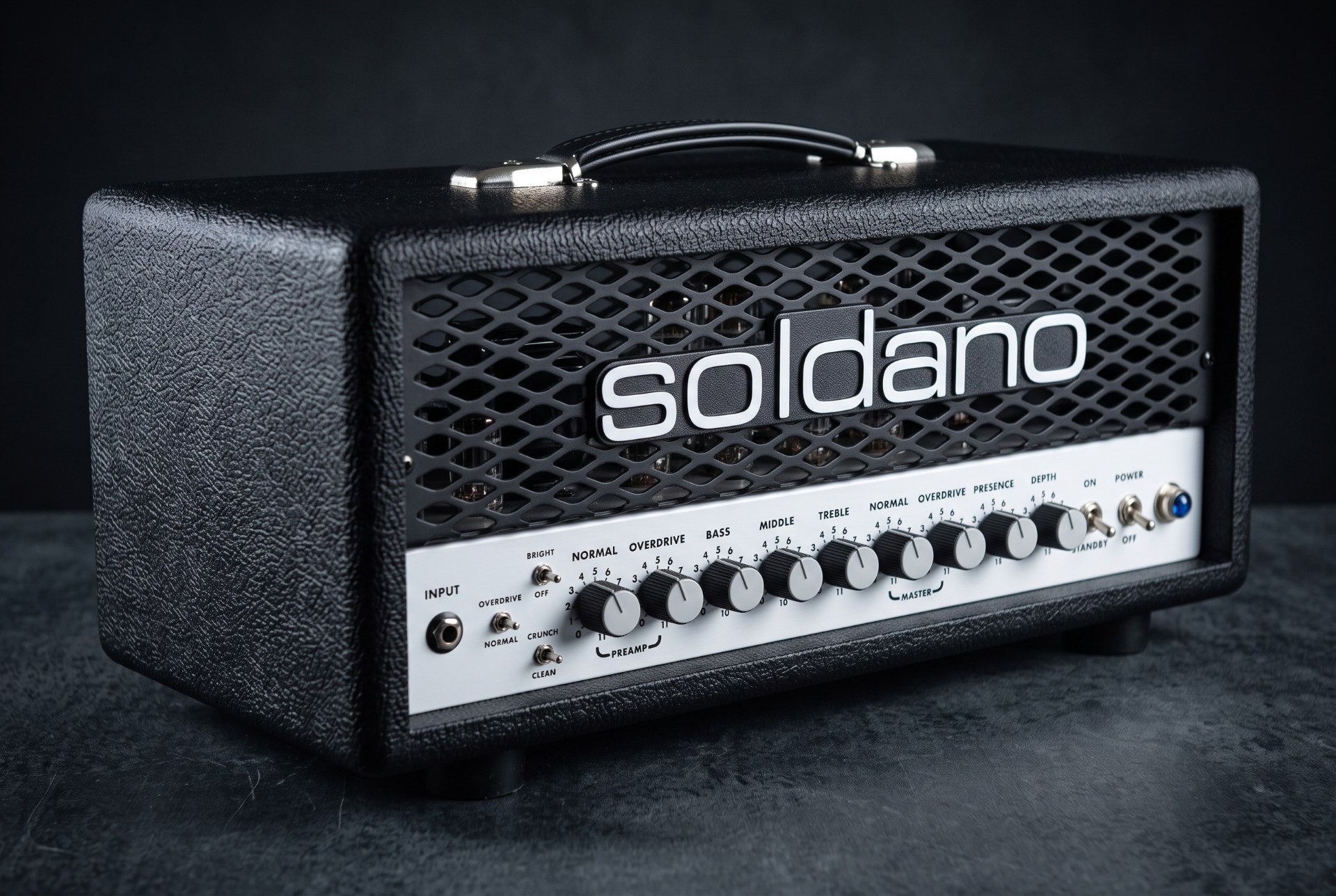
An AI-generated illustration of the Soldano SLO-30.
The Soldano SLO-30 packs the SLO-100's legendary preamp into 30 watts. Full specs, who actually plays it, five tone recipes, and a buying guide.
The original Soldano Super Lead Overdrive was built in a Seattle garage in 1987, and within five years it had redefined what a high-gain amplifier could be. The SLO-100 became the house amp for a generation of rock and metal guitarists who needed preamp-driven saturation, articulate note separation, and the ability to hear themselves think at rehearsal volume. It was, and is, one of the foundational designs of the boutique amp world.
For decades, getting into the SLO family meant buying the 100-watt version. That meant four 5881 power tubes, serious transformer weight, stage volume that starts at “assertive” and goes up from there, and a price tag that reflected every inch of the hand-wired American craftsmanship inside the chassis. The SLO-100 was not a starter amp. It was a career amp.
In 2020, following Soldano’s sale to Boutique Amps Distribution and the subsequent move of production from Seattle to Huntington Park, California, the company answered the obvious question: what happens if you build the same legendary preamp into a 30-watt chassis, add improvements the SLO-100 community had been modding in for years, and price it below the flagship? The Soldano SLO-30 happened. It is not simply a quieter SLO-100. It is a different amp that shares a brain with one of the most celebrated designs in rock history — and understanding exactly where it differs is the whole game.
Origin Story: From Seattle to Huntington Park
Mike Soldano built the first Super Lead Overdrive in 1987 after years of recognising that guitarists who wanted real, preamp-generated high gain were being underserved by the major manufacturers. The alternatives were expensive aftermarket modifications to amps never designed for the job. Soldano’s SLO offered sustain, harmonics, and drive right out of the box, with an overdrive channel that did not require the power tubes to be pushed to deafening levels to deliver the goods. Word spread fast.
Early adopters included Steve Lukather (Toto), Eric Clapton, Lou Reed, George Lynch (Dokken), Warren DeMartini (Ratt), and Steve Vai — names that would attach themselves to the SLO-100’s legend for the next thirty years. From the early 1990s, Soldano ran production out of his Seattle workshop with a small team. The amps were hand-wired point-to-point, built to last, and expensive. That was the deal and players took it.
In late 2018, Soldano sold his company to Boutique Amps Distribution (BAD), the same Huntington Park, California, operation that manufactures Friedman Amplification. Mike Soldano remained on board as an adviser and designer. Manufacturing shifted south. The first major product of the new arrangement — and the first Soldano amp built at BAD — was the SLO-30, unveiled publicly at NAMM 2020 and announced officially by Premier Guitar on July 1, 2020. Launch price was $2,699.99. Current list is $2,899.99.
What the SLO-30 Is — And How It Differs From the SLO-100
The preamp section of the SLO-30 is identical to the SLO-100: five 12AX7 tubes, the same Normal and Overdrive channel topology, the same independent Preamp and Master volume controls per channel, the same shared Bass/Middle/Treble tone stack. If you built the SLO-30 with four power tubes instead of two, at the same plate voltage, you would have something extremely close to the 100-watt version.
Soldano did not do that. He wanted 30 watts specifically, not 50, even though the two 5881 tubes could theoretically push that far. The deliberate choice was to run lower plate voltages so the power tubes would “give” a little at elevated master-volume settings — a conscious power-section compression built into the design rather than stumbled into by accident. The result is audible in direct comparisons: the SLO-30 breaks up earlier in the power section, has a rounder, less linear low end, and compresses more musically than its bigger brother. Forum shootouts describe the 100 as “big, tight, and kicking like a mule” and the 30 as “more compressed, still big but more rounded bottom end.” Neither is better. They are differently voiced tools.
Three improvements appear on the SLO-30 that were not stock on earlier SLO-100 production:
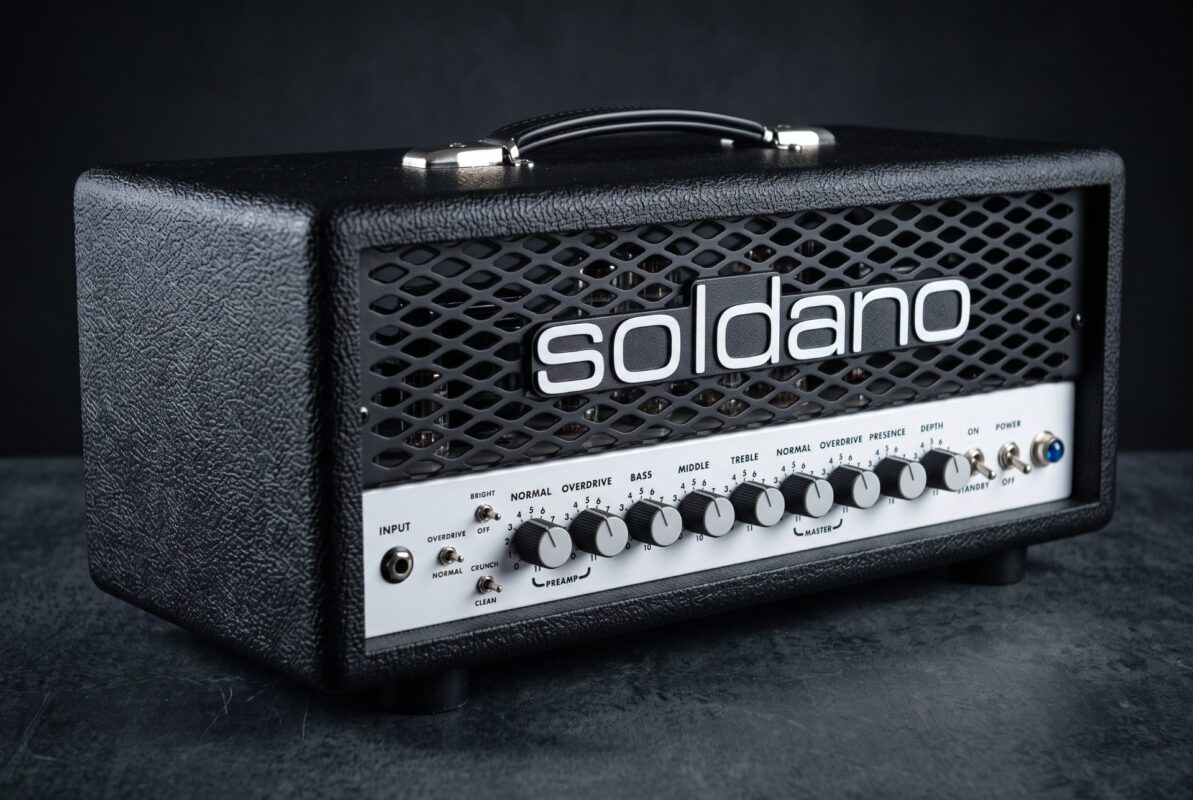
First, the Depth control. Historically, adding a Depth pot to the SLO-100’s power section was one of the most popular modifications ever done to the amp — it allowed players to adjust the amount of low-frequency resonance generated in the power section, complementing the global Presence control (which addresses high-frequency power-section response). The SLO-30 ships with Depth as a standard feature. Presence and Depth together constitute a genuinely powerful two-axis power-section EQ that goes well beyond what the tone stack alone can do.
Second, the noise floor. The SLO-30 uses DC heaters on its preamp tubes and modern grounding with circuit-path separation between channels. The original SLO-100 had a reputation for noise — unavoidable at high gain levels, manageable in a live context, slightly painful in a studio. The SLO-30 is dramatically quieter. Guitar Player reviewer Tom Beaujour noted in his April 2021 review that “there was almost none of the extraneous noise or hiss endemic to most high-gain amps.” For a 30-watt amp built for studio sessions and smaller stages, that improvement matters enormously.
Third, the FX loop. The SLO-30’s tube-buffered effects loop was redesigned from the original SLO topology. Soldano describes it as ultra-transparent, and Beaujour confirmed in his review that it handled both instrument-level stomps (Catalinbread spring reverb, MXR Carbon Copy) and line-level rack effects without complaint. The one omission noted: no footswitch capability for the loop itself, which is an inconvenience at this price point.
A Variable Slave output on the rear panel opens up direct recording, use with impulse responses, and amp combining — a feature that makes the SLO-30 more studio-native than the SLO-100 ever was at launch.
Specifications
Famous Players: Separating the SLO Family From the SLO-30
Mark Knopfler, Warren DeMartini, Eddie Van Halen, and Steve Lukather are the four names linked to this amp, but every one of these players is documented on the SLO-100, not the SLO-30.

Mark Knopfler had his SLO-100 built to order in the summer of 1988 — three years before the Soldano Hot Rod 50 existed and twelve years before Soldano’s own sale to BAD that eventually led to the SLO-30’s creation. Knopfler’s SLO connection is real and historically documented; it just has nothing to do with this amp. Warren DeMartini switched from Marshalls to the SLO-100 in the late 1980s for Ratt recordings — same situation. Eddie Van Halen is documented on Soldano’s own artists page as a brand user, connected to the SLO-100 that reportedly informed elements of the Peavey 5150’s design; he died in October 2020, three months after the SLO-30 was announced. Steve Lukather was one of the SLO-100’s original early adopters in the late 1980s. None of these connections, however genuine, extend to this model.
The SLO-30 is a new amp — introduced in 2020 — and its verified user base is still building. Equipboard lists three documented SLO-30 users at the time of writing.
The most quotable is Uruha, lead guitarist of Japanese visual kei veterans the GazettE. His own words, posted to Twitter after the purchase arrived: “SOLDANO has finally arrived. I had made up my mind the moment I rang it, I had no choice. That’s how it is when you encounter equipment; you embrace it without thinking about the consequences.” That is the kind of immediate, visceral response that characterises the SLO voice — and it came directly from the guitarist himself, not from a brand press release.
Equipboard also lists Jamie Oldfield and Tom Monda as SLO-30 users. Both are working guitarists and demonstrators rather than household rock names, and no independent primary-source video or interview has been located to confirm the specific model beyond the Equipboard entry. They are noted here for completeness but not cited with the same confidence as Uruha’s self-reported purchase.
The practical picture: the SLO-100 attracted its famous users across three decades of touring and recording. The SLO-30 has existed for roughly five years. The documented touring-level users will accumulate over time. For now, the honest story is that the SLO-30 is built to the same standard as the amp that defined a generation — and the people using it are choosing it on those terms, not because a magazine hero endorsed it.
Tone Recipes and Settings
Normal Channel: Classic Rock Crunch
This is the clean-to-lightly-broken side of the amp. Set the Normal Preamp Gain at 4–5, Master at whatever the room requires, Bass 6, Middle 6, Treble 5, Presence 5, Depth 5. Engage the Bright switch. In Clean mode the amp produces the tight, snappy quality that had Eric Clapton ordering SLOs before most people knew the brand existed. In Crunch mode — a small toggle on the front panel — you get compressed, Keef-adjacent bite that stacks beautifully under a Les Paul with the pickup selector in the middle position. This channel does not do pristine Fender sparkle; it does articulate, lightly-cooked single-note lines and chord work that flatters almost everything you throw at it.
Overdrive Channel: 1980s Hard Rock
Set the Overdrive Preamp Gain at 6–7, Overdrive Master at stage volume, Bass 5, Middle 7, Treble 6, Presence 6, Depth 6. This is the setting that put the SLO family on the map — thick harmonic overtones, fast attack with enough sustain to hold a bend forever, and a low end that punches without getting muddy. A humbucker-equipped guitar (Les Paul or similar) through this setting sounds like a late-1980s rock record played back through a very expensive hi-fi. The Depth control is the key variable here: push it above 6 for a more modern, low-end-heavy feel; pull it back to 3–4 for a slightly tighter, more British character.
Overdrive Channel: High-Gain Lead
Preamp Gain at 8–9, Overdrive Master at comfortable stage level, Bass 4, Middle 6, Treble 6, Presence 7, Depth 5. A Tube Screamer in front of the input adds front-end compression and mid push that sharpens single-note lines without collapsing the dynamics. The SLO-30’s Overdrive channel at high gain is saturated, woody, and responsive to pick attack in a way that many higher-gain designs are not — the amp tracks pick speed and pressure closely, making it feel musical rather than just loud. This is Steve Vai territory on the SLO-100; the SLO-30 delivers essentially the same character with an additional edge of power-section compression that makes the higher notes slightly fatter.
Variable Slave + IR: Direct Recording
Run the Variable Slave output into your interface. Load an impulse response of a 4×12 with Celestion V30s or G12M-25s. Overdrive Preamp Gain at 7, Master at minimum (the slave is post-power section, so master position still affects power-tube character), Bass 5, Middle 7, Treble 6, Presence 6, Depth 5. This configuration gives you the power-tube compression of a cranked 30-watt amp at zero speaker volume — the SLO’s DC-heated, ultra-low-noise preamp is exceptionally well-suited to direct recording because the noise floor genuinely is not an issue. Many players buy the SLO-30 specifically for this use case.
Normal/Crunch + Overdrive Blend: Two-Channel Studio Stack
Some users leave the Normal channel on Crunch as a rhythm setting (Gain 4, Master matched to the room) and the Overdrive channel at moderate gain (Gain 6, Master matched) for leads — footswitch between them. The transition is seamless because both channels share the same tone stack; no EQ mismatch between channels. Set the shared EQ once (Bass 6, Middle 6, Treble 5, Presence 5, Depth 5) and both channels live in the same sonic space. This is the real operational advantage of the SLO channel architecture over amps that use separate EQ stacks per channel: your tone stays coherent across the switch.
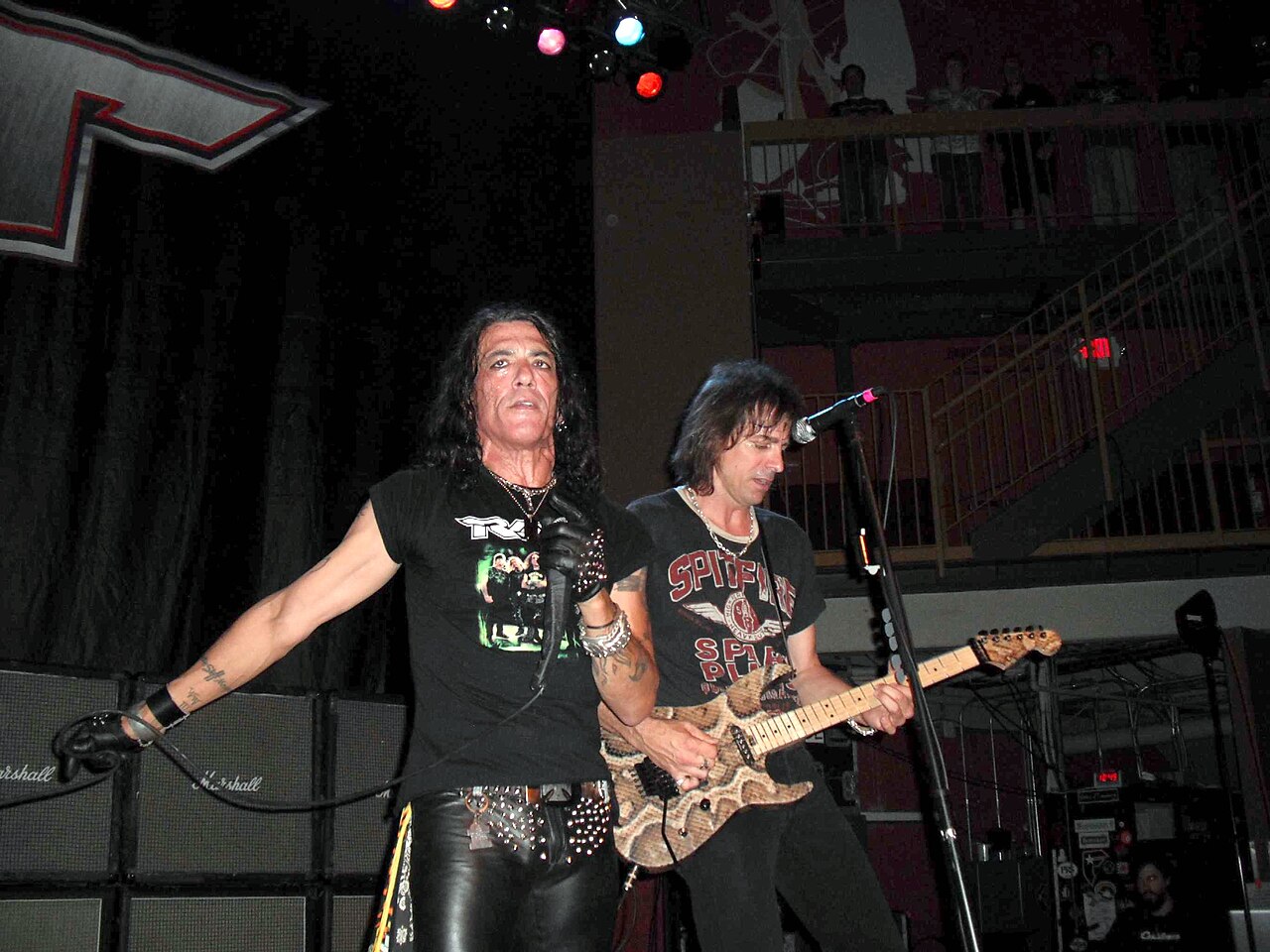
The SLO-30’s controls follow Soldano’s established architecture. Preamp gain sets how hard the preamp section saturates; Master volume controls how loud the result is. These are genuinely independent. Depth and Presence are the two most important global controls to master — they shape the power section’s frequency response and interact strongly with cabinet choice.
Comparisons
The Soldano SLO-100 is the obvious starting point. The preamp is identical. The SLO-100 has four 5881s versus two in the SLO-30 — more headroom, tighter and more linear bass response, and a harder, more modern character under high-master-volume playing. The SLO-100 does not have the Depth control as standard on vintage units (though it may be retrofitted); it does not have DC-heated preamp tubes on older production; and it is louder than most scenarios will ever require. If you are recording regularly or playing stages where a 30-watt amp through a 4×12 is already too loud, the SLO-30 is the logical choice. If you need 100 watts of headroom and the authority that comes with it, the 100 is still there.
The Soldano Hot Rod 50 (produced 1991–2005) sits between the SLO-30 and SLO-100 in the family. It shares the SLO preamp DNA but uses smaller transformers and a shared EQ stack, giving it a softer, slightly less precise character. The Hot Rod 50 has a warmer, bluesier personality than either SLO. The SLO-30 is considerably more accurate and articulate, and benefits from the post-2018 build quality improvements.
The Marshall JCM800 2203 is the cultural competitor that the SLO was originally designed to exceed in the gain department. At high gain, the JCM800 is looser, more midrange-aggressive, and requires either a pedal in front or a skilled hand at the master volume to produce the kind of sustained, defined lead tone the SLO-30 delivers at lower output settings. The JCM800 retains an organic, reactive quality at the power-amp saturation point that is nearly impossible to replicate. The SLO-30 wins on preamp saturation quality and noise floor; the JCM800 wins on power-section character when pushed to the wall.
The Mesa/Boogie Dual Rectifier is in a different tonal universe: scooped mids, compressed, designed for modern metal. The SLO-30’s midrange control does not scoop in the way the Dual Rec’s voicing does naturally — Guitar Player’s reviewer explicitly noted that the SLO-30 “sounds hollow and diminished, not lean and mean” when the Middle control is dialled down, because the control’s frequency and Q are optimised for a different midrange shape. If you need the Rectifier’s weight and presence, buy a Rectifier. The SLO-30 is a different philosophy.
The Peavey 5150 offers ferocious high gain at a fraction of the SLO-30’s price. The 5150 is tighter in the low end at high gain, harder-hitting, and purpose-built for the kind of metal music that does not need a Normal channel clean. The SLO-30 offers the Normal/Crunch versatility the 5150 lacks, a dramatically lower noise floor, and a more refined, harmonically complex overdrive character. They serve overlapping but not identical audiences.
Buying Guide
The SLO-30 Classic retails for $2,899.99. The Salt & Pepper Grille variant (black chassis, salt-and-pepper cloth) is the same amp, same price, different aesthetic. Soldano’s custom shop offers bright purple Tolex and full snakeskin finishes for a premium. All variants use identical electronics.
A 1×12 combo version (SLO-30 112, with Celestion V30) was introduced after the original head and occupies similar pricing. The combo is convenient; the head gives you cabinet choice. Most serious players opt for the head and pair it with a quality 2×12 or 4×12 loaded with V30s or G12M-25s — the latter giving a slightly looser, more period-correct character that suits the SLO voicing well.
The SLO-30 was introduced in 2020, which means the used market is not deep yet. Expect to see used units in the $1,800–$2,400 range depending on condition and era. The 2020 launch price was $2,699.99; current pricing reflects modest inflation. There have been no significant circuit changes reported between production runs, which means any SLO-30 is effectively the same amp regardless of build date.
Note the warranty: Soldano’s lifetime warranty is transferable. A used SLO-30 from a private seller still carries coverage. Confirm the serial number with Soldano directly if the provenance of a used unit is unclear.
For cabinet pairing, the impedance selector (4, 8, 16Ω) covers most standard configurations. The SLO-30 is not a high-wattage amp hunting for headroom, so running it into a single 12-inch at 16Ω is entirely viable for recording and small rooms. For live use, a standard 2×12 at 8Ω is the most common setup.
Living With the SLO-30
The SLO-30 uses two 5881 power tubes. These are robust — expect 1,500 to 2,000 hours of playing life under moderate conditions. When they need replacing, note that 5881 and 6L6GC are closely related but not interchangeable without a bias check; a tech should verify bias any time power tubes are swapped. Standard matched pairs of JJ 5881 or EH 5881 are the common replacement choices. The five 12AX7 preamp tubes are far longer-lived and rarely need replacement unless one fails suddenly.
The effects loop is tube-buffered, which means a 12AX7 inside drives the loop stage. Instrument-level pedals (stomps) and line-level rack effects both function correctly, per the Guitar Player review and forum consensus. The loop has no footswitch capability — if you need to engage and disengage effects mid-performance, a switching system between the pedal/rack and the loop jacks is necessary. This is a known limitation and worth planning for before the first gig.
The front-panel channel toggle is genuinely useful in studio contexts where a footswitch on the floor is inconvenient. It selects Normal or Overdrive without bending down. The Clean/Crunch mini toggle on the Normal channel adds a third tonal state, giving the amp effective three-channel versatility from a two-channel topology.
The Variable Slave output is post-power section and line-level. It can drive a second power amp (for amp combining), an attenuator, an IR loader, or a recording interface directly. The output level is variable via the rear-panel control. At low Slave levels the power section is still working, which is the key distinction from a simple DI: the power tube character is captured. This makes the SLO-30 a credible silent-recording platform that the SLO-100 never was in its original form.
Do not try to use the SLO-30 for mid-scooped thrash or extreme metal voicings. The Middle control’s frequency range and Q are not designed for that application. Dialling Middle below 4 produces hollow, diminished tones rather than the lean, scooped character that style requires. The SLO-30 is a hard-rock and classic high-gain amp — blues, rock, classic metal, and melodic lead work — and it does those things at a very high level. For the other thing, buy a different amp.
Frequently Asked Questions
Is the SLO-30 basically a quiet SLO-100?
No. The preamp sections are identical, but the power sections are meaningfully different. The SLO-30 uses two 5881 tubes versus the 100’s four, at lower plate voltages, producing earlier power-section compression, a rounder low end, and a more forgiving dynamic feel. Soldano deliberately chose 30 watts rather than 50 to make the power tubes work. The SLO-100 is tighter, more linear, and louder. Direct A/B comparisons consistently show audible differences at similar volume levels.
Does the SLO-30 have all the same controls as the SLO-100?
Yes, plus one important addition: the Depth control is standard on the SLO-30, whereas on earlier SLO-100 production it was a popular aftermarket modification. Both amps share the Normal/Overdrive channel structure, independent Preamp and Master per channel, global Bass/Middle/Treble/Presence, and the Clean/Crunch mini toggle on the Normal channel.
Is the SLO-30 actually made in the USA?
Yes. Production moved from Mike Soldano’s Seattle workshop (pre-2018) to Boutique Amps Distribution’s Huntington Park, California, facility after the 2018 acquisition. The same factory builds Friedman amplifiers. Hand-wiring is retained; the construction standard and military-grade component specification are unchanged. The transferable lifetime warranty covers workmanship.
Can I use the SLO-30 for metal?
Hard rock and classic metal — yes, definitively. Mid-scooped modern metal or thrash — with significant caveats. Guitar Player’s formal review explicitly noted the Middle control’s frequency range does not produce convincing scooped tones; the amp sounds hollow rather than lean when mid is pulled. Players seeking the Dual Rectifier or 5150 voicing will not find it here. Players seeking Lynch/DeMartini/Vai-style melodic high gain from the late 1980s — absolutely.
How loud is 30 watts in practice?
Through a 4×12 cabinet, a 30-watt all-tube head is plenty loud for most live stages. Guitar Player’s reviewer estimated it “would prove sufficient in almost any live situation, and probably even elicit the required ‘Can you turn that down?’ from your curmudgeonly front-of-house engineer.” The more relevant point is that the SLO-30 sounds excellent at low master volume settings, down to genuinely bedroom-safe levels — a characteristic that was specifically designed in, not accidental.
What cab does the SLO-30 work best with?
The Guitar Player review used a Celestion Vintage 30–loaded Bogner 4×12 and praised the results. V30s are a common pairing — their upper-mid presence complements the SLO’s harmonic density. Celestion G12M-25 Greenbacks give a slightly looser, warmer result that suits the Normal/Crunch channel particularly well. The SLO-30 tolerates almost any quality cabinet; the choice is mostly an EQ decision rather than an incompatibility question.
Are the four famous players listed with this amp actual SLO-30 users?
No. Mark Knopfler, Warren DeMartini, Eddie Van Halen, and Steve Lukather are all documented SLO-100 users. Their Soldano connections date to the late 1980s and early 1990s — the SLO-30 was not announced until July 2020 and did not exist during the period when those players established their Soldano associations. Soldano’s own artists page lists them at brand level, not model level. The honest story is that the SLO-30 is a recent amp with a growing but not yet famous-player-dense user base.
Is there a combo version?
Yes. Soldano released the SLO-30 112 combo, a 1×12 version loaded with a Celestion Vintage 30. The electronics are identical to the head. The combo is less flexible on cabinet choice but more convenient for transport. Pricing is comparable to the head. Custom shop options (snakeskin, custom Tolex colours including purple) are available on both formats.
Image credits
- Steve Lukather: Eva Rinaldi, Wikimedia Commons, CC BY-SA 2.0.
- Warren DeMartini: Ted Van Pelt, Wikimedia Commons, CC BY 2.0.
- Top image: GuitarGangsters AI-generated reference illustration, not a photograph.
- Soldano SLO-30: AI-generated illustration by GuitarGangsters, based on the manufacturer’s product design (not a photograph).
Latest News
Related
On This Day
Monday 9 November
From this week: