Peavey 5150: The Amp Eddie Van Halen Built That Metal Stole From Him
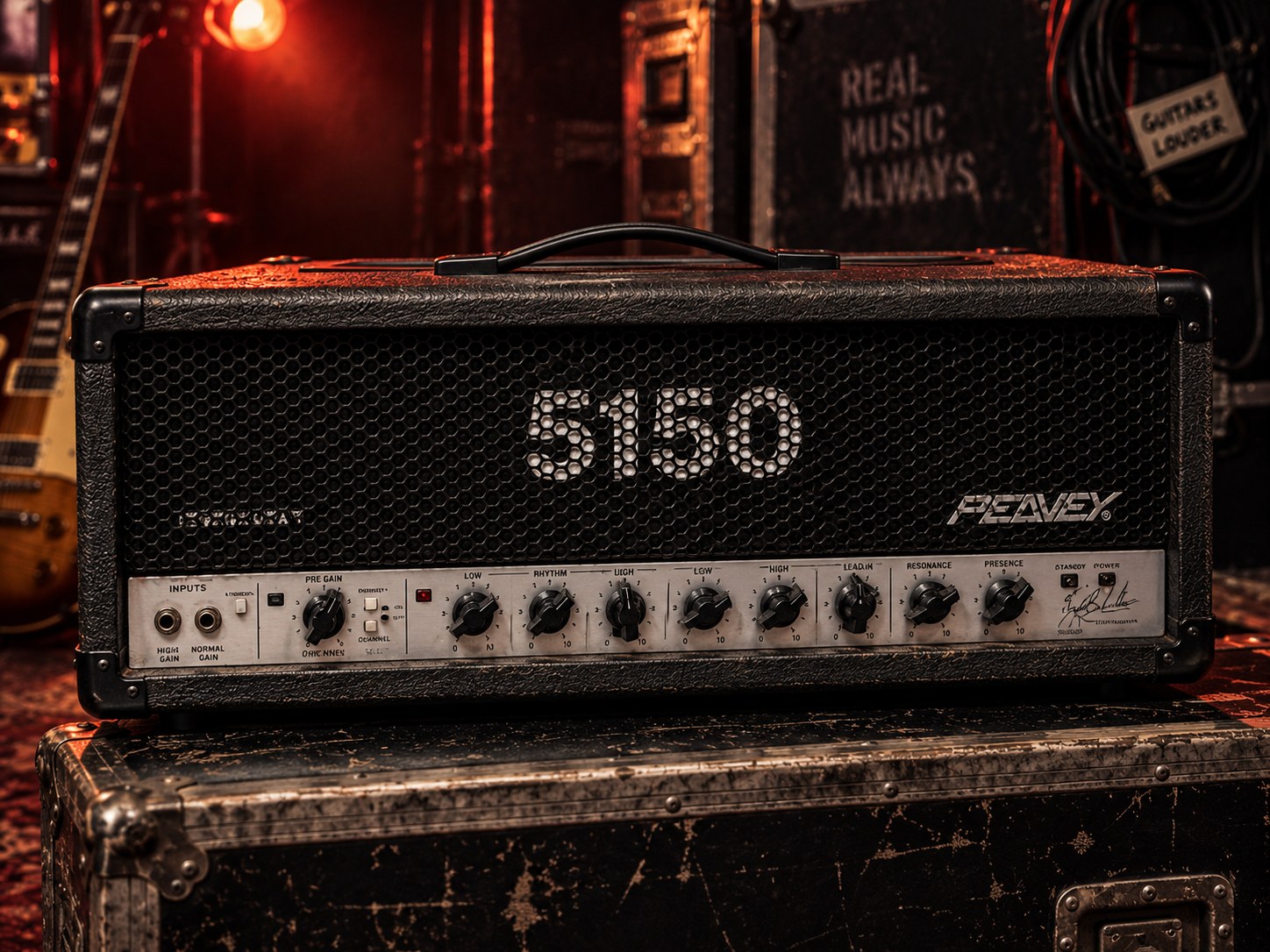
Peavey 5150 head. AI-generated reference illustration, not a photograph.
The full story of the Peavey 5150: Eddie Van Halen's 1992 high-gain classic, its Soldano roots, verified players, tone settings and buying advice.
There is a particular kind of joke the universe likes to play on rock stars. You spend two years in a factory in Meridian, Mississippi, sweating over an amplifier that is supposed to bottle the sound in your head. You put your studio’s name on it. You put your initials on the front panel. And within about eighteen months, the thing has been adopted, wholesale and without permission, by every band on earth who hates everything you stand for.
That is the story of the Peavey 5150. Eddie Van Halen commissioned it. James Brown, Peavey’s lead amp engineer, built it. It arrived in 1992 wearing Eddie’s name like a birth certificate. And then Machine Head, In Flames, Fear Factory, Bullet For My Valentine, Periphery, Gojira and roughly ten thousand basement bands with seven-string guitars picked it up and turned it into the default sound of aggressive music for the next three decades. Ask a twenty-two-year-old metal guitarist in 2026 what a 5150 is and there is a decent chance the words “Van Halen” will not enter the conversation at all.
What follows is the full story of the amp — where the circuit came from, what it actually does, who really played one, why Eddie walked away in 2004, and what any of it means if you are standing in a shop with $900 in your pocket looking at a scuffed black head with chicken-head knobs.
Before the 5150: Marshall, Variac, Soldano
You cannot explain the 5150 without first explaining what it was replacing, and the answer is one of the most mythologised amplifiers in the instrument’s history.
From Van Halen (1978) through OU812 (1988), Eddie’s recorded tone came out of a 1968 100-watt Marshall Super Lead. For decades players assumed it was modified into oblivion. It was not. Universal Audio’s own history of the amp puts it bluntly: despite years of speculation — and despite Eddie himself sometimes implying otherwise — the Super Lead was stock. The trick was a Variac, a variable transformer used to drop the amp’s mains voltage, which softened the power supply and gave the amp the sag and compression that the “brown sound” legend was built on. If you want the deeper version of that story, it lives in our Marshall 1959 Super Lead Plexi feature.
By the end of the eighties, that amp was tired. Amps are consumable objects; transformers age, caps drift, and an amp that has been on the road since the Carter administration will eventually stop being the amp it was. Eddie went looking, and what he found was Mike Soldano.
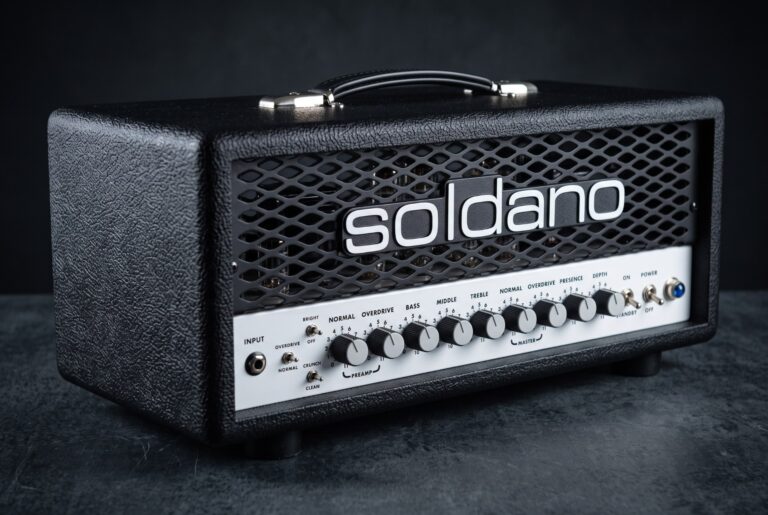
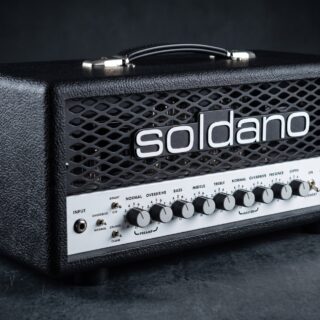
The Soldano SLO-100 was the boutique high-gain benchmark of the era: cascaded preamp gain stages, a proper master volume, a genuinely usable clean channel and a 6L6 output section rather than the EL34/6CA7 arrangement Eddie’s Marshall used. It went far past anything a vintage Plexi could do, and it did it with a refinement that hot-rodded Marshalls generally could not manage. Eddie used it extensively on 1991’s For Unlawful Carnal Knowledge, alongside a CAE preamp.
And then he decided he would rather have his own. Wikipedia’s entry on the amp states the relationship plainly: the 5150 was based on the SLO-100 that Eddie was using at the time. That is not a slur on either party — Mike Soldano’s design was the state of the art, and half the high-gain amps of the following decade owe it something. But it matters for understanding the 5150, because the amp’s DNA is Soldano, not Marshall, and it explains why the 5150 has never sounded like Eddie’s records.
Meridian, Mississippi, 1990-1992
Peavey was, in 1990, an unlikely partner for the biggest guitar hero on the planet. The company was founded in 1965 by Hartley Peavey, the son of a Meridian music store owner, who had wanted to be a rock star, discovered he was better at building the gear, and got his first patent in 1964. Peavey’s reputation was built on hard-wearing, unglamorous, affordable equipment — PA systems first, then the Musician, VTM, Mace and Bandit amps. It was not a boutique brand. It was the brand that survived being thrown off a truck.
Current Peavey CEO Courtland Gray — Hartley’s son-in-law — told Guitar World in March 2025 how the collaboration came about: “As I recall, Eddie was looking at doing his own amp. He contacted us about making some amps and guitars and started working with our engineers on the heads first, going back and forth, testing things out. Eddie spent a lot of time over here in Meridian, checking the tones and tweaking everything bit by bit to make a great product.”
Gray’s own summary of the oddity of the pairing is the best line in the interview: “I guess it must have been a big shock when little Peavey in Mississippi got the biggest guitar hero out there working on a signature product. But I think Ed just appreciated the quality of craftsmanship at Peavey.”
The engineer on the project was James Brown, then Peavey’s lead amp designer, who has since founded the pedal company Amptweaker. Development ran roughly two years. The amp launched in 1992, named after Eddie’s home studio — which was itself named, with characteristic Van Halen humour, after §5150 of California’s Lanterman-Petris-Short Act, the code covering involuntary psychiatric holds.
Block letter, script letter, and a trademark problem
The very first heads carried a large block “EVH” logo on the control panel. That did not last. Pro audio giant Electro-Voice — trading as EV — claimed logo infringement, and Peavey redesigned the panel to carry Eddie’s signature instead. Those later units are the “script logo” models.
This is the origin of the single most persistent piece of used-market folklore in metal: that “block letter” 5150s sound better. They command a premium. Forums insist on it. Wikipedia is unusually direct in shooting it down, noting that the only real difference is the brand of power tubes originally fitted — early units shipped with Sylvania 6L6s, switching to Ruby 6L6s when Peavey’s Sylvania stock ran out, a change James Brown himself described on the Tone Talk podcast (episode 17). Since power tubes are consumables with a service life measured in hundreds of hours, essentially no block-letter amp still contains its original Sylvanias.
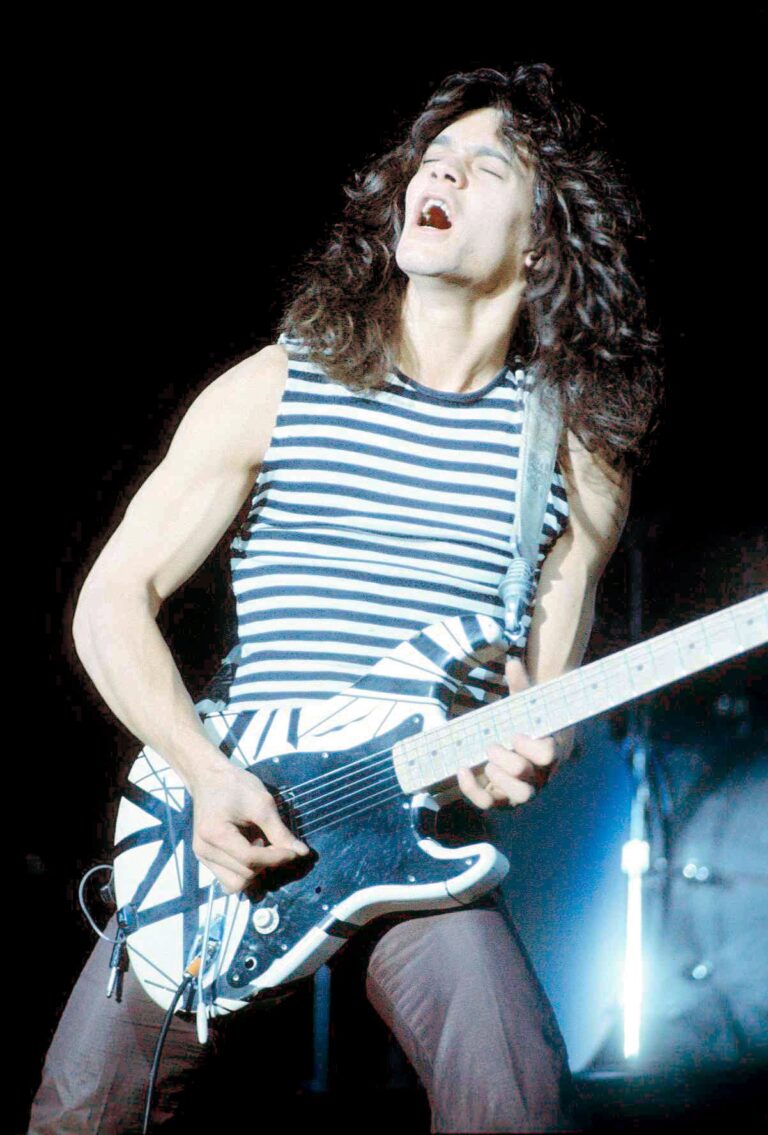
Stated plainly: paying a block-letter premium in 2026 is paying for a cosmetic panel and a set of tubes that left the building twenty-five years ago. Buy the amp that has been serviced, not the amp with the better logo.
What is actually inside a 5150
The original head is a 120-watt RMS, class AB, two-channel design: four 6L6GC power tubes, five 12AX7 preamp tubes (four preamp positions plus a phase inverter), switchable for 16, 8 or 4 ohms. The two channels are Rhythm and Lead, each with its own Pre Gain and Post Gain, sharing a single three-band EQ plus Presence and Resonance. The Rhythm channel adds Crunch and Bright switches. There are two inputs — High Gain and Normal — a footswitchable effects loop, a preamp out, and a supplied two-button footswitch handling channel and loop.
Four things about that spec sheet matter more than the rest.
1. Four cascaded gain stages. The 5150’s preamp stacks gain stage into gain stage in the Soldano manner, so distortion is generated almost entirely before the power section. This is the fundamental difference between the 5150 and a cranked Marshall JCM800 2203: the JCM800 gets a lot of its character from a driven output stage, whereas the 5150 will produce its signature sound at a bedroom Post Gain setting. It is a preamp-distortion amp, and it always was.
2. Cold bias. Peavey ran the output tubes conservatively — “cold-biased” in the usual shorthand. This is the most commonly cited technical explanation for the 5150’s tightness and its slightly hard, aggressive edge, and it is also the reason the amp is famously unfussy about power tubes. Wikipedia flags the surrounding folklore as unsourced, so treat the causal claim with appropriate caution; what is not in dispute is that the amp is biased cold from the factory and that this is a deliberate voicing decision, not an oversight.
3. Resonance. Peavey’s Presence and Resonance controls sit in the power amp’s negative feedback loop rather than in the tone stack. Universal Audio’s Tore Mogensen gives the cleanest explanation on record: “The resonance control on a 5150 is essentially a presence control but for the low end. One problem with getting a proper tight metal tone is dialing away some low end. With the resonance control, you could just dial it back and remove all the unwanted stuff, creating a big, muscular sound crucial for metal.” It also means the amp keeps a usable low end at lower volumes, which most 100-watt heads do not.
4. The midrange is not scooped. This surprises people, because the 5150 is associated with scooped metal tone. The amp’s native voice is aggressive and forward through the upper mids; the scoop is something players dial in with the EQ, and the reason 5150s cut through dense mixes is that most players scoop them far less than they think they do. Dave Hunter, in 365 Guitars, Amps & Effects You Must Play, describes the lead channel as having “a harmonic bloom and juicy harmonic saturation” — which is a description of midrange complexity, not of a notch at 500 Hz.
The clean channel: let us be honest
The Rhythm channel of the original 5150 is not good. It is thin, it breaks up early if you hit it hard, and it exists mainly as a place to put a chorus pedal during the quiet part of the song. This is not a controversial opinion; it is the single change Peavey made in the follow-up model, adding a sixth 12AX7 to the 5150 II specifically to stop the clean channel breaking up. Three decades of amps have since arrived with genuinely excellent clean channels alongside modern gain. If you need cleans, this is the amp’s real weakness, and it is a bigger one than any tonal quibble about the lead channel.
The family tree: 5150, 5150 II, 6505, and everything after
| Model | Years | Power | Preamp tubes | Power tubes | Key differences |
|---|---|---|---|---|---|
| Peavey 5150 (block, then script) | 1992-2004 | 120 W RMS | 5 x 12AX7 | 4 x 6L6GC | The original. Shared 3-band EQ, Presence, Resonance. Two inputs (High/Normal). Crunch + Bright on Rhythm. |
| Peavey 5150 212 combo | 1992-2004 | 60 W RMS | 5 x 12AX7 | 2 x 6L6GC | 2×12 combo, 16/8 ohms, adds footswitchable spring reverb the head never had. |
| Peavey 5150 II | 1996-2004 | 120 W RMS | 6 x 12AX7 | 4 x 6L6GC | Extra preamp tube for a cleaner clean. Separate EQ, Presence and Resonance per channel. Single input. Rear bias test points. |
| Peavey 6505 | 2005- | 120 W RMS | 5 x 12AX7 | 4 x 6L6GC | The 5150 renamed after the split. Circuit unchanged; name marks Peavey’s 1965-2005 40th anniversary. |
| Peavey 6505+ | 2005- | 120 W RMS | 6 x 12AX7 | 4 x 6L6GC | The 5150 II renamed. Per-channel EQ, single input. |
| Peavey 6534+ | 2010- | 120 W RMS | 6 x 12AX7 | 4 x EL34 | EL34 version of the 6505+, aimed at players who wanted the British power-tube flavour. New output transformer, tighter midrange variation. |
| Peavey 6505 1992 Original | 2022- | 120 W RMS | 5 x 12AX7 | 4 x 6L6GC | 30th anniversary re-creation of the first head, built around a re-specified custom output transformer. SKU 03619250. |
| Peavey 6505 II | 2022- | 120 W RMS | 6 x 12AX7 | 4 x 6L6GC | Modern take on the 5150 II layout: per-channel EQ, Resonance and Presence, plexiglass front panel. |
| Peavey 6505MH | 2016- | 20/5/1 W | 3 x 12AX7 | 2 x EL84 | Lunchbox head. Attenuated power, USB and XLR direct outs, built-in dummy load. |
| Peavey Invective.120 | 2017- | 120 W RMS | – | 4 x 6L6GC | Co-designed with Misha Mansoor. Lead channel based on the 6505, plus a proper clean channel, onboard gate, boost and effects. |
Two footnotes on that table. The 60-watt 5150 combo is the forgotten member of the family and the one worth hunting: same preamp, half the power tubes, and a spring reverb the head never had. And the 6505+112 combo — the small 1×12 version — is built in China rather than Meridian, with a reduced tube count; it is a different proposition from the American-built heads and should be priced as such.
Why Eddie walked: the Satriani problem
The partnership ended in 2004. For twenty years the reasons were the subject of speculation. In March 2025, Courtland Gray put Peavey’s version on the record in Guitar World, and it is worth quoting at length because it is the only first-party account that exists.
“The best we can figure is that we joined up with Joe Satriani and made a signature amp with him called the JSX. I think Eddie got rubbed up the wrong way because we had another superstar guitar player in our lineup, and he always figured he was the artist for Peavey. So he decided to leave.”
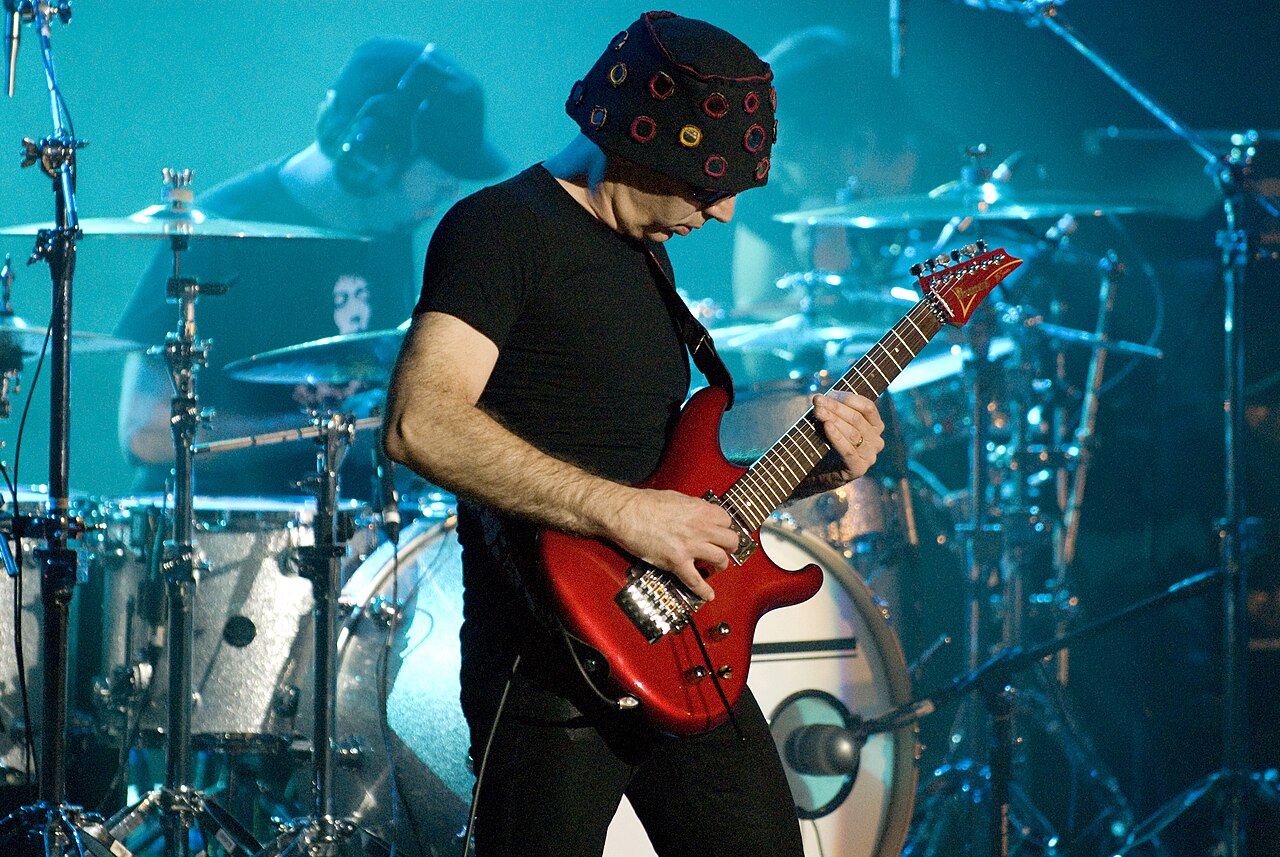
Gray continued: “We gave him the 5150 name because that’s what he wanted his amp to be called. But it was part of the agreement that we wouldn’t make the guitar if he didn’t make the amp. Shortly thereafter, we were at a trade show and heard this amp that sounded just like a 5150. And sure enough, he’d come out with his own version. I think he even used our engineer to develop the new one. That was in 2005, around our 40th anniversary. Having been founded in 1965, we decided to call our amp the 6505.”
Three things are worth flagging about that passage, in the interests of not simply repeating one side of a story.
First, this is Peavey’s account, given by Peavey’s CEO, twenty-one years after the fact, and prefaced by Gray himself with “the best we can figure” — he is describing an inference, not a documented conversation. Eddie Van Halen died in October 2020 and never gave a matching public account. Treat it as the most authoritative version available rather than as settled fact.
Second, the “he even used our engineer” line is not idle. James Brown, the 5150’s designer, did subsequently work on the EVH-branded amps — MusicRadar reported in July 2021 that Brown was “back onboard” for a new round of more affordable EVH amps, which is a strange phrase to use about someone who had never been on board in the first place. The Peavey JSX, meanwhile, remains one of the more underrated three-channel amps of the 2000s, and its existence is genuinely why the 6505 is called the 6505.
Third, the naming logic is neat and rarely explained properly: Peavey was founded in 1965 and the split happened around its fortieth anniversary in 2005. 65 and 05. The number has nothing to do with model sequencing and nothing to do with mental health legislation — it is a company birthday hidden in plain sight, which is a rather more Mississippi way of doing things than naming your amp after a psychiatric hold.
Eddie took the 5150 name to Fender, where the EVH brand launched the 5150III in 2007 — a genuinely different, three-channel amp rather than a re-badge — followed by the EL34 version, the Stealth variants and eventually the more affordable 5150 Iconic series. Peavey kept the circuit. Eddie kept the name. Everybody kept selling amps.
Famous players: what holds up and what does not
The 5150 has one of the most polluted artist lists in gear writing, for a specific and boring reason: the name refers to at least three different amplifier families made by two different companies across thirty-four years. “He plays a 5150” can mean a 1993 Peavey block letter, a 2011 EVH 5150III, a 2021 5150 Iconic, or a 6505 that the writer decided to call a 5150 because more people would recognise it. Here is what survives verification.
Eddie Van Halen — verified, with the obvious caveat
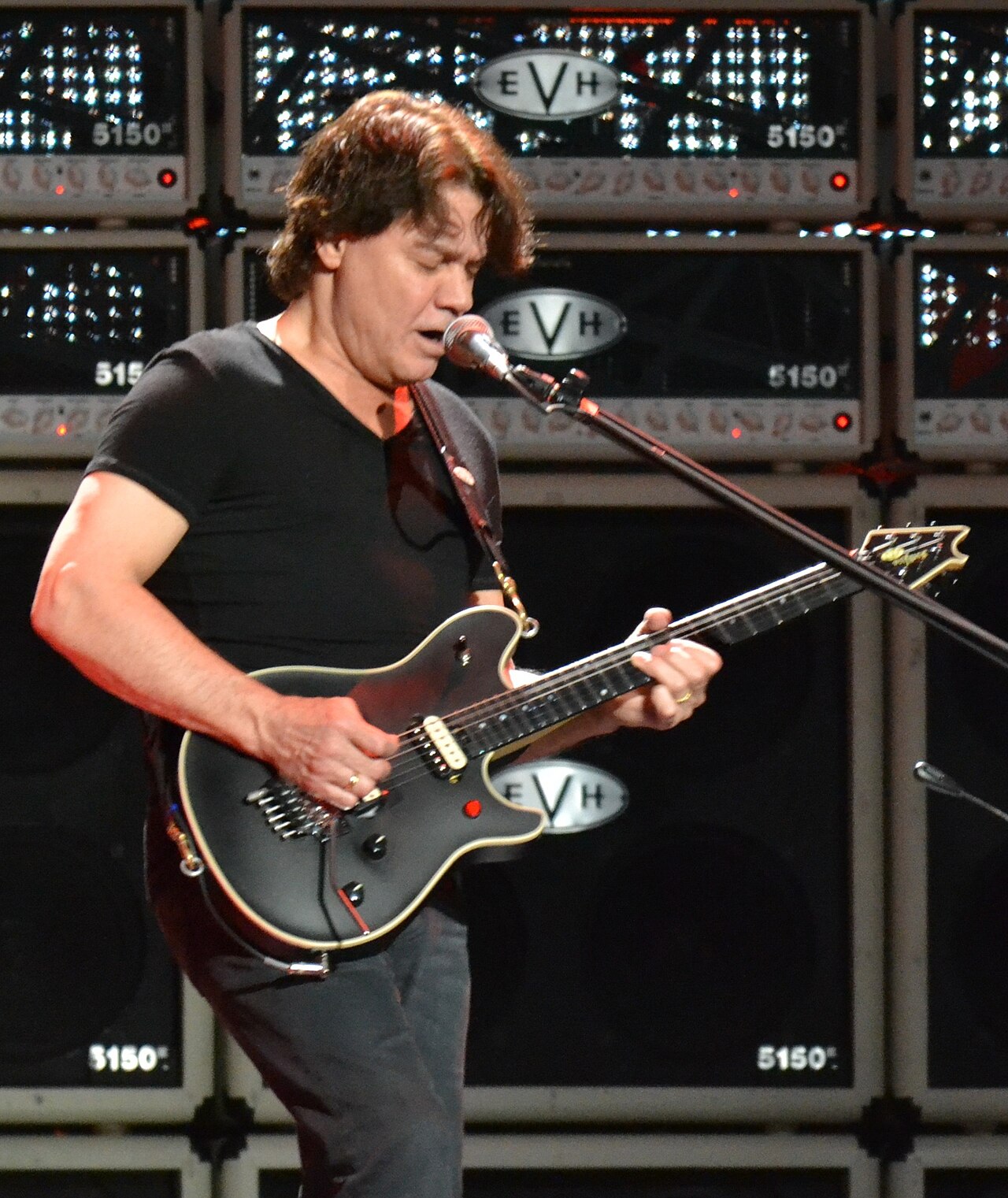
Eddie Van Halen co-designed the amp, spent extended stretches in Meridian voicing it, and used it as his primary rig from its 1992 launch through the end of the Peavey relationship. It is genuinely his amp in a way that most signature products are not.
The caveat that every honest 5150 article has to make: this is not the amp on the records that made him famous. Every note of “Eruption,” “Unchained,” “Panama” and “Hot For Teacher” came out of the 1968 Super Lead. The 5150 arrives on Balance (1995) and Van Halen III (1998) — good records, not the canon. If you buy a 5150 chasing 1978, you have bought the wrong decade and will spend a year wondering why. As Universal Audio’s Tore Mogensen put it: “The 5150 doesn’t sound like the tone that Eddie Van Halen is so well-known for. When it came out, I was expecting this hot-rodded Marshall kind of thing, and it sounds nothing like that.”
Joe Satriani — verified, and the story is more interesting than the credit
Joe Satriani is documented by Universal Audio as one of the amp’s early adopters alongside Buckethead, using its thick saturation and sustain for the sort of long-form melodic lead playing the amp was never marketed for. He is on record using it for years, including on the title track of 2013’s Unstoppable Momentum-era material.
But the more consequential fact is the one above: Satriani’s own Peavey signature amp, the JSX, is — per Peavey’s CEO — the thing that ended Eddie’s relationship with the company. Satriani is simultaneously a verified 5150 player and the reason the 5150 stopped being called the 5150. That is the single best trivia item in this entire article.
Buckethead — verified
Buckethead is named alongside Satriani by Universal Audio as an early adopter, using the amp’s saturation and scooped capability for his particular brand of high-velocity outsider shred. Given the volume of his discography, “Buckethead used a 5150” covers a lot of ground and should not be read as a claim about any specific record.
Machine Head and Robb Flynn — the record that changed everything
The single most important 5150 record is not a Van Halen album. Wikipedia, citing Guitar Player‘s October 2012 feature “Great Timelines in Modern Metal: The Peavey 6505,” identifies Machine Head’s Burn My Eyes (1994) as the album that gave the amp its reputation in the metal underground, with a sound that “defined a generation of guitar tone.”
The broader mechanism matters as much as the record. The 5150’s breakthrough came through producers — Colin Richardson and Andy Sneap, the two most influential British metal producers of the era, both put it on records. Once an amp is in the racks of the people making the albums, it propagates faster than any endorsement deal can push it. Robb Flynn‘s riffs are the ones people remember; the studio infrastructure is why every band that wanted to sound like that bought the same head.
Worth stating honestly: this attribution comes to us through Wikipedia’s summary of a 2012 magazine feature rather than from a Flynn interview I was able to fetch directly. It is well-established and repeated everywhere, but it is one source layer removed from the horse’s mouth.
Misha Mansoor — verified, and better than the claim
Misha Mansoor of Periphery is not merely a 5150 user; he is a Peavey collaborator. The Invective.120 and the smaller Invective.MH are his signature amps, and Peavey’s own product copy is explicit that the Invective’s lead channel is based on the 6505 — which is to say, on the 5150. Courtland Gray described it in Guitar World as “an iteration of that design with the addition of a top-of-the-line clean channel to add more dynamics into the player’s pocket.”
The Invective.MH is a useful object lesson in what the 5150 was missing: 3 x 12AX7 and 2 x EL84 rather than the big 6L6 output section, switchable 20/5/1 watts, a proper clean channel, an onboard noise gate, a “Tight” button that actually removes some gain to add string definition, an onboard dummy load for silent recording, and XLR and USB outputs. Everything a modern metal player bolts onto a 5150, built in. Periphery bandmate Mark Holcomb sits in the same Peavey-adjacent orbit, and the band’s Premier Guitar Rig Rundowns from 2014, 2017 and 2023 document the evolution from amp-and-cab to hybrid rigs.
Gray also offered one detail that is more revealing than any metal endorsement: the Invective’s best-known user outside metal is the guitarist for country star Jason Aldean, for whom it has become the go-to amp. “It’s nice to see an amp like that being embraced beyond the metal community.”
Wolfgang Van Halen — a brand conflation, not a Peavey player
This one needs correcting rather than confirming. Wolfgang Van Halen is closely associated with amps called 5150, but they are EVH 5150s, not Peavey ones. The arithmetic is simple: the Peavey partnership ended in 2004, when Wolfgang was around thirteen years old; he joined Van Halen in 2007, the year the EVH-branded 5150III launched. His documented history is with the EVH brand — he and Matt Bruck have given Guitar World extended accounts of Eddie’s brutal week-long “crash test” of the 5150III prototype, guitar propped against a cab, every control on ten, sustained feedback loop, Wolfgang genuinely convinced the place was going to burn down — and with the later 5150 Iconic series, which he has described as bringing new players into the fold. He is a 5150 player. He is not a Peavey 5150 player. The distinction is the whole point of this section.
Ola Englund — heavily qualified
The Swedish guitarist, YouTuber and Solar Guitars founder is a genuine part of the modern high-gain conversation, and he has played, demoed and commented on 5150-family amps extensively. But his own signature and primary amps are elsewhere: the Randall Satan (2014-2019), designed with Mike Fortin after Englund bought a Fortin Natas, followed by Fortin’s own gear. EVH’s own blog documented him getting hands-on with the 5150 Iconic range in January 2022, and he has praised those amps as an affordable alternative — but that is an EVH product, not a Peavey one.
His most useful published remark about Peavey 5150s is a criticism rather than an endorsement: they “really cut through really well in a mix, but I kind of still like a scooped sound.” That is a precise and fair description of the amp’s actual voice, from a player who prefers something else. It is more informative than a dozen endorsements.
The wider roll call — and how to read it
Wikipedia’s article, drawing on the same Guitar Player feature, names producers and players including Jason Suecof, Matt Tuck of Bullet For My Valentine and Dino Cazares of Fear Factory. Universal Audio adds In Flames — whose melodic Gothenburg sound is built on 5150 saturation — plus Gojira, Knocked Loose and Code Orange among the modern generation.
The right way to read any 5150 artist list is the same rule this series applies to every ubiquitous amp: a name is meaningless unless it specifies the model and the year. The list of great records with a 5150 or 6505 somewhere in the signal chain is effectively the list of heavy records made between 1994 and today. That ubiquity is the amp’s real achievement, and it is also why “as used by” tells you nothing.
How a 5150 actually behaves
Some practical observations that no spec sheet conveys.
The gain structure is front-loaded and unforgiving. Pre Gain past about 6 on the Lead channel is where the amp starts generating more distortion than most riffs need. The classic mistake is running Pre Gain at 8 and then wondering why palm mutes turn to mush. Modern metal tone is a tight amp plus a boost, not a saturated amp on its own.
It is loud in a way that surprises people. 120 watts of 6L6 with preamp-generated distortion means the Post Gain is doing nothing but setting SPL. At 2 on the Post Gain this amp is already too loud for a small rehearsal room. There is no power scaling and no attenuator. This is the single most common reason 5150s get sold.
It is noisy. Four cascaded gain stages will do that. A noise gate is not an optional accessory on this amp; it is part of the design brief that Peavey eventually acknowledged by building one into the Invective.
It is astonishingly tough. This is the Peavey inheritance and it is not a small thing. These amps get thrown in vans by bands who cannot afford insurance and keep working. Thirty-year-old examples that have never been serviced are common, which is simultaneously a testament to the build and a reason to budget for a service.
Tone recipes
1. The default modern rhythm tone
Lead channel. Pre Gain 5, Low 6, Mid 5, High 6, Post Gain to taste, Resonance 6, Presence 5. Put a Tube Screamer in front with Drive at 0, Level at 10, Tone around 6. The overdrive is not adding gain — it is filtering low end before the preamp and adding a mid hump, which is exactly what tightens the palm mutes. This chain is so standard it is effectively the genre’s default setting.
2. Burn My Eyes territory
Lead channel. Pre Gain 6, Low 7, Mid 4, High 7, Resonance 7, Presence 6. Slightly scooped but not hollow, with the Resonance doing the heavy lifting on the low end rather than the Low control. Mic a 4×12 with a Shure SM57 off-centre on the cone and resist the temptation to add bass in the mix.
3. Djent / extended range
Lead channel. Pre Gain 4, Low 4, Mid 6, High 6, Resonance 4, Presence 6. Boost hard in front with a Maxon OD808, and put a gate in the loop as well as in front. Lower Pre Gain than feels right, Resonance kept down so the seventh string does not turn to porridge, mids up so the notes have a fundamental. The low end comes from the guitar and the cab, not the amp’s controls.
4. Eighties-flavoured lead
Lead channel. Pre Gain 7, Low 5, Mid 6, High 5, Resonance 5, Presence 4. No boost. Let the amp’s own saturation bloom and let the mids carry the sustain. This is closer to what Satriani and Buckethead were doing with the amp than to what any metalcore band did with it.
5. Rhythm channel crunch that is actually usable
Rhythm channel with Crunch engaged and Bright off. Pre Gain 7, Low 6, Mid 7, High 4, Post Gain up. This will never be a JCM800, but with the Bright switch disengaged and the treble pulled well back it becomes a serviceable hard-rock rhythm sound instead of the ice pick it is by default.
6. Low-volume home tone
Lead channel, Pre Gain 5, Post Gain 1, Resonance 7, Presence 3. Resonance up compensates for the low end you lose at low SPL; Presence down compensates for the fizz that becomes obvious when the room is not filling in. Better still, put a Two Notes Torpedo Captor X on the speaker output and stop fighting physics.
7. The clean-ish tone the amp does not really have
Rhythm channel, Crunch off, Bright on, Pre Gain 3, Post Gain up, Low 7, Mid 5, High 4. Add chorus and delay in the loop. Accept that this is a “quiet” sound rather than a clean one. On a 5150 II or 6505+ with the extra 12AX7, this same setting is meaningfully better.
All settings on a 0-10 scale, assuming the original head into a 4×12. Start here, then move one control at a time.
How it compares
vs Soldano SLO-100
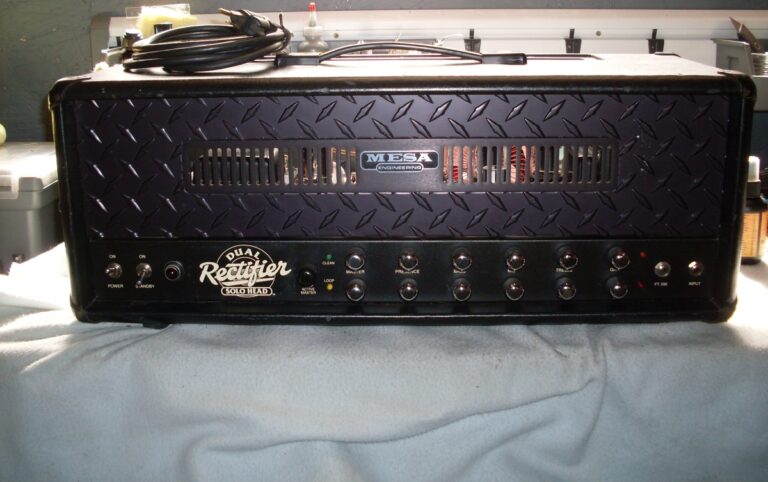
The ancestor. The SLO is smoother, more refined, more expensive and has a genuinely beautiful clean channel; the 5150 is coarser, more aggressive and roughly a fifth of the price. If the SLO is a bespoke suit, the 5150 is the workwear jacket cut from a similar pattern — and the workwear jacket is what people actually wore to work.
vs Mesa/Boogie Dual Rectifier
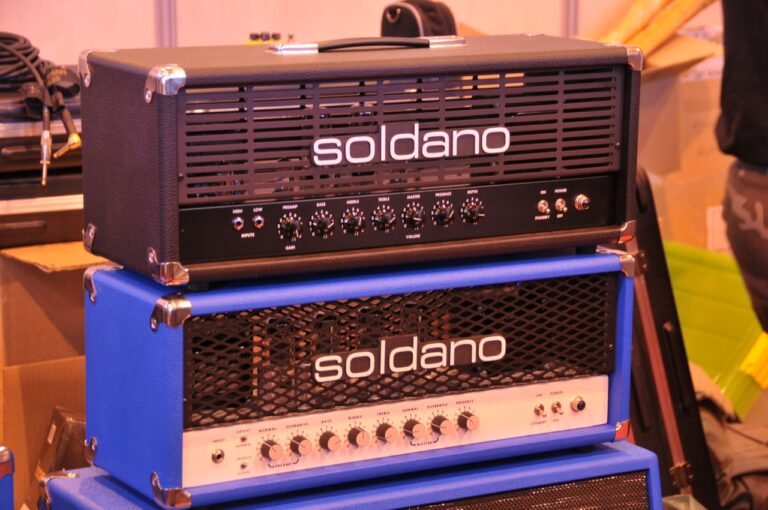
The other defining metal amp of the nineties, and a genuine opposite. The Dual Rectifier is loose, saggy and enormous in the low end, with a scoop that sits below the guitar’s fundamental; the 5150 is tight, mid-forward and immediate. Recto for doom, sludge and anything that wants to feel heavy; 5150 for anything that needs to feel fast. Producers have run both on the same record for exactly that reason.
vs Mesa/Boogie Mark IIC+
The Mark IIC+ is the eighties answer to the same question and it answers it with a graphic EQ and considerably more nuance. It is also six times the price on the used market. The 5150’s contribution was making that class of gain democratic.
vs Marshall JCM800 2203
A generational split. The 2203 gets its bite from a driven output stage and a single-channel simplicity; the 5150 gets its bite from preamp cascading and gives you a second channel for the ballad. The 2203 is more dynamic and cleans up with the guitar volume; the 5150 does not, and does not want to.
vs EVH 5150III
Not a re-badge. The 5150III is a three-channel amp with a genuinely excellent clean, a mid-gain channel and a lead channel that is smoother and more compressed than the Peavey’s. Broadly: the EVH is the more versatile and better-behaved amp, the Peavey is the more aggressive and characterful one. Different products with a shared name and a shared designer.
vs modern digital
The 5150 and 6505 are among the most thoroughly modelled amps in existence — every Quad Cortex, Kemper and Axe-Fx ships with several versions, and plenty of professional metal records since 2015 have used them. The honest position: a good capture into a good IR is close enough that a listener cannot tell on a finished mix. What the real head still offers is the feel of a 4×12 moving air behind you, which matters onstage and in the writing room and matters not at all in a mastered track.
Buying guide
Buying new (July 2026, peavey.com direct)
Peavey’s own store lists the 6505 1992 Original head (SKU 03619250) at a list price of $1,999.99 and a direct price of $1,699.99. The 6505 II head lists at $2,499.99, direct $1,999.99. The Invective.120 lists at $3,499.99, direct $2,499.99. The matching 6505 Reissue 412 cabinets, straight or slant, list at $1,299.99 and sell direct at $999.99.
Note an open price spread worth knowing about: several major retailers have carried the 6505 1992 Original at around $1,299-1,399 while Peavey’s own site sells it at $1,699.99. That is a wide enough gap to be worth ten minutes of shopping before you commit, and it is not obvious which figure represents the settled street price. Shipping weight on the 1992 Original is 24.494 kg with shipping dimensions of 28.5 x 14 x 12.25 inches — call it a two-hands-and-a-friend proposition.
The 1992 Original exists because of a genuine engineering detective story that Courtland Gray described in Guitar World: players kept insisting the amp’s tone had drifted, even though the design had not been changed. “We realized that the transformer had changed somewhat over the years — tiny changes in materials at the factory — and then the factory changed. Naturally, the specs got ever so slightly different over the years, so we went back and really dialed into that original output transformer to get it back to how it was.” This is a reusable lesson: an unchanged schematic does not guarantee an unchanged amp, because component sourcing is not part of the schematic.
Buying used
Observed asking prices for used 5150 II heads in 2026 run roughly $800 to $1,300, with original 5150 heads in the same neighbourhood and block-letter examples asking more on logo appeal alone. I was not able to retrieve a verified Reverb price-guide median for the block-letter head, so treat those figures as an observed range from live listings rather than a settled market value, and check completed sales before you negotiate.
The checklist:
- Ignore the logo, inspect the tubes. Ask what is in it, when it was last biased and by whom. A cold-biased amp with a mismatched quad will sound sick in a way you may mistake for character.
- 5150 II and 6505+ have rear bias test points; the original does not. If you intend to maintain the amp yourself, that is a real ergonomic difference.
- Check the effects loop. The loop jacks are the most common failure point on well-gigged examples, and a scratchy or intermittent loop on a footswitchable circuit is an annoying repair.
- Test both channels at volume. Rhythm-channel faults hide at bedroom levels. So does a failing filter cap, which announces itself as ghost notes and low-frequency mush when the amp is worked.
- Ask about modifications. 5150s are among the most-modified amps in existence — gain reductions, bias mods, loop mods, Merlin-style tone stack changes. A good, documented mod by a known tech is not a problem. An undocumented one by a stranger is a guess.
- Weight and no attenuation are the real ownership cost. Before buying, decide honestly where you will play it. There is no half-power switch. There never was.
- The combo is underpriced. The 60-watt 2×12 does the same preamp at half the power with reverb, and it typically sells for less than a head alone. If your problem with the head is volume, that is the answer nobody mentions.
Living with one
A 5150 or 6505 will run for years on inattention and then need everything at once. Some notes from the field.
Tubes. The cold bias is kind to power tubes and these amps are famously tolerant of budget 6L6s. Preamp tubes matter more than most players expect: V1 in particular sets the noise floor of a very high-gain preamp, and a low-noise 12AX7 in that position is the cheapest meaningful upgrade available. Expect a power tube set to last a few hundred hours of hard use.
Bias. Get it checked when you re-tube, and note the persistent report — flagged as a rumour in Wikipedia rather than as established fact — that some 6505-era bias pots do not sweep far enough to reach optimal plate current, which would increase crossover distortion. If your amp sounds unusually harsh and gritty at low volume, that is worth asking a tech about.
Speakers and cabs. The 5150’s midrange push pairs conventionally with Celestion Vintage 30s in a 4×12 — this is the sound in your head, and it is also a somewhat aggressive combination that some players find fatiguing. G12H-75 Creambacks or G12M-65 Creambacks soften the upper mids without losing the tightness, and are worth trying if you find the standard rig unpleasant at volume.
Safety. This is a 120-watt tube amp with lethal voltages inside and filter caps that hold a charge long after it is switched off. Do not open it. Never run it without a speaker load connected. And when it is racked or stacked, remember it is heavier than it looks and has no wheels.
Recording. The amp has a preamp out, which is useful for reamping and for driving a power amp, but for silent recording a reactive load box is the modern answer — see the comparison note above. Direct-out convenience is one of the genuine advantages the 6505MH and the Invective have over the classic head.
FAQ
Is the Peavey 5150 the same amp as the Peavey 6505?
Effectively yes. When Eddie Van Halen and Peavey parted ways in 2004, Peavey kept the circuit and renamed it — the 6505 marking the company’s 1965-2005 fortieth anniversary. The 5150 II became the 6505+. The circuits carried over; the name did not.
Do block letter 5150s really sound better than script logo ones?
No. The documented difference is the brand of power tubes originally fitted — Sylvania on the earliest units, Ruby after Peavey’s Sylvania stock ran out. Power tubes are consumables, so no thirty-year-old amp still has its factory set. The panel changed because Electro-Voice objected to the “EVH” block logo, not because anything inside changed.
Why does my 5150 not sound like Van Halen?
Because Van Halen does not sound like a 5150. Every record from Van Halen (1978) to OU812 (1988) was made with a stock 1968 Marshall Super Lead run through a Variac. The 5150 was designed as a new direction, not a re-creation, and its circuit lineage runs back to the Soldano SLO-100 rather than to a Plexi.
Do I need a Tube Screamer in front of it?
Not strictly, but almost everyone uses one, and for a specific technical reason: an overdrive with the drive at zero and the level high acts as a high-pass filter and mid boost before the preamp, which tightens palm mutes and stops the low end smearing. Run the amp’s own gain lower than feels natural and let the boost do the shaping.
Can I use a 5150 at home?
Only with help. There is no power scaling, no half-power switch and no attenuator; 120 watts of preamp-distorted 6L6 is deafening at any usable setting. Options are a reactive load box, an attenuator, the 60-watt 2×12 combo, or the 20/5/1-watt 6505MH.
What is the difference between the 5150 and the 5150 II?
The II adds a sixth 12AX7 to keep the clean channel from breaking up, splits the EQ, Presence and Resonance so each channel has its own set, drops to a single input, and adds rear bias test points. The II is usually described as tighter and more mid-focused; the original as looser, thicker and slightly more saggy.
Is the 6505 1992 Original a genuine re-creation or a marketing exercise?
Peavey’s stated engineering rationale is credible and specific: the output transformer’s materials and supplier had drifted over three decades, so the reissue was built around a re-specified transformer matching the original. Whether that lands in your ears is a separate question, but the claim is not vague.
Which amp should I buy if I want modern metal tone in 2026 and have $1,000?
A serviced used 6505 or 5150 II plus a boost pedal and a noise gate remains one of the best value propositions in amplification, provided you have somewhere to play it loud. If you do not, the same money in a digital modeller will get you a 5150 among a hundred other amps at any volume — and for recording, the difference on a finished mix is smaller than anyone wants to admit.
Image credits
- Joe Satriani: livepict.com, Wikimedia Commons, CC BY-SA 3.0.
- Eddie Van Halen: Joe Bielawa, Wikimedia Commons, CC BY 2.0.
- Top image: GuitarGangsters AI-generated reference illustration, not a photograph.
- Soldano SLO-100: fvancini, Wikimedia Commons, CC BY 2.0.
- Mesa/Boogie Dual Rectifier Solo Head: Roadside Guitars, Flickr, CC BY-SA 2.0.
- Eddie Van Halen: Carl Lender, Wikimedia Commons, CC BY 2.0.
Latest News
Related
On This Day
Monday 9 November
From this week: