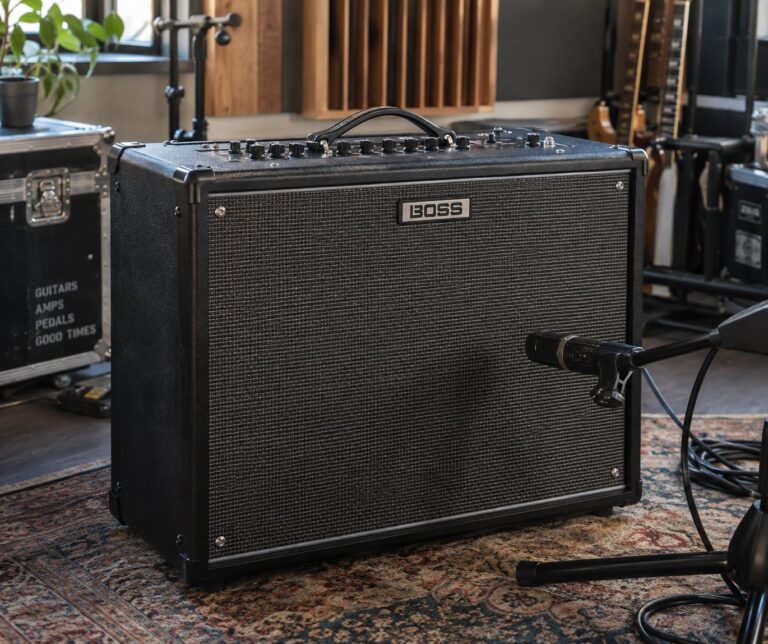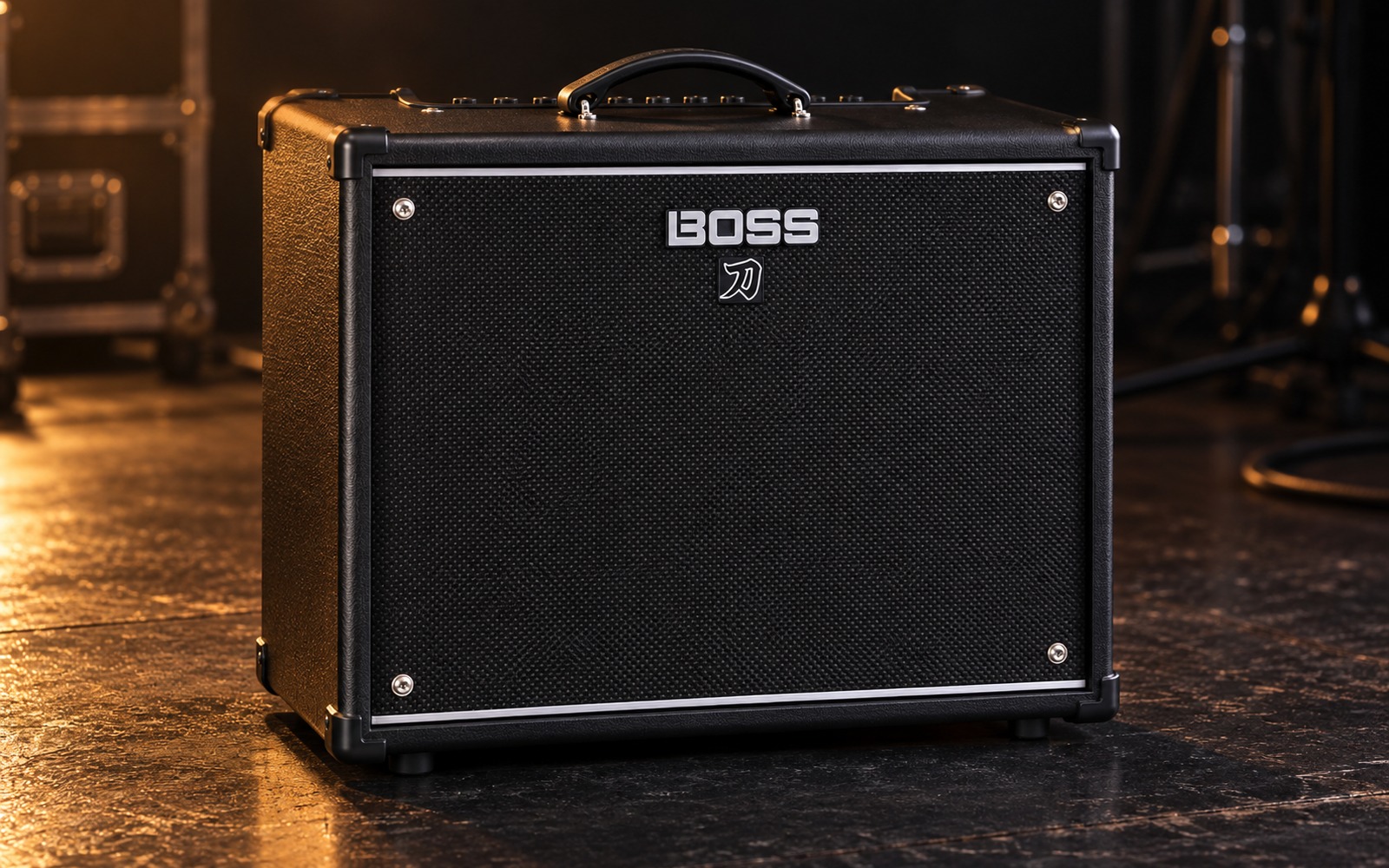
The 100 Watts Nobody Talks About — And Everybody Plays: Boss Katana-100 Gen 3
The Boss Katana-100 Gen 3 is the 100W flagship of the world's best-selling modelling amp range. Full specs, tone recipes, and buying guide inside.
Walk into any rehearsal studio in the Western world. Count the black boxes on the back wall. You already know which logo you’re going to find most of. The Boss Katana has been the dominant modelling combo since its debut in September 2016, and the Gen 3 update launched in May 2024 did nothing to slow that momentum. But if you’re choosing between the 50-watt and the 100-watt models, the wattage number is almost a red herring. The real story is what else you get at 100 watts — and that story is worth telling carefully before you hand over $449.99.
This is not a beginner amp review. The Katana-100 Gen 3 is a gigging tool, a practice room centrepiece, a direct-recording solution, and — because of its integrated power attenuation — a living-room amp that can go from 0.5 watts to 100 watts without a volume complaint from a neighbor or a tonal compromise from the signal path. It sells in larger numbers than almost any amp on this list, it has no famous player endorsement for this specific model, and it does not need one. That combination is worth understanding.
From JC-120 to Katana: The Boss Trajectory
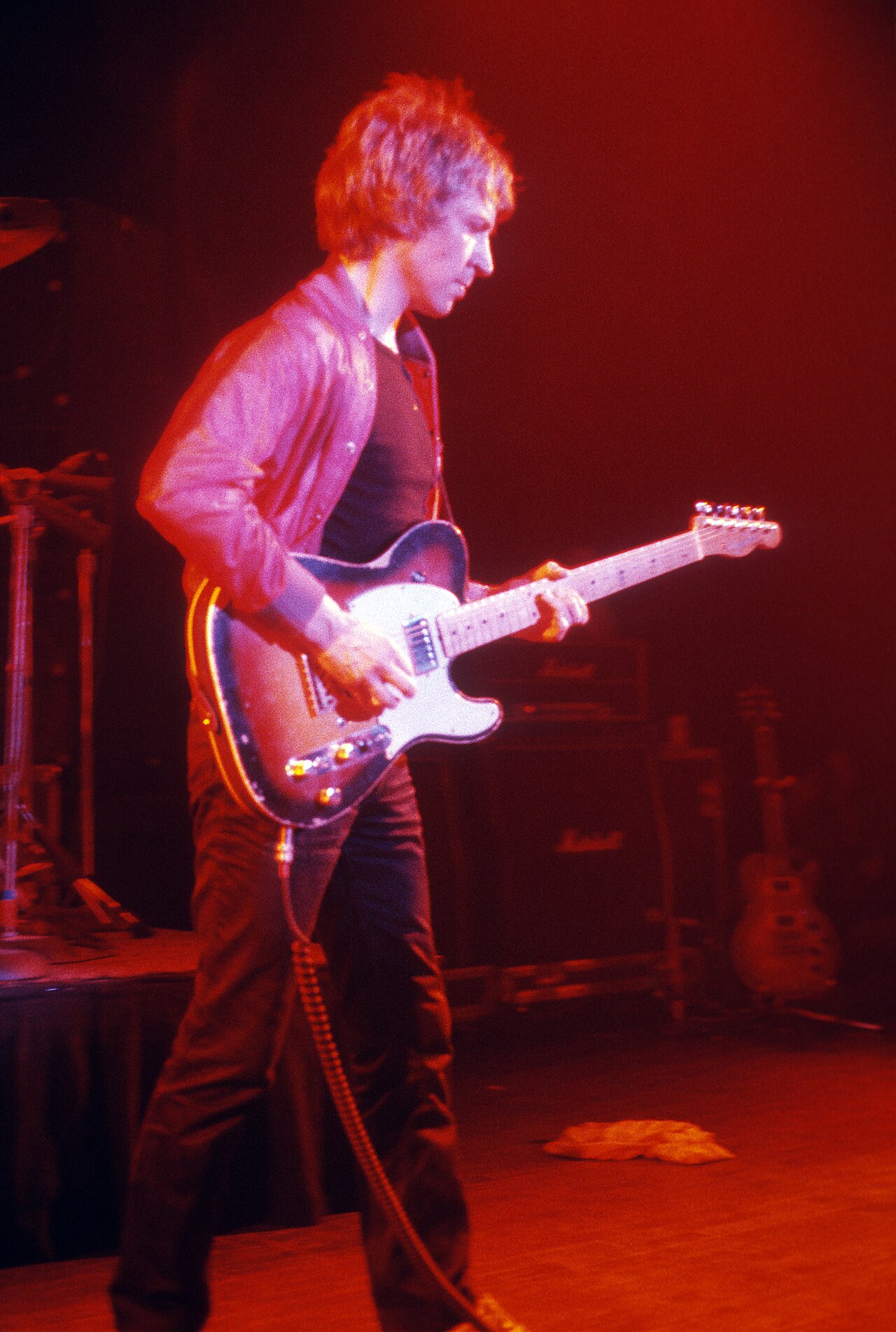
The relevant history here is short. Roland was founded in April 1972 in Osaka by Ikutaro Kakehashi. Boss launched in 1973. The Roland Jazz Chorus JC-120 appeared in 1975 — the clean-amp benchmark that Andy Summers of The Police ran every night, the amp that defined what solid-state clean could mean — and it remains in production to this day. The CUBE practice amp range followed in 1978. From that lineage, the Katana launched in September 2016 as a genuine step forward: digital modelling with a reactive, Class AB analogue power section that the company calls Tube Logic. The idea was not to fake a tube amp’s output on paper but to replicate the physical behaviour of a power amp’s interaction with its load, the way a real tube stage compresses and breathes under signal. MkII arrived as an incremental update. Gen 3, announced and shipping from May 2024, is the third generation — still built on the same Tube Logic principle, but with every amp voicing overhauled, a new character added, and several hardware controls added to the 100-watt models specifically.
For the full Katana origin story, production timeline, and Boss DS-1 lineage (the distortion pedal that Kurt Cobain used on the Nevermind sessions, whose circuit lives inside the Katana’s effects library), see our Boss Katana-50 Gen 3 feature. This article focuses on what the 100-watt model is, what it does differently, and when it is the right choice.
What the 100W Buys You That the 50W Does Not
Boss markets these as two points on a wattage continuum, but the hardware-feature gap between the 50W Gen 3 and the 100W Gen 3 is significantly wider than the watt count suggests. Here is exactly what the 100-watt model includes that the base 50-watt does not.
First, a physical Contour switch on the front panel. This three-position switch alters the midrange frequency response of the amp — not a global EQ change, but a change to the reactive frequency shaping that sits between the preamp voicings and the power section. In practical terms it adjusts the way the amp interacts with the room: tighter mids for a focused sound in a live low-ceiling pub, cut mids and boosted low end for a more aggressive response in a rehearsal room, wider character for a studio setting. Guitar.com’s Cillian Breathnach describes it as “mostly about fine-tuning a sound rather than offering something totally different.” It is subtle and it is useful — and on the 50-watt model it is only accessible through the Tone Studio software, not a hardware switch.
Second, a physical Amp Resonance switch near the power switch on the rear panel. Three modes — Vintage, Modern, Deep — cycle through different cabinet response simulations that change the way the speaker and cab model behaves. MusicRadar reviewer Daryl Robertson (May 23, 2024) preferred the Vintage setting, describing it as “the most natural to our ears.” Again, on the 50-watt this is available only through the app.
Third — and most consequential for live use — the 100-watt model includes a standard effects loop and full GA-FC / GA-FC EX footswitch support. The base 50-watt only supports channel switching and a solo boost via a standard TRS footswitch. If you want to select presets, engage individual effects blocks, and use the amp’s preset architecture to its full potential from the floor, the 100-watt is the minimum configuration without stepping up to the 50W EX variant. The effects loop also means you can insert time-based effects or loopers between the preamp and power amp sections — critical for players who run their drives through the front end and want clean signal to their delay and reverb.
There is also the raw headroom argument. A 100-watt solid-state amp does not simply equal a 50-watt solid-state amp at higher volume — the available headroom shapes the character of the clean and pushed voicings at moderate playing levels. The Katana-100 Gen 3’s power attenuation system (0.5W / 25W / 50W / 100W) means you can run the amp at its full rated power and pad it down at the output, keeping the power section engaged and behaving correctly while controlling actual SPL. That is what makes this amp relevant at living-room volume without sacrificing the feel that the Tube Logic architecture is trying to deliver.
Specifications
The Six Characters — What They Actually Sound Like
Every Katana Gen 3 shares the same six amp characters, each with a Variation switch for an alternative voicing — twelve total preamp models before you even think about effects or Tone Studio deep-editing. Here is an honest description of each based on primary-source review material.
Acoustic
A DI simulation with body and air added — designed for acoustic-electric guitars and piezo pickups, or for faking an acoustic texture from an electric guitar. More useful than it sounds, particularly for pop and singer-songwriter contexts. Not a replacement for a dedicated acoustic preamp in a serious live acoustic setup, but genuinely convincing at a pub gig level.
Clean
High-headroom Fender-style clean — the amp’s workhorse. Guitar.com describes it as able to get “very clean indeed” and as providing “a good platform for a real pedalboard.” This is the character most serious players will spend most time in, running their own drive chain through the front end. The Gen 3 version is brighter and more open than the MkII equivalent — Breathnach (guitar.com) notes a “marked difference in both feel and sound” compared to the previous generation, where MkI and MkII Clean channels were almost indistinguishable from each other.
Pushed
The headline addition of Gen 3. Sitting physically and sonically between Clean and Crunch, Pushed delivers the character of a driven valve amp being gently squeezed toward the edge of breakup — what Guitar.com’s reviewer calls “edge-of-breakup Vox in comparison to Clean’s high-headroom Fender.” MusicRadar’s reviewer made it their default setting almost immediately: “it quickly became our favourite setting on the amp.” It responds well to boost pedals and, importantly, it handles vintage-style fuzz pedals unusually well for a digital amp — the interaction between a fuzz’s impedance and the Pushed preamp’s topology comes closer to what a fuzz sounds like into a real valve amp than most digital clean platforms manage. That is worth noting. If you play fuzz as a primary voice, Pushed is where to start on this amp.
Crunch
Classic British-voiced crunch — the region of Marshall-style rhythm tones, the territory where a Les Paul’s midrange push meets a medium-gain stage. Articulate and responsive. Not a high-gain channel; this is a bluesy breakup and vintage rock territory. Pairs well with a TS-style overdrive such as the Ibanez TS9 Tube Screamer stacked in front to tighten and push the lower mids forward.
Lead
The high-gain territory — where Breathnach finds “the most enjoyable chugs” in the amp. More open and dynamic than Brown, with better note definition for lead playing. This is the character for classic rock and hard rock single-note lines: the Stratocaster with single-coils getting the right amount of singing sustain without collapsing into fizz.
Brown
Named after the brown-period Van Halen amp sound — saturated, compressed, the tone of a hot-rodded 100-watt Marshall at the edge of its power stage. Guitar.com describes it as “a little too compressed to my ears, but does smooth, infinite-sustain solo tones well.” MusicRadar is more positive about its overall colour. The Brown character is more useful for sustain-driven lead work than for rhythmic attack clarity — if you are playing chords in this mode, note separation can suffer. Use it for legato and lead; use Crunch or Lead for rhythm. With a Les Paul Standard‘s humbuckers, this mode turns into a polished sustain machine.
Variation Switch
Each character has an alternate voicing accessible via the Variation button. Guitar.com’s most useful summary: the alternates are “all a fair bit brighter — you could think of it like a single-coil/humbucker compensation switch.” That framing is actually very practical: dial in your tone for a humbucker guitar, hit Variation to open up the top end for a single-coil, and save both versions as presets. The Variation switch is not a different amp character — it is a tonal modifier within the same voicing family.
Famous Players: The Honest Account
There are no documented professional artists using the Boss Katana-100 Gen 3 specifically. Equipboard lists zero verified pros on this SKU. This is worth examining properly rather than papering over with a brand-level claim.
The Katana Artist Gen 3 — the premium, higher-output model in the same family — has documented celebrity associations. Rabea Massaad, Andy James, and Ola Englund are in the Boss Katana Artist orbit. Nita Strauss has documented connections to the broader Boss/Roland product family. But none of these are documented on a Katana-100 Gen 3 combo specifically — the Artist series is a different amp with different internals, different speakers, and a different price point. Listing them here as endorsers of this amp would be the same brand-equity-spreading error documented in the articles on the Roland Blues Cube Artist and Roland Cube Street EX.
What the Katana-100 Gen 3 actually has is something more interesting: it is the amp of the rehearsal room rather than the tour bus, the amp that shows up in the background of a thousand practice videos because it does the job correctly at a sensible price. The closest thing to a famous-player association is structural: the amp’s Clean channel was designed to be a pedal-platform amp in the tradition of the Roland JC-120 that defined Andy Summers’ clean tone — but Summers plays an actual JC-120, not a Katana. The lineage is real; the endorsement is not.
Reported industry usage suggests working musicians — session players, touring sidemen, cover-band professionals — use Katanas in volume-sensitive environments like theatre pits, corporate function gigs, and fly-date touring where backline reliability matters more than boutique authenticity. None of this is documented with the photo evidence that Equipboard requires for a confirmed entry. The honest position is: the Katana-100 Gen 3 is the professional’s anonymous workhorse, and its anonymity is part of the brief.
Tone Recipes and Settings
Recipe 1: Classic Rock Rhythm Platform (Character: Crunch / Variation: Off)
Start with Crunch, Variation off. Bass at 5, Middle at 6, Treble at 5, Presence at 4. Power Control to 100W if you have space; 50W if you are in a band room. Contour at the middle position. Stack the Booster effects block in front with a TS-type setting — push the low mids, not the volume. This sets up a vintage British rhythm tone for a Les Paul Standard with moderate-output PAF-style pickups. Dial the guitar’s volume back to 7 for clarity; open it to 10 for the push. Save as Panel preset, use the GA-FC to flip between the clean preset and this one mid-song.
Recipe 2: Pedal Platform Clean (Character: Clean / Variation: On for single-coils)
Clean character, Variation on. Bass at 4, Middle at 5, Treble at 6, Presence at 5. All effects off in the amp — your pedalboard drives the entire signal chain. Load a compressor into the effects loop send if you want studio-style sustain; keep the front end clean. Amp Resonance on Vintage. This is the setting that makes the Katana-100 behave like an amp specifically chosen for pedalboard players — a Fender Deluxe Reverb-adjacent clean with enough headroom to stay clean at rehearsal volume. Excellent platform for a Stratocaster.
Recipe 3: Fuzz Into Pushed (Character: Pushed / Variation: Off)
Pushed character, Variation off. Bass at 5, Middle at 5, Treble at 4, Presence at 3 (roll off the top end since fuzz already brings high-frequency harmonics). Set the Contour switch to the middle position. Run a germanium or silicon fuzz — or the amp’s internal Fuzz emulation — into the Pushed front end. This is the setting Guitar.com’s reviewer highlighted: Pushed “takes real vintage-style fuzz pedals brilliantly” and that interaction is the closest this amp comes to replicating what a fuzz sounds like into a hot valve preamp. The Pushed character’s mild compression acts like a pushing output transformer rather than adding gain. Works especially well with a low-output single-coil guitar — the fuzz does the saturation, the amp does the body.
Recipe 4: Brown Sustain Lead (Character: Brown / Variation: Off)
Brown character, Variation off. Bass at 5, Middle at 4 (reduce the mid compression slightly), Treble at 5, Presence at 6 (add air back at the top). Contour at the deep/aggressive position. Add Delay in the effects block — a single-repeat setting at moderate mix, not a slapback. Power Control at 50W or below — this is not a channel that rewards full-blast power amp interaction. With a Les Paul neck pickup and a smooth fretting hand, this is the sustained lead voice: fluid, compressed, infinite. The Brown character is more polished than raw — dial the Treble up to 7 if you want bite back.
Recipe 5: Direct Recording — Silent Practice and Interface Use (Character: Clean or Pushed)
Set Power Control to 0.5W (effectively silent). Choose Clean or Pushed. Use the rear-panel Line Out with Air Feel active — select mic type, set distance to “medium,” set ambience to “small room.” Run this directly into your audio interface. The Air Feel system applies cabinet and microphone simulation so the direct signal sounds recorded rather than like a DI. Engage Reverb in the effects block at low mix (around 20%) for a natural room feel. This is a silent-practice and direct-recording setup that works without a microphone, a separate cab sim, or any additional gear beyond the amp and an interface cable. The USB-C connection can also drive a DAW directly without an interface — check your DAW’s driver compatibility.
How It Compares
The Katana-100 Gen 3 exists in a competitive market, and honest comparisons require acknowledging what the competition does better and worse.
Against the Boss Katana-50 Gen 3 ($349.99): the 50W is the buy if you primarily practice at home, never need the effects loop, and are happy using the Tone Studio app for Contour and Resonance adjustments. The 100W costs $100 more and provides significant live-use improvements in addition to the headroom. For anyone who gigs, the 100W’s standard effects loop and GA-FC support make it the correct tier.
Against the Quilter Aviator Cub ($799): the Aviator Cub offers three distinct Fender-voiced input jacks, a proprietary non-bias-modulated tremolo, and the feel of a purpose-built solid-state amp with a more boutique-adjacent voicing philosophy. It costs $350 more than the Katana-100, has no modelling, and does far fewer things. If you play in the clean-to-pushed range and want a single-minded amp that does that register exceptionally well, the Aviator Cub is a real alternative. The Katana wins on versatility and price; the Quilter wins on voice focus and feel in its specific range.
Against the Roland Blues Cube Artist ($1,299): different philosophy entirely. The Blues Cube is built around a late-1950s tweed Fender simulation using Roland’s Tube Logic DSP at a much higher price point, with two channels and a Tone Capsule system for swapping voicing modules. The Blues Cube is for players who want one sound done extremely well; the Katana is for players who want many sounds done very well. At the price gap, the Katana wins the versatility argument comprehensively.
Against the Roland Cube Street EX ($499): a battery-powered portable amp with stereo output and an acoustic focus. Different product category entirely — the comparison only makes sense if portability is the brief, in which case the Cube Street EX is not a competitor to the Katana-100 Gen 3 at all.
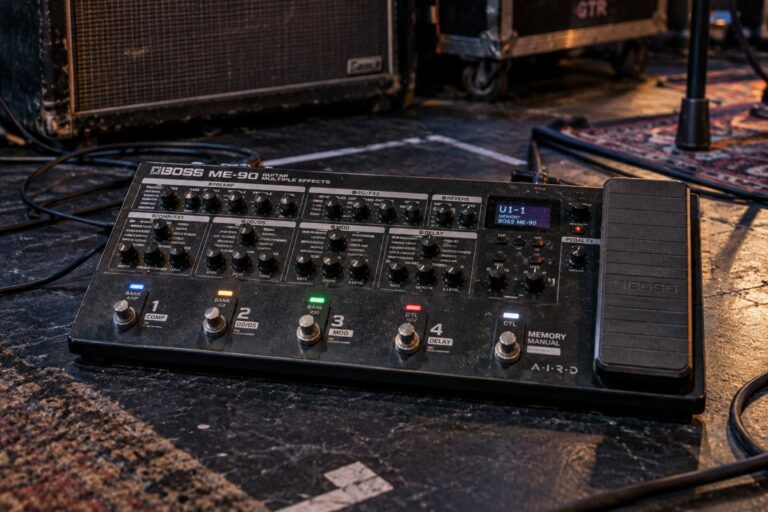
The external competition worth noting — Positive Grid Spark (from $299), Line 6 Catalyst 100 (~$499), Fender GTX100 (~$549) — each does something the Katana-100 does not. The Spark has integrated Bluetooth and a very good app ecosystem. The Catalyst 100 has Helix-derived algorithms. The GTX has Fender-specific voicings and the Fender Tone app. The Katana’s advantages are: the most established support community of any modelling amp, the broadest documentation, the most widely available used-market supply, and a hardware architecture (the reactive Class AB power section) that other budget modelling amps at this price cannot match. Critically, the Katana-100’s 0.5W power attenuation and standard effects loop at $449.99 is difficult to beat at this price.
Buying Guide
New, the Boss Katana-100 Gen 3 retails for $449.99 at Sweetwater (August 2026) and from £383 in the UK. The price has increased from the $399 launch price announced at the May 2024 debut, and from the £289 launch price cited in MusicRadar’s review. This is a normal price drift for a product establishing its market position — the Gen 3 has settled at a premium over its launch pricing.
The amp ships with a power cable and a limited warranty; a cover is available as a bundle at a modest premium ($479 at Sweetwater with cover). The optional Boss GA-FC footswitch (required to use presets from the floor) is a meaningful addition to the cost — budget for it. The Bluetooth Audio MIDI Dual Adaptor ($59.99) is recommended if you plan to edit presets from a smartphone without a laptop; if you will be editing exclusively from a desktop running the free Boss Tone Studio, you do not need it.
Used, the Katana-100 MkII — the Gen 3’s direct predecessor — is widely available in the $200–$350 range in very good condition. The MkII does not have the Pushed character, the Contour switch, the hardware Amp Resonance switch, or the overhauled voicings of Gen 3. If the Pushed character is specifically what you want and you play fuzz or edge-of-breakup tones, buy new Gen 3. If you primarily play with your own overdrive chain into a clean platform, the MkII Clean channel at a significant discount is a perfectly reasonable choice.
Used Gen 3 examples have begun appearing in the $320–$380 range as buyers upgrade — inspect the USB-C port (stress point on any combo amp), check that all six amp characters cycle correctly, confirm the Contour and Amp Resonance switches click through all positions, and run the amp at full 100W briefly to confirm no speaker buzz.
Ownership Notes
At 14.8 kg the Katana-100 is not heavy for a 100-watt 1×12, but it is a two-hand carry. The back-ported cabinet design means the amp benefits from being positioned away from walls — backing it into a corner creates a bass build-up that the rear port emphasises. The open-back design also means the amp fills a room omnidirectionally rather than projecting forward as a closed-back would: good for on-stage monitoring, and the reason the 100W can often dominate a rehearsal room at well under full power.
The LED colour scheme for the effects buttons — cycling through green, red, and orange — is a documented accessibility issue for certain types of colour blindness. Guitar.com reviewer Cillian Breathnach, who has colour blindness, explicitly flagged this: the three shades are “nigh indistinguishable” without using the app to confirm selection. This is not a deal-breaker but it is worth knowing before you buy — if you have red-green colour blindness, plan to rely on the app’s visual layout for effects identification, or use the Tone Studio preset naming system to label your patches clearly.
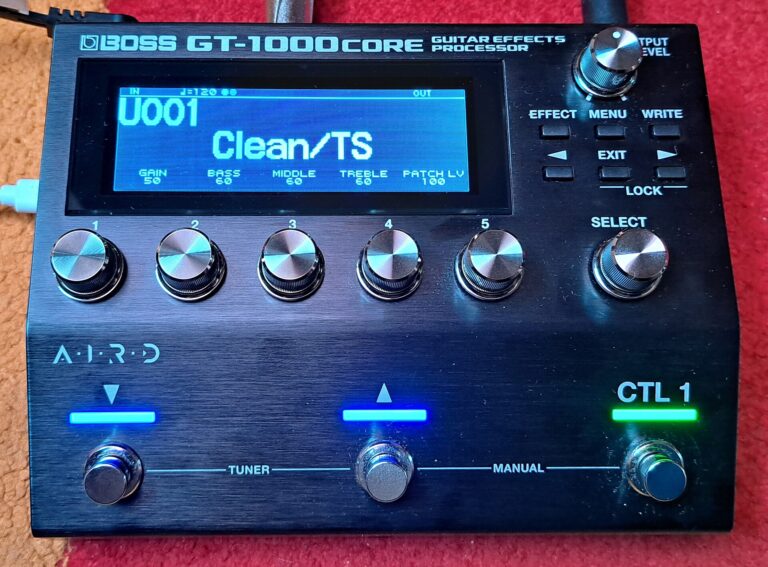
The Boss Tone Studio software is free and well-regarded. The desktop version is the deeper editing experience; the mobile version requires the Bluetooth dongle but is more convenient for quick preset adjustments at a gig. The preset bank architecture stores four Panel presets (accessible directly from the front panel) plus an expanded library via the app. The factory presets are a useful starting point but most players will rework them within a few sessions.
Long-term reliability is strong. The Katana range’s solid-state architecture has no tubes to re-bias, no output transformers to fail, and no power tube sag to chase. Common used-market issues are cosmetic (tolex wear at the corners, grille cloth staining from spills) or speaker-related (the stock Boss speaker is a capable but not exceptional component — many owners upgrade to a Celestion V30 or similar for a warmer character). The USB-C port can develop connection issues if cables are yanked repeatedly — treat it like any USB port on an instrument and it will be fine.
Frequently Asked Questions
What is the difference between the Boss Katana-100 Gen 3 and the Katana-50 Gen 3?
Beyond the wattage, the 100W adds hardware Contour and Amp Resonance switches on the panel, a standard effects loop, and full GA-FC / GA-FC EX footswitch support. On the 50W, the Contour and Resonance controls require the Tone Studio app to access, there is no effects loop, and the footswitch supports only channel switching and solo boost. For gigging, the 100W is the correct tier unless you are willing to step up to the 50W EX variant for the effects loop and footswitch capability.
Does the Katana-100 Gen 3 have Bluetooth built in?
No. Bluetooth requires the optional Boss Bluetooth Audio MIDI Dual Adaptor, which retails for approximately $59.99 / £45. It connects via a dedicated rear-panel port. This has been the primary criticism of the Gen 3 line in reviews — competitors at this price point include Bluetooth as standard. The adaptor works reliably when purchased; the objection is that it costs extra rather than that it functions poorly.
Can the Katana-100 Gen 3 be used for silent recording?
Yes. Set Power Control to 0.5W, use the rear Line Out with Air Feel cabinet simulation active, and run directly into an audio interface or recording device. The USB-C connection also allows direct computer recording. The Air Feel system includes microphone type, placement, and ambience controls that give the recorded signal a natural, tracked-through-a-cabinet quality without requiring a physical microphone.
What is the Pushed character and where did it come from?
Pushed is the new amp character added in Gen 3, sitting between Clean and Crunch. It models a valve amp being driven to the point of very mild breakup — edge-of-breakup territory rather than full crunch. The character most closely resembles a pushed Vox-style preamp in tone and dynamic response. It was not present in any previous Katana generation and is the most significant tonal addition in the Gen 3 update.
Is the Katana-100 Gen 3 loud enough for live use?
A 100-watt solid-state combo is comfortably loud enough for any pub, bar, small club, or rehearsal room. Guitar.com notes that the cabinet’s rear port “generally fills a room rather than beams the sound in one direction” — useful for on-stage monitoring as well as audience projection. The amp will not compete with a 200-watt stack at a large festival venue without PA support, but that is not its intended use case. The integrated Power Control (0.5W / 25W / 50W / 100W) allows volume adjustment without tonal compromise, so you can run the amp at a sensible level in any environment.
Which footswitch should I buy for the Katana-100 Gen 3?
For basic channel switching and solo boost: any standard latching TRS footswitch works. For full preset recall and effects switching: the Boss GA-FC (four-switch, compact) or GA-FC EX (six-switch, expanded) are the recommended options, as they are natively supported by the 100W model’s firmware. The GA-FC EX allows independent effects block on/off switching from the floor, which turns the Katana-100 into a genuinely complete live rig without a pedalboard.
How does the Katana-100 Gen 3 compare to the MkII for existing owners?
Guitar.com summarises the upgrade accurately: Gen 3 is “a step forward” rather than a leap. The amp voicings have more detail, clarity, and feel. The Pushed character is genuinely new and genuinely useful. The hardware Contour and Resonance switches on the 100W are added functionality. The overall tonal character is more refined — “like viewing the older iteration in 4K,” per MusicRadar. If you play primarily through your own pedalboard into the Clean channel, the upgrade is less dramatic than if Pushed becomes your primary voice. For a MkII owner, the upgrade makes sense if you bought new; it is harder to justify as a paid hardware purchase unless Pushed is specifically the tone you have been missing.
Are there professional players who use the Katana-100 Gen 3?
As of this writing, no professional guitarist has been documented with confirmed photo or video evidence using a Katana-100 Gen 3 specifically on a professional recording or touring rig. The Katana Artist Gen 3 (a different, premium amp) has associations with Rabea Massaad, Andy James, and Ola Englund — but that is a different product. The Katana-100 Gen 3’s professional user base exists, but they are working musicians rather than headline artists: session players, pit orchestras, function gig professionals, and volume-conscious touring sidemen who care more about reliability and sound quality at moderate SPL than about brand optics. The absence of a famous endorser is a structural fact about this amp tier, not a measure of its quality.
Image credits
- Top image: GuitarGangsters AI-generated reference illustration, not a photograph.
- A band on a lit stage in front of a crowd: Dhagely, Wikimedia Commons, CC BY-SA 4.0.
- Inside a tube guitar amplifier: germanium from Eichwalde, Germany, Wikimedia Commons, CC BY 2.0.
- Andy Summers: Acroterion, Wikimedia Commons, CC BY-SA 4.0.
Latest News
Related
On This Day
Monday 9 November
From this week: