Twenty-One Pounds, Three Voices, Zero Tubes: The Quilter Aviator Cub Refuses to Play by the Old Rules
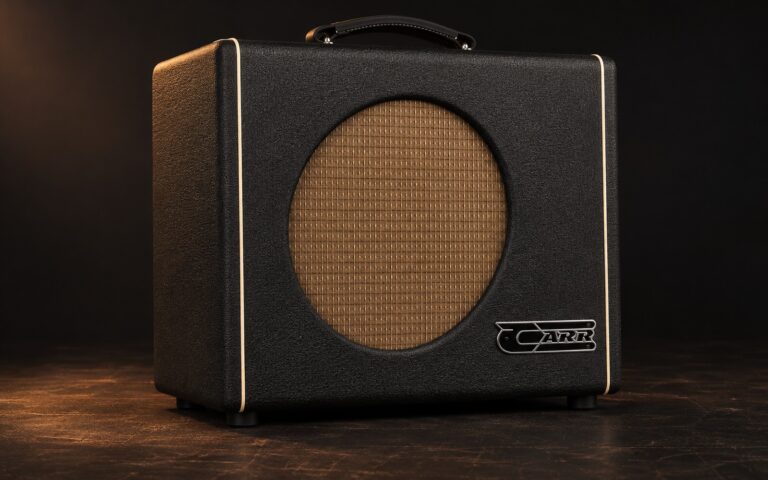
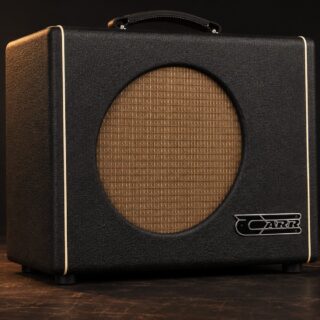
Quilter Aviator Cub Combo. AI-generated reference illustration, not a photograph.
The Quilter Aviator Cub packs Tweed, Blonde, and Blackface voices into a 50-watt, 21.5-pound solid-state combo. Specs, verified players, and tone recipes.
Every decade or so, something comes along that forces the guitar world to have an argument it thought it had already settled. The Quilter Aviator Cub is one of those things. It weighs 21.5 pounds. It puts out 50 watts. It ships with a custom 12-inch speaker co-developed with Eminence. It has no tubes anywhere in the signal chain, and it sounds — according to Vintage Guitar magazine, which reviewed it in their August 2021 issue — like it ought to have a glowing bottle somewhere inside. That’s either a triumph of engineering or a heresy, depending on which camp you’ve planted your flag in.
Pat Quilter has been making solid-state amplifiers since before most of the current tube-faithful were born. He founded Quilter Sound Company in the summer of 1968 at a time when transistors were considered the future, and for fifty years he proved it — just not in the guitar amp market, where his early instruments failed to find an audience. Instead, QSC Audio (incorporated 1973) became one of the dominant forces in professional sound reinforcement. When Pat finally retired from day-to-day activities at QSC to return to his first love — guitar amps — he did it with five decades of solid-state engineering knowledge no tube-amp builder could match. The Aviator Cub, launched in 2021, is the result of that whole arc: a compact 1×12 combo with three distinct Fender-inspired voices, a Limiter control that captures the feel of power-amp saturation without a transformer in sight, and a weight that lets you carry it in one hand while your keys are in the other.
This is not a review. GuitarGangsters doesn’t review amps. This is the gear guide — origin story, full specs, honest player history, tone recipes, and everything a working guitarist needs to decide whether the Aviator Cub belongs in their corner.
Pat Quilter: Five Decades of Solid-State Conviction
The Aviator Cub doesn’t make sense without understanding who built it and why. Pat Quilter’s introduction to amplifier design came from a practical problem: a friend’s bass player needed a bass amp and had no money. Quilter, who’d been reading about bridged transistor output stages in Radio Electronics magazine, built one. The trick — using series-parallel 8-ohm loads in a bridged configuration to extract 100 watts from transistors that couldn’t individually handle the voltage swing — was almost unheard of at the time. So was the next idea: preamp overdrive with an adjustable master volume, which Quilter implemented in his early guitar amps in the late 1960s, predating every other commercial manufacturer’s version by at least three years. He’d watched his brother use amplifier overdrive deliberately as part of the hard rock sound emerging around him, and he wanted to give players deliberate, controllable distortion at any stage volume.
The guitar amp business didn’t take. Quilter Sound Company pivoted to sound reinforcement PA power amps, and QSC Audio became a global standard for powering concert PA systems. The guitar amps that would have been Quilter’s early legacy instead became a footnote — a useful one, since it meant he spent decades refining solid-state power amplifier technology at professional touring scale while his competitors spent the same decades chasing tube warmth through cathodes and output transformers.
Roughly a decade before the Aviator Cub appeared, Pat Quilter stepped back from QSC’s day-to-day operations and came back to guitar amps with the accumulated knowledge of a lifetime. Quilter Labs’ Tone Block series was the first serious product, and it found an unlikely champion: Allan Holdsworth, the guitarist’s guitarist, who switched to the Tone Block and later had the “FullQ” voice designed with his characteristic legato-heavy playing in mind. Holdsworth’s endorsement didn’t just sell amps — it signalled that serious players with serious ears were listening. The Aviator series, of which the Cub is the current 1×12 iteration, came later as a more complete combo statement: speaker, voicing, and power section built as a unified design.
Specs and Build
The cabinet is a near-perfect cube — 16.5 inches on every major dimension — which is both a practical and acoustic choice. Open-back means you get that typical Fender-style spread and air, trading the focused, directional punch of a closed cab for the room-filling, three-dimensional quality that blackface combos are famous for. The ballistic nylon cover ships in the box, which matters for gigging musicians who want to slide the amp into a gig bag or the back of a hatchback without scratching it up.
The universal AC input (100–240V) is a small feature with large practical consequences: the Aviator Cub travels internationally without a voltage converter. For musicians who fly to Europe or Asia for short tours, this removes one item from the pre-departure checklist.

The Three-Input Voice System
The Aviator Cub’s most immediately unusual feature is its approach to voice selection: there is no switch. You plug into one of three input jacks — Tweed, Blonde, or Black — and that jack determines the entire character of the amp. The circuit behind each input is voiced differently, not just switching a few component values but presenting a genuinely different preamp path. Vintage Guitar’s reviewer dialled in the Tweed using a Telecaster and found “sandy drive” with Gain at three o’clock and Limiter fully off; the Black voice produced what he called “full and plush” high-gain tones; and the clean side of all three offered “round, burping tones with plenty of headroom that jazz players often seek in Class D amps such as this.”
The practical consequence of the input-jack voice system is that you cannot switch voices mid-song without physically replugging. For players who want to run Tweed rhythms and a cleaner Black lead, a two-amplifier or A/B switcher approach is needed. This is not a flaw — it’s a design philosophy that prioritises each voice getting the full, dedicated circuit it deserves rather than sharing compromised components — but it’s worth knowing before you buy.
The Limiter: the Control Nobody Else Has
The Limiter is the Aviator Cub’s signature control and the one most misunderstood by players encountering it for the first time. It is not a noise gate. It is not a compressor in the conventional pedal sense. Quilter describes it as progressively bringing down a “soft ceiling” — at low settings it keeps the overdrive to a controllable rolling boil, adding sustain and making the amp feel slightly compressed under a hard pick attack; at higher settings it extends sustain noticeably and smooths out the transient peaks of a hot single-coil hitting a cranked preamp stage. The interaction between Gain and Limiter is the amp’s primary expressive dial: Gain sets how hard you’re driving the preamp voice, Limiter sets how much of that drive you’re capping and re-shaping. The practical result is that a Limiter-up Tweed setting can feel distinctly touch-responsive — back off the guitar’s volume and the soft ceiling lifts; hit hard and the Limiter catches the peak. Players who are used to tube power-amp compression will recognise the feel even if the mechanism is completely different.
The Three Voices, Decoded
The Aviator Cub doesn’t name its reference amps as precisely as the Vintage Guitar review does — “Tweed,” “Blonde,” and “Black” are era signifiers rather than exact model claims — but the VG review was explicit: Tweed is voiced on a 1960 Deluxe, Blonde on a 1962 Bandmaster, Black on a 1965 Deluxe Reverb.
The 1960 Deluxe is the last year of the wide-panel tweed before Fender went to the brown Tolex era. At that point the Deluxe ran a pair of 6V6s with cathode bias, a simple preamp section, no negative feedback loop to harden the response, and a limited-excursion Jensen P12R that compressed as hard as the tubes when pushed. The “Tweed” voice on the Aviator Cub chases that mid-range density — the frequency where a blues riff gets its grunt and a barre chord gets its weight. It’s the least scooped of the three voices and the most forgiving of a hot humbucker input.
The 1962 Bandmaster was a three-10-inch Fender made during the transition from tweed to blackface — the “blonde” period of blond Tolex, brown-knob panels, and a circuit that was neither tweed dirty nor blackface clean but something in between. It had more headroom than the tweed Deluxe but broke up with a different character — bell-like with a clean pick, throatier with a harder attack. The Aviator Cub’s Blonde voice is the amp’s most versatile sweet spot: enough headroom for full chord work, enough character to let a Stratocaster’s bridge pickup bark.
The 1965 Deluxe Reverb is the amp that defined American clean — the scooped mid-range, the extended treble, the onboard reverb (which arrived with the blackface redesign) and the way it makes a Stratocaster’s neck pickup sound exactly like the record. The Black voice on the Aviator Cub replicates that frequency shape, making it the right choice for country players who want chicken-pickin’ articulation on the bridge pickup, jazz players who want a dark, clean neck sound, and anyone who spends their playing time in the clean-to-edge-of-breakup zone.
Famous Players: Honest About What’s Documented
Quilter Labs approaches its artist roster very differently from most amp companies. Their website says it plainly: “We don’t have endorsers. We have family. There’s no contract that says you have to smile in a photo and pretend you like it. Every player on this page chose Quilter because it solved a problem nobody else could.” That anti-endorsement stance makes the artists page a more honest document than most — but it also means that the page rarely specifies which Quilter product a given player uses. Most entries read simply “Quilter Guitar Amplifiers.” This creates a documentation problem for gear guides: being a Quilter artist does not mean being an Aviator Cub player.
The clearest Aviator Series documentation on the artists page belongs to Mike Manning — listed as “Aviator Series · 10+ years exclusive.” Manning is the musical director and guitarist for Demi Lovato, having toured with her across more than 30 countries, and he currently directs SHAB’s live band across Europe. “Aviator Series” covers the full range of Aviator-circuit amps including the Aviator Cub, and ten-plus years of exclusive use from a working MD-level professional is as strong a working credential as an amp can have.
Albert Lee — British guitar legend, five-time Country Guitar Player of the Year, veteran of Eric Clapton’s touring band and Emmylou Harris’s Hot Band — appears on Quilter’s artists page as a Quilter Guitar Amplifiers user. Albert Lee is exactly the kind of player the Aviator Cub was built for: the cleanest chicken-pickin’ in the business, where an amp’s articulation at the transient is everything. His Quilter use is documented from the official page; the specific model within the Quilter range is not stated.

Doyle Bramhall II — whose right-hand work on Eric Clapton’s last decade of touring represents some of the most distinctive blues-soul guitar on any major stage — is likewise on Quilter’s artists page as a Quilter user. Doyle Bramhall II‘s approach, upside-down with reversed strings and a touch sensitivity built on Jimi Hendrix’s ghost, works at its best through a clean, transparent platform — again exactly the Aviator Cub’s strength — but the Quilter artists page does not name a specific model for him.
Jonny Lang — Grammy-winning blues guitarist who signed to A&M at fifteen and built a catalog of searing instrumental work — appears on Quilter’s page as a Quilter Guitar Amplifiers user. Jonny Lang‘s blues vocabulary runs from clean Strat passages to full-throated lead overdrive, a range the Aviator Cub’s Tweed-to-Limiter spectrum can accommodate.
Vernon Reid, Living Colour’s founding guitarist and one of the most technically ambitious players in rock, is a Quilter artist. Vernon Reid‘s signal chain is notoriously complex and effects-heavy; that Quilter appears in his world is a testament to the platform’s ability to receive any signal cleanly and accurately.

One player who must be carefully separated from the Aviator Cub is Allan Holdsworth (1946–2017). Holdsworth’s adoption of Quilter’s Tone Block series was a landmark moment — Quilter’s website notes that the FullQ voice on the Tone Block was designed specifically with his playing in mind, and Holdsworth made the Tone Block his primary touring amplifier in his final years. The Tone Block is a different product from the Aviator Cub: a head-format amp without a speaker, focused on a different set of voicings. Holdsworth’s endorsement belongs to the Quilter brand and the Tone Block design; it does not transfer to the Aviator Cub.
Five Tone Recipes
1. Texas Blues (Telecaster, Bridge Pickup)
Plug into Tweed. Set Gain to 6, Limiter to 3. Bass at noon, Mid slightly boosted (+1 click), Treble at noon. Reverb at 2. Guitar volume at 8. This is the “rolling boil” setting the Quilter manual describes — enough grit to cut through a loud band, enough Limiter to give the pick attack some feel-back without squashing dynamics. Dial back the guitar volume to 6 for a cleaner rhythm position, push it to 10 for lead lines. The Tweed voice’s mid-range weight fills the 800Hz–2kHz zone where a Chicago blues riff lives. Reference tone: early SRV, pre-reverb ZZ Top, classic Muddy Waters amplified bar blues.
2. Blackface Clean (Stratocaster, Neck or Middle Pickup)
Plug into Black. Set Gain to 2.5, Limiter fully off. Bass at noon, Mid slightly cut (−1 click), Treble slightly boosted (+1 click). Reverb at 4–5. Guitar volume at 10. This is the scooped mid-range, extended treble Fender clean that defined California surf and country — a Strat neck pickup in this setting sounds like every studio recording that made people fall in love with the Stratocaster. No drive, no compression, just the guitar and the room. The Aviator Cub’s 50 watts of headroom means it stays clean even at stage volume; the open-back cabinet spreads the reverb the way the old Deluxe Reverbs did.
3. Blonde Breakup (Humbucker or P-90, Rhythm Work)
Plug into Blonde. Set Gain to 5, Limiter to 2. Bass slightly boosted (+1), Mid at noon, Treble at noon. Reverb at 2. Guitar volume at 9. The Blonde voice’s bell-like clean becomes a throaty, slightly compressed break-up with a humbucker pushing it at Gain 5 — not Marshall saturation, but the kind of edge-of-clean grind that makes a rhythm part feel alive. Think early-period rhythm work where the amp is doing the sustaining rather than a pedal. Back off the guitar to 6 for clean chordal passages, let the Limiter catch the 10-chord crashes.
4. Country Chicken-Pickin’ (Telecaster, Bridge Pickup)
Plug into Black. Set Gain to 3, Limiter to 1. Bass slightly cut (−1), Mid cut (−2), Treble boosted (+2). Reverb at 3. Guitar volume at 10. The Black voice’s scooped mid-range is the natural habitat for country bridge-pickup work — the “quack” comes from the frequency relationship between the Telecaster’s brass saddles and the amp’s upper-mid scoop. The Limiter at 1 just touches the hardest pick attacks without smoothing them out. Reference tone: Brent Mason studio work, Albert Lee’s chicken-pickin’ precision, early Brad Paisley Telecaster recordings.
5. Jazz Direct to Line Out (Archtop or Semi-Hollow, Neck Pickup)
Plug into Black. Set Gain to 2, Limiter fully off. Bass slightly boosted (+1), Mid at noon, Treble cut (−2). Reverb at 1–2. Use the SIG OUT line out directly to the desk or interface. The cabinet-voiced line output from the Aviator Cub avoids the piezo harshness of most direct-box signals while presenting a frequency character close to a mic’d blackface amp in an isolation booth. The 40-ohm balanced output plays well with any console input. This is a legitimate home-recording and session approach for jazz or clean fusion work — the kind of sound that makes a producer think you brought a real amp, which you did, it just happens to weigh nine kilograms and fit under the mixing console.
How It Compares
The Aviator Cub sits in a category that’s genuinely hard to make direct comparisons in, because its actual competition is tube amps that cost more, weigh more, and require maintenance, rather than other solid-state combos at the same price. But let’s be specific.
A Fender Deluxe Reverb — the amp one of the Aviator Cub’s voices is explicitly based on — weighs roughly 42 pounds, costs around $1,600, puts out 22 watts, and involves two 6V6 output tubes, a pair of 12AX7 and 12AT7 preamp tubes, and a 5AR4 rectifier. It sounds exactly like a Fender Deluxe Reverb because it is one, which remains its strongest argument. The Aviator Cub sounds “convincing” of that character at half the weight, $800 less, and without any tube replacement schedule. Whether “convincing” satisfies you is a personal question about how high your wire is strung.
The Laney Lionheart L20T-112 is a 20-watt EL84 tube combo at a similar price point. It has genuine tube saturation, a real output transformer, and the kind of power-amp compression physics that no solid-state amplifier — however well designed — fully replicates. It also weighs 31 pounds and requires the occasional biasing check. For players who want the real tube power-amp feeling and don’t mind the extra mass and upkeep, the Lionheart is the argument against the Aviator Cub.
The Supro Delta King 12 is a 15-watt single-ended Class A 6L6 combo — pure tube, 9.1 kg (similar weight to the Aviator Cub at 9.8 kg), and priced at $699. At 15 watts single-ended, it starts breaking up at lower volumes than the Aviator Cub’s 50 watts will, which makes it a better choice for players who specifically want natural power-amp saturation at bedroom to small-club volumes. But it maxes out lower before it gets loud.
The Milkman Creamer is a hand-wired 18–22W all-tube boutique combo from San Francisco, retailing around $2,500. The gap in price versus the Aviator Cub buys you a real tube signal chain, proprietary non-bias-modulated tremolo, and a builder with John Mayer-adjacent credibility. If your budget extends there and tube authenticity matters to your playing, the Creamer is a legitimate top-of-class option. The Aviator Cub is a legitimate option when the Creamer’s price, weight, or tube maintenance requirements don’t fit.
The Hughes & Kettner TubeMeister Deluxe 20 is a 20W two-channel tube head with TSC (Tube Safety Control) automatic biasing, an onboard load box, and extensive connectivity. It’s a different philosophy — the TubeMeister assumes you want tubes and makes owning them as painless as possible. The Aviator Cub says: remove the tube from the equation entirely and see what remains.
Buying Guide
The Aviator Cub is currently listed at $799 from Quilter Labs’ website and authorised dealers. At the time of Vintage Guitar’s August 2021 review the launch price was $599 — a $200 increase over five years. Used Aviator Cubs appear on Reverb.com typically in the $450–$600 range, which represents reasonable value given the amp has no tubes to fail and no routine maintenance requirements. A used tube amp at $450–$600 would require immediate inspection of all the consumable components; a used Aviator Cub at that price requires only the same functional check-over you’d give any solid-state amp: does it power on, do all three voices work, does the reverb spring, does the effects loop pass signal cleanly.
Check the Eminence speaker with a flashlight through the grille — look for cone tears, surround separation, or voice-coil rub (the last diagnosed by pushing the cone gently and listening for scraping). The custom speaker is the amp’s only component with significant wear potential. Replacement speakers are available via Quilter’s accessories store.
There is also a Aviator Cub UK variant built for 230V markets. If buying used internationally, confirm voltage compatibility before purchase — the US version has a universal power supply (100–240V), so it works worldwide regardless; the UK version is similarly designed for international use. The suffix in the SKU (US or UK) refers to the country of purchase configuration at the time of manufacture, not necessarily voltage restriction, but verify before plugging in.

For players specifically interested in the line-out studio application, note that the SIG OUT is balanced ¼” TRS at 2V full scale, 40 ohms per leg — it will drive any professional balanced input cleanly. A standard TS-to-TRS cable works at the amp end; the desk or interface end should accept balanced ¼” or XLR (with an appropriate cable or adapter).
Ownership Notes
No tubes means no scheduled replacement, no biasing, no hunting for matched pairs, and no heat management. The Aviator Cub runs cool relative to any tube combo of comparable power output, which affects how long you can leave it running without a break and whether it fits in a tight stage corner without overheating adjacent gear.
The universal voltage input means the power section tolerates the kind of venue power that makes tube amp owners nervous — low mains voltage from aging venue wiring, generator power, international voltage variations. The Aviator Cub’s switching power supply regulates internally; your tube amp’s capacitors and transformers don’t get that luxury.
The open-back design means the amp’s projection is directional in the way all open-back combos are: most of the sound goes forward and backward, less goes sideways. On a stage, this means placing the amp with the back facing a wall reduces the acoustic energy bouncing into the room from behind — useful in small venues where stage wash is already a problem. On a studio session, the open-back also means the room mic picks up more cabinet colouration than a closed-back would give you, which may or may not be desirable depending on the track.
The ballistic nylon cover that ships with the amp is functional but not a flight case. For musicians flying to gigs, the Aviator Cub fits in many large soft-shell luggage bags with some padding — its cube dimensions work in its favour here — but for repeated air travel, a purpose-built padded case or a hard flight case is a better investment. Quilter sells protective cases through their accessories store.
Pedal platform performance is the Aviator Cub’s most-cited quality in forum discussions and retailer reviews. Because the solid-state output section doesn’t colour the signal with transformer saturation or tube compression at the power stage, overdrive and distortion pedals come through with their own character intact rather than being modified by what the power section does to them. If your core sound comes from a pedalboard rather than amp gain — a Klon, a Tube Screamer into the Black voice, a fuzz through Tweed — the Aviator Cub is a neutral, well-powered, lightweight answer to the question of what goes at the end of the chain.
Frequently Asked Questions
Is the Quilter Aviator Cub Class D?
The Aviator Cub uses a solid-state switching output stage, which is architecturally Class D, but Pat Quilter is emphatic that his approach is fundamentally analog — the voicing, preamp character, and gain structure are implemented in the analog domain. The output stage uses high-efficiency switching circuitry to deliver power, but it is not a digital modeller or a DSP-based amp. Pat Quilter described himself in 2022 as “still an analog guy in a digital world.” The practical consequence: the Aviator Cub does not model amps through convolution or impulse responses. The three voices are hardware voicings, not software presets.
Can I switch voices mid-song?
Not without replugging. The three voices are accessed via three separate input jacks, not a footswitch-selectable toggle. Players who need to switch between a clean Black voice and a driven Tweed voice in the same set will need an A/B/Y box or a second amp. Some players use the Aviator Cub as one amp in a two-amp system precisely for this reason — the Tweed voice on one amp, the Black on another, an A/B/Y before both.
How does it compare to a Fender Deluxe Reverb?
Both Vintage Guitar’s reviewer and the Quilter users community describe the Aviator Cub as “convincing” rather than identical to the vintage references. The Black voice in particular is praised for approaching the Deluxe Reverb’s clean character. The differences that remain are at the level of power-amp feel: a Deluxe Reverb’s 6V6 output stage has a compression and saturation character under hard playing that the Aviator Cub does not fully replicate even with the Limiter engaged. Whether that gap matters depends on where in your playing the amp’s power section is doing work. For clean-to-edge-of-breakup players, the gap is narrower. For players who specifically want power-amp tube saturation, the gap is wider.
What does the Limiter actually do?
It imposes a variable soft ceiling on the gain stage’s output. At low settings it makes the overdrive feel more controlled and responsive to guitar volume — reducing gain slightly when you dig in hard. At higher settings it extends sustain noticeably, holding notes longer. The interaction between Gain and Limiter is the Aviator Cub’s primary expressive tool: Gain determines how hard the voice is being driven; Limiter shapes how the peaks of that drive behave. It is not a noise gate, not a sustainer pedal, and not a compressor in the optical or VCA sense. It is a purpose-built circuit designed to give a solid-state amp a feel that approaches tube-style sag and compression.
Is it loud enough for live gigs?
50 watts into a 12-inch speaker is enough for any venue where a guitarist is expected to use a stage amplifier. The Vintage Guitar review explicitly notes the amp is “optimized for practice, recording, and live performance.” The open-back 12-inch projection is equivalent to a 22-watt tube combo’s practical stage volume — the solid-state efficiency advantage means the Aviator Cub’s 50 watts runs closer to “clean loudness” rather than power-amp saturation at gigging levels. For arenas or outdoor festivals where the amp is purely a monitor and the FOH handles the room, 50 watts into a 12 is entirely adequate. For small clubs running without PA support, the Aviator Cub fills a room.
Does the Aviator Cub work for high-gain metal?
The Tweed voice with Gain at maximum and Limiter at maximum produces a driven, compressed tone that some players find useful for classic-rock and hard-rock territory. The amp is not voiced for modern high-gain metal — its reference amps are all pre-1970 Fenders, and the gain structure reflects that. For metal applications, a purpose-designed high-gain amplifier will serve better. For Zeppelin-adjacent overdrive, classic rock crunch, or blues lead work, the Aviator Cub covers the territory adequately.
Can I use it for silent recording?
Yes. The headphone output and line output share a SIG OUT level control that is independent of the speaker volume. Setting SPKR VOL to minimum while using headphones or the line out gives silent practice and direct recording without disconnecting the speaker. The line out is described by Quilter as “cabinet-voiced” — it has a frequency shape that approximates the response of the Eminence speaker, so the direct signal does not sound as harsh or thin as an unprocessed line from a tube amp’s DI output. This is one of the Aviator Cub’s genuine practical advantages over a tube combo in a home studio environment.
What happened to Allan Holdsworth’s Quilter connection?
Allan Holdsworth (1946–2017) used Quilter’s Tone Block series in his final touring years, and Quilter’s designers worked with him on the FullQ voice. This is genuine and significant — Holdsworth was one of the most technically demanding guitarists alive, and his adoption of the Tone Block was a major credibility marker for the brand. However, the Tone Block is a separate product from the Aviator Cub: it is a head-format amplifier without a speaker, with a different set of voicings. Holdsworth’s endorsement should not be interpreted as an Aviator Cub endorsement.
Image credits
- Albert Lee: Stefan Brending (2eight), Wikimedia Commons, CC BY-SA 3.0 de.
- Jonny Lang: alaina buzas, Wikimedia Commons, CC BY 2.0.
- Vernon Reid: Mario, Wikimedia Commons, CC BY 2.0.
- Albert Lee: Andreas Lawen (Fotandi), Wikimedia Commons, CC BY-SA 4.0.
- Top image: GuitarGangsters AI-generated reference illustration, not a photograph.
Latest News
Related
On This Day
Monday 9 November
From this week: