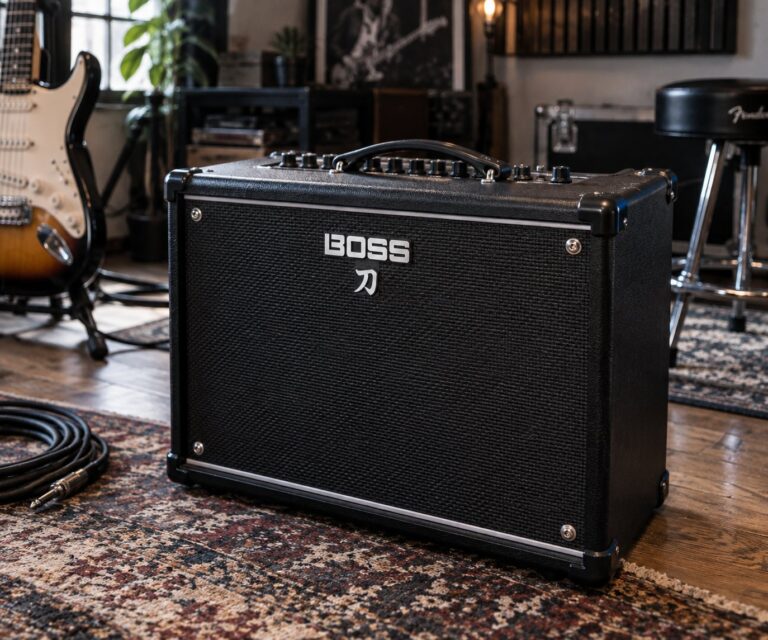
The Amp That Outsells Tube Legends: Boss Katana Artist Gen 3 Steps Up
The flagship Boss Katana Artist Gen 3 packs 100 watts, a custom Waza speaker, the exclusive Bloom circuit, and over 60 effects into one serious stage combo.
In 2016, BOSS did something the guitar world hadn’t seen in decades: it launched a solid-state amplifier that players actually wanted to own. Not merely wanted because it was cheap, or because their bedroom couldn’t take 100 watts of tweed after midnight, but wanted on merit — because it sounded genuinely good and did genuinely useful things. The Katana sold over a million units across its first two generations and in the process rewrote the conversation around what a working amp looks like in 2024. The Boss Katana Artist Gen 3 is the flagship of the third generation. It costs $649 and, according to Premier Guitar’s Joe Charupakorn, “at $599, its capabilities are pretty extra-astounding” — and he gave it a Premier Gear Award.
There are six models in the Gen 3 Katana family: the 50, 50 EX, 100, 100/212, Head, Artist, and Artist Head. The Artist sits at the top of the combo line. It shares the same six amp characters and the same 100-watt rating as the Katana-100 Gen 3 reviewed separately on this site, but the word “Artist” represents a genuine engineering step up, not a marketing badge. The Waza speaker, the Bloom switch, the MIDI input, the Power Amp In jack, and the comprehensive Solo section are all exclusive to the Artist models in the Gen 3 combo range. These additions cost you about $200 over the Katana-100, roughly 10 kg in extra weight, and a noticeably larger cabinet footprint. Whether that’s the right trade depends on exactly what you’re trying to do on stage.
From the CE-1 to the Katana: Forty Years of BOSS Solid-State
BOSS began its amplifier story not with an amp but with a pedal. Roland Corporation launched the CE-1 Chorus Ensemble in 1975, embedding the effect inside the Jazz Chorus amplifier. BOSS was established as a separate entity within the Roland group shortly after, inheriting the CE-1 circuit and giving it a life outside the amp. Andy Summers of The Police made the CE-2 (the compact successor) the sound of an era. Alex Lifeson used it. The lesson from the start was that BOSS understood the relationship between the amp and the signal chain as a single integrated system — not as a head plus whatever you had bolted to the floor.
By 2016 that philosophy had a physical form: the original Katana. Built on Roland’s Tube Logic architecture — which models individual tube-circuit components rather than the output waveform of a tube amp, a meaningful technical distinction — the first-generation Katana offered five amp characters, onboard effects, and USB recording at a price that made multi-channel tube heads look like conspicuous luxury. The Katana-100 MkII arrived in 2019 with deeper software integration and power control down to 0.5 watts. The Katana Artist MkII in the same period introduced the Waza speaker and the semi-closed cabinet that became the Artist’s signature physical identity.
The Gen 3 line launched in May 2024. Every model gained a sixth amp character (Pushed), updated Tube Logic processing, and revised BOSS Tone Studio app integration. The Artist Gen 3 alone gained the Bloom switch — a hardware circuit that physically revoices the power-amp stage in a way the software alone cannot replicate.
Artist vs Katana-100: What You Actually Get for the Extra Money
Before running through the full specification, it’s worth being direct about the meaningful hardware differences between the Katana-100 Gen 3 and the Artist Gen 3, because the overlap is substantial and the distinctions matter.
The Waza speaker is the most audible difference. BOSS developed the 12-inch Waza G12W specifically for the Artist models, targeting the character and response of a late-1960s 25-watt British stack speaker — the Celestion G12H-25 lineage that defined everything from early Cream to late Zeppelin. The Katana-100 Gen 3 ships with a capable but standard 12-inch driver. Both specs say 100 watts, but the Waza speaker’s higher-mass cone and different resonance profile change the way the power section interacts with the driver at every volume level. Guitar World’s Richard Barrett described it as a cabinet that “packs a real punch with plenty of headroom and low-end thump.”
The Bloom switch is exclusive to the Artist and is not a software effect. It engages a dedicated circuit that physically reroutes the Class AB power section to produce a sharper attack alongside a richer, more dynamic low-end response — BOSS describes these as “two characteristics that are difficult to achieve at once.” Guitar World noted that Bloom “revoices the Class A/B power amp to give a more vintage/spongy low-end that complements single-coils particularly well.” You cannot replicate this with BOSS Tone Studio.
The MIDI input on the rear panel allows external controllers to switch Tone Settings, toggle effects, and control the amp in ways the footswitch jacks alone cannot match. This is the connection that lets the Artist become part of a larger stage system — a modular rig where the Katana handles amplification while an external MIDI controller (or a DAW) manages patch changes. The Katana-100 Gen 3 has no MIDI.
The Power Amp In jack bypasses the Katana’s preamp entirely and feeds a signal directly into the reactive Class AB power section. This turns the Artist into a powered speaker for a modeller, a preamp pedal, or any signal source that already has its own character. The Katana-100 Gen 3 does not have this jack.
The Solo section on the Artist is a physically distinct control cluster with its own Gain/Level knob, Delay Level knob, and Tap Tempo button. You can dial in a volume boost and add a slapback or rhythmic delay independently of whatever your current Tone Setting is running, without interfering with its preset delay. The Katana-100 Gen 3 has no equivalent.
The Artist also provides three speaker output jacks (16-ohm A, 16-ohm B, and 8-ohm) for connecting external cabinets, three Global EQ memories (versus the standard models’ approach), and a semi-closed cabinet rather than an open-back. Weight is 19 kg / 41 lbs 15 oz versus 14.8 kg for the 100 — the price of the bigger cab and heavier speaker.
Specifications
Famous Players: What the Evidence Actually Says
The Katana Artist has a player association story that requires some careful navigation, because the Gen 3 launched in May 2024 and the model-specific verification lag is real. The relevant documented evidence separates into three tiers.
Equipboard-documented on the Katana Artist line: Ola Englund and Andy James. Equipboard lists both guitarists as confirmed users of the Boss Katana Artist (the original model line), based on photo and video evidence. Ola Englund — guitarist for The Haunted and a prolific YouTube gear reviewer — tested the Gen 3 in one of his “Will It Chug?” videos specifically examining whether the new generation could handle high-gain drop-tuned playing. His conclusion, from the bravewords.com coverage of that video, was broadly positive. Andy James is a clinician-level shred guitarist who has appeared in BOSS promotional materials for the Katana Head. Both play firmly in the high-gain territory the Lead and Brown characters were built for, and both are a more honest reflection of the Katana Artist’s core audience than any borrowed classic-rock name could provide.
Promotional association: Rabea Massaad. Massaad — guitarist for Toska and Dorje and one of the more influential guitar-content creators in the UK — made a Facebook post in support of the new Katana Artist amplifier when the Gen 3 launched. He has demoed multiple generations of Katana on YouTube. His primary live amplifier of record, however, is Victory Amps (he appears on the Victory artist roster). His association with the Katana Artist is genuine but it is not a full endorsement transfer — he uses it, promotes it, and genuinely likes it, but it is not his main touring amp. The article on Boss Katana-50 Gen 3 notes Mac DeMarco as a documented Katana-50 user; the artist picture for the Artist tier runs slightly different because the Artist attracts players who need the expanded connectivity and output for actual gig use, not home practice.
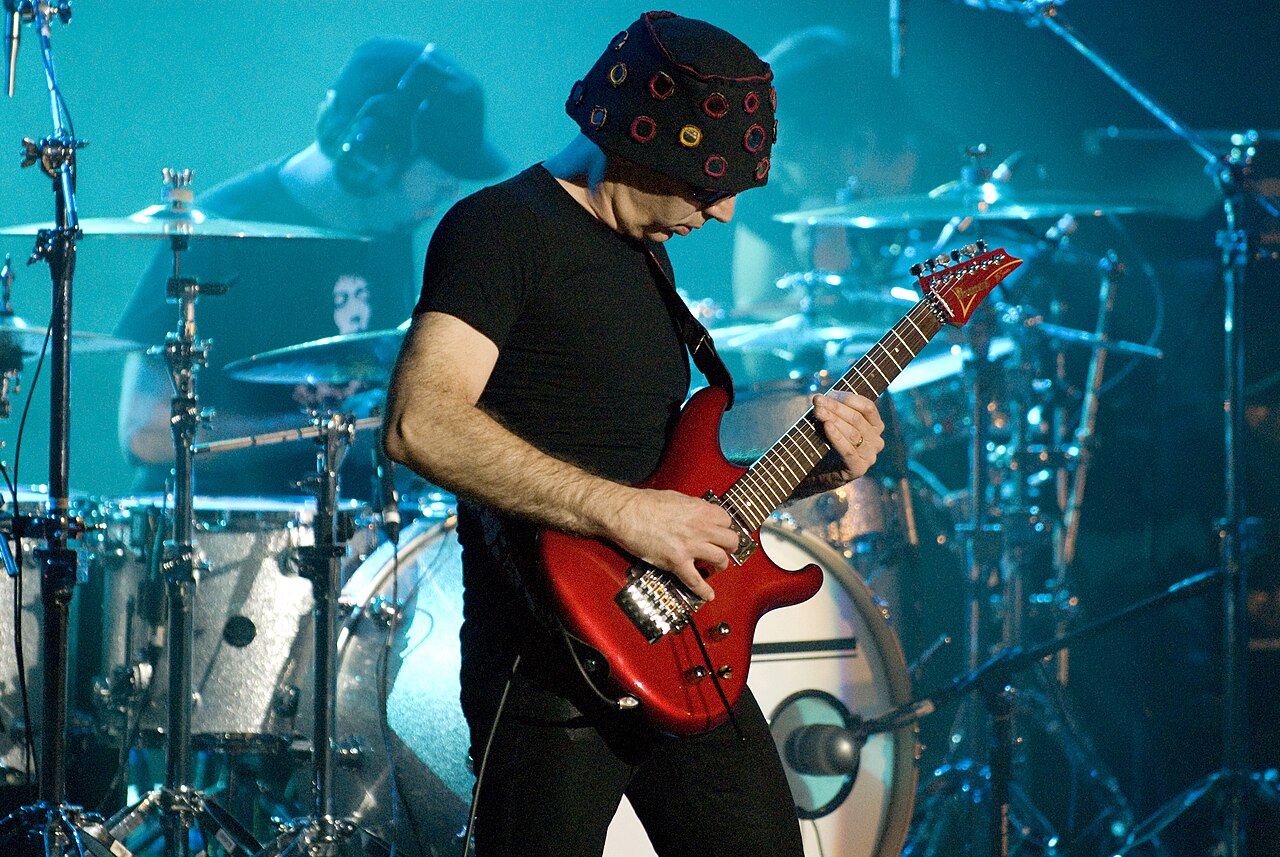
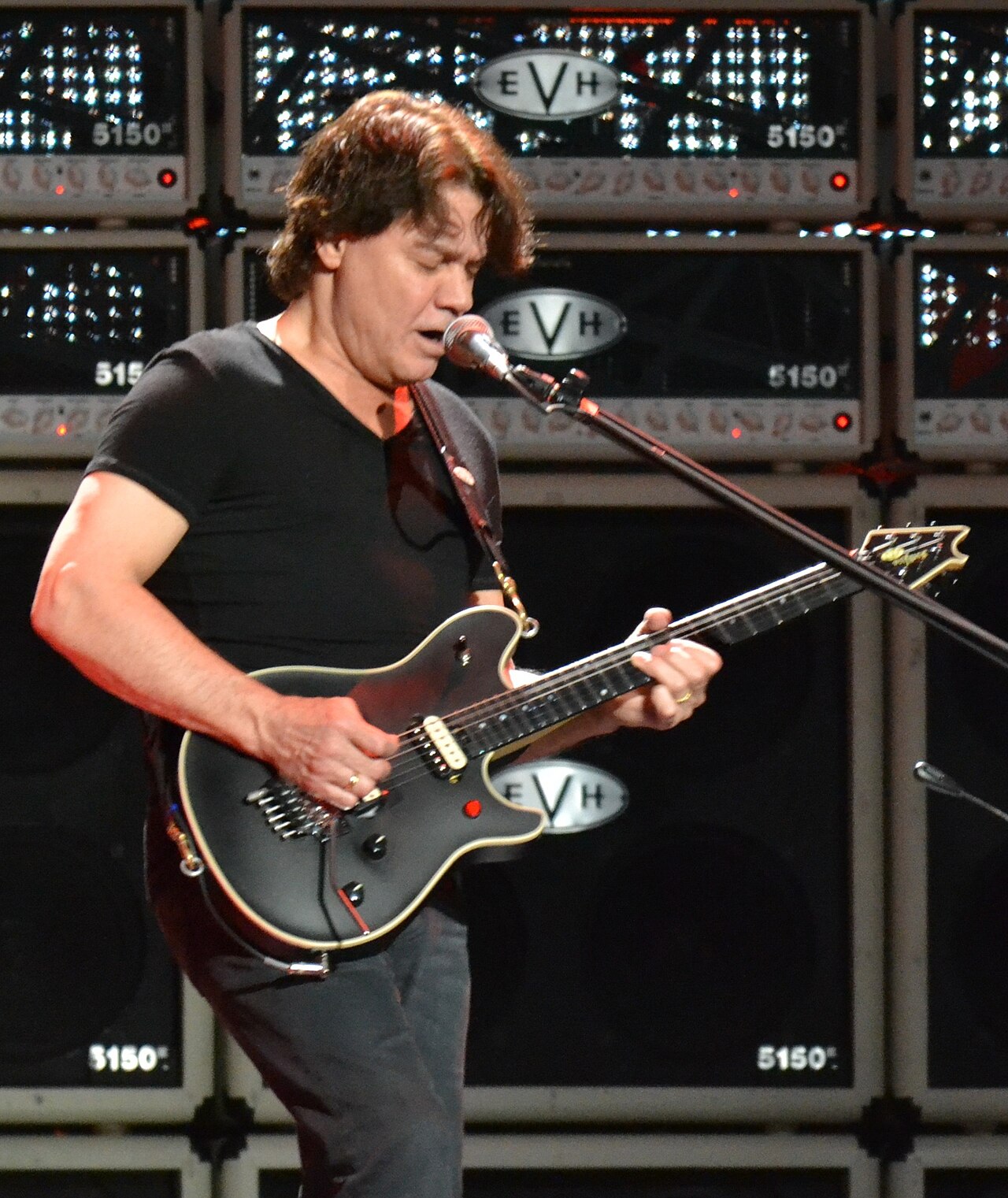
Context from history: the Brown character and Eddie Van Halen. BOSS named the highest-gain amp character “Brown” as an explicit reference to Van Halen’s “brown sound” — the saturated but articulate lead tone that defined both the 5150 and the hacked Marshall tones of the 1970s. Premier Guitar noted that the Brown patch “communicates the nuances of tapping and palm-muting techniques as well as a responsiveness that I might have attributed to tubes in a blindfold test.” Van Halen is not documented on a Katana Artist and never could be — he died in October 2020, four years before Gen 3 launched. The Brown character is an homage, not an endorsement claim, and the article treats it accordingly. Joe Satriani and Steve Vai occupy the Lead territory the Katana Artist does well — muscular, expressive, sustain-rich — but neither is documented on this amp. Their names appear here as tonal benchmarks for the Lead character, not as player claims.
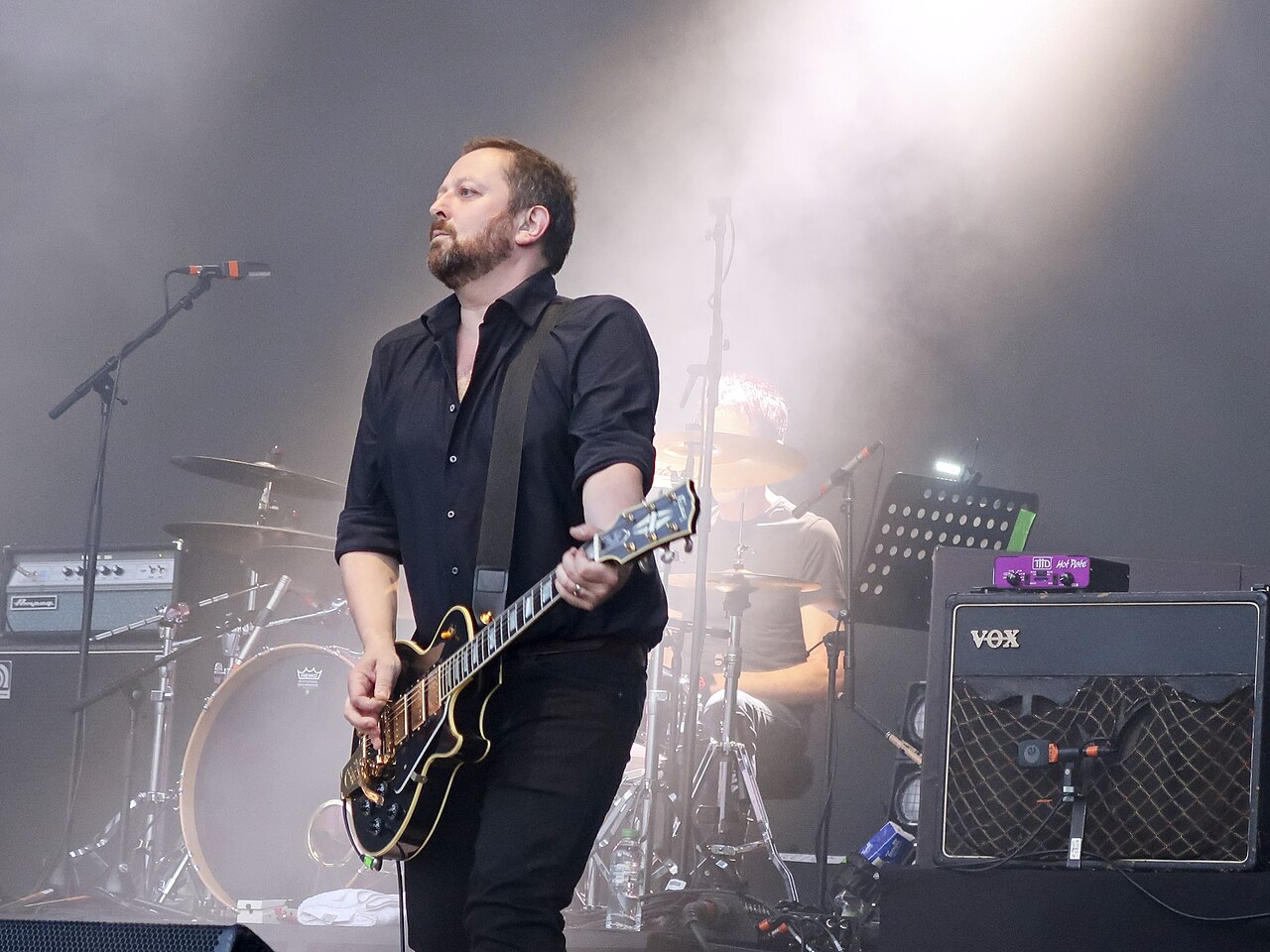
The honest position on the Katana Artist’s famous-player story is this: it is overwhelmingly used by working musicians who run it at venues with 80 to 400 capacity, by clinician guitarists who need reliability and coverage night after night, and by recording guitarists who want its USB-C output and IR-based cab simulation. The Artist tier specifically attracts the player who has already outgrown the Katana-100 and needs the MIDI, the Power Amp In, and the Waza speaker — not the bedroom player or the occasional gigging hobbyist who would be perfectly served by the 100W model. The absence of a celebrity-level endorser list is a function of the amp’s identity, not its quality.
The Waza Speaker: British Stack DNA Without the Back Pain
BOSS’s use of the Waza brand for the Artist’s speaker is not a marketing promotion of an existing speaker. The Waza G12W is a purpose-built driver developed by BOSS’s engineering team to replicate specific characteristics of a late-1960s Celestion G12H-25 — the 25-watt speaker that loaded Marshall 4×12 cabinets in the era when Jimmy Page, Jimi Hendrix, and Angus Young were defining what a British amp sounded like.
The G12H-25’s signature is a higher-mass, alnico-magnet cone that produces a soft, warm low-frequency response, controlled breakup at moderate volumes, and a presence peak in the upper midrange that adds clarity without harshness. At 25 watts, the original could be driven into natural compression by a 50-watt Marshall head — that power-amp-meets-speaker interaction is what “cranked British stack” actually means. BOSS’s challenge with the Waza G12W was to capture that response characteristic while engineering the driver to handle the full 100-watt output of the Artist without failing.
The solution was to build the cone and magnet structure to match the G12H-25’s resonance and frequency response characteristics while using a modern voice coil that can dissipate the extra thermal load. The result, per Guitar World, is a cabinet that “packs a real punch with plenty of headroom and low-end thump” and a “semi-open-back cab design [that] gives a wide, even spread of sound.” The wider baffle than the Katana-100’s cabinet and the semi-closed rear panel are both deliberate tuning choices to maximize low-end extension without the boom of a fully closed design.
For players running the Power Amp In jack with a modeller or external preamp, the Waza G12W behaves as a reactive load that colours the signal in ways a standard flat-response FRFR monitor does not. This is specifically what players who want “a real guitar speaker” from their modeller rig come to the Artist for: not neutrality, but the particular resonance and breakup character of a quality guitar driver.
Bloom: The Hardware That Sets the Artist Apart
Every explanation of the Bloom switch will note that it “revoices the power stage.” What that means in practice is that BOSS built a dedicated analogue circuit into the Artist’s power section that, when engaged, physically changes how the Class AB output stage responds to the signal. It is not a digital effect. It is not a tone preset. It cannot be downloaded or shared on BOSS Tone Exchange. The Bloom button is hardware or nothing.
BOSS describes the result as “a sharper attack and a richly dynamic low-end response.” Guitar World found that Bloom “revoices the Class A/B power amp to give a more vintage/spongy low-end that complements single-coils particularly well.” The Premier Guitar review called the overall Artist Gen 3 a platform with “a responsiveness that I might have attributed to tubes in a blindfold test.” Bloom is the largest single contributor to that character shift.
In practice Bloom works best in the Clean and Pushed characters, where the power-stage compression and low-end enhancement have room to breathe. In the Brown character at high gain, the additional low-end can turn to flub if the bass knob is not compensated — rolling bass back to the 4-5 range when Bloom is engaged in high-gain settings is the standard workaround. In the Crunch and Lead characters, Bloom adds sustain and sag that make chords feel heavier without requiring more gain. It is most obvious on single-coil-equipped guitars, particularly Stratocasters in positions 2 and 4 where the natural peak frequency of the pickup sits in exactly the range Bloom enhances.
Tone Recipes
Recipe 1: Brown Sound — Eddie’s Room
The Brown character targets the high-gain, articulate lead tone associated with Eddie Van Halen‘s rig — specifically the modded Marshall with a variac voltage reducer that produced a slightly compressed, warm high-gain response. Amp Type: Brown. Variation: off. Bloom: off (the low-end enhancement muddies palm mutes). Gain: 7. Volume: 4. Bass: 5, Mid: 4, Treble: 7. Presence: 5. Cab Resonance: Vintage. Contour: off. Add a light Mod (chorus, 3-4 knob position) for a Runnin’ with the Devil shimmer. Run this with a Les Paul through the effects loop for pick-attack separation on tapping runs. The Solo boost set to +6 dB with 200ms delay time handles the jump to lead volume without any gain bump.
Recipe 2: Pushed Crunch — Early Zeppelin
The Pushed character — the new addition in Gen 3 — is described by Guitar World as “chewy, touch-sensitive break-up” and by Premier Guitar as edge-of-breakup that responds to pick dynamics in ways not previously available in solid-state design. This is the character for early Jimi Hendrix-style rhythm work and the first two Led Zeppelin records. Amp Type: Pushed. Variation: off. Bloom: on (the spongy response is the point here). Gain: 5. Volume: 5. Bass: 6, Mid: 5, Treble: 5. Presence: 4. Cab Resonance: Vintage. Contour: mode 1 (green, midrange bump). A Stratocaster on the bridge pickup with the volume rolled back to 7 cleans up completely; dime the volume and you’re in purple haze. No additional drive pedal needed — the Pushed character handles the transition itself.
Recipe 3: Clean Platform — Stevie Ray Vaughan Sparkling
The Clean character at headroom is the Artist’s strongest single-coil canvas. Amp Type: Clean. Variation: on (the Variation adds a brightness and top-end sparkle that lifts single-coil pickup output). Bloom: on. Gain: 3. Volume: 6. Bass: 6, Mid: 5, Treble: 6. Presence: 6. Contour: off. Cab Resonance: Vintage. Add the Booster set to Blues Driver voicing at knob position 4, placed before the amp character. Power Control at Half gives you the natural sag that brings the low strings alive. At this setting a Strat on the neck pickup produces the kind of spongy, harmonically rich clean that makes a tube amp player look twice. Solo boost: +4 dB, no delay.
Recipe 4: Lead Sustain — Satriani Territory
The Lead character with moderate gain is where sustained, vocal single-note lines live. Joe Satriani‘s clean-ish sustain tone — not the Crunch power-chord sound but the legato lead voice of “Always with Me, Always with You” — sits exactly here. Amp Type: Lead. Variation: off. Bloom: off. Gain: 6. Volume: 4. Bass: 5, Mid: 6, Treble: 5. Presence: 5. Contour: mode 2 (red, mid-scoop). Reverb: Hall at knob position 4. Delay: 350ms at 20% mix. The mid-scoop Contour mode is counterintuitive but in this register it carves a frequency window that lets the sustaining note separate from the reverb wash. Solo boost: +5 dB with delay level at 3.
Recipe 5: Modern Metal — Drop-D Chug
This is the territory Ola Englund and Andy James use the Katana Artist for. Amp Type: Brown. Variation: on (tightens the low end and reduces flub in palm mutes). Bloom: off. Gain: 8. Volume: 4. Bass: 5, Mid: 3, Treble: 7. Presence: 6. Cab Resonance: Modern. Contour: off. No onboard reverb. Use the effects loop to place a noise gate (ISP Decimator or Boss NS-2) in the Send/Return. Power Control at Max is non-negotiable — the Brown character at high gain needs the full output stage to maintain note-to-note definition in fast runs. Run a Ibanez TS9 Tube Screamer in front with drive at 0, tone at 6, level at max to tighten the low end — the classic solid-state metal boost trick that tightens flabby lows without adding drive.
Comparisons
vs Boss Katana-100 Gen 3 ($449.99)
This is the most important comparison in the catalogue. The Katana-100 Gen 3 shares six amp characters, 8 memories, power control, and the same Tube Logic processing. The $200 price difference buys you the Waza speaker, the Bloom circuit, MIDI In, Power Amp In, the Solo section, three speaker output jacks, a larger cabinet, and 4.2 kg of extra weight. If you never need MIDI control, never want to plug in an external preamp or modeller, and would rather have a lighter amp — the Katana-100 is the correct answer. If any of those features matter to your workflow, the Artist is the right tier. The Artist’s semi-closed cabinet will also project slightly more directionally in larger rooms than the 100’s open back, which matters in a venue context.
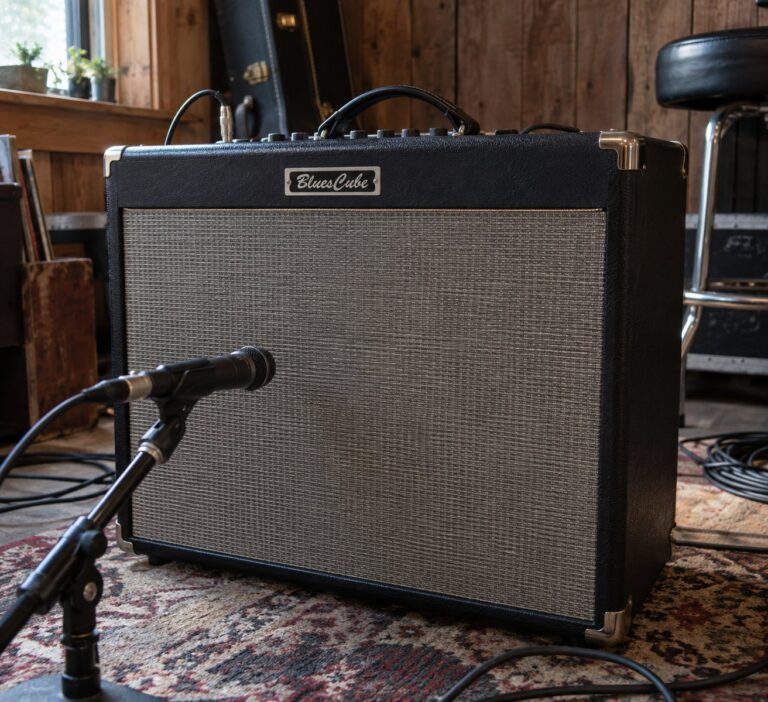
vs Roland Blues Cube Artist (~$1,299)
The Blues Cube Artist is a premium solid-state combo built around Roland’s Tube Logic targeting of a late-1950s tweed Fender, with the Tone Capsule plug-in system as its most distinctive hardware feature. Where the Katana Artist covers all six genre territories from acoustic simulation to extreme metal, the Blues Cube is a specialist instrument built for clean and early-breakup territory — clean, crunch, and the Dual Tone blend mode are its operating envelope. If you play blues, country, and classic rock exclusively, the Blues Cube’s Tone Capsule voicings (Eric Johnson, Robben Ford, Kirk Fletcher) are more deeply characterful in their specific lane. If you need genre range and stage connectivity at half the price, the Katana Artist wins outright.
vs Quilter Aviator Cub ($799)
The Quilter is a 50-watt combo with three Fender-voiced input jacks and a co-developed Eminence 12-inch speaker, famous for its uncanny tube-feel at low volume. It is simpler, lighter, and narrower-toned than the Katana Artist. The Aviator Cub has no onboard modelling, no MIDI, no USB recording, and no multi-character switching beyond its three input voices. Its strength is the feel of its power section and the focused vintage-Fender palette. The Katana Artist is objectively the more versatile tool; the Quilter is the better choice if you want one very good clean-to-crunch American voice and nothing else.
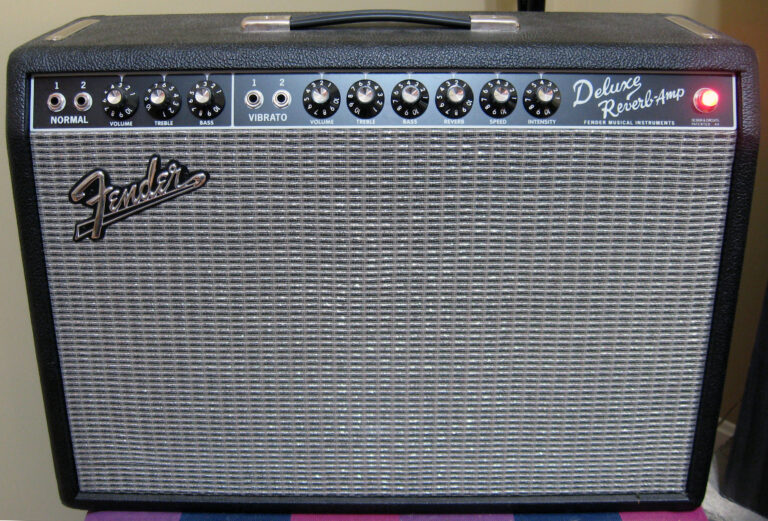
vs Fender Deluxe Reverb (tube reference, ~$1,499)
The Deluxe Reverb is the clean-tone reference for a generation of guitarists, built around two 6V6 output tubes and a 12-inch Jensen, and producing roughly 22 watts of Class A/B power. The Katana Artist’s Clean + Bloom combination is the closest solid-state equivalent reaches to the Deluxe’s dynamic, spongy clean feel. The tube amp wins on harmonic complexity and natural speaker-power-stage interaction in a way the Katana’s Tube Logic approximates very well but does not perfectly replicate. The Katana Artist wins on volume control precision (0.5W to 100W versus fixed attenuation pedals), onboard effects, genre coverage, USB recording, and price. The Deluxe Reverb wins on the feel of a genuinely overdriven output section, at prices that start at twice the Katana’s cost and rise steeply from there for vintage examples.
vs Boss Nextone Stage (coming in the next GuitarGangsters feature)
The Boss Nextone Stage is a 40-watt combo built on actual tube output section technology — one of four selectable output-tube types (6V6, EL84, 6L6, EL34) — rather than Tube Logic simulation. It sits between the Katana Artist’s solid-state architecture and a conventional tube amp in both price and technical approach. Where the Katana Artist maximizes genre coverage, connectivity, and onboard effects within the solid-state paradigm, the Nextone Stage offers real tube response with digital-convenience features layered on top. Expect that comparison in detail when GuitarGangsters covers the Nextone Stage shortly.
Buying Guide
The Katana Artist Gen 3 currently sells for $649.99 at Sweetwater and most US dealers. The Guitar World review found it at $599 at launch in August 2024; Sweetwater’s August 2026 price reflects the $50 upward drift that is common across the Katana line in the two years since Gen 3 launched.
The Artist Head Gen 3 is the standalone preamp/power-amp head version of the same circuit, designed for players who already own a quality 8-ohm speaker cabinet or who want the Katana’s electronics in a rack-compatible form. If you have a good cab, the Head is worth comparing — it ships the same electronics at a slightly different price point. The Katana 100/212 Gen 3 uses a 100-watt chassis in a 2×12 cabinet with two standard speakers; it does not include Waza speakers or Bloom, making it a different tier despite the 212 suffix.
The GA-FC EX footswitch ($149) is listed as optional but is functionally necessary for live use. It provides six foot switches covering Tone Setting changes and effect toggles simultaneously — without it, you’re reaching to the panel between songs. Budget for it upfront. The BT-DUAL Bluetooth adaptor ($59.99) enables wireless editing via the BOSS Tone Studio smartphone app, which is the recommended way to access the deeper parameter set without a laptop cable on stage.
On the used market, MkII Artist units are available from $350–$550 in good condition. The MkII lacks the Gen 3’s Pushed character and Bloom switch but shares the Waza speaker and semi-closed cabinet. For players who want the Artist form factor and speaker without needing the Gen 3’s specific new features, a well-maintained MkII is a reasonable choice. Inspect the footswitch jacks and power control switch, which are the most reported long-term wear points across the Artist line.
Ownership Notes
The Artist Gen 3 is genuinely 19 kg. That’s a 42-pound combo in real-world terms — heavier than a Fender Blues Junior by almost 30 lbs, and noticeably heavier than any open-back modelling combo at this price point. The handle is well-designed but this is a cart-required amp for regular solo gigging. Plan accordingly.
BOSS Tone Studio is the gateway to the amp’s full potential and it requires engagement. The factory presets are genuinely useful starting points — Premier Guitar’s reviewer found that “just about every preset I tried could form a solid core sound for the genre it was designed for.” But the deeper parameter set (effect order, air feel, cab mic position, Contour fine-tuning, hidden amp parameters) is only accessible via the app. Getting comfortable with BTS before your first serious gig is time well spent.
BOSS’s compatibility note is worth highlighting: “Compatible with sounds created on previous stage-class Katana models.” Patches you build on the MkII can be imported to the Gen 3 via BOSS Tone Exchange. The Katana community on BOSS Tone Exchange is large, active, and covers a wide range of styles — a new Gen 3 owner can have dozens of genre-specific patches loaded and ready within an hour of connecting to BTS, many of them built and refined over years by experienced users.
No footswitch is included. GA-FC sticker templates are included to help you label a GA-FC layout without buying the full footswitch immediately, but do not mistake the sticker for the controller. No Bluetooth adaptor is included. Both are sold separately, and both cost real money — factor the GA-FC EX at $149 into any budget calculation for live use.
The rear panel connectivity is the best in the Katana line: three speaker outs (two 16-ohm, one 8-ohm, 8-ohm total load maximum), Power Amp In, XLR and 1/4″ Line Out with a GND LIFT switch, AUX In, USB-C, MIDI In, Send/Return loop, EXP Pedal jack, GA-FC/footswitch jack, and the BT adaptor slot. The Stereo Expand function links two Katana amps via their rear panels for stereo effects distribution with master control from the primary unit — the function is supported across all Katana Gen 3 and MkII models except the Katana-50. For a stereo stage rig using two Artist Gen 3 units, budget around $1,300 for the pair and $300 for two GA-FC EX controllers — roughly the cost of a mid-range tube head before a cab.
FAQ
Is the Boss Katana Artist Gen 3 good enough for professional live use?
Yes, without qualification. It is 100 watts into a custom Waza speaker with MIDI control, a balanced XLR output, and an effects loop. Working professional musicians use it regularly. The learning curve is real — you need to engage with BOSS Tone Studio to get the most out of it — but that is a once-done investment, not a continuous barrier.
What is the Bloom switch actually doing?
It engages a hardware circuit that reroutes part of the Class AB power stage to introduce a different dynamic response: faster attack combined with a fuller, more resonant low end. This cannot be replicated in software. It is exclusive to the Artist models in the Gen 3 line and was not present in any previous Katana generation.
Does the Katana Artist Gen 3 need a footswitch to be useful?
For home practice and recording: no. The panel controls are comprehensive and USB recording via the Line Out/USB-C works without any external controller. For live performance: yes, effectively. Without the GA-FC EX you cannot switch Tone Settings and toggle effects simultaneously in real time. Budget $149 for the GA-FC EX if this amp is going on stage.
Is the Waza speaker removable or swappable?
Yes — the Waza G12W is a standard 12-inch guitar speaker mounted in an 8-ohm configuration. It can be replaced with any 8-ohm speaker of the same or similar impedance. Many owners who want to experiment with a different character use the external Speaker Out jacks (two 16-ohm, one 8-ohm) rather than removing the internal driver.
What is the difference between the Gen 3 and MkII Artist?
The Gen 3 adds the Pushed amp character (new sixth character in addition to the five from MkII), the Bloom switch, updated Tube Logic processing, USB-C in place of USB-B, and a revised BOSS Tone Studio interface. The MkII has the same Waza speaker and semi-closed cabinet. A well-maintained MkII is a valid used-market alternative at $150–$200 less if the Gen 3-specific features (Pushed, Bloom) are not priorities.
Can the Katana Artist Gen 3 replace a modeller like a Helix or Kemper for live use?
It depends on what you need. The Katana Artist has 60+ effects via BTS, an effects loop, MIDI control, and a balanced XLR out — it can do a credible job of a complete front-of-house rig for a wide range of styles. What it lacks versus a full modeller is the physical portability of a floor unit, the number of storable scenes (8 Tone Settings vs hundreds on a Helix), and the third-party amp model library. Forum consensus from users who have compared the two tends to rate the Gen 3’s clean tones above the Helix in the room, but places the Helix ahead for post-production direct tone and preset management scale.
Does the Power Amp In jack work with any modeller?
Yes. The Power Amp In bypasses the Katana’s preamp and feeds directly into the reactive Class AB power section and Waza speaker. Any modeller with a 1/4-inch instrument or line-level output can connect here. Players who run a neural DSP Quad Cortex or HX Stomp as a preamp and want a real power amp and guitar speaker instead of FRFR monitors find the Artist Gen 3 a natural solution at a price point well below boutique tube power amps.
Is the 100-watt rating usable at home volume?
Yes, specifically because of the Power Control knob. At 0.5 watts the Artist is bedroom-loud — the Waza speaker is engaged at proper excursion, the power section is running its characteristic compression curve, and the tone is the same as at full power. Forum users frequently report the 0.5-watt setting as the most-used position for home practice, with the half-power and max settings reserved for rehearsal and live gigs respectively.
Image credits
- A guitarist playing on stage in front of an amp: Bex.Walton, Wikimedia Commons, CC BY 2.0.
- Eddie Van Halen: Joe Bielawa, Wikimedia Commons, CC BY 2.0.
- Joe Satriani: livepict.com, Wikimedia Commons, CC BY-SA 3.0.
- Fender Deluxe Reverb: DlxReverbFront, Wikimedia Commons, CC BY-SA 3.0.
Latest News
Related
On This Day
Monday 9 November
From this week: