The Amp That Proved the Bedroom Doesn’t Have to Be Boring: Positive Grid Spark 40
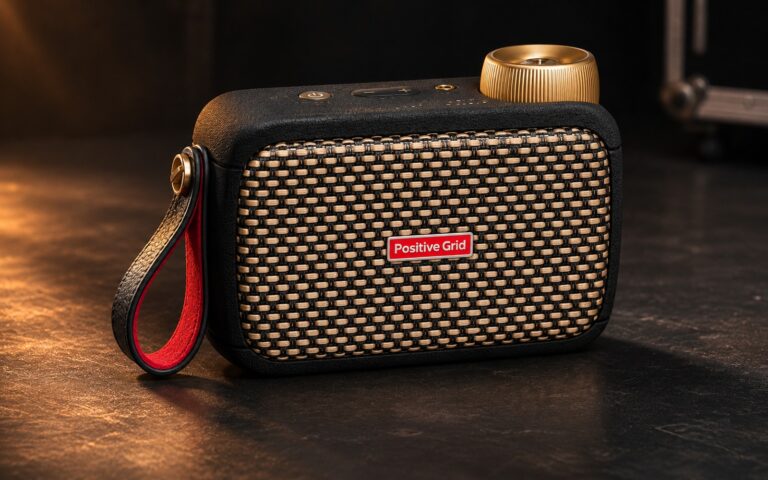
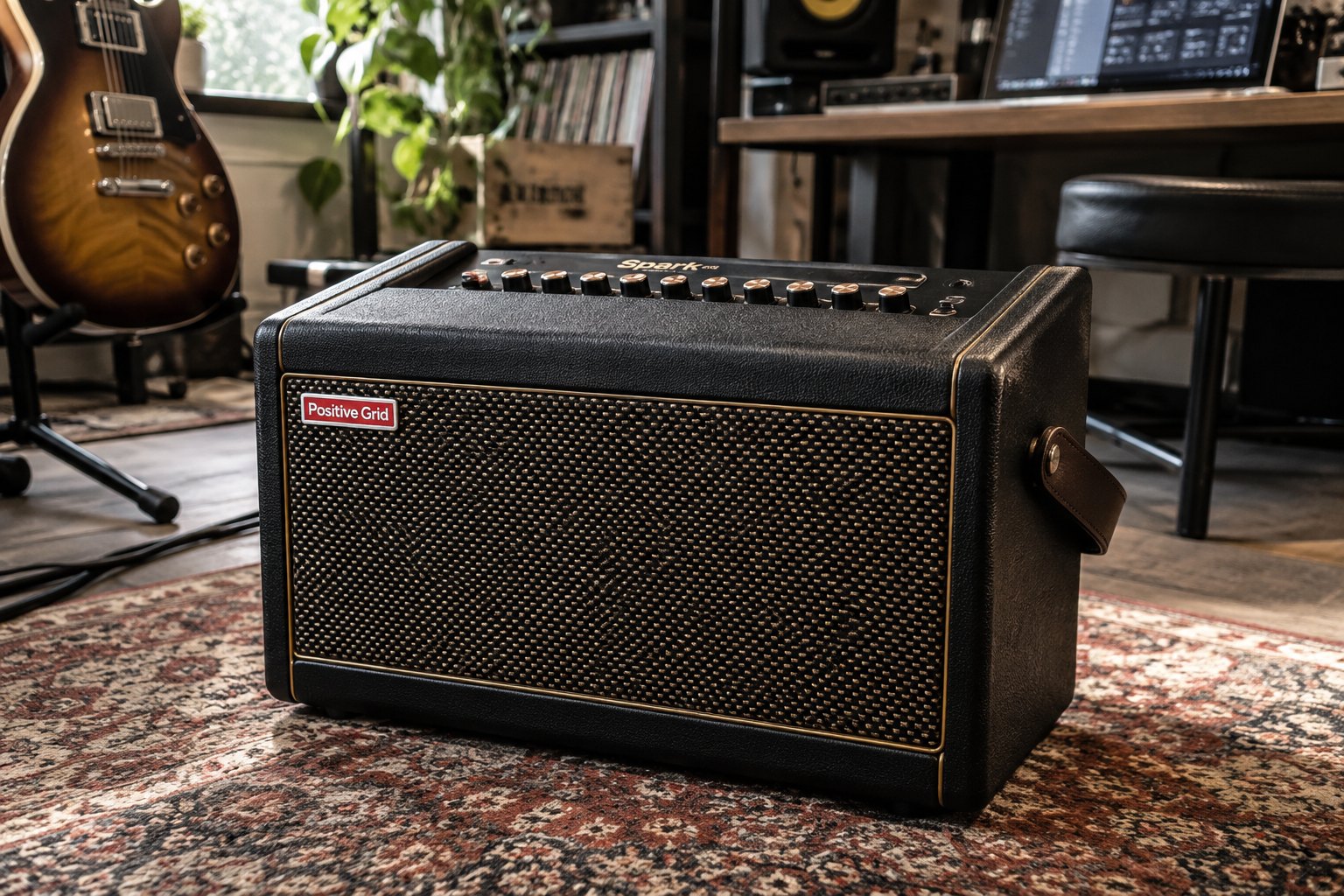
Positive Grid Spark 40 Smart. AI-generated reference illustration, not a photograph.
Positive Grid Spark 40 review: 40W smart modeling amp with BIAS engine, Smart Jam, Auto Chord. Verified players, tone recipes, and honest Spark 2 comparison.
In 2019, a Taiwanese software company launched a crowdfunding campaign for a practice amp. Within days, 25,000 guitarists had placed pre-orders — a number so large that the company spent most of the following year just catching up with shipping. By the end of its first year on the market, over 100,000 Spark 40 units had changed hands. That kind of uptake doesn’t happen by accident. It happens when a product solves a problem that players had quietly given up on solving.
The problem was this: for decades, the bedroom amp was a compromise. You either bought a cheap solid-state box that sounded nothing like the tube amps in the YouTube videos you were learning from, or you bought a proper tube amp and drove your housemates insane. Modelling technology promised a third way, but the early generation of practice modellers — cheap DSP chips in plasticky enclosures — still couldn’t make playing at home feel like playing music. It felt like filling time between real sessions.
The Positive Grid Spark 40 changed that equation. It wrapped Positive Grid’s BIAS modelling engine — the same technology powering the professional BIAS Amp and BIAS FX software used in high-end studio and stage rigs — into a compact, 5.2kg amp that retailed at $299. Then it added a smartphone app, a real-time chord detection system, and an AI-powered backing-track generator. The Spark 40 wasn’t just a better practice amp. It made practice itself feel worth doing again.
Positive Grid: From Software to Hardware
Positive Grid was founded around 2012, headquartered in Taipei with US operations in Orange County, California. The company’s first products were software: BIAS Amp (a virtual amp designer that could model any tube amplifier’s circuit behavior) and BIAS FX (a full signal-chain processor built around it). Both programs gained genuine credibility among working musicians and studio engineers — not as toys, but as tools producing results publishable on actual records. Sound On Sound’s JG Harding, reviewing the Spark 40 in September 2021, described BIAS Amp as his “favourite amp-sim software,” noting he had “no qualms at all about using it alongside real-world recordings in record releases.”
The move into hardware made sense: if the software modelling was studio-grade, what would happen if you put it inside a physical amp cabinet? The answer, after several iterations including the BIAS Amp modelling head, was the Spark. Positive Grid crowdfunded the original Spark 40 in 2019, shipped through 2020, and created one of the most widely discussed practice amps in modern history. A dedicated Spark Amp Mods Facebook group quickly accumulated over 11,000 members — a modding community of the kind that typically gathers around tube amps, not $300 practice boxes.
Positive Grid has since released the Spark 2 (2024), Spark MINI, Spark MINI Vai, Spark GO, Spark EDGE, Spark LIVE, and most recently the REACTOR series. The Spark 40 remains on sale at $299 as of 2026, now competing primarily with its own successor, which costs the same price.
Specifications
The BIAS Engine: What “Modelling” Actually Means Here
Most affordable practice amps use basic DSP modelling — simplified algorithms that approximate the frequency response of famous amps without simulating their actual circuit behavior. The BIAS engine works differently. It attempts to model the actual physics of a tube amplifier’s components: the pre-amp tube stages, the power amp section, the output transformer, and the interaction between them. The result is that the BIAS models are dynamically responsive in the way tube amps are — the clean sounds clean up when you reduce guitar volume, overdrives bloom and compress when you dig in harder, and picking attack actually changes the texture of the breakup rather than just its level.
This matters in practice because one of the things that makes cheap solid-state amps unsatisfying isn’t primarily tone — it’s feel. When your attack doesn’t change what the amp does, you stop playing expressively. The BIAS engine’s responsiveness brings enough of the push-pull interaction of tubes into the solid-state package that playing through a Spark 40 doesn’t feel like playing into a wall.
The app provides access to Tone Cloud — Positive Grid’s library of user-submitted presets. At the time of the original review cycle, this library had tens of thousands of entries, including settings designed to approximate the tones of specific recordings. The Auto Chord function takes a song from your music library, analyses it in real time, and displays the chord sequence for you to play along to. Smart Jam takes a different angle: you play a riff or chord sequence into the amp, select a genre, and the system generates a drum and bass backing track in a matching key. Neither feature is flawless — Auto Chord occasionally mis-reads complex voicings, and Smart Jam works better with straightforward harmonic material — but both represent genuinely useful practice tools that didn’t exist in a sub-$300 amp before the Spark.
Famous Players
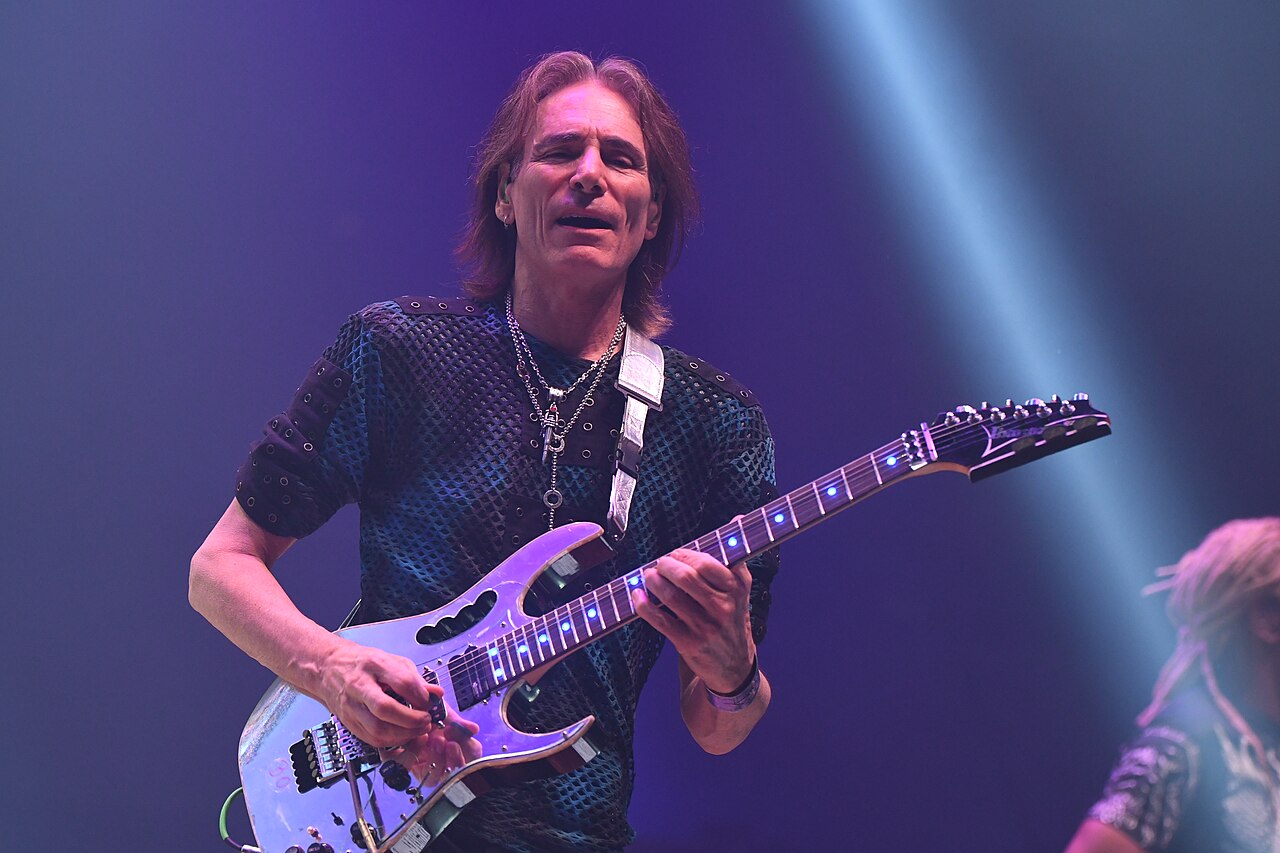
The Spark 40 sits in a structural category — home practice amp — that doesn’t generate many professional endorsement deals, because professional touring musicians have no commercial need to be seen using a practice amp. Most of the headline Positive Grid artist partnerships involve other products: Steve Vai has a signature Steve Vai-flavoured Spark MINI Vai; Nuno Bettencourt’s name is attached to Spark 2 presets; Jeff Loomis’s tones are distributed via the Spark 2 app. None of these connections touch the Spark 40.
But the Spark 40 shows up in the wild in some unexpected hands. The strongest verified connection documented on Equipboard comes from Tim Henson of Polyphia, who in a YouTube video explicitly named his source: “Using the ‘Wooden Bridge’ preset from the Spark smart amp by Positive Grid.” This is a first-person written statement identifying the specific amp and the specific preset — as clean a primary source as Equipboard entries get. Henson is the guitarist behind one of modern guitar’s most-watched YouTube channels and one of the few musicians who has shifted where 200,000 online guitar learners are pointing their attention. His using a $299 practice amp is itself a meaningful statement about the gap between perception and utility.
The most unexpected name on the list is Keith Richards of The Rolling Stones. An Instagram photo shows Richards using the Positive Grid Spark while trying out one of his custom-shop V guitars. This is personal-use documentation — not an endorsement, not a preset collaboration, and certainly not evidence that Keef recorded anything through a Spark. But it does establish that one of rock’s most recognisably opinionated players about tone found the Spark 40 worth picking up for a practice session. Richards is famous for playing through the simplest rigs that still produce his sound: the Stones’ infamous treble-boosted mid-sixties crunch comes from Epiphone Casino and Vox through basic Vox AC30s. The Spark 40’s Glassy channel, modelling an American-voiced clean with edge-of-breakup dynamics, is one of the amps in that lineage.

Tyler Larson of Music Is Win, one of YouTube guitar’s largest instructional channels, has also demonstrated the Spark 40 in video format. His platform — regularly reaching audiences in the millions — makes his usage worth noting as evidence of where the Spark 40 lands in the broader guitar-learning ecosystem. This is an amp that people who spend their time thinking seriously about guitar practice actually reach for.
Tone Recipes and Settings
Recipe 1: Classic Clean (Fender Blackface Variation)
Channel: Clean — App model: “Blackface Double” (based on Fender Twin Reverb). Gain: 2, Bass: 6, Mid: 5, Treble: 6, Master: 4. Add the onboard reverb at 4 for spring wash. This is the blank canvas: transparent, airy, and wide. Run a Fender Stratocaster through it in the neck or middle position for classic Texas blues — when you dig in, the model’s edge-of-breakup response adds just enough hair to the attack without tipping into crunch. Keep the Master below 5 to preserve clean headroom; above 5 the virtual power section starts to sag pleasantly but audibly.
Recipe 2: Driven Mid (British Crunch)
Channel: Crunch — App model: “Plexi 100W” (based on 1968 Marshall Super Lead). Gain: 5, Bass: 4, Mid: 7, Treble: 6, Master: 5. No drive pedal in chain; Gain 5 puts you in the harmonic crunch zone where single notes bloom with natural compression while chords retain their definition. A Gibson Les Paul Standard with the bridge humbucker produces the classic Stones/Faces rhythm texture. Drop Gain to 3 with a single-coil pickup for a cleaner, more Attack-forward variation — this is where you chase early Keith Richards through a Vox circuit variant rather than a Marshall one.
Recipe 3: Edge-of-Breakup Blues (American Tweed)
Channel: Glassy — App model: “Tweed Blues Bright” (based on Fender Bassman 4×10). Gain: 4, Bass: 5, Mid: 6, Treble: 5, Master: 6. Use the Master higher here — the Bassman model is designed to be pushed from the power section, and the virtual sag at Master 6 is where the tone starts to feel alive. Add Mod (tremolo simulation, depth 4, rate 3) for period-correct Americana. This channel rewards dynamic playing: play softly and it stays relatively clean; dig in on the root note of a blues bend and it opens up into a warm, compressed growl.
Recipe 4: Tim Henson Clean Ambience
Channel: Glassy or from Tone Cloud: “Wooden Bridge” (Tim Henson’s own preset, available as a named download). For a general approximation without app access — Gain: 2, Bass: 4, Mid: 4, Treble: 7, Master: 3. Mod (chorus or shimmer): depth 5, rate 4. Delay: feedback 3, mix 4. Reverb: 6. This is the Polyphia-adjacent clean: pristine string separation, wide stereo spread from the 2×4″ speakers, chorus that suggests movement without smearing the attack. A Stratocaster in the bridge-neck combined position through this setting produces the kind of overtone-rich clean that sounds more expensive than the amp it comes from.
Recipe 5: Modern High-Gain Lead
Channel: Hi-Gain — App model: “Brit Plexi Jump” or “SLO Clean/Lead” (based on Soldano SLO-100). Gain: 7, Bass: 5, Mid: 5, Treble: 6, Master: 4. Add a noise gate (app chain: gate threshold -40dB) to keep the floor clean. Use the onboard drive (Tube Screamer simulation, gain low, level high) ahead of the amp to tighten the low end. This is where the BIAS engine’s dynamic modeling earns its keep: the high-gain model tracks picking articulation across the strings individually, so palm-muted chugs don’t blur the string separation that defines good modern metal tone. The Ibanez TS9 Tube Screamer stacked into a high-gain channel is one of the oldest production tricks in rock; the Spark 40’s in-app simulation of exactly that combination produces usable results.
What follows are five practical settings for the Spark 40, using its top-panel controls (Gain, Bass, Mid, Treble, Master) and the named hardware amp channels. Effects controls (Mod, Delay, Reverb) are additional. Where app-accessible amp models are named, the original amp they’re based on is noted — confirmed from Positive Grid’s public amp list.
Comparisons and Alternatives
The Spark 40’s most immediate rival in its own product family is the Spark 2 (2024). At the same $299 asking price, the Spark 2 offers 50W vs 40W, FRFR (full-range flat-response) speakers angled slightly outward for a wider stereo image, 8 programmable hardware presets vs 4, a built-in looper, stereo line outs (not present on the Spark 40), and USB-C. The Spark 2 also resolves the bass-heavy speaker response that the Spark 40 is known for — the FRFR drivers deliver a flatter frequency curve that doesn’t require EQ correction. As Guitar World’s Matt McCracken concluded in a February 2025 head-to-head comparison: “Spark 2 is a more than worthy successor to the throne of best home guitar amp.” For a new buyer comparing both at the same price, the Spark 2 is the objective choice unless you specifically need the Spark 40’s amp-selection knob — which allows more intuitive channel browsing without the app — or you find a used Spark 40 at a significantly reduced price.
Against its broader competitive set, the Yamaha THR30II Wireless is the Spark 40’s closest tonal rival at a higher price point (~$600). The THR30II uses Yamaha’s Virtual Circuit Modeling (VCM) technology with Rupert Neve-developed processing, delivers 30W through 3.5″ speakers with stereo line outs, and offers all 15 amp models on the top panel without requiring the app. Its tonal quality through its built-in speakers is generally regarded as superior to the Spark 40’s, but it costs twice as much, has no Smart Jam/Auto Chord equivalent, and lacks the depth of Positive Grid’s Tone Cloud library. The Yamaha THR10II Wireless at ~$470 sits between the two — better speakers than the Spark 40, built-in wireless receiver, but again no AI practice tools and no Tone Cloud.
The Boss Katana 50 Gen 3 (~$250) targets a different use case: it’s a giggable 50W 1×12 combo first, a practice amp second. The Katana produces a bigger, more directional sound from a larger cabinet and is significantly more useful on a stage. The Spark 40 produces a more useful practice tool at home. They compete at similar prices but address different needs. If you ever need to play in a room with other instruments, the Katana is the better choice; if your amp will live on a desk and connect to headphones, a DAW, and a smartphone app, the Spark 40 wins on feature set.
The Boss Nextone Stage (~$500) represents the analog alternative: a 40W Tube Logic amp with selectable output tube types (6V6, 6L6, EL84, EL34) where selecting the tube physically reconfigures the output circuitry rather than loading a software profile. Its touch dynamics and feel under the fingers are genuinely closer to a real tube amp than anything the Spark 40 can offer. But the Nextone Stage doesn’t practice with you, doesn’t generate backing tracks, doesn’t have a smartphone app, and costs roughly 67% more. These are genuinely different tools.
Buying Guide: Spark 40 in 2026
The Spark 40 sells new for $299 at Sweetwater and Guitar Center (confirmed August 2026). Used units move on Reverb and eBay from around $150–$220 depending on condition and whether the carry bag is included. At the used price, the Spark 40 is a straightforward recommendation for any guitarist who wants to improve their home practice setup without spending Yamaha THR money.
New at $299, the purchase decision is complicated by the Spark 2 selling at the same price with demonstrably better speakers and more features. Positive Grid even runs a discounted upgrade programme for existing Spark 40 owners, which suggests the company knows the Spark 40’s days as the hero SKU are over. Unless the Spark 40’s specific workflow appeals — particularly the seven-position amp-type knob, which lets you cycle through amp characters without touching your phone — the Spark 2 is the stronger buy at equal money.
The carry bag (sold separately, occasionally bundled) is worth factoring into any purchase. The Spark 40 was designed for the desk but fits comfortably in a bag as hand luggage, and several reviewers noted taking it on holiday or to studio sessions. At 5.2kg it is noticeably lighter than even a small tube combo and carries without strain.
One note for bass players: the Spark 40’s four bass amp models (covering Gallien-Krueger 800RB, Eden, Aguilar, and Sunn-derived circuits) work surprisingly well for home practice. The amp produces genuine sub-bass extension. However, Smart Jam interprets bass input as melody rather than harmony, so the practice-tool features are guitar-focused. If your primary instrument is bass and you want the practice features, the Spark 40 is a half-solution.
Ownership Notes: The Bass-Heavy Speaker Issue
Both Sound On Sound and Guitar World’s comparative review flagged the same issue: out of the box, the Spark 40’s speakers lean heavily toward the bass end of the frequency spectrum. The combination of a bass-reflex port and an undamped internal cabinet creates what SOS reviewer JG Harding described as a “sort of exaggerated tilt EQ,” leaving most guitar patches sounding muddier than the same signal heard through headphones or the USB output.
This was partially addressed in Positive Grid’s July 2021 firmware update, which added an EQ stage in the app’s effects chain. You can now dial in a high-shelving EQ boost (above 3–4kHz) and a bass cut (below 200Hz) as part of any preset. The limitation is that you can’t simultaneously use the EQ and a modulation effect — both occupy the same effects slot. If you want chorus and a flat-ish speaker response, you have to choose one.
The hardware fix is easier: the Spark 40’s front grille is held on with Velcro and peels off in seconds. Stuffing the bass-reflex port with a piece of closed-cell foam (or, as Harding suggested in print, a rolled-up sock) removes a significant portion of the low-frequency boom without opening the cabinet. Filling part of the interior with polyester wadding damps the enclosure resonances further. These are reversible modifications that take under five minutes and substantially improve the amp’s in-room sound. The Spark Amp Mods Facebook community has documented these and more involved speaker-swap procedures for anyone who wants to go further.
For headphone and USB use, neither fix is necessary. The modelled signal recorded over USB bypasses the physical speakers entirely and sounds significantly better — clean, articulate, and fully balanced. For recording direct to a DAW, the Spark 40 is genuinely excellent. For in-room monitoring at desk height, address the bass first.
Frequently Asked Questions
Is the Positive Grid Spark 40 the same as the Spark 1?
Yes. Positive Grid’s product naming can be confusing: the original “Spark” (now sometimes called the “Spark 40” or “Spark 1” to distinguish it from the 2024 Spark 2) is this amp. When the Spark 2 launched, the naming retroactively clarified. If a listing says “Positive Grid Spark” with no number and a 40W rating, it is this unit.
Can the Spark 40 be used without the smartphone app?
Yes. The top-panel controls give you access to all seven hardware amp channels plus independent EQ, gain, master, and effects knobs. Four preset buttons can recall saved tones. You’d miss the full library of amp models and the Smart Jam/Auto Chord features, but the amp works as a conventional seven-channel modeller without any app involvement.
Does the Spark 40 work as a recording interface?
Yes, and this is one of its most underrated features. USB connects the Spark 40 to a DAW as a 2-in/2-out interface. The modelled amp signal (not the signal coming out of the physical speakers) streams into the computer. On Mac and iOS no driver is required. Windows users need the ASIO driver for low-latency performance. The recorded tone quality is meaningfully better than the in-room speaker sound.
Does the Spark 40 support a footswitch?
Not in stock form. There is no footswitch jack. The active modding community has developed Bluetooth-based workarounds — including an open-source project (SparkBox on GitHub) that enables a third-party foot controller to switch presets — but this requires technical confidence. If footswitch support is essential, look at the Spark 2 or Boss Katana range instead.
Is the Spark 40 discontinued?
Not officially as of August 2026. It remains listed at $299 on major US retailers. However, Positive Grid’s active artist and product development focus has moved entirely to the Spark 2, Spark MINI Vai, and REACTOR lines. The Spark 40 has not received a firmware update adding features in several years. It is a mature, stable product that will probably continue selling until existing stock is exhausted, after which it will be retired. Positive Grid offers a discounted upgrade path to Spark 2 for existing owners.
How does the Spark 40 compare to the Spark 2 at the same price?
Spark 2 wins on almost every technical metric: 50W vs 40W, FRFR speakers vs standard (the bass-heavy response issue is fixed), 8 hardware presets vs 4, built-in looper, stereo line outs (not on Spark 40), USB-C, and over-the-air firmware updates. Spark 40 retains one hardware advantage: the amp-selection knob, which allows cycling through amp characters more intuitively without the app. At equal new-market prices, Spark 2 is the better buy. At a substantial used-market discount, Spark 40 at $150–$200 is excellent value.
What is Smart Jam and how well does it actually work?
Smart Jam has two modes. In manual mode, you select a genre and tempo and the system generates a drum-and-bass backing track in a key that matches your input. In auto mode, you play something into the amp and the system analyses it and tries to build a backing track that fits. Manual mode works reliably for basic practice purposes. Auto mode works well when you play simple, tonally clear input — a single-note riff or four-chord progression. It struggles with complex voicings or chromaticism. The real-world utility depends entirely on whether you’re a learner or an advanced player: learners benefit significantly from having any rhythmic accompaniment; advanced players may find the AI backing tracks too harmonically basic.
Can the Spark 40 handle bass guitar?
Yes, with caveats. The four bass amp models produce workable tones for home practice, and the amp’s bass-port-and-undamped-chamber design actually gives the speakers more low-end extension than their 4-inch diameter would suggest. The main limitation is Smart Jam: the system interprets bass input as melody (it generates chord progressions from single-note bass lines rather than bass-aware harmony), so the practice-tool features are guitar-centric. For bass practice specifically, a dedicated bass practice amp or headphone amplifier is a better structural fit.
Image credits
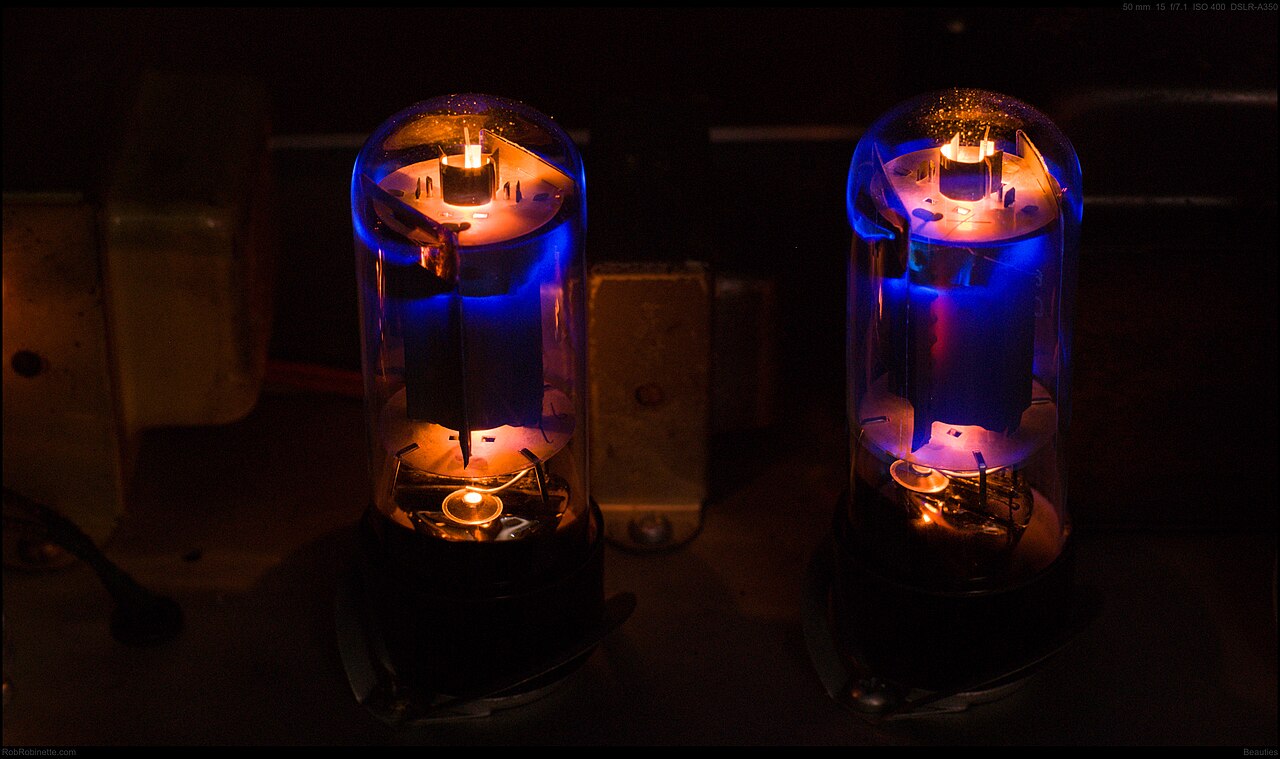
- Two glowing power tubes in an amp: Rob Robinette, Wikimedia Commons, CC BY-SA 4.0.
- Keith Richards: Raph_PH, Wikimedia Commons, CC BY 2.0.
- Steve Vai: Wojciech Pędzich, Wikimedia Commons, CC BY 4.0.
- Top image: GuitarGangsters AI-generated reference illustration, not a photograph.
Latest News
Related
On This Day
Monday 9 November
From this week: