The PRS Archon 50 Head: When a Ruler Walks Into the Room, You Feel It Before You See It
PRS Archon 50 Head: full specs, three-generation version history, verified artists Jason Richardson and Devin Townsend, five tone recipes, and buying guide.
The word “archon” comes from ancient Greek — it means ruler, lord, chief magistrate. It is the title the Greeks gave to the men who commanded city-states, enforced law, and shaped civilisation. Paul Reed Smith is not the type to name an amplifier casually, and when PRS launched the Archon in 2013, the name carried a clear statement of intent: this was the amp that was supposed to rule the two-channel market. A decade’s worth of refinements and a full circuit redesign later, the current Archon 50 Head — now sold under the Archon Classic banner — still delivers on that mandate. It is a 50-watt, Indonesia-built, PCB-construction tube head that offers a clean channel capable of genuine built-in breakup and a lead channel voiced for ’70s and ’80s hard rock, with enough gain on tap to make modern metal players feel immediately at home.
The names most commonly attached to it in casual gear roundups — Tremonti, Mayer, Grissom, Santana — are all PRS brand relationships. Each of those players has his own signature PRS amplifier; none of them is documented using an Archon 50 in any interview, rig rundown, or primary source. The actual Archon 50 user list is shorter and far more honest: metal and prog players who needed a touring-grade two-channel head that punches hard, stays reliable, and doesn’t require a boutique price tag. That is the amp this article is about.
From Dallas Guitar Show to Maryland Factory: The Doug Sewell Story
The Archon exists because of a chance meeting at the Dallas Guitar Show. Doug Sewell was exhibiting boutique amplifiers from his own Texas shop when a neighbouring booth turned out to be occupied by Paul Reed Smith. The two got talking, Smith liked what he heard, and in 2009 Sewell relocated from Texas to PRS’s Stevensville, Maryland factory to begin an entirely new chapter in the company’s amplifier programme. PRS had made amps before, but the Sewell era marked the point at which the designs became serious research and development rather than brand extensions.
The first wave of Sewell amplifiers — the Archon, the Sonzera, and the early signature heads — established a house sound that was distinctly American in its clarity and headroom but without the bright-and-thin quality that plagues some US-voiced cleans. The original Archon launched in late 2013 in both a 100-watt and a 50-watt version. The 100 was a four-6L6GC USA-built monster aimed squarely at touring players; the 50-watt variant made the architecture accessible without neutering it. Both shared the same fundamental brief: stellar clean tones, searing lead tones, and enough flexibility in the tone stack to cover the gap from country to metal without a pedal swap between sets.
The Archon family disappeared from the PRS product line at the start of 2021 — a deliberate pause rather than a discontinuation. On May 11, 2021, PRS announced its return in a redesigned 50-watt-only format built in Indonesia at a significantly lower price than its predecessor. Sewell described the process publicly: “Reissuing a historically successful amplifier always has a unique set of challenges. One must collect and filter through years of performance data and feedback, then work to legitimately enhance the amp without fixing anything that isn’t broke.” The goals he named were precise: wider gain range on the lead channel, enhanced clean tones, maximum value. The 2021 relaunch achieved all three and drew immediate endorsements from a group of heavy-music players whose names appeared in PRS’s own press release.
The story did not stop there. In April 2025, PRS announced the Archon Classic — a further redesign that reshapes the lead channel to focus on ’70s and ’80s hard rock voicing rather than the maximum-gain saturation of the 2021 circuit. Designer Sewell was explicit: “The Archon Classic is not a re-issue of the original Archon, but a newly voiced circuit with the lead channel excelling in ’70s and ’80s rock tones and a hotter clean channel able to go into breakup.” The gain range narrowed slightly at the top end and widened significantly in the classic-rock-to-medium-gain sweet spot. The current Archon 50, priced at $1,149, is the Archon Classic circuit in a birch-ply cabinet covered in black textured vinyl with black embossed-welt piping.
Circuit and Specifications
The Archon 50 is a Class AB fixed-bias two-channel tube head producing 50 watts from two JJ 6CA7 power tubes. The 6CA7 is an American designation for a tube that is dimensionally and electrically similar to the European EL34 — same nine-pin base, comparable transconductance — but with a slightly different internal construction that gives it a warmer midrange character and tighter bass response than the British bottles it resembles. PRS describes the 6CA7 as offering “the best combination of EL34 and 6L6 tubes”: you get EL34-style harmonic complexity and midrange authority without the sometimes-loose low end that EL34s can exhibit at higher volumes, and you get the tightness characteristic of 6L6 operation without losing warmth. The amp also accepts 6L6GC substitution if you prefer maximum headroom and a rounder, cleaner bottom end.
Six JJ ECC83S preamp tubes (the JJ designation for 12AX7) handle the two preamp channels and the phase inverter. The 6CA7 power tubes are mounted directly on the steel chassis rather than on a separate board, improving heat transfer and mechanical stability under road conditions — a practical detail that matters when the amp is being used on actual stages.
The five speaker jacks deserve a note: two 4Ω, two 8Ω, one 16Ω. This covers virtually every commercial speaker cabinet configuration, and having multiple jacks at the same impedance means you can run a stereo cabinet pair without an external switching box. The tube-driven series effects loop is a significant feature at this price tier — solid-state FX loops can interact poorly with certain time-based or modulation pedals, creating tone-suck or impedance mismatches; a tube-buffered loop preserves the amp’s character all the way around the effects chain.
The bias adjustment system deserves specific mention because it directly affects the cost of ownership. Two test jacks on the rear panel allow you to measure power-tube idle current with a standard digital voltmeter, and a screwdriver-adjustable pot lets you set the bias without opening the chassis or knowing which end of a soldering iron to hold. This matters practically: 6CA7 tubes are not particularly long-lived in high-gain operation, and the ability to swap a matched pair and re-bias in ten minutes without a tech visit keeps the amp gigging rather than sitting in a repair queue.
The Channels in Practice
The Clean channel is the part of the Archon that surprises most players who approach it as a metal amp. The volume control is not a simple gain knob — it is a genuine gain-staging control that starts at pristine, bell-clear clean and sweeps into natural amp breakup as you approach two o’clock. PRS designed this channel to function as a boost-free platform: rolling your guitar’s volume down delivers a crystalline clean; rolling it back up with the channel volume set moderately high delivers the same tone with harmonic saturation added. This is particularly effective with humbuckers, where the interaction between guitar volume and amp input gain produces a smooth, touch-sensitive compression that pedals rarely replicate convincingly. Guitar Player’s Art Thompson, who reviewed the 2025 Archon Classic after live gigs spanning rock, world music, and singer-songwriter backing work, described the clean channel as “rich and ballsy sounding in the mids” with “crisp presence that makes everything shimmer with harmonic complexity.”
The Lead channel takes a different architectural approach. PRS built five gain stages into the signal path before the master volume — this is the structure that gives the Archon its gain depth and responsiveness without simply amplifying noise. At moderate gain settings the channel operates in a classic rock idiom: compressed sustain, clear note definition, a texture that suits single-coil and humbucker alike without emphasising the worst tendencies of either. Push the gain control toward maximum and the saturation thickens into modern metal territory — tight on the low end courtesy of the 6CA7 tubes, present in the mids rather than scooped, articulate enough at high tempos to hear individual notes in complex passages. The three-band EQ provides more control here than most amps at this price: you can dial out the midrange for a scooped stadium-rock tone, add it back for a more vintage British texture, or cut the treble and push the mids for lead work that sits above a dense mix without becoming shrill.
Famous Players: Who Actually Uses the Archon 50
The spreadsheet attached to this project lists Mark Tremonti, John Mayer, David Grissom, and Carlos Santana as Archon 50 users. This is the same documentation problem documented in the previous article on the PRS HDRX 20: all four names are genuine PRS brand relationships, but each of these players has his own PRS signature amplifier and none is documented on an Archon 50 in any primary source.

Mark Tremonti’s signature amps are the MT 15 (redesigned 2025, now with a Dumble-inspired push/pull overdrive channel) and the MT 100 — high-gain, multi-channel designs built around his specific sound with Alter Bridge and Creed. His 2024 Creed tour rig used MT 100 heads, not Archons. John Mayer’s signature PRS amp is the J-MOD 100 — a 4×6L6 clean-to-crunch design developed for his Dead & Company live work, a completely different circuit class from the Archon. David Grissom uses the DGT 15 and DG Custom 30/50 signature heads (EL84-based with reverb and tremolo). Carlos Santana is a Mesa/Boogie artist whose tonal identity has been built on the Mark I and Boogie lineage for over fifty years; no documented PRS amp use exists in any published source.
The confirmed Archon 50 user list comes from PRS’s own May 2021 press release, which named artists who had received and praised the relaunched amp. Jason Richardson, then guitarist with All That Remains, offered the most direct quote: “The new Archon 50 watt brings the perfect amount of punch, low end and gain I need to get a great sounding metal tone!” Richardson’s connection to the Archon 50 is also verified via Equipboard (the only professional artist the database documents on this specific model) and WhatGear, which classifies his use as “Correct Verified.” Richardson is a technically exacting player whose All That Remains work required an amp that could handle drop-tuned riffing at modern gain levels while staying tight enough for the complex melodic phrasing that has defined his career.
Devin Townsend — the Canadian prog-metal architect whose catalogue spans Strapping Young Lad’s pulverising industrial noise and the orchestral ambition of the Devin Townsend Project — was also named in the same press release. Townsend’s public comments on amplifiers consistently prioritise clarity and harmonic richness over raw saturation; the Archon’s ability to stay articulate at high gain levels aligns with that priority. Wes Hauch of Alluvial (and formerly The Faceless) represents the technical death-metal application of the Archon: an environment where note definition under maximum gain and string clarity during intricate passages are not optional features. Chris Cain of Bad Wolves and studio producer Mark Lewis — whose credits include Whitechapel, Trivium, and The Black Dahlia Murder — round out a user group that collectively spans deathcore, progressive death metal, and mainstream hard rock production. Ben Eller, the YouTube guitar educator whose instructional content reaches hundreds of thousands of players, extends the Archon 50’s documented reach into the online guitar education space.
PRS also noted in their press release that Paul Reed Smith himself had observed country players gravitating toward the Archon’s clean channel — not a named endorsement but a credible observation, given that the clean channel’s combination of warmth, headroom, and touch-sensitivity aligns well with the genre’s requirement for pedal-platform clarity. This breadth — from deathcore production to country rhythm playing — is the actual story of the Archon 50 in the field.
Tone Recipes and Settings
Recipe 1: Classic Rock Clean with Natural Grind
Channel: Clean. Volume at 2 o’clock; guitar volume at 7/10 for clean, rolled up to 10/10 for natural breakup. Treble 5, Middle 6, Bass 5, Master 4. Presence 5, Depth 4. Works with a Stratocaster neck or middle pickup. This is the channel in its “pedal platform replacing itself” mode — the guitar’s volume knob does the work. Add a short reverb in the FX loop for stage presence. The midrange bloom at the transition from clean to crunch is the Archon’s most distinctive characteristic at this setting.
Recipe 2: Hard Rock Crunch — JCM800 Territory
Channel: Lead. Gain at 6, Treble 6, Middle 7, Bass 5, Master 4. Presence 6, Depth 5. A Les Paul Standard with the neck humbucker goes into the input. Bright switch off. This setting captures the lead channel’s core character — a JCM800-influenced texture with enough mid-presence to cut a live mix without a boost pedal and enough gain for single-note leads to sustain without going floppy. The 6CA7 power tubes keep the bass tight here in a way that EL34s in an actual 800 do not always manage.
Recipe 3: Modern Metal — Tight and Clinical
Channel: Lead. Gain at 8–9, Treble 5, Middle 4 (slight scoop), Bass 6, Master 3–4. Presence 7, Depth 6. A bridge humbucker with active pickups or Les Paul bridge. An Ibanez TS9 Tube Screamer in front — tone at minimum, drive at minimum, level boosted — tightens the low end further and focuses the gain into the mids. This is the Jason Richardson application: drop-tuned riffing that stays articulate and punchy without muddying the low strings. The bright switch on the lead channel can add attack definition; try it engaged for single-coil-like clarity, disengaged for a thicker humbucker texture.
Recipe 4: Prog Clean — Touch-Sensitive Sparkle
Channel: Clean. Volume at 1 o’clock, Treble 6, Middle 5, Bass 4, Master 5. Presence 5, Depth 3. Bright switch on. A Strat or thinline guitar with single-coil pickups. Use the guitar volume control as your primary expression tool: full for a shimmering semi-clean with complex harmonics, backed off to 5 or 6 for a crystalline dry clean suitable for chordal work and arpeggios. This setting highlights the Archon’s ability to function as a studio-quality clean platform — the sound that Paul Reed Smith noted was attracting country players to the amp.
Recipe 5: Devin Townsend-Style Saturated Clarity
Channel: Lead. Gain at 7, Treble 7, Middle 6, Bass 5, Master 4. Presence 6, Depth 4. Bright switch off. A humbucker guitar with the tone control rolled slightly (to 7–8). Global depth control at 5 rather than cranked, which prevents the low end from blurring at this gain level. The goal is saturation that retains harmonic complexity — sustain that blooms on held notes, note separation during fast runs, and enough treble presence to hear the pick attack through the compression. This is where the five-gain-stage lead channel earns its keep: the progressive nature of the gain architecture means each turn of the knob adds harmonic density without suddenly collapsing into undifferentiated fuzz.
Comparisons
The most direct comparison within the PRS lineup is the PRS HDRX 20. The HDRX 20 is a single-channel amp voiced on a vintage Marshall Plexi/Super Lead circuit — organic, responsive, and fundamentally clean until you push it hard, with no channel switching and no modern gain structure. The Archon 50 covers twice the tonal territory via the two-channel layout and adds five times the lead-channel gain staging. Both share Indonesia construction, PCB circuit boards, and the conspicuous absence of a standby switch — PRS’s house design position, justified by high-value filter caps ramping voltage safely. If you need a working clean-to-metal two-channel amp for contemporary rock, the Archon 50 wins. If your sound lives in the Hendrix/Page/Beck universe and you prioritise feel over breadth, the HDRX 20 is the more honest tool.
The Marshall JCM800 2203 is the amp the Archon 50’s lead channel was consciously voiced to evoke and then improve upon. The JCM800 is a single-channel head — you get one sound and then you shape it with your guitar and your pedals. The Archon 50 adds a genuinely usable clean channel and builds a broader gain range into the lead circuit. The JCM800 wins on feel and heritage; the Archon 50 wins on versatility and value. At current prices, used JCM800 2203s trade for $1,200–$2,500 depending on year; the Archon 50 at $1,149 new is not a budget substitute but a deliberate alternative with its own tonal identity.
Comparing the Archon 50 to the Fender Deluxe Reverb might seem like category confusion, but it is worth addressing because many players use a Deluxe Reverb as a pedal platform and push it with gain pedals to approximate lead tones. The Deluxe Reverb at 22 watts is a fundamentally different design class — single-ended 6V6 power section, onboard tremolo and spring reverb, the classic Fender clean bloom — and no amount of gain pedalling makes it sound like a high-gain two-channel head. If you are performing in small venues where the Deluxe Reverb’s breakup characteristics suit the music, it is the better choice. If you need channel switching between pristine clean and modern high-gain in the same set, the Deluxe Reverb cannot do that without an amp switcher and multiple gain stages of pedals in front of it. The Archon 50 does it with two mini toggle switches and nothing else.
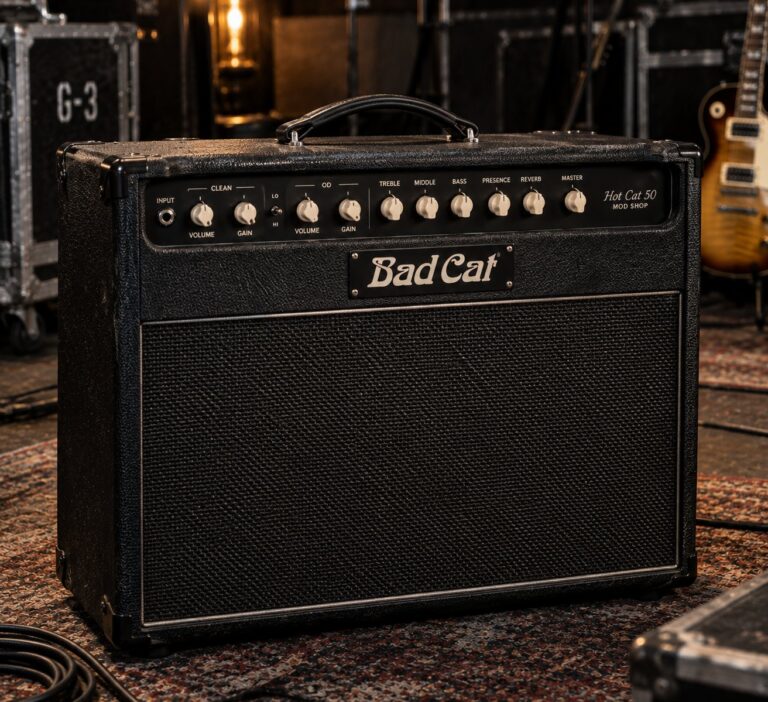
The Bad Cat Hot Cat occupies the boutique Class A corner of a similar clean-to-crunch brief. The Hot Cat’s original cathode-bias Class A architecture gives it a sag and compression character that the Archon 50’s fixed-bias Class AB design does not attempt to replicate. The Hot Cat also lacks the Archon’s high-gain lead channel — it tops out in JCM800 crunch territory and does not go further. For players whose gain ceiling is classic rock, the Hot Cat is the more expensive but more characterful choice. For players who need modern metal gain on the same unit, only the Archon applies.
Against the Mesa/Boogie Mark VII — the amp in the next tier up — the Archon 50 trades multi-channel complexity for simplicity and price. The Mark VII has five gain channels, graphic and parametric EQ stages, effects switching, and a price approaching three times the Archon’s. Players who need to cover clean jazz, blues crunch, classic rock, modern rock, and high-gain metal in the same set benefit from the Mark VII’s complexity. Players who work in two tonal zones — clean and driven — and want to spend their money on tubes and construction rather than switching circuitry will find the Archon 50 a more direct and satisfying instrument.
Buying Guide
The current Archon 50 (Archon Classic circuit, released 2025) retails at $1,149 new from Sweetwater and most major US dealers. UK pricing sits around £609 at Thomann. The matching 1×12 cabinet (Celestion V-Type speaker) adds $499; a 4×12 Archon cabinet (Celestion V-Type, introduced 2025 as only the second four-speaker PRS cab) is also available for $999. The head alone is the more flexible purchase if you already own a quality cab; the 4×12 is the specification that most closely matches what Jason Richardson and similar touring players have used.
The 2021/2022 Archon 50 (the version named in the PRS press release endorsements) trades on Reverb for $700–$900 in clean condition. This earlier version uses the same 6CA7 power section and same general channel architecture but with a higher-gain lead channel voicing — it leans further toward the maximum-saturation end and gives up some of the medium-gain sweet spot that the 2025 Classic redesign added. For strictly modern-metal applications the 2021/2022 version has more gain on tap; for players who need the full range from edge-of-breakup clean to metal, the 2025 Classic is the more useful design.
An important version-identification note for used buyers: the current amp is officially the “Archon 50 Classic” in PRS’s own product naming, but many retailers list it simply as “Archon 50.” The distinguishing spec is the circuit revision date and the lead channel voicing. The Classic has a JCM800-inspired gain structure with a wider range from medium gain to high gain; the 2021/2022 has a higher-saturation maximum but narrower medium-gain range. Check the model year on the serial number or ask the seller which version’s gain structure matches the sound clips they offer.
Ownership Notes
The rear-panel bias system removes the main ongoing maintenance complication. Set the bias target per the PRS manual (typically 25–30mV per tube across the test points), swap matched pairs of 6CA7s when the sound starts to thin or the attack becomes harsh, and re-bias in ten minutes. PRS’s manual also documents the 6L6GC substitution: raise the bias target slightly when running 6L6s, which draw more current at idle than 6CA7s. The 6L6 alternative adds a rounder low end and opens up the clean channel headroom at the cost of some midrange character; try both and listen in context before committing to a permanent tube swap.
No standby switch is the design choice that generates the most online discussion about PRS amps. The argument for its absence: modern filter capacitors ramp voltage gradually on power-up, eliminating the need for a standby warm-up period, and eliminating standby as a source of misuse (players leaving the amp in standby for hours, which can stress components). The argument for having it anyway: it is the intuitive way to mute the amp between sets while leaving the tubes at operating temperature. PRS’s practical workaround — partially pulling the input cable to mute the output — is effective but unintuitive. If you prefer a standby switch, consider the HDRX 50 or 100, which are otherwise different amps; the Archon 50 family does not have this feature across any variant or production year.
No power reduction means 50 watts through a full cab every time the amp is on. In small rehearsal rooms and home studios this is relevant: the Archon 50 at bedroom volume through an efficient 4×12 is genuinely loud before the master volumes reach a position that delivers pleasing tone. An external power attenuator (Universal Audio OX, Koch Loadbox, or similar) is the practical solution if you need preamp saturation at low stage volumes. Budget this in if small-venue or home use is your primary context.
The tube-driven series FX loop places the effects between the preamp and the power amp. Running time-based effects (delay, reverb, chorus, modulation) in this loop rather than in front of the amp preserves the amp’s gain structure and avoids the clarity loss of driving reverb trails and repeats into a high-gain preamp. Drive pedals should go in front of the amp. If you are running a pedalboard with mixed drive and time-based effects, use a switching system to route appropriately rather than connecting everything directly into the amp’s input.
Frequently Asked Questions
What does “Archon” mean?
The name comes from ancient Greek and means “ruler,” “lord,” or “chief magistrate” — the title given to the governing officials of Greek city-states. PRS chose it to position the amplifier as a commanding, authoritative design. The name applies across the entire Archon family including the 100-watt original, the 2021 50-watt relaunch, and the 2025 Archon Classic.
Is the Archon 50 Classic the same amp as the original Archon 50?
No. The original Archon launched in 2013 in 100-watt and 50-watt versions; the 100-watt was USA-built with four 6L6GC power tubes. The 2021 Archon 50 relaunch used a redesigned circuit in an Indonesia-built PCB chassis. The 2025 Archon Classic is a further redesign — PRS Amp Designer Doug Sewell stated explicitly that “the Archon Classic is not a re-issue of the original Archon, but a newly voiced circuit,” specifically targeting ’70s and ’80s rock tones on the lead channel and a hotter clean channel that goes into breakup. Three generations, three different circuit designs, same name family.
What are 6CA7 tubes and how do they compare to EL34?
The 6CA7 was originally developed by Sylvania in the United States as an American variant of the EL34 — same nine-pin base, similar electrical characteristics, but with a slightly different internal structure (octal bottle shape rather than the noval EL34 envelope in some versions). In practice the 6CA7 tends to be warmer in the midrange and tighter in the bass than many British EL34 variants. PRS’s own description — “the best combination of EL34 and 6L6 tubes” — captures the practical effect: you get EL34-style harmonic complexity and midrange authority with 6L6-style bass tightness. The amp also accepts 6L6GC substitution for a rounder, cleaner character.
Why is there no standby switch?
PRS’s design position, consistent across the Archon 50 and HDRX 20, is that modern high-value filter capacitors ramp the B+ voltage gradually on power-up, making the traditional standby warm-up period unnecessary. The absence also prevents the most common misuse: players leaving amps in standby for extended periods, which can stress output transformers and filter caps more than simply powering down. To mute the amp between sets without powering off, partially pull the instrument cable from the input jack — this breaks the signal path without requiring a standby stage.
Does the Archon 50 have a power reduction mode?
No. There is no half-power switch, no switchable cathode bypass, and no built-in attenuator in any Archon 50 variant. At 50 watts into an efficient 4×12 cabinet, the amp is genuinely loud at volumes needed to drive the power tubes into saturation. External power attenuators (Universal Audio OX, Koch Loadbox, Suhr Reactive Load) are the practical solution for obtaining power-amp saturation at controllable stage volumes. Budget this into the purchase if small-venue or home use is a significant part of your application.
What speaker cabinets does PRS make for the Archon 50?
As of 2025, PRS offers a 1×12 cabinet (Celestion V-Type, ~$499) and a 4×12 cabinet (Celestion V-Type, $999). The 4×12 was introduced alongside the Archon Classic in April 2025 and is only the second four-speaker cabinet in the PRS amp lineup. The amp’s five rear-panel speaker jacks (2×4Ω, 2×8Ω, 1×16Ω) accommodate virtually any third-party cabinet configuration, so the PRS cabinets are not a requirement — the Archon 50 has been documented in use with Marshall, Mesa/Boogie, Orange, and Bogner cabinets.
Which guitarists actually use the Archon 50?
The confirmed documented users from PRS’s own May 2021 press release are: Jason Richardson (All That Remains, Equipboard-verified with photo), Devin Townsend, Wes Hauch (Alluvial), Chris Cain (Bad Wolves), Ben Eller, and producer Mark Lewis (Whitechapel, Trivium, Black Dahlia Murder credits). Commonly cited names — Tremonti, Mayer, Grissom, Santana — are PRS brand relationships who each have their own signature PRS amps and are not documented on the Archon 50 in any primary source.
Is the Archon 50 suitable for clean tones or only metal?
The clean channel is a genuine strength of the Archon 50 and was specifically called out by Paul Reed Smith in the 2021 press release, who noted that country players were gravitating toward it. Guitar Player’s Art Thompson tested the 2025 Classic on live gigs “covering everything from rock to world music to backing a singer-songwriter” and used the clean channel’s gain range as a built-in boost by setting the volume at two o’clock and rolling up the guitar’s volume control for additional drive. The Archon 50 is a metal-capable amp that happens to have an excellent clean channel — not a clean amp that also does metal.
Image credits
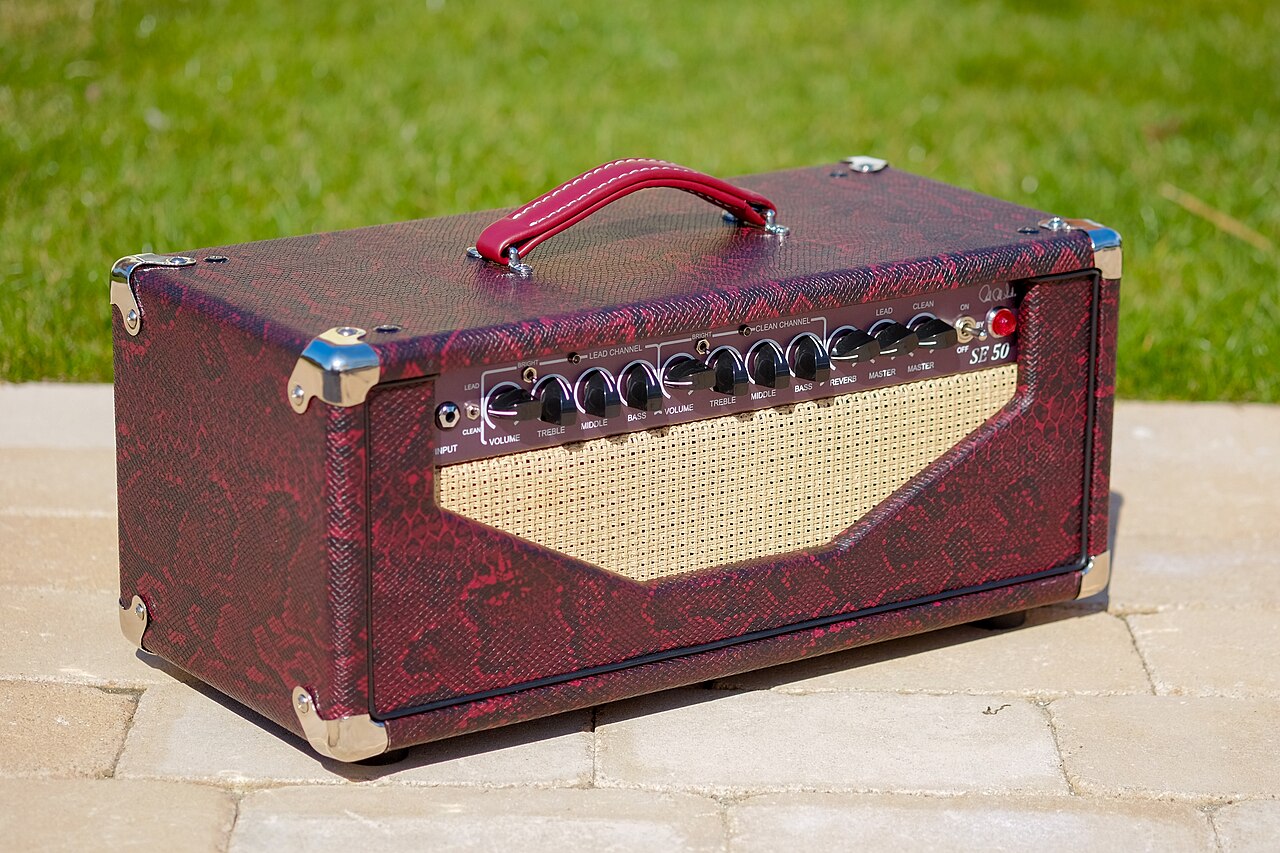
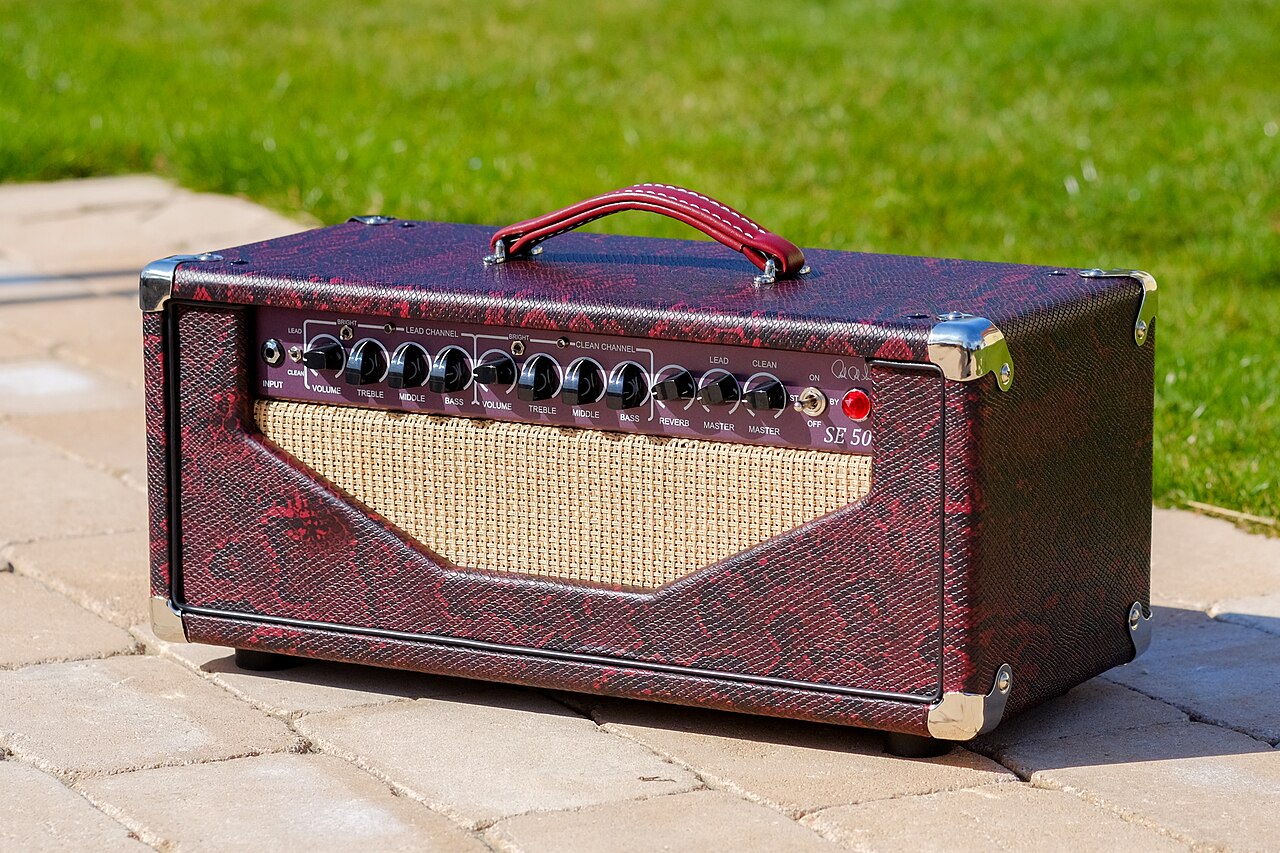
- A PRS SE50 guitar head amplifier: Dieter Karner from Roggendorf (Schollach), Austria, Wikimedia Commons, CC BY 2.0.
- A PRS SE50 guitar head amplifier on a paved surface: Dieter Karner from Roggendorf (Schollach), Austria, Wikimedia Commons, CC BY 2.0.
- Carlos Santana: Heinrich Klaffs, Wikimedia Commons, CC BY-SA 2.0.
Latest News
Related
On This Day
Monday 9 November
From this week: