Three at a Time: Why the Line 6 M9 Became the M-Series Sweet Spot
Three effects at once, 28-second stereo looper, 100+ models: the Line 6 M9 is the M-series sweet spot. Specs, verified players, tone recipes & buying guide.
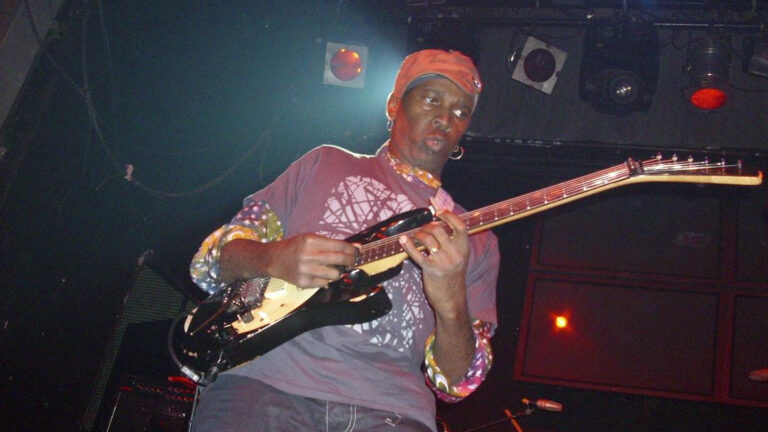
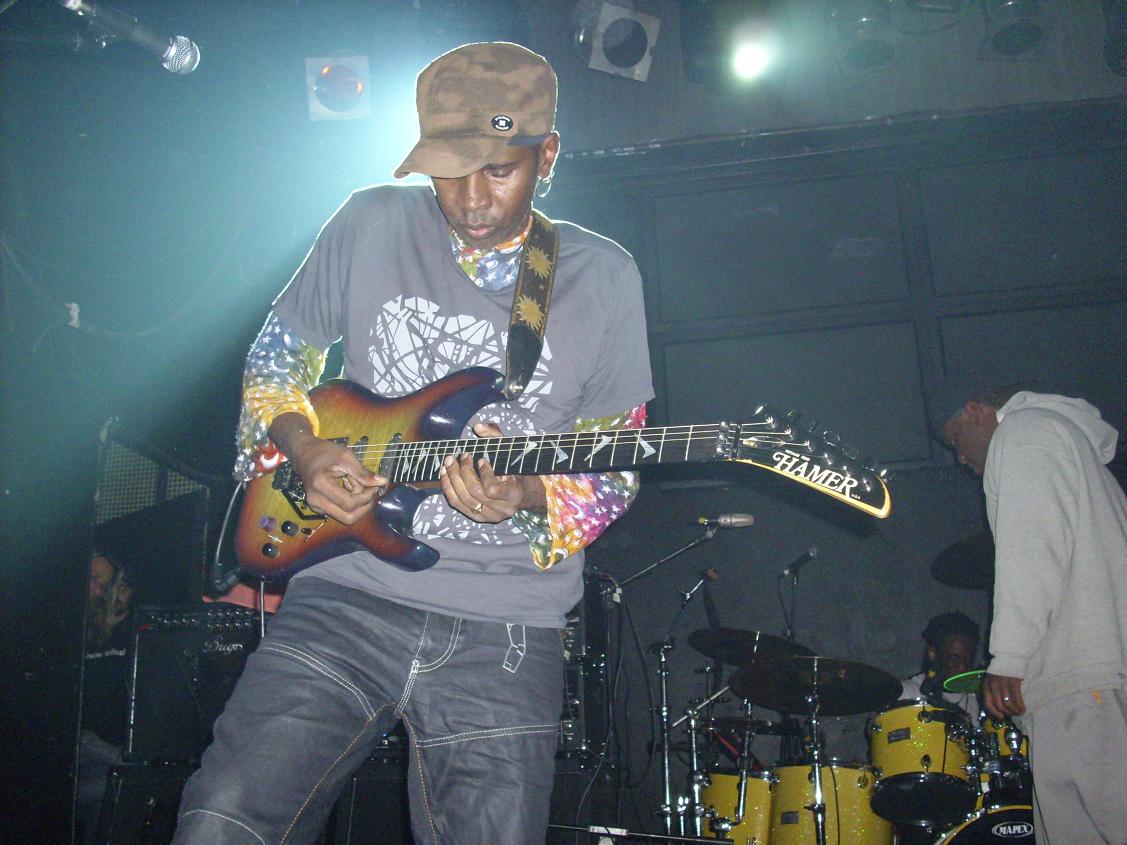
The M-series had a Goldilocks problem. The M5 gave you one effect at a time — disciplined, precise, ruthlessly efficient, and for some players, just too limiting. The M13 gave you four simultaneously across a 15-switch behemoth the size of a carry-on bag. Somewhere between those extremes, Line 6 found the M9: three effects at once, six saved scenes, a proper 28-second stereo looper, and a footprint closer to a Tube Screamer than a flight case. Released in 2009, the M9 Stompbox Modeler didn’t just split the difference — it landed in the exact sweet spot where most working guitarists actually live. It wasn’t an airport-lounge conversation piece. It was a workhorse. Vernon Reid ran one through a Roland VG-99 and a Mesa Boogie Lonestar on Living Colour’s 2013 U.S. tour, using it specifically for modulation because no single analog pedal did what he needed at that price point and footprint. That’s the M9 pitch in a sentence.
Line 6 and the Stompbox Modeler Lineage
Line 6 was founded in 1996 in Calabasas, California, by Susan Wolf, Marcus Ryle, and Michel Doidic. Their first product was the AxSys 212, a software-based modeling combo amp that proved the concept: you could model the behavior of a tube amplifier in software convincingly enough for gigging musicians to use it. The POD — that famous kidney-bean desktop modeler — followed in 1999 and became a ubiquitous studio tool almost overnight. The same year saw the DL4 Delay Modeler, DM4 Distortion Modeler, MM4 Modulation Modeler, and FM4 Filter Modeler: four 3-footswitch units, each dedicated to one category of effect, each containing more models than most guitarists would ever exhaust.
The stompbox modeler architecture established by those four units — multiple footswitches, per-category model selection, a simple screen — was sound. What was missing was integration. A guitarist who wanted delay and modulation and filter needed two or three separate units, separate power, and separate real estate on an already crowded board. The M13 (2008) solved this with a single unit containing all four categories and 100+ models, allowing four simultaneous effects across 15 footswitches. It was comprehensive. It was also large. The M9 (2009) was the answer to a simpler question: what if you needed three?
Three is a logical maximum for most gigging scenarios. A clean chain might run compressor → chorus → reverb. A lead patch might stack overdrive → delay → reverb. A textural, ambient section might combine pitch → modulation → pad reverb. Three covers the vast majority of real-world use cases without requiring a rack-mount controller to manage them. The M5 was a one-at-a-time utility; the M9 was a real live rig. Line 6 followed in 2011 with the M5, which stripped the concept further to a single-effect format. By then, the M9 occupied a specific tier that neither the M5 nor the M13 could replace.
What the M9 Actually Is
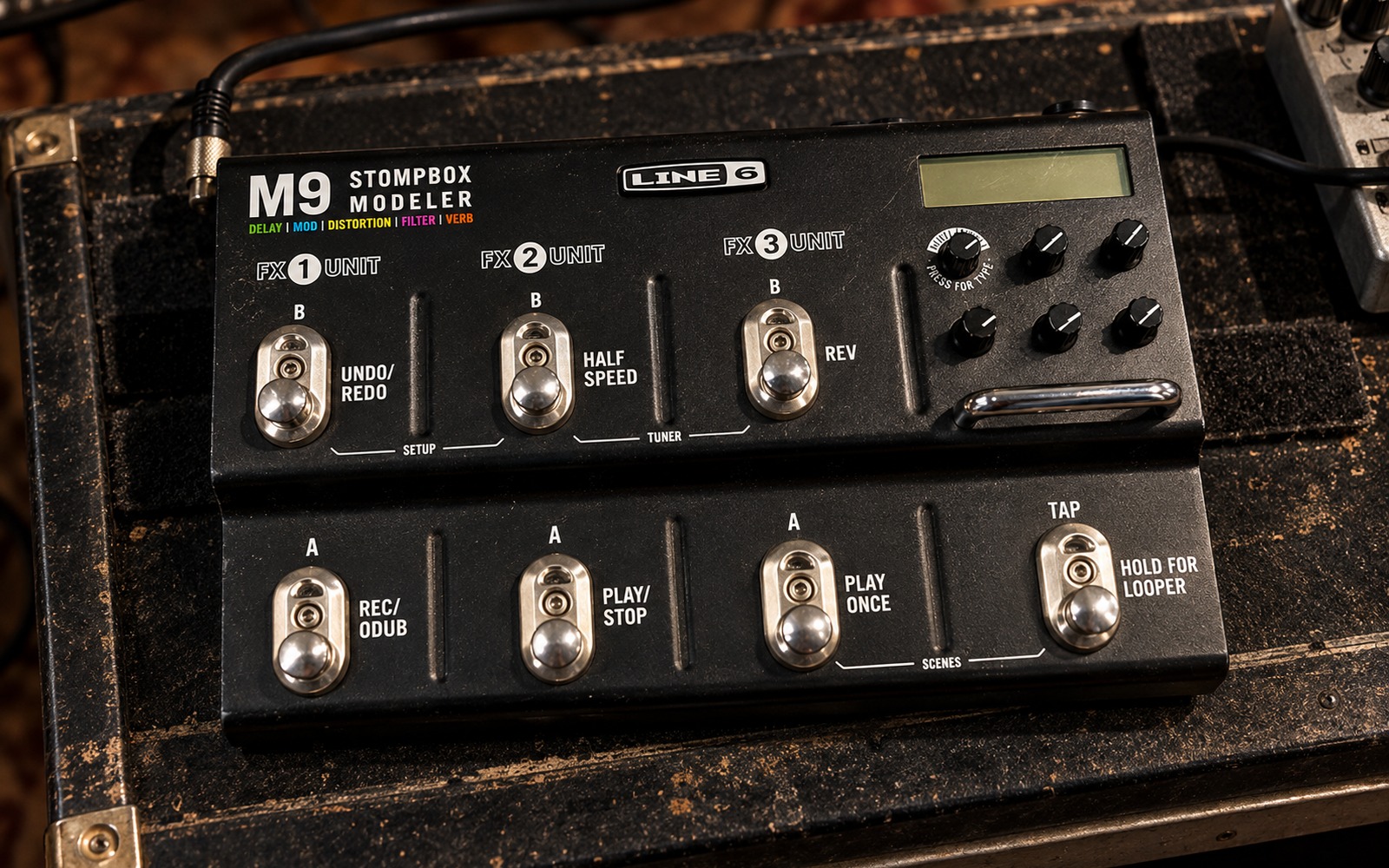
The M9 Stompbox Modeler is a floor-based multi-effects processor with three independently switchable effect blocks arranged left-to-right, each accessible by its own footswitch. Each block can hold any one of the 100+ effect models in the unit’s library. The three blocks run in series — left feeds into center feeds into right — and all three can be active simultaneously. A fourth footswitch at the far right activates the built-in looper.
The interface is deliberately analog-flavored. There are no touchscreens and no menus-within-menus. Each effect block gets a dedicated knob row. Scroll through models, set parameters with the knobs, stomp to enable or bypass. The learning curve, as reviewers consistently noted at launch, was measured in minutes rather than hours — because the interaction model was already familiar from the DL4/MM4 era units it replaced.
Six scenes store complete configurations across all three effect blocks. MIDI In/Out allows scene recall from an external controller and integration with a larger rig. A mono or stereo expression pedal input opens up real-time parameter control — the Line 6 EX-1 was the recommended companion, but any compatible TRS expression pedal works. Inputs and outputs are stereo, making the M9 equally comfortable in a mono board chain or a full stereo rig feeding two amplifiers.
| Feature | Specification |
|---|---|
| Effects Models | 100+ across 6 categories |
| Simultaneous Effects | 3 (independent blocks, series chain) |
| Scenes | 6 stored configurations |
| Looper | 28 seconds, stereo |
| MIDI | In / Out (scene recall, clock sync) |
| Expression Pedal Input | Yes (TRS, Line 6 EX-1 compatible) |
| Audio I/O | Stereo in / stereo out (1/4″) |
| Bypass | Hardwire bypass |
| Power | 9V DC, 2000mA (included adapter) |
| Connections | Guitar in, Stereo out, Aux in (3.5mm), MIDI, Expression |
| Launch Year | 2009 |
| Status | Discontinued (succeeded by HX Effects) |
| Used Price (2026) | $150–$220 typical |
The Effects Library
The M9’s 100+ models span six categories: Distortion, Modulation, Delay, Filter, Compressor & EQ, and Reverb. This is the same library that ran on the M13, minus the Pitch category that appeared in later Line 6 hardware. Here is what each category actually delivers.
Distortion (17+ models) covers the expected bases — Screamer (Tube Screamer), Classic Distortion (ProCo RAT vicinity), Heavy Distortion (Mesa-derived high gain), Tube Drive (Chandler Tube Driver type), Facial Fuzz (Fuzz Face), Jumbo Fuzz (Maestro Fuzz-Tone), Jet Fuzz (Roland Jet Phaser with fuzz stacked). This is the M9’s weakest category by consensus: the high-gain models in particular flatten dynamics in a way that standalone drive pedals do not. The fuzz models hold up better. Most experienced M9 users bypass this category entirely and run a dedicated drive pedal before the M9 for dirt.
Modulation (23 models) is where the M9 earns its keep. Chorus, Flanger, Phaser, Tremolo, Rotary Drum, Vibe, Auto-Wah, Pattern Tremolo, Pitch Vibrato, Analog Chorus, Analog Flanger, Analog Vibrato, U-Vibe, Opto Tremolo, Phaser (Script Mod), Bubble Vibrato, Dimension, Barberpole Phaser, Frequency Shifter, Ring Modulator — the breadth is hard to match in the used-pedal market at M9 prices. The Vibe model tracks phase-modulation convincingly. The Dimension (based on the Roland Dimension D chorus processor) adds width without the phasiness of a standard chorus. The Ring Mod is surprisingly musical through careful parameter tuning. Vernon Reid’s choice to run an M9 specifically for modulation — alongside a Roland VG-99 and dedicated Eventide hardware for pitch effects — is a clear signal that the modulation section clears a professional bar.
Delay (19 models) includes Digital Delay, Analog Delay, Analog Delay with Mod, Tube Echo (Echoplex EP-1), Tape Echo (Maestro Echoplex EP-3), Multi-head (oil-can style), Sweep Echo, Reverse Delay, Dynamic Delay (ducks during playing, rises in pauses), Auto-Volume Echo, Ping-Pong, Ducking Delay. The Tube Echo model, tracking the EP-1’s characteristic gentle flutter and midrange warmth, is the standout. The Ping-Pong delay bounces correctly in stereo, creating stereo width that disappears entirely in mono — useful when running two amps, potentially confusing when running one.
Filter (16 models) covers envelope filters, auto-wah types, synth-bass approximations, step filters, and wah simulations. The Tron Up model (Mu-Tron III) responds convincingly to pick attack. The Seeker Wah provides a tempo-synced wah sweep useful for specific compositional textures.
Compressor & EQ (9 models) is utilitarian. The Vetta Comp is the main squeeze for studio-style transparent compression; the Red Comp (Ross Compressor type) adds vintage sustain character. The 4-Band EQ and Parametric EQ serve corrective purposes rather than tonal sculpting. These models work but aren’t the reason to own the unit.
Reverb (11 models) includes Plate, Room, Chamber, Hall, Cave, Tile Room, Echo (reverb with single delay repeat), Octo (8-voice shimmer), Particle Verb (granular, Line 6 original design), and Spring Tank. The Octo shimmer reverb is the one model in this category that has no direct affordable analog equivalent: it creates large, pitched-up reverb washes useful for atmospheric guitar layers. The Particle Verb granular reverb is similarly unique — its randomized grain engine produces glassy, crystalline decays that sit in an entirely different sonic space from conventional reverb.
Famous Players: What the Research Actually Shows
The honest answer is that the M9, like the M5 before it, has a wide user base across the rock, metal, and alternative worlds, but pin-to-a-specific-player documentation is sparse. The five guitarists most commonly associated with the M9 require individual verification.
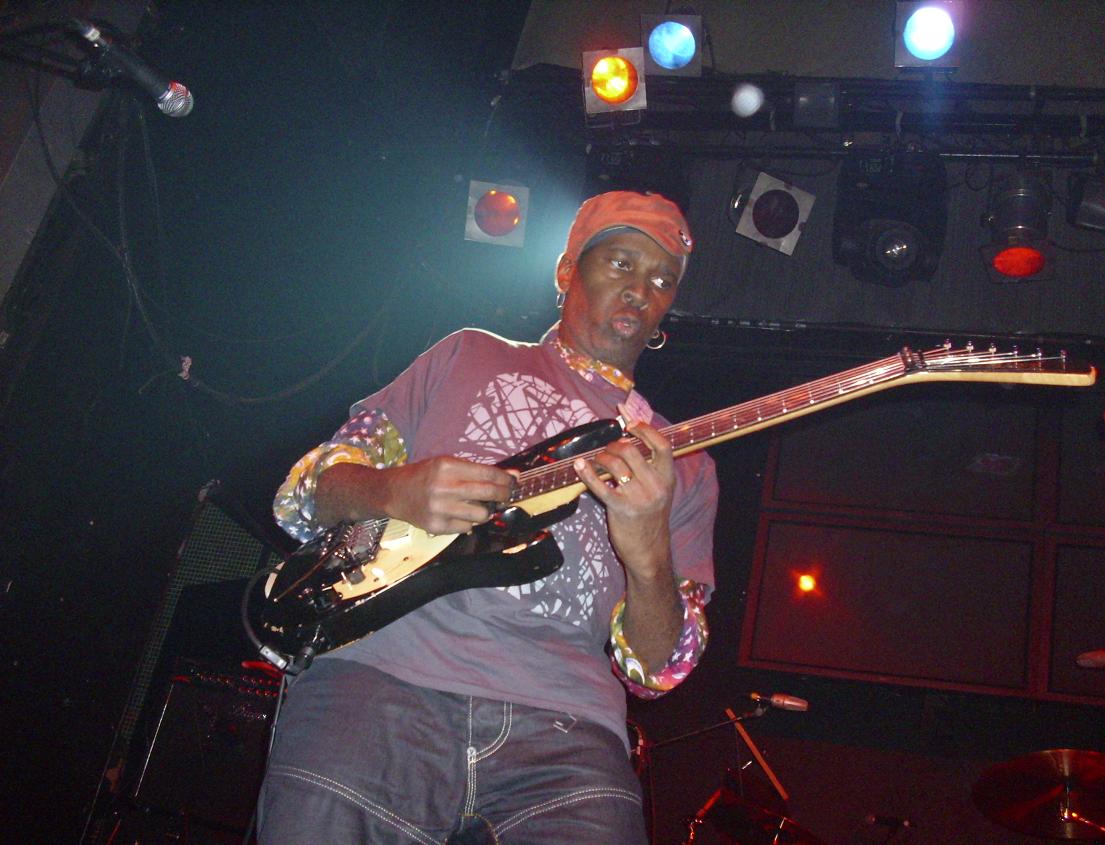
Vernon Reid (Living Colour) is the M9’s most clearly documented high-profile user. Premier Guitar’s Rebecca Dirks covered Living Colour’s 2013 U.S. tour at Park West in Chicago (published June 20, 2013), and the rig rundown article explicitly names a “Line 6 M9 (for modulation)” as one component of Reid’s parallel signal processing chain alongside a Roland VG-99, Zoom G3, Eventide H9, laptop with Ableton Live, and Mesa Boogie Lonestar combo. The M9 ran in parallel with the other processors — all blended in and out via expression pedals — and its role was modulation duties specifically. Reid’s modded M9 (the earlier search result cited a JVH3 Audio modification for cleaner bypass and other tweaks) reflects a player integrating it seriously enough to invest in third-party work. This is a primary-source confirmation, not a logo association.
Bill Kelliher (Mastodon) appears on Equipboard and various gear-list aggregators associated with the M9, but primary-source verification is thin. Kelliher’s documented 2012 European tour board (photographed by Gitarist Video and broken down by Effects Bay, June 2012) contained a Digitech Hardwire SC-2, Boss OC-3, Guyatone MD3, Korg DT-10, Digitech JamMan, and Boss NS-2. No M9. His subsequent rig moved through a Fractal Audio MFC-101/Axe-FX system and has more recently centered on a Line 6 Helix. This does not rule out the M9 appearing in other rig configurations between tours or in studio use, but no documented primary source shows Kelliher with an M9. Listed as unverified here.
Nita Strauss (Alice Cooper, solo) is an active Line 6 artist relationship, but her documented touring and studio setups point to a Boss GT-1000 core effects unit and a Kemper Profiling Amp for all amp and drive sounds — not the M9. No rig rundown, interview, or equipment photo placing the M9 specifically in her touring chain was found in this research. Noted as unconfirmed.
Steve Stevens (Billy Idol) is a genuine Line 6 user, but the products are different. Premier Guitar’s Shawn Hammond caught Stevens on the Billy Idol 2013 summer tour in Council Bluffs, Iowa (published August 21, 2013), and Stevens’ effects rack contained “Line 6 Mod Pro and Echo Pro units” — rack-mounted versions of Line 6’s modulation and delay engines, distinct from the M9 stompbox. By 2025, Stevens had moved to a Line 6 Helix Stadium. His relationship with Line 6 is real and long-standing; it just doesn’t extend to the M9 in documented sources.
John Browne (Monuments) is listed on the Line 6 artists page and commonly cited alongside the M9. His documented setups include a Line 6 POD XT Pro for studio and an evolving live rig that currently centers on the Helix. No primary source confirms the M9 specifically. Noted as unverified.
The M9’s community footprint is wide — Equipboard lists dozens of artists across rock, metal, and ambient genres — but the lesson from the M5’s research holds: the unit’s appeal is breadth, not signature-artist association. It lived on boards as the multi-tool that handled the effects the dedicated stompboxes around it couldn’t. No one built a persona around it. They just used it.
Five Tone Recipes
1. Vintage Amp Room (Slot A: Compressor; Slot B: Analog Chorus; Slot C: Room Reverb)
Run the Vetta Comp in Slot A — set Compress at 45%, Gain at 30%. Analog Chorus in Slot B: Rate at 10 o’clock, Depth at 9 o’clock, Feedback at minimum, Mix at 25%. Room Reverb in Slot C: Reverb at 30%, Pre-Delay at 15ms, Decay at 1.5s. This stacks three of the M9’s cleanest building blocks into a vintage feel that suits everything from blues to classic rock. The Analog Chorus adds just enough shimmer to suggest a Leslie-style doubling without obvious modulation.
2. Vernon Reid Modulation Zone (Slot A: Barberpole Phaser; Slot B: Analog Chorus; Slot C: Plate Reverb)
Barberpole Phaser in Slot A at slow speed (9 o’clock), Feedback at 40%, Mix at 50%. Analog Chorus in Slot B: Rate at 8 o’clock, Depth at 10 o’clock, Feedback at zero, Mix at 35%. Plate Reverb in Slot C: Reverb at 40%, Decay at 2s. This is the modulation-as-texture approach — the Barberpole creates a perpetually ascending phase sweep, the Chorus adds width, the Plate adds space. A parallel signal path (with your dry signal kept separate at the amp) gives the blend Vernon Reid was achieving with his expression pedal routing.
3. Modern Metal (Slot A: Heavy Distortion; Slot B: 4-Band EQ; Slot C: Digital Delay)
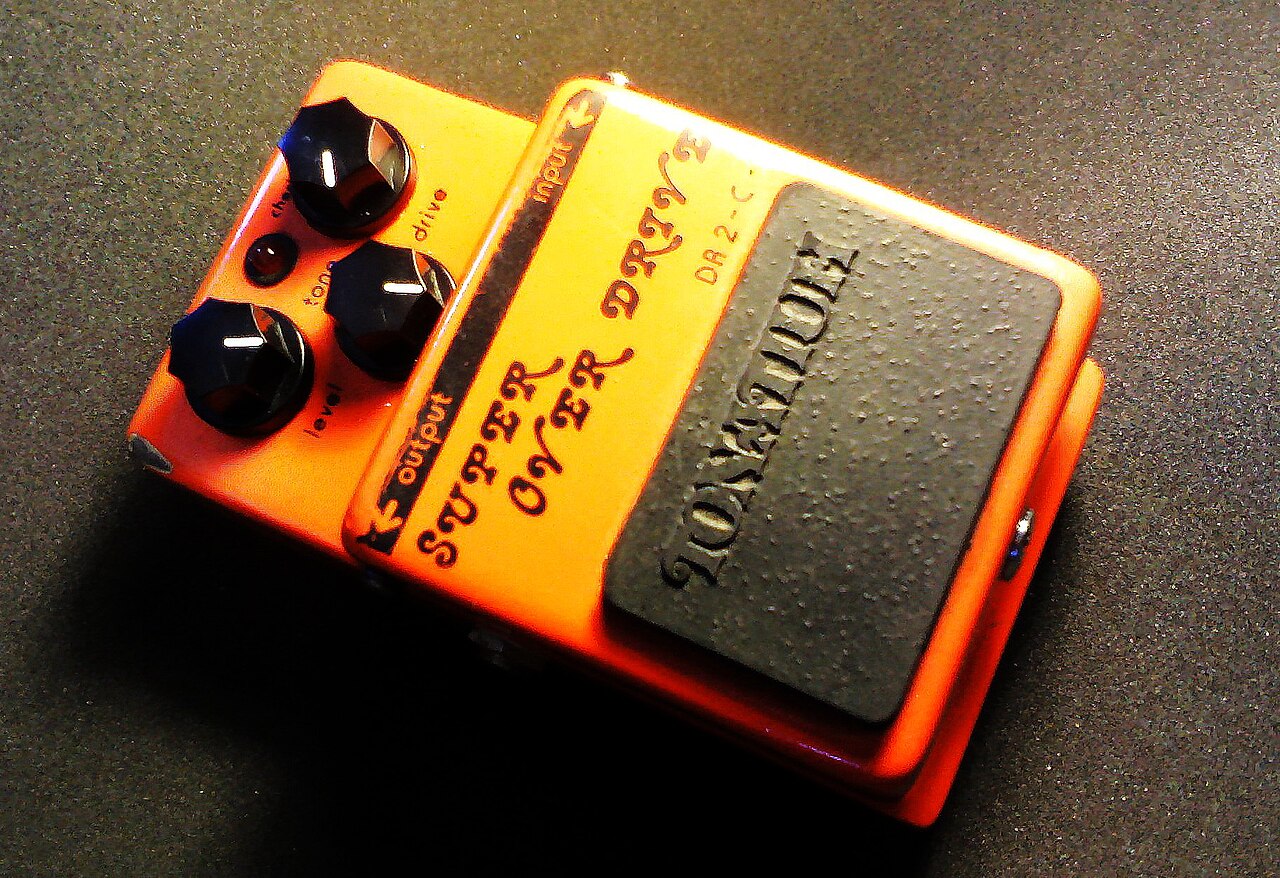
Heavy Distortion in Slot A: Drive at 3 o’clock, Bass at 10 o’clock, Mid at 9 o’clock, Treble at 12 o’clock, Output at 12 o’clock. Follow with 4-Band EQ in Slot B: cut 250Hz by 2–3dB to clear mud, boost 2–4kHz slightly for cut. Digital Delay in Slot C: Time at 300–350ms dotted-eighth, Feedback at 1 repeat, Mix at 18%. Note: for genuinely high-gain rhythm sounds, the M9’s onboard distortion models are the weakest link — a dedicated drive pedal before the M9 input will outperform this recipe on clarity and feel. Use this as a starting point, not a destination.
4. Shimmer Pad (Slot A: Octo Reverb; Slot B: Particle Verb; Slot C: Plate Reverb)
Octo in Slot A: Reverb at 55%, Mix at 40%. Particle Verb in Slot B: Reverb at 50%, Grain Size at 12 o’clock, Mix at 35%. Plate Reverb in Slot C: Reverb at 30%, Decay at 3s. Stack reverb into reverb into reverb for atmospheric layers — this is where the M9’s Slot C becomes the tail of a slowly evolving cloud rather than a discrete effect. Use volume swells or clean playing at low attack; hard strumming makes the grain processing artifact. A true bypass looper or a dedicated volume pedal before the M9 input helps manage the envelope.
5. Psychedelic Funk (Slot A: Tron Up Envelope Filter; Slot B: Ring Modulator; Slot C: Tube Echo)
Tron Up in Slot A: Sensitivity at 12 o’clock, Q at 10 o’clock, Mix at 70%. Ring Modulator in Slot B: Frequency at 9 o’clock, Mix at 25% — just enough to add metallic shimmer without full ring-mod aggression. Tube Echo in Slot C: Echo Time at 200ms, Feedback at 30%, Flutter at 30%, Mix at 25%. The Tron Up responds to pick attack; the Ring Mod adds upper harmonics that push the wah-filtered sound into unusual territory; the Tube Echo grounds it with that EP-1 warmth. This is a recipe for the third song in a set, not the first.
How the M9 Compares to Its Competition
Within the Line 6 family, the comparison that matters most is with the M5. The M5 runs one effect at a time from the same library. The M9 stacks three. The M5 costs less used ($100–$160), fits on tighter boards, and suits players who want a utility slot — the effect they need for one section of one song — handled cleanly. The M9 suits players who want a complete three-effects signal chain in one unit. If you ever find yourself running an M5 flanked by two other multi-effect units or using three M5s in series, the M9 is the logical consolidation.
Against the Line 6 HX Stomp, the M9 loses on every technical axis: the HX Stomp runs Helix-quality amp and effects models, supports up to six blocks, offers USB audio interface functionality, and can be used for direct recording at the same quality level as the flagship Helix Floor. The HX Stomp used runs $250–$350 — more than the M9, but the gap is narrow enough that the HX Stomp is the obvious buy for anyone starting fresh in 2026. The M9’s advantage is simplicity: its interface is faster for live use where you need to dial in a specific modulation sound under pressure without touching menus.
The Eventide H9 and H90 cover different sonic territory — Eventide’s pitch and time-based algorithms are a distinct computational lineage from Line 6’s DSP modeling. Vernon Reid ran both in parallel precisely because they do different things. The H9 handles pitch shifting, complex harmonization, and spatial effects that draw on Eventide’s algorithmic heritage going back to the H910 Harmonizer. The M9 handles the modulation and delay effects that don’t require Eventide-level computation. They’re not substitutes; they’re colleagues.
The Neural DSP Quad Cortex represents a different class of product: it models amplifiers via neural network capture in addition to effects. At $1,599 new, it lives in a different economic bracket. For a player who needs amp modeling plus effects in a floor unit, the Quad Cortex is the current benchmark. The M9 was never an amp modeler — it assumed you had a real amp in front of it. Those are different use cases.
The Empress ZOIA and similar modular effects platforms provide far greater flexibility than the M9 at the cost of significant programming time. The M9 is plug-and-play. The ZOIA is a musical instrument in itself that requires engagement to operate. They represent opposite philosophies: the M9 says “here are 100 effects, pick three”; the ZOIA says “here are the building blocks, what do you want to build?”
Buying Guide
The M9 has been discontinued for several years, replaced in Line 6’s lineup by the HX Effects (which runs Helix-quality algorithms and supports more simultaneous effects). The used market remains healthy. In 2026, expect to pay $150–$220 for a clean unit in working condition, with well-worn examples dropping below $150 and pristine examples occasionally reaching $230–$250.
Before buying, verify three things. First, power the unit on and cycle through all six scenes — the display should be clear and fully readable. The M9 does not suffer from the LCD pixel failure common on the M5, but display clarity degrades on heavily used units. Second, test the looper: record a loop, overdub onto it, and play it back to verify the stereo looper electronics are intact. Third, check the expression pedal input with an actual expression pedal, since the TRS jack sees wear on units that lived on active boards. A dead expression jack is a soldering repair, not a reason to walk away at a discounted price, but factor it into your offer.
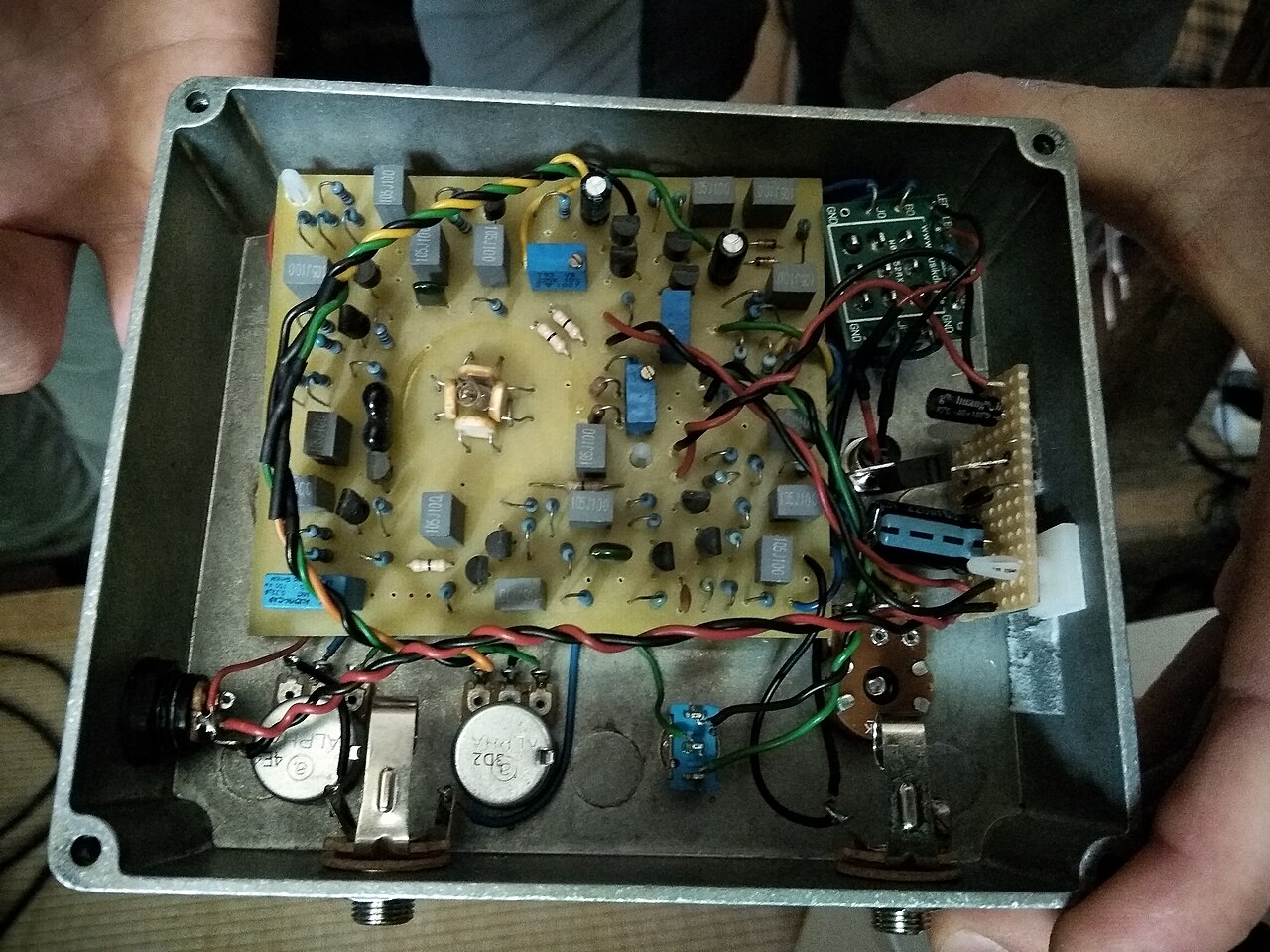
The M9 runs on 9V DC at a higher current draw than a standard daisy chain can supply. A dedicated isolated output or a high-capacity power supply brick (Voodoo Lab Pedal Power 4×4, Strymon Zuma, Cioks DC7 at minimum) is required. A standard 100mA or even 300mA isolated output will not reliably power the M9 — the symptom is noise, glitching, and random scene behavior. Budget for proper power when purchasing.
MIDI recall expands the M9’s live utility significantly. With a MIDI foot controller, you can exceed the 6-scene limit by recalling any combination programmatically. Players running the M9 in larger rigs often pair it with a Roland FC-300 (as Vernon Reid did) or a more compact controller sending program-change messages. Without a controller, you are limited to 6 scenes and manual footswitch operation — which is perfectly workable for most gigging contexts.
Living with the M9
The M9’s signal chain is fixed: Slot A → Slot B → Slot C → output. You cannot reorder the blocks without physically rearranging which effect category you assign to each slot. For a standard compressor-into-modulation-into-reverb chain, this is irrelevant. For a scenario where you want reverb before delay (a standard shimmer-into-tape-echo texture), the fixed chain means putting reverb in Slot A and delay in Slot C — which is counterintuitive on the panel but sonically correct. Learn the signal flow direction once; it becomes automatic.
The hardwire bypass on the M9 means the dry signal passes through the unit’s switching even when effects are off. On most modern signal chains, this is sonically transparent. Players with vintage high-impedance pickups and long cable runs may prefer a buffer before the M9, since hardwire bypass on a 10-foot cable can result in minor high-frequency rolloff. This is a minor consideration and not specific to the M9 — it applies to any hardwire bypass unit in a long chain.
Noise is not a prominent complaint in M9 user feedback. The unit’s gain structure is generally clean, and the Compressor models add noise in proportion to their gain-reduction settings, as any compressor does. High-gain distortion models in Slot A followed by a high-reverb model in Slot C can produce audible noise floor in high-gain settings — again, the standard recommendation of using a dedicated noise gate or a gate model in one of the three slots applies.
Firmware updates for the M9 ceased years ago. The unit ships with its final firmware version and there is no current Line 6 support infrastructure for it. For the effects library and stability, this is not a practical problem — the firmware was mature before discontinuation. For anyone hoping for new models or features, it is a hard ceiling. What you see on the unit is what exists.
FAQ
What is the difference between the Line 6 M9 and the M13?
The M13 runs four simultaneous effects (vs three on the M9), has 48 scenes (vs six), 15 footswitches, and also includes pitch effects not present in the M9. The M9 is smaller, lighter, and more board-friendly. The M13 is the full production-level system; the M9 is the compact gigging version of the same library.
Can the M9 run amp and cabinet simulations?
No. The M9 is an effects-only processor. It does not contain amp models, cabinet impulse responses, or speaker simulations. It is designed to run in front of a real amplifier or in an amplifier’s effects loop — not as a standalone direct-recording solution. For direct recording with amp and cab simulation, the HX Stomp or the full Helix platform are the appropriate Line 6 products.
Does the M9 have true bypass?
No. The M9 uses hardwire bypass. When effects are disabled, the signal connects directly via a relay switch without passing through the DSP. Hardwire bypass is transparent in practice for most signal chains. It is not the same as true bypass (a simple switched connection with no relay), but the difference is audible only in specific high-impedance, long-cable scenarios.
How many scenes does the M9 have?
Six scenes. Each scene stores the settings across all three effect slots. Via MIDI program change messages from an external controller, you can access additional configurations beyond the six on-board scenes, effectively extending the scene count to the limits of your MIDI controller’s memory.
Is the M9 still supported by Line 6?
No. The M9 has been discontinued and is no longer covered by Line 6’s current support structure. Its firmware was finalized before discontinuation and the unit operates correctly on that final version, but there will be no new firmware updates, bug fixes, or additional effect models. Warranty repairs are no longer available through Line 6.
What power supply does the M9 need?
The M9 requires 9V DC at 2000mA (2A). This is far more current than a standard pedalboard daisy chain or a typical 100–500mA isolated output delivers. Use a high-capacity isolated power supply with a dedicated 2A output — the Voodoo Lab Pedal Power 4×4, Strymon Zuma, Cioks DC7, or equivalent. Insufficient current causes glitching, noise, and erratic behavior.
Can the M9 be used as a USB audio interface?
No. The M9 does not have USB audio functionality. It is a purely analog I/O effects processor with MIDI I/O. For USB audio interface capabilities within a Line 6 product, the HX Stomp and Helix Floor offer that functionality.
What replaced the Line 6 M9?
The HX Effects replaced the M9 in Line 6’s product range. The HX Effects runs Helix-quality algorithms, supports up to nine simultaneous effects (with parallel routing capability), includes two expression pedal inputs, and connects via USB for preset management and firmware updates. It is a substantially more capable product at a correspondingly higher price, used in the $300–$450 range in 2026.
Image credits
- Top image: GuitarGangsters AI-generated reference illustration, not a photograph.
- Vernon Reid: Mario, Wikimedia Commons, CC BY 2.0.
- Inside a DIY pedal showing the circuit board: Skimel, Wikimedia Commons, CC BY-SA 4.0.
- An orange overdrive pedal: Andrés Galeotti, Wikimedia Commons, CC BY 2.0.
- Vernon Reid: Mario, Wikimedia Commons, CC BY 2.0.
Latest News
Related

On This Day
Monday 9 November
From this week: