One Knob to Rule Them All: The Eventide H9 Harmonizer and the Studio That Fit on a Pedalboard
The Eventide H9 Harmonizer packs 52 studio-grade algorithms into a compact pedal. Full specs, verified artist rigs, tone recipes, and buying guide inside.
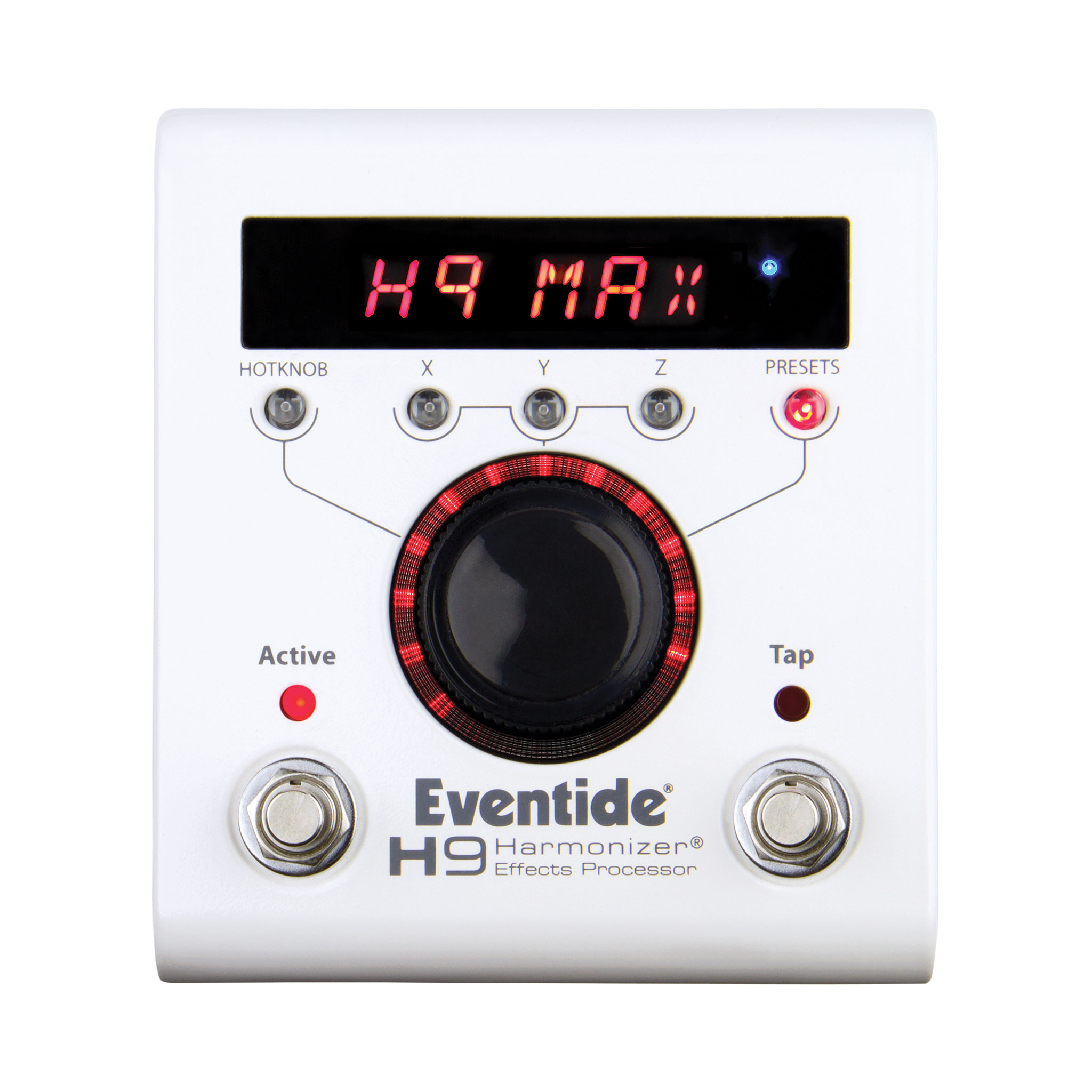
There is a certain kind of guitarist who looks at a rack unit the way a chess grandmaster looks at a board—not as a collection of parts but as a single coherent system. For fifty years, those players lived at Eventide’s address. The H910, the H949, the H3000: these were the machines that pitch-shifted session solos into double-tracked anthems, stretched reverb tails into infinite space, and gave Bono’s guitarist a shimmer that no single pedal could replicate. They were also large, expensive, and bolted into road cases. Then in 2013, Eventide did something that looked, at first glance, like compression: they took the entire architecture of that rackmount legacy and shrank it to a stomp box the size of a large harmonica. The result was the H9 Harmonizer—and the small footprint concealed a weapon.
The Company That Invented Digital Effects
Eventide Clock Works was founded in 1971 in New York by inventor Richard Factor and recording engineer Steven Katz, with business attorney Orville Greene as the third founding partner. The name was literal: the company’s early work centered on digital timing, delay, and the emerging possibilities of random-access memory applied to audio. They were working at the frontier where studio engineering and semiconductor technology overlapped, and in 1974 they unveiled a device that had never existed before.
The H910 Harmonizer—shipped commercially in 1975—was the world’s first commercially available digital audio effects processor. The name “H910” carried a private joke: “H” for Harmonizer, and “910” as a nod to the Beatles song “One After 909.” It could pitch-shift audio in real time, an operation that previously required tape manipulation, varispeed tricks, or elaborate acoustic gimmickry. Producers discovered immediately that you could run a vocal or guitar through the H910 alongside the dry signal, detune the wet signal by 10–15 cents, and suddenly have a doubling effect that sounded like two players who were almost but not quite in perfect unison. That thickening became a signature of 1970s and 1980s rock production.
The H949 followed, refining the de-glitching algorithm that made pitch shifting less prone to digital artifacts on transient-heavy material like guitar. Then came the H3000 Ultra-Harmonizer in 1987—a true multi-effects platform with 11 algorithms including pitch shifting, reverb, delay, modulation, and a level of programmability that turned it into a sound design tool as much as an effects unit. The H3000 became the studio standard of the 1980s and 1990s, heard on records that collectively represent a large portion of what most people think of when they imagine “the sound of that era.”
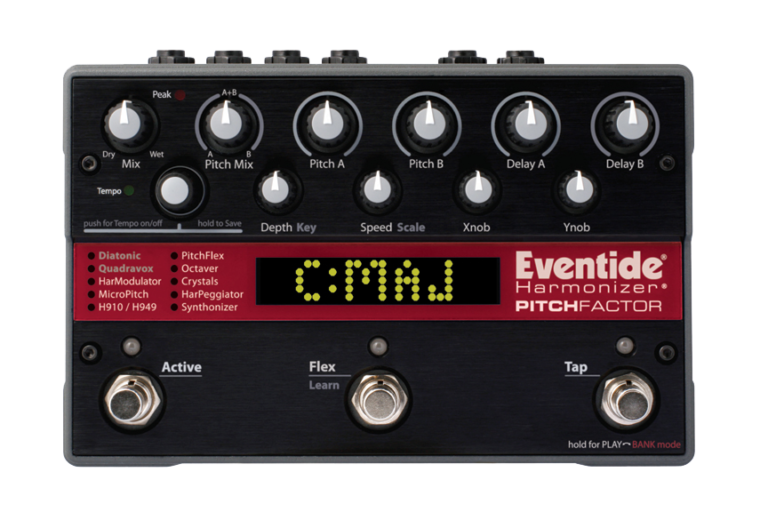
The Factor series of pedals—TimeFactor, PitchFactor, ModFactor, and Space—brought individual algorithm families to pedalboard format in the late 2000s. They were excellent but siloed: you needed four pedals if you wanted the full range. The H9 solved that problem with a single unit that could run any algorithm from any Factor pedal, plus several exclusive to the H9 itself. It launched in November 2013 and offered something genuinely new: a multi-effects pedal controlled not by a wall of knobs but by a single programmable X-Knob and a smartphone app.
H9 Specifications and Variants
The original H9 was sold in three configurations, distinguished by how many algorithms came unlocked at purchase.
| Spec | H9 Core | H9 Standard | H9 Max | H9 Gen 2 (2026) |
|---|---|---|---|---|
| Street price (approx.) | ~$199–249 | ~$349–399 | ~$499–699 | $599 |
| Algorithms (at purchase) | Basic set | One Factor library | All 52 unlocked | 74 (full H90 library) |
| Preset slots | 99 + unlimited via app | 99 + unlimited via app | 99 + unlimited via app | 1,000+ |
| DSP architecture | Single core | Single core | Single core | ARM-based, single core (H90-class) |
| Bluetooth | Yes (4.0) | Yes (4.0) | Yes (4.0) | Yes (updated) |
| MIDI | 5-pin DIN + USB | 5-pin DIN + USB | 5-pin DIN + USB | 5-pin DIN + USB-C |
| I/O | Stereo in/out (1/4″) | Stereo in/out (1/4″) | Stereo in/out (1/4″) | Dual mode stereo in/out |
| Expression input | Yes | Yes | Yes | Yes (×2) |
| Routing | Standard serial | Standard serial | Standard serial | Wet/Dry, Pre/Post |
| Built-in tuner | No | No | No | Yes |
| Spillover | Yes | Yes | Yes | Yes (seamless) |
| Power | 9VDC 500mA | 9VDC 500mA | 9VDC 500mA | 9VDC (updated spec) |
| Dimensions (approx.) | 4.7″ × 3.5″ × 1.5″ | 4.7″ × 3.5″ × 1.5″ | 4.7″ × 3.5″ × 1.5″ | Similar compact form |
The algorithm upgrade model was worth understanding: if you bought an H9 Core or Standard, you could purchase individual algorithms at around $19.99 each through the H9 Control app. Once you had purchased ten individual algorithms, your unit automatically upgraded to H9 Max status, unlocking everything including any algorithms Eventide released in the future. It was a polarizing system—some players appreciated the lower entry point, others found it annoying to pay per effect—but it also meant the hardware platform was evergreen. The same DSP that shipped in 2013 received new algorithms for years.
The Gen 2, launched June 24, 2026, at $599, moved to the same ARM-based processor architecture as the H90 and expanded the library to all 74 H90 algorithms. It added USB-C, a second expression input, flexible routing modes, a built-in tuner, and over 1,000 factory presets. Critically, it remains a single-core device—meaning it runs one algorithm at a time, unlike the dual-core H90 which can chain two simultaneously. Gen 2 presets are backward-compatible with legacy H9 sessions.
What 52 Algorithms Actually Means
The H9 Max’s algorithm library spanned five functional families: pitch, modulation, delay, reverb, and a category Eventide called “Dynamics/Other” which included compression, EQ sculpting, and the looper.
From the PitchFactor lineage came the algorithms that made Eventide famous. The H910/H949 algorithm recreated the exact pitch-shift behavior of the original hardware, with all the subtle asymmetries that made 1970s doubled guitars sound like people rather than machines. Diatonic Harmonizer produced intelligent interval harmony relative to a selected scale and key—genuine harmonization, not just fixed intervals. Crystals offered the granular pitch-spreading shimmer that the original H3000 made famous, stretching attack transients into spectral clouds. Quadravox provided four independently configurable pitch voices. Micro Pitch created extremely subtle pitch detuning—8 to 20 cents—for chorus-without-chorus thickening.
From the TimeFactor family came delays built around specific hardware models: a tape delay algorithm emulating the wow, flutter, and high-frequency rolloff of oxide-coated tape; a vintage digital delay reproducing early 12-bit bucket-brigade artifacts; a Band Delay that filtered different repeat generations through user-defined EQ bands; and ModEchoVerb, which combined delay and reverb into a single algorithm to minimize tap-dancing. The unique UltraTap algorithm, H9-exclusive, generated rhythmic multi-tap delays that could produce polyrhythmic echo patterns unachievable with a standard delay.
From the ModFactor side, you got Chorus, Phaser, Flanger, Q-Wah, Rotary (a Leslie simulation), TremPan (tremolo-to-panning), and TriceraChorus—a three-voice chorus that drew from vintage analog chorus circuit models rather than digital approximation. The Blackhole reverb, adapted from the Space pedal, became the H9’s most-referenced killer algorithm: an infinite-decay reverb that grew, shifted pitch during the tail, and could sustain indefinitely when the Hold control was engaged. Players discovered it worked as a legitimate ambient composition tool, not just a reverb effect.
The algorithm count in the H9 Max crossed 52 entries by the time production ended for the original hardware. The Gen 2’s expanded 74-algorithm library adds everything from the H90’s library that wasn’t in the original H9, including newer reverb modes and extended pitch-shifting variants introduced between 2020 and 2025.
Famous Players
Vernon Reid — Living Colour
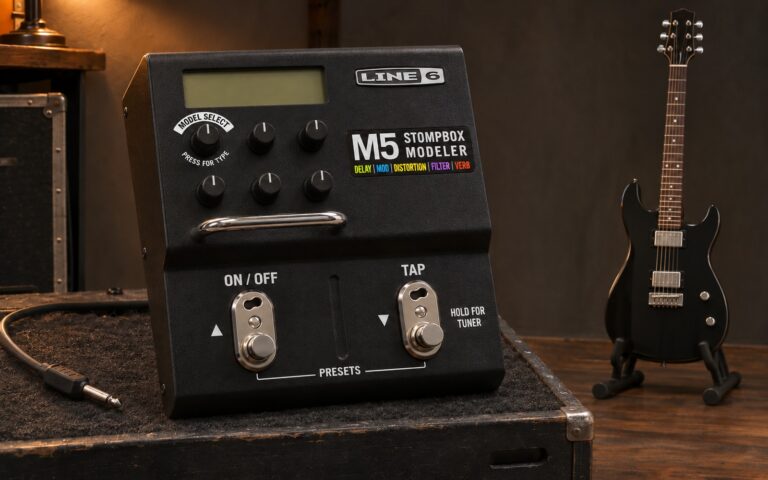
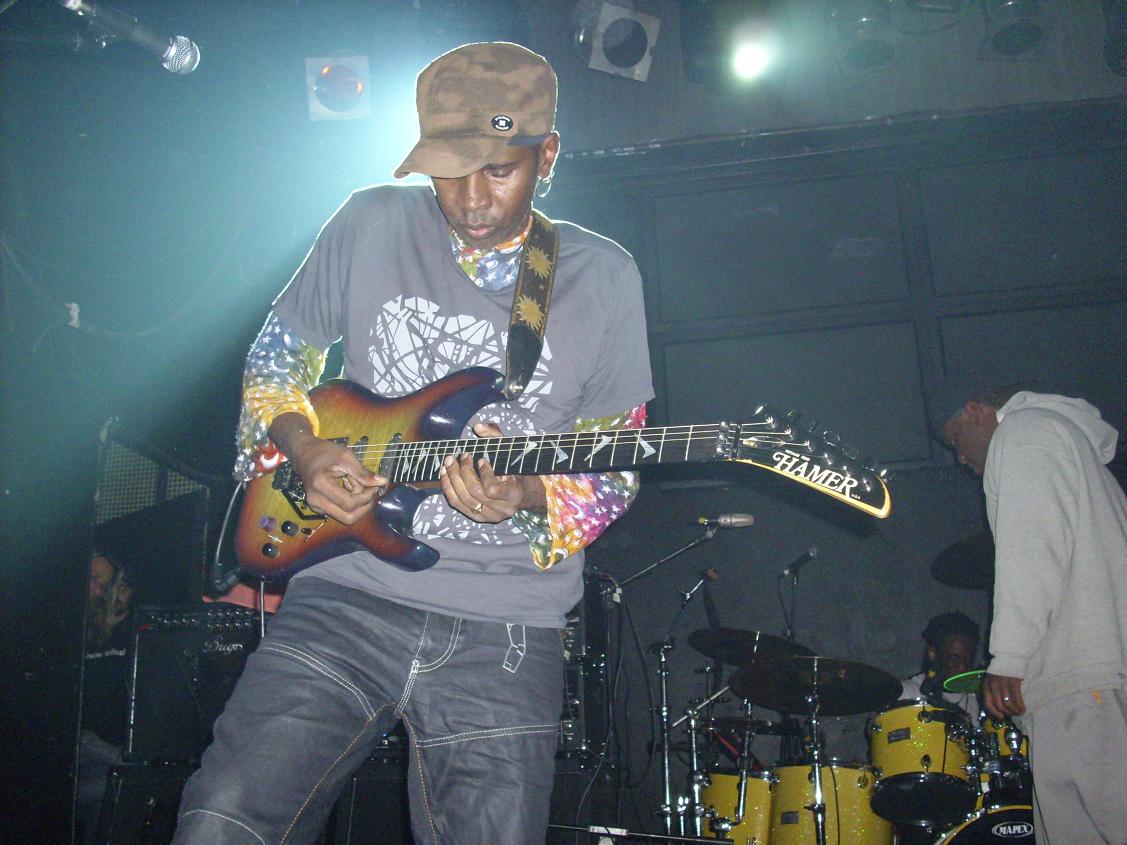
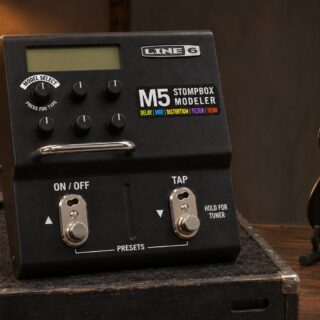
Vernon Reid is the H9’s most thoroughly documented professional user, with a primary-source paper trail going back to the pedal’s launch year. In Premier Guitar’s rig rundown from June 20, 2013, conducted at Park West in Chicago during Living Colour’s US tour, Rebecca Dirks documented Reid’s signal chain in explicit detail. His setup ran the Parker Vernon Reid Signature MaxxFly’s hex pickup through a Roland VG-99, split to a DOD Passive Mixer, and then—in parallel with a Zoom G3, a Line 6 M9, a laptop running Ableton Live with custom sounds, and an iPad running Amplitube—into an Eventide H9 with expression pedal. All processors ran parallel to each other, blended in and out with expression pedals going to a Mesa/Boogie Lonestar combo. The H9 was not a supplementary unit here: it sat at the same signal level as the Lonestar itself. Reid’s entire approach to guitar has always been one of synthesis and processing as compositional elements, not decoration, and the H9 fit that philosophy precisely. Living Colour was, at that point, carrying a rig that a touring country act would have considered excessive even for its main acts.
Guthrie Govan
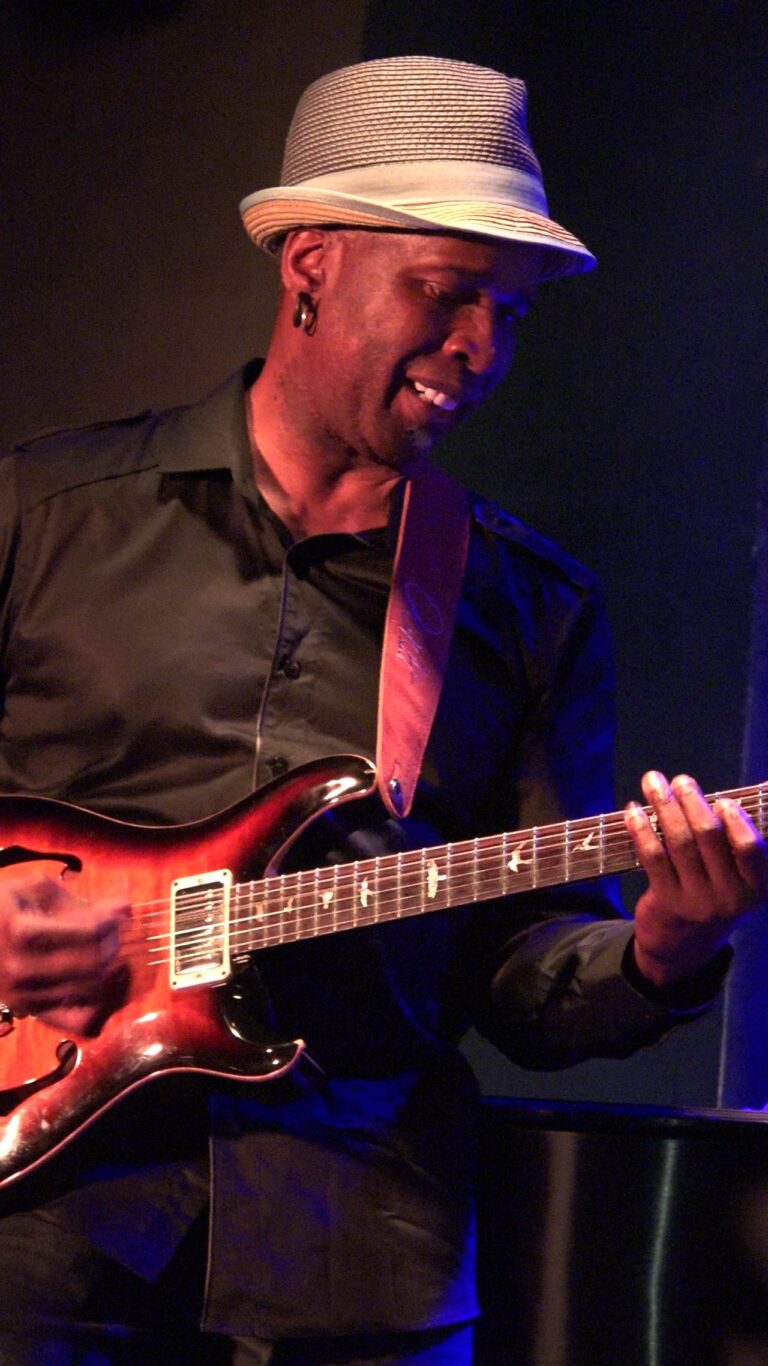
Guthrie Govan’s H9 use was documented in a 2019 Guitar World interview, cited independently by Equipboard. Govan is an unusual case in the effects world: his tone precision is almost forensic, and he does not casually mention gear without having integrated it seriously. The context of the Guitar World piece was his approach to controlling complex effects from a minimal physical footprint—which is precisely the H9’s value proposition. For a player who regularly moves between acoustic jazz, fusion, progressive rock, and studio session work at the highest tier, a single unit capable of any processing task is more useful than a dedicated board optimized for one genre.
Ed O’Brien — Radiohead
Ed O’Brien’s Eventide H9 Max appears on Equipboard among the 219 documented professional users. O’Brien has maintained a long-running relationship with ambient and modulated textures as Radiohead’s second guitarist, and the H9’s Blackhole reverb in particular is well-suited to the kind of slow-attack, washed-out pad textures that define his contribution to records like Kid A and In Rainbows. We verified his use of the Hologram Electronics Microcosm; his H9 appears on his gear page as part of a broader experimental processing chain. O’Brien is one of the few guitarists for whom the distinction between “playing guitar” and “operating a signal processing rig” is genuinely blurred.
Claimed H9 Users: Steve Vai, John Petrucci, Reeves Gabrels
Steve Vai, John Petrucci, and Reeves Gabrels are often listed as H9 users. Each requires honest examination.
Steve Vai’s relationship with Eventide harmonizers is decades-long and documented: Equipboard records an Eventide H3000-D/SX Ultra-Harmonizer in his studio rig, and several guitar gear guides note that he used an Eventide H400 in the studio for “Ballerina 12/24,” and has referenced the H9 as a live tool for recreating those pitch-shifted studio textures. His primary effects processing now runs through the Fractal Audio Axe-Fx platform, but the Eventide connection is real at the brand level. Whether his Equipboard page eventually shows the H9 specifically, or whether the H3000 remains his documented instrument, the harmonizer DNA runs through his recorded output unmistakably. Vai is best described as a confirmed Eventide harmonizer user; H9 per-SKU documentation was not available as a primary source at time of writing.
John Petrucci’s primary processing rig is the Fractal Audio Axe-Fx III Mark II, verified in this series via his own gear page and a 2022 Fractal forum rig presentation. No primary source places him on an H9 specifically. Petrucci uses the Axe-Fx for pitch-shifting and harmonization, making a separate H9 redundant in his current signal chain—which is the most likely explanation for the claim’s weakness.
Reeves Gabrels has documented use of an Eventide 3500 harmonizer rackmount for soundtrack and session work, and his pedalboard has included a Source Audio Multiwave Distortion, Z.Vex Low-Fi Junky, and Source Audio Orbital Modulation. A primary source placing him on the H9 pedal specifically was not found; the claim may derive from the broader Eventide brand association.
Tone Recipes and Settings
1. The Classic H910 Double-Track (PitchFactor Algorithm: H910/H949)
Set Pitch A to –14 cents, Pitch B to +12 cents. Mix at 40% wet. Delay A and B both at 0ms. Use the X-Knob assigned to Mix for real-time control. Feed this into any clean amp. The result is the thickening that appears on virtually every major studio rock record from 1977 to 1994. Not a chorus, not a flanger—a subtle pitch displacement that convinces the ear it’s hearing two players. Add a touch of room reverb downstream and it becomes indistinguishable from a proper double-track in a mid-density mix. Vernon Reid runs H9 variants of this type in parallel with his Lonestar for chord swells.
2. Intelligent Harmonizer (PitchFactor Algorithm: Diatonic)
Set Key to A, Scale to Major, Harmony voice A to a 3rd, Harmony voice B to a 5th. Mix at 55% wet. Pitch delay at 0ms for tightness, or push to 12ms to separate the harmony from the lead. This is the algorithm that appears in Vai’s pitch-layering work and in any guitar part where you want to imply a full-chord line from a single melodic run. The intelligence comes from the scale quantization—the harmony follows the key, not a fixed interval, meaning it tracks through chord changes without producing the out-of-key semitone clashes that fixed harmonizers generate.
3. Blackhole Ambient Pad (Space Algorithm: Blackhole)
Gravity at maximum, Size at 10 o’clock, Mix at 70% wet, Predelay at 30ms. Engage the Freeze/Hold switch and play a chord. The tail will sustain indefinitely without decay, expanding in density. Fade the dry guitar down, then re-enter with single notes over the held pad. This is the setting O’Brien-adjacent players use for textural bed-laying in ambient rock—it produces something between a synthesizer pad and a cathedral reverb, but with guitar transient character still audible in the harmonic structure. Feed the output of this into a fuzz after the pad has built up and you get the “wall of sustained distortion” that post-rock players chase for free.
4. UltraTap Rhythmic Echo (H9-Exclusive Algorithm: UltraTap)
Taps at 8, Spread at 7 o’clock (tight clustering), Length synced to quarter note, Taper at 4 o’clock (volume increases across taps), Chop at 9 o’clock (light tremolo modulation on each tap). At moderate gain with single-note lines, this creates the sensation of rhythm guitar parts that weren’t played—the echo pattern implies a secondary rhythmic layer. Set Spread wider for a slapback that cascades into a wash. This algorithm has no direct equivalent on any other pedal platform; it’s H9-specific and remains one of the genuinely novel things the unit introduced to the pedalboard world.
5. Micro Pitch Thickener (PitchFactor Algorithm: Micro Pitch)
Pitch A at +9 cents, Pitch B at –11 cents, Mix at 30%, Delay A at 8ms, Delay B at 6ms. Into a clean or lightly driven amp, this mimics the effect of double-tracking with slightly loose alignment—which is the actual texture of nearly every classic rock rhythm part. Run it before a tube amp and the extra pitch density causes the amp’s harmonic distortion to react as if the guitar were physically louder and more complex. At 30% mix it’s subtle enough to be transparent in isolation; in a band context it fills the frequency gap between a single guitar and a doubled part.
How the H9 Compares
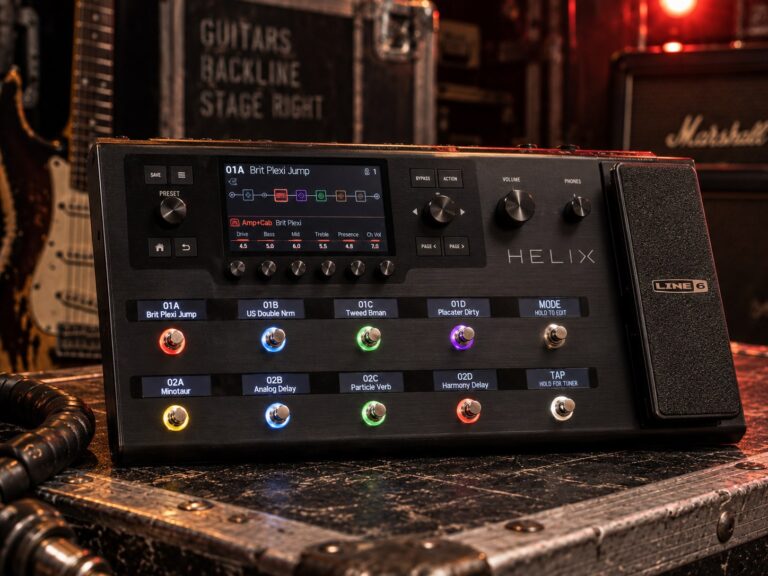
The Line 6 Helix Floor runs multiple effects simultaneously, models amplifiers and cabinets, and is a complete signal chain solution in a floor unit. The H9 does none of that—it runs one algorithm, not a chain, and has no amp modeling. These are different categories of device. The question is not “H9 or Helix?” but “do you need everything, or do you need the best single effect at the end of your chain?”
The Neural DSP Quad Cortex and Fractal Audio Axe-Fx III Mark II both include pitch-shifting and harmonizer effects within their respective platforms. The Fractal’s pitch blocks are sophisticated and tempo-synced; the Quad Cortex has Pitch Warp and harmonizer functionality. Neither replicates the specific character of the H910/H949 algorithm’s pitch-shift behavior or the H9’s UltraTap; they are optimized for utility within a complete rig, not for forensic replication of specific vintage hardware. For players who run modelers as their primary signal chain, the H9 sits logically in the effects loop as a specialist pitch/reverb processor rather than replacing what the modeler already does.
The Kemper Profiler Head has effects baked in but its pitch algorithms are modest by Eventide standards. Serious Kemper users often run an H9 in the effects loop specifically to access Blackhole or the harmonizer algorithms.

The Fender Deluxe Reverb sits at the other end of the philosophy: a tube amp with a spring reverb tank and nothing else. Running an H9 in front of a Deluxe Reverb is one of the most effective uses of the unit—you bring the processing, the amp brings the harmonic character, and the spring reverb adds physical room. The combination produces tones that neither could achieve alone.
The direct successor, the Eventide H90, runs two algorithms simultaneously on two DSP cores, costs around $699, and is physically larger. If you are building a new rig from scratch and will use complex dual-algorithm patches (reverb into harmonizer, or shimmer into delay), the H90 is the current-generation answer. If you already have an H9 Max and primarily use single-algorithm presets, there is no practical reason to upgrade the original hardware until it fails—Eventide supported the platform with firmware updates for over a decade.
Buying Guide
The H9 Max is the only variant worth buying used. H9 Core and H9 Standard units can be upgraded via in-app purchases, but the per-algorithm cost of unlocking the full library typically exceeds the price difference between a used Core/Standard and a used Max. Spend the difference on the Max upfront.
Used H9 Max prices have settled at approximately $260–350 on Reverb as of mid-2026. That range represents the dominant used-market pricing for a unit in excellent condition. Units in good-but-not-mint condition sell for $200–250. Below $180 is a flag: check the unit’s Bluetooth functionality (the BT module can fail silently, making app control impossible), the expression pedal input for socket looseness, and whether the seller has the original power supply. The H9 requires a center-negative 9V at 500mA minimum; standard one-spot supplies usually work, but confirm the current rating before using on a shared supply rail.
The H9 Gen 2 at $599 is the correct answer for buyers who want Eventide’s current algorithm library without the H90’s size and dual-core complexity. It replaces the original H9 for new purchases and is available through Eventide Audio and authorized dealers worldwide as of June 2026.
Owning the H9
Download the H9 Control app before you do anything else—iOS, Android, Mac, and Windows versions are all free. The app is how you build and save presets, browse the algorithm library, and assign the X-Knob. Without it, you are limited to scrolling through presets via the physical controls, which is workable but slow. Bluetooth connection is generally reliable but can require re-pairing after firmware updates; if connection drops, toggle Bluetooth off and on in your phone’s settings before pulling your hair out.
The H9’s Ribbon control—a virtual strip in the app—lets you map any two parameter states and sweep between them in real time, either via expression pedal or the app’s touch strip. This is the H9’s most underused feature. Assigning the Mix knob from 0% to 100% on the Ribbon lets you fade the effect in manually during a performance rather than bypassing. Mapping Crystals’ Pitch parameter across an octave range on the Ribbon gives you a live pitch-sweep that behaves like a filtered whammy bar.
MIDI implementation is full and thoroughly documented in Eventide’s publicly available MIDI Implementation Chart. The H9 responds to program changes for preset recall, continuous controller messages for parameter control, and clock for tempo-synced effects. In a MIDI-controlled rig, a single H9 can function as a recallable effects processor with zero front-panel interaction during a performance.
The bypass options are True Bypass and Relay Bypass (buffered). The choice is made in the H9 Control app. For most pedalboards with other buffered pedals downstream, Relay Bypass prevents the signal degradation that True Bypass causes on long cable runs.
Frequently Asked Questions
What is the difference between H9 Core, H9 Standard, and H9 Max?
All three use identical hardware. Core ships with a basic algorithm set, Standard ships with one Factor series library, and Max ships with all 52 algorithms unlocked. Core and Standard can be upgraded via in-app purchases; buying 10 algorithms unlocks Max status automatically. Used Max units are almost always the better financial choice over upgrading a Core or Standard.
Can the H9 run two effects at once?
No. The original H9 runs one algorithm at a time on a single DSP core. The H90 runs two algorithms simultaneously on dual cores. The H9 Gen 2 is also single-core. If you need parallel processing within Eventide’s ecosystem, the H90 is the correct tool.
Does the H9 work with Android as well as iOS?
Yes. The H9 Control app is available for iOS, Android, Mac, and Windows. Bluetooth connectivity works with Android devices, though some users report slightly less stability compared to iOS; USB connection via a supported OTG adapter bypasses Bluetooth entirely and is fully reliable.
Is the H9 Gen 2 backward-compatible with original H9 presets?
Eventide states that the Gen 2 is compatible with legacy H9 presets. The expanded algorithm library means any preset using an original H9 algorithm will load and behave identically; presets using Gen 2-exclusive algorithms from the H90 library will not transfer backwards to an original H9.
What power supply does the H9 need?
The original H9 requires 9VDC center-negative at 500mA. This is higher than the standard 100mA or 200mA draw of most single-function pedals; verify your power supply’s output rating before adding the H9 to a shared rail. Eventide includes a power supply with new purchases. The Gen 2 should be run with its included supply until Eventide publishes a revised power spec.
How many presets does the H9 hold on the unit itself?
The original H9 stores 99 presets in hardware. The H9 Control app manages an effectively unlimited preset library in the cloud, syncing to the unit on demand. The Gen 2 holds 1,000+ presets natively.
Is the H9 suitable for bass guitar?
Yes. The H9’s stereo I/O handles the full low-frequency range without the signal-path thinning some guitar-specific effects apply. The PitchFactor algorithms track bass input cleanly, and the UltraTap and reverb algorithms behave the same regardless of input. Set input gain appropriately in the app and the H9 performs as a professional-grade bass effects processor.
What replaced the H9 in Eventide’s lineup?
The H90 (dual-core, two simultaneous algorithms, $699) is the direct evolution for users who need simultaneous processing. The H9 Gen 2 (single-core, full H90 algorithm library, $599) is the evolution for users who want the current library in the compact single-effect format. The original H9 Max remains fully supported for existing owners with no functional reason to upgrade until hardware fails.
Image credits
- Guthrie Govan: ArtBrom, Wikimedia Commons, CC BY-SA 2.0.
- Vernon Reid: Mario, Wikimedia Commons, CC BY 2.0.
- Top image: Original-generation Eventide H9 Max. Photo: Nalzatron, Eventide H9 Max Harmonizer Multi Effects Pedal, CC BY-SA 4.0. Full original frame retained; displayed at reduced size. No crop or retouch by GuitarGangsters. Adaptations must use the same or a compatible license.
- Vernon Reid: Alex Lozupone, Wikimedia Commons, CC BY-SA 4.0.
Latest News
Related
On This Day
Monday 9 November
From this week: