Devin Townsend Guitars & Gear: The Complete Guide to Progressive Metal’s Most Prolific Producer-Guitarist’s Rig Evolution
Devin Townsend's guitars, amps, and effects — the complete guide. Framus Stormbender Fishman Transcendence Evertune current, EMG 81 'best pickup for heavy music', Peavey 5150 SYL Maxon OD808 'little green bastard', Mesa Boogie Dual Rectifier Alien, Fractal Axe-FX, Line 6 Helix exclusive, Decimator 'don't fuck with it vortex', open C tuning, Steve Vai 1993, Nanaimo British Columbia, and progressive metal's complete prolific rig evolution.
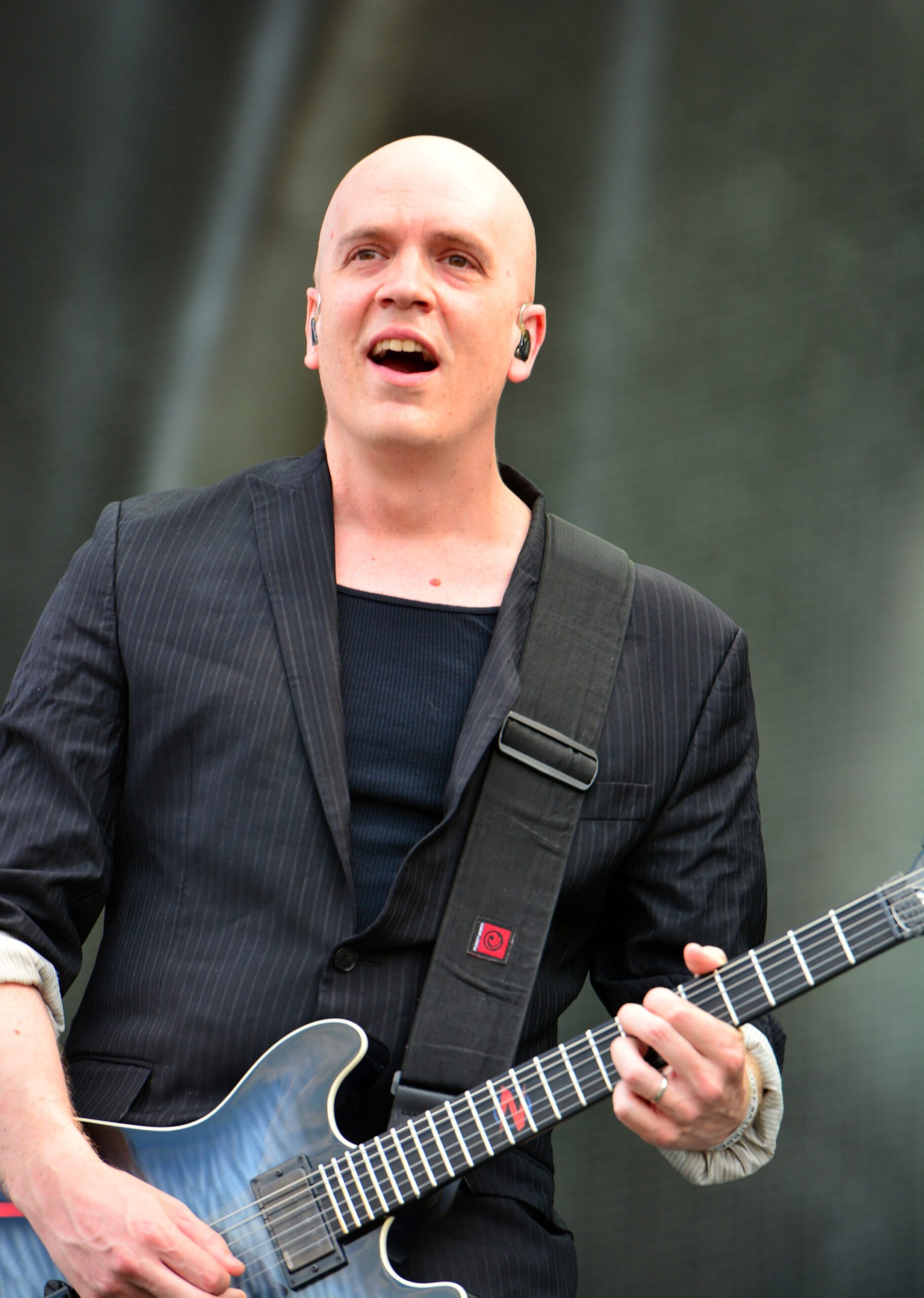
Photo by P. Schwichtenberg, licensed under CC BY-SA 3.0 (https://commons.wikimedia.org/wiki/File:Devin_Townsend_Project_%E2%80%93_Wacken_Open_Air_2014_03.jpg)
Gear Timeline
“I remember we toured with a band years ago when I was with Strapping [Young Lad] and when this pedal first came out, we made fun of the guy relentlessly for having a Decimator. We thought it was the stupidest name for a pedal ever. And we had this whole back story about his Decimator where it was in its own rack — don’t fuck with the Decimator, man, because if you hit it wrong or you turn it up past a certain threshold, it will create a vortex that will suck us all in. So we made fun of him, then after a while I realised it was the best noise gate ever! So now I have a Decimator. But don’t fuck with it, because I will and have been known to turn it up past its threshold.” Devin Townsend said this — and the story about the ISP Technologies Decimator noise gate is simultaneously the best gear-discovery story and the best self-parody in this section. From mocking the pedal to owning it and threatening to accidentally create a vortex with it. This is how Devin Townsend relates to gear: with humor, with genuine exploration, and with the pragmatism of a musician who is simultaneously a producer, engineer, vocalist, guitarist, keyboardist, and songwriter across dozens of albums in dozens of genres. His Maxon OD808 overdrive: “A little green bastard that tightens it up and compresses it in a way that I personally think is really cool.” His primary amp progression: Peavey 5150 (Strapping Young Lad) → Mesa Boogie Dual Rectifier (Alien/Devin Townsend Project) → Fractal Axe-FX (live/studio hybrid) → Line 6 Helix (current, exclusive). His primary guitar: Framus Stormbender signature, with Fishman Transcendence active pickups and an Evertune bridge. EMG 81: “the best pickup for heavy music.” His tuning: Open C. He was the lead vocalist on Steve Vai’s Sex & Religion (1993) at age twenty-one. He has released more than thirty studio albums. He is fifty-three years old. The Helix currently handles everything. The Decimator is on the board. Don’t turn it up past threshold.
The Journey
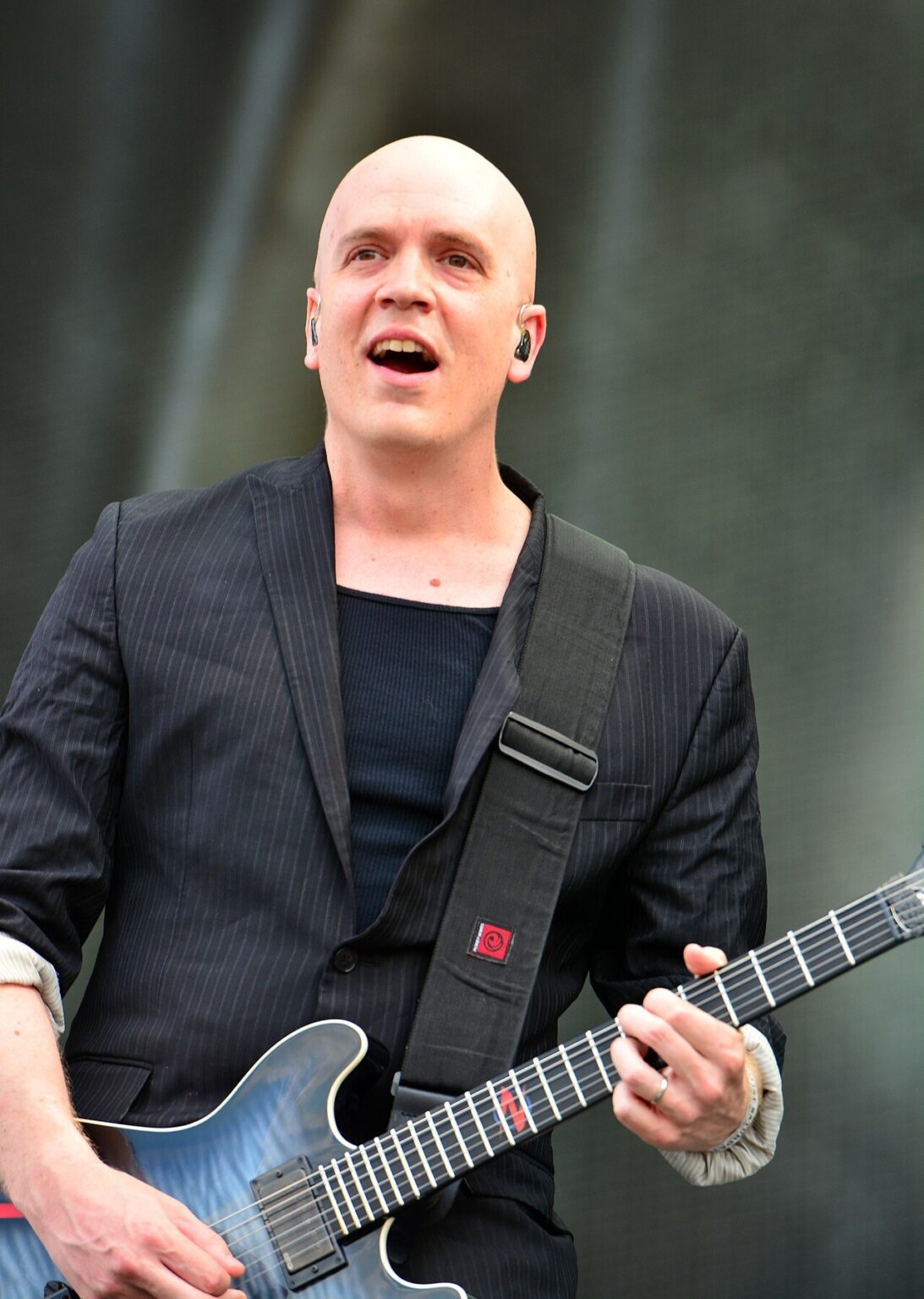
Devin Garret Townsend was born on May 5, 1972, in Nanaimo, British Columbia, Canada. He grew up in British Columbia, developing his guitar and vocal abilities simultaneously. His introduction to the broader music world came when he was drafted as lead vocalist on Steve Vai’s controversial Sex & Religion album (1993) at age twenty-one — described as a “fiery and almost feral-looking 21-year-old phenom.” He then formed Strapping Young Lad in Vancouver in 1994 as a solo studio project, recording the debut Heavy as a Really Heavy Thing (1995) largely by himself. City (1997), with a permanent lineup including drummer Gene Hoglan, guitarist Jed Simon, and bassist Byron Stroud, established Strapping Young Lad as one of the most extreme and most sonically ambitious bands in metal. After SYL dissolved in 2007, he pursued the Devin Townsend Project (Addicted!, Ghost, Deconstruction, Epicloud, Sky Blue) and subsequent solo projects (Transcendence, Empath, The Puzzle, PowerNerd). He has received multiple Juno Award nominations and wins. He is one of the most prolific and most formally ambitious artists in progressive metal history. He is fifty-three years old. The Helix is loaded. The Stormbender is tuned to open C. The catalog grows.
Background: Nanaimo British Columbia, Steve Vai Sex & Religion 1993, Strapping Young Lad 1994 Vancouver, City Gene Hoglan, 30+ Albums, Juno Awards, Line 6 Ambassador
The Steve Vai connection is the specific biographical event that launched Townsend into the professional music world at twenty-one — and its specific character is important context for understanding his subsequent career. Townsend’s introduction to the broader public came when the fiery and almost feral-looking 21-year-old phenom was drafted to be the lead singer on Steve Vai’s controversial Sex & Religion album in 1993. Performing on a Steve Vai album — one of the most technically demanding and most widely heard guitar records in rock — gave Townsend an immediate professional credential at an age when most musicians are still developing their individual approaches. It also gave him a direct education in the specific production and technical standards of professional studio work at the highest level.
Strapping Young Lad’s specific contribution to extreme metal is the combination of industrial metal’s programmatic percussion and studio production sophistication with death metal’s speed and brutality — a combination that reflects Townsend’s specific facility as both a guitarist/vocalist and a producer. He engineered and produced most of the SYL recordings himself, using the specific production aesthetics he had developed through the Vai connection and his own studio education. The wall-of-sound production of City (1997) — Gene Hoglan’s mechanical precision drumming over Townsend’s specific blend of down-tuned guitars, layered vocals, and studio processing — is the product of a musician who understands both the performance and the production dimensions of recorded music.
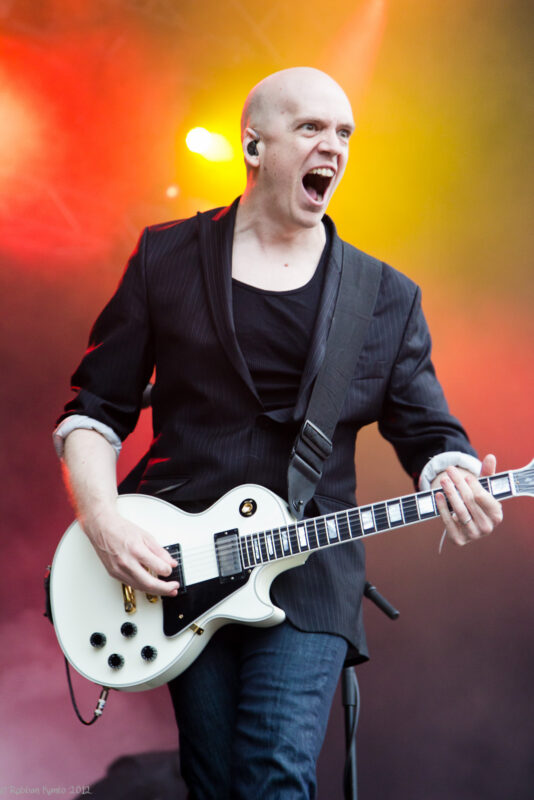
His guitar influences — in several interviews, Devin revealed his top 5 guitarists. In no particular order, the list included James Plotkin, Stevie Ray Vaughan, Jeff Beck, James Hetfield, and Steve Vai — is a specific mix of heavy (Hetfield’s rhythm guitar precision), technical (Vai’s compositional and technical facility), blues (SRV’s emotional expressiveness, Beck’s constant evolution), and experimental (Plotkin’s industrial and noise approach). This breadth of influence produces a guitarist who can write the crushing riffs of SYL’s heaviest material and the delicate, fingerpicked acoustic passages of Casualties of Cool in the same career.
The Rig: Devin Townsend’s Guitars, Amps, and Effects
Guitars
Devin Townsend primarily plays his signature Framus Stormbender guitar, equipped with Fishman Transcendence active pickups and an Evertune bridge for perfect tuning stability. The Framus Stormbender is the culmination of Townsend’s guitar development: a German-made (Framus/Warwick) signature guitar with the specific features his playing approach requires. The Fishman Transcendence active pickups provide the full-frequency, high-output response that his open C tuning and extreme downtuned playing requires — active pickups maintain consistent output and frequency response regardless of string tension variation, which is particularly important in low tunings where passive pickups can lose definition. The Evertune bridge provides mechanical tuning stability that no traditional vibrato or fixed bridge can match: a spring-loaded bridge mechanism that physically maintains string tension at a constant pitch, eliminating tuning drift under any playing conditions. For a musician who plays 300+ shows per year in multiple tunings, the Evertune’s reliability is not aesthetic but practical.
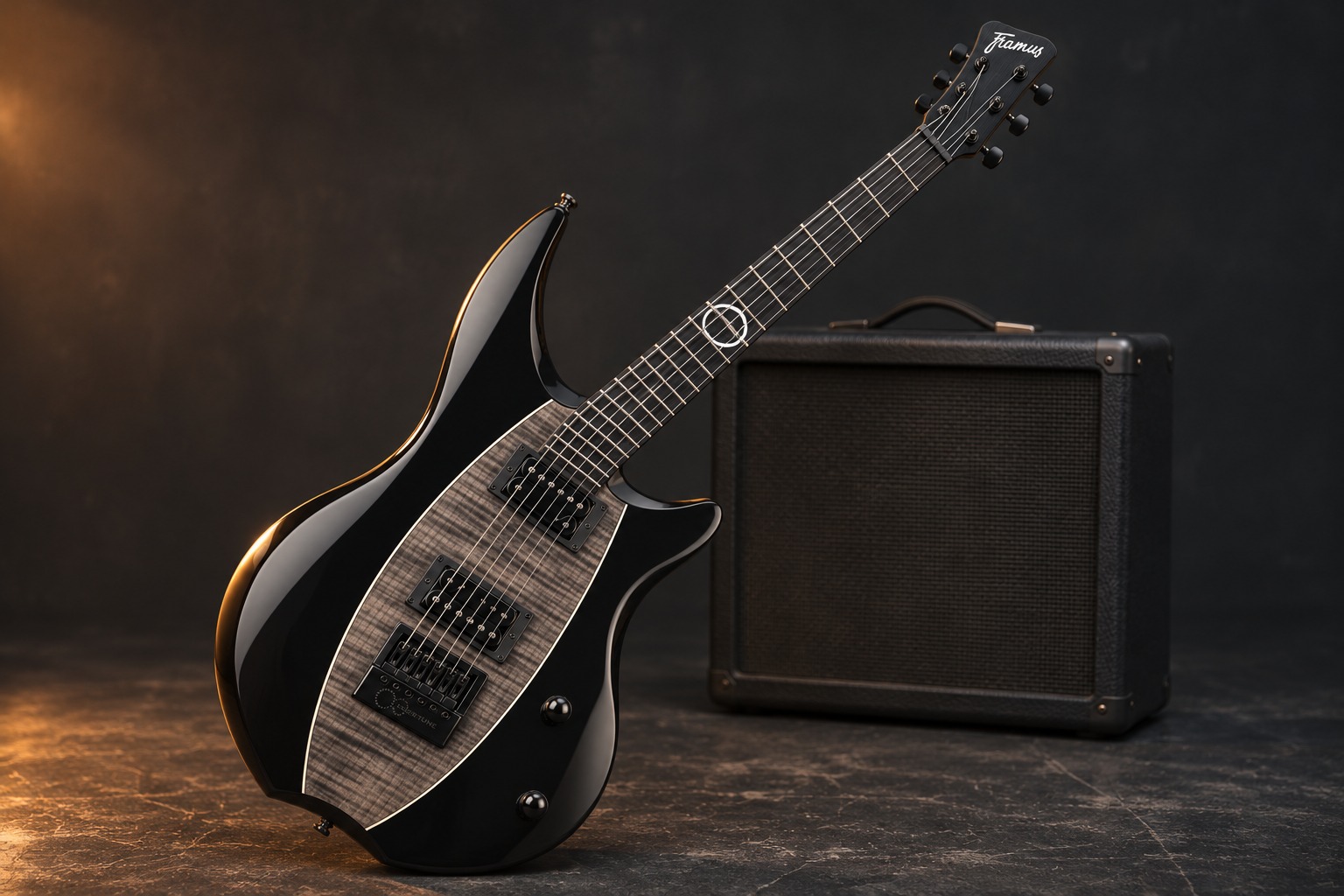
The Equipboard documentation: “I’ve decided on Framus as my main guitars for DTP. They’re a German company and they also do Warwick basses. They’re sort of throwback-looking guitars with lights and things like that to bring them into the modern world.” His Framus signature series includes both the Stormbender and the Framus Devin Townsend V (visible in the Royal Albert Hall performance of “March of the Poozers”).
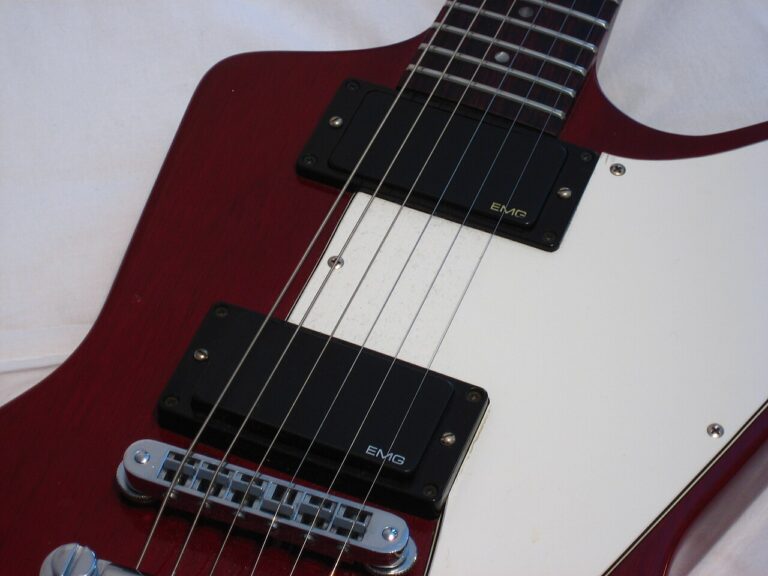
The Equipboard documentation: “Devin has had EMG 81s installed in many of his guitars, such as the one he used in the video (as noted in the YouTube video description). He has gone on record as saying that ‘in my opinion, [it] is the best pickup for heavy music.'” The EMG 81 — the ceramic-magnet active humbucker that has been the standard for extreme metal for four decades — provides the specific tight, defined, high-output character that active pickups offer: consistent output regardless of string tension, extremely low noise floor, and the specific “scooped” midrange and extended high-frequency response that the EMG 81’s ceramic magnets produce. In extreme down-tuned contexts (open C, drop B, and lower), active pickups like the EMG 81 maintain the definition and articulation that passive pickups lose at extreme low string tension.
Devin’s partnership with Peavey produced his first signature model, the PXD Vicious, in 2003. This guitar featured a unique pickup configuration designed specifically for his open C tuning approach. The PXD Vicious was his first production signature guitar — before the Framus relationship was established — and its specific design for open C tuning reflects the early stage of his tuning and pickup philosophy.
His gear choices revolutionized how touring musicians approach amplification, replacing traditional tube amps with digital modeling while maintaining the versatility needed for both crushing metal and ethereal ambient soundscapes. His open C tuning (C-G-C-G-C-E from low to high, forming an open C major chord) is the foundational compositional choice that shapes all his other gear decisions: the Evertune bridge for tuning stability in this non-standard tension configuration, the active pickups for consistent output at the lower string tension, the specific amplifier settings for the different frequency response of low-tuned strings.
Equipboard: “In this picture, Devin can be seen holding an LTD SC-607B.” The LTD SC-607B — a seven-string guitar from ESP’s LTD production line — documents his seven-string exploration, though he is documented as preferring six strings: his transition to Ibanez RG series guitars in 1995 marked a significant tonal shift. The RG7620 seven-string opened new compositional possibilities, though Devin ultimately returned to six strings for better clarity.
Devin began his professional career with ESP guitars during his Steve Vai collaboration in 1993. The ESP M-II Deluxe became his primary weapon for the early Strapping Young Lad recordings. “I needed something that could handle the aggressive playing style but still deliver clarity in complex passages.”
Amps
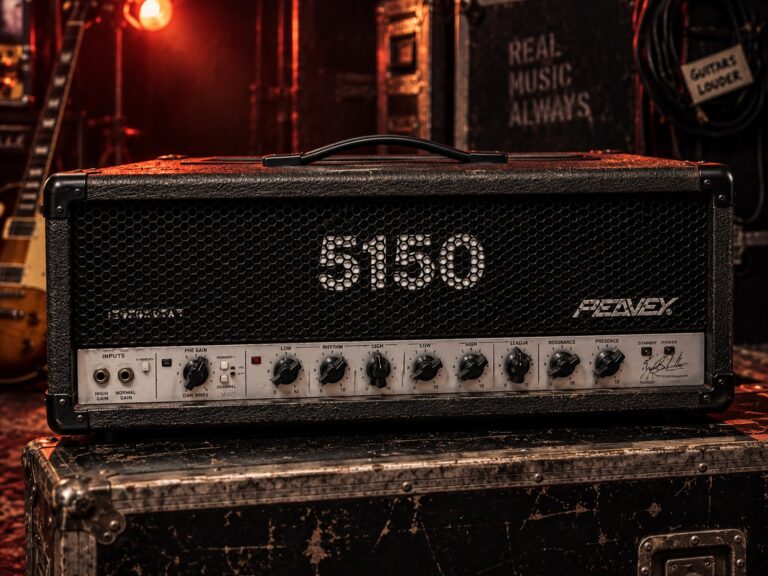
This was the main amplifier Devin used for the majority of his time with Strapping Young Lad all the way up to making the Alien record in 2004. As well as on other ‘in between’ projects such as the Synchestra album from the Devin Townsend Band. The 5150 is an iconic titan of the metal genre, providing that tight, heavy, and thick high gain rhythm sound that was the gold standard for musicians at that time. Devin would always drive this with some kind of overdrive pedal, normally the coveted Maxon OD808. The Peavey 5150 — Eddie Van Halen’s signature amplifier — was the specific heavy-metal gold standard of the 1990s and early 2000s, known for its extremely tight, articulate high-gain character that distinguished it from the Marshall JCM 800’s warmer, more harmonic character. For Strapping Young Lad’s specific sonic requirements — the mechanical precision of Gene Hoglan’s drumming required a guitar tone equally mechanical in its tightness — the 5150’s compressed, defined response was the correct tool.
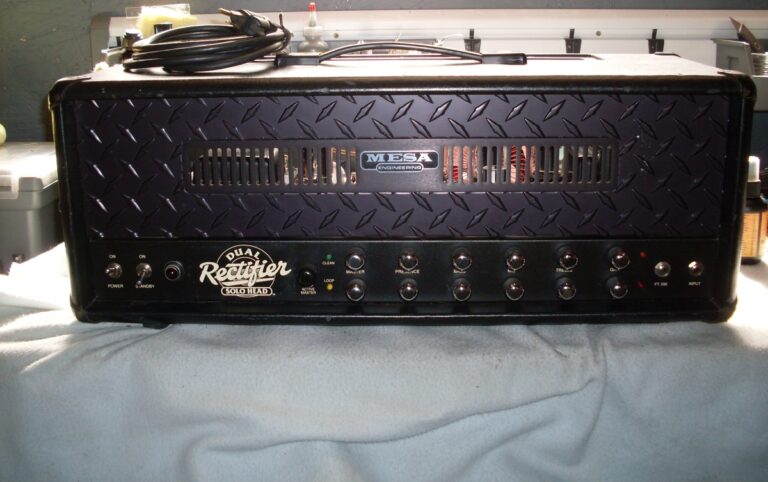
Devin started to use the Mesa Boogie Dual Rectifier around the recording of Alien. It would become a signature part of his sound and he’d continue using this amplifier for many years/albums to come. Even when amp modelers such as the Axe FX started to become a staple part of his rig he would generally still run the Mesa Boogie alongside the modelers. The Dual Rectifier — Mesa Boogie’s dual-mode (silicon or tube rectifier, adjustable) high-gain head — provides a warmer, more harmonically complex character than the 5150, suited for the more melodic, atmospheric passages of the Devin Townsend Project material alongside its high-gain capability for heavier passages.
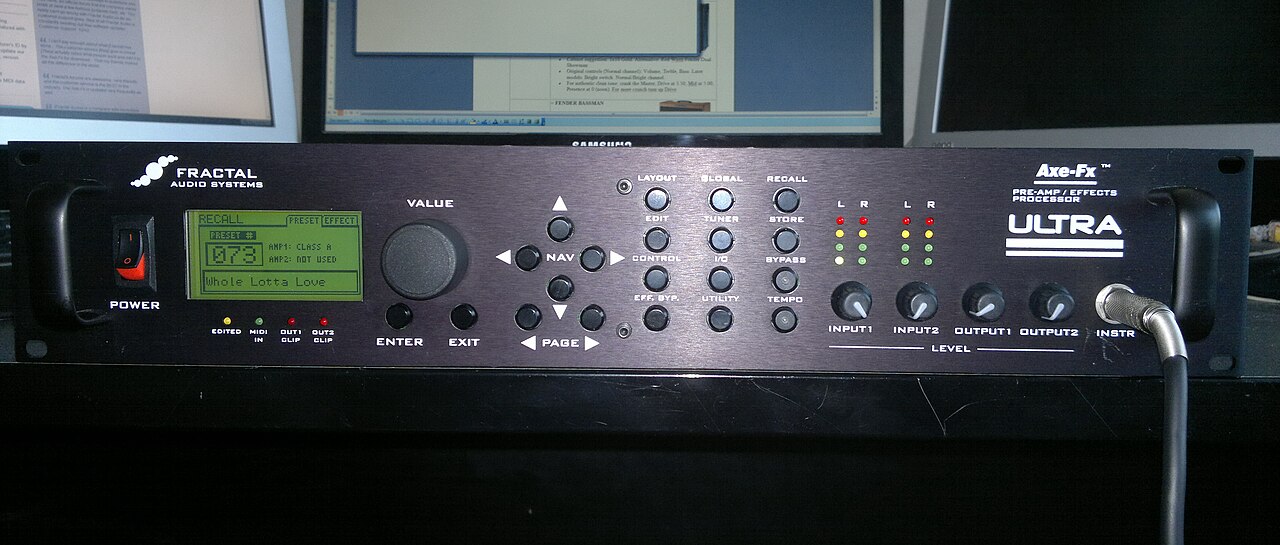
Equipboard: “I have got a very hodgepodge set-up currently that I am experimenting with and the centre of that is Fractal. And I have been using the Axe-Fx now for […] four years since the Ultra.” The Fractal Axe-FX — used since the Ultra model — provided the digital modeling alternative and supplement to his tube amps for both live and recording contexts. A Fractal FM3 appears in Equipboard’s documented quarantine concert setup.
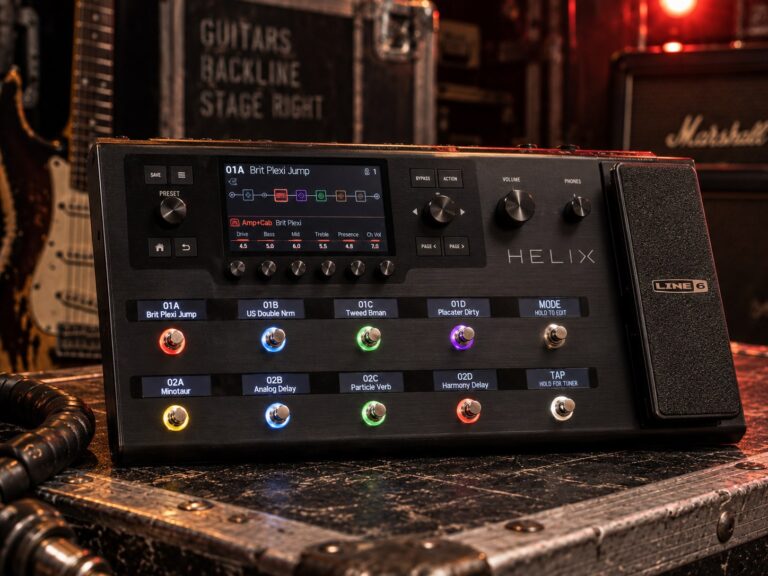
While diving deeper into the calming currents of ambient music, which he both listens to religiously and creates assiduously, Townsend has in recent years turned exclusively to the powerful sound engines in the Helix amp and effects processor as the foundation of his current live and recording setup. His Line 6 Helix adoption — moving exclusively to digital modeling — represents the specific pragmatic conclusion of his amplifier evolution: the Helix’s modeling quality has reached the point where it can reproduce the specific sounds of his Peavey 5150 and Mesa Dual Rectifier profiles with sufficient accuracy for live performance, with the additional benefits of reliability, weight reduction, and the ability to store hundreds of preset sounds for different songs.
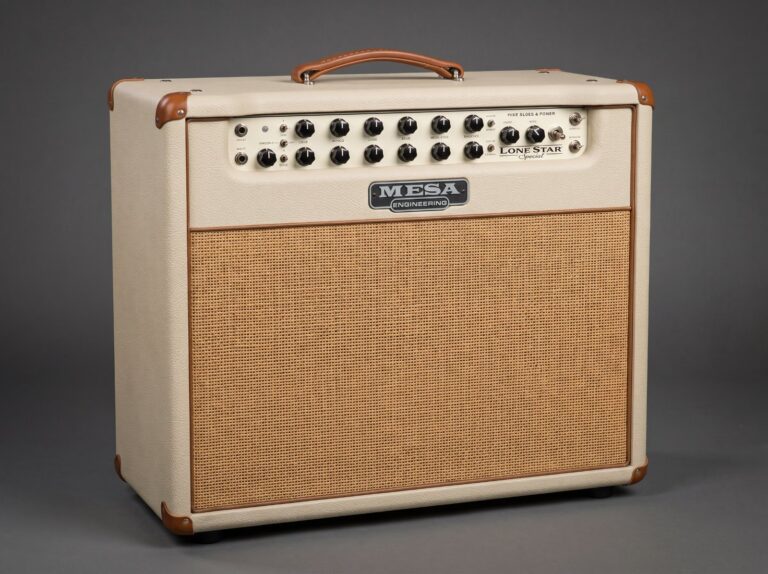
Equipboard: “As of 0:05 in this video, Devin’s gear, which includes a Mesa/Boogie Lone Star Special, can be seen.” The Mesa Lone Star Special — a cleaner, more vintage-voiced Mesa Boogie than the Dual Rectifier — documents his use of different amplifiers for different tonal contexts, the Lone Star providing the specific clean and light-crunch character for the softer, more ambient material of Ghost and Casualties of Cool.
Effects
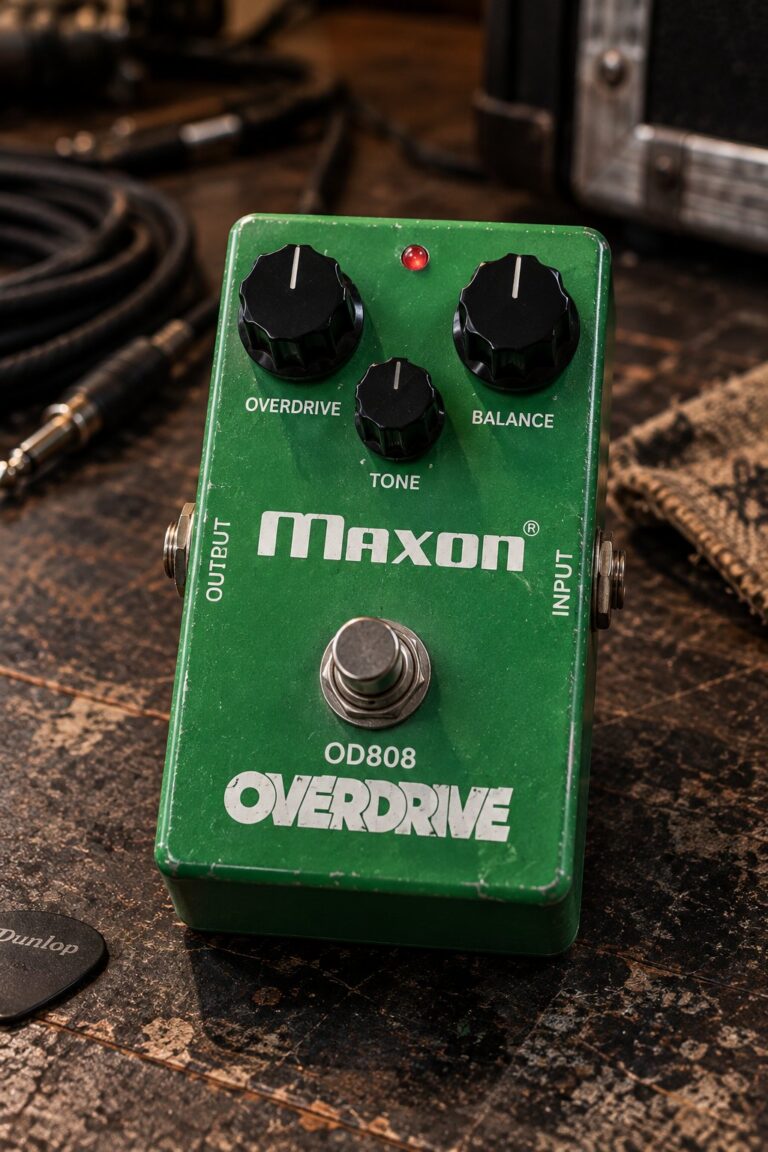
The Equipboard documentation captures Townsend’s own OD808 description: “A little green bastard that tightens it up and compresses it in a way that I personally think is really cool.” The Maxon OD808 — the original Japanese-made Tube Screamer circuit (Maxon manufactured the original Ibanez Tube Screamer before it was branded Ibanez) — is his primary drive boost, used before both the Peavey 5150 and Mesa Dual Rectifier to tighten the amp’s low-end response and add the specific midrange compression that the Tube Screamer circuit produces. This is the standard professional metal boost approach: a transparent midrange-boosting overdrive before a high-gain amplifier tightens and defines the amp’s response without significantly changing its fundamental character.
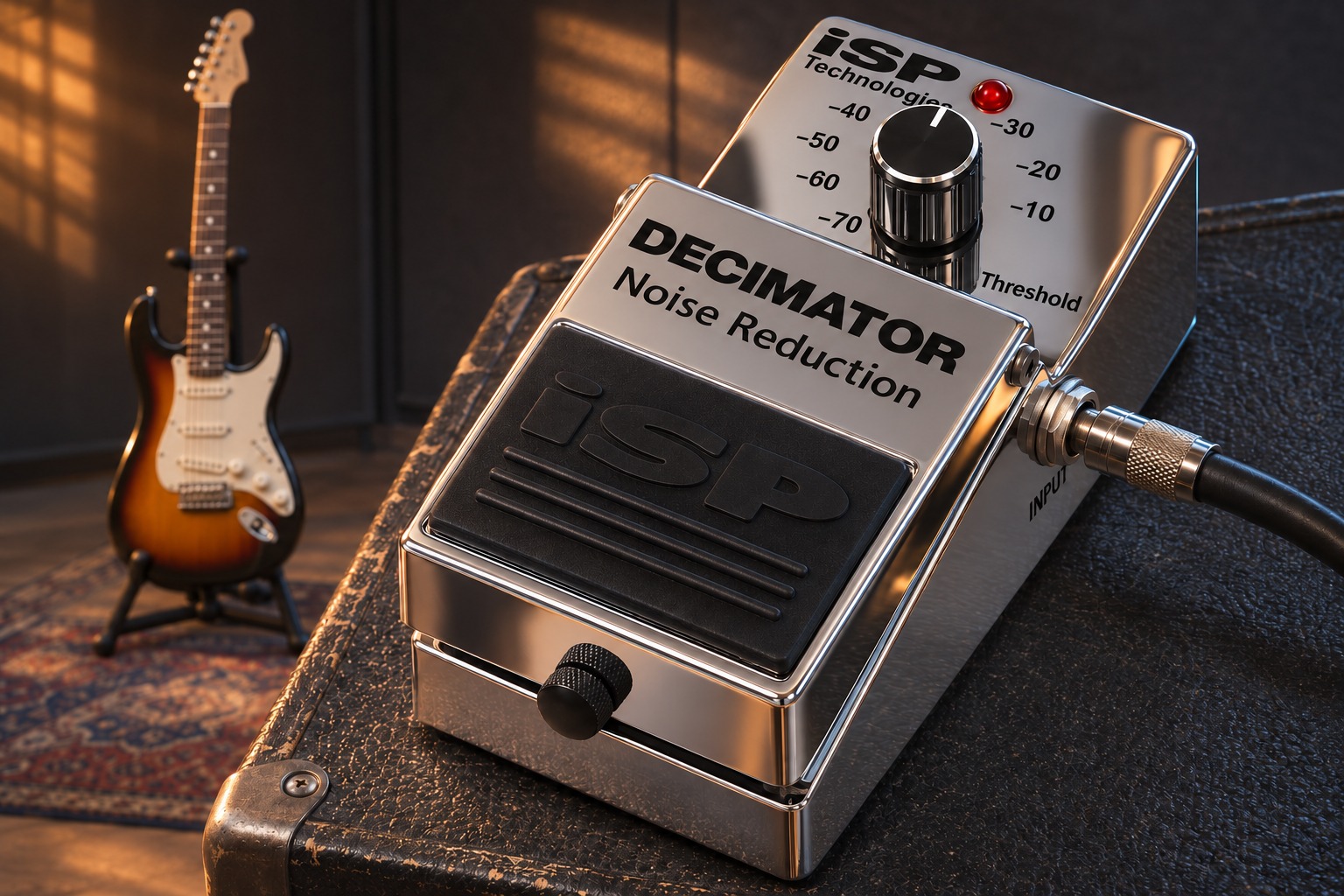
His own extensive Decimator story — going from mocking the pedal’s name to recognizing it as “the best noise gate ever” — is the most entertaining gear-discovery anecdote in this section. The ISP Technologies Decimator is a noise gate designed for extreme-gain guitar applications: it uses a specific “tracking” algorithm that follows the guitar signal’s dynamics and only applies gating when the signal falls below a threshold, preventing the unnatural “choking” effect of simpler noise gates. “But don’t fuck with it, because I will and have been known to turn it up past its threshold” — past its threshold, the Decimator gates even the played notes, creating the “vortex” of complete silence.
Equipboard: “You can find this effect on Devin’s board in this video, it is a Flashback Triple delay.” The TC Electronic Flashback Triple — TC’s delay pedal with multiple delay algorithms and the specific TonePrint feature allowing custom presets — provides delay effects for both the metal (rhythmic, synchronized delay) and ambient (atmospheric, reverberant delay) dimensions of his music.
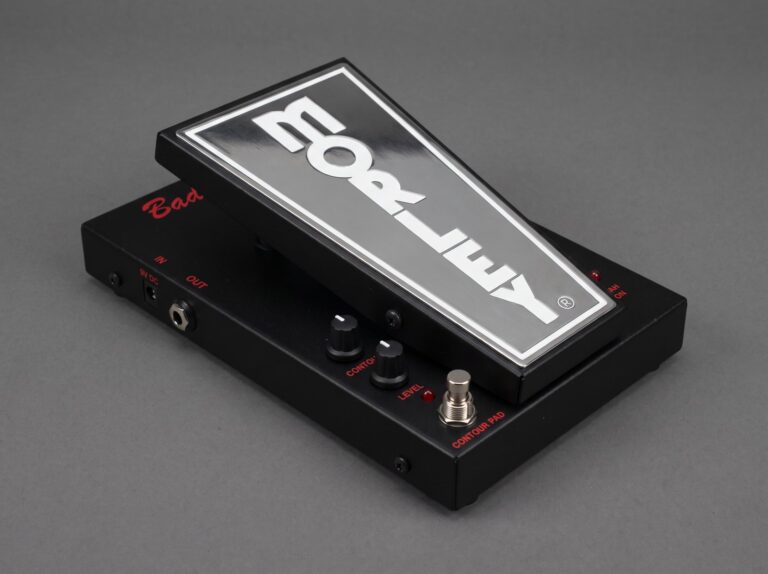
Equipboard: “In this video, Devin Townsend of Vai, Front Line Assembly, The Wild Hearts, and Strapping Young Lad talks about his effect units and other equipment, mentioning the Bad Horsie Wah pedal at 1:33.” The Morley Bad Horsie wah — documented for both Azagthoth and Townsend — likely reflects both guitarists’ connection to the Steve Vai world (the Bad Horsie is Vai’s signature wah, Townsend collaborated with Vai, and Azagthoth uses the same Morley wah).
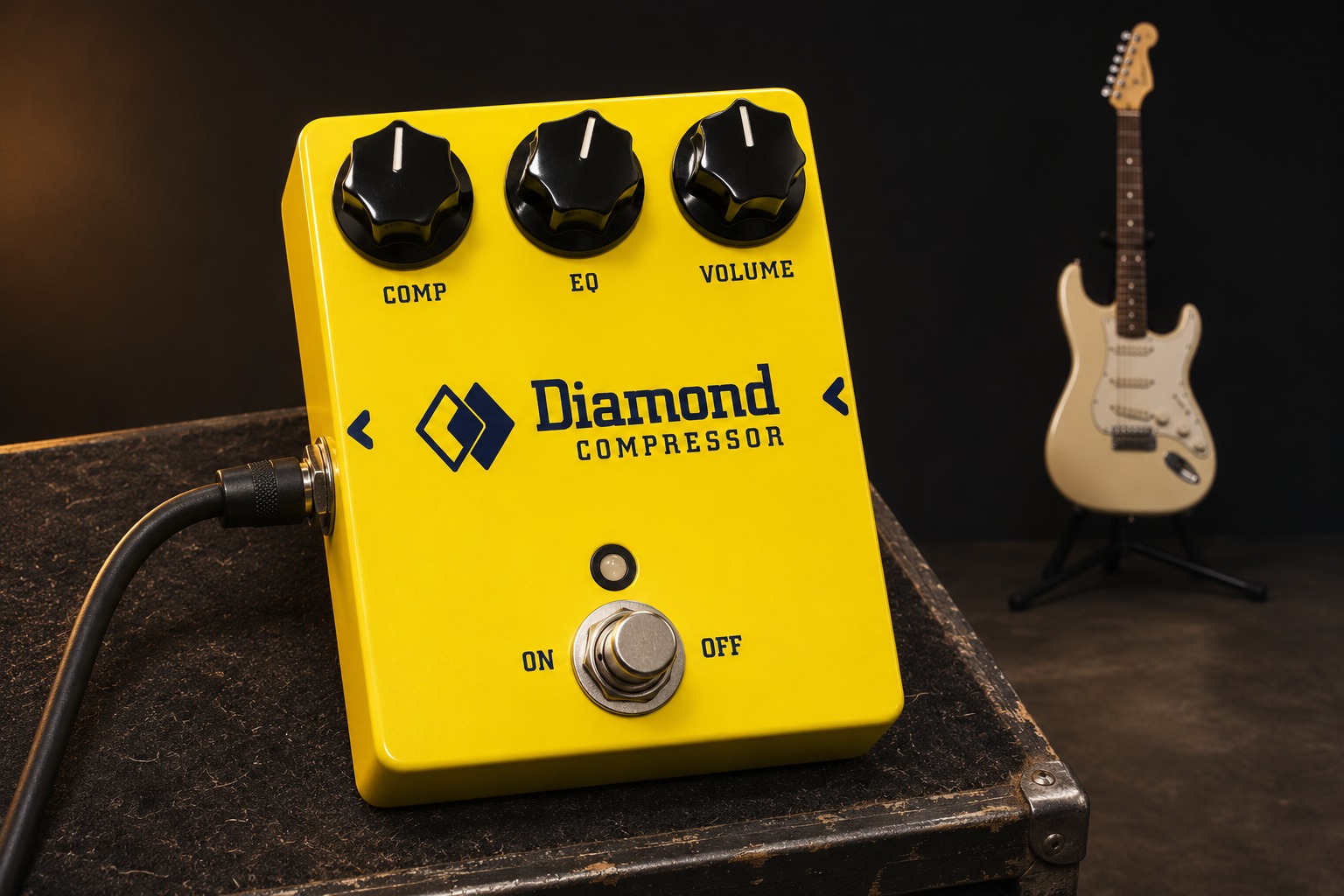
Equipboard: “Devin’s pedalboard, which features a Diamond CPR-1, can be seen in this video as of 0:31.” The Diamond CPR-1 is a boutique compressor with the specific optical compression character suited for the specific dynamic control of his playing.
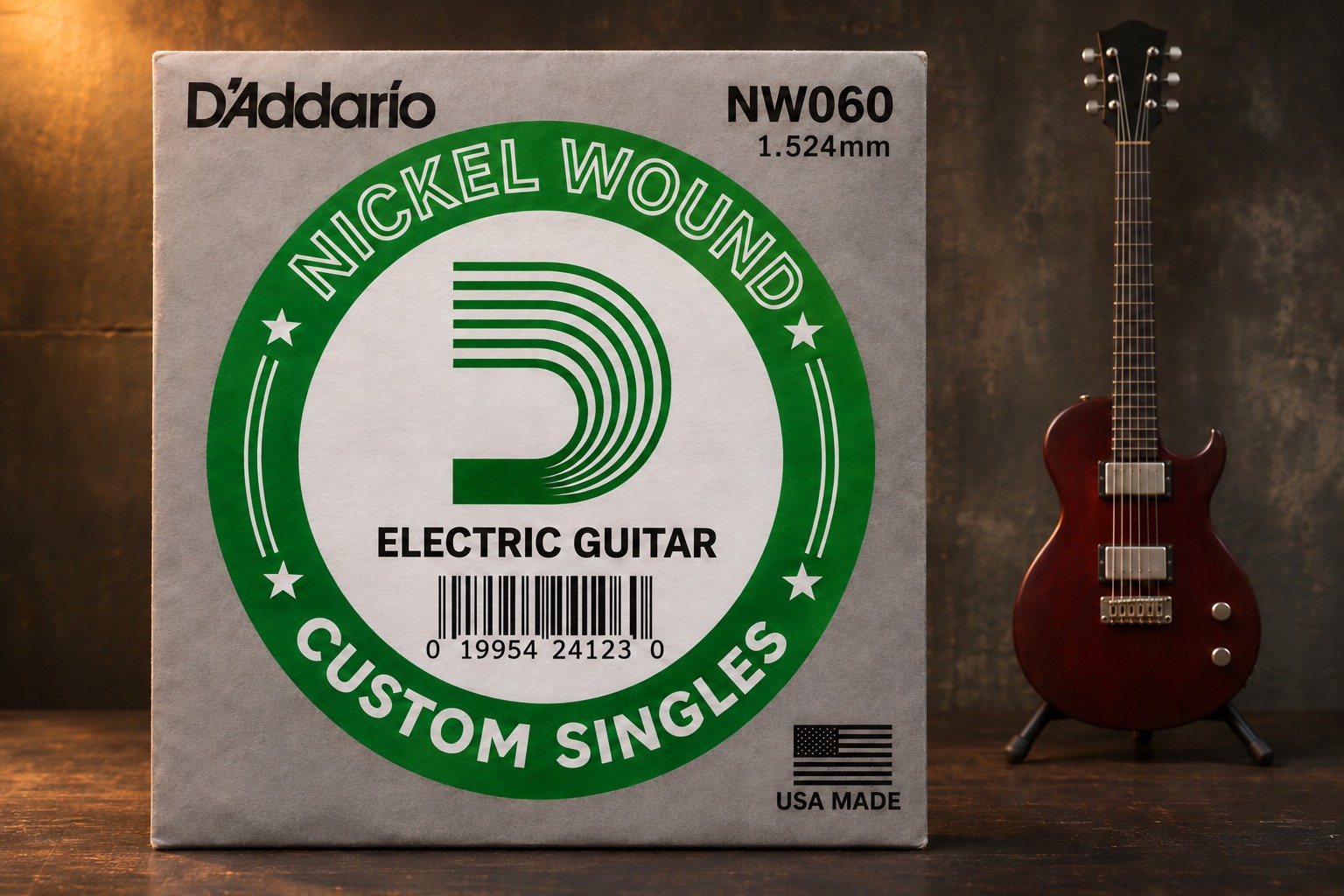
Equipboard: “Devin talks about the kind of strings he uses and points at the pack of D’Addario Nickel Wound .060, saying, ‘The first strings that I ever bought were actually D’Addario.'” A .060 gauge first string — even heavier than typical drop-tuning electric strings — combined with open C tuning represents the specific string tension choice for his foundational approach to the guitar.
Playing Style & Tone Philosophy
Devin Townsend’s playing style is the most production-informed in this section of the guide — the approach of a musician who is simultaneously the guitarist, vocalist, songwriter, engineer, and producer of his recordings. His guitar playing cannot be fully separated from his production approach: the specific tight, layered, harmonically dense guitar texture of the SYL and DTP recordings reflects his choices as a producer (the Peavey 5150 for tightness, the Mesa Dual Rectifier for warmth, the Maxon OD808 for compression) as much as his choices as a guitarist. His top 5 guitarists — Plotkin, Stevie Ray Vaughan, Beck, Hetfield, Vai — reflect the specific breadth of his musical range: the industrial extreme (Plotkin), the blues-emotional (SRV), the constant-evolution (Beck), the precision-rhythm (Hetfield), and the technical-compositional (Vai).
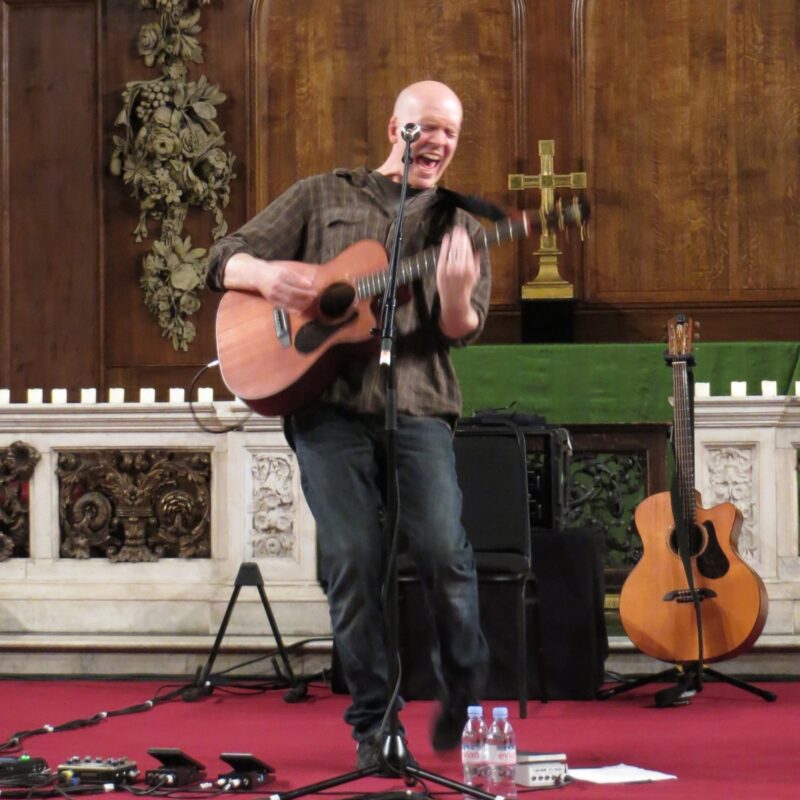
His tone philosophy has evolved in the most specific direction visible in this guide: from tube amplifiers (5150, Dual Rectifier) through hybrid tube/digital setups (Axe-FX plus real amps) to exclusive digital modeling (Helix). This evolution is not aesthetic capitulation but practical conclusion: the Helix’s modeling quality is sufficient for his musical requirements, and its practical advantages (reliability, portability, preset-based control) make it the correct current tool. The “little green bastard” OD808 is there for the Helix’s input, or within the Helix’s chain, maintaining the specific compression character it has always provided.
How to Sound Like Devin Townsend
Guitar: Framus Stormbender (or any guitar with active pickups — EMG 81 or Fishman Transcendence — and an Evertune bridge for tuning stability). Open C tuning (C-G-C-G-C-E from low to high). Heavy strings: .060 gauge or comparable for the low-tuned first string.
Amp (SYL/heavy period): Peavey 5150 (or equivalent high-gain tight head) with Maxon OD808 (“little green bastard”) before the input. Current: Line 6 Helix with profiled/modeled versions of the 5150 and Mesa Dual Rectifier.
Amp Settings (Peavey 5150 — Strapping Young Lad Heavy Tone):
| Control | Setting (0–10) | Notes |
|---|---|---|
| Lead Gain | 8–9 | High gain — the OD808 boost adds compression, not more gain |
| Bass | 5–6 | Controlled — open C tuning’s low fundamentals need definition |
| Mid | 4–5 | Slightly scooped — the 5150’s characteristic tight sound |
| Treble | 6–7 | Bright — attack definition for the mechanical precision of SYL riffs |
| Presence | 6 | Moderate — cuts through the dense SYL production |
Essential effects: Maxon OD808 (gain low, tone moderate, volume above unity — “little green bastard” boost before the amp). ISP Decimator noise gate (threshold set carefully, don’t turn it up past threshold or you’ll create a vortex). TC Electronic Flashback delay. Morley Bad Horsie wah. Diamond CPR-1 compressor.
Influence & Legacy
Devin Townsend’s influence on progressive metal and extreme metal production is the most production-informed in this guide — specifically as the musician who demonstrated that the most ambitious compositional and production approaches in metal (the layered vocal arrangements, the orchestral textures, the ambient dimensions) could coexist with the most extreme sonic aggression. His SYL recordings established a specific production aesthetic for extreme metal; his DTP recordings demonstrated that the same musician could operate at equal quality across the full range from extreme metal to ambient new age to theatrical art rock.
His connection to Trey Azagthoth as a fellow extreme metal guitarist who uses both the Morley Bad Horsie wah and an extensive effects processing approach reflects the shared context of 1990s-2000s extreme metal’s technical sophistication. His connection to Omar Rodriguez-Lopez as a fellow prolific progressive musician whose guitar work is inseparable from his production and compositional identity reflects the shared role of guitarist-as-architect. His connection to Matthew Bellamy as a fellow progressive musician who has made the transition from tube amplifiers to digital modeling (Kemper for Bellamy, Helix for Townsend) reflects the specific contemporary evolution of professional live guitar rigs.
Frequently Asked Questions: Devin Townsend Guitars & Gear
What guitar does Devin Townsend currently play?
Townsend’s current primary guitar is the Framus Stormbender signature — a German-made instrument equipped with Fishman Transcendence active pickups and an Evertune bridge for perfect tuning stability. He also plays the Framus Devin Townsend V (seen in the Royal Albert Hall performance). EMG 81 active humbuckers are installed in multiple previous guitars: “in my opinion, [it] is the best pickup for heavy music.” Previous primary instruments include the ESP M-II Deluxe (early SYL), Peavey PXD Vicious signature (2003), and various Ibanez RG models.
What amplifier does Devin Townsend use?
Current: Line 6 Helix exclusively — “in recent years turned exclusively to the powerful sound engines in the Helix.” Historical evolution: Peavey 5150 (primary for Strapping Young Lad, “gold standard for metal at that time”) → Mesa Boogie Dual Rectifier (from Alien album 2004 onward) → Fractal Axe-FX (hybrid with real amps, “four years since the Ultra”) → Line 6 Helix (current exclusive). Also documented: Mesa Boogie Lone Star Special for clean/ambient contexts.
What is the Maxon OD808 and why does Townsend use it?
“A little green bastard that tightens it up and compresses it in a way that I personally think is really cool.” The Maxon OD808 is the original Japanese-made Tube Screamer circuit — Maxon manufactured the original Ibanez Tube Screamer before it was branded Ibanez. Used as a boost before the Peavey 5150 and Mesa Dual Rectifier, the OD808’s midrange-boosting, compressive character tightens the amp’s low-end response and adds definition to extreme down-tuned playing. “Always drive this [the 5150] with some kind of overdrive pedal, normally the coveted Maxon OD808.”
What is Devin Townsend’s tuning?
Townsend’s primary tuning is Open C — C-G-C-G-C-E from low to high, forming an open C major chord. This foundational compositional choice shapes all his other gear decisions: the Evertune bridge for tuning stability at non-standard string tension, the active pickups for consistent output at lower string tension, and the specific heavy string gauges (.060 first string, D’Addario Nickel Wound) for the physical playability of lower-pitched strings.
What is the Decimator noise gate story?
“I remember we toured with a band years ago when I was with Strapping [Young Lad] and when this pedal first came out, we made fun of the guy relentlessly for having a Decimator. We thought it was the stupidest name for a pedal ever… So we made fun of him, then after a while I realised it was the best noise gate ever! So now I have a Decimator. But don’t fuck with it, because I will and have been known to turn it up past its threshold.” The ISP Technologies Decimator uses a tracking noise gate algorithm that is calibrated to extreme-gain guitar applications; past its threshold, it gates all signal including played notes.
What is Devin Townsend’s connection to Steve Vai?
Townsend was the lead vocalist on Steve Vai’s Sex & Religion album (1993) — described as a “fiery and almost feral-looking 21-year-old phenom.” This collaboration launched his professional career and provided his initial exposure to professional-level studio production. He later collaborated with Vai through the “Vai” project (Front Line Assembly collaboration). Steve Vai is among Townsend’s listed top 5 guitarists.
Why did Devin Townsend transition to the Line 6 Helix?
The transition from tube amplifiers through Fractal Axe-FX to exclusive Helix use reflects the specific practical evolution of his touring and recording requirements. The Helix’s modeling quality reached the point where it can reproduce his specific Peavey 5150 and Mesa Dual Rectifier sounds with sufficient accuracy for live performance, with the practical advantages of reliability, weight reduction, preset-based control, and the ability to store hundreds of different sounds for different songs and contexts. The transition is explicitly pragmatic: the tool that best serves the music is the correct tool, regardless of its analog or digital character.
Image credits
- D’Addario Nickel Wound .060 First String (Heaviest Standard Electric Gauge): GuitarGangsters AI-generated reference illustration, not a photograph.
- Diamond CPR-1 Compressor (Pedalboard, 0:31): GuitarGangsters AI-generated reference illustration, not a photograph.
- ISP Technologies Decimator Noise Gate ("Don’t Fuck with the Decimator: GuitarGangsters AI-generated reference illustration, not a photograph.
- Framus Stormbender Signature (Current Primary: GuitarGangsters AI-generated reference illustration, not a photograph.
- Fractal Audio Axe-Fx: appelsin, Wikimedia Commons, CC BY-SA 3.0.
- Top image: by P, Wikimedia Commons, CC BY-SA 3.0.
- Devin Townsend: photo by Robban Kanto on Flickr : https://www.flickr.com/photos/robbankanto/, via Wikimedia Commons, CC BY-SA 2.0.
- Devin Townsend: photo by Stephan Wolf, via Wikimedia Commons, CC BY-SA 4.0.
- Peavey 5150: GuitarGangsters AI-generated reference illustration, not a photograph.
- Mesa/Boogie Dual Rectifier: Roadside Guitars, Flickr, CC BY-SA 2.0.
- Line 6 Helix Floor: GuitarGangsters AI-generated reference illustration, not a photograph.
- Maxon OD808 Overdrive: GuitarGangsters AI-generated reference illustration, not a photograph.
- Devin Townsend live: P. Schwichtenberg, Wikimedia Commons, CC BY-SA 3.0.
- EMG 81 pickups: ZngZng, Wikimedia Commons, CC BY-SA 4.0.
- Mesa/Boogie Lone Star Special: GuitarGangsters AI-generated reference illustration, not a photograph.
- Morley Bad Horsie Wah: GuitarGangsters AI-generated reference illustration, not a photograph.