Michael Romeo (Symphony X) Guitars & Gear: The Complete Guide to the “Maestro’s” Caparison/ENGL Neoclassical Rig
Michael Romeo's guitars, amps, and effects — the complete guide. Caparison Dellinger II Michael Romeo Custom signature since 2005, Caparison Dellinger Prominence-MJR (Dellinger-M3 MJR) current, ESP M-II Deluxe EMG active, ENGL Fireball two live studio primary, ENGL SE E670 strictly recording, ENGL Powerball, Line 6 '8 different sounds I didn't want to bring 6 amps ridiculous', Mesa Boogie Triaxis Dual Rectifier, tapped arpeggios smooth legato alternate picking no shortcuts, New York New Jersey 1968, Symphony X 1994, Divine Wings Odyssey, Kiss Led Zeppelin Rush influences, and Maestro's complete neoclassical rig.
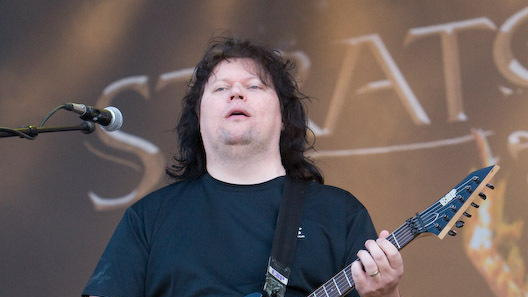
Photo by Llann We², licensed under CC BY-SA 3.0
“After hearing the album and using the ENGL, the things that I don’t like about all those amps is that you have your clean settings and your distorted settings and for us there’s always a million changes. I need this kind of tone for this, and that kind of tone for that… and with the Line 6, I would have like 8 different sounds for the songs we were doing. Then I didn’t really know what to do… I didn’t want to bring 6 amps out with me, that’s just ridiculous.” Michael Romeo said this about the specific practical amplification challenge of touring with Symphony X — a band whose music requires a level of tonal variety (orchestral clean passages, extreme distorted riffs, neoclassical lead tones, ambient textures) that a single high-gain amp or even two amps cannot address without a sophisticated switching system or a digital modeler. His solution — the Line 6 for live, with ENGL Fireball and ENGL SE E670 in the studio — reflects the specific pragmatism of a musician who will use whatever tools best serve the music, regardless of the “tube vs. digital” orthodoxy that governs many guitarists’ equipment decisions. MusicRadar: “Widely regarded as one of the world’s finest neoclassical players since original ’80s shredders like Yngwie Malmsteen and Jason Becker.” Guitar World ranked him #91 in the 100 Greatest Heavy Metal Guitarists of All Time. Symphony X Wiki characterizes the live Romeo as having “that Yngwie kind of ‘looks like he could be doing his taxes while playing guitar’ skill level, but without the smugness.” “The Maestro.” His Caparison Dellinger II — introduced to him by Henrik Danhage of Evergrey — became his primary instrument from 2005 onward. He is fifty-seven years old. The Dungeon (Symphony X’s studio) continues. The neoclassical arpeggio runs continue. The Line 6 provides the 8 different sounds he needs.
The Journey
Michael James Romeo was born on March 6, 1968, in New York, and grew up in New Jersey. He began formal music training with piano lessons at age ten, also playing clarinet. It was after hearing his first Kiss album that he seriously considered switching to guitar; he purchased a cheap acoustic guitar at a garage sale. Guitar Messenger: “Influenced by Kiss, Led Zeppelin, Rush, AC/DC, Black Sabbath, Iron Maiden, Deep Purple, and Emerson, Lake & Palmer, he became serious about the guitar after listening to the albums Blizzard of Ozz and Diary of a Madman by Ozzy Osbourne.” He formed Symphony X in New Jersey in 1994, and the band has remained active since, with Romeo as the sole constant guitarist across their entire discography. His most celebrated compositions include the Divine Wings of Tragedy album (1997) and The Odyssey (2002). He is fifty-seven years old. Symphony X continues.
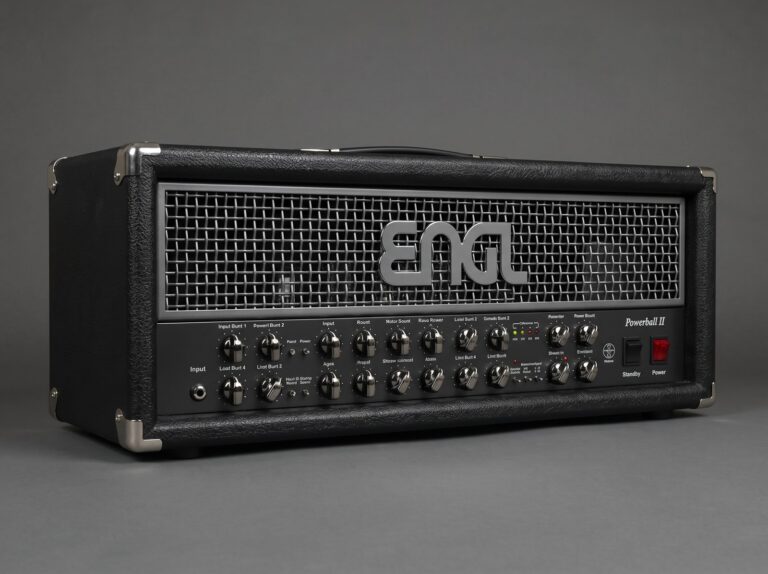
Background: New York New Jersey, Piano at 10, Clarinet, KISS Album → Garage Sale Acoustic, Blizzard of Ozz, Symphony X New Jersey 1994, Divine Wings of Tragedy Odyssey, The Dungeon Studio, “Looks Like Doing Taxes While Playing Guitar”
Romeo’s specific formation — the classical piano training at age ten, the clarinet, and then the specific impact of hearing KISS — is the characteristic progressive metal guitarist’s origin story: classical training that provides harmonic and theoretical foundation, combined with the rock/metal inspiration that provides the emotional and energy framework. The specific KISS impact (the theatrical power-rock approach, the hook-driven songwriting) combined with the specific Ozzy Osbourne impact (Blizzard of Ozz, featuring Randy Rhoads’s neoclassical lead guitar) and the prog-rock impact (Rush’s compositional ambition, ELP’s keyboard-guitar interaction) produced the specific Symphony X synthesis: theatrical heaviness with orchestral sophistication and neoclassical lead guitar vocabulary.
His Equipboard quote about the specific challenge of living with multiple tonal requirements: “I need this kind of tone for this, and that kind of tone for that… and with the Line 6, I would have like 8 different sounds for the songs we were doing.” This is the specific challenge of progressive metal live performance that distinguishes it from simpler heavy metal contexts: a single-song set within Symphony X’s catalog might require clean acoustic-ish tones for an intro, extreme high-gain for the main riff, a specific slightly-driven tone for a middle section, and a specific lead tone for the solo — all within the same song, requiring instant switching between entirely different amp voicings. The Line 6’s specific ability to store 8 different presets (accessed via footswitch in live performance) addresses this in a way that tube amps cannot without elaborate switching systems.
The “Dungeon” — Symphony X’s recording studio — is the specific creative location where the band’s recordings are made. Consistent with the progressive metal tradition of meticulous studio work (Dream Theater’s Sanctuary Sound Studio II, Spock’s Beard’s home studio), Symphony X’s studio work reflects a level of compositional and production detail that requires a dedicated space.
The Rig: Michael Romeo’s Guitars, Amps, and Effects
Guitars
Michael Romeo’s primary guitar since 2005 is the Caparison Dellinger II — Michael Romeo Custom. The Symphony X Wiki documentation: “Since 2005, Romeo has taken advantage of a new custom model, Caparison Dellinger II – Michael Romeo Custom, which he used to record the Symphony X album Paradise Lost. Romeo was introduced to Caparison by Henrik Danhage of Evergrey.” Caparison Guitars is a Japanese guitar manufacturer (founded in 1995) known for their exceptional build quality and specific neck profiles — the Dellinger model featuring a double-cutaway, superstrat-style body. The Michael Romeo Custom incorporates his specific requirements: typically 24 frets, locking tremolo, and pickup configuration suited to his specific tonal needs. MusicRadar: “it was very much a case of business as usual for Romeo – who has stuck with Caparison guitars and Engl guitar amps for a large portion of his career.”
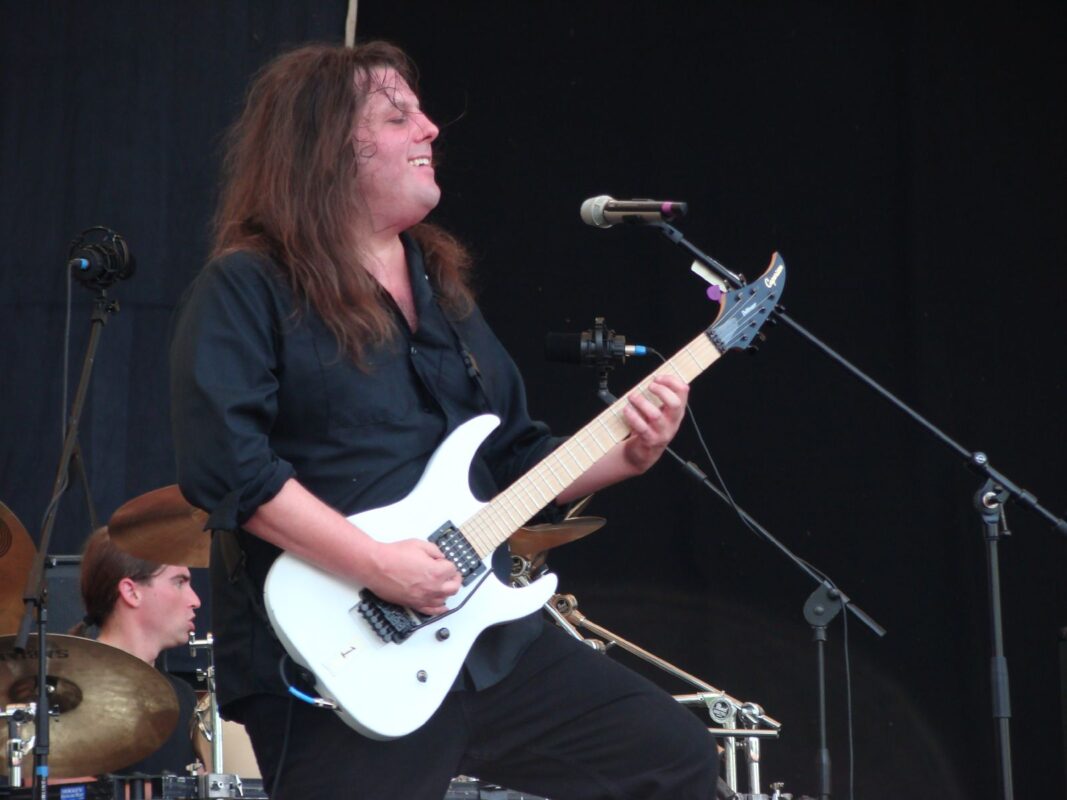
The Gemtracks documentation: “The Caparison Dellinger-M3 MJR is a guitar model produced by Caparison Guitars… The Caparison Dellinger-M3 MJR was first introduced as a signature model for Michael Romeo.” The M3 MJR — the updated Caparison signature with a mahogany-and-maple M3 body, maple neck, and DiMarzio Tone Zone (neck) and X2N (bridge) humbucking pickups (high-output, tight and aggressive) — is his current primary instrument, succeeding the Dellinger II Custom. Caparison now sells it as the Dellinger Prominence-MJR (announced in December 2017), whose neck is a five-piece maple and walnut construction.
The Symphony X Wiki documentation: “Throughout his career, Romeo has also used ESP M-II Deluxe guitars with EMG Active pickups and Fender Stratocasters to perform and record other albums from the band.” The ESP M-II Deluxe — ESP’s flagship superstrat body design — with EMG 81/85 active humbuckers (the same pickups documented for multiple guitarists throughout this guide) was Romeo’s primary instrument for the early Symphony X period before the Caparison relationship began. The ESP M-II’s specific character: a thin, aggressive alder or basswood body with the ESP neck profile, EMG active humbuckers providing the tight, defined high-output character.
The Symphony X Wiki documentation also lists Fender Stratocasters for “other albums from the band” — the single-coil Strat character used for specific studio applications where the Caparison’s or ESP’s humbucker character is not appropriate. The Strat’s clean, bright single-coil tone appears in specific Symphony X passages that require a different tonal register from the primary high-output humbucker sound.
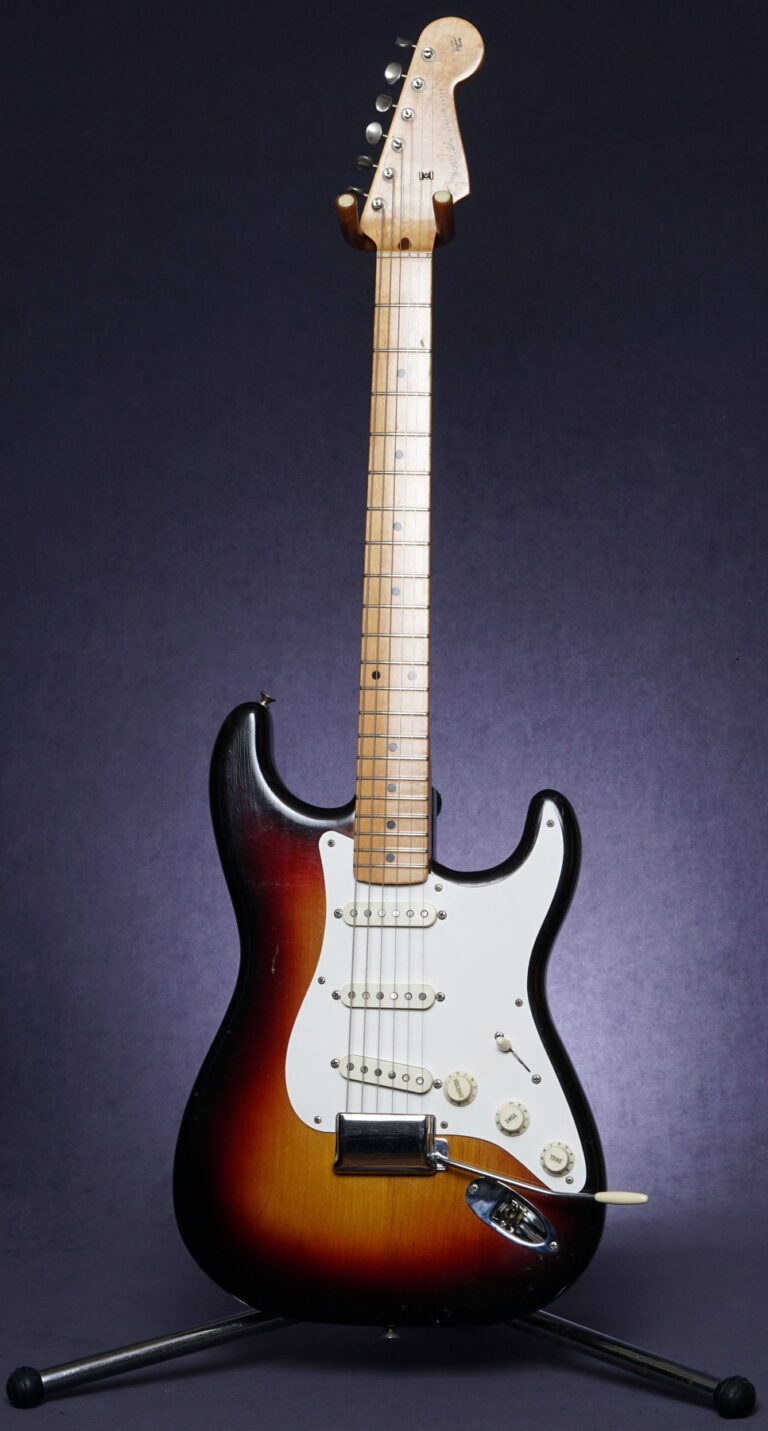
Symphony X Wiki: “He ended up purchasing a cheap acoustic guitar at a garage sale.” The specific origin of one of progressive metal’s most technically accomplished guitarists: a cheap garage-sale acoustic, after hearing KISS convince him to take up guitar. The most specific contrast between origin and achievement in this section of the guide.
Amps
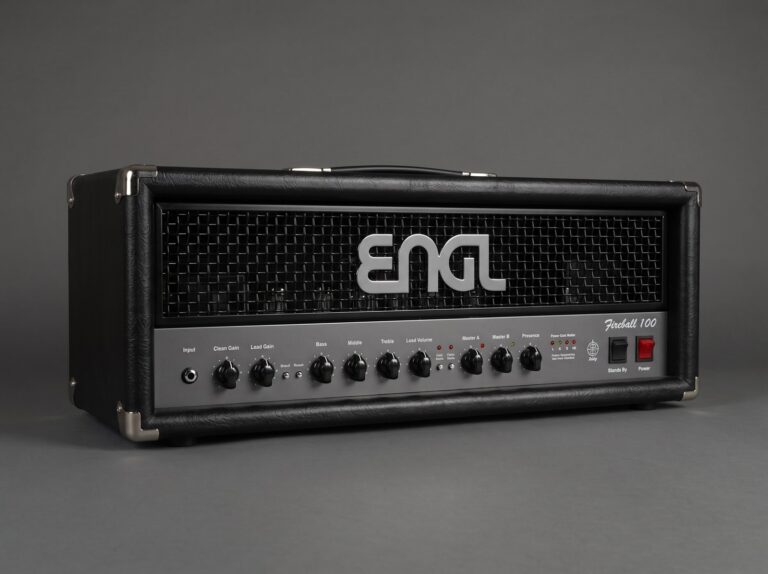
The Equipboard documentation: “In the YouTube video ‘GEAR GODS RIGGED – Symphony X’ by Trey Xavier, Michael Romeo is shown using two Engl Fireball 100-Watt Tube Guitar Amp Heads.” The ENGL Fireball — ENGL’s single-channel, 100-watt high-gain head — is his primary amplification for both live and studio contexts where tube amplification is used. Symphony X Wiki: “In terms of amplification in the studio, he uses an ENGL Fireball.” His own description of the ENGL’s character: MusicRadar confirms “there was no need for any extra drive for his rhythm sounds, he adds, given how much the amp already has on tap.” The ENGL Fireball’s specific character — extremely high-gain, tight, precise, with minimal mid-scoop — provides the specific defined, articulate high-gain tone that Romeo’s complex chord voicings and neoclassical lead lines require.
Symphony X Wiki: “a recently acquired Engl SE E670 that is used strictly for recording purposes.” The ENGL SE E670 — a high-end ENGL with additional spectral response and recording-optimized features — supplements the Fireball for specific studio applications. Its recording-only designation reflects the specific tonal difference between the Fireball’s live touring character and the E670’s more refined recording quality.
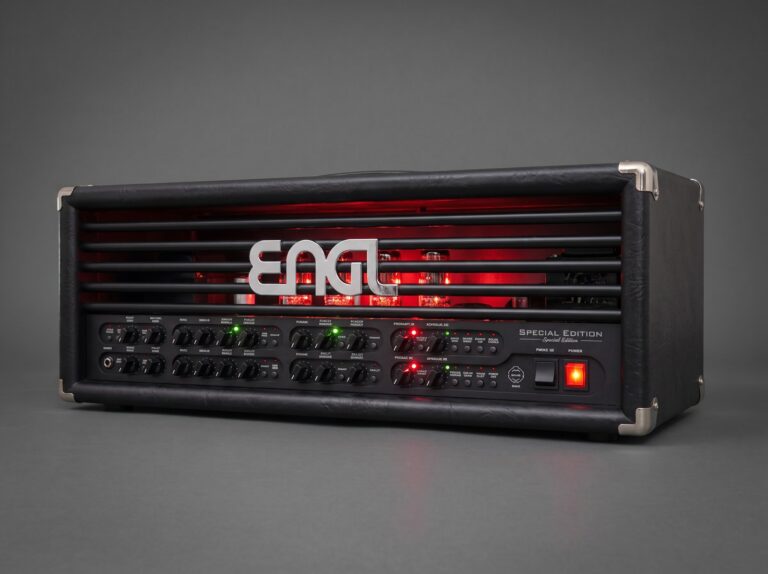
Symphony X Wiki: “Live, Romeo makes use of both the Engl Fireball and Powerball models.” The ENGL Powerball — the same amplifier documented for Kai Hansen — appears alongside the Fireball in the live setup, providing a second ENGL character for specific tonal switching requirements.
His own Equipboard quote explains the Line 6 adoption: “with the Line 6, I would have like 8 different sounds for the songs we were doing. Then I didn’t really know what to do… I didn’t want to bring 6 amps out with me, that’s just ridiculous.” The Line 6 digital modeling system — providing multiple amp simulations and effects within a single unit — addresses the specific Symphony X tonal variety requirement that tube amps cannot address without impractical numbers of heads and cabinets. Symphony X Wiki: “Live, Romeo makes use of both the Engl Fireball and Powerball models as well as various Line 6 (company) models.” Both approaches are used in different contexts.
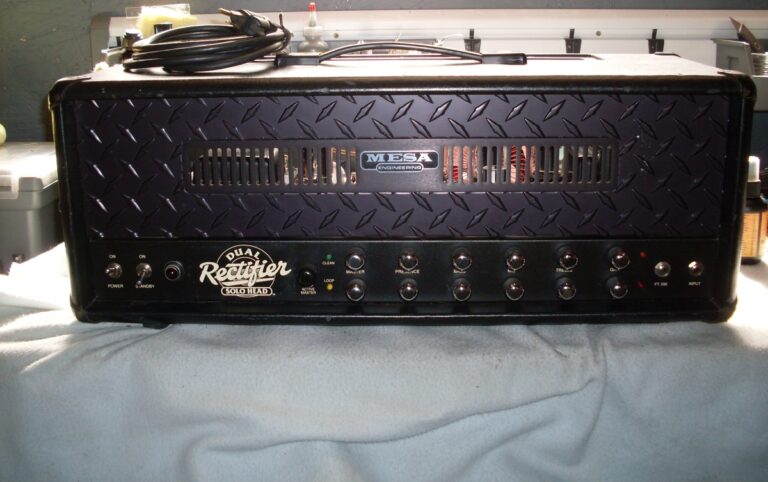
Symphony X Wiki: “He has also been known to use a Mesa Boogie Triaxis and Mesa Boogie Dual Rectifier for recording.” The Mesa Boogie Triaxis (the programmable tube preamp) and Dual Rectifier (the high-gain head) appear in the historical recording documentation, suggesting their use on specific earlier Symphony X albums before the primary ENGL relationship was established.
Effects and Approach
Tapped Arpeggios (Primary Technical “Effect” — Signature Technique): The Guitar Messenger characterization: “Romeo is known for his incredible technique with his own brand of tapped arpeggios, smooth legato phrasing, and lightning fast alternate picking.” Tapped arpeggios — using two-handed tapping to sweep through arpeggio patterns at speeds not achievable with standard alternate picking — are the foundational technical feature of his neoclassical lead approach. The specific Caparison neck profile and fret material are chosen partly for their suitability to this specific tapping approach.
No Extra Drive for Rhythm (ENGL as Complete Rhythm Gain Source): MusicRadar: “there was no need for any extra drive for his rhythm sounds, he adds, given how much the amp already has on tap.” The ENGL Fireball’s specific gain level is sufficient for his rhythm guitar requirements without additional boost or drive pedals — a simpler approach than the boost-before-amp methodology documented for many other metal guitarists in this guide.
Classical and Orchestral Harmonic Language (Compositional “Effect”): Guitar World’s characterization: “pyrotechnic displays.” Symphony X Wiki: “blending sounds of classical composition and progressive heavy metal.” The most important “effect” in Romeo’s playing is the harmonic language itself — the specific use of diminished and augmented chord arpeggios, the Phrygian dominant scale application (the “neoclassical” scale most associated with the Malmsteen/Rhoads/Romeo tradition), and the specific contrapuntal voice-leading of complex Symphony X compositions. These compositional elements are the specific features that distinguish progressive metal from straightforward heavy metal.
Playing Style & Tone Philosophy
Michael Romeo’s playing style is the most formally sophisticated in the progressive metal context — the approach of a musician whose piano and clarinet training gave him a specific harmonic and melodic vocabulary before he ever picked up a guitar, and who subsequently applied that vocabulary to the guitar’s specific technical possibilities (tapping, alternate picking, legato). Guitar Messenger: “Romeo is known for his incredible technique with his own brand of tapped arpeggios, smooth legato phrasing, and lightning fast alternate picking. At the same time, his playing exhibits tasteful inflections and a strong sense of melody.” The “tasteful inflections and strong sense of melody” alongside the “lightning fast” technique is the specific balance that distinguishes his approach from pure shred.
His tone philosophy is the pragmatic philosophy: Caparison for the primary guitar character, ENGL Fireball for the studio and tube-amp live character, Line 6 for the live tonal variety that tube amps cannot practically provide. MusicRadar: “it was very much a case of business as usual for Romeo — who has stuck with Caparison guitars and Engl guitar amps for a large portion of his career.” Consistency in primary equipment, pragmatism in addressing specific practical requirements (the Line 6 for live multi-tone needs). “Keep speeding up those patterns you’re working on. That’s the way to build up speed… there are no shortcuts.”
How to Sound Like Michael Romeo
Guitar: Caparison Dellinger II MJR signature (or Dellinger-M3 MJR current model) — mahogany/maple M3 body, DiMarzio Tone Zone and X2N high-output humbuckers, 24 frets. ESP M-II Deluxe with EMG 81 for the historical character. The maple fingerboard of the Caparison provides the specific smooth surface for tapped arpeggios.
Amp: ENGL Fireball 100W (studio and tube-amp live), ENGL Powerball (secondary live), Line 6 for the multi-preset live requirement. Mesa Boogie Dual Rectifier for specific recording applications.
Amp Settings (ENGL Fireball — Symphony X Neoclassical Metal):
| Control | Setting (0–10) | Notes |
|---|---|---|
| Gain | 7–8 | High — “no need for any extra drive, given how much the amp already has on tap” |
| Bass | 5–6 | Present — the Caparison’s mahogany-and-maple body needs balanced low-end |
| Mid | 6 | Moderate — ENGL Fireball is naturally tight without scooping |
| Treble | 6–7 | Bright — tapped arpeggios need treble definition |
| Presence | 5–6 | Natural — projects the neoclassical runs clearly |
Essential approach: Tapped arpeggios (two-handed: fret the root and fifth with the picking hand, tap the octave and third with the fretting hand’s index finger for diminished/augmented arpeggio patterns). Alternate picking built to extreme speed through gradual increase — “Keep speeding up those patterns you’re working on. That’s the way to build up speed… there are no shortcuts.” Harmonic language: Phrygian dominant scale (Spanish/flamenco character applied to neoclassical metal), diminished seventh arpeggios, harmonic minor scale for the specific neoclassical minor character. No shortcuts.
Influence & Legacy
Michael Romeo’s influence on progressive metal and neoclassical metal guitar is the most comprehensive of his generation — specifically as the guitarist who demonstrated that the Malmsteen/Rhoads neoclassical tradition could be extended into the more compositionally ambitious progressive metal context. Guitar Messenger: “one of the world’s finest neoclassical players since original ’80s shredders like Yngwie Malmsteen and Jason Becker.” His influence on Herman Li of DragonForce (who listed Romeo among his Top 10 favorite guitarists) documents the direct generational influence.
His connection to Jeff Waters as a fellow technical metal guitarist — Waters in the thrash tradition, Romeo in the progressive/neoclassical tradition — reflects the shared technical foundation. His connection to Kai Hansen as a fellow guitarist who uses harmonized guitar as a primary compositional approach in a progressive heavy metal context reflects the shared compositional technique. His connection to Matthew Bellamy as a fellow progressive rock/metal guitarist who similarly synthesizes classical training (Bellamy’s piano, Romeo’s piano) with heavy rock guitar reflects the shared formal musical background applied to rock context.
Frequently Asked Questions: Michael Romeo Symphony X Guitars & Gear
What guitar does Michael Romeo use?
Since 2005, Romeo’s primary guitar has been the Caparison Dellinger II — Michael Romeo Custom, introduced to him by Henrik Danhage of Evergrey and used to record Paradise Lost. His current model is the Caparison Dellinger-M3 MJR, now sold as the Dellinger Prominence-MJR (mahogany-and-maple M3 body, maple neck, DiMarzio Tone Zone and X2N humbucking pickups). Previous primary: ESP M-II Deluxe with EMG Active pickups (early Symphony X period). He also uses Fender Stratocasters for specific studio applications. MusicRadar: “it was very much a case of business as usual for Romeo — who has stuck with Caparison guitars and Engl guitar amps for a large portion of his career.”
What amplifier does Michael Romeo use?
Studio: ENGL Fireball (primary), ENGL SE E670 (“strictly for recording purposes”). Live: ENGL Fireball (two units, documented in Gear Gods Rigged), ENGL Powerball, and Line 6 models for the tonal variety requirement — “with the Line 6, I would have like 8 different sounds for the songs we were doing. Then I didn’t really know what to do… I didn’t want to bring 6 amps out with me, that’s just ridiculous.” Historical: Mesa Boogie Triaxis and Dual Rectifier for recording.
What is the tapped arpeggio technique?
Guitar Messenger: “Romeo is known for his incredible technique with his own brand of tapped arpeggios, smooth legato phrasing, and lightning fast alternate picking.” Tapped arpeggios involve two-handed fretboard tapping to sweep through arpeggio patterns at speeds not achievable with standard picking — typically fret the lower notes with the picking hand while the fretting hand’s index or middle finger taps the higher notes, creating rapid ascending or descending arpeggio patterns. Applied to diminished, augmented, and harmonic minor arpeggios, this technique is the foundational feature of Romeo’s neoclassical lead approach.
Why does Michael Romeo use Line 6 live?
His own explanation: “After hearing the album and using the ENGL, the things that I don’t like about all those amps is that you have your clean settings and your distorted settings and for us there’s always a million changes. I need this kind of tone for this, and that kind of tone for that… and with the Line 6, I would have like 8 different sounds for the songs we were doing. Then I didn’t really know what to do… I didn’t want to bring 6 amps out with me, that’s just ridiculous.” Symphony X’s compositional complexity requires multiple distinct tonal profiles within a single set — the Line 6’s preset system addresses this practically where multiple tube amps cannot.
What are Michael Romeo’s guitar influences?
Symphony X Wiki: “Influenced by Kiss, Led Zeppelin, Rush, AC/DC, Black Sabbath, Iron Maiden, Deep Purple, and Emerson, Lake & Palmer, he became serious about the guitar after listening to the albums Blizzard of Ozz and Diary of a Madman by Ozzy Osbourne.” MusicRadar: “Widely regarded as one of the world’s finest neoclassical players since original ’80s shredders like Yngwie Malmsteen and Jason Becker.” He started on piano at age ten, also played clarinet, and began guitar after hearing KISS — the classical training providing the harmonic foundation for his neoclassical approach.
How did Michael Romeo’s classical training shape his guitar playing?
Romeo began piano lessons at age ten and also played clarinet before taking up guitar. His formal classical training gave him a specific harmonic and theoretical vocabulary — the understanding of counterpoint, voice leading, and harmonic function — before he encountered the guitar. This foundation explains why Symphony X’s compositions integrate classical structures (fugue-like counterpoint, orchestral harmonic language) with heavy metal energy, and why Romeo’s lead guitar uses diminished and augmented harmonies that are not part of the standard blues-based rock vocabulary.
Has Michael Romeo influenced other guitarists?
Yes. Symphony X Wiki: “Romeo’s own influence has rubbed off on younger players, including DragonForce’s Herman Li, who listed Romeo among his Top 10 favorite guitarists in 2011.” His specific contribution to the neoclassical metal tradition — extending the Malmsteen/Rhoads approach into the more compositionally complex progressive metal context — influenced the generation of technical metal guitarists who emerged in the 2000s. Guitar World ranked him #91 in the 100 Greatest Heavy Metal Guitarists of All Time.
Image credits
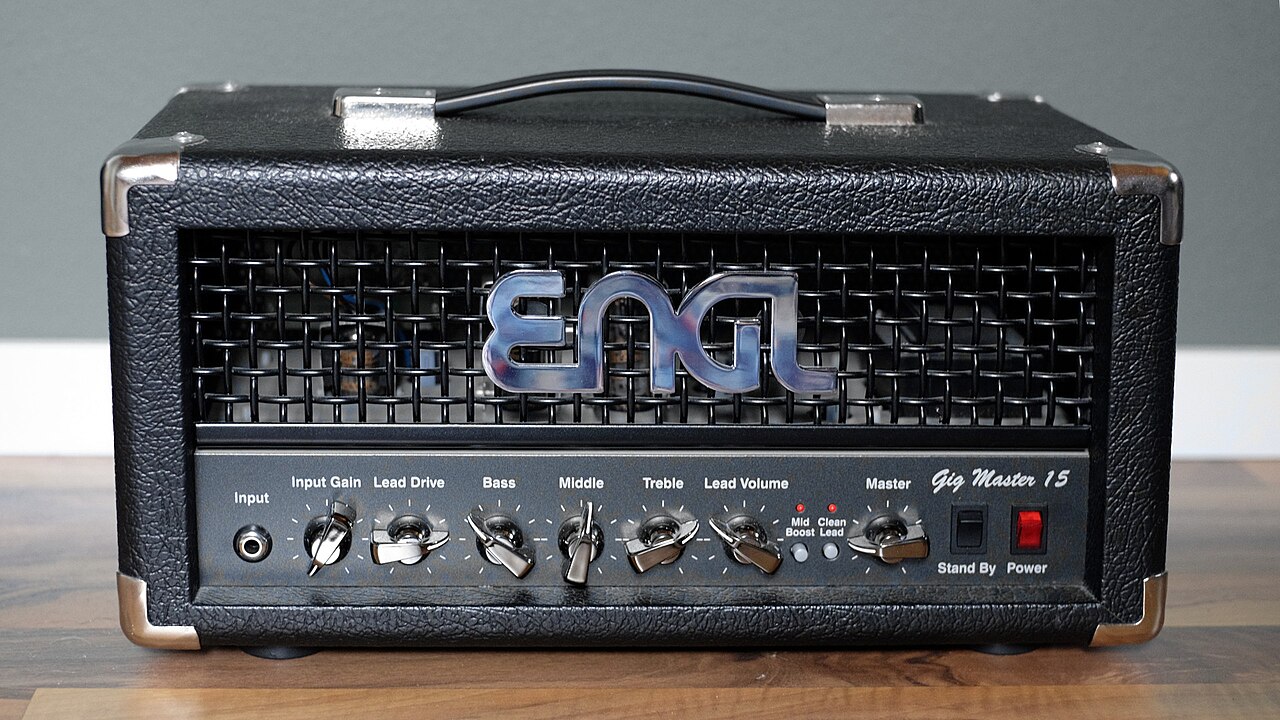
- An ENGL Gigmaster amp head: Dirk-X, Wikimedia Commons, CC BY-SA 4.0.
- Top image: by Llann We², CC BY-SA 3.0.
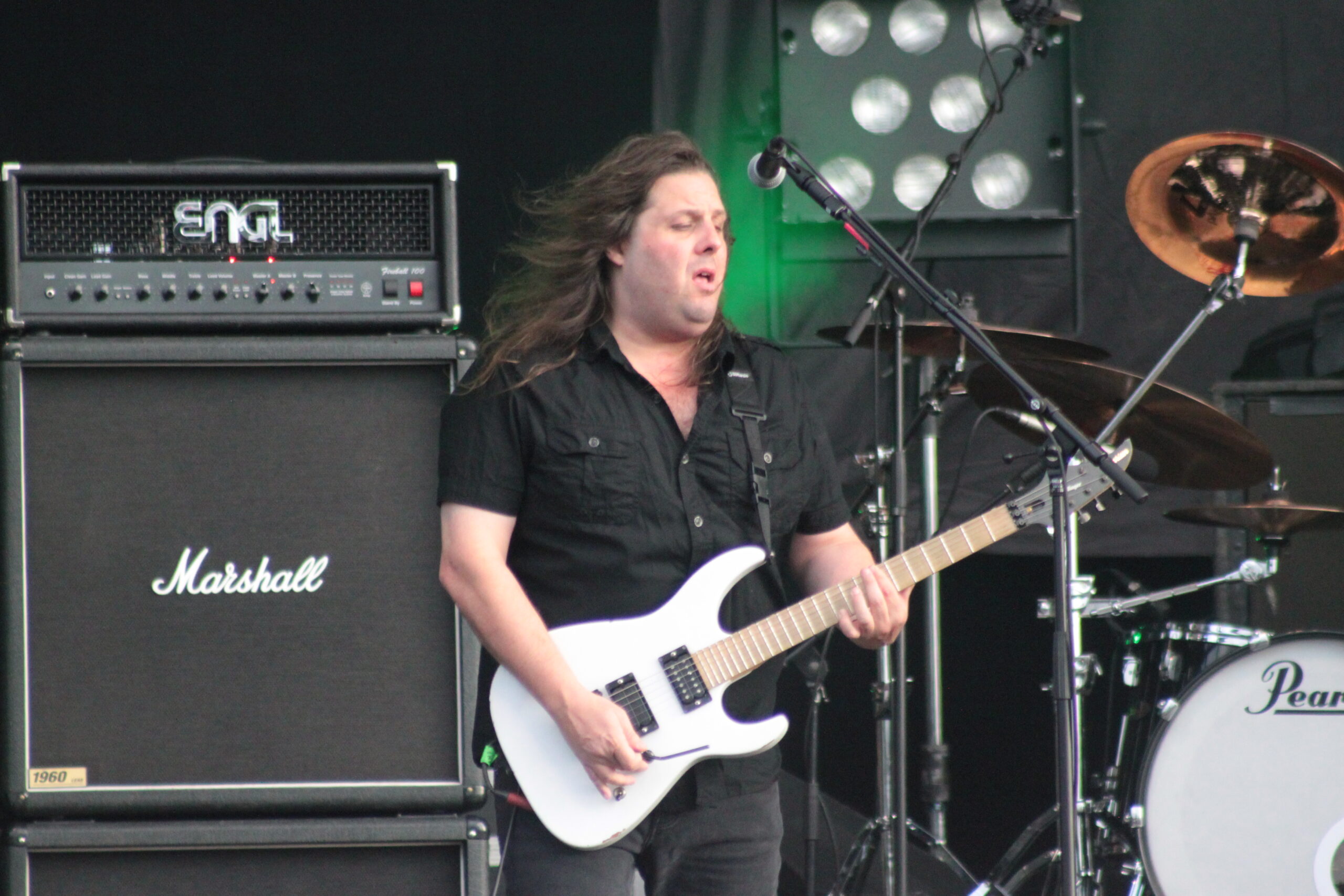
- Michael Romeo (Symphony X): photo by Shadowgate (Flickr), via Wikimedia Commons, CC BY 2.0.
- Fender Stratocaster: Lightburst, Wikimedia Commons, CC BY-SA 4.0.
- Mesa/Boogie Dual Rectifier: Roadside Guitars, Flickr, CC BY-SA 2.0.
- ENGL Fireball 100: GuitarGangsters AI-generated reference illustration, not a photograph.
- ENGL SE E670: GuitarGangsters AI-generated reference illustration, not a photograph.
- ENGL Powerball: GuitarGangsters AI-generated reference illustration, not a photograph.