Dan Spitz Guitars & Gear: Anthrax’s Precision Thrash Architect Complete Rig Guide
Dan Spitz guitars gear — Jackson Randy Rhoads, Marshall JCM800, DiMarzio deep-dive for Anthrax's melodic thrash lead guitarist and master watchmaker.
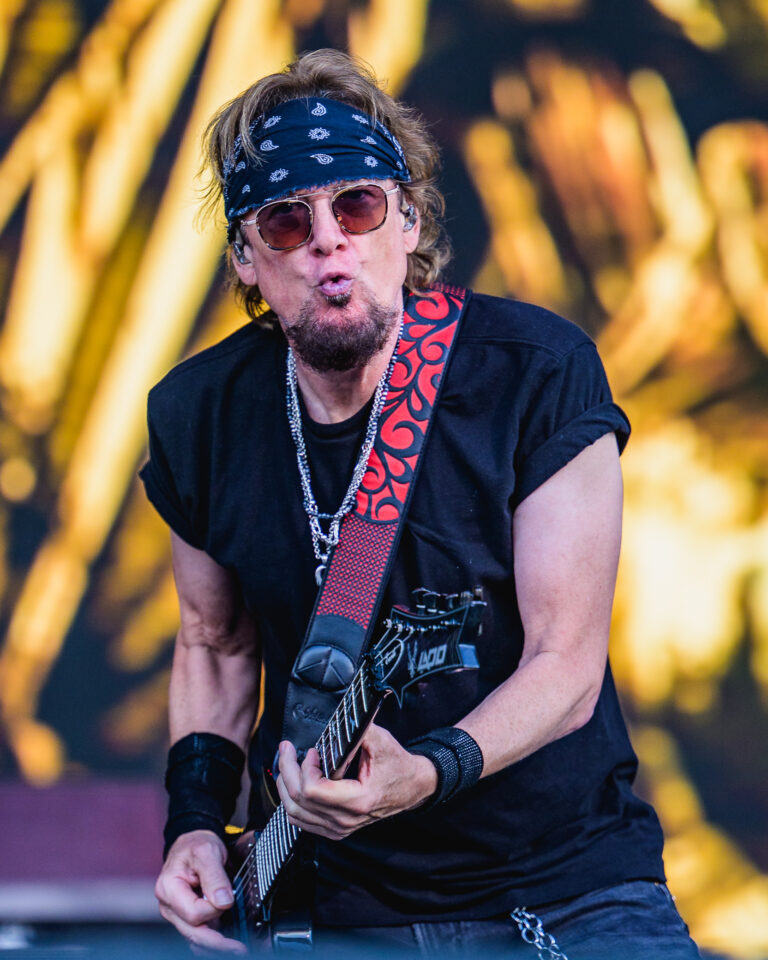
Dan Spitz. Photo: Daniel Spitz, CC BY-SA 4.0. Source: Wikimedia Commons.
Dan Spitz guitars gear is the subject of one of thrash metal’s most underappreciated lead guitar stories — the equipment and approach of the man whose melodic, clean-picking lead style gave Anthrax’s classic period a tonal character completely distinct from any other band in the Big Four. While Metallica had Kirk Hammett’s blues-wah fusion, Megadeth had Dave Mustaine and Marty Friedman’s shred-influenced aggression, and Slayer had Kerry King and Jeff Hanneman’s deliberately atonal chaos, Anthrax had Dan Spitz playing clear, melodic, precisely articulated lead guitar over Joey Belladonna’s clean tenor vocals. It was a different kind of heavy. It was arguably a more difficult kind of heavy to execute well — melodic clarity in a thrash context requires technical precision that pure aggression doesn’t demand — and Spitz brought exactly the right combination of technical accomplishment and melodic instinct to make it work.
Gear Timeline
His departure from Anthrax in 1995 — after the albums Fistful of Metal (1984), Spreading the Disease (1985), Among the Living (1987), State of Euphoria (1988), Persistence of Time (1990), and Sound of White Noise (1993) — marked the end of an era for the band and the beginning of an equally unconventional second act: Spitz became a master watchmaker, studying under Swiss craftsmen and running his own watch business for years. He eventually returned to music, rejoining Anthrax for the 2005 reunion tour, but the classic recordings remain the primary document of his work. This is the complete breakdown of Dan Spitz guitars gear, technique, and tonal philosophy.
Background
Dan Spitz was born on January 28, 1963, in New York City — specifically in the Bronx, the same borough that has produced an extraordinary concentration of musical talent across genres. He began playing guitar in his early teens, absorbing the classic rock and hard rock of the late 1970s before the New Wave of British Heavy Metal arrived and redirected his musical attention toward the harder, faster, more technically demanding approach of bands like Iron Maiden, Judas Priest, and Motörhead. By the time Anthrax formed in 1981 in New York City under the direction of guitarist Scott Ian and drummer Charlie Benante, Spitz’s precise, melodic lead style was already developed enough to complement Ian’s rhythm approach effectively.
The classic Anthrax lineup — Scott Ian on rhythm guitar, Spitz on lead guitar, bassist Frank Bello, drummer Charlie Benante, and vocalist Joey Belladonna (from 1984) — produced the band’s defining recordings. Among the Living (1987) is the essential document: an album whose combination of Ian’s thunderous, palm-muted rhythm guitar, Belladonna’s clean, powerful tenor, and Spitz’s melodic, precise lead work created a thrash metal sound that was simultaneously heavier and more melodically accessible than most of the genre’s output. The guitar solo on “I Am the Law” — clean, articulate, melodically coherent — is a master class in thrash metal lead playing that has inspired countless players.
His post-music career as a watchmaker was not a retreat from craftsmanship but a continuation of it — the same manual precision, attention to detail, and commitment to technical excellence that characterised his guitar playing found expression in a different medium. He studied watchmaking under Swiss masters, earned professional certifications, and built a business producing and repairing fine mechanical watches. The parallel between the precision required in watch movement work and the precision evident in his guitar playing is not coincidental — both reflect a personality for whom exactness is a value rather than merely a professional requirement.
His return to music with Anthrax for the 2005 reunion and subsequent appearances demonstrated that his technical abilities had not diminished despite years away from the professional music scene, and that the musical instincts that produced the classic recordings remained fully intact.
Dan Spitz Guitars Gear: The Complete Rig
Guitars
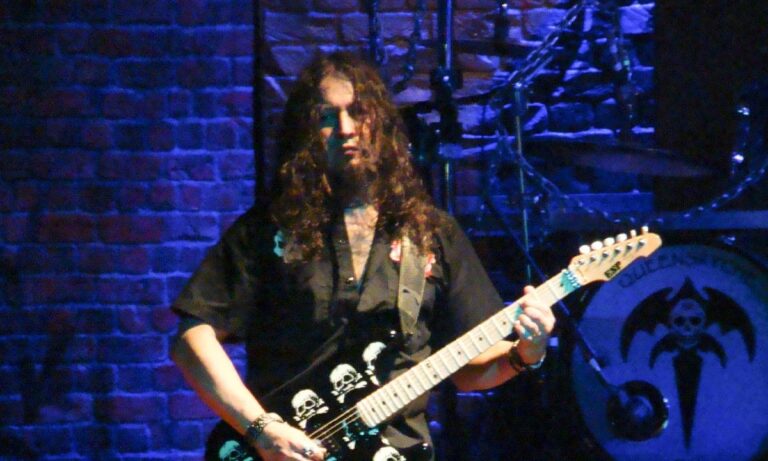
The Jackson Randy Rhoads — the angular, asymmetric flying-V-variant body shape designed by Grover Jackson in collaboration with Randy Rhoads before Rhoads’s death in 1982, and subsequently produced by Jackson Guitars as one of their signature body designs — was Dan Spitz’s primary instrument throughout the classic Anthrax period. His specific Randy Rhoads models were custom shop instruments built to his precise specifications at Jackson’s Glendora, California facility, featuring neck-through-body construction (the neck wood running continuously from headstock to end pin, providing maximum resonance coupling between neck and body for enhanced sustain), an alder or korina body (the original Rhoads design had used korina for its warmth and tonal complexity; later production often substituted alder or basswood for consistency and cost), a compound-radius ebony fretboard (ebony being harder than rosewood, giving a brighter, more articulate attack transient and smoother string feel under the fingers), and a Floyd Rose Original double-locking tremolo system. The RR body’s extreme upper wing gives the guitar a dramatic visual presence on stage while also affecting the instrument’s physical balance — the upper wing’s mass counterbalances the neck’s weight differently from a conventional symmetrical double-cutaway, and players who use the Randy Rhoads must adapt their playing posture accordingly. Spitz wore the guitar high on his body, consistent with the melody-focused, precise picking approach his lead style required.
The neck-through construction of his Jackson RR gave a specific sustain character: the continuous wood grain from headstock to end pin provides a direct resonant path between the vibrating string at the nut and the body mass at the end, giving a longer, more even sustain than the bolt-on or set-neck construction alternatives. The ebony fretboard — harder (Janka hardness approximately 3000 lbf for African ebony) than rosewood (approximately 1780 lbf for Indian rosewood) — gave a faster, more precise attack transient to each note, contributing to the clean, articulate character of Spitz’s lead playing in a high-gain context where note definition was crucial.
Jackson Soloist guitars — the standard double-cutaway design that served as Jackson’s most versatile high-performance format — also appeared in Spitz’s documented setup alongside the Randy Rhoads as an alternative instrument for specific contexts or as a backup. The Soloist’s conventional double-cutaway body gave better upper-fret access than the RR’s asymmetric design, and its balance on a shoulder strap was more conventional — factors that made it preferable for specific playing situations where the RR’s unique handling characteristics were disadvantageous. Construction specifications were similar: neck-through body, ebony or rosewood compound-radius fretboard, Floyd Rose Original, high-output humbuckers.
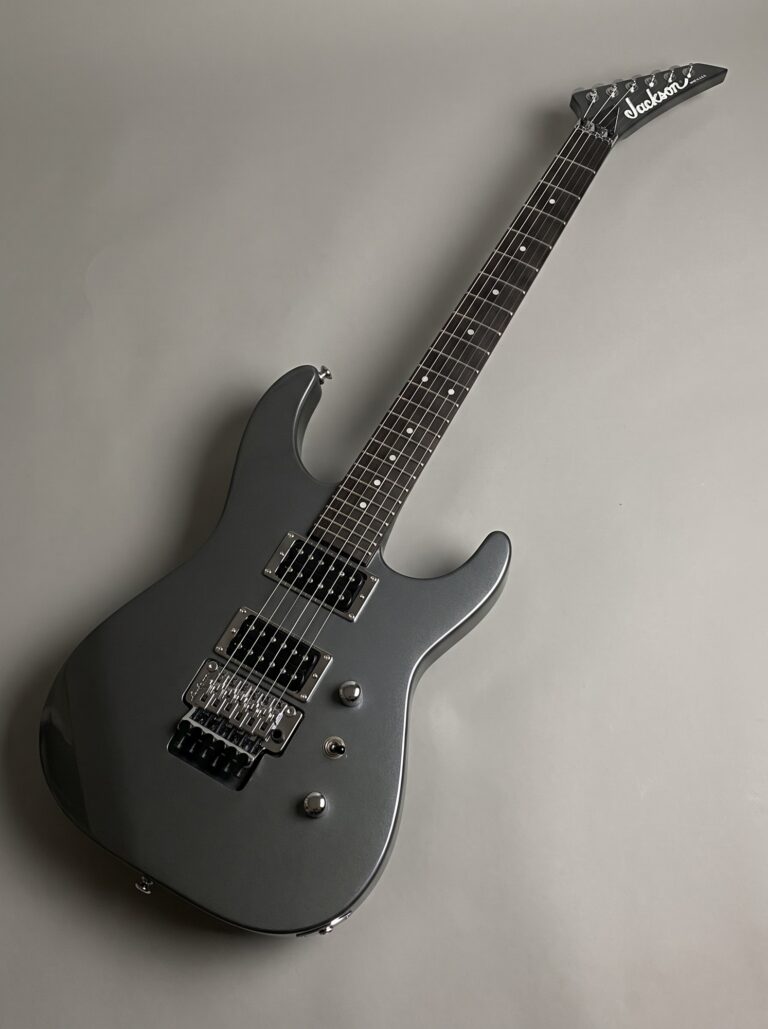
Spitz used DiMarzio pickup configurations throughout the classic period, reflecting DiMarzio’s position as the dominant high-performance aftermarket pickup manufacturer for the Jackson-era thrash and shred guitarist community. His primary bridge pickup was the DiMarzio Super Distortion (DP100) — DC resistance approximately 13.7k ohms, Alnico V rod magnets augmented by a ceramic bar magnet on the base plate (the “ceramic-assisted” design discussed in the Alex Skolnick article), producing an aggressive, high-output character with more harmonic complexity than purely ceramic designs. The neck position used either the DiMarzio PAF Pro (DP151, approximately 8.3k ohms, Alnico V rod magnets, cleaner and more vintage-voiced for the warm, singing lead tones of his melodic solos) or the DiMarzio Tone Zone (DP155, approximately 16.4k ohms, Alnico V magnets, designed specifically for the neck position to give high output with a warm, smooth character that prevented the over-bright quality of high-output pickups in the neck position). His choice between PAF Pro and Tone Zone for neck position reflected specific tonal requirements: the PAF Pro for passages requiring maximum transparency and vintage-voiced character, the Tone Zone for passages requiring the highest sustained output without harshness.
During the earliest Anthrax period, before the Jackson endorsement and custom shop relationship was fully developed, Spitz used Charvel Model guitars — the San Dimas-produced instruments that shared construction philosophy with Jackson (alder or basswood bodies, maple necks, Floyd Rose or Kahler tremolo options) but typically in bolt-on neck configurations. The Charvel Model 1 through Model 6 variants gave the basic high-performance electric guitar platform of the early 1980s shred scene, with the bolt-on neck’s slightly brighter, more articulate attack contrasting with the neck-through Jackson’s longer sustain.
Spitz used D’Addario XL Nickel electric strings in a .009–.042 gauge (super light) or .010–.046 (regular light) configuration. The lighter gauges — particularly the .009 high-E — gave maximum bending ease and picking speed on the 25.5-inch Jackson scale (though Jackson and the Randy Rhoads used the standard Gibson-compatible 24.75-inch scale on some examples). His preference for lighter strings on the Jackson platform reflected the technical demands of his lead playing: the fast, precisely articulated runs and the wide string bends that characterised his solos required the lightest string tension that still produced adequate tonal weight and intonation stability through the Floyd Rose.
Amps
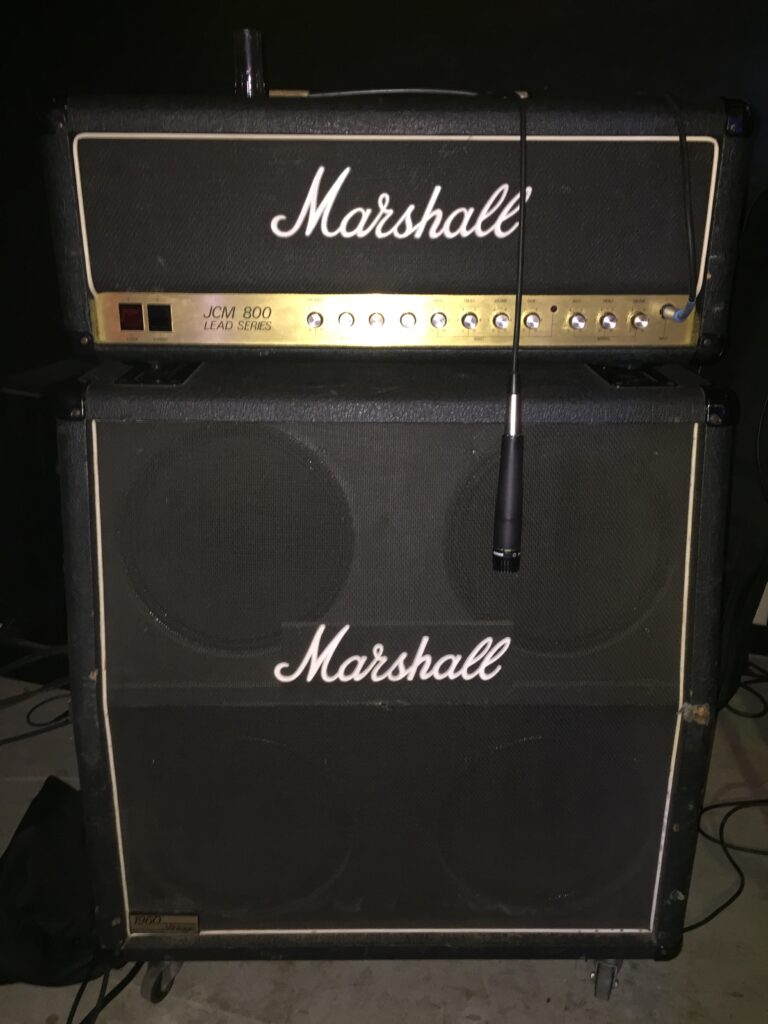
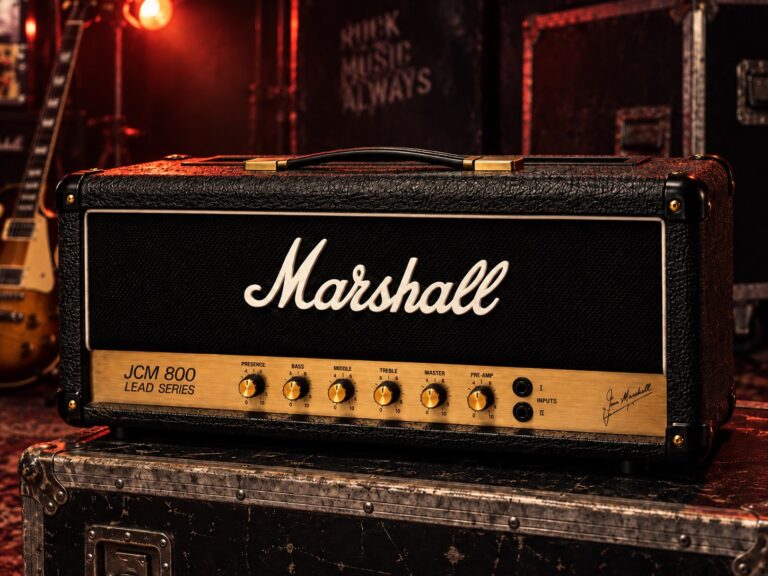
The Marshall JCM800 Model 2203 was Spitz’s primary amplification throughout the classic Anthrax period — the same amplifier documented in the Michael Wilton and Alex Skolnick articles, whose cascaded high-gain preamp topology and hard-clipping character defined the live thrash metal guitar sound of the late 1980s. His JCM800 setup used the amplifier’s high-gain channel at moderate-to-high input gain settings, running into Marshall 1960A or 1960B 4×12 cabinets loaded with Celestion speakers. His specific Celestion speaker choice: the G12-65 (65-watt ceramic-magnet speaker, introduced in 1977 as a replacement for the Greenback, with a brighter, more modern voicing and higher power handling than the G12M Greenback’s 25 watts) gave the crisp, defined top end that his precise, melodic lead playing required — the tighter, more extended high-frequency response of the G12-65 made individual notes within fast runs more distinctly audible than the more compressed Greenback would have allowed.
Spitz ran multiple JCM800 heads in his live rig — a stereo configuration with two heads driving separate 4×12 cabinets for a wide stereo spread — consistent with the large-scale production values of Anthrax’s touring operation during their commercial peak in the late 1980s. The stereo rig gave a specific spatial character to the live sound: the two amplifiers’ slightly different tonal characters (inevitable individual variation between production examples), when panned left and right in the PA, gave a rich, complex sound with more perceived width and dimension than a mono single-amplifier setup.
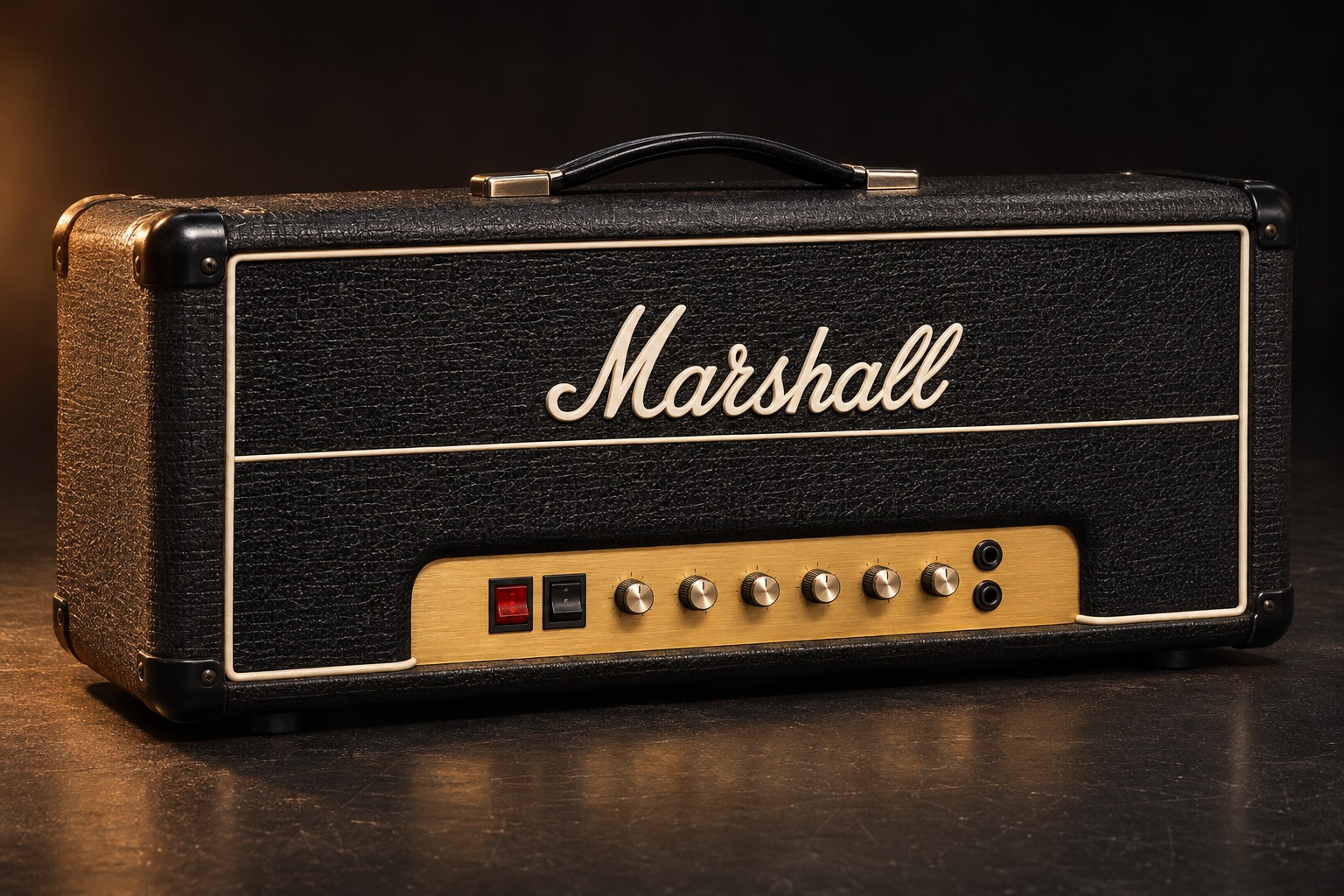
The Marshall JMP 2203 — the predecessor to the JCM800, introduced in 1975, using the same cascaded high-gain preamp topology as the JCM800 but with slightly different component values and the earlier JMP (Jim Marshall Products) brushed aluminum front panel rather than the JCM800’s revised cosmetics — appeared in Spitz’s early Anthrax setup before the JCM800 fully supplanted the JMP in his rig. The JMP 2203’s circuit is closely related to the JCM800 2203 but with subtle component differences that give a slightly different saturation character — many players consider the JMP 2203 to have a slightly more musical, less clinical saturation character than the JCM800 that followed it, though the difference is subtle and context-dependent.
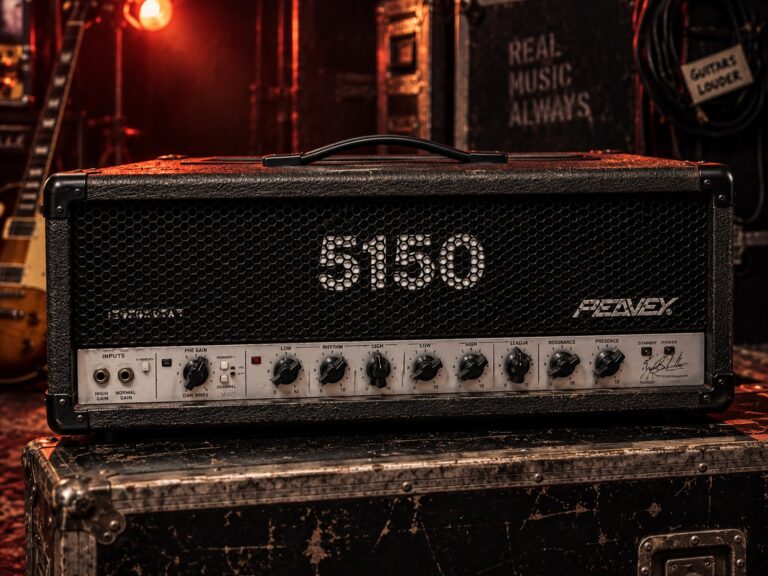
The Peavey 5150 — introduced in 1992, four EL34 output tubes, two channels (Rhythm and Lead) with the Lead channel’s distinctive tight, aggressively compressed high-gain character — appeared in Spitz’s setup from the early 1990s onward. The 5150’s Lead channel gave a different high-gain character from the JCM800: tighter in the low end (less bass bloom under palm-muting), more compressed in the dynamics, and with a specific midrange cut that gave palm-muted rhythm work exceptional articulation and note definition. For the heavier rhythm passages in Anthrax’s later catalogue, the 5150’s tight, precise character suited the material’s rhythmic demands better than the JCM800’s broader, warmer saturation.
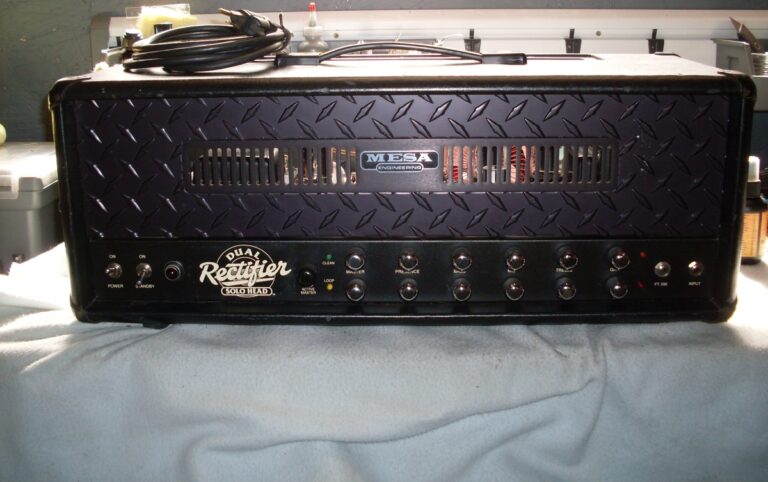
The Mesa/Boogie Dual Rectifier — introduced 1992, four 6L6GC output tubes, two rectifier tubes (5U4G or 5AR4), two channels — appeared in Spitz’s studio setup for specific heavy rhythm applications. The Rectifier’s characteristic “chunk” quality in palm-muted riffing — produced by the rectifier tube’s sag under heavy playing attack combined with the 6L6GC’s extended low-frequency response — suited the heaviest rhythm passages in Anthrax’s catalogue and gave the studio recordings an additional weight that the JCM800’s more compressed character could not achieve.
Effects
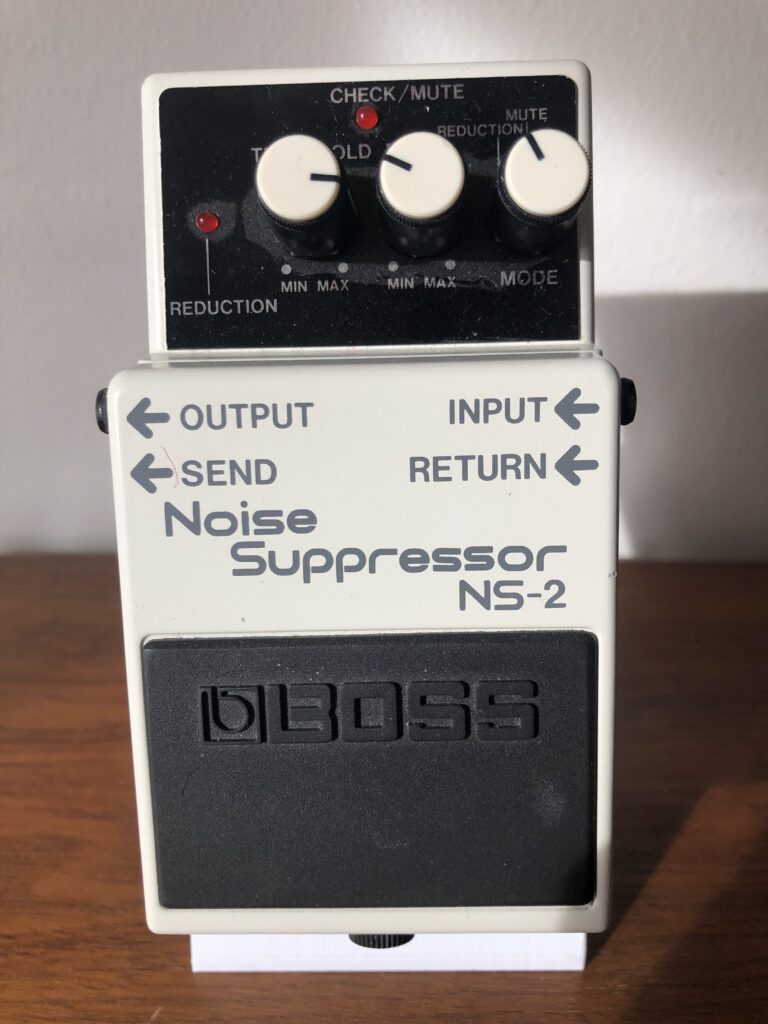
The Boss NS-2 — identical to the versions documented in the Wilton, DeGarmo, and Skolnick articles — was essential in Spitz’s high-gain signal chain. The Jackson Randy Rhoads with high-output DiMarzio humbuckers into a JCM800 at high gain settings produced significant background noise between notes and passages, and the NS-2’s noise gate in the muting loop configuration gave the most effective practical solution. His threshold setting was moderate (4–5) — set just above the noise floor of the background hiss while low enough to allow the natural decay of sustained notes to complete without premature gate closure.
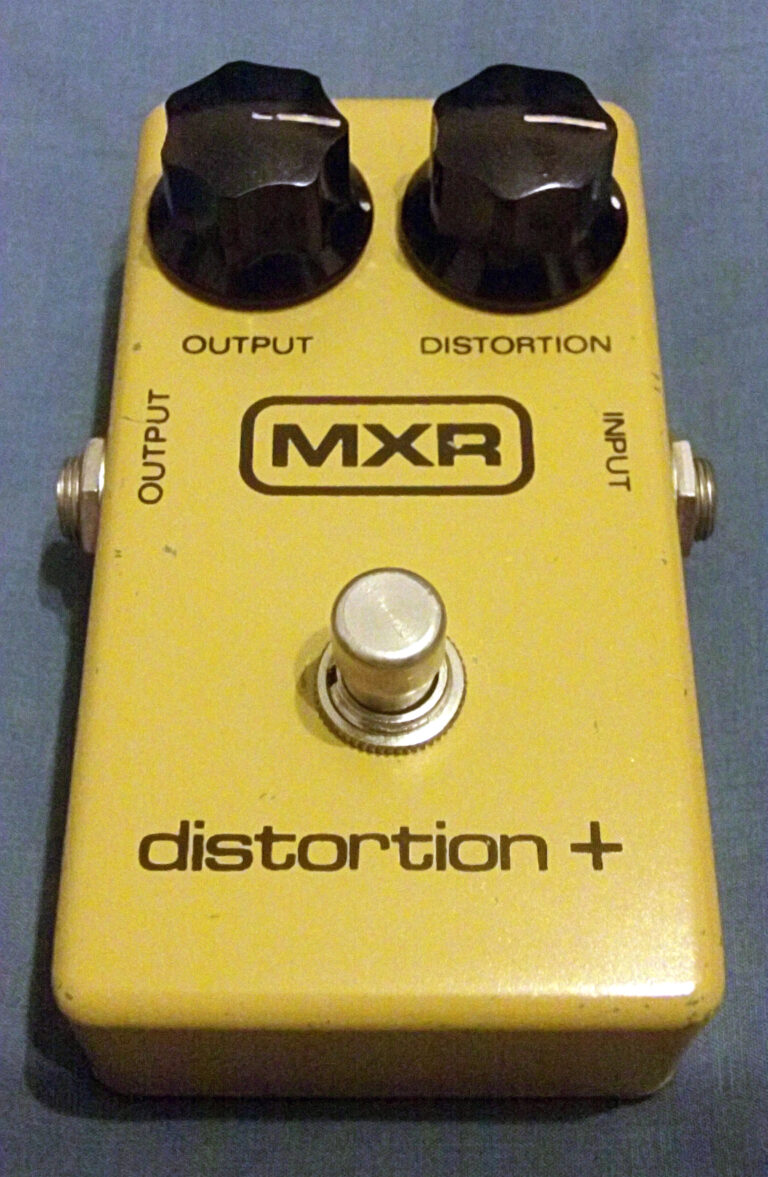
The MXR Distortion+ — introduced by MXR in 1973, using the LM741 op-amp with a 1N270 germanium diode for asymmetric soft clipping — appeared in Spitz’s early setup as a front-end boost and tonal shaping device before the JCM800. The Distortion+’s specific character — the LM741’s slightly warm, organic clipping with the 1N270 germanium diode’s asymmetric soft clipping giving a different harmonic profile than silicon-diode-clipping alternatives — gave a more transparent, less harsh boost than the harder-clipping alternatives. Used at moderate distortion settings (4–5) with the output boosted, it pushed the JCM800’s input harder without the heavy additional compression of a fuzz pedal.
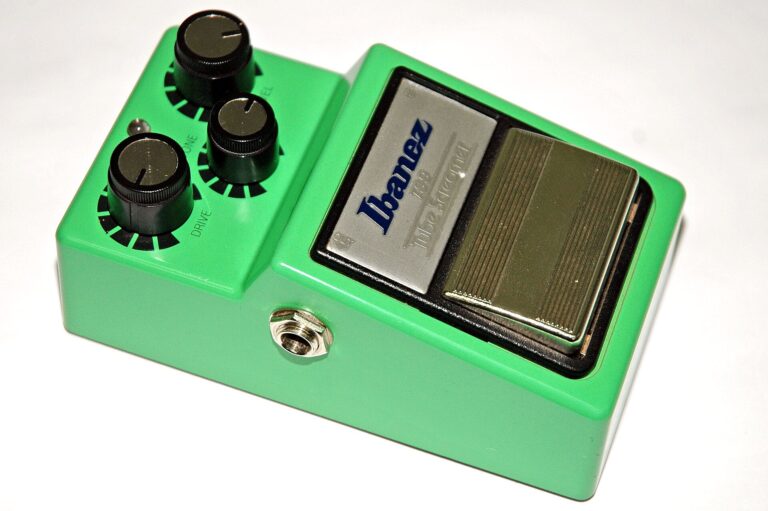
The Ibanez TS9 — similar circuit to the TS808 with slightly different output buffer topology, JRC4558D or RC4558P op-amp depending on production batch, 1N4148 silicon diodes, the characteristic 720Hz lower cutoff producing the mid-boost/bass-roll — appeared in Spitz’s lead boost chain as an alternative to or alongside the MXR Distortion+. His TS9 use was the standard low-drive, level-boosted approach: Drive at 2–3, Level at 6–7, using the pedal’s midrange emphasis to give his lead notes additional presence and sustain over the rhythm section and the rhythm guitar backdrop of Scott Ian’s heavily palm-muted playing.
The Boss CE-2 — MN3007 BBD chip, 12–15ms delay line with LFO modulation, single channel output — appeared in Spitz’s setup for specific clean passage textures and for subtle thickening of certain lead tones. His chorus use was restrained rather than obvious — a light modulation setting (Rate 3–4, Depth 2–3) that added dimensional width to specific passages without the obvious “chorus guitar” sound of higher settings. The CE-2’s BBD-based warmth gave a more musical quality to the chorus effect than digital alternatives of the period.
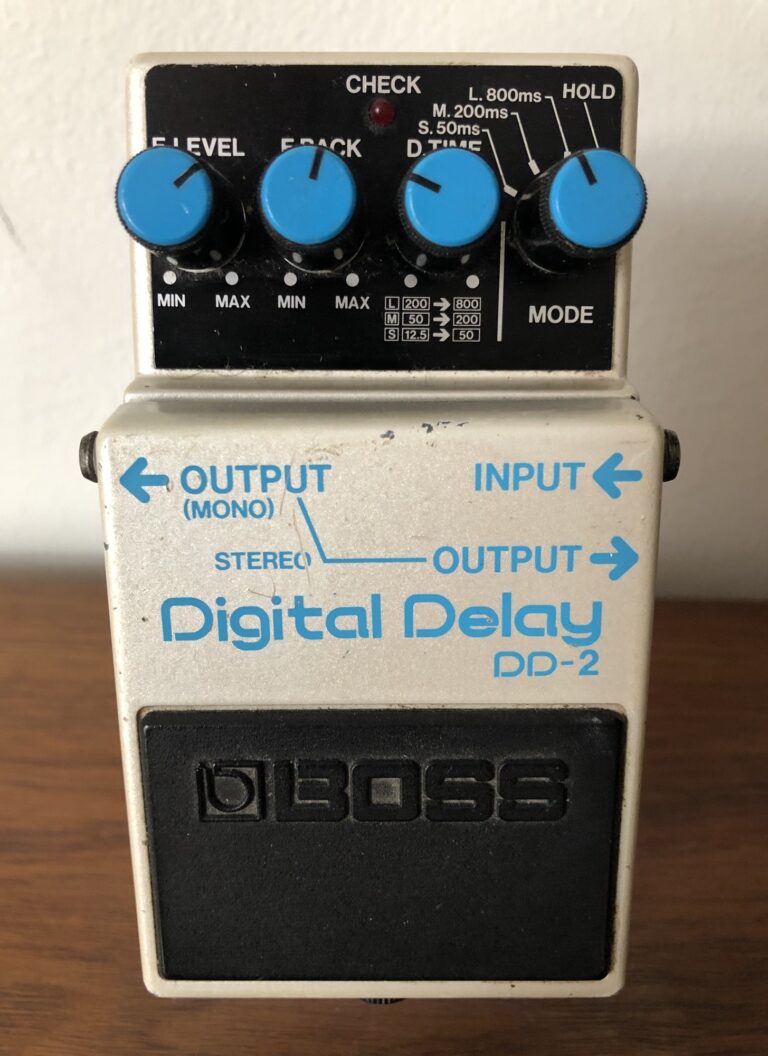
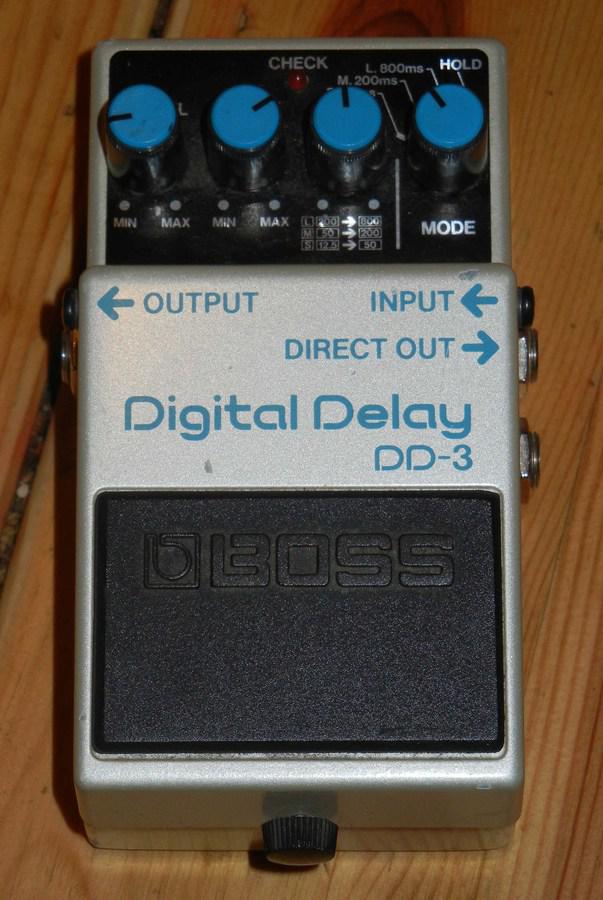
The Boss DD-2 (introduced 1983, the first mass-market digital delay in pedal format, using 12-bit digital sampling with delay times up to 800ms) and its successor the DD-3 (introduced 1986, similar circuit with updated components) provided Spitz with digital delay for lead spatial enhancement. His typical settings: 200–350ms delay time, one to two repeats, low mix level (20–25%) for spatial depth on melodic lead passages without an obvious echo effect. The DD-2’s 12-bit resolution gives a slightly warmer, less sterile digital echo character than later 16-bit units — the quantisation noise of 12-bit sampling adds a subtle texture that many players find more musical than technically perfect 24-bit digital delay.
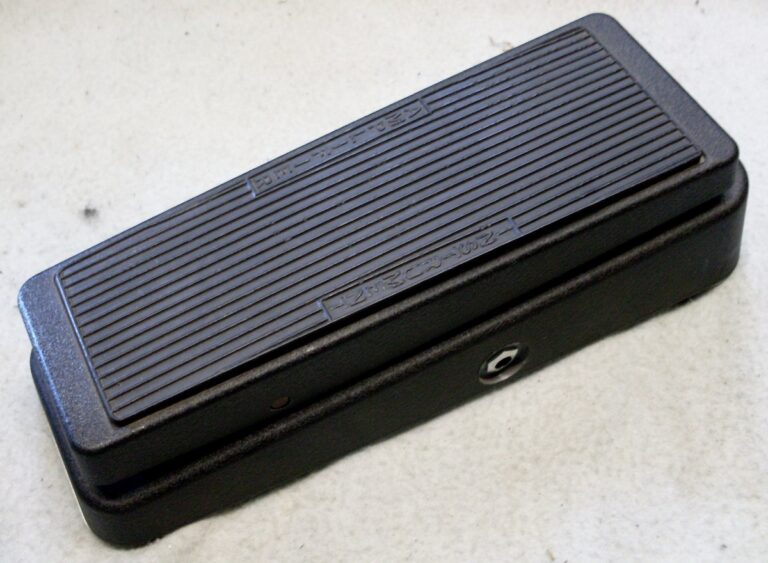
The Dunlop Cry Baby GCB95 — Halo inductor, 400Hz–2.2kHz sweep — appeared in Spitz’s live setup for specific lead passages requiring the wah’s bandpass filter expressiveness. His wah use was dramatic and physically committed, consistent with the theatrical energy of Anthrax’s live performance approach — the wah deployed as a performance element as well as a tonal tool, the rocking motion becoming part of the visual language of his stage presence.
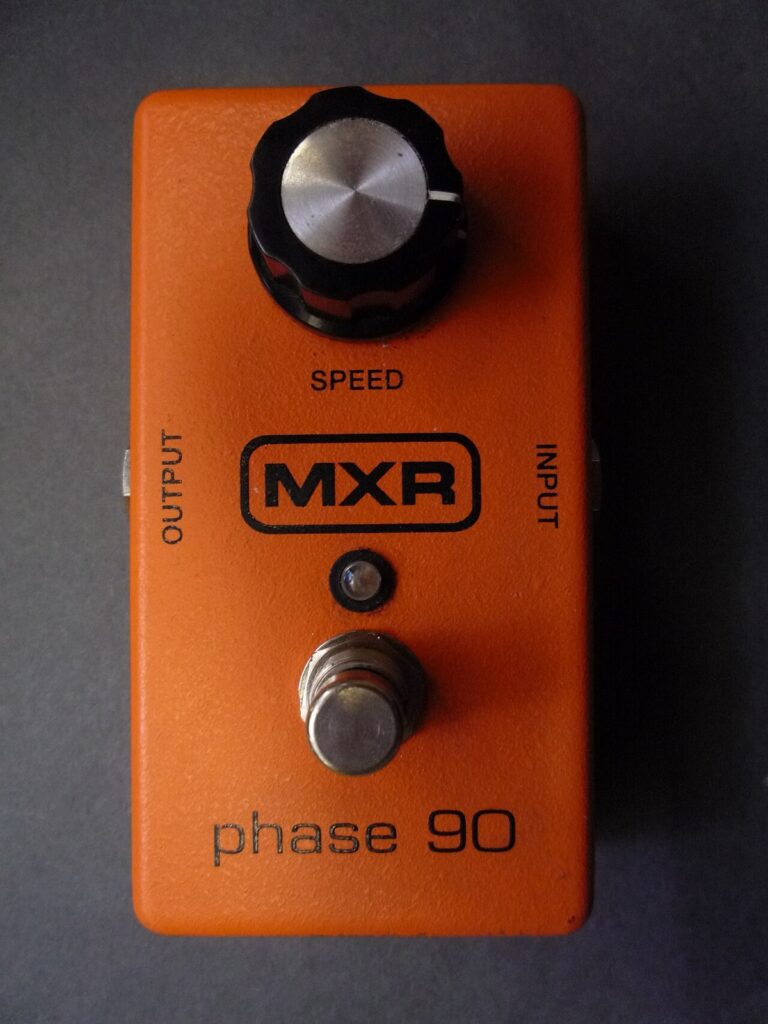
The block-logo MXR Phase 90 — the production successor to the script-logo version, using the same four J-FET all-pass filter topology but with slightly different resistor values that give a marginally different phase character — appeared in Spitz’s setup for atmospheric phase effects on specific passages. At slow speed settings (2–3Hz), the Phase 90 added a dimensional sweep to sustained chord passages in Anthrax’s more atmospheric interludes. At faster speeds, the more obvious phase effect was used for specific lead textures.
The Rocktron Hush — a rack-mounted dynamic noise reduction system using a sophisticated expander circuit rather than a simple gate, providing more musical noise reduction than the Boss NS-2’s hard-gate approach — appeared in Spitz’s live rack for additional noise management in the high-gain signal chain. The Hush’s expander approach reduced noise proportionally to the signal level rather than cutting off abruptly at a threshold, giving a more natural-sounding noise reduction that preserved the natural decay of sustained notes without the “chopping” quality of a hard gate at incorrect threshold settings.
Playing Style & Tone Philosophy
Dan Spitz was the outlier in thrash metal lead guitar — the player whose approach was most clearly distinct from the genre’s evolving conventions because it prioritised melodic clarity and technical precision over the speed-for-speed’s-sake approach that was becoming the dominant thrash metal lead guitar aesthetic by the late 1980s. His solos were not the fastest in thrash metal — not even close — but they were among the most memorable, most melodically coherent, and most precisely executed. “I Am the Law” (1987) is the paradigmatic example: a solo built on clear, well-articulated melodic lines that could be hummed, remembered, and reproduced rather than merely admired for their speed.
His picking technique was the foundation of everything. Spitz used a strict alternate picking approach — consistent down-up-down-up picking across string changes — with a firm, confident pick attack that produced an unusually consistent, articulate tone across all tempos and all positions on the neck. The consistency of his picking attack gave his lead lines a specific tonal evenness: each note receiving the same fundamental attack character, regardless of its position within a phrase or the string on which it was played. This evenness — which sounds simple but requires years of practice to develop reliably — was crucial in a thrash metal context where the high gain and compression of the JCM800 would have amplified any inconsistency in picking attack to obvious, audible levels.
His vibrato was controlled and precise — not as wide as the traditional blues vibrato, but enough to give sustained notes emotional weight and prevent them from sounding static. His approach to vibrato in a high-gain context showed musical intelligence: too wide a vibrato through a heavily compressed JCM800 preamp would produce an unstable, wavering pitch that sounds out of control; too narrow a vibrato disappears into the compression and gives notes a lifeless, piano-key quality. His calibration of vibrato width and rate to the specific gain level and compression of his amplifier setup reflected the kind of practical, context-aware playing intelligence that separates professional musicians from technically capable amateurs.
His relationship with Scott Ian’s rhythm guitar was one of the more effective dual-guitar partnerships in thrash metal history. Ian’s approach was entirely rhythm-focused — no leads, no fills, pure rhythm guitar from beginning to end — which gave Spitz’s lead work complete harmonic and rhythmic freedom. When Spitz played a lead, Ian provided the full rhythm guitar context underneath, creating a complete guitar-ensemble texture that gave the lead lines maximum harmonic support. This division of labour — Ian as the permanent rhythm guitarist, Spitz as the permanent lead guitarist — was unusual in metal, where most bands expected both guitarists to contribute to both rhythm and lead work, but it gave Anthrax’s classic recordings a specific clarity and focus that blurred-role dual-guitar bands couldn’t achieve.
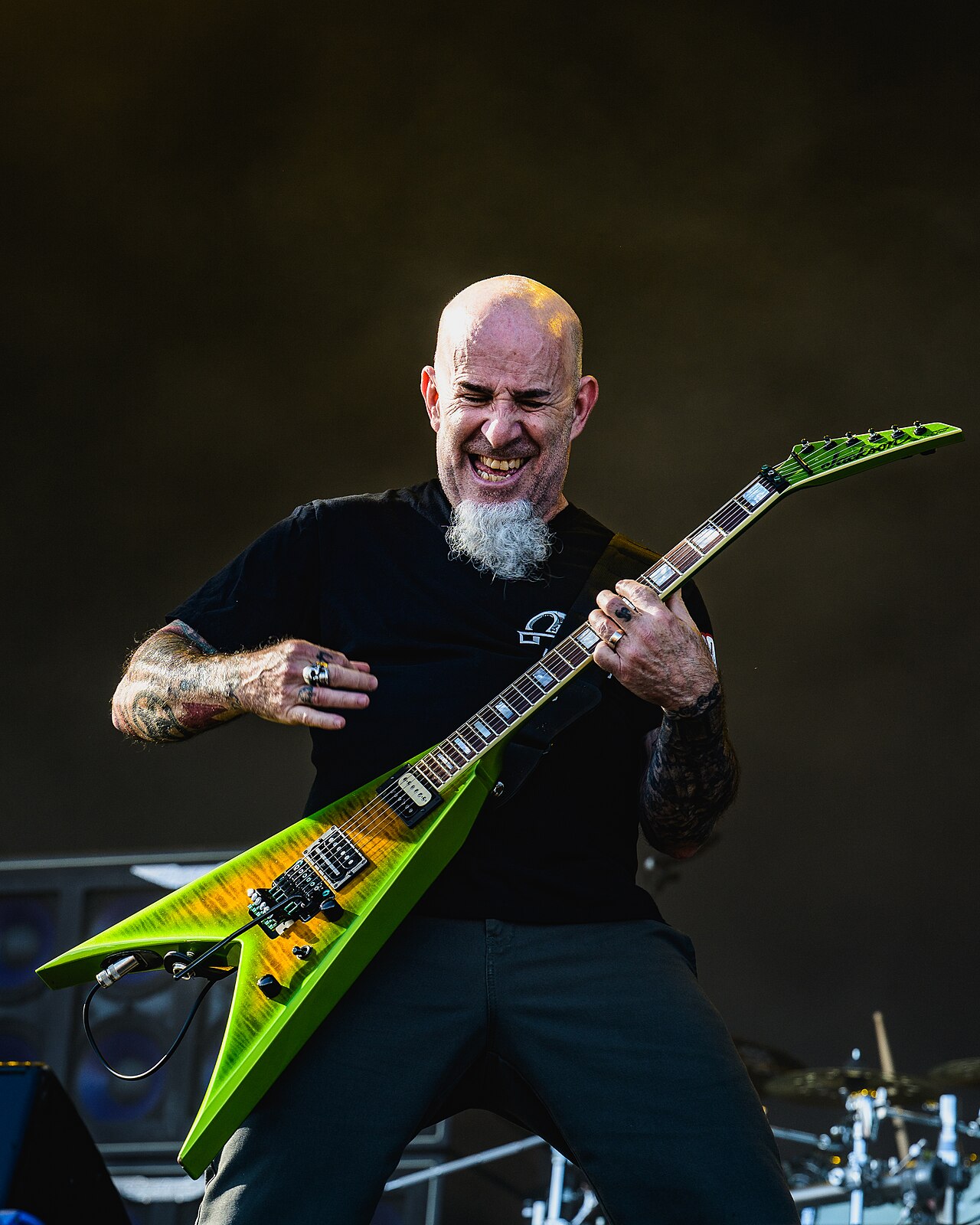
Tonally, Dan Spitz guitars gear philosophy was built on precision and clarity in a high-gain context — the JCM800’s cascaded gain giving maximum sustain for melodic lead lines while the ebony-fretboard Jackson’s bright, articulate attack ensured individual note definition within fast runs. The DiMarzio neck pickup’s cleaner character for lead work and the bridge pickup’s aggressive output for rhythm and heavier passages gave him tonal flexibility within a single guitar. The effects chain — NS-2 for noise control, TS9 for midrange focus on leads, CE-2 for selective chorus, DD-3 for lead depth — served the music rather than defining it. Every element of his setup existed to give his melodic lead playing the maximum possible clarity and presence in the high-intensity sonic environment of thrash metal live and studio performance.
The ebony fretboard on Spitz’s Jackson Randy Rhoads deserves specific technical expansion because it was a deliberate choice with specific consequences for his playing style. Ebony (Diospyros species, typically African ebony or Macassar ebony) is significantly harder than rosewood — a Janka hardness rating of approximately 3000 lbf for African ebony compared to approximately 1780 lbf for Indian rosewood — which produces a measurably different playing surface. The higher hardness means that string contact with the fretboard produces less energy absorption at the fretboard itself, giving a brighter, more articulate attack transient to each fretted note. The smoother surface of ebony (its pores are finer and less open than rosewood’s) gives a different feel under the fingertips for position shifting — less friction, faster movement, and a sensation of the string “sitting on” the fretboard rather than “sinking into” it as rosewood’s more open grain structure can create. For Spitz’s precisely articulated lead style — where fast string crossing and rapid position changes were regular requirements — the ebony fretboard’s faster, more consistent surface gave a marginal but real practical advantage. Ebony also requires less maintenance than rosewood (it is naturally oilier and less prone to drying) and is more dimensionally stable under temperature and humidity changes — practical advantages for a touring musician using the instrument in diverse environmental conditions.
The Rocktron Hush deserves specific comparison with the Boss NS-2 because the two devices use fundamentally different approaches to noise reduction that produce meaningfully different musical results. The Boss NS-2 is a noise gate — a device that monitors the input signal and, when the signal falls below a set threshold, closes a switch that mutes the output completely. This hard-gate approach gives immediate, complete noise suppression when the gate closes but can produce an audible “chop” on sustained notes whose natural decay crosses the threshold — the note decay is interrupted by the abrupt gate closure rather than completing naturally. The Rocktron Hush uses a dynamic noise reduction (expander) approach — rather than a simple threshold switch, it reduces the gain of the signal proportionally to how far below the signal level the noise floor sits, continuously and dynamically rather than in binary on/off steps. This gives a more natural-sounding noise reduction that tracks the signal’s natural decay and reduces noise gradually as the note decays rather than cutting off abruptly at a fixed threshold. For Spitz’s melodically precise lead playing — where the natural decay of a note was part of the musical statement, not merely background noise to be eliminated — the Hush’s more musical approach to noise reduction preserved the expressive content of his sustained notes more faithfully than the NS-2’s hard gate could achieve. His use of both devices — NS-2 for the most aggressive noise management and Hush for the more musical, natural-sounding noise reduction — reflected a practical understanding of each device’s strengths and their appropriate application in different parts of the signal chain.
The physical design of the Jackson Randy Rhoads body — and how it affected Dan Spitz guitars gear in performance contexts — is worth addressing specifically because the RR’s asymmetric shape creates real practical challenges that a conventional double-cutaway design does not. The upper wing’s extreme length and mass creates a neck-heavy balance when the guitar is supported on a strap — the neck wants to drop toward the floor, requiring the player to support it with the fretting hand more than a balanced instrument would demand. This balance issue is managed through strap positioning, strap length, and playing posture — Spitz wore the guitar high on his body (consistent with the melodic, precise playing approach rather than the low-slung rock posture of rhythm guitarists) which gave better balance by raising the body’s centre of gravity relative to the headstock. The upper cutaway’s length also affects access to the highest frets: the RR’s upper horn extends further than a conventional symmetrical double-cutaway, giving extremely comfortable thumb-over-the-neck access to the upper registers but slightly limiting access from certain classical-position thumb angles. Spitz’s specific upper-fret lead work — frequently in the 17th–22nd fret range — suggests he developed a playing posture that accommodated the RR’s specific geometry while maximising his reach and comfort at those positions.
How to Sound Like Dan Spitz
Guitar Approach
A Jackson Randy Rhoads or Soloist with neck-through construction, Floyd Rose Original, compound-radius ebony fretboard, and DiMarzio high-output humbuckers is the foundation of Dan Spitz guitars gear tone. Modern options: the Jackson USA Randy Rhoads RR1 (USA-made, neck-through, ebony fretboard, Floyd Rose, Seymour Duncan or DiMarzio pickups), the Jackson Pro Series Randy Rhoads RRT-3 (more accessible price, similar specification), or the ESP Arrow NT (neck-through, Floyd Rose, similar angular-body design). Pickup configuration: DiMarzio Super Distortion (DP100) bridge, DiMarzio PAF Pro (DP151) or Tone Zone (DP155) neck. Super light or regular light strings (.009–.042 or .010–.046 D’Addario XL Nickel).
Alternate picking is non-negotiable — Spitz’s precise, consistent note definition comes entirely from strict alternate picking execution. Practice with a metronome, starting slowly and building speed only when each tempo is completely clean. Use a medium-weight pick (0.88mm–1.0mm Dunlop Tortex or equivalent) held at a slight angle to the string for the cleanest attack transient. Develop even string crossing — the most challenging aspect of alternate picking is maintaining consistent attack weight when crossing between strings, which requires the pick hand to adjust its angle and force very slightly for each string crossing.
Amp Approach
A Marshall JCM800 2203 — or the Marshall DSL100H (which approximates the JCM800’s cascaded gain character), the Bogner Shiva (smoother high-gain character with similar EL34 topology), or the Friedman BE-100 (boutique, JCM800-derived with improved voicing options) — into a 4×12 cabinet with Celestion G12-65 or G12T-75 speakers is the correct foundation. The G12-65 or G12T-75’s brighter, more extended high-frequency response compared to the Greenback 25 gives the note articulation that Spitz’s precise picking approach requires.
| Control | Setting (0–10) | Notes |
|---|---|---|
| JCM800 Preamp Volume | 7–8 | High gain — enough for sustained leads, not so extreme that melodic clarity suffers |
| Bass (JCM800) | 5 | Neutral — sufficient low end for warmth without obscuring note definition |
| Middle (JCM800) | 7 | Forward mids — critical for melodic lead presence over the rhythm section |
| Treble (JCM800) | 7 | Bright — articulate lead note definition through G12-65 speakers |
| Presence (JCM800) | 6 | Moderate-high — edge and definition for fast, precise runs |
| Master Volume | 6–7 | Push the EL34 output stage for natural compression and harmonic complexity |
| TS9 Drive (lead boost) | 2–3 | Very low drive — midrange boost function to lift leads over rhythm track |
| TS9 Level | 7 | Above unity — drives JCM800 input harder for lead sustain and presence |
| NS-2 Threshold | 4–5 | Moderate — gates high-gain hiss without chopping note decay |
| DD-3 Delay Time | 200–300ms | Moderate delay — spatial depth on melodic lead lines |
| DD-3 Mix Level | 20–25% | Low mix — depth without clutter in a dense thrash ensemble context |
Boss NS-2 in muting loop configuration for noise control. TS9 at minimum drive as lead boost — the midrange emphasis lifts the lead notes out of the mix. Boss CE-2 (MN3007 BBD) at light settings for selective chorus on specific passages. Boss DD-3 (or TC Electronic Flashback, or Boss DD-500) at 200–300ms for lead depth. Phase 90 at slow speed for atmospheric interludes. Keep everything clean and purposeful — Spitz’s clarity of intention in the signal chain was itself part of the tonal philosophy.
Influence & Legacy
Dan Spitz’s influence on thrash metal lead guitar is primarily tonal and philosophical rather than technical — he demonstrated that the genre could accommodate a melodic, clean-picking approach that prioritised musical communication over technical demonstration. In a field where lead guitar increasingly measured itself by speed and complexity, Spitz’s melodic clarity was itself a statement of values — a demonstration that simpler, more direct playing, executed with absolute precision, could be more effective than the most technically complex alternative.
His specific contribution to Anthrax’s identity was the melodic counterbalance to Scott Ian’s relentless rhythm guitar approach — a voice that gave the band’s music a dimension of harmonic beauty and melodic accessibility that the rhythm guitar alone could not provide. The Anthrax sound of the classic period — Ian’s rhythm plus Spitz’s lead — was a genuine dual-instrument contribution to a single musical identity, each element essential and irreplaceable.
The comparison with Scott Ian — his direct partner in the Anthrax guitar team — illuminates the complementary nature of their approaches: Ian’s total commitment to rhythm gave Spitz’s lead work complete freedom and complete harmonic support simultaneously, and Spitz’s melodic precision gave Ian’s rhythmic aggression a tonal counterpoint that transformed the rhythmic assault into something with genuine musical architecture. The parallel with Dan Spitz‘s Big Four contemporaries — specifically Alex Skolnick of Testament, whose similarly melodic, harmonically sophisticated thrash metal lead approach paralleled Spitz’s in important ways — illuminates the cluster of melodically oriented lead guitarists that thrash metal produced alongside its more technically extreme practitioners. And the connection to Gary Holt of Exodus — the Bay Area thrash guitarist whose aggressive, technically demanding lead approach contrasted with Spitz’s more melodic style while occupying the same genre context — shows the full range of approaches that thrash metal lead guitar encompassed at its creative peak.
Frequently Asked Questions: Dan Spitz Guitars & Gear
What guitar did Dan Spitz play in Anthrax?
Dan Spitz’s primary guitar throughout the classic Anthrax period was the Jackson Randy Rhoads — the angular, asymmetric flying-V-variant body designed by Grover Jackson in collaboration with Randy Rhoads. His specific instruments were custom shop models built to his specifications: neck-through body construction, compound-radius ebony fretboard, Floyd Rose Original double-locking tremolo, and DiMarzio humbucker pickups (Super Distortion in the bridge, PAF Pro or Tone Zone in the neck). Jackson Soloist guitars served as backup and alternative instruments for specific contexts.
What amplifier did Dan Spitz use?
Spitz’s primary amplification throughout the classic Anthrax period was the Marshall JCM800 Model 2203 — 100 watts from four EL34 output tubes, cascaded high-gain preamp, run into Marshall 4×12 cabinets loaded with Celestion G12-65 speakers. He used multiple JCM800 heads in a stereo live configuration for spatial width. The Marshall JMP 2203 appeared in his early setup, and the Peavey 5150 and Mesa/Boogie Dual Rectifier supplemented the Marshall in later periods for specific high-gain rhythm applications.
Why is Dan Spitz’s playing style distinctive in thrash metal?
Spitz’s lead guitar approach was distinctive because it prioritised melodic clarity and precise articulation over speed. His alternate picking technique — strict down-up-down-up picking executed with exceptional consistency — gave every note in his solos equal, well-defined attack regardless of tempo or string position. His solos were melodically coherent: they could be hummed and remembered rather than merely admired for technical complexity. This approach contrasted with the speed-focused, technically extreme lead guitar styles that were becoming dominant in thrash metal by the late 1980s and gave Anthrax’s classic recordings a melodic accessibility unusual in the genre.
What pickups did Dan Spitz use?
Spitz used DiMarzio pickups throughout the classic Anthrax period. His bridge position: DiMarzio Super Distortion (DP100, approximately 13.7k ohms DC resistance, Alnico V rod magnets augmented by ceramic base plate, aggressive high-output character). His neck position: DiMarzio PAF Pro (DP151, approximately 8.3k ohms, Alnico V, cleaner vintage-voiced character for melodic leads) or DiMarzio Tone Zone (DP155, approximately 16.4k ohms, Alnico V, high-output but warm-voiced specifically for neck position). The two-pickup strategy — high-output bridge for rhythm, cleaner neck for melodic leads — gave tonal variety within the Jackson’s single instrument format.
What became of Dan Spitz after leaving Anthrax in 1995?
After leaving Anthrax in 1995, Dan Spitz pursued an entirely different career as a master watchmaker — studying under Swiss craftsmen, earning professional certifications in horology, and operating his own watch business specialising in the production and repair of fine mechanical timepieces. This career represented a continuation of the precision craftsmanship that characterised his guitar playing rather than a departure from it. He rejoined Anthrax for reunion touring in 2005, demonstrating that his musical abilities had remained fully intact during the years away from professional music. The watchmaking career and the guitar career share a commitment to exactness, patience, and the craft of making complex mechanisms work with complete reliability.
What was the Anthrax guitar dynamic between Dan Spitz and Scott Ian?
The Spitz-Ian guitar dynamic was one of the most clearly defined role divisions in thrash metal: Scott Ian was an exclusive rhythm guitarist — no leads, no fills, pure power-chord and palm-muted rhythm work from beginning to end — while Dan Spitz was the exclusive lead guitarist, responsible for all melodic guitar content. This division gave each player complete freedom within his role: Ian could focus entirely on rhythmic precision and low-end authority without the distraction of lead playing obligations; Spitz could construct his lead lines with the full support of Ian’s complete rhythm guitar backing beneath them. The result was a clarity of musical function and a quality of execution in each role that the more common dual-lead-and-rhythm approach typically cannot achieve.
Did Dan Spitz use a Floyd Rose tremolo, and how did he set it up?
Yes — Dan Spitz used the Floyd Rose Original double-locking tremolo system on his Jackson Randy Rhoads and Soloist guitars throughout the classic Anthrax period. The Floyd Rose’s locking nut (clamping the strings at the headstock after tuning, eliminating nut-related tuning instability) and fine-tuning bridge saddles allowed the dramatic tremolo arm excursions that appeared in his live performances without the tuning instability that would have compromised the precise, clean playing his melodic approach required. His Floyd Rose setup was typically with the bridge floating parallel to the body surface — balanced between string tension and spring tension — giving equal range of motion above and below pitch for maximum expressive flexibility.
The Boss DD-2’s 12-bit digital resolution — noted above as giving a subtly warmer, less sterile echo character than later 16-bit or 24-bit units — deserves brief quantitative context. Digital audio at 12-bit resolution uses 12 binary digits to represent each audio sample, giving 4,096 possible amplitude values (2¹²) for each sample point. This relatively coarse quantisation introduces a noise floor (quantisation noise) of approximately -72dB below full scale — audible in the repeats of the DD-2 as a subtle hiss that increases slightly with each repeat as the quantisation noise accumulates. 16-bit audio (used in CD-quality recording) gives 65,536 amplitude values per sample and approximately -96dB quantisation noise. 24-bit gives approximately -144dB. The DD-2’s 12-bit quantisation noise is what many players describe as the “warmth” of early digital delay — the noise floor gives the repeats a slightly textured, less clinically perfect quality that feels more organic. For Dan Spitz guitars gear in the context of thrash metal lead playing, this subtle character was an advantage rather than a limitation: the DD-2’s repeats felt more alive and less sterile than the technically superior later units.
Image credits
- Marshall JMP 2203 Master Volume (late 1970s, early JCM800 predecessor): GuitarGangsters AI-generated reference illustration, not a photograph.
- Scott Ian: Birgit Fostervold, Wikimedia Commons, CC BY-SA 4.0.
- Top image: Daniel Spitz, Wikimedia Commons, CC BY-SA 4.0.
- Marshall JCM800 2203: GuitarGangsters AI-generated reference illustration, not a photograph.
- Marshall JCM800: John2112, Wikimedia Commons, CC BY-SA 4.0.
- Peavey 5150: GuitarGangsters AI-generated reference illustration, not a photograph.
- Mesa/Boogie Dual Rectifier: Roadside Guitars, Flickr, CC BY-SA 2.0.
- Boss NS-2 Noise Suppressor: Johan Rosén / Kuriosatempel, CC BY-SA 4.0.
- Ibanez TS9 Tube Screamer: Mataresephotos, Wikimedia Commons, CC BY 3.0 US.
- Boss DD-3 Digital Delay: JuandiLOL, Wikimedia Commons, CC BY-SA 3.0.
- Dunlop Cry Baby: Roadside Guitars, Flickr, CC BY-SA 2.0.
- MXR Phase 90: Roadside Guitars, Wikimedia Commons, CC BY-SA 2.0.
- MXR Distortion+: tpeck111, Wikimedia Commons, CC BY-SA 3.0.
- Jackson Soloist: GuitarGangsters AI-generated reference illustration, not a photograph.
- Boss DD-2 Digital Delay: Kuriosatempel, Wikimedia Commons, CC BY-SA 4.0.