Scott Ian Guitars & Gear: The Complete Guide to Anthrax’s Rhythm Terrorist’s Jackson & EVH 5150 Rig
Scott Ian guitars & gear: Anthrax's rhythm terrorist. Jackson King V, EVH 5150 III EL34 crunch channel, CAE Boost always-on, Seymour Duncan JB — the Among the Living thrash tone.
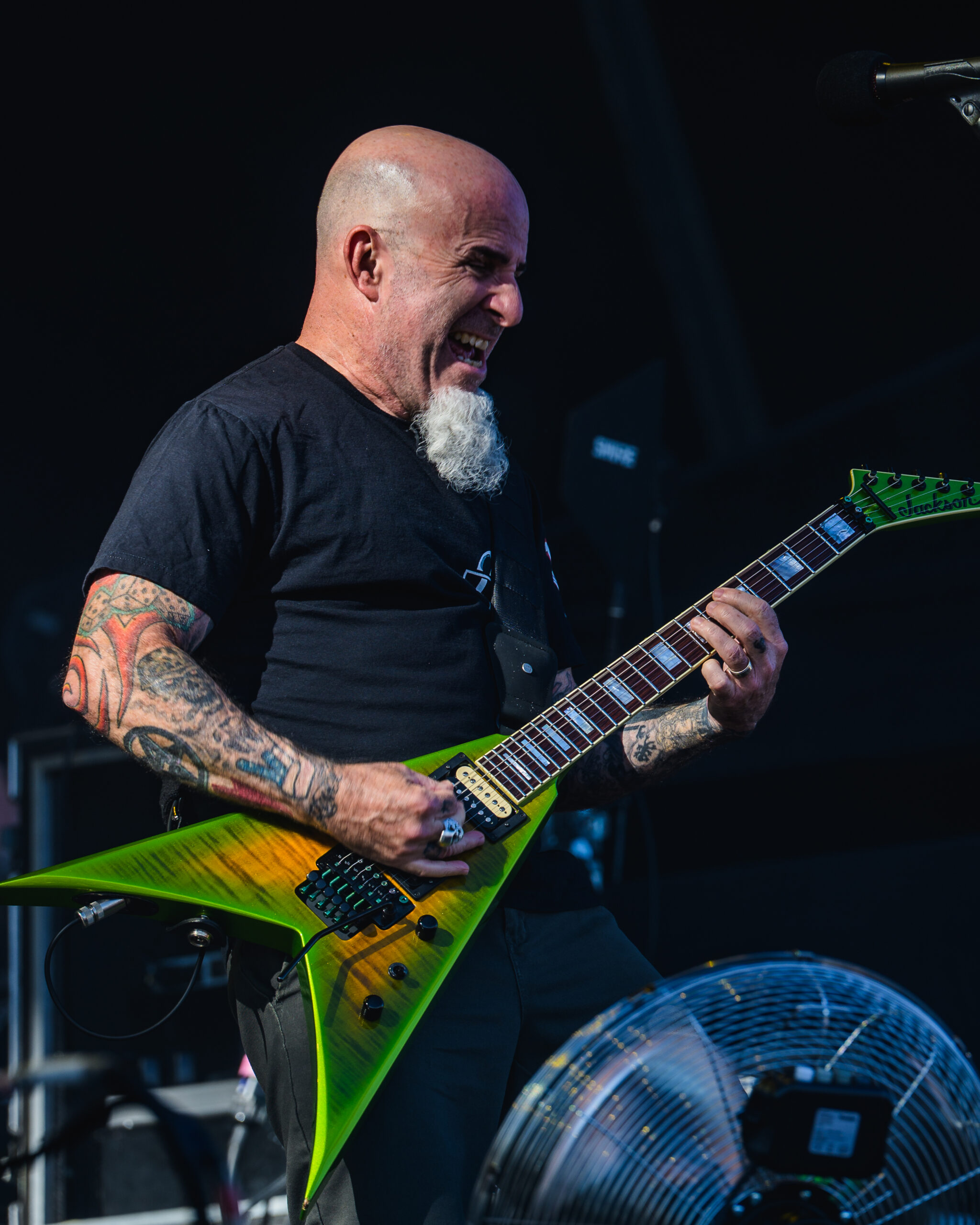
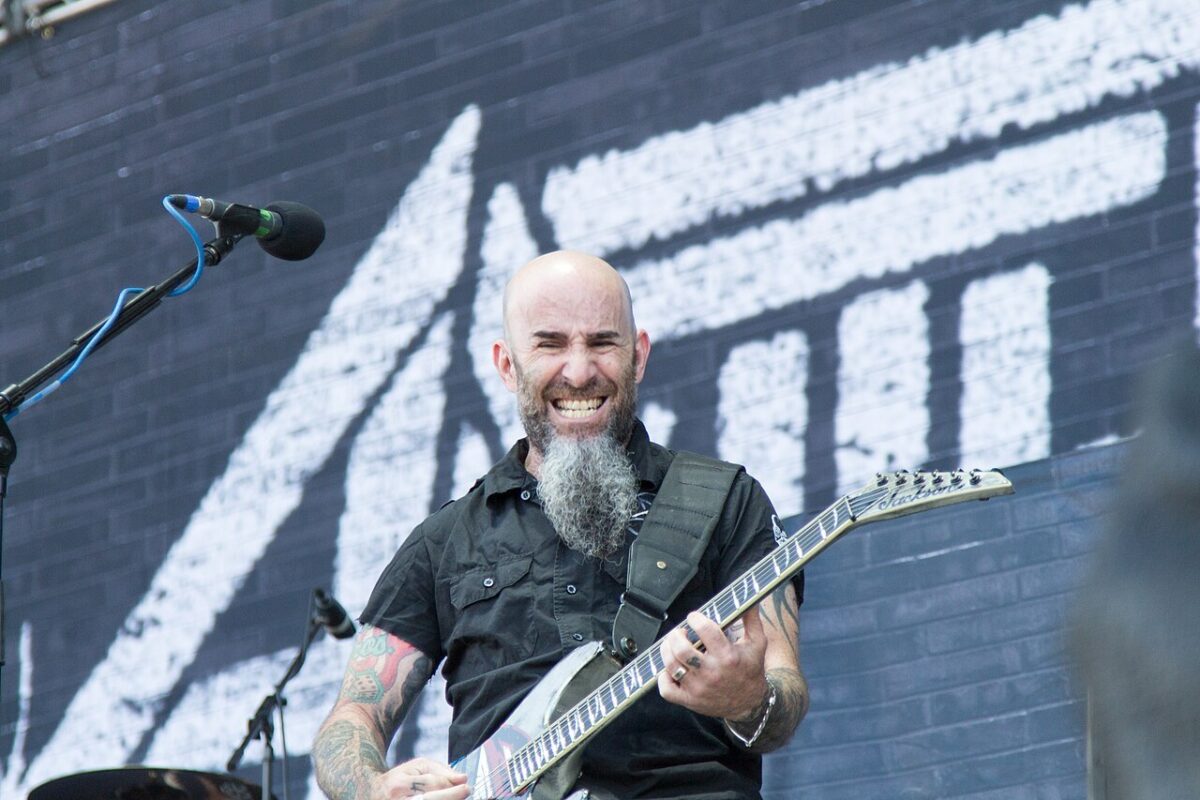
Photo by Birgit Fostervold, licensed under CC BY-SA 4.0 (https://commons.wikimedia.org/wiki/File:Scott_Ian_Anthrax_Tons_of_Rock_2026.jpg)
Gear Timeline
Scott Ian has never played a lead guitar solo in a live Anthrax performance. In forty-plus years of professional playing, through twelve studio albums, hundreds of tours, and the full arc of thrash metal from underground cult phenomenon to arena-filling institution, the co-founder and sole constant member of Anthrax has never once stood at the front of the stage and played the kind of extended lead guitar showcase that most rock guitarists at his commercial level consider mandatory. He is, by absolute design and absolute conviction, a rhythm guitarist. Not a guitarist who happens to play rhythm. Not a guitarist waiting for his moment to play lead. A rhythm guitarist — the specific, undervalued, foundational instrument of thrash metal — executed with a level of precision, aggression, and musical intelligence that has made him the definitive example of what the instrument can be when someone commits to it completely. “I mean, the first chord of the set, man, we hit that big E chord and go into ‘Among the Living’… it makes me so happy,” he has said of his current EVH 5150 III rig. “It sets the tone for the rest of the night. It’s literally pushing me in the back.” The first chord of the set. The E chord. Not a solo. Not a lead. The chord that launches a thrash metal show into the audience like a thrown object. This is Scott Ian’s musical life, and he would not change a note of it.
The Journey
Scott Ian — born Scott Ian Rosenfeld on December 31, 1963, in Flushing, Queens, New York — co-founded Anthrax in 1981 with drummer Charlie Benante, developing the specific crossover between punk energy and metal technique that would define Bay Area thrash from the East Coast perspective. Where the San Francisco Bay Area’s thrash bands (Metallica, Exodus, Slayer) operated from a context deeply informed by hardcore punk and the specific West Coast metal underground, Anthrax brought a New York energy — harder, more aggressive, with the specific attitude of a band that grew up in the same general cultural environment as the New York hardcore scene and absorbed its directness without adopting its musical conservatism. The result, across albums from Fistful of Metal (1984) through Worship Music (2011) and For All Kings (2016), is a thrash metal catalog with both the technical accomplishment of the genre’s best work and the specific, almost punk-like commitment to the song as a vehicle for energy rather than as a vehicle for virtuosity.
His primary guitar influence is Malcolm Young of AC/DC — not the most expected influence for a thrash metal guitarist, but the most revealing one. Malcolm Young was the rhythm guitar architect of one of rock’s most physically powerful rhythm sections: the locked, groove-based, maximally punchy downstroked rhythm playing that drove AC/DC’s recordings was Young’s specific contribution, and it produced the specific quality of physical impact — the way an AC/DC record feels like being pushed rather than just heard — that Ian has cited throughout his career as the fundamental model for what rhythm guitar should do. “I’ve never met Malcolm or Angus Young,” Ian has said, placing an encounter with Malcolm alongside a meeting with Stephen King as the two people he most wanted to meet in the world. The AC/DC influence is audible in the way Anthrax rhythm guitar functions: not as a supporting element but as the primary physical engine of the music, locked with the kick drum and the bass in a way that makes the entire band feel like a single percussive instrument at very high volume.
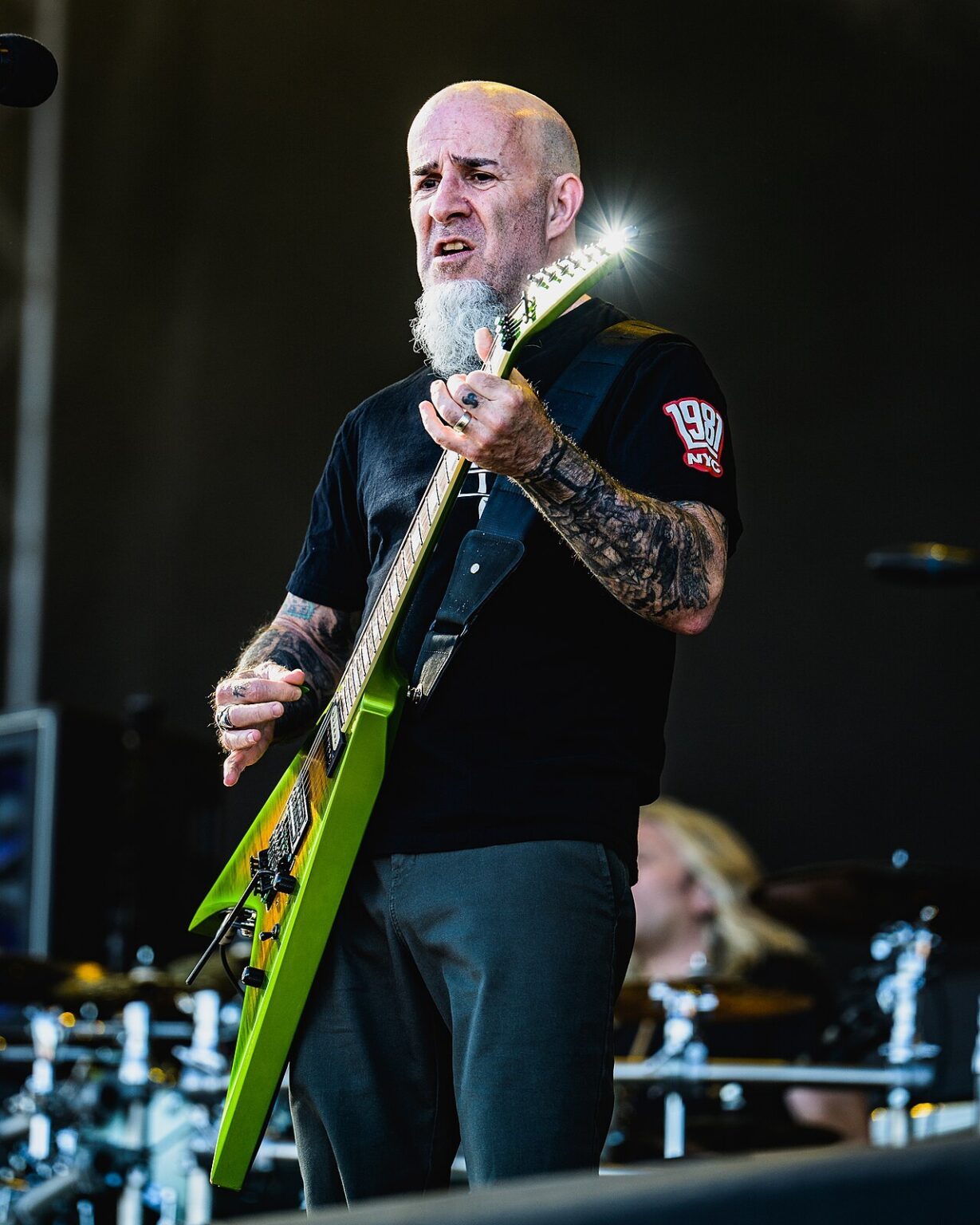
The Malcolm Young influence makes even more sense in the context of Ian’s gear evolution. Currently, Scott plays through an EVH 5150 III with EL34 tubes, using the crunch channel — which runs clean “but has that right amount of edge that makes it metal” when he digs in harder. The crunch channel. Not the lead channel. Not the ultra-high-gain channel. The crunch channel, which produces the specific quality of controlled distortion that responds to pick attack — dig in and it gets heavy; back off and it cleans up. This is exactly the way Malcolm Young used his Marshall: a relatively clean setting that responded to the physical commitment of the picking attack. The guitar produces the distortion; the amp amplifies it. The right hand is the tone control.
The “Bring the Noise” chapter of Anthrax’s career — the 1991 collaboration with Public Enemy on a metal reworking of one of hip-hop’s most celebrated tracks — is the cultural moment that proved Anthrax’s specific quality most clearly. Chuck D. and Flavor Flav rapping over Scott Ian’s thrash metal rhythm guitar: the collaboration worked because the rhythmic precision of Ian’s playing — the lockstep with the kick drum, the specific quality of downstroked rhythmic attack — is fundamentally compatible with the rhythmic intelligence of hip-hop production. Both are about rhythm above all else. The genres sound different but they share the same commitment to the beat as the primary expressive vehicle. This is also, not coincidentally, exactly why Malcolm Young was Ian’s primary guitar hero: AC/DC is also fundamentally about rhythm above everything else. Ian understood, from the beginning, that thrash metal and hip-hop and AC/DC were all expressions of the same basic musical priority. Everything follows from the beat.
Background: Flushing Queens, The Big Four, and the Definitive East Coast Thrash Rhythm Guitarist
The Anthrax origin story begins in a Queens, New York high school in 1981, where Scott Ian and Charlie Benante — whose subsequent partnership as the rhythmic core of Anthrax has been as sustained and productive as any in thrash metal history — formed the initial version of the band. The East Coast context distinguished Anthrax from the Bay Area thrash scene in ways that were always present even when the genre category lumped them together: Anthrax had more exposure to New York hardcore (Bad Brains, Black Flag in their New York tours, the CBGB scene), more connection to the New York rock underground’s specific attitude of confrontational directness, and the specific energy of a band playing in a city that has always demanded that you earn your audience’s attention rather than receive it as a default. The Anthrax sound — faster than most metal, more aggressive than most punk, with the specific combination of technique and attitude that defined the genre at its best — is the product of this specific environment.
Among the Living (1987) is the album that most fully realized what Anthrax was: twelve songs of thrash metal with the rhythmic precision, melodic intelligence, and cultural breadth — the album’s themes drawn heavily from Stephen King’s The Stand, from Judge Dredd comics, from Indian lore — that distinguished the best Anthrax material from simpler, less intellectually engaged contemporaries. Ian wrote most of the album’s music, and it demonstrates not just technical competence but genuine compositional ambition: the riffs on “Among the Living,” “Indians,” “I Am the Law,” and “A.D.I./Horror of It All” are among the finest in thrash metal, and they are specifically rhythm guitar compositions — structures built from the rhythmic interplay of downstroked chords with the kick drum — rather than lead guitar showcases.
The “Big Four” — Metallica, Slayer, Megadeth, and Anthrax — represent the four primary creative expressions of American thrash metal at its commercial peak, and within this company, Anthrax’s specific contribution is the most rhythmically sophisticated and the most stylistically eclectic. Metallica brought compositional ambition and technical precision. Slayer brought maximum speed and aggression. Megadeth brought musical complexity and political edge. Anthrax brought the specific quality of rhythmic groove — the locked-in, Malcolm Young-influenced rhythm guitar approach that gave even their fastest material a quality of physical momentum rather than just speed. The “Big Four” concert film (2010, at Sonisphere UK) and the subsequent Big Four shows were the formal acknowledgment that these four bands had collectively defined a genre, and Scott Ian’s specific position within the company of Hammett, Kerry King, and Dave Mustaine confirmed his status as the genre’s defining rhythm guitarist.
Stormtroopers of Death — the side project formed with Charlie Benante, bassist Dan Lilker, and comedian Billy Milano in 1985 — produced Speak English or Die, one of the most controversial and commercially significant crossover thrash albums, and demonstrated the specific quality of Ian’s musical intelligence: the ability to work in a more extreme, more comedic, more deliberately provocative context without losing the musical precision that made the Anthrax work serious. The SOD album’s rhythm guitar is as tight and as precisely downstroked as anything in the Anthrax catalog; the context is just significantly less earnest. This flexibility — the ability to play the same physical approach to the rhythm guitar in radically different cultural contexts — is part of what distinguishes Ian from more one-dimensional thrash metal rhythm guitarists.
The Rig: Scott Ian’s Guitars, Amps, and Effects
Guitars
The first axe Ian picks up for most Anthrax shows is his current signature model from the Jackson Custom Shop, sporting the company’s old-school logo, an FU-Tone Floyd Rose, Seymour Duncan JBs, and — key — Eddie-approved Iron Maiden wristbands holding his wireless packs. The King V body shape — Jackson’s symmetrical V design with both lower horns pointing at equal angles — is a deliberate homage to the Randy Rhoads-era Jackson aesthetic while representing a different body silhouette from the asymmetrical Rhoads Concorde. This 6-string has a 24.75-inch scale neck, a mahogany body, a 1-piece through-body maple neck, Seymour Duncan pickups, a 12-inch-to-16-inch compound radius bound laurel fretboard, and 22 jumbo frets. The 24.75-inch scale — Gibson scale length rather than Fender scale — provides slightly lower string tension at the same pitch, which combined with the half-step down tuning Ian uses gives the rhythm guitar a specific physical quality: marginally easier to play at high tempo, with a slightly different attack character from the longer Fender scale. The FU-Tone Floyd Rose is Ian’s hardware upgrade choice — FU-Tone’s titanium saddles and stainless steel springs provide improved sustain, faster tuning return, and reduced string breakage compared to standard Floyd Rose hardware. The Seymour Duncan JB humbucker in the bridge is among the most widely used bridge pickups in rock and metal — its high output and aggressive midrange character providing the specific punch of Ian’s downstroked rhythms.
Ian plays his custom-painted Jackson Soloist — his previous signature model — during “In the End,” Anthrax’s tribute to Ronnie James Dio and Dimebag Darrell, from 2011’s Worship Music album. The Soloist — Jackson’s superstrat design with a carved maple top over a mahogany body — was Ian’s primary stage guitar for the Worship Music period and remains in rotation for this specific, emotionally significant song. The custom painting on this particular example is described as “a metal version of Mt. Rushmore” — a portrait of four significant metal figures rendered in a classic American monument format, which is both visually dramatic and characteristically irreverent.
The Franken V — built via a collaboration between Jackson and EVH as a tribute to Eddie Van Halen’s iconic Frankenstrat — has the body of a standard Jackson King V in a red-black-and-white striped colourway. It was assembled by Mike Shannon, the Custom Shop Master Builder who built Ian his first-ever Jackson back in 1983. “The Franken V is literally a dream come true,” Ian said. “It’s a design I’ve always wanted and I’m so grateful to Matt Bruck, Wolfgang Van Halen and the EVH family for making it happen.” The full-circle quality of this instrument — the same builder who made his first Jackson in 1983 building a tribute to the guitarist who inspired his amp choice four decades later — is characteristic of Ian’s specific combination of musical consistency and genuine guitar enthusiasm.
A custom McSwain zombie guitar was built with wood from a church at the cemetery where “Night of the Living Dead” was shot. This instrument — the most literally metal guitar in this series, constructed from materials with genuine horror cinema provenance — reflects Ian’s specific cultural enthusiasms. He is, alongside his thrash metal identity, an enthusiastic horror fan, Stephen King collector, and cultural omnivore whose non-musical interests run directly parallel to the lyrical themes of the Anthrax catalog. A guitar built from a church at the Night of the Living Dead cemetery is the physical expression of a specific set of cultural values.
Ian delivered fistfuls of metal with his first custom Rhoads Concorde. The Rhoads-model — the offset V design that Randy Rhoads made famous in his Ozzy Osbourne work — was Ian’s primary instrument through the early Anthrax catalog from Fistful of Metal through State of Euphoria. This guitar was built by Mike Shannon, the Custom Shop Master Builder who subsequently built the Franken V forty years later — the same craftsman’s hands at both ends of a forty-year relationship. The Jackson Rhoads’s specific alder body, quartersawn maple neck, and ebony fingerboard produce the combination of bright attack and clear definition that made it the standard for technically demanding metal rhythm playing in the 1980s.
Ian has worked through Anthrax’s modern-day renaissance with an arsenal of signature X-Series King Vs. The Jackson X-Series provides the production-level version of his signature specification — poplar body, maple neck, compound radius amaranth fingerboard, Seymour Duncan JB bridge humbucker, and Floyd Rose Special tremolo — at a price accessible to the broader guitar market. The “Among the Living” limited edition — produced in collaboration with Guitar Center in a run of 250 units at approximately $699 — brought the signature to an even more accessible price point. “This one, Jackson did a deal with Guitar Center, and they did 250 of these limited edition for like $699 bucks,” Ian said, noting he bought his example at a Guitar Center in Philadelphia.
Scott mentions the Seymour Duncan JB at the relevant point in his gear discussion. The JB (Jazz/Blues) humbucker in the bridge position is the primary sonic constant across all of Ian’s Jackson instruments — the high-output ceramic-magnet pickup that provides the aggressive, mid-forward character of his downstroked thrash rhythms. The JB’s specific attack character — the initial transient of a downstroked power chord at speed — is more defined and more aggressive than lower-output or alnico-magnet alternatives, and this specific attack quality is the essential element of the Anthrax rhythm guitar sound. The pickup’s output drives the EVH 5150 III’s crunch channel into the specific “right amount of edge that makes it metal” that Ian has described as his tonal target.
For lower tunings, Ian uses D’Addario .010-.052 sets. At one point, he was using .012-.060 sets, but was brutalizing his hands. For standard, he employs .009-.042s. The transition from .012-.060 to .010-.052 for down-tuned playing — reducing the string gauge when the hand damage from the heavier strings became problematic — is the practical wisdom of a professional musician who has been performing thrash metal at high intensity for forty years. The .012-.060 gauge at a half-step down produces a specific tension; the .010-.052 gauge at the same tuning is lighter and easier on the picking hand without sacrificing the tonal weight that the lower tuning provides.
Amps
Ian says he’s gotten every EVH 5150 model since they debuted, and the EL34 tubes that stock his trio of heads provide his vision of the ultimate tone. He plugs into the crunch channel, channel 2, and runs clean “but has that right amount of edge that makes it metal.” “I’m running two of the EVH IIIs with the EL34s. So, two heads into two cabinets, that’s it.” The EL34 tube choice is significant: where the standard 5150 III uses 6L6 tubes with a warmer, more American character, the EL34 version produces a specifically British, more aggressive quality. The crunch channel preference is equally significant: Ian avoids the ultra-high-gain lead channel in favor of the crunch channel, which provides the specific dynamic response he needs — a channel that cleans up when he picks lighter and saturates when he digs in. This is exactly the Malcolm Young approach: the amp responds to the player rather than compressing all dynamics into a constant high-gain wall. Contrary to what everybody thinks, he rocks the “Crunch” channel which allows him to retain clarity while getting generous chugging tones by digging into the guitar harder.
Scott Ian used his Randall signature modular amp — which is no longer in production — for his primary live amplification for an extended period. It has three modular channels which he custom designed. Channel 1 is his “clean” channel and is nicknamed “Malcom” for its AC/DC-style tone, Channel 2 is called “1987” and is modeled after his ’80s JCM800s, and Channel 3 is nicknamed “Nuts” and is a modern gain channel that he kicks in sometimes for feedback at the end of a song. The naming of the channels is the most revealing gear documentation in this article: calling the clean channel “Malcom” — after Malcolm Young — confirms that the AC/DC guitarist’s specific clean-but-punchy character is the foundational tonal reference point around which Ian builds his amplification approach. The “1987” channel’s reference to the Marshall JCM800 from the Anthrax recording prime years confirms the second tier of the tonal hierarchy. The “Nuts” channel is the modern high-gain option used only for specific extreme effects — not the primary tone but the available emergency reserve.
The sound of the first four Anthrax records — Fistful of Metal (1984), Spreading the Disease (1985), Among the Living (1987), and State of Euphoria (1988) — was delivered through a Custom Shop Jackson Randy Rhoads guitar and Marshall JCM800 amplification. In recording contexts, Ian used his signature Randall heads in combination with one of his old Marshall JCM800s with his TC Electronic Booster/Distortion pedal from back in the ’80s in front of it. The JCM800 is the fundamental historical amplification of the Anthrax thrash catalog, and its continued presence in Ian’s studio arsenal confirms that its specific tonal character — the EL34-powered British warmth and the preamp gain of the JCM800 architecture — remains a reference point even as the live rig has evolved to the EVH 5150 III.
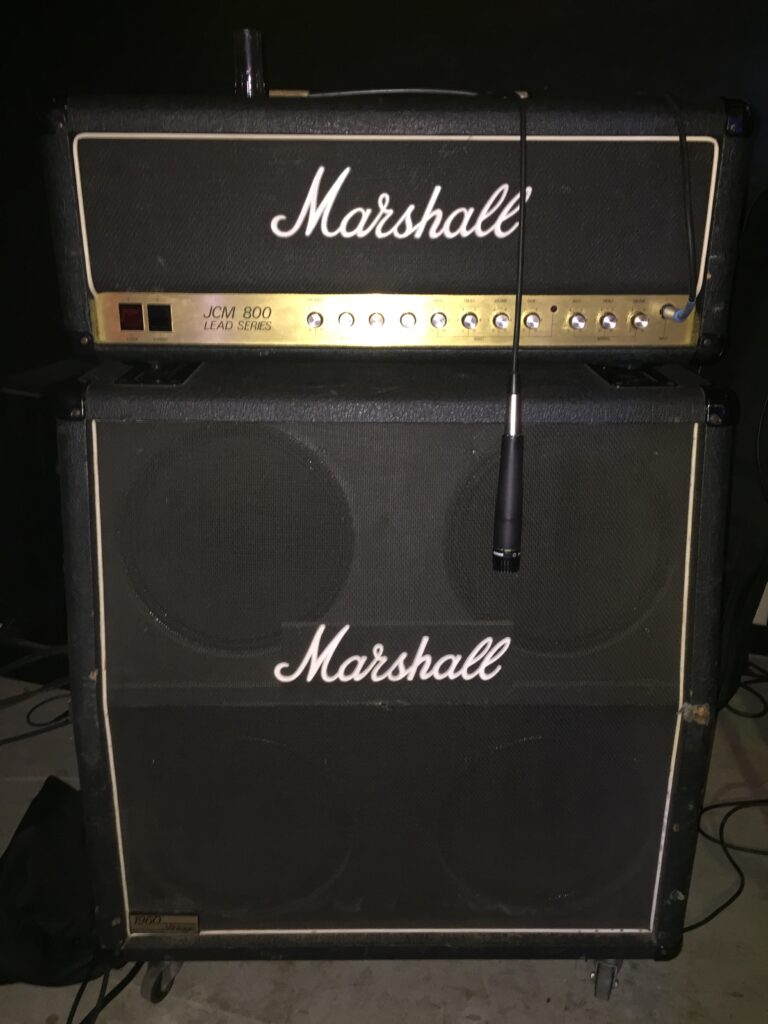
The EVH 4×12 straight cabinets are the standard cabinet pairing with the 5150 III heads in Ian’s current live configuration. The EVH cabinets are loaded with Celestion Vintage 30 speakers — the 30-watt ceramic magnet speaker with a specifically mid-forward frequency response that suits the aggressive, mid-present character of the 5150 III’s crunch channel and the downstroked rhythmic attack of Ian’s playing approach.
Effects
The CAE Boost/Overdrive is in the signal chain all the time. “This just gives it a little extra push that I need to get the edge and the chunk and the gain that I need out of it. And my main rhythm tone all night, this boost side stays on all the time.” The Custom Audio Electronics Boost/Overdrive functions as Ian’s permanent signal enhancement: always engaged, never bypassed during a performance, providing the consistent midrange push and signal level increase that gives the EVH 5150 III’s crunch channel its specific rhythm guitar character. This always-on boost philosophy is consistent with the approach of a guitarist who has identified exactly what his tone needs and applies it consistently rather than experimenting with dynamic engagement and bypass.
The MXR Smart Gate is always on. The MXR Smart Gate is a noise gate — a device that mutes the signal below a threshold volume to eliminate amplifier and pickup noise during the silences between notes. For a thrash metal rhythm guitarist playing with the levels of gain that Ian’s rig produces, a noise gate is essential: the tight, aggressive downstroked rhythm playing of thrash metal relies on the silence between note attacks being genuinely silent, and the high-gain amplification that produces the required distortion also amplifies the noise floor of the system. The Smart Gate ensures that the pauses between downstrokes are clean and controlled rather than hum and hiss-filled.

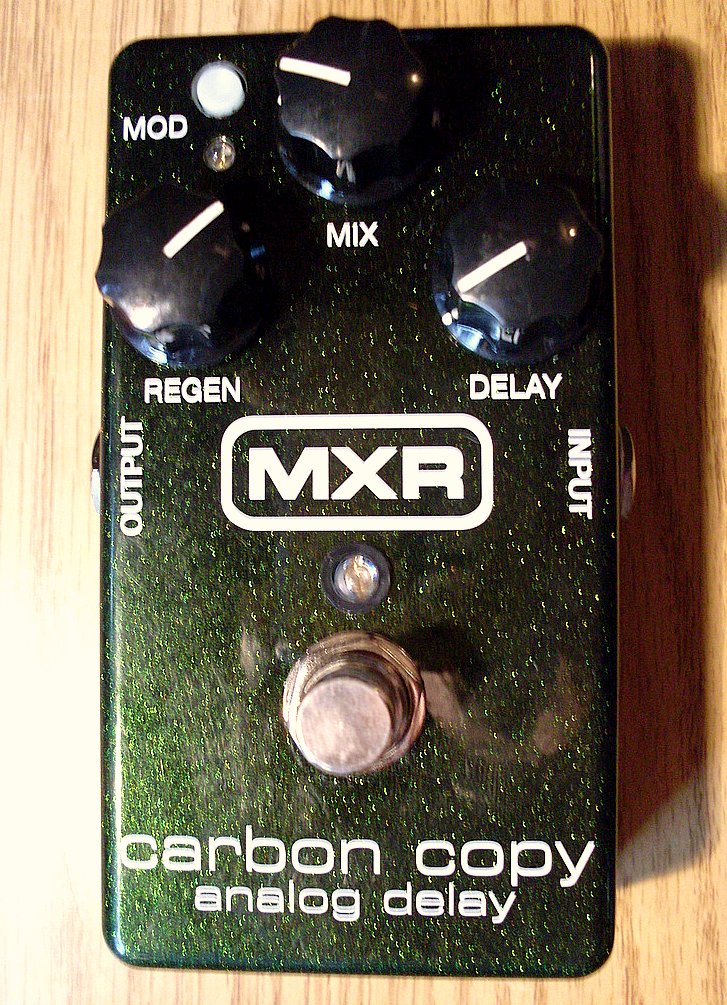
Scott uses minimal effects, employing the MXR Carbon Copy Delay for specific song parts. The MXR Carbon Copy analog delay — a compact, warm-sounding analog delay using BBD chip technology — provides the time-based effects for specific Anthrax songs that require echo or delay character. Its analog character suits the vintage-influenced tonal approach of the Anthrax catalog better than cleaner, more precise digital delay alternatives.
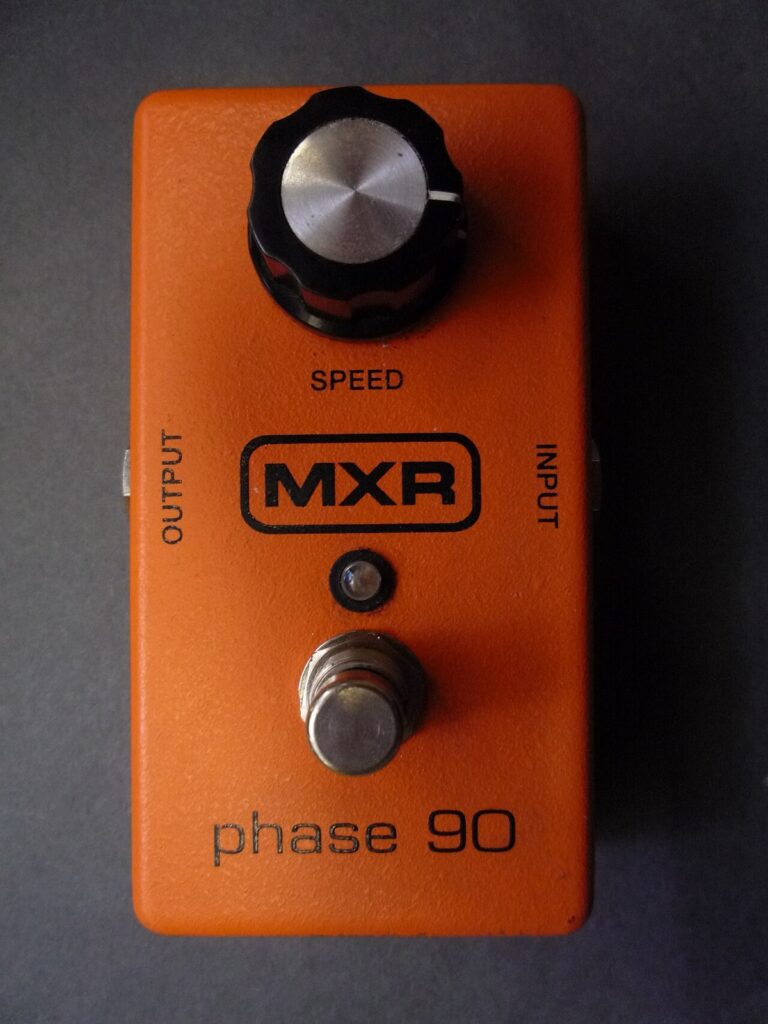
The MXR EVH Phase 90 is used for specific song parts. The EVH Phase 90 — the MXR Phase 90 voiced to the specific character of Eddie Van Halen’s Phase 90 use, with the “Script” logo circuit character — adds the same phase modulation texture that Eddie used on his early Van Halen recordings, available selectively for specific Anthrax passages. Its inclusion alongside the EVH 5150 III amplification confirms the coherence of Ian’s Van Halen-inflected tonal approach — the EVH amp, the EVH phase pedal, the Franken V tribute guitar.
The TC Electronic Corona Chorus is used for specific song parts. The TC Corona is a high-quality stereo chorus pedal with the TC Electronic TonePrint technology for custom voicing. Its selective use — for specific passages rather than as a constant tonal presence — is consistent with Ian’s minimal-effects philosophy: every effect has a specific purpose and is used only for that purpose.

A TC Electronic Booster/Distortion pedal from back in the ’80s was used in combination with the Randall and Marshall heads for studio recording of later Anthrax albums. The TC Electronic Booster/Distortion — a vintage TC Electronic product from the brand’s early professional pedal period — provided the additional drive and midrange boost for specific studio applications where the amp’s natural character needed supplementing.
Ian’s standard performance tuning is a half-step below concert pitch — Eb, Ab, Db, Gb, Bb, Eb. This is the same half-step-down tuning used by numerous hard rock and metal guitarists (Slash, Hendrix, Motörhead) for the specific combination of slightly lower string tension (easier to play at high speed), slightly darker and heavier tonal character, and compatibility with vocalists who prefer a slightly lower key. Combined with the .009-.042 string gauge for standard material and .010-.052 for further down-tuned material, Ian’s string and tuning configuration is specifically optimized for the physical demands of aggressive thrash metal rhythm playing at sustained tempos.
One of Ian’s King Vs has lightning bolt inlays as a tribute to Malcolm and Angus Young. This specific instrument modification — replacing the standard dot or shark fin fretboard inlays with lightning bolt-shaped markers as a tribute to the AC/DC brothers — is the most direct possible physical expression of Ian’s primary guitar influence. The guitar he plays every night has the initials of his heroes embedded in its fretboard.
Playing Style & Tone Philosophy
Scott Ian plays thrash metal rhythm guitar as if the rhythm guitar is the only instrument that matters — which, in his musical philosophy, it essentially is. The specific quality of his downstroked chord attacks — tight, aggressive, precisely locked with Charlie Benante’s kick drum in a way that makes the two instruments feel like a single percussive unit — is the foundational physical experience of an Anthrax performance. The E chord at the beginning of “Among the Living” doesn’t just introduce the song; it establishes a physical fact about the relationship between the guitar and the drums that defines everything that follows for the next ninety minutes.

The crunch-channel philosophy — using an amplifier channel that responds to pick attack rather than compressing all dynamics into constant maximum saturation — is the direct implementation of the Malcolm Young lesson. Young’s rhythm guitar produced power from precision rather than from gain: a relatively clean amplifier setting, high volume, and the physical commitment of the right hand to the downstroke provided all the apparent distortion. Ian’s EVH 5150 III on the crunch channel with the CAE Boost works on the same principle: the boost provides enough additional signal to push the crunch channel into the specific saturation he needs, while the channel itself retains enough dynamic response to reflect the attack character of each downstroke. The tone is in the right hand. The amp amplifies it.
The MXR Smart Gate’s always-on status is the philosophical mirror image of the crunch channel preference: both reflect the same commitment to precision and control. The Smart Gate ensures that the silence between notes is genuinely silent; the crunch channel ensures that the notes themselves have genuine dynamic character rather than compressed sameness. Ian’s rhythm guitar is a study in the productive tension between aggression (the volume, the gain, the speed) and precision (the gate, the picking accuracy, the locked-in relationship with the kick drum).
How to Sound Like Scott Ian
The Anthrax rhythm guitar tone requires: a Jackson (King V or Rhoads model, Seymour Duncan JB bridge pickup, hardtail or Floyd Rose bridge); an EVH 5150 III on the crunch channel with EL34 tubes; CAE Boost/Overdrive always engaged; MXR Smart Gate always engaged. Tune down a half step. Use D’Addario .010-.052 strings for the down-tuned passages. Downstroke. Lock with the kick drum. Everything else follows.
| Control | Setting (0–10) | Notes |
|---|---|---|
| CAE Boost/Overdrive (Always On) | Drive: 4; Level: 7; Tone: 5 | Always on — not a lead boost but a permanent signal enhancement. Moderate drive adds midrange chunk; higher level pushes the EVH crunch channel into the specific saturation Ian requires. This combination stays engaged for every song, every chord, the entire set. |
| EVH 5150 III — Crunch Channel (Ch. 2) | Gain: 6; Volume: 7 | The crunch channel — not the lead channel. Medium gain with the CAE Boost in front producing the combined saturation. The key is that this channel responds to pick attack: dig in and it saturates; back off and it cleans slightly. This dynamic response is the Malcolm Young approach applied to the EVH platform. |
| Bass | 6 | Controlled bass. Thrash metal rhythm guitar needs tightly controlled low end — loose, boomy bass blurs the precision of fast downstroked power chords. The JB’s tight low-end character combined with moderate amp bass produces a controlled, punchy foundation. |
| Mid | 7 | Present midrange — the “chunk” of the Ian rhythm tone lives in the midrange. The JB’s aggressive midrange character plus amp mid at 7 produces the specific forward, cutting quality that makes Anthrax rhythm guitar audible and aggressive even in a dense live mix. |
| Treble | 6–7 | Moderate-to-present treble for attack definition. Each downstroke needs a defined initial transient — the “click” at the start of each chord attack that communicates the rhythmic precision. Treble at 6–7 provides this without the harshness of extreme settings at high gain. |
| Presence | 6 | Moderate presence for definition in the live mix. The EVH’s presence control at 6 provides sufficient high-frequency definition for the rhythm guitar to project clearly through the live arrangement without the aggressive sibilance of extreme presence settings. |
| MXR Smart Gate (Always On) | Threshold: 6; Decay: 3 | Threshold set high enough to gate out the high-gain amplifier’s noise floor during the silences between downstrokes, but not so high that it cuts the attack of aggressively picked notes. The silence between downstrokes should be genuinely silent. This is non-negotiable for thrash rhythm guitar at high gain levels. |
| Picking Technique | Downstroke; locked with kick drum; physical commitment | Downstroke all rhythm parts. Every power chord struck with a downward pick motion — no alternate picking for rhythm. Lock the downstroke with the kick drum’s attack so that both hit simultaneously. Physical commitment means the pick contacts the strings with the full authority of the forearm motion, not just the wrist. This is the Malcolm Young lesson. This is the Scott Ian technique. There is no shortcut. |
Influence & Legacy
Scott Ian’s influence on heavy metal guitar is specifically and precisely the influence of a rhythm guitarist who committed completely to his role and defined what that role could be at the highest level. He did not invent thrash metal rhythm guitar — James Hetfield and Dave Mustaine and the Slayer guitarists all contributed equally to the genre’s technical vocabulary — but he demonstrated, across four decades of consistent performance at the highest level, that the rhythm guitar was a primary instrument capable of as much musical intelligence and as much emotional impact as any lead guitar work in any other tradition.
The “Bring the Noise” collaboration with Public Enemy is his most culturally significant moment because it demonstrated the universal applicability of his approach: the precision, aggression, and rhythmic commitment of Anthrax thrash metal was completely compatible with the rhythmic intelligence of hip-hop production, because both were fundamentally about the same thing. This crossover — which predated the Judgment Night soundtrack and the nu-metal genre’s broader rap-metal experiments — proved that the rhythm guitar’s function as a percussive rhythmic instrument transcended genre boundaries in ways that lead guitar’s melodic function did not necessarily.
The lightning bolt inlays on the King V tribute to Malcolm and Angus Young are the most concise possible statement of his legacy: he understood, from the beginning, that the most powerful guitar music is built from rhythm, and he spent his career proving it. For the broader thrash metal guitar tradition, see Gary Holt’s parallel Exodus approach — the Bay Area thrash rhythm and lead guitarist whose precision downpicking parallels Ian’s East Coast approach. The Malcolm Young AC/DC foundation connects to the entire British hard rock rhythm guitar tradition. And the EVH 5150 III-and-crunch-channel approach connects to Warren DeMartini’s parallel philosophy of using the amp’s dynamic response rather than maximum saturation — the crunch channel approach as an ideological position as much as a tonal choice.
The first chord of the set. The big E chord. “Among the Living.” It makes him so happy. It’s literally pushing him in the back. This is what forty years of rhythm guitar precision produces: not diminishing returns but increasing joy. Scott Ian is the correct argument for playing rhythm guitar.
Frequently Asked Questions: Scott Ian Guitars & Gear
What guitar does Scott Ian use?
Scott Ian’s primary live guitar is his signature model from the Jackson Custom Shop, featuring a 24.75-inch scale neck, mahogany body, 1-piece through-body maple neck, Seymour Duncan JB pickups, 12-to-16-inch compound radius bound laurel fretboard, 22 jumbo frets, and an FU-Tone Floyd Rose tremolo. The body shape is the King V — Jackson’s symmetrical V design. Production versions of the signature are available as the Jackson X-Series KVX King V. Ian’s Jackson history began with a Custom Shop Randy Rhoads Concorde in 1983, progressed through various Soloist and RR models, and has settled in the current era on the King V. Earlier guitars included Washburn and ESP models during the mid-1980s.
What amplifier does Scott Ian use?
Ian’s current amplification is three EVH 5150 III heads with EL34 tubes. He uses the crunch channel (channel 2), running it relatively clean “but with that right amount of edge that makes it metal” when he digs in. Live, he runs two of the EVH IIIs with the EL34s into two cabinets. Previously, his primary live amp was the Randall Scott Ian Signature Modular head — a three-channel design with channels nicknamed “Malcom” (AC/DC clean), “1987” (JCM800), and “Nuts” (modern high gain). In studio contexts, he has combined his Randall signature heads with a vintage Marshall JCM800.
Why does Scott Ian use the crunch channel instead of the lead channel?
Contrary to what many people assume, Scott Ian uses the crunch channel on the EVH 5150 III, which allows him to retain clarity while getting generous chugging tones by digging into the guitar harder. This approach — using a channel that responds to pick attack rather than providing constant maximum saturation — is directly influenced by his primary guitar hero, Malcolm Young of AC/DC, who used relatively clean Marshall settings and relied on the physical commitment of his picking to produce the distortion character. Ian’s rhythm guitar responds to how hard he picks rather than maintaining constant high gain; this dynamic response is the foundational element of the Anthrax rhythm guitar character.
What is the CAE Boost/Overdrive and why is it always on?
The CAE Boost/Overdrive is in Scott Ian’s signal chain all the time — the boost side stays on throughout the entire performance. “This just gives it a little extra push that I need to get the edge and the chunk and the gain I need out of it.” The Custom Audio Electronics Boost/Overdrive provides a permanent midrange enhancement and signal level increase that pushes the EVH 5150 III’s crunch channel into the specific saturation range Ian requires for the Anthrax rhythm guitar tone. Unlike most pedal users who engage and disengage effects at different points in a set, Ian’s boost is a permanent component of his baseline tone — never bypassed, always contributing.
What is the “Franken V” and why is it significant?
The Franken V is a custom guitar built through a collaboration between Jackson and EVH — a Jackson King V body in red-black-and-white striped Frankenstrat colourway, assembled by Mike Shannon, the Custom Shop Master Builder who built Ian his first Jackson back in 1983. The guitar is a tribute to Eddie Van Halen’s iconic Frankenstrat and represents two full circles: the same builder who made Ian’s first professional guitar forty years earlier, building a tribute to the guitarist whose amplifier (the EVH 5150 III) now defines Ian’s live sound. “The Franken V is literally a dream come true,” Ian said of the instrument.
Has Scott Ian ever played a lead guitar solo?
Scott Ian is explicitly and proudly a rhythm guitarist who does not play lead guitar solos in Anthrax performances. In forty-plus years of Anthrax performances, the lead guitar roles have been occupied by various guitarists — Dan Spitz in the classic era, Rob Caggiano subsequently, and currently Jon Donais. Ian’s commitment to the rhythm guitar role is complete and absolute: his musical contribution to Anthrax is the rhythm architecture, the downstroked chord attack, the specific relationship with Charlie Benante’s kick drum that forms the physical foundation of the Anthrax sound. His primary guitar hero, Malcolm Young, also did not play lead guitar in AC/DC. The role model and the practice are consistent.
What was Stormtroopers of Death and how does it fit in Scott Ian’s career?
Stormtroopers of Death (S.O.D.) was a side project formed in 1985 with Anthrax drummer Charlie Benante, bassist Dan Lilker, and comedian/vocalist Billy Milano. Their debut album Speak English or Die is one of the foundational documents of crossover thrash — a genre that combined thrash metal’s speed and aggression with hardcore punk’s brevity and attitude. Ian’s rhythm guitar work on the S.O.D. material is as tight and as precisely executed as his Anthrax work; the musical philosophy is identical, with only the lyrical content and cultural context adjusted for the more deliberately provocative S.O.D. format. The band has reunited periodically and remains one of thrash metal’s most historically significant side projects.
Image credits
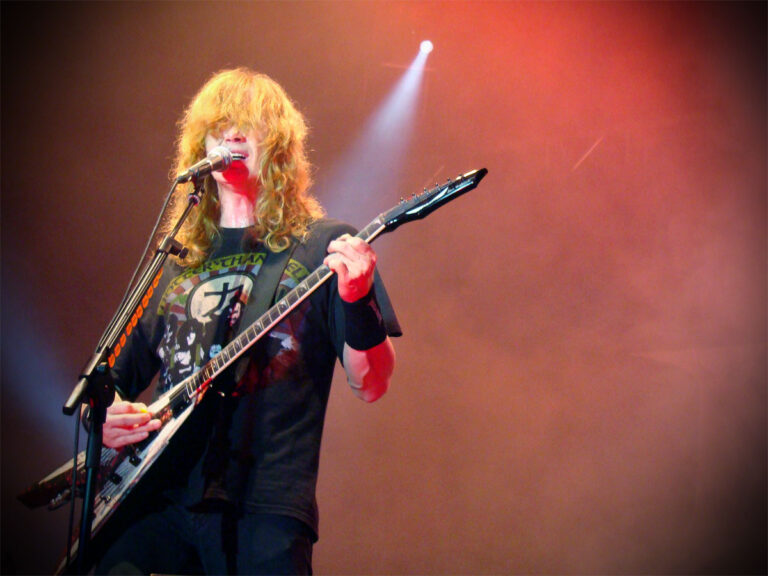
- Top image: by Birgit Fostervold, Wikimedia Commons, CC BY-SA 4.0.
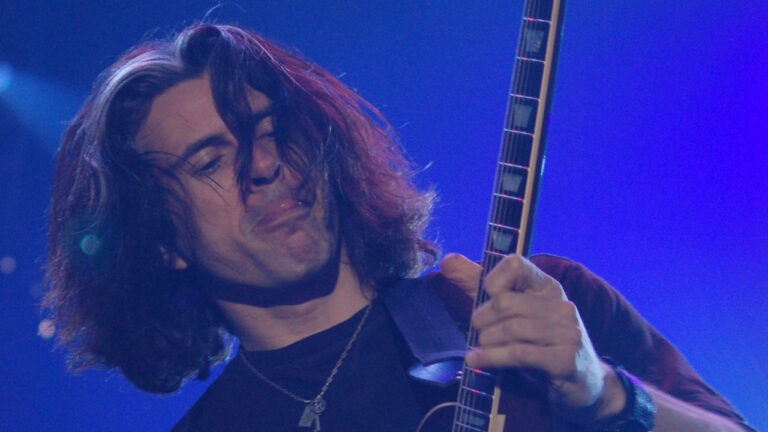
- Scott Ian: photo by Alfred Nitsch, via Wikimedia Commons, CC BY-SA 3.0 AT.
- Marshall JCM800: John2112, Wikimedia Commons, CC BY-SA 4.0.
- MXR Carbon Copy: MXR Carbon Copy by Roadside Guitars, Flickr, CC BY-SA 2.0.
- Scott Ian live: Birgit Fostervold, Wikimedia Commons, CC BY-SA 4.0.
- Scott Ian live: Alfred Nitsch, Wikimedia Commons, CC BY-SA 3.0.
- MXR Phase 90: Roadside Guitars, Wikimedia Commons, CC BY-SA 2.0.
- TC Electronic Corona Chorus: Guitar Chalk, Wikimedia Commons, CC BY 2.0.
- MXR Smart Gate: GuitarGangsters AI-generated reference illustration, not a photograph.