Gordon Giltrap Guitars & Gear: The British Folk Virtuoso’s Complete Rig
Gordon Giltrap guitars gear — Fylde acoustic and LR Baggs deep-dive for the Heartsong fingerstyle legend's natural tone, British folk technique, and complete rig.
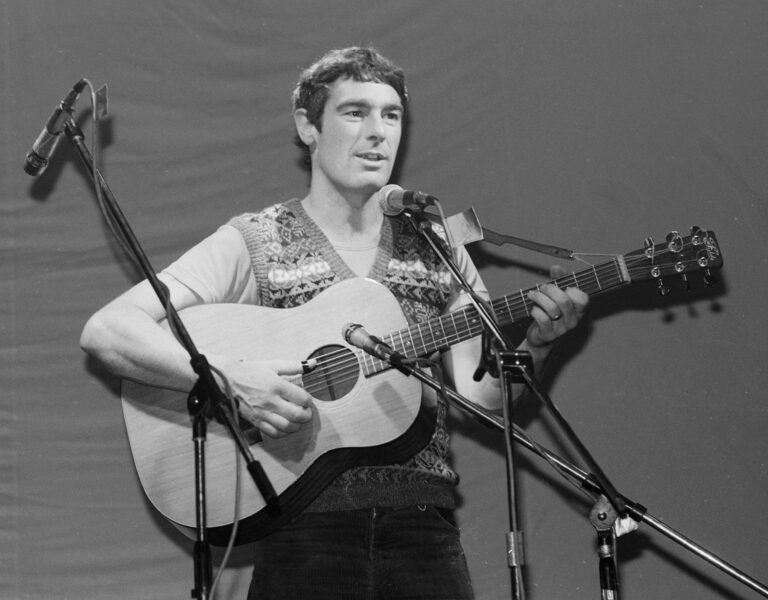
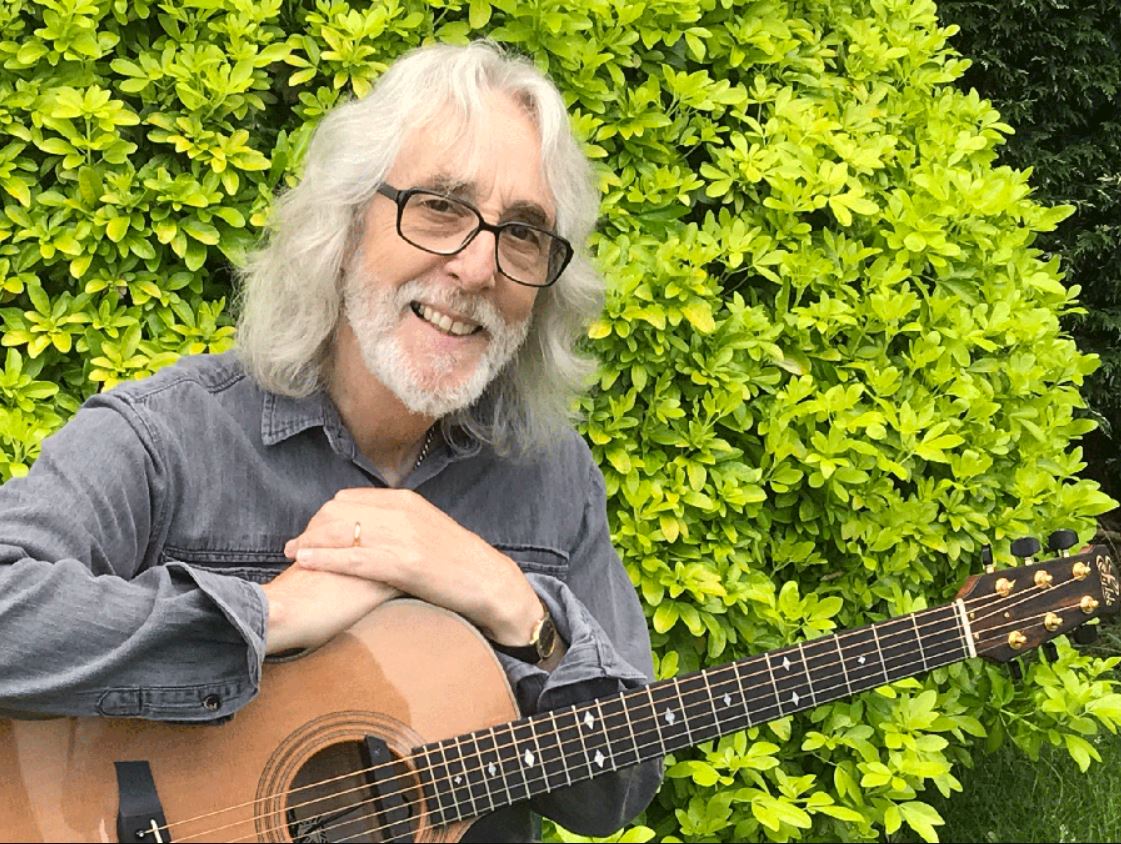
Baillon (Wikimedia Commons)
Explore Gordon Giltrap guitars gear and you enter the world of one of Britain’s most beloved and consistently underrated acoustic guitarists — a Kent-born fingerstyle master whose career spans six decades, whose 1978 instrumental “Heartsong” became one of the most recognisable guitar pieces in British popular music, and whose synthesis of classical technique, Celtic folk influences, and progressive rock ambition produced a body of work that resists easy categorisation while remaining immediately accessible to serious listeners. Giltrap sits in that distinctive British tradition of acoustic guitar music that exists slightly outside both the folk revival and the classical world — deeply influenced by both but belonging fully to neither, forging a personal language that is recognisably his own.
This guide covers Giltrap’s complete equipment picture: the acoustic and occasional electric guitars that have defined his sound, the amplification and pickup systems he has used for live performance, his approach to sound reinforcement in the demanding context of solo acoustic guitar performance, and the playing philosophy of a musician who has pursued beauty and emotional communication above technical display throughout a career of extraordinary length and consistent quality. Understanding Gordon Giltrap’s gear is understanding how a guitarist develops a personal acoustic sound across decades of live performance and studio work.
Background
Gordon Giltrap was born on April 6, 1948, in Borough Green, Kent, in the southeast of England. His early musical development was shaped by the folk revival of the late 1950s and early 1960s — the movement associated with players like Bert Jansch, John Renbourn, and Davy Graham that was bringing acoustic guitar playing to new levels of complexity and personal expressiveness in Britain. He absorbed these influences avidly, learning from records and from the community of players that the folk club circuit of the early 1960s created, and developed the fingerstyle technique that would remain central to his playing throughout his career.
His professional career began in the mid-1960s through the folk club circuit — the network of small venues, churches, and pub function rooms across Britain where acoustic music was being played and developed with an intensity of focus that the major concert venue circuit didn’t provide. This circuit was a practical education in performance — playing to audiences with varying degrees of interest in the music, learning to hold attention through the quality of the playing alone without the support of a band or elaborate production, and developing the specific techniques needed to make a solo acoustic guitar fill a room with music.
He signed to Transatlantic Records — the independent label that was also home to Bert Jansch, John Renbourn, and other key British acoustic players — and released a series of albums in the late 1960s and early 1970s that established his reputation within the acoustic guitar community without achieving mainstream recognition. The transition to a more progressive, electric-influenced approach — while never abandoning the acoustic foundation — came with his signing to Electric Records (later Pye) and the albums Giltrap (1974) and Visionary (1976), which incorporated orchestration and electric guitar alongside his acoustic playing.
The breakthrough came with Perilous Journey (1977) and its follow-up Fear of the Dark (1978) — the latter containing “Heartsong,” the instrumental piece that became the theme for the BBC’s Holiday programme and consequently one of the most widely heard guitar pieces in British popular culture. The immediate, recognisable appeal of “Heartsong” — its combination of melodic beauty, technical accomplishment, and emotional warmth — introduced Giltrap’s playing to millions of listeners who had not encountered acoustic guitar music in this form.
He has continued recording and performing into the 2020s with remarkable consistency — releasing new albums, touring solo and in various duo and ensemble configurations, and maintaining a quality of playing that reflects decades of development rather than mere repetition of established approaches. His later work has shown continued growth — deeper in harmonic complexity, more varied in technique, and no less emotionally direct than the recordings that established his reputation forty years ago.
Gordon Giltrap Guitars Gear: The Complete Rig
Guitars
Gordon Giltrap’s guitar history centres almost entirely on acoustic instruments, with occasional use of electric guitar for specific musical contexts. His acoustic guitar preferences reflect a search for the specific combination of tonal warmth, dynamic range, and playability that his fingerstyle technique requires.
His most significant guitar relationship has been with Fylde Guitars — the British guitar manufacturer founded in 1973 by Roger Bucknall, based originally in Penrith, Cumbria. Fylde instruments are handmade acoustic guitars of exceptional quality, built in the British tradition of high-craftsmanship lutherie rather than the production-line approach of the major American manufacturers. Giltrap’s relationship with Fylde began in the 1970s and has continued throughout his career — he is the most prominent artist associated with the brand, and the specific Fylde models built to his requirements represent some of the most distinctive instruments in the British acoustic guitar tradition.
His primary Fylde instruments have been custom configurations based on the Fylde Orsino body shape — a dreadnought-influenced design with specific modifications to the bracing pattern, body depth, and neck geometry that Bucknall developed in consultation with Giltrap over years of collaborative instrument development. The body is typically Sitka spruce for the top — the most common choice for steel-string acoustic guitar tops, with a combination of stiffness and flexibility that produces a wide dynamic range and clear harmonic response. The back and sides are typically Indian rosewood — warm in the low frequencies, clear in the midrange, with a natural brightness in the upper register that balances the spruce top’s natural emphasis on lower overtones.
The neck on his Fylde instruments is typically mahogany — warm, stable, and comfortable — with a rosewood fingerboard and medium-gauge fretwire appropriate for both the fingerstyle technique that dominates his playing and the occasional light flatpicking passages. The neck profile has evolved through various iterations of his instruments as his technique has developed and his specific requirements have been refined through extensive live performance and feedback to Bucknall.
String gauges for Giltrap’s acoustic work run to medium — typically .012–.053 or similar medium sets — which provide the fundamental tone mass and string tension that produces his full, sustaining sound. Lighter strings would produce a thinner tone and less sustain; heavier strings would make the bending and left-hand articulation his fingerstyle technique requires more physically demanding without proportional tonal benefit.
He has also used Martin acoustic guitars — particularly the D-28 dreadnought and the 000-28 Orchestra Model — for specific recording and performance applications. The Martin instruments, with their scalloped Sitka spruce tops and Indian rosewood back and sides, produce a different tonal character from the Fylde instruments — slightly different in the bass response, different in the way the sustain develops over time, with the specific quality of sound that decades of refinement of the Martin construction method produce. For certain studio contexts where the Martin’s specific character was more appropriate than the Fylde’s, Giltrap used them without the brand loyalty that some players develop.
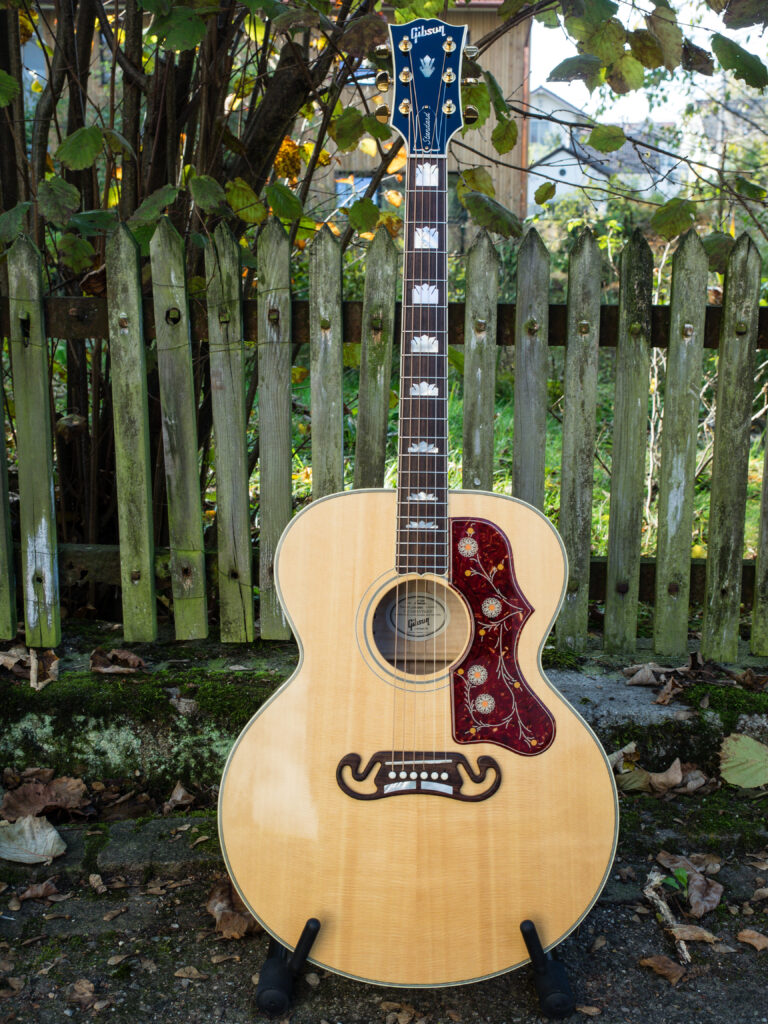
Occasional use of a Gibson J-200 jumbo acoustic — the large-bodied Gibson with a maple back and sides that produces a bright, projecting tone different from the rosewood-back instruments — appeared for specific contexts where the J-200’s particular brightness and projection were musically appropriate. The maple back and sides produce a different midrange character from rosewood — crisper, more reflective, with a brighter top end that suits strumming and flatpicking material more than the intimate fingerstyle that rosewood’s warmth complements.
For his occasional electric guitar work — which appears on some of his albums and in live contexts where the acoustic-only format was inappropriate — Giltrap used Fender Stratocaster instruments, chosen for the single-coil clarity and the vibrato arm that his electric playing incorporated.
Amps and Acoustic Amplification
Amplifying an acoustic guitar for solo live performance presents a fundamentally different set of challenges from amplifying an electric guitar — the goal is to reproduce the natural acoustic sound of the instrument at sufficient volume for the venue rather than to shape or transform the sound through the amplification process. Giltrap’s approach to acoustic amplification has evolved through various technologies across his career, always in pursuit of the same goal: a natural, transparent amplification that sounds like the guitar rather than like the guitar plus a specific amplification system.
His pickup systems have evolved from early magnetic soundhole pickups through various under-saddle transducer designs to the hybrid pickup/microphone systems that represent the current state of the art for acoustic amplification. The fundamental tension in acoustic guitar amplification — between the feedback resistance of contact pickups and the natural acoustic sound of microphones — has driven the development of increasingly sophisticated hybrid systems, and Giltrap’s use of successive generations of these systems reflects his ongoing pursuit of the most natural amplified acoustic tone available.
He has used L.R. Baggs pickup systems extensively — specifically the L.R. Baggs M1 soundhole pickup and the LR Baggs Anthem hybrid pickup/microphone system. The M1 soundhole pickup uses a magnetic single-coil design similar to an electric guitar pickup, mounted in the soundhole of the acoustic guitar. Its feedback resistance is excellent — magnetic pickups are much less sensitive to feedback from the speaker system than contact pickups or microphones — but it produces a slightly more electric guitar-like tone than under-saddle piezo pickups, with a different frequency response than the true acoustic sound. The Anthem hybrid system blends the natural sound of a small internal microphone with the feedback resistance of a contact element, producing a more naturally acoustic tone while maintaining manageable feedback resistance.
For his personal amplification in smaller venues, Giltrap has used acoustic amplifiers — particularly the AER Compact 60, a 60-watt solid-state acoustic amplifier designed specifically for acoustic instrument amplification. The AER’s clean, transparent character — designed to reproduce the natural acoustic sound of the instrument rather than to add the warmth of valve saturation or the character of specific speaker designs — suited his requirement for acoustic transparency. The Compact 60’s single 8-inch speaker and tweeter combination provided an appropriate frequency range for the full range of acoustic guitar frequencies, including the high harmonic content that larger, bass-heavy speaker systems can obscure.
In larger venue contexts, direct injection into the house PA system — using the pickup signal processed through a DI box and preamp — was the standard approach. The specific preamps he used to condition the pickup signal before the PA included the L.R. Baggs Para Acoustic DI — a preamp and EQ unit designed specifically for acoustic pickup signals, with controls for bass, midrange, and treble plus a notch filter for managing the specific feedback frequencies that acoustic guitar pickups are prone to in loud environments.
Effects
Giltrap’s effects use is minimal — consistent with the acoustic guitar tradition where the instrument’s natural sound is the primary tonal identity, and effects are ornamental rather than structural. He does not build his sound through a complex signal chain; he builds it through the instrument, the playing, and careful amplification of the natural acoustic character.
A reverb unit — typically a digital reverb pedal or rack unit for live work, and the natural reverb of well-chosen recording spaces in the studio — provides the spatial dimension that solo acoustic guitar requires in live performance. The natural reverb of a concert hall or recording space adds bloom and dimensional quality to acoustic guitar that amplified performance in drier environments lacks; reverb processing attempts to replicate this quality in venues where the natural room acoustic is insufficient. Giltrap’s reverb use is modest — enough to add appropriate space without the artificial wash that excessive reverb creates.
A volume pedal provides dynamic control in live performance — particularly for the longer, more atmospheric pieces where building from near-silence to full volume is musically important. His ability to use volume control as a compositional element — building and releasing tension through dynamic variation rather than harmonic or rhythmic means alone — is one of the more sophisticated aspects of his performance approach.
For specific studio recordings incorporating electric elements, additional effects appeared as the musical context required. But in his core live performance context — solo acoustic guitar amplified for a seated listening audience — his signal chain is as simple as the music allows: pickup into preamp, preamp into PA or acoustic amplifier, appropriate reverb, volume control. The simplicity is not austerity but musical intelligence.
Playing Style & Tone Philosophy
Gordon Giltrap’s playing is defined by the synthesis of multiple acoustic guitar traditions into a personal language that is immediately recognisable as his own. The classical guitar technique he absorbed in his early development — the right-hand fingering approaches, the left-hand articulation methods, the overall relationship between the two hands that classical training establishes — sits alongside the folk and blues influences that shaped the melodic vocabulary and emotional character of his playing, with occasional jazz harmonic influence adding depth to the harmonic language.
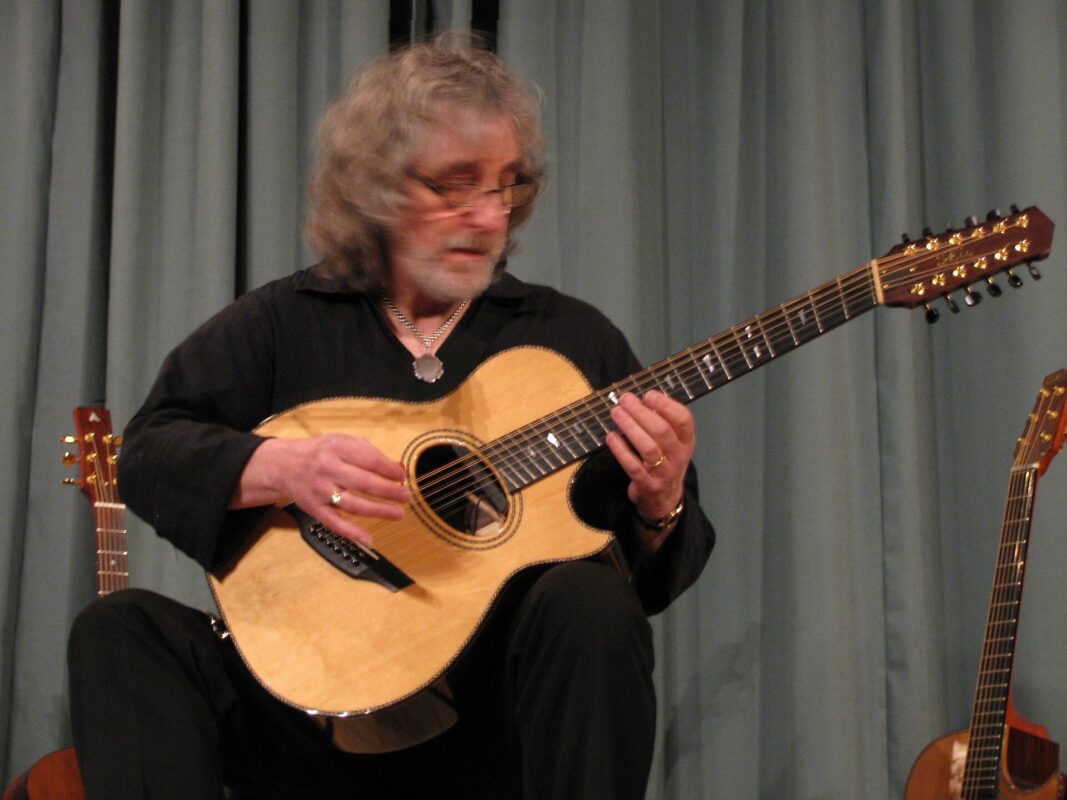
His fingerstyle technique is characterised by a right-hand approach that blends classical and folk traditions: the thumb handling bass notes independently of the fingers (the Travis picking approach that underlies much fingerstyle folk guitar), while the fingers provide melodic and harmonic material above it. In his most elaborate passages, all four fingers of the right hand are independently active — each handling specific melodic or harmonic material while the thumb maintains the rhythmic bass foundation. This multi-voice independence, developed through years of intensive practice and performance, gives his playing the quality of sounding like more than one guitarist playing simultaneously.
His melodic sensibility is deeply Celtic — the specific quality of his melodic lines, the ornaments and turns he applies to them, and the modal harmonic language that underpins much of his original material all reflect the Celtic folk tradition without being strictly traditional in any single national style. This Celtic quality gives his playing a specific emotional character — a combination of beauty and melancholy, of joy and yearning — that distinguishes it from the more American-influenced fingerstyle tradition of players like John Fahey or Leo Kottke.
His tone philosophy is entirely oriented toward the natural acoustic sound of the instrument: the goal of his equipment choices and his technical development has always been to produce the most beautiful, most expressive acoustic guitar sound he can, and every equipment decision is evaluated against that goal rather than against any external standard of fashionability or technical sophistication. The Fylde guitar’s specific tonal character, the L.R. Baggs pickup system’s attempt at natural transparency, the AER amplifier’s clean reproduction — all are in service of the same goal: to let the guitar’s acoustic voice reach the listener as directly and faithfully as possible.
How to Sound Like Gordon Giltrap
Guitar Approach
A quality steel-string acoustic guitar — a Fylde Orsino or equivalent quality British handmade instrument, or a Martin 000-28 for the American alternative — with medium strings (.012–.053) is the starting point. The instrument quality matters more for acoustic work than for electric work: the acoustic guitar’s natural voice is the primary sound, and an inferior instrument cannot be improved through amplification or effects in the way that electric guitar can be shaped by the signal chain.
The technical foundation is the independent right-hand fingerstyle approach — specifically the thumb-independent technique that allows bass notes and treble melody to exist simultaneously. This requires specific practice: start with simple bass-melody combinations at slow tempo, building independence of thumb and fingers gradually before combining them in complex patterns. Giltrap’s specific playing also requires left-hand strength and independence across all four fingers — particularly the ring and little finger, which weaker players typically avoid. Dedicated exercises for left-hand independence are as important as right-hand technique for his approach.
Amp and Pickup Approach
An L.R. Baggs pickup system — the Anthem hybrid or the Para Acoustic DI — provides the most natural acoustic signal for amplification. Run through an AER acoustic amplifier in smaller venues or direct into the PA via the Para Acoustic DI in larger ones, with modest reverb to add appropriate spatial dimension. The goal is to sound like the guitar rather than like the guitar plus an identifiable amplification system.
| Element | Setting | Notes |
|---|---|---|
| L.R. Baggs Anthem — Volume | Unity gain | No boost or cut — match PA input sensitivity |
| Para DI — Bass | Flat or slight cut | Reduce low-end buildup from proximity to PA speakers |
| Para DI — Mid | Flat | Neutral midrange — preserve natural acoustic character |
| Para DI — Treble | Slight boost | Compensate for high-frequency loss in acoustic pickups |
| Para DI — Notch filter | As needed | Find and attenuate specific feedback frequency |
| Reverb | Short, modest | Room simulation — not hall reverb |
| Volume pedal | Full | Reduce for dynamic control in atmospheric passages |
Influence & Legacy
Gordon Giltrap’s legacy sits at the intersection of several traditions without being wholly contained by any of them. Within the British acoustic guitar tradition, he is one of the central figures of the generation that followed Jansch and Renbourn — the generation that took the vocabulary those players had developed and extended it in personal, distinctive directions rather than simply continuing the folk tradition. His synthesis of classical technique, Celtic melody, and progressive rock ambition produced a body of work that expanded what British acoustic guitar music could be.
The BBC connection — “Heartsong” as the theme for the Holiday programme reaching audiences of millions over many years — gave him a cultural presence that most acoustic guitar players never achieve, and it introduced his playing to listeners who would not otherwise have encountered solo acoustic guitar music of this sophistication. The specific character of “Heartsong” — its combination of technical accessibility and emotional depth — made it an effective ambassador for the genre, and the interest it generated in his broader catalogue brought many listeners to the more complex and demanding work that represents his deepest artistic achievement.
His relationship with Fylde Guitars — sustained across five decades — has been significant both for Giltrap personally and for the British guitar manufacturing tradition. His association with Fylde is the primary factor that gives the brand its international profile, and the instruments developed through their collaboration represent some of the finest British-made acoustic guitars available. For players seeking genuinely British acoustic guitar construction — as an alternative to the American Martin and Taylor instruments that dominate the market — Fylde represents a tradition of craftsmanship that Giltrap’s advocacy has helped maintain.
For players exploring the British acoustic fingerstyle tradition that Giltrap represents, the rigs and approaches of Davy Graham — the foundational figure of British acoustic guitar music whose innovations created the context in which Giltrap developed — and Ralph Towner, whose classical guitar background produced a parallel development of acoustic guitar vocabulary in an American jazz context, provide essential comparison. The folk-influenced strand of British acoustic guitar is further illuminated by Robin Williamson‘s work with the Incredible String Band, which shows how Celtic and world music influences shaped British acoustic guitar playing in the same period that shaped Giltrap’s formation.
Heartsong: The Recording That Changed Everything
“Heartsong” is simultaneously Gordon Giltrap’s most famous piece and his most misunderstood — the recording that brought him to millions of listeners while also, to some extent, fixing his public image as the composer of a pleasant TV theme rather than as a serious musician of considerable depth and range. Understanding what the piece actually represents — technically, tonally, and musically — is the first step toward understanding why the broader catalogue it represents is worth deep engagement.
The piece was recorded for the album Fear of the Dark (1978), produced by Roger Nave and recorded at Chipping Norton Recording Studios in Oxfordshire. The guitar on the recording is one of his Fylde instruments — the specific model and configuration consistent with the instruments he was using for live performance and recording in the late 1970s — captured with close microphone placement that preserved the natural acoustic character of the instrument while providing sufficient definition for the intricate fingerstyle passages.
The technical construction of “Heartsong” reveals more musical sophistication than its accessible surface suggests. The piece moves through multiple sections with distinct characters — the gentle, melodic opening establishing the primary theme; a more rhythmically assertive middle section providing contrast and development; a return to the theme with variations that build on the initial statement. This sectional structure — borrowed from the classical tradition — gives the piece its emotional arc: the sense of departure, development, and return that provides satisfying closure.
The fingerstyle technique required for the piece — the independent thumb maintaining the bass line while multiple fingers handle simultaneous melodic and harmonic material — is not technically extreme by the standards of classical guitar, but it is accomplished enough to defeat most casual players who attempt it. The specific difficulty lies in the coordination required to keep the bass line rhythmically consistent while the melody above it varies in timing and phrasing — maintaining independence between the hands in a way that feels natural rather than mechanical.
The tone of the recording — warm, natural, with a spacious reverb that places the guitar in an appropriate acoustic environment without washing out the note detail — reflects careful attention to microphone placement and room selection. The Fylde instrument’s Sitka spruce top produces the broad dynamic range that the piece’s contrasts require, and the Indian rosewood back and sides contribute the harmonic warmth that gives the lower strings their resonant fullness. The combination of instrument quality and recording approach produced a sound that was both immediately appealing to casual listeners and genuinely musically satisfying to more attentive ones — a rare achievement that explains the piece’s lasting appeal.
The Fylde Relationship: Five Decades of Instrument Development
The relationship between Gordon Giltrap and Fylde Guitars — sustained across more than five decades — is one of the most sustained and productive artist-luthier collaborations in British acoustic guitar history. Understanding it requires understanding what distinguishes a handmade British acoustic guitar from the production instruments that dominate the market, and why the specific qualities that handmade instruments provide matter to a player of Giltrap’s approach and requirements.
Roger Bucknall’s Fylde instruments are built in the tradition of British lutherie — a tradition that values the specific tonal and playability characteristics produced by traditional construction methods over the consistency and predictability of production-line manufacturing. Each instrument is built by hand, with the specific tonal properties of the individual pieces of wood taken into account during construction. The soundboard is tap-tuned — the builder listening to and responding to the specific resonant properties of the individual piece of spruce rather than applying a standard bracing pattern regardless of the wood’s characteristics. This process produces instruments that are more individually voiced than production guitars, with specific tonal qualities that vary from instrument to instrument.
For Giltrap, this individuality is a feature rather than a limitation. His playing technique — developed over decades to produce a specific sound — benefits from an instrument that is voiced specifically for the characteristics of that technique. The Fylde instruments built to his specifications incorporate features that reflect his specific requirements: the neck profile that facilitates his specific left-hand approach, the action height that balances playability with tone production, the nut width and string spacing that suit his right-hand fingerstyle pattern. These specifications, developed through years of collaborative refinement, produce instruments that feel and respond differently from standard production acoustics in ways that are musically meaningful for Giltrap’s specific approach.
The construction quality of Fylde instruments — the quality of the tonewoods, the precision of the joinery, the consistency of the finish — also matters practically for a working musician who plays hundreds of performances per year. A guitar that loses its setup or develops structural issues under the stress of constant playing and travel is a professional problem regardless of how good it sounds in the showroom; a guitar that maintains its playability and tone across years of intensive use is a practical professional asset. Giltrap’s decades-long loyalty to Fylde reflects the practical confidence that sustained experience with the instruments has built, as much as the tonal preference that drew him to them initially.
The cultural significance of this relationship — a major British acoustic guitarist committed to a small British guitar manufacturer across five decades — also deserves acknowledgment. In a market dominated by American instruments from major manufacturers, Giltrap’s advocacy for Fylde instruments has helped sustain a tradition of British guitar making that might otherwise have struggled to maintain visibility. The instruments built through the Giltrap-Fylde collaboration are themselves cultural artefacts — documents of a specifically British approach to acoustic guitar construction and a specifically British aesthetic of acoustic guitar sound that is worth preserving alongside the musical tradition it serves.
The British Folk Guitar Tradition: Giltrap in Context
Gordon Giltrap’s position in the British acoustic guitar tradition becomes clearer when he is understood in relation to the specific lineage of players who preceded and influenced him. The foundational figure is Davy Graham — the guitarist whose 1959 recording “Angi” introduced the DADGAD tuning and a modal harmonic approach that transformed what British acoustic guitar music could sound like, opening up harmonic and textural possibilities that the standard tuning and folk repertoire didn’t provide. Graham’s influence on the generation of British acoustic players that followed him — including Bert Jansch, John Renbourn, and the slightly younger Giltrap — was enormous and direct.
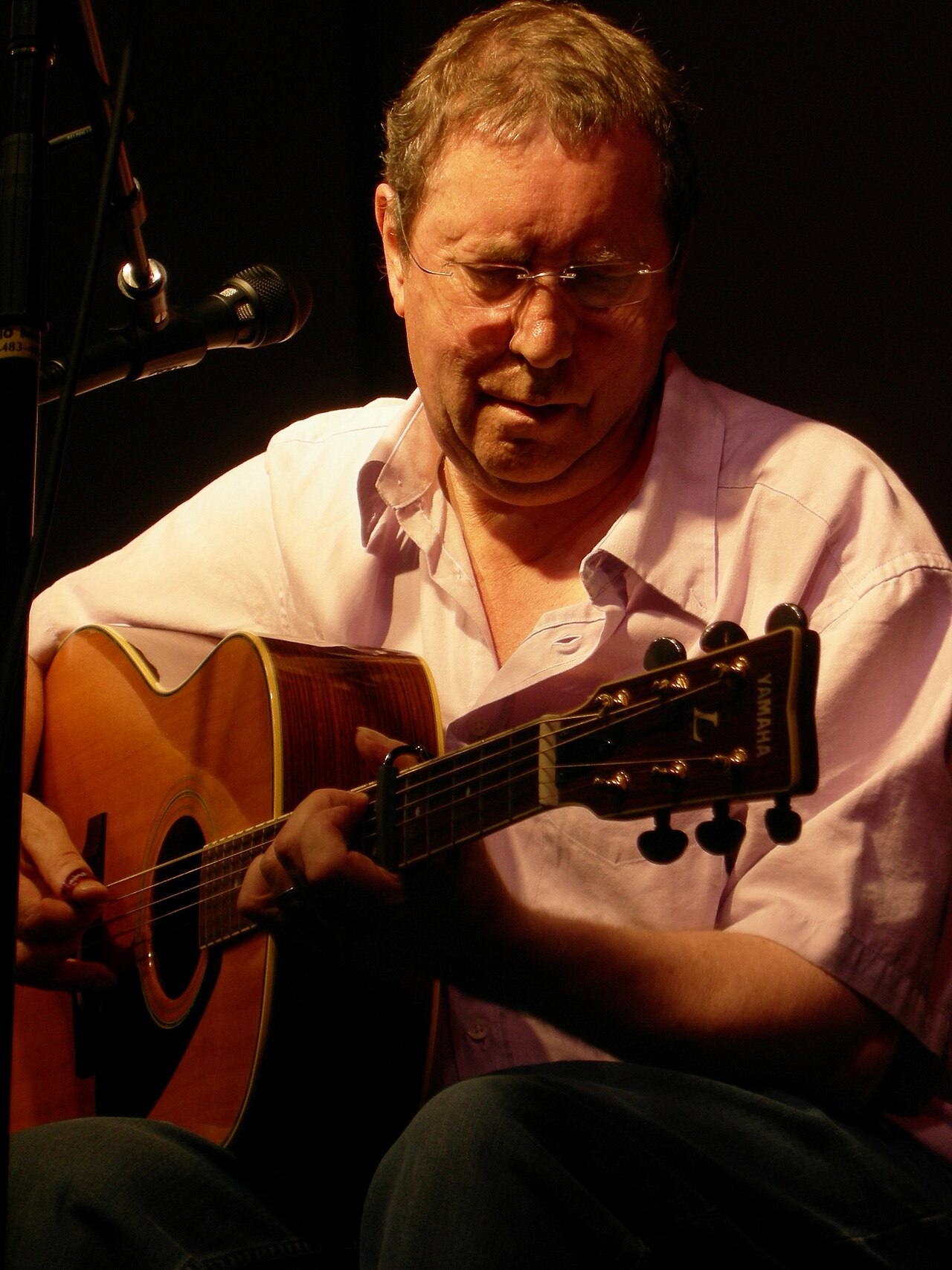
The specific qualities of the British folk guitar tradition that Graham established and Jansch, Renbourn, and their contemporaries developed — the modal harmonic language, the fingerstyle independence, the fusion of Celtic melodic material with blues phrasing and classical technique — all appear in Giltrap’s playing, absorbed and integrated into a personal language that is his own rather than derivative. His Celtic melodic sensibility, his modal harmonic language, his right-hand fingerstyle independence — all reflect this tradition while extending it in personal directions that no predecessor had taken.
The progressive rock ambition that inflects some of his most ambitious work — the longer, more formally complex pieces on albums like Perilous Journey and Fear of the Dark — connects him also to the broader progressive rock tradition of the 1970s, where ambitious formal structures and technical complexity were valued alongside emotional expressiveness. This connection gives his work a breadth of ambition that distinguishes it from the more modest scale of much folk guitar music, and it explains why his audience extended beyond the folk guitar community into the wider rock audience that progressive music attracted.
Within this tradition, Giltrap’s contribution is the specific synthesis of Celtic folk melody, classical technique, and progressive formal ambition that he achieved more consistently and more personally than any of his contemporaries. The instruments he used — the Fylde guitars, the L.R. Baggs pickup systems, the AER amplification — were chosen specifically to serve this synthesis: to produce and transmit the acoustic guitar’s natural voice in service of a musical vision that was both deeply rooted in British tradition and genuinely personal in its expression. That combination — tradition and personality, discipline and individuality — is the defining characteristic of all lasting musical art, and Gordon Giltrap embodies it as fully as any British acoustic guitarist of his generation.
The recording process for acoustic guitar presents a set of challenges quite different from recording electric guitar, and Giltrap’s approach to the studio reflects the specific considerations of capturing an acoustic instrument authentically. The fundamental challenge is that the acoustic guitar, in a live performance space, fills the room with sound in a three-dimensional, omnidirectional way that no microphone can fully replicate — the listener at a Giltrap concert hears sound reaching them from multiple reflected paths as well as directly from the instrument, and this spatial complexity is part of what makes live acoustic guitar sound natural and full. Microphone recording captures only a specific perspective on this three-dimensional sound, and the choice of microphone type, placement, and room environment profoundly affects how the recorded result compares to the natural live sound.
His studio recordings — particularly the best of them from the late 1970s and the more recent solo guitar albums — demonstrate a consistent approach to capturing the natural acoustic sound: high-quality condenser microphones placed to capture both the soundboard’s direct output and some of the room’s acoustic response, in spaces chosen for their natural warmth and appropriate reverberation. The specific combination of close and distant microphone placement — close for definition and attack, distant for spatial dimension and natural room character — produces a recorded sound that sits midway between the intimacy of headphone listening and the spaciousness of the concert hall, which is an appropriate target for an acoustic guitar recording intended for home listening.
The Fylde instrument’s tonal character is well-suited to this recording approach: the Sitka spruce top’s clear, bright fundamental tone translates well to microphone recording without the muddiness that softer-topped instruments can develop in close-microphone situations, and the rosewood back and sides’ harmonic warmth provides the tonal depth that makes the recorded sound feel complete rather than thin. The instrument was, in this sense, chosen partly for its recording characteristics as well as its live performance qualities — another example of the practical musical intelligence that characterises Giltrap’s approach to his equipment across every dimension of his professional life.
Gordon Giltrap’s career — now spanning more than fifty years of professional recording and performance — represents one of the most sustained expressions of a personal musical vision in British guitar music. The equipment he has used to pursue that vision: the Fylde instruments built in collaboration with Roger Bucknall, the L.R. Baggs pickup systems that transmit the natural acoustic sound to live audiences, the AER amplifier that reproduces it faithfully — all reflect a consistent and coherent set of musical values maintained across decades of changing fashions and evolving technologies. The music endures because it is rooted in something deeper than fashion, and the equipment endures alongside it because it was chosen to serve the music rather than to impress anyone with the guitarist’s sophistication. That is, ultimately, all that needs to be said about Gordon Giltrap’s gear: it is exactly right for exactly this music, and the music is worth every note of it.
One technical aspect of acoustic guitar playing that Giltrap has developed to an unusual degree is the management of natural instrument resonance and feedback in live performance contexts. When an acoustic guitar is amplified at significant volume — as is necessary in any performance space larger than an intimate acoustic venue — the pickup signal drives the PA speakers, whose sound waves then reach the guitar and excite additional string vibration and body resonance. This acoustic feedback loop, if uncontrolled, produces the unpleasant squealing feedback familiar from poorly managed acoustic guitar performances; controlled and managed, it can add sustain and harmonic richness to specific notes in ways that enhance the musical effect. Giltrap’s use of the L.R. Baggs Para Acoustic DI’s notch filter — which allows the player to identify and attenuate the specific frequency that is most prone to feedback in any given room — is the primary tool for managing this relationship. Combined with careful positioning relative to the PA speakers and skilled management of the instrument’s orientation in relation to the sound field, this feedback management allows him to amplify his acoustic guitar at sufficient volume for large venues without the feedback problems that make many acoustic guitar performers cautious about volume levels. The technical knowledge to manage these variables — knowing which frequencies to attenuate, understanding how room acoustics affect feedback behaviour, developing the physical awareness of instrument position that prevents feedback before it starts — is as much a part of his professional equipment as any physical piece of gear, and it is as important to the quality of his live performances as the quality of the instruments themselves.
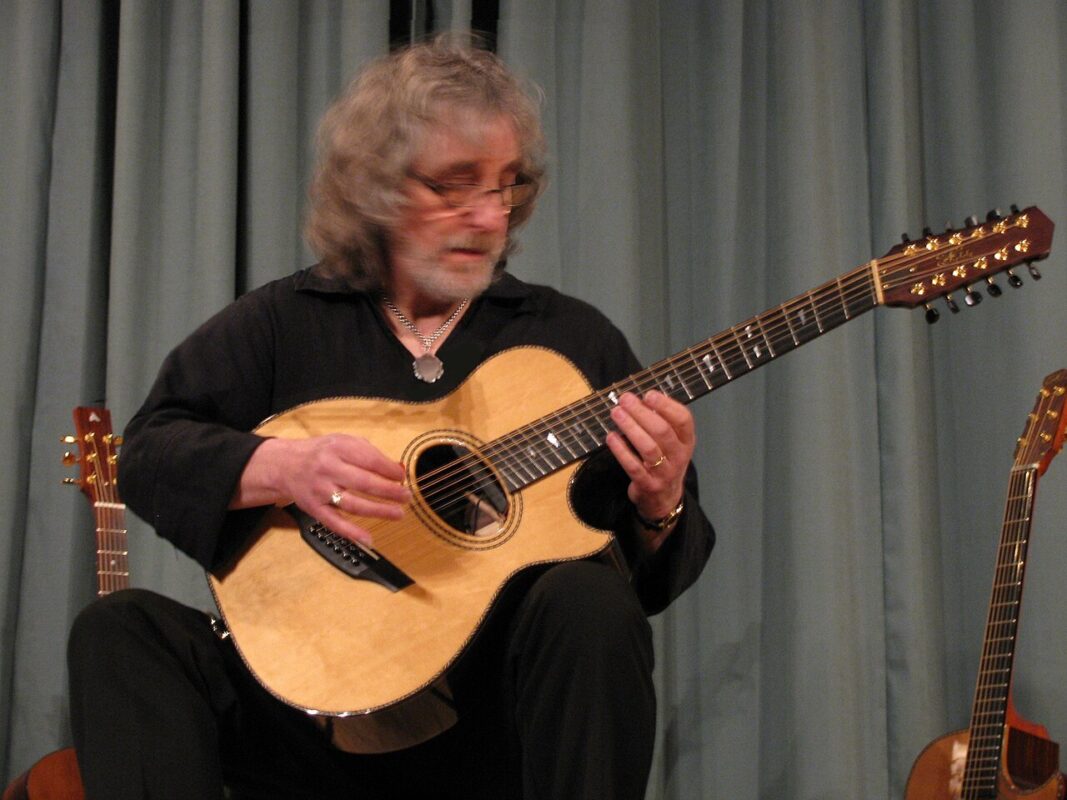
His sustained output across more than five decades — the new albums, the live performances, the collaborations — reflects a musician for whom the music itself remains the primary motivation, long after commercial necessity might have justified a more conservative approach to his career. That commitment to continued creative engagement, supported by the equipment and technique he has developed across those decades, is perhaps the most instructive element of the Gordon Giltrap story for any musician at any stage of their own development.
Frequently Asked Questions: Gordon Giltrap Guitars & Gear
What guitar does Gordon Giltrap play?
Gordon Giltrap’s primary guitars are custom-built Fylde acoustic instruments — handmade British steel-string acoustics built to his specifications by luthier Roger Bucknall. His specific Fylde models are based on a dreadnought-influenced body shape with Sitka spruce tops and Indian rosewood back and sides. He has also used Martin acoustic guitars (D-28 and 000-28) and a Gibson J-200 for specific applications, and Fender Stratocasters for occasional electric guitar work.
What pickup system does Gordon Giltrap use?
Giltrap has used L.R. Baggs pickup systems extensively — including the M1 soundhole pickup and the Anthem hybrid pickup/microphone system. For live performance, the L.R. Baggs Para Acoustic DI is central to his signal chain, providing preamp gain and EQ for the pickup signal before the PA or acoustic amplifier. The AER Compact 60 acoustic amplifier serves as his personal monitoring amplifier in smaller venues.
What is “Heartsong” and why is it famous?
“Heartsong” is a fingerstyle acoustic guitar instrumental composed by Gordon Giltrap, released on his 1978 album Fear of the Dark. It became famous as the theme tune for the BBC television programme Holiday, which used it as its signature music for many years, exposing Giltrap’s playing to millions of British television viewers who would not otherwise have encountered his music. Its combination of melodic beauty and technical accomplishment makes it one of the most recognisable acoustic guitar pieces in British popular music.
What is Gordon Giltrap’s playing technique?
Giltrap uses a fingerstyle technique that blends classical and folk traditions — the thumb independently maintaining a bass line while the fingers provide melody and harmony above it. At its most complex, all four right-hand fingers are independently active, creating the impression of multiple parts being played simultaneously. His left-hand technique incorporates classical articulation methods alongside folk ornaments, giving his playing a distinctive hybrid character that draws on both traditions.
What is Fylde Guitars?
Fylde Guitars is a British acoustic guitar manufacturer founded in 1973 by luthier Roger Bucknall, currently based in Penrith, Cumbria. The company produces handmade acoustic guitars of exceptional quality in the British lutherie tradition. Gordon Giltrap is the most prominent artist associated with Fylde, and his decades-long relationship with the company has produced custom instruments built to his specific requirements that represent some of the finest British-made acoustic guitars available.
Has Gordon Giltrap played electric guitar?
Yes, though electric guitar has always been secondary to acoustic in his work. Some of his albums from the 1970s and 1980s incorporate electric guitar, and he has occasionally used a Fender Stratocaster for live performances where the acoustic-only format was insufficient. His electric playing reflects the same musical sensibility as his acoustic work — melodic, lyrical, and emotionally direct — but acoustic guitar remains his primary voice.
What are Gordon Giltrap’s most important albums?
His most important recorded works include Perilous Journey (1977), which established his mature approach, and Fear of the Dark (1978), which contained “Heartsong” and brought him mainstream recognition. The earlier Transatlantic albums from the late 1960s and early 1970s document his development within the British folk guitar tradition. His later work — particularly the solo guitar albums of the 2000s and 2010s — shows continued development and, many listeners feel, represents his deepest artistic achievement.
Genre:
Acoustic Guitar
Decades:
1960s | 1970s | 1980s | 1990s | 2000s | 2010s | 2020s
Image credits
- A CNC laser cutting machine in operation at a Martin guitar factory: Henrysz, Wikimedia Commons, CC BY 4.0.
- Bert Jansch: Joe Mabel, Wikimedia Commons, CC BY-SA 3.0.
- Top image: Baillon (Wikimedia Commons)
- Gordon Giltrap: photo by Plenz, via Wikimedia Commons, CC BY-SA 3.0.
- Gordon Giltrap live: Plenz, Wikimedia Commons, CC BY-SA 3.0.
- Gibson SJ-200: Gibb Stutz, Wikimedia Commons, CC BY 3.0.