James Honeyman-Scott Guitars & Gear: The Pretenders Guitar Genius’s Complete Rig
James Honeyman-Scott guitars gear — Telecaster and Marshall deep-dive for the Pretenders guitar genius's sophisticated new wave tone and complete early 80s rig.
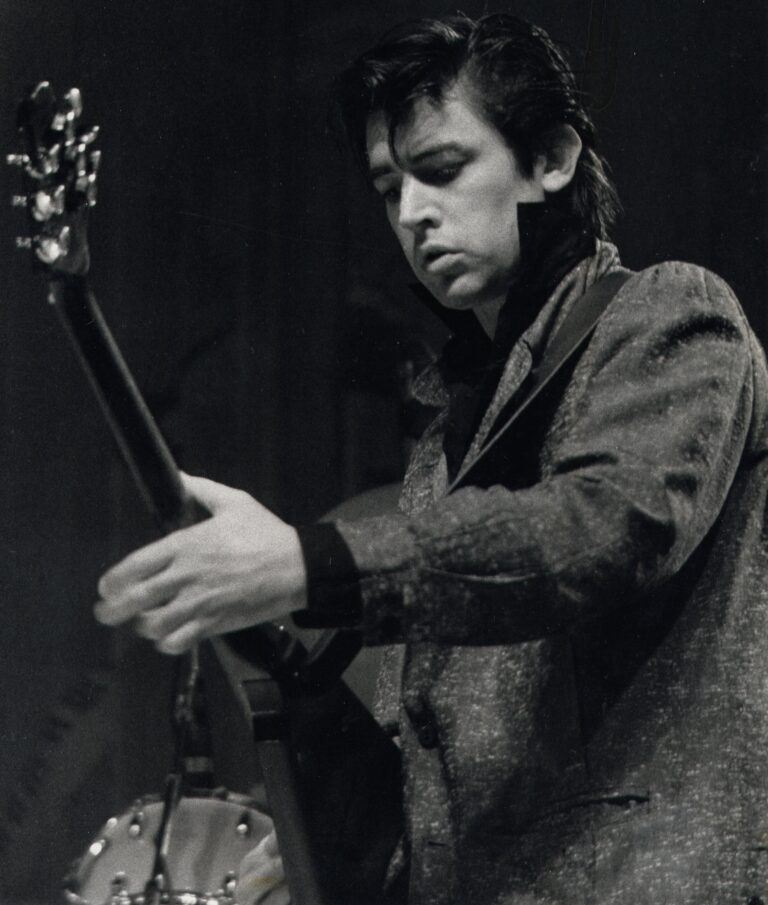
Explore James Honeyman-Scott guitars gear and you encounter the equipment behind one of new wave’s most gifted and most tragically brief guitar careers — a Hereford-born musician whose work on the Pretenders’ first two albums established him as one of the most inventive and technically sophisticated guitarists of his generation before his death at 25 cut short what might have been one of the defining guitar careers of the 1980s. Honeyman-Scott brought a combination of musical sophistication, tonal inventiveness, and sheer playing facility to the Pretenders that elevated their music well above the new wave mainstream, and his specific approach to tone, texture, and arrangement was central to what made those early Pretenders recordings so immediately compelling and so durably satisfying.
This guide covers Honeyman-Scott’s complete equipment picture: the guitars he used to create the Pretenders’ specific sonic character, the amplification that gave his playing its warmth and presence, the effects chain that distinguished his approach from simpler new wave guitar playing, and the playing philosophy of a musician who combined real jazz harmonic knowledge with pop melodic instinct and rock energy in a synthesis that was entirely his own. Understanding James Honeyman-Scott’s gear is understanding one of the great lost voices in British guitar music.
Background
James Honeyman-Scott was born on November 4, 1956, in Hereford, England. He began playing guitar as a teenager, absorbing influences that were broader than most of his contemporaries — not just the rock and pop of the 1970s but jazz, country, and R&B influences that gave his playing a harmonic and tonal range unusual for a player his age. He played in various Hereford bands before the connection with Chrissie Hynde — who was assembling the group that would become the Pretenders in 1978 — brought him to the project that would define his brief career.
The Pretenders’ formation brought together Honeyman-Scott’s guitar sophistication with Pete Farndon’s driving bass, Terry Chambers’ drumming, and Hynde’s unique vocal and compositional personality. The combination was immediately distinctive: Hynde’s songs had a literary quality and emotional directness that distinguished them from most new wave material, and the band’s sound — particularly Honeyman-Scott’s guitar work — had a musical intelligence that placed them in a different category from the three-chord nihilism of punk or the more mechanical new wave acts that surrounded them.
The debut album Pretenders (1980) was an immediate critical and commercial success, reaching number one in the UK and establishing the band as one of the most significant acts to emerge from the new wave period. The guitar work throughout the album — particularly on tracks like “Precious,” “The Phone Call,” “Private Life,” and the now-iconic “Brass in Pocket” — showed Honeyman-Scott’s range: driving rhythm playing, melodically inventive lead work, and a specific tonal palette that ranged from clean jangle to driven overdrive with a fluency that most players working in the new wave context didn’t possess.
The follow-up album Pretenders II (1981) continued the development, with Honeyman-Scott’s guitar work becoming more adventurous and more tonally varied. The album showed a band growing more confident in its musical identity, and Honeyman-Scott’s contributions were central to that growing confidence.
He died on June 16, 1982, at the age of 25, from heart failure associated with a combination of cocaine use and alcohol. The loss, coming within days of Pete Farndon’s departure from the band, effectively ended the original Pretenders lineup and cut short what both musicians’ abilities suggested would have been a much longer and more significant career. Honeyman-Scott’s brief recorded legacy — two studio albums and associated recordings — represents only a fraction of what his talent suggested was possible.
James Honeyman-Scott Guitars Gear: The Complete Rig
Guitars
James Honeyman-Scott’s guitar choices reflected the breadth of his musical influences — instruments selected for the range of tonal characters they provided rather than for a single consistent identity. His approach to the guitar was eclectic in the best sense: different instruments for different musical contexts, chosen with genuine musical judgment rather than brand loyalty.
His most frequently used guitar during the Pretenders period was a Fender Telecaster — both vintage examples and modified versions that had been adapted to his specific requirements. The Telecaster’s combination of bright, cutting single-coil character and mechanical reliability suited the driving rhythm guitar approach that many Pretenders tracks required, while the neck pickup’s warmth provided a complementary voice for the more melodic passages. His Telecasters were sometimes fitted with humbucker replacements in the neck position — a modification that gave the bridge-to-neck tonal contrast more dramatic character, the bridge single-coil’s twang against the neck humbucker’s warmth creating a more varied tonal palette than a standard Telecaster provided.
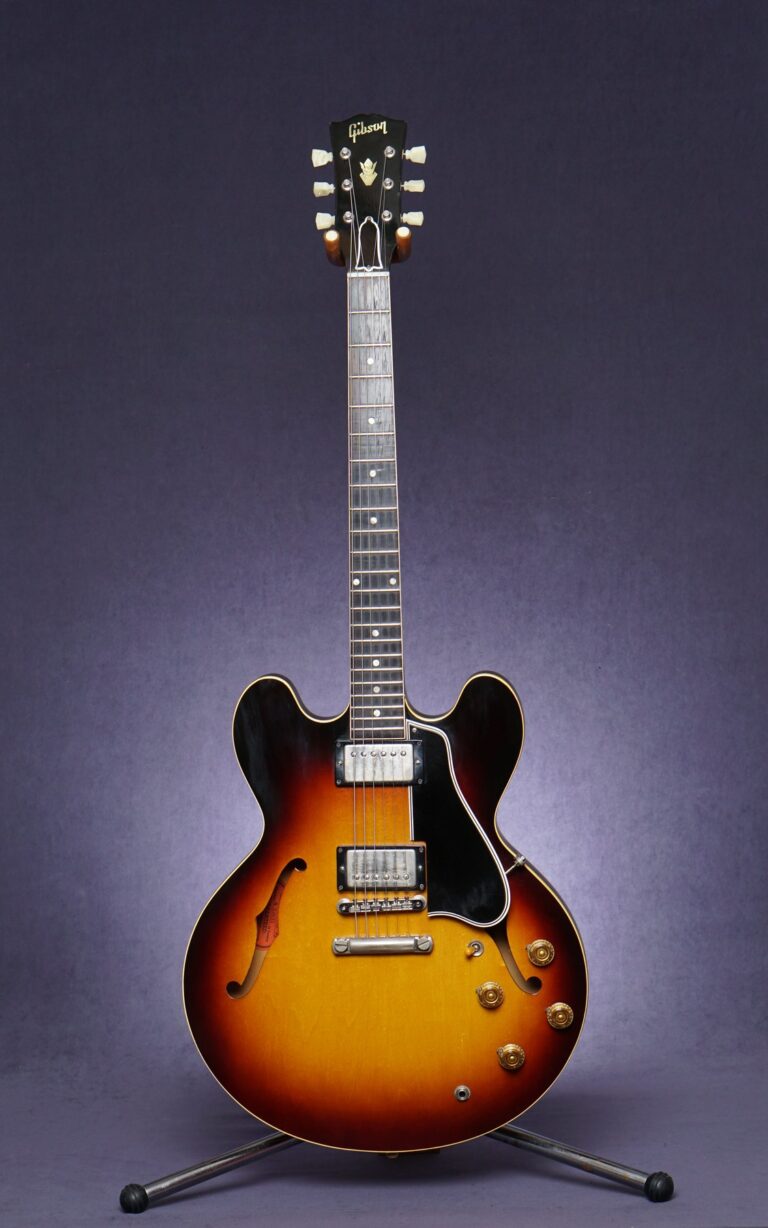
He also used a Gibson ES-335 semi-hollow — the warm, resonant thinline archtop whose combination of acoustic dimension and electric guitar feedback resistance suited the more melodically oriented passages in his playing. The ES-335 with PAF-spec humbuckers (7.5k to 8.5k ohm, Alnico II or Alnico V) produced a warmer, more sustained tone than the Telecaster’s single-coils, giving chord voicings a richness and single notes a singing quality that the brighter Fender character couldn’t match. His jazz and R&B influences — which included Wes Montgomery and various soul and R&B players — came through more clearly in the ES-335 context than through the Telecaster’s more rock-oriented character.
A Fender Stratocaster appeared in his arsenal for specific applications where its three-pickup configuration and vibrato arm offered tonal and performance possibilities that the Telecaster’s two-pickup setup didn’t provide. The Stratocaster’s out-of-phase intermediate pickup positions in particular — the characteristic “quack” of positions 2 and 4 that give the Strat its most distinctive sounds — suited specific textural passages in the Pretenders’ material that required a different kind of guitar voice from either the Telecaster’s or the ES-335’s primary sounds.
He used various other guitars for specific recordings — period photographs and accounts show him with a number of different instruments across different sessions and live performances. His pragmatic approach to guitar selection — choosing the right instrument for the specific musical context rather than maintaining a single signature instrument — reflected the broad musical intelligence that characterised everything about his playing.
String gauges ran medium — typically .010–.046 — providing the balance of tone mass and playing ease that his varied technique required. His pick was a medium-weight type, producing the warm, rounded attack that suited both his rhythm playing’s need for chord articulation and his lead playing’s need for sustained notes.
Amps
Honeyman-Scott’s amplification during the Pretenders period drew on both British and American valve designs — a combination that gave him the tonal range his varied musical approach required. He was not committed to a single amplifier aesthetic; like his guitar choices, his amplifier selections reflected genuine musical judgment about what each specific context required.
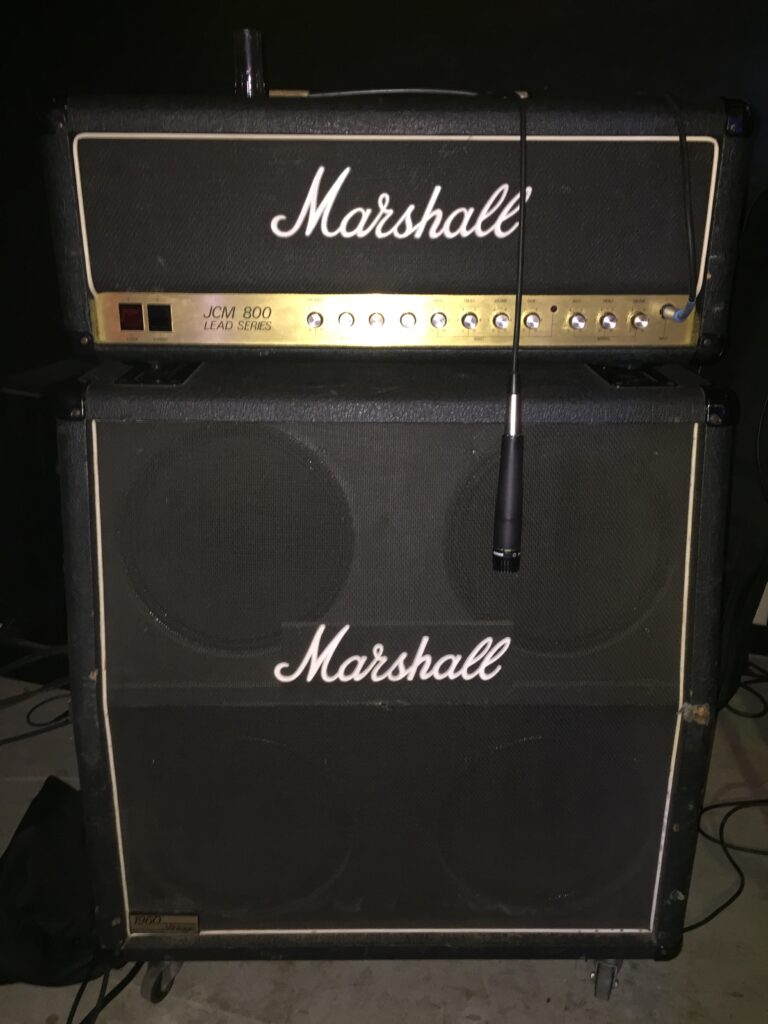
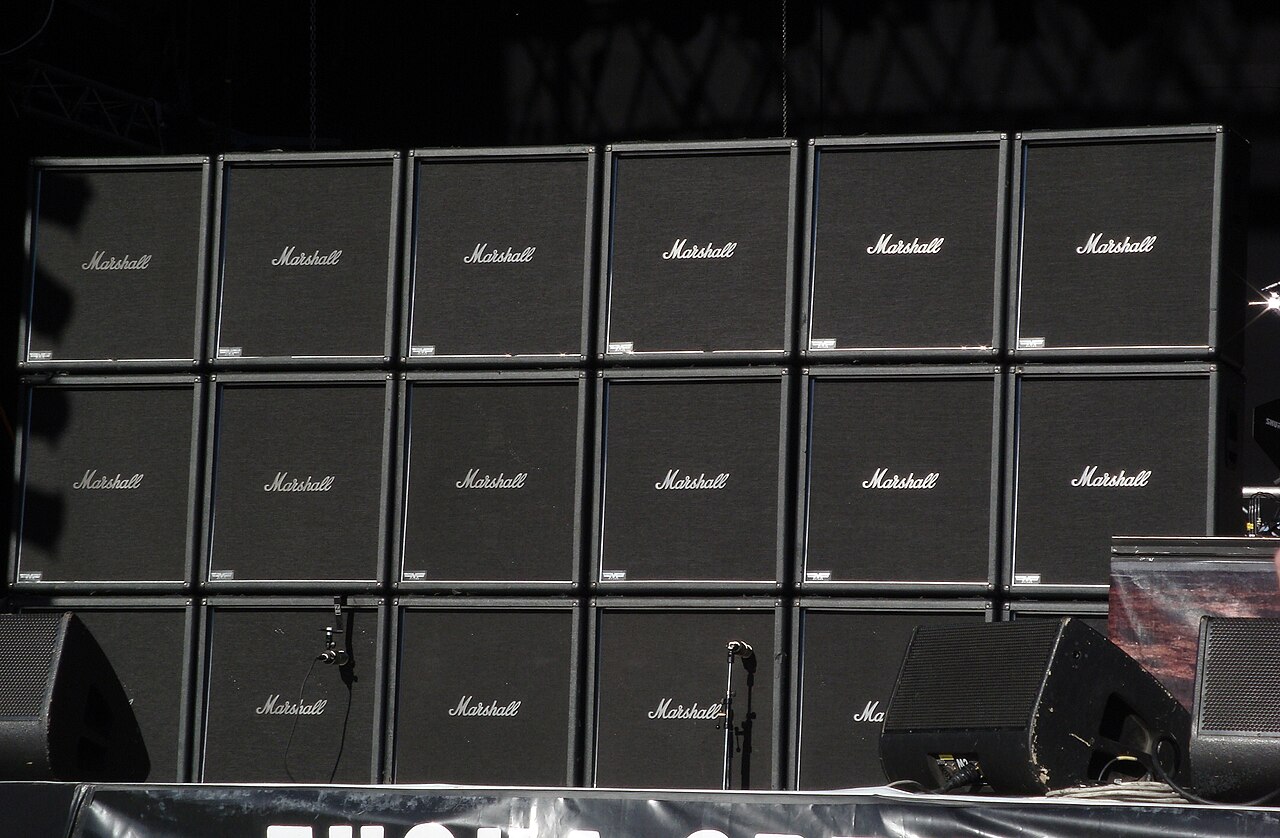
His primary amplifier for the more driven, aggressive passages was a Marshall JMP or JCM800 — the British EL34-based designs that were standard for British rock of the early 1980s and that provided the midrange authority and natural drive character that the Pretenders’ harder-rocking material required. The Marshall at working volume — EL34s contributing their characteristic compression and harmonic richness as the amplifier was pushed — gave his guitar work the weight and presence that tracks like “Precious” required, without the more controlled, polished character of later high-gain designs.
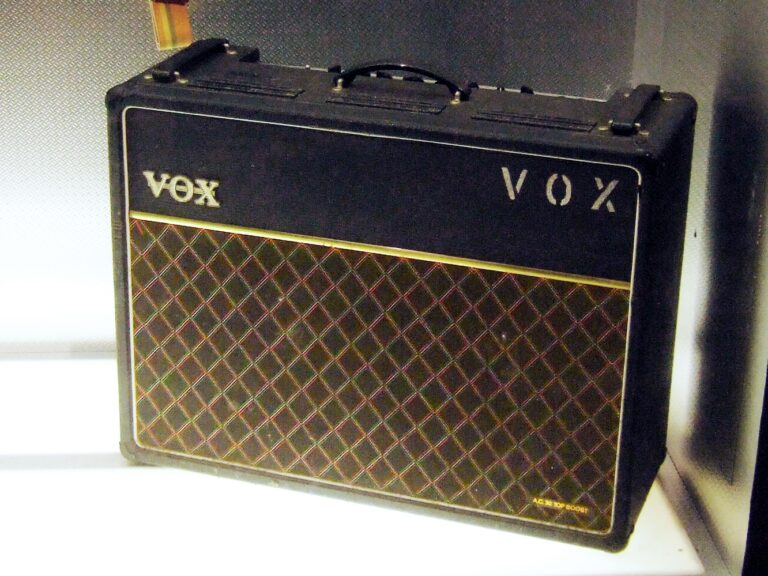
For cleaner, more melodic material, he used Vox AC30 Top Boost amplifiers — the EL84-driven combo whose natural compression and chimey character suited his more jangly, melodically oriented guitar work. The AC30’s specific tonal identity — warmer than the Marshall but with a different kind of drive character, less aggressive midrange but more complex EL84 compression — suited the more introspective passages in the Pretenders’ catalogue and complemented the Rickenbacker-influenced jangle approach that appeared in some of his playing.
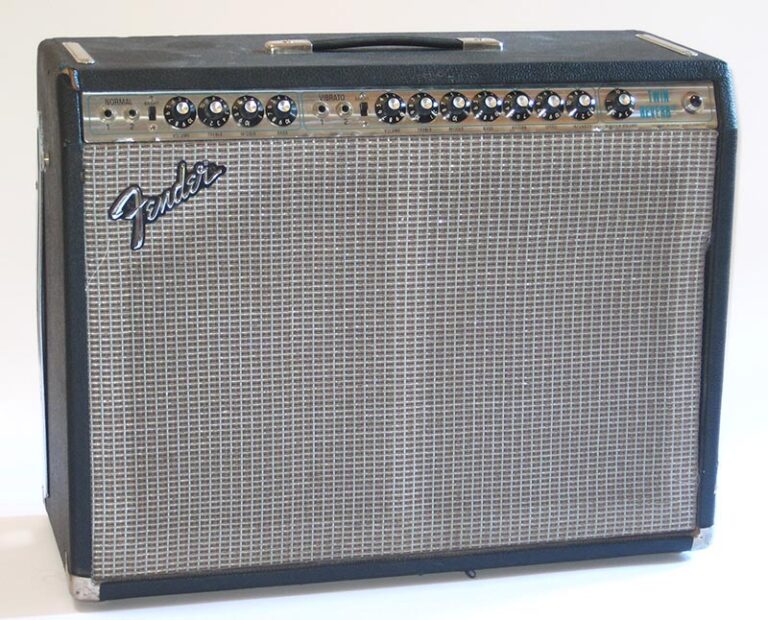
He also used Fender amplifiers — particularly the Twin Reverb for clean, American-character passages where the warm 6L6 clean tone was more appropriate than either the Marshall’s drive or the Vox’s compression. The range of amplifier voices available to him — Marshall aggression, Vox compression, Fender clean warmth — gave his guitar playing a tonal variety within a single performance or recording session that more single-amplifier setups couldn’t achieve.
Effects
Honeyman-Scott’s effects chain was notably more sophisticated than most of his new wave contemporaries — reflecting both his broader musical knowledge and his genuine interest in sound as a compositional element rather than merely as a backdrop for song.
A Boss CE-1 Chorus Ensemble was central to his clean and lightly driven tone — the bucket-brigade chorus that adds the dimensional shimmer characteristic of much early 1980s guitar. His use of chorus was musical and varied: sometimes as a subtle background texture, sometimes more prominent to create the shimmering, layered quality that distinguished certain Pretenders tracks. The CE-1’s analogue warmth and complex modulation character suited his playing’s need for texture and dimension without the artificiality of digital chorus implementations.
A Roland JC-120 Jazz Chorus amplifier appeared in his setup for specific clean applications — the solid-state amplifier with onboard stereo chorus that was one of the most popular clean guitar amplifiers of the early 1980s. The JC-120’s specific clean character — crystal-clear, with the onboard chorus adding its own specific character — produced a different kind of clean guitar sound from his valve amplifiers, suitable for passages requiring absolute clarity and the specific JC-120 shimmer.

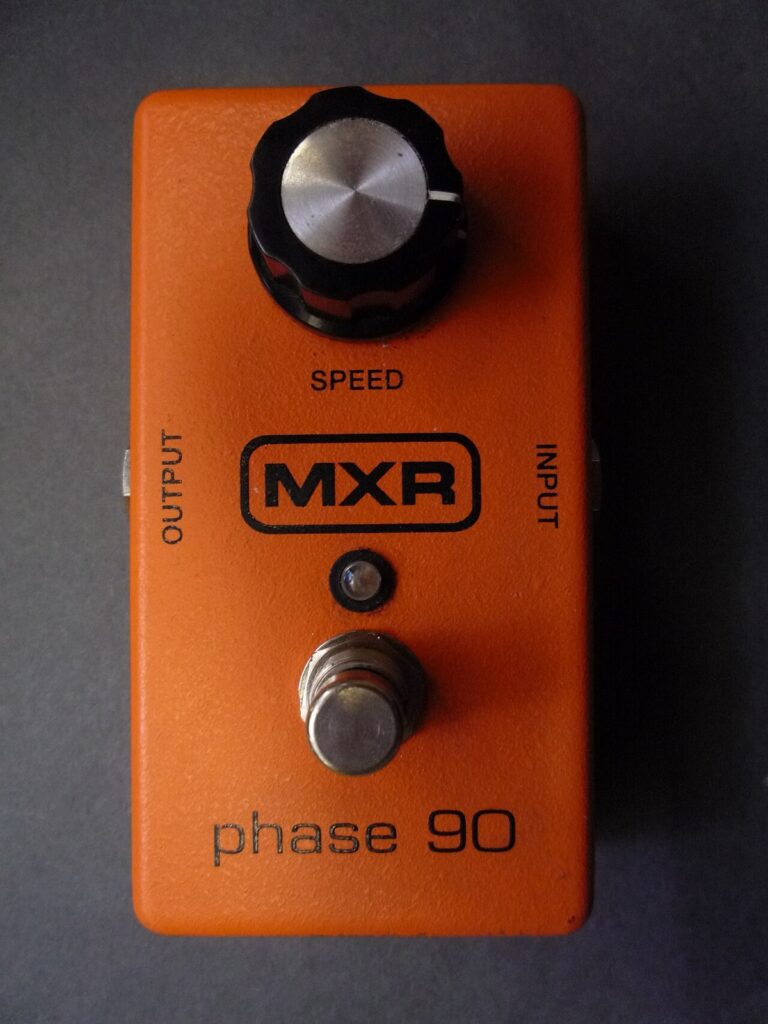
An MXR Phase 90 phaser appeared in his effects chain for the swept modulation that suited specific textural passages. His phaser use was selective rather than habitual — a specific colour for specific musical moments rather than a constant presence.
A Boss DD series delay provided echo for specific lead passages and the spatial dimension that live performance typically reduces compared to studio recording. His delay use was subtle and musical — adding atmosphere without obscuring the fundamental guitar tone.
A fuzz pedal — various silicon or germanium units — appeared for specific heavier passages where additional distortion texture was musically required. His fuzz use was selective, appearing where the heavier, more aggressive character suited the material rather than as a constant gain stage.
Playing Style & Tone Philosophy
James Honeyman-Scott’s playing is one of the more immediately impressive guitar performances in new wave rock — impressive not in the showy sense of technical display but in the more significant sense of musical intelligence consistently applied to the service of specific songs and musical contexts. His guitar parts were never decorative or self-serving; they were always precisely calibrated to what each song needed, and the calibration was executed with a fluency and range that most players working in the new wave context couldn’t match.
His rhythm playing drew on a broader range of influences than most of his contemporaries: the driving, chord-based approach of hard rock (present in tracks like “Precious”), the cleaner, more arpeggiated approach of pop and new wave (present in tracks like “The Phone Call”), and the R&B-inflected approach that his soul and funk listening had developed (present in various rhythmic textures across both albums). This range — the ability to shift between these different rhythmic approaches without losing the musical character of the specific song — reflected both broad musical knowledge and a genuine understanding of how rhythm guitar functions differently in different musical contexts.
His lead playing was distinguished by a specific quality of melodic invention — the ability to construct lead guitar parts that were simultaneously memorable (like “Brass in Pocket”‘s melodic guitar line that runs through the song) and harmonically sophisticated (the jazz-influenced chord-melody approaches that appeared in quieter passages). This combination — pop melodic accessibility and jazz harmonic depth — was genuinely unusual in the new wave context and reflected his broader musical education.
His chord voicings showed the jazz influence most clearly — extended voicings, inversions, and specific chord types (major 7ths, minor 9ths, suspended fourths) that gave the Pretenders’ harmonic language a richness beyond the basic major/minor triads of conventional rock. This harmonic sophistication, deployed in service of Hynde’s pop-song structures rather than jazz formal structures, gave the Pretenders’ music its specific quality of being simultaneously accessible and harmonically complex.
Tonally, his philosophy was the same as his broader musical approach: use what the song needs. The Marshall for aggression, the Vox for compression and chimey warmth, the Fender for clean clarity — each chosen for the specific musical character required at each specific moment. His effects chain extended this philosophy into tonal variety: chorus for dimensional shimmer, phaser for modulation colour, delay for spatial depth. Every element was purposeful, and the purpose was always the music.
How to Sound Like James Honeyman-Scott
Guitar Approach
A Fender Telecaster — standard or with a neck humbucker modification — is the primary starting point. A Gibson ES-335 is the alternative for warmer, more jazz-influenced material. Medium strings (.010–.046) provide the appropriate balance for his varied technique. The most important element is the harmonic vocabulary: study jazz chord voicings, extended harmonies, and the specific chord types that appear in his playing. These require genuine music theory study rather than pattern memorisation, and they are what distinguish his playing from simpler new wave guitar approaches most distinctly.
Amp Approach
A combination of Marshall (JMP or JCM800) for driven material and Vox AC30 for cleaner, more compressed passages is the authentic approach. The Roland JC-120 is the additional clean option for absolute clarity. Chorus (Boss CE-1 or equivalent) adds the characteristic dimensional quality of early 1980s British guitar. The key is tonal variety matched to musical context — not a single “Honeyman-Scott sound” but the willingness to change amplifier character and effects configuration as the specific musical moment requires.
| Control | Setting | Notes |
|---|---|---|
| Volume | 6–7 | Working volume — EL34 natural drive zone |
| Treble | 6–7 | Moderate-high — Telecaster bridge benefits from treble presence |
| Middle | 6 | Moderate mids for definition |
| Bass | 4 | Controlled bass for clarity |
| Presence | 5–6 | Moderate presence for cutting through |
| CE-1 Chorus | Light-medium depth | Adds dimension without obscuring drive character |
Influence & Legacy
James Honeyman-Scott’s legacy is the specific legacy of brief brilliance — what he achieved in five years of professional work with the Pretenders was sufficient to establish him as one of the most gifted guitarists of his generation, even if the brevity of that work prevented the full development of his potential. The two Pretenders albums on which he appears remain among the finest British rock records of the early 1980s, and his guitar work is a central reason for their enduring quality.
His influence on subsequent British guitarists working in the new wave and post-punk tradition — the players who absorbed the Pretenders’ records and tried to understand what made the guitar playing so distinctive — reflects the specific combination of technical accomplishment and musical intelligence he brought to the work. Players who studied his approach discovered that the sophistication of his playing went deeper than the surface impression of new wave simplicity suggested, and this discovery pointed them toward the jazz and R&B influences that had shaped his vocabulary.
The Pretenders’ subsequent guitarists — Robbie McIntosh and others who joined the band after Honeyman-Scott’s death — have consistently acknowledged the difficulty of following a player of his specific qualities. The specific combination of harmonic sophistication, tonal variety, and melodic invention that he brought to the original Pretenders lineup was not a role that could be simply filled; it was a musical personality that was irreplaceable.
For players exploring the British new wave and post-punk guitar tradition that Honeyman-Scott inhabited, the rigs of Billy Duffy — whose Cult work developed the new wave guitar aesthetic in a more atmospheric, harder-rocking direction — and Will Sergeant, whose Echo and the Bunnymen work showed how jazz and art rock influences could be integrated into new wave, provide illuminating comparison. The jazz dimension of his playing connects to George Benson‘s work, which shows the tradition he was drawing on and that gave his guitar playing its specific harmonic depth.
Pretenders I: A Track-by-Track Guitar Masterclass
The debut Pretenders album repays close listening from the guitar perspective precisely because Honeyman-Scott’s approach to each track is different — the guitar serving each song’s specific character rather than applying a single consistent identity across the album. This track-to-track variation, unusual in a debut album by a new wave band, reflects both his musical intelligence and the genuine breadth of his instrumental range.
“Precious” opens the album with one of the most effective guitar-led album openers in new wave — a driving, rhythmically aggressive approach that uses the Telecaster’s bright, cutting character and the Marshall’s natural drive to create the forward momentum the song requires. The rhythm guitar work here is physically authoritative without being technically elaborate: the power of the playing comes from the conviction of the attack and the precision of the rhythmic placement rather than from harmonic complexity or speed.
“The Phone Call” shows a completely different approach — cleaner, more jangly, with the kind of arpeggiated chord work that draws on the Byrds and other jangle-pop influences that were part of his musical formation. The guitar voice here is the Telecaster or Stratocaster through the AC30 rather than the Marshall, with the natural compression of the EL84 output stage giving the clean chord work its specific bloom. The tonal shift from “Precious” to “The Phone Call” would be jarring if it weren’t executed so naturally — the clean, jangly guitar sounds like the right sound for this song in the same way that the driven, aggressive guitar sounds right for the opener.
“Private Life” — a cover of a Grace Jones song that Hynde recorded with the Pretenders before Jones had a hit with it — shows the R&B and reggae influences in Honeyman-Scott’s playing: the specific rhythmic approach to chord playing, the slightly behind-the-beat feel, the way the guitar part interacts with the rhythm section in a manner that reflects knowledge of the Black American and Caribbean traditions that Jones’s version inhabited. This is not imitation but genuine understanding — the specific musical intelligence to recognise what the song’s specific character required and to deliver it authentically.
“Brass in Pocket” — the song that became the Pretenders’ biggest hit and one of the most widely recognised new wave recordings — contains what may be Honeyman-Scott’s most melodically inventive guitar contribution: the specific melodic guitar line that runs through the song as a countermelody to Hynde’s vocal, providing the hook that the lyric alone might not have established as compellingly. This line — distinctive, memorable, and perfectly calibrated to Hynde’s vocal phrasing — is the kind of guitar contribution that requires both melodic imagination and specific knowledge of how the guitar voice relates to the vocal voice in a pop song context. It is, in the most literal sense, a perfect guitar part for this specific song.
The Jazz Foundation: What It Actually Meant
Honeyman-Scott’s jazz influence is frequently mentioned in accounts of his playing but rarely examined in specific terms. Understanding what jazz study actually contributed to his playing — rather than just that it contributed — illuminates both his specific guitar approach and why it was so distinctive in the new wave context.
The most directly audible jazz influence was harmonic. His chord voicings — the specific notes he chose for rhythm guitar parts — regularly included harmonic extensions and alterations that go beyond the basic major, minor, and power chord vocabulary of most rock and new wave guitar playing. Major 7th chords appear in his playing where simpler players would use major chords; minor 9th and minor 11th voicings replace simple minor chords in appropriate harmonic contexts; suspended fourth chords and their resolutions create a specific harmonic movement that has roots in jazz and gospel rather than in straight rock. These specific voicing choices gave the Pretenders’ music a harmonic warmth and sophistication that was audible to listeners who couldn’t identify the specific chords, and that made the recordings sound richer than most new wave of the era.
The melodic influence was equally significant. Jazz improvisation, at its most sophisticated, involves constructing melodic lines that outline the harmonic movement of the chord progression — melodies that imply harmonic content through their note choices rather than through static chord voicings. Honeyman-Scott’s lead guitar parts — from the “Brass in Pocket” countermelody to the more abstract lead work on tracks like “Private Life” — reflect this melodic-harmonic integration. The lines he played were not just melodically interesting in isolation; they were harmonically appropriate to the specific harmonic context of each moment, creating a relationship between melody and harmony that simpler approaches don’t achieve.
The rhythmic influence was perhaps the subtlest but equally real. Jazz rhythm in the guitar context — the specific quality of groove in chord playing, the exact placement of attacks relative to the beat, the interaction between the guitar’s rhythmic role and the rhythm section’s — requires understanding the tradition at a deeper level than most rock guitarists develop. Honeyman-Scott’s rhythm playing had a quality of rhythmic precision and feel that reflected this understanding, giving his chord work a forward momentum and a specific rhythmic character that distinguished it from more mechanically even rock rhythm guitar.
The Recording Sessions: Capturing a Gifted Player
The production of the Pretenders’ first two albums — both produced by Chris Thomas and Nick Lowe (debut) and Thomas alone (second) — created the specific sonic environment in which Honeyman-Scott’s guitar playing was documented, and understanding that production context helps explain why the guitar sounds the way it does on these recordings.
Chris Thomas was an experienced British producer — his credits included work with the Beatles, Roxy Music, and the Sex Pistols, among many others — who understood how to capture the specific energy of a working band without over-processing or over-polishing the results. His approach to the Pretenders was to capture the band’s live sound with sufficient fidelity that the specific character of each musician’s approach was preserved while applying enough production craft to make the recordings commercially viable.
For Honeyman-Scott specifically, this meant capturing the tonal variety of his different guitar voices — the Marshall drive, the Vox compression, the Fender clean — in ways that allowed each to be heard clearly within the overall mix. The specific microphone placement for each amplifier configuration, the balance between the direct guitar sound and the room acoustic around the amplifier, and the overall mix balance between the guitar and the other instruments — these production decisions are audible throughout the recordings as the specific quality of sonic clarity that allows Honeyman-Scott’s guitar intelligence to be heard rather than buried in a generic rock production.
The result is a pair of albums that document his playing with unusual clarity — you can hear not just the notes he plays but the specific tonal character of each guitar and amplifier combination he uses, the specific rhythmic feel of his chord placement, and the specific harmonic content of his voicings. This clarity of documentation is part of what has made these recordings so enduringly useful as references for players who want to understand what he was doing and why it worked so well. The equipment is documented as clearly as the playing, and together they tell the complete story of one of new wave rock’s most musically sophisticated guitar voices.
James Honeyman-Scott’s legacy is ultimately the legacy of unrealised potential — what he achieved in his brief career was remarkable, and what he might have achieved with more time can only be imagined. What remains are two albums that contain some of the finest British rock guitar playing of the early 1980s, and a reputation within the musical community that reflects the quality of those recordings. The equipment he used — the Telecaster, the ES-335, the Marshall and Vox and Fender, the thoughtfully deployed effects chain — was exactly right for exactly the music he was making. The music deserved exactly the playing it got, and the playing deserved the music. That perfect alignment, however brief, is what makes the Pretenders’ original recordings essential listening for anyone who cares about what the electric guitar can do in the service of a great song.
The ES-335’s specific contribution to Honeyman-Scott’s tonal palette — providing warmth and acoustic resonance alongside the Telecaster’s bright, cutting character — reflects an understanding of how different guitar designs serve different musical functions within the same overall context. The ES-335’s fully hollow wings add acoustic resonance to the amplified sound that the Telecaster’s solid ash or alder body doesn’t provide, giving chord voicings a natural warmth and single notes a bloom quality that suited the more introspective and harmonically rich passages in the Pretenders’ catalogue. His ability to recognise which instrument’s character served each specific musical context — the Telecaster’s drive and attack for aggressive material, the ES-335’s warmth and resonance for melodic material — reflects the same musical intelligence that informed every other aspect of his approach. The equipment choices were not arbitrary or habitual; they were specific responses to specific musical requirements, made by a musician who understood both his instruments and the music he was serving well enough to match them correctly.
The Boss CE-1 Chorus in his effects chain deserves specific recognition as an instrument that was absolutely of its moment — the early 1980s British and American rock and new wave scene in which the chorus pedal was ubiquitous — while also being genuinely better suited to his playing than any later digital replacement. The CE-1’s bucket-brigade delay circuit produces a warmer, more organically complex modulation than digital chorus, with slight pitch variation and amplitude modulation that give chords a natural shimmer rather than the precise, artificial quality of digital implementations. For Honeyman-Scott’s chord voicings — harmonically extended, carefully voiced, intended to sit warmly in the Pretenders’ specific sonic environment — the CE-1’s warmth was exactly right. He was not using the chorus as a fashion accessory; he was using it because its specific acoustic character enhanced the specific guitar sounds he was producing in ways that other available chorus units didn’t.
One final observation about the career that was lost when Honeyman-Scott died at 25: the trajectory of development visible across the two Pretenders albums suggests a musician who was still in the early stages of his potential development. The progression from the debut to Pretenders II shows growing confidence, expanding tonal range, and increasing harmonic adventurousness — the signs of a musician in rapid development rather than one who had reached a plateau. The playing on Pretenders II is more sophisticated than the debut in specific, audible ways, and the direction of that development suggests that a third album would have shown further significant progress. Whatever form that progress would have taken — more jazz influence, more experimental tonal approaches, more elaborate arrangement — it would certainly have been worth hearing. The two albums that exist are enough to establish his place among the finest British guitarists of his era, but they represent an incomplete picture of what he might have achieved with the decades of further development his talent warranted.
The specific Hereford, England context of Honeyman-Scott’s upbringing is worth noting as a reminder that musical genius is not a product of cultural centres — of London or New York or Los Angeles — but can emerge from anywhere that a sufficiently motivated individual encounters the right musical influences and develops the discipline to pursue them. Hereford is a small city in the Welsh Marches, not a major music scene by any measure, and the musical education Honeyman-Scott received there was primarily self-directed through record listening rather than institutional. That this self-directed education produced the breadth of harmonic and stylistic knowledge his playing revealed reflects both his natural intelligence and his genuine dedication to the music — qualities that no institutional curriculum can substitute for and that geographical location doesn’t preclude. His example is worth remembering by any musician who feels that their location or their lack of formal training limits what they can achieve. The equipment he used was available anywhere, the music he absorbed was available on record wherever records were sold, and the intelligence and dedication he brought to both were his own. The result was guitar playing of a quality that places him among the most gifted British guitarists of his generation, produced from a small city in the English Midlands by a young man who simply cared deeply and worked hard. That is the most important thing about the James Honeyman-Scott gear story: not the specific guitars or amplifiers, but the musician who used them with such intelligence and such commitment to the music they served.
The Roland JC-120 Jazz Chorus amplifier that appeared in Honeyman-Scott’s clean setup is one of the more interesting equipment choices in his rig because it represents a fundamentally different amplification philosophy from his valve amplifier choices. The JC-120 is a solid-state amplifier — no valves, no transformer saturation, no output stage compression — and it was designed specifically to produce the cleanest, most pristine electric guitar amplification available. Its onboard stereo chorus circuit added the shimmering dimensional quality that gave it its characteristic sound, but the underlying amplification was purely linear — no coloration, no warming, no character from the amplifier’s own circuit behaviour. For Honeyman-Scott, the JC-120’s clean clarity served specific musical functions that his valve amplifiers’ natural character couldn’t provide: the absolute clarity of chord voicings where every note of a complex harmonic voicing needed to be heard distinctly, and the specific shimmer of the JC-120’s onboard chorus which had a different character from the CE-1 he used with his valve amplifiers. The JC-120’s specific chorus — stereo, with a precise digital character — produced a different kind of dimensional quality from the CE-1’s warmer, more organic modulation, and this difference made the JC-120 appropriate for specific musical contexts where the CE-1’s warmth was too prominent. The two chorus implementations served different musical purposes, which is exactly the kind of equipment intelligence that characterised everything about Honeyman-Scott’s approach to his rig: not one chorus pedal used everywhere, but two different chorus implementations for two different musical requirements. That level of tonal discrimination, applied consistently across every aspect of his equipment choices, is the defining characteristic of his guitar setup and ultimately the reason his playing sounded so consistently right for whatever musical context it occupied.
The MXR Phase 90 that appeared in Honeyman-Scott’s effects chain is another piece of equipment worth examining in detail, because its specific circuit character suited his playing approach in ways that later phaser designs don’t fully replicate. The original MXR Phase 90 — the script-logo version produced in the late 1970s, using a specific op-amp-based phase shift circuit — produces a sweeping, warm modulation that sounds more musical than aggressive. Where some phaser designs produce a watery, almost seasick effect, the Phase 90’s specific four-stage circuit produces a gentler, more dimensional sweep that adds movement to sustained chords and single notes without dominating the tone. For Honeyman-Scott’s playing — which valued harmonic sophistication and tonal clarity over aggressive effects processing — the Phase 90’s specific character was appropriate in a way that more extreme phaser designs wouldn’t have been. He used it selectively, as with all his effects, for passages where the modulation added a specific colour that the music required. The combination of CE-1 chorus for one kind of dimensional quality, Phase 90 for another kind of movement, and the natural character of his various amplifiers for the fundamental tone, gave him a tonal palette of unusual variety within a setup that was not overly complex. This economy — achieving maximum tonal variety with minimum equipment complexity — is the hallmark of sophisticated effects use, and it is as characteristic of his approach to his signal chain as his musical intelligence was characteristic of his approach to the guitar itself. The gear was in service of the music. The music benefited from the gear. And the whole, in the two Pretenders albums that documented it, was greater than any of the individual parts — which is ultimately what music is supposed to be.
Frequently Asked Questions: James Honeyman-Scott Guitars & Gear
What guitars did James Honeyman-Scott play?
James Honeyman-Scott’s primary guitars included the Fender Telecaster (sometimes modified with a neck humbucker), the Gibson ES-335 semi-hollow, and the Fender Stratocaster. His guitar choices were eclectic and context-sensitive — different instruments for different musical requirements rather than a single signature instrument. His broad approach to the guitar reflected the wide range of influences — jazz, R&B, rock, and pop — that shaped his playing.
What amp did James Honeyman-Scott use?
His amplification included Marshall JMP and JCM800 heads for driven, aggressive material; Vox AC30 Top Boost for cleaner, more compressed passages; and Fender Twin Reverb for clean American-character tone. He also used the Roland JC-120 Jazz Chorus for specific clean applications. His amplifier choice varied with the musical context, reflecting the same tonal versatility that characterised his guitar selections.
What made James Honeyman-Scott’s guitar playing distinctive?
Honeyman-Scott’s guitar playing was distinguished by its combination of jazz harmonic sophistication and pop melodic accessibility — a blend unusual in the new wave context. His chord voicings used jazz extensions and inversions that gave the Pretenders’ music a harmonic richness beyond conventional rock. His technical range allowed him to shift between driving rhythm guitar, melodically inventive lead work, and atmospheric textures with equal facility. The breadth of his musical knowledge, combined with the musical intelligence to deploy it in service of specific songs, made his guitar work consistently distinguished.
What are the Pretenders’ best recordings featuring Honeyman-Scott?
The debut album Pretenders (1980) is the primary document of his playing — particularly “Precious,” “The Phone Call,” “Private Life,” and “Brass in Pocket.” Pretenders II (1981) shows continued development, with his playing becoming more adventurous and more tonally varied. The “Extended Play” EP (1981) and various singles from this period also contain strong examples of his guitar work. All of these recordings show a guitarist operating at a level of musical intelligence and technical accomplishment well above the new wave average.
What effects did James Honeyman-Scott use?
His key effects included a Boss CE-1 Chorus Ensemble (for dimensional shimmer on clean and lightly driven passages), an MXR Phase 90 phaser (for textural modulation), a Boss DD delay (for spatial dimension), and various fuzz pedals for specific heavier passages. His effects use was sophisticated and context-sensitive — each element deployed where it served a specific musical purpose rather than applied habitually.
How did James Honeyman-Scott die?
James Honeyman-Scott died on June 16, 1982, at the age of 25, from heart failure associated with a combination of cocaine and alcohol use. His death came within days of Pete Farndon’s departure from the Pretenders (Farndon would die of a drug overdose the following year), effectively ending the original Pretenders lineup. His death cut short a guitar career that his two albums’ worth of work suggested was capable of much further development and achievement.
Who replaced James Honeyman-Scott in the Pretenders?
After Honeyman-Scott’s death, the Pretenders recruited Robbie McIntosh as guitarist — a Scottish musician whose own considerable abilities were put to the task of continuing a band whose guitar personality had been defined by one of its era’s most distinctive players. The subsequent Pretenders albums, while containing strong music, reflected the irreplaceable nature of the original lineup’s specific chemistry. Various other guitarists have played with the Pretenders in subsequent decades, but the specific combination of Hynde’s songwriting and Honeyman-Scott’s guitar has never been fully replicated.
Genre:
New Wave / Rock
Decades:
1970s | 1980s
Image credits
- A wall of Marshall speaker cabinets: Jaakonam, Wikimedia Commons, CC BY-SA 3.0.
- Gibson ES-335: Lightburst, Wikimedia Commons, CC BY-SA 4.0.
- Fender Stratocaster: Lightburst, Wikimedia Commons, CC BY-SA 4.0.
- Marshall JCM800: John2112, Wikimedia Commons, CC BY-SA 4.0.
- Vox AC30 Top Boost: wetwebwork; existing crop and contrast/color adjustments: Clusternote, Wikimedia Commons, CC BY-SA 2.0.
- Fender Twin Reverb: Micahmedia, Wikimedia Commons, CC BY 3.0.
- Roland JC-120: Solomon203, Wikimedia Commons, CC BY-SA 4.0.
- MXR Phase 90: Roadside Guitars, Wikimedia Commons, CC BY-SA 2.0.
- Fender Stratocaster: Lightburst, Wikimedia Commons, CC BY-SA 4.0.
- Fender Stratocaster: Lightburst, Wikimedia Commons, CC BY-SA 4.0.