
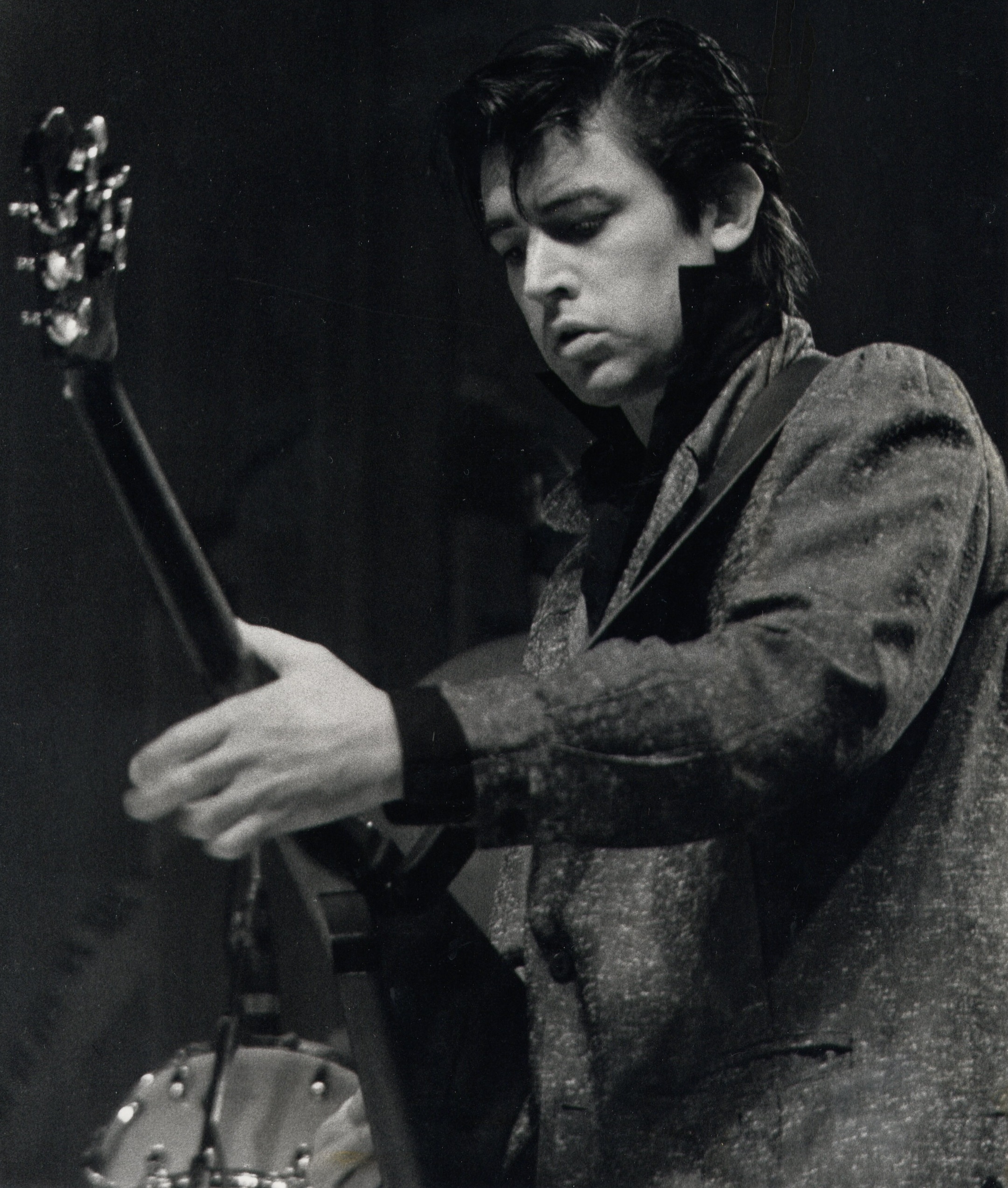
When you investigate Chris Spedding guitars gear, you discover one of the most versatile and thoroughly employed guitarists in British music history — a player whose session CV reads like a guided tour through fifty years of British popular music, who produced the Sex Pistols’ first demo, who had a Top 10 hit with “Motor Bikin'” in 1975, who played with everyone from Harry Nilsson to Elton John to John Cale, and who somehow maintained a genuine artistic identity throughout all of it without ever quite becoming the household name his contribution to British music warrants. Spedding is the guitarist other guitarists know — the player’s player whose fingerprints are on records that millions of people own without knowing his name.
This guide covers Spedding’s complete equipment picture: the eclectic guitar collection he assembled over five decades of professional work, the amplifiers he used across radically different musical contexts, the effects chain he adapted to whatever the job required, and the playing philosophy that allowed him to be genuinely effective across an extraordinary range of musical styles without sounding like a dilettante in any of them. Understanding Spedding’s gear is understanding how a professional musician equips himself to serve the music rather than to project a personal brand.
Background
Christopher Spedding was born on June 17, 1944, in Staveley, Derbyshire, in the industrial north of England. His early musical development followed the familiar British pattern of the early 1960s — skiffle first, then the American rock and roll and R&B records that were reaching Britain through imported copies and BBC broadcasts, then the guitar as the instrument through which all of this energy could be channelled. He learned to play with the pragmatic thoroughness of someone who intended to make a living from it, developing a technical range that extended across musical styles from the beginning rather than becoming deeply rooted in a single tradition.
His professional career began in earnest in the mid-1960s, playing in various touring and backing bands. By the late 1960s he was establishing himself on the London session scene — the community of professional players who recorded with whoever needed them, developed reputations for specific skills and musical flexibility, and built careers through the accumulation of credits rather than through the fame of a particular band or project. Spedding’s combination of technical accomplishment, musical adaptability, and professional reliability made him one of the most consistently employed session guitarists in London through the 1970s.
His session credits from this period are staggering in their range: he played on recordings by Harry Nilsson, Jack Bruce, Elton John, John Cale, Lulu, Donovan, Cleo Laine, Roxy Music, and dozens of others. He was the guitarist on Nilsson’s Pussy Cats album (1974), produced by John Lennon, which put him in rooms with the Beatle at a particularly interesting period of Lennon’s life. He was a member of the Sharks — a British hard rock band that recorded two albums in 1973 and 1974 and developed a cult following — and pursued a concurrent solo career that produced several albums of his own material.
The most historically significant moment of his career came in 1976 when he produced the Sex Pistols’ first professional demo recordings — the sessions that effectively launched the punk movement by demonstrating what the Pistols sounded like on tape. Spedding’s production approach on those demos was deliberately raw and direct, capturing the band’s energy without the smoothing that more conventional production might have applied, and the recordings played a crucial role in generating the interest that led to the band’s EMI deal. For a musician whose career had been built on professionalism and versatility, producing the most defiantly anti-professional movement in rock history was a paradox that Spedding embraced without apparent discomfort.
His solo career, running parallel to his session work, produced a series of albums that showed the full range of his musical personality: the rockabilly and rock’n’roll influences that sat alongside his session versatility, the slightly tongue-in-cheek stance toward rock stardom that gave his solo material a wit absent from most of his contemporaries, and the guitar playing that — freed from the requirement to serve someone else’s vision — could develop in whatever direction the music required. “Motor Bikin’,” his 1975 Top 10 hit, captured a particular retro-cool stance that was genuinely ahead of the punk and new wave movements that would make similar gestures in the following years.
Spedding has continued recording and performing into the 2000s and 2010s, remaining based primarily in New York (where he relocated in the 1980s) while maintaining connections to the British music scene. His later recordings have maintained the quality of the earlier work and in some respects exceeded it in directness and confidence — the playing of a musician who has nothing left to prove and therefore plays entirely for the music.
Chris Spedding Guitars Gear: The Complete Rig
Guitars
Chris Spedding’s guitar collection reflects his career’s extraordinary range — an eclectic assembly of instruments chosen for specific tonal purposes rather than collected for prestige or resale value. He has used more different types of guitars than almost any guitarist of his generation, and understanding his choices requires understanding the specific musical contexts they were made for.
His most iconic instrument — and the one most associated with his visual identity — is the Hamer Standard, one of the earliest guitars produced by the American boutique manufacturer Hamer Guitars, which began operation in 1973. Spedding was an early adopter of Hamer instruments when the company was producing high-quality, American-made Les Paul-style guitars before Gibson’s own quality control had returned to the standard it had maintained in the late 1950s. The Hamer Standard uses a mahogany body with maple top, a set mahogany neck with rosewood fingerboard, and Gibson-style humbucking pickups — effectively a precision-made Les Paul-style instrument with the construction quality that vintage Gibson examples had and contemporary Gibsons of the early-to-mid 1970s frequently lacked.
Alongside the Hamer, Spedding used a variety of Fender Telecasters — the instrument whose combination of simplicity, versatility, and bright single-coil character suited the range of musical contexts he worked in. The Telecaster’s bridge pickup, with its characteristic cutting brightness and attack, was perfect for the rock and roll and rockabilly-influenced material of his solo work; the neck pickup, warmer and rounder, worked for the more lyrical passages in session contexts. His Telecasters ranged from vintage 1950s examples to contemporary models, and he was practical about which he used — a working musician’s instrument rather than a collector’s specimen.
A Gibson Les Paul Standard from the late 1950s or early 1960s also appeared in his arsenal, used for the specific warmth and sustain that Les Paul construction and PAF humbucker pickups provide. For session work requiring a heavier, more sustained tone — rock ballads, blues-influenced material, anything where the Telecaster’s brightness would be too cutting — the Les Paul delivered the necessary warmth with the note-by-note definition that PAF pickups in the 7.5k–8.5k ohm range provide.
He also used various Gretsch hollowbody guitars — the Nashville and the Country Gentleman in particular — for rockabilly, country, and jump blues contexts. Gretsch instruments, with their Filter’Tron humbucking pickups (designed by Ray Butts, featuring lower DC resistance than PAF humbuckers — typically around 4k–5k ohms — and Alnico V magnets), produce a bright, chimey tone with a particular midrange character that sits between the Fender single-coil’s cut and the Gibson humbucker’s warmth. For the retro-inflected material that formed a significant part of Spedding’s solo work, the Gretsch’s character was more authentic than either the Fender or Gibson alternatives.
A Fender Stratocaster — vintage and contemporary examples — appeared in his rig for specific applications where the Strat’s single-coil pickups, five-position switching flexibility, and vibrato system were required. The Stratocaster’s three-pickup configuration and the in-between pickup positions (which give the characteristic out-of-phase quacky tone) covered tonal territory that neither the Telecaster nor the Les Paul accessed, and Spedding’s session work regularly required exactly that coverage.
String gauges varied by instrument and application — lighter gauges on the Strat and Tele for the bending and vibrato arm work those instruments required, medium gauges on the Les Paul and Hamer for the sustain and tension that humbucker-equipped instruments need. His pick of choice was a medium-thickness type, adaptable to the range of playing styles his work demanded.
Amps
Spedding’s amplifier choices were similarly eclectic and context-driven — he used whatever served the musical situation rather than developing the single-amplifier identity that characterised more stylistically focused players. That said, certain amplifiers appear consistently enough in accounts of his work to be considered his primary tools.
His most consistent choice for rock and rock’n’roll contexts was a Vox AC30 Top Boost — the 30-watt EL84-driven combo that was, in many ways, the defining amplifier of British rock music from the Beatles onwards. The AC30’s particular character — chimey top end, natural compression from the cathode-biased EL84 output stage, the sweet midrange bloom of the Top Boost channel — suited both the clean, jangly side of Spedding’s playing and the naturally driven overdrive that appeared in his heavier material. He used AC30s fitted with original Celestion Silver Alnico (Blue) speakers — the 15-watt alnico-magnet Celestion that gives the AC30 its characteristic top-end sweetness and smooth compression — rather than the later ceramic-magnet Greenbacks that also appeared in AC30 configurations.
For sessions requiring a different character — more American warmth, cleaner headroom, or a different midrange voicing — Spedding used Fender amplifiers, particularly the blackface Fender Deluxe Reverb (the 1×12, 22-watt 6V6-driven combo that is one of the most versatile recording amplifiers ever made) and the Fender Twin Reverb for situations requiring more headroom. The Deluxe Reverb’s 6V6 output valves produce a particular warmth and compression that differs from the 6L6’s character in the larger Fender models — slightly earlier saturation, a rounder midrange, and a more immediate response to pick attack that makes it particularly good for recording where nuance matters.
Marshall amplifiers — specifically the Marshall JMP 50-watt head — appeared in his live rig for heavier rock contexts, including work with the Sharks where the band’s hard rock direction required the EL34 midrange push that the Marshall provides. The 50-watt rather than 100-watt head was a deliberate choice: at comparable volume levels, the 50-watt circuit drives its output valves harder, producing a richer, more compressed drive character than the larger amplifier. For a guitarist who wanted natural valve saturation rather than clean headroom, the smaller Marshall head was the more appropriate tool.
Effects
Spedding’s effects chain was similarly context-driven — adapted to each musical situation rather than maintained as a fixed personal rig. Certain elements appeared consistently across different contexts, while others were specific to particular projects or periods.
A wah pedal — typically a Dunlop Cry Baby or Vox variant — was a consistent element of his chain, used both as a conventional swept lead effect and as a fixed filter for tonal colouring. His wah technique was musical and precise rather than decorative, reflecting the session musician’s discipline of using effects to serve the song rather than to display technique.
A fuzz pedal — germanium-transistor-based units similar to the Dallas Arbiter Fuzz Face — appeared for specific applications where the fuzz texture suited the musical context. For the heavier, more distorted passages in his rock work, the germanium fuzz added a vintage warmth and harmonic complexity that silicon distortion pedals or high-gain amplifier channels don’t replicate. His use of fuzz was selective rather than habitual — a specific tool for a specific sound rather than a default setting.
A Roland RE-201 Space Echo tape delay unit appeared in his rig for the echo and repeat effects characteristic of rock’n’roll and rockabilly — the slapback echo that defined early rock recordings and the longer delays that added space and dimension to lead playing. The RE-201 uses a real tape loop for its delay function, which gives it a warmth and slight pitch variation (as the tape stretches and ages) that digital delays don’t replicate. For the retro-inflected material of his solo work, the tape echo was not merely a period reference but a genuinely more appropriate tool than modern digital alternatives.
A treble booster — similar to the Dallas Rangemaster — appeared in his chain when working with British valve amplifiers and humbucker-equipped guitars, performing the same function it served for Abrahams, Moody, and other British players of his generation: adding presence and midrange push to a naturally warm combination without introducing the artificial harshness of excessive treble EQ.
A volume pedal sat in his chain for controlling output level during performance without altering the amplifier settings — particularly useful in session contexts where the volume needed to vary between tracking and playback monitoring without requiring amplifier adjustments between takes.
Playing Style & Tone Philosophy
Chris Spedding’s playing is defined above all by adaptability — the ability to change musical character completely without losing a personal identity that remains recognisable across radically different contexts. This is a rarer quality than it sounds. Most guitarists who attempt wide stylistic range produce playing that is technically correct but tonally anonymous in contexts outside their primary tradition; Spedding’s playing in any style retains a specific quality of personality and musical intelligence that makes it immediately identifiable to ears familiar with his work.
His rock and roll and rockabilly work draws on the tradition of Scotty Moore, James Burton, and the early rock instrumentalists with genuine understanding — not just the technical vocabulary of the style (the chicken-picking, the echo-drenched bends, the rhythmic propulsion) but the emotional character that makes the style what it is. His jazz vocabulary, deployed in session contexts that required it, was technically sufficient and musically appropriate without being the primary focus of his playing. His punk and new wave work — which emerged from his production work with the Sex Pistols and his involvement with the late-1970s British new wave — was raw and direct in a way that required deliberately setting aside the technical refinement his session career had developed.
This deliberate stylistic code-switching is the professional musician’s fundamental skill, and Spedding possesses it to an unusual degree. What unifies his playing across these different contexts is a consistent quality of musical intelligence — the ability to identify what a particular musical situation requires and to deliver exactly that, neither more nor less. Session musicians who lack this intelligence produce playing that is technically accomplished but musically neutral; Spedding’s playing is technically accomplished and musically engaged, which is a significantly rarer combination.
His rhythm guitar work is particularly strong — developed through the specific discipline of session recording, where the rhythm guitar part must lock with the rhythm section, complement the arrangement, and serve the vocalist without calling attention to itself. The invisible excellence of rhythm guitar playing is harder to develop than the more visible excellence of lead playing, and Spedding’s rhythm work throughout his session catalogue is consistently excellent in the most invisible possible way.
Tonally, his philosophy was frankly pragmatic: the right equipment for the job. Unlike players who develop strong tonal preferences and apply them regardless of context, Spedding approached each musical situation with the question of what it required and equipped himself accordingly. This pragmatism was not the absence of taste but the expression of it — the taste to know that different music requires different approaches, and the skill to implement those approaches effectively.
How to Sound Like Chris Spedding
Guitar Approach
There is no single “Spedding tone” — his whole career is an argument against the concept of a single defining sound. For his rock and roll and rockabilly work, a Fender Telecaster or Gretsch hollowbody with Filter’Tron pickups, played through a Vox AC30 with slapback echo, is the authentic combination. For his harder rock material with the Sharks, the Hamer Standard or Les Paul through a 50-watt Marshall is more appropriate. For his session work, whatever the song requires.
The transferable element is the musical approach: listen to what the music needs, identify the specific combination of tone, attack, and dynamic that will serve it, and deliver that rather than your personal favourite sound. This is a discipline as much as a technique, and it requires the same kind of musical intelligence that Spedding demonstrated consistently throughout his career.
Amp Approach
The Vox AC30 is the most versatile single amplifier in his toolkit and the most useful starting point. Run the Top Boost channel at a volume where the EL84s are starting to compress — typically 5–6 on a vintage unit — and adjust the EQ according to the guitar and the musical context. A Celestion Blue (alnico) speaker version is preferable to the Greenback-loaded variant for the chimey, smooth top end that suits his clean and lightly driven playing.
| Control | Setting | Notes |
|---|---|---|
| Volume (Top Boost) | 5–6 | EL84 compression zone — where the character emerges |
| Treble | 6–7 | Moderate-high — suits Tele and Gretsch brightness |
| Bass | 4 | Controlled bass for clarity in a band mix |
| Tone Cut (if fitted) | 5–6 | Centre position — avoid extremes |
| Space Echo (tape delay) | Short slapback | 150–200ms delay for rock’n’roll material |
| Reverb | Minimal or off | Let the tape echo do the spatial work |
Influence & Legacy
Chris Spedding’s legacy is partly the direct legacy of his own recordings and partly the indirect legacy of the musicians and projects he served. The Sex Pistols demo recordings he produced are historically significant in a way that extends far beyond his personal contribution to them — they were the spark that lit the punk fire, and their existence as documents of what the Pistols sounded like before the major label process shaped them is culturally irreplaceable. That Spedding, a professional musician of the old school, was the person who captured that raw energy is one of rock history’s more productive paradoxes.
His session work left a less visible but equally substantial legacy — the fingerprints of his playing on hundreds of recordings that reached millions of listeners who never knew his name. This invisible contribution is the common fate of session musicians, whose work is integral to the recordings people love but whose names appear only in the small print of liner notes that most listeners never read. In Spedding’s case, the contribution was significant enough and consistent enough over a long enough period that it constitutes a major artistic achievement even without the visibility that fronting a famous band would have provided.
Among guitarists who know his work, Spedding is consistently admired for precisely the qualities that kept him from mainstream fame: the refusal to commit to a single style, the technical range that made him valuable in any context, the musical intelligence that prioritised serving the song over projecting a personal brand. These qualities are most visible to listeners who understand what they represent and how unusual they are, which is why his reputation is strongest among musicians and serious fans rather than casual listeners.
For players exploring the British session guitar tradition that Spedding represents so fully, the work of Micky Moody — who brought a similar professional versatility to the Whitesnake context — and Michael Bloomfield, whose American session career ran parallel to Spedding’s British one with comparable breadth and quality, offer illuminating comparison. The specifically punk dimension of Spedding’s career is best understood in the context of Chris Shiflett‘s later work, which shows how the punk tradition evolved into the alternative rock mainstream.
The Session World: How Spedding Built His Career
To understand Chris Spedding’s equipment choices in full context, it’s necessary to understand what the London session world of the late 1960s and 1970s actually demanded of its participants. Session recording in this era was not the isolated, click-track-driven process that modern studio work often involves — it was ensemble performance, with groups of players assembled in a studio space, often sight-reading charts, required to deliver multiple takes of usable performances across a range of material in a single session. The guitarist who walked into these situations needed to be able to read music, play accurately at sight, adapt immediately to the arranger’s requirements, and contribute something musically useful without the extended preparation that live performance allowed.
This environment placed specific demands on equipment. The guitar needed to be reliable — tuning stable, electronics consistent, mechanically sound — because a guitar that misbehaved in a session was not merely inconvenient but professionally costly. It needed to be versatile enough to cover the range of sounds the arranger might require across different songs in the same session, which meant either carrying multiple instruments or using instruments and amplifiers flexible enough to serve multiple tonal needs. And it needed to be quiet enough in a studio context that bleed into adjacent microphones was manageable — a consideration that affected amplifier volume levels and occasionally the choice between amplifier and direct injection for certain applications.
Spedding’s Vox AC30, in this context, was an inspired choice. The AC30’s character at moderate volumes — when the EL84s are working but not fully saturated — is warm, musical, and relatively contained in its frequency spread compared to a cranked Marshall. Its Top Boost channel gives it tonal flexibility from clean to naturally driven without requiring external effects. Its relative compactness compared to a Marshall head-and-cabinet stack made it manageable in a range of studio configurations. And its association with the sound of British pop recording from the Beatles era onwards meant that its character was immediately legible to arrangers and producers who had grown up hearing it on records — they knew what to expect from an AC30 in ways they might not have known what to expect from a less familiar amplifier.
The Fender Telecaster, similarly, was an inspired session choice. Its simplicity — two pickups, a volume, a tone, and a direct output — meant that it rarely malfunctioned and was easy to troubleshoot when it did. Its range from the bridge pickup’s cutting brightness to the neck pickup’s darker warmth covered significant tonal ground. Its sustain characteristics, while less than a Les Paul’s, were sufficient for most session applications, and its attack and articulation in the bridge position were better suited to rhythm guitar work in arrangements where clarity and definition mattered more than sustain.
These were not glamorous equipment choices by the standards of the era’s guitar heroes. But they were correct choices for the specific demands of the work, and Spedding’s willingness to prioritise function over image is itself a form of musical intelligence that his contemporaries did not all share. The player who showed up with the right instrument and amplifier for the job, reliably and consistently, was the player who got called back for the next session — and the accumulation of those callbacks built the career that Spedding’s discography documents.
The Sharks and the Hard Rock Dimension
Spedding’s work with the Sharks — the British hard rock band he co-founded in 1972 — represents a very different facet of his musical personality from the session work that occupied most of his professional time. The Sharks, which also featured bassist and vocalist Steve Parsons (later known as Steve Snips) and various drummers, pursued a direct, energetic hard rock approach that drew on American blues rock roots without the British blues orthodoxy of contemporaries like Mick Abrahams or the more progressive ambitions of mid-1970s British rock.
For the Sharks material, Spedding’s equipment shifted significantly. The Marshall JMP 50-watt head replaced the AC30 as the primary amplifier — its EL34 output valves delivering the midrange aggression and natural drive that hard rock required — and his guitars for this context leaned more heavily on humbucker-equipped instruments, particularly the Hamer Standard that became visually associated with his Sharks-era image. The combination of Hamer’s precision-built humbucker tone and the Marshall’s driven character produced a sound that was rawer and more physically aggressive than his session work but equally controlled and purposeful.
The Sharks recorded two albums — First Water (1973) and Jab It in Yore Eye (1974) — that captured Spedding’s hard rock playing at its most committed. The guitar work on these records shows a side of his musicianship that the session discography obscures: a player who could sustain energy and aggression over a full-band performance without losing the musical intelligence and control that his session work had developed. The Sharks were not commercially successful but they were musically impressive, and their recordings document a chapter of Spedding’s career that deserves more attention than it typically receives.
The contrast between the Sharks material and the concurrent session work — recorded in the same years, for the same player, on different instruments through different amplifiers — illustrates the breadth of Spedding’s musical range more vividly than any single recording can. A guitarist who was simultaneously laying down precise, clean session guitar for Harry Nilsson’s records and delivering energetic hard rock with the Sharks was not a musician with a single defining sound; he was a musician with a musical intelligence broad enough to be genuinely effective across wildly different contexts. The equipment adapted to the context because the player had the range to use different equipment correctly in different situations — which is, ultimately, the most demanding form of musicianship there is.
Gretsch, Filter’Trons, and the Rockabilly Dimension
One of the most musically distinctive aspects of Spedding’s playing is his genuine command of the rockabilly and early rock and roll guitar style — a style that requires specific equipment and specific techniques that are quite different from either the blues rock or session contexts that dominated most of his career. The Gretsch hollowbody guitars he used for this material — the Nashville and Country Gentleman in particular — are instruments with a specific tonal identity that stems from their Filter’Tron pickups and hollowbody construction.
The Filter’Tron humbucker, designed by Ray Butts in 1954 and adopted by Gretsch the following year, is a significantly different circuit from the Gibson PAF despite sharing the dual-coil, hum-cancelling format. Its DC resistance — typically around 4.5k to 5.0k ohms, significantly lower than a PAF’s 7.5k to 8.5k ohms — produces a cleaner, brighter, more transparent sound with less midrange emphasis and more top-end clarity. The Alnico V magnets are the same type used in many PAF configurations, but the lower winding and different coil geometry produce a fundamentally different tonal character: chimier, more articulate, with a particular sparkle in the upper register that suits chord work and the precisely placed single-note phrases of rockabilly lead playing.
The hollowbody construction of the Gretsch instruments adds its own character — the body resonance contributes a warmth and acoustic dimension to the amplified sound that solid-body instruments don’t provide, and it creates a specific feedback sensitivity at high volumes that experienced players learn to control and use musically. Spedding’s ability to manage Gretsch hollowbody feedback in a live context — using it productively rather than fighting it — is a technical skill that reflects years of experience with these instruments in demanding live situations.
Through the Vox AC30, the Gretsch Filter’Tron combination produces one of the defining sounds of British rockabilly and country rock — the combination of EL84 compression and Filter’Tron brightness creating a chimey, slightly glassy tone with a natural sweetness that the heavier Gibson-and-Marshall combination doesn’t provide. The Roland Space Echo tape delay, set to a short slapback repeat of approximately 150–200 milliseconds with no regeneration, adds the characteristic echo of classic rock’n’roll recordings without obscuring the note definition that precise rockabilly picking requires.
“Motor Bikin'” sits at the intersection of these elements — the Gretsch or Telecaster brightness, the AC30 compression, the tape echo slapback — and the result is a sound that is simultaneously retro-authentic and personally distinctive. Spedding understood that rockabilly guitar tone is not merely a matter of playing the right notes in the right style; it requires the specific equipment that produced the original sound, approached with genuine understanding of why that equipment sounded that way and what it was doing in the signal chain. His ability to achieve this specific combination while also maintaining the range to play hard rock with the Sharks and clean session work for major pop productions is the clearest possible demonstration of his musical and technical range. Very few guitarists can be genuinely convincing in all three of these contexts simultaneously; Spedding managed it for decades, and the equipment evidence of how he did it is worth studying by anyone serious about the relationship between gear and musical identity.
Spedding’s career also illustrates something important about the relationship between musical versatility and commercial success — or rather, the tension between them. The most commercially successful guitarists of his generation tended to be those who developed a single, highly distinctive sound and maintained it consistently across their recordings: Hendrix’s Strat-through-Marshall fuzz, Clapton’s Les Paul through the Bluesbreaker, Page’s Les Paul through Marshalls with the bow. These sounds were distinctive precisely because they were singular — you could hear them for three seconds on the radio and know exactly who you were listening to. Spedding’s versatility, his ability to sound appropriate in any context, was musically more sophisticated than this singularity but commercially less effective: if you could make him sound like exactly what the song needed, there was no single “Spedding sound” for casual listeners to latch onto and recognise.
This is not a failing of Spedding’s musicianship — it is, if anything, evidence of a higher level of musical intelligence than the distinctive-sound approach requires. But it is a genuine explanation of why a guitarist whose contribution to British music over fifty years rivals that of many more famous names has not achieved the mainstream recognition those names enjoy. The musicians who know his work understand this clearly; the broader music-consuming public, which identifies guitarists by their sound rather than their musical intelligence, has largely missed him. His equipment — eclectic, context-driven, chosen for function over image — is both the expression of this approach and one of its causes. You cannot build a personal brand around a guitar collection that changes completely from project to project, and Spedding never tried to. He built his reputation on the quality of the work instead, which is the correct priority for a musician even when it is the less commercially effective one.
His later recordings — particularly the albums made in New York from the 1980s onwards, where he was no longer embedded in the specific context of the British session scene but working as an artist with full creative control — show what the accumulation of all those decades of versatility and discipline produced when fully liberated. The playing on these records is simultaneously the most technically refined and the most personally direct of his career: a musician who has internalised so many styles and techniques that he can now draw on all of them simultaneously without any of them dominating, producing something that is genuinely his own in a way that earlier, more context-constrained work could only hint at. The right equipment for the job, chosen by someone who finally has total freedom to define what the job is, sounds like this: direct, confident, musically intelligent, and entirely individual despite the lifetime of service to other people’s music that produced it.
One additional piece of equipment worth noting in Spedding’s rig is the professional-grade cabling and switching he maintained throughout his career — not glamorous, but consequential. In a session context, where a cable failure or ground loop mid-take could cost everyone in the room time and money, the reliability of every connection in the signal chain was a professional responsibility as well as a practical concern. Spedding’s attention to these details — consistent with the professionalism that characterised every aspect of his session career — meant that his signal chain was as clean and noise-free as the instruments and amplifiers allowed, which in turn meant that engineers could work with his recorded signal without fighting noise floor or interference issues. In the invisible infrastructure of professional session recording, this kind of attention to practical detail is as important as the more visible aspects of tone and technique, and it is part of why Spedding remained continuously employed in a competitive professional environment for five decades.
Frequently Asked Questions: Chris Spedding Guitars & Gear
What guitars did Chris Spedding play?
Spedding’s most iconic instrument was a Hamer Standard — one of the early guitars from the American boutique manufacturer, essentially a precision-built Les Paul-style guitar. He also played extensively with Fender Telecasters, Fender Stratocasters, Gibson Les Paul Standards, and Gretsch hollowbody guitars including the Nashville and Country Gentleman. His eclectic collection reflected the range of his musical work rather than a single tonal preference.
What amp did Chris Spedding use?
His most consistent amplifier choice was a Vox AC30 Top Boost with Celestion Blue (alnico) speakers, which served his rock, rock’n’roll, and session work equally well. He also used Fender amplifiers — particularly the Deluxe Reverb and Twin Reverb — for American-character clean tones in session contexts, and Marshall JMP 50-watt heads for the heavier rock material with the Sharks.
Did Chris Spedding really produce the Sex Pistols’ first demo?
Yes. Spedding produced the Sex Pistols’ first professional demo recordings in 1976, sessions that captured the band before they had signed to a major label and that played a significant role in generating the industry interest that led to their EMI deal. His production approach was deliberately raw and direct — capturing the band’s energy without the polish that might have defused it. The sessions are historically significant as the first professional document of what became the punk movement.
What is “Motor Bikin'” and why is it important?
“Motor Bikin'” was Spedding’s 1975 solo single that reached the Top 10 in the UK charts. The song’s combination of rock’n’roll energy, retro-cool imagery, and slightly tongue-in-cheek stance anticipated the punk and new wave aesthetic by several years. It remains his best-known solo recording and is evidence that his instinct for the cultural moment was as acute as his musical versatility.
What effects did Chris Spedding use?
His key effects included a wah pedal (Cry Baby or Vox variant), a germanium fuzz pedal for heavier material, a Roland RE-201 Space Echo tape delay for rock’n’roll and rockabilly contexts, and a treble booster for work with British valve amplifiers and humbucker-equipped guitars. His effects use was context-driven rather than fixed — he used what each musical situation required.
How did Chris Spedding influence punk and new wave?
Spedding’s production of the Sex Pistols’ first demo was his most direct influence on punk. Beyond that specific contribution, his solo recordings — particularly “Motor Bikin'” and the associated visual style — anticipated certain aspects of the punk aesthetic. His willingness to engage with raw, direct musical approaches, even after a career built on professional refinement, demonstrated that the values punk claimed as its own were not exclusive to younger, less accomplished players.
Why isn’t Chris Spedding more famous?
Spedding’s career structure — primarily session work and collaboration rather than front-man status in a famous band — kept him out of the spotlight despite a contribution to British music that by any objective measure is more substantial than many guitarists who achieved greater fame. The session musician’s fate is to be invaluable but invisible, and Spedding is perhaps the most extreme example of this paradox in British rock history. Among musicians and serious listeners, his reputation is commensurate with his contribution; among casual listeners, he remains largely unknown.
Genre:
Rock/Session/Punk
Decades:
1960s | 1970s | 1980s | 1990s