The Wall of Britain in a Box: Marshall DSL40CR and the Democratic Crunch
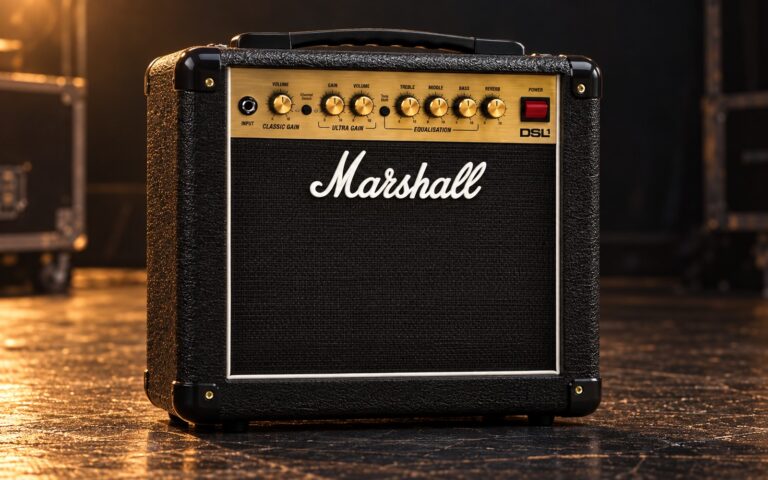
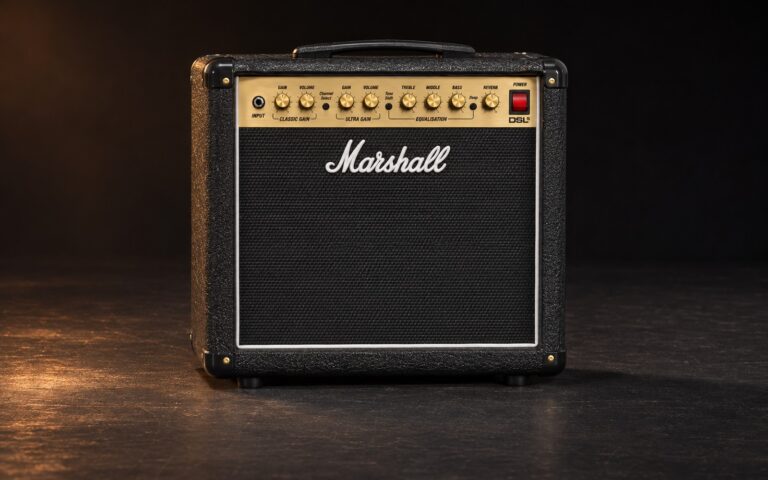
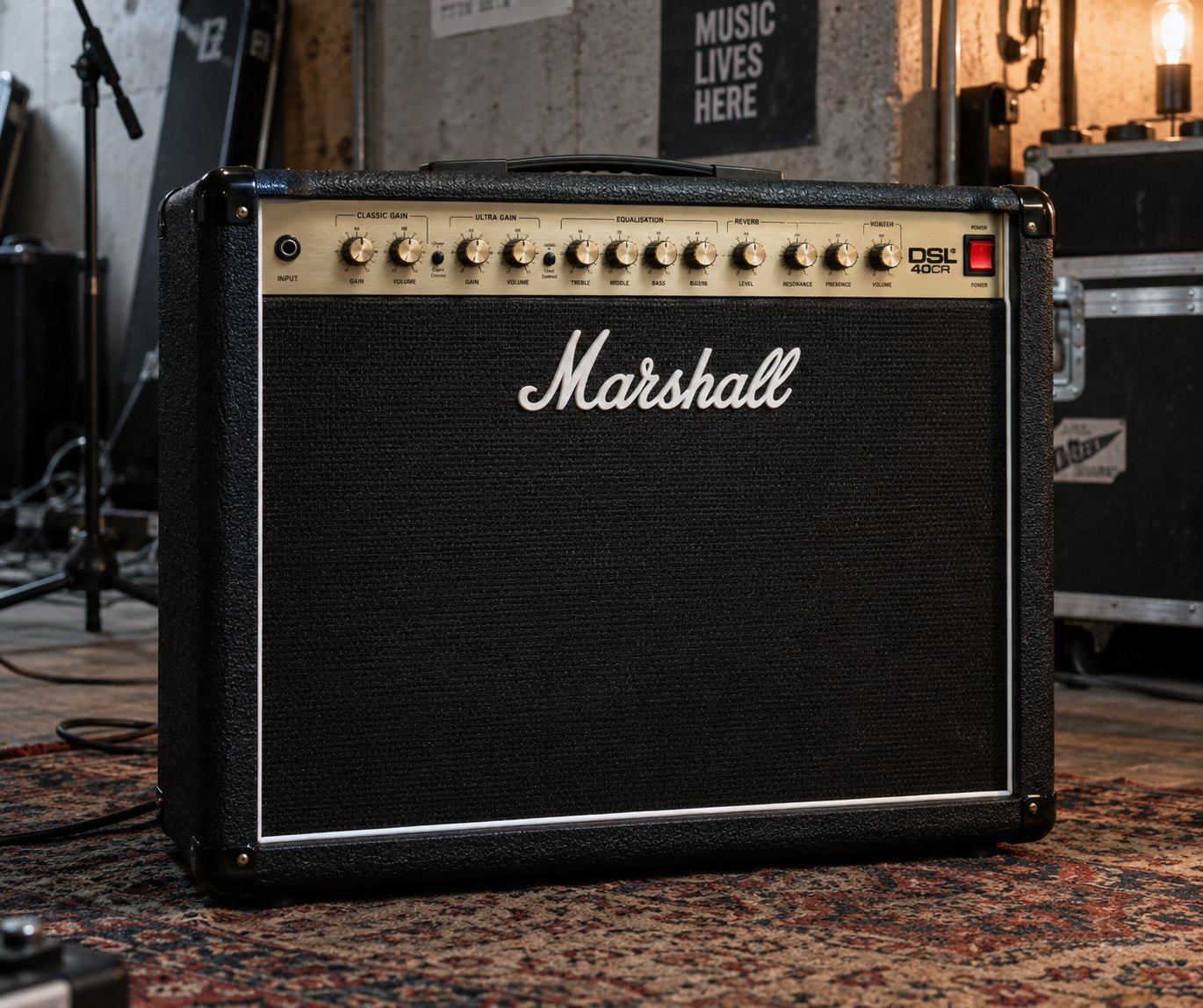
Marshall DSL40CR. AI-generated reference illustration, not a photograph.
Marshall DSL40CR: specs, circuit walkthrough, honest Famous Players breakdown, 7 tone recipes, buying guide for new and used, and ownership notes for 2026.
There is a particular moment that every guitarist recognizes. You plug into a Marshall, dial up some gain, hit an open A chord and feel the room pressurize. It is not just loud. It is British. It is a midrange density that Fenders do not have, a particular way the pick attack snarls before blooming into sustain, a character that forty years of rock records have burned into the collective ear. The problem has always been that the amps responsible for that sound — the plexis, the JCM800s, the original JCM2000 DSL heads — want to be cranked to work properly. They are power-station-scale instruments designed for arenas, temperamental at bedroom levels, and priced accordingly on the vintage market.
The Marshall DSL40CR exists to solve that problem. It is a 40-watt all-tube 1×12 combo with four gain modes, built-in reverb, power attenuation down to 20 watts, and an emulated output for direct recording. It launched in late 2017 as the successor to the DSL40C, inheriting the dual-channel DSL architecture that has been the core of Marshall’s mid-market offering since 1997, and adding the practical features that working musicians need in an era where rehearsal rooms have upstairs neighbors and stages are increasingly mic’d at low volume. At around $750 street price in 2026, it sits at the upper edge of what a serious player might call a “first real amp” — and at the lower edge of what a professional would call a “proper Marshall.” That tension is not a flaw. It is the DSL40CR’s entire identity.
Where the DSL Line Came From
To understand the DSL40CR, you need to understand that the DSL designation has been Marshall’s workhorse series for nearly three decades, worn by several quite different amplifiers in succession.
The original DSL was born in 1997 as the JCM2000 DSL — Dual Super Lead — a 100-watt and 50-watt head that replaced the JCM900 range. The JCM900 had been criticized for its gain staging (a modified loop into the preamp that many players found harsh), and the JCM2000 DSL answered with a more conventional cascaded gain structure and two independent channels: Classic and Ultra. It re-introduced EL34 power tubes to the Marshall lineup, which the JCM900 had swapped out for 5881s. The JCM2000 family was expanded in 1998 with the DSL201 and DSL401 combos — 20-watt and 40-watt 1×12 boxes that brought the architecture to smaller stages. These became enormously successful and ran until around 2008, when the JVM Series took over as Marshall’s flagship.
The DSL combo returned in 2012 as the DSL40C — a revised 40-watt 1×12 that retained the dual-channel structure but updated the circuit, improved the clean headroom on the Classic channel, and added a Heritage Series speaker. The DSL40C was a solid amp but lacked reverb — a significant omission for a combo intended as an all-in-one live tool — and its effects loop ran in parallel rather than series, which complicated integration with time-based effects.
The DSL40CR arrived in late 2017 with “CR” standing for Combo with Reverb. That sounds modest, but the CR update was more substantial than the name suggests. Beyond the added digital reverb, Marshall revised the circuit, added a power reduction switch (40W/20W), replaced the Heritage speaker with a Celestion V-Type, changed the effects loop to series operation, added an emulated headphone/line output for direct recording, and updated footswitch compatibility to support the PEDL-91016, which allows the four gain modes to be footswitched independently — effectively turning the amp into a four-channel unit on stage. The DSL40CR is not the DSL40C with reverb bolted on. It is a meaningfully different amplifier in a subtler package.
Specifications
The Circuit in Plain English
The DSL40CR is a two-channel amp with a four-mode personality. Understanding how those four modes relate to each other is the key to getting the most from the amp.
Channel 1 — Classic Gain has two modes: Clean and Crunch. Clean mode runs at low gain and is Marshall’s most usable clean voice since the blackface era Fender-influenced JTM45 days — it has real headroom, responds to pick dynamics, and is genuinely pedal-friendly in a way that older high-gain Marshalls were not. Crunch mode adds preamp gain into the Classic Gain channel and covers everything from a pushed clean (Les Paul into moderate gain) to full classic-rock crunch. This is the “Hendrix and early Clapton” territory of the amp: touch-sensitive, harmonically full, and responsive to volume knob rollback.
Channel 2 — Ultra Gain has two modes: OD1 and OD2. OD1 is a hot lead tone — think JCM800 at full power, singing sustain, moderate saturation. OD2 is the deep-gain setting, with cascaded gain stages producing the kind of saturation associated with 1980s heavy metal and modern hard rock. At high gain on OD2 with the Tone Shift engaged (a mid-scoop button), you are in genuinely heavy territory without adding any pedals.
Each channel has its own Gain and Volume control, plus its own Reverb control and its own Master Volume — that last feature is particularly valuable, because it means you can set a quiet clean and a loud lead without touching anything mid-song, which is exactly what live use requires.
The EQ section — Treble, Middle, Bass, Presence, Resonance — is shared between both channels, which is the one genuine limitation of the architecture. Presence and Resonance control the power stage response (Presence affects the negative feedback loop across the high frequencies; Resonance affects the output transformer’s low-frequency behavior), while Treble/Middle/Bass handle the preamp tone stack. The Tone Shift button introduces a mid-scoop centered around 500Hz–1kHz, which is particularly effective for metal rhythm playing and cleans up the congestion that single-coils can produce on the Ultra channel.
At its core, the EL34 choice is the reason the DSL40CR sounds British. EL34s have a natural compression character and a pronounced upper midrange emphasis (roughly 1–3kHz) that is fundamentally different from the American 6L6’s tighter, more scooped presentation. When you push the output stage, EL34s saturate into a harmonic richness that American tubes do not produce. The DSL40CR runs fixed bias, which means the power section runs hotter than a cathode-biased amp and requires periodic adjustment, but it also means the amp has the headroom and immediacy that cathode-biased designs (like a Vox AC30) sacrifice. The solid-state rectifier keeps the attack tight — no sag, unlike a vintage JCM800 or a cathode-biased 18-watter — which helps the amp cut through a mix even at lower gain settings.
The Celestion V-Type speaker is worth discussing separately. The V-Type is a modern speaker designed specifically for high-gain applications: its Alnico II magnet (unusual for a Celestion in this price bracket) produces a warm, vocal midrange with a relatively controlled top end, reducing the brittleness that can afflict high-gain combos with ceramic speakers at volume. It handles 80 watts of program content (much more than the amp will produce at 20W or even 40W), which keeps it clean and linear even when you are pushing the power stage hard. It is the right speaker for this amp and, unlike many in this price bracket, does not need to be immediately replaced.
The Weight Issue (and Why It Exists)
At 50.4 lb, the DSL40CR is heavy for a 1×12 combo. This comes up in every review and in every forum thread, and it deserves a plain explanation rather than an apology. MDF (medium-density fibreboard) is the cabinet material, and it is genuinely heavier than pine or birch plywood. The reasons Marshall uses it are real: MDF is acoustically damped (less ringing), dimensionally stable (it does not expand and contract with humidity changes the way solid wood does), and mechanically uniform (no knots, no voids). For a gigging combo that lives in transit cases and gets loaded in and out of vans, MDF’s rigidity and durability are real advantages. The weight is the tradeoff for those advantages, not an oversight. The amp ships with corner protectors on all eight corners — which is Marshall acknowledging what this thing is for.
If 50 lb is genuinely prohibitive, the DSL20CR (20W, same architecture, same speaker) is substantially lighter and has the same four voicing modes. But be honest about the tradeoff: you are giving up stage volume and the power-amp contribution to the tone, which is part of what makes 40-watt EL34 combos sound the way they do.
Famous Players
The DSL40CR’s listed artist associations include Slash, Zakk Wylde, Kerry King, Gary Moore, and Tom Morello. All five are genuine Marshall legends. None of them are documented DSL40CR users, and one of them is provably impossible. Here is the full picture.
Gary Moore
Gary Moore died on February 6, 2011, aged 58. The Marshall DSL40CR was released in late 2017 — six years after his death. Whatever Marshall amps Gary Moore used, the DSL40CR was not among them. He could not have used it. This is the same calendar-falsification pattern that appears repeatedly in gear-list databases: an artist is associated with a brand, the brand association gets extended to every subsequent product that brand makes, and nobody checks the dates. Gary Moore was a genuine Marshall user throughout his career — he relied on JCM800s in the 1980s, a JTM45 reissue prototype for the 1990 Still Got the Blues sessions, and Marshall DSL100 heads in the 2000s for touring — but those are all different models, earlier generations, and none of them are the DSL40CR.
Slash
Slash is one of Marshall’s most significant endorsers in history. His signature models — the AFD100 (a Plexi/JCM800 hybrid designed around the Appetite for Destruction tone), the Silver Jubilee 2555X reissue, and the various Marshall Slash editions — have defined what it means to play a Marshall with a Les Paul. The DSL series is the “modern production Marshall” side of the catalog, and Slash’s documented amps sit on the vintage-voiced, custom-built end: 100-watt heads pushing 4×12 cabinets, not 40-watt open-back combos with digital reverb. Slash’s tone is achievable on a DSL40CR — the relationship between the Les Paul and EL34 power section is the same, and the Classic Gain channel dialed back can genuinely approximate the AFD clean — but there is no documented evidence of Slash using a DSL40CR as a gigging or recording instrument. He is a tonal reference point for the amp’s character, not a verified user.
Zakk Wylde
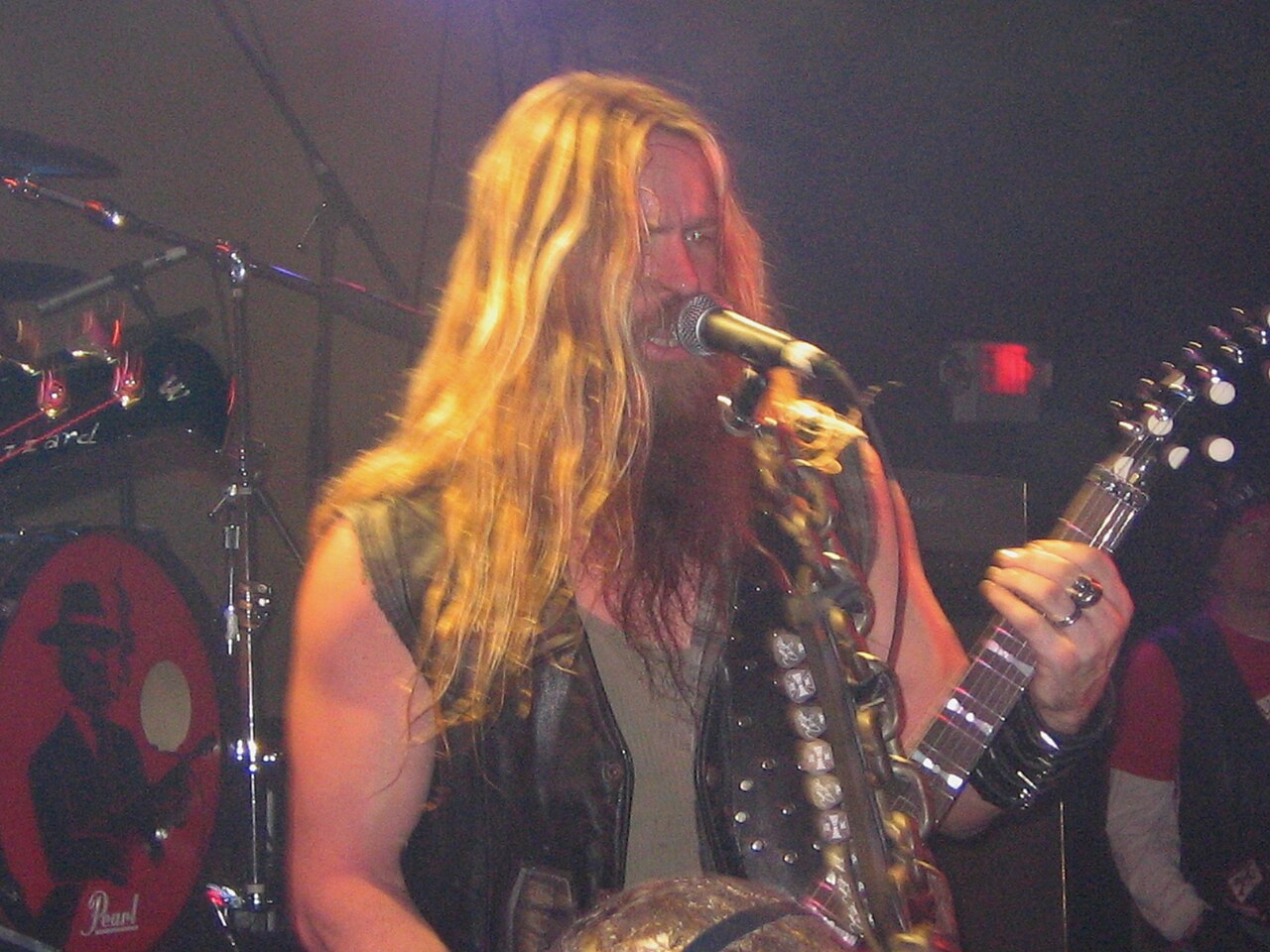
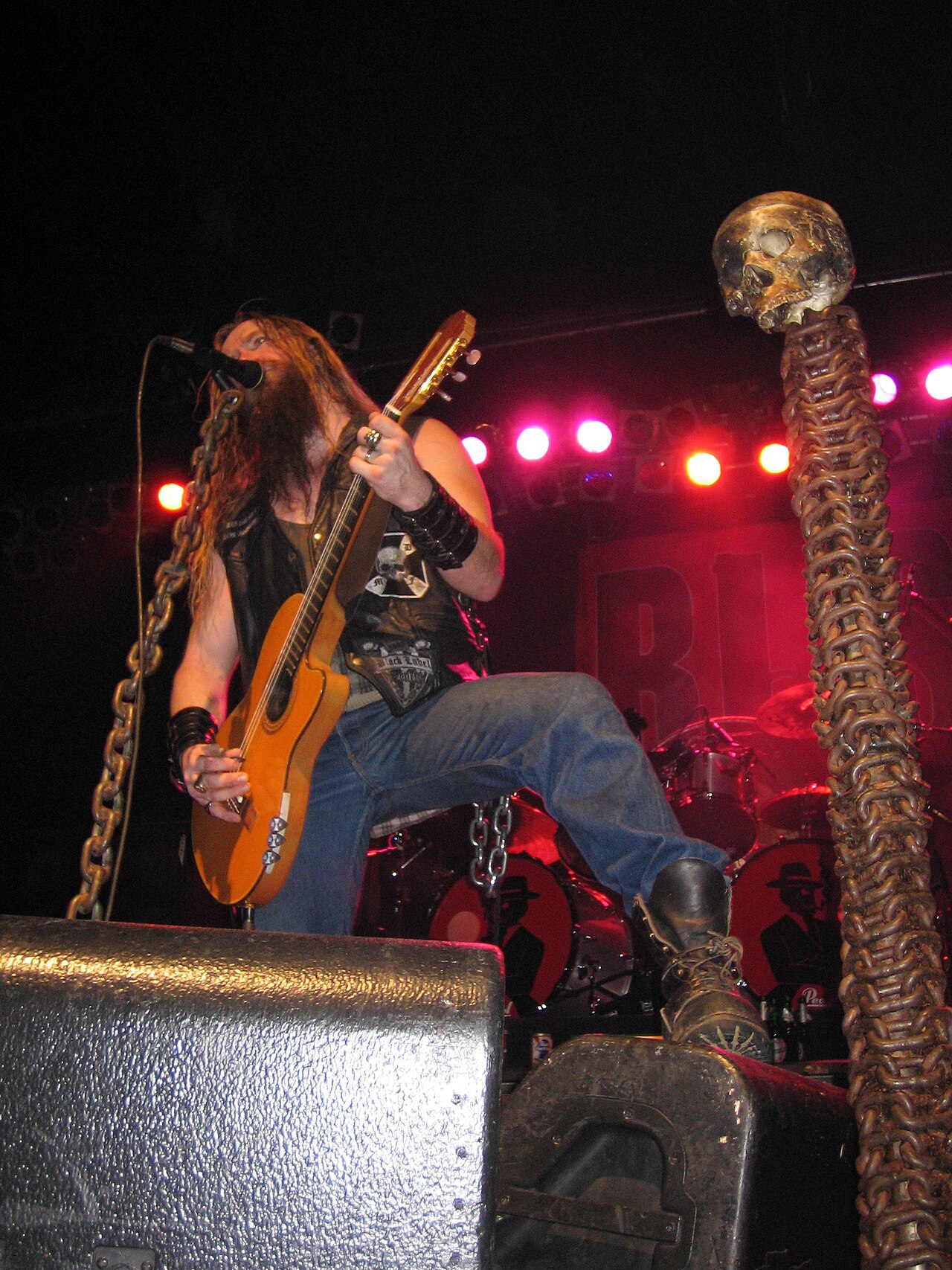
Zakk Wylde’s signature Marshalls are the JCM800 2203ZW — a 100-watt head based on the original JCM800 2203 “The Beast,” available in a limited run of 600 units, loaded with KT88 power tubes rather than EL34s for additional headroom and aggression. His live rig has historically been built around these high-powered heads driving multiple 4×12 cabinets with EV speakers — the opposite of a 40-watt open-back combo. The connection between Zakk Wylde and the DSL40CR is one of tone description, not actual use: Vintage Guitar magazine (March 2022, Oscar Jordan) reviewed the DSL40CR and described the Ultra Gain channel as “approximating Zakk Wylde’s brutal high-gain soloing.” That is a legitimate tonal comparison. It is not evidence that Zakk Wylde uses a DSL40CR.
Kerry King
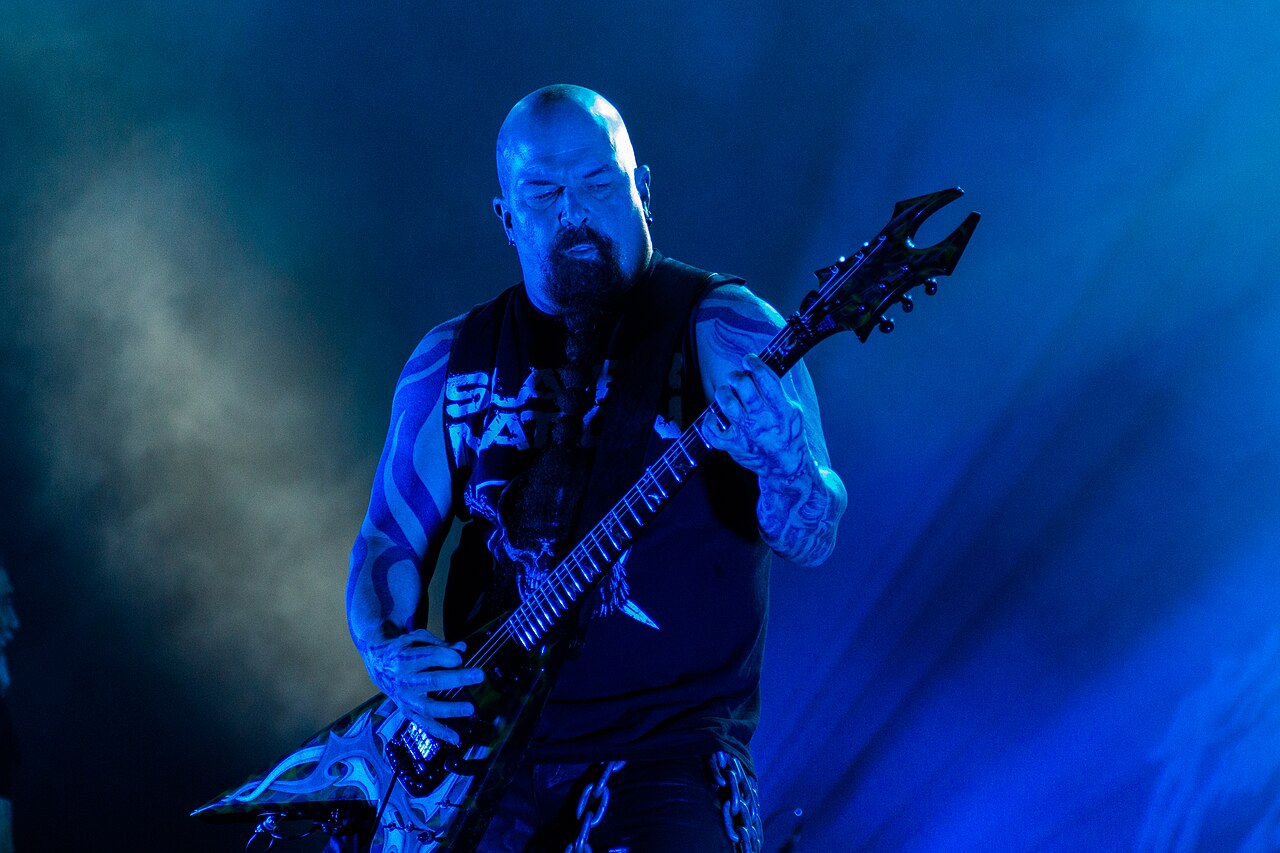
Kerry King’s signature Marshall is the JCM800 2203KK — a 100-watt head nicknamed “The Beast” that King developed in collaboration with Marshall after an earlier prototype stage with Krank. The 2203KK is a heavily modified JCM800 voiced for Slayer’s extreme metal requirements, with KT88 power tubes and a sound that is substantially louder and more aggressive than a stock JCM800. Kerry King runs three 2203KK heads into six Marshall 4×12 cabinets loaded with Celestion G12K-100 speakers. The DSL40CR is not in this rig at any documented point. Like Slash and Zakk Wylde, Kerry King is associated with Marshall’s JCM800-lineage products, not the DSL series.
Tom Morello
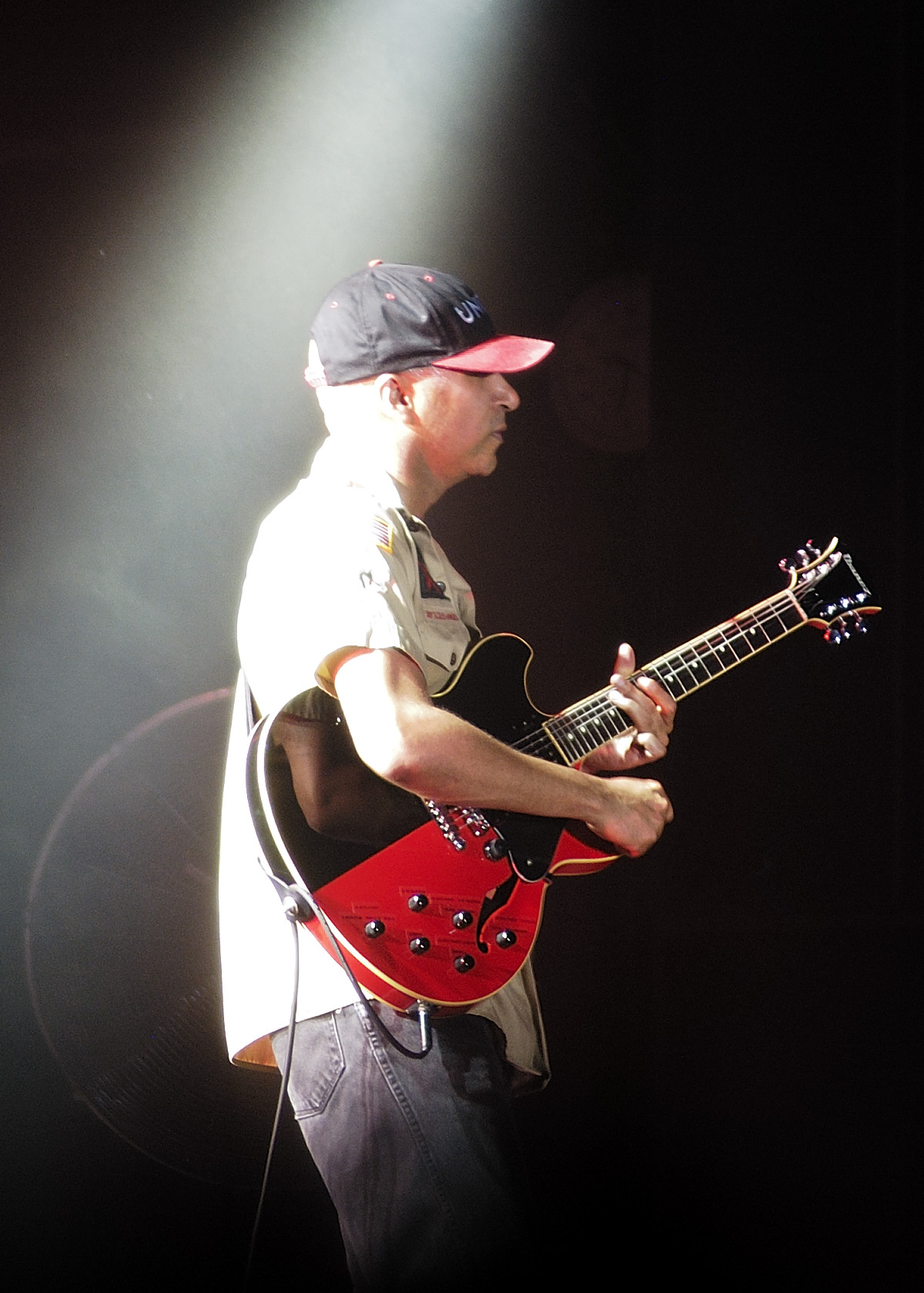
Tom Morello has used the same amplifier live for most of his career: a 50-watt Marshall JCM800 2205 he purchased in 1988 for the early Rage Against the Machine sessions. Marshall’s own social media accounts have photographed this specific amp on Prophets of Rage stages. Morello’s JCM800 is notable for how he uses it — running the amp’s single channel clean with his entire sonic identity built from the effects chain in front of it (DigiTech Whammy, line selector, various modulation boxes), rather than relying on the amp’s own gain. There is no documented DSL40CR in his live or studio rig.
Who Actually Uses the DSL40CR
Equipboard (July 2026, verified against actual gear submissions) shows exactly two professional artists documented on the DSL40CR: Jakob Armstrong and an artist listed as The Bard. This is not a criticism of the amp — it is an accurate description of its actual constituency. The DSL40CR is used by working musicians: band guitarists playing festivals and support slots, worship leaders who need a reliable all-tube amp with built-in reverb and a silent recording out, session players who need to cover a wide gain range from one instrument. It is the amp that fills the gap between “I need something that actually sounds like a Marshall” and “I can afford a vintage JCM800.” That gap is enormous, and the DSL40CR fills it honestly.
Tone Recipes and Settings
Classic Rock Rhythm: Plexi-Style Crunch
Channel: Classic Gain — Crunch mode. Gain: 5–6. Treble: 7, Middle: 6, Bass: 5, Presence: 6, Resonance: 4. Volume: up to stage level. Master: set to taste. Tone Shift: off. Reverb (Classic): 2. Plug in a humbucker guitar, roll the guitar’s volume to around 7, and let the amp do the work. The crunch mode on a Les Paul at this setting sits exactly where the JCM800 mid-push of 1981 lived: harmonic, responsive to pick dynamics, and able to clean up by rolling the guitar volume. Add a Boss SD-1 in front with the gain off and volume just above unity and you move the clean to a pushed edge-of-breakup that is as close to a vintage plexi as this amp gets.
Hard Rock Lead: OD1 Solo Voice
Channel: Ultra Gain — OD1. Gain: 6–7. Treble: 7, Middle: 5, Bass: 5, Presence: 7, Resonance: 5. Tone Shift: off. This is the amp’s sweet spot for melodic hard rock soloing — enough saturation to sustain a held note across a large room, not so much that note separation is lost. Bridge humbucker, neck pickup for the velvet lead tone. The amp’s natural compression on OD1 at this setting makes legato playing feel effortless. An Ibanez TS9 in front with gain at 9 o’clock and tone at noon pushes the front end further into singing sustain territory.
High-Gain Metal Rhythm
Channel: Ultra Gain — OD2. Gain: 8. Treble: 7, Middle: 4, Bass: 6, Presence: 7, Resonance: 5. Tone Shift: ON (engages the mid scoop). Master: power reduction to 20W for rehearsal, full 40W for stage. This is the amp at full aggression — palm-muted chugging with note separation, a tight low end that does not turn into mud, and enough top-end bite to cut through drums and bass without a pick clicking. A Pro Co RAT 2 with its filter at about 10 o’clock pushed in front adds a compressed precision that works particularly well for faster picking.
Blues Lead: Classic Gain, Lower Volume
Channel: Classic Gain — Clean mode. Gain: 4. Treble: 6, Middle: 7, Bass: 5, Presence: 5, Resonance: 4. Volume: medium-low. Master: low (use power reduction to 20W). Reverb (Classic): 4. This is the DSL40CR being asked to do something it was not specifically designed for, and it does it well. The lower gain on the Classic Clean channel at reduced power lets the EL34s run into a gentle saturation at manageable volume — there is a warmth here that is not on the Ultra channel. A single-coil guitar into this setting sounds like an honest attempt at the tone Gary Moore was actually chasing when he plugged into a JTM45 prototype in 1989.
Direct Recording: Emulated Out, Studio Tone
Channel: Ultra Gain — OD1 or OD2. Gain: 7. Treble: 6, Middle: 6, Bass: 5. Plug into the emulated line output with a guitar interface into your DAW. The emulated output bypasses the physical speaker but uses Marshall’s built-in cabinet simulation to give a mic’d-up 4×12 approximation. It is not the same as impulse responses in a professional recording context, but for demos, home recording, and live situations where you need a direct feed to front-of-house, it is entirely usable. Set the room channel’s reverb to taste or bypass it and use a plugin reverb in the DAW chain.
Funk/Clean Pedal Platform
Channel: Classic Gain — Clean mode. Gain: 3. Treble: 6, Middle: 5, Bass: 4, Presence: 5, Resonance: 4. Guitar volume: full. Master: loud. This is the DSL40CR being used as a clean foundation. It has more clean headroom than most people expect from a Marshall — Vintage Guitar’s Oscar Jordan noted in 2022 that the Classic channel can “approximate Jimi’s glassy ‘Little Wing’ live tone,” which is an accurate description of the amp’s ability to handle Stratocaster pickup output at reasonable gain without breaking up immediately. Your overdrive pedals will respond faithfully; your fuzz will see a relatively flat input impedance. The EQ’s middle cut can be used to pull the characteristic Marshall mid-hump back toward a flatter response.
The Four-Channel Live Rig
With the optional PEDL-91016 footswitch connected, the DSL40CR becomes a four-channel amp: Classic Clean, Classic Crunch, Ultra OD1, Ultra OD2 are all independently switchable by foot. Set up: Classic Clean master lower (rhythm/clean), Classic Crunch master slightly higher (rhythm drive), Ultra OD1 master for mid-volume solo, Ultra OD2 master pushed for the peak-gain moment. Each channel’s independent master volume handles the level staging. The two Reverb controls (one for Classic, one for Ultra) let you set a dry rhythm tone and a wet lead tone without additional reverb pedals. This is the DSL40CR at its most sophisticated, and it works genuinely well.
The DSL40CR as a Pedal Platform
The DSL40CR’s clean channel is clean enough to be a true pedal platform — which is not something that could be said of many Marshalls before the DSL era. The input impedance is high enough that passive pickups drive the preamp naturally, and the Classic Clean at gain 3–4 with the presence rolled back gives a relatively flat response that lets overdrive and fuzz pedals present their own character rather than fighting the amp’s built-in voice.
The series effects loop is important here. Because it runs after the preamp and before the power amp, time-based effects — delay, reverb, chorus — are applied to a fully processed signal rather than going back through the gain stages. This means delays trail cleanly without picking up additional gain on each repeat. The switchable bypass means you can remove the loop from the signal chain entirely when not needed, which eliminates any coloration from the loop buffer.
The TS9 is the classic front-end boost for Marshall combos: gain off, tone at noon, volume boosted slightly above unity, placed in front of the amp. This tightens the low end and pushes the preamp gain stage harder without adding its own overdrive character. The SD-1 does the same job at lower cost. The RAT 2 works differently — it adds its own gain character and has a filter control that can be used to dial out the harshness that high-gain combos can produce with single-coil guitars.
One thing the DSL40CR does not have is a dedicated loop for modulation, which means chorus, phaser, and other modulation effects either go in the front (pre-gain) or in the series loop (post-gain). Both positions work; the choice depends on whether you want modulation before or after the saturation. A gentle chorus in the front sounds warm and tape-like; in the loop it sounds clean and contemporary. The reverb built into the amp is best used as a light room or spring setting — for larger ambiences, a reverb pedal in the loop is the right tool.
How the DSL40CR Compares
vs. Fender Blues Junior IV: The Blues Junior is 15W vs. 40W, EL84 vs. EL34, 1×12 vs. 1×12, single channel vs. two channels. The Blues Junior is quieter, cleaner, and more compressed — it does Americana and blues-based rock beautifully, and its EL84 power section gives it a particular sparkle that suits Telecasters. The DSL40CR is louder, heavier, and significantly more gain-capable. If you play anything from blues to metal and need one amp to cover the range, the DSL40CR is the choice; if your maximum gain requirement is “pushed blues crunch” and you want the lightest possible amp, the Blues Junior wins.
vs. Fender Hot Rod Deluxe IV: Both are 40-watt 1×12 combos at similar price points. The HRD is 6L6-powered with American clean headroom that the Marshall cannot match; the Drive channel on the HRD has documented fizz issues at higher settings. The DSL40CR has lower clean headroom but a significantly better high-gain character — its EL34 power section is the difference. For rock and metal, the DSL40CR is the stronger choice; for clean-and-pedal work, the HRD competes more honestly.
vs. Vox AC15C1: Both are British-derived, EL84 (Vox) vs. EL34 (Marshall), 15W vs. 40W. The AC15 is cathode-biased with a GZ34 rectifier that produces compression and sag — its sound is fundamentally different from the tight, high-headroom DSL40CR. The AC15 excels at shimmering clean sounds, jangly arpeggios, and pushed-into-natural-breakup tones. The DSL40CR excels at anything from “Crunch” to “Face-melting.” They are not really competitors; they serve different tonal aesthetics.
vs. Marshall DSL40C: The DSL40C is the direct predecessor, available used at $250–$400. The CR adds reverb, power attenuation, emulated out, series FX loop (vs. parallel on the C), and improved footswitch options. If you have no reverb pedal and want the direct recording out, the CR premium is worth it. If you have reverb covered by your pedal board and the used DSL40C is $200 cheaper, the tonal difference is minor.
vs. Marshall Origin 50C: The Origin is Marshall’s vintage-voiced amp — cathode-biased, single channel, no built-in effects loop, designed to break up early and naturally. The DSL40CR is modern-voiced, two-channel, studio-equipped. The Origin sounds more “vintage Marshall”; the DSL40CR is more practical for a wider range of applications. They answer different questions.
vs. EVH 5150 Iconic 40W: The 5150 Iconic is tuned for American high gain (6L6 power tubes, tighter low end, higher saturation) and its clean channel is widely considered the weaker side of the amp. The DSL40CR has the better clean and better classic-rock range; the 5150 has the better modern metal saturation. For players who live at maximum gain, the 5150 may edge the DSL40CR. For players who need clean-to-heavy in one amp, the DSL40CR wins the comparison.
Buying Guide: New vs. Used, DSL40C vs. DSL40CR
New (2026): The DSL40CR lists at approximately $749.99 at Sweetwater and Guitar Center. This is the safe choice — full warranty, emulated output working correctly, footswitch included. The price has come down from $899.99 (Vintage Guitar review price, March 2022), making the value proposition better than it was at launch.
Used DSL40CR (2017–present): $350–$550 in good condition. A well-maintained example is essentially identical to a new one — there are no documented significant running changes on the DSL40CR since launch, unlike some long-running models with undocumented revision history. Check that the reverb works, that the power reduction switch operates correctly (plug into a load box or power meter to confirm 20W mode halves output), and that the emulated output sends a usable signal. Speaker condition matters — inspect the Celestion V-Type cone for tears or coil rub.
Used DSL40C (2012–2017): $200–$400. Solid amp, but no reverb, no power reduction, no emulated output, parallel effects loop. If your pedal board has reverb covered and you do not need silent practice capability, this is real money saved for essentially the same EL34/Marshall-circuit tone. Buy one in excellent condition and ignore the rest.
Used JCM2000 DSL401 or DSL201 (1998–2008): Older generation of the same architecture. The DSL401 is heavier, older circuitry, no reverb, but produces the same fundamental British tone. Good examples run $250–$450. Speaker replacement is likely needed (Heritage Series speakers age; the Celestion V-Type is a worthwhile replacement). The earlier DSL circuit is considered by some players to have a slightly “woollier,” more organic character in the Clean mode compared to the tighter DSL40CR. Worth considering if you want the older-school tone at a lower price.
Ownership Notes and Common Issues
The DSL40CR is a working musician’s amp, which means it has been stress-tested by a large user base. Several recurring ownership topics are worth knowing before you buy.
Power tubes and bias: The EL34 tubes run fixed bias, which means they need periodic adjustment as they age. Unlike cathode-biased amps, where the bias self-adjusts, fixed-bias amps need the idle current checked and adjusted when tubes are replaced. Marshall does not expose external bias test points on the DSL40CR (unlike the Hot Rod Deluxe IV, which added them as a generation improvement). This means tube replacement should go to a tech for bias check, or be done by a player comfortable removing the chassis. Budget for a retube and bias job every 1–2 years under heavy gigging; every 3–4 years under moderate use.
The clean channel and hum: Some DSL40CR units — particularly earlier production runs — have reported a slight hum on the clean channel that can be addressed by checking the tube seating in V1. This is an ECC83 in the first preamp position, and microphonic or poorly-seated tubes can produce audible noise. Try swapping V1 first if you notice hum on the clean channel that is not present at the amp’s input jack.
Reverb adjustment: The onboard reverb is digital and is set via the Classic and Ultra reverb knobs. At higher reverb settings, some players note the digital character becomes apparent in mix contexts. The sweet spot is 2–4 on either knob — enough to add dimension without sounding obviously digital. For large-hall or plate-reverb sounds, a reverb pedal in the series loop is the better tool.
The weight: 50.4 lb needs a carry technique. Two people is the correct approach for any distance beyond “from the car to the stage.” A rolling cart is not embarrassing; it is sensible. Marshall’s handle placement is functional but not ergonomic for one-handed carries over distance. If you regularly play venues where load-in involves stairs, factor this in honestly — the DSL20CR (similar architecture, 20W, substantially lighter) is worth the consideration.
Speaker swap options: The Celestion V-Type is a good speaker and does not need to be replaced as a first move. If you do want to change the character, the Celestion G12M Greenback (25W) warms and softens the top end, producing a more vintage character that suits classic rock; the G12M-65 Creamback (65W) opens the high-frequency response for a cleaner, more modern presentation that also works better for high-gain at volume; the Jensen C12K (100W) gives a warmer American voice that is an interesting contrast to the EL34 power section. The factory 16Ω impedance must be matched — do not install an 8Ω replacement without checking your speaker output wiring.
Footswitch options: The included 2-button footswitch (PEDL-91010) switches channels and effects loop. The PEDL-91016 (sold separately) enables independent footswitching of all four modes — Clean, Crunch, OD1, OD2 — which significantly expands the amp’s live utility. If you are gigging the DSL40CR regularly, the PEDL-91016 is a worthwhile investment.
Frequently Asked Questions
What does the “CR” stand for in Marshall DSL40CR?
CR stands for Combo with Reverb. The DSL40C (2012–2017) was the same basic architecture without built-in reverb; the CR update in 2017 added digital reverb along with several other improvements: power attenuation, emulated output, series effects loop, and updated footswitch compatibility. The name is modest to the point of underselling the update.
Is the DSL40CR loud enough to gig with a live band?
Yes, without question. At 40 watts through a Celestion V-Type in an open-back cabinet, the DSL40CR is loud enough for most rehearsal and small-to-medium venue situations without microphone assistance. The open-back cabinet projects well and fills a room differently from a closed-back — more diffuse, less directional. For larger stages, microphone the amp as usual. The 20W power reduction mode is not intended for stage use; it is for home practice and recording at lower volumes while retaining the full tonal character of the circuit.
Can I use the DSL40CR for recording at bedroom volumes?
Yes, in two ways. First, the power reduction switch cuts output to 20W, which brings the amp to a more manageable volume while keeping the full tube signal path. Second, the emulated headphone/line output lets you record directly to a DAW or interface with a speaker-emulated signal that works at any volume, including completely silent (headphones). The emulated output is also the correct tool for live direct-to-FOH situations where stage volume needs to be controlled.
Does the DSL40CR have an effects loop?
Yes — a switchable series effects loop. The “series” designation means 100% of the signal is routed through the loop (send → your effects → return), unlike a parallel loop where the effects are blended against the dry signal. Series is the standard for most guitar effects, particularly time-based effects like delay and reverb. The loop can be bypassed via the front panel when not in use, eliminating any tonal contribution from the loop’s buffer.
How is the DSL40CR different from the older DSL401?
The DSL401 (1998–2008) was the first generation of 40-watt DSL combos. Compared to the DSL40CR: the DSL401 has no reverb, no power attenuation, no emulated output, a different speaker (Marshall Heritage Series), and an earlier version of the dual-channel circuit. Some players prefer the older circuit’s character — described as slightly more “organic” or “woody” — but the DSL40CR is more practical for studio and live use in 2026. Used DSL401s sell for $250–$400 and are worth considering if you prioritize vintage character over modern features.
Which EQ section does the tone shift button affect?
The Tone Shift button is a global control — it applies the same mid-scoop to both channels. It is centered around the 500Hz–1kHz range, which is the frequency band where Marshall’s characteristic mid-hump lives. Engaging it produces a noticeably scooped-mids sound that works for modern metal rhythm playing but can thin out blues and classic-rock sounds. It is not channel-specific, so if you want Tone Shift on one channel and not the other, you need to switch it manually or accept the compromise. This is the one area where the architecture shows its age.
Is the DSL40CR good for metal?
The DSL40CR was designed with rock and metal specifically in mind, and the Ultra Gain channel with OD2 engaged and Tone Shift active is one of the most convincing metal tones available at this price point without modelling. The EL34 power section has a natural compression and upper-mid presence that works for lead playing and single-note lines. For pure chug-and-djent modern metal with a very tight, scooped response, American-voiced amps (Mesa/Boogie Rectifier, EVH 5150) will feel more at home; for British-flavored metal from NWOBHM through 1990s alternative to modern hard rock, the DSL40CR is excellent.
What is the difference between OD1 and OD2 on the Ultra Gain channel?
OD1 is the lower-gain mode of the Ultra channel — it is a hot lead tone with enough saturation to sustain notes and produce smooth harmonic feedback but still retains the amp’s underlying note character. Think JCM800-level gain at full power. OD2 is the higher-gain mode, adding further gain stages that compress the signal more aggressively and produce a denser saturation appropriate for classic metal and modern hard rock. OD2 with the Tone Shift engaged is the amp’s heaviest voice; OD1 with Tone Shift off is the most musical and touch-responsive of the two Ultra modes.
Image credits
- Zakk Wylde: Joanna Corwin, Wikimedia Commons, CC BY-SA 3.0.
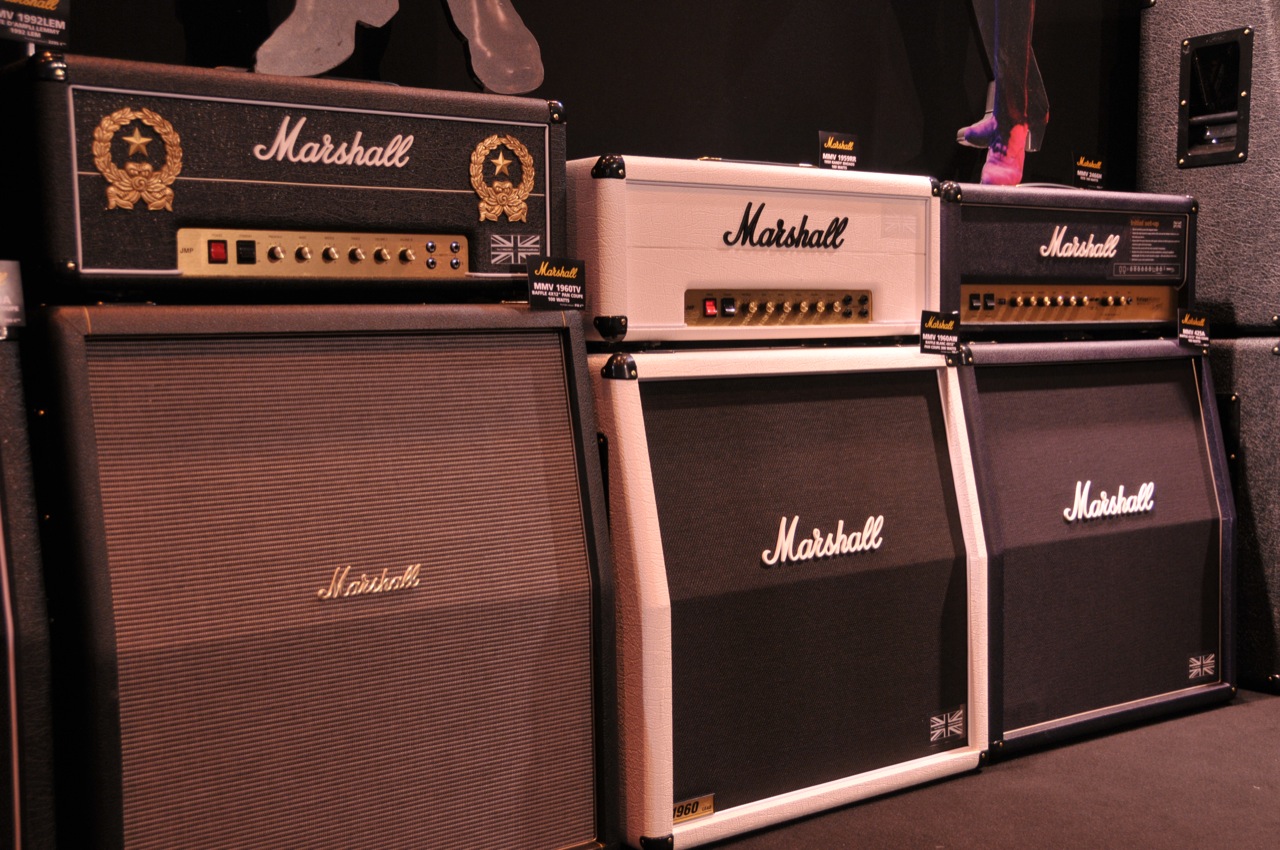
- Marshall Anniversary edition amplifier heads on Marshall cabinets: fvancini, Wikimedia Commons, CC BY 2.0.
- Tom Morello: deep ghosh, Wikimedia Commons, CC BY 2.0.
- Kerry King: Alfred Nitsch, Wikimedia Commons, CC BY-SA 3.0 AT.
- Zakk Wylde: Joanna Corwin, Wikimedia Commons, CC BY-SA 3.0.
- Top image: GuitarGangsters AI-generated reference illustration, not a photograph.
Latest News
Related
On This Day
Monday 9 November
From this week: