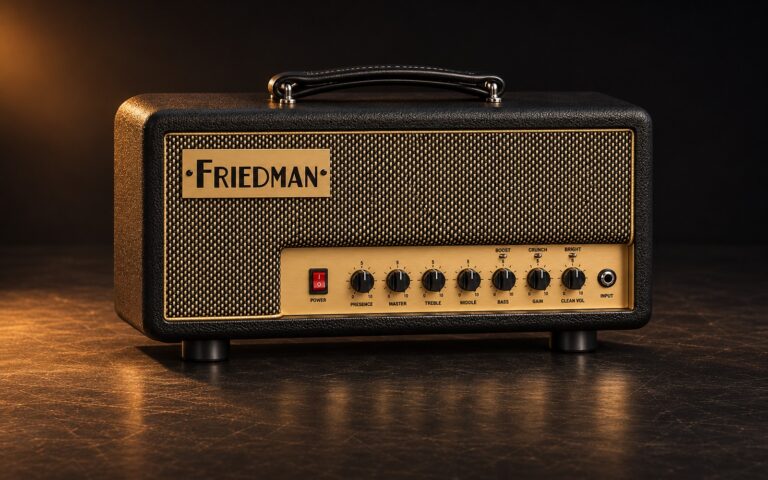
One Channel. No Excuses. The Friedman Dirty Shirley 40 Head and the Art of the Honest Crunch
Hand-wired 40W single-channel boutique head based on a modified JTM 45. Complete specs, verified famous players, tone recipes, and buying advice.
There is a particular kind of amp builder — usually someone who has spent fifteen years elbow-deep in other people’s circuits, fixing bad solder joints in tour buses at 2 a.m. and modifying vintage heads for guitar players who won’t let go of their 1970s Marshalls — who eventually decides that the shortest path to a great tone is a straight line. No channel switching. No programmable presets. No digital reverb slathered over the front panel as a selling point. Just a single channel with enough gain to mean it, a three-band EQ that actually works, and the kind of transformer and tube selection that makes the whole thing feel alive under your fingers.
Dave Friedman is that builder. And the Dirty Shirley 40 Head is his most direct statement of that philosophy.
Hand-wired in the USA at $2,699.99, the Dirty Shirley 40 is a single-channel, 40-watt all-tube head built around a modified JTM 45 architecture — the same circuit that Marshall launched in 1962 and then systematically made heavier, louder, and higher-gain over the next two decades. Friedman’s version doesn’t chase those later iterations. It lives in the zone between a good clean and a genuinely satisfying crunch, responds to the guitar’s own volume knob like a vintage British amp should, and takes pedals with a transparency that most multi-channel heads simply cannot match. In an era when boutique amp building often means complicated, the Dirty Shirley 40 is a pointed argument for simple.
Dave Friedman: The Man Behind the Mods
Before Dave Friedman built production amplifiers, he built reputations. For more than two decades he operated Rack Systems in Los Angeles — the kind of shop where professional touring guitarists would send their most valuable and temperamental gear, confident it would come back better than it left. Eddie Van Halen, Steve Stevens, Jerry Cantrell, Joe Perry — these were not endorsement deals, they were working relationships forged on stadium tours and at sessions where an amp that didn’t cooperate cost everyone money.
Friedman’s technical speciality was the Jose Rodriguez modification — a family of changes to Marshall Plexi and JMP/JCM800 circuits that increased gain, improved touch sensitivity, and tightened the low end without destroying the organic feel that made British amps compelling in the first place. Rodriguez had done these mods for players including Eddie Van Halen in the 1980s, and Friedman learned the methodology and refined it through thousands of circuits. When the shop operated as “Marsha Amps” before officially becoming Friedman Amplification in 2008, the waiting list for a custom amp was already long.
The transition from service shop to production amp company followed a pattern that happens when a technician gets tired of modifying other people’s platforms. If you know exactly what a JTM 45 needs to sound the way you want it to sound, at some point it is more efficient to build a JTM 45 the right way from scratch than to keep un-doing factory compromises in used examples. The Dirty Shirley was among the earliest Friedman production designs to reach the public — a single-channel head that made no attempt to be everything, only to be one thing extremely well.
The JTM 45 Connection: Understanding the Pedigree
The Marshall JTM 45 of 1962 was itself a copy — Jim Marshall and Ken Bran’s reverse-engineering of the Fender Bassman circuit, rehoused in a British chassis and fitted with the components that were available in the UK at the time. The KT66 power tubes in the original JTM 45 were a British military variant of the 6L6 family, and the GZ34 tube rectifier created the famous amp “sag” — a compression artifact when the power supply struggles momentarily under a hard chord attack, producing the slight give and bloom that defined early British rock tone.
When Marshall moved to EL34 power tubes in the late 1960s and then to solid-state rectifiers in later production runs, the character of the circuit shifted: tighter, more aggressive, less organic sag. The evolutionary path was commercially rational but it left the original JTM 45 character behind.
Friedman’s Dirty Shirley returns to the 6L6 family for its power stage — specifically 5881s, the military-grade variant of the 6L6 — which puts the amp’s tonal character closer to the original 1962 JTM 45 than to the later Marshall designs that most people associate with British rock. This is not an accident. The 5881/6L6 power tube runs at lower plate voltages than an EL34, producing a warmer, rounder breakup with more harmonic texture in the mid frequencies and a slightly earlier onset of power stage saturation. It pairs with the modified preamp circuit to produce the Dirty Shirley’s characteristic crunch: not the hard, compressed grind of a high-gain EL34 head, but something looser, more harmonically complex, and more responsive to picking dynamics.
The three-position gain structure switch is the amp’s primary control surface for navigating between clean and overdriven territory. Position one sits at the lowest gain setting — close to the original JTM 45 character, with clean headroom through a Les Paul and a convincing edge of breakup with a Strat dug in. Position two adds preamp gain for classic rock crunch. Position three pushes further into territory suitable for hard rock rhythm work. All three positions clean up when the guitar’s volume is rolled back, which is either a fundamental feature or an inconvenience depending on how you set up a pedalboard — players who want discrete gain stages at the stomp of a switch will need to factor that into their routing.
Full Specifications
Famous Players: The Honest Roster
Before naming names, one honest correction is necessary. The Friedman Dirty Shirley 40 circulates with a standard artist-roster claim that lists Jerry Cantrell, Dave Grohl, Phil X, and Steve Stevens. Every one of those four players has a professional and well-documented relationship with Friedman Amplification — and not one of them is documented on a Dirty Shirley 40 Head specifically.
Jerry Cantrell‘s Friedman amp is the JJ-100, a 100-watt head built around his requirements and bearing his initials. Steve Stevens‘ Friedman is the SS-100 V2 — Friedman’s first-ever signature head, designed collaboratively with Stevens and announced in 2011. Phil X plays the Phil X Signature 100W. Dave Grohl is primarily a drummer; the Friedman user in Foo Fighters is guitarist Chris Shiflett, who plays a custom 2-channel Brown Eye, not the DS 40. The four names listed above belong to the Friedman family; they don’t belong to this specific head.
The players who are actually documented on a Dirty Shirley follow.
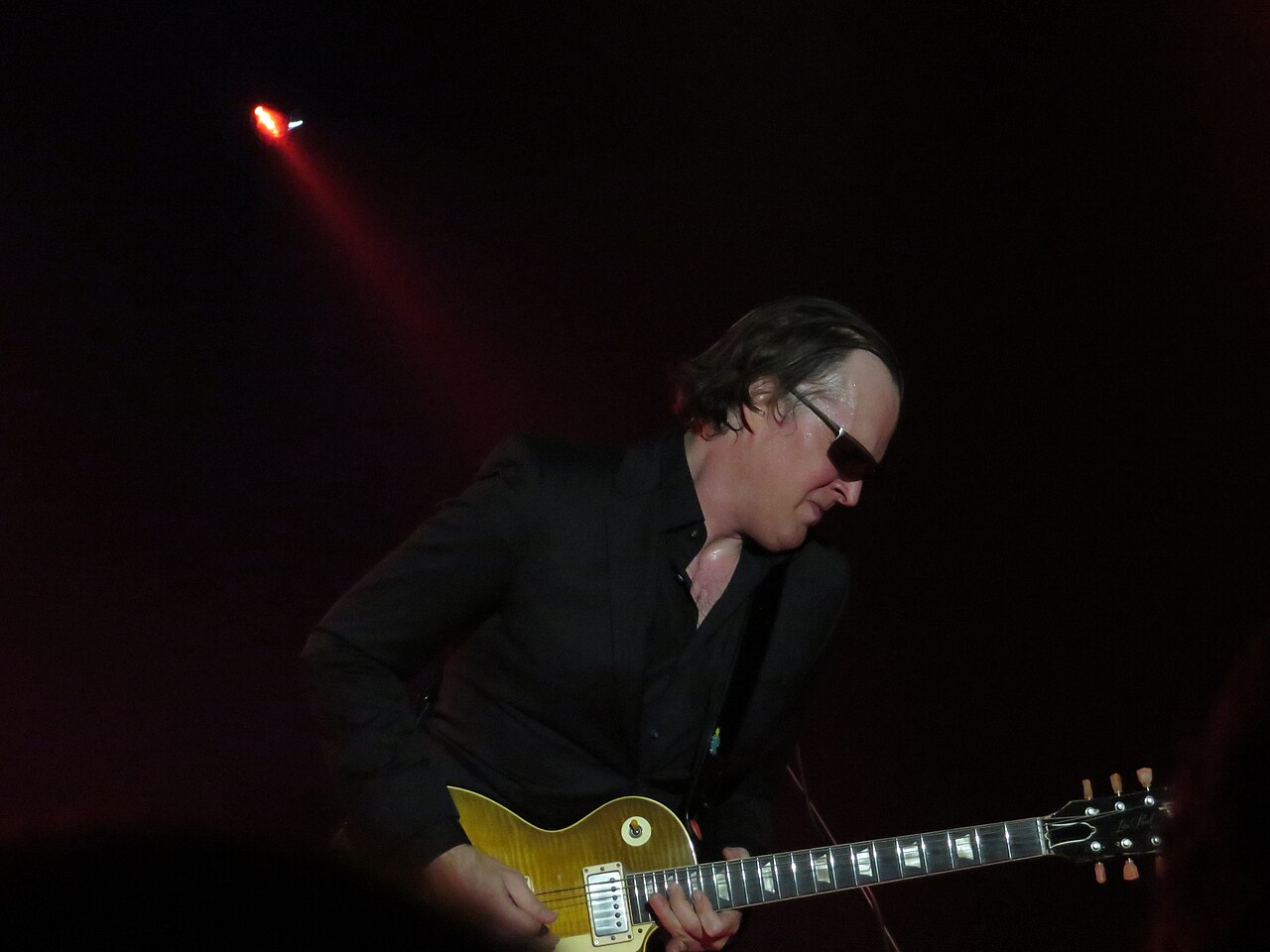
Joe Bonamassa — The Prototype Origin
The Dirty Shirley’s origin story runs through Joe Bonamassa. According to his own accounts confirmed in multiple sources including a documented Premier Guitar rig rundown with Mike Hickey, Bonamassa was the first person outside Friedman’s shop to take possession of a 100-watt Dirty Shirley — the original prototype, the first of its kind completed and in the world. Bonamassa described its character as “a slightly more articulate Marshall Jubilee with other stuff going on there,” which is a useful orientation: more organised than a Plexi, warmer than a JCM800, with a harmonic density the Jubilee’s EL34 circuit doesn’t quite reach.
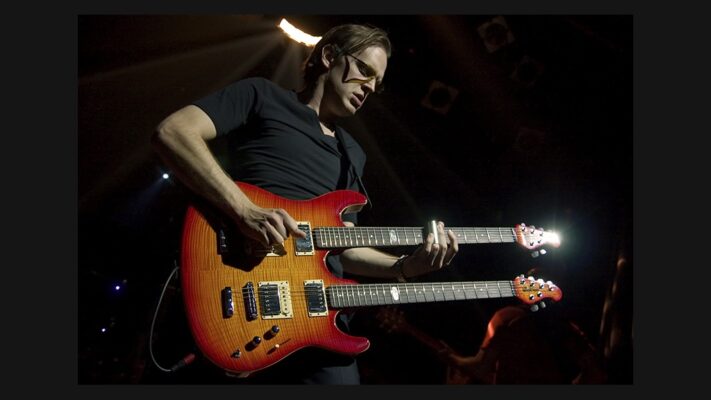
It is important to be precise here. Bonamassa’s prototype was a 100-watt version, and that 100-watt variant is not the same amp as the production 40-watt Dirty Shirley 40 Head covered in this article. The architecture, voicing philosophy, and character are shared; the power stage behaviour, output headroom, and low-end weight are different. The prototype’s significance is genealogical: it confirmed that the circuit direction was right before Friedman committed to a production run of the lighter, leaner 40-watt version. Bonamassa is the origin story, not the model user.
Joe Perry — The Guitar Tech’s Own Words
The documentation for Joe Perry‘s Dirty Shirley use is direct and specific. His guitar tech, speaking on video, identified the amp by name and explained the setup: “This is a Dave Friedman amp, Dave Friedman from Rack Systems. This is a Dirty Shirley head. This head is pushing a 15 cabinet. It sounds so good — 5881s as well. Such nice drive with a little warmth to it. It’s very warm which is why the 15s is very good. What that does is it gives him that feeling underneath that he likes to hear.”
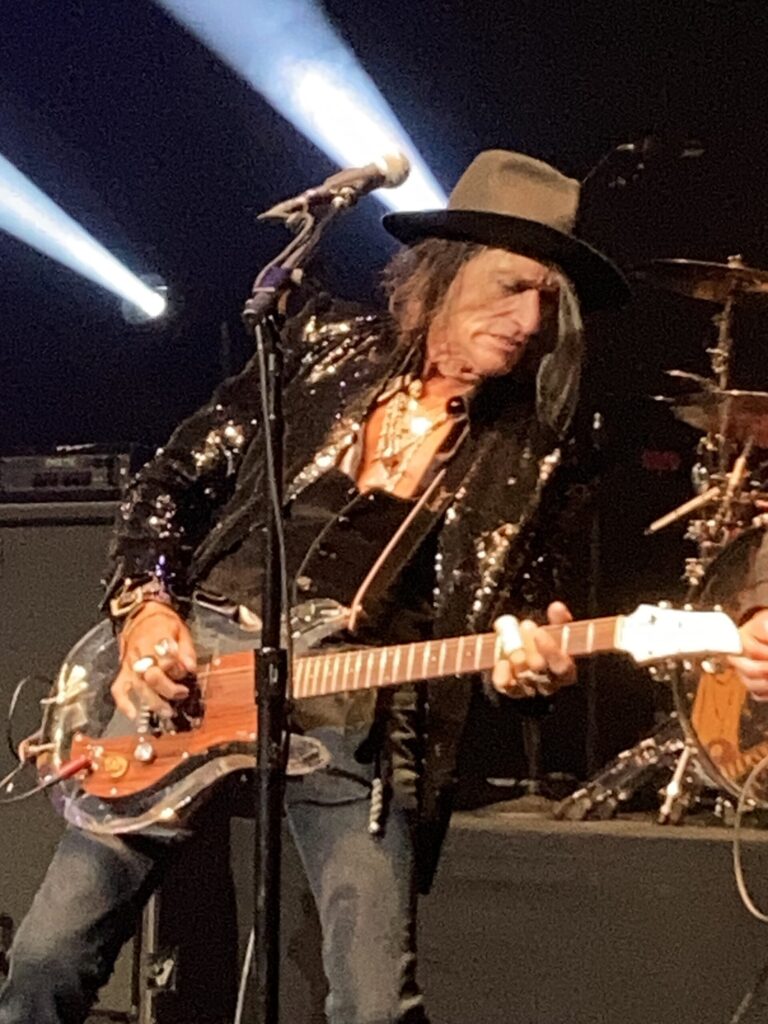
The mention of 5881 tubes matches the production head’s spec exactly. The pairing with a 15-inch speaker cabinet — rather than the more common 12-inch Celestion configuration — is worth noting for tone-seekers: a 15-inch speaker under a 5881-powered amp reinforces the warm, chewy low-mid register that defines the DS 40’s character, while giving up some of the tight transient punch a 12-inch delivers. Perry’s tech is describing a deliberately warm, thick setup using the amp’s natural character rather than fighting it.
George Lynch — He Named His Band After It
Of every player associated with a Friedman Dirty Shirley, George Lynch (Dokken, Lynch Mob) is the one who committed most conspicuously. In 2020, Lynch released an album under the project name “Dirty Shirley” — named directly after the amp. The project featured frontman Stephen Pearcy of Ratt and was specifically cited by Lynch as exploring the kinds of tones the head is built for: hard rock crunch with enough harmonic complexity to support melodic lead playing without drowning in gain.
Lynch has also been documented playing the Dirty Shirley 40 in demo video settings, and his use of it on the 2020 record constitutes one of the most direct artist-instrument relationships in the amp’s history. When a player names a project after a piece of gear, it is a more explicit endorsement than any advertisement.
Ryan Waters — Main Amp on Tour with Heart
Premier Guitar documented Ryan Waters’ touring rig for Heart’s Nancy Wilson during the Royal Flush tour, and the Dirty Shirley 40 was identified as his main amp, backed up by an 18-watt Marshall Plexi-style head for redundancy. Waters ran the Friedman into an Orange 4×12 cabinet alongside a pedalboard that included a Revv G2, Keeley Super Rodent, and Strymon Deco — a player using the amp as a platform for pedal-driven tonal variation rather than relying on the amp’s own gain stages for everything. This is a textbook example of how the DS 40 works as a pedal platform: set the gain structure switch to position two for a light crunch base, ride incoming overdrive levels with guitar volume control, and let the transparent effects loop handle time-based effects without colouring the core tone.
Nick Johnston — Studio Testimony
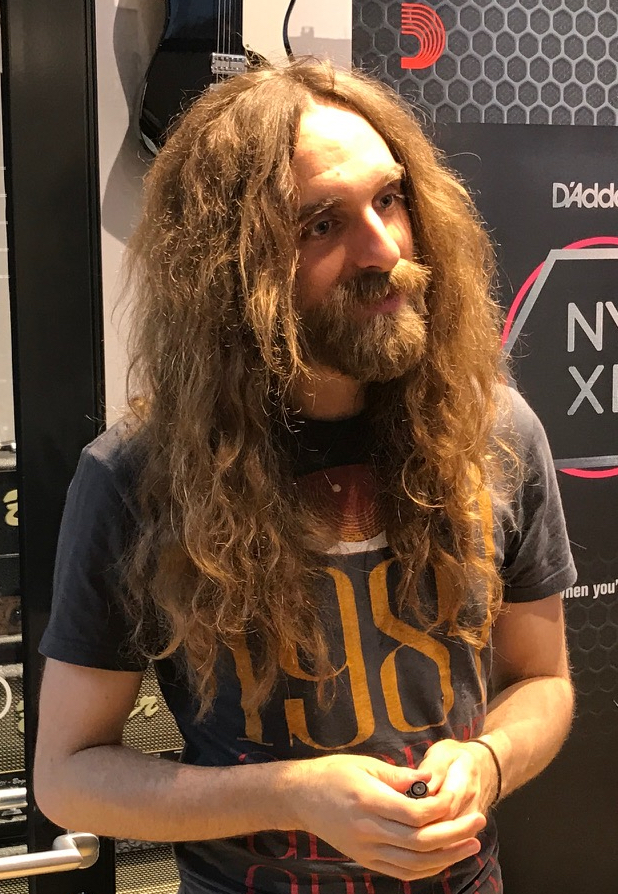
Guitarist and composer Nick Johnston (known for his solo records and work with Mastodon-adjacent circles) offered a direct account of recording with the amp: “I really like what Friedman Amplification is doing. I recorded my new album entirely with 2 of their heads. I used the Brown Eye/Hairy Brown Eye for all of the leads and The Dirty Shirley for all of the rhythms. I’m totally in love with those amplifiers.” The division of labour he describes — high-gain lead tones from the BE circuit, crunch rhythm tones from the Dirty Shirley — is the exact use case Friedman designed the amp for.
Fredrik Åkesson (Opeth) — Confirmed in PG Rig Rundown
Opeth lead guitarist Fredrik Åkesson discussed his use of the Dirty Shirley 40 at the 15:12 mark of the band’s Premier Guitar Rig Rundown, in the context of Synergy tube modules replicating the amp’s circuit. Åkesson’s documented adoption of a module version of the Dirty Shirley circuit for touring — the Synergy system allows swapping amplifier preamp circuits without transporting separate heads — confirms that the amp’s architecture was central enough to his sound to warrant replication.
Tone Recipes: Five Settings for the Dirty Shirley 40
Recipe 1: Classic Rock Rhythm Crunch — The Reason It Exists
Gain Structure Switch: position 2. Gain: 6–7. Bass: 6. Middle: 6. Treble: 5.5. Presence: 5. Master: match room. Guitar volume: 8–10, neck or middle pickup. This is the amp doing what it was designed to do: warm, harmonically rich British crunch that blooms slightly on chord attacks without washing out the note definition. Think Led Zeppelin II rhythm tones — not the clinical tightness of a modern high-gain head, but something with air and decay. Reduce guitar volume to 5–6 for cleaner intros, then hit full volume for the chorus.
Recipe 2: Single-Coil Blues Transparency — The Volume Knob Trick
Gain Structure Switch: position 1. Gain: 5. Bass: 5. Middle: 7. Treble: 6. Presence: 6. Master: medium loud. Guitar volume: 4 for clean, 7 for crunch, 10 for lead bite. Strat, bridge-middle blend. This exploits the amp’s JTM 45 lineage most directly. At switch position 1, the DS 40 has clean headroom close to the original circuit, and the 5881 power tubes give the single-coil response a warmth that hotter EL34 amps tend to harden. Roll the guitar volume up and down throughout a set without touching the amp. This is how British blues-rock was played in 1968 and it still works.
Recipe 3: TS-Style Hard Rock Lead — Pushing the Platform
Gain Structure Switch: position 2. Gain: 5. Bass: 5.5. Middle: 5. Treble: 6. Presence: 5.5. Master: stage appropriate. Add an Ibanez TS9 Tube Screamer (or equivalent) in front: drive at 9, tone at 12 o’clock, level set to match bypass. Les Paul bridge pickup, guitar volume 10. The combination is a vintage move: a low-to-medium output amp with a midrange-boosting overdrive in front concentrates energy in the 800Hz–2kHz band where guitar leads cut through a mix. The DS 40’s 5881 power stage compresses the boosted signal organically rather than hard-clipping it, producing lead tones with sustain and bloom rather than the tightly gated crunch of a modern two-channel high-gainer.
Recipe 4: Hard Rock Rhythm — Gain Switch Position 3, Humbuckers
Gain Structure Switch: position 3. Gain: 7. Bass: 5. Middle: 5. Treble: 6. Presence: 6. Master: cranked. Gibson Les Paul or SG, bridge humbucker, guitar volume 10. This is the Dirty Shirley at its most aggressive — not a Mesa Rectifier or a BE-100, but a amp working hard through the preamp’s highest-gain voicing. The low end stays tighter than the gain level suggests because the 5881 power stage doesn’t have the sag and bloom of a rectifier-based circuit at this input level. Useful for classic heavy rock that needs chunk without the modern metal tightness of a more complex multi-channel design.
Recipe 5: Pedal Platform — Switch Position 1, Maximum Transparency
Gain Structure Switch: position 1. Gain: 3. Bass: 5.5. Middle: 5.5. Treble: 5.5. Presence: 5.5. Master: stage volume. Guitar volume: 10. This is the setup Ryan Waters described in practice — using the amp as an extremely high-quality, tonally flat substrate for pedal-driven sounds. The DS 40 at low gain in switch position 1 has less than many Fender clean platforms while retaining the warmth that makes a tube amp feel different from a transistor amplifier. Run overdrives, fuzzes, and modulation before the amp; run delays and reverbs through the transparent series effects loop. The amp stays out of the way of everything you put in front of it while making all of it sound better.
All settings below assume a 40W head driving a 4×12 cabinet at gigging volume with Celestion Vintage 30s. The gain structure switch positions are labelled 1 (lowest), 2 (mid), 3 (highest). Guitar volumes are on a 0–10 scale.
Comparisons: How the Dirty Shirley 40 Fits the Landscape
Marshall JTM45 2245 — The Direct Ancestor
The Marshall JTM45 2245 is the Dirty Shirley’s direct spiritual parent. Both amps use KT66/6L6-family power tubes, both are single-channel, and both live in the clean-to-crunch range rather than the high-gain territory that later Marshall designs occupy. The JTM45’s KT66 tubes give it a slightly more complex, rounder low end; the DS 40’s 5881 tubes are tighter and more focused. The Friedman adds a gain structure switch, a modern effects loop, and the benefit of Dave Friedman’s circuit refinements — making it more flexible and more road-reliable than a vintage original at roughly comparable price territory to a good reissue. If you want the closest thing to a 1962 Marshall without the associated anxiety, the JTM45 reissue wins. If you want that platform with more gain range and 21st-century engineering, the Dirty Shirley 40 is the answer.
Marshall 1959 Super Lead Plexi — More Power, More Aggression
The Marshall 1959 Super Lead Plexi is what Marshall made when they added EL34 tubes, more headroom, and removed the tube rectifier from the JTM 45 formula. It is louder, brighter, and more aggressive — it requires a master volume to get working tones at reasonable stage volumes, and its character is fundamentally different from the 6L6-family warmth of the Dirty Shirley. The Plexi has more presence and edge; the DS 40 has more warmth and touch sensitivity. Both are single-channel amps that demand you know how to use a guitar’s volume knob. Neither is a substitute for the other.
Friedman BE-100 Deluxe — Same Family, Different Purpose
The Friedman BE-100 Deluxe is the flagship of the Friedman line: three channels, 100 watts, hand-wired, and built around the Brown Eye (Plexi-derived) and Hairy Brown Eye (Jose-modded Plexi) circuits that Friedman developed from decades of modding work. Where the BE-100 Deluxe is a complete high-gain studio and stage tool, the Dirty Shirley 40 is a focused, simplified single-channel amp. The BE-100 Deluxe is what you buy when you need complete coverage of clean, crunch, and high-gain in one box. The Dirty Shirley is what you buy when you want one thing done perfectly and are willing to use pedals for the rest. Both are expensive. Both are hand-wired. Neither is the wrong choice — they answer different questions.
Soldano SLO-100 — The American Boutique Counterpoint
The Soldano SLO-100 is a roughly contemporary boutique head with different technical roots: it uses EL34 power tubes, features a two-channel design (clean and overdrive), and produces the tight, focused, scooped-midrange character that has defined American boutique rock amp design since Mike Soldano launched it in 1987. The SLO-100 is tighter and more surgical in the low end; the DS 40 is warmer and more harmonically complex. The SLO-100 excels at high-gain lead tones; the DS 40 excels at crunch rhythm textures. Players who record with both — as Nick Johnston documented — find them complementary rather than competing. If your sound lives in either the hard rock or blues-rock tradition, the DS 40 is the better fit. If it lives in the precision-metal or shred tradition, the SLO-100 is more at home.
Marshall 1962 Bluesbreaker — The Single-Channel Vintage Comparison
The Marshall 1962 Bluesbreaker combo is the other major single-channel British amp in the vintage lineage — also 2×12, also based on the JTM 45 platform, and also famous for its crunch character at moderate volumes. The Bluesbreaker’s combination of open-back cabinet construction and the circuit’s interaction with its own speakers creates a looser, more organic response than the head-and-external-cab configuration of the DS 40. The Bluesbreaker is warmer and less focused at the top of the frequency spectrum; the DS 40 is more controlled, more defined, and far more suitable for modern stage and studio use. One is a vintage icon with considerable maintenance requirements; the other is a current-production hand-wired head with a lifetime warranty. They are not the same kind of recommendation.
Buying Guide
The Friedman Dirty Shirley 40 Head lists at $2,699.99. Street prices have held close to list, typically in the $2,400–$2,700 range from authorised US dealers including Sweetwater and Humbucker Music. Lead times from Friedman have run 3–10 days for current production. The amp is available in head format only — Friedman also manufactures a Dirty Shirley combo with an internal 1×12 speaker cabinet, which is covered separately.
Used examples on Reverb typically run $1,449–$1,850 depending on condition and whether original documentation accompanies the sale. The hand-wiring construction means used pricing remains strong because the amp does not age poorly. What to check on a used example: the three-position gain switch’s detent feel (it should click cleanly between positions with no intermediate noise), the effects loop send/return (run a cable through it and confirm no level drop or colouration versus bypass), and the output transformer through all three impedance settings. Friedman’s limited lifetime warranty is not transferable to second owners, but the build quality means the amp typically does not require the warranty to be invoked.
Cabinet matching: Friedman manufactures dedicated 2×12 and 4×12 cabinets. The amp responds well to Celestion Vintage 30 and G12H30 speakers. Joe Perry’s use with a 15-inch speaker cabinet is a minority configuration that emphasises the amp’s warmth at the expense of transient precision — worth exploring if your playing is centred in the blues-rock lower register. For anything requiring clear pick attack and note separation in a full-band context, a 2×12 or 4×12 loaded with 12-inch Celestions is the standard and recommended pairing.
Ownership Notes: Living with the Dirty Shirley 40
40 watts of EL84-era British design is louder than 40 watts of American clean-headroom design. The 5881 power stage in the DS 40 reaches working breakup at volumes appropriate for small-to-medium clubs without the additional volume tax that a 100-watt head demands. For home use, a power attenuator (Rivera Rockcrusher, Two Notes Captor, Universal Audio OX) is advisable — the amp at one-quarter master volume through a speaker does not produce the same tone as the amp at three-quarter master volume through an attenuator, and the difference matters.
The 5881 power tubes are not EL34s and do not behave like them on re-bias. When replacing power tubes, use matched pairs of 5881 or 6L6GC — the two are electrically compatible and sonically close enough that most players will not hear the difference on casual comparison. Do not install EL34s without verifying with Friedman or a qualified amp technician that the bias range and plate voltage are appropriate; the circuit was voiced around the 6L6 family and EL34 substitution changes the amp’s character.
Preamp tube rolling in V1 (the first 12AX7, closest to the input) produces the most noticeable tonal changes. A lower-gain preamp tube (12AT7, 5751) in V1 reduces pick noise and softens the gain structure across all three switch positions without fundamentally altering the amp’s voicing. V2 and V3 rolling is more subtle. The effects loop, described by Friedman as “the most transparent in the business,” has attracted third-party confirmation from forum users who note its negligible impact on tone compared with effects loops in competing designs.
The Baltic Birch cabinet is structurally rigid and contributes to the amp’s controlled acoustic character — unlike the open-grain pine cabinets common in original Marshall designs, birch adds warmth to the low-midrange while maintaining definition. The 30.5 lb weight is reasonable for a hand-wired 40-watt head and makes single-guitarist transport feasible without road cases.
Frequently Asked Questions
Why does the Dirty Shirley 40 use 5881 tubes instead of EL34s for a British-voiced amp?
Because the original JTM 45 used KT66 tubes — a British military variant of the 6L6/5881 family — before Marshall switched to EL34s in the late 1960s. The 5881 puts the Dirty Shirley’s circuit closer to the 1962 JTM 45 character than any EL34 design does. The warm, harmonically rich, sag-prone breakup associated with “early British” tone is a 6L6-family characteristic. The tighter, brighter, more aggressive character most people call “Marshall” is the EL34-era development. Friedman chose the older, warmer path deliberately.
Is there a version with more power for larger stages?
The Dirty Shirley line also exists in a Mini Dirty Shirley (20 watts, 1×12 combo), a Dirty Shirley combo (40 watts, 1×12), and there have been limited custom/prototype variants at higher wattages — most notably the 100-watt prototype that Joe Bonamassa received as the first production example of the circuit. The production 40-watt head is the standard gigging version. For large-stage use without a cabinet’s physical volume, pair it with a speaker emulator into the desk rather than chasing more watts.
How does the three-position gain switch affect the EQ response?
The switch primarily changes the amount of preamp gain available, but it also affects the effective EQ balance because higher gain settings push the midrange frequencies more aggressively. In switch position 1, the amp sounds closer to neutral — the three-band EQ behaves as a standard tonestack. In positions 2 and 3, there is progressively more midrange emphasis as the preamp stages interact. Most players find they need to back the middle control down slightly as they move from position 1 to position 3 to maintain the same perceived tone balance.
The Dirty Shirley has only one channel. How do players handle clean/dirty switching live?
Two common approaches: guitar volume riding (use the guitar’s own volume knob to move between clean and crunch, as the amp’s dynamic response supports this cleanly), or a clean boost/overdrive in front of the amp that is switched in when gain is needed. Many players using the DS 40 as a touring head keep a transparent boost on their board and rely on the amp’s single-channel character as the constant — they bring drive to the amp rather than switching the amp’s own architecture. Ryan Waters’ setup with the Revv G2 and Keeley Super Rodent is an example of this approach in professional use.
What speakers pair best with the Dirty Shirley 40?
Celestion Vintage 30s are the most common pairing and complement the amp’s midrange warmth with their characteristic upper-mid emphasis, producing a full and slightly compressed crunch character. Celestion G12H30 Anniversary speakers (as used in the EVH 5150III cabinets) are tighter and more controlled in the low end — good if the DS 40’s natural warmth feels too loose in your room. G12M Greenbacks pair well for lower-volume playing where their sensitivity brings out the amp’s detail without requiring high master volume settings. Joe Perry’s 15-inch speaker choice is an outlier suited to his specific needs — thick low-mid warmth at stage volume in a large PA-supported room — and is not a general recommendation.
Is the Dirty Shirley 40 suitable for recording without a speaker cabinet?
The Dirty Shirley 40 does not have an on-board speaker emulation output. For direct recording, an external load box with speaker emulation (Two Notes Torpedo, Universal Audio OX, Fryette Power Station) is required. The amp’s character through a load box with a Celestion-voiced IR is well-represented — multiple reviews confirm the amp’s tonal identity survives the load-box chain. Do not run the amp without a speaker load attached; solid-state rectifier-less designs are more tolerant of this than older transformer designs, but the DS 40’s custom USA transformers warrant the respect of always having an appropriate load connected.
How does the Dirty Shirley 40 compare to the Friedman Small Box?
The Small Box is a 50-watt, two-EL34 head based on a modified Marshall Plexi topology — closer to the Brown Eye/JCM800 family than the JTM 45 family of the Dirty Shirley. The Small Box runs hotter, tighter, and more aggressively in the upper midrange, with EL34 character that pushes toward harder rock territory. The Dirty Shirley 40 is warmer, rounder, more dynamic in the clean-to-crunch transition, and responds more immediately to guitar volume changes. Think of the Small Box as the harder rock tool and the Dirty Shirley as the classic rock and blues-rock tool. Players who own both commonly describe them as complementary rather than competing.
Will the Dirty Shirley 40 handle metal tones?
At switch position 3 with a Les Paul and a tubescreamer in front, the DS 40 will produce credible classic hard rock — late-70s heavy, 80s melodic metal territory. It will not produce the tight, percussive, scooped-midrange character of a dedicated high-gain amplifier (Mesa Rectifier, Friedman BE-100 Deluxe, Peavey 5150 family). The 5881 power stage and the JTM 45 preamp architecture are not optimised for the low-end tightness that modern metal requires. If your music demands that character, the Dirty Shirley 40 is not the right amp — not because it is incapable, but because another design does that job better. The DS 40 is genuinely excellent at what it does; what it does does not include modern metal.
Image credits
- Joe Bonamassa: Steve, Wikimedia Commons, CC BY 2.0.
- Joe Bonamassa: Raúl Ranz, Wikimedia Commons, CC BY 2.0.
- Joe Perry: by Applesbees13, CC BY-SA 4.0.
- Nick Johnston: Hind, Wikimedia Commons, CC BY-SA 4.0.
Latest News
Related
On This Day
Monday 9 November
From this week: