The Lunchbox That Grew Up: Orange Rocker 15 Terror Reviewed, Dissected, and Honestly Appraised
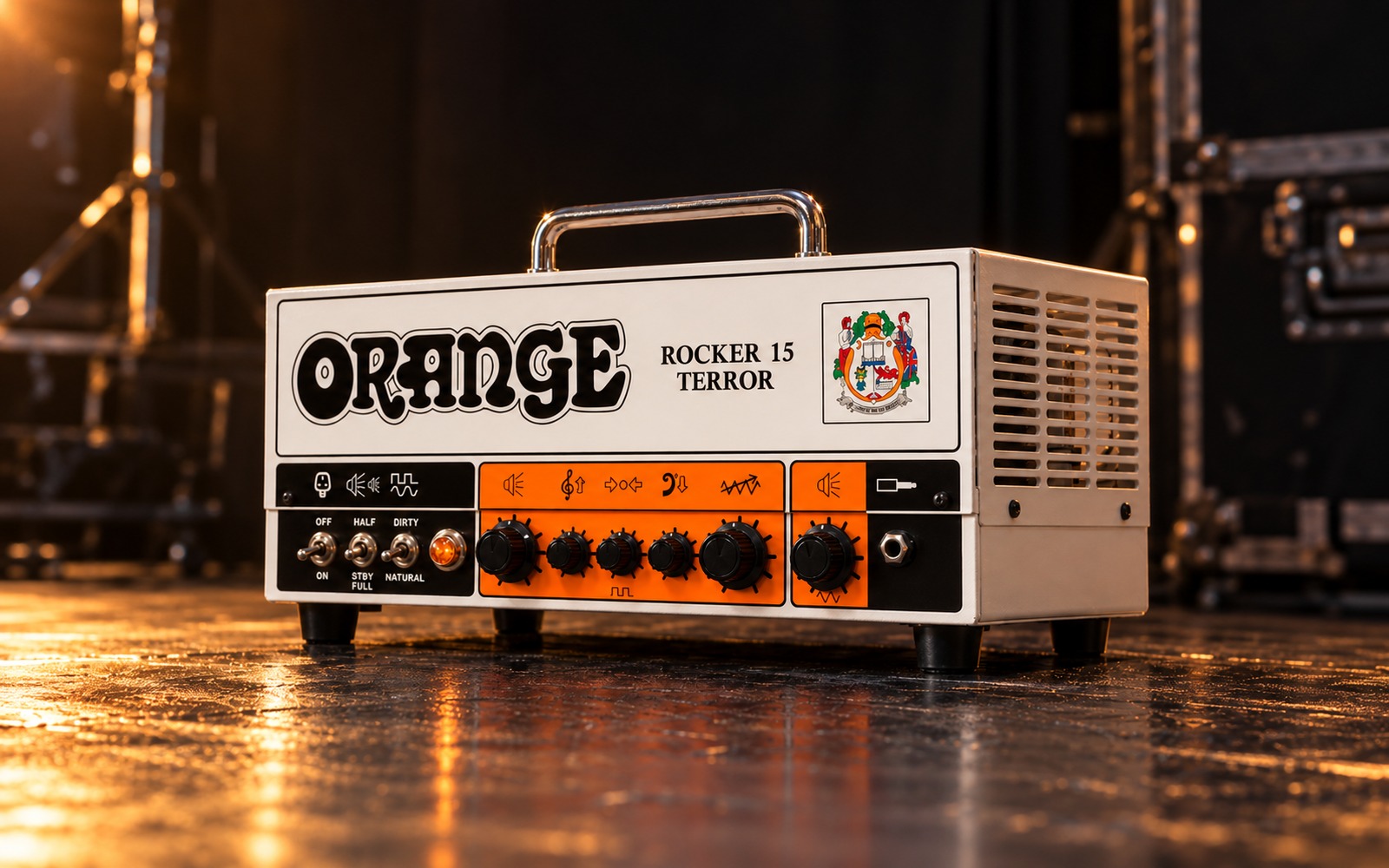
Orange Rocker 15 Terror: 15-watt EL84 lunchbox head, two channels, four power settings. Full specs, honest player history, and tone recipes.
When Orange first unveiled the Tiny Terror at NAMM 2006, nobody quite knew what to call it. A practice amp with gig potential? A gigging amp you could carry in a laptop bag? The answer turned out to be both, and in the years that followed, virtually every amp company on earth released their own version of the same idea: a miniaturised valve head you could throw in the back of a cab and actually use on stage. Orange called theirs the Terror series, the format stuck, and the lunchbox amp became a permanent fixture of the modern guitar landscape.
Then in 2016, Orange discontinued the Tiny Terror. It felt like the end of something. And then, at NAMM 2018, they launched something better — not a revival of the TT, but a genuine evolution of the lunchbox format that drew from a completely different part of Orange’s catalogue. The Orange Rocker 15 Terror is not a Tiny Terror with extra controls bolted on. According to designer Ade Emsley, whose real intention was to create “a half-powered version of the Rocker 30 in the lunchbox format,” it’s a different amp with a different philosophy: two channels, a three-band EQ, a valve-buffered effects loop, and four selectable output levels from a ripping 15 watts down to a neighbour-friendly half a watt. The Terror name is a nod to lineage, but the circuit owes more to the discontinued EL34-powered Rocker 30 than to the single-channel Tiny Terror — and that’s a meaningful distinction.
This is the full breakdown: where the amp came from, what it actually does, who really plays it, how to coax the best tones from it, and whether it belongs in your rig.
History: From Tiny Terror to Rocker 15 — Two Different Bloodlines
To understand what the Rocker 15 Terror is, you have to understand what it is not. The Tiny Terror, launched in 2006, was a deliberately stripped-back proposition: one channel, a single tone control, a master volume, 15 watts from a pair of EL84s, and a compact white metal chassis that fit under your arm. It was radical in its simplicity. The lunchbox format it popularised went on to spawn the Dual Terror (two channels of Tiny Terror in one chassis, 30W), the Dark Terror (darker voicing, more gain), and eventually the entire lunchbox segment of the industry.
The Rocker 30, by contrast, was a full-sized two-channel head with a three-band EQ, voiced around EL34 power tubes rather than EL84s. It had the kind of flexible, musical British crunch that made it a working guitarist’s tool rather than a recording novelty. Orange discontinued it, and for years the Rocker 30’s tonal philosophy — two distinct channels, proper EQ control, serious headroom — existed only in the full-size format.
Ade Emsley’s solution was to take the Rocker 30’s control layout and sensibility, run it through a pair of EL84 output tubes rather than EL34s, and compress the whole thing into the Terror lunchbox chassis. The result is the Rocker 15 Terror: an amp that carries the Tiny Terror’s portability and price bracket but the Rocker 30’s musical DNA. The control panel even mirrors the Rocker 30 layout directly. This is not a minor update to an old design; it’s a new instrument built from the best parts of two discontinued ones.
Orange launched the Rocker 15 Terror alongside the Brent Hinds Terror at NAMM 2018 in Anaheim. The two amps share an identical chassis and control layout but are voiced differently — the Hinds model’s Natural channel sits cleaner and its Dirty channel is more mids-focused at moderate gain, filling out into the bottom end only as the preamp gain climbs toward its upper limits. The Rocker 15 Terror is more immediately forward and compressed. Both launched at £549 and £569 respectively in the UK; the Rocker 15 Terror currently retails at $749 USD from Orange’s US site.
Specifications
A few things worth expanding on in plain language. The Natural channel has no EQ section at all — just a single Volume control. This is a deliberate design choice: it keeps the signal path as short and uncoloured as possible for the clean/edge-of-breakup register. If you want sculpted cleans, you either use the Dirty channel at low gain or run an EQ pedal through the effects loop. The Dirty channel’s three-band EQ gives you genuine tonal flexibility — it is not decorative.
The wattage selection works on two axes. The front-panel switch toggles between 15W and 7W (and standby). The rear-panel Headroom/Bedroom slider then cuts that output further: in “Headroom” mode you get the selected wattage; in “Bedroom” mode you lose half a watt more, landing at either 1W (from 7W) or 0.5W (from 15W). This gives you four usable positions rather than just two. Guitar.com’s Richard Purvis, who reviewed both Terror amps at launch in April 2018, noted that the bedroom mode “takes things down even further without completely ripping the heart out of the tone — which could be great news for your neighbours.”
The valve-buffered effects loop is a significant inclusion at this price point. Passive loops can cause impedance problems and tone suck; a valve buffer maintains signal integrity and ensures that whatever you run through it — particularly modulation and delay pedals — arrives at the power section as clean and articulate as it left your pedalboard. At £549 launch price, this was not a standard feature.
How It Actually Sounds
Start with the Natural channel. Orange calls it “natural” rather than “clean” for a reason that becomes apparent within the first ten seconds of playing through humbuckers: this is not a clean amp. The window of undistorted tone exists, but it is small. By ten o’clock on the volume dial things are already beginning to crunch. By noon you are deep into compression and harmonic saturation. This is not a flaw — it is a characteristic, and one that reflects the EL84 output section honestly. EL84 tubes generate even-order harmonics as they saturate, and they do so at lower power levels than the EL34s or 6L6s found in larger amps. The Rocker 15 Terror at full blast on the Natural channel delivers enough gain for hard rock riffing with nothing else in the signal chain. Big chords breathe with natural compression; single-note lines have pick attack without harshness. In half-power mode the midrange softens and the overdrive shifts slightly toward the fizzy end of the spectrum — more pronounced on the Natural channel than on the Dirty.
The Dirty channel is where the three-band EQ becomes meaningful. With controls at noon the voicing is classic British crunch: mid-forward, harmonically rich, with the amp compressing naturally as gain increases. Pull the midrange down to zero and push bass and treble up, and a more modern metal voicing emerges that sounds convincing rather than forced. The Dirty channel responds particularly well to the bedroom switch: unlike the Natural channel, where half-power just makes things slightly quieter and fizzier, the Dirty channel’s perceived volume drops dramatically at 1W, making it genuinely usable for recording at low volumes without sacrificing the feel of a driven output stage.
The EL84 output section is the defining tonal character across both channels. These are the same tubes that power the Vox AC30 and AC15 — European output devices with a distinct harmonic signature: compressed, chimey, with an emphasis on upper harmonics that gives the amp its characteristic “punch.” In the Rocker 15 Terror, that character is paired with Orange’s preamp voicing — mid-forward, warm in the lower frequencies, slightly aggressive in the upper mids — to produce something that sits closer to British crunch than it does to American sparkle. This is not a Fender-clean-into-a-tube-screamer amp; it is a British rock machine that happens to fit in a carry-on.
Famous Players
The standard roster associated with Orange amps in gear databases — Jimmy Page, Jim Root, Brent Hinds, Omar Rodríguez-López, Matt Pike — appears again for the Rocker 15 Terror, and again it requires substantial correction at the per-SKU level. This roster is a generic “Orange artist” list applied indiscriminately across every Orange product, and it does not survive contact with per-model documentation.
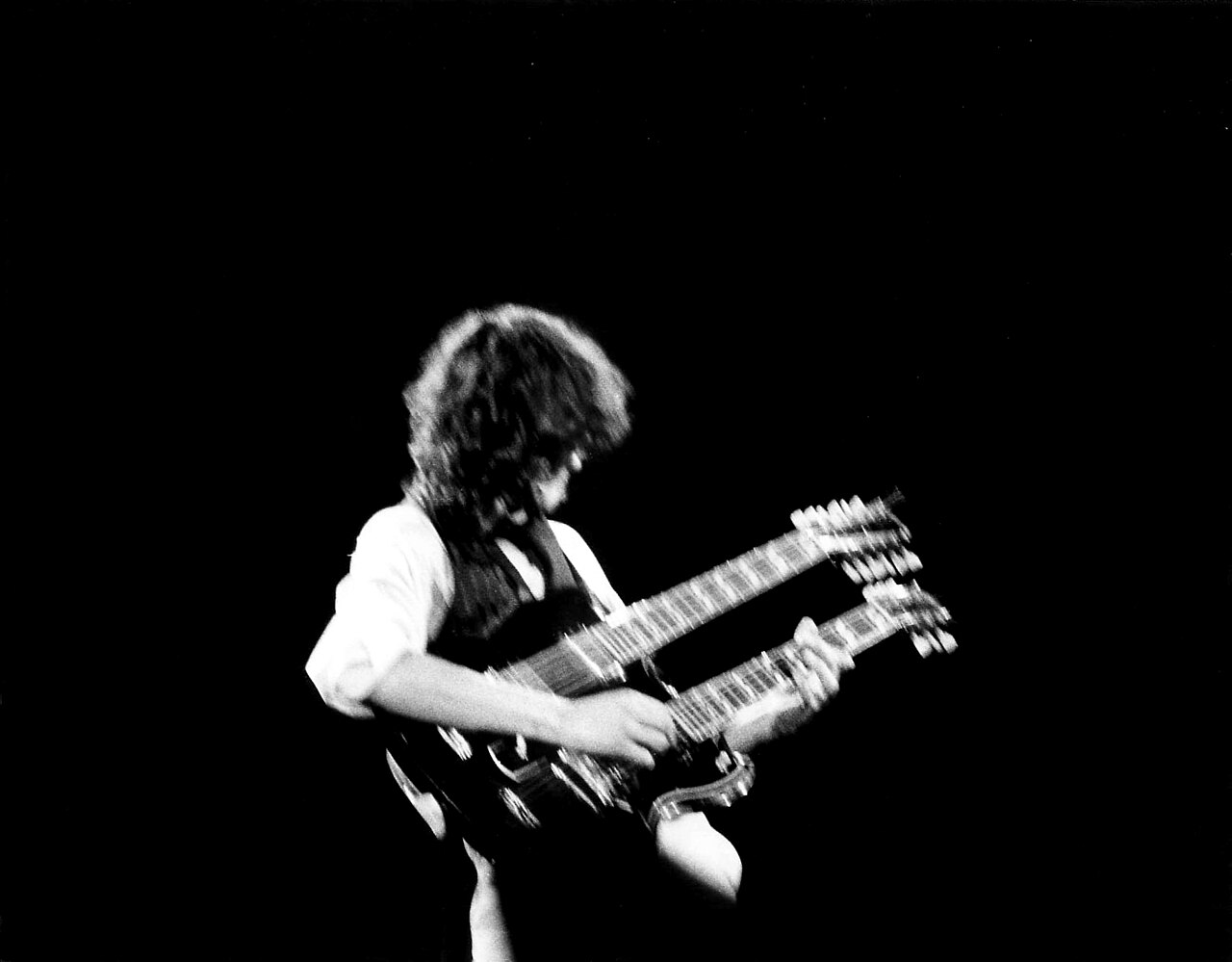
Jimmy Page’s Orange history is the OR200 (used 1971–1973) and the AD30 family (documented 1999 Black Crowes tour, 2007 O2 Arena reunion). He has no documented connection to any Terror series amp. The Rocker 15 Terror was not announced until 2018, long after Page’s active touring years. The association is Orange-the-brand, not Orange-the-amp.
Brent Hinds’s situation requires particular care here because he genuinely has a Terror connection — but not to the Rocker 15 Terror. The Brent Hinds Terror is a separate signature product, launched at the same NAMM 2018 show as the Rocker 15 Terror. The two amps share the same physical chassis and control layout but are voiced differently, use different cosmetics (the Hinds model draws from his distinctive head tattoo artwork), and are sold under separate names. Brent Hinds plays the amp named after him, not the standard Rocker 15 Terror. Guitar.com reviewed both back-to-back in April 2018 as two distinct products. Conflating them because they share a chassis is the kind of cataloguing error that propagates endlessly; the article you are reading declines to perpetuate it.
Jim Root’s documented Orange amps are the Rockerverb 100 (live) and the #4 Jim Root Terror (his own signature lunchbox head). No primary source places him on a Rocker 15 Terror. Omar Rodríguez-López’s primary Orange amp was the AD140HTC (four heads on stage by 2007, documented across multiple sources). Matt Pike’s documented Orange use centres on the Dual Dark, Thunderverb, and OR50/OR80 micro heads.
The verified players for the Rocker 15 Terror specifically are a smaller and more honest group. Chuck Ragan, of Hot Water Music and the Revival Tour, confirmed his use in his own words posted to Instagram and documented on Equipboard: “I’ve got my Rocker 15 Terror. I actually exchanged my Rocker 32 for this. It has everything that I loved about the 32, but it’s vertical.” That is a first-person confirmation, not a brand association — he swapped a specific amp he owned for this one, and he describes the tonal continuity between them. Ragan plays stripped-down folk-punk and Americana; his choice of a 15W EL84 lunchbox over a larger platform makes sense for his touring context and genre.
Mike Einziger of Incubus appears on Equipboard’s Rocker 15 Terror page, but Mixdown Magazine’s detailed gear rundown of his live rig (published 2025) documents his current main amplifiers as Mesa/Boogie Trem-o-Verb combos. The Rocker 15 Terror may be a studio or rehearsal tool for Einziger rather than his primary touring platform; the connection is Equipboard-reported but not confirmed to the same primary-source standard as Ragan’s own words.
Similarly, at least one member of Ghost performing as Nameless Ghoul is listed on Equipboard as a Rocker 15 Terror user. Ghost’s documented amp history runs from Orange OR50 and Tiny Terror in early years through Rockerverb MKII and Thunderverb 200 on larger tours, with more recent touring setups incorporating Fractal Audio Axe-FX modelling. A Rocker 15 Terror fits plausibly into their earlier smaller-venue or rehearsal context, but no photo or magazine primary source was found during research confirming this specific SKU in active use on a Ghost stage rig.
Svetlana Sibirjakowa, the Russian-born guitarist and singer, confirmed her use of the Rocker 15 Terror directly on her Backstage PRO artist profile, making her one of the cleanest documented connections to this specific amp. She is not in the mainstream guitar press roster, but her confirmation is more rigorous than most of the brand-association claims surrounding Orange’s better-known products.
The broader pattern holds for the Rocker 15 Terror as it has for every other Orange amp in this series: the verified players tend to be working musicians who chose the amp on practical grounds — portability, volume flexibility, honest valve tone at reasonable wattage — rather than endorsed stars with endorsement-deal incentives to appear on a product page. That is not a knock on the amp. It is, in fact, a useful signal about what it is genuinely good for.
Tone Recipes and Settings
Recipe 1: British Rock Crunch (Natural Channel, Full Power)
Channel: Natural. Volume: 10 o’clock to noon (depending on pickup output). Power: 15W. Bedroom switch: Headroom. Use with a PAF-style humbucker — a Les Paul Standard or ES-335 is ideal. The Natural channel at this volume produces a naturally compressed crunch with no pedals required. Roll the guitar’s volume back to 7 for a cleaner edge-of-breakup tone; bring it back up for full saturation. This is the Rocker 15 Terror doing what it does most naturally, and it sounds like a British amp from 1975 with no pretension and no compromise.
Recipe 2: Apartment-Volume Hard Rock (Dirty Channel, Bedroom Mode)
Channel: Dirty. Power: 7W, bedroom switch engaged (1W effective). Gain: 2 o’clock. Bass: noon. Middle: 11 o’clock. Treble: 1 o’clock. Volume: as needed. The bedroom switch makes a dramatic difference on the Dirty channel — the perceived volume drops significantly, but the saturation character is preserved because the power-stage drive remains at 1W. This is one of the most usable bedroom recording settings of any lunchbox amp at this price point. Put a Shure SM57 an inch off the grille cloth, slightly off-centre, and the recorded tone holds up well at any mix level.
Recipe 3: Modern Metal (Dirty Channel, Scooped)
Channel: Dirty. Gain: 3 o’clock to full. Bass: 2–3 o’clock. Middle: 7–8 o’clock (low or zero). Treble: 2–3 o’clock. Volume: to taste. Power: 15W. Richard Purvis’s Guitar.com review noted that “whipping the mids down to zero and boosting the bass and treble gives a more modern metal voicing that doesn’t sound forced but sits up and begs to be noodled at.” The EL84 output section keeps the mid-scoop from sounding hollow — there is enough fundamental body in the power stage to support the scooped EQ without turning thin. Works well into a tight, sealed 2×12 cabinet.
Recipe 4: Hot Americana / Roots Rock (Natural Channel, Half Power)
Channel: Natural. Power: 7W (front-panel half-power). Bedroom switch: Headroom. Volume: 12–2 o’clock. Guitar: Telecaster or a Stratocaster with the pickup selector in positions 2 or 4. At 7W, the Natural channel’s midrange softens compared to full-power mode; single-coil pickups push the amp’s natural compression without triggering the harsher fizz that appears at lower impedance and higher volumes. This is the rig Chuck Ragan is describing when he talks about the continuity between his Rocker 32 and the Rocker 15 Terror — the same forward-mid British flavour, half the footprint, the same honest valve feel.
Recipe 5: FX Loop Recording (Dirty Channel + Modulation)
Channel: Dirty. Gain: 10–11 o’clock (light crunch). Bass: noon. Middle: 1 o’clock. Treble: noon. Power: 7W, bedroom mode (1W effective). FX loop: insert a stereo chorus (e.g. Boss CE-1 or Electro-Harmonix Clone Theory) and a tape-echo emulator at moderate level. The valve-buffered loop ensures modulation stays clear without muddying the crunch below it. This is a late-1970s/early-1980s recording texture — think Thin Lizzy’s twin-guitar overdubs or the warmer side of early Def Leppard. The EL84 output stage adds the right amount of breath to stop the modulation sounding clinical.
Comparisons: Where Does the Rocker 15 Terror Fit?
vs. Orange AD30HTC: The AD30HTC is the closest family comparison — also EL84-based, also twin-channel. But the AD30HTC is 30W, Class A, uses a GZ34 tube rectifier, and has no effects loop or master volume on either channel. The sag from the GZ34 gives it a different dynamic feel: more bloom, more give under a hard pick attack. The Rocker 15 Terror is tighter, more immediate, and significantly more portable. It also costs substantially less. If portability and bedroom practice are priorities, the Rocker 15 Terror wins. If you want the classic Orange Class A EL84 experience in a stage-capable format and can afford the wattage, the AD30HTC is the deeper tool.
vs. Orange Rockerverb 50 MKIII: The Rockerverb 50 is a different proposition entirely — 50W, EL34 output tubes, full-size head, built-in reverb, a properly clean Clean channel, and a Dirty channel capable of serious high-gain saturation. The Rocker 15 Terror cannot touch it for headroom, clean headroom, or raw output. The Rockerverb is for players who need volume, headroom, and stage presence. The Rocker 15 Terror is for players who want valve character at manageable volume and human-scale weight.
vs. Vox AC30 Top Boost: Both use EL84 power tubes, which means both share the fundamental British-tube harmonic signature. But the similarity ends at the power section. The AC30 is 30W Class A with EF86 or ECC83 preamp stages driving a characteristically chiming, glassy top end. The Rocker 15 Terror is thicker in the mids and more aggressive at lower gain — more crunch-oriented, less shimmer-oriented. The AC30 is the choice for the jangly, three-dimensional clean-to-edge-of-breakup sound that defines Beatles, Radiohead, and U2. The Rocker 15 Terror is the choice for players who want to push past that register into harder rock territory in a format they can carry to a session.
vs. Orange OR120: The OR120 is a vintage 120W EL34 head that was built between 1972 and 1979 — it is a piece of history, not a purchase decision most working musicians make. The comparison is useful for understanding where the Rocker 15 Terror sits in Orange’s own tonal universe: the OR120’s FAC control and Baxandall-first topology produce a fundamentally different kind of saturation than the EL84-driven Rocker 15 Terror. The OR120 saturates at much higher SPLs and with more of its character locked into the output transformer and power-stage interaction at volume. The Rocker 15 Terror makes a version of that character accessible without the volume commitment, the vintage market premium, or the vintage reliability concerns.
vs. Vox AC15C1: The AC15 is the Rocker 15 Terror’s most direct market competitor in the EL84/15W lunchbox tier. Both are 15W EL84 amps; both are compact; both sit in a similar price bracket. The AC15 is a combo rather than a head, includes spring reverb and tremolo, and has a distinctly cleaner Natural channel with the Top Boost EQ. The Rocker 15 Terror is more aggressive in its Natural channel and offers the flexibility of a detached head (you choose the cabinet) plus the bedroom/headroom power attenuation. The AC15 wins on built-in features and classic clean chime. The Rocker 15 Terror wins on raw crunch character, power flexibility, and modular versatility.
Buying Guide
The Rocker 15 Terror is a current production amp with a healthy used market. Orange’s own US site prices it at $749 new; UK street price was £549 at the 2018 launch and has drifted upward with general inflation since. On Reverb and Guitar Center used listings, prices for clean examples typically land in the $450–$600 range depending on condition and included accessories.
The main used-market consideration is the gig bag. Orange includes one new; if buying used, confirm whether it is included, because the head without a bag is just a metal box with no protection. The amp’s metal chassis is reasonably robust, but the EL84 and ECC83 preamp tubes are PCB-mounted rather than chassis-mounted, which means they are under more physical stress from vibration and transport than chassis-mounted tubes in larger heads. A blown or intermittent tube on a PCB-mounted design requires more care to replace — you need to access the board, not just pull a tube from a socket in the chassis wall. This is standard for the price point and is not a reason to avoid the amp, but it is worth factoring into your servicing expectations.
Speaker cabinet choice matters significantly for this amp. Orange’s own PPC112 (1×12 with a Voice of the World speaker) is the natural companion and gives you the full Orange tonal ecosystem. A closed-back 1×12 with a Celestion Vintage 30 produces a darker, tighter result; an open-back 1×12 with a Celestion Greenback opens up the midrange and reduces low-end mass. The amp is specification-rated for 1×8Ω, 1×16Ω, or 2×16Ω — check your cabinet’s impedance before connecting and do not mix impedances.
The footswitch for channel switching is sold separately. If you plan to use both channels live, budget for Orange’s two-button footswitch; it is not included with the amp. The effects loop footswitchability is not an option — the loop is always active when plugged in.
Ownership Notes
The Headroom/Bedroom slider on the rear is the most useful — and most underused — control on the amp. Most players find the sweet spot not at 15W full-power but somewhere in the 7W or 1W range where the output valves are working harder relative to their ceiling and producing more natural compression. The “bedroom” modes do not use a power attenuator (which absorbs power after the output stage and converts it to heat); they actually alter the operating point of the output stage, which means the feel and tonal character genuinely shifts, rather than just becoming a quieter version of full power. This is a more honest approach to low-volume playing than most attenuator solutions.
EL84 tubes run hot and are consumed faster than EL34s or 6L6s in amps driven at full output. If you are running the amp at 15W for extended gigging, expect to retube the output section every 12–18 months under regular use. Orange recommends taking the amp to a qualified technician for retubing because of the PCB-mounted design; the rear cover is held in place by ten screws, and the board layout requires care to avoid damaging traces when pulling tubes.
The valve-buffered FX loop is the correct place for time-based effects (delay, reverb, chorus). Overdrive and fuzz pedals should go in front of the amp in the instrument input. Running a high-gain fuzz pedal through the FX loop into the dirty channel tends to produce an unpleasant, fizzy result — the loop sits between the preamp and power amp sections, and inserting a clipping device there bypasses the natural preamp gain staging. This is standard practice for any effects loop but worth stating clearly for players transitioning from digital modellers where signal routing is more forgiving.
The Natural channel is more useful than its single-knob simplicity suggests, but only if you understand what it is: a non-master-volume crunch/early-saturation channel, not a clean stage. Trying to use it as a sparkly clean platform and being disappointed is the single most common complaint about this amp in online forums. If you need genuinely clean headroom at bedroom volumes, this is not the amp that provides it natively — but running the Dirty channel at very low gain and using the volume control there is a workable workaround.
Frequently Asked Questions
Is the Orange Rocker 15 Terror the same as the Brent Hinds Terror?
No. They share the same physical chassis, same dimensions, and the same control layout, but they are voiced differently and sold as separate products. The Brent Hinds Terror’s Natural channel sits genuinely cleaner before breaking up; its Dirty channel is more mids-focused at moderate gain and fills out at higher gain levels. The Rocker 15 Terror is more immediately aggressive on the Natural channel. They were launched at the same NAMM 2018 show and reviewed back-to-back by Guitar.com in April 2018 as two distinct amplifiers.
Is the Orange Rocker 15 Terror a Tiny Terror successor?
In format, yes — it is a lunchbox amp using Orange’s compact Terror chassis. In circuit terms, no. Ade Emsley designed the Rocker 15 Terror as a half-powered version of the Rocker 30, not as a development of the Tiny Terror’s single-channel, single-tone-control circuit. The control panel was lifted directly from the Rocker 30. The Tiny Terror was discontinued in 2016; the Rocker 15 Terror launched in 2018 as a different design that happened to occupy the same format.
Can the Rocker 15 Terror produce genuinely clean tones?
With single-coil pickups and the Natural channel volume set low, yes — there is a window of relatively clean tone. With humbuckers, the Natural channel begins to crunch by ten o’clock on the volume dial, and by noon it is already well into saturation. Orange chose the name “Natural” deliberately because “Clean” would be misleading. Players who need clean tones with humbuckers should either use the Dirty channel at minimum gain, or run an external EQ or boost pedal to manage the preamp response.
What speaker cabinet should I use with the Rocker 15 Terror?
Orange’s own PPC112 (1×12, Voice of the World speaker) is the designed companion and represents the full intended tonal package. A 1×12 with a Celestion Vintage 30 tightens the bottom end and darkens the top slightly. A 2×12 open-back opens up the midrange and gives more air to the clean register. Check your cabinet’s impedance: the amp supports 1×8Ω, 1×16Ω, or 2×16Ω. Do not connect a 4Ω cabinet; the transformers are not specified for that impedance and the result can cause damage.
Does the 0.5-watt bedroom mode actually sound good?
Better than most players expect. Unlike power attenuators, which bleed power to heat after the output stage, the bedroom mode alters the operating point of the output stage itself, which means the basic feel and character of the amp is preserved rather than just muffled. Guitar.com’s reviewer described it as taking things down “without completely ripping the heart out of the tone.” The Dirty channel at 0.5W is genuinely usable for close-mic recording.
Is the Rocker 15 Terror loud enough to gig with?
At 15W through a reactive 1×12 or 2×12 cabinet, yes — for most pub, bar, and club stages where the amp will be mic’d to the PA. For stages where you need unmic’d stage volume to cut through a loud drummer without PA support, 15W of EL84 power may not be enough. In that context, the Orange Rockerverb 50 or AD30HTC (30W) are the correct step up. For mic’d stages, 15W is more than adequate.
What is the difference between the half-power switch and the bedroom switch?
The front-panel half-power switch reduces the output from 15W to 7W by changing the operating conditions of the EL84 output tubes. The rear-panel bedroom/headroom slider then attenuates further: in bedroom mode with the front switch at 15W, you get 1W; in bedroom mode with the front switch at 7W, you get 0.5W. They are additive controls, not alternatives — use both together for the lowest available output level.
How does the Rocker 15 Terror compare to the Orange AD30HTC for home recording?
The Rocker 15 Terror has the practical advantage of the bedroom/headroom switch, which the AD30HTC lacks. The AD30HTC is 30W with no onboard attenuation — at apartment volumes it is being operated so far below its intended output level that the power stage barely contributes to the sound. The Rocker 15 Terror at 0.5W is actually being driven in a musically meaningful way. For home recording where volume is a hard constraint, the Rocker 15 Terror is the more practical tool despite the AD30HTC being the more sophisticated amplifier at its intended operating point.
Image credits
- Top image: GuitarGangsters AI-generated reference illustration, not a photograph.
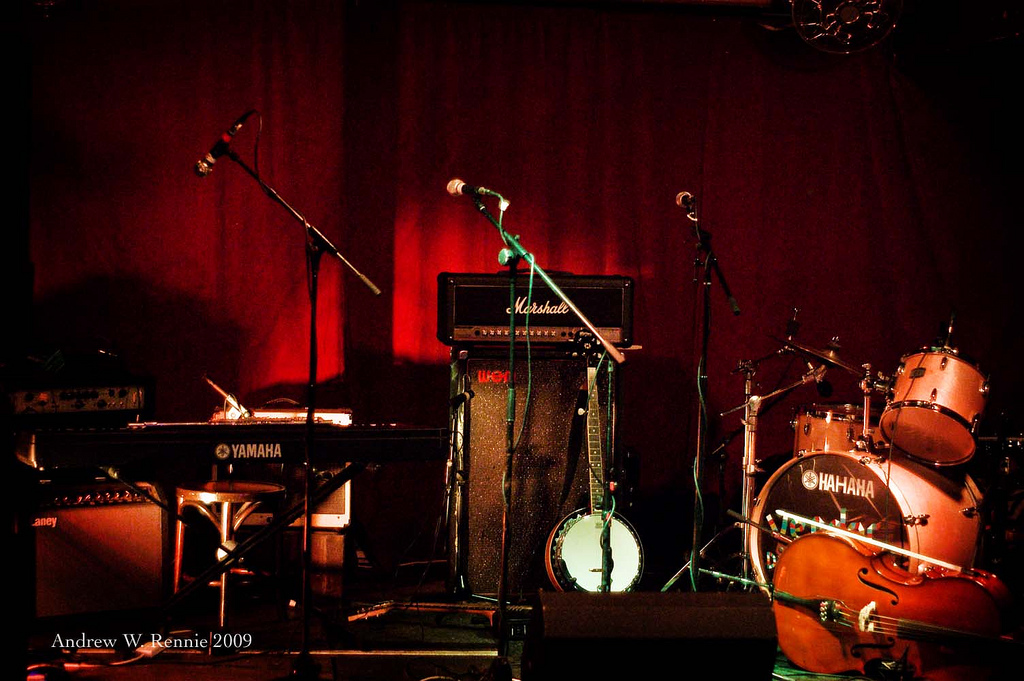
- A small band stage with amps and drums: Andy Rennie from Glasgow, Wikimedia Commons, CC BY-SA 2.0.
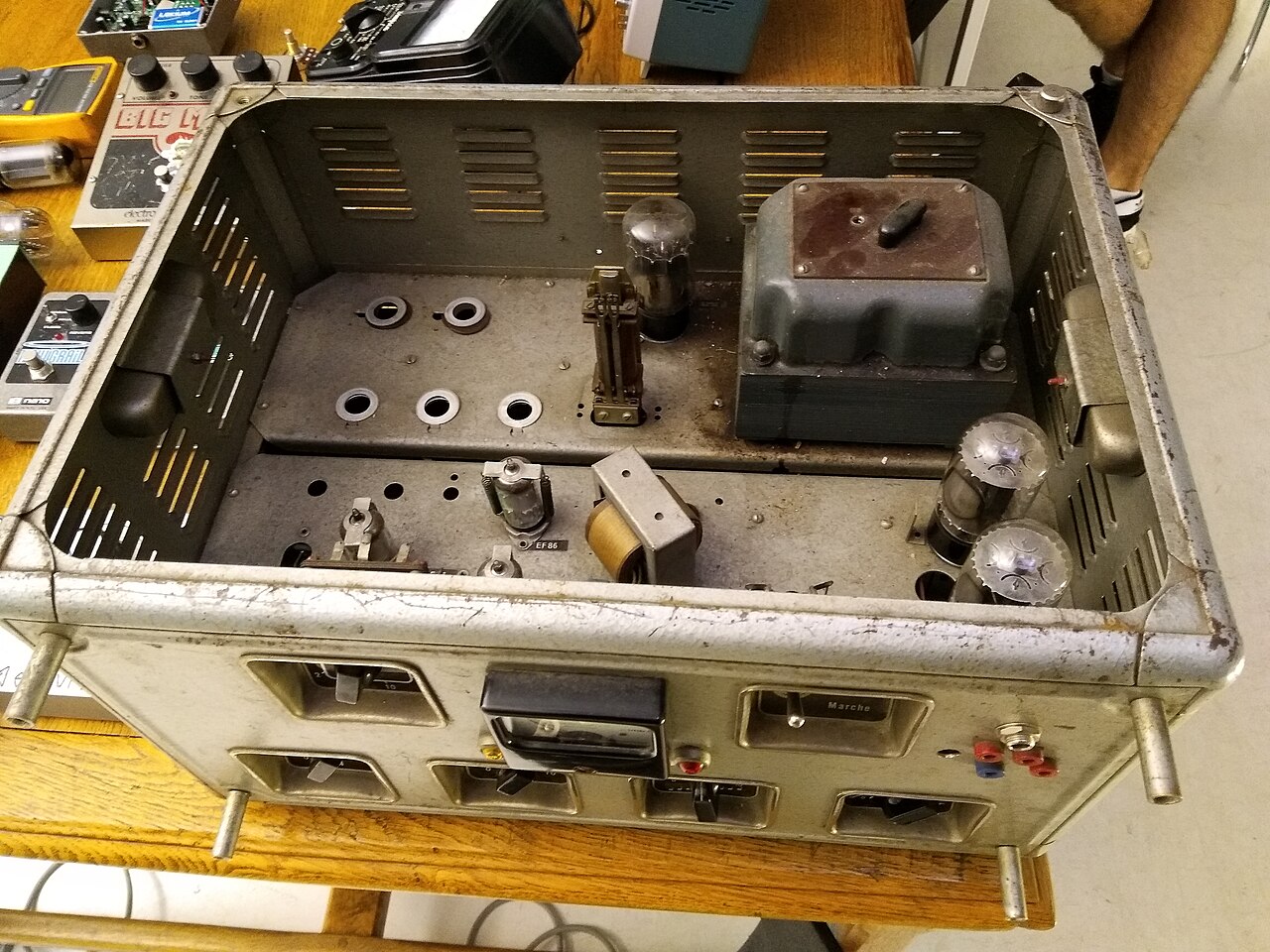
- The inside of a converted tube amp: Skimel, Wikimedia Commons, CC BY-SA 4.0.
- Jimmy Page: Andrew Smith, Wikimedia Commons, CC BY-SA 4.0.
Latest News
Related
On This Day
Monday 9 November
From this week: