Charlie Byrd Guitars & Gear: The Complete Guide to Jazz Samba’s Classical Nylon String Master’s Kohno Guitar, Takamine & Roland JC-120 Rig
Charlie Byrd guitars & gear: Jazz Samba's classical jazz guitarist. Kohno nylon string classical, Takamine EC132, Roland JC-120 — Segovia technique meets Django swing bossa nova guide.
Charlie Byrd was the guitarist on Jazz Samba (Verve, 1962) — the album recorded in a single session on February 13, 1962, at All Souls Unitarian Church in Washington D.C., with Stan Getz on tenor saxophone and Keter Betts on bass, using Byrd’s own equipment in a church that had the specific acoustic warmth that Byrd preferred for recording his classical nylon-string guitar. The album brought bossa nova into the North American mainstream, made “Desafinado” an international pop hit, and gave the nylon-string classical guitar a commercial jazz audience that the instrument had never previously enjoyed. Byrd’s guitar on Jazz Samba is the specific reason that the bossa nova moment happened as it happened in North America: not Stan Getz’s saxophone (important as it was), not the bossa nova composers’ songs (essential as they were), but the specific combination of the nylon-string classical guitar’s sound — warm, mellow, fingerpicked, without the metallic attack of the plectrum on the steel string — with the jazz improvisation vocabulary and the Brazilian rhythm that Byrd had assembled from three specific sources: Django Reinhardt (the earliest and strongest influence), Andrés Segovia (the classical technique from the Italian study trip), and the Brazilian musicians he had encountered during the State Department tour that brought him to South America in 1961 and introduced him directly to the bossa nova tradition at its source. The Kohno classical guitar. The fingerstyle technique. No pick. The Segovia right-hand position and the Django swing feeling combined in the same guitarist, in All Souls Unitarian Church, with Stan Getz, one night in February 1962. The bossa nova moment. The nylon string changed jazz. Charlie Byrd’s fingers on the Kohno changed the bossa nova moment.
Charlie Lee Byrd was born on September 16, 1925, in Suffolk, Virginia, and grew up in the nearby town of Chuckatuck. He died on December 2, 1999, in Annapolis, Maryland, at the age of seventy-four, from lung cancer. His father was a mandolinist and guitarist who taught him acoustic steel guitar at the age of seven or ten (accounts differ slightly). The specific beginning: the mandolinist father’s steel-string guitar instruction in rural Virginia, the foundation of a career that would eventually include Andrés Segovia as a teacher, Stan Getz as a collaborator, and the Showboat Lounge in Washington D.C. as an institution. Byrd had the longest available musical education of any guitarist in this series — the father’s folk and country steel-string instruction, the Virginia Polytechnic Institute music program, the World War II service that stationed him in Paris in 1945 where he played in the Army Special Services band and toured occupied Europe in the all-soldier production G.I. Carmen, the postwar composition and jazz theory study at the Harnett National Music School in Manhattan, the classical guitar lessons with Sophocles Papas in Washington D.C. (several years), and finally the Andrés Segovia lessons in Italy. The teacher of teachers taught him. The most celebrated classical guitarist of the twentieth century gave Charlie Byrd the specific technical foundation that made the nylon-string jazz approach formally possible. Byrd brought this to jazz. Jazz had not previously had access to it.
The Django Reinhardt influence is the counterpoint to the Segovia classical training: where Segovia provided the technical vocabulary and the right-hand classical fingerstyle discipline, Django provided the specific jazz feeling and the melodic swinging approach that distinguishes jazz improvisation from classical interpretation. Both were present simultaneously in the Byrd approach — the Segovia classical technique applied to the Django jazz feeling — and this combination produced the specific nylon-string jazz character that made Jazz Samba possible: the classical guitar’s precise fingerstyle articulation and the warm tonal character of the nylon string, combined with the jazz improviser’s vocabulary of bebop lines and blues feeling and the Brazilian rhythm’s specific forward momentum. “Taught acoustic steel-string guitar by his father at age ten, and citing Django Reinhardt as his earliest and biggest influence, Charlie also went to Italy in the 1950s to study with Spanish classical guitar icon Andrés Segovia.” The father’s steel string. Django’s jazz feeling. Segovia’s classical technique. Three influences, three technical foundations, one guitarist. The nylon string connected all three.
The Washington D.C. base — Byrd moved there in 1950 after the postwar study — established the specific geographic and institutional context of his mature career. He opened the Showboat Lounge, a Washington D.C. jazz venue that became one of the most celebrated jazz clubs in the mid-Atlantic region and that positioned Byrd as the dean of Washington jazz guitarists. The State Department connection — Byrd toured South America as a State Department cultural ambassador in 1961, and it was during this tour that he encountered the bossa nova tradition at its source and decided to bring it to North America — is the specific historical event that produced Jazz Samba. The cultural ambassador went to Brazil as a jazz guitarist and came back with a musical revolution. The nylon string was already in his hands. The Segovia technique was already established. The Django feeling was already internalized. All that was needed was the Brazilian music. The State Department provided the connection. All Souls Unitarian Church provided the acoustics. Stan Getz provided the saxophone. Byrd provided the nylon string and the classical right hand and the Django swing and the specific knowledge of what the Brazilian music was and how to make it speak to an American jazz audience.
Background: Suffolk, Django, Segovia, Paris, and the State Department Tour That Started a Revolution
The World War II service is the specific biographical chapter that placed Byrd in Paris in 1945 — the city that was simultaneously the historical home of the Django Reinhardt Gypsy jazz tradition and the postwar jazz culture that Dizzy Gillespie and the beboppers were bringing to France. Being stationed in Paris in 1945, playing in the Army Special Services band, performing in G.I. Carmen: this is the specific cultural environment that immersed the young Virginia guitarist in the European jazz and classical music tradition at its most concentrated available source. Paris in 1945 was where Django Reinhardt was still playing. Paris in 1945 was where the classical guitar tradition was a living presence rather than an academic curiosity. The Paris experience shaped the specific synthesis — jazz feeling, classical technique — that Byrd subsequently formalized through the Segovia lessons.
Sophocles Papas — the Washington D.C.-based classical guitar teacher and instrument retailer who was one of the most influential classical guitar educators in the United States in the mid-twentieth century — is the specific teacher who prepared Byrd for the Segovia lessons. Papas had been a student of Francisco Tárrega’s tradition and had corresponded with Segovia; his Washington D.C. teaching studio was one of the primary centers for classical guitar education in the United States. The Papas lessons provided Byrd with the foundational classical technique — the specific right-hand position, the fingernail technique, the scale and arpeggio vocabulary — that the subsequent Segovia lessons then refined. Studying with Papas before Segovia was the specific educational path that gave Byrd the technical foundation advanced enough to warrant Segovia’s attention and instruction.
The Andrés Segovia Italian lessons are the specific biographical event that gave Byrd the most celebrated available endorsement for the classical guitar in the jazz context: if Segovia himself had taught you the classical right-hand technique, the specific approach to the nylon string that the Spanish classical tradition had developed over centuries, you had the foundational credentials to bring that technique into the jazz context with the authority that only the most complete available classical education could provide. The specific Segovia technique — the specific right-hand finger positions, the specific nail preparation, the specific approach to tone production on the nylon string — is what distinguishes the Byrd nylon-string jazz sound from the more informal fingerpicking of guitarists who use the nylon string without the classical foundation.
The State Department tour to South America in 1961 is the final biographical catalyst: the specific cultural ambassador role that put Byrd in the right place at the right time with the right technical preparation to recognize bossa nova as the music that would most completely utilize his specific combination of nylon-string classical technique and jazz vocabulary. He encountered the bossa nova at its source — Joao Gilberto, Antonio Carlos Jobim, the Brazilian musicians who had developed the specific fusion of samba rhythm and cool jazz harmony that was the bossa nova. He brought the recordings back to Washington D.C. He contacted Stan Getz. They recorded Jazz Samba in All Souls Unitarian Church on one night in February 1962. A million copies were sold. Bossa nova was in America. The nylon string had brought it.
The Rig: Charlie Byrd’s Guitars, Amps, and Effects
Guitars
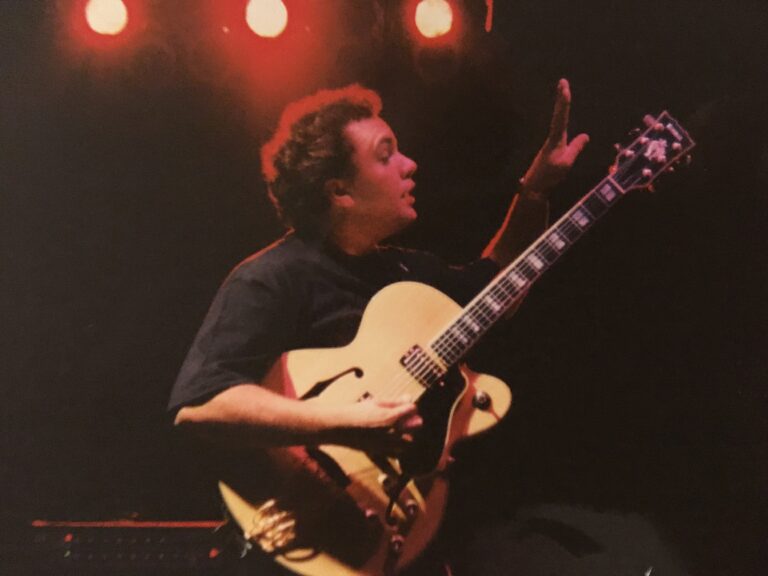
“His best guitar was a Kohno, a Japanese classical model that’s worth at least $5000.” Masaru Kohno was a Japanese classical guitar maker who became internationally celebrated in the post-war period as one of the finest available classical guitar luthiers — a craftsman whose instruments were sought by classical guitarists worldwide for their specific tonal quality, their construction precision, and the specific Japanese craftsmanship tradition applied to the Spanish classical guitar architecture. Byrd’s Kohno classical guitar represents the specific high-end professional instrument of his mature career — the guitar on which the Jazz Samba tone (or its closest successor) was produced in the studio and concert hall contexts. The Kohno’s nylon strings, its specific top wood selection, its bracing pattern: all of these contribute to the specific warm, mellow, projecting character of the classical guitar sound that Byrd’s jazz approach required. The nylon string’s specific character — warm, mellow, lacking the metallic attack of the steel string — is the primary tonal quality that distinguishes the Byrd jazz sound from the archtop electric jazz guitar sound of contemporaries like Jim Hall and Kenny Burrell and Barney Kessel. Where they used steel strings and magnetic pickups and tube amplifiers, Byrd used nylon strings and a transducer pickup and a clean solid-state or tube amplifier. The difference is the entire Byrd identity.
Byrd “held onto his first classical guitar, a $40 C.F. Martin-made model from the late 40s.” The specific detail — holding onto the first guitar through a career that would eventually include the Kohno — is the specific biographical evidence of the guitarist’s attachment to the physical beginning of the classical approach. The $40 C.F. Martin classical guitar from the late 1940s is the instrument through which the Segovia technique was first applied in the American context, the guitar on which the classical-jazz synthesis was first assembled. Holding onto it while acquiring the Kohno is the specific material expression of maintaining the connection to the beginning while developing to the most professional level available.
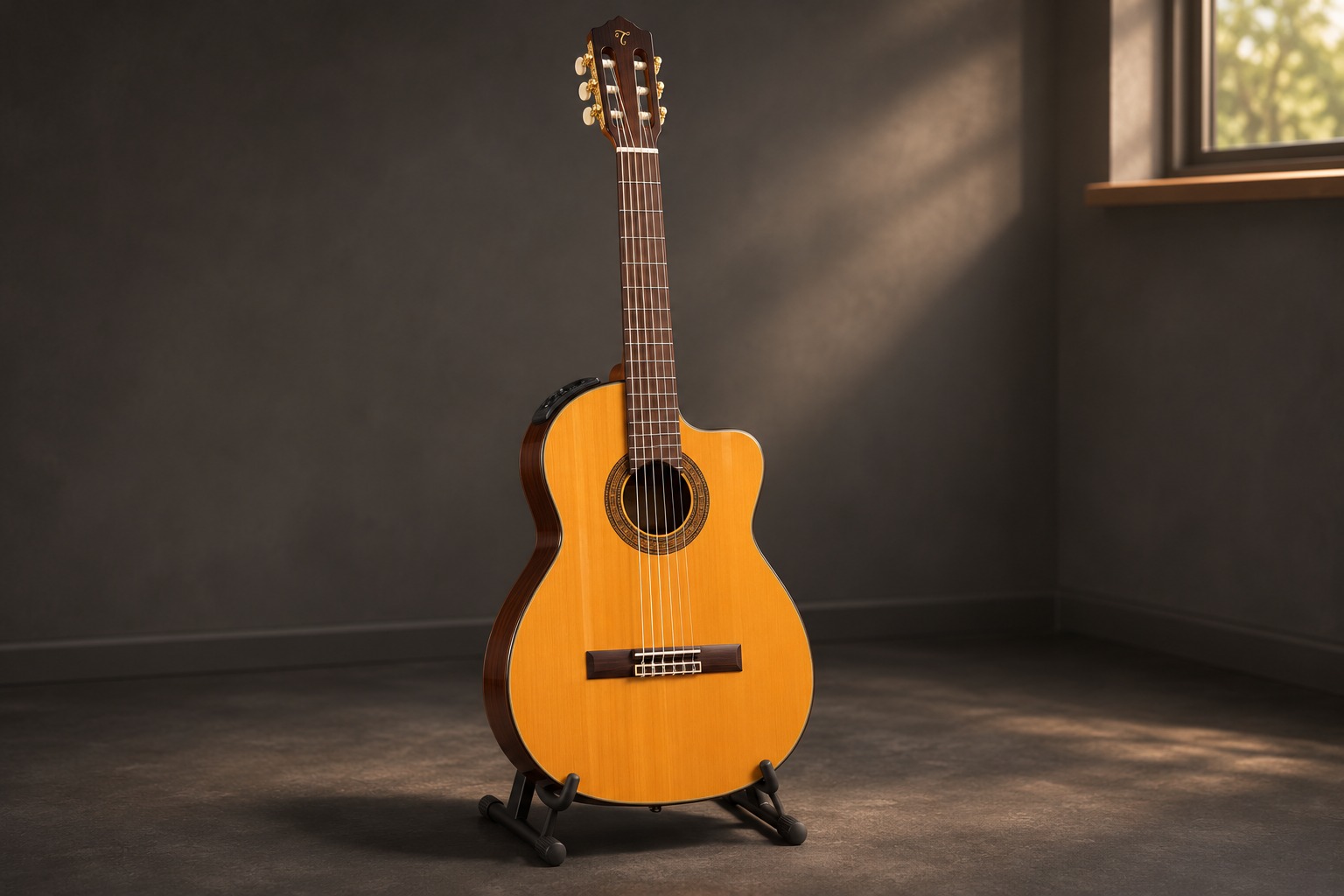
The Takamine EC132 classical and nylon-string guitar is documented in Byrd’s equipment — specifically noted at minute 0:31 of a video as having “the original older preamp unique to the 1st generation of Takamine EC132SC.” The Takamine EC132 is an electro-acoustic classical guitar with a built-in pickup and preamp system — the specific practical solution to the perennial challenge of amplifying the classical nylon-string guitar in the jazz performance context. The nylon string’s soft, warm, naturally quiet acoustic character — the quality that makes it so tonally distinctive in the recording studio — is the same quality that makes it difficult to project in the live performance context without feedback or tonal coloration from the pickup and amplification system. The Takamine EC132’s specific preamp system provided the electro-acoustic amplification that allowed Byrd’s nylon-string sound to project in performance without the feedback that hollow-body electric guitars are prone to. The “original older preamp unique to the 1st generation” is the specific vintage character of the early Takamine electro-classical approach — a technology that Byrd was among the first jazz guitarists to adopt for the specific purpose of amplifying the classical guitar in the jazz context.
“With a strong preference for the classical acoustic variety, which all have nylon strings, Charlie collected guitars that ranged from budget to pricey.” The breadth of Byrd’s classical guitar collection — from the $40 C.F. Martin to the Kohno — reflects the specific collecting and working approach of the professional classical guitarist who plays multiple instruments across different contexts and for different musical purposes. The preference is consistent across the entire collection: nylon strings, classical construction, no steel strings, no magnetic pickups, the specific acoustic character of the classical guitar in the jazz context.
Amps
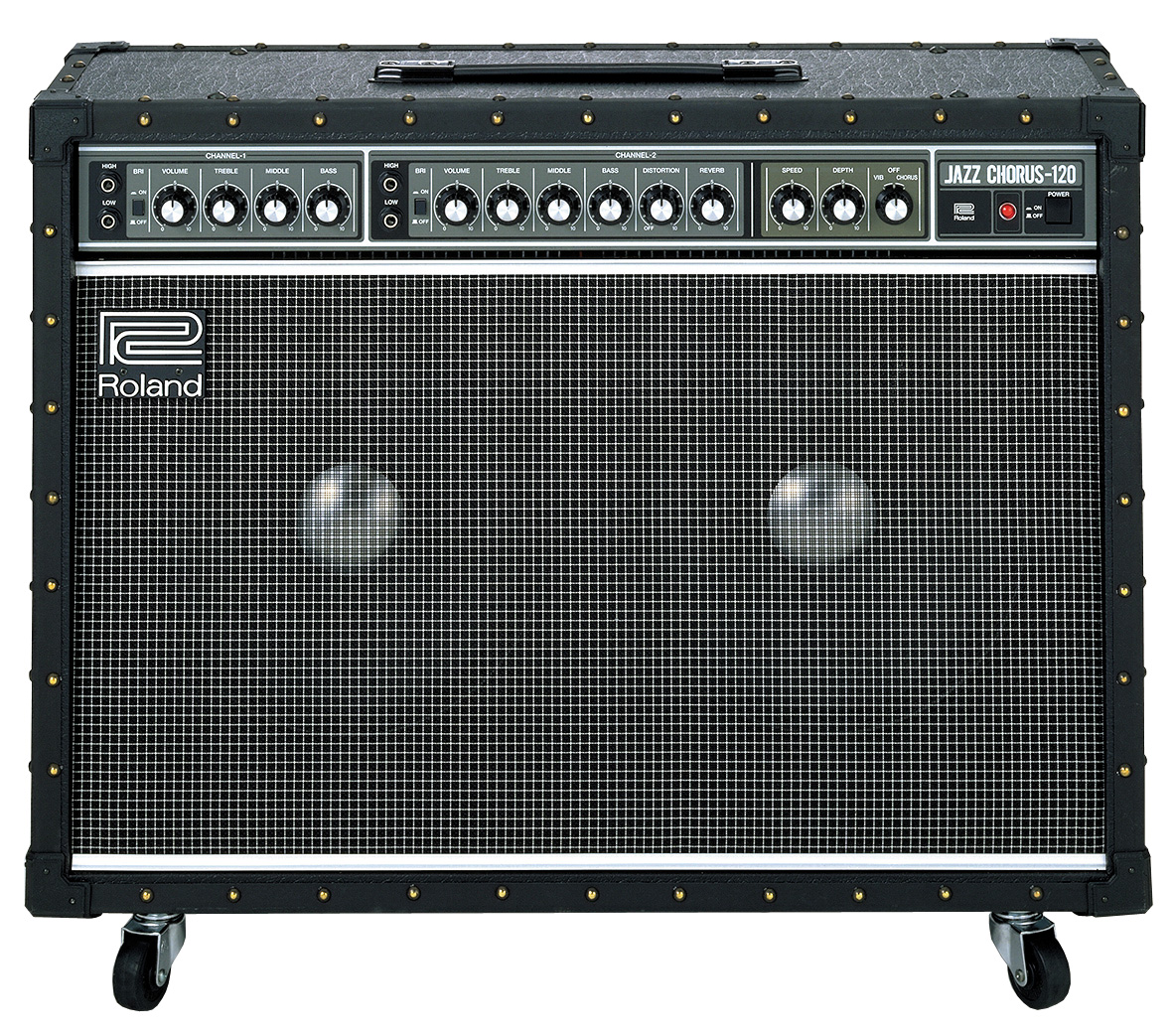
In the YouTube video of “Barney Kessel, Tal Farlow and Charlie Byrd — Lover,” Charlie Byrd can be seen using a Roland JC-120 Jazz Chorus amplifier. The Roland JC-120 appears in this series in John McGeoch’s Siouxsie and the Banshees entry as the primary clean solid-state amplifier — the specific clean, quiet amplification that the nylon-string classical guitar’s transducer pickup output requires. The Roland JC-120’s solid-state clean character is appropriate for the classical nylon-string guitar: the tube amplifier’s natural saturation at higher volumes would alter the classical guitar’s specific clean, mellow acoustic character in ways that the player would find undesirable. The solid-state JC-120’s clean headroom at all volumes maintains the nylon string’s specific acoustic warmth without adding the harmonic complexity of tube amplification. The built-in chorus of the JC-120 adds modest harmonic width and spatial dimension to the classical guitar’s naturally focused, intimate acoustic character.

The most significant “amplification” in the Charlie Byrd context is the acoustic environment of All Souls Unitarian Church in Washington D.C., where Jazz Samba was recorded on February 13, 1962. The church’s specific acoustic character — the reverberant, warm, spatially expansive quality of the classical architectural space — provided the natural ambient reverberation that the classical guitar’s nylon-string sound required to project with appropriate warmth and dimension in the recorded context. Recording the nylon-string classical guitar in a church rather than a conventional recording studio used the specific acoustic amplification of the architectural space to project the quieter classical instrument — the church’s reverberance doing what an amplifier would do in a live performance context. This is the Byrd recording philosophy: let the instrument’s natural acoustic character be preserved by choosing the correct recording environment rather than by processing the signal with the amplifier’s coloration.
Effects and Technique
Classical Fingerstyle — Segovia Right-Hand Technique (Primary “Effect”)
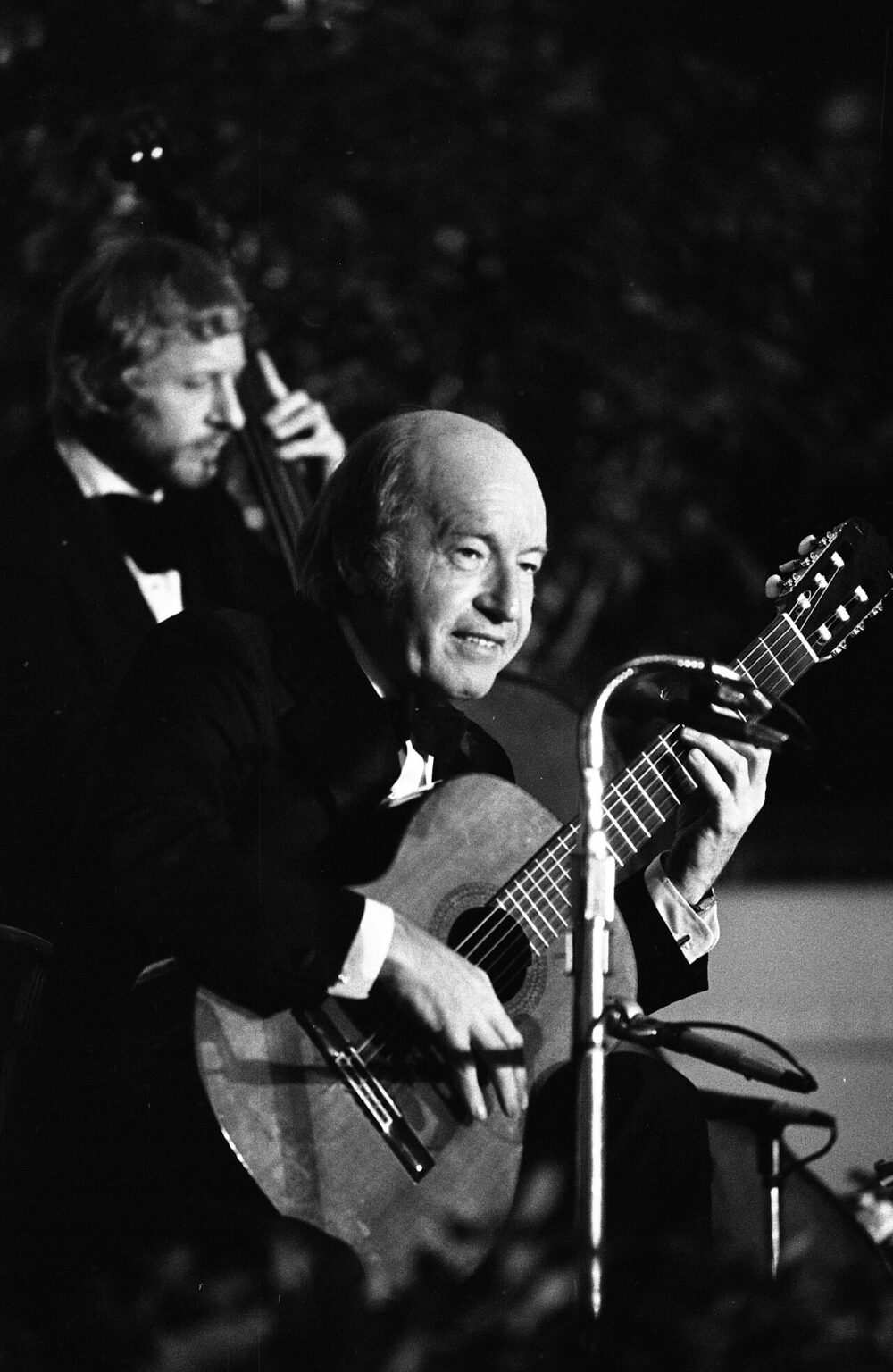
The most fundamental element of Charlie Byrd’s guitar approach is the classical right-hand fingerstyle technique — the specific finger-and-nail combination that the Andrés Segovia tradition developed and that Byrd mastered through the Sophocles Papas and Segovia lessons. The classical right-hand technique: the specific finger positions (index, middle, ring for melody; thumb for bass), the specific nail preparation and angle that produces the classical guitar’s characteristic warm-then-bright tonal envelope, the specific apoyando (rest stroke) and tirando (free stroke) techniques that produce different attacks and tonal characters on the same string. No pick. Never a pick. The classical right hand, applied to jazz improvisation and bossa nova rhythm, produces the specific Byrd nylon-string tonal character: warm, precise, expressive, entirely different from the plectrum attack of every other jazz guitarist in this series. This is the primary “effect” — not a pedal but a technique, not a signal chain but a hand position, not a purchase but a years-long discipline acquired from the greatest available teachers.
Django Reinhardt Jazz Vocabulary (Foundational Melodic Approach)
The Django Reinhardt influence — “earliest and biggest influence” — provides the specific jazz melodic and improvisational vocabulary that the Segovia classical technique then expresses on the nylon string. Django’s specific qualities: the swinging, melodic approach to jazz improvisation; the rhythmic momentum of the Hot Club tradition’s specific guitar feel; the specific blues-and-jazz-and-gypsy combination that made Django’s guitar the foundational reference point for the acoustic jazz guitar. Applied to the Segovia nylon-string technique, the Django jazz vocabulary produces the specific combination of classical precision and jazz spontaneity that characterizes the Byrd approach: the Segovia fingers playing Django lines on the Kohno, in the specific Brazilian rhythmic context of the bossa nova. “The first time I heard Charlie Byrd I thought he really wasn’t so much” — no, that was Herb Ellis about Charlie Christian. What happened first when you heard Byrd was the warm nylon-string tone, then the jazz feeling, then the classical precision, then the realization that no one else had assembled these three elements in quite this configuration before.
Bossa Nova Rhythmic Integration (Technique — Brazilian Cross-Pollination)
The bossa nova guitar technique that Byrd brought from the State Department Brazil tour is the specific rhythmic vocabulary of the Brazilian tradition: the syncopated fingerstyle bass-chord pattern that João Gilberto had developed from the samba rhythm, applied to the jazz harmony of the cool jazz tradition. The bossa nova guitar rhythm — the specific bass-note-plus-chord pattern that creates the characteristic gentle, forward-moving momentum of the bossa nova — was a natural extension of the classical fingerstyle technique that Byrd already possessed: the thumb playing the bass notes while the fingers play the chord voicings above, in the specific syncopated pattern that gives bossa nova its distinctive rhythmic feel. The classical guitarist already knew how to play independent thumb bass and melodic fingers; the bossa nova showed him the specific Brazilian rhythmic pattern for the thumb and fingers that would make Jazz Samba the transformative recording it became.
The specific challenge of amplifying the nylon-string classical guitar in the jazz performance context is one of the more practically significant gear challenges in the Byrd biography, and it is worth documenting in detail because it is the challenge that shaped his specific amplification choices throughout his career. The classical guitar’s acoustic character — the warm, mellow, precisely articulated tone of the nylon string — is produced at relatively low acoustic volume compared to the steel-string archtop electric guitar. In a small room or a recording studio with appropriate acoustic treatment, this low volume is not a problem; the microphone or the transducer pickup captures the specific acoustic character and the amplifier projects it. But in a larger performance context — the concert hall, the jazz club, the festival stage — the classical guitar’s natural acoustic volume is insufficient for the performance context, and the specific challenge is to amplify the nylon string without altering its tonal character. The magnetic pickup that steel-string and archtop electric guitarists use is not appropriate for the nylon string (nylon is not magnetic and does not generate a signal in a magnetic pickup); a transducer pickup (under-saddle piezoelectric or microphone) is required. The transducer’s specific signal character is different from the magnetic pickup’s — the piezoelectric character can be “quacky” or “brittle” without careful engineering — and the amplifier that receives the transducer signal needs to be clean and transparent to preserve the nylon string’s acoustic warmth. The Roland JC-120’s solid-state clean and the Takamine EC132’s built-in preamp together address these specific requirements: the EC132’s preamp optimizes the transducer signal, and the JC-120’s clean solid-state amplification projects it without the tube amplifier’s harmonic coloration. This is the Byrd amplification philosophy, derived from the specific physical constraints of the nylon-string classical guitar in the jazz performance context.
The Johnny Smith influence — one source mentions Byrd “studied under the renowned jazz guitarist Johnny Smith, who influenced his playing style” — adds another dimension to the Byrd guitar education: Johnny Smith was one of the most technically accomplished jazz guitarists of the 1950s, known for his chord-melody approach and his Tune-O-Matic bridge-equipped Guild guitar. The Smith influence, if documented, would place Byrd in direct contact with the chord-melody tradition of the jazz guitar alongside the classical Segovia tradition — the specific combination that produced the Guitar Artistry of Charlie Byrd (1964), the album that highlighted his intricate fingerstyle playing and diverse musical influences. The Sophocles Papas and Segovia classical foundation. The Django jazz melodic vocabulary. The Johnny Smith chord-melody approach. The Brazilian bossa nova rhythm from the State Department tour. The $40 C.F. Martin to the Kohno. The Roland JC-120 and the Takamine EC132. All of it: Charlie Byrd’s guitar story, assembled in Washington D.C. and carried to All Souls Unitarian Church on February 13, 1962, for the specific night that changed American popular music’s relationship to Brazil and to the nylon string simultaneously. Desafinado.
Playing Style & Tone Philosophy
Charlie Byrd plays guitar as a classical guitarist who happens to be a jazz musician — someone whose primary physical and technical relationship with the instrument is the Andrés Segovia tradition’s specific discipline of the right hand, the nail angle, the tonal production, the scale and arpeggio vocabulary, and the interpretive approach of the classical performance tradition, applied to the jazz improviser’s harmonic vocabulary and the Brazilian rhythm’s specific forward momentum. The nylon string is not an aesthetic choice; it is the foundational instrument of the two traditions — classical and bossa nova — that define his musical identity. The archtop electric would be technically possible for jazz improvisation (as every other jazz guitarist in this series demonstrates), but it would not produce the specific Byrd sound that Jazz Samba documents. The Kohno’s nylon strings through the classical right-hand technique produce the warm, mellow, precisely articulated tonal character that the bossa nova requires to sound like bossa nova rather than jazz guitar with Brazilian rhythms added.
“He played instrumental roles in helping introduce the nylon-string guitar to jazz and bossa nova to North America.” This is the legacy statement in its most compressed form: two simultaneous introductions, each dependent on the other. The nylon string introduced to jazz required bossa nova to make the introduction musically compelling; the bossa nova introduced to North America required the nylon string to make the Brazilian musical tradition sound specifically Brazilian rather than jazzy-with-different-rhythms. Byrd’s specific contribution was to bring both introductions simultaneously — the nylon string AND the bossa nova — through the specific technical combination of the Segovia classical discipline and the Django jazz vocabulary and the Brazilian rhythm he had absorbed in Joao Gilberto’s country.
The specific tone philosophy: “nylon strings, classical construction, no steel strings, no magnetic pickups.” This is the complete Byrd equipment philosophy — the consistent preference across an entire career that begins with the $40 C.F. Martin and ends with the Kohno. The nylon string is always warmer than the steel string. The classical construction is always more acoustically focused than the archtop’s louder projection. The fingertip-and-nail technique is always more tonally expressive than the plectrum’s consistent attack. The Roland JC-120’s solid-state clean always preserves the nylon string’s acoustic character better than the tube amplifier’s harmonic coloration. Each consistent preference is the consistent application of the same underlying philosophy: maintain the nylon string’s specific acoustic character across every aspect of the signal chain. The Segovia taught the right hand. The Django taught the jazz feeling. The Brazilians taught the rhythm. The Kohno provides the voice.
How to Sound Like Charlie Byrd
The Charlie Byrd tone requires: a nylon-string classical guitar of sufficient quality (Kohno or equivalent professional Japanese or Spanish classical guitar, or the Takamine EC132 for the electro-acoustic practicality); classical right-hand fingerstyle technique (no pick, specific finger-and-nail position per the Segovia tradition); a clean solid-state or very clean tube amplifier (Roland JC-120 or equivalent); the Django Reinhardt jazz melodic vocabulary applied to the Brazilian bossa nova rhythmic pattern; and the years of study with the appropriate classical guitar teachers that the Segovia technique requires. The latter is not available in an equipment store.
| Control | Setting (0–10) | Notes |
|---|---|---|
| Roland JC-120 (Clean Solid-State Amplification) | Volume: 4; Treble: 5; Bass: 5; Chorus: light (1–2) | The solid-state clean that preserves the nylon string’s acoustic character. Not the tube amplifier’s harmonic saturation but the clean, transparent solid-state amplification that adds volume without coloration. Light chorus for modest spatial width — the JC-120’s built-in chorus at low settings adds warmth without obvious modulation. The nylon string’s natural warmth provides all the harmonic complexity required. |
| Kohno / Classical Nylon-String Guitar | Fingers on nylon strings; no pick; transducer pickup | The foundational instrument: nylon strings, classical construction, fingertip-and-nail attack. No plectrum. The transducer pickup (under-saddle or microphone-type) captures the acoustic character of the classical guitar without the magnetic pickup’s different frequency response. The Kohno’s warm, projecting acoustic character through the transducer into the clean JC-120: the complete Byrd amplified tone. If using a Takamine EC132, the built-in preamp provides the transducer output. |
| Segovia Right-Hand Technique | Thumb: bass notes; fingers (i, m, a): treble chord/melody | The foundational classical technique: thumb (p) playing bass notes alternating with fingers (i=index, m=middle, a=ring) playing treble melody or chord voicings. The specific nail angle and finger position that the Segovia tradition prescribes for tone production on the nylon string. Practice apoyando (rest stroke) for melodic projection and tirando (free stroke) for chords. The Segovia technique IS the Byrd “effect” — acquired through years of study, not through purchasing a pedal. |
| Bossa Nova Rhythm Pattern | Syncopated bass-chord; forward momentum; gentle swing | The specific João Gilberto-derived bossa nova guitar pattern: bass note on beat 1, chord on the and of 1, bass on 2, chord on the and of 2 (with specific syncopations). The classical right hand executes this with the thumb playing bass notes and the fingers playing chord voicings. The specific “gentle” quality of the bossa nova — not the aggressive attack of jazz strumming but the precise, controlled placement of the classical right hand — gives the rhythm its characteristic floating, forward-moving quality. |
| Django Melodic Vocabulary | Jazz lines; swinging; melodic; nylon-string inflection | The Django jazz melodic vocabulary applied to the nylon string’s warm, precise character: the swinging jazz lines, the specific bebop-adjacent melodic approach that Django’s Hot Club tradition developed, the blues feeling that the gypsy jazz tradition contained within the jazz framework. On the nylon string with the Segovia technique, the Django lines acquire the specific mellow warmth that distinguishes the Byrd approach from all the electric archtop jazz guitarists. Play the Django feeling. Play it on nylon. This is the Byrd synthesis. |
| Church Acoustic Environment (Recording Context) | Reverberant; warm; spacious | The All Souls Unitarian Church approach: for recording the nylon-string classical guitar in the jazz context, choose the recording environment for its acoustic character rather than relying on amplification and effects to provide the spatial dimension. The church’s natural reverb preserves the classical guitar’s acoustic character while projecting it with the warmth and spatial dimension that the recording requires. For home recording: use a good room rather than a dead studio for the nylon-string classical jazz sound. |
Influence & Legacy
Charlie Byrd’s influence on jazz guitar and on American popular music is the influence of the specific individual who brought two simultaneous novelties — the nylon-string classical guitar in jazz, and the bossa nova in North America — through the specific technical preparation of the Segovia classical training, the specific jazz vocabulary of the Django Reinhardt influence, and the specific cultural ambassadorial opportunity of the State Department South American tour. Jazz Samba (Verve, 1962) went to number one on the jazz charts, won Grammy awards, sold over a million copies, and launched the bossa nova craze that defined the most commercially and culturally significant Brazilian music moment in North American history. The song “Desafinado” became a pop hit. The bossa nova became a genre. The nylon-string classical guitar became, briefly and then permanently, a jazz instrument.
The specific legacy of the nylon-string jazz guitar — the tradition that Byrd’s Jazz Samba established — is the foundational document of a lineage that continues through the Brazilian jazz tradition in North America, through the classical-jazz crossover movements, and through every subsequent jazz guitarist who chose the nylon string for the specific warmth and precision that the classical guitar’s acoustic character provides in the jazz context. Byrd “played instrumental roles in helping introduce the nylon-string guitar to jazz and bossa nova to North America” — the double introduction that his specific preparation and his specific cultural opportunity made possible simultaneously.
For the Great Guitars ensemble that brought together three of this series’ consecutive entries — see Barney Kessel at #95 and Herb Ellis at #96, both of whom toured with Byrd in the Great Guitars ensemble. The three consecutive entries in this series share the Great Guitars connection and the West Coast jazz tradition’s specific period. The Andrés Segovia influence that shaped Byrd’s technique places him in the classical guitar tradition that also connects to Jorma Kaukonen’s fingerpicking approach at #87 — both guitarists drawing from the classical and folk guitar fingerpicking tradition as the foundational technical vocabulary for the jazz or folk guitar context.
He held onto the $40 C.F. Martin. His best guitar was the Kohno. No pick. The Segovia right hand. The Django jazz feeling. The State Department sent him to Brazil. He came back with bossa nova. He called Stan Getz. They went to All Souls Unitarian Church on February 13, 1962, and recorded Jazz Samba in one night with Byrd’s own equipment and the church’s acoustic warmth and Stan Getz’s saxophone and Keter Betts on bass. A million copies sold. Bossa nova. North America. The nylon string in jazz. Charlie Lee Byrd. September 16, 1925, Suffolk, Virginia. December 2, 1999, Annapolis, Maryland. The church’s acoustic warmth is still in the recording. The nylon string is still warm. The Segovia technique is still the right hand. The Django feeling is still swinging. Desafinado.
Frequently Asked Questions: Charlie Byrd Guitars & Gear
What guitar did Charlie Byrd use?
Charlie Byrd used nylon-string classical guitars exclusively throughout his career, never using the archtop electrics that most jazz guitarists favored. His best guitar was a Kohno — a Japanese classical guitar by maker Masaru Kohno, valued at at least $5,000. He also kept his first classical guitar, a $40 C.F. Martin-made model from the late 1940s. The Takamine EC132 electro-acoustic classical guitar is documented in his equipment, with its original preamp of the first Takamine EC132SC generation. He collected classical guitars across all price ranges, maintaining a consistent preference for nylon strings and classical construction.
What amplifier did Charlie Byrd use?
Charlie Byrd is documented using a Roland JC-120 Jazz Chorus amplifier in live performance. The Roland JC-120’s solid-state clean character is appropriate for the nylon-string classical guitar’s acoustic transducer output: the solid-state amplification preserves the classical guitar’s specific warmth without adding the harmonic complexity of tube saturation. For his most celebrated recording context — Jazz Samba (1962) — the “amplification” was the natural acoustic reverberation of All Souls Unitarian Church in Washington D.C., recorded in a single session on February 13, 1962, using Byrd’s own equipment.
Why did Charlie Byrd play classical nylon-string guitar instead of the archtop electric?
Byrd’s training with Sophocles Papas (in Washington D.C.) and Andrés Segovia (in Italy) established the classical nylon-string guitar as his primary instrument — the instrument whose specific right-hand technique (the Segovia classical fingerstyle) and tonal character (warm, mellow, precisely articulated) defined his musical identity. The nylon string’s specific acoustic warmth was also the perfect vehicle for bossa nova — the Brazilian music that Charlie Byrd introduced to North America through Jazz Samba, since bossa nova and samba developed around the nylon-string acoustic guitar. His approach was “a rarity in the jazz scene, especially at a time when playing electric guitars with picks was the norm.”
What was Jazz Samba and why is it significant?
Jazz Samba (Verve, 1962) is the album Byrd recorded with saxophonist Stan Getz and bassist Keter Betts in a single session on February 13, 1962, at All Souls Unitarian Church in Washington D.C. The album brought bossa nova into the North American mainstream — the first commercial breakthrough for the Brazilian music genre in the United States. “Desafinado” became an international pop hit. The album sold over a million copies and won Grammy awards. Byrd’s specific contribution: the nylon-string classical guitar that gave the bossa nova its characteristic warm, mellow acoustic sound, combined with his jazz improvisation vocabulary and the Brazilian rhythmic patterns he had learned during the 1961 State Department South American tour.
Who were Byrd’s main guitar influences?
Charlie Byrd cited Django Reinhardt as his “earliest and biggest influence” — the Belgian Romani guitarist whose Hot Club jazz approach provided the foundational jazz melodic vocabulary. He also studied formal classical guitar with Sophocles Papas in Washington D.C. and with Andrés Segovia in Italy — the most celebrated classical guitarist of the twentieth century. His father taught him steel guitar at a young age. The combination of Django’s jazz feeling and Segovia’s classical right-hand technique — applied to the nylon-string classical guitar in the jazz and bossa nova context — defines the specific Byrd synthesis that no other guitarist in the jazz tradition had previously assembled.
What was the Showboat Lounge and what was Byrd’s connection?
The Showboat Lounge was a Washington D.C. jazz club that Charlie Byrd opened and operated, establishing himself as the dean of Washington jazz guitarists. The Showboat was one of the most important jazz venues in the mid-Atlantic region during Byrd’s active years, hosting significant jazz musicians and providing the institutional base from which Byrd’s career operated. He was closely identified with Washington D.C. as a jazz center — a city that was also the base for the State Department’s cultural diplomacy programs that sent him to South America in 1961, leading directly to the bossa nova encounter that produced Jazz Samba.
What was the Great Guitars?
The Great Guitars was a touring jazz guitar ensemble formed in 1973, featuring Charlie Byrd alongside Barney Kessel and Herb Ellis. The three-guitar format — with Byrd’s nylon-string classical approach providing a completely different tonal and technical voice from Kessel’s and Ellis’s archtop electric jazz — made the ensemble sonically unique among jazz guitar groups. The Great Guitars toured internationally and recorded through the 1970s and 1980s. Byrd’s nylon-string classical guitar in direct conversation with Kessel’s ES-350 and Ellis’s ES-175 produced the specific sonic range that made the ensemble’s guitar dialogue audibly diverse rather than texturally homogeneous.
Image credits
- Takamine EC132 (Documented: GuitarGangsters AI-generated reference illustration, not a photograph.
- A Roland JC-120 amplifier: Roland Musikvertrieb Deutschland, Wikimedia Commons, CC BY-SA 3.0.
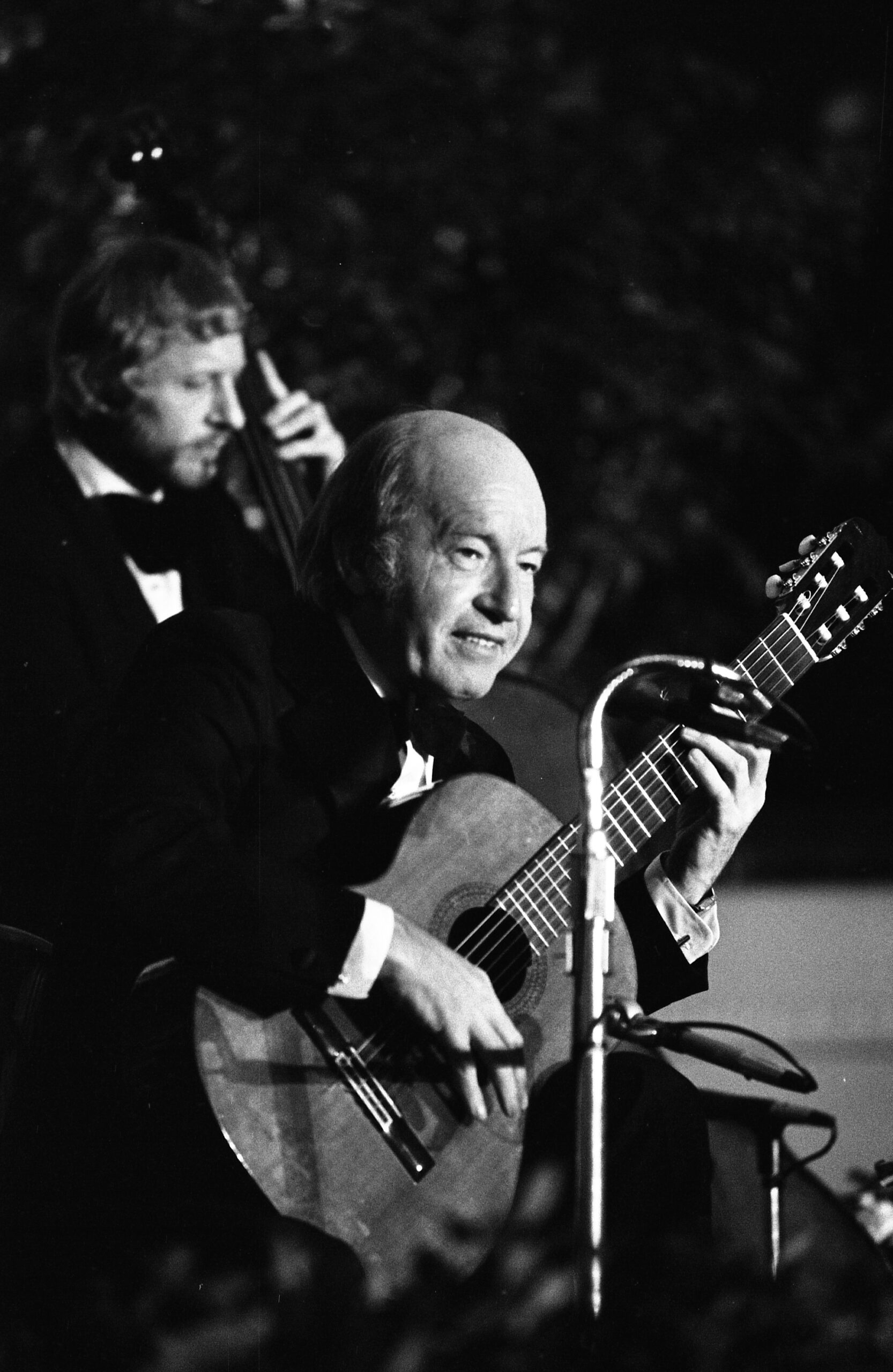
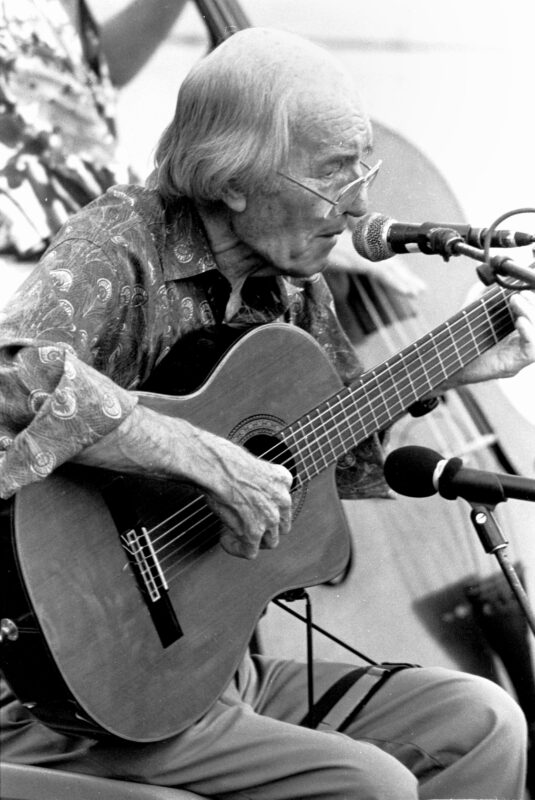
- Charlie Byrd: photo by Raymond Fudge Silver Spring, Maryland, via Wikimedia Commons, CC BY-SA 2.0.
- Roland JC-120: Solomon203, Wikimedia Commons, CC BY-SA 4.0.
- Charlie Byrd live: White House photographer, Wikimedia Commons, Public domain.