
Gear Timeline
Charlie Starr has a theory about single-pickup guitars. A 1965 Fender Esquire in factory black — his Esquire, specifically — sounds larger than most guitars with multiple pickups, and the reason is physics: fewer magnets interfering with the string vibration means the string vibrates more freely, producing a fuller, more open acoustic character before the pickup even converts it to an electrical signal. “I’m told that it’s a physics thing,” Starr has said. “And I’m a physicist, so I subscribe to that theory.” He is not actually a physicist. He is a guitarist from Lanett, Alabama, who grew up with a bluegrass-and-gospel-playing father, MacGyvered his sister’s home stereo into a guitar amplifier at age fifteen, blew it up two weeks later, snuck into bars to play his first paying gigs while underage, and has spent the subsequent decades building Blackberry Smoke into one of the most respected and genuinely loved Southern rock bands of the twenty-first century. But the theory about single-pickup guitars is correct — or at least it is accurate to the specific tonal character of the Fender Esquire, the Gibson Les Paul Junior, and the other single-pickup instruments that populate his touring guitar collection — and the fact that he expresses it with the confidence of a physicist rather than the hesitance of someone who isn’t sure of the science is characteristic of a guitarist who knows his tone exactly, understands why it sounds the way it does, and has the specific, articulate self-knowledge to describe it clearly. Guitar World calls him “one of the world’s great electric guitar tone connoisseurs.” The physicist-who-isn’t subscribes to that assessment as well.
Charlie Starr was born in Lanett, Alabama — a small cotton mill town about eighty-two miles south of Atlanta — and grew up in the specific intersection of Southern music traditions that shaped both his playing approach and his songwriting sensibility: bluegrass and gospel from his father, classic rock and blues from the broader cultural environment, and the specific Atlanta music scene that provided the commercial and creative context in which Blackberry Smoke developed. “My dad loved Bluegrass and he played traditional Bluegrass and gospel music and a little bit of country.” This foundational exposure to acoustic stringed instrument music — the specific harmonic and rhythmic vocabulary of bluegrass and gospel — is audible in Blackberry Smoke’s guitar approach in ways that distinguish the band from more purely rock-influenced Southern rock acts: the chord vocabulary has a country harmonic complexity, the rhythm playing has the specific drive of bluegrass rhythm guitar, and the overall approach to the guitar is that of a musician who hears the acoustic string tradition beneath the electric rock application.
His P-90 pickup addiction — documented across multiple interviews and confirmed in the Premier Guitar rig rundown as a defining characteristic of his instrument collection — is the most immediately specific element of his tonal identity. P-90 pickups are single-coil humbucking pickups (they are wider than standard Fender single-coils but not truly cancelling in the way that a PAF-style humbucker is) with a specific combination of single-coil bite and warmth — brighter and more articulate than a PAF humbucker, warmer and with more harmonic complexity than a Fender single-coil. The Les Paul Junior, with its single dog-ear P-90 in the bridge position, is the most beloved and most frequently used instrument in Starr’s collection: a simple, direct, maximally musical guitar that embodies the “fewer magnets, more vibration” theory and produces the specific warm, gritty, alive tonal character that defines Blackberry Smoke’s electric guitar sound.
The band’s musical approach — hard-rocking Southern rock with bluegrass harmonic complexity, country groove, and genuine blues feeling — demands a guitar tone that can move between these registers without losing its identity in any of them. The P-90 in the Les Paul Junior does this better than either a full humbucker or a standard Fender single-coil: it has enough warmth for the bluegrass-inflected chord voicings, enough bite for the hard rock riffing, and enough harmonic complexity for the blues passages. This is the specific tonal intelligence of the Charlie Starr approach: the instrument is chosen not for its historical association or its collectible value but for the specific tonal quality it provides for the specific music Blackberry Smoke makes. The physicist subscribes to this theory.
His slide guitar work — with the ceramic Charlie Starr Signature Osanippa Creek Slide — adds another dimension to the Blackberry Smoke guitar palette: the specific warm, open-tuning character of electric slide played through a cranked Germino Lead 55 or a vintage Fender Concert, with the P-90’s specific character providing the warm, complex sustain that slide guitar requires for maximum expressiveness. The Osanippa Creek Slide is named for a waterway in Alabama — biographical geography embedded in gear nomenclature, the specific Lanett-Alabama origin made tangible in a ceramic guitar slide. This is the kind of detail that distinguishes a musician who thinks carefully about what his gear means from one who simply uses what’s available.
Background: Lanett Alabama, the Atlanta Scene, and the Torchbearer of Southern Rock
The Atlanta music scene that Blackberry Smoke emerged from in 2000 had the specific character of a major Southern city’s rock underground: diverse, competitive, with a genuine tradition of blues and soul that filtered into the rock and roots music scene in ways that the purely metropolitan rock scenes of Los Angeles and New York didn’t experience in quite the same way. Starr’s band assembled from the Atlanta scene the specific combination of musicians — Richard Turner on bass, Brit Turner on drums, Paul Jackson on guitar, Brandon Still on keyboards — whose collective musical knowledge covered enough ground to make Blackberry Smoke’s cross-genre Southern rock approach genuinely convincing rather than superficially assembled.
The You Hear Georgia album (2021), produced by Dave Cobb in Nashville and topped the Billboard Americana/Folk chart, represents Blackberry Smoke’s most recent commercial and critical peak — a record that confirmed both their artistic ambition and their genuine mainstream credibility in the Americana and Southern rock spaces. Cobb’s production — warm, direct, with the specific natural quality of a producer who understands that Southern rock guitar should sound like a guitar rather than like a processed signal — is a natural fit for Starr’s gear philosophy. The Premier Guitar Rig Rundown documenting the 2023 Ryman Auditorium performance provides the most comprehensive available documentation of the current touring rig, covering both Starr’s and Paul Jackson’s gear in detail.
His guitar collecting philosophy — documented in the Guitar World “Bought & Sold” interview — is the natural extension of the P-90 theory: he looks for guitars that have the specific tonal character he needs, and he has developed a connoisseur’s ability to identify that character quickly and accurately. The Les Paul Junior collection that defines his current arsenal — multiple examples from different years, with different P-90 configurations and different degrees of wear — reflects the specific understanding that each individual instrument has its own acoustic personality, and that the right guitar for the right application may be a specific 1956 example rather than any other Les Paul Junior from any other year. This is expensive knowledge. It is also accurate knowledge.
His slide guitar identity extends to the specific product he helped develop: the Charlie Starr Signature Osanippa Creek Slide, a ceramic slide named for an Alabama waterway that provides the specific density and warmth of ceramic material (different from glass or metal slides in tone and attack character). The slide is available commercially, placing Blackberry Smoke’s specific slide guitar character in the hands of players who want to approach that tonal territory. Like the Greer Lightspeed pedal and the Germino amplifier relationship, the Osanippa Creek Slide reflects Starr’s specific boutique-oriented approach to gear: working directly with small manufacturers to develop products that precisely serve his musical requirements.
The Rig: Charlie Starr’s Guitars, Amps, and Effects
Guitars
The Gibson Les Paul Junior is Charlie Starr’s primary guitar and the center of his guitar collection — a single-pickup, slab mahogany body instrument with a dog-ear P-90 pickup that produces the specific warm, gritty, alive tonal character that defines Blackberry Smoke’s electric guitar approach. The Premier Guitar rig rundown specifically documents a 1956 Gibson Les Paul Junior that “was professionally refinished in the ’70s, but Charlie Starr has put some serious miles on this one-pickup wonder. The battered badass with a dog ear P-90.” The 1956 Les Paul Junior’s slab mahogany body — no maple cap, no binding, no separate top — produces a distinctly different acoustic character from the Les Paul Standard’s carved maple cap construction: darker, more mahogany-forward, with the specific warmth of a fully mahogany instrument and the P-90’s bite providing the treble character that the maple cap would otherwise supply. Starr’s P-90 addiction is specifically a Les Paul Junior addiction — he has described the Les Paul Junior as his most beloved instrument family and has collected multiple examples across different years and in different degrees of wear. The worn, played, “battered badass” quality of the 1956 is not incidental to its value; it is the specific evidence that the guitar has been the working tool that Rossington would have recognized.
The 1965 Fender Esquire in factory black is one of the most specifically described instruments in Starr’s collection — the guitar connected to the single-pickup physics theory. Starr maintains that this 1965 Fender Esquire in factory black, like his other single pickup guitars, sounds larger than most as there are less magnets interfering with the string vibration. The Fender Esquire is a Telecaster-shaped single-pickup guitar — only the bridge pickup, no neck pickup — that was the precursor to the Telecaster with both pickups. The single bridge pickup in the Esquire is a standard Telecaster bridge pickup with the specific bright, twangy character of the Fender single-coil in that position, but the absence of the neck pickup means there is no secondary magnetic field competing with or supplementing the bridge pickup’s field. The acoustic result — the guitar string vibrating more freely with only one set of magnets affecting it — is audible in the Esquire’s specific tonal openness and the sense that each note speaks with unusual clarity and directness. Starr uses the Esquire for the specific Blackberry Smoke songs that benefit from its Fender single-coil brightness against the P-90 warmth of his primary Les Paul Juniors.
A Gibson ES-345 electric guitar is documented in the Premier Guitar Rig Rundown footage and specifically identified in the Equipboard community notes as the guitar Starr played in a performance of “Waiting for the Thunder” on BBC Two’s Later… with Jools Holland. The ES-345 is a semi-hollow Gibson with dual humbuckers (PAF-style) and the specific warm, complex, semi-acoustic character of the thinline hollow-body family — different from both the solid-body Les Paul Junior and the single-coil Fender Esquire, providing the specific semi-hollow resonance and harmonic complexity appropriate for the more atmospheric Blackberry Smoke material.
A 1962 Fender Stratocaster appears in Starr’s documented guitar collection — the triple-single-coil Fender classic from the early CBS-adjacent period. The Stratocaster’s three single-coil configuration — particularly the in-between positions (positions 2 and 4) that produce the characteristic Strat quack — provides a completely different tonal character from the P-90 Les Paul Junior or the single-bridge-pickup Esquire, appropriate for specific songs and musical passages where the Strat’s specific voice serves the arrangement better than the other instruments in his collection.
An Echopark Guitar — referenced in the Premier Guitar 2023 Rig Rundown’s gear tags — is among the boutique instruments in Starr’s current arsenal. Echopark is a Los Angeles-based boutique guitar manufacturer known for their vintage-inspired instruments and their specific quality of construction suited to working musicians who value instruments that feel and sound like vintage guitars while being constructed with modern quality control. The Echopark relationship reflects Starr’s broader boutique-oriented approach to gear: working with small manufacturers who understand the specific tonal territory he’s trying to occupy.
All of Starr’s electric guitars are strung with D’Addario XL Nickel Wound strings in .010-.046 gauge — confirmed in the Premier Guitar 2023 Rig Rundown. The .010-.046 gauge provides the specific balance of bending ease (on the lighter plain strings) and tonal weight (on the wound strings) appropriate for his combination of slide playing (where lighter plain strings bend more easily under the slide) and hard-rock rhythm riffing (where the .046 low E provides appropriate tension and tonal weight).
The Charlie Starr Signature Osanippa Creek Slide is a ceramic guitar slide named for an Alabama waterway — the specific biography embedded in product nomenclature. Ceramic slides produce a different tonal character from glass or metal: warmer and denser than glass, with a specific quality of attack and sustain that suits the warm, Southern rock slide approach rather than the brighter, more cutting character of metal or the lighter, more fragile character of glass. Like Ernest Tubb and other guitarists from the classic annals of entertainment, Starr has a guitar g… The Osanippa Creek slide is available commercially, extending Starr’s specific slide character to other players.
Amps
The primary amplifier in Starr’s current live rig is the Germino Lead 55 — a boutique Marshall-derived 55-watt head built by Greg Germino, who personally recommended the Lead 55LV to Starr and whose Master Model 50 also appears in the rig. “I’ve been using a Germino Lead 55 and a 1960 brown Fender Concert; both are on all the time. Those are my two absolute favourite amps in the world at the moment.” The Germino Lead 55’s specific character — a Marshall-derived EL34-powered design with Germino’s specific refinements for warmth, clarity, and response — suits the warm, blues-rock character of Blackberry Smoke’s music. Two Germino heads appear in the Premier Guitar Rig Rundown: the Lead 55LV (paired with a 4×12 cabinet) and the Master Model 50. The combination of the two Germino heads provides different tonal options — the Lead 55LV’s more aggressive character for the harder rock material, the Master Model 50’s different gain structure for other passages.
The 1960 brown Fender Concert is the other half of Starr’s “two absolute favourites” — the vintage Fender combo from the brown era (1960-63, characterized by the brown tolex covering and the specific circuit design of that production period) that provides the specific American clean tone and natural overdrive of vintage Fender amplification. George Alessandro modified the Concert for road use: “George Alessandro went through the Concert and tightened it up for the road.” The 1960 Concert’s four 10-inch speakers provide a different frequency response from a single 12-inch or 15-inch speaker — more midrange presence, slightly brighter, with the characteristic “spread” of the multi-speaker configuration. The combination of the Concert’s vintage Fender character and the Germino’s Marshall-derived character — both always on simultaneously — produces the layered, dimensional quality of the Blackberry Smoke live guitar sound.
The Marshall JCM800 2203 also appears in Starr’s documented touring rig alongside the Germino and Fender Concert. The JCM800’s EL34-powered British character adds a third tonal color to the amp combination, providing the specific high-gain crunch of the JCM800 for the harder rock passages that the Germino’s 55 watts and the Concert’s American clean character don’t fully address.
The Fender Twin Reverb appears in Starr’s documented equipment alongside the Marshall JCM800 — the standard Fender high-headroom clean amp for the sparkle and dimension that the concert’s brown-era character provides at lower clean headroom levels. The Twin’s two 12-inch Jensens and the built-in spring reverb provide the specific Fender clean with spatial dimension that suits the more atmospheric Blackberry Smoke material.
Effects
The Greer Amps Lightspeed Organic Overdrive is Starr’s primary overdrive pedal — confirmed both in the Equipboard documentation and specifically referenced in the 2015 video interview at 10:32. The Lightspeed is Greer’s flagship overdrive: a low-to-medium-gain pedal with a specifically organic, amp-like character that complements rather than overwhelms the valve amplifiers it’s paired with. “Organic” in this context means the overdrive’s harmonic distortion character resembles the natural breakup of a valve amplifier pushed into saturation — the specific warm, complex quality of natural overdrive rather than the harder, more electronic character of silicon diode clipping. The Lightspeed paired with the Germino Lead 55 and the 1960 Concert provides the complete overdrive range from the Concert’s clean to the Germino’s natural saturation to the Lightspeed’s warm midrange boost for leads.
The Pettyjohn Iron overdrive appears in Starr’s documented setup as an additional drive option — responding well to dynamics and stacking with other pedals. The Iron’s transparent, dynamics-preserving character makes it appropriate for passages where additional drive is needed without the specific tonal coloration of a higher-gain pedal. Its ability to stack — to be used in combination with the Lightspeed for a combined drive — gives Starr multiple gain stages of different character for different tonal requirements.
The Fulltone Supa-Trem ST-1 is confirmed in the Premier Guitar Rig Rundown: Starr sets the right switch to “Hard” with the mix set to zero. The “Hard” tremolo setting produces a more abrupt, square-wave-like amplitude modulation character — the specific hard-chopping tremolo of vintage amplifiers — as opposed to the smoother, sinusoidal tremolo of lower-depth settings. Mix at zero means the effect engages at full depth without a dry-wet blend. The tremolo is used for specific Blackberry Smoke songs that require the classic American country and Southern rock tremolo character.
The Analogman King of Tone — the same long-waitlisted boutique pedal documented in John Petrucci’s rig — appears in Starr’s setup as a mid-gain overdrive for boosting solos and adding harmonic richness. The King of Tone’s dual-overdrive circuit and organic, amp-like character makes it a natural complement to the Germino and Concert combination, adding the harmonic complexity of a vintage-voiced overdrive to the already warm and organic signal chain.
The Strymon Flint — a dual tremolo and reverb unit with multiple vintage-voiced algorithms — provides additional modulation and spatial options beyond the Supa-Trem’s mechanical tremolo and the vintage Concert’s spring reverb. The Flint’s algorithms include vintage spring, plate, and hall reverb types alongside two tremolo characters (tube and photocell-style), giving Starr access to the full range of vintage atmospheric effects appropriate for “swampy Southern ballads and vintage-infused ambience.”
The Fulltone Clyde Deluxe wah is Starr’s preferred wah pedal — valued for its smooth sweep and vocal quality in solo applications. The Clyde’s specific frequency sweep character — wider and more musically voiced than some standard wah pedals — suits the expressive, blues-inflected wah use that Blackberry Smoke’s guitar approach requires.
Starr uses InTuneGP Heavy guitar picks — confirmed in the Premier Guitar rig rundown. The heavy pick provides a firm, defined attack that suits the specific combination of rhythm precision and lead expressiveness in his playing approach. A heavier pick produces more defined note attacks for the rhythmic chord playing and more controlled sustain for the lead lines.
The You Hear Georgia record — recorded at RCA Studio A in Nashville with producer Dave Cobb — deserves specific mention as the document of Starr’s mature gear philosophy in action. Cobb’s production approach, which favors direct, warm, organic recording with vintage equipment and minimal digital processing, is a natural match for the Germino/Concert/Les Paul Junior combination. The specific warmth of the record’s guitar tracks — audible in the natural compression of the Les Paul Junior’s P-90 through the Germino’s EL34 output stage, the specific spread of the 1960 Concert’s four tens, and the Lightspeed’s organic drive character — represents the specific tonal intelligence of a guitarist who has been thinking carefully about these questions for twenty years. You can hear the physics theory working. The strings vibrate freely. The pickups convert them honestly. The amps amplify without lying. The result is one of the best-sounding Southern rock records of the twenty-first century, made with gear that a Lynyrd Skynyrd fan from 1974 would recognize and approve of, by a band that understands what the tradition means and what it still requires.
His outright disdain of bad amps — referenced in the Guitar World headline — is the negative space of the positive preference. A man who knows what a good amp sounds like also knows, with equal clarity and equal certainty, what a bad one sounds like. The Germino Lead 55 and the 1960 Fender Concert are on all the time because they are always the right answer. Bad amps are never the right answer. The physicist subscribes to this theory too. The battered 1956 Junior resonates. The Germino EL34s glow. And somewhere in a cotton mill town eighty-two miles south of Atlanta, a boy who blew up his sister’s stereo is playing guitar in a bar where he is technically too young to be admitted. The music does not care about the physics. The physics, it turns out, cares deeply about the music.
Playing Style & Tone Philosophy
Charlie Starr plays Southern rock guitar with the tonal intelligence of someone who has spent his career thinking carefully about what he hears and why. The P-90 theory, the single-pickup physics observation, the specific selection of the Germino Lead 55 and 1960 Fender Concert as simultaneous always-on amplifiers — each of these reflects a guitarist whose approach to equipment is not casual or conventional but specifically considered and specifically motivated by the musical results he’s pursuing. He is not chasing vintage cachet or boutique credibility; he is finding the specific combination of instruments and amplifiers that produces the specific sound Blackberry Smoke’s music requires, and the search has led him to the specific combination of a battered 1956 Les Paul Junior with a dog-ear P-90, a 1965 Fender Esquire with one pickup and a physics-justified tonal openness, a vintage Fender Concert from 1960, and a boutique Marshall-derived head from Greg Germino.
The “guitars as tools” philosophy — which Gary Rossington exemplified in the previous entry in this series — takes a more specific and more connoisseur-like form in Starr’s hands. He is absolutely a tools guitarist in the sense that he plays what serves the music; but he has developed the specific ear to identify which tool does the job most effectively, and his collection of Les Paul Juniors, Fender Esquires, and vintage Fender amplifiers reflects the specific conclusions of decades of listening, playing, and developing the tonal discrimination that separates a great tone from merely a good one.
His rhythm guitar — the foundation of Blackberry Smoke’s arrangements — has the specific Southern rock quality that combines country chord sophistication with blues-rock aggression and bluegrass rhythmic drive. The specific P-90 character through the Germino and Concert combination provides the warmth appropriate for the chord voicings and the bite appropriate for the harder riff passages, with the volume pot doing the dynamic work between clean and crunchy in the same manner as his Southern rock predecessors.
How to Sound Like Charlie Starr
The Blackberry Smoke / Charlie Starr tone requires: a Gibson Les Paul Junior with dog-ear P-90 (or equivalent single-pickup guitar with P-90 character); a boutique Marshall-derived head (Germino Lead 55 or equivalent) running simultaneously with a vintage Fender combo (1960 Concert or Fender Twin equivalent); Greer Lightspeed overdrive as the primary drive pedal; and the specific playing approach — warm, dynamic, with the guitar’s volume pot used as a real-time tone control in the Southern rock tradition.
| Control | Setting (0–10) | Notes |
|---|---|---|
| Germino Lead 55 (Marshall-Derived — EL34) | Gain: 6; Master: 7 | Moderate-to-high gain — the Germino’s warm, Marshall-derived character through the P-90’s specific output provides the specific Southern rock crunch. More responsive to pick attack than a modern high-gain amp; back off and it cleans, dig in and it crunches. This dynamic response is the heart of the Starr rhythm approach. |
| 1960 Fender Concert (Simultaneous — American Clean) | Volume: 6; Treble: 7; Bass: 5 | Always on alongside the Germino — the Concert’s vintage American clean with the specific warmth of the brown-era Fender circuit. The four 10-inch speakers’ midrange spread complements the Germino’s 4×12 presence. The two amps simultaneously provide layered tonal dimension. |
| Greer Lightspeed (Primary Overdrive) | Drive: 4; Level: 6; Tone: 5 | Low-to-moderate drive — organic, amp-like character that adds warmth and harmonic complexity rather than electronic clipping. The Lightspeed’s “organic” quality means it sounds like pushing the amp harder rather than like an electronic distortion effect. Use for leads and for passages requiring additional drive beyond the Germino’s natural saturation. |
| Bass | 5–6 | Controlled bass — the P-90’s warmth and the mahogany Les Paul Junior body provide natural low-end character. Moderate amp bass keeps the bottom end defined rather than loose, appropriate for the rhythmically precise Southern rock chord approach. |
| Mid | 7 | Present midrange — the P-90’s characteristic mid-forward warmth needs amp support. The combination of P-90 and Germino/Concert with mid at 7 produces the warm, full, present guitar tone that sits in the Blackberry Smoke mix with the specific warmth and presence of the classic Southern rock guitar sound. |
| Treble | 6 | Moderate treble — the P-90’s natural bite combined with the Germino’s Marshall-derived top-end provides sufficient treble character without requiring aggressive amp treble boosting. Warmer than a Fender single-coil setup; brighter than a full humbucker setup. |
| Guitar Volume Pot | 7–10 (dynamic) | Use the Les Paul Junior’s volume pot as a real-time dynamic control — the same Southern rock tradition as Gary Rossington’s approach in the previous entry. At 10: the warm crunch of the P-90 into the cranked Germino. At 7: noticeably cleaner, appropriate for chord passage transitions. The P-90’s specific impedance characteristic makes this dynamic control particularly effective. |
Influence & Legacy
Charlie Starr and Blackberry Smoke represent the continuation of the Southern rock tradition into the twenty-first century — not as a nostalgic recreation but as a genuinely living musical practice, producing new music that engages with the tradition’s vocabulary while reflecting the specific musical personality of the band that makes it. The You Hear Georgia album’s chart success — topping the Billboard Americana/Folk chart in 2021 — confirms both the commercial viability and the critical respect that the band has earned through two decades of consistent, high-quality Southern rock.
His influence on the contemporary Southern rock and Americana guitar scenes is the influence of a practitioner who has demonstrated, album after album and tour after tour, that the specific combination of P-90 warmth, vintage Fender clean, and boutique Marshall crunch can produce Southern rock guitar that is both historically connected and genuinely contemporary. Young guitarists who encounter Blackberry Smoke are not encountering a museum exhibit but a living tradition that continues to develop, and Starr’s specific tone — the Les Paul Junior, the Germino, the Fender Concert, the Lightspeed — provides a specific, achievable blueprint for how to sound like someone who genuinely understands what they’re doing with the Southern rock guitar vocabulary.
For the direct lineage he continues, see Gary Rossington’s gear history — the Lynyrd Skynyrd co-founder whose “guitars as tools” philosophy Starr both shares and refines into a more connoisseur-oriented practice. The Southern rock tradition’s broader context runs through Allen Collins’s Firebird and Explorer work — the lead guitar voice to Rossington’s rhythmic foundation that Blackberry Smoke’s own dual-guitar approach (Starr and Paul Jackson) now extends. And the P-90 pickup tradition that defines Starr’s instrument collection connects to the broader single-coil and P-90 tradition documented in this series — Paul Kossoff’s Les Paul work represents the British blues-rock equivalent of the same warm, sustaining, P-90-adjacent humbucker approach.
The boy from the cotton mill town with a bluegrass-playing father and a blown-up sister’s stereo. The physicist who subscribes to the single-pickup theory. The tone connoisseur who keeps two favourite amps on all the time and a 1956 Les Paul Junior that’s a battered badass with a dog-ear P-90. This is Charlie Starr, and Blackberry Smoke, and the Southern rock tradition kept alive by people who love it too much to let it stop.
Frequently Asked Questions: Charlie Starr Guitars & Gear
What guitar does Charlie Starr play?
Charlie Starr’s primary guitars are Gibson Les Paul Juniors — specifically multiple vintage examples including a 1956 Les Paul Junior with dog-ear P-90 that is described in the Premier Guitar Rig Rundown as “a battered badass with a dog ear P-90” that he has put serious miles on. He has a documented P-90 pickup addiction and Les Paul Junior collection extending across multiple years. Additional key instruments include a 1965 Fender Esquire in factory black (connected to his single-pickup physics theory), a Gibson ES-345 (documented in BBC Later… performance), a 1962 Fender Stratocaster, and various boutique instruments including Echopark guitars. All electrics are strung with D’Addario XL Nickel Wound .010-.046.
What amplifiers does Charlie Starr use?
Starr’s primary amplification is a combination of two amps always running simultaneously: the Germino Lead 55 (a boutique Marshall-derived 55-watt head built by Greg Germino) and a 1960 brown Fender Concert (a vintage Fender combo modified by George Alessandro for road use). “I’ve been using a Germino Lead 55 and a 1960 brown Fender Concert; both are on all the time. Those are my two absolute favourite amps in the world at the moment.” A second Germino — the Master Model 50 — also appears in the touring rig. A Marshall JCM800 2203 and Fender Twin Reverb appear as additional amplification options.
What is Charlie Starr’s theory about single-pickup guitars?
Starr maintains that single-pickup guitars sound larger and more open than multi-pickup guitars because fewer magnets interfering with string vibration allows the string to vibrate more freely, producing fuller acoustic character. He expresses this with mock authority: “I’m told that it’s a physics thing. And I’m a physicist, so I subscribe to that theory.” (He is not actually a physicist.) The theory is audible in the specific tonal openness of his 1965 Fender Esquire in factory black and his Les Paul Juniors — instruments where the single P-90 or single bridge pickup provides a specific quality of string vibration freedom that multi-pickup instruments with competing magnetic fields don’t quite replicate.
What is the Greer Lightspeed overdrive?
The Greer Amps Lightspeed Organic Overdrive is Charlie Starr’s primary overdrive pedal — a low-to-medium-gain overdrive with a specifically “organic,” amp-like harmonic distortion character that complements rather than overwhelms the valve amplifiers it’s paired with. “Organic” describes the Lightspeed’s quality of sounding like a pushed valve amplifier rather than like electronic diode clipping — the harmonic content of the distortion resembles natural tube saturation. The Lightspeed pairs naturally with the Germino Lead 55’s Marshall-derived character, adding warm midrange boost and harmonic complexity for leads without fundamentally changing the amp’s tonal character.
What is the Charlie Starr Signature Osanippa Creek Slide?
The Charlie Starr Signature Osanippa Creek Slide is a ceramic guitar slide named for a waterway in Alabama — biographical geography embedded in product nomenclature, the Lanett Alabama origin made tangible in a ceramic slide. Ceramic slides produce a different tonal character from glass or metal: warmer and denser than glass, with a specific quality of attack and sustain that suits the warm Southern rock slide approach. The slide is available commercially and represents Starr’s ongoing relationship with boutique gear manufacturers who can develop products specifically tailored to his tonal requirements.
Who is Paul Jackson and how does the Blackberry Smoke dual-guitar setup work?
Paul Jackson is Blackberry Smoke’s co-guitarist — performing alongside Starr in a dual-guitar setup that divides the Southern rock guitar approach between two distinct voices. The 2023 Premier Guitar Rig Rundown at Nashville’s Ryman Auditorium documents both Starr’s and Jackson’s complete rigs, confirming the complementary relationship between their respective equipment and approaches. Jackson contributes additional rhythm and lead guitar alongside Starr, with the two guitarists’ combined approach filling the sonic space that the Southern rock tradition’s three-guitar arrangements (Lynyrd Skynyrd’s triple attack) approached from a different configuration.
How did Charlie Starr begin playing guitar?
Starr grew up in Lanett, Alabama, a small cotton mill town about eighty-two miles south of Atlanta, with a father who played bluegrass and gospel music. He began playing guitar at fifteen, MacGyvering his sister’s home stereo into a guitar amplifier — which he blew up two weeks later. His first paying gigs were played in bars where he had to sneak in because he was underage. He moved through the Atlanta music scene and found a Les Paul Junior that “truly spoke to him,” beginning the P-90 addiction that has defined his instrument collection ever since. He formed Blackberry Smoke in Atlanta in 2000 and the band has been active continuously since.
Related stories
Tosin Abasi Guitars & Gear: The Complete Guide to Animals as Leaders’ Guitar Innovator’s Rig
Tosin Abasi's guitars, amps, and effects — the complete guide. Abasi Concepts Larada 8, Fractal Axe-FX, Fishman Fluence, thumping technique, and how to nail that Animals as Leaders progressive metal tone.
Vernon Reid Guitars & Gear: The Complete Guide to Living Colour’s Guitar Genius’s Rig
Vernon Reid's guitars, amps, and effects — the complete guide. Parker MaxxFly, PRS Vela VR, Mesa Dual Rectifiers, Roland VG-99, Eventide H9, Living Colour gear guide.
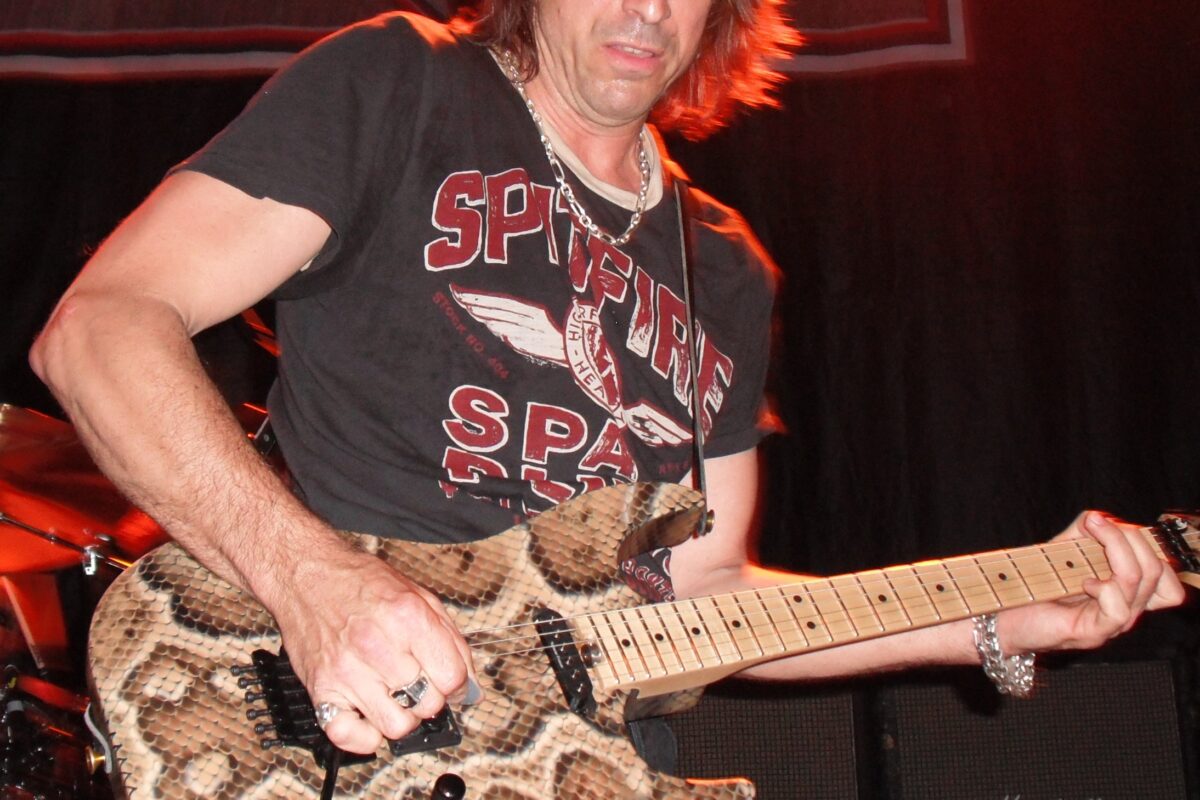
Warren DeMartini Guitars & Gear: The Complete Guide to Ratt’s Torch Guitarist’s Rig
Warren DeMartini guitars & gear: Ratt's Torch guitarist. Charvel Bomber, snakeskin, Jose-modded Plexi, Fender Super Champ, RTM pickup, slapback echo — the complete rig.