

Gear Timeline
In the winter of 1928, a caravan fire in the outskirts of Paris changed the history of music. Django Reinhardt — already eighteen years old and already known as an extraordinary guitarist in the Romani communities of France and Belgium — emerged from the blaze with the left side of his body severely burned and his left hand permanently damaged. The fourth and fifth fingers of his fretting hand were fused together and curled toward his palm by the fire’s heat, effectively ending his ability to fret guitar in any conventional sense. Doctors told him he would never play again.
The Journey
He was back playing within eighteen months. He had developed, from necessity, a completely new technique — lead lines played exclusively with the index and middle fingers, at speeds and with a harmonic complexity that players with four healthy fretting fingers never approached. The injured ring and pinky fingers were not entirely useless: he could use them, in their fused, curled state, to brace chord shapes on the lower strings, and he occasionally contorted them with evident discomfort to fret specific voicings that his soloing required. But the bulk of his technical achievement — the blazing runs, the arpeggiated cascades, the rhythmic precision that made his improvisations sound like they were being delivered at machine-gun speed — was accomplished with two fingers. Two fingers that, by the judgment of every major jazz guitarist who followed him, produced the greatest improvisational guitar playing in the history of the form.
Born Jean Reinhardt on January 23, 1910, in Liberchies, Belgium, to a family of French Manouche Romani travellers — Django being a Romani nickname meaning “I awake” — he spent his childhood moving through Europe in roulottes (caravans), absorbing the music of the communities he passed through: Romani folk music, French musette waltzes, the beginnings of jazz filtering in from America. He taught himself banjo-guitar first, then guitar, learning by watching and imitating rather than from any formal instruction. He was illiterate — musically and otherwise — and would remain so for his entire life. He played entirely by ear and intuition. Everything he did was felt, not read.
His instrument, the Selmer-Maccaferri guitar, is inseparable from his sound in the way that very few instruments are inseparable from very few players — the Maccaferri was not merely a guitar he happened to play, it was the vehicle specifically designed, through a series of historical coincidences, to produce the volume and cutting quality that made his lead playing audible over a rhythm section in the days before reliable amplification. He played it through most of his career, named his most important guitar (serial number 503) with the same casualness that Keith Richards would later name Micawber, and left, in his quarter-century of recording, a body of work that defined jazz guitar as a European phenomenon and made the entire world understand that the guitar could be a horn.
He died on May 16, 1953, at forty-three, of a cerebral hemorrhage — quickly, while he was still playing and still curious. He is, with Wes Montgomery, one of the two figures who define the possibility space of jazz guitar. And his gear — the Selmer, the heavy tortoiseshell pick, the silk-and-steel strings — was, like all great equipment, in service of something that the gear itself couldn’t have produced without the extraordinary being on the other end of the string.
Background: From the Caravans of Europe to the Heart of Jazz
The Manouche Romani community into which Jean “Django” Reinhardt was born was a traveling people — not in the romantic-tourist sense but in the literal, practical, economically necessitated sense of people who moved through Europe following work and community, maintaining a culture distinct from the settled populations around them. Music was central to this culture: played at celebrations, in community gatherings, in the street and at dances, passed between generations by imitation and memory rather than notation. Django entered this musical environment as a child and absorbed it with the natural ease of someone for whom music was the atmosphere of daily life rather than a subject of study.
He learned banjo-guitar first, then guitar, by watching musicians in the communities he passed through and imitating what he heard on the records that were increasingly available through the 1920s. He was spotted by Parisian music circles in his early teens and began playing at dance halls and for more bourgeois audiences in Paris as a teenager. By the time he was seventeen, he had a reputation among local musicians and music lovers as something genuinely unusual — a guitarist whose technique and musical instinct were already beyond what trained, formally educated musicians were producing.
The fire came in 1928, when he was eighteen. The standard account has it that a candle or similar source ignited the highly flammable celluloid flowers that his wife Bella was making to sell — the caravan quickly filling with toxic, fast-burning smoke and flame. Django escaped with severe burns to his right leg (which required him to use a cane for the rest of his life) and the catastrophic damage to his left hand. The period of recuperation — eighteen months in the hospital — was also, it turned out, a period of musical reinvention. His brother Joseph brought him a new guitar during the convalescence, and Django began the slow, painful, relentless process of figuring out how to play the instrument with the hand that remained.
The technique he developed was, by any rational assessment, impossible. Two fingers — index and middle — spanning the fretboard at speeds and over intervals that conventional four-finger technique struggled to match. The fused ring and pinky, pressed awkwardly against the lower strings for specific chord positions, providing additional tonal color that the two-finger system couldn’t otherwise achieve. The thumb, bracing the neck from behind in the classical position, maintaining the hand’s stability at the extreme tempos he demanded of it. This is not a technique you can learn from a guitar teacher. It is a technique a specific person invented under specific conditions and refined across a lifetime of playing, and it produced something that has never been replicated because the conditions that produced it cannot be replicated.
When he emerged from the hospital, he discovered jazz — Louis Armstrong records, Duke Ellington records, the American music that was flooding into Europe through recordings and the visits of traveling orchestras. It was a revelation. The improvisational freedom, the rhythmic drive, the way a single instrument could carry a melodic line over a full ensemble — all of it resonated with what Django was hearing in his own head. He found, in jazz, the context for what his Romani musical background and his unusual technique made possible. The Quintette du Hot Club de France — formed with violinist Stéphane Grappelli in 1934 — was the vehicle that brought this synthesis to the world: an all-string ensemble (two rhythm guitars, solo guitar, violin, bass) playing hot jazz with a specifically European and Romani character, and with Django’s astonishing improvisation at its center.
The Quintette was an extraordinary success in Europe, recording prolifically and touring extensively. Coleman Hawkins came through Paris and recorded with Django. Benny Carter. Various American jazz stars who were in Europe for tour dates found themselves seeking him out, which tells you something specific about his reputation among the highest tier of professional jazz musicians. He was not a curiosity, a novelty, a European who was “pretty good” at American jazz. He was recognized by the best American players as operating at their level and beyond it — bringing something to the music that had not existed before him.
The war interrupted everything. Django remained in Paris during the German occupation — a dangerous choice for a Romani musician in a period when the Nazi regime was actively targeting the Romani people for extermination, and when jazz was officially frowned upon as decadent and American. He navigated this period with a combination of calculation and obstinate refusal to disappear. He continued playing, sometimes for German officers who liked jazz regardless of official policy, sometimes for French audiences who needed the music in exactly the way occupied people always need music — as evidence that something human survives under the boot.
His postwar career included an American tour with Duke Ellington’s orchestra in 1946 — his only visit to the United States — that was complicated by his inability to read music or communicate effectively with the American musicians who didn’t share his intuitive vocabulary, and by his arrival without his own guitar. The American musicians provided a borrowed electric guitar, and Django, working with an unfamiliar instrument in an unfamiliar context, was reportedly frustrated by the experience. His famous comment about “American casserole guitars” after using a borrowed Gibson during the tour has entered guitar legend as a particular kind of cultural review. He was not, in any sense, a man who could adapt graciously to circumstances that didn’t suit him.
He spent his final years in Samois-sur-Seine, a village near Fontainebleau, fishing, painting (he was a genuinely accomplished visual artist), and playing guitar with decreasing frequency. On May 16, 1953, he suffered a cerebral hemorrhage and died. He was forty-three. The guitar world, which had been waiting for the next chapter, received instead the news that the story was over. The recordings — over one thousand sides across his career — became the document of a complete artistic life and the foundation of an ongoing tradition that now stretches across the globe.
The Rig: Django Reinhardt’s Guitars, Amps, and Picks
Django’s gear story is, in its way, as remarkable as his biography — not because of complexity or variety, but because of the extraordinary specificity of the instrument that defined his sound, and the extraordinary degree to which that instrument was designed, practically by accident, to serve exactly what he was trying to do.
Guitars
The Selmer guitar is one of the most consequential instrument designs in the history of popular music, and Django Reinhardt is almost entirely responsible for that consequence. The guitar was designed by Italian luthier Mario Maccaferri in a partnership with the French instrument manufacturer Henri Selmer, beginning in 1932. Maccaferri’s design was driven by the pre-amplification era’s imperative: guitarists in jazz bands needed to be heard over brass, reeds, and rhythm sections in large rooms, and standard acoustic guitars of the time couldn’t cut through. His solution — borrowing extensively from his training in mandolin building under Luigi Mozzani — was an instrument with a bent (rather than carved) top, a floating bridge, an extended scale length (eventually settling at 670mm, significantly longer than most guitars), a novel oval or D-shaped soundhole, and an internal resonator designed to increase projection. The result was an instrument of extraordinary acoustic volume for its size.
Maccaferri left the Selmer partnership in 1934, but Selmer continued making the guitars, simplifying the design by removing the internal resonator and changing the large D-shaped soundhole to a smaller oval format. This “petite bouche” (small mouth) version — the Modèle Jazz — is the guitar Django adopted with immediate enthusiasm and used for the rest of his career. The petite bouche’s particular qualities were, it turned out, perfectly suited to his role as lead instrumentalist: the tighter soundhole projection created a more focused, cutting, brighter tone that carried above the rhythm guitars (which typically used the larger D-hole Orchestre model) and sat in the mix alongside the violin in the classic Quintette configuration.
The guitar’s construction is specific and unusual: laminated Indian rosewood back and sides (not solid wood — a cost and practical consideration that also contributed to the instrument’s particular resonant character), a solid spruce top, an ebony fingerboard, a walnut neck with a grafted headstock in the Selmer style, sealed oil-bath machine heads (an innovation by Maccaferri), and a metal tailpiece. The scale length of 670mm — longer than most acoustic guitars — contributed a tautness and clarity to the string response that the instrument’s high volume reinforced. The floating bridge (resting on the spruce top without being glued, transmitting string vibration directly to the top’s resonating surface) gave the Selmer its particularly fast, percussive response: notes decayed differently than on a conventional glued-bridge guitar, with a fast initial transient and a warm sustain that faded relatively quickly. This characteristic — the fast attack with the controlled sustain — was part of what made Django’s rapid single-note lines so clear and precise, each note distinct even at high speed.
Django’s primary guitar — the one most closely associated with his recorded legacy — was Selmer #503, which he acquired around 1935-36 and maintained as his primary instrument through most of his career. The guitar was passed to his family after his death and is now preserved. Photographs of #503 show screwhole remnants in the top — evidence of Django’s having at some point affixed a pickup to the instrument, part of his experimentation with amplification in his later career. The guitar was not kept in pristine condition by any conventional standard: it was a working instrument, used hard, and its condition reflected that. The battered case in which he carried it — described by the British guitarist Allan Hodgkins in a 1958 BMG Magazine article — was held together with string and a piece of bent wire, looking, in contrast to a young fan’s gleaming new case on the London Underground, like nothing of value. Yet Hodgkins describes the sensation of carrying it as “like a person secretly carrying an atom bomb.”
Before settling on the petite bouche configuration, Django initially played a Selmer with the larger D-shaped soundhole — the original Maccaferri design with the internal resonator chamber. The grande bouche has a different tonal character from the petite bouche: warmer, rounder, with the larger soundhole transmitting more bass frequencies. Django’s transition to the petite bouche coincided with the Quintette’s formation and his discovery of the lead-instrument role he would play — the tighter, more projecting character of the oval soundhole serving that role better than the larger opening’s warmth. The grande bouche remains the instrument of choice for rhythm players in the gypsy jazz tradition today, while the petite bouche is universally preferred for lead work, exactly as it was in Django’s time.
Before the Selmer, Django played several instruments that reflected both his Romani musical background and his pre-fire style. Following his mentor Poulette Castro, he played a steel-string guitar made by Julián Gómez Rámirez. Photographs also show him with instruments resembling Martin Coletti guitars and a large-bodied steel-string made by Arthur Carbonell. These pre-Selmer instruments documented the development of his style before the instrument that would define it became available. Once he found the Selmer, he never looked back: “Once Django started playing a Selmer-Maccaferri, he swore by it for the rest of his life,” as Vintage Guitar Magazine’s research confirmed.
The one documented significant departure from his Selmer practice was the forced use of a borrowed Gibson ES-330 during his American tour with Duke Ellington. Django had left his Selmer in France — either assuming that he would be provided with instruments, or through the casual organizational inattention that apparently characterized his relationship with practical logistics. The Americans provided a Gibson semi-hollow body, and Django played it with visible unhappiness. His written comment to his manager — “Don’t speak to me about American casserole guitars anymore!” — is a masterpiece of linguistic contempt and tells you that while Django was generous with his musical presence, he was not obliging about equipment he considered inferior.
In his final years, Django was genuinely interested in the electric guitar and bebop, the new American jazz form that was transforming the music he loved. He experimented with pickup additions to his Selmer (hence the screw holes in #503’s top) and played various electric instruments in studio sessions and occasional performances. He was not nostalgic about acoustics — he was curious about where the music was going and wanted to be part of it. His final recordings include electric guitar work that demonstrates a sophisticated, if not fully developed, understanding of what the electric instrument could do. He was learning a new language at forty-three, and he was doing it well. The hemorrhage cut the lesson short.
One element of the Selmer’s design that specifically aided Django’s two-finger technique deserves note: the guitar’s relatively wide, flat neck profile and the action setup preferred by gypsy jazz players (generally higher than American jazz guitar standards) provided a physical surface that his two-finger system could navigate with the stretching, sliding, and position-changing approaches his technique required. The longer scale length meant that his two fingers were spanning more distance than they would on a shorter-scale instrument, which produced the characteristic stretching quality of his chord voicings and the particular interval patterns of his melodic lines. The instrument and the technique were not separate developments — they evolved together.
Amps
Through most of Django’s career — and through the entirety of the period in which his most legendary recordings were made — he played without amplification. The Quintette du Hot Club de France was an all-acoustic ensemble: two D-hole rhythm guitars, one petite-bouche lead guitar, bass, and violin. No microphones in the performance sense; the recordings captured the acoustic output of the instruments in relatively small rooms. The Selmer’s extraordinary volume for an acoustic guitar — its primary design imperative — was what allowed Django’s lead guitar to function as the melodic voice of a jazz ensemble without electrical amplification. He could be heard. The guitar was designed to be heard. Mission accomplished.
The screwhole remnants in Selmer #503 tell the story of Django’s late-career embrace of amplification. At some point in the postwar period, he affixed a guitar pickup directly to the body of his acoustic Selmer — a common practice of the era, when jazz guitarists were beginning to transition to amplification and the most practical solution was to add a pickup to an existing acoustic instrument rather than purchase a separate electric guitar. The pickup would have been connected to a tube amplifier — likely a Fender or a European equivalent — for the amplified performances and later recordings. This hybrid setup — acoustic Selmer body with aftermarket pickup — is historically consistent with the approach of the period and accounts for the amplified recordings of his final years that have a character distinct from his pure acoustic work.
Django’s amplifier use in his final years is less documented than his guitar choices, consistent with the general pattern that amplifier choices were less photographed and less discussed in the jazz guitar world of the late 1940s and early 1950s. European tube amplifiers of the period — French and Italian brands that have largely disappeared from the historical record — would have been the practical choice. Some sources suggest he used an Epiphone Zephyr or similar American import. The specific amp is less important than the fact of amplification itself, which he embraced not as a capitulation to electric fashion but as a tool for reaching the larger audiences his late-career fame commanded.
Picks and Strings
Tortoiseshell Pick (Thick, Heavy): Django’s pick choice is as specific and as consequential as any other element of his setup. He preferred thick, heavy tortoiseshell picks — the natural material from the hawksbill turtle that was the standard premium pick material before it was banned under wildlife protection laws. The tortoiseshell pick’s particular properties — a specific hardness, a slight flexibility, a surface texture that interacts with the string differently from synthetic materials — produce a tonal quality described as “bell-like” and “bright” by players who have used original tortoiseshell. The thickness of his preferred pick (heavy by any standard) gave him maximum control of the attack and the ability to produce the loud, cutting, percussive strike that defined gypsy jazz rhythm playing and the forceful projection of his lead lines. Thick tortoiseshell, dragged hard across the strings of a loud acoustic guitar tuned to tension with a 670mm scale length, produces a specifically bright, cracking attack that synthetic picks approximate but don’t quite replicate. For contemporary players seeking to approximate this quality, Wegen picks (made from a proprietary synthetic material designed specifically for gypsy jazz) or thick Dunlop Tortex picks are the standard recommendations.
Silk-and-Steel Strings, Light Gauge (.010 to .046): Django’s string choice is surprising given the general assumption that gypsy jazz requires heavy strings for volume and tone. He used silk-and-steel strings — a hybrid construction where the wound strings have a silk core beneath the metal winding, producing a warmer, softer tone than all-steel strings — in a relatively light gauge: approximately .010 to .046, sourced generally from Argentina. The light gauge allowed his two-finger system to execute the stretches, rapid position changes, and aggressive single-note runs that his style required without the physical resistance of heavy strings working against the limitation of his fretting hand. The silk core softened the wound strings’ metallic brightness, contributing to the warm yet projecting character of his tone — the warmth coming from the silk, the projection coming from the Selmer’s acoustic design and the heavy tortoiseshell pick. Contemporary gypsy jazz players typically use somewhat heavier gauges (.011-.046 or .012-.052), but Django’s unusually light choice reflects the physical constraints of his technique and the specific sonic requirements of his playing style.
Playing Style & Tone Philosophy
Django Reinhardt’s playing style is built on one of the most dramatic paradoxes in musical history: a technique defined by catastrophic limitation that produced results of extraordinary freedom. The two-finger constraint forced him to develop approaches to the guitar’s fretboard — stretching, sliding, position-changing, the creative use of open strings — that conventional four-finger technique has no particular incentive to discover. The limitation was, in the way that the most productive limitations always are, generative. It made him invent rather than adopt.
The “la pompe” rhythm of gypsy jazz — the percussive, choppy strumming pattern used by the rhythm guitarists in Django’s ensembles — is not his technique but the context for it. The rhythm players provide a relentless, metronomic push-pull that is simultaneously driving and harmonically supportive. Over this foundation, Django’s single-note lines move with a rhythmic freedom that is only possible because the foundation is absolutely locked in. He could phrase early, late, across the bar line, in double time, in half time, with complete confidence that the rhythm section — his brother Joseph on rhythm guitar, the bass — would hold the time regardless of what he did against it. This rhythmic relationship between the improvising soloist and the locked-in rhythm section is the essence of jazz, and Django used it with the same instinctive mastery he brought to everything else.
His melodic vocabulary combined the folk music of his Manouche heritage — its specific scales, its ornamentation, its emotional character — with the jazz language he absorbed from Armstrong, Ellington, and the bebop developments of the postwar period. The Romani scales he used are not the blues scales of American jazz, and not the major/minor system of Western European music — they are something else, with a specific melancholy and heat that gives his melodic lines a character that is recognizably not American and not classically European. When you hear Django Reinhardt, you hear the whole history of what made him: caravans across Europe, the fire, the reinvention, the discovery of jazz, and the synthesis of all of it into something that nobody had heard before and nobody has quite produced since.
His approach to rhythm also deserves mention. When not soloing, Django played rhythm guitar with the “la pompe” approach — a hard, percussive downstroke followed by a muted upstroke, creating the distinctive “chunk-chunk” sound that drives gypsy jazz forward. This rhythm guitar technique, played with the same heavy tortoiseshell pick he used for soloing, requires a specific wrist action and string muting approach that is distinct from virtually any other rhythm guitar style in popular music. It is taught as a specific skill in gypsy jazz circles, and practitioners sometimes spend years learning to execute it with the crispness and consistency it demands.
His tone philosophy, to the extent he articulated one, was entirely practical and largely unarticulated. He played the guitar that allowed him to be heard in the ensembles he played in. He used the pick that gave him the loudest, most cutting attack. He used the strings that allowed his technique to function. He added amplification when the performance context required it. There was no boutique gear obsession, no theoretical framework, no preference for vintage over modern. He was a working musician who needed specific tools and used them without sentimentality. The music was everything; the gear was what made the music audible.
How to Sound Like Django Reinhardt
Getting into gypsy jazz territory requires specific equipment that differs significantly from any other guitar style. The Selmer-Maccaferri guitar design is not a standard instrument, and while its role in Django’s sound is about more than just the name on the headstock, the specific construction features that made his guitar work as they did are worth understanding and, ideally, finding in whatever instrument you use.
Guitar: A Selmer-style guitar — also called a Maccaferri, a gypsy jazz guitar, or a manouche guitar — is the appropriate starting point. Original Selmers are rare and expensive, but a thriving cottage industry of Selmer-style guitars exists at every price point. For lead playing, the petite bouche (oval soundhole) model is the historically appropriate choice. For rhythm work, the grande bouche (D-hole) is preferred. Gitane guitars (DG-255 for oval-hole, D-500 for D-hole) offer good entry points around $650-900. Dupont, Altamira, and AJL represent higher-tier options. The key construction features: floating bridge, trapeze tailpiece, solid spruce top, elevated fretboard, and a scale length of 650-670mm.
Pick: Thick and stiff. Wegen gypsy jazz picks are the contemporary standard — a proprietary synthetic material specifically designed to approximate tortoiseshell’s qualities. Dunlop Tortex in 1.0mm or thicker, or Blue Chip picks, are alternatives. The pick size and thickness substantially affect the tone in gypsy jazz more than in most other styles: thick, stiff picks produce the cracking, bell-like attack; thin, flexible picks produce a thin, buzzy sound that doesn’t project appropriately.
Strings: Silk-and-steel strings or Argentine strings — the Argentine brand, specifically, has been the standard for gypsy jazz players since Django’s era. Argentine 1510 (standard light) or 1610 (loop end) strings in .010-.046 gauge approximate what Django used. La Bella 820 or similar silk-and-steel sets are alternatives. Avoid roundwound electric strings; the warmth and feel of silk-and-steel or Argentine strings is a significant part of the gypsy jazz acoustic character.
Amp: Play acoustically where possible. For amplified contexts, a clean, neutral tube amp — Fender Deluxe Reverb or similar — with minimal processing and no effects will approximate the character of Django’s late-career amplified recordings. The goal is transparency: the guitar’s acoustic character amplified, not transformed.
Amp Settings (Fender Deluxe Reverb or clean tube equivalent):
| Control | Setting (0–10) | Notes |
|---|---|---|
| Volume | 3–5 | Just enough — the acoustic guitar does most of the work |
| Bass | 4–5 | Present but controlled — let the guitar’s warmth speak |
| Mid | 5–6 | Forward — the projecting midrange of the Selmer |
| Treble | 5–6 | Clear and bright — supports the pick attack’s cutting quality |
| Presence | 3–4 | Moderate |
| Reverb | 0–1 | Essentially none — Django was completely dry |
The technique: La pompe rhythm first — the driving downstroke/muted upstroke pattern that is the rhythmic foundation of gypsy jazz. Learn this before attempting single-note work. For lead playing, listen carefully to how Django phrases across the bar line, how he uses slides and position changes as connective tissue between notes, how he approaches arpeggiated lines from unexpected angles. The two-finger limitation is his limitation — you don’t need to impose it on yourself — but you do need to understand the vocabulary it produced in order to play in its tradition with any authenticity.
Influence & Legacy
Django Reinhardt’s influence on guitar history operates at two distinct levels. At the specific level, he established the gypsy jazz tradition — an entire genre of music with its own instruments, its own rhythm techniques, its own melodic vocabulary, its own international community of players — that continues to grow and evolve seventy-plus years after his death. The annual Django Reinhardt Festival at Samois-sur-Seine (where he spent his final years) has been held since 1968. Gypsy jazz festivals exist on every continent. The tradition is not shrinking; it is expanding.
At the general level, he is one of the two architects of jazz guitar as a complete musical language. Before Django, the guitar was a rhythm instrument in jazz — Charlie Christian was beginning to change this, but Christian worked within the framework that already existed. Django did something more radical: he built a new framework from the materials of his Romani heritage, the American jazz he discovered as an adult, and the physical constraints imposed by his injured hand. The result was not jazz guitar as an extension of something existing. It was jazz guitar as its own complete thing.
Every major jazz guitarist who followed him was shaped by this: George Benson, who acknowledged the influence; Pat Metheny, who collaborated with Django-tradition guitarist Bireli Lagrene; the American guitarist Chet Atkins, who was deeply influenced by Django’s recordings. The rock guitar tradition was shaped by Django too, if less directly: Jimmy Page has cited him, as have Carlos Santana and various other major rock players who absorbed the idea that a guitar could be a singing, soaring, fully expressive melodic voice on its own terms.
The comparison with Wes Montgomery’s approach to jazz guitar is the essential context for understanding Django’s historical position. If Montgomery represents the highest development of jazz guitar within the American tradition — building on Charlie Christian, absorbing bebop’s harmonic language, creating a complete and refined improvisational vocabulary within established structures — Django represents something different: the founding of an alternative tradition, built outside the American mainstream, that brought to jazz a European and Romani sensibility that created music nobody had heard before. They are not competing claims. They are different continents.
The influence on the broader guitar world traces through Mark Knopfler’s acknowledged Django obsession — Knopfler has cited Django as one of his primary influences, and the fingerstyle vocabulary of his lead playing shows the Romani jazz influence at several removes from its source. And for understanding how Django’s synthesis of folk tradition with jazz improvisation has influenced players who synthesize their own traditional backgrounds with jazz, the comparison with Paco de Lucía’s approach to flamenco and jazz fusion is illuminating — two European players, both rooted in folk traditions outside the American mainstream, both bringing that folk sensibility into dialogue with jazz in ways that created entirely new musical territories.
Django Reinhardt died at forty-three. He left over a thousand recorded sides. He left a genre, a technique, an instrument inseparably associated with his name, and the standing demonstration that physical catastrophe can be transmuted, through will and genius, into something that those who were never limited could not have produced. The caravans stopped moving in 1953. The music never has.
Frequently Asked Questions: Django Reinhardt Guitars & Gear
What guitar did Django Reinhardt play?
Django Reinhardt played Selmer-Maccaferri guitars almost exclusively through his career from around 1935 until his death in 1953. His primary instrument was Selmer #503, a Modèle Jazz “petite bouche” (small oval soundhole) model that he acquired around 1935-36 and maintained throughout his career. The Selmer-Maccaferri was designed by Italian luthier Mario Maccaferri and manufactured by Henri Selmer in Paris from 1932 to 1952. The petite bouche model featured a small oval soundhole, an extended scale length of approximately 670mm, a floating bridge, laminated rosewood back and sides, a solid spruce top, and an ebony fingerboard — a construction designed to maximize acoustic volume in the pre-amplification era. Fewer than 1,000 original Selmer guitars are known to exist; original examples command five-figure prices on the vintage market.
Why did Django Reinhardt only use two fingers?
Django Reinhardt lost the full use of his ring and pinky fingers when his left hand was severely burned in a caravan fire in 1928, when he was eighteen years old. The fire fused his fourth and fifth fingers together and curled them toward his palm, making conventional fretting impossible. Doctors told him he would never play guitar again. Over eighteen months of recuperation, he developed a completely new technique in which his index and middle fingers handled all lead playing — single-note lines, arpeggios, rapid scale passages — while his damaged ring and pinky fingers were used for specific chord positions on the lower strings when their curled form allowed it. His thumb also provided stabilizing pressure from behind the neck. The technique he developed, using only two fingers at virtuoso level, produced improvisations of such speed, harmonic richness, and melodic sophistication that no four-fingered player has fully matched them.
What picks did Django Reinhardt use?
Django Reinhardt used thick, heavy tortoiseshell picks — natural tortoiseshell from the hawksbill turtle, which was the standard premium pick material before wildlife protection laws prohibited its trade. The specific qualities of natural tortoiseshell — its hardness, slight flexibility, and surface texture — produce a bright, bell-like attack that synthetic materials approximate but don’t fully replicate. Django preferred the thickest picks he could find, which maximized attack force and control. Contemporary gypsy jazz players typically use Wegen picks (a proprietary synthetic designed specifically for gypsy jazz to approximate tortoiseshell properties), thick Dunlop Tortex, or Blue Chip picks as alternatives to the now-unavailable original material.
What strings did Django Reinhardt use?
Django Reinhardt used silk-and-steel strings in a relatively light gauge — approximately .010 to .046 — sourced generally from Argentina. Silk-and-steel strings have a silk core beneath the metal winding on the wound strings, producing a warmer, softer tone than all-steel strings while maintaining sufficient tension and projection. The light gauge supported his two-finger technique by reducing the string tension that his limited fretting hand would need to overcome. Contemporary gypsy jazz players typically use Argentine strings (Argentine 1510 or 1610, the same brand Django used) or similar gypsy jazz specific string sets in slightly heavier gauges (.011-.046 or .012-.052), which have been the standard recommendation for the style since the tradition was revived in the 1980s.
What is gypsy jazz and how did Django Reinhardt create it?
Gypsy jazz (also called jazz manouche or Romani jazz) is a musical style created by Django Reinhardt that synthesizes American swing jazz improvisation with the folk music traditions of the French Manouche Romani community — its scales, ornaments, emotional vocabulary, and ensemble approach. The style is characterized by all-acoustic or acoustic-primary instrumentation (Selmer-style guitars, acoustic violin, string bass), a specific rhythm guitar technique called “la pompe” (a driving downstroke/muted upstroke pattern), and improvisational lead playing of considerable technical virtuosity over jazz harmonies. Django and violinist Stéphane Grappelli founded the Quintette du Hot Club de France in 1934, which became the primary vehicle for the style’s development. After Django’s death in 1953, the tradition was maintained primarily by Romani musicians before experiencing a worldwide revival beginning in the 1980s, leading to the global gypsy jazz community that exists today.
Did Django Reinhardt use amplification?
For most of his career, Django Reinhardt played acoustically — the Selmer-Maccaferri guitar’s extraordinary acoustic volume for its size made amplification unnecessary in the smaller venues and recording studios of the 1930s and early 1940s. The screwhole remnants on the top of Selmer #503 show that in his later career he experimented with affixing pickup directly to the acoustic guitar body — a common approach of the transitional era when guitarists were beginning to adopt amplification without fully committing to electric instruments. His American tour with Duke Ellington in 1946 involved a borrowed electric guitar. His final recordings in the late 1940s and early 1950s include amplified performances. He embraced the electric guitar and bebop influences in his final years with genuine curiosity rather than resistance, and his last recordings show him adapting to amplified playing with characteristic confidence.
Is Django Reinhardt in the Rock and Roll Hall of Fame?
Django Reinhardt has not been inducted into the Rock and Roll Hall of Fame — an institution primarily focused on rock, pop, and R&B music rather than jazz. He is, however, recognized in numerous other contexts as one of the most important guitarists in history. Guitar Player magazine named him among the greatest guitarists of the twentieth century. Rolling Stone has included him on their lists of influential guitarists. He is in the Jazz Guitar Hall of Fame. The Django Reinhardt Festival at Samois-sur-Seine, France, has been held annually since 1968 as an ongoing tribute to his life and music. His influence on the guitar — in jazz, in gypsy jazz, and in the broader rock and folk traditions through players who absorbed his work — is considered foundational and permanent regardless of formal institutional recognition.
Related stories
Vernon Reid Guitars & Gear: The Complete Guide to Living Colour’s Guitar Genius’s Rig
Vernon Reid's guitars, amps, and effects — the complete guide. Parker MaxxFly, PRS Vela VR, Mesa Dual Rectifiers, Roland VG-99, Eventide H9, Living Colour gear guide.
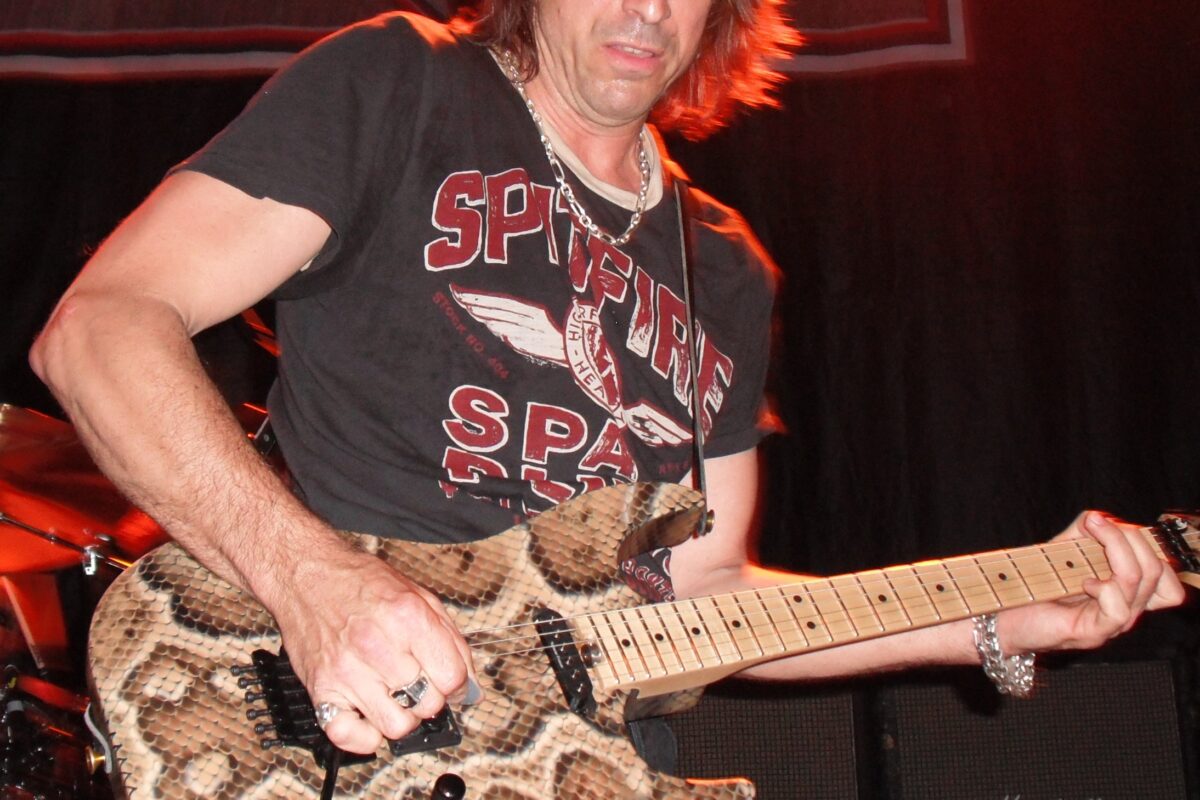
Warren DeMartini Guitars & Gear: The Complete Guide to Ratt’s Torch Guitarist’s Rig
Warren DeMartini guitars & gear: Ratt's Torch guitarist. Charvel Bomber, snakeskin, Jose-modded Plexi, Fender Super Champ, RTM pickup, slapback echo — the complete rig.
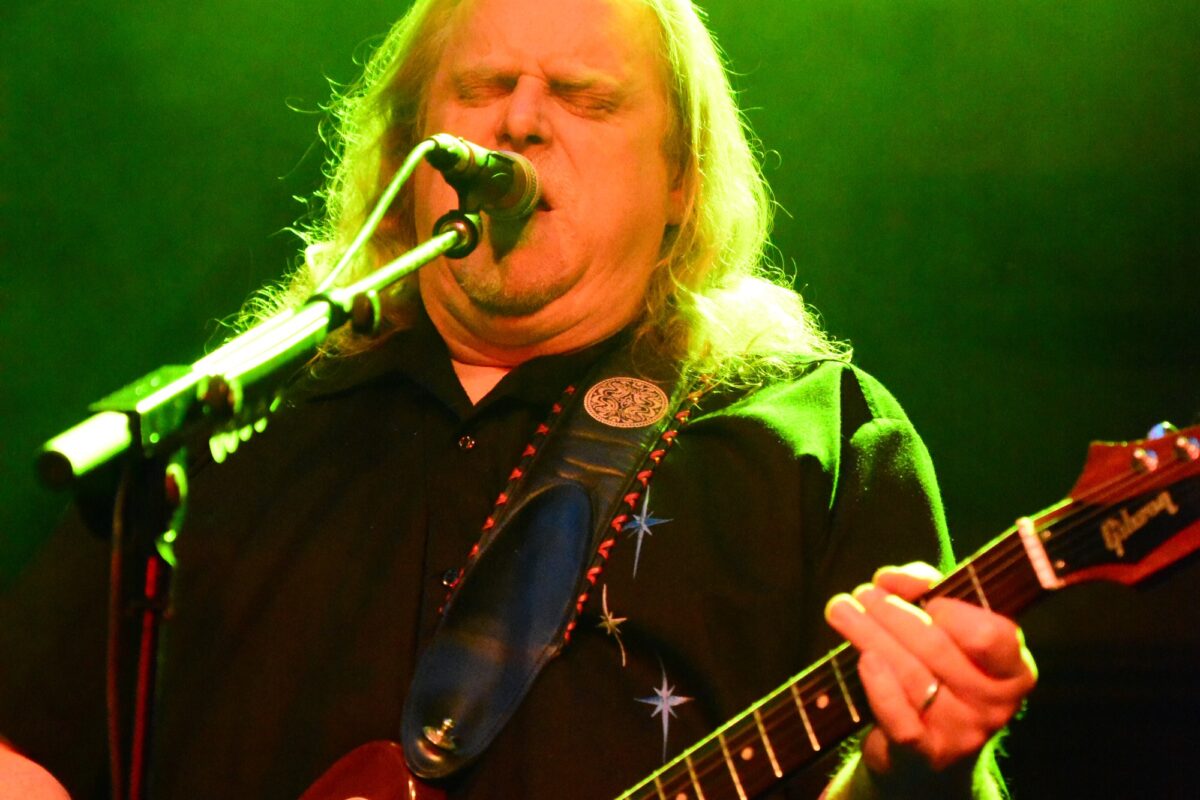
Warren Haynes Guitars & Gear: The Complete Guide to Gov’t Mule’s Guitar Master’s Rig
Warren Haynes' guitars, amps, and effects — the complete guide. Gibson Les Paul Chester, Soldano SLO-100 modified, Klon Centaur, Emma Discombobulator, and how to nail that Gov't Mule blues-rock tone.