Mesa/Boogie Lone Star Classic: The Amp That Made Boutique Clean Possible at Stadium Volume
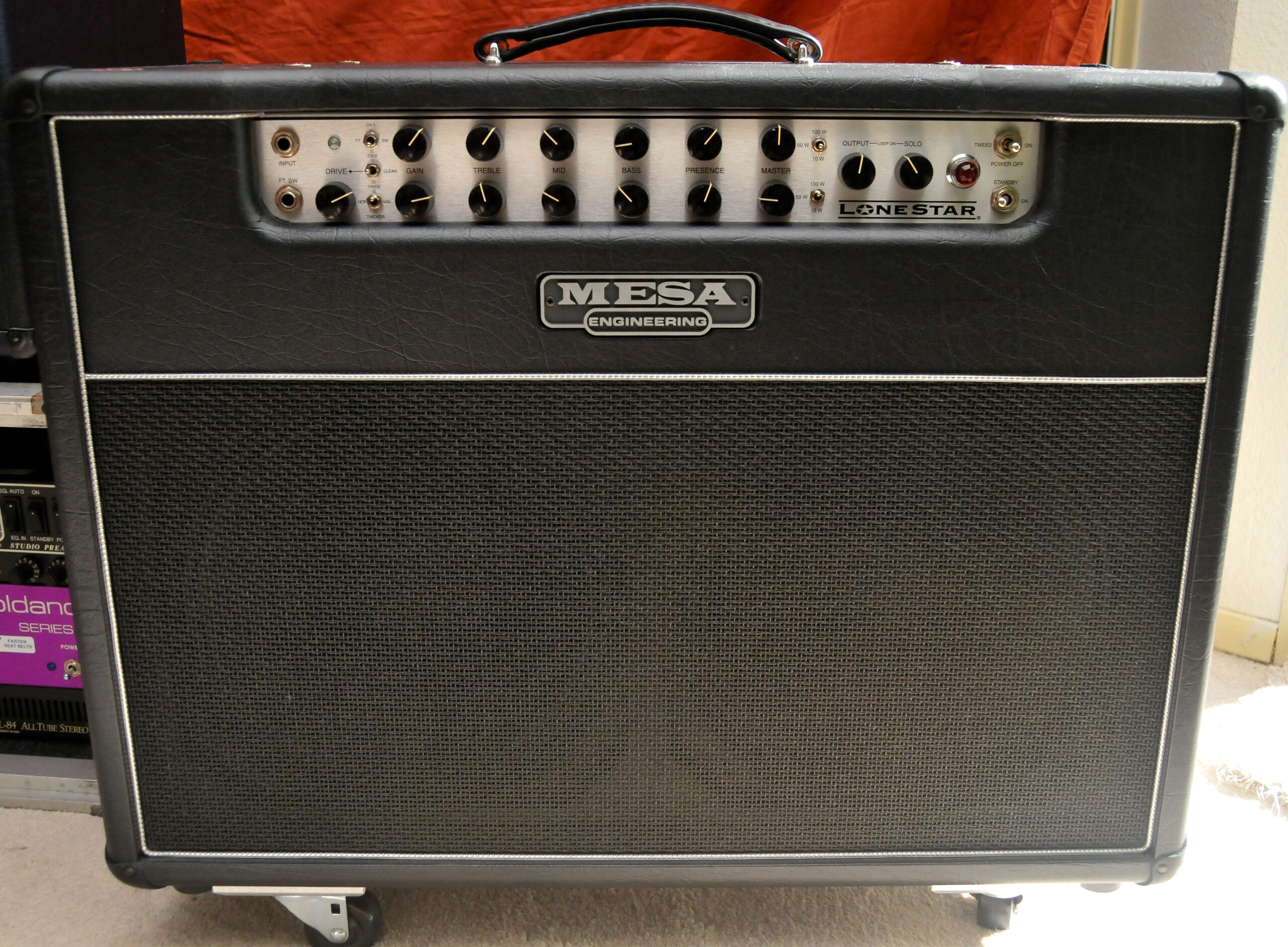
Mesa/Boogie Lone Star 2x12 combo. Photo: Art Bromage, CC BY-SA 2.0, via Wikimedia Commons (File:Mesa Boogie Lone Star 2x12" Combo.jpg).
Mesa/Boogie Lone Star Classic: 6L6 boutique clean amp with Multi-Watt power and Drive channel. Verified use by Dominic Miller, John Squire and Andy Timmons.
There is a particular moment every Lone Star Classic player knows — you roll the guitar’s volume knob back two clicks from ten, let a chord breathe, and the amp stops sounding like an amplifier and starts sounding like the room itself vibrating in sympathy. That is not an accident. Randall Smith designed the Lone Star family explicitly to be the amp that finally made feel the dominant variable rather than wattage or gain structure. The Mesa/Boogie Lone Star Classic is a two-channel, all-tube, 10/50/100-watt workhorse that has spent two decades on the world’s most demanding stages precisely because it refuses to get in the way of a great guitar performance.
What makes the story complicated — and worth telling — is the naming. The amp you see listed as the “Lone Star Classic” on used-market sites is functionally the same instrument that Mesa introduced simply as the “Lone Star” in 2003/2004. The “Classic” suffix arrived a couple of years later when Mesa added the EL84-based Lone Star Special to the family, and a new name was needed to tell the 6L6 original apart from its smaller, more compressed sibling. So the Lone Star Classic is not a revised or stripped-down version of anything — it is the original, carrying the same bones that Dominic Miller ran in stereo through Rectifier 2×12 cabs on Sting’s back-catalogue world tours for the better part of twenty years.
Origin and History: Mesa Builds the Boutique Clean They Always Wanted
By the early 2000s Mesa/Boogie had become synonymous with high-gain complexity — the Dual Rectifier had reshaped what “heavy” meant for an entire generation, and the Mark series had established the cascading gain stage as a Mesa signature. But Smith and his team understood that a tonal range without a world-class clean platform was a product line with a ceiling. The brief for the Lone Star was essentially: build the best clean Mesa has ever produced, then make it have the most singing, player-responsive lead voice the company could manage, and put both things in the same chassis.
The result debuted in 2003-2004 as simply the Lone Star. Mesa positioned it explicitly against the boutique market — Dumble-adjacent clean response, vintage boutique gain structure rather than cascaded high gain — and at its launch the amp won over players who had happily lived on Fender Twins and Marshall Plexis for decades but wanted more tonal control without surrendering feel. The marketing copy called it “the most ridiculously amazing cleans, classic breakup and high gain tones we have ever offered in a single amplifier,” and for once that language was not especially overstated.
When Mesa introduced the Lone Star Special around 2006-2007 — powered by EL84 output tubes for a more compressed, chiming British-adjacent character at lower wattages — the original needed a name to distinguish it. “Classic” was chosen, and that was the entirety of the revision: the name changed. The circuit did not. One subsequent hardware update arrived when Mesa added a 10-watt Pure Class A single-ended mode to the V2 iteration, and the amp’s cosmetics shifted from a blue-faced, silver-grille look to the now-familiar black-on-black aesthetic. The V2 “Classic” label and the 10W setting are the only material differences from the 2003 original.
Production ran until approximately 2020, when the COVID pandemic’s supply chain disruptions — and the integration changes following Gibson’s acquisition of Mesa — brought the Lone Star series to an end. No successor has been announced. Both versions command healthy used prices precisely because nothing currently in production fills the same functional role in the Mesa lineup.
Specifications
| Feature | Specification |
|---|---|
| Channels | 2 (independent Gain, Treble, Mid, Bass, Presence, Master per channel) |
| Power Output | 10W Pure Class A / 50W Class AB / 100W Class AB (per channel, independently assignable — V2); 50W / 100W only on V1 |
| Power Tubes | 4× 6L6GC (or 4× EL34 via rear-panel Bias Select, no re-bias required) |
| Preamp Tubes | 5× 12AX7 (includes SP7AX7 phase inverter) |
| Rectifier Tube | 1× 5U4GB |
| Rectification | Tube Rectifier Tracking (auto-assigns 5U4GB at 50W/10W, Silicon Diode at 100W) or Silicon Diode only (switchable rear panel) |
| Channel 1 Character | Vintage boutique clean/crunch; Blackface-inspired, punchy and touch-sensitive |
| Channel 2 Character | Split personality: Clean clone of Ch.1 (with added touch of blues-roots gain) OR Drive mode (high gain lead, Mark I-inspired cascade) |
| Ch.2 Voicing Switch | Normal / Thick / Thicker (gain/voice selection in Drive mode) |
| Reverb | All-tube long-spring reverb; individual depth controls per channel; Bright/Warm voicing switch |
| Effects Loop | All-tube buffered series loop; dedicated Send Level control; Hard Bypass option (removes two preamp tubes from signal path) |
| Additional Controls | Master Output; Master Solo (footswitchable level boost); Tweed power setting (voltage reduction / built-in Variac) |
| Speaker Outputs | 4Ω and 8Ω jacks; Slave output for additional power amp or cabinet |
| Formats | Head (22⅞ in wide); 1×12 Combo; 2×12 Combo; 4×10 Combo |
| Combo Speaker | Celestion Black Shadow C90-30 (format-dependent) |
| Handbuilt | Petaluma, California, USA |
| Original MSRP | Approximately $1,949–$2,499 (format-dependent, original production era) |
| Used Market (2024–2026) | Head: ~$1,200–$1,800; 1×12 Combo: ~$1,000–$1,500; 2×12 Combo: ~$1,200–$1,800 |
| Discontinued | ~2020 (COVID-era supply/Gibson acquisition) |
The Naming Confusion: Classic, Lone Star, Special — Sorted
Because multiple names circulate for what is essentially one amp family, it is worth being explicit before diving into tone. The “Lone Star” (bare name, 2003-2007 on most documentation) and the “Lone Star Classic” are the same 6L6-based circuit. The original simply did not need a qualifier until the Special arrived. If you find a used Lone Star in the older blue-and-silver cosmetics with only 50W and 100W per-channel options, that is the V1 — functionally identical, missing only the 10W Pure Class A mode added to V2. If the amp is finished in black with a black grille and has a third 10W option on each channel’s power selector, that is the V2 Classic. Both sound the same in 50W and 100W modes. The 10W mode opens up Class A single-ended operation — one tube pair taken off-line — which produces a noticeably different, more compressed and harmonically laden character at bedroom volumes.
The Lone Star Special (EL84) is an entirely different animal — smaller power stage, more compressed, chimier on the top end, and more tractable at lower stage volumes. Mesa produced it simultaneously with the Classic through the same era, and both were discontinued around the same time. Neither is “better” in the abstract: the Classic is warmer, fatter in the mids, and has the 6L6’s characteristic three-dimensional low end; the Special is more articulate in the highs and easier to push into power-stage saturation at reasonable volumes.
Famous Players: Who Actually Used the Lone Star Classic
The Lone Star Classic accumulated a genuinely impressive verified roster during its production run — not a recycled brand list, but players documented on this specific circuit by manufacturer sources, distributor records, and the players’ own words.
Dominic Miller — Sting’s Guitar Voice for Two Decades
The most thoroughly documented Lone Star Classic user is Dominic Miller, the Argentine-British guitarist who has been Sting’s primary live collaborator since the early 1990s. Miller was among the first players in the world to receive the Lone Star at its 2004 launch, and Mesa’s own Amplitudes blog records his adoption of the amp at that time: “Dominic became one of the early adopters of 6L6-based Lone Star combos in 2004 when the amps were originally released.”
Miller’s core touring setup ran two Lone Star combos (later Lone Star heads into Rectifier 2×12 horizontal cabs) in a stereo configuration, with a Pete Cornish-wired pedalboard feeding both channels. The setup has appeared on Sting’s Symphonicity Tour (2010), Back to Bass Tour (2012), 57th & 9th Tour (2017, confirmed by Mesa’s official Twitter/X feed), and as recently as Sting’s My Songs Tour (2023), where Miller was documented playing a Telecaster through two Lone Stars and 2×12 Rectifier cabs in stereo. Mesa’s own blog from the 2010 Symphonicity tour describes Miller as using “his tried and true stereo Lone Star rig,” scaling to Express 5:25 combos only when the symphony hall’s acoustic demands required reduced stage volume. That qualifier — “tried and true” — applied to a rig he had already run for six years at that point.
Miller’s guitar partner on several Sting tours was his son Rufus Miller, who ran the same Lone Star setup alongside him. Mesa documented both in the 2012 Back to Bass Tour feature on the Amplitudes blog. Between father and son, the Lone Star Classic was arguably the defining guitar amp sound of Sting’s reunion-era touring across multiple continents and multiple production scales.
The tonal logic is straightforward: Sting’s catalogue requires a clean amp that can handle nylon-string acoustic-electric textures, Police-era jangle, and lightly compressed early-80s chord pop without ever getting in the way of the vocal. The Lone Star Classic’s Channel 1 is the correct tool for every one of those requirements. Channel 2’s Drive mode gives Miller a singing lead voice when the song calls for it, without imposing the Mesa high-gain aesthetic on material that is fundamentally about feel and restraint.
John Squire — Four Custom Tweed Combos at the Comeback of the Decade
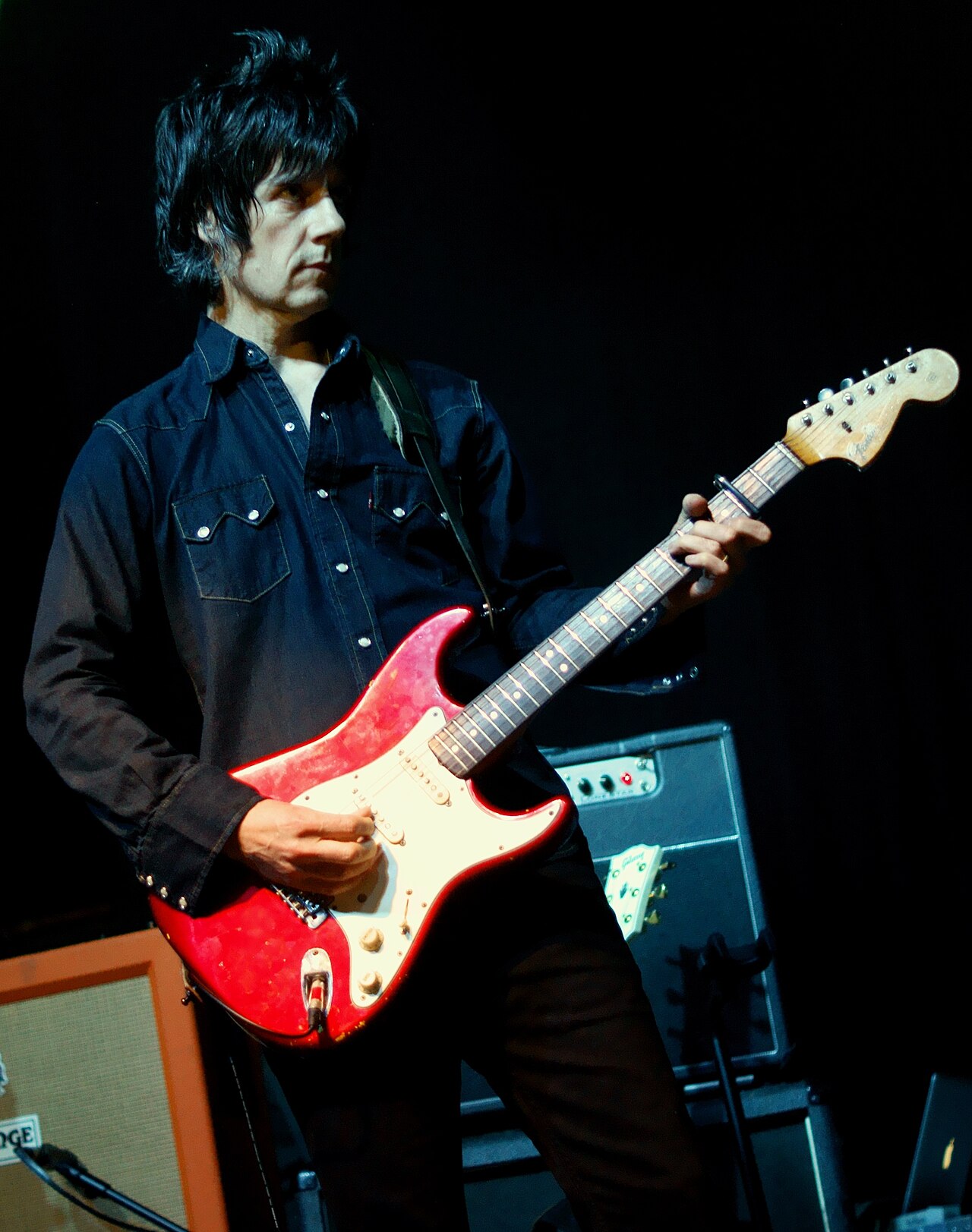
When John Squire brought The Stone Roses back to Manchester’s Heaton Park in June-July 2012 — the fastest-selling rock gigs in UK history at the time, 220,000 tickets in 68 minutes — his amplification was a statement in itself: four Lone Star 2×12 combos, the only Lone Star combos ever finished in tweed, built for him specifically by Mesa/Boogie’s custom shop.
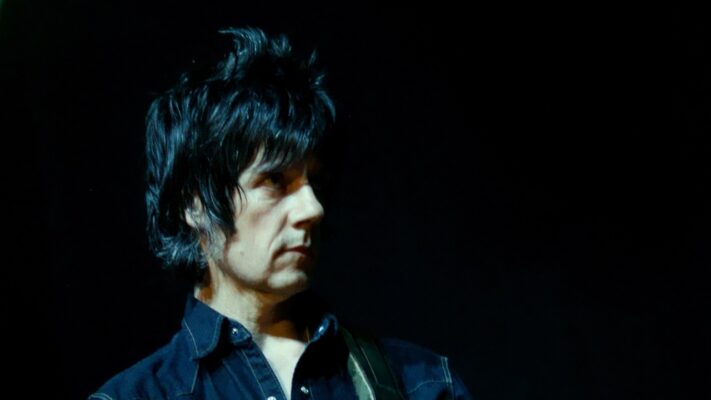
UK distributor Westside confirmed the rig in a pre-show feature published 28 June 2012: “John has chosen a colossal four Lone Star 2×12 combos (yes FOUR! — including the only Lonestars ever to be wrapped in tweed, created especially for him by the Mesa/Boogie custom shop!).” MusicRadar covered the same rig with photo documentation the following day. The amps were the 6L6-based Lone Star — the Classic by its later name — not the Special. One of those combos later appeared for sale as a documented stage-used piece via Denmark Street Guitars/Vintage and Rare, described as “Mesa Boogie Lonestar Ex John Squire THE STONE ROSES 2012.”
Four 2×12 combos means eight Celestion speakers driven in parallel — an enormous stage rig for an amp that was designed around boutique clean response. Squire was not chasing a Dual Rectifier roar; he was after the Lone Star’s ability to fill a 74,000-capacity park with an articulate, harmonically rich British Invasion-inflected rock sound that could compete with Reni’s drums and Mani’s enormous bass rig (dual stacks of Big Block 750 heads) without getting harsh. The answer, evidently, was quantity of the right clean amp rather than raw gain.
Andy Timmons — The Primary Touring Workhorse
Andy Timmons’ relationship with the Lone Star Classic is the longest-running and most thoroughly self-documented of any player in the amp’s history. Timmons adopted the Lone Star as his primary touring rig and ran it in a dual-head configuration — one head loaded with 6L6s, one with EL34s — into a pair of Mesa Rectifier 2×12 cabs with Celestion Vintage 30s for a stereo image. YouTube documentation from 2009 captures him walking through his Lone Star setup in extended detail (Parts 1 and 2 of the “Andy Timmons w/his Mesa Boogie Lone Star Rig” series), describing the amp as “bone stock — no mods, no tweaks,” with treble and presence dialled back and bass cranked for his characteristic singing sustain sound.
The EL34/6L6 dual-head configuration is worth examining as a tone design choice: the two tube types interact differently with the Lone Star’s preamp circuit. The 6L6-loaded head produces rounder, fuller mids and a warmer bottom end; the EL34-loaded head brings a brighter, slightly more compressed upper midrange with added harmonic spread. Running them together in stereo creates a combined tonal picture that is wider and more three-dimensional than either tube alone — the 6L6 providing the low-end warmth, the EL34 contributing the chime and presence that Timmons’ melodic lead style requires for its characteristic bloom.
Note: Mesa’s Amplitudes blog (April 2015) documented Timmons recording a specific playthrough — the “Amrita” Protocol III piece — through a Lone Star Special head into a 2×12 cab. That is a verified connection to the Special, not the Classic. His regular touring rig remained the Classic heads. The distinction matters because both connections are real; they just belong to different models.
Niklas Källgren — Lone Star Into Doom Psych
Mesa’s own Lone Star product page documents Niklas Källgren of Swedish doom-inflected psych-rock band Truckfighters running “twin stacks of Lone Star heads, Lone Star 4×10s and Recto 4×12 cabinets in Red Bronco vinyl with Tan grilles.” This is an unusual deployment — the Lone Star Classic’s boutique clean-and-vintage-lead character underneath a band known for monolithic, fuzz-saturated wall-of-sound tones — but Källgren apparently used the amp’s headroom and EL34 swap capability to achieve a saturated power-amp sound that the Lone Star’s lineage-adjacent Mark I-inspired Drive channel could sustain without the fizz of a modern high-gain circuit. The Lone Star’s Drive mode, properly cranked into a fully loaded 4×10 cabinet stack, has more headroom than most players need and enough inherent warmth to avoid the harsh upper-mid spike that plagues cheaper high-gain circuits.
George Pajon — Black Eyed Peas to Custom Shop
Mesa’s Lone Star page also features George Pajon of the Black Eyed Peas with his custom-finish Lone Stars. Pajon’s connection to the amp is documented at the manufacturer level, matching the Lone Star Classic’s profile as an arena-circuit clean amp that works for a wide range of production-based live music rather than just guitar-centric formats.
Circuit Character: What Makes the Lone Star Classic Sound Like Itself
Channel 1 — The Clean That Changed Mesa’s Reputation
Channel 1 of the Lone Star Classic is Mesa’s definitive boutique clean statement. The circuit is built on a traditional vintage/boutique gain structure — not the cascaded triode stages of the Mark series — and its goal is to produce the most articulate, touch-responsive clean sound the company’s engineering team could design. The result is often described as “a Fender that grew up”: it has the shimmering, three-dimensional quality of a great blackface circuit, but the Treble, Mid, Bass, and Presence controls give players a degree of fine-tuning that a Twin Reverb’s bass/treble circuit cannot approach.
The critical design point is what happens just before Channel 1 clips. Unlike a Fender-circuit amp — which clips relatively suddenly into a harder, less controllable break-up — the Lone Star’s Channel 1 transitions gradually, with the guitar’s own pickup level and the player’s pick attack determining exactly how far into the clip zone the signal goes. Forum consensus among long-time players consistently identifies this gradual clip threshold as the feature that rewards the player’s right-hand technique: dig in and the amp responds; back off and it opens up into pure clean headroom.
Channel 2 — One Amp with a Split Personality
Channel 2 is where the Lone Star earns its “Swiss Army amp” reputation. A front-panel Clean/Drive switch determines which personality you get:
In Clean mode, Channel 2 bypasses the additional Drive tube stages and becomes a near-clone of Channel 1 — with a slight gain bump that adds a touch of blues-roots breakup. This setting is ideal for running two distinct clean voices: one pristine, one with just enough edge for rhythm work.
In Drive mode, two additional 12AX7 stages cascade before the standard Channel 2 circuit, and a separate Drive control meters in the saturation level. The voicing switch (Normal / Thick / Thicker) then shapes the character of that saturation. Normal is the most balanced, closer to a medium-gain vintage tube sound. Thick adds lower-mid weight and a more vocal quality. Thicker pushes into singing high-gain sustain territory that Mesa traces to the Mark I’s original lead sound. At no point does the Lone Star Classic become a modern high-gain amp — its Drive channel is warm, organic, and tuned for melody and sustain rather than chunk and distortion-as-rhythm-instrument.
Multi-Watt and Duo-Class: The Most Sophisticated Power Section in the Price Range
The power-section flexibility of the Lone Star Classic was, at its launch, unlike anything in the market at a comparable price. Duo-Class™ means each channel is independently assignable to:
10W Pure Class A (V2 only): One tube pair taken off-line; single-ended operation; even-order harmonic dominance; a harmonically saturated, compressed character at low volumes that is fundamentally different from the 50W or 100W sounds. At bedroom volumes, this is the most touch-responsive, organic of the three settings.
50W Class AB: Two 6L6s active per side; the “elastic bounce” setting per the manual. In this mode, with Tube Rectifier Tracking active, the 5U4GB rectifier is automatically brought on-line, adding voltage sag and a spongier, more yielding feel. This is the setting most players associate with the Lone Star Classic’s iconic tone — enough headroom for clean work, enough power-stage interaction to feel alive.
100W Class AB: All four 6L6s active; Silicon Diode rectification automatically engaged; maximum headroom and authority. This is John Squire running four of these at Heaton Park — clean, controlled, loud enough to fill 74,000 people without flinching.
Because each channel has its own power selector, a common and effective configuration is Channel 1 at 100W (maximum clean headroom for rhythm) and Channel 2 at 50W (tube rectification sag for a more yielding lead voice). The footswitch then transitions not just between preamp channels but between two distinct power-section characters in the same amp.
Tweed Mode and Tube Swap
The front-panel AC power switch has three positions: Standby, Normal On, and Tweed. Tweed runs the power supply at a reduced AC voltage — a built-in Variac effect — which lowers headroom, increases touch sensitivity, and introduces a subtle compression and harmonic richness throughout the circuit. It is most effective on Channel 1 at 50W, where the reduced voltage plus tube rectifier sag plus a slightly overdriven power section produces something that genuinely sounds like a well-aged tweed-era amplifier rather than a modern amp trying to approximate one.
The rear-panel Bias Select switch allows a quartet of EL34 tubes to be substituted for the stock 6L6s without a tech visit. EL34s introduce a brighter upper midrange, a tighter low end, and a more compressed response — the British flavour that 6L6s will not produce on their own. The two tube types respond differently to the Drive channel: 6L6s produce a rounder, smoother saturation, while EL34s add an upper-harmonic sheen that works particularly well for players who want the lead channel to cut through a dense mix. The manual also notes that 6V6 tubes can be installed for further power reduction and a “looser, breathier” feel, using the low AC setting and an 8-ohm load on the 4-ohm jack.
Tone Recipes and Settings
Recipe 1 — Sting-Era Clean Rhythm (Dominic Miller Reference)
Channel 1, 100W, Diodes. Gain 3.5. Treble 6, Mid 6.5, Bass 5.5. Presence 4. Master to taste. Reverb Warm, depth 3 (Ch.1). Guitar: Telecaster, bridge pickup, volume 8. This is a wide-open blackface-reference clean with controlled low end and enough top-end air to sit under a vocal in an arena PA. Roll guitar volume to 6 for clean shimmer; push to 10 for the earliest hint of break-up on hard strumming.
Recipe 2 — Mark I-Inspired Blues Lead
Channel 2 Drive, Normal voicing, 50W, Tube Rectifier Tracking. Gain 5.5. Treble 6, Mid 5, Bass 6. Presence 5. Drive 4. Master to leave headroom. Reverb Bright, depth 4 (Ch.2). Guitar: Les Paul neck pickup, volume 9. The 50W tube-rectifier setting adds the sag that turns the Drive channel from a clean amplifier into a singing blues lead machine. Back guitar volume to 7 for single-note runs, push to 10 for sustaining bends.
Recipe 3 — Tweed Crunch (Ch.1 + Tweed Mode)
Channel 1, 50W, Tube Rectifier Tracking, AC switch to Tweed. Gain 5. Treble 5.5, Mid 5, Bass 6.5. Presence 3. Guitar: P90 neck pickup, volume 10. The interaction of reduced AC voltage, tube rectifier sag, and a pushed Channel 1 at 50W produces the closest thing to an authentic tweed-era amp character available from any Mesa circuit. It records exceptionally well with a single dynamic mic at the speaker edge.
Recipe 4 — Andy Timmons Sustain (Dual Head Reference, Single Amp Approximation)
Channel 2 Drive, Thick voicing, 50W, Tube Rectifier Tracking. Gain 6. Treble 4 (rolled back significantly), Mid 6, Bass 7 (cranked). Presence 4. Drive 5. EL34 tubes if available, otherwise stock 6L6. Guitar: Ibanez-style humbucker, volume 10. Swap to EL34s for the extra upper-mid definition that Timmons’ melodic lead style depends on. Sustain on single notes should be nearly infinite at moderate stage volume.
Recipe 5 — Big Room Clean (John Squire / Stadium Setting)
Channel 1, 100W, Diodes, Normal power. Gain 4. Treble 7, Mid 5.5, Bass 5. Presence 6. Reverb Bright, depth 2 (minimal — you are filling a large room with direct sound, not reverb). Guitar: Gibson SG or Les Paul, neck pickup, volume 10. This setting is designed to cut through at large-scale live production without harshness. At this wattage and setting the amp’s own power-section compression handles the transients; you do not need a compressor in the effects loop.
Comparisons with Other Mesa/Boogie Amps
vs. Lone Star Special
The Special runs 4× EL84 for 5, 15, or 30W — a fundamentally lighter power output with a more compressed, chimier response. Where the Classic has the 6L6’s fat, three-dimensional low end and full midrange bloom, the Special sacrifices that bottom-end weight for an easier path to power-tube saturation at lower volumes. The Classic is the right choice for arena cleans and full-bandwidth low-volume practice at 10W; the Special is the right choice for smaller stages where pushing the power tubes into sweet saturation at liveable volumes is the goal. Both are discontinued; both are exceptional. Choosing between them is about stage volume, not quality.
vs. Mark IV
The Mark IV is a high-gain amp with a five-mode EQ and extreme gain-staging control; the Lone Star Classic is a boutique clean/vintage-lead amp. They share Mesa heritage and hand-built Petaluma construction but essentially nothing else in terms of tonal priority. The Mark IV’s clean channel is capable but secondary to its lead-channel design intent. The Lone Star Classic’s clean channel is its reason for existing. If you primarily play clean-to-mid-gain material and occasionally want a warm singing lead, buy the Lone Star. If you primarily need modern high-gain versatility with clean as a secondary voice, buy the Mark IV.
vs. Dual Rectifier Solo Head
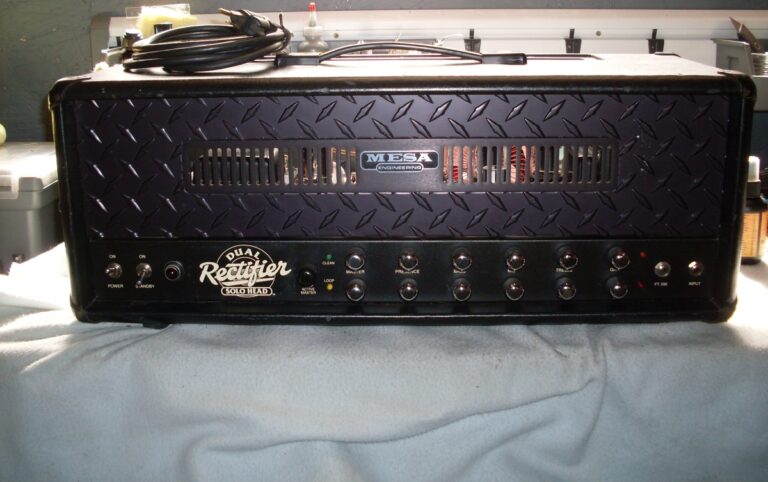
The contrast here is architectural. The Dual Rectifier is a high-gain rhythm amp with a usable clean channel; the Lone Star Classic is a boutique clean amp with a warm, vintage-voiced lead channel. They share the rectifier tracking concept and the 6L6 power section, but the Dual Rectifier’s preamp gain stages run much hotter, the EQ position is different in the signal path, and the overall character is dense, aggressive, and modern-oriented. Buying a Lone Star Classic to play metal is using the wrong tool. Buying a Dual Rectifier to play Police songs is also using the wrong tool. These amps serve different purposes and the market prices them accordingly.
vs. Fender Twin Reverb
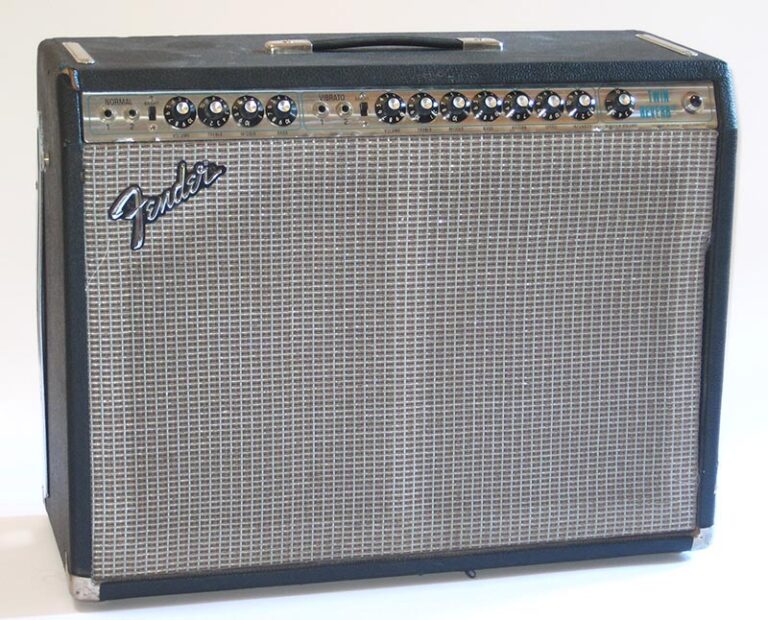
The Twin Reverb comparison is unavoidable because Lone Star Classic players almost invariably mention it. The Twin’s blackface circuit is the reference point for the Lone Star’s clean voice — shimmering, clear, enormous headroom — but the comparison quickly reveals what the Mesa adds: a proper Treble/Mid/Bass EQ on each channel, an independent lead channel with actual gain staging, an effects loop, a reverb with Bright/Warm switching, the ability to run at 50W for a more yielding response, and EL34 swap capability. The Twin is simpler and more transparent; the Lone Star Classic is more controllable. In a studio context the Twin’s simplicity can be an advantage. On a live stage with variable room acoustics, the Lone Star’s EQ depth is a significant practical benefit.
Buying Guide: Lone Star Classic on the Used Market
All Lone Star Classics are used-market buys by now. A few points to guide the purchase decision:
V1 vs V2: V1 (blue/silver, 50/100W only) and V2 (black/black, 10/50/100W) are tonally identical in their shared power modes. If the 10W Pure Class A setting matters to you — for bedroom or low-volume recording use — find a V2. If you primarily play at stage volumes, a V1 in excellent condition is a better value because it typically sells for less and is sonically equivalent for the modes you will actually use.
Format: The 1×12 combo is the most common and most portable. The 2×12 combo gives you more speaker surface area and a bigger stage sound at the cost of considerable additional weight. The 4×10 combo is rare and represents a specific sonic choice (the tighter, more detailed response of multiple smaller cones vs one or two large-diameter speakers). The head allows the most cabinet flexibility but requires purchasing a cab separately — factor that into the total cost.
Inspection points: Mesa’s reverb tank is mounted underneath the chassis in combos; reverb splash on channel switch is a known characteristic (a brief silence during transition, not a defect) but a genuine reverb splash-crash or microphonic behaviour suggests a reverb tank replacement is needed. Power tubes: the amp runs 6L6s hard in 100W mode; ask for tube age and check the bias adjustment screw access on the rear panel. A set of fresh Mesa-supplied STR-415 6L6GC tubes ($80-100) is cheap insurance on a $1,200+ purchase. Check the bias select switch is appropriately set for whatever tube type is installed — the wrong setting for the installed tube type can cause immediate damage.
EL34 vs stock 6L6: Some sellers install EL34s and do not disclose it. Ask. If the seller does not know what tubes are in the amp, budget for a fresh tube set before using it.
Pricing context: Head prices in good condition are running $1,200–$1,800 in the 2024-2026 market. Combos are $1,000–$1,600 depending on format and condition. Custom or rare finishes (tweed, for example — though none are as documented as Squire’s) can command a premium of 15-25% over standard black. Be sceptical of anything substantially below these ranges — the market is well-established and underpriced examples typically indicate hidden condition issues.
Ownership Notes
The Lone Star Classic’s bias select rear-panel switch is one of its most practical ownership features: EL34 and 6L6 swaps require zero tech involvement, just a power-off tube change and a bias switch flick. However, if you install 6V6 tubes (the low-power option described in the manual), the manual specifies using the 6L6 bias switch position and connecting an 8-ohm load to the 4-ohm jack to protect the output transformer. Follow that procedure — the reduced voltage the AC Tweed switch provides is also recommended for 6V6 use.
The effects loop’s Hard Bypass deserves special mention: engaging it removes two preamp tube stages and all loop circuitry from the signal path, which substantially affects the amp’s character. Many players leave the loop engaged even when no effects are connected and wonder why the amp does not sound exactly as they expect. Try Hard Bypass engaged for the purest preamp-only path; it also disables the Master Output and Solo controls (the individual channel Masters become the final output controls in Hard Bypass mode). Read the manual’s Loop section once before making any signal-chain decisions — it resolves a surprising amount of Lone Star Classic confusion that accumulates in forum discussions.
Speaker impedance matching: the amp runs cleanly at matched impedance (4Ω to 4Ω, 8Ω to 8Ω) and Mesa notes in the manual that connecting both channels at 50W to an 8-ohm load via the 4-ohm jack produces a specific tonal response that some players prefer. This is documented and safe — it is not a misuse. Experiment with impedance when dialling in the 50W setting; the tonal character shifts are real and significant.
Storage and transport: the combo formats are heavy. The 2×12 combo in particular is a two-person lift for most players. Invest in a proper padded cover or flight case if the amp is travelling — the reverb tank is sensitive to impact, and the chassis mounting bolts occasionally loosen in combos over years of road use. Budget thirty minutes once a year to re-tighten all chassis hardware.
Frequently Asked Questions
What is the difference between the Lone Star and the Lone Star Classic?
They are the same amplifier. The original “Lone Star” (2003-2004 launch) was renamed “Lone Star Classic” when Mesa introduced the EL84-based Lone Star Special, to distinguish the 6L6 original from its new sibling. No circuit revisions accompanied the naming change. The only substantive hardware difference was the addition of the 10W Pure Class A mode to the V2 Classic, which also shifted the cosmetics from blue/silver to black/black.
Is the Lone Star Classic a high-gain amp?
No. The Drive channel is capable of singing, warm saturation in the lead mode, but it is a vintage high-gain voice — warm, organic, and descended from the Mark I circuit — rather than a modern high-gain amp. Players wanting Dual Rectifier or Mark IV-level gain density and chunk should look elsewhere. The Lone Star Classic is fundamentally a boutique clean amp with an expressive, player-responsive lead channel as its second personality.
Can I swap to EL34 tubes without taking it to a tech?
Yes. The rear-panel Bias Select switch means a 6L6-to-EL34 swap requires only powering down the amp, changing the tubes, and flipping the switch to EL34 position. No re-biasing required. Always confirm the switch is set to match the tube type installed — running EL34s with the bias switch in the 6L6 position can cause damage.
What is the Tweed setting for?
The Tweed position on the front-panel AC power switch reduces the incoming AC voltage, producing a Variac effect: lower headroom, more touch sensitivity, a softer, spongier feel across the entire circuit. Most effective on Channel 1 at 50W with Tube Rectifier Tracking, where the combined voltage reduction, tube rectifier sag, and two-tube power section interact to produce authentic vintage breakup character at the guitar’s own volume control.
Does the reverb splash when switching channels?
Yes, the Lone Star Classic’s reverb briefly cuts out when switching channels — a fraction of a second of silence rather than a pop or splash. This is a documented characteristic of the circuit, not a defect. Forum consensus confirms it is inaudible in a band mix at moderate volume. If you are experiencing an actual loud pop or reverb splash-crash, that indicates a reverb tank or circuit issue that requires attention.
Which format — head, 1×12, or 2×12 — should I buy?
The 1×12 combo is the best balance of portability and completeness for most players: one Celestion Black Shadow, manageable weight, self-contained. The head gives maximum flexibility if you already own good cabs or want to run into multiple cabinets. The 2×12 combo is the choice if you play large stages without backline support and want the amp’s maximum output into the most surface area possible. The 4×10 combo is rare and specific — worth seeking out if you prefer the tighter, more defined response of 10-inch speakers, but not the first choice for most applications.
What happened to the Lone Star Classic series — why was it discontinued?
The Lone Star series was discontinued around 2020. The combination of COVID-related supply chain disruptions and the integration challenges following Gibson’s acquisition of Mesa Engineering closed the production window. Mesa has not announced a successor. The used market remains healthy precisely because nothing currently in the Mesa lineup replicates the Lone Star Classic’s specific combination of boutique clean headroom, vintage lead character, and Multi-Watt power-section flexibility.
How does the 10W Pure Class A mode differ from the 50W setting?
At 10W (V2 only), the amp runs two of its four output tubes in single-ended Class A operation. Single-ended Class A does not cancel even-order harmonics the way push-pull Class AB does — those harmonics are preserved, contributing a warm, organically saturated compression that responds extremely sensitively to pick attack. At bedroom volumes the 10W setting is the most touch-responsive and harmonically complex of the three options. At stage volumes, 10W is rarely sufficient. Think of it as a studio and practice-room setting rather than a live performance mode.
Image credits
- John Squire: Man Alive!, Wikimedia Commons, CC BY 2.0.
- Top image: Art Bromage, Wikimedia Commons, CC BY-SA 2.0.
- John Squire: Man Alive!, Flickr, CC BY 2.0.
- Mesa/Boogie Dual Rectifier Solo Head: Roadside Guitars, Flickr, CC BY-SA 2.0.
- Fender Twin Reverb: Micahmedia, Wikimedia Commons, CC BY 3.0.
Latest News
Related
On This Day
Monday 9 November
From this week: