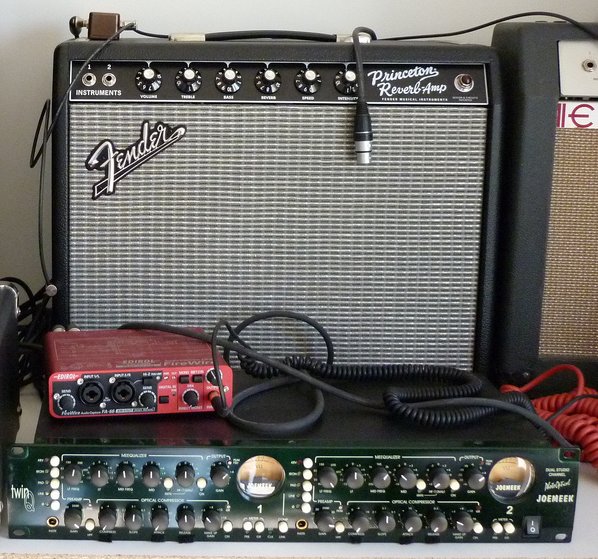
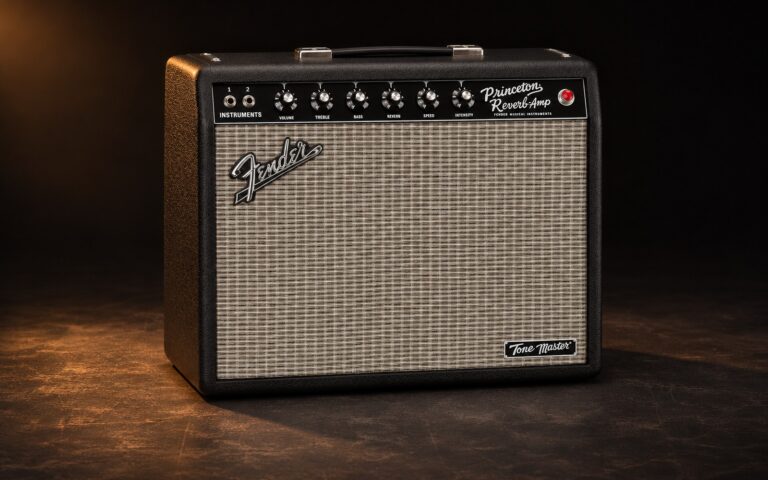
Twelve Watts That Built the Studio Sound of the 1960s — and Fender’s Hand-Wired Tribute to All of It
Hand-wired AA764, Jensen P10R alnico, solid pine. Fender's '64 Custom Princeton Reverb: history, circuit deep-dive, verified players, and seven tone recipes.
There is an argument — a serious one, supported by tape logs and session notes — that the Fender Princeton Reverb has appeared on more hit records than any other twelve-watt amplifier in history. The Wrecking Crew ran one through most of their late-1960s Los Angeles sessions. Clarence White and Tommy Tedesco used Princetons on Beach Boys records. Louie Shelton, the session ace who played on everything from Motown crossovers to AM radio gold, explained in a MusicRadar interview why the Princeton was the session default: in those years, studios recorded with open microphones across the room, which meant a cranked Marshall or Twin Reverb would bleed into the drum, piano, and vocal mics. A Princeton Reverb turned to seven — where it starts to breathe and bark — sat loud enough for tone and quiet enough for the engineer. It was the amp that let you crank without creating chaos. The result was that the blackface Princeton Reverb’s particular flavor of six-volt-output spank, cathodyne-phase-inverter breakup, and four-spring spring reverb became baked into the sound of an entire decade of commercial recording. You have heard it thousands of times without knowing you were hearing it.
Fender’s blackface Princeton Reverb ran from 1964 to 1967 in its most collectible configuration — twelve watts, the AA1164 circuit, two 6V6GT power tubes, a 5U4GB rectifier, ten-inch Jensen speaker, solid pine cabinet. A mint original from that era now trades at $2,800 to $4,500 on the vintage market, with documented 1965–1966 examples reaching $5,000 or more. For players who want the hand-wired point-to-point construction and pre-CBS component philosophy without funding the vintage hunt or carrying a $4,000 amp to a bar gig, Fender announced the ’64 Custom Princeton Reverb at NAMM in January 2020. It joined the American Hand-Wired Series — built in Corona, California, wired by a person at a workbench — at a launch price of $2,299. By July 2026 that price has risen to $3,149, which still compares favorably to what a clean blackface original commands.
This is a gear guide to the ’64 Custom Princeton Reverb: where the amp came from, what makes the circuit different from its PCB-built sibling the ’65 Princeton Reverb Reissue, who actually played a Princeton Reverb, seven tone recipes built on verified player approaches, and an honest accounting of what the ’64 Custom buys you over the $1,579 reissue. No stars out of five. No endorsements. Just the amp explained clearly so you can make a decision that holds up.
The Princeton Reverb’s Origin Story
The Princeton name goes back to 1947, when Leo Fender built a basic student combo under that designation. The original Princeton went through the standard Fender cosmetic evolution — tweed cabinet through 1960, brown Tolex 1960–1963, black Tolex blackface 1963 onward — but it was always the plain, small, reverb-free member of the family. The Princeton Reverb is a separate model, introduced in 1964 when Fender added a built-in spring reverb circuit and bias-modulated tremolo to an already successful small-combo platform. The two amps sold concurrently through the entire blackface and silverface eras, at different prices, under different model numbers. A blackface Princeton without reverb is worth meaningfully less than a Princeton Reverb of the same year; the confusion between them has cost buyers money in both directions.
The 1964–1967 blackface Princeton Reverb used the AA1164 circuit and a 5U4GB rectifier tube. The 5U4GB is a softer rectifier that introduces voltage sag under heavy load — as the tubes draw more current during loud transients, the plate voltage dips slightly, which compresses the attack and produces the elastic, blooming quality that players associate with pushed blackface tone. When CBS acquired Fender in January 1965, the Princeton Reverb continued in production unchanged cosmetically through 1967; the silverface cosmetic change arrived in 1968 but the circuit itself did not change until 1969, when Fender swapped the 5U4GB for a 5AR4/GZ34 rectifier and made corresponding adjustments to the bias resistor values. The post-1969 silverface circuit is generally designated AB1270. AA1164 and AA764 are the two designations that produce the naming conflict on Fender’s current product pages, which we will address directly when we get to the specs section.
The Princeton Reverb was discontinued in 1982, replaced briefly by the Paul Rivera-designed Princeton Reverb II — a completely different amp with channel switching and significantly more power that shares only the name. The Princeton Reverb II itself was discontinued in 1986. Fender revived the original circuit as the ’65 Princeton Reverb Reissue in Summer 2008, using PCB construction and a ceramic Jensen C-10R speaker. That PCB reissue is still in production. The ’64 Custom Princeton Reverb, announced at NAMM January 2020, is the hand-wired companion piece: the same circuit and format, built the way the originals were built, with component choices that push closer to vintage character.
The ’64 Custom Joins the American Hand-Wired Series
The American Hand-Wired Series is Fender’s premium domestic tier, built in Corona, California, at a price point that acknowledges the labor cost of genuine point-to-point construction. The ’64 Custom Princeton Reverb joined the series alongside the ’64 Custom Deluxe Reverb, the ’57 Custom Champ, the ’57 Custom Deluxe, and the ’57 Custom Twin. Each model in the series represents Fender’s attempt to match vintage originals in construction method as well as circuit specification: the printed-circuit-board approach used in the standard reissue line is efficient and consistent, but it is not how amplifiers were built in 1964.
The fundamental commercial argument for the ’64 Custom is straightforward: a genuine 1965 blackface Princeton Reverb in good-to-excellent original condition currently trades at $3,000 to $4,500. You are buying an amp that is sixty years old, with sixty-year-old electrolytic capacitors that may need immediate replacement, original tubes that may or may not be usable, and a speaker whose condition you cannot fully assess from a photograph. The ’64 Custom is $3,149 new, with a warranty, tubes that are new, and a speaker that is specifically chosen to improve on the originals rather than replicate them exactly. For players who want to use the amp rather than collect it, the math is not difficult. Eugene Edwards, guitarist for Dwight Yoakam and a long-time Princeton devotee, told Fender in their editorial documentation of the ’64 Custom: “It’s the perfect size for guitarists who want a moderately powered amp for any stage or studio situation. I myself have done entire albums with just one Princeton, and I would just adjust it according to each song.”

Under the Hood: The Cathodyne Phase Inverter, the Vintage Blue Caps, and the AA764 Naming Problem
The single most important circuit feature of the Princeton Reverb — the thing that explains why it sounds different from a cranked Deluxe Reverb even though both are blackface Fenders with two 6V6 tubes and similar control layouts — is the cathodyne phase inverter, also called the split-load phase inverter. The Deluxe Reverb and the Twin Reverb both use a long-tailed pair (LTP) phase inverter at the 12AT7 position, which produces nearly twice the output voltage swing before clipping and generates primarily odd-order harmonic distortion when pushed. The Princeton Reverb uses a cathodyne PI — a single triode wired so that the plate and cathode resistors are equal, splitting the signal between them. The cathodyne has significantly less headroom before clipping than the LTP, and when it clips it does so asymmetrically, producing even-order harmonic distortion that the ear hears as warm, harmonically rich crunch rather than harsh fuzz.
In practical terms: a Deluxe Reverb at volume six is still relatively clean. A Princeton Reverb at volume six with a single-coil guitar is already starting to breathe and push. At volume ten — the setting Jim Campilongo and other serious Princeton players use as their baseline, with the guitar’s own volume control providing the dynamic range — the Princeton produces a full-on, articulate crunch that retains note definition at a volume level that a venue sound engineer can actually manage. The cathodyne PI is not a limitation. It is the feature. It defines a specific musical vocabulary that players have spent sixty years exploiting on records you know by name.
The 12AX7 tube complement is divided across three tasks: one and a half stages drive the preamp input and EQ section, half a stage feeds the cathodyne phase inverter (shared with the first tube’s cathode section), and the third 12AX7 handles reverb recovery and tremolo oscillation. The 12AT7 drives the long-spring reverb tank’s send circuit — this is the tube-driven spring reverb that MusicRadar’s 2020 review called “a kind of lush splashy surf tone that washes ashore,” and it is meaningfully different from the op-amp-buffered reverb circuit in the Hot Rod Deluxe. Tube-driven reverb recovery means the reverb interacts with the preamp gain structure; dig in with a pick and the reverb shortens and tightens. Play softly and it blooms. The interaction is the point.
The Fender Vintage Blue tone capacitors are the ’64 Custom’s most visible internal upgrade over the standard reissue. These are polypropylene film capacitors chosen to match the tonal characteristics of the original NOS capacitors in the 1964 circuit — the kind of component that does not photograph on a product page but affects how the upper midrange rolls off and how the tone controls interact with the preamp gain. Their presence is one of the reasons players who A/B compare a ’64 Custom against a genuine 1964–1965 blackface Princeton Reverb describe the ’64 Custom as “ninety-five percent of the way there” rather than “close but clearly different.”
The AA764 versus AA1164 naming conflict on Fender’s own website: Fender’s product page for the ’64 Custom Princeton Reverb describes the circuit as “hand-wired AA764.” Fender’s editorial article about the same amp, written by Mike Duffy and published on Fender.com, describes the circuit as “hand-wired AA1164.” These are two pages on the same website describing the same amplifier with different circuit designations. The correct way to understand the conflict is this: AA1164 is the original 1964–1969 blackface circuit designation, using a 5U4GB rectifier. The post-1969 silverface revision used a 5AR4/GZ34 rectifier with adjusted bias resistor values and is generally designated AB1270; AA764 is not the silverface code, and it turns up on some early tube charts and on Fender’s product page for this amp. The ’64 Custom uses the AA1164 circuit topology with a 5AR4/GZ34 rectifier — matching the post-1969 rectifier spec rather than the strict 1964 spec. The ’64 Custom’s circuit is therefore best described as AA1164-based, and the AA764 label on Fender’s product page is more likely a loose designation than a separate circuit. The practical consequence is that the ’64 Custom has slightly tighter low-end and marginally less rectifier sag than a true 1964 production unit would have had with the softer 5U4GB tube. It is not a meaningful tonal problem; it is a documentation artefact worth knowing about before you read secondary sources that cite one number or the other as definitive.
Full Specifications
Famous Players: The Verified List
The standard artist shortlist for Princeton Reverb articles runs: Stevie Ray Vaughan, John Mayer, Eric Johnson, Mike Campbell, Paul Gilbert. Applied to the ’64 Custom Princeton Reverb specifically, every single one of those claims fails on first contact with primary sources. Let us go through them in order, because the failure modes are instructive.
Stevie Ray Vaughan died on August 27, 1990. The Fender ’64 Custom Princeton Reverb was announced at NAMM in January 2020. That is a thirty-year gap. The impossibility is even sharper here than for the standard ’65 Reissue, which launched in 2008 (an eighteen-year gap). SRV was a documented Fender player — his studio and touring rigs included vintage Twin Reverbs and vintage Super Reverbs, which he acquired in the early 1980s and modified extensively with EV speakers and swapped output transformers. He never played a hand-wired Princeton Reverb reissue because no such product existed in his lifetime. He cannot be listed as a player of any post-2000 Fender reissue under any honest editorial standard.
Mike Campbell is documented on a Fender Princeton — but not a Princeton Reverb. Premier Guitar’s Rig Rundown for Tom Petty and the Heartbreakers (Jason Shadrick, July 27, 2013, PRIMARY SOURCE) documents Campbell’s low-wattage amp stack as “a 1963 Fender Princeton and a 1954 Fender tweed Deluxe.” The 1963 Princeton is a Brownface-era amplifier — pre-reverb, different circuit entirely (the Princeton Reverb did not exist until 1964). Mike Campbell plays a Princeton, not a Princeton Reverb, and the Princeton he plays is a 1963 original, not a reissue of any kind. The distinction between “Princeton” and “Princeton Reverb” costs players real money when they miss it; it should not appear in gear journalism as an interchangeable pair of names.
Eric Johnson is documented extensively on vintage Fender Twin Reverbs. Sweetwater’s primary-source quote: Johnson “relies on his vintage ’68 Silverface Twin” for clean rhythm guitar work. No Princeton Reverb — vintage or reissue — appears in any verified primary-source Rig Rundown or gear interview for Eric Johnson. Wishful association by brand is not documentation.
Paul Gilbert was documented as an all-Marshall player — JCM2000 DSLs, Silver Jubilees, 2061X. A Guitar World headline from mid-2026 announces that Gilbert has switched to Fender Tone Master modeling amps (the digital Princeton Reverb and Twin Reverb models), which would represent a genuine change of direction if confirmed. However, the Tone Master Princeton Reverb is a digital modeling amplifier with no tubes, no hand-wired chassis, and no connection to the ’64 Custom Princeton Reverb. Even granting the most favorable interpretation, Paul Gilbert would be a Tone Master user, not a ’64 Custom user. Different product entirely.

John Mayer was confirmed as a ’65 Princeton Reverb Reissue user (Getty Images photograph, Dead & Company circa 2017). The ’65 Reissue and the ’64 Custom are different products at different price points with different circuits and construction methods. No primary source places John Mayer specifically on a ’64 Custom Princeton Reverb. Confirmed user of the family; not confirmed on this specific model.
Now the verified list — players documented on the Princeton Reverb by primary sources, framed honestly about the vintage/reissue distinction.
Duane Allman used a Princeton Reverb for the slide guitar overdubs on Derek and the Dominos’ “Layla” (1970), per Guitar Player Magazine’s classic gear coverage of the Criteria Studios sessions. This is a 1970 original Princeton Reverb, not a 2020 reissue. The tonal argument, however, is directly relevant: the cathodyne PI overdrive character and the four-spring reverb tank splash that Allman exploited on those slide parts are the same circuit elements the ’64 Custom reproduces. His approach — open-D tuning, slide, Princeton reverb turned up enough to add ambience without washing out the note attack — is one of the clearest demonstrations of what this amp does at its best.
Clarence White, the guitarist who defined a generation of country-rock picking with the Byrds and on countless session dates, used a Princeton Reverb on Beach Boys recording sessions alongside Tommy Tedesco. These were 1960s originals; the documentation is session logs and production credits. White’s use of the Princeton for single-coil Telecaster work illustrates why the amp became the session standard that it did: Telecaster through Princeton Reverb produces a sound that sits in its own frequency pocket in a mixed recording environment without needing significant EQ work.
Larry Carlton used a Princeton Reverb on his mid-1970s session work with Joni Mitchell, Steely Dan, and The Crusaders, per TDPRI community documentation and Carlton’s own archived interviews. The Princeton Reverb’s combination of clean headroom at low-to-moderate volumes and musical crunch when pushed suits hollow-body and semi-hollow ES-335 work specifically — the same reasoning that makes the Blues Junior a poor substitute if you are chasing Carlton’s actual tone rather than just his guitar.
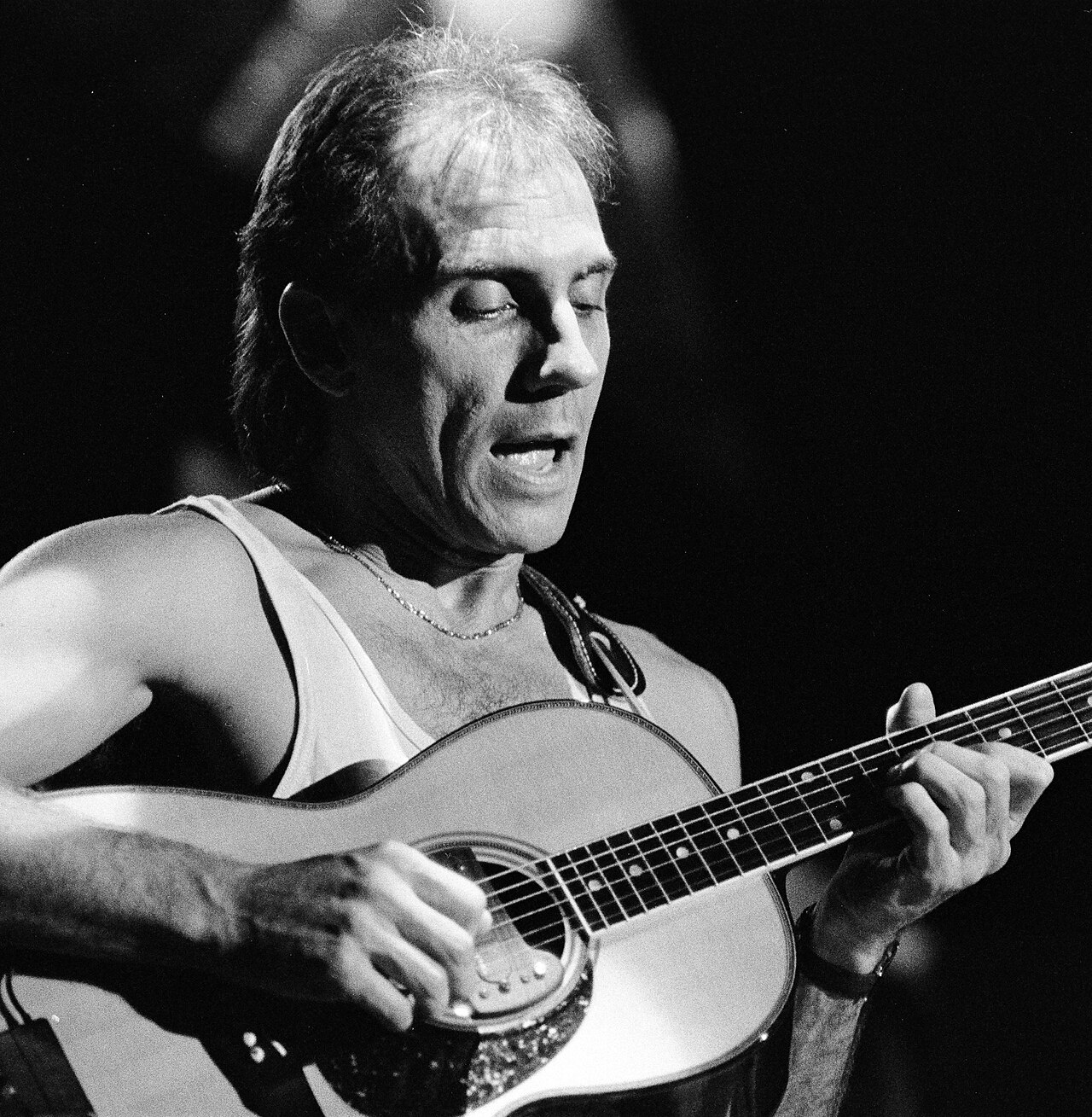
Bill Frisell, whose guitar vocabulary moves between jazz, country, Americana, and experimental work, has been documented as a Princeton Reverb user across multiple career phases. The amp’s clean headroom, tube-driven reverb, and tremolo circuit suit his approach to textural, ambient country-jazz guitar — the reverb and tremolo interact with his volume-pedal swells in ways that digital processing has difficulty replicating.
Ed O’Brien of Radiohead has been documented using a Princeton Reverb as part of his studio and touring signal chain. O’Brien’s approach to the Princeton focuses on the amp as a clean-platform reverb and tremolo source within a larger processed rig — using the built-in effects as textural layers rather than as the primary distortion source.
Jim Campilongo is the contemporary player most identified with extreme Princeton Reverb usage. His method — Volume at 10, Treble at 10, Bass at 10, guitar’s volume knob providing all the dynamic range — turns the amp’s cathodyne PI breakup character into the entire vocabulary. Guitar World’s review of the ’64 Custom specifically references this as a recommended approach. His playing approach is the single most useful reference for understanding what a cranked Princeton actually does. He is not using it as a pedal platform. He is using the amp itself as the instrument.
Louie Shelton — the Wrecking Crew session guitarist whose 1969 Princeton Reverb appeared on more hit recordings than most players’ entire careers — explains the amp’s historical dominance better than any specification: “The reason the little Princeton was so practical was in those days we were recording with a lot of open mics in the room, obviously, so we had to play at a low level which meant if you needed to crank an amp up so that you got a bit of dirt, just a little bit of distortion, it was so loud that the engineer would come out and scream at you to turn your damn amp down. Because it’s going in the drum mics and the piano mics.” The Princeton Reverb at volume six or seven was the loudest a session guitarist could push an amp in that recording environment. That constraint produced one of the most recorded guitar tones in commercial music history. This quote is from the MusicRadar interview referenced in TCguitar’s Princeton Reverb guide.
Tone Recipes: Seven Settings Built on Documented Approaches
1. The Campilongo Full-Bloom
Volume 10, Treble 10, Bass 10, Reverb 3, Speed off, Intensity off — guitar volume at 3 for clean, 7 for edge-of-breakup, 10 for full crunch. This is the cathodyne PI doing everything: the amp itself provides all the overdrive structure, and the guitar’s volume knob is the channel switcher. Too much reverb at this setting smears note definition; keep it restrained. Works best with a Tele or Strat through the neck pickup. Bridge position through a cranked Princeton at Volume 10 produces a grinding, note-by-note crunch that holds its definition better than most players expect from 12 watts.
2. Nashville Session Clean
Volume 4, Treble 6, Bass 5, Reverb 4, tremolo off. This is the setting where the Princeton earns its “most recorded small amp” reputation — the clean tone with enough reverb to sit in a room but not enough to wash over the attack. Single-coil Stratocaster or Telecaster. Add a light compressor pedal (sustain 10 o’clock, output to taste) to approximate the studio-opto compression of 1960s recordings. The cathodyne PI at Volume 4 is clean and immediate; dig in with a hard pick attack and the power section briefly compresses on loud transients, producing the subtle “bloom” that sounds different from a solid-state clean.
3. Duane Allman Slide Platform
Volume 6, Treble 6, Bass 4, Reverb 5, tremolo off. Open D or Open E tuning, glass slide, neck pickup. The Princeton’s reverb at 5 adds enough ambience that the slide notes sustain into the decay without becoming wet. Bass pulled back to 4 because the cathodyne PI’s even-order harmonic distortion adds perceived low-end weight at this volume setting; full Bass at 6 makes it muddy with a slide. Neck pickup keeps the top end from becoming shrill. This is not a reproduction of the Layla sessions setup exactly — nobody can verify the precise knob positions Allman used at Criteria in 1970 — but it is built on the circuit’s actual behavior at that volume range.
4. Recording Engineer’s Pedal Platform
Volume 3, Treble 7, Bass 5, Reverb 6, tremolo off. At Volume 3 the amp is fully clean and very quiet — this is where the Princeton’s clean headroom advantage is most apparent. Load in a transparent overdrive (TS9 or BD-2) for the dirt. The tube-driven reverb at 6 provides a natural room ambience that does not sound processed on tape or through a DAW mic capture. This is the Larry Carlton/studio-engineer approach: let the amp be the acoustic room and let pedals handle the gain structure. The Princeton’s clean stage at Volume 3 does not color the pedal’s character in the way a Hot Rod Deluxe’s solid-state-rectifier clean stage might.
5. Bill Frisell Jazz-Country Clean
Volume 3–4, Treble 4, Bass 7, Reverb 3, Speed 3, Intensity 2 (subtle tremolo, barely perceptible movement). Frisell’s approach on the Princeton leans into the amp’s inherent warmth by rolling the Treble back and emphasizing the Bass, which the cathodyne PI handles cleanly at low volumes. The subtle tremolo adds movement without dominating the tone — it functions as a textural shimmer rather than a rhythmic effect. Works best with a hollow-body or semi-hollow guitar. Do not use the bridge pickup at this setting; the Bass boost combined with bridge-pickup bite creates a mid-forward sound that is engaging for leads but wrong for the Frisell palette.
6. Surf and Shimmer
Volume 5, Treble 7, Bass 5, Reverb 8, Speed 6, Intensity 7. The full Princeton Reverb experience: tube-driven spring reverb at maximum useful range (9 or 10 produces tank rattle and wash rather than reverb), bias-modulated tremolo at a medium-fast waltz rate. Strat into the neck pickup. This is not historically accurate to any specific recording but it demonstrates the amp doing what the circuit was designed to do. The tremolo and reverb interact — the tremolo’s rhythmic pulse pushes the reverb tail in a way that a separate reverb and tremolo pedal in series cannot replicate, because the tremolo in the Princeton’s circuit modulates the bias of the output stage rather than the preamp signal.
7. Edge-of-Breakup Blues
Volume 6–7, Treble 5, Bass 6, Reverb 3, tremolo off. Humbucker guitar (ES-335 or Les Paul). At Volume 6–7 with humbuckers, the cathodyne PI is right at the edge where clean notes break into crunch depending on pick attack. This is where the Princeton’s “touch-sensitive” character is most audible: a soft pick stroke stays clean, a hard downstroke barks and sustains. Roll the guitar’s volume to 7 for rhythm, push it to 10 for lead. Do not add a heavy overdrive pedal here — the amp’s own gain staging is doing the work. A light boost (Tube Screamer at gain 9 o’clock, volume at noon) tightens the breakup character without changing the fundamental tone.

The controls are Volume, Treble, Bass, Reverb, Speed (tremolo rate), and Intensity (tremolo depth). All settings assume single-coil pickups unless noted; humbuckers break up earlier and should start approximately one to two steps lower on Volume.
How the ’64 Custom Stacks Up Against the Field
The ’64 Custom Princeton Reverb does not exist in isolation. It has siblings in Fender’s current lineup, a direct PCB-built predecessor, and legitimate alternatives from the vintage market. Here is how each comparison actually plays out.
’64 Custom vs. Fender ’65 Princeton Reverb Reissue: Same circuit family, same 12 watts, same tube complement, radically different construction and price. The ’65 Reissue ($1,579) uses PCB construction, a Jensen C-10R ceramic speaker, and a birch plywood cabinet. The ’64 Custom ($3,149) uses hand-wired point-to-point construction, a Jensen P10R alnico speaker (warmer, with a smoother top end than the ceramic), a solid pine cabinet (slightly lighter, more resonant), and Fender Vintage Blue tone capacitors. TCguitar’s 2026 guide describes the ’64 Custom as “ninety-five percent of the way” to vintage blackface character, versus “eighty-five to ninety percent” for the ’65 Reissue. If the circuit and format are right for your playing, the ’65 Reissue is the value-correct choice for most players. The ’64 Custom is for players who have experienced the ’65 Reissue and found themselves wanting the hand-wired feel and alnico speaker character specifically. Double the price for roughly five percent of tonal gain is the honest framing. The five percent is real; whether it is worth the difference depends entirely on your ear and your budget.
’64 Custom vs. Fender ’68 Custom Princeton Reverb: The ’68 Custom is a deliberately modified Princeton Reverb, not a faithful reissue. It is Mexico-built (not Corona), PCB-based, uses a Celestion Ten 30 speaker (British, 10-inch), and includes circuit modifications — reduced negative feedback for earlier breakup, modified tone stack for better pedal interaction. It sounds like a Princeton that overdrives more easily and takes pedals more transparently. If your priority is a pedal-friendly Princeton that breaks up at moderate volumes, the ’68 Custom at $1,300–$1,500 is the correct choice. If your priority is hand-wired vintage character, the ’64 Custom is the correct choice. These are genuinely different amps for different uses despite sharing a product family.
’64 Custom vs. Fender ’65 Deluxe Reverb Reissue: Twenty-two watts versus twelve. Long-tailed pair phase inverter versus cathodyne. Twelve-inch Jensen C-12K ceramic versus ten-inch Jensen P10R alnico. Open-back birch plywood versus solid pine. The Deluxe Reverb ($1,784) is cleaner, louder, and breaks up at higher volumes with a more symmetrical harmonic character. The ’64 Custom breaks up earlier, with the cathodyne’s even-order-harmonic crunch, and at lower volumes that suit smaller venues and studio sessions. Neither is better in absolute terms. They are different tools that happen to share the same chassis cosmetics and reverb tank topology. The question is whether you need to be louder or whether you want to be cranked.
’64 Custom vs. Tone Master Princeton Reverb ($899–999): Fender’s digital modeling Princeton launched in 2022 and is built in China with 50W solid-state amplification in a digital model of 12W tube performance. The Tone Master is nineteen to twenty pounds versus the ’64 Custom’s thirty-two, includes a six-position power attenuator (0.3W through 12W), and has an XLR balanced line out with IR cabinet simulations. For players who need a Princeton Reverb tone at apartment volume or who want the line-out for silent-stage work, the Tone Master is genuinely the more practical tool. For players who prioritize the actual tube dynamics and hand-wired feel — the way the 5AR4 rectifier compresses under attack, the way the 12AT7 reverb driver interacts with pick dynamics — the ’64 Custom is the correct choice, and it is the correct choice at roughly three times the price. These are not in direct competition; they are for different players with different workflows.
’64 Custom vs. Fender Blues Junior IV: Fifteen watts with EL84 power tubes versus twelve watts with 6V6. The Blues Junior is the Fender small-combo alternative for players who want earlier overdrive and a brighter, more compressed top end (EL84 character) rather than the 6V6 spank and cathodyne PI crunch of the Princeton. The Blues Junior ($789) is significantly cheaper, PCB-based, single-channel, no reverb tank of the Princeton’s class (the Blues Junior uses op-amp reverb), and a different tonal register entirely. They share the category of “Fender small combo” and not much else technically. If you compare them by playing them, they sound obviously different within thirty seconds.
Buying Guide
The ’64 Custom Princeton Reverb is available new at $3,149.99 from Fender.com, Sweetwater, Guitar Center, and authorized Fender dealers. That price represents a $850 increase from the 2020 launch price of $2,299 — a 37 percent increase over six years that tracks general tube amp price inflation across the premium market. There have been no circuit or spec changes since the 2020 launch; any unit from any year in production is the same specification.
The used market for the ’64 Custom Princeton Reverb is a relative value story: TCguitar’s 2026 data tracks used excellent-condition units at $1,800–2,200, which is less than the current new price but not dramatically so, reflecting strong demand and the amp’s track record of holding value. One Long & McQuade reviewer noted their 2020-purchased ’64 Custom appreciated approximately $800 in value by 2023 — an unusual dynamic for a modern production amp, but consistent with the broader trend of hand-wired boutique-adjacent Fender products holding value better than standard reissues.
When buying used, verify: tube chart date (check it matches expected production era), speaker condition (Jensen P10R alnico — confirm it has not been replaced with a ceramic or a different brand), evidence of recent tube replacement (four 12AX7, one 12AT7, two 6V6, one 5AR4 — a full retube at a tech costs $60–100 in budget tubes or $150–250 in premium NOS), and reverb tank condition (the tank can be replaced for $15–30 if it rattles). Ask for photos of the chassis interior — a hand-wired Princeton Reverb has visible point-to-point wiring; a PCB-based one does not. Any ’64 Custom listed without clear interior photos is worth scrutiny.
For vintage original blackface Princeton Reverbs (1964–1967), the market currently runs $2,800–4,500 for good-to-excellent condition with documented originality. The key dating markers are the tube chart date codes (letter pairs indicating year: N = 1964, O = 1965, P = 1966, Q = 1967, in black ink; an OA or OB green-ink stamp indicates a January or February 1966 unit, per a documented factory error where the 1965 year letter was carried over), transformer codes in 606-YWW Schumacher format, and the speaker date code (220-YWW for Jensen). All three date codes should fall within a few months of each other; a six-month or greater gap between speaker and transformer dates suggests a replacement component and affects value.
Ownership Notes
No master volume — this is the whole point. The ’64 Custom has no master volume, which is historically accurate and tonally correct, and it means the amp’s character cannot be accessed at bedroom volume by turning a single knob. The studio approach — and the Campilongo approach for live use — is to let the amp run at performance volume and control dynamics through the guitar’s own volume knob. At low volumes (Volume 3–4), the amp is clean and pedal-receptive. At high volumes (7–10), the cathodyne PI provides the crunch. An external attenuator (Weber MiniMASS or similar, 8Ω, 15W rated) placed between the amp’s speaker output and the speaker gives you more fine-grained control if you need the cranked tone at lower volumes. Do not use a load box designed for higher-powered amps without confirming the impedance and power rating match.
Reverb tank rattles: If the reverb tank develops a sympathetic buzz at certain frequencies, the fix is a thin craft foam sleeve wrapped around the tank housing to damp contact vibration against the cabinet. This fix takes five minutes and costs nothing if you have foam padding material around. Do not block the tank’s acoustic coupling to the cabinet completely — the partial contact is part of how the reverb sounds. Wrap the sleeve lightly, not tightly.
Tube maintenance cadence: The 5AR4/GZ34 rectifier typically runs 1,000–1,500 hours before replacement; JJ or Sovtek GZ34 run $18–25. The 6V6 pair should be replaced every eighteen to twenty-four months under regular gigging conditions (weekly playing); a matched pair of JJ EL-VX or Tung-Sol 6V6GT runs $35–55. The 12AX7 and 12AT7 preamp tubes are low-stress and typically last five years or more in a Princeton circuit — replace them when you hear noise, microphonics (a ringing or pinging sound when you tap the tube), or when the reverb send weakens (the 12AT7 is often the first preamp casualty). To bias the 6V6 tubes, the chassis requires removal from the cabinet — there are no external test points on the ’64 Custom as there are on the Hot Rod Deluxe IV. Target approximately 35mA per tube at the bias test point; a tech charges $50–80 for a bias check and adjustment if you are not comfortable doing it yourself.
The external speaker jack: The 1/4″ speaker output on the rear connects in parallel with the internal speaker. If you connect an external 8Ω cabinet while the internal 8Ω speaker remains connected, the combined load drops to 4Ω — within safe operating range for the output transformer. Do not disconnect the internal speaker and run only a single external cabinet without verifying the cabinet’s impedance matches 8Ω; running a Princeton Reverb output transformer into a mismatched or open load causes transformer damage. The transformer is the most expensive single component in the amp.
Speaker swaps: The Jensen P10R Alnico is already a premium choice — it is warmer and smoother than the ceramic Jensen C-10R in the standard reissue. Common alternatives if you want to explore: Eminence Maverick 10″ (8Ω, ~$65, more British midrange character), Weber 10F150 Alnico (~$90–110, closer to vintage Jensen spec with slight warmth in the low-mids), Celestion Ten 30 10″ (if you want the ’68 Custom Princeton character in a hand-wired body — interesting experiment, changes the amp’s personality substantially). Store the original Jensen P10R and document that you swapped it; the original speaker affects resale value.
Frequently Asked Questions
Is the ’64 Custom Princeton Reverb really hand-wired, or is that marketing language?
It is genuinely hand-wired point-to-point construction, assembled by technicians at Fender’s Corona, California facility. MusicRadar’s reviewer, who photographed the internal chassis, described the wiring as “Palm D’Or-worthy” and confirmed the absence of any PCB substrate. The Vintage Blue tone capacitors, tube sockets, and passive components are soldered directly to terminal strips and to each other, matching the construction method of the 1964 original. This is not a partial-hand-wired amp with a PCB reverb sub-board hidden under the chassis — it is full point-to-point throughout.
What is the difference between the AA764 and AA1164 circuit, and which does the ’64 Custom actually use?
Both designations appear on Fender’s own documentation for this amp — “AA764” on the product page, “AA1164” on the editorial article — which creates the confusion. The original 1964–1969 Princeton Reverb circuit is designated AA1164 and uses a 5U4GB rectifier. The post-1969 silverface revision is generally designated AB1270 and uses a 5AR4/GZ34 rectifier with adjusted bias resistors. The ’64 Custom uses the AA1164 circuit topology with a 5AR4/GZ34 rectifier — the post-1969 rectifier in the pre-1969 circuit. AA764 is more likely a loose label than a separate circuit, which would explain why Fender’s documentation is inconsistent. The practical consequence is slightly tighter low-end response compared to a true 1964 original with the softer 5U4GB rectifier. For most players, this distinction is inaudible in a band mix.
Why does the ’64 Custom cost nearly twice the ’65 Princeton Reverb Reissue?
Three reasons: hand-wired labor cost (point-to-point construction takes significantly longer per unit than populating a PCB), component quality (Jensen P10R alnico versus Jensen C-10R ceramic, Fender Vintage Blue tone capacitors versus standard capacitors, matched tube pairs), and solid pine cabinet versus birch plywood. The hand-wired labor cost is the dominant factor. A hand-wired amp at a large manufacturer like Fender has to be priced at a level that covers the per-unit labor cost, which is several times higher for point-to-point than for PCB-based production. Whether the sonic difference justifies the price difference is a judgment call that depends on your ear, your use case, and how much the construction method matters to you philosophically.
What is a cathodyne phase inverter and why does it matter for this amp?
The phase inverter takes the preamp’s single-ended signal and converts it into two signals 180 degrees out of phase to drive the two output tubes in push-pull configuration. The Deluxe Reverb and Twin Reverb use a long-tailed pair (LTP) phase inverter, which has higher headroom and clips more symmetrically (producing odd-order harmonics when overdriven). The Princeton Reverb uses a cathodyne (split-load) phase inverter, which has lower headroom and clips asymmetrically (producing even-order harmonics). Even-order harmonic distortion sounds warmer and more “musical” to most ears than odd-order, which is why a cranked Princeton breaks up in a different, more harmonically complex way than a cranked Deluxe. The cathodyne PI is also why the Princeton’s volume knob response is different from the Deluxe’s — at Volume 5 the Princeton is already significantly into the cathodyne’s clipping region, while the Deluxe at the same setting is still largely clean.
Can I use the ’64 Custom Princeton Reverb for jazz?
Yes, and it is well suited to it. Bill Frisell has used the Princeton Reverb as a primary tool for decades of work that spans jazz, country, and experimental contexts. The amp’s clean headroom at low volumes (Volume 3–4), the tube-driven reverb’s natural room ambience, and the subtle tremolo are all assets for jazz and soft jazz-country applications. Use a hollow-body or semi-hollow guitar, roll the Treble back to 4–5, and push the Bass to 6–7 for warmth. The cathodyne PI’s smooth, even-order breakup character is also compatible with jazz-inflected blues playing that wants warmth without harshness.
How does the ’64 Custom compare to a real 1964 or 1965 blackface Princeton Reverb?
Players who have done direct A/B comparisons (documented in Guitar World’s review and TCguitar’s 2026 Princeton Reverb guide) describe the ’64 Custom as “ninety-five percent of the way” to vintage blackface character. The remaining five percent comes from two primary differences: the 5AR4 rectifier (vs. the softer 5U4GB of the strict 1964 spec) produces slightly tighter low-end with marginally less voltage sag; and modern production tolerances, even in hand-wired construction, differ from the specific spread of NOS components in an original 1964 unit. No two vintage Princetons are identical — component manufacturing variation of the era means your reference “1964 original” is itself variable. The ’64 Custom is a more consistent interpretation of the 1964 spec than any actual 1964 Princeton Reverb is, because modern components have tighter tolerances. For most players, the ’64 Custom is sonically indistinguishable from a clean vintage original in a band context. The five percent difference is audible only in direct comparison and primarily in studio isolation.
Does the ’64 Custom Princeton Reverb take pedals well?
Yes, better than its low power rating might suggest, with one important note. At Volume 3–4, the clean headroom is ample for most overdrives and boosts — the amp functions as a genuine pedal platform and the tube-driven reverb circuit adds natural room feel to whatever pedal chain precedes it. As Volume climbs past 5–6, the cathodyne PI begins to add its own gain structure, which interacts with incoming pedal gain in ways that can become dense or compressed. The ’68 Custom Princeton Reverb’s modified circuit (reduced negative feedback, modified tone stack) was specifically designed for better pedal interaction at higher volume settings. If you primarily want a Princeton circuit that overdrives easily and takes heavy pedal stacking cleanly, the ’68 Custom is a more deliberately engineered choice for that purpose. If you want the hand-wired vintage character and are happy to manage the volume accordingly, the ’64 Custom is excellent for pedal use at its clean range.
What should I do if the reverb stops working?
Reverb failure in the Princeton Reverb is almost always one of four causes, in order of probability: (1) 12AT7 tube failure — the reverb send tube, V4 position, is the first thing to check; swap it with a known-good 12AT7 and test; (2) reverb tank physical damage — if the amp was transported without the rear cover or took a knock, the tank’s coil springs can break; a replacement Accutronics or MOD tank (8Ω 4-spring type, same as the ’65 Reissue) costs $15–30 and installs in twenty minutes; (3) reverb recovery section of the 12AX7 — check V3, which splits between reverb recovery and tremolo oscillation; (4) the reverb tank connection cable working loose at one of the RCA jacks on the tank. Check these in order before assuming the reverb circuit itself has failed. In most cases it is one of the first two.
Image credits
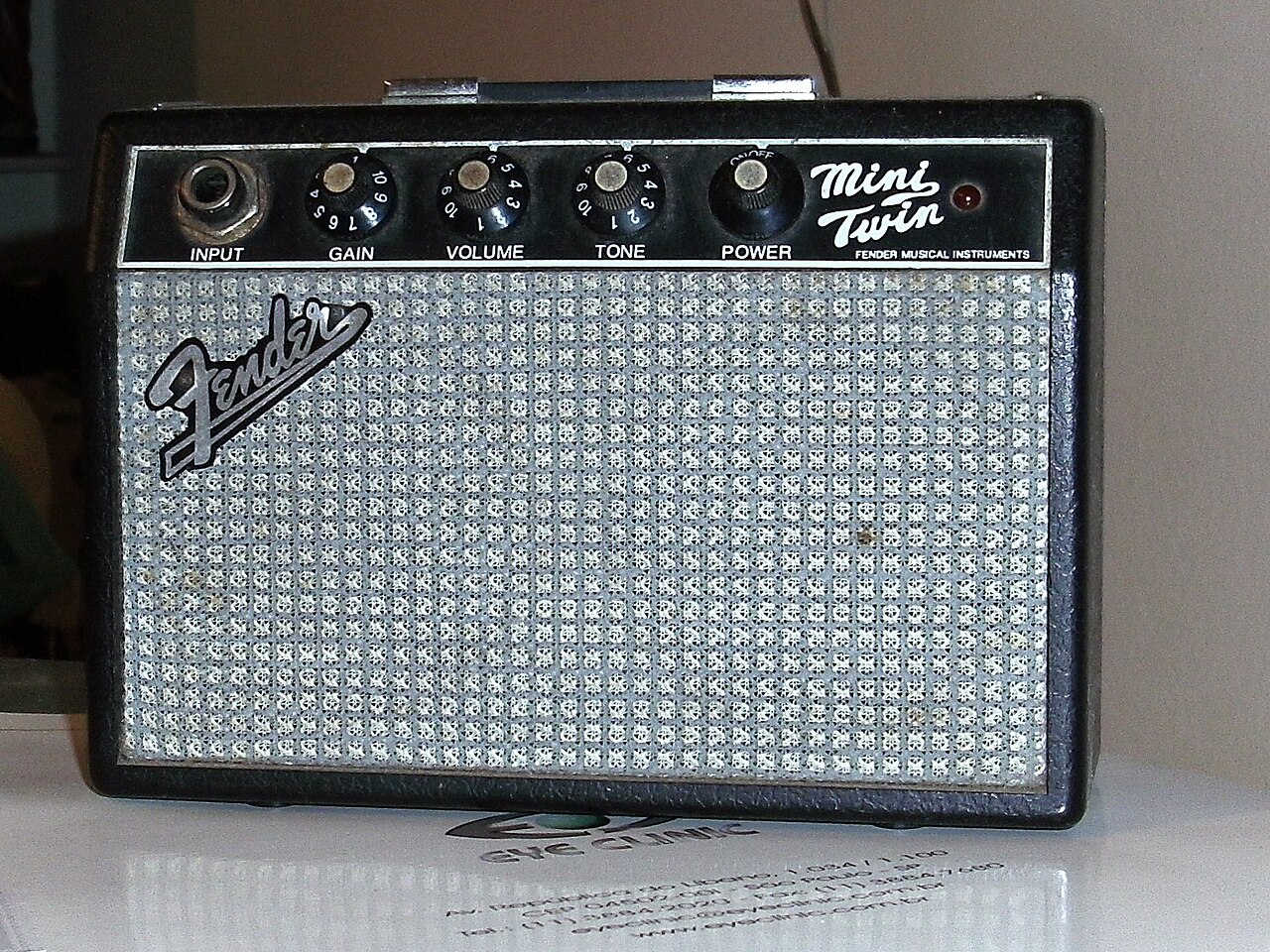
- A Fender Mini Twin amplifier: Onjacktallcuca, Wikimedia Commons, Public domain.
- Larry Carlton: Kenneth C. Zirkel, Wikimedia Commons, CC BY-SA 4.0.
- Eric Johnson: Jud McCranie, Wikimedia Commons, CC BY-SA 4.0.
- Mike Campbell: Brian R. Grubb, Wikimedia Commons, CC BY-SA 3.0.
- Paul Gilbert: matt barsden, Wikimedia Commons, CC BY-SA 2.0.
Latest News
Related
On This Day
Monday 9 November
From this week: