
In this guide
In 1990, Gibson set out to build a faithful copy of the 1960 Les Paul Standard and ended up creating something that never actually existed in the vintage era. The Les Paul Classic borrowed the slim, fast 1960-style neck and the narrow headstock that vintage collectors prize, then added modern touches no 1960 Gibson ever had — coil-tapping, phase switching, a weight-relieved body — and priced the result above the regular Standard of the day. Three and a half decades later, the Classic occupies a strange and useful place in the Les Paul family: part historical tribute, part modern workhorse, entirely its own thing.
It sits alongside the Standard ’60s covered elsewhere on this list as another Slim Taper-neck Les Paul, but where that guitar chases vintage-correct authenticity, the Classic openly embraces modern electronics and construction shortcuts in service of a more versatile instrument. This is the story of how a reissue project turned into a permanent fixture of Gibson’s catalog.
Read our guide to the Gibson Les Paul Standard.
From 1960 Tribute to Modern Standard: A History
Gibson launched the Les Paul Classic in 1990 as a reissue built specifically around the 1960 Les Paul Standard — the final year of the original single-cutaway production run, prized for its unusually slim neck carve compared to the chunkier 1958 and 1959 examples. The early Classic borrowed a genuine list of period-correct details: a narrower headstock matching 1960 specifications, thin cutaway binding, aged yellowish fingerboard inlays, an inked-on serial number, and nickel hardware. One detail set it apart immediately from a true vintage-correct reissue: Gibson left the pickup coils exposed rather than covered, a look that happened to be historically accurate too, since many original owners removed their pickup covers in search of brighter tone, but which also gave the Classic its own distinct visual identity.
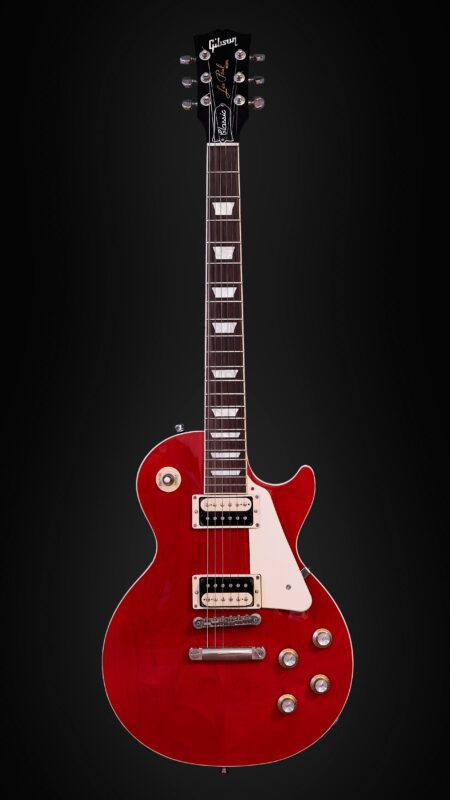
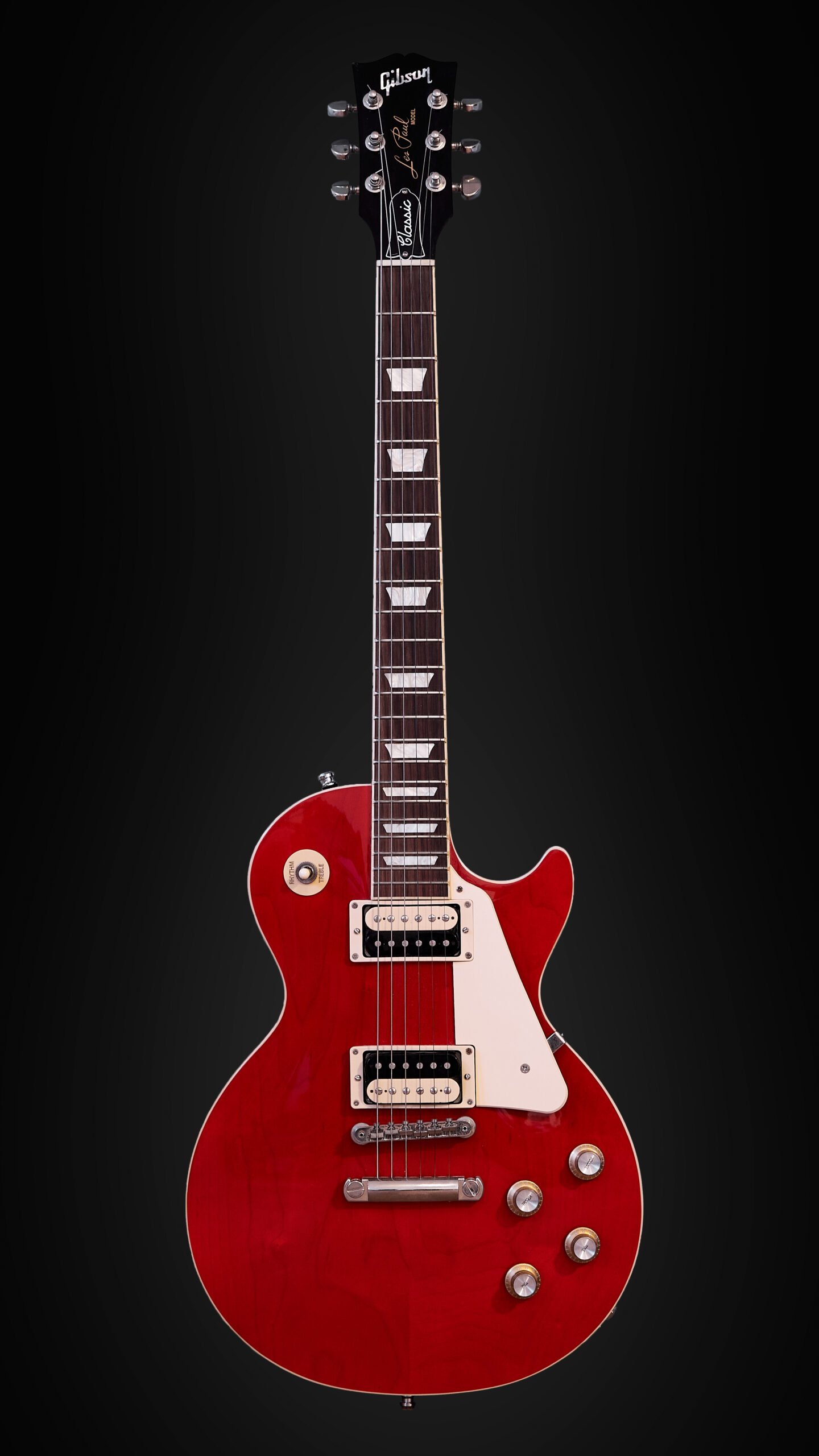
The Classic launched at $1,529 — notably more expensive than the standard Les Paul Standard of the era, an unusual positioning for a guitar built around cost-conscious modern manufacturing rather than premium vintage-correct materials. Gibson refined the branding in 1993, changing the headstock decal from the generic “Les Paul Model” to “Les Paul Classic” specifically to stop unscrupulous sellers from swapping parts and passing a Classic off as a pricier vintage reissue. Over the following decades, the model evolved considerably: modern versions added a weight-relieved body with either seven or nine holes depending on the era, four push-pull control pots enabling coil-tapping, phase-reversal, and pure bypass switching, and open-coil “zebra” Burstbucker pickups that became one of the model’s most recognizable visual signatures.
The Classic’s positioning within Gibson’s catalog has shifted more than most models over its lifespan. In its early years it functioned almost as an affordable alternative to a full vintage-correct reissue, giving players the coveted slim 1960 neck feel without Custom Shop pricing. As Gibson’s own Standard-series lineup matured to offer dedicated ’50s and ’60s neck-profile options directly, the Classic’s role pivoted toward being the electronics-forward, switching-heavy option within the family — less about recreating a specific historical guitar and more about offering the widest tonal range from a single traditionally-styled Les Paul. That repositioning is a large part of why the Classic has remained in continuous or near-continuous production since 1990, even as the rest of Gibson’s Les Paul range has been reshuffled and renamed repeatedly around it.
Full Specifications
Deep Dive: The Switching System That Sets It Apart
What genuinely distinguishes the Classic from every Standard-series Les Paul covered elsewhere on this list isn’t the wood or the neck carve — it’s the electronics. Four push-pull control pots give access to coil-tapping (thinning each humbucker down to a brighter, single-coil-like voice), phase reversal (an out-of-phase, hollow, nasal tone when both pickups are selected), and pure bypass (removing the tone and volume circuitry from the signal path entirely for maximum clarity and output). That’s a genuinely broader tonal palette than the vintage-correct wiring on a Standard ’50s or ’60s, and it puts the Classic in direct competition with the Les Paul Studio covered elsewhere on this list for players who prioritize versatility — though the Classic dresses that versatility up in more historically-flavored cosmetics, including the distinctive open-coil zebra pickup look.
Read our guide to the Gibson Les Paul Modern.
The open-coil pickup design deserves its own mention, since it’s become one of the Classic’s most identifiable visual signatures. Removing the plastic pickup covers isn’t purely cosmetic — many players and builders describe a subtle brightening and increase in perceived output when covers come off, the same reason vintage players so often removed theirs. Whether that’s a meaningful tonal difference or largely psychological is a long-running debate among Les Paul owners, but the “zebra” look — one coil with a different bobbin color from the other, a byproduct of how Gibson originally wound humbucker pairs — has become inseparable from the Classic’s identity regardless of the tonal debate.
Sound in the Mix
Because the Classic shares core construction with the Standard-series guitars, it occupies similar sonic territory in a mix — thick, sustaining, midrange-forward. What separates it is flexibility: the coil-tap option lets a Classic owner thin the tone out for a cleaner rhythm part or a brighter texture without switching instruments, and the phase-reversal switch adds a hollow, nasal quality unavailable on any Standard-series guitar without aftermarket modification. That combination of classic Les Paul body and neck construction with genuinely broader switching options is precisely why the Classic has held a stable place in Gibson’s catalog for over three decades — it gives working musicians access to more tonal ground from a single guitar than a vintage-correct instrument can offer.
Famous Players: The Working Rock Guitar
Jimmy Page, Slash, Duane Allman, Joe Perry, and Gary Moore are the names most often tied to the Les Paul, but none of them are documented Classic players; their instruments are vintage-original or Custom Shop reissue Standards and Customs, not this specific 1990s-onward production model. The Classic’s real players are a somewhat different, still genuinely notable, cast.
Joe Walsh of the Eagles has owned and played a Les Paul Classic 1960 Reissue, putting a genuinely famous Les Paul player’s name behind the specific model rather than just the general Les Paul family. Ace Frehley of KISS played a Les Paul Classic live in the early 1990s, not long after the model’s introduction, connecting it to the same glam-and-arena-rock lineage that made Les Pauls iconic in the first place. Billy Duffy of The Cult has spoken directly about his reliance on a 1960 Reissue Goldtop Classic as a genuine working guitar — in his own words, describing it as an inexpensive, honest instrument that sounds great and gets used constantly on stage, after swapping the pickups and tuners and removing the pickguard and covers to suit his taste. That kind of unglamorous, hands-on relationship with the instrument — buy it, modify it to taste, play it hard for years — is arguably more representative of how most Classic owners actually use the guitar than any mythologized vintage-collector story could be. Vivian Campbell of Def Leppard has also been photographed with a Goldtop Classic, identifiable by the “Classic” stamp on the neck plate, alongside his more commonly cited Les Pauls.
Tone Recipes
Open-Coil Classic Rock: Bridge pickup, tone around 6-7, into a cranked tube amp. The zebra Burstbuckers deliver a slightly brighter, more open voice than covered pickups, well suited to cutting classic-rock lead tones.
Coil-Tapped Clean: Pull up the volume knob to engage coil-tapping, neck pickup, into a clean amp. Access a genuinely thinner, single-coil-adjacent tone the Standard-series guitars can’t produce without modification.
Out-of-Phase Funk: Both pickups selected with phase switch engaged, moderate gain, funk-style muted rhythm playing. The hollow, nasal quality of out-of-phase wiring is a texture unique to guitars with this specific switching option.
How It Compares
Against the Les Paul Standard ’60s covered elsewhere on this list, the Classic shares the same Slim Taper neck philosophy but trades vintage-correct wiring for genuinely more versatile electronics and a lower price point. Against the Les Paul Studio, also covered on this list, the two guitars compete closely on the “modern versatility” axis, with the Studio typically running slightly cheaper and the Classic offering more period-flavored cosmetics like the open-coil pickups and aged trapezoid inlays. For a lighter, differently-shaped alternative with related Burstbucker-style tone, the Gibson SG Standard is worth a look. On the amp side, the Classic’s open-coil pickups pair naturally with a Marshall 1959 Super Lead Plexi for vintage-leaning crunch or a Marshall JCM800 2203 for higher-gain modern rock tones. Players chasing thick, saturated textures often add an Electro-Harmonix Big Muff Pi in front of a clean-to-edge-of-breakup amp.
Buying Guide
The current Les Paul Classic runs around $2,499, positioning it roughly $1,000 below a comparable Standard while sharing much of the same core construction — a genuinely strong value proposition for players who want the coil-tapping and phase-switching versatility over vintage-correct wiring and cosmetics. Vintage-market buyers should pay close attention to production year: the model’s specification has shifted meaningfully across more than three decades, from the original 1990-era nickel-hardware, non-weight-relieved builds to later weight-relieved versions with different pickup sets and control layouts. The 1993 headstock decal change is a useful dating reference for anyone trying to identify an early example, and the shift to zebra open-coil Burstbuckers in later production runs is another clear visual marker separating earlier and later Classics.
Double-cutaway Classic variants also exist, offering considerably easier upper-fret access at the cost of the model’s classic single-cutaway silhouette — worth considering for players whose playing style leans heavily on the upper register. For a lower-cost route into similar open-coil, coil-tappable Les Paul tone, Epiphone’s catalog includes comparable dual-humbucker models, though the exact “Classic” branding and specific 1960-spec details are Gibson-exclusive.
Finish choice on the Classic carries a bit more nuance than on some other Les Paul models, since the Goldtop option in particular has developed its own following among working musicians drawn to its brighter visual presence on stage and its slightly different tonal reputation compared to sunburst examples — some players describe a subtle brightness difference attributable to the opaque gold finish versus a translucent sunburst, though wood variation between individual guitars likely plays as large a role as finish color in any perceived tonal difference. Heritage Cherry Sunburst and Ebony remain the most common and easiest-to-find finish options across the secondary market.
Ownership Notes
The Classic’s SlimTaper neck, while beloved for speed and comfort, has drawn some owner complaints about feeling less substantial than a thicker vintage-spec neck — worth testing directly if maximum neck mass and a more traditional feel matter to you. The weight-relieved body brings the Classic’s overall weight down meaningfully compared to a non-relieved vintage-spec Standard, a genuine advantage for long gigs, though as with any weight-relieved Les Paul, some players report a subtle difference in low-end density compared to a solid, non-relieved body. The four push-pull controls add mechanical complexity beyond simpler Standard-series wiring; while generally reliable, it’s worth testing all switching functions thoroughly before buying a used example, since pot and switch wear is more common on guitars that have seen heavy use of the coil-tap and phase options.
FAQ
What’s the real difference between a Les Paul Classic and a Standard ’60s?
Both share a similar Slim Taper neck philosophy, but the Classic adds coil-tapping, phase-reversal, and pure-bypass switching via four push-pull pots, along with open-coil “zebra” pickups, while the Standard ’60s uses more traditional, vintage-correct wiring and covered pickups.
Why are the pickups uncovered on the Classic?
It’s both a tonal and a historical choice — many original 1960s Les Paul owners removed their pickup covers seeking brighter tone, and the open-coil “zebra” look (mismatched bobbin colors between the two coils) became a Classic signature that Gibson has kept as a visual identifier for the model ever since.
Is the Classic a good choice for gigging musicians?
Yes — its weight-relieved body, versatile switching options, and price point below a comparable Standard make it a popular choice among touring players, including Billy Duffy of The Cult, who has spoken about using a Classic Goldtop as a genuine, reliable workhorse.
Has the Classic’s specification changed a lot over the years?
Considerably — from the original 1990-era nickel-hardware, non-relieved builds to later weight-relieved versions with different pickup sets and control layouts, so used buyers should confirm exact production year and specification rather than assuming consistency across the model’s three-plus decades of production.
What does “pure bypass” mode actually do?
It removes the volume and tone potentiometers from the signal path entirely when engaged, sending the pickup signal as directly as possible to the output jack — a small but audible boost in clarity and output that some players prefer for solos or situations where maximum signal integrity matters most.
Photo: Gibson Les Paul Classic in translucent cherry, photographed 11 November 2024. The photographer identifies its pickups as Gibson ’57 Classic Zebra; this image does not depict the current 60s Burstbucker specification listed above. © Anil Öztas. Source photograph, CC BY 4.0. Full source frame; display resizing only, no crop or retouch. No build year is asserted.