John Scofield Guitars & Gear: The Complete Guide to Jazz Fusion’s 1981 Ibanez AS-200, Vox AC30 & RAT Distortion Rig
John Scofield guitars & gear: jazz fusion legend. 1981 Ibanez AS-200, Vox AC30, Pro Co RAT, DigiTech Whammy — Miles Davis, A Go Go, Uberjam complete pedalboard guide.
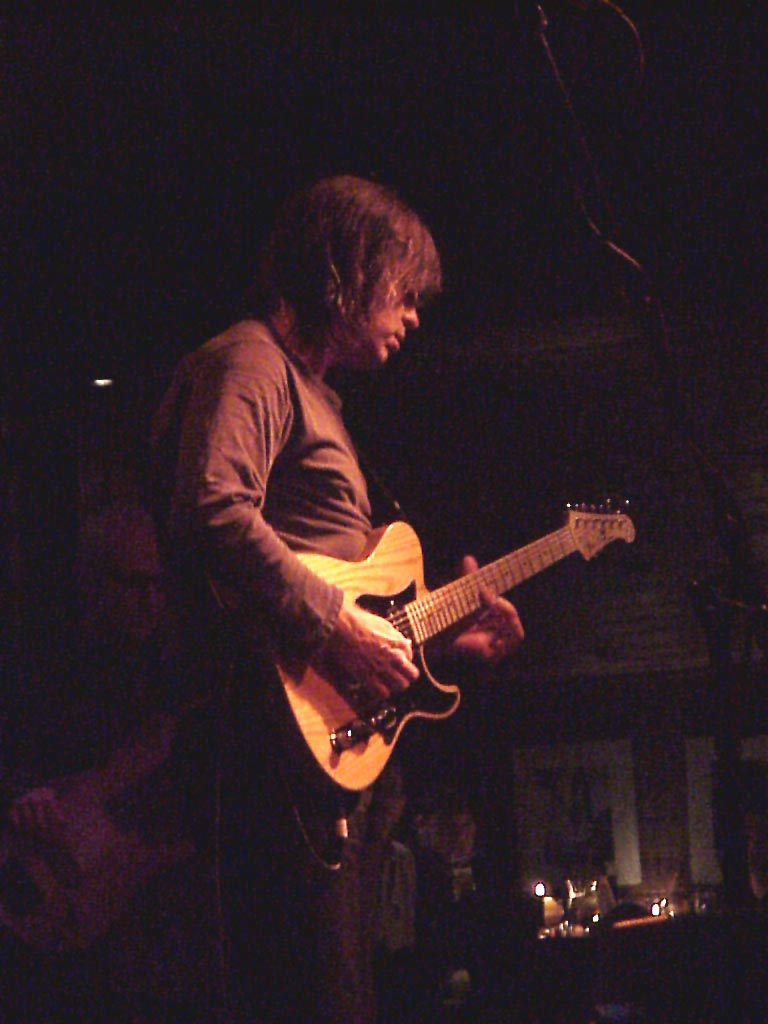
Photo by Harald Krichel, licensed under CC BY-SA 3.0
Gear Timeline
John Scofield’s primary guitar for nearly twenty years was a 1981 Ibanez AS-200 — a hollow-body electric that he played through an assortment of effects and his beloved Vox AC30, producing the specific tone that made him one of the most immediately identifiable jazz guitarists of the past four decades. The AS-200 was not chosen for its prestige or its vintage provenance or its market value; it was chosen because it worked for what Scofield needed it to do — the hollow-body warmth, the sustaining character, the specific Ibanez construction quality of a Japanese-made instrument from 1981 that produced the right tone for the specific combination of jazz, blues, funk, and rock that Scofield has spent his career developing and refining. His Ibanez signature models — the JSM100 and JSM200, later the JSM20TH anniversary edition — are based on the AS-200 and represent the formal institutional recognition of what the 1981 instrument provided: the correct architecture for the Scofield sound. The Vox AC30 is the primary amplification: “For more than 30 years, Scofield’s main guitar has been an Ibanez AS-200,” and the AC30 has been the amplifier for a similarly extended period, the EL84-powered British clean with the specific compression and chime that suits the hollow-body Ibanez’s warm output. Between the guitar and the AC30: the Pro Co RAT Distortion, the Ibanez Analog Chorus in purple, the Boss GE-7 EQ Vertex-modified to true bypass, the DigiTech Whammy, the various Line 6 delay and filter units, the Boomerang Phrase Sampler. The specific, elaborate, personally organized pedalboard of a jazz musician who uses effects not as atmospheric decoration but as compositional tools — each pedal serving a specific function in the specific musical contexts that the Scofield career has developed across. “I leave the reverb on all the time,” he told Premier Guitar. “A quick reverb. Although occasionally if I really want some definition I like to play without reverb.” The reverb on all the time. The 1981 AS-200. The AC30. The RAT. The distinctive, unmistakable John Scofield sound.
The Journey
John Scofield was born on December 26, 1951, in Dayton, Ohio — the same Dayton where Jorma Kaukonen bought his 1958 Gibson J-50 at Pop’s Music Store, though Kaukonen bought his guitar in 1959 when Scofield was seven years old — and raised in suburban Connecticut. He took up guitar at age eleven, inspired by both rock and blues players before discovering jazz. He attended Berklee College of Music in Boston, made his first recording with Gerry Mulligan and Chet Baker, joined the Billy Cobham-George Duke band for two years, recorded with Charles Mingus in 1977, joined the Gary Burton quartet, and began his international career as a bandleader and recording artist in 1978. He joined Miles Davis’s band in 1982 and remained for three years — three years that are the defining professional context of his mature musical identity, the specific creative environment that shaped the specific combination of jazz sophistication and rock and blues directness that has characterized his work since.
The Miles Davis period is the specific biographical chapter that most completely documents what the Scofield guitar approach brought to the most significant American jazz musician of the second half of the twentieth century. Davis assembled the specific musicians he needed for each specific creative phase of his career; Scofield’s presence in the band from 1982 to 1985, on albums including Star People (1983) and Decoy (1984), documents what Davis heard in the Scofield approach: the specific combination of jazz improvisational intelligence and rock guitar expressiveness that Davis was pursuing in his electric period. The fusion of jazz and rock that Davis had pioneered from Bitches Brew onward found a specific guitar voice in Scofield that was simultaneously more jazz-educated and more rock-influenced than the alternatives, and the specific guitar sound — the hollow-body Ibanez through the RAT and the AC30 — provided the specific tonal character that Davis’s late-period electric compositions required.
The Medeski Martin and Wood collaboration — A Go Go (1998) — is the specific post-Miles Davis recording that most directly documents the Scofield blues-funk-rock guitar voice in its most commercially accessible and most stylistically unexpected form. Medeski Martin and Wood’s organ-bass-drums format — the Hammond B3, the electric bass, the drum kit — is the specific groove-oriented jazz context that allowed Scofield’s blues-funk guitar to function as the melodic and harmonic lead voice without the usual jazz rhythm guitar’s chord-comping role. The result is one of the more celebrated jazz-funk crossover albums of the 1990s: the Scofield guitar voice over the MMW groove, the specific tonal character of the 1981 AS-200 through the effects chain over the Medeski Martin and Wood rhythmic sophistication. If you haven’t heard A Go Go, the best thing to know about the Scofield gear story is that it produced A Go Go. Start there. Then work backward to Miles Davis and forward to the rest of the catalog.
Background: Dayton, Berklee, Miles Davis, and the AS-200 That Defined a Sound
The Berklee College of Music attendance is the specific educational context that distinguishes Scofield from the self-taught or apprenticeship-trained tradition of most blues and rock guitarists documented in this series. Berklee’s jazz guitar curriculum provides the specific formal education in jazz harmony, jazz theory, jazz history, and jazz technique that produces musicians who can engage with the improvisational and harmonic demands of the jazz tradition at the highest available level. Scofield absorbed the Berklee education and then applied it to the specific combination of blues, rock, and funk influences that had attracted him to the guitar in the first place — the rock and blues players who “inspired” him at age eleven — producing the specific hybrid that makes his guitar playing immediately identifiable as jazz in its harmonic and improvisational sophistication and immediately identifiable as rock and blues in its rhythmic energy and tonal directness.
The Gerry Mulligan and Chet Baker debut recording is the specific professional initiation into the jazz world at the highest available level: Mulligan and Baker were two of the most celebrated jazz musicians of the cool jazz tradition, and playing on their recording as a young guitarist established Scofield’s credentials in the jazz context from the beginning of his professional career. The Billy Cobham-George Duke band, Charles Mingus, and Gary Burton are the subsequent professional contexts that developed those credentials further before the Miles Davis engagement made them internationally known.
Miles Davis’s specific talent for identifying and assembling the right musicians for his specific creative moment is the documented factor that brings Scofield into the Miles Davis band in 1982. Davis was in his electric-fusion period, developing the specific combination of jazz improvisation and funk-rock rhythm that had characterized his work since the late 1960s, and Scofield’s specific guitar voice — the hollow-body warmth through the effects chain, the jazz harmonic vocabulary with the rock and blues expressive directness — was the specific missing element that the band needed. The 1982-1985 Davis period produced recordings that document the specific Scofield guitar contribution to the Miles Davis electric-fusion approach at the level of quality that Miles Davis always demanded from his musicians.
The subsequent solo career — building from Rough House (1979) through Electric Outlet (1984), Still Warm (1986), Blue Matter (1987), Meant to Be (1991), Hand Jive (1994), Groove Elation (1995), A Go Go (1998), Überjam (2002), This Meets That (2007), A Moment’s Peace (2011), Überjam Deux (2013), Country for Old Men (2016), Combo 66 (2018), and Swallow Tales (2020) — is a remarkably consistent body of work that documents the sustained development of the specific Scofield guitar voice across four decades of recording. The 1981 AS-200 through the effects chain to the AC30 appears across essentially all of it, the specific instrumental combination producing the consistent tonal identity that allows the listener to recognize the Scofield sound immediately across the stylistic range of the catalog.
The Rig: John Scofield’s Guitars, Amps, and Effects
Guitars
“For more than 30 years, Scofield’s main guitar has been an Ibanez AS-200,” as the Premier Guitar rig rundown documents. The 1981 Ibanez AS-200 is a hollow-body electric guitar from Ibanez’s Japanese production of the early 1980s — the specific period of Ibanez’s highest-quality Japanese-made instruments, when the lawsuit-era copies had evolved into genuinely competitive original designs. The AS-200’s specific character: a hollow-body design with the specific acoustic warmth and resonance of the hollow construction, dual humbuckers providing warm output with the specific hollow-body acoustic complexity added to the humbucker signal. The hollow body’s acoustic resonance creates a natural feedback susceptibility at high volumes that Scofield exploits as a compositional element — the controlled feedback of the hollow-body through the distortion and the AC30 producing the specific sustaining, harmonically complex lead tones that characterize his playing. His signature models — the Ibanez JSM100 and JSM200, later the JSM20TH anniversary model — are based on the AS-200 with specific modifications. The JSM100 features Super 58 humbuckers and the original 70s AS/AR headstock design, maintaining the AS-200’s fundamental tonal architecture in a production format.
Scofield’s signature Ibanez instruments — the JSM10, JSM100, JSM200, and the 20th anniversary JSM20TH — are the production versions of the 1981 AS-200’s specific tonal architecture, developed in collaboration with Ibanez to provide the Scofield-specific specification in a consistently producible format. The JSM20TH features JSM Special humbuckers, a half-bone/half-brass nut for smooth Scofield-style sounds, and Scofield’s signature on the gold truss rod cover. The specific hollow-body architecture of all the JSM models — based on the AS200 with added tweaks — maintains the fundamental sonic character of the 1981 AS-200 while incorporating modern manufacturing precision and Scofield’s specific learned requirements for the instrument’s playability and tonal response.
Scofield has used a custom Ibanez GB model — a black Custom Shop GB with the standard GB headstock inlay, a thin hollow-body with Ibanez-designed tremolo and HSH pickup configuration (Humbucker-Single Coil-Humbucker with 5-way selector). The GB model’s tremolo system adds the vibrato option that the standard AS-200 doesn’t have, providing additional expressive options for specific musical contexts.
On the Überjam Deux album (2013), Scofield used a Fender Custom Shop Relic’d Strat alongside the primary AS-200 and a mid-1970s Ibanez T-style guitar. The Stratocaster’s single-coil character provides a different tonal voice from the hollow-body Ibanez humbuckers — brighter, more cutting, with the specific single-coil quack in the in-between positions — appropriate for the rock-influenced Überjam context where the Strat’s specific character contributed to the broader tonal palette of the recording.
Amps
“In this video, Scofield mentions his love for AC30s.” When backline is provided, Scofield requests two reissue Vox AC30TB amps and then chooses one to use during soundcheck. When possible, his preference is for pre-2006 models. The Vox AC30’s specific character — the EL84-powered British amplification with the specific compression and chime that the EL84 output stage produces at appropriate volumes — is the specific amplification that suits the 1981 AS-200’s hollow-body humbucker output. The AC30’s Top Boost channel’s additional treble presence adds the specific articulation that the hollow-body’s natural warmth can obscure in other amplification contexts. The Vox’s natural EL84 compression at working volume produces the specific “soft” quality of Scofield’s articulation — the notes bloom rather than attack, the sustain is natural rather than pedal-induced, and the specific EL84 harmonic character adds warmth and complexity to the hollow-body’s already harmonically rich output.
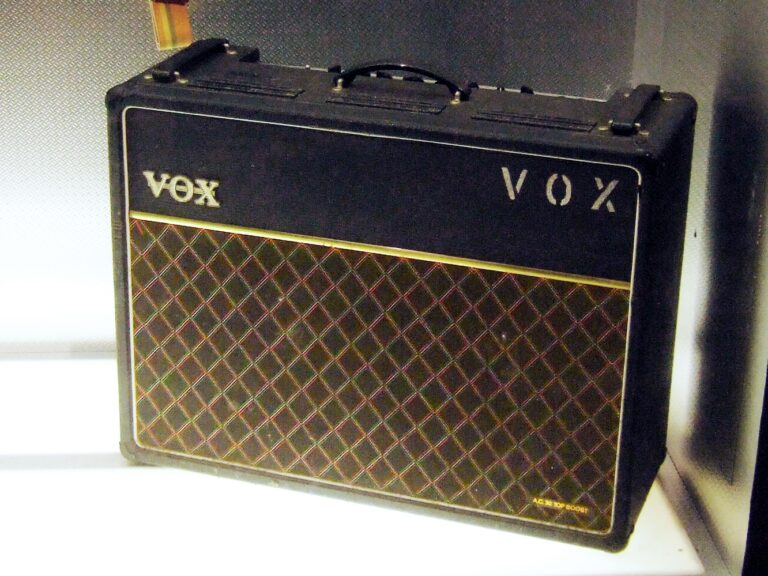
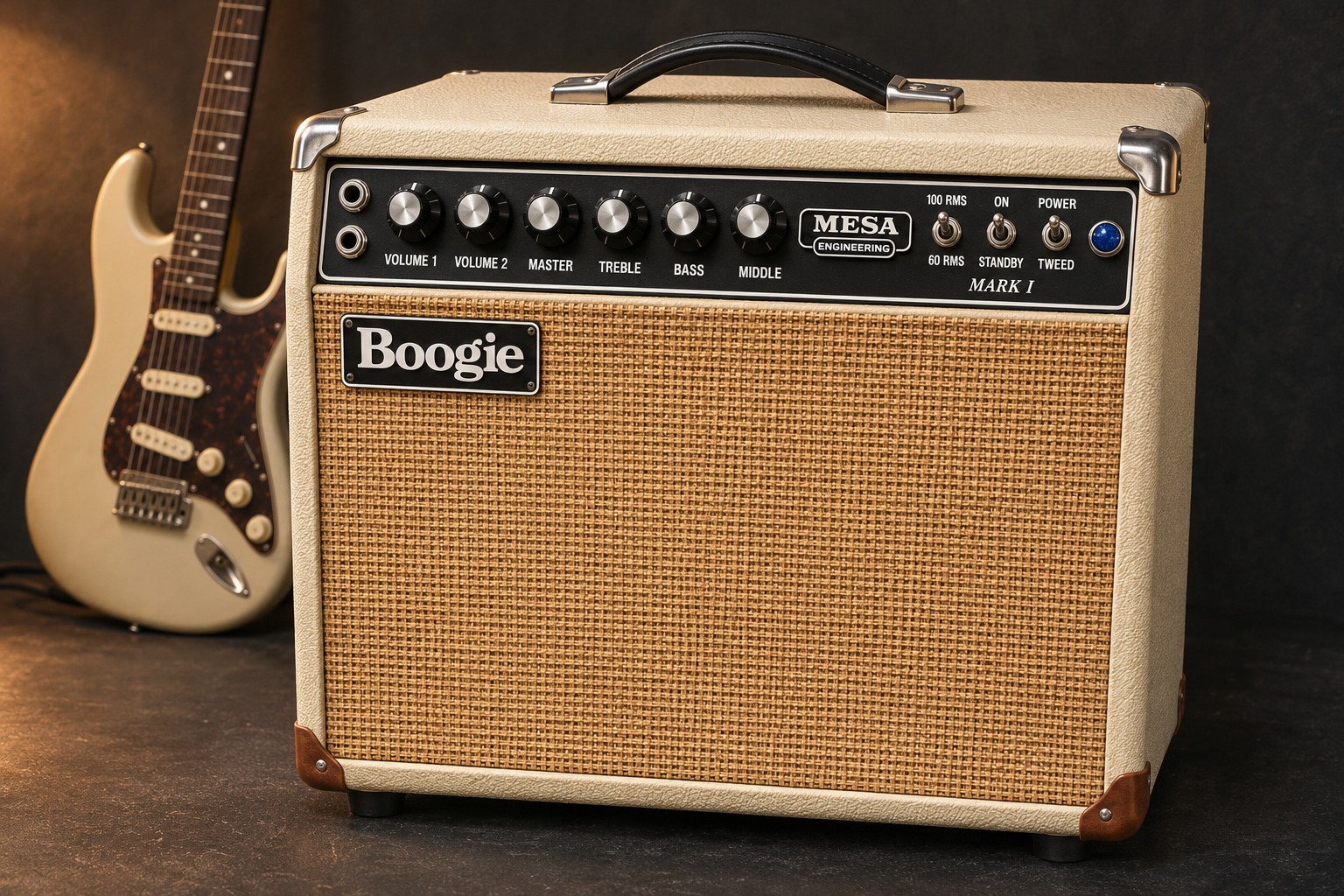
The Scofield gear website documents both the Vox AC30 and the Mesa Boogie Mark I reissue as amplification options. The Mesa Boogie Mark I — the original Randall Smith Boogie design, one of the foundational high-gain amplifiers of 1970s and 1980s rock — provides a very different tonal character from the AC30: more gain, more midrange saturation, the specific multi-gain-stage Boogie preamp character. When the AC30 is unavailable, the Mesa Boogie provides the alternative amplification with its different but compatible character for the Scofield approach.
Effects
The Pro Co Sound RAT Distortion pedal is the primary documented distortion effect in Scofield’s signal chain — listed first in the effects section of his own gear website and the foundational distortion that has defined the Scofield guitar tone since the early AS-200 period. The RAT’s specific character: a hard-clipping op-amp distortion that produces a thick, aggressive, musically useful distortion character — less smooth than the TS9 Tube Screamer’s soft-clipping character, harder and more aggressive, with the specific mid-forward voice that cuts through the ensemble context. The RAT’s “Filter” control (which cuts high frequencies in the opposite direction from a standard tone control, producing a specific midrange bloom) is part of the specific RAT character that Scofield exploits for the thick, warm, harmonically complex distortion that his jazz-fusion context requires. The hollow-body Ibanez’s warm humbucker output through the RAT into the AC30 produces the specific Scofield distortion sound that is simultaneously aggressive (the RAT’s hard clipping) and warm (the hollow-body’s acoustic resonance and the AC30’s EL84 character).
The Ibanez Analog Chorus pedal — the purple one specifically — is the documented chorus effect in Scofield’s chain, providing the specific analog bucket-brigade chip chorus character that adds warmth and harmonic width to the AS-200’s output. The analog chorus’s slightly warm, slightly pitch-modulated character suits the jazz context: not the obvious, obvious chorus of a mass-market tone but the subtle widening and warming that the bucket-brigade chip’s specific analog character provides. The “purple” specification confirms the specific vintage Ibanez analog chorus unit that Scofield has used for an extended period.
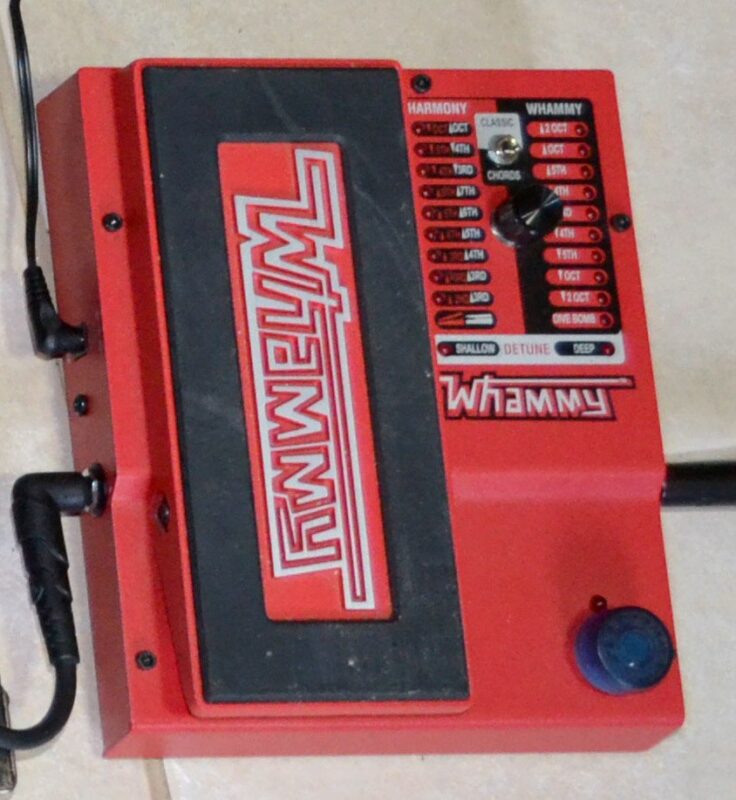
The DigiTech Whammy/Wah XP100 appears in Scofield’s signal chain as a pitch-shifting and wah combination unit — the specific multi-function DigiTech unit that combines the whammy’s pitch-shifting (harmonizing, detuning, octave-shifting) with the wah’s frequency-filtering. In the Scofield context, the Whammy’s pitch-shifting functions serve as compositional elements rather than as spectacle — the specific interval shifts and harmonizations that expand the harmonic vocabulary available from the AS-200’s standard-tuned output.
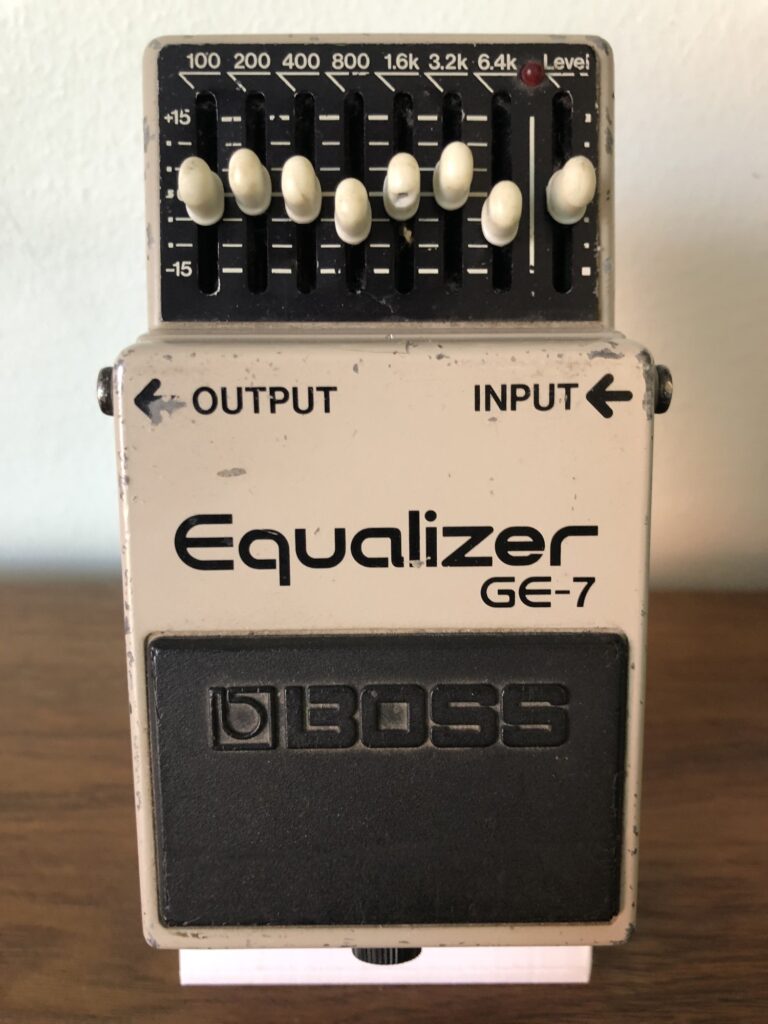
“Scofield’s Boss EQ pedal has been modified by his guitar tech at Vertex to be true bypass. ‘I use this occasionally for rhythm if I want super treble,’ Scofield says.” The Boss GE-7’s seven-band graphic equalization, modified for true bypass to avoid the tonal loading of the standard buffered output, provides the specific frequency shaping that Scofield uses for rhythm guitar contexts where he wants “super treble” — a brighter, more cutting frequency balance than his standard settings provide.
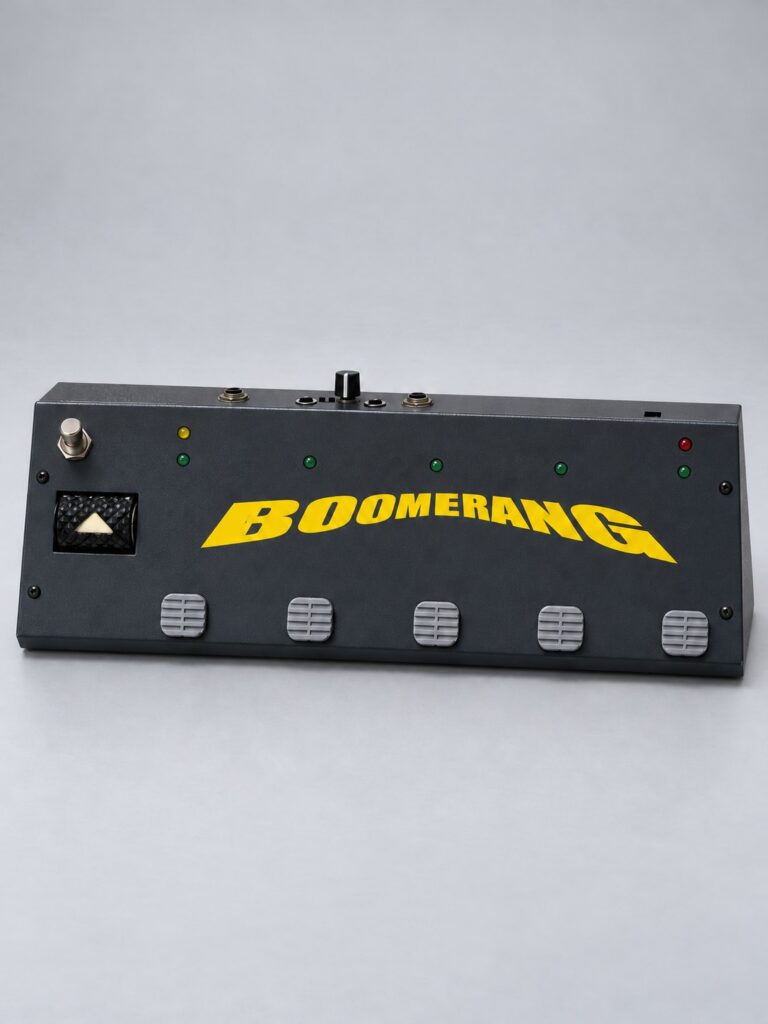
The Boomerang Phrase Sampler and Boss Loop Station in Scofield’s rig provide the looping capability that allows real-time composition in the live performance context — the ability to record a phrase and loop it as a foundation for subsequent improvisation. In the jazz-fusion context, looping provides the rhythmic and harmonic foundation that a rhythm section provides in the conventional band format, allowing the guitarist to build layered performances from a single guitar source.
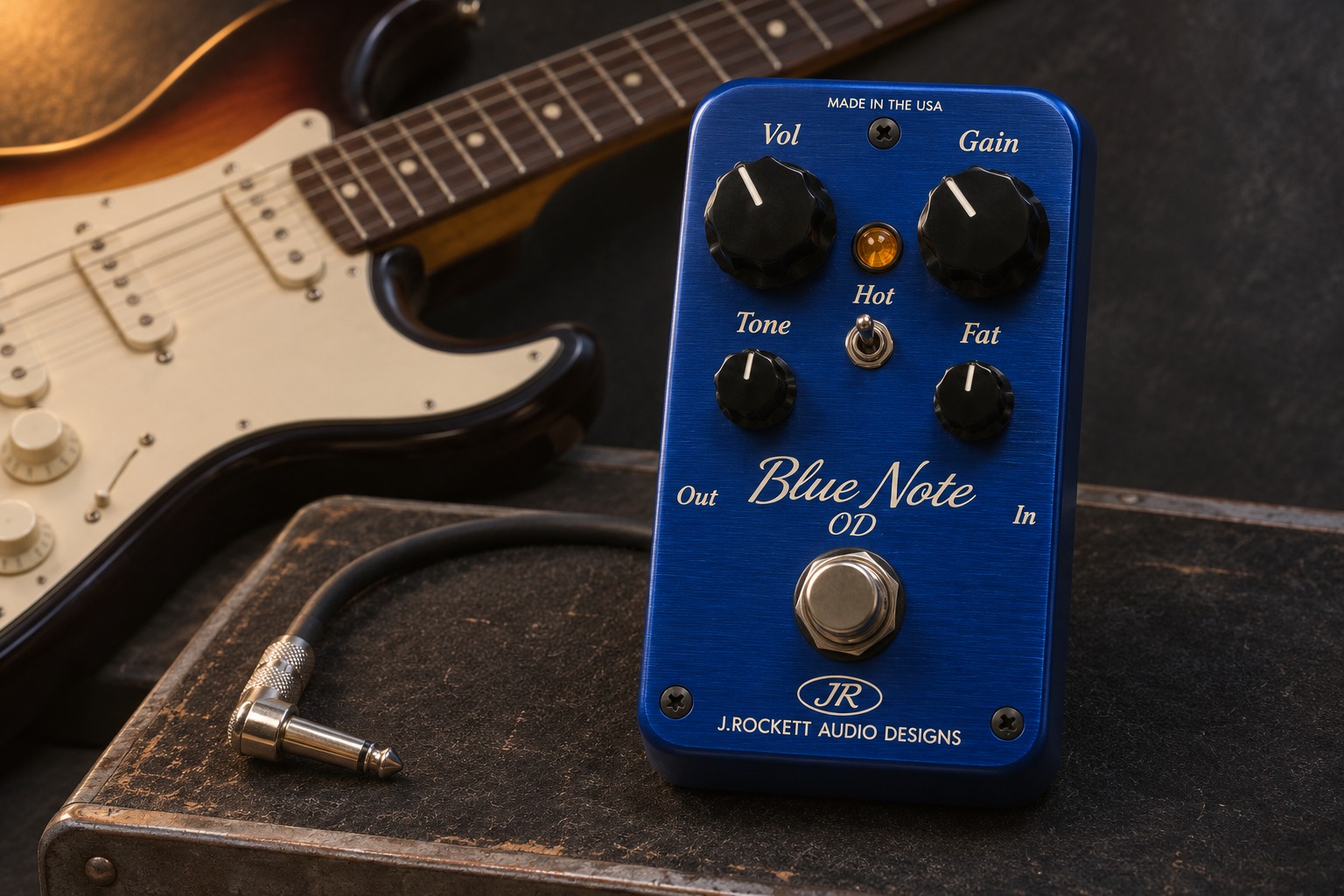
The J. Rockett Blue Note Overdrive appears in the Premier Guitar rig rundown pedalboard for the Überjam Deux tour — a transparent overdrive/boost pedal that adds volume and harmonic complexity without significant tonal coloration. The Blue Note’s clean boost application provides the additional output level and harmonic warmth for specific solo passages that require more push than the standard RAT distortion provides.
“It’s a nice reverb. A quick reverb. I leave it on all the time, although occasionally if I really want some definition I like to play without reverb, so I will turn it off.” The reverb as the constant ambient texture — always present, adding the specific spatial dimension that keeps the hollow-body’s naturally dry acoustic character from sounding too close and too direct. The reverb “on all the time” is the specific ambient production choice of a jazz musician who understands that the spatial quality of the sound environment is as important as the notes themselves. Quick reverb — not lush, not saturated, but present and defining the sonic space.
The specific Scofield approach to the blues influence within the jazz context is the element that most directly distinguishes his guitar from the purely jazz tradition. The blues is present not as a stylistic reference — not as blues licks quoted within a jazz solo — but as a fundamental tonal and expressive orientation: the way he bends strings, the way the RAT’s distortion adds the specific harmonic roughness that the blues guitar uses as an expressive resource, the way the AC30’s EL84 compression shapes the attack and decay of each note with the specific softness that allows blues expressiveness to emerge from jazz harmonic content. The jazz vocabulary and the blues expression are not separate elements in the Scofield approach; they are simultaneous, producing a guitar voice that is harmonically jazz and tonally blues and rhythmically funk simultaneously. The AS-200’s hollow-body warmth allows all three to coexist: the acoustic resonance provides the jazz guitar’s characteristic warmth, the RAT’s distortion provides the blues guitar’s characteristic edge, and the funk rhythmic approach provides the groove that makes the combination physically compelling. The AC30’s EL84 character provides the specific amplification that allows all three to be heard without one dominating the others.
The Vox AC30’s specific connection to the British Invasion tradition that shaped rock guitar in the 1960s — the Beatles, the Rolling Stones, the Shadows all used Vox amplification as the primary amplification of the early British rock approach — is an unexpected biographical dimension of a jazz guitarist’s amplifier choice. Scofield chose the AC30 not because of its rock history but because of its specific EL84 character and its suitability for the hollow-body Ibanez’s output in the jazz-funk context. The fact that the same amplifier served the Beatles and Scofield confirms what the AC30’s specific character actually provides: the clean headroom and the specific EL84 compression that serves multiple musical contexts equally well, from the British Invasion’s clean jangle to the jazz-fusion’s dirty warmth. The AC30 doesn’t belong to a genre; it belongs to a specific approach to amplification, and that approach happens to serve John Scofield’s specific guitar voice as well as it served the Shadows’ clean melody. The reverb is on all the time. The RAT is engaged. The hollow-body is warm. The AC30 is chosen at soundcheck. The post-bop jazz vocabulary is applied to the funk groove. The Scofield sound results.
Playing Style & Tone Philosophy
John Scofield plays guitar as a jazz improviser whose foundational vocabulary is the post-bop jazz tradition of the 1950s and 1960s, applied to the specific rhythmic and tonal contexts of funk, blues, and rock through the specific equipment combination of the hollow-body Ibanez, the RAT, the chorus, and the AC30. The “funk-edged jazz and R&B” description that Ibanez uses on his artist page is the most compressed available characterization: the jazz harmonic sophistication and improvisational intelligence applied to the funk and R&B rhythmic context, with the blues tonal expressiveness and the rock energy providing the emotional directness that the purely jazz context sometimes lacks.
His tone has a distinctive “dirtier” quality than most jazz guitarists — the RAT’s presence in the signal chain producing a specific distorted character that is unusual in the jazz context but completely appropriate for the funk-influenced approach. In recent years, Scofield has embraced a cleaner tone on some of his straight-ahead recordings — “Think Vox amp and no RAT” in the straight-ahead jazz context — demonstrating the specific tonal adaptability of the AS-200 and the AC30 across different musical contexts: the same guitar and amp, the RAT engaged or bypassed, producing completely different tonal characters appropriate for different musical requirements.
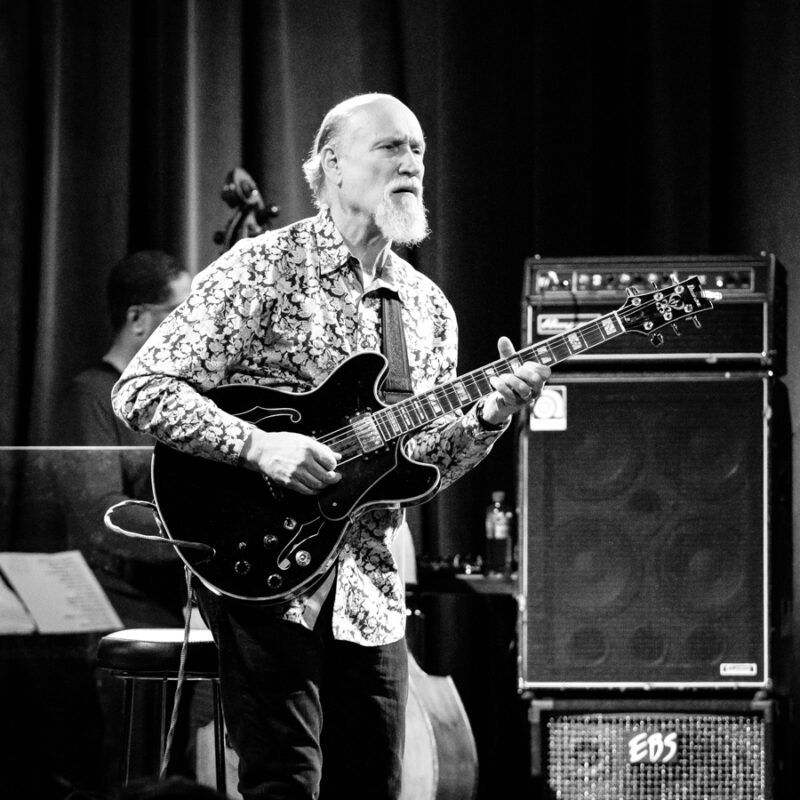
“I leave the reverb on all the time” is the specific philosophical statement that captures the Scofield approach to the sonic environment: the reverb is not an effect added for specific passages but the constant ambient condition through which all the playing occurs. This is the jazz musician’s understanding of sound as environment rather than as object: the reverb creates the space in which the notes exist, and the notes exist differently in that space from how they would exist in the dry, direct signal. The reverb is on all the time because the spatial environment is always a compositional element.
The Überjam series — Überjam (2002) and Überjam Deux (2013) — represents the most expansive available expression of the Scofield electric guitar approach in the rock-funk-jazz context. The first Überjam brought drum loops, electronic beats, and the Scofield guitar together in a context that was simultaneously jazz-educated and electronically contemporary, demonstrating that the AS-200/RAT/AC30 combination could operate within the electronic production contexts of the early 2000s without losing its specific organic character. The Überjam Deux expanded the palette with the Fender Custom Shop Relic’d Strat and the mid-1970s Ibanez T-style guitar alongside the primary AS-200 — three different guitars in the same recording, each contributing a different tonal character to the specific tracks that required it. The hot-rodded Strat’s single-coil clarity, the vintage Ibanez T-style’s specific aged character, and the AS-200’s decades-familiar hollow-body warmth: three different tonal perspectives on the same essential Scofield guitar vocabulary, recorded with the same Vox AC30 and the same RAT and the same reverb on all the time. The vocabulary is consistent; the instruments adapt to the specific requirement of the specific track. This is the jazz musician’s approach to guitar selection: whatever serves the music. The AS-200 serves the music most of the time. When it doesn’t, the Strat is in the case.
How to Sound Like John Scofield
The John Scofield tone requires: an Ibanez AS-200 or JSM signature hollow-body (dual humbuckers, hollow construction); a Vox AC30 (EL84-powered, pre-2006 preferred, Top Boost channel); a Pro Co RAT distortion as the primary gain source; an Ibanez analog chorus (purple); reverb set to “quick” and left on all the time; and the specific post-bop jazz harmonic vocabulary applied to funk rhythmic patterns with blues expressive bending. The equipment is accessible and affordable by high-end jazz standard; the vocabulary requires genuine jazz education.
| Control | Setting (0–10) | Notes |
|---|---|---|
| Vox AC30 (Primary — EL84 Character) | Volume: 6; Treble: 7; Bass: 5; Top Boost: engaged | The AC30 Top Boost channel for the specific treble presence that articulates the hollow-body’s warm humbucker output clearly. EL84 compression at volume 6 provides the specific soft, natural compression that makes the Scofield notes bloom rather than attack. Pre-2006 models preferred for the specific EL84 character of the vintage-specification output stage. When backline: request two, choose one at soundcheck. |
| Pro Co RAT Distortion (Primary Drive) | Distortion: 5; Filter: 4; Volume: 6 | The foundational Scofield distortion. Distortion at moderate settings — not the maximum saturation of the heavy rock context but the specific jazz-funk distortion that adds harmonic complexity and sustain without obscuring the melodic clarity of jazz improvisation. The Filter control at 4 provides the RAT’s specific midrange bloom without excessive high-frequency rolloff. |
| Ibanez Analog Chorus (Purple) | Rate: 2–3 (slow); Depth: 4 | Slow, subtle analog chorus — the bucket-brigade chip’s warm modulation adding harmonic width without obvious pitch wobble. The analog chorus’s specific warmer character versus digital chorus suits the hollow-body’s acoustic character. The purple Ibanez unit specifically. |
| Reverb (On All the Time) | Short: 0.4–0.6 seconds; Mix: 20–25% | “I leave it on all the time.” Quick reverb at low-to-moderate mix — present but not lush. Short decay time (under 1 second) for the “quick reverb” character. The mix at 20–25% keeps the dry signal dominant while adding the specific spatial dimension. Turn it off occasionally “if I really want some definition.” |
| 1981 Ibanez AS-200 (Hollow-Body) | Both humbuckers; Volume: 8; Tone: 6 | The hollow-body’s acoustic resonance adding warmth and complexity to the humbucker output. Both pickups engaged for the balanced tone. Volume slightly back from full for the dynamic range between comping and soloing. The specific 1981 Japanese-made character — the hollow-body construction’s natural bloom and feedback susceptibility at performance volumes. |
| Post-Bop Jazz Vocabulary (Essential) | Berklee degree preferred; Miles Davis on the resume | The equipment produces the tone. The vocabulary provides the content. The Scofield approach requires the specific jazz harmonic and improvisational vocabulary — the altered scales, the symmetric diminished scale, the bebop lines, the chromaticism — applied to the funk rhythmic context with blues expressive bending. The RAT and the AC30 provide the vehicle. The jazz education provides the content. Both are essential. |
Influence & Legacy
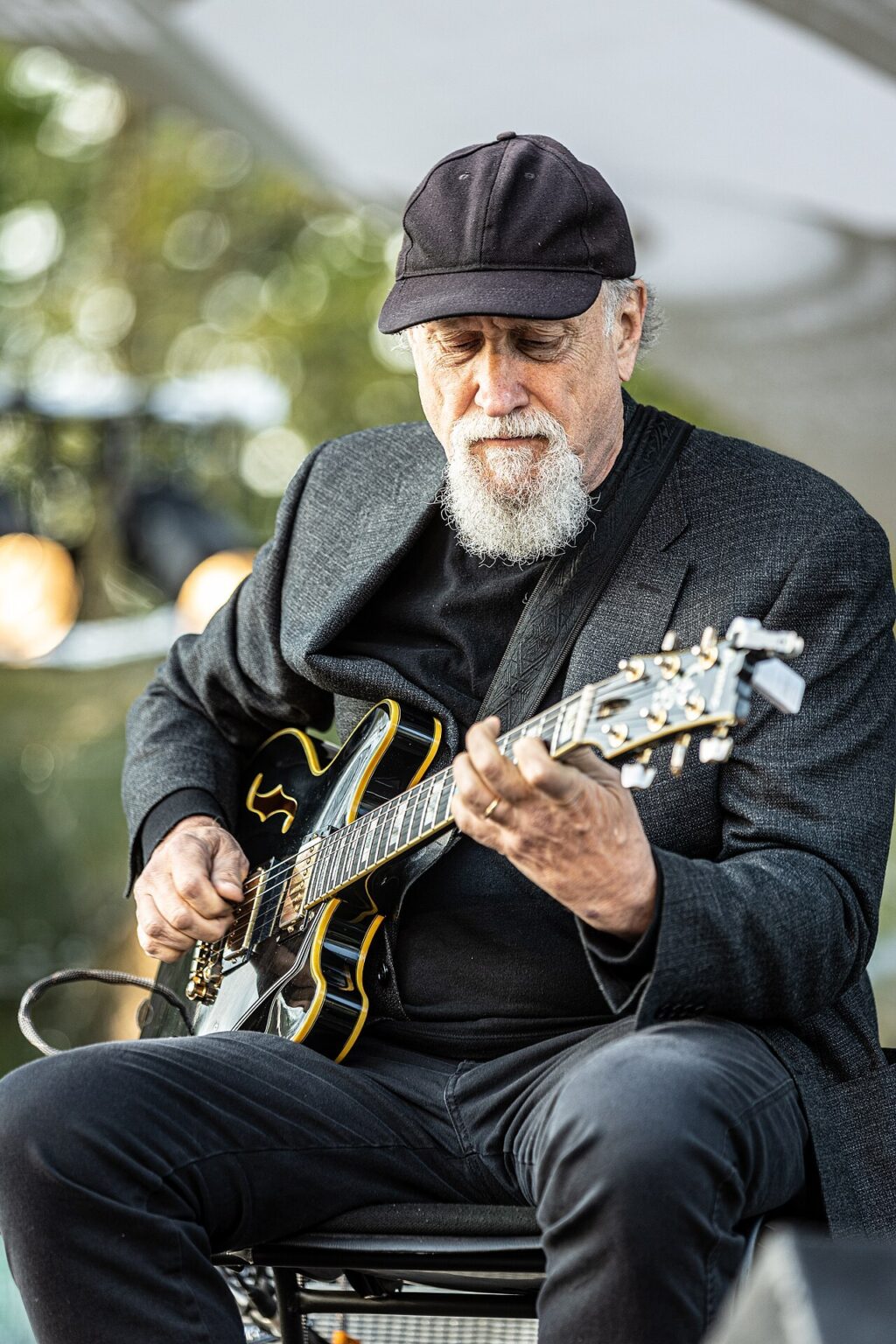
John Scofield’s influence on jazz guitar is the influence of the specific individual who demonstrated that the jazz guitar could engage with funk, rock, and blues tonal approaches without abandoning the jazz harmonic and improvisational sophistication that distinguishes the jazz tradition from those other traditions. The “funk-edged jazz, and R&B” description is both accurate and insufficient: Scofield’s specific contribution is not merely the addition of funk rhythms to jazz harmonics, but the specific integration of the blues guitarist’s tonal expressiveness (the RAT, the hollow-body feedback, the specific aggressive attack of the distorted guitar) with the jazz improviser’s harmonic intelligence into a single coherent guitar voice that is simultaneously jazz and rock and blues and funk without being fully any one of them.
The Miles Davis period is the specific institutional credential that established Scofield’s guitar voice as significant at the highest available jazz standard. When Miles Davis assembles a band, the musicians he chooses are those whose specific capabilities serve his specific creative vision; Scofield’s presence in the Davis band from 1982 to 1985 is the specific peer assessment from the most respected available peer that the Scofield guitar approach was at the level of quality that Davis required. The subsequent career — the A Go Go collaboration with Medeski Martin and Wood, the Überjam series, the straight-ahead jazz recordings, the blues and country recordings — documents an artist who understood that the Miles Davis association established a standard rather than a definition, and who has continued developing the guitar voice beyond the specific jazz-fusion context into the full range of American popular music traditions.
For the jazz guitar tradition that Scofield participates in and extends, the Pat Metheny and Wes Montgomery entries represent parallel jazz guitar developments from different stylistic directions — Metheny’s more purely jazz approach, Montgomery’s octave-playing foundational technique, both informing the broader jazz guitar world in which Scofield’s funk-edged voice occupies its specific position. The Medeski Martin and Wood collaboration connects to Jorma Kaukonen’s blues-groove approach — both guitarists working with organ-bass-drums groove contexts that allow the guitar to function as the primary melodic and expressive lead voice. And the hollow-body Ibanez guitar’s specific connection to the jazz guitar tradition’s preference for hollow-body and semi-hollow instruments for warmth and resonance connects to Robbie Robertson’s Gibson collection — both guitarists understanding the hollow-body’s specific acoustic character as the correct foundation for the American music tradition they serve.
The 1981 Ibanez AS-200, still in service. The AC30, pre-2006 preferred, two requested and one chosen at soundcheck. The RAT, distortion at moderate settings. The purple Ibanez analog chorus. The reverb, on all the time, quick reverb, occasionally turned off for definition. The post-bop jazz vocabulary over the funk rhythms. The Miles Davis years. The Medeski Martin and Wood collaboration. The A Go Go album that you should start with. John Scofield, born December 26, 1951, Dayton Ohio. The same Dayton where Jorma Kaukonen bought his J-50 in 1959, when Scofield was seven. The AS-200 through the RAT through the AC30. The specific, unmistakable sound. Still being made. Still on the road. The reverb is still on. Quick reverb. You know it when you hear it. The AS-200 has been the primary guitar for nearly twenty years and has no intention of retiring. The RAT is engaged. The AC30 was chosen at soundcheck over the second AC30 that was also requested. The post-bop jazz vocabulary is applied to the funk groove. John Scofield, born December 26, 1951, Dayton Ohio. The A Go Go album is where you start. The reverb is already on when you get there. It never turned off. It was never going to.
Frequently Asked Questions: John Scofield Guitars & Gear
What guitar does John Scofield use?
John Scofield’s primary guitar for nearly twenty years has been a 1981 Ibanez AS-200 — a hollow-body electric that he has used since the early period of his solo career. His Ibanez signature models — the JSM10, JSM100, JSM200, and JSM20TH anniversary edition — are all based on the AS-200’s hollow-body architecture with specific modifications. On the Überjam Deux album (2013), he also used a Fender Custom Shop Relic’d Stratocaster and a mid-1970s Ibanez T-style guitar alongside the primary AS-200. He has also used a custom Ibanez GB model hollow-body with tremolo and HSH pickup configuration.
What amplifier does John Scofield use?
Scofield’s primary amplification is the Vox AC30. When backline is provided, he requests two reissue Vox AC30TB amplifiers and chooses one during soundcheck. His preference is for pre-2006 AC30 models. He mentions his love for AC30s in multiple interviews. When the AC30 is unavailable, his documented alternative is the Mesa Boogie Mark I reissue. The AC30’s EL84-powered British character — the specific compression and chime of the EL84 output stage — suits the hollow-body Ibanez’s warm humbucker output in the jazz-funk context.
What effects does John Scofield use?
Scofield’s primary effects include: Pro Co RAT Distortion (primary gain source, listed first on his gear website), Ibanez Analog Chorus in purple, Boss GE-7 EQ (Vertex-modified to true bypass, used “occasionally for rhythm if I want super treble”), DigiTech Whammy/Wah XP100, Boomerang Phrase Sampler, Boss Loop Station, J. Rockett Blue Note Overdrive (clean boost), TC Electronic Polytune Mini (tuner), Vertex Axis Wah, Line 6 delay and filter units, and a reverb that he leaves on all the time: “I leave it on all the time. A quick reverb. Although occasionally if I really want some definition I like to play without reverb.”
What was John Scofield’s connection to Miles Davis?
Scofield was a member of Miles Davis’s band from 1982 to 1985, appearing on albums including Star People (1983) and Decoy (1984). Davis assembled the specific musicians he needed for each creative phase of his career, and Scofield’s presence documents what Davis recognized in his guitar approach: the specific combination of jazz improvisational intelligence and rock-blues expressiveness that Davis’s late-period electric-fusion compositions required. The Miles Davis association is the specific institutional credential that established Scofield’s jazz guitar voice as significant at the highest available level of the jazz tradition.
What is “A Go Go” and why is it significant?
A Go Go (1998) is John Scofield’s collaborative album with the trio Medeski Martin and Wood — the organ, bass, and drums groove group whose Hammond B3 and rhythm section provided the specific funk-jazz context for Scofield’s guitar as the primary melodic and expressive lead voice. The album is widely regarded as one of the most successful jazz-funk crossover recordings of the 1990s, combining MMW’s groove-oriented approach with the Scofield guitar voice in a format that was accessible to audiences beyond the jazz market while maintaining the improvisational and harmonic sophistication that jazz audiences required.
Why does Scofield leave his reverb on all the time?
“It’s a nice reverb. A quick reverb. I leave it on all the time, although occasionally if I really want some definition I like to play without reverb, so I will turn it off.” Scofield treats reverb as a constant ambient texture — the spatial environment in which all his playing occurs — rather than as an effect applied to specific passages. The reverb creates the space in which the notes exist, and the hollow-body Ibanez’s naturally warm, resonant character benefits from the spatial dimension that even a quick, subtle reverb provides. It is, in the jazz musician’s understanding, the sonic environment that the playing inhabits.
What music should I listen to first to understand Scofield’s guitar approach?
Start with A Go Go (1998) with Medeski Martin and Wood — the most directly accessible entry point to the Scofield guitar voice in a funk-groove context that is immediately engaging. Then the Überjam albums (2002, 2013) for the electric-funk-rock Scofield. For the straight-ahead jazz context with less distortion and more bebop vocabulary, try the more recent Combo 66 (2018) or Swallow Tales (2020). For the Miles Davis connection, the Davis albums Star People (1983) and Decoy (1984) document the Scofield AS-200 in the most historically significant available context. The reverb is on in all of them.
Image credits
- Mesa Boogie Mark I Reissue (Alternative): GuitarGangsters AI-generated reference illustration, not a photograph.
- J. Rockett Blue Note Overdrive (Modern): GuitarGangsters AI-generated reference illustration, not a photograph.
- Top image: by Harald Krichel, CC BY-SA 3.0.
- John Scofield: photo by Gampe, via Wikimedia Commons, CC BY-SA 4.0.
- John Scofield: photo by Tore Sætre, via Wikimedia Commons, CC BY-SA 4.0.
- Vox AC30 Top Boost: wetwebwork; existing crop and contrast/color adjustments: Clusternote, Wikimedia Commons, CC BY-SA 2.0.
- DigiTech Whammy: marcelodonati, Wikimedia Commons, CC BY 2.0.
- John Scofield live: Harald Krichel, Wikimedia Commons, CC BY 3.0.
- BOSS GE-7 Equalizer: Kuriosatempel, Wikimedia Commons, CC BY-SA 4.0.
- Boomerang Phrase Sampler: GuitarGangsters AI-generated reference illustration, not a photograph.