Gear Timeline
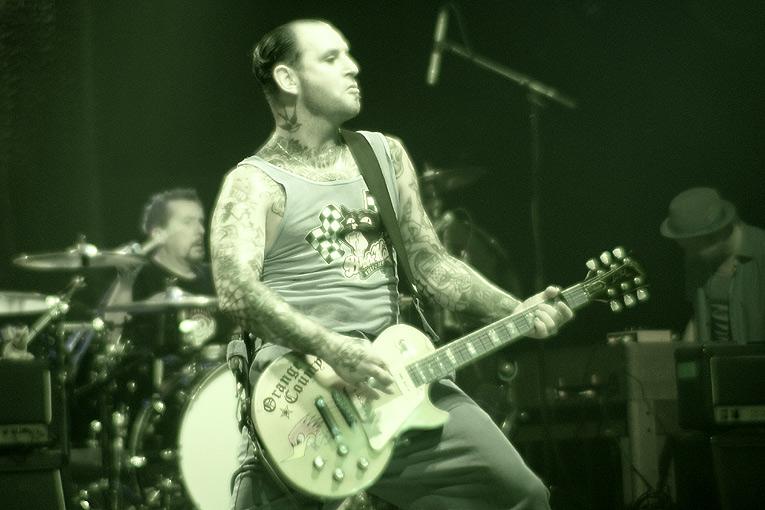
Mike Ness started listening to the radio at four years old and heard the Beatles, Creedence Clearwater Revival, the Supremes, and the Rolling Stones. He grew up in the working-class suburb of Fullerton, California on blues, classic rock, and country. He started Social Distortion as a teenager in 1978 and was promptly arrested at the band’s first show for spitting in a cop’s face. He spent the subsequent decade recording punk records, developing a heroin addiction, getting arrested for burglary, hospitalized for overdoses, and eventually cleaning up and rebuilding the band from scratch. The result was Prison Bound (1988) and the self-titled Social Distortion (1990) — the album that contained “Story of My Life” and “Ball and Chain” and a cover of Johnny Cash’s “Ring of Fire” that demonstrated exactly how far Mike Ness was willing to push the specific combination of punk energy, outlaw country swagger, and the specific emotional directness of the American blues tradition that he had absorbed from the radio at four years old. The Social Distortion (1990) album went gold. It was the first Social Distortion record on the Billboard chart. It was produced by what the LA Times called “one of the most underrated pure songwriters in rock.” The guitar on it was a modified 1976 Gibson Les Paul Deluxe Goldtop — the humbuckers replaced with P-90s, stickers on the body, the specific warm, biting character of the P-90 through a 1967 Fender Bassman and a Marshall 4×10 cabinet. The stickers include “Orange County,” “Clay Smith Cams Mr. Horsepower,” and “I Voted.” This is the Mike Ness guitar. The stickers tell you who plays it. The P-90s tell you what it sounds like. The Bassman tells you how that sound gets amplified. The combination tells you everything.
Michael James Ness was born on April 3, 1962, in Lynn, Massachusetts, and his family moved to Fullerton, California when he was young. Fullerton is in Orange County — the specific Southern California geography of suburban working-class culture, where the punk scene of the late 1970s developed in the specific context of young people who were not the Sunset Strip’s rock star culture and not the beach culture of surf and sun but something harder-edged and more politically aware: the suburban kids for whom the punk movement’s anti-institutional energy was not a fashion choice but a genuine cultural response to the specific conditions of working-class Southern California suburban life. Mike Ness was one of those kids, and he built Social Distortion from that specific cultural position, eventually developing the band into the specific hybrid of punk, outlaw country, blues, and rockabilly that has been their primary musical identity since the 1990 self-titled breakthrough.
The 1976 Gibson Les Paul Deluxe Goldtop — modified with P-90 pickups replacing the original mini-humbuckers, stickers applied across the body, aged to match the decades of touring and performing it has survived — is the primary physical document of Ness’s guitar identity. The Gibson Mike Ness 1976 Les Paul Deluxe Custom Shop signature (2022) replicates the original in detail: three-piece maple neck, two-piece plain maple top, mahogany/maple/mahogany back, P-90 pickups, lighter weight for versatility, and the Murphy Lab aging that replicates the specific worn appearance of the original. The stickers — Orange County, Clay Smith Cams Mr. Horsepower, I Voted — are included. This is the level of specific documentation that a guitar identity requires when the instrument is sufficiently associated with its player that the signature model must include the stickers: not an idealized version but an exact replica, aged marks and all.
The Dennis Danell loss — his best friend and fellow band member, Social Distortion’s rhythm guitarist since the beginning, who died in 2000 from a brain aneurysm while moving into a new house in Orange County — is the biographical catastrophe that recontextualizes the entire Social Distortion story. The band that survived punk’s self-destructive tendencies, that survived Ness’s addiction years, that survived the arrests and the hospitalizations and the rebuilding, lost its founding rhythm guitarist to a brain aneurysm at forty-one years old. Danell had been there since 1978. The loss shaped the emotional character of the subsequent Social Distortion recordings — the specific quality of feeling in “Machine Gun Blues,” “Bad Luck,” and the later material reflects a musician who has experienced both the self-imposed destruction of addiction and the external, arbitrary destruction of losing a lifelong musical partner to a medical event no one could have predicted or prevented.
His position in the American punk tradition — the specific cowpunk that Social Distortion pioneered, combining Johnny Cash’s outlaw country with the Ramones’ punk energy and Robert Johnson’s Delta blues directness — is the most complete available description of what made the 1990 self-titled album the breakthrough it was. “Ring of Fire” covers don’t usually announce artistic ambition; this one did, because the specific tonal blend that Ness had developed — the P-90 Goldtop through the Bassman, the Nashville country chords in the punk rock context — made the Cash cover feel like a homecoming rather than a novelty. The Beatles, CCR, the Supremes, the Rolling Stones, blues, country. All of it was in the radio at four years old. All of it came out in the 1976 Les Paul Deluxe through the Fender Bassman.
Background: Fullerton, the Addiction Years, and the Cowpunk Breakthrough
The Social Distortion biography has a specific arc that distinguishes it from most bands documented in this series: the formation in 1978, the early punk recordings (Mommy’s Little Monster, 1983), the downward spiral of addiction and arrest that followed, the recovery and the rebuilding, and then the breakthrough — in that specific order. Most bands in this series achieved their commercial peak in the relative early years of their career or in the specific creative period when personal and musical conditions aligned favorably. Ness achieved his commercial peak after the addiction, after the arrests, after the hospitalizations, after the cleaning up, after the rebuilding of the band. The personal experience is embedded in the music: “Story of My Life” and “Ball and Chain” are not general reflections on the human condition; they are specific documents of the specific experience of a specific person who lived through those specific things and found that the specific combination of punk energy and country emotional directness was the right form for that documentation.
The Prison Bound recording (1988) — made during the recovery period — is the bridge between the raw punk of the early Ness and the cowpunk of the 1990 breakthrough. “Prison Bound incorporates rockabilly and outlaw country elements with their typical punk rock sound,” as the wider documentation notes. The specific influence of the outlaw country tradition — Johnny Cash specifically, the Cash whose “Ring of Fire” they would cover two albums later — is the foundational American roots music element that the childhood radio listening had installed and that the specific emotional weight of Ness’s personal experience had activated. Cash’s music is about outlaws, hard luck, the consequences of bad decisions, the specific dignity of surviving those consequences with honesty intact. This is exactly what Ness was writing about in “Ball and Chain” and “Story of My Life.” Cash’s guitar was a Martin acoustic. Ness’s guitar was a 1976 Les Paul Deluxe with P-90s. The emotional territory was the same.
The 1990 self-titled album — the breakthrough — was produced by Dave Jerden, who had also produced Alice in Chains’ Facelift and Jane’s Addiction’s Nothing’s Shocking and Ritual de lo Habitual. The production context — the major-label debut on Epic Records, the professional studio infrastructure — gave the specific Social Distortion sound its fullest commercial realization. The gold certification, the first Billboard chart entry, the “Story of My Life” and “Ball and Chain” singles: these are the specific commercial outcomes of the specific artistic achievement of an album that combined punk, country, blues, and rockabilly in a way that mainstream rock radio could accommodate without the music losing its emotional specificity or its honesty. Ness had written all of it. The P-90 Goldtop had recorded all of it. The Bassman had amplified all of it.
White Light White Heat White Trash (1996) — produced after the interpersonal and creative challenges of the Somewhere Between Heaven and Hell period — contained “I Was Wrong,” the band’s biggest commercial hit, and demonstrated the specific commercial durability of the Social Distortion approach across a second decade of major-label recording. Hard Times and Nursery Rhymes (2011) debuted at number four on the Billboard 200, the band’s highest chart peak, produced for the first time by Ness himself. The LA Times description — “one of the most underrated pure songwriters in rock” — captures the specific quality of a songwriter whose work has consistently demonstrated melodic and lyrical intelligence that the commercial context of the genre category doesn’t always acknowledge.
The Rig: Mike Ness’s Guitars, Amps, and Effects
Guitars
Mike’s main guitar of choice is a modified 1976 Les Paul Deluxe Goldtop. The original Les Paul Deluxe of 1976 used Gibson’s mini-humbuckers — the smaller humbucker format that provides a different tonal character from both the full-size PAF humbucker of the Les Paul Standard and the single-coil-adjacent P-90. Ness replaced the mini-humbuckers with his favorite P-90s, changing the guitar’s fundamental tonal character from the mini-humbucker’s bright, somewhat hollow sound to the P-90’s warmer, rounder, more organically complex character. The P-90’s specific sound — louder and with more midrange presence than a standard single-coil, warmer and less compressed than a humbucker — suits the specific cowpunk blend that Ness developed. It is loud enough for punk, warm enough for country, and expressive enough for the blues tradition that underlies both. The stickers — Orange County, Clay Smith Cams Mr. Horsepower, I Voted — are the visual identity that transforms the factory Goldtop into the specifically Mike Ness guitar. The Gibson Custom Shop Mike Ness 1976 Les Paul Deluxe signature (2022) replicates all of this, including the stickers, in Murphy Lab aged Goldtop finish.
Ness used a black Gibson Les Paul Custom during the Social Distortion self-titled album era — visible in the UC Irvine live video of 1990 and referenced by the Equipboard community documentation. The black LP Custom’s three-pickup configuration and ebony fingerboard produce a different tonal character from the P-90-modified Goldtop: brighter, with the ebony fingerboard’s clarity and the three-humbucker configuration’s tonal variety. The black Custom and the white LP Custom (used in the “Story of My Life” video) represent the specific Gibson Custom visual identity that Ness maintained alongside the primary Goldtop across different recording and performance contexts.
A Fender Telecaster is documented as part of Ness’s guitar inventory, used specifically for “Ball and Chain” — the slow, blues-influenced Social Distortion ballad that sits at the country end of the cowpunk spectrum. The Telecaster’s specific connection to the country guitar tradition — the bridge single-coil’s specific twang, the Telecaster’s association with Nashville session work and country rock — makes it the natural choice for the song that sits closest to the outlaw country heritage that Ness’s Cash influence represents. “Ball and Chain” on a Telecaster is the most direct available expression of the country DNA in the cowpunk blend. The Les Paul for the punk energy; the Telecaster for the country heart.
Amps
The 1967 Fender Bassman is Ness’s primary documented amplification — “Leaning in toward his ’67 Bassman and Marshall 4×10 cab, Ness conjures some juicy feedback,” as the Premier Guitar caption describes. The Fender Bassman — originally designed as a bass amplifier — is the same category of instrument that Gary Rossington used for his Lynyrd Skynyrd recording tone and that George Thorogood’s custom Dual Showman-equivalent approximates: a large-format, American-voiced Fender amplifier with 6L6 power tubes and the specific combination of warmth, clean headroom, and natural saturation at higher volumes that suits both the country and the blues traditions. The 1967 silverface Bassman’s specific character differs slightly from the earlier blackface versions — a different tone stack voicing and a slightly brighter overall character — but the fundamental warmth and the Fender-American identity remain consistent. Paired with the Marshall 4×10 cabinet, the Bassman head provides the amplification through British-voiced Celestion speakers, combining American amplification warmth with British speaker character in the specific combination that produces the “juicy feedback” of the Premier Guitar description.
The Marshall 4×10 cabinet — used with the Fender Bassman head — provides the speaker system that translates the Bassman’s amplified signal into sound. The 4×10 configuration with Marshall’s Celestion speakers produces a specific bright, cutting, British speaker character that differs from the Fender-standard speaker configurations. The combination of American Bassman amplification through British Marshall Celestion speakers produces the specific hybrid character that suits the cowpunk blend: American warmth from the Bassman’s 6L6 tubes, British presence and cut from the Celestion drivers. This is the amplification version of what the music itself is: American and British traditions combined into something specifically Ness’s own.
Effects
Mike Ness uses the Boss SD-1 Super OverDrive — the same Boss overdrive pedal documented in multiple guitarists’ rigs throughout this series as the industry-standard professional overdrive at an accessible price. The SD-1’s asymmetrical clipping character — different from the symmetrical clipping of some overdrive designs — produces the specific warm, mid-forward overdrive character that suits the country and blues influences in the Social Distortion approach. Applied in front of the Fender Bassman, the SD-1 adds drive and harmonic complexity to the clean Bassman signal, pushing the amplifier’s input stage harder and producing the natural overdrive character of the Bassman working beyond its clean headroom. The Boss SD-1’s specific application in the Ness rig: warm overdrive rather than aggressive distortion, consistent with the blues and country influences that shape the sound.
At around 18:35 in a documented interview video, Mike talks about his “secret” pedal. It is either a Klon that has been disguised, or a copy of a Klon, or perhaps a custom pedal modeled on a Klon Centaur. The Klon Centaur — one of the most sought-after and most expensive overdrive/boost pedals in the professional guitar market — is a transparent overdrive/boost pedal that adds volume and harmonic complexity without significantly altering the fundamental tonal character of the guitar and amplifier. Its application in the Ness rig: likely a clean boost into the Bassman, pushing the amplifier’s input for additional headroom and warmth without the Boss SD-1’s more obvious overdrive coloration. The “secret” quality — the disguised or copied pedal used for a specific tonal function that Ness prefers not to publicly document — is itself a piece of gear data: something in his signal chain is a Klon or Klon-equivalent, and it serves a function specific enough to maintain confidentiality about.
The P-90 pickup modification is as much an “effect” as any pedal in Ness’s signal chain — the foundational tonal choice that determines the character of everything that follows. The P-90’s specific advantages over the original mini-humbucker in the Les Paul Deluxe: warmer, more organically complex, with the specific combination of single-coil presence and humbucker warmth that produces the biting, round, expressive tone that suits both the aggressive punk passages and the slower, more emotionally expressive country and blues material. The P-90 is the pickup that multiple guitarists in this series have chosen for similar reasons: Tom DeLonge for American Idiot, Mick Jones for the Les Paul Junior era, Mike Ness for the 1976 Goldtop. The P-90 is the true sound of a guitar, as Tom DeLonge put it. Mike Ness agrees, and replaced the mini-humbuckers to prove it.
The specific texture of Social Distortion’s recording history — the early independent punk albums (Mommy’s Little Monster on 13th Floor Records, 1983; Prison Bound on Restless Records, 1988) followed by the major-label Epic Records period (the self-titled 1990, Somewhere Between Heaven and Hell 1992, White Light White Heat White Trash 1996, Sex, Love and Rock ‘n’ Roll 2004, Hard Times and Nursery Rhymes 2011) — documents the specific arc of a band that built its credibility and its audience on the independent circuit and then expanded the reach of that specific music through the major label infrastructure without compromising the emotional honesty that the cowpunk tradition demands. Unlike some punk bands that signed to major labels and produced music that accommodated commercial requirements at the expense of authentic feeling, Social Distortion’s major-label recordings are indistinguishable in their emotional directness from the independent releases: “Story of My Life” and “Ball and Chain” are as honest as anything on Mommy’s Little Monster, and the 1976 Les Paul Deluxe with P-90s that recorded them is as unpretentious as the recording setup that recorded the early independent albums. The P-90 pickup does not care about label affiliation. The Fender Bassman does not care about chart position. The song either has the specific feeling or it doesn’t, and forty years of Social Distortion songs demonstrate that Mike Ness understands how to produce the feeling consistently.
The California context — the specific Orange County suburban working-class environment from which Social Distortion emerged — is worth documenting precisely because it is the geographic and social specificity that gives the cowpunk its authenticity. This is not a transplanted Southern outlaw country tradition; this is a Southern California punk tradition that absorbed the Cash outlaw country aesthetic and the Delta blues directness because those traditions spoke to the specific experience of being young, working-class, and politically aware in Orange County in the late 1970s and early 1980s. The blues and country traditions are American roots music; Orange County punk is American roots music made under different geographic and social conditions. Mike Ness heard both on the radio at four years old and understood they were the same music. The 1976 Les Paul Deluxe with P-90s confirms this understanding with every note it plays through the 1967 Fender Bassman.
Playing Style & Tone Philosophy
Mike Ness plays guitar in the tradition of the American roots music guitarist who understands that the guitar’s role is to serve the emotional honesty of the song rather than to display the technical capability of the guitarist. The 1976 Les Paul Deluxe with P-90s through the Fender Bassman is the specific physical expression of this philosophy: warm enough for country, direct enough for blues, aggressive enough for punk, and honest enough for the specific emotional content of “Story of My Life” and “Ball and Chain.” These are songs about addiction, about relationships, about the specific experience of a specific person who survived things that many people don’t survive. The guitar plays them honestly.
The cowpunk blend — the specific synthesis of outlaw country, punk energy, and Delta blues directness — is not a genre description but a philosophical position: the commitment to using whatever musical tradition serves the specific emotional content of the song, without the genre orthodoxy that would confine the choice to either the punk tradition or the country tradition. Johnny Cash’s “Ring of Fire” is a country song. Mike Ness’s Social Distortion version of “Ring of Fire” is a punk song. Both are the same song. The Les Paul Deluxe with P-90s through the Fender Bassman serves both versions simultaneously, which is the specific tonal versatility of the instrument and amplifier combination.
The LA Times description — “one of the most underrated pure songwriters in rock” — is the most compressed available assessment of the specific quality that the guitar rig serves: the songwriting. The P-90 Goldtop through the Bassman is not a remarkable rig in the context of this series; many guitarists use Les Paul variants through Fender or Marshall amplification. What is remarkable is the specific melodic and lyrical intelligence of the songs that rig has served across forty-plus years of Social Distortion recording, and the specific emotional honesty that the cowpunk blend requires from both the songwriting and the guitar playing.
The Social Distortion live experience — the specific quality of the band’s performing identity that has sustained a worldwide fan base for more than four decades — is inseparable from the specific guitar tone that the 1976 Goldtop with P-90s and the Bassman produces in a live context. Ness leaning toward the amp, conjuring juicy feedback, sweating through songs about addiction and heartbreak and the specific hard-luck experience of being alive in the twentieth century — this is the complete performance. The guitar is one part of it. The songs are the larger part. The performance is where they converge, and the convergence is what makes Social Distortion worth seeing and hearing at any point in a four-decade career. The Telecaster comes out for “Ball and Chain” and the country twang adds the specific country heart to the punk framework that the Les Paul rules. The audience, many of whom have been coming to Social Distortion shows for decades, knows exactly when the Telecaster comes out and what it means. This is the reward of consistent guitar identity across a long career: the audience knows the instruments as well as they know the songs.
How to Sound Like Mike Ness
The Mike Ness Social Distortion tone requires: a Gibson Les Paul Deluxe (or equivalent) with P-90 pickups replacing the factory pickups; a Fender Bassman head (1967 vintage or equivalent) through a Marshall 4×10 cabinet; Boss SD-1 Super OverDrive; and the specific cowpunk playing approach that serves both the punk energy and the country-blues emotional directness simultaneously. Stickers are optional but appropriate.
| Control | Setting (0–10) | Notes |
|---|---|---|
| Fender Bassman (1967 / Equivalent — Primary) | Volume: 6–7; Bass: 5; Treble: 7; Mid: 6 | The American clean-warmth-and-push of the Bassman through the Marshall 4×10 cabinet. Volume at 6–7 for natural 6L6 saturation at performance level — not clean but not aggressively distorted. The Bassman’s specific warmth combined with the Boss SD-1’s additional drive provides the layered overdrive character. Feedback available at closer proximity to the cab. |
| Boss SD-1 Super OverDrive | Drive: 5; Tone: 6; Level: 7 | Warm, mid-forward overdrive into the Bassman. The SD-1’s asymmetrical clipping adds harmonic warmth without the aggressive compression of a distortion pedal — appropriate for the blues and country influences that shape the Social Distortion approach. Level at 7 provides slight volume boost. Drive at 5 for organic overdrive rather than heavy saturation. |
| Klon-style Boost (Secret Pedal) | Gain: low (1–2); Output: 7 | Transparent boost into the Bassman — adding volume and warmth without significant tonal coloration. The Klon’s characteristic midrange push and output boost drives the Bassman input harder. Use a Klon Centaur, clone, or equivalent transparent overdrive/boost at low-gain settings. |
| Gibson Les Paul Deluxe — P-90 Bridge Pickup | Volume: 9; Tone: 7 | The P-90 bridge pickup providing the warm, biting character of the modified Goldtop. Volume slightly back from full for the specific dynamic range between rhythm and lead passages. The P-90’s specific combination of single-coil presence and warmth serves both the punk rhythm passages and the country-blues lead lines. |
| Fender Telecaster (Ball and Chain) | Bridge pickup; Volume: 10 | Switch to the Telecaster for “Ball and Chain” and similar country-adjacent material. The Telecaster bridge single-coil’s specific twang and the Bassman’s American warmth produce the specific country guitar tone that the Cash-influenced material requires. The Telecaster is the country instrument; the Les Paul is the punk-blues instrument. Use accordingly. |
| Cowpunk Philosophy | Punk energy; country heart; blues honesty | The most important row. Serve the song with whatever tradition it requires: punk power chords for the verse, country-style fills for the chorus, blues bends for the bridge. The P-90 Goldtop through the Bassman is versatile enough for all three. The songwriter decides what the song needs. The guitarist provides it. That is the Mike Ness approach. |
Influence & Legacy
Mike Ness’s influence on American punk and alternative rock is concentrated in the specific demonstration that punk’s energy and country’s emotional honesty are not opposites but complements — that the specific American roots music tradition of the blues, country, and rockabilly is the correct foundation for a music that wants to be both aggressive and emotionally true. Social Distortion’s cowpunk blend anticipated the country-rock and Americana movements that became significant commercial forces in the 1990s and 2000s, and the specific combination of Cash-style outlaw country with the Ramones-influenced punk energy produced music that resisted both genre orthodoxies while fully inhabiting both traditions.
The Los Angeles Times assessment — “one of the most underrated pure songwriters in rock” — is the peer acknowledgment that places Ness in the tradition of the songwriter-guitarist whose specific combination of melodic intelligence and emotional honesty has produced more cultural significance than the commercial profile would suggest. The 1990 self-titled Social Distortion album is not a crossover curiosity or a genre experiment; it is a fully realized artistic achievement that happened to combine punk and country into something that neither tradition alone could produce. The 1976 Les Paul Deluxe with P-90s through the 1967 Fender Bassman was the instrument that realized it.
For the punk tradition that Social Distortion emerged from and developed beyond, see Greg Ginn’s Black Flag entry — the foundational hardcore that Ginn built in the same Southern California punk scene that Ness occupied. The country influence that Social Distortion incorporated into the cowpunk blend connects to the broader Americana tradition documented throughout the series — the same Cash and country influences that run through George Thorogood’s blues-roots approach and the outlaw country sensibility that the Telecaster’s connection to Nashville represents in multiple entries. And the P-90 pickup that Ness chose to replace the Les Paul Deluxe’s mini-humbuckers connects to Bob Mould’s exploration of the same pickup family — both guitarists arriving at the P-90 as the pickup that captures the “true sound of a guitar” most accurately.
The four-year-old hearing the radio. The Fullerton suburb. The arrested at the first show for spitting at a cop. The addiction years. The recovery. Prison Bound. The self-titled breakthrough. Gold. The Billboard chart. Dennis Danell. “Story of My Life.” “Ball and Chain.” “Ring of Fire.” The 1976 Les Paul Deluxe Goldtop with P-90s and the sticker that says “I Voted” and the sticker that says “Orange County.” The 1967 Fender Bassman conjuring juicy feedback. The Boss SD-1 providing warm overdrive. The secret Klon. Forty-plus years of Social Distortion and one of the most underrated pure songwriters in rock, still playing the P-90 Goldtop through the Bassman, still putting the country heart into the punk music, still honest about everything. This is the correct outcome for a musician who was arrested at his own first show and kept playing. The 1976 Les Paul Deluxe with P-90s and the sticker that says I Voted will keep playing as long as the Fender Bassman keeps amplifying it and the songs keep having the specific feeling that forty years of Social Distortion have demonstrated Mike Ness knows how to produce. The four-year-old heard the radio. The radio knew what it was doing. It played the Beatles and CCR and the Supremes and the Rolling Stones for a four-year-old in Lynn Massachusetts, and the four-year-old grew up and moved to Fullerton and made a band and got arrested at the first show and recovered from heroin and lost his best friend and kept making records and eventually got a signature Gibson Custom Shop guitar with the stickers already on it. The guitar has the stickers. The stickers say where he is from. The music says everything else.
Frequently Asked Questions: Mike Ness Guitars & Gear
What guitar does Mike Ness use?
Mike Ness’s main guitar is a modified 1976 Gibson Les Paul Deluxe Goldtop — with the original mini-humbuckers replaced by his favorite P-90 pickups, stickers including “Orange County,” “Clay Smith Cams Mr. Horsepower,” and “I Voted” on the body, and decades of playing wear. Gibson released a Custom Shop Mike Ness 1976 Les Paul Deluxe signature in 2022, replicating the original with Murphy Lab aging, the same P-90 configuration, and the included stickers. He also used a black Gibson Les Paul Custom during the 1990 self-titled album era and uses a Fender Telecaster for specific songs including “Ball and Chain.”
What amplifier does Mike Ness use?
Mike Ness’s primary amplification is a 1967 Fender Bassman head paired with a Marshall 4×10 cabinet. “Leaning in toward his ’67 Bassman and Marshall 4×10 cab, Ness conjures some juicy feedback,” as Premier Guitar’s documentation notes. The combination of American Fender Bassman amplification (6L6 tubes, warm American character) through British Marshall Celestion speakers produces the specific hybrid tone that suits the cowpunk blend of punk energy and country warmth. The Bassman’s specific 1967 silverface character provides the clean-warm-push foundation that the Boss SD-1 overdrive then adds drive to.
What effects does Mike Ness use?
The primary verified effect in Ness’s signal chain is the Boss SD-1 Super OverDrive, providing warm mid-forward overdrive into the Fender Bassman. He also uses a “secret” pedal — described at 18:35 in a documented interview as either a disguised Klon Centaur, a Klon copy, or a custom pedal modeled on the Klon — functioning as a transparent boost or additional overdrive stage. The P-90 pickup modification in his Les Paul Deluxe is itself a foundational tonal “effect” — replacing the original mini-humbuckers with P-90s to achieve the specific warm, biting, expressive tonal character that suits both the punk and country dimensions of the Social Distortion approach.
What is Social Distortion’s “cowpunk” sound?
Social Distortion’s cowpunk is the specific hybrid of outlaw country, punk rock energy, and Delta blues directness that Mike Ness developed most fully on the 1990 self-titled album and its successors. The genre description captures the foundational combination: the Ramones’ and Sex Pistols’ punk energy applied to the emotional subject matter and musical vocabulary of Johnny Cash’s outlaw country and the American blues tradition. “Story of My Life,” “Ball and Chain,” and the “Ring of Fire” cover are the primary documents. The 1976 Les Paul Deluxe with P-90s serves both the punk (power chords, aggression) and the country-blues (warm fills, expressive bending) simultaneously, because the P-90’s specific character suits both traditions.
Who was Dennis Danell and what was his significance to Social Distortion?
Dennis Danell was Social Distortion’s founding rhythm guitarist and Mike Ness’s best friend, a member of the band since its formation in 1978. He died in 2000 at forty-one years old from a brain aneurysm while moving into a new house in Orange County. Danell’s death was a profound personal and professional loss for Ness and for the band — the loss of a founding creative partner who had been present through the entire arc of Social Distortion’s career, from the early punk shows through the addiction years through the commercial breakthrough. The LA Times description of Ness as “one of the most underrated pure songwriters in rock” appeared in the context of a career that included navigating Danell’s loss while continuing to make records and tour.
How did Mike Ness’s addiction affect Social Distortion?
After the early punk success of Mommy’s Little Monster (1983), Ness went through a period of heroin addiction, arrests for burglary, and hospitalizations for overdoses that effectively suspended Social Distortion’s career in the mid-1980s. After cleaning up, he reformed Social Distortion and released Prison Bound (1988) — the album that incorporated rockabilly and outlaw country elements with their punk sound and began the creative development that would produce the breakthrough 1990 self-titled album. The recovery experience is directly embedded in the lyrical content of the breakthrough recordings: “Story of My Life” and “Ball and Chain” are specific documents of the specific experience of someone who had the addiction, made the mistakes, survived the consequences, and found the specific emotional honesty to write about it with the directness of the American blues and country traditions.
What is the significance of Social Distortion’s cover of “Ring of Fire”?
Social Distortion’s cover of Johnny Cash’s “Ring of Fire” on the 1990 self-titled album was both a commercial success and an artistic statement of intent: a declaration that the cowpunk blend — outlaw country meets punk rock — was not a novelty but a genuine creative position. The specific tonal character of Ness’s 1976 Les Paul Deluxe with P-90s through the Fender Bassman suited the Cash source material while maintaining the Social Distortion punk energy. The cover earned them their first Billboard chart entry and Gold certification alongside “Story of My Life” and “Ball and Chain.” Cash himself was reportedly pleased by it — which is the highest available endorsement for a Cash cover.
Related stories
Tosin Abasi Guitars & Gear: The Complete Guide to Animals as Leaders’ Guitar Innovator’s Rig
Tosin Abasi's guitars, amps, and effects — the complete guide. Abasi Concepts Larada 8, Fractal Axe-FX, Fishman Fluence, thumping technique, and how to nail that Animals as Leaders progressive metal tone.
Vernon Reid Guitars & Gear: The Complete Guide to Living Colour’s Guitar Genius’s Rig
Vernon Reid's guitars, amps, and effects — the complete guide. Parker MaxxFly, PRS Vela VR, Mesa Dual Rectifiers, Roland VG-99, Eventide H9, Living Colour gear guide.
Warren DeMartini Guitars & Gear: The Complete Guide to Ratt’s Torch Guitarist’s Rig
Warren DeMartini guitars & gear: Ratt's Torch guitarist. Charvel Bomber, snakeskin, Jose-modded Plexi, Fender Super Champ, RTM pickup, slapback echo — the complete rig.