PRS SE Hollowbody II Piezo: The Guitar That Defined a Jam Band
The PRS SE Hollowbody II Piezo isn't a Clapton or Grohl guitar — it's the instrument that defined jam band Goose. History, specs, and buying guide.
The generic hollowbody name-drop list — Chuck Berry, Larry Carlton, Eric Clapton, Dave Grohl, Noel Gallagher — has trailed through nearly every semi-hollow and archtop entry in this catalog, and it shows up again here. Every one of those five names belongs to Gibson history: the ES-335, the ES-175, the ES-355. None of them has any documented connection to a PRS instrument, let alone this specific model. It’s a copy-paste artifact, not a fact.
The real story of the PRS Hollowbody II Piezo belongs almost entirely to one guitarist who isn’t a classic-rock name at all: Rick Mitarotonda of Goose, the Connecticut jam band that has spent the last several years turning the format’s dial from cult favorite to arena headliner. His PRS Hollowbody II Piezo isn’t a guest appearance in his rig — it’s the only electric guitar he’s played on stage since 2012.
A Different Kind of Hollow Body
PRS’s hollowbody line traces back to 1998, when the company introduced its first fully hollow archtop as a Private Stock and Core offering, aimed at players who wanted the resonance of a true hollow instrument without inheriting the feedback problems and weight of a vintage-style archtop. The Hollowbody II followed with a sharper double-cutaway silhouette and easier upper-fret access, and eventually PRS added an LR Baggs-collaborated piezo bridge system to the line, letting a single guitar cover both electric and acoustic-style tones without a second instrument on stage.
The engineering twist that separates a PRS hollowbody from a Gibson-style semi-hollow like the ES-335 is structural: instead of running a solid center block the full length of the body to control feedback, PRS uses only a small block anchoring the bridge area, leaving the rest of the body genuinely hollow. That gives the instrument more of a true archtop’s air and resonance while keeping the stability and reduced feedback closer to a semi-hollow — a deliberate middle path between the two formats.
The SE Hollowbody II Piezo arrived to bring that format down to a price point regular working musicians could actually afford, and PRS revised its piezo electronics in the early 2020s, adding two independent output jacks and separate volume controls so players could run magnetic and piezo signals into two different amps, or blend them through a single “Mix/Piezo” output. If the piezo battery ever dies mid-set, the magnetic pickups keep working through the dedicated magnetic-only jack — a built-in failsafe most piezo-equipped guitars don’t bother with.
It’s worth distinguishing the Hollowbody II from its sibling, the Hollowbody I, which predates it and carries a narrower waist and a single-cutaway body shape closer to a traditional jazz archtop. The Hollowbody II’s double cutaway opened up comfortable access to the upper frets — a feature that matters far more to rock, jam, and fusion players soloing above the 12th fret than it does to a strictly rhythm-focused jazz guitarist. That single design decision is a large part of why the Hollowbody II, rather than the original Hollowbody I, became the platform genre-crossing players like Mitarotonda gravitated toward, and why PRS chose it — rather than the Hollowbody I — as the format to bring downmarket into the SE line.
Full Specifications
| Spec | SE Hollowbody II Piezo | Core Hollowbody II Piezo |
|---|---|---|
| Body | Laminated maple top and back, laminated mahogany sides | Solid figured maple top and back, mahogany sides |
| Neck | Mahogany, Wide Fat set neck | Mahogany, one-piece Pattern profile set neck |
| Scale Length | 25″ | 25″ |
| Frets | 22, 10″ fretboard radius | 22, 10″ fretboard radius |
| Fretboard | Ebony, unbordered abalone Bird inlays | Rosewood, mother-of-pearl/paua Bird inlays |
| Nut | Bone | Bone |
| Pickups | PRS 58/15 LT “S” humbuckers | PRS McCarty III humbuckers (Alnico II) |
| Piezo System | LR Baggs/PRS piezo, adjustable stoptail, 6 individual saddles | LR Baggs/PRS piezo, adjustable stoptail, 6 individual saddles |
| Controls | Independent magnetic/piezo volumes, dual output jacks | Independent magnetic/piezo volumes, dual output jacks |
| Tuners | PRS-designed nickel | PRS Phase III |
| Origin | Indonesia | Maryland, USA |
| Street Price | ~$1,599–$1,899 | ~$5,500–$6,500+ |
How the Piezo System Actually Works
Each of the six saddles on the adjustable stoptail bridge contains its own isolated piezo element, sensing string vibration independently of the magnetic humbuckers. Players have two ways to use it: plug into the single “Mix/Piezo” jack and blend magnetic and piezo signals with two separate volume knobs, or run both output jacks separately — sending the humbuckers to a standard guitar amp while the piezo signal goes straight to an acoustic amp, a DI box, or a front-of-house console. That second option effectively turns one guitar into two distinct instruments running in parallel, without needing a second guitar case backstage.
Reviewers have consistently noted that the piezo tone isn’t a substitute for a genuinely great acoustic guitar, but that isn’t really the point — it’s there to solve a practical stage problem. A single guitarist can move from a clean acoustic-style texture into a full humbucker-driven solo mid-song without swapping instruments, which matters enormously for bands built around long-form improvisation where momentum can’t stop for a guitar change.
Famous Players: The Jam Band That Actually Built the Model’s Reputation
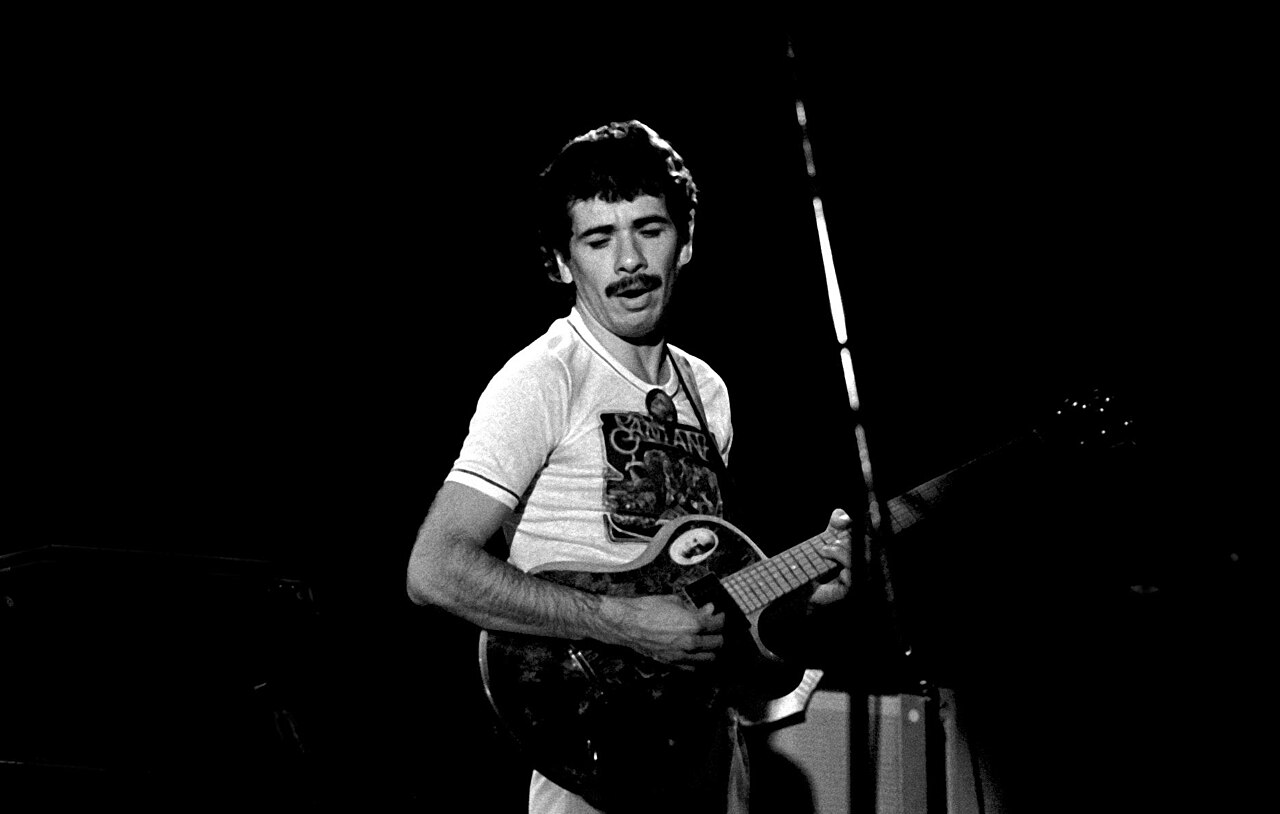
Rick Mitarotonda’s relationship with the PRS Hollowbody II goes back to his teenage years, when Carlos Santana was one of the only prominent players he’d seen using the brand — an image striking enough that his father bought him a PRS as a gift. Years later, browsing the PRS website, Mitarotonda came across the Hollowbody II and picked one up in 2012. He hasn’t seriously played anything else since. That guitar has been documented extensively in Premier Guitar’s Rig Rundown series, in Guitar Player interviews, and across gear-tracking sites, following Goose’s rise from regional jam-band circuit dates to sold-out theater and arena shows built on exactly the kind of extended, improvisational playing the guitar’s dual electric/acoustic voice was designed for.
Goose’s other guitarist, Peter Anspach, also played a PRS Hollowbody II for years before switching instruments specifically to differentiate his tone from Mitarotonda’s during the recording of the band’s 2022 album — itself a testament to how strongly the Hollowbody II had become tied to Mitarotonda’s specific sound within the band.
Beyond Goose, Alter Bridge/Slash and the Conspirators guitarist and vocalist Myles Kennedy has been pictured and reported using a PRS Hollowbody live, reportedly leaning on its piezo output for the acoustic-to-electric shifts that run through several Alter Bridge songs — though unlike Mitarotonda’s decade-plus, guitar-defining commitment to the model, it appears to have been one of several PRS instruments in Kennedy’s rotation rather than a singular signature sound.
It’s also worth noting that the Wide Fat neck carve found on the SE Hollowbody II Piezo traces back to PRS neck designs Paul Reed Smith developed in the 1970s and ’80s specifically for Carlos Santana, Peter Frampton, and Heart’s Howard Leese — the same design lineage referenced in PRS’s Paul’s Guitar, underscoring how much of PRS’s modern catalog still runs through that small circle of 1970s-era players.
What makes Mitarotonda’s case unusually well-documented compared to most single-guitar loyalists is how consistently he’s described the decision across separate interviews spanning nearly a decade — not a one-off endorsement deal, but a guitarist who has explained the same reasoning (sustain, tonal range, and the acoustic-electric flexibility for a band built on long improvisational sets) in Premier Guitar’s Rig Rundown series, in feature interviews with Guitar Player, and in smaller gear-blog Q&As going back to 2018. That level of consistency is rare in an era where most touring guitarists rotate through dozens of instruments and endorsement deals; it’s part of why Goose’s studio work, including the band’s 2022 album Dripfield, leans on the same guitar-and-amp pairing heard on stage rather than a different, more polished studio rig.
Tone Recipes
- Improvisational lead (Mitarotonda-style): Bridge humbucker, moderate breakup on a combo amp, delay set to a moderate mix for sustain during extended solos. The genuinely hollow body adds air and sustain that a solidbody can’t replicate at the same volume.
- Live acoustic-to-electric blend: Split output jacks — humbuckers to a standard amp, piezo straight to an acoustic amp or DI. Lets a single guitarist cover acoustic verses and full-band choruses without swapping instruments mid-song.
- Jazz/blues clean: Neck pickup, amp on the edge of breakup, minimal effects. The hollow construction gives clean tones extra bloom and note decay compared to a solidbody or semi-hollow.
- Studio double-tracking: Blend piezo and magnetic signals through the Mix/Piezo jack at roughly equal volumes for a layered acoustic-electric hybrid tone in a single pass, without recording two separate guitar tracks.
- Rock rhythm: Both pickups, moderate gain, tight low end. The small anchor-block construction keeps the guitar tighter and more controlled than a full vintage-style archtop under higher gain.
Hollowbody II Piezo vs. the Rest of the Semi/Full-Hollow Field
Against a Gibson-style semi-hollow like the Gibson ES-335 or its Epiphone counterparts already covered in this series, the PRS Hollowbody II Piezo trades the full center-block feedback resistance for greater resonance and adds a genuinely acoustic-style voice via the piezo system — a feature none of the Gibson-family instruments offer stock. Against PRS’s own McCarty 594 Hollowbody variant, the two share construction philosophy but differ in scale length and pickup voicing, with the 594 platform leaning more vintage-humbucker-focused and less piezo-centric depending on configuration. For a player choosing between “true hollow with acoustic-electric flexibility” and “semi-hollow with classic PAF-style tone,” the Hollowbody II Piezo occupies a genuinely different niche than anything in the Gibson/Epiphone hollowbody family.
Buying Guide
- SE Hollowbody II Piezo (~$1,599–$1,899): Indonesian-built, 58/15 LT “S” pickups, ebony fretboard. The clear entry point for the format, and reviewers have specifically praised how close it gets to the Core hollowbody experience for a fraction of the price.
- Core Hollowbody II Piezo (~$5,500–$6,500+): USA-built, solid maple top and back rather than laminate, current McCarty III pickups, Phase III tuners, and noticeably lighter weight than many players expect from a full hollowbody.
- Used market: SE models turn up in good condition in the $1,000–$1,300 range; Core models depreciate less steeply given the format’s smaller production numbers and dedicated fanbase.
- Colors: SE finishes have included Vintage Sunburst, Black Gold Burst, Peacock Blue, and Orange Tiger Smokeburst across recent production runs — availability rotates by year.
Ownership Notes
Owners consistently flag two practical realities of piezo-equipped hollowbodies: frets can show wear or minor surface rust faster than on solidbody instruments if not wiped down regularly, since a genuinely hollow chamber holds humidity differently than a solid mahogany body. The piezo’s onboard preamp runs on a 9-volt battery housed inside the body — budget for periodic battery swaps, and keep a spare in your gig bag, since a dead piezo battery (without using the magnetic-only failsafe jack) will silence that half of the guitar’s voice mid-set. Players adjusting to the format for the first time also note the piezo output benefits significantly from an acoustic-voiced amp, DI, or modeler; running it through a standard electric guitar amp flattens much of what makes the acoustic-style tone convincing.
Because it’s a genuinely hollow body rather than a solid or semi-hollow one, feedback management at higher stage volumes takes a bit more attention than with a solidbody guitar — moving further from the amp, angling the guitar away from the cabinet, or backing off gain slightly at high volumes solves most issues, but it’s worth factoring into expectations if a player’s primary background is solidbody electrics. On the positive side, the small-block construction makes the Hollowbody II noticeably more feedback-resistant than a true vintage-style archtop at rock-band volumes, which is precisely the compromise PRS engineered the platform to strike.
FAQ
Is the SE Hollowbody II Piezo a genuine full hollowbody, or is it semi-hollow?
It’s a true hollowbody. Unlike Gibson-style semi-hollows that run a solid center block the length of the body, PRS’s design uses only a small block to anchor the bridge, leaving the rest of the body completely hollow.
What’s the difference between the piezo output and just playing an acoustic guitar?
The piezo system amplifies the natural vibration of the guitar’s hollow body and strings through saddle-mounted sensors rather than a magnetic field, producing an acoustic-adjacent tone. It’s a convincing stage and studio tool rather than a substitute for a dedicated acoustic instrument.
Does any well-known artist actually build their sound around this specific guitar?
Yes — Rick Mitarotonda of Goose has played almost exclusively on a PRS Hollowbody II Piezo since 2012, and it’s widely documented as the defining instrument of his and the band’s live sound.
Is the SE version a significant downgrade from the Core model?
Less than the price gap suggests. The laminated construction and 58/15 LT “S” pickups get remarkably close to the Core hollowbody’s tonal character, and reviewers have specifically called the SE version’s fit and finish a step above typical import expectations.
Image credits
- Carlos Santana: Heinrich Klaffs, Wikimedia Commons, CC BY-SA 2.0.