Jackson Pro Series Soloist SL2: The Backup Guitar That Became Slipknot’s Story
The Jackson Pro Series Soloist SL2's real story is Slipknot, not the spreadsheet's shred legends. History, specs, tone recipes, and honest buying notes.
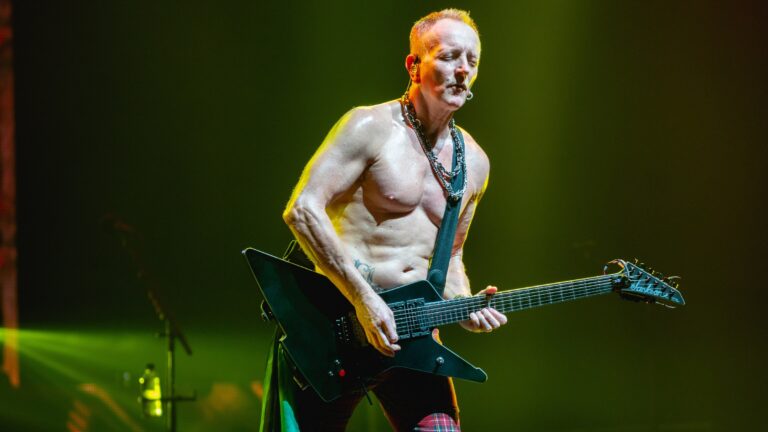
In 1999, Slipknot was broke. Guitarist Jim Root owned exactly one guitar — a flame-top green Jackson Dinky — and ran it through a single Mesa Boogie head because that’s what necessity allowed. When the band’s self-titled debut started generating real money, singer Corey Taylor bought Root a second guitar so he’d finally have a backup for shows: a Jackson Pro Series Soloist SL2. Root has described the whole arrangement bluntly — he didn’t pick what he played, he played what he had. Decades later, that same Soloist SL2 platform would return to the band in a very different form: as bandmate Mick Thomson’s own signature model.
Slipknot formed in Des Moines, Iowa in 1995, and by the time of their self-titled 1999 debut, both guitarists were working with severely limited resources. Thomson, who joined the band in 1996, was playing a custom Jackson V he’d owned since he was 19, running it through a Rocktron Piranha preamp powered by a Mesa Boogie 295 power amp — a setup he’s since admitted never quite got him the tone he wanted, forcing him to run a 31-band graphic equalizer in the effects loop just to shape the sound into something usable. That scrappy, make-do approach to gear is the actual origin story behind this guitar.
A Slipknot Story in Two Guitars
Root’s relationship with the SL2 was born entirely out of financial necessity rather than tone-chasing. It was a working backup, not a statement guitar, and it sat alongside a custom Jackson SL1 Soloist he later acquired with “ROOT” fret inlays — a story covered in our look at the Jackson USA Soloist SL1. Root’s gear has moved on considerably since those early days; he’s spent recent years primarily on Fender and Charvel instruments, making his SL2 connection a genuinely historical one rather than a current endorsement, but no less real for it.
Mick Thomson’s connection came later and took a different shape entirely. After years of playing Ibanez signature models, Thomson switched to Jackson in 2018 and received his own signature instrument: the Jackson Pro Series Mick Thomson Soloist SL2, built around his own Seymour Duncan Blackouts AHB-3S active humbuckers, a mahogany body, and — notably — a fixed hardtail bridge rather than the standard SL2’s Floyd Rose, a deliberate choice suited to the drop-tuned, riff-driven material that defines Slipknot’s sound. Thomson has since moved on to ESP/LTD guitars in more recent years, so like Root’s connection, this is best understood as an important chapter in the model’s history rather than an active current endorsement — but it’s the guitar’s most direct link to a real, working signature artist, and it explains why this specific model carries genuine metal pedigree.
Correcting the Record
None of the five names attached to this model holds up under scrutiny. Randy Rhoads died in 1982, two years before the Soloist existed in any form — his entire Jackson legacy belongs to the separate Rhoads V line. Marty Friedman’s Jackson history runs through the Kelly shape almost exclusively. Phil Collen and Adrian Smith both have genuine Soloist connections, but they belong to the USA-built SL1, not this Indonesia-built Pro Series tier — there’s no evidence either player has used this specific budget-line instrument. Misha Mansoor’s signature Jackson, the Juggernaut, is built on the unrelated Dinky platform. The Pro Series SL2’s real story belongs to Slipknot.
This is a pattern worth flagging plainly for anyone cross-referencing gear lists: a generic “famous Jackson players” list built around the brand’s most legendary flagship artists will almost never surface a working-class, mid-tier instrument’s real story, because that story usually belongs to a completely different tier of player — someone who bought a budget guitar out of necessity rather than someone whose name sells a premium signature model. The gap between marketing-friendly artist lists and an instrument’s actual documented history tends to widen exactly as the guitar’s price point drops.
Same Name, Different Guitar
The “SL2” designation has been reused across several genuinely different Jackson products, and it’s worth untangling before buying. The original USA-made SL2 was a short-lived mid-90s model (1996-1997). The SL2H, also USA-made, ran for decades as a two-pickup, neck-through sibling to the flagship SL1 before both were discontinued as standard production instruments in 2021. The Pro Series Soloist SL2 covered in this article is a different animal entirely — built in Indonesia rather than the USA, aimed at a mid-market price point, and using alumiloid (rather than genuine mother-of-pearl) sharktooth inlays. To add one more wrinkle, Jackson introduced a Japanese-made MJ Series Soloist SL2 in 2021 specifically to fill the gap left by the discontinued USA SL2H — a higher-tier instrument that shares the SL2 name but sits well above the Pro Series in both price and build origin. If you’re shopping used, always confirm which “SL2” you’re actually looking at before comparing prices.
This naming overlap isn’t unique to Jackson — plenty of guitar brands reuse model numbers across radically different production tiers as their catalogs expand over decades — but it’s a genuine trap for buyers scanning listings quickly. A “Jackson Soloist SL2” search will return USA vintage instruments worth several thousand dollars sitting right alongside Indonesian Pro Series models worth a fraction of that, with nothing in the abbreviated model name itself to distinguish them. Always check body wood, country of origin, and pickup brand/model against the specifics listed here before assuming two “SL2” listings are comparable.
Inside the Pro Series SL2
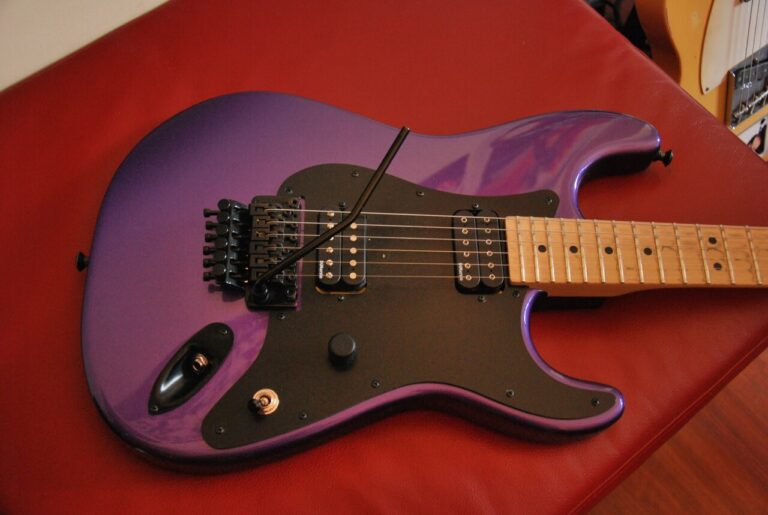
The base Pro Series Soloist SL2 uses a mahogany body (some variants add a quilted maple top, designated SL2Q) paired with a three-piece maple neck-through-body construction reinforced with graphite rods for stability against temperature and humidity swings. The ebony fingerboard carries a 12″-16″ compound radius — curved for comfortable chording near the nut, flattening out toward the body for effortless bends and fast lead runs — finished with alumiloid piranha inlays rather than the real mother-of-pearl used on USA-built Soloists. Pickups vary by specific variant: the standard SL2 typically runs Seymour Duncan Distortion humbuckers, earlier SL2Q versions paired a JB TB-4 bridge pickup with a ’59 SH-1N neck pickup (Jackson’s current SL2Q listing shows Seymour Duncan Distortion TB-6 and SH-6N), and Mick Thomson’s own signature version swaps in his active Seymour Duncan Blackouts AHB-3S set alongside a hardtail bridge rather than a tremolo. Most standard configurations use a recessed Floyd Rose FRT-02000 or similar double-locking tremolo, genuine Floyd Rose hardware rather than a licensed copy, according to reviewers who specifically checked.
Full Specifications
Dialing In the Tone
Slipknot’s guitar tone has evolved across decades, but the underlying philosophy has stayed consistent: heavy distortion, down-tuned strings, and gain pushed close to saturation without losing articulation. Root’s rig has centered on Orange amplification (Rockerverb and Dark Terror heads) for years, more recently incorporating a Neural DSP Quad Cortex into his live setup. Thomson’s amp history runs from an early Marshall JCM800 through Rivera KR-7 heads during his Jackson-signature years, more recently moving toward ESP and other gear as his endorsements shifted. Root himself has described the band’s sound as something that evolved organically rather than through any deliberate gear-chasing strategy, noting that he and Thomson can play through the exact same amp and guitar and still sound noticeably different from each other — a reminder that tone comes from hands as much as hardware. For players chasing a general Slipknot-adjacent tone rather than either guitarist’s exact current rig, three starting points:
Recipe 1: Down-Tuned Rhythm Crunch
Bridge humbucker, gain pushed close to maximum without losing note definition, bass boosted significantly, mids scooped slightly. Works best with drop-tuned strings (11-56 gauge for Drop B, heavier for Drop A) — thinner strings won’t hold up to this tuning range.
Recipe 2: Lead Boost
Bridge humbucker, an overdrive pedal (a Tube Screamer-style circuit works well) pushing an already-saturated amp channel for extra sustain and definition on solos, moderate delay for ambience without washing out the attack.
Recipe 3: Atmospheric/Weird Textures
Neck pickup or coil-split if your variant offers one, paired with a fuzz or envelope filter pedal for the odder, more experimental textures Slipknot has used on album cuts — an Electro-Harmonix Bassballs-style envelope filter or a heavy fuzz pedal gets surprisingly close to this territory.
Buying Guide
The base Pro Series SL2 or SL2Q makes sense for players who want the Soloist’s neck-through feel and compound-radius playability without USA pricing. Players specifically chasing Mick Thomson’s drop-tuned metal tone should look for his actual signature version with the Blackouts pickup set and hardtail bridge, since the tonal character differs meaningfully from the tremolo-equipped standard models. If budget allows and vintage USA construction matters more than price, the SL1 or SL2H covered in our companion article are worth the jump — real mother-of-pearl inlays and superior overall hardware come with the higher price tag. Players drawn to the SL2 name specifically for its Japanese-built successor should seek out the newer MJ Series Soloist SL2 instead, which occupies a higher tier than this Indonesia-built Pro Series line despite sharing a model designation.
Budget shoppers who like the neck-through concept but don’t need the Soloist name specifically might also compare this against Jackson’s own Dinky-platform guitars at a similar price point, though the bolt-on construction there produces a genuinely different sustain and resonance character. For players specifically chasing that early, scrappy Slipknot sound rather than the band’s later, more polished signature-model era, a stock (non-signature) SL2 with a Floyd Rose is arguably the more historically accurate choice — it’s closer to what Root was actually handed as a backup guitar than any of the later signature variants built years after the band had money.
Ownership Notes
Owner reviews consistently describe the neck profile as thinner than expected — comparable to an Ibanez Wizard II or III profile, noticeably slimmer than Charvel or Jackson’s own X Series necks. That’s a plus for players chasing speed, though some reviewers note it may feel too thin for those who prefer a more substantial neck in hand. The reverse Jackson headstock draws consistent aesthetic praise. On the critical side, some owners have voiced frustration comparing Indonesian-made Jackson models unfavorably to similarly priced Mexican-built instruments from other brands, feeling the quality gap doesn’t always match the price parity. The Floyd Rose hardware itself draws praise as genuine rather than a cut-rate licensed copy, a detail that matters given how often budget-tier guitars substitute inferior tremolo systems at this price point. One owner specifically noted spending roughly $1,200 on the guitar itself plus an additional $220 on a proper case, a combined cost that puts the realistic total ownership price somewhat higher than the base sticker price suggests. Mick Thomson’s specific signature version carries over a JEM-style angled input jack, a detail inherited directly from his years playing Ibanez MTM signature models before his move to Jackson — a small but telling piece of continuity between two otherwise unrelated guitar brands, and a reminder that signature-model details often travel with the artist rather than staying fixed to one manufacturer.
FAQ
Did any famous guitarists actually play this specific model?
Yes — Slipknot’s Jim Root used a Jackson Pro Series Soloist SL2 as an early backup guitar (purchased for him by bandmate Corey Taylor in 1999), and Mick Thomson later had his own signature version of the same platform.
Is the Mick Thomson signature SL2 still available?
Availability varies by retailer and may be limited since Thomson has since moved to other guitar brands, though used and remaining stock can still be found.
What’s the difference between the Pro Series SL2 and the USA SL1/SL2H?
The Pro Series SL2 is built in Indonesia with alumiloid inlays and more affordable hardware; the USA models use real mother-of-pearl inlays, premium woods, and command a significantly higher price.
Does the Pro Series SL2 have a tremolo?
Standard versions use a recessed Floyd Rose double-locking tremolo. The Mick Thomson signature version uses a fixed hardtail bridge instead.
What’s the difference between this SL2 and the newer MJ Series Soloist SL2?
The MJ Series is built in Japan and sits at a higher price tier; it was introduced in 2021 to replace the discontinued USA SL2H, while the Pro Series SL2 remains a separate, more affordable Indonesia-built line.
Does Mick Thomson still play Jackson guitars?
No — he has since moved to ESP/LTD guitars, making his Jackson signature era a historical chapter in the model’s story rather than a current endorsement.
What was Jim Root’s first guitar in Slipknot?
A flame-top green Jackson Dinky, which he played almost exclusively before Corey Taylor bought him the Pro Series Soloist SL2 as a backup.
Image credits
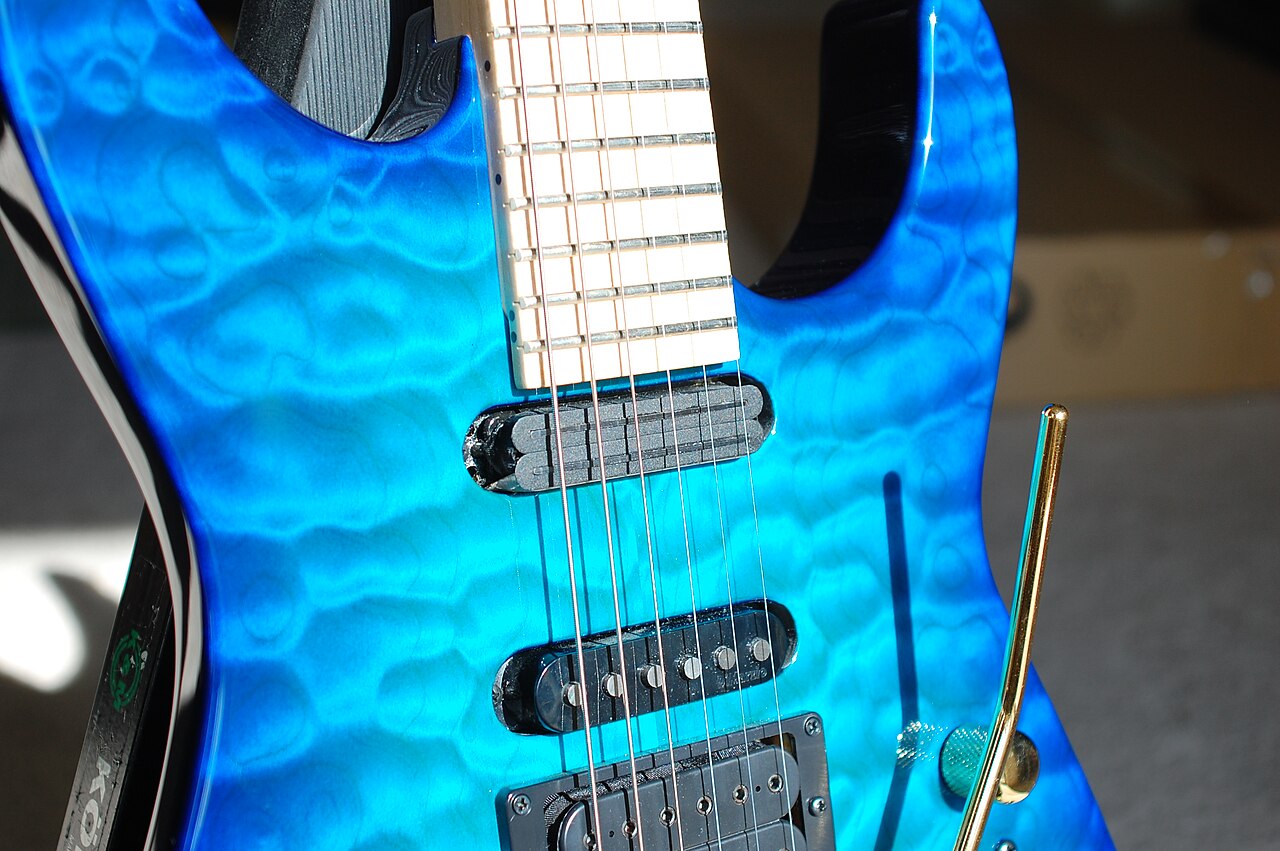
- A Jackson PC-1 guitar in Chlorine Blue, body detail: ArtBrom, Wikimedia Commons, CC BY-SA 2.0.
Latest News
Related

On This Day
Monday 9 November
From this week: