The Overdrive That Broke the Script: EarthQuaker Devices Plumes Small Signal Shredder
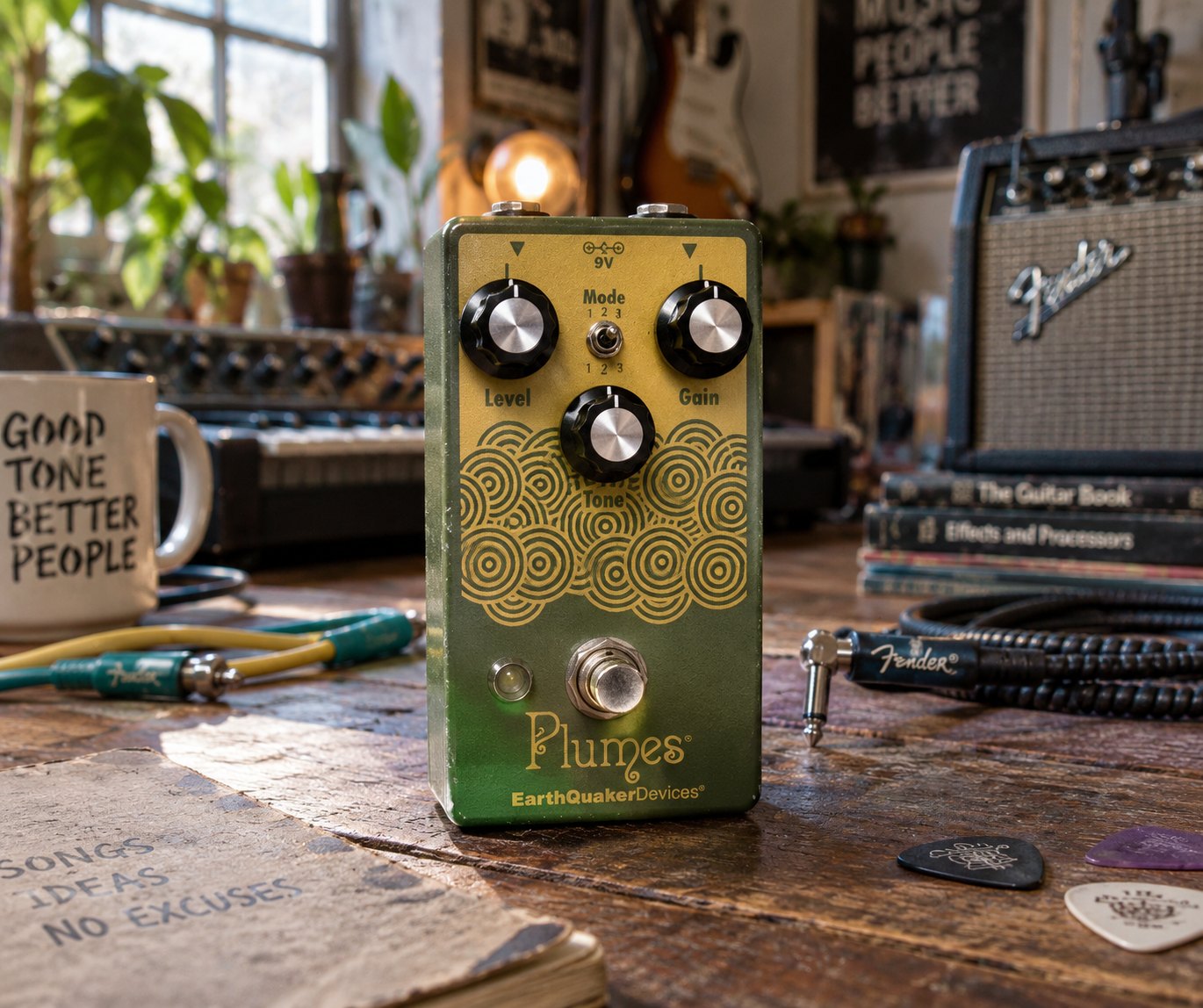
EarthQuaker Devices Plumes Overdrive Pedal. AI-generated reference illustration, not a photograph.
EarthQuaker Devices Plumes: three clipping modes and JFET internals make a Tube Screamer upgrade for $99. Specs, tones, and confirmed player guide.
Akron, Ohio doesn’t have a coastline or a legendary studio district, but for a certain breed of guitar obsessive, it has something better: EarthQuaker Devices. And the Plumes is the pedal that turned a cult brand into a household name — without selling out a single quirk.
In the Beginning: A Dead Horse Worth Beating Again
By 2019, the world did not need another Tube Screamer derivative. The format had been dissected, cloned, modded, and eulogized roughly ten thousand times over. The JRC4558 op-amp had more tribute acts than the Rolling Stones. So when EarthQuaker Devices founder Jamie Stillman sat down to design a TS-style overdrive for his catalog, he could have coasted. He didn’t.
The Plumes Small Signal Shredder was unveiled at Summer NAMM 2019 and hit store shelves on August 3rd of that year. EarthQuaker’s own product copy is typically self-deprecating: “You can’t get enough of it, so we are giving you some more. Doctor’s orders and what not.” The copy sold itself short. Sweetwater named it a hot pick, Premier Guitar handed it a Premier Gear Award, and within months it was one of the fastest-moving EQD products ever. Guitarists who had spent years avoiding yet another screamer were buying it by the handful.
The reason? Stillman tore out the canonical guts of the circuit and replaced them with something better. Out went the sacred JRC4558 IC and the bipolar transistor buffers that every other screamer uses. In came JFET operational amplifiers — field-effect transistors in the op-amp stage — and input impedance raised to nearly ten megaohms. On paper that’s an engineering detail. In practice it means less noise, better signal integrity, more chime at the top end, and a low-end response that doesn’t vanish into the circuit the way a classic 4558-based screamer’s can.
There’s also a power trick inside the box: the Plumes takes your standard 9-volt supply and internally converts it to plus/minus 9 volts, giving the op-amp a full 18-volt rail to breathe on. That’s the headroom story — and it’s a real one. Where vintage screamer clones can compress and flatten when you dig in hard, the Plumes opens up. EarthQuaker calls it “almost three-dimensional clarity.” That’s marketing language, but this particular marketing language is accurate.
Physically, the Plumes arrived in EQD’s standard compact enclosure: 4.75 by 2.50 by 2.25 inches, festooned with the hand-drawn artwork that’s been a studio signature since Stillman started building pedals out of his living room in the mid-2000s. EarthQuaker grew from a one-person operation to a proper factory in Akron, Ohio — still hand-wired, still weird, still proudly midwestern — and the Plumes represents that lineage in concentrated form.
Specs at a Glance
One important caveat before the controls section: unlike EQD’s previous overdrive designs and unlike many boutique drives that benefit from running at 18 volts, the Plumes must not be run at higher voltages. The internal doubling circuit is already doing that work — feed it 18V externally and you risk damage. Nine volts only.
The Three Clipping Modes: A Closer Look
The Plumes’ three-way toggle is the controlling idea of the whole pedal. Most TS-style drives offer one voicing; the Plumes offers three distinct characters, and the differences are more than cosmetic.
Mode 1 — Symmetrical LED Clipping
This is the crunchiest option. A matched pair of light-emitting diodes handle the clipping symmetrically on both the positive and negative waveform halves. The result is tighter, more compressed, and more harmonically aggressive than the other modes. Through a clean amp it can approximate a British valve amp pushed into saturation — think more Marshall-adjacent, less Fender-adjacent. Through an already dirty amp, Mode 1 gets genuinely filthy in a useful, controllable way.
Mode 2 — No Clipping (Clean Boost)
Remove the diodes entirely and you have pure op-amp drive with nothing to clip the signal. Mode 2 is the Plumes in clean boost territory: big, open, and thunderously loud at high Level settings. It’s ideal for pushing an amp’s own preamp into breakup — the Plumes’ JFET circuit preserves the character of whatever comes after it rather than coloring it. This mode works especially well stacked after another overdrive, where it acts as a level boost without adding its own saturation character.
Mode 3 — Asymmetrical Silicon Diode Clipping
This is the mode closest to the original Tube Screamer topology: one silicon diode clips the positive half while another handles the negative half, but they’re arranged asymmetrically. Asymmetrical clipping produces even-order harmonics alongside the odd-order components — the same principle that makes tube amps sound warm rather than harsh. In practice Mode 3 delivers more transparency, a looser feel, a warmer low-end response, and slightly lower output than Mode 1. EQD describes it as “almost as if your clean tone is blended in with a slightly less clean tone.” That’s exactly right, and it’s the mode most often compared to a stock screamer — except with better high-end extension, more low-end presence, and the JFET clarity underneath it all.
The Tone Control Reconsidered
The classic TS tone control is famously limiting: turn it up and you get ear-shreddingly bright; turn it down and you lose everything. The Plumes redesigns this control from scratch. According to EarthQuaker: “More bass to the left, more middles in the middle and more treble to the right.” The key word is “middles” — the center detent is actually a mid-focused position, not a null point. The low end is big and clear at the left sweep; the high end is bright without killing the mids at the right extreme. The entire range is usable, which is more than can be said for most screamer-style tone controls.
In practice this means the Tone knob becomes genuinely expressive rather than a one-way attenuation knob. A Les Paul through Mode 3 with the tone at nine o’clock delivers fat, blooming mid-range breakup. A Stratocaster through Mode 1 with the tone at three o’clock gets you cutting, harmonically complex lead tones that sit on top of a band mix rather than disappearing inside it.
Flexi-Switch® Technology
Every recent EarthQuaker device ships with the company’s proprietary Flexi-Switch system, and the Plumes is no exception. Flexi-Switch uses a relay-based circuit (as opposed to the mechanical contacts in a standard 3PDT footswitch) to give you two switching modes simultaneously: tap once to latch the effect on, tap again to bypass; or hold the footswitch down to activate momentarily — the effect engages only while your foot is down, then returns to bypass when you release. This is genuinely useful for brief overdrive surges in live performance without having to think about switching on and off in sequence.
Because Flexi-Switch is relay-based, it requires power to pass signal. The Plumes cannot be used as a passive through if the power dies onstage. Factor this into your live rig planning accordingly.
Famous Players
The Plumes launched without an official artist roster. EarthQuaker doesn’t run traditional endorsement programs the way larger brands do — they make the pedals, players find them organically. That’s made the Plumes popular in indie rock, alternative, and experimental circles where the mid-tier boutique pedal world intersects with major-label artists.
Thom Yorke
The most documented professional Plumes user is Thom Yorke of Radiohead and The Smile. According to the deep-dive Radiohead gear documentation at The King of Gear, the Plumes appeared on Yorke’s bass pedalboard and replaced a Death By Audio Interstellar Overdrive at some point in The Smile’s touring cycle. It was part of the compact mini-board assembled for The Smile’s NPR Tiny Desk Concert filmed on November 23, 2022, and it remained a fixture on his guitar pedalboard for the band’s 2024 touring dates. Yorke also incorporated the EQD Blumes (the Plumes’ bass-voiced sibling) alongside it for his bass rig. That a musician as gear-particular as Yorke chose the Plumes over any number of higher-profile or more expensive options says something real about what the pedal delivers at volume.
Julien Baker
Singer-songwriter and guitarist Julien Baker — known for her solo output and for boygenius alongside Phoebe Bridgers and Lucy Dacus — was documented using the EarthQuaker Devices Plumes during the Little Oblivions tour (2021). A May 2021 video showing Baker overhauling her pedalboard in preparation for the tour showed the Plumes positioned just to the right of the Old Blood Noise Excess on her signal chain. Baker’s guitar work on Little Oblivions (2021) leans into dense, layered overdrive textures that the Plumes’ three-mode versatility suits naturally. The Equipboard-documented pedalboard video is primary-source confirmation.
The Broader EarthQuaker Circle
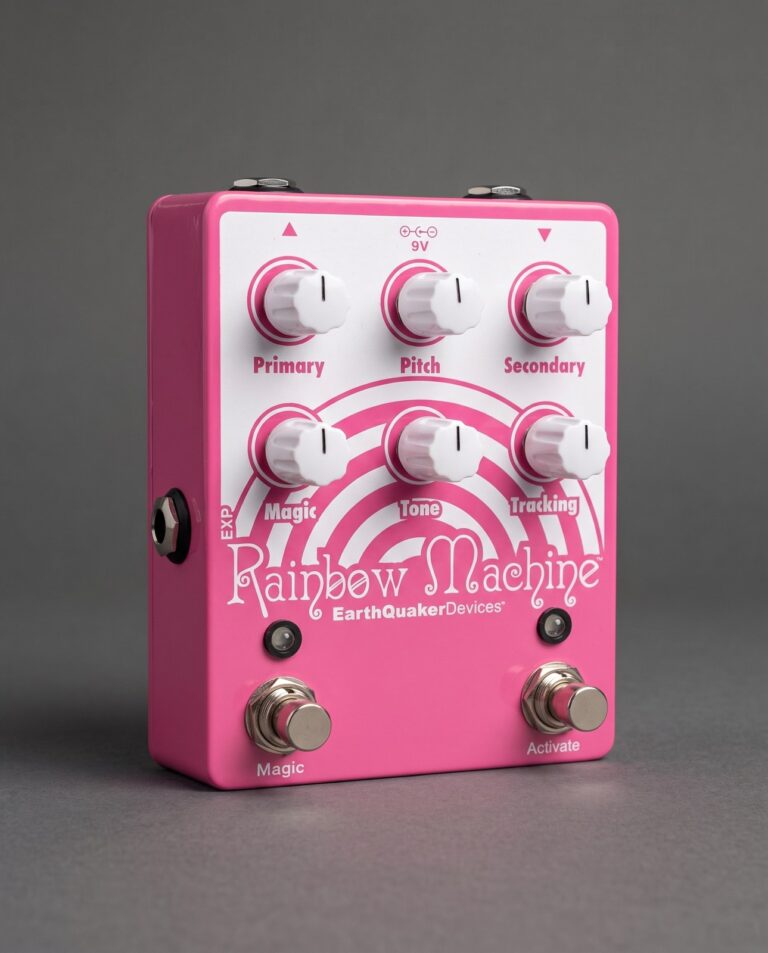
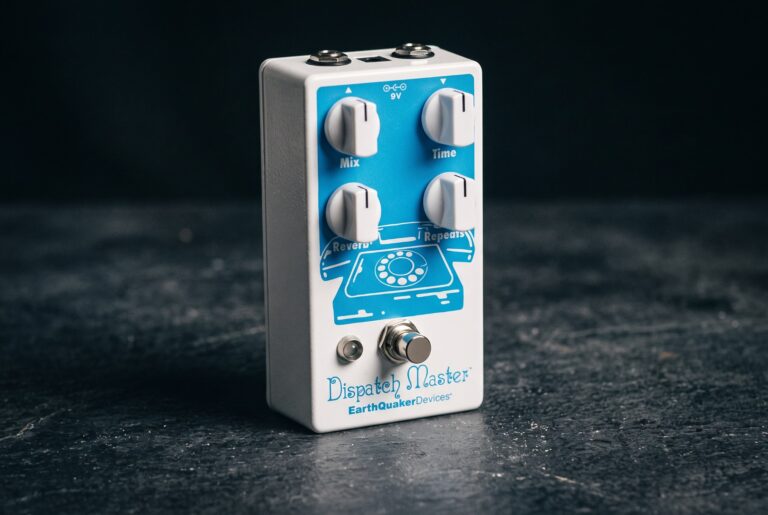
EarthQuaker has attracted an unusually diverse roster of documented users for its wider catalog: Jonny Greenwood uses the EQD Hizumitas fuzz; Troy Van Leeuwen of Queens of the Stone Age and A Perfect Circle has documented use of EQD’s Dispatch Master and Rainbow Machine. Neither Greenwood nor Van Leeuwen is confirmed specifically on the Plumes, but the brand’s presence in that tier of serious experimental rock guitarist is real and documented. The Plumes has become the gateway pedal for many players encountering EQD for the first time — low enough at $99 to be an easy entry, compelling enough to convert casual interest into long-term brand loyalty.
Tone Recipes
Recipe 1: Indie Crunch (Mode 3 / Asymmetrical)
Gain at 10 o’clock, Tone at noon, Level unity with bypassed signal. Mode 3 (asymmetrical silicon). This is the “I need to sound like a slightly broken but beautiful amp” setting — warm, open, mid-present, the loose feel intact. Works beautifully with single-coils into a clean amp. The benchmark comparison for post-2019 indie rock guitar tone.
Recipe 2: British Shred (Mode 1 / Symmetrical LED)
Gain at 2 o’clock, Tone at 1 o’clock, Level slightly above unity. Mode 1 (symmetrical LED). Into a clean platform amp, this setting delivers compressed, harmonically saturated lead tones with a hard edge — the LED symmetrical clipping compresses both halves of the wave equally, adding density. Think early Marshall crunch through a pedal rather than a cranked stack. Great for single-note solos that need to cut.
Recipe 3: Clean Stack Boost (Mode 2 / No Clipping)
Gain at 9 o’clock, Tone at noon, Level at 2 o’clock. Mode 2 (no clipping). This is a pure level push: no diode clipping, all JFET headroom. Use it before a slightly dirty amp to push it harder, or after another overdrive (say, a Tube Screamer) to add level without stacking character. The JFET transparency means the amp’s own voice dominates — this setting is about amp character, not pedal character.
Recipe 4: Bass Overdrive (Mode 3 / Low Tone Setting)
Gain at noon, Tone fully counter-clockwise, Level at unity. Mode 3. EQD’s official product page includes bass audio samples, and Thom Yorke used the Plumes on his bass rig for good reason. The full counter-clockwise Tone position unleashes a wallowing, thick low-end overdrive that preserves fundamental bass frequency rather than thinning it out. The asymmetrical clipping mode plays nicely with the extended low frequencies a bass produces. Not every overdrive can do this — the Plumes handles it cleanly.
Recipe 5: Experimental Texture (Mode 1 / High Gain)
Gain at 4 o’clock, Tone at 2 o’clock, Level at 9 o’clock. Mode 1. Maximum LED clipping, lots of gain, output controlled down. Into a clean amp at bedroom volumes, this produces a sputtery, harmonically complex grind that sits in the territory between overdrive and fuzz. For textural or ambient use rather than traditional rhythm or lead work — the kind of setting that makes a clean Jazzmaster sound menacing.
Comparisons and Where the Plumes Fits
If you’ve ever found the Ibanez TS9 Tube Screamer frustrating — too much mid-hump, not enough low end, the top end rolling off too early — the Plumes is the direct answer. It keeps the fundamental TS architecture (three-stage opamp gain, tone control, output buffer) but modernizes each stage. The JFET op-amp opens up the high end. The ±9V internal rail adds headroom. The three clipping modes add the versatility the TS9 lacks. At $99 the Plumes also sits comfortably below the TS9’s current street price, making it a genuine upgrade argument rather than an expensive boutique alternative.
Against the JHS Morning Glory V4, the Plumes is a different character proposition: the Morning Glory is based on the Marshall Bluesbreaker circuit and delivers a more transparent, almost amp-like response at lower gain settings. The Plumes, even in Mode 3, has a slightly more present character to its clipping — the LED and silicon options give it range the Morning Glory’s single-voiced circuit doesn’t. Players who want a near-invisible clean boost tend to prefer the Morning Glory; players who want a tool with multiple personalities tend to reach for the Plumes.
Against the Analog Man King of Tone, the comparison is less direct: the KOT is a dual-channel Bluesbreaker derivative with a cultish used-market premium and a 22-month wait list. The Plumes is in stock on every major retailer’s website for $99. If you need a drive pedal this week, the King of Tone is not an option. If you can wait, the KOT does things the Plumes doesn’t — particularly the stacked dual-channel approach. But for a single-channel TS-adjacent overdrive, the Plumes is arguably more versatile than the KOT’s individual channels.
The Fulltone OCD is the most direct competition in the same-price tier: both are TS-inspired but different-enough-to-be-their-own-thing designs. The OCD’s HP/LP switch shifts gain structure and low-end character; the Plumes’ clipping toggle shifts the harmonic content of the saturation. The OCD can run at 18V for added headroom; the Plumes handles that internally without the option. For players on a tight budget who want boutique quality and real versatility, both are strong arguments, though the OCD’s future is clouded by Fulltone’s closure and transition to Fulltone USA under Jackson Audio.
The Boss BD-2 Blues Driver occupies similar territory at a similar price and with a very different voicing: the BD-2 has a wider-open, more scooped character with that signature fizzy top end. Players who love the BD-2’s bloom and bloom-into-breakup dynamics often find the Plumes too mid-focused; players who find the BD-2 too bright and underpowered in the mids often find the Plumes exactly right.
Signal Chain Placement
The Plumes is versatile enough to fill several roles in a signal chain depending on which mode you’re running. Some guidelines based on how professional players typically deploy it:
In Mode 2 (clean boost), the Plumes is most effective immediately before the amp — it pushes input voltage into the preamp without coloring the signal, so the amp’s own breakup character dominates. It also works well as the last pedal before the amp in a stacked chain, where it functions as a level amp rather than a gain stage.
In Mode 3 (asymmetrical, TS-adjacent), it works well after a wah or compressor and before delay and reverb. In a standard pedalboard layout — tuner, compressor, overdrive, modulation, delay, reverb — the Plumes slots into the overdrive position cleanly. Stack it into a mild amp break-up for the classic blues-rock tone.
In Mode 1 (LED symmetrical), it can double as a pre-gain stage before another drive pedal. Pushing a Tube Screamer or a lower-gain drive with the Plumes in Mode 1 at lower gain produces a particularly aggressive, thick cascade of harmonics. This is not necessarily subtle, but it’s intentionally not subtle.
Bass players: the Plumes is documented in professional bass rigs (Thom Yorke) and EQD’s own bass audio samples validate the application. Mode 3 at low-to-medium gain with the Tone counter-clockwise is the starting point. The 10 MΩ input impedance and ±9V internal headroom mean the Plumes doesn’t choke on the extended dynamics of a bass signal the way some guitar-optimized overdrives do.
Buying Guide: New vs. Used
The Plumes is in continuous production and widely available new at approximately $99 from Sweetwater, Guitar Center, Thomann, and directly from EarthQuaker Devices. EQD ships with a limited lifetime warranty — if it breaks, they fix it. That warranty and the $99 price make new a genuinely compelling default position.
Used Plumes units typically surface on Reverb.com at $55–70 in excellent condition. The pedal is mechanically simple and well-built; used examples rarely show functional issues. The relay switching mechanism is the most complex element but is rated for high cycle counts. If you’re buying used, verify that the relay clicks cleanly in both latching and momentary operation.
There are no meaningful variants to chase — unlike the Fulltone OCD’s version labyrinth (V1.1 through V2.0 each with sonic differences) or the King of Tone’s generational evolution, the Plumes has been produced consistently since 2019. Some very early production units predate minor circuit revisions, but no version carries a collector premium or a documented sonic superiority. Buy the newest one you can find at the price you want.
Note: EarthQuaker Devices also released the Blumes Low Signal Shredder as a bass-optimized sibling to the Plumes. It uses the same fundamental circuit topology but with component values tailored for bass frequencies. If your primary instrument is bass, the Blumes may be worth comparing directly — though as Thom Yorke’s rig demonstrates, the Plumes itself is more than capable of handling bass applications.
Ownership Notes
The 25 mA current draw is low by modern standards and makes the Plumes easy to accommodate on an isolated power supply without eating into current allocation. A Strymon Ojai or Cioks DC5 can power multiple Plumes-sized loads without strain.
The Flexi-Switch relay requires power to pass signal — a dead power supply means dead signal. Some players place the Plumes early in their chain for this reason, so that a power failure is immediately audible rather than buried behind other effects. Others treat it as a non-issue and power it from a reliable isolated supply. Either approach is reasonable.
The Tone control is genuinely useful across its full range, which distinguishes the Plumes from pedals where the tone control is decorative outside a narrow band. Take time to explore the full sweep in all three clipping modes — the combinations produce genuinely different characters. Mode 1 with the tone at 7 o’clock is a completely different animal from Mode 3 with the tone at 5 o’clock.
EarthQuaker’s lifetime warranty is real. The Akron, Ohio shop services units they made in 2009 the same way they’d service a Plumes from last week. This is a meaningful ownership consideration for a pedal you intend to keep for years.
FAQ
Is the EarthQuaker Devices Plumes a Tube Screamer clone?
Not exactly. It uses the same basic circuit architecture as a Tube Screamer — an op-amp gain stage, soft clipping diodes, tone control, and output buffer — but every element has been modified. The JRC4558 op-amp is replaced with JFET transistors. The input impedance is raised to 10 MΩ. The internal voltage is doubled via a charge pump. The tone control is redesigned to be useful across its full range. And there are three clipping modes instead of one. It’s a TS-adjacent design, not a clone.
What’s the difference between the three clipping modes?
Mode 1 (symmetrical LED) is the crunchiest and most compressed, good for rock and lead tones. Mode 2 (no clipping) is a clean boost — all JFET headroom, no diode saturation, ideal for pushing an amp. Mode 3 (asymmetrical silicon) is closest to the classic Tube Screamer character but more open and transparent, with warmer low end and slightly lower output than Mode 1.
Can I run the Plumes at 18 volts?
No. EarthQuaker explicitly warns against this. The Plumes internally converts its 9V supply to ±9V using a charge pump — it already gets the benefit of an 18V rail internally. Feeding it 18V externally risks damage to the circuit. Nine volts only, standard center-negative.
What is Flexi-Switch® technology?
Flexi-Switch is EarthQuaker’s relay-based bypassing system. It lets you switch the pedal in two ways from the same footswitch: tap once to latch it on (tap again to turn off), or hold the footswitch down for momentary operation — the effect runs only while your foot is pressing down, then bypasses when you lift. Because it’s relay-based, the pedal requires power to pass signal; there’s no passive signal path.
Who are the most documented famous users of the Plumes?
Thom Yorke (Radiohead / The Smile) is among the most documented users, with The King of Gear confirming the Plumes on his bass and guitar pedalboards across multiple The Smile tour dates from 2022 to 2024. Julien Baker is confirmed via a May 2021 pedalboard video showing the Plumes on her Little Oblivions tour rig. EarthQuaker doesn’t run formal endorsement programs, so most confirmed users are documented via pedalboard photography and rig rundown footage rather than official artist pages.
How does the Plumes compare to the Boss BD-2 Blues Driver?
The BD-2 has a wider, more open character with a distinctive fizzy top end and a looser low end. The Plumes in Mode 3 is more mid-focused and tighter at the bottom, while Mode 2 can function as a cleaner boost than the BD-2 at any setting. The BD-2 is a simpler one-voice pedal; the Plumes offers three characters from one box. Both land around the same price range new.
Is the Plumes good for bass?
Yes, genuinely. EQD’s own product page includes bass and synth audio samples, and Thom Yorke’s documented bass rig use confirms it holds up in professional contexts. Mode 3 with Tone counter-clockwise and moderate Gain is the natural starting point — the asymmetrical clipping and improved low-end response in the redesigned Tone control preserve bass fundamentals that a standard screamer circuit would thin out. The 10 MΩ input impedance also means the Plumes doesn’t load down active bass pickups.
Where is the EarthQuaker Devices Plumes made?
In Akron, Ohio, USA. EarthQuaker Devices operates out of a factory at 350 West Bowery Street, Akron. All devices are built by hand. Jamie Stillman founded the company and the Plumes artwork is credited to him as well. EQD has grown considerably from its living-room origins but has maintained American handbuilt production as a company principle throughout.
Image credits
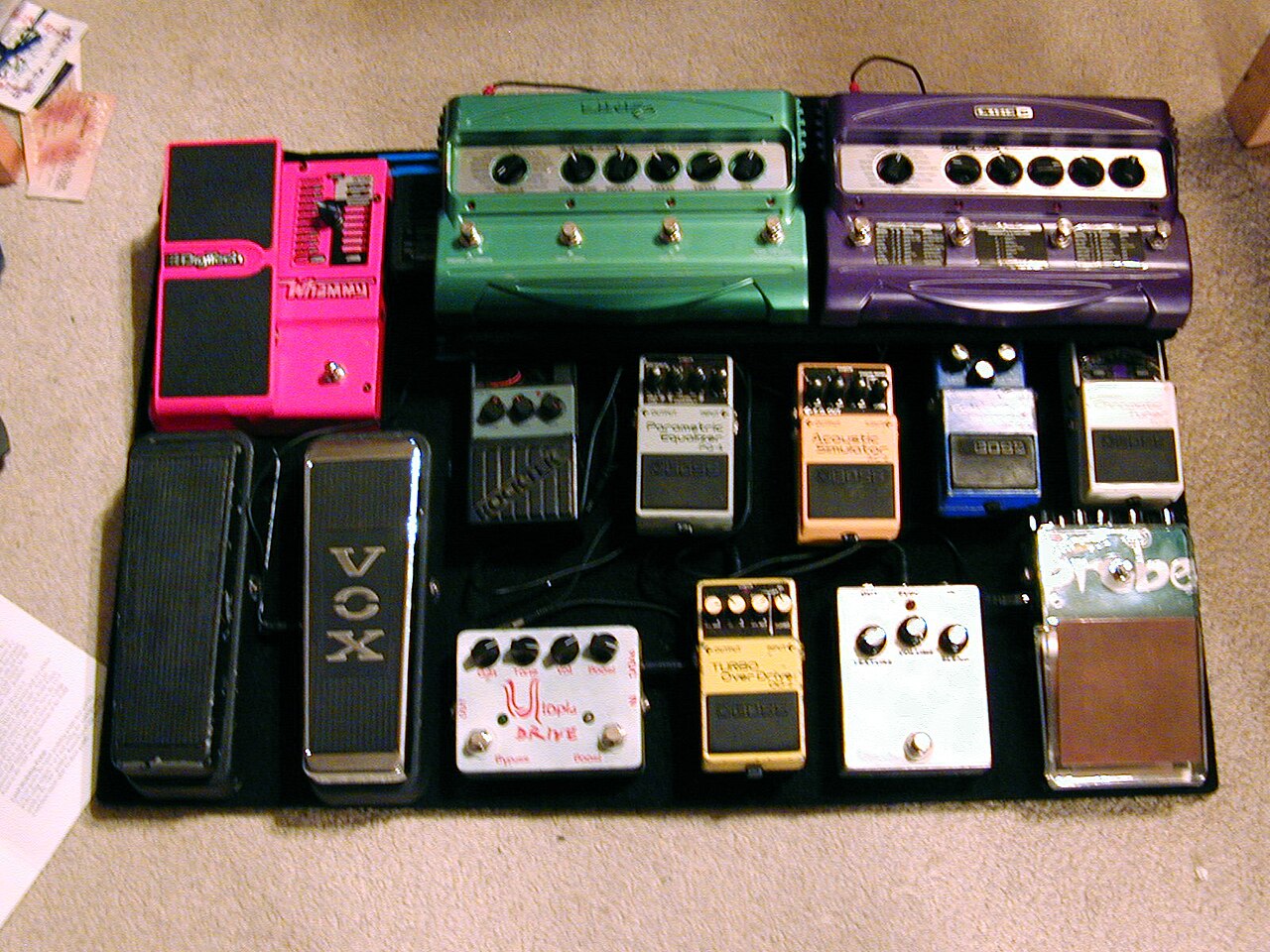
- A pedalboard with wah and effects pedals: John Athayde, Wikimedia Commons, CC BY 2.0.
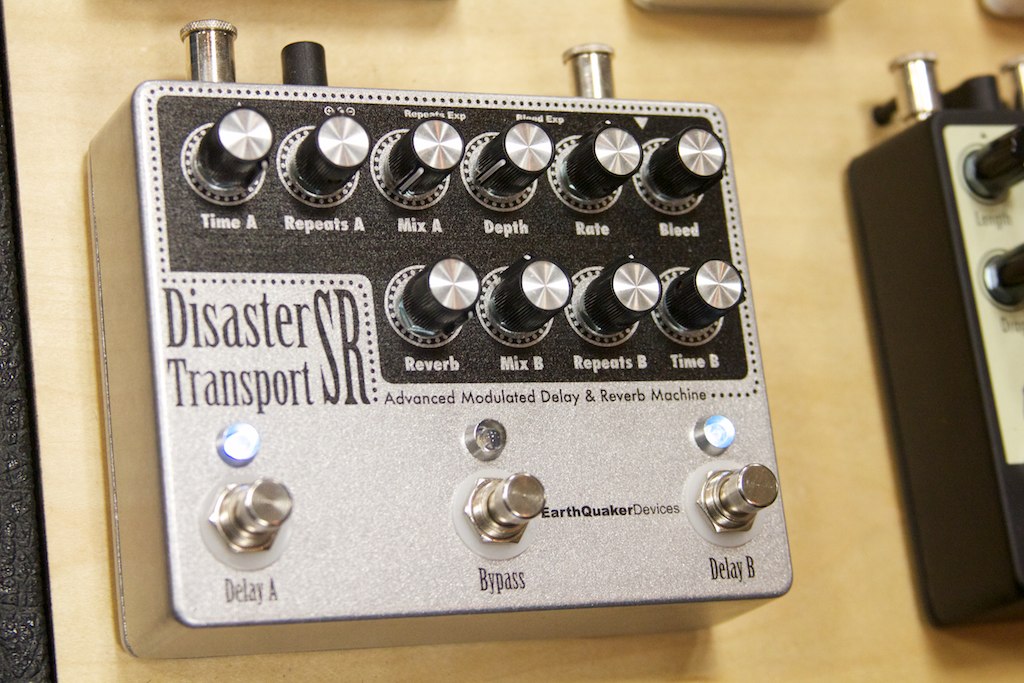
- An EarthQuaker Devices Disaster Transport SR pedal: Steve Castellano from Toronto, Wikimedia Commons, CC BY 2.0.
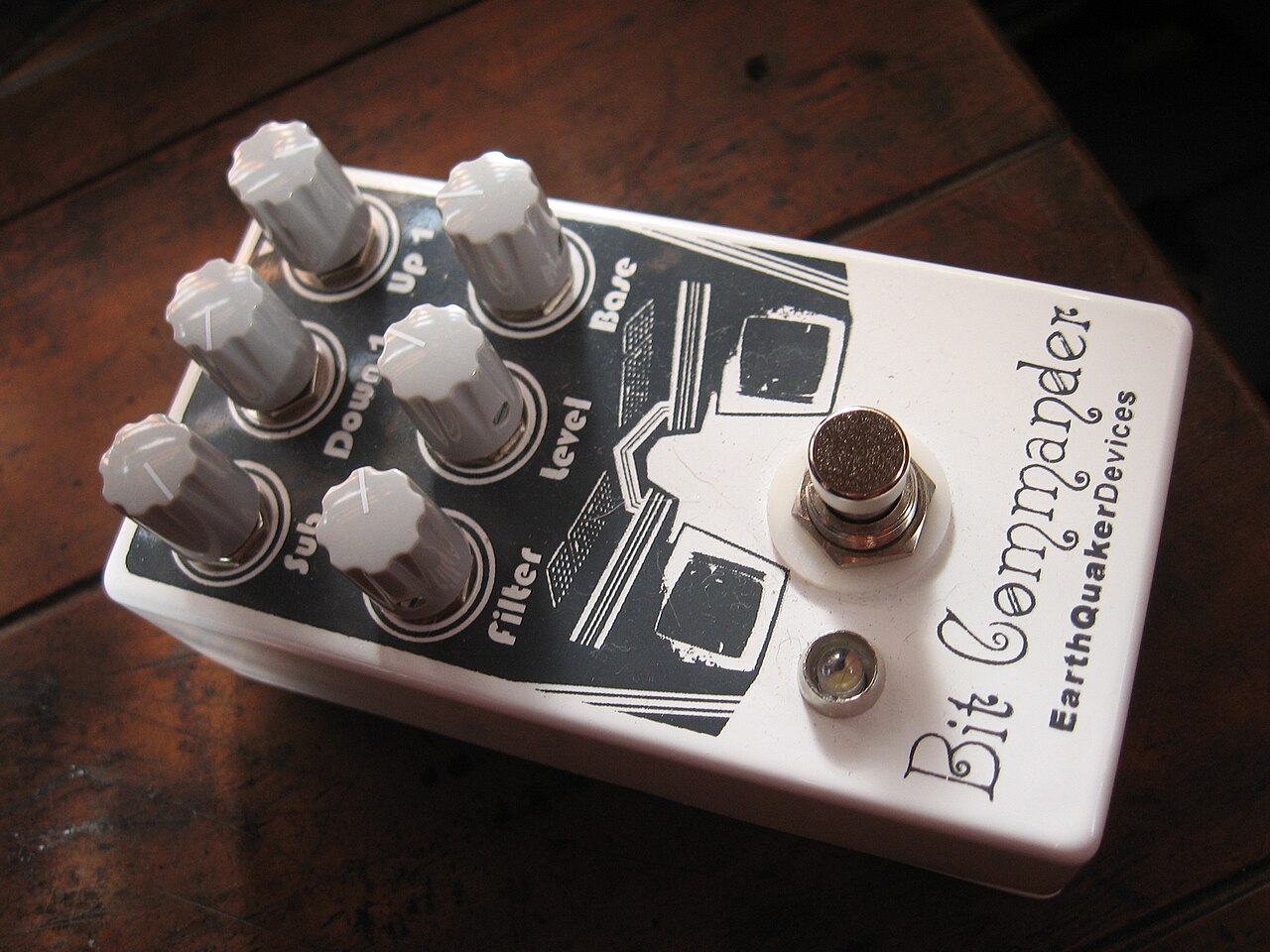
- An EarthQuaker Devices Bit Commander pedal: Victor Sounds, Wikimedia Commons, CC BY-SA 2.0.
- Top image: GuitarGangsters AI-generated reference illustration, not a photograph.
Latest News
Related
On This Day
Monday 9 November
From this week: