The Pedal That Made the Bluesbreaker Famous Again: JHS Morning Glory V4
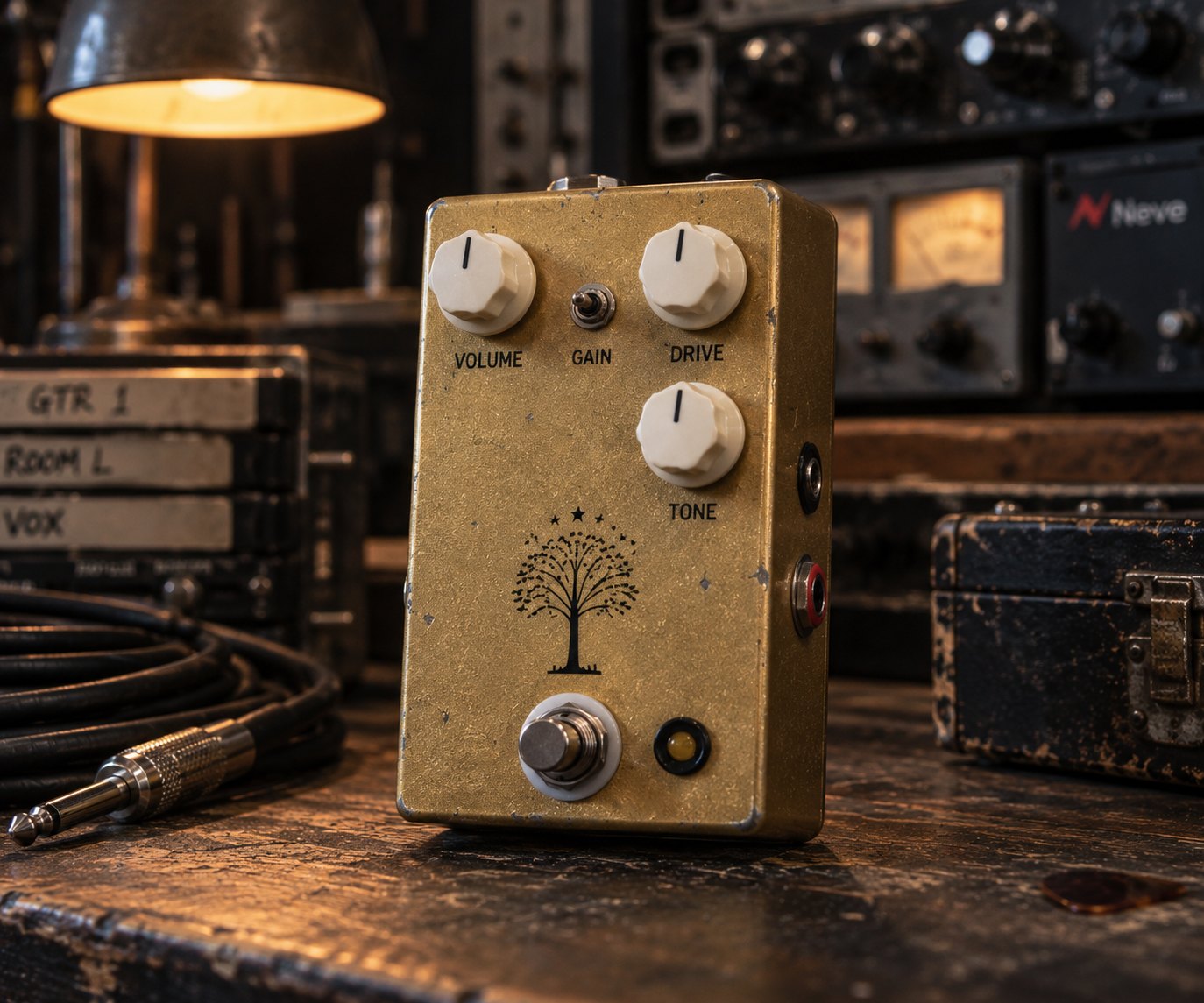
JHS Morning Glory V4 Overdrive Pedal. AI-generated reference illustration, not a photograph.
JHS Morning Glory V4 review: specs, famous players, tone recipes, and honest comparison with the KOT, Fulltone OCD, and Boss BD-2 Blues Driver.
There’s a cruel irony buried in pedal history. Marshall built one of the most influential overdrive circuits ever conceived, slapped it in a small blue box in the early 1990s, and practically nobody bought it. The Marshall Bluesbreaker pedal was ahead of its time—transparent, touch-sensitive, harmonically rich in ways that didn’t compute in an era obsessed with scooped metal tones and saturated grunge distortion. It sat forgotten in bargain bins while guitarists chased Tube Screamers and RATs.
Then a young guitarist from Kansas City named Josh Scott became obsessed with John Mayer‘s 1991 black-box Bluesbreaker. Scott had been building pedals out of his house since 2007 under the name JHS Pedals, fixing and modifying gear for local musicians. But the Bluesbreaker circuit gnawed at him—the way it let the guitar speak, the way it pushed an amp rather than fighting it. He wanted more of it: more available volume, more usable gain, the same transparency. His solution became the Morning Glory.
Nearly two decades and four revisions later, the JHS Morning Glory V4 has arguably become more famous than the pedal that inspired it. That’s not hype. It’s the story of a circuit that finally found its moment, built by someone who understood exactly what made it special—and what was holding it back.
The History of the Morning Glory: From House Builds to Pedalboard Staple
Josh Scott launched JHS Pedals officially in 2007, and the Morning Glory was among the earliest designs. It was never meant to reinvent the Bluesbreaker—it was meant to refine it. The original Marshall circuit had a headroom problem: the Volume control didn’t offer enough output to push a clean amp into saturation, which is exactly where the Bluesbreaker circuit sounds best. Scott added a JFET output gain stage that bumped up the available volume substantially, solving the core complaint of every Bluesbreaker devotee who’d tried to use the pedal live.
Version 1 was a modest enclosure with limited controls—Volume, Drive, Tone—and a front-mounted bright-cut switch that filtered high-frequency harshness when engaged. It circulated primarily among players already in the Bluesbreaker/KOT orbit: players who cared deeply about transparency and amp interaction, who wanted overdrive that sounded like their guitar through a slightly drunk amplifier rather than a separate effect imposed on top.
V2 and V3 were iterative refinements, tightening the low end, improving the circuit’s behavior under high-output humbuckers, and gradually building the Morning Glory’s reputation in boutique pedal circles. By the V3, the Morning Glory was a known quantity—a regular on gear forums, a staple recommendation for anyone who loved the KOT’s voicing but couldn’t face the two-year wait list.
The V4, released around 2017, was the most substantial revision. Scott moved the bright-cut switch from the front panel to the side of the enclosure, freeing up real estate for something more useful: a boost circuit. The V4’s Gain toggle engages a secondary gain stage that transforms the pedal from a transparent overdrive into something with more authority and low-end punch—essentially two Morning Glorys in one box. A new LED system shows blue for standard mode and switches to fiery red when the boost is active, making the status visible from ten feet away on a dark stage. The V4 also doubled the available headroom on the Volume control compared to the V3, giving players more range to push a clean amp or control output level in a stacked configuration.
Specs: What You’re Actually Buying
The control layout is deliberately minimal. Volume is the master output, and on the V4 it has 2× the headroom of the V3—you can run it significantly hotter than unity without the circuit audibly compressing. Drive sweeps from almost clean at 7 o’clock to a medium-gain crunch at full clockwise; this is not a high-gain pedal at any setting. Tone is a high-pass filter: clockwise is brighter, counter-clockwise darker. The side-mounted High-Cut switch engages when you need to tame harshness on brighter single-coil guitars into a clangy clean amp.
The Gain toggle is the V4’s headline feature. In the standard (down) position, the Morning Glory is a single-stage transparent overdrive. Toggle up, and the boost circuit engages—more low-end presence, more grit, a slight push of the mid-forward character that defines the Bluesbreaker voicing. Paired with the Red Remote, you can access this toggle with your foot mid-song without crouching down to flip a switch.
How the Morning Glory V4 Sounds: Character, Not Color
The most common word in Morning Glory reviews is “transparent,” and it’s accurate but incomplete. Transparent doesn’t mean colorless. The V4 has a distinct EQ character—a mild bass cut that keeps things tidy at the low end, a slight emphasis around the upper mids and lower treble that gives notes a cutting, jangly quality, and natural-sounding harmonic clipping that favors even harmonics over the harder odd-harmonic clipping of silicon fuzz or high-gain distortion circuits.
What “transparent” actually means in context is that the Morning Glory doesn’t impose its own frequency signature over your guitar’s fundamental voice. Play a Strat into a clean Fender and engage the V4—you still hear the Strat. The single-coil chime is present, the pick attack reads clearly, the playing dynamics determine the clip character. Turn the Drive lower with the Volume compensating upward and you get something closer to a clean boost with just a hint of saturation on transient peaks. Push the Drive up and the clipping becomes more assertive, but the harmonic structure stays natural—more like an overdriven amp than a processed effect.
Under humbuckers, the bass cut becomes a practical asset: it prevents the low-end bloom that makes many Bluesbreaker-style circuits sound muddy with high-output pickups. A Les Paul into a V4 sounds focused and defined even with Drive around noon—a combination that would turn many transparent overdrive circuits into a woolly mess.
The boost circuit in the high Gain position adds authority rather than distortion. It’s not a clean boost (there’s audible compression and additional saturation), but it’s not a second drive pedal either. Think of it as the Morning Glory at full confidence—more body, more presence, the clipping character of the standard mode but with more weight behind it.
Famous Players: Who Actually Uses the Morning Glory V4
It’s worth being precise about what the documentation actually shows regarding John Mayer, Kenny Wayne Shepherd, Jim Campilongo, and Josh Smith.
Bartees Strange — Confirmed Primary Source
The strongest confirmed primary-source connection for the Morning Glory V4 is Bartees Strange, the Washington D.C.-raised singer-guitarist whose career has bridged indie rock, post-punk, and R&B since his debut LP Live Forever in 2020. His Premier Guitar Rig Rundown documents the Morning Glory as an always-on pedal at the start of his signal chain—he runs it continuously as a tone shaper and light overdrive foundation, layering the Matthews Effects Architect and Xotic EP Booster over it for heavier textures. This is exactly how the Morning Glory’s transparent character is best exploited: not as an on/off drive effect, but as a persistent tonal baseline that defines how everything downstream behaves. The PG documentation is unambiguous.

Conor Curley — Fontaines D.C.
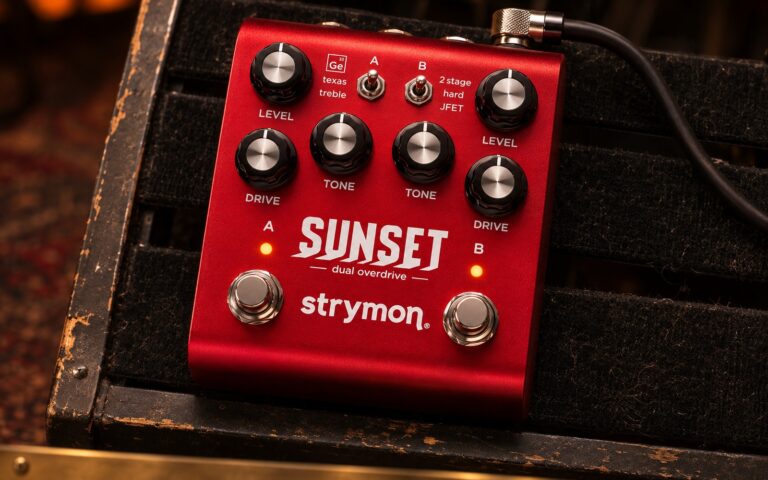
Conor Curley, guitarist for Dublin post-punk outfit Fontaines D.C., has been documented using the JHS Morning Glory via Equipboard, with a direct quote describing it as “my second, more-distorted kind of rock ‘n’ roll sound” — running it before a ProCo RAT or Electro-Harmonix Op-Amp Big Muff for layered saturation. Fontaines D.C.’s 2025 Premier Guitar Rig Rundown shows an updated pedalboard with Strymon Sunset replacing the Morning Glory, but the earlier documentation is solid and reflects genuine usage during the band’s breakout years.
John Mayer — The Inspiration, Not the User
The John Mayer connection requires honest clarification. Josh Scott has stated in interviews that learning about Mayer’s 1991 Marshall Bluesbreaker—the black-box unit Mayer used for his early style formation—was a direct inspiration for creating the Morning Glory. The circuit DNA runs from Mayer’s Bluesbreaker obsession through Scott’s modifications. But Mayer himself doesn’t use the JHS Morning Glory V4. His documented pedalboard for his 2024–2025 touring has included a Klon Centaur Professional Overdrive, an Ibanez TS10 Tube Screamer, a Keeley Katana boost, and a Boss CE-2 chorus—no Morning Glory. Mentioning Mayer in a Morning Glory article is accurate as lineage context; presenting him as a user is not supportable from primary sources.
Kenny Wayne Shepherd — Analog Man KOT, Not Morning Glory
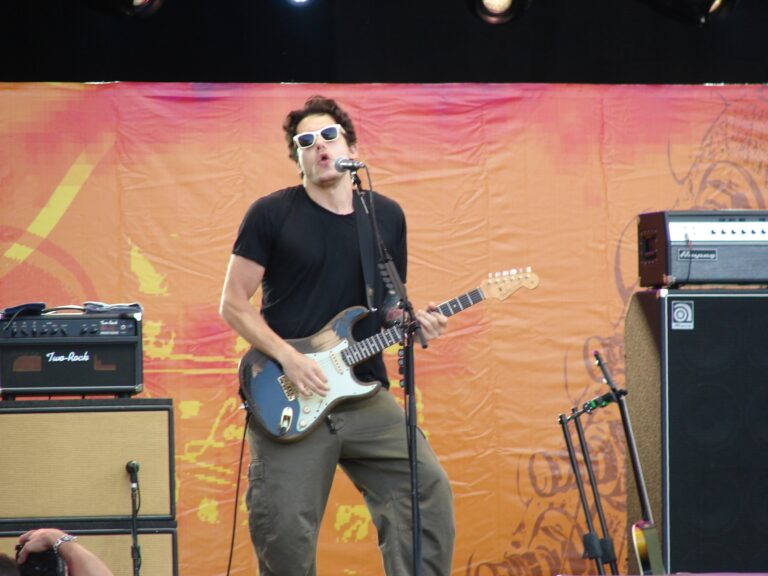
Kenny Wayne Shepherd is confirmed in the GuitarGangsters Kenny Wayne Shepherd Gear Guide, and he is a vocal fan of the Bluesbreaker circuit family—but his primary transparent overdrive is the Analog Man King of Tone, which he has called his “secret weapon” in documented rig rundowns and interviews. No primary source places the JHS Morning Glory on his confirmed pedalboard. The overlap in circuit philosophy is real; the specific SKU connection is not.
Jim Campilongo — Klon Territory
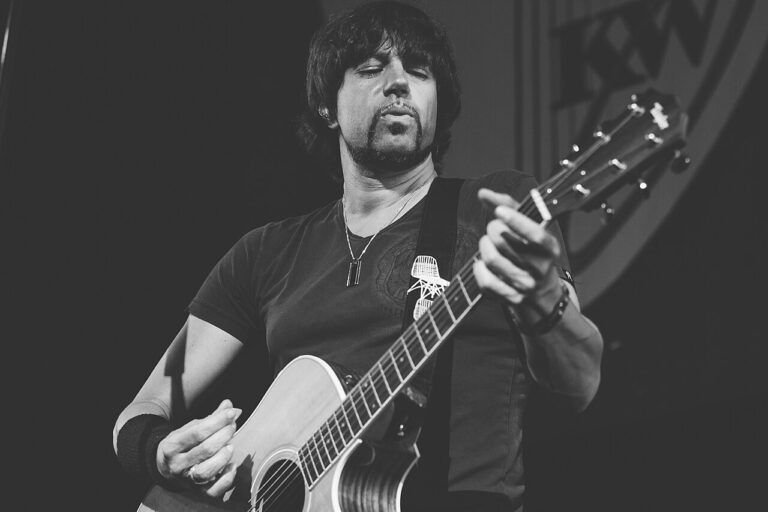
Jim Campilongo is a Telecaster virtuoso with a minimalist rig built around a Fender Princeton. His documented overdrive of choice per Equipboard pedalboard photography is the Klon Centaur Professional Overdrive—a different circuit family (Klon uses a charge-pump voltage doubler and asymmetric clipping) aimed at a different tonal result. No primary source confirms a Morning Glory on Campilongo’s board.
Josh Smith — Different Company, Different Pedal
Josh Smith is a highly regarded session and touring guitarist known for his blues-influenced fingerstyle technique and lyrical phrasing. His confirmed drive pedals are King Tone Montreal Assembly products—specifically the Soloist Overdrive and The Duellist. King Tone is a separate Canadian boutique company with no connection to JHS. The name overlap between “Josh Smith” and “Josh Scott” (the JHS founder who is himself on his own Equipboard page) seems to have generated the association in gear databases. Smith is worth knowing; the JHS Morning Glory is not his pedal.

Tone Recipes and Settings for the JHS Morning Glory V4
1. Transparent Always-On Foundation (Bartees Strange Approach)
This is the Morning Glory’s highest calling. Keep the Drive between 8 and 9 o’clock—barely engaged—and push the Volume up until you have slight output above your bypass level. Tone at noon, High-Cut switch off. The pedal stays on all night, acting as a subtle tonal enhancer and amp-push rather than an obvious overdrive effect. Run compression, boosts, and heavier drives over it.
- Drive: 8–9 o’clock (just barely breaking up)
- Volume: 12–1 o’clock (slight boost above unity)
- Tone: 12 o’clock
- Gain toggle: Standard (down)
- High-Cut: Off
2. Classic Bluesbreaker Crunch
This is where the Bluesbreaker circuit earned its reputation. Drive at 9–10 o’clock into a clean or slightly warm amp gives you the tone John Mayer’s black-box chased: articulate, slightly compressed, harmonically alive at picking edges. Works exceptionally well with a Fender Stratocaster into a Fender Deluxe Reverb.
- Drive: 9–10 o’clock
- Volume: Match unity or slightly above
- Tone: 11 o’clock (slightly dark for warmth)
- Gain toggle: Standard (down)
- High-Cut: Off unless on single-coils with harsh amp
3. Full Morning Glory — Boost Engaged
Drive at 11 o’clock, Gain toggle up. This is the V4’s two-pedal-in-one moment: more body, more punch, the low-end authority that the standard mode keeps controlled. Excellent for lead solos where you want the same harmonic character as your rhythm tone but with more presence and cutting power.
- Drive: 11 o’clock
- Volume: Set to cut through (may need slight reduction from standard rhythm setting)
- Tone: 12–1 o’clock
- Gain toggle: Boost (up) — or via Red Remote
4. Humbucker Focus (Gibson Les Paul)
The V4’s mild bass cut does useful work here. With a Gibson Les Paul Standard, run Drive at 10 o’clock and let the natural bass cut prevent muddiness. Tone slightly clockwise to compensate for the darker pickup response. The result is a focused, amp-push overdrive that doesn’t obscure the Les Paul’s warmth.
- Drive: 10 o’clock
- Volume: Unity or slightly above
- Tone: 1 o’clock
- Gain toggle: Standard
- High-Cut: Off
5. Stacked Drives — Morning Glory as Foundation Layer
The Morning Glory V4 excels as the first drive in a stacked configuration. Run it always-on at low Drive and high Volume, then stack a Tube Screamer or Boss DS-1 over it for heavier textures. The MG’s mild bass cut and mid clarity clean up the low-end buildup that stacking drives normally creates.
- Drive: 8 o’clock (foundation layer)
- Volume: 1 o’clock
- Tone: 12 o’clock
- Gain toggle: Standard
- Second drive: To taste over the top
The Bluesbreaker Family: How the Morning Glory V4 Compares
The Marshall Bluesbreaker pedal launched a dynasty of transparent-overdrive interpretations, and the V4 competes directly with several of them.
The Analog Man King of Tone is the most direct peer—dual Bluesbreaker-derived channels in a single enclosure, with DIP switches for clean/OD/distortion voicing. The KOT sounds slightly smoother and more midrange-even than the Morning Glory, while the V4 has a more assertive upper-mid presence and a more obvious “cutting” quality on single-coil guitars. The KOT runs about $245 new with a historically famous wait list (up to two years; current estimate around 22 months). The Morning Glory V4 ships immediately at ~$149.
The Fulltone OCD occupies adjacent territory—another low-to-medium gain overdrive with strong amp-interaction character—but the OCD’s HP/LP switch and wider gain range put it in a slightly different category. The OCD at LP setting is closest to Morning Glory territory; at HP it gets more aggressive than the MG ever does. The OCD was discontinued when Fulltone closed in 2022 (a Fulltone USA relaunch under Jackson Audio was announced at NAMM 2024).
The Boss BD-2 Blues Driver is another Bluesbreaker-adjacent circuit—looser in the low end, slightly grittier in its clipping character, and considerably cheaper at ~$99. The BD-2 rewards modding (the “Keeley” and “Monte Allums” mods are widely documented); the Morning Glory sounds more refined and consistent out of the box. For a player who wants the Bluesbreaker flavor without boutique pricing, the BD-2 is a legitimate starting point. For someone who’s already played the BD-2 and wants more headroom, cleaner transparency, and the boost circuit, the V4 is the obvious next step.
The Ibanez TS9 is frequently compared to Bluesbreaker-family pedals but is genuinely a different circuit: the TS9’s strong mid hump and hard-clipping character produce a more focused, compressed sound that “pushes” an amp differently than the Bluesbreaker’s softer, even-harmonic saturation. The TS9 has stronger midrange coloration; the Morning Glory has more transparency and low-end balance. Both are indispensable, and they stack well together—the MG as the clean foundation, TS9 over it for leads.
Morning Glory V4 on the Pedalboard: Practical Considerations
At 2.2″×4.3″×1.5″, the V4 is a medium-compact enclosure—larger than a Nano-footprint pedal, smaller than a standard MXR or Boss format. It occupies a reasonable slot on most pedalboards without dominating the layout.
The Red Remote integration is genuinely useful for players who use the boost circuit regularly. Running a standard 3.5mm cable from the Morning Glory’s side jack to the Red Remote (~$30 separately) lets you toggle the Gain circuit with your foot from across the pedalboard. For players who use the standard mode for rhythm and the boost for leads, this eliminates the need to crouch mid-song. The Red Remote works with all Red Remote-compatible JHS pedals, so it’s a platform investment if you’re building a JHS-centric board.
True bypass means the signal path is completely removed when the pedal is off—no buffer, no tonal coloration in the dry chain. If your board runs long cable runs before the Morning Glory, consider placing a buffer (the TC Electronic PolyTune 3 has one built in, or the Xotic SP Compressor) earlier in the signal chain to protect transient response. Alternatively, run the Morning Glory always-on at a mild setting as Bartees Strange does—solving the buffer question and getting the tonal benefit simultaneously.
Power consumption is standard and modest (under 100mA at 9V). The V4 is not compatible with 18V operation—unlike some overdrives that benefit from voltage doubling, the Bluesbreaker circuit doesn’t improve at higher voltages, and the V4 is spec’d for 9V only. Standard one-spot daisy chains and isolated supplies both work fine.
Buying Guide: New, Used, and Adjacent Alternatives
The V4 typically sells new in the $149–$159 range from major retailers (Sweetwater, Guitar Center, American Musical). JHS is a US-based company still operating and producing the Morning Glory actively—unlike some boutique competitors, there’s no wait list and no scarcity. Used examples appear regularly on Reverb and eBay in the $95–$120 range, often in excellent condition since players who sell them typically switched to a different drive flavor rather than burned the pedal out.
If you want the Bluesbreaker circuit at the lowest possible entry point, the Marshall Bluesbreaker II (reissue, discontinued but available used for $60–$80) or the Boss BD-2 ($99 new) are legitimate starting points. Both have more coloration and less refinement than the V4, but the circuit DNA is related.
If budget isn’t a constraint and you want the dual-channel Bluesbreaker experience with the most boutique-careful construction, the Analog Man King of Tone ($245 new, $400–$700 used, 22-month wait for new) is the other obvious answer. The KOT and the Morning Glory are the two most respected Bluesbreaker interpretations on the market; choosing between them is genuinely a matter of tonal preference rather than quality differential.
The Morning Glory Clean (announced as a fifth-generation variant, aimed at even higher-headroom transparent boost territory) is an adjacent JHS product for players who want the Morning Glory character with minimal clipping.
Ownership Notes: What Morning Glory Players Actually Discover
The most common discovery among new V4 owners is that the pedal sounds worse with Drive high and better than expected with Drive low. This is the Bluesbreaker circuit in action: it’s not designed to be a mid-gain overdrive cranked into a clean amp. It’s designed to operate at low-to-medium Drive settings where the amp provides some of the saturation and the pedal provides the push and harmonic character. Players who understand this play the V4 quite differently than they’d play a Tube Screamer or OCD.
The second discovery is that the Tone control is more interactive with Drive than expected. At high Drive, Tone clockwise can get harsh; Tone counter-clockwise at high Drive gives you more of the warm, slightly compressed Bluesbreaker character that made the original pedal famous. Low Drive with high Tone gives you the clean, transparent boost that works well with single-coil guitars into a bright amp.
Third: the boost circuit in the high Gain position is not for cranking the Drive further. It’s most effective when used to increase presence and authority at the same Drive level—so if your rhythm setting is Drive at 10 o’clock, your lead setting might be Drive still at 10 o’clock but Gain toggle up. This keeps the tonal character consistent and just adds weight and cut.
FAQ: JHS Morning Glory V4
Is the JHS Morning Glory V4 a direct clone of the Marshall Bluesbreaker?
No—it’s a Bluesbreaker-inspired design with important differences. Josh Scott added a JFET output gain stage to address the original circuit’s headroom limitations, and the V4’s boost circuit is JHS’s own addition. The circuit DNA and tonal philosophy are Bluesbreaker-derived, but the V4 is an evolved, extended version of that concept rather than a point-to-point clone.
Does John Mayer use the JHS Morning Glory V4?
Not on his documented touring rigs. The Morning Glory’s creation was inspired by Mayer’s Marshall Bluesbreaker pedal—Josh Scott cited Mayer’s 1991 black-box unit as a direct influence. But Mayer’s confirmed pedalboard (documented at his 2024–2025 shows) uses a Klon Centaur Professional Overdrive and Ibanez TS10 as his primary overdrives, not the JHS Morning Glory. The inspiration runs from Mayer to Scott to the pedal; not the other way around.
What’s the difference between the V3 and V4?
The V4 added a boost circuit (the Gain toggle) that replaced the front-mounted bright-cut switch, which moved to the side of the enclosure. The V4 also doubled the Volume control’s available headroom compared to the V3, added the blue/red LED system for boost status visibility, and added Red Remote compatibility for footswitch boost control. The core Bluesbreaker-derived circuit remained similar across versions; the V4 is primarily about adding flexibility and stage usability.
Is the Morning Glory V4 the same as the Analog Man King of Tone?
They share Bluesbreaker circuit DNA but are distinct pedals with different characters. The KOT is dual-channel (two Morning Glory-style stages in series with independent controls and mode DIP switches), smoother in its midrange presentation, and more flexible in clipping mode options. The Morning Glory V4 has a more assertive upper-mid presence, a distinct boost circuit via the Gain toggle, and ships immediately at $149—versus the KOT’s $245 and current ~22-month wait. Both are legitimate; neither replaces the other.
Can I run the Morning Glory V4 at 18V for extra headroom?
No. Unlike some overdrives that benefit from voltage doubling (the OCD runs well at 18V, for instance), the V4 is designed and rated for 9V DC operation only. Running it at 18V risks damaging components. The headroom improvements in the V4 over the V3 were achieved through circuit refinement, not voltage increase.
Is the Red Remote worth buying?
If you use the boost circuit regularly, yes. The Red Remote (~$30) connects via a standard 3.5mm cable and gives you footswitch access to the Gain toggle from anywhere on your pedalboard. If you primarily use the standard mode and engage the boost only occasionally, the front-panel toggle is fine. The Red Remote is also compatible with other JHS pedals, making it a platform investment for JHS users.
How does it compare to the Boss BD-2 Blues Driver?
The BD-2 is Bluesbreaker-adjacent (similar circuit philosophy, different execution) at $99 new. It has a looser low end, slightly grittier clipping character, and less refined high-frequency presentation compared to the V4. The Morning Glory V4 has more headroom, cleaner transparency, more controlled bass response, and the boost circuit. If you’ve played the BD-2 and want more refinement and flexibility, the V4 is the natural upgrade. If you’re new to the Bluesbreaker sound and want to explore it cheaply before committing, the BD-2 is a valid starting point.
What genres and playing styles does the Morning Glory V4 suit best?
It’s at its best for blues, blues-rock, indie rock, and roots music—any context where touch-sensitive dynamics, amp interaction, and harmonic transparency matter more than raw saturation or specific frequency shaping. It works for jazz players who want a light saturation option. It’s not well suited for high-gain metal or progressive rock contexts that demand more gain and tighter low-end control. The boost circuit extends the range somewhat into harder rock territory, but this remains a low-to-medium gain platform at its core.
Image credits
- Kenny Wayne Shepherd: Andreas Lawen (Fotandi), Wikimedia Commons, CC BY-SA 4.0.
- Top image: GuitarGangsters AI-generated reference illustration, not a photograph.
- John Mayer: Alex G from Puteaux, France, Wikimedia Commons, CC BY 2.0.
- Kenny Wayne Shepherd: Abby Gillardi, Wikimedia Commons, CC BY 2.0.
- Bartees Strange: David Lee, Wikimedia Commons, CC BY 2.0.
Latest News
Related
On This Day
Monday 9 November
From this week: