Hit Pause on the Universe: The EHX Freeze Sound Retainer Is the Most Quietly Radical Pedal on Your Board
Capture any note or chord and hold it forever. The Electro-Harmonix Freeze Sound Retainer is the infinite sustain pedal Jonny Greenwood trusts on tour.
There’s a moment in every guitarist’s life when they hear a drone — a sustained, hovering chord beneath a melody — and want it. Not the approximation of it. Not a held pick attack that decays faster than the idea. The actual thing: a note frozen in amber, a chord that simply refuses to end, a harmonic foundation that lets you play on top of it as though a keyboard player just materialised beside you without requiring a keyboard player. For decades, that moment either demanded orchestration, a very well-trained E-Bow hand, or expensive studio tricks. Then in 2010, Electro-Harmonix extracted a single feature from their HOG guitar-synth pedal, housed it in their standard nano enclosure, and created something genuinely new: a box that stops time.
The Electro-Harmonix Freeze Sound Retainer does exactly one thing. It captures whatever sound is passing through it the instant you press the footswitch, loops that sample seamlessly and indefinitely at zero decay, and holds it there — beneath your playing, beneath your reverb, beneath your delay — until you tell it to stop. No rhythmic loop points. No audible repeats. No warbly degradation. The sustain is as steady as a bowed cello string held by an immortal musician. It is, in the bluntest possible terms, infinite sustain. And Jonny Greenwood has had one on his pedalboard since 2012.
Where the Freeze Came From: The HOG’s Secret Weapon
The technology behind the Freeze did not appear from nowhere. Electro-Harmonix first developed it for the HOG — the Harmonics Generator guitar-synth pedal released in 2006. The HOG contained a function called Freeze Gliss, which allowed players to freeze a sustained sample of the wet HOG signal while playing clean over the top. It was buried inside a complex and expensive multi-function unit, used by relatively few players who navigated the HOG’s full feature set, and largely went unnoticed outside the world of experimental guitarists and ambient soundscape architects.
EHX recognised what they had. The Freeze Gliss function was, on its own, remarkable enough to justify its own product. Strip away everything else. House it in nano format. Give it three modes and one knob. Sell it at a price where players could justify the experiment. The result, launched in 2010, was the Freeze Sound Retainer — a pedal so focused in its purpose that its entire control surface consists of one knob and one three-position switch, with a single footswitch to trigger the effect. You have seen more complex controls on a kitchen faucet.
That minimalism is not a limitation. It is the whole point. The Freeze asks one thing of you: decide when to press the switch. Everything else is handled by algorithms sophisticated enough that Premier Guitar’s Lyle Zaehringer, reviewing the pedal at launch, noted that “this effect wouldn’t be easy to reproduce, even on a sophisticated sound-design platform.” The seamless looping, the lack of audible loop points, the complete absence of digital glitching on capture — these are engineering achievements. The simple interface hides real computational complexity underneath its elegant surface.
Specifications
How It Works: Three Modes, One Idea
The Freeze’s three-position mode switch is the only decision you make before you play. Choose it based on the musical context. Each mode delivers the same infinite sustain from a fundamentally different angle.
FAST Mode: The Punctuation Mark
In Fast mode, the Freeze engages the instant you press the footswitch and holds the captured sample for as long as you keep it depressed. Release the switch and the frozen sound stops — immediately, cleanly, no fade. This is a performance mode, a way to create sudden frozen stabs beneath riffs or solos. Strum a chord, stab the Freeze, keep your foot down, play over the drone with your right hand. Lift your foot, the universe resumes. It’s fast enough to capture short transients, though single-note attack precision requires some practice with the timing — the algorithm needs a moment of sustained signal to generate its sample.
Fast mode is the most interactive of the three. It turns the Freeze into a moment-to-moment performance tool rather than a set-and-forget ambient foundation. Radical players use it like a scratch DJ uses a turntable stop: as a punctuation device that interrupts the expected decay of a guitar note with something impossible — a sustained, static moment frozen mid-ring.
SLOW Mode: The Swell
Slow mode crossfades in and out. Press the footswitch: the captured sample fades in gradually rather than appearing instantaneously. Release: it fades out slowly rather than cutting. The fade duration is not controlled by a knob — instead, it is set through a process described in the manual involving triple-pressing the footswitch to cycle through three preset fade durations. Once set, it stays set until you change it. Most players find the middle fade duration the most musically natural.
Slow mode produces a distinctly orchestral quality. The fade-in mimics the bowing of a string section — a gradual bloom from silence rather than a hard entry. Premier Guitar’s Zaehringer noted that Slow mode produces “a musical swell and an even more gradual fade out” that appeals to “slow jammers, shoegazers, soundscape-building balladeers, and psychedelic junkies seeking spacey lead textures.” This is not hyperbole. If you play in any genre where volume swells, post-rock dynamics, or atmospheric builds have relevance — Slow mode does something a volume pedal cannot: it freezes the tone at its swept peak and holds it, not just fades in and fades out.
LATCH Mode: The Extra Musician
Latch mode is the reason Jonny Greenwood has a Freeze on his board. Press the footswitch once: the sample is captured, held, and the footswitch releases back to normal (the effect does not stop when you lift your foot). The frozen layer stays live beneath you until you double-tap the footswitch, which kills the effect cleanly. This allows you to capture a foundational harmony, release your foot, and play freely above it — melody, riffs, second chords, whatever the music demands — without managing the footswitch as a continuous hold.
The EHX description captures it precisely: “It’s like adding an extra musician to the band.” In Latch mode the Freeze functions as a permanent background keyboard player who holds the chord you dictated until you fire them. Multiple captures are possible in sequence — press once more after the original capture, and the Freeze takes a new sample and replaces the old one. This allows evolving harmonic foundations in real time, shifting the frozen layer from one chord to another during a performance, each transition instantaneous.
Famous Players: Independently Verified
The Freeze has 167 pro artists on Equipboard as of September 2026, and the most significant of those connections are independently verifiable through primary sources.
Jonny Greenwood (Radiohead)
Jonny Greenwood has used the Freeze Sound Retainer since at least 2012 — it has appeared on his boards across multiple Radiohead cycles. The most thoroughly documented recent example is his Summer 2023 pedalboard, photographed at Philadelphia’s Franklin Music Hall on July 8, 2023, and documented on thekingofgear.com. The Freeze occupies a specific position in his signal chain: it sits after an MXR Dyna Comp and before an EHX Pitchfork pitch shifter. The board was used across 14 shows on Radiohead’s North American dates in June and July 2023.
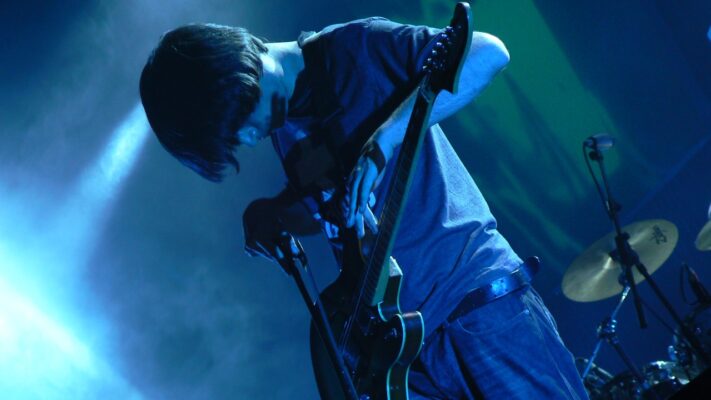
Greenwood’s affinity for the Freeze is entirely consistent with his documented approach to guitar. His philosophy has long favoured non-guitaristic sounds from guitar hardware — Ondes Martenot, orchestral textures, prepared guitar, electronics — and the Freeze delivers exactly the kind of non-decaying, instrument-transcending sustain that fits that aesthetic. When Greenwood holds a harmonic drone beneath a Radiohead bridge section, there is every chance the Freeze is doing the structural work while his hands do something else entirely. The full Jonny Greenwood gear guide covers his broader rig in detail.
Josh Klinghoffer (Red Hot Chili Peppers, Pluralone)
Josh Klinghoffer is documented using the Freeze Sound Retainer via Premier Guitar’s Rig Rundown coverage, with his own words on the subject. His direct quote establishes the Freeze as foundational rather than peripheral to his approach: “In my drive to build the mega-board I have now, I started with the Freeze first.” He went on to describe the Freeze as one of the cornerstones of his ambient-oriented pedal section, alongside the EHX Canyon, Key9 organ emulator, and Mel9 tape replay machine. His guitar tech added context: “Josh likes non-guitaristic approaches to guitar playing” — a philosophy that mirrors Greenwood’s remarkably closely and lands on the same piece of hardware.
Klinghoffer’s use is primary-source confirmed and instructs a specific angle on the Freeze: it belongs on boards built around transformation, not just enhancement. Players who want their guitar to produce sounds that could not obviously have come from a guitar are the Freeze’s core demographic, and Klinghoffer is a textbook example.
Noel Gallagher (Oasis, High Flying Birds)
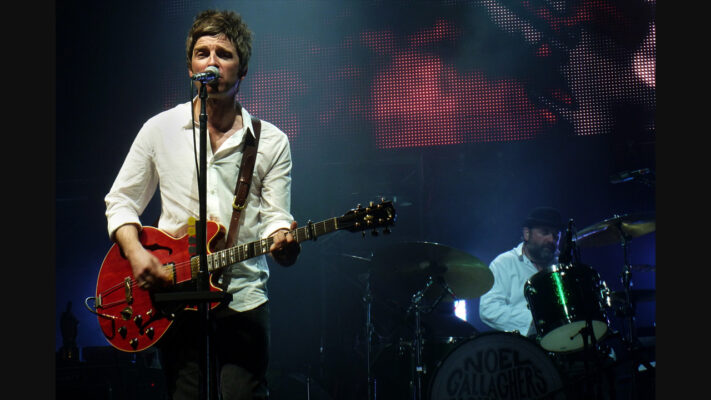
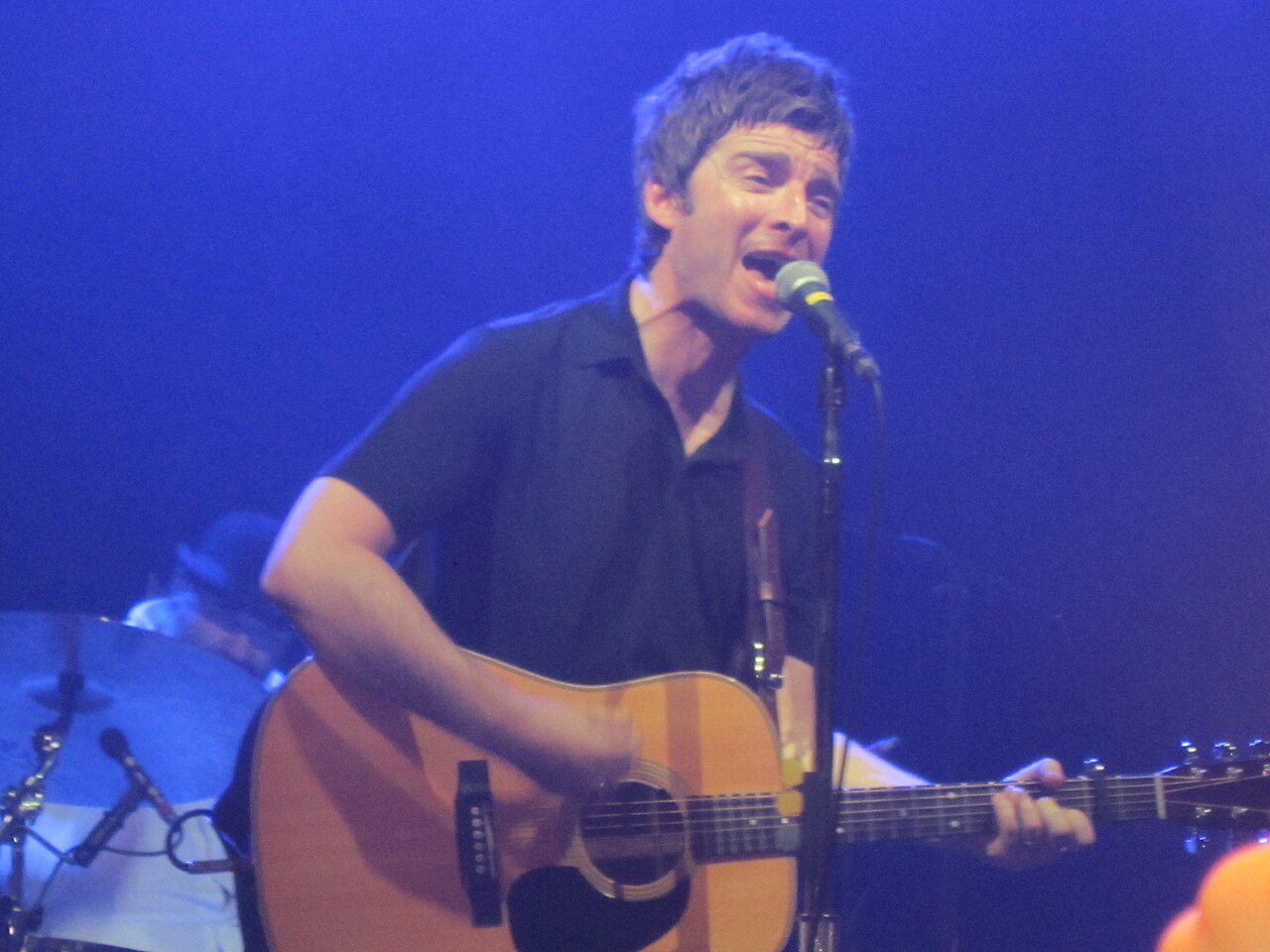
Noel Gallagher is documented on Equipboard as owning the Freeze Sound Retainer as part of a collection exceeding 300 pedals. No primary source — rig rundown footage, tech interview, or studio session documentation — confirms it as an active live tool in a specific rig at a specific time. It is included here as an Equipboard secondary connection. Gallagher’s broader willingness to explore studio-grade effects, documented extensively across his career, makes the Freeze a plausible acquisition, but it would be dishonest to present him alongside Greenwood and Klinghoffer as though the documentation is equivalent.
Albert Hammond Jr. (The Strokes)
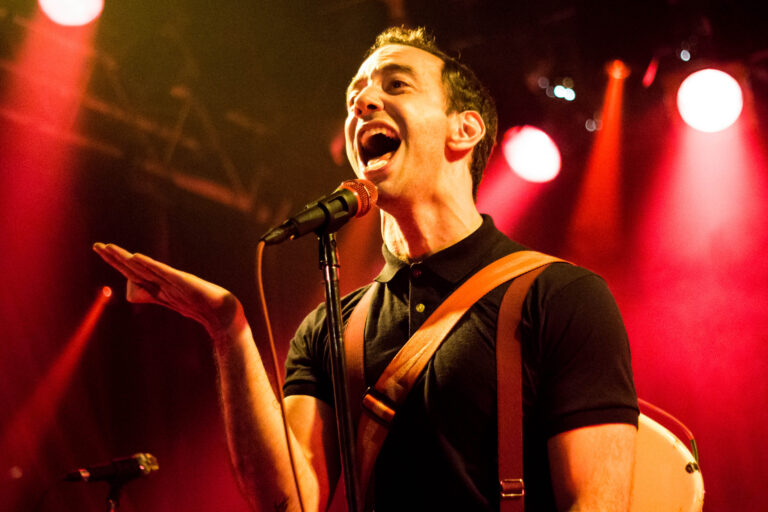
Albert Hammond Jr. is listed on Equipboard in connection with the Freeze Sound Retainer. No primary source — rig rundown, interview, or pedalboard photograph — independently confirms the specific model in active use. He is mentioned here as an Equipboard secondary connection and deserves no link or elevated claim. The Strokes’ guitar aesthetic is relatively dry and direct, which makes the Freeze an interesting departure from their signature sound — interesting enough that the connection is worth noting, not confirmed enough to anchor an article on.
Tone Recipes and Settings
Recipe 1: The Ambient Drone Bed (Latch Mode)
This is the Freeze at its most compositionally powerful. Set Mode to LATCH. Set Effect Level to approximately the same volume as your dry signal — a noon position is a reasonable starting point. Play a chord — ideally something open-voiced and resonant, a suspended chord, an open D, a major seventh with extensions. Let it ring for a full second. Press the footswitch once and release. The chord freezes beneath you. Now play a melody, a countermelody, arpeggios, single notes — anything you like — over the drone. The frozen layer holds its tuning, its timbre, and its volume indefinitely. When you need a new harmonic foundation, play the new chord and press the footswitch again. The Freeze updates immediately to the new capture. This is the technique Jonny Greenwood deploys for ambient Radiohead passages, and it produces results that sound substantially larger than one guitarist.
Recipe 2: The Guitar Orchestra Swell (Slow Mode)
Slow mode transforms the Freeze into a self-contained orchestral swell machine. Play a chord. Rather than attacking it hard, consider a moderately soft pick — the slower attack produces a smoother sample. Press the footswitch as the chord rings. The sample fades in gradually over the preset duration. When the swell has reached its peak, release the footswitch. The Freeze fades out slowly. Repeat with the next chord. Effect Level at roughly noon means the swelled layer sits at parity with your playing. Raise it to push the drone layer louder for more orchestral weight. Lower it for subtle harmonic support that fills the space without dominating. Placed before a reverb — a Holy Grail Neo or a TC Electronic Hall of Fame 2 — the swell blooms into the reverb’s tail for an effect that sounds genuinely orchestral.
Recipe 3: The Frozen Feedback Drone (Fast Mode, High Effect Level)
This one lives at the experimental end. Set Mode to FAST. Raise Effect Level past noon — toward the maximum. Find a feedback note or a long-held power chord with sustain still blooming. Stab the footswitch and hold it. The Freeze captures the feedback at a moment of peak harmonic saturation and holds it. Now adjust your guitar’s volume knob or your pick attack to play dry signal over the frozen feedback. The result is a layering of live signal over a harmonically rich drone — feedback that never descends, never evolves, never breaks up. It is the guitar equivalent of a sustained brass note in a film score. Klinghoffer’s approach to “non-guitaristic” sounds runs through exactly this territory.
Recipe 4: Signal Chain Freeze Experiments
The Freeze’s position in your chain dramatically changes what it captures and how it interacts with subsequent effects. Three key placements:
Before modulation: The Freeze captures a clean, unmodulated sample. Chorus, flanger, phaser, or tremolo placed after the Freeze will process the frozen layer, modulating it as it sustains. The frozen chord swims with chorus or pulses with tremolo — a motion-in-stasis effect that sounds distinctly synthetic and enormous.
Before reverb: The Freeze captures a dry sample. Reverb placed after then blooms off the frozen layer — you get infinite sustain with infinite reverb in perpetual bloom. This is the most cinematic available setting and requires your amp’s natural reverb or a dedicated reverb pedal positioned after the Freeze.
After drive: Drive and overdrive placed before the Freeze means the Freeze captures an already-saturated, already-harmonically-complex signal. An overdriven chord frozen by the Freeze has the tonal density of a held power chord at its moment of maximum harmonic richness — not the decayed, cleaned-up version three seconds later.
Signal Chain Placement and Pedalboard Integration
The Freeze interacts with every pedal placed after it. This is its superpower and its planning challenge. Before you place it, decide what you want to freeze: your clean signal, your driven signal, or your processed signal. Most players settle on one of three approaches.
The first approach places the Freeze at the beginning of the chain after tuner and possibly a compressor (as Greenwood does). This freezes the cleanest possible signal — pure guitar tone — with all subsequent processing applied to the frozen layer by downstream pedals. Maximum flexibility, maximum processing of the frozen drone.
The second approach places the Freeze after drive pedals but before time-based effects. This freezes the driven tone — an overdriven or distorted signal — and allows reverb and delay to bloom over the frozen distorted drone. This is heavier, denser, more aggressive. The frozen driven chord has weight that a clean frozen chord lacks.
The third approach places the Freeze near the end of the chain, after most processing. This freezes a fully processed signal — chorus, drive, and all — and whatever comes after gets applied to the already-complex captured sound. Fewer options after the freeze, but the frozen layer is richer from the start.
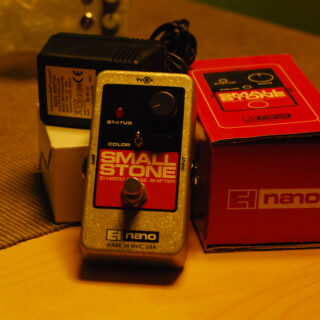
The Freeze’s 140mA current draw needs addressing before it reaches your power supply. This is higher than the EHX Holy Grail Neo (75mA) and equal to the EHX Canyon (150mA) in its power demands. Standard budget isolated supplies with 100mA outputs per channel will starve the Freeze. It comes with a 9.6VDC-200mA adapter in the box — use it if your power supply cannot provide 150mA or more on a single isolated output. Dedicated power solutions like the Strymon Zuma, Cioks DC7, or Truetone CS12 handle the Freeze comfortably on their high-current outputs. Do not run the Freeze daisy-chained with other pedals; noise and under-voltage behaviour will compromise the sample quality.
Comparisons: What the Freeze Is and Isn’t
The Freeze is not a looper. A looper captures a phrase — a rhythmic, melodic, or harmonic idea with time-based structure — and plays it back repeatedly, including the moment of attack at the beginning of every loop. The Freeze captures an instant and extends it without repetition, without audible loop structure, without the characteristic texture of a looped recording. A looper creates rhythm. The Freeze creates stasis.
The Freeze is not an E-Bow. An E-Bow sustains individual strings via electromagnetic coupling, mimicking the bowing of a single string without touch. It is physical, requires both hands in specific positions, and works on one string at a time. The Freeze sustains full chords from any pick attack with one foot. It is audio-domain, not magnetics-domain, and works regardless of pickup type.
The Freeze is not a sustainer pickup system. Systems like Fernandes Sustainer or Sustainiac sustain strings by electromagnetic feedback, maintaining string vibration indefinitely. They are built into the guitar, require modification, and their sustain behaves like infinitely natural string vibration — because it essentially is. The Freeze works on the output signal, not the strings, and does not care whether your guitar is solid body, hollow body, or even acoustic. It captures audio, not physics.
The closest conceptual sibling in the EHX lineup is the Superego+ Synth Engine, which extends the Freeze concept with a full synth engine, built-in effects, and control over the layering behaviour. If the Freeze is the pure tool — one function, perfect execution — the Superego+ is the laboratory. Players who find the Freeze’s simplicity liberating will stay with the Freeze. Players who want to shape the sustained tone with built-in modulation and filtering should look at the Superego+ as the natural evolution. EHX also produces the Pico Deep Freeze, which covers the same three modes in an even smaller enclosure — useful for boards where real estate is the primary constraint.
The Buying Guide: New vs Used, and What to Expect
The Freeze has been in continuous production since 2010 with no significant circuit revision. A used unit from 2012 and a unit from 2026 perform identically — the DSP algorithm doesn’t age, and there are no BBD chips or analog components that drift over decades of use. The used market is therefore genuinely attractive for the Freeze. Street pricing for used units in excellent condition runs approximately $85–120 USD, against a new street price of roughly $125–151 USD. The delta is modest enough that personal preference on warranty and condition documentation is the deciding factor rather than significant financial consideration.
Check that the included power adapter is present when buying used — the Freeze requires the 9.6VDC-200mA supply and cannot run on a standard 9V battery. Missing adapter on a used unit means sourcing a compatible power supply separately, which erodes the used-market savings. Verify the footswitch action on used units: the Freeze switch is smooth and quiet from the factory, and any stiffness or sponginess suggests the switch has been heavily used or abused.
The Freeze is positioned in Equipboard’s Standard/Professional range — quality gear at a price accessible to working musicians, not purely boutique collectors. 167 documented pro users across a range of genres confirms that it is not a novelty or a niche tool: it is a legitimate stage pedal used by players who could afford anything and chose the Freeze specifically for what it does.
Ownership Notes: What They Don’t Tell You in the Manual
The buffered bypass is not optional and not adjustable. Unlike the vast majority of EHX nano pedals, which use true bypass, the Freeze must remain actively listening to the audio signal at all times in order to capture in real time. This requires buffered bypass — the audio passes through the circuit constantly, even when the effect is bypassed. For most guitarists this is completely irrelevant. For players using vintage germanium fuzz pedals that are sensitive to the impedance of their input signal, place the germanium fuzz before the Freeze in the chain rather than after it, so the Freeze’s buffer does not affect the fuzz’s input impedance. This is a niche consideration but worth knowing.
The capture algorithm works best on sustained input. A very sharp, percussive attack — a heavily picked staccato note with immediate muting — gives the algorithm less harmonic information to work with. Held, ringing notes and chords produce the best, most complete samples. If your capture sounds thin or incomplete, try a slightly softer pick attack and give the note a moment to bloom before triggering the freeze.
The Effect Level knob is frequently misunderstood. It does not control decay, fade speed, or any time-domain parameter. It controls the volume of the sustained signal relative to your bypass volume. At its maximum, the frozen layer plays at full volume. At its minimum, the frozen layer is essentially silent. The wet/dry relationship is not controlled by the Freeze itself — your bypassed dry signal passes through at unity gain; the Effect Level only affects the frozen layer. This means you can blend subtle, almost inaudible background drones under heavy playing, or push the frozen layer louder than your dry signal for an effect that overwhelms and surrounds the live guitar.
The Freeze pairs exceptionally well with volume swells. A guitar with a passive volume knob, or a volume pedal placed before the Freeze, allows you to fade in a chord before capturing it — the frozen sample then contains a chord at the top of its swell, with no pick attack or transient. The result is orchestral in quality: a sustained, attack-free harmonic foundation that sounds like strings rather than guitar.
Frequently Asked Questions
Can I run the Freeze with a 9V battery?
No. The Freeze requires a 9.6VDC-200mA power supply and has no battery compartment. At 140mA current draw, battery operation would be impractical and unsupported by the design. The included 9.6VDC-200mA adapter is the correct power source. If using a pedalboard power supply, ensure the output providing power to the Freeze delivers at least 150mA of isolated current. Most budget supplies (100mA per output) are insufficient.
What is the difference between the Freeze and the Pico Deep Freeze?
The Pico Deep Freeze covers the same three modes (FAST, SLOW, LATCH) and the same core function in an even smaller enclosure — the Pico format is roughly half the footprint of the nano. The trade-off is footswitch size and spacing. The Freeze’s larger footswitch is easier to hit reliably on a dark stage with precision timing. Players who prioritise board real estate above all else should consider the Pico Deep Freeze. Players who value reliable footswitch access under pressure should stay with the standard Freeze.
Can I capture reverb tails or delay repeats in the Freeze?
Yes, if reverb or delay pedals are placed before the Freeze in the signal chain. The Freeze captures whatever audio is present at its input at the moment of triggering — if that audio includes reverb tails or delay repeats, those are frozen too. This is a deliberate technique: capturing a reverb-soaked chord freezes the reverb’s harmonic bloom along with the chord. Most players place the Freeze before reverb and delay so that time-based effects process the frozen layer rather than being captured inside it — but neither approach is wrong, they just produce different results.
Does the Freeze work with bass guitar?
Yes. The Freeze is frequency-agnostic — it captures whatever audio appears at its input, including bass guitar. The Effect Level knob allows balancing the frozen bass note against the live bass signal. Bassists who use it typically explore the Latch mode to hold a root note while moving to playing in other ranges. It also works with keyboards, synths, or any line-level or instrument-level source, though it is designed for instrument-level input.
Is the Freeze true bypass?
No. Unlike the majority of EHX nano pedals, which use true bypass, the Freeze uses buffered bypass. This is a design requirement — the circuit must listen to the audio signal at all times to enable real-time capture. The buffer is high quality and transparent; tone-sensitive players in standard bypass chains will not notice signal colouration. The main practical consideration is for users of vintage germanium fuzz pedals, which are sensitive to the input impedance they see from preceding circuitry. Place germanium fuzzes before the Freeze to avoid interaction.
Where should I place the Freeze in my signal chain?
The canonical starting point is near the beginning of the chain, after a tuner and compressor but before drive pedals — this freezes the cleanest possible signal. However, placement is a creative decision, not a technical rule. After drive pedals: frozen driven tone with reverb and delay processing the frozen layer downstream. Before reverb: reverb blooms off the frozen chord. After modulation: captures modulated tones including chorus or flange depth within the sample. Experiment methodically and note what each position produces. Jonny Greenwood places it after his compressor as the first effect in his chain — a clean-capture approach that puts all downstream processing at his disposal over the frozen layer.
How does the Slow mode fade duration work?
The Slow mode fade duration is not controlled by a knob — it is set by pressing the footswitch three times rapidly while in bypass to cycle through three preset fade durations (short, medium, and long). The selected duration is retained in the pedal’s memory. For most players the medium duration is the most musically natural for live swells. Consult the owner’s manual for the exact procedure, as the triple-press sequence is not indicated on the pedal’s surface.
Can I use the Freeze to create evolving harmonic progressions live?
Yes — and this is one of its most powerful live applications, especially in Latch mode. With Latch engaged, press the footswitch to capture a chord. That chord sustains indefinitely. Play the next chord in your progression. Press the footswitch again: the Freeze updates the frozen layer to the new chord immediately. The transition from one frozen harmony to the next is seamless if you time the new capture during the ring of the new chord. In this way a single guitarist can present a continuously evolving harmonic foundation while playing melody or rhythm on top. Josh Klinghoffer cited the Freeze as the foundation of his ambient board build-out precisely because this technique generates results that feel collaborative rather than solitary.
Image credits
- Noel Gallagher: Freddyballo, Wikimedia Commons, CC BY-SA 4.0.
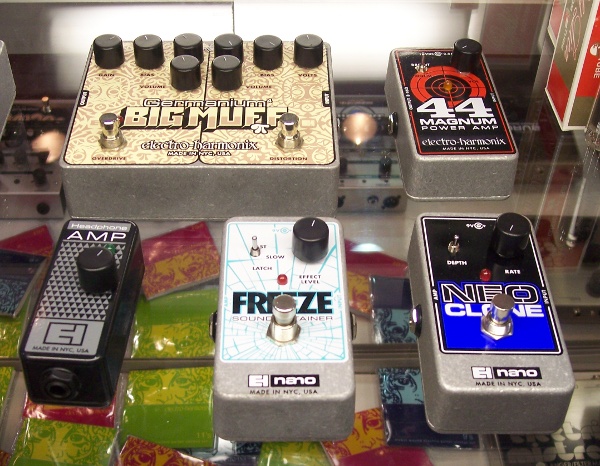
- Top image: Electro-Harmonix Freeze Sound Retainer, front center, displayed with other EHX pedals at Summer NAMM on 19 June 2010. Photo: Create Digital Media, ElectroHarmonixPedals (EH pedals, 2010 Summer NAMM), CC BY-SA 2.0. Full original frame retained; no crop or retouch. Adaptations must use the same or a compatible license.
- Jonny Greenwood: radiohead in amsterdam by Michell Zappa, Wikimedia Commons, CC BY-SA 2.0.
- Noel Gallagher: Noel Gallagher @ Mexico City, Wikimedia Commons, CC BY 2.0.
- Albert Hammond Jr.: Eric Farias, Wikimedia Commons, CC BY 2.0.
Latest News
Related
On This Day
Tuesday 10 November
From this week: