Robby Krieger Guitars & Gear: The Complete Guide to The Doors’ Fire-Starting Guitarist
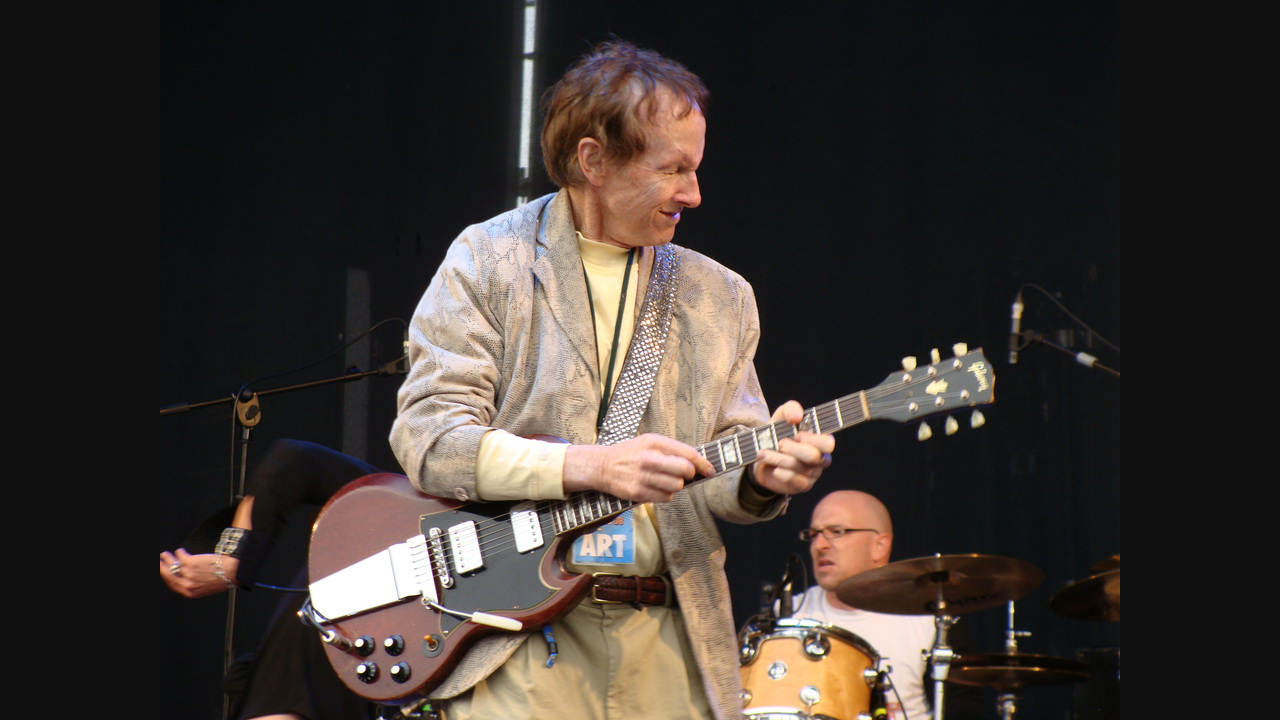
Robby Krieger with Riders on the Storm at Bilbao BBK Live, 6 July 2008. Photo: Alberto Cabello, CC BY 2.0. Complete photograph resized with dark side margins; no source cropping or stretching.
Most people, when they think about The Doors, think about Jim Morrison. The leather pants. The poetry. The lizard king mythology. And fair enough — Morrison was a force of nature that few stages could contain.
But here’s the inconvenient truth: Robby Krieger wrote “Light My Fire.” He wrote “Love Her Madly.” He wrote “Touch Me” and “Roadhouse Blues.” The song that launched The Doors into the stratosphere came from the quiet guy with the Gibson SG standing in the shadows — the one who never used a pick, learned guitar from flamenco records, studied Indian music under Ravi Shankar, and somehow turned all of that into one of the most distinctive and underrated guitar voices in the history of rock.
Krieger’s tone wasn’t loud and wasn’t flashy. It was something stranger and harder to copy: a fluid, fingerpicked voice that belonged to no single genre, routed through a clean Fender Twin and shaped by a mind that had absorbed flamenco, jazz, blues, and Eastern modes before most rock guitarists had figured out the pentatonic scale.
This is his story. This is his rig. This is the anatomy of the man who lit the fire.
Background: The Classical Kid Who Learned Flamenco and Accidentally Invented Psychedelic Rock Guitar
Robert Alan Krieger was born on January 8, 1946, in Los Angeles, California, into a family where classical music was the household soundtrack. His father Stuart was an aerospace engineer with an ear for precision; his mother Marilyn preferred Frank Sinatra. Neither parent predicted they were raising someone who would eventually write one of the most-played guitar riffs of the 20th century.
Krieger’s first instrument was the trumpet. Then piano. Neither stuck. What stuck was a collection of flamenco records his father brought back from a business trip to Madrid — records by masters like Sabicas, Mario Escudero, and Carlos Montoya. As Krieger recalled: “It was the first music I heard that was totally guitar-based, so when I started to play guitar, flamenco is what I wanted to do. Great flamenco players are amazing — their picking, their melodies, everything.”
He taught himself fingerpicking from those records. No teacher, no theory class — just a kid in his room trying to reproduce something that moved him. That self-taught quality never left. It became the foundation of everything.
It was Elvis Presley who pointed him toward rock and roll, but it was Chuck Berry who made him pick up an electric guitar. And then — crucially — Krieger decided he had no interest in sounding like Chuck Berry. As he put it: “Every other guy I knew who played rock and roll back then played like Chuck Berry. I liked the energy and the attitude and the excitement, but didn’t want to play like any of them. I don’t think I consciously planned to combine rock and roll and flamenco, but it just came out that way.”
Though he switched to electric, Krieger remained pick-less. The flamenco fingerpicking style came with him from the acoustic world and never left. That single decision — fingers over pick — would define the entire sonic character of The Doors.
At UC Santa Barbara and later back in Los Angeles, Krieger’s musical education expanded dramatically. He studied Indian music. He attended a Transcendental Meditation class where he met Ray Manzarek, who introduced him to drummer John Densmore. Through those same circles, Jim Morrison appeared. In 1965, The Doors were born — and Krieger had been playing electric guitar for barely a year.
At the band’s first rehearsal, Morrison heard Krieger playing bottleneck slide guitar and reportedly wanted the technique featured on every song on the debut album. It didn’t quite work out that way. But the chemistry was unmistakable from the start: a poet who didn’t play instruments, a keyboard player covering the bass frequencies with his left hand, a drummer with a jazz background, and a guitarist who sounded like nobody else on the planet.
Tone note: Krieger proved that the most dangerous thing a rock guitarist can do is not study rock guitar.
The Rig: Robby Krieger’s Guitars, Amps & Gear — Complete Era-by-Era Breakdown
Krieger’s gear story is quieter than most of his contemporaries. No walls of Marshalls, no boutique pedalboard the size of a coffee table, no obsessive vintage-hunting. He found the tools that let his fingers do the talking and stuck with them. But the details, as always, reveal the full picture.
Guitars: A Lifetime of Gibson SGs and the One That Got Away
The 1964 Gibson SG Special — The One That Defined an Era (and Was Stolen)
Robby Krieger plays a red 1964 Gibson SG Special with P-90 pickups on the first two Doors albums and for the bulk of the group’s live shows from 1966 to 1970. That sentence covers a lot of ground. This is the guitar you hear on The Doors (1967), on Strange Days (1967), and across hundreds of live performances that shaped psychedelic rock. It is also, tragically, the guitar that was stolen and has never been recovered.
The 1964 SG Special is a stripped-down instrument by design. No frills, no binding, dot inlays on a rosewood fretboard, and two P-90 single-coil pickups that deliver a bright, punchy, slightly raw character compared to the warmer sound of Gibson’s full-size humbuckers. P-90s bite. They have a midrange clarity that cuts without being harsh, a slight spikiness on the attack that rewards a light touch — which is exactly what a fingerpicking guitarist needs. You can hear them growl when Krieger digs in, and whisper when he eases off.
The guitar had a Maestro Vibrola tremolo bar added later, which Krieger used for the subtle pitch swells and controlled wobble that became part of his live vocabulary.
To this day, Krieger has the original serial number and has expressed hope that the guitar might surface. It has not. Somewhere out there, one of the most historically significant guitars in rock history is presumably in someone’s closet with no idea what it is.
Tone note: P-90s into a clean Fender Twin. That’s the entire sonic identity of The Doors’ first chapter.
The 1967 Gibson SG Standard — The Humbucker Era Begins
According to Elektra Records documentation, Krieger purchased a red 1967 Gibson SG Standard in November 1967, likely acquired for studio use during the Waiting for the Sun sessions. The 1967 SG Standard replaced the P-90s of the Special with full-size humbuckers — a thicker, rounder, warmer tone with more low-end body and less of that single-coil spikiness.
The tonal shift is audible across The Doors’ later recordings. The humbuckers gave Krieger more sustain for his slide work and a fuller, more orchestral quality in his chord voicings. Where the early records had a certain brittle electricity, the later material — Morrison Hotel, L.A. Woman — has a heavier, more grounded character that the SG Standard helped create.
This guitar, or close variants of it, remained Krieger’s primary instrument through the remainder of The Doors’ career and well beyond. He has described the 1967 SG as still being in his possession today.
Tone note: Same guitar shape, same DNA — but the humbuckers gave the sound a darker, more nocturnal character that matched where the band was going.
The 1968 Gibson SG Standard — Road Continuity
By March 1968, Krieger had added a red 1968 Gibson SG Standard to the rotation, used extensively on stage during the band’s peak touring years. Like the 1967 model, it featured full-size humbuckers and the slim, fast SG neck profile that suited his fingerpicking approach. The SG’s light weight and devil-horn double-cutaway design gave him the physical freedom to move his fretting hand across the entire neck without restriction — important for a player whose lines constantly jumped between registers.
The Gibson RK-1 Signature SG — Making It Official
Gibson released the Robby Krieger RK-1 Signature SG around 2000, combining the body of his beloved 1967 SG with the neck profile from a 1961 model — thinner and faster than the mid-’60s versions, exactly the spec Krieger preferred. The guitar came with a Maestro Lyre Vibrola tailpiece for performance versatility and traditional period-correct aesthetics.
Gibson later reissued an updated Robby Krieger SG for the contemporary market, copying his current 1967 SG but using a ’61 neck, built from Grade A tonewoods. Krieger uses a circa-2000 version of the signature model set up specifically for slide guitar in either open-G or open-D tuning.
Other Notable Guitars
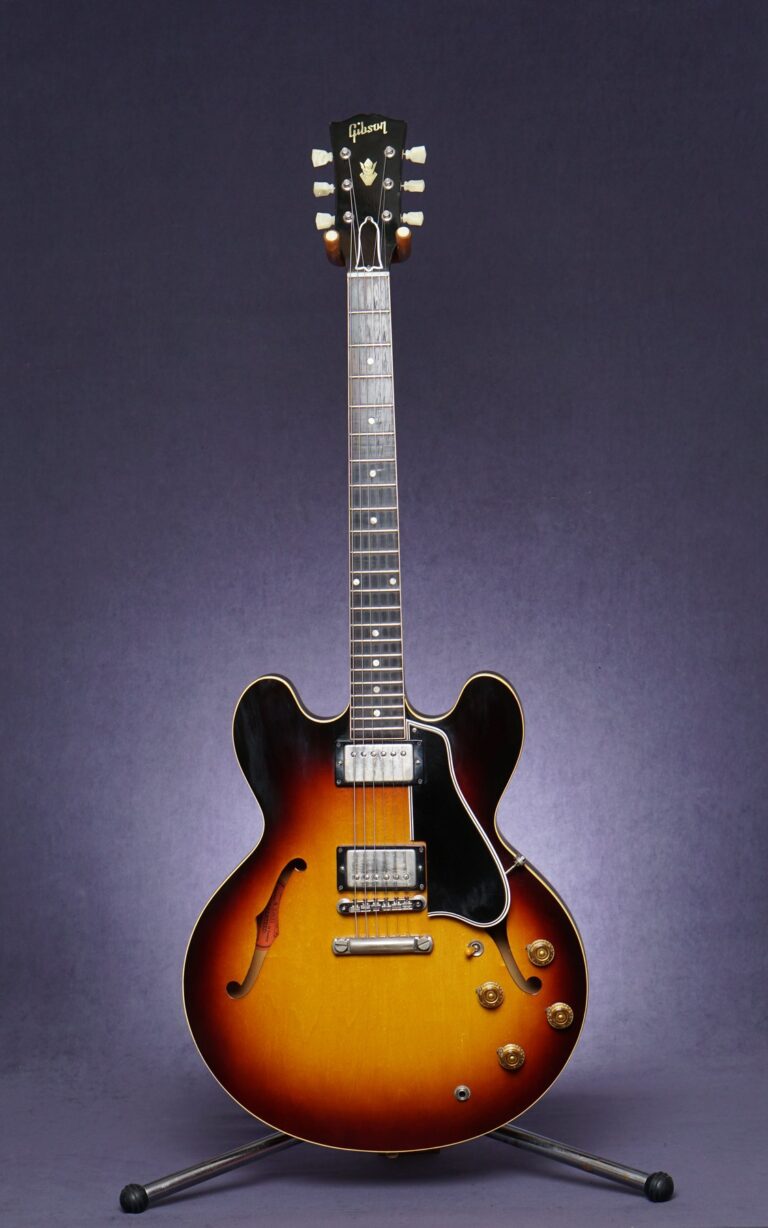
- Gibson ES-335 TDSV — Used on a handful of Doors tracks, including “Love Her Madly” and “Texas Radio.” Krieger noted: “I did use a 12-string on a couple of songs, like Love Her Madly and Texas Radio.” The semi-hollow construction added a woody warmth to the specific tones those songs required.
- Classical Spanish Guitar (Madrid, ~$200) — Krieger’s father bought this during a business trip to Spain when Robby was a teenager. His first real guitar and the instrument on which he absorbed the flamenco technique that defined his entire electric style.
- Gibson Les Paul Custom (Black Beauty) — In his collection; used occasionally in recording contexts.
- Gibson 1954 Les Paul Custom — Documented in his guitar collection.
- Gibson Custom Shop SG Custom Reissue VOS — Modern Custom Shop instrument used in later touring contexts.
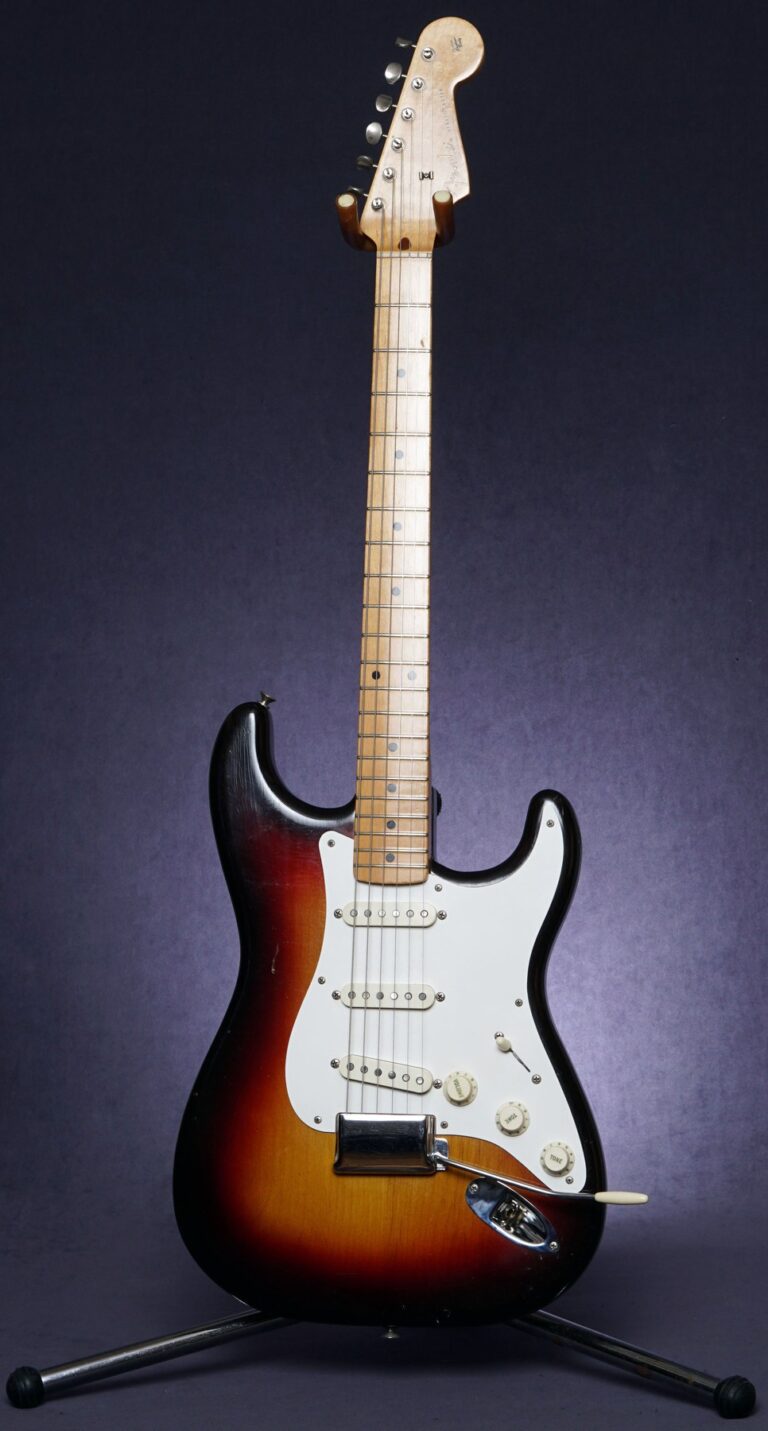
- Fender Stratocaster — Documented as occasionally used; not a primary instrument.
Amps & Cabinets: Clean Headroom, Tube Truth, and the Fender Connection
Krieger’s amp history is a story of gradually finding the cleanest, most transparent platform for his fingerpicked tone — and then staying there. He didn’t want an amp to add character. He wanted it to get out of the way and let his hands do the work.
Magnatone Custom (Early Doors, Pre-Recording)
Krieger’s first amp with The Doors was a Magnatone Custom, a combo unit with two 12-inch speakers — most likely a Model 260. The Magnatone had a characteristic tremolo circuit and a warm, slightly midrange-heavy voice. It was the amp the band gigged with in the early Gilman-adjacent Hollywood club circuit before they signed to Elektra. It did not appear on any of the official studio recordings.
Tone note: The Magnatone was a starting point, not a destination. Krieger always wanted more transparency than it offered.
Fender Twin Reverb — The Core Studio Sound
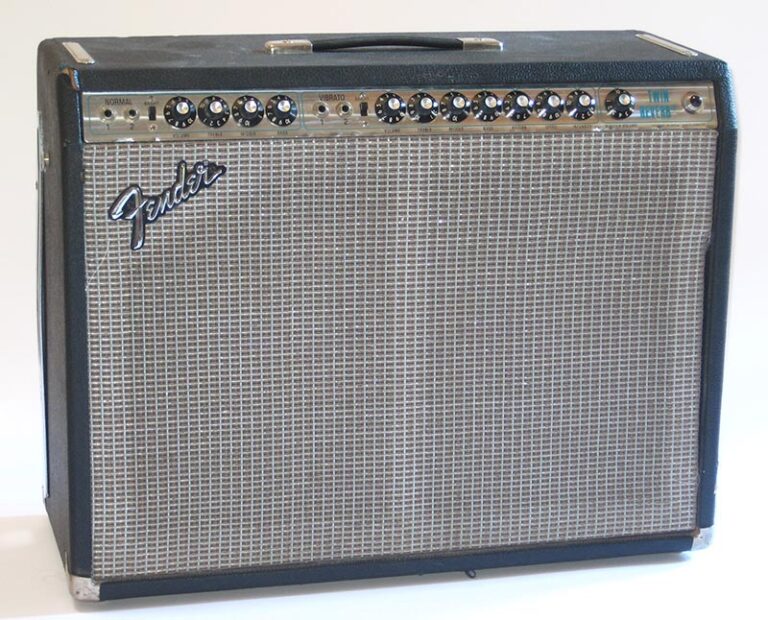
For the studio recordings, rented Fender Twin Reverbs were the primary amp for the majority of The Doors’ catalog. Clean, loud, and honest — the blackface Twin Reverb has two 12-inch speakers, a famously pristine clean channel, and just enough natural compression from the tube power section to give notes a gentle bloom without adding color. Krieger confirmed: “Recording-wise, it was the SG and a Twin Reverb.”
The Twin Reverb was perfectly matched to his playing style. His fingerpicked attack needed an amp that could reproduce the dynamic range between a soft touch and a hard dig without compressing both into the same flat wash. The Twin did exactly that. When he barely grazed the strings, it whispered. When he dug in, it growled. Everything in between was his to shape.
Some of the Twins used on later Doors recordings were reportedly rebuilt with JBL speakers for more headroom and projection, giving them a slightly tighter, more present character on stage.
Tone note: The cleanest amp Fender ever built, in the hands of the most touch-sensitive guitarist in the room. That’s how you get “Riders on the Storm.”
Acoustic Control Corporation 260 — The Endorsement Era
The Doors signed an endorsement deal with Acoustic amplification, and both Krieger and keyboardist Ray Manzarek used Acoustic 260/261 heads for a period — primarily live rather than in the studio. The Acoustic 260 was a powerful, solid-state head known for its raw, slightly harsh character. It was loud and built for large stages but lacked the warmth and dynamic response of the Fender tube amps Krieger preferred. He grew tired of them and eventually returned to the Twin Reverb. His tech Hans noted that Krieger always preferred to stand near his amp — engineers were constantly trying to move cabs to isolation booths, and Krieger would refuse: “I always like to be really near the amp, to keep the dynamics going between guitar and amp.”
Fender Showman
The Fender Showman head — a high-powered Fender designed for large stages with an external speaker cabinet — also appeared in Krieger’s live setup at various points during The Doors’ touring years. It shared the clean Fender headroom character but with more raw power for larger venues.
Fender Hot Rod DeVille — The Modern Live Rig
For solo and reunion work from the 1990s onward, Krieger settled on a pair of Fender Hot Rod DeVille combos as his primary live amp. He typically runs two of them simultaneously — either the 2×12 or 4×10 cabinet configurations — for stereo spread and stage presence. The Hot Rod DeVille delivers the same basic Fender clean-to-edge-of-breakup character as the vintage Twin, but in a more roadworthy, modern package.
| Amp | Era | Notes |
|---|---|---|
| Magnatone Custom (Model 260) | 1965–1966 (pre-recording) | First amp with The Doors; live use only, not used on studio recordings |
| Fender Twin Reverb (Blackface, various) | 1966–1971 (studio core) | Primary studio amp across the entire Doors catalog; some rebuilt with JBL speakers for live use |
| Acoustic Control Corp 260/261 | ~1968–1970 (endorsement) | Live use during endorsement deal; abandoned in favor of Fenders |
| Fender Showman | Various Doors-era live shows | High-powered Fender head for larger venues |
| Fender Hot Rod DeVille (2×12 or 4×10) | 1990s–present | Current live amp; two units run simultaneously for stereo spread |
Pedals & Signal Chain: Minimal Tools, Maximum Texture
Krieger’s approach to pedals mirrors his approach to everything else: use only what the music actually needs. During the Doors years, the board was nearly empty. In later touring life, a thoughtful selection of effects was added to cover the band’s full sonic palette — but always with restraint.
The Doors Era (1966–1971)
- Maestro FZ-1 Fuzztone — Gibson’s original fuzz pedal, the same unit that appeared on The Rolling Stones’ “Satisfaction.” Krieger used it for the heavier, fuzz-drenched moments — most notably on “When the Music’s Over” from Strange Days, where he stood directly in front of his Twin Reverb with the Maestro engaged, tracking the solo repeatedly until the sustain sang the way he heard it in his head. He recalled asking producer Paul Rothchild for “some way to make it sound almost like a violin” — total sustain. The Maestro got him there.
- Vox Tone Bender (or similar fuzz) — Also seen in use during Doors-era live performances as an alternative or supplement to the Maestro.
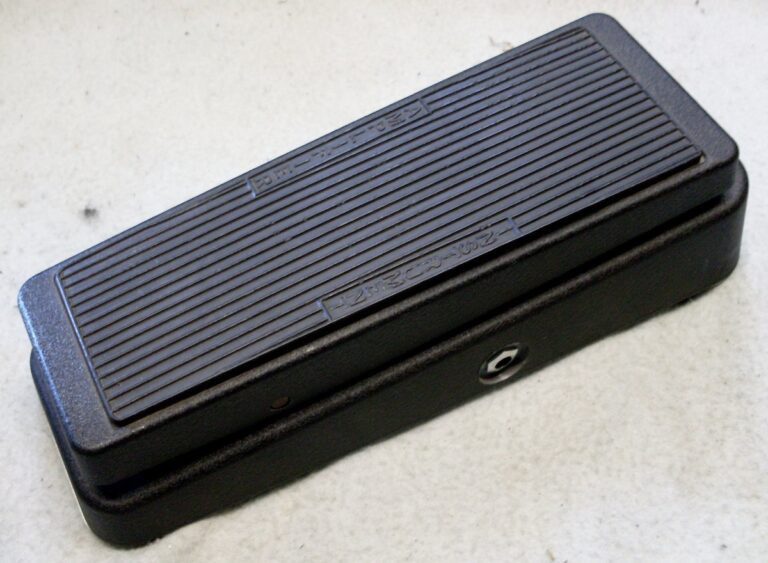
- Wah Pedal (Dunlop Cry Baby or similar) — Used on select live performances for expressive filter sweeps.
- Echoplex — A tape-based echo unit reportedly used in live setups during The Doors’ touring years for slapback and longer delay effects.
Modern Live Pedalboard (Documented 2010s)
Krieger’s tech Peter Penner built a custom board for the modern touring rig. The signal chain runs as follows:
Cordial Encore braided High Copper Series cable → Boss TU-2 Tuner → Dunlop Mini Cry Baby Wah → Boss CE-B Bass Chorus (used on “Love Her Madly”) → Boss TR-2 Tremolo (used on “Riders on the Storm,” “Strange Days,” and others) → Ibanez TS-808 Tube Screamer (light gain) → Ibanez TS-808 Tube Screamer reissue (heavy gain) → Xotic Effects SP Compressor (clean boost) → TC Electronic Flashback Delay → Boss DD-7 Digital Delay (with expression pedal for wet/dry mix) → Ernie Ball VP Jr Volume Pedal
The dual Tube Screamer setup is worth noting: one set to light gain for general enhancement of the amp’s natural breakup, a second set to heavier gain for moments requiring more saturation. This is a sophisticated approach to dynamic range management — using the two pedals as stepped gain stages rather than a single blunt instrument.
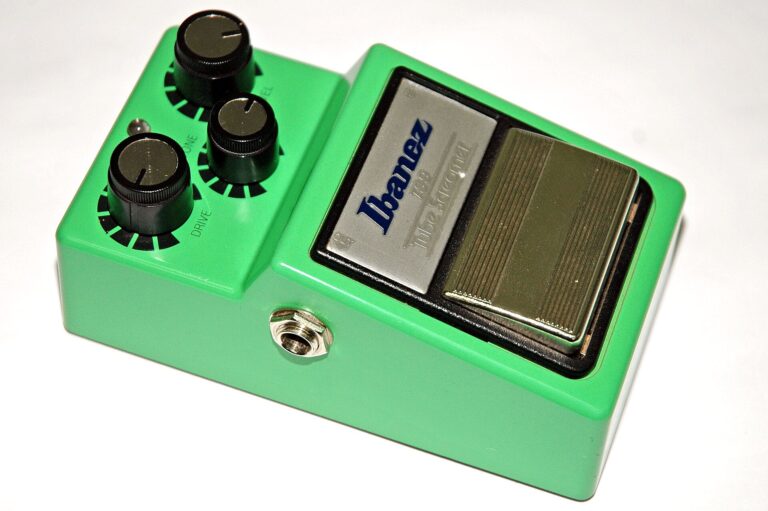
Tone note: Two Tube Screamers with different gain settings is not excess. It’s a volume knob with memory.
Strings, Picks & Setup
Strings: Ernie Ball 2221 Regular Slinky Nickel Wound (.010–.046) on both primary and slide guitars, as confirmed by tech Peter Penner.
Picks: None. This is not a trivial detail. Krieger has never used a pick on electric guitar. His flamenco fingerpicking technique — using the thumb, index, middle, and ring fingers in various combinations — is the foundational reason his tone sounds different from every other rock guitarist of his era. Penner confirmed: “Robby’s parts are interesting because at first they might seem easy to play, but they’re very hard to play accurately. A lot of people wouldn’t guess, for instance, that Robby played the riff to ‘Roadhouse Blues’ with his fingers, not a pick. He also plays with his fingers on ‘Love Me Two Times,’ ’20th Century Fox,’ and many more. Using your fingers is the only way to really get the Robby sound.”
Setup:
- Primary SG (1967 Standard): thin neck profile, standard action, set up for the full dynamic range of fingerpicking from light touch to hard attack
- Signature RK-1 SG: set up for slide in open-G or open-D tuning, higher action to allow slide clearance without fret buzz
- Pickup preference: bridge position for most material; neck pickup for warmer, jazzier lines
Tone note: You cannot accurately replicate Krieger’s tone with a pick. His fingers are not a substitute for a plectrum — they are a completely different instrument.
Tunings & Tone Philosophy
Standard tuning for the vast majority of the Doors catalog. Open-G and open-D for slide work, particularly on the signature SG set up specifically for that purpose.
Krieger’s tone philosophy is rooted in the idea of the guitar as a voice rather than a rhythm machine. He came from a tradition — flamenco — where the guitar carries the entire musical argument. No bass player. No keyboard. Just the guitar, its harmonics, its percussive possibilities, and its melodic voice. When he brought that sensibility into a rock band that already had a keyboard player covering the bass register, the guitar was free to function in a completely different way than it did in any other rock band of the era.
He has spoken about always wanting to stand close to his amp — not because of volume, but because of interaction. The proximity between guitar and speaker creates a feedback relationship that he uses as part of his dynamic arsenal, coaxing sustain and harmonic content from the amp’s response to the guitar’s signal in real time. In his words: “I always like to be really near the amp, to keep the dynamics going between guitar and amp. Engineers are always trying to stick the cabinets in an iso booth, but that never works for my sound.”
Tone note: Krieger doesn’t play in front of the amp. He plays with it — a two-way conversation between fingers and tubes.
Playing Style & Tone Philosophy: The Fingerpicking Alchemist
Robby Krieger is one of the most genuinely unusual rock guitarists who ever lived — not because he was technically extraordinary in the conventional sense, but because the entire basis of his technique came from outside rock music entirely.
He arrived at the electric guitar via flamenco. That is not a minor influence. Flamenco is a complete musical system — it has its own approach to rhythm, its own relationship between melody and harmony, its own physical technique that is deeply different from anything in the blues or rock tradition. Krieger absorbed it not as a stylistic flavoring but as a foundational language, and then he applied it to an SG through a clean Fender amp and somehow made it work in a rock context.
The Fingerpicking Foundation
The most immediate consequence of the flamenco background is the absence of a pick. Krieger plays exclusively with his fingers — thumb, index, middle, and ring — giving each note a slightly softer, rounder attack than a flatpick would produce, with more variation in tone between strings and positions. The thumb tends to handle the lower strings, producing a warmer, more resonant bass response. The fingers handle the upper strings with a brighter, more articulate clarity.
This means his chords have an inherent arpeggiated quality even when he’s playing them as one voicing — individual strings arrive at slightly different moments, giving the sound a flowing, harp-like character rather than the percussive snap of a picked chord. Listen to the opening of “People Are Strange” or the chord work throughout “Riders on the Storm” — that liquid shimmer is fingerpicking physics, not studio processing.
Tone note: Every chord Krieger plays is already an arpeggio at the microscopic level. That’s what fingers do that picks cannot.
The Slide Vocabulary
Krieger’s slide work is instantly recognizable and genuinely distinctive from mainstream blues-slide convention. His approach features long, swooping glissandos into and out of target notes — not the crisp, precise lateral movements of a traditional blues slide player. He treats the slide as a melodic smear device, using it to create the vocal, speech-like quality that Morrison’s presence in the same band demanded as a musical counterpart.
At an early Doors rehearsal, Morrison heard Krieger’s bottleneck playing and immediately wanted it on every song. It became one of the signature textures of the band’s sound — a guitar that could wail and moan in response to a vocalist who was doing the same thing with words.
Tone note: His slide doesn’t play notes. It pronounces them.
Jazz Harmonic Language in a Rock Context
Thanks to influences including Wes Montgomery, Larry Carlton, and Joe Pass, Krieger brought a jazz harmonic sensibility to his chord voicings and improvisation that was completely foreign to most rock guitarists of the 1960s. Instead of the standard blues box pentatonic solos that defined his contemporaries, Krieger’s improvisations moved through modes, chord tones, and chromatic passing notes with a fluidity that sounded genuinely improvised — because it largely was.
The solo on “Light My Fire” is the most famous example. Thanks to Krieger’s flamenco background, he avoided the usual pentatonic blues scale clichés that defined mid-’60s rock guitar, instead navigating the changes with a jazz-inflected melodic freedom that still sounds fresh sixty years later.
Tone note: He played the changes, not the scale. That’s the jazz truth in every Doors guitar solo.
Restraint as a Compositional Tool
Perhaps the most undervalued aspect of Krieger’s playing is what he doesn’t play. The Doors had no bass player — Ray Manzarek’s left hand covered the low frequencies on a keyboard bass. Krieger understood that his role was not to fill space but to inhabit it selectively. His parts leave room. They breathe. When Morrison needed space for a vocal phrase, Krieger pulled back. When Manzarek’s organ fills the middle register, Krieger moves to the high end or goes sparse.
This spatial intelligence — knowing when to play and when not to — is what makes The Doors’ music feel so open and textured despite being a four-piece with no dedicated bassist.
Tone note: The notes Krieger doesn’t play are as important as the ones he does. Silence is part of the vocabulary.
How to Sound Like Robby Krieger: Building the Doors Guitar Tone
Full transparency upfront: you cannot fully replicate Robby Krieger’s tone without playing with your fingers. This is non-negotiable. The entire character of his sound — the softness of attack, the arpeggiated chord texture, the dynamic range between a ghost note and a full dig — depends on fingerpicking. If you approach this with a flatpick, you’ll get some of the notes right and none of the feeling.
That said, here’s how to get as close as possible.
The Guitar
Start with a Gibson SG. The early records call for P-90 pickups — the 1964 SG Special character — and the later records move into humbucker territory with the 1967 Standard. For the iconic Doors recordings from the first two albums, you want a P-90 equipped SG or a close equivalent. The Epiphone SG Special with P-90 pickups covers the early tone at an accessible price. For the later material, any SG Standard with decent humbuckers will serve.
Alternatively, a Gibson ES-335 semi-hollow gets you closer to the “Love Her Madly” and “Texas Radio” colors — warmer, woodier, with more natural resonance in the mids.
The Amp
Fender clean. That’s the entire instruction. You want a blackface Fender Twin Reverb character — maximum headroom, honest EQ response, enough natural tube warmth to soften the attack without compressing it into mush. The amp should not be adding distortion. The amp should be asking your fingers what they want to say.
| Control | Setting | Notes |
|---|---|---|
| Volume | 4–6 | Loud enough for natural tube warmth; not so loud you’re adding breakup |
| Treble | 5–6 | Bright but not brittle; let the P-90 do the cutting |
| Middle | 6 | The warmth of the SG lives here |
| Bass | 4 | Controlled — Manzarek covers the low end; the guitar doesn’t need to |
| Reverb | 2–3 | Light spring reverb for space and atmosphere |
| Tremolo | To taste | Used on “Riders on the Storm” and select other songs; slow and deep |
Tone note: If the amp is adding gain, back it off. Krieger’s distortion comes from the Fuzztone and occasionally the Tube Screamer — the amp is always the clean foundation.
The Pedals
- Fuzz (Maestro FZ-1 or equivalent) — For “When the Music’s Over,” “Spanish Caravan,” and other heavier moments. A modern Electro-Harmonix Op-Amp Big Muff or a Dunlop Fuzz Face Mini gets close to the FZ-1 character. Use it sparingly and with intention — not as a constant texture, but as a dramatic shift in register.
- Ibanez Tube Screamer (TS-808 or TS9) — Set to light gain as an amp push for solos, heavier gain for the crunchier material. This is his modern live setup and works beautifully with a clean Fender base tone.
- Tremolo pedal (Boss TR-2) — Slow, deep tremolo for “Riders on the Storm” and other atmospheric pieces.
- Short delay or reverb — Slapback-style or plate reverb for space and dimension, particularly on ballads and slide work.
Budget vs Pro Rigs
Budget Rig:
- Guitar: Epiphone SG Special with P-90 pickups
- Amp: Fender Blues Junior or Vox AC15 (clean channel)
- Pedals: Ibanez TS9, Boss TR-2, cheap fuzz of choice
- Strings: Ernie Ball Regular Slinky .010s
- Picks: Your fingers. Non-negotiable.
Pro Rig:
- Guitar: Gibson SG Special (P-90 equipped) for early Doors; Gibson SG Standard or RK-1 Signature for later material
- Amp: Fender Twin Reverb (blackface original or reissue) — two units for stereo live use
- Pedals: Ibanez TS-808 (two — one light, one heavy), Boss TR-2, TC Electronic Flashback Delay, Maestro FZ-1 or quality fuzz clone, Dunlop Mini Wah
- Strings: Ernie Ball 2221 Regular Slinky Nickel Wound .010–.046
Tone note: This rig only works if you put the pick down. Spend less on gear and more time developing your fingerpicking. That’s where the Krieger tone actually lives.
The Technique Fundamentals
- Fingerpicking: Start with your thumb on the low E and A strings, index on G, middle on B, ring on high E. Practice simple chord arpeggios until each finger has a natural, consistent attack. The variation in tone between fingers is desirable — it creates the textured, harp-like quality of his playing.
- Slide: Use a glass or chrome slide on the ring or pinky finger. Practice long glissandos — slide into notes from a half-step or whole step below, slide out after the note rather than stopping cleanly. The smear is the point.
- Space: Leave room. Play the minimum number of notes required to express the idea. If you’re filling every gap, you’re missing the most important part of the technique.
Influence & Legacy: The Songwriter in the Shadows Who Lit the Fire
Here is the Robby Krieger paradox: he is simultaneously one of the most influential guitarists of the 1960s and one of the most overlooked. The Doors are one of the most famous bands in rock history, but within that band, Morrison’s mythology has consistently absorbed most of the cultural oxygen. Krieger spent decades in the shadow of a frontman who died young and became a legend — which obscured the fact that the actual musical architecture of The Doors was largely Krieger’s construction.
He wrote or co-wrote “Light My Fire,” “Touch Me,” “Love Her Madly,” “Roadhouse Blues,” “Love Me Two Times,” “Tell All the People,” and dozens of other songs. These are not minor contributions to a catalog. These are the songs people actually know. The Rolling Stone list of 250 greatest guitarists placed him at number 248 in 2023 — a ranking that, frankly, understates the case considerably. His actual influence on what rock guitar could be was more radical than his chart position suggests.
What Krieger brought to rock was the idea that a guitarist didn’t have to come from the blues tradition. He came from flamenco. He came from jazz. He came from Indian classical music. He came from folk. He assembled all of those languages into a single voice that belonged to no genre and could move between them freely. Thanks to Krieger’s flamenco background, he avoided the usual pentatonic blues scale clichés that defined mid-’60s rock guitar — which meant The Doors sounded like nothing else, because their guitarist was working from a completely different set of source materials than everyone else.
The fingerprints are everywhere, even where they’re not credited. Any rock guitarist who plays without a pick — Jack White, Mark Knopfler in his early style, players who came to fingerpicking through an awareness of its expressive possibilities — is operating in a space that Krieger helped make imaginable in a rock context. Any guitarist who brings jazz chord voicings and modal improvisation into rock settings is working in the tradition Krieger helped establish.
His legacy as a songwriter is equally underappreciated. “Light My Fire” has generated more royalties than most complete band catalogs. “Roadhouse Blues” is one of the definitive blues-rock guitar showcases in history. “Riders on the Storm” is one of the most atmospheric guitar performances ever recorded in a rock context — a tremolo-drenched SG through a clean Fender Twin, making space for rain sounds and Morrison’s quietest, most unsettling vocal delivery.
After The Doors, Krieger remained active through solo albums, jazz fusion projects, the Butts Band with John Densmore, and eventually the Manzarek-Krieger touring band that brought Doors music to new audiences through the 2000s and into the 2010s. His 2021 memoir, Set the Night on Fire: Living, Dying, and Playing Guitar with The Doors, offered a frank, personal account of life inside the band — including the complicated relationship with Morrison, the dynamics of the band’s creative process, and the often-overlooked fact that he was the primary musical architect behind their most celebrated work.
Tone note: The Lizard King got the mythology. Krieger got the songwriting royalties. History has a way of sorting things out.
Somewhere in Los Angeles, the red 1964 Gibson SG Special that Robby Krieger played on the first two Doors albums is still missing. It has been stolen for over fifty years. Krieger still has the serial number, still holds out hope that it might surface. It hasn’t.
That guitar recorded “Light My Fire.” It recorded “Strange Days.” It recorded the riff to “Roadhouse Blues,” played with fingers, no pick, by a kid who had been playing electric guitar for less than two years when he joined one of the greatest bands of the decade.
That is the Robby Krieger story in miniature. A guitar that should be famous but remains unknown. A player who should be celebrated as one of rock’s genuine originals but still gets overshadowed by the leather-panted poet who stood in front of him. A technique — fingerpicking, no pick, flamenco foundation — that changed what rock guitar could sound like and never quite got the credit it deserved.
The music survives. “Light My Fire” is still played every day in every corner of the world. “Riders on the Storm” still sounds like it was recorded in a thunderstorm, because the tremolo-drenched SG through a clean Fender Twin still captures something true about atmosphere and dread that no algorithm will ever replicate. “Roadhouse Blues” still gets barrooms moving because the fingerpicked riff has a groove in it that a flatpick would kill.
Robby Krieger didn’t invent the guitar. He didn’t reinvent it either. He just brought everything he knew — flamenco, jazz, blues, Indian music, folk, the whole restless accumulation of someone who never stopped listening — and pointed it at an SG through a clean amp, and played.
Sometimes that’s enough to light the fire.
If Krieger’s jazz-flavored approach to rock guitar has you curious about where that tradition leads, check out our deep dive on Stevie Ray Vaughan’s tone and rig — another player who built his sound from blues roots and emotional truth rather than technical excess.
And for a fascinating contrast in how a 1960s guitarist could build an entire sonic identity from one guitar and one amp, don’t miss our breakdown of Angus Young’s gear history — the SG’s most famous other owner, pursuing an entirely different destination with the same instrument.
FAQ: Robby Krieger Guitars & Gear
- What guitar did Robby Krieger play on The Doors’ first albums?
- A red 1964 Gibson SG Special fitted with P-90 single-coil pickups. This guitar was used for the first two Doors albums and the majority of live shows from 1966 to 1970. It was later stolen and has never been recovered. Krieger still has the original serial number.
- What amp did Robby Krieger use to record The Doors?
- Rented Fender Twin Reverb blackface combos were the primary studio amp across the entire Doors catalog. Krieger confirmed: “Recording-wise, it was the SG and a Twin Reverb.” Some live Twin Reverbs were rebuilt with JBL speakers for additional headroom on stage.
- Did Robby Krieger use a pick?
- Never. Krieger plays exclusively with his fingers, using a fingerpicking technique rooted in his early flamenco studies. His tech confirmed that many of his most famous riffs — including “Roadhouse Blues” — were played fingerstyle. This is a fundamental characteristic of his tone that cannot be replicated with a flatpick.
- What pedals did Robby Krieger use with The Doors?
- During the Doors era, Krieger used a Maestro FZ-1 Fuzztone (heard prominently on “When the Music’s Over”), a Vox Tone Bender for live fuzz tones, a wah pedal, and a reported Echoplex for delay. His modern live rig is considerably more developed, including two Ibanez TS-808 Tube Screamers (one light gain, one heavy), Boss TR-2 Tremolo, TC Electronic Flashback Delay, Dunlop Mini Wah, and Xotic SP Compressor.
- What is Robby Krieger’s current live setup?
- Two Fender Hot Rod DeVille combo amps (either 2×12 or 4×10 configurations) run simultaneously, paired with his 1967 Gibson SG Standard and signature RK-1 SG set up for slide. His pedalboard includes dual Ibanez TS-808s, Boss TR-2, Boss TU-2 tuner, TC Electronic Flashback Delay, Boss DD-7 Digital Delay, Dunlop Mini Cry Baby Wah, Boss CE-B Bass Chorus, Xotic SP Compressor, and Ernie Ball VP Jr Volume Pedal.
- What musical influences shaped Robby Krieger’s guitar style?
- Flamenco (Sabicas, Mario Escudero, Carlos Montoya) formed the foundation of his fingerpicking technique. His electric style was further shaped by jazz (Wes Montgomery, Larry Carlton, Joe Pass), blues (Albert King, Blind Willie Johnson, Robert Johnson), folk, and Indian classical music — he studied under sitarist Ravi Shankar at the Kinnara School of Music in Los Angeles.
- How do I get Robby Krieger’s guitar tone?
- Start with a Gibson SG Special (P-90 pickups for the early Doors sound) or SG Standard (humbuckers for the later recordings) through a clean Fender Twin Reverb or equivalent Fender-voiced amp. Add a Maestro-style fuzz for heavy moments and an Ibanez Tube Screamer for solo boost. Most importantly: put down the pick. His tone is fingerpicked from start to finish — no plectrum can replicate the textural quality of his attack.
Photo: “Robby Krieger (Riders on the storm)” by Alberto Cabello, photographed at Bilbao BBK Live on 6 July 2008. Full source photograph, CC BY 2.0. The complete photograph was resized proportionally and placed between dark side margins to fit the 16:9 header. No source cropping, stretching, retouching or AI processing.
Image credits
- Top image: Alberto Cabello, CC BY 2.0.
- Gibson ES-335: Lightburst, Wikimedia Commons, CC BY-SA 4.0.
- Fender Stratocaster: Lightburst, Wikimedia Commons, CC BY-SA 4.0.
- Fender Twin Reverb: Micahmedia, Wikimedia Commons, CC BY 3.0.
- Dunlop Cry Baby: Roadside Guitars, Flickr, CC BY-SA 2.0.
- Ibanez TS9 Tube Screamer: Mataresephotos, Wikimedia Commons, CC BY 3.0 US.


