Michael Weikath (Helloween) Guitars & Gear: The Complete Guide to Power Metal’s Beatles-Loving Songsmith’s Rig
Michael Weikath's guitars, amps, and effects — the complete guide. Gibson Flying V primary live Pumpkins United, Gibson Les Paul Custom 1990 black, Custom Shop Explorer white black, Fender Stratocasters 1974 1979 vintage, DigiTech GSP1101 preamp Marshall JVM410H live, 1973 Marshall JMP 50W ENGL amps, Boss PS-6 Harmonist, 'four-year-old lying in grass looking at sky coming up with melodies', first album Beatles, Keeper Seven Keys Eagle Fly Free Dr Stein, Hamburg Germany, and power metal Beatles-loving songsmith's complete rig.
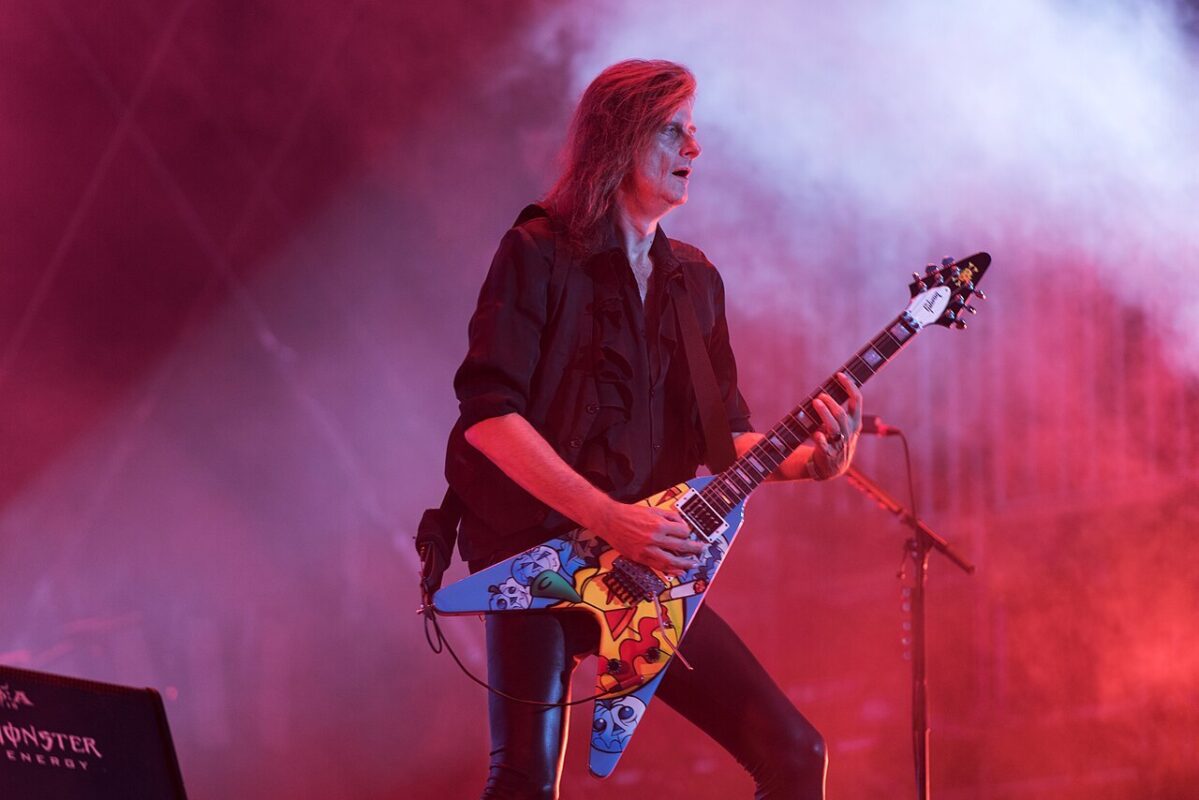
Photo by V-spectrum, licensed under CC BY-SA 4.0
Gear Timeline
“As a four to five-year-old, he would lie in the grass, looking at the sky, and come up with melodies in his head.” This description from the Gemtracks biography of Weikath’s early musical life is not a gear fact but it is the most important gear-adjacent biographical fact available — because a person who was composing melodies at age four by lying in a Hamburg field and looking at the sky is a person for whom music is constitutional, not acquired. The specific consequence: Weikath’s guitar approach is primarily compositional rather than technical, and his gear choices reflect a composer’s priorities — clarity, reliability, the ability to realize the musical ideas that have been forming since childhood — rather than a gear collector’s. His first album: 1962-1966 by The Beatles. This is also not incidental. The Beatles are the foundational influence that oriented him toward melodic songwriting, toward the specific combination of catchy hook and harmonic sophistication, toward the understanding that the most complex emotions can be expressed in the most accessible musical form. Michael Weikath applied that Beatles lesson to power metal: Keeper of the Seven Keys, Eagle Fly Free, How Many Tears, Dr. Stein — these are power metal songs that have Beatles-level melodic hooks applied to the speed, volume, and harmonic language of 1980s German heavy metal. His live rig: DigiTech GSP1101 preamp with a Marshall JVM410H amplifier — “like fellow Helloween guitarist Sascha Gerstner.” His primary live guitar: Gibson Flying V. His historical amps: 1973 Marshall JMP 50W Lead, 1982 Marshall 100W, ENGL straight head. His vintage guitars: Gibson L6-S (1976), Fender Stratocasters (1974, 1975, 1979). His most recent stage guitar: the Custom Shop Explorer, white/black finish, maple fingerboard. He is sixty-three years old. He is still a founding member of Helloween. The melodies that came to him in the grass in Hamburg are still coming.
The Journey
Michael Ingo Joachim Weikath was born on August 7, 1962, in Hamburg, West Germany. He became interested in music in 1971 — at age nine — spending much of his childhood at the tube stereo set of his parents, “listening to all the stations available at the time.” He began playing guitar in 1974 at age twelve. He formed his first band, Powerfool, in 1978. Before starting Helloween, he worked for a company that sold records by mail. In 1982, he joined forces with Kai Hansen, Markus Grosskopf, and Ingo Schwichtenberg to form what would become Helloween (initially active as various names before settling on Helloween by 1984). His most celebrated compositional contributions to Helloween include “Keeper of the Seven Keys,” “Eagle Fly Free,” “Dr. Stein,” “How Many Tears,” “I Can’t,” “Kings Will Be Kings,” and “Power” — a catalog of power metal compositions that demonstrates the consistent melodic quality of his songwriting across four decades. He has remained a Helloween member through every lineup change — the single continuous guitar constant in the band’s forty-year history. He is sixty-three years old.
Background: Hamburg West Germany, Beatles as First Album, Composing Melodies at Four, Powerfool 1978, Helloween 1982/1984, Keeper of the Seven Keys “Eagle Fly Free” “Dr. Stein,” Continuous Member Through All Lineup Changes
Weikath’s specific songwriting identity within Helloween — and within power metal more broadly — is the most underappreciated dimension of the band’s creative achievement. Kai Hansen wrote “I Want Out” and “Future World” and co-wrote the Keeper albums in their formative period; Hansen also wrote the songs most strongly associated with the “Helloween sound” internationally. But Weikath wrote “Keeper of the Seven Keys” — the title track and most musically complex composition of the most celebrated album in the genre’s history. He also wrote “Eagle Fly Free” — arguably the most complete expression of power metal’s musical identity in a single song: the combination of extreme speed, operatic vocal melody, harmonized guitar, and the specific optimistic, freedom-themed lyrical character that defines power metal’s emotional register.
His Beatles foundation — the first album was 1962-1966, the specific Beatles compilation that captures the band’s entire melodic and harmonic evolution — is audible in the specific approach to melody that distinguishes his best Helloween compositions from the more straightforwardly heavy metal compositions of the genre. Where conventional metal melody is primarily scale-based (ascending or descending through a mode), Beatles-influenced melody is interval-based — specific jumps between notes, specific contour shapes, the specific trick of landing on a note that is harmonically unexpected but emotionally satisfying. Weikath’s best melodies — the verse melody of “Eagle Fly Free,” the hook of “Dr. Stein,” the anthemic climb of “Power” — demonstrate this interval-based approach applied to the power metal context.
His continuous membership through all Helloween lineup changes — from the original Hansen/Weikath/Grosskopf/Schwichtenberg lineup through the Kiske era, through the Deris era, through the Pumpkins United reunion — makes him the most consistent single creative presence in the band’s history, even though Hansen’s initial songwriting contribution and Kiske’s vocal identity have each, at different moments, attracted more outside attention than Weikath’s quieter consistency.
The Rig: Michael Weikath’s Guitars, Amps, and Effects
Guitars
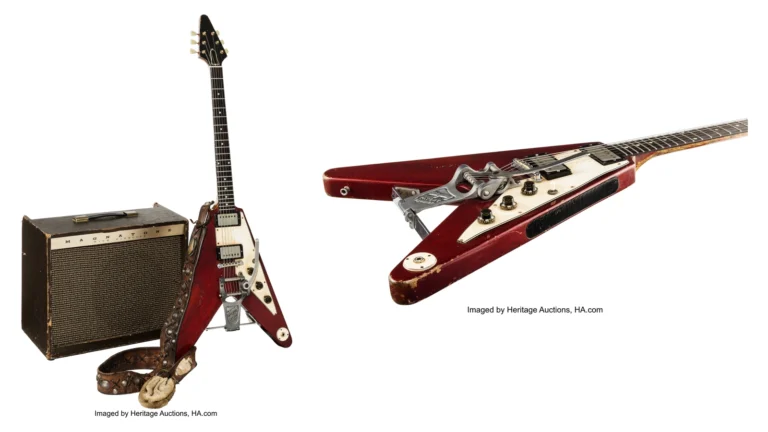
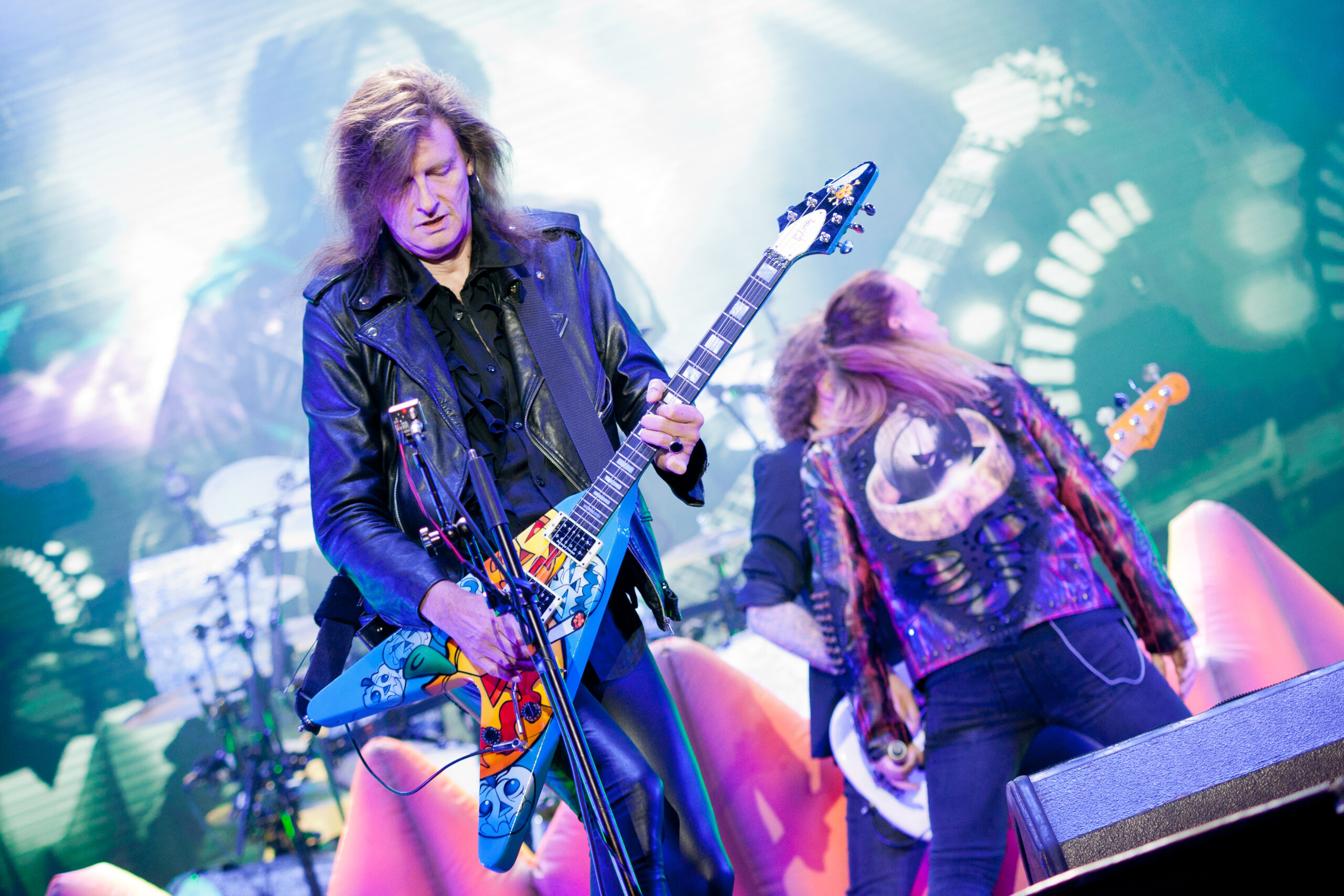
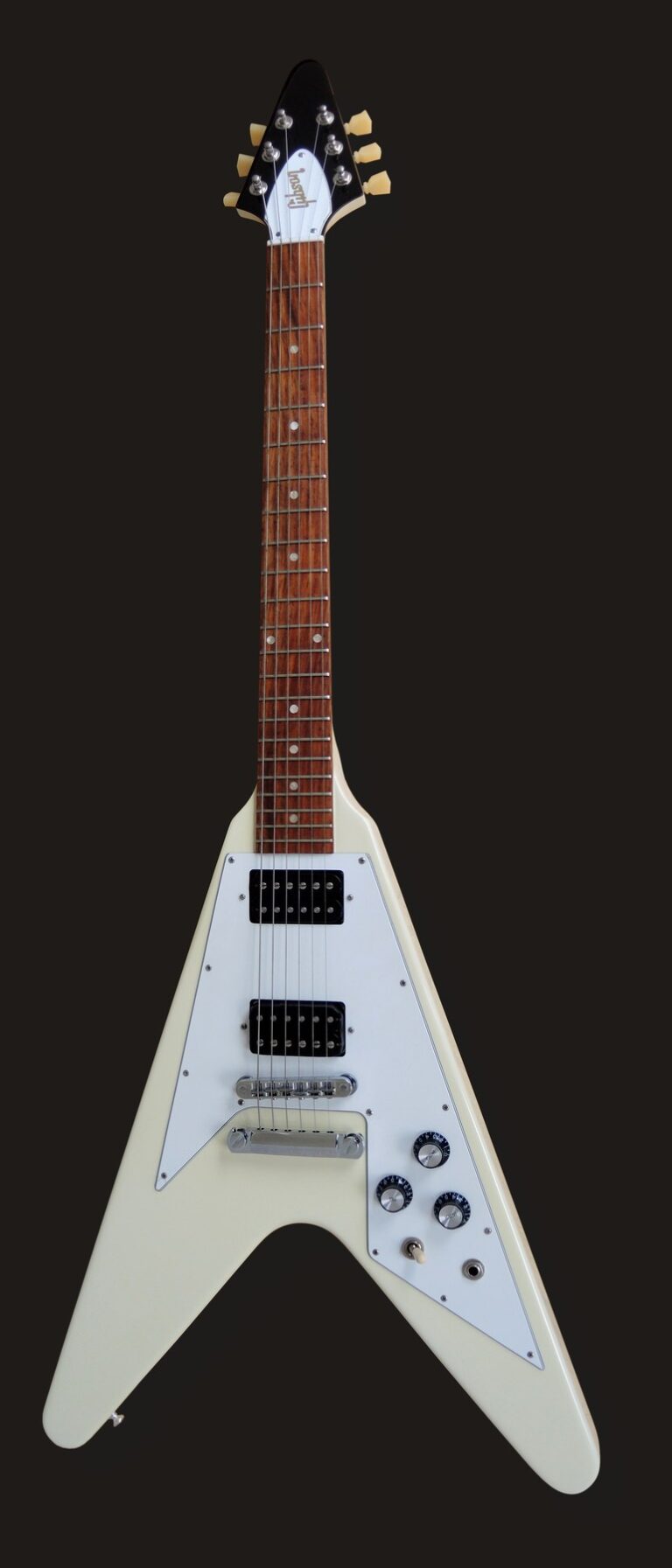
The Equipboard documentation: “Michael Weikath is frequently seen playing a Gibson Flying V during live performances with Helloween, as showcased in the ‘Pumpkins United’ official live video on Reigning Phoenix Music’s YouTube channel.” The Gibson Flying V — the most visually aggressive of Gibson’s original futurist designs from 1958 — is Weikath’s primary live guitar in the current (Pumpkins United and subsequent) period. The Flying V’s specific character: the korina or mahogany body’s specific resonance (depending on era), the set neck’s sustain, and the angular body’s live visual impact — connecting Weikath visually to the heritage of Flying V players from Dave Davies through James Hetfield.
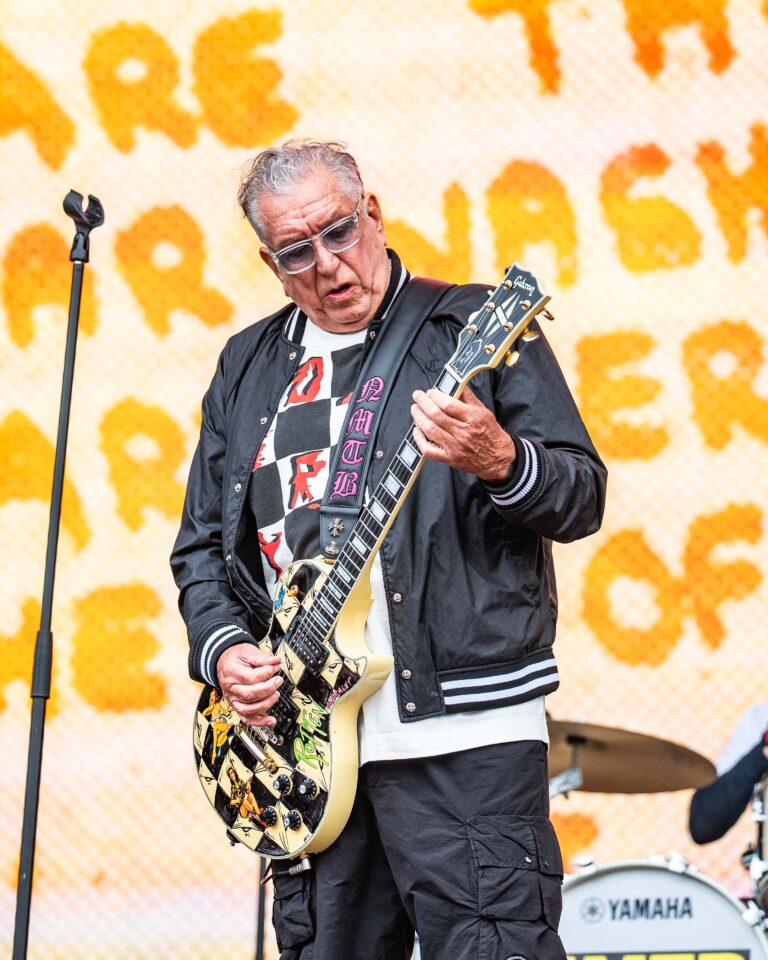
The Equipboard documentation: “In this user-uploaded photo, Michael Weikath is seen playing a Gibson Les Paul Custom, likely a model from 1990 based on the photo quality.” The Gibson Les Paul Custom (black, the “Black Beauty” finish) is one of the most visually striking and most tonally substantial of the Les Paul variants — the multi-ply binding, the ebony fingerboard (on certain models), and the specific pickup configuration of the Custom provide a darker, more formal character than the standard Les Paul. His use of the Les Paul Custom in the 1990s period reflects the specific Helloween musical territory of that era (the somewhat more experimental, sometimes heavier direction of Chameleon and Master of the Rings).
The Equipboard documentation: “In HELLOWEEN’s My God-Given Right video, Michael Weikath can be seen playing a 2015 Gibson Les Paul Standard trans blue guitar.” The 2015 Gibson Les Paul Standard (in the specific translucent blue finish of that production period) appears in the “My God-Given Right” video from the My God-Given Right album (2015). The trans blue finish is a specific Helloween-appropriate visual choice: vibrant, optimistic, colorful — consistent with the band’s specific aesthetic.
The Equipboard documentation: “In this image Weikath plays a Custom Shop Explorer with white/black finish. The guitar doesn’t have a pickguard and features a maple fingerboard with black dot inlays. The guitar also features two humbuckers.” The Gibson Explorer Custom Shop — the angular, Z-shaped body design first produced in 1958 alongside the Flying V — appears in his documented guitar collection, with the white/black finish providing a specific high-contrast visual identity.
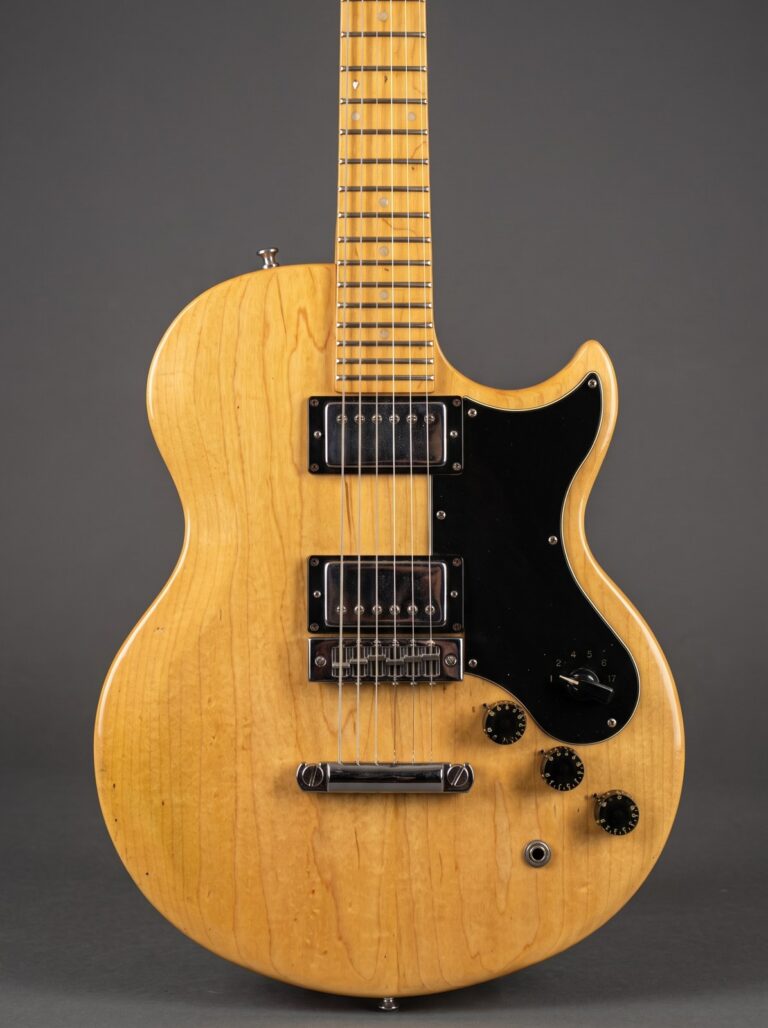
The Wikipedia documentation of his instrument history lists the Gibson L6-S from 1976 — a specific Gibson solidbody model produced primarily in the mid-1970s, with a distinct appearance (the body shape between an SG and a Les Paul) and a unique pickup and switching configuration. The L6-S was one of Gibson’s more experimental designs of the 1970s, and its presence in Weikath’s documented collection reflects the vintage guitar interest that he, like many musicians of his generation, maintains.
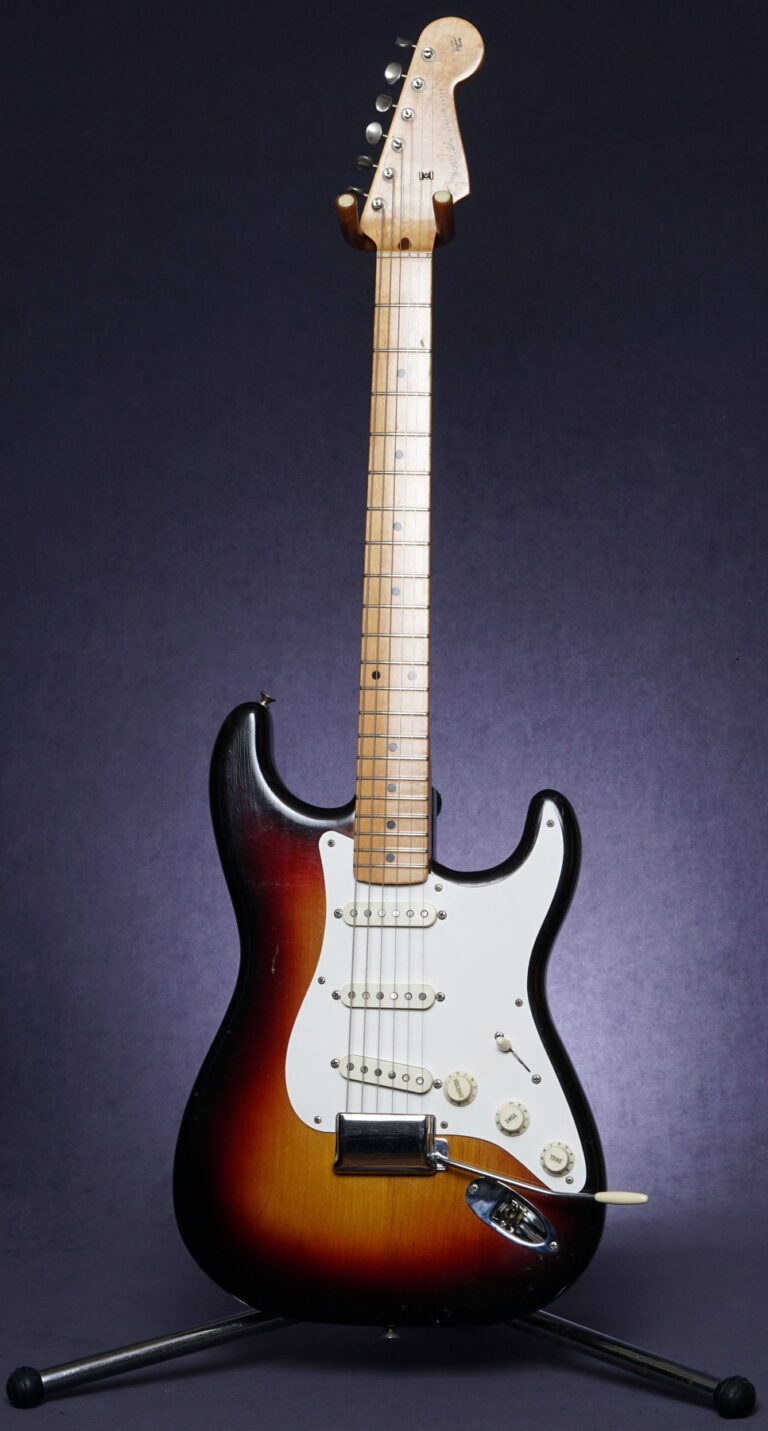
The Wikipedia documentation lists three vintage Fender Stratocasters: 1974, 1975, and 1979. The specific decades covered — 1974 and 1975 (large-headstock CBS-era Strats from the period when CBS had owned Fender for approximately a decade) and 1979 (the late-CBS period shortly before the Fender revival of the early 1980s) — document a preference for the CBS-era instruments, which are controversial among vintage guitar enthusiasts (the CBS period is generally considered inferior to the pre-CBS Fender era) but which have a specific character and history. Their presence as vintage models alongside the Gibson Flying V and Les Pauls in his primary collection reflects an instrument diversity consistent with a forty-year collecting practice.
The Gemtracks biography: “The first album he owned was 1962-1966 by The Beatles.” This biographical fact is the foundational creative context for understanding his songwriting approach — the interval-based melodic logic, the specific hook-forward orientation, the understanding that harmonic complexity and melodic accessibility are not mutually exclusive — applied across forty years of Helloween compositions. The Beatles are the most important “gear” in his compositional arsenal.
Amps
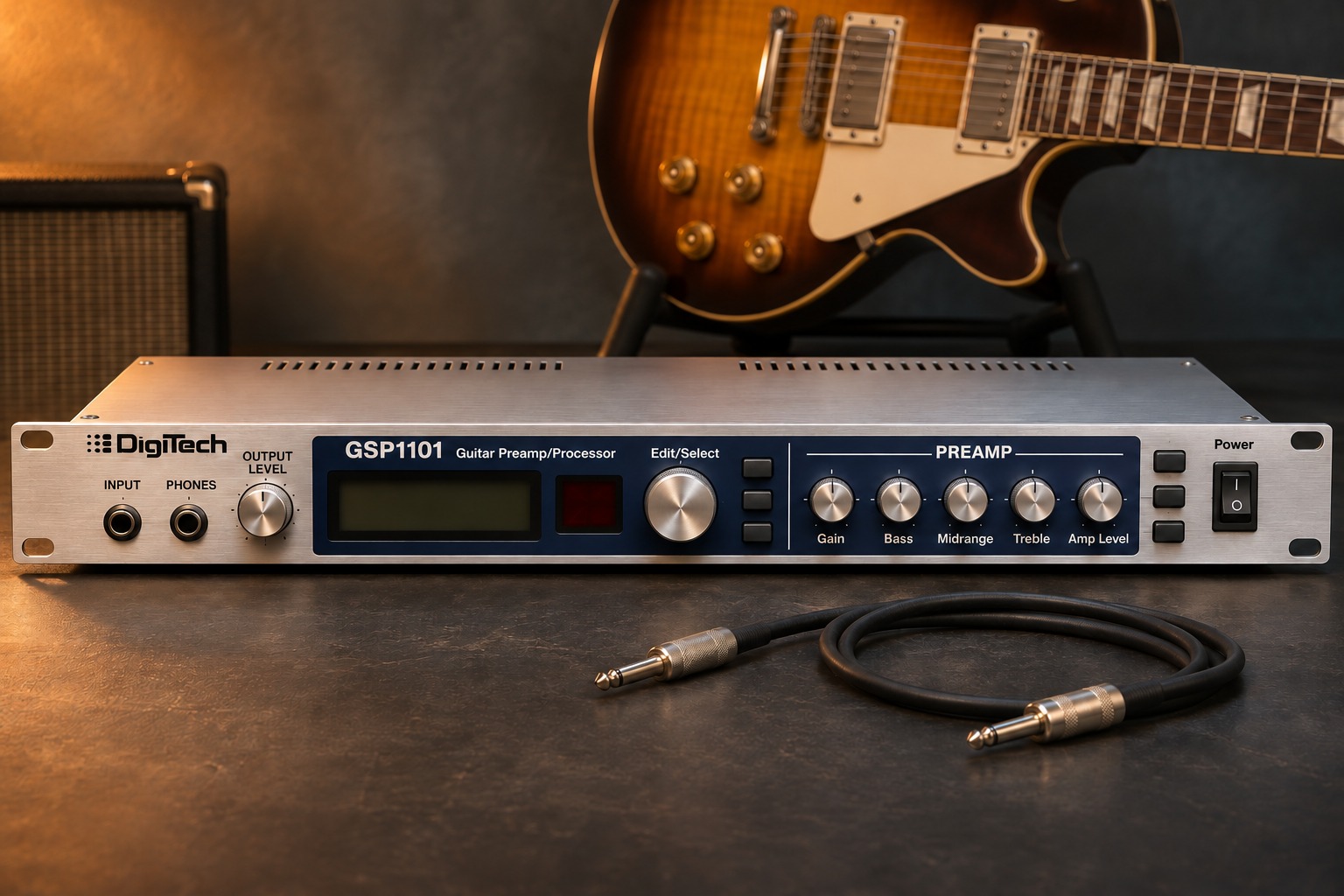
The Alchetron and Wikipedia documentation: “Like fellow Helloween guitarist Sascha Gerstner, Weikath is using a DigiTech GSP1101 preamp with a Marshall JVM410H amplifier for live performances.” The DigiTech GSP1101 — a rack-mounted guitar preamp/multi-effects processor — provides the digital amp modeling and effects processing for his live signal, with the Marshall JVM410H (the 100-watt, all-valve, four-channel Marshall) as the power amplification. The specific sharing of the same live rig configuration with Gerstner reflects the practical professional decision: both guitarists using the same signal chain provides the specific tonal consistency and live mix coherence that a dual-guitar band requires.
The Equipboard documentation from the Truemetal profile: “Michael Weikath mentions using the 1973 Marshall JMP 50 Watt Lead Tube Amp.” The 1973 Marshall JMP 50-watt — the specific early-1970s Marshall with EL34 power tubes and the handwired construction of the early Marshall Plexi/JMP tradition — provides the specific British tube character that defined the sound of 1980s heavy metal and power metal recording. Its use as a primary amp for the Helloween classic recording period reflects the shared Marshall JMP foundation of the entire European metal guitar tradition.
The Equipboard Truemetal documentation also lists “a 1982 100-watt Marshall amp” alongside the 1973 JMP 50W and ENGL amps. The 1982 Marshall 100W — from the JCM 800 production period — provides the higher-wattage, slightly different voicing of the JCM 800 era alongside the smaller JMP 50W. Using both simultaneously or switchably gives the specific dual-amp tonal variety that live and recording metal contexts of the 1980s used.
The Equipboard: “Michael Weikath mentions using the… ENGL amps.” And: “In this video at 1:15 Weikath can be seen showing ‘an old ENGL amplifier’ from the Live In The UK tour. It’s a 50W ENGL Straight model.” The ENGL Straight 50W — ENGL’s compact, 50-watt EL34 model — appears in his documented historical equipment alongside the Marshall JMP and JCM 800. ENGL amplifiers’ appearance in both Weikath’s and Kai Hansen’s rigs documents the specific German amplifier brand’s role in the Helloween sound across the band’s history.
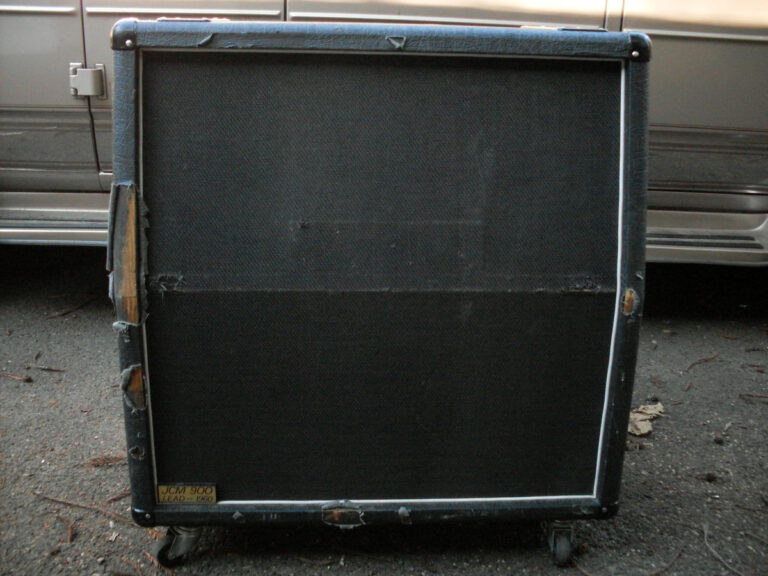
The Equipboard documentation: “In the YouTube video ‘HELLOWEEN: Sascha Gerstner taking you on a guitar rig tour,’ Michael Weikath’s 1970 Marshall 1960A and 1960B full-stack amplifiers are prominently featured.” The Marshall 1960A and 1960B cabinets — the two-cabinet, eight 12-inch speaker full-stack configuration of the classic Marshall rig — from the early 1970s document the vintage amplification infrastructure of the Helloween touring setup. Vintage Marshall cabinets (original Celestion speakers from the 1970s production period) are the specific speaker character associated with the warmth and projection of classic British rock.
Effects
The DigiTech GSP1101 — in addition to its preamp function — provides the multi-effects processing for his live rig: delay, reverb, chorus, modulation, and amp modeling in a single rack unit. Its use alongside the Marshall JVM410H creates the specific combination of digital effects and tube power amplification that characterizes modern professional touring guitar rigs: the digital front-end for effects and amp modeling, the tube power amp for the physical output character.
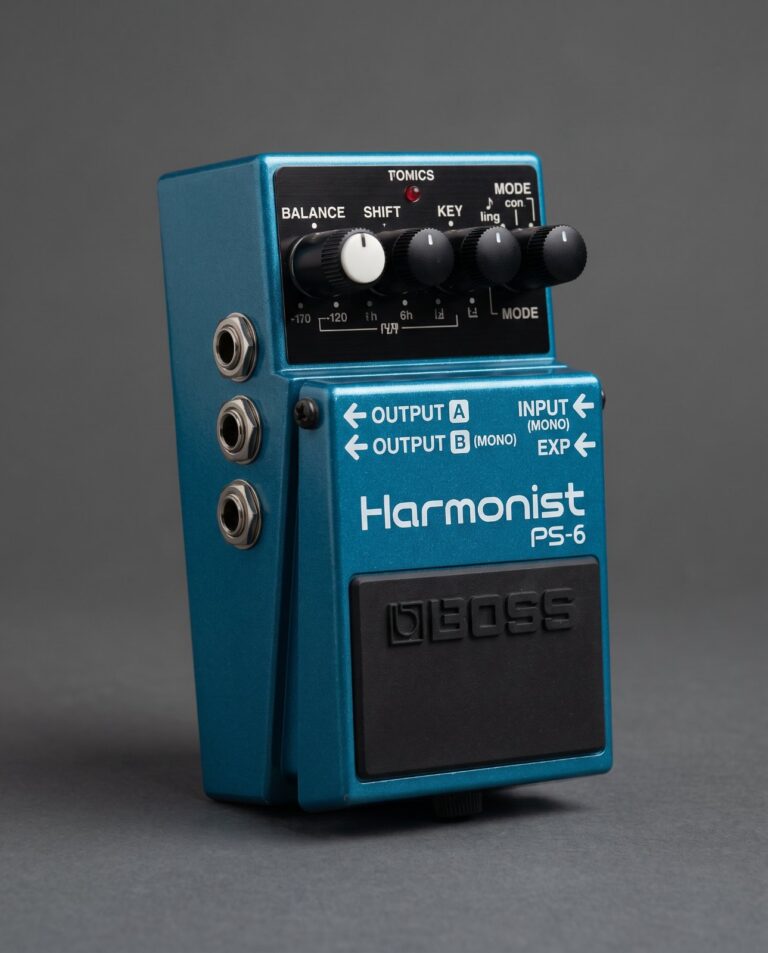
The Equipboard documentation: “In the YouTube video ‘HELLOWEEN: Sascha Gerstner taking you on a guitar rig tour,’ Michael Weikath is shown using the Boss PS-6 Harmonist pedal.” The Boss PS-6 Harmonist — Boss’s pitch-shifting pedal with the specific “Harmonist” mode that adds a harmonized pitch track to the guitar signal — provides the live performance equivalent of the harmonized guitar studio parts that are the defining characteristic of the Helloween sound. Using the PS-6 Harmonist allows a single guitarist to produce a two-part harmony in live performance, filling the sonic space of the recorded dual-guitar harmony parts without requiring a second guitarist to play the exact harmony note in real time.
Like Kai Hansen’s harmonized guitar writing, Weikath’s most important “effect” is the compositional technique of writing guitar harmonies. The specific difference from Hansen: where Hansen tends toward the “two guitars playing simultaneously in real time” approach to harmonization, Weikath’s best compositions are structured so that the harmonized guitar layers are integral to the song’s architecture rather than added as lead ornamentation. “Keeper of the Seven Keys” contains some of the most sophisticated guitar harmonization in the power metal catalog — the harmonic language moves through unexpected intervals and chord changes that reflect the Beatles influence on a structural level.
His collection of vintage instruments — 1973 Marshall JMP, 1970s Marshall cabinets, 1974-1979 Fender Stratocasters, 1976 Gibson L6-S — reflects the specific approach to instrument character as tonal foundation. The specific sound of a 1973 Marshall JMP through 1970s Marshall cabinets is not replicable by modern equipment; the vintage instruments provide tonal character that is the equivalent of a specific effect pedal for a guitarist whose approach to tone is historically rooted.
Playing Style & Tone Philosophy
Michael Weikath’s playing style is the most compositionally sophisticated in the power metal tradition — the approach of a guitarist who is, first and foremost, a melody composer who uses the guitar as his primary compositional instrument. His guitar playing within Helloween is not primarily about soloing virtuosity or rhythmic aggression but about the specific melodic architecture of the songs: the way the guitar riffs, harmonies, and solos contribute to the overall melodic design. His Dinosaur Rock Guitar profile (as noted for the band in the same context as Kai Hansen) reflects this: the power metal guitar tradition of harmonized riffs and melodic solos is as much Weikath’s contribution as Hansen’s.
His tone philosophy is the Marshall/ENGL British tube philosophy — the specific warm, harmonically complex EL34 character of both Marshall JMP and ENGL amplification provides the foundational tonal platform for his melodic guitar approach. The DigiTech GSP1101 preamp adds the digital processing flexibility that modern live performance requires. The Boss PS-6 Harmonist fills the harmonic texture of his composed parts in live performance. The vintage Stratocasters and L6-S document a personal preference for vintage instrument character in recording and specific performance contexts. The whole is in service of the melodic idea — the four-year-old in the grass looking at the sky, coming up with melodies.
How to Sound Like Michael Weikath
Guitar: Gibson Flying V (current primary, mahogany or korina body, humbuckers) for the live Helloween character. Gibson Les Paul Custom (black) for the darker, warmer recording character. Fender Stratocaster (late 1970s vintage) for specific melodic single-coil passages. Custom Shop Explorer for contemporary live work.
Amp: Marshall JVM410H (100W, all-valve, four-channel) with DigiTech GSP1101 preamp for the current live approach. 1973 Marshall JMP 50W for the classic recording character. ENGL Straight 50W for the specific ENGL EL34 character of the Helloween albums’ guitar sound.
Amp Settings (Marshall JVM410H — Helloween Power Metal Rhythm and Lead):
| Control | Setting (0–10) | Notes |
|---|---|---|
| Gain (OD2 channel) | 6–8 | High-gain but melodically focused — not maximum darkness |
| Bass | 5 | Natural — balanced for the Flying V’s mahogany warmth |
| Mid | 6–7 | Forward — melodic content needs midrange presence |
| Treble | 6 | Present — attack definition for the fast rhythmic passages |
| Presence | 5 | Natural — projects without excessive brightness |
Essential elements: Boss PS-6 Harmonist (set to a third or sixth above the input pitch, “harmony” mode, key of E or A for most Helloween material) for the live harmonic texture. DigiTech GSP1101 for reverb, delay, and additional processing. The compositional approach: write the melody first (lie in the grass if necessary), then build the guitar parts around the melody rather than building the melody around the guitar parts. The Beatles lesson applied to power metal.
Influence & Legacy
Michael Weikath’s influence on power metal is the most melodically specific — the influence of a songwriter who demonstrated that the power metal guitar tradition could accommodate the compositional sophistication of the rock songwriting tradition (from the Beatles through the British rock canon) without sacrificing the energy, speed, and aggression that distinguish power metal from conventional melodic rock. “Eagle Fly Free” and “Keeper of the Seven Keys” are power metal compositions that stand up to any comparison with the melodic rock canon.
His connection to Kai Hansen as the essential Helloween guitar partner whose complementary approach (Hansen’s aggressive harmonic writing, Weikath’s Beatles-influenced melodic sophistication) created the full Helloween guitar identity reflects the most important creative relationship of his career. His connection to Mille Petrozza as a fellow German metal guitarist of the same generation whose band defined a parallel extreme metal tradition reflects the shared Hamburg/Essen geographical and cultural context. His connection to Hank Shermann as a fellow power metal pioneer whose compositional sophistication within the heavy metal context reflects the shared tradition of melodically sophisticated European metal songwriting.
Frequently Asked Questions: Michael Weikath Helloween Guitars & Gear
What guitar does Michael Weikath play?
Weikath’s primary live guitar in the current Pumpkins United and subsequent Helloween period is the Gibson Flying V. Additional documented guitars include: Gibson Les Paul Custom (1990, black), Gibson Les Paul Standard trans blue (2015, “My God-Given Right” video), Custom Shop Gibson Explorer (white/black finish, maple fingerboard), Gibson L6-S (1976 vintage), and Fender Stratocasters (1974, 1975, 1979 vintage). His first album was 1962-1966 by The Beatles, which shaped his melodic songwriting approach.
What amplifier does Michael Weikath use?
Current live: DigiTech GSP1101 rack preamp with a Marshall JVM410H amplifier (shared configuration with fellow Helloween guitarist Sascha Gerstner). Historical: 1973 Marshall JMP 50W Lead Tube Amp, 1982 Marshall 100W, ENGL Straight 50W (documented from Live In The UK tour). Vintage equipment: Marshall 1960A and 1960B full-stack cabinets (1970s) featured in the Sascha Gerstner guitar rig tour video.
What songs did Michael Weikath write for Helloween?
Weikath’s most celebrated Helloween compositions include “Keeper of the Seven Keys” (the title track and most complex composition on the landmark 1988 album), “Eagle Fly Free,” “Dr. Stein,” “How Many Tears,” “I Can’t,” “Kings Will Be Kings,” “Power,” and “Heavy Metal Hamsters” (co-written with Michael Kiske). “Eagle Fly Free” is widely considered the most complete single expression of power metal’s musical identity: extreme speed, operatic vocal melody, harmonized guitar, and optimistic lyrical themes.
What is the Boss PS-6 Harmonist and why does Weikath use it?
The Boss PS-6 Harmonist is a pitch-shifting pedal that adds a harmonized pitch track to the guitar signal — in “Harmonist” mode, it generates a second pitch at a specified interval above or below the input. Weikath uses it to reproduce the harmonized guitar parts (which are central to Helloween’s compositional signature) in live performance without requiring a second guitarist to play the exact harmony notes in real time. This allows the full harmonic texture of the recorded Helloween guitar parts to be present in live performance.
What were Weikath’s early Beatles influences?
The first album Weikath ever owned was 1962-1966 by The Beatles. He became interested in music in 1971 at age nine and spent childhood listening to the tube stereo of his parents. As a four to five-year-old, he would lie in the grass looking at the sky, coming up with melodies in his head — a characterization of intuitive melodic composition that reflects the Beatles’ own melodic facility applied in the Helloween context. The Beatles’ specific interval-based melodic logic (hooks that move through unexpected but emotionally satisfying intervals) is audible in Weikath’s best Helloween compositions.
How long has Michael Weikath been in Helloween?
Weikath has been a member of Helloween since its formation in 1982/1984 — making him the single most continuous creative presence in the band’s history. Through every lineup change (Hansen’s departure in 1989, Kiske’s departure in 1993, multiple other changes), Weikath has remained a constant member. He was previously in Powerfool (formed 1978) before co-founding Helloween. He is sixty-three years old and currently active with Helloween.
What is Weikath’s connection to Sascha Gerstner?
Sascha Gerstner joined Helloween as second guitarist in 2002, replacing Roland Grapow. He and Weikath have shared the Helloween guitar duties since then — both using the same live rig configuration (DigiTech GSP1101 preamp + Marshall JVM410H amplifier). Gerstner’s rig tour video (on the Helloween official YouTube) features Weikath’s 1970s Marshall 1960A and 1960B full-stack cabinets and his Boss PS-6 Harmonist in their shared gear context.
Image credits
- DigiTech GSP1101 Rack Preamp (Primary Live Effects): GuitarGangsters AI-generated reference illustration, not a photograph.
- Top image: by V-spectrum, CC BY-SA 4.0.
- Fender Stratocaster: Lightburst, Wikimedia Commons, CC BY-SA 4.0.
- Gibson Flying V: Monika Fischer (retouch: Auge=mit), Wikimedia Commons, CC BY-SA 2.5.
- Marshall 1960A cabinet: Roadside Guitars, Flickr, CC BY-SA 2.0.
- Michael Weikath live: Frank Schwichtenberg, Wikimedia Commons, CC BY-SA 4.0.
- Boss PS-6 Harmonist: GuitarGangsters AI-generated reference illustration, not a photograph.
- Gibson L6-S: GuitarGangsters AI-generated reference illustration, not a photograph.