
Bernard Butler guitars gear is the story of the most technically gifted guitarist to emerge from the early 1990s British indie scene — a player who combined genuine technical accomplishment with an emotional directness and a melodic gift that gave Suede’s first two albums their specific quality of romantic, cinematic grandeur. Butler’s guitar on Suede (1993) and Dog Man Star (1994) was the musical foundation on which Brett Anderson’s extravagant, literary lyrics rested — the specific combination of glam rock drama, classical-music-influenced orchestral thinking, and hard rock physical authority that gave those records their permanent status as British indie classics. When he left Suede in 1994, the band lost the most important element of what had made them extraordinary.
The Journey
His subsequent career — the McAlmont and Butler collaboration, the solo albums, the production work for artists including Duffy and others, and the 2010 Suede reunion that brought him briefly back — demonstrated a musician of genuine depth whose impact on British guitar music extended well beyond his time with a single band. His specific approach to the guitar — the technical ambition, the orchestral thinking, the emotional directness — gave British indie rock a briefly glimpsed alternative to the Britpop trajectory that both Blur and Oasis were pursuing, one that had more in common with David Bowie and Roxy Music than with the Kinks and the Beatles. This is the complete breakdown of Bernard Butler guitars gear, technique, and tonal philosophy.
Background
Bernard John Butler was born on May 1, 1970, in Stamford Hill, North London — a culturally diverse area of North London whose specific character gave him exposure to a wide range of musical traditions during his formative years. He studied music formally — including classical guitar and theory — at a level unusual for rock guitarists, giving him a technical foundation and harmonic vocabulary that distinguished his playing from the self-taught approach that dominated British indie rock. His absorption of both classical music and the rock tradition gave him the specific combination that would characterise his best work: classical-music-influenced harmonic sophistication and orchestral thinking applied to rock guitar’s physical commitment and emotional directness.
He joined Suede in 1989 at age nineteen, responding to a classified advertisement placed by Brett Anderson and Mat Osman. The band’s development through the late 1980s and early 1990s — building toward the debut single “The Drowners” (1992) and the debut album — gave Butler the time and creative space to develop his specific guitar vocabulary in service of the band’s evolving aesthetic vision. Anderson’s literary, sexually ambiguous lyrics and theatrical performance approach found in Butler’s orchestral guitar the perfect musical partner: the guitar’s specific quality of romantic, slightly overwrought drama matched Anderson’s own quality perfectly.
The debut album Suede (1993) — UK Album of the Year at the Brit Awards, a genuine commercial and critical breakthrough — demonstrated the Butler-Anderson partnership at its most complete. Dog Man Star (1994) — more ambitious, more orchestrally complex, more emotionally intense — was his definitive statement, recorded in increasingly difficult conditions as his relationship with Anderson deteriorated and his departure from the band became inevitable. His exit before Dog Man Star‘s completion gave it a specific character of incompleteness and contained grief that contributed to its specific quality.
Bernard Butler Guitars Gear: The Complete Rig
Guitars
Bernard Butler’s primary guitar during the Suede period was the Gibson ES-335 — the semi-hollow double-cutaway instrument with paired humbucking pickups (typically PAF or PAF-spec 57 Classic), maple centre block construction, and the specific combination of acoustic body resonance and solid-body sustain that the ES-335’s hybrid construction gave. The ES-335’s tonal character — warmer and more complex than a solid-body Les Paul, brighter and more articulate than a fully hollow archtop — gave Butler’s playing its specific quality: not the raw aggression of a solid-body Les Paul through a cranked Marshall, not the clean acoustic complexity of a fully hollow instrument, but the specific middle territory of a resonant, warm semi-hollow that suited the romantic, slightly dramatic quality of Suede’s material. His primary ES-335 was typically a vintage or vintage-spec instrument from the late 1950s through 1960s production — the dot-neck and block-inlay variants whose specific construction gave the most historically faithful expression of the ES-335’s tonal ideal.
The ES-335’s specific contribution to Suede’s guitar sound was its combination of sustain and warmth. The mahogany-and-maple construction gave sustained notes the warm, harmonically complex decay that gave Butler’s slower, more melodically elaborate lead passages their cinematic quality. The PAF-spec humbuckers’ specific character — the warm, slightly compressed 7.5–9.0k ohm humbucker saturation — gave his rhythm work its specific full-bodied authority without the brightness that single-coil instruments would have introduced. The semi-hollow body’s acoustic resonance gave additional harmonic complexity to sustained notes — a slight bloom and deepening as the body cavity reinforced specific frequency ranges over the note’s duration that solid-body instruments don’t produce.
Gibson Les Paul guitars appeared in Butler’s setup for specific heavier applications where the solid-body’s more direct, denser tone suited passages requiring maximum physical authority. His Les Paul use was selective — reaching for the more aggressive, less acoustically complex character of the solid-body for specific moments in songs where the ES-335’s warmth and resonance were less appropriate than the LP’s more direct impact.
Fender Stratocasters appeared in Butler’s documented setup for specific clean and lead applications where the single-coil transparency gave a different tonal palette from the ES-335’s humbucker warmth. His Strat use reflected the pragmatic approach documented throughout this series: the right instrument for the specific musical application, not a single instrument for all contexts.
Gibson SG guitars appeared for specific applications where the SG’s more aggressive upper-midrange character and lighter weight gave advantages over the ES-335’s heavier, more acoustically complex approach.
Various vintage instruments — earlier Gibson models, rare vintage Fenders — appeared in Butler’s studio documentation for specific applications where particular instruments’ specific tonal characters suited specific recording contexts. His willingness to use whatever instrument gave the right result for each specific recording reflected the same pragmatic, music-first philosophy documented throughout the series.
The Gibson PAF-specification or 57 Classic humbuckers in Butler’s ES-335 instruments gave the foundational warm, full-bodied character appropriate to Suede’s romantic, orchestrally-influenced aesthetic. The PAF’s specific warm, harmonically complex character — Alnico II or V magnets, approximately 7.5–9.0k ohms, the specific hand-wound scatter-winding that gave each pickup slight tonal variability — gave his playing both warmth and dynamics: softer picking gave a warm clean tone; harder picking gave natural humbucker saturation without requiring extreme amplifier gain.
Butler used standard light-to-medium gauge strings (.010–.046 or .011–.052) on his ES-335 — appropriate to the semi-hollow construction’s balanced tension requirements and giving the bending ease his expressive lead work required while maintaining sufficient string mass for the authority of his harder rhythm playing.
Amps
Marshall amplifiers — primarily JMP or JCM800 heads — provided Butler’s primary overdrive amplification during the Suede period. His Marshall approach was similar to Richard Lloyd’s and Ivan Kral’s selective rather than primary use: reaching for the British EL34 overdrive character for specific passages requiring saturation, with cleaner amplification as the primary tonal platform for most material. His Marshall settings were typically moderate gain (5–7) rather than extreme saturation — giving the warm, natural British overdrive character that suited Suede’s romantic aesthetic better than the hard-clipping character of maximum-gain settings.
Fender Twin Reverb provided the clean American foundation for Butler’s more melodically transparent passages — the clean, uncoloured Fender character giving the ES-335’s specific acoustic qualities their most honest expression. The Fender’s spring reverb added the atmospheric spatial dimension appropriate to the cinematic quality of Suede’s material.
The Vox AC30 appeared in Butler’s setup for specific applications where the British class-A EL84 character and the AC30’s distinctive chime suited particular passages — particularly for the more chord-based, strummy passages where the AC30’s natural compression gave chords their characteristic roundness and warmth.
The Hiwatt DR103 appeared in Butler’s setup for specific applications requiring the Hiwatt’s exceptional clean headroom and powerful low-frequency response — consistent with the Hiwatt’s documented use by players who needed exceptional clean volume before natural overdrive onset. For Butler’s semi-hollow ES-335, the Hiwatt’s clean character gave the guitar’s acoustic resonance the most transparent and the most powerful available platform.
Butler ran his Marshall amplifiers into 4×12 cabinets with Celestion speakers — Greenback 25-watt for the more vintage-appropriate applications in the Suede recording context, Vintage 30 for live touring where tighter bass response and higher power handling gave practical advantages.
Effects
The MXR Distortion+ appeared in Butler’s signal chain as a transparent overdrive supplement — the germanium-warmed, LM741-based character giving additional harmonic complexity and sustain ahead of the Marshall or ahead of the clean Fender for specific applications. His Distortion+ settings: Drive at 4–6, Output at 6–7, using the pedal’s transparent character to add harmonics without introducing the heavy compression of more aggressive alternatives.
The Boss DS-1 appeared for specific harder distortion applications where the more aggressive silicon-clipping character suited passages requiring more confrontational tone than the Distortion+’s softer germanium character gave.
The Big Muff Pi appeared in Butler’s setup for specific dramatic fuzz applications — the smooth, sustained character giving certain passages in Suede’s more overblown, emotionally extravagant material their specific quality of contained dramatic excess. His Big Muff use was selective and specifically motivated — deploying it for passages where the specific dramatic effect was musically appropriate.
The Ibanez Tube Screamer TS808 appeared in Butler’s signal chain for warm overdrive and midrange boost applications — the TS808’s JRC4558D op-amp and soft-clipping diode character giving a specifically warm, midrange-forward overdrive that complemented the ES-335’s humbucker warmth. Used at low drive settings into the Marshall, the TS808 pushed the Marshall’s input harder while adding midrange presence that gave lead tones the forward, singing quality appropriate to Suede’s romantic lead guitar style.
The MXR Phase 90 appeared selectively in Butler’s setup for atmospheric phase modulation — giving sustained chord passages and specific lead lines their characteristic dimensional warmth. His Phase 90 use reflected the same selective but important application documented for other British indie players in this series.
TC Electronic chorus and flanger units appeared in Butler’s documented setup for specific textural applications — giving chord passages dimensional width and movement appropriate to the cinematic, orchestral quality of Suede’s more ambitious arrangements.
The Boss CE-2 BBD chorus appeared for specific clean chord texture applications — light modulation giving dimensional width to specific passages without the obvious chorus character that heavier settings would have produced.
EQ units — parametric and graphic — appeared in Butler’s studio signal chain for specific frequency-shaping applications, consistent with his orchestral approach to the guitar’s role within the complete arrangement. His use of EQ as a compositional tool — shaping the guitar’s frequency response to give it the specific role within the arrangement it needed — reflected the orchestral thinking that characterised his overall approach.
Standard Boss TU-2 for accurate on-stage tuning.
Playing Style & Tone Philosophy
Bernard Butler is the most classically influenced rock guitarist in this series — not in the sense of playing classical music on the electric guitar, but in the sense that his compositional thinking about the guitar’s role was shaped by the orchestral tradition’s understanding of how different musical voices could create a complete harmonic and textural landscape within an ensemble. His specific contribution to Suede’s sound was not merely guitar playing but a complete orchestral imagination applied to a rock ensemble’s limitations — creating the impression of a larger, more complex musical world than four musicians could conventionally produce.
His chord voicings reflected classical harmonic vocabulary — specifically the extended harmonies, the chromatically inflected voice-leading, and the specific orchestral chord spacings of the Romantic tradition that gave 19th-century orchestral music its characteristic quality of emotional intensity and harmonic complexity. These voicings, applied to the electric guitar through an ES-335’s warm humbucker character and a Marshall’s natural overdrive, gave Suede’s rhythm guitar work a harmonic richness unusual in the British indie tradition. The specific chord shapes he used — often wider voiced than conventional guitar chord shapes, with specific melodic top notes that gave the harmonic content its singable quality — were decisions made by a musician who understood harmony as a compositional resource rather than merely a set of shapes to be learned from a chord book.
His lead playing was the element most often cited as evidence of his exceptional abilities — the specific quality of his melodic lines, their specific harmonic awareness, and the physical commitment of his performance. The solos on “The Drowners,” “So Young,” “Animal Nitrate,” and the multiple extended passages of Dog Man Star demonstrated lead guitar playing of genuine compositional intelligence: melodic lines that navigated the specific harmonic structure of each moment, that built and resolved over harmonic movement, and that had the emotional directness and physical commitment of the rock tradition alongside the melodic sophistication of a musician trained in the classical harmonic vocabulary.
His vibrato was wide, committed, and emotionally expressive — the physical expressiveness of the rock tradition, applied with the harmonic precision of a classical ear. His bending was exact and pitch-target-accurate — each bend arriving at the specific note the harmonic context required. The combination of physical expressiveness and harmonic precision gave his lead work the specific quality of simultaneity: simultaneously emotionally committed and intellectually exact, simultaneously dramatic and structurally coherent.
Tonally, Bernard Butler guitars gear philosophy was built on the ES-335’s specific semi-hollow warmth and the Marshall’s natural British overdrive — the combination that gave his playing both the acoustic complexity appropriate to the orchestral conception and the physical authority appropriate to the rock emotional commitment. The supporting effects — Tube Screamer for midrange warmth, Distortion+ for harmonic complexity, Big Muff for specific dramatic moments — served the music’s specific requirements rather than defining the overall character. Each element was chosen in service of the complete musical vision that had its clearest expression in Dog Man Star‘s most ambitious passages.
The Gibson ES-335’s centre block construction — and why its specific hybrid character gave Butler the specific tonal palette he needed for Suede’s orchestral conception — deserves detailed technical examination that goes beyond the brief description in the instruments section. The ES-335 was introduced by Gibson in 1958 as a deliberate compromise between the fully hollow archtop’s tonal complexity and the solid-body’s feedback resistance and sustain. The centre block — a solid maple piece running from the neck block to the tail block through the centre of the guitar’s body — provided the feedback-resistant mass of a solid-body while allowing hollow wing sections on each side of the block to resonate acoustically. This dual-nature construction gave the ES-335 its specific hybrid tonal character: the solid maple centre block’s dense resonance gave notes a firm, well-defined fundamental and a specific sustain character; the hollow wing sections’ acoustic resonance gave notes a harmonic bloom — a subtle warming and deepening of the note’s body as the air inside the cavity resonated at frequencies complementary to the string’s fundamental. For Butler’s ES-335, this hybrid character was specifically appropriate to Suede’s orchestral conception: the solid block’s sustain gave sustained melodic notes the physical presence to project through the arranged sound; the hollow wings’ resonance gave the note’s harmonic content the complexity and warmth appropriate to the romantic, orchestrally-influenced aesthetic. A Les Paul would have given the sustain without the resonance; a fully hollow archtop would have given the resonance without the feedback resistance required for the amplification levels Suede’s live and studio work demanded.
The Ibanez Tube Screamer TS808’s specific role in Bernard Butler guitars gear — and the particular synergy between the TS808 and the ES-335 through a Marshall JCM800 — reflects one of the most well-documented and most reliably musical signal chain combinations in rock guitar. The TS808 uses a JRC4558D op-amp in a soft-clipping configuration with two 1N914 silicon diodes in the feedback path, giving asymmetric clipping with a specific midrange frequency emphasis. The specific effect of the TS808’s midrange boost: it emphasises the 700Hz–2kHz region of the guitar signal, which is the frequency range where the guitar’s fundamental harmonic content is most present and where the amplifier’s input stage is most responsive. When the TS808-boosted signal hits the JCM800’s input stage, the amplifier’s cascaded gain responds more aggressively in this midrange region, giving the complete signal a forward, singing quality in the frequencies where melodic content is most audible. For Butler’s ES-335 leads — which needed to project through the dense harmonic texture of Suede’s arrangements with sufficient melodic clarity — the TS808’s midrange boost gave the exact frequency emphasis that made the melodic lines audible and present without making the complete signal harsh or brittle. The specific combination of the ES-335’s warmth (which rounded off potentially harsh upper frequencies), the TS808’s midrange boost (which gave melodic presence), and the JCM800’s natural saturation (which added harmonic complexity and sustain) gave Bernard Butler guitars gear its specific quality of warm, forward, romantically charged lead guitar tone.
The romantic tradition in British guitar music — and Butler’s specific place within it — connects his work to a lineage that extends through Mick Ronson (David Bowie’s guitarist, whose orchestral guitar approach gave Ziggy Stardust-era Bowie its theatrical quality), Brian May (Queen’s guitarist, whose multi-tracked guitar orchestrations were the most explicit prior example of classical-influenced guitar orchestration in British rock), and Phil Manzanera (Roxy Music’s guitarist, whose combination of ambient guitar textures and formal musical training paralleled Butler’s own formation). This lineage — British rock guitarists who brought formal musical training and orchestral thinking to the electric guitar — gave Butler a tradition to work within and to develop, and his specific contribution was to apply this orchestral thinking to the specific British indie context of the early 1990s, which had no prior precedent for this kind of guitar approach. The Suede recordings gave British indie guitar its first genuine example of orchestral thinking — the specific quality of musical completeness that comes from treating each guitar part not as a standalone performance but as one voice within a complete harmonic and textural ensemble. Bernard Butler guitars gear, in this context, was not merely the equipment of an exceptional guitarist but the physical components of a specific orchestral conception applied to rock music’s specific instruments and contexts.
The question of what Suede’s subsequent career might have looked like with Butler’s continued contribution — counterfactual history, but illuminating — gives context for understanding the specific loss his departure represented. Dog Man Star‘s ambition and its specific qualities of incomplete grandeur reflected a guitarist who was pushing the orchestral conception further with each composition, developing a guitar vocabulary that had not yet reached its limits. The subsequent Suede albums without Butler — Coming Up (1996), Head Music (1999) — demonstrated that the band could maintain commercial success with a different guitar approach (Richard Oakes’ more conventional indie rock playing), but lost the specific quality of romantic, orchestral ambition that had distinguished the Butler period. This is not a criticism of Oakes, whose approach gave the post-Butler Suede its own specific character; it is simply an acknowledgment that Butler’s specific contribution was irreplaceable within the aesthetic framework it had helped create. The Dog Man Star recordings, incomplete as Butler left them, remained as the most fully realised expression of what Bernard Butler guitars gear was capable of producing — a glimpse of an orchestral guitar vision that was never quite allowed to reach its complete expression.
How to Sound Like Bernard Butler
Guitar Approach
A Gibson ES-335 (vintage dot-neck or block-inlay examples for the most authentic specification, or the Gibson ES-335 current production for accessible quality) with PAF-spec or Gibson 57 Classic humbuckers is the foundational Bernard Butler guitars gear instrument. The semi-hollow construction’s specific acoustic resonance is what distinguishes the ES-335’s character from a solid-body instrument and must be preserved — avoid the ES-335 variants with modified centre blocks or acoustic damping that would compromise this character. Medium-light strings (.010–.046 or .011–.052) for the balance of bending ease and string mass appropriate to his approach.
The harmonic vocabulary: study classical and jazz harmony alongside the rock tradition to develop the chord voicing approach that gives Butler’s rhythm playing its complexity. The specific Romantic-period voice-leading techniques — smooth contrary motion between voices, chromatic approach chords, specific extended harmonies — give chord progressions their distinctive quality. Apply these voicing techniques to rock chord progressions and the result will approach the Butler approach.
Amp Approach
A Marshall JCM800 2203 at moderate gain (5–7) with a Fender Twin Reverb for clean passages — the two-amplifier approach giving both the natural British overdrive for the harder passages and the clean, transparent American character for the more melodically transparent material. The Ibanez TS808 Tube Screamer at low drive settings as a constant warm midrange boost ahead of the Marshall, giving the ES-335’s warmth additional forward presence for lead passages.
| Control | Setting (0–10) | Notes |
|---|---|---|
| JCM800 Input Volume | 5–7 | Moderate gain — warm British overdrive, not extreme saturation; the ES-335’s warmth needs room to breathe |
| Bass | 5–6 | Warm — ES-335 semi-hollow body gives natural bass complexity; don’t overdo |
| Middle | 7 | Forward — the spine of the romantic, cinematic lead tone; gives singing quality to sustain |
| Treble | 5–6 | Present but not harsh — PAF warmth doesn’t need treble emphasis; balance |
| Master Volume | 6–7 | Push EL34 output — harmonic complexity in saturation gives the leads their warmth |
| TS808 Drive (lead boost) | 2–3 | Minimal — warm midrange presence boost, not added distortion |
| TS808 Level | 6–7 | Above unity — drives Marshall input slightly harder for lead sustain |
| Distortion+ Drive (additional warmth) | 4–5 | Moderate — germanium harmonic complexity for specific passages requiring additional saturation |
| Big Muff Sustain (dramatic passages) | 6 | Moderate — selective fuzz for specific dramatic moments; not a constant effect |
| Phase 90 Speed | 1–2 | Very slow — atmospheric dimensional warmth as selective atmospheric presence |
Gibson ES-335 with PAF-spec humbuckers as the foundational instrument. Marshall JCM800 at moderate gain as primary overdrive. Fender Twin Reverb for clean passages. Ibanez TS808 at minimal drive for warm midrange presence on lead passages. MXR Distortion+ at moderate settings for additional harmonic complexity on specific passages. Electro-Harmonix Big Muff Pi for selective dramatic fuzz. MXR Phase 90 at very slow speed for atmospheric dimensional warmth. The essential principle: the warmth and acoustic complexity of the ES-335’s semi-hollow construction should be preserved at every stage of the signal chain — each effect and amplifier should add to that warmth rather than replacing it.
Influence & Legacy
Bernard Butler’s influence on British indie guitar is profound but concentrated — his departure from Suede after two albums cut off the development of an approach that had not yet reached its full potential. The specific qualities he demonstrated — the orchestral harmonic thinking, the emotional directness, the technical accomplishment — gave a generation of British indie guitarists a model of what was possible that few subsequently attempted to develop in the same direction.
His specific contribution to Dog Man Star — the elaborate guitar orchestrations, the specific harmonic sophistication of the arrangements, the technical ambition of his playing — remains among the most technically impressive guitar work in British indie rock history, and its specific qualities have influenced subsequent musicians who understood what was being attempted even if they didn’t always succeed in matching it.
The comparison with Graham Coxon — his direct Britpop-era contemporary whose similar technical accomplishment and aesthetic intelligence gave British indie guitar a parallel example of what was possible — illuminates both players’ specific positions as technically exceptional figures in a scene that often valued authenticity and attitude over musical accomplishment. The parallel with Johnny Marr — the Smiths guitarist whose similarly sophisticated, orchestrally-influenced approach to creating complete guitar parts within a pop song context was the most direct predecessor to Butler’s own approach — shows the specific British indie tradition of orchestral guitar thinking that Butler extended. And the connection to Gary Moore — the Belfast guitarist whose combination of classical-influenced harmonic awareness and blues-rock physical commitment paralleled Butler’s in a heavier musical context — places Bernard Butler guitars gear in the broader tradition of British guitarists whose classical training gave their rock playing a specific quality of harmonic sophistication that distinguishes them from the self-taught tradition’s more blues-root approach.
Frequently Asked Questions: Bernard Butler Guitars & Gear
What guitar does Bernard Butler play?
Bernard Butler’s primary guitar during the Suede period was the Gibson ES-335 — the semi-hollow double-cutaway with PAF-specification or 57 Classic humbuckers, maple centre block construction, and the specific combination of acoustic resonance and solid-body sustain that the hybrid construction gave. The ES-335’s warm, complex semi-hollow character suited the romantic, orchestrally-influenced quality of Suede’s material better than a solid-body instrument’s more direct character. Gibson Les Paul and SG guitars served specific heavier applications, and Fender Stratocasters appeared for specific clean and lead passages.
What amplifier does Bernard Butler use?
Butler’s primary overdrive amplification was the Marshall JCM800 at moderate gain — warm British EL34 overdrive rather than extreme saturation, giving the ES-335’s warmth room to express itself within the amplifier’s natural harmonic character. The Fender Twin Reverb provided clean American amplification for more melodically transparent material. The Vox AC30 gave the class-A EL84 British jangle for specific chord-based passages, and the Hiwatt DR103 gave exceptional clean headroom for applications where the ES-335’s acoustic qualities needed maximum transparent amplification.
What was the Suede sound and why was Butler’s guitar central to it?
Suede’s sound was built on the specific combination of Brett Anderson’s literary, sexually ambiguous, romantically extravagant lyrics with Butler’s orchestrally-influenced, harmonically sophisticated guitar — the guitar and the lyrics each adding to and enhancing the other’s qualities in ways that neither could achieve alone. Anderson’s words needed the dramatic, cinematic guitar backdrop to fully realise their emotional ambition; Butler’s orchestral guitar vocabulary needed the literary context and the theatrical vocal delivery to justify its own emotional intensity. The partnership was as specific and as complementary as the dual-guitar partnerships documented elsewhere in this series, but between songwriter-vocalist and guitarist rather than between two guitarists.
What is the Gibson ES-335 and why did Butler choose it?
The Gibson ES-335 is a semi-hollow electric guitar first produced in 1958 — featuring a maple centre block running through the body that prevents the feedback problems of fully hollow instruments while retaining the acoustic resonance of the hollow wing sections on each side of the block. PAF or PAF-specification humbucking pickups give warm, harmonically complex output. The semi-hollow construction gives a specific tonal character intermediate between solid-body directness and fully hollow acoustic complexity. For Butler, the ES-335’s specific warmth and acoustic resonance gave his playing the quality that his orchestral conception required: not the raw aggression of a solid-body Les Paul nor the clean acoustic complexity of a fully hollow archtop, but the specific romantic warmth and harmonic richness of the semi-hollow that suited Suede’s aesthetic perfectly.
Why did Bernard Butler leave Suede?
Butler left Suede in 1994, during the recording of Dog Man Star, following a deterioration of his relationship with vocalist Brett Anderson. The specific reasons were a combination of creative tensions (as the band’s musical ambitions and Butler’s specific contribution to them became increasingly differentiated from Anderson’s direction), personal difficulties, and the accumulated stress of the intense creative process that the ambitious Dog Man Star recordings represented. His departure before the album was completed meant that some of Dog Man Star‘s guitar parts were completed by other musicians, giving the finished album a specific quality of incompleteness that paradoxically contributed to its emotional power.
What did Butler do after Suede?
After leaving Suede, Butler formed the McAlmont and Butler collaboration with vocalist David McAlmont — producing the hit “Yes” (1995) and the album The Sound of McAlmont and Butler (1995) — and pursued a solo career and production work. His production credits include Duffy’s debut album Rockferry (2008), which won the Mercury Prize. He briefly rejoined Suede for the 2010 reformation, though his permanent return was not sustained. His production and collaboration work demonstrated the same musical intelligence that had given Suede their guitar dimension, now applied to other artists’ material.
What recordings best demonstrate Butler’s guitar playing?
Dog Man Star (Suede, 1994) is the definitive document — his most ambitious guitar work, the album where the orchestral conception was most fully realised, and the record where his departure left the most clearly felt absence. Specific tracks: “The Wild Ones” (romantic, melodically exquisite), “Heroine” (dramatically intense), “Still Life” (orchestrally complete). Suede (1993) gives the earlier, more direct expression of the same qualities. The McAlmont and Butler recordings give evidence of his capabilities outside the Suede context.
The classical guitar training Butler received before developing his electric guitar approach gave him specific technical capabilities that self-taught rock guitarists typically don’t possess — and these capabilities had direct practical consequences for his playing. Classical guitar training develops, specifically: right-hand fingerstyle technique (planting individual fingers on individual strings and plucking with precisely controlled attack and angle), left-hand fretting accuracy (placing fingers precisely on their intended fret positions with minimum extraneous noise), music reading (giving access to notated music theory beyond chord diagrams and tab), and harmonic vocabulary (understanding chord construction, voice-leading, and functional harmony in ways that give compositional and improvisational capabilities beyond scale-pattern approach). For Butler’s electric guitar application, the classical training’s most direct practical contribution was the harmonic vocabulary: knowing why specific chord voicings worked and what they were doing functionally — which voice-leading move they represented, which harmonic function they fulfilled — rather than merely knowing that they sounded good. This functional harmonic knowledge gave his chord progressions their specific quality of inevitability — each chord seeming to follow necessarily from the previous one in a way that pure pattern-based chord selection cannot replicate, because it reflected genuinely understood harmonic logic rather than aesthetic approximation.
The McAlmont and Butler collaboration — Butler’s most significant post-Suede recording work — demonstrated his guitar approach in a context that complemented rather than replicated the Suede framework. David McAlmont’s operatically-influenced gospel-soul vocal approach gave Butler’s guitar a completely different foil from Anderson’s more angular, ironic delivery: where Anderson’s voice gave Butler’s orchestral guitar its literary and theatrical context, McAlmont’s gave it a more directly emotional, more overtly classical-music-influenced context. The result — particularly on “Yes” (1995) — showed Bernard Butler guitars gear in service of a maximally emotionally direct, almost camp-operatic pop statement rather than the more contained romantic indie rock of Suede. The guitar work on McAlmont and Butler recordings demonstrated his flexibility: the same ES-335 and Marshall-based signal chain that gave Suede their specific character gave the McAlmont collaboration its own distinct but equally musically complete expression. This adaptability — the ability to serve very different musical visions with the same fundamental equipment through specific technique and musical intelligence — is itself a mark of a genuinely accomplished musician rather than a stylistically limited one.
The Hiwatt DR103’s appearance in Butler’s documented setup — alongside the Marshall, Fender, and Vox AC30 alternatives — reflects a specific pattern in ambitious British rock guitarists of the period: the use of the Hiwatt’s exceptional clean headroom for applications where the ES-335’s acoustic qualities needed the most transparent and the most powerful available platform. As documented in the Pat Smear article, the Hiwatt’s exceptional clean headroom (requiring more signal to saturate than comparable Marshall rating) and its military-spec low-frequency response gave a specific amplification character when the guitar was the primary voice rather than one element in a distorted ensemble. For Butler’s more acoustically delicate ES-335 applications — the lighter-touch chord passages, the specific acoustic resonance passages that appeared in Suede’s arrangements — the Hiwatt gave a transparent, powerful clean platform that the Marshall at lower gain settings and the Fender Twin at higher volumes both approximated but didn’t quite replicate. His multi-amplifier approach reflected the same systematic understanding of each amplifier’s specific capabilities that characterised his general guitar philosophy: using each tool for the specific application it served best rather than seeking a single compromise solution.
The specific texture of Dog Man Star‘s guitar sound — the particular combination of orchestral guitar layering, sustained semi-hollow warmth, and the dramatic dynamic range from near-silence to overwhelming orchestral density — reflects the same recording philosophy documented for Kevin Shields and Loveless: the guitar was treated as an orchestral instrument whose potential for creating complete sonic environments extended far beyond what conventional single-track guitar recording could achieve. Butler’s layering approach on Dog Man Star — multiple guitar tracks with specific harmonic and tonal roles, each contributing a specific voice within the complete orchestral texture — gave the album its specific quality of fullness and grandeur. The ES-335’s warm semi-hollow resonance was the foundational character of this orchestral approach: each individual guitar track contributed its warmth and harmonic complexity, and the combination of multiple such tracks gave the album’s guitar arrangements their characteristic quality of romantic, almost overwhelming density. Bernard Butler guitars gear, in the Dog Man Star context, was deployed with the same systematic orchestral intelligence that had always characterised his approach — but now in service of compositions whose ambition and emotional intensity were the fullest expression of what that intelligence could achieve in the rock medium.
One final quality of Bernard Butler guitars gear that deserves acknowledgment is the relationship between his departure from Suede and the subsequent evolution of his musical thinking. Leaving a band at the creative peak — and before the creative arc that departure cut off could reach its conclusion — is a specific kind of artistic experience that shapes subsequent development in ways that staying would not have. Butler’s post-Suede career showed a musician who had been forced by circumstance to develop his specific musical approach in directions other than the Suede context would have allowed, and the production work, the McAlmont collaboration, and the solo recordings gave different expressions of the same musical intelligence that would otherwise have continued to develop within the increasingly constraining framework of a single band’s identity. The tragedy of the Butler-Suede partnership’s premature end is real; the subsequent freedom it gave his musical development was an unintended compensation that gave British music something different from what the continued Suede partnership would have produced, and not necessarily something lesser.
Related stories
Vernon Reid Guitars & Gear: The Complete Guide to Living Colour’s Guitar Genius’s Rig
Vernon Reid's guitars, amps, and effects — the complete guide. Parker MaxxFly, PRS Vela VR, Mesa Dual Rectifiers, Roland VG-99, Eventide H9, Living Colour gear guide.

Warren DeMartini Guitars & Gear: The Complete Guide to Ratt’s Torch Guitarist’s Rig
Warren DeMartini guitars & gear: Ratt's Torch guitarist. Charvel Bomber, snakeskin, Jose-modded Plexi, Fender Super Champ, RTM pickup, slapback echo — the complete rig.
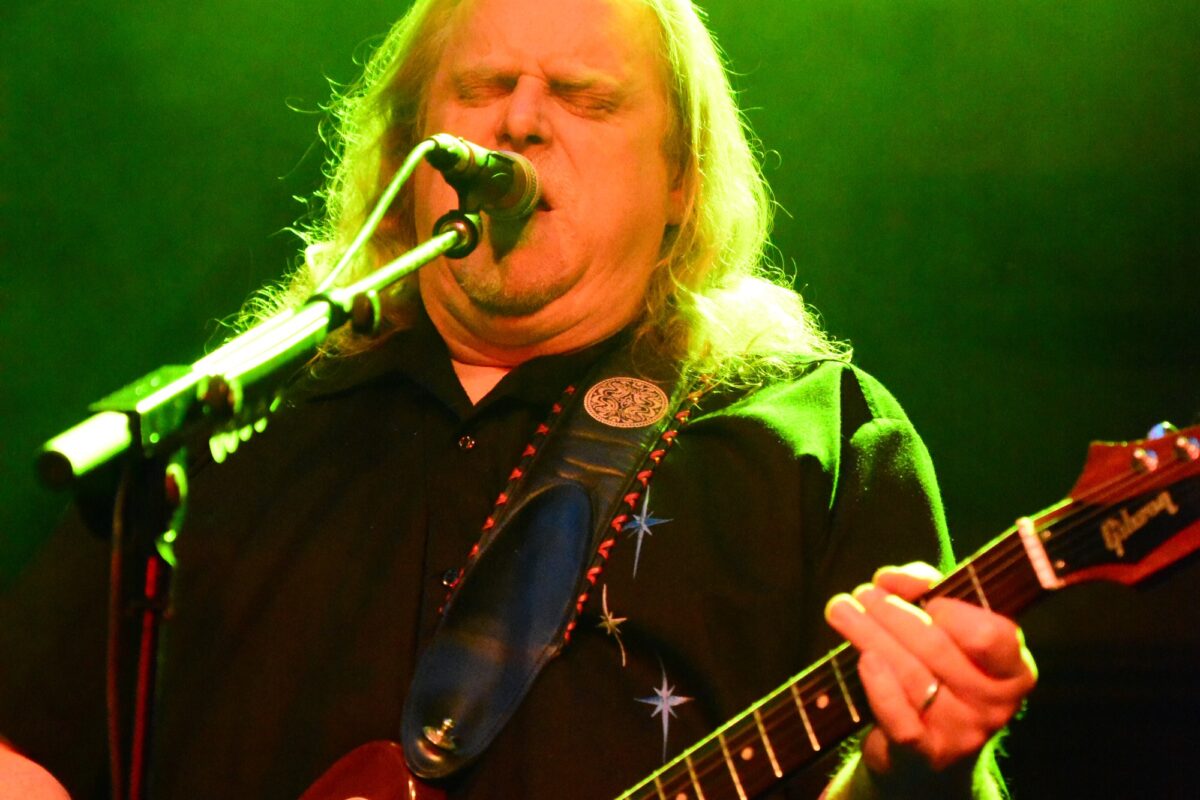
Warren Haynes Guitars & Gear: The Complete Guide to Gov’t Mule’s Guitar Master’s Rig
Warren Haynes' guitars, amps, and effects — the complete guide. Gibson Les Paul Chester, Soldano SLO-100 modified, Klon Centaur, Emma Discombobulator, and how to nail that Gov't Mule blues-rock tone.