The Amp That Refused to Die: How the Peavey 6505 Survived a Divorce, a Trademark War, and Thirty Years of Genre-Defining Gain
The Peavey 6505 is the 5150 renamed — 120W all-tube, built in Mississippi. Verified player history, tone settings, specs, and buying advice inside.
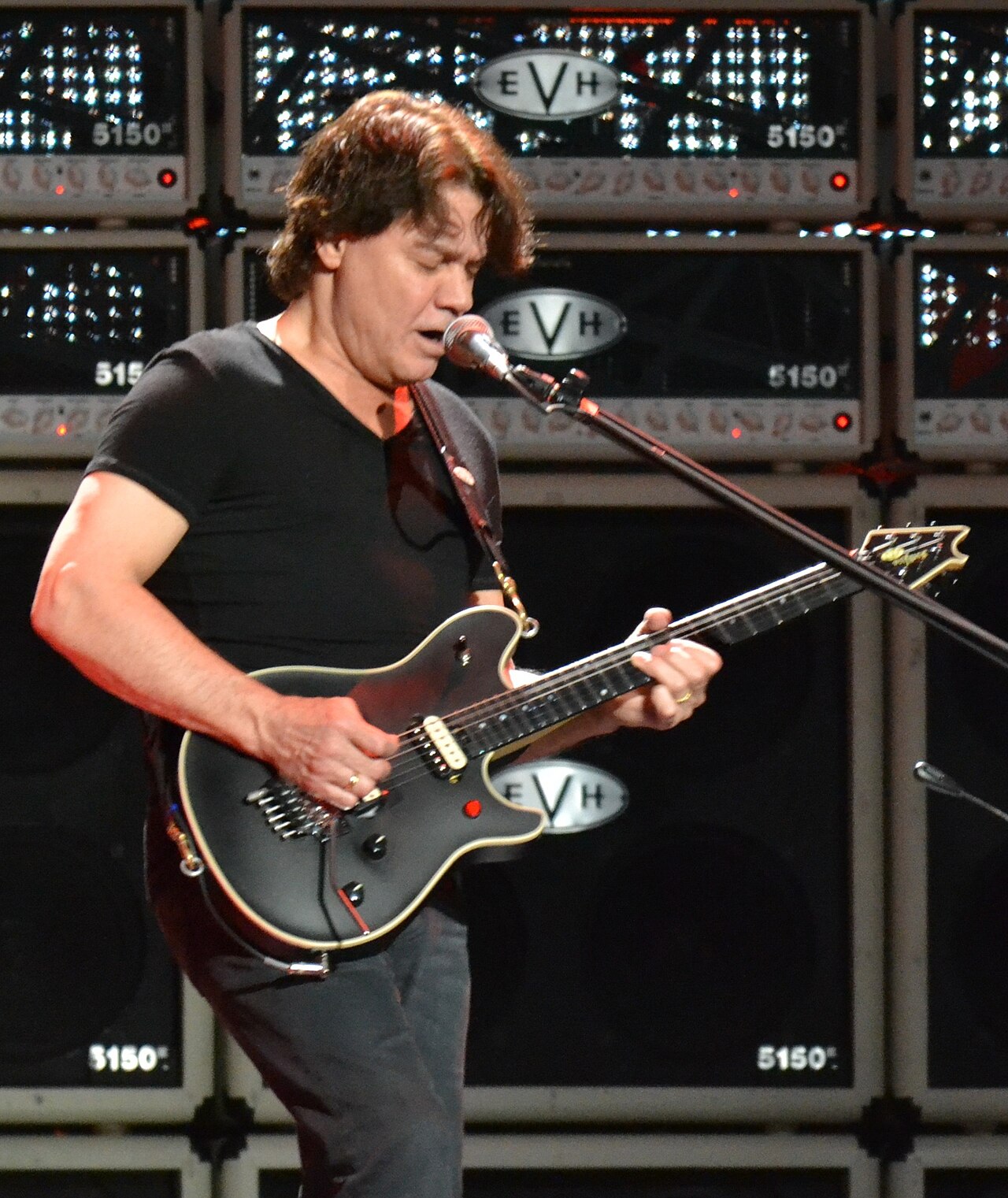
In the summer of 2004, one of the most commercially successful partnerships in guitar amp history came to an end. Eddie Van Halen — the man who had co-designed the original 5150 circuit with Peavey engineer James Brown, who had put that amp on every major stage and recording session from 1992 through 2004 — walked. He took the “5150” trademark with him. Peavey was left holding a 120-watt all-tube two-channel head that had become the defining sound of American metal and had sold in the tens of thousands. The question was what to call it now.
The answer: 6505. Not a sequel, not a revised design, not a marketing pivot. The same preamp, the same power amp, the same output transformer, the same chicken-head knobs in the same positions — just a new name stamped on the face plate. Peavey chose “6505” to mark their 40th anniversary: 1965, the founding year, plus 2005, the year of the relaunch. It was a statement of institutional identity rather than product evolution. Peavey was saying, in no uncertain terms, that this amp was theirs now.
And so it turned out to be. In the decades since the rename, the 6505 has become one of the best-selling high-gain amp heads in history in its own right — not because of the EVH connection, but because two channels, five 12AX7s, four 6L6GCs, 120 watts, Presence, Resonance, and per-channel Pre and Post Gain turned out to be exactly what metalcore, death metal, djent, post-hardcore, and every adjacent subgenre needed. The logo changed. The amp did not.
Origins: Peavey, EVH, and the Birth of the 5150 Circuit
Peavey Electronics was founded in 1965 in Meridian, Mississippi, by Hartley Peavey — a story that the company would later embed in the “6505” name itself. Hartley’s original insight was building affordable, American-made gear at a time when the market was dominated by Fender and Gibson at the top and cheap imports at the bottom. By the late 1980s, Peavey was one of the largest American amp manufacturers, with a full line of solid-state and tube heads and combos covering everything from country-clean to hard rock dirty.
The pivotal moment came in 1991, when Eddie Van Halen approached Peavey about designing a signature amp. Van Halen had been through the Marshalls and the Frankensteins and the custom builds; what he wanted now was a production amp that could deliver his exact vision of searing, harmonically dense, controllable high-gain tone at arena volume. He and Peavey engineer James Brown worked through the design together, and the result — announced in 1992 — was the 5150: 120 watts, five 12AX7 preamp tubes, four 6L6GC power tubes, two channels (Rhythm and Lead), with a shared three-band EQ plus Presence and Resonance controls, and per-channel Pre and Post Gain knobs that allowed the player to stage the gain almost infinitely.
The naming was typically Van Halen: “5150” is California police code for an involuntary psychiatric hold. It had been the name of Eddie’s home studio. It became the name of the amp. The amp went into production at Peavey’s Meridian facility, and it spent the next decade becoming one of the most influential high-gain designs ever built. Robb Flynn used it to record Burn My Eyes in 1994. Alice in Chains’ Jerry Cantrell received three heads as a gift from EVH himself after a tour. Countless death metal, thrash, and early metalcore records carry its fingerprint.
When Van Halen left in 2004, Peavey simply renamed the amp and kept selling it. The 5150 II — which had added per-channel EQ in 1999 — became the 6505+. The original 5150 became the 6505. Both circuits continued in production, and the 6505 line would go on to define the sound of an entire era of heavy music without the guitarist who had started it.
Specifications: What You’re Actually Buying
The shared EQ is the single most important structural difference between the 6505 and its successor the Peavey 5150 II (renamed 6505+). On the 6505, Bass, Middle, and Treble sit between the two channels — whatever you dial in on the tone stack affects both Rhythm and Lead simultaneously. This is not a limitation, it is a design philosophy: the 6505 was built for players who want one guitar tone executed at two different levels of gain intensity, not two completely distinct tonal characters. The 6505+ gives each channel its own EQ, Presence, and Resonance for players who need a clean rhythm setting and a completely different lead voicing. Know which type of player you are before you buy.
The Rhythm channel has two additional voicing switches the Lead channel lacks: Bright (adds upper-frequency air) and Crunch (pushes the Rhythm channel from glassy clean into overdriven territory without committing to the Lead channel’s full saturation). The Crunch switch is the 6505’s version of a third channel — it lets the Rhythm channel cover everything from a Fender-adjacent sparkle (Bright on, Crunch off, Pre Gain low) to a classic rock crunch (Crunch on, moderate Pre Gain) before you even hit the footswitch. Some players spend their entire career in Crunch mode.
The two-input design — High Gain and Normal — dates directly from the original 5150. The High Gain input adds additional preamp boost before the first gain stage; the Normal input is more transparent. Most players use the High Gain input for single-coils or lower-output pickups and the Normal for high-output humbuckers. With active pickups (EMGs, Fishman Fluence), the Normal input is almost mandatory on the Lead channel — the High Gain input into active pickups into the Lead channel’s full Pre Gain is genuinely more distortion than most recordings use.
There is no reverb. Never has been, never will be. The 6505 was designed around the assumption that reverb is a rack unit or pedal, not an onboard afterthought. The 5150 2×12 Combo has spring reverb as a combo-exclusive; the head never did.
Famous Players: Reading the Evidence Honestly
Five artists are often listed for the 6505: Eddie Van Halen, Wolfgang Van Halen, Misha Mansoor, Ola Englund, and Joe Satriani. All five need context. None of them map cleanly onto the “Peavey 6505 Head” as a product, and understanding why tells you more about this amp than any settings diagram could.
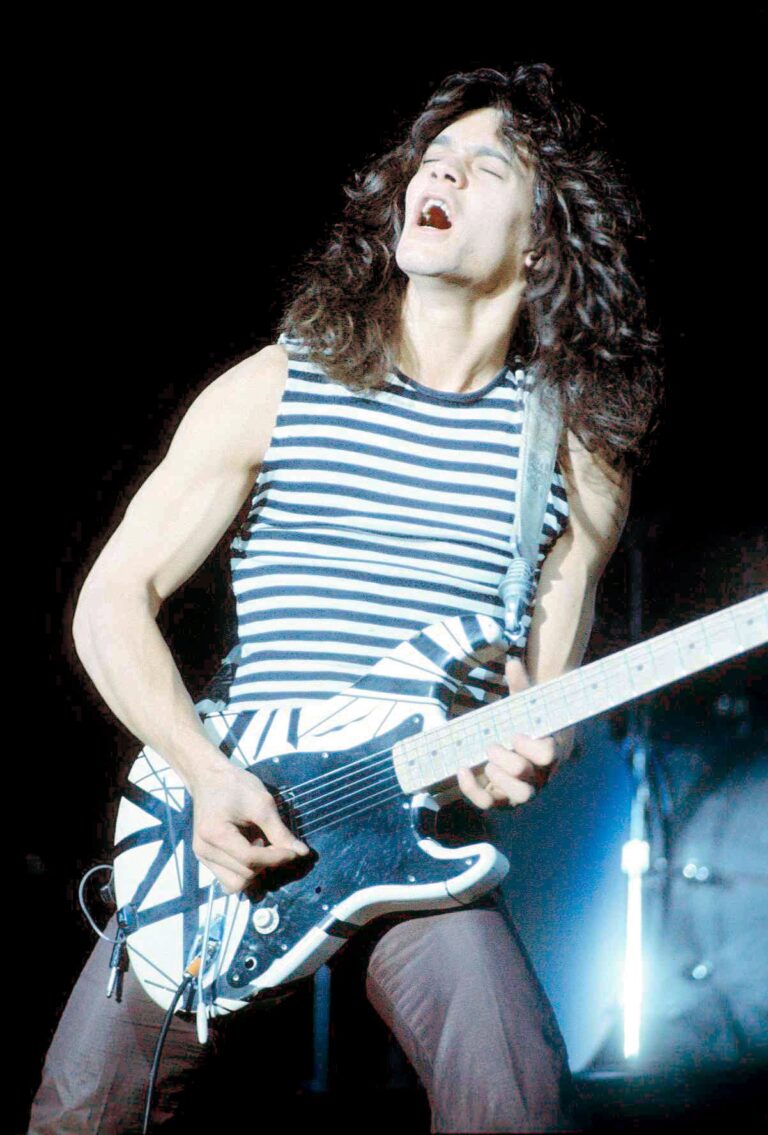
Eddie Van Halen — The Architect Who Left Before the Building Got Its Name
Eddie Van Halen designed this circuit. His fingerprints are on every 12AX7 stage, every 6L6GC bias point, every toggle switch placement. But he designed it as the 5150, not the 6505, and the name change happened after he left. EVH’s touring rig from 1992 through 2004 was built on 5150 heads — the exact same circuit — and by the time Peavey was selling it as the “6505,” Eddie had moved on to a new design developed with Fender under the EVH brand. Attributing the 6505 to Eddie Van Halen is historically accurate in the sense that he created the circuit and historically misleading in the sense that he never endorsed, marketed, or used an amp called the 6505. The correct framing: EVH is the father of the circuit. The 6505 is the circuit’s orphaned name.
Wolfgang Van Halen — No Primary Source
Wolfgang Van Halen is a real guitarist with a real career (Mammoth WVH), and he grew up watching his father play the amp that became the 6505. That’s the extent of it. No rig rundown, no interview, no manufacturer publication, no Equipboard photo evidence places Wolfgang on a Peavey 6505 specifically. His early Mammoth WVH rigs have been documented on the EVH 5150 III — which is a completely different amp, made by Fender under the EVH brand, not by Peavey. The names “5150” and “6505” point to different companies. Wolfgang uses the EVH version. He is mentioned here only to close the loop on a claim that doesn’t hold up.
Misha Mansoor — The Right Circuit, the Wrong Product Name
Misha Mansoor of Periphery has a documented Peavey connection that is real but needs careful framing. In the early Periphery years — specifically the era that produced Periphery II — Mansoor’s rig ran an Axe-Fx II into a Peavey 5150 power section (via the effects return), using the amp purely as a tube power stage while the Fractal unit handled all preamp processing. This was a 5150, not a 6505 — technically, though the circuits are identical. He later translated that amp relationship into a signature collaboration: the Peavey Invective (both the 120 and the MH mini), which is explicitly a redesigned evolution of the 6505/5150 circuit, adding a clean channel and more flexible voicing. Mansoor himself described the Invective as his take on “the perfect version” of that platform. His connection to the 6505 circuit is real and deep; his connection to the specific product called “Peavey 6505 Head” is one step removed.
Ola Englund — On the 6505+, Not the 6505
Ola Englund (The Haunted, Six Feet Under, solo YouTube channel) has documented use of the Peavey 5150 II — which is the 6505+ — via his own YouTube A/B shootout between the 5150 and 5150 II. He has also tested the 6505 Piranha (a smaller Peavey variant) on his channel. The 6505+ has per-channel EQ, which the 6505 lacks; the circuits differ at the preamp topology level. Englund’s documented preference in the Peavey world is the II/+ variant. Attributing him to the standard 6505 is a close call that isn’t supported by his own published commentary. He is in the extended Peavey orbit but not specifically a 6505 head player.
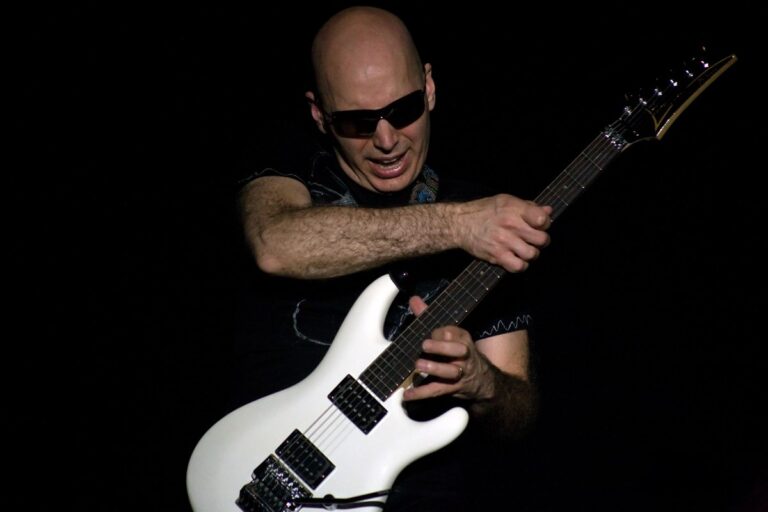
Joe Satriani — The 5150 Connection and the JSX Divergence
Joe Satriani was documented as an early adopter of the Peavey 5150 in the early 1990s, using it alongside Buckethead on various projects before the JSX came along. The JSX (Joe Satriani X-tortion) became his Peavey signature amp in 2006 — a three-channel design with a completely different preamp architecture from the 5150/6505. Satriani’s connection to the 5150/6505 circuit is historical and early; his primary Peavey identity is the JSX. The JSX and the 6505 are both Peavey, both tube, both American, and tonally very different.
The Verified 6505 Players
Now for the players who are actually documented on the 6505 by name — not the 5150, not the 6505+, but specifically the Peavey 6505.
Robb Flynn (Machine Head) is about as well-documented a 6505 user as exists. Machine Head’s connection to the circuit started with the 5150 during the Burn My Eyes sessions in 1994 — and Flynn has stated in multiple interviews that “when we came across [the 5150/6505], it was crushing. It’s got a really incredible midrange growl that works so well.” By the time the amp had been renamed 6505, Flynn was explicit: he uses 6505 heads. His prized recording head — nicknamed “Bubba” — had appeared in various Machine Head studio sessions and is specifically a 5150-era head that preceded the rename. The point is that Flynn’s commitment to this circuit has been continuous from 5150 to 6505; the rename didn’t change his relationship with the amp.
Matt Heafy and Corey Beaulieu (Trivium) have both been documented on the 6505 by name. Heafy has stated in interviews that “throughout Trivium’s history, we have always used a 5150-style amp — either a Peavey 5150, an EVH 5150 III, or a Peavey 6505.” Beaulieu’s 2010 rig diagram, sourced from a published gear interview, specifically shows a Peavey 6505 head in his live rig. Trivium’s metalcore-adjacent sound across records like The Crusade, Shogun, and In Waves was built substantially on this circuit, and both guitarists have been consistent about that attribution.
Max Cavalera (Sepultura, Soulfly, Cavalera Conspiracy) has photographic documentation of a Peavey 6505 head in his Cavalera Conspiracy rig, sourced from a 2014 post on the Cavalera family blog. Cavalera’s connection to Peavey spans decades — Sepultura’s late classic-era recordings and his subsequent projects have drawn from the high-gain Peavey well consistently.
Ted Nugent is perhaps the most unexpected name on this list, but his own words are the source. In a documented interview, Nugent described experimenting with Peavey 5150s while playing with the Damn Yankees (“just as an experiment… it sounded awesome. And so I stuck with it”) and then explicitly stated “today I’m using 6505s.” Nugent’s rock style is harder rock than metal, but his preference for loud, aggressive, present American tube tone puts the 6505 in a context outside the death metal and djent associations it usually carries.
Circuit Topology and Tone: What the Controls Actually Do
The 6505 preamp runs five 12AX7 stages before the signal reaches the power section. The Rhythm channel uses fewer gain stages than the Lead; the Lead channel cascades additional stages to achieve its characteristic saturated, compressed, vowel-filtered sound. This architecture — high-gain cascaded preamp stages feeding a relatively fixed bias 6L6GC output section — produces a tone that sits distinctly differently from the amp’s closest competitors.
The Pre Gain knob controls how hard the first preamp stage is driven. The Post Gain knob is a master volume for that channel that determines how hard the driven preamp signal hits the power amp. These are not equivalent controls. A high Pre Gain / low Post Gain setting produces a very saturated signal that hits the power amp gently — tight, high-definition, lots of preamp distortion character. A low Pre Gain / high Post Gain setting produces less preamp saturation and pushes the power amp harder, resulting in more power amp compression and bloom, a fuller low end, and a slightly looser response. The “djent” setup — Tube Screamer into the Lead channel — typically uses a moderate Pre Gain (around 5–6) and a higher Post Gain, with the TS compressing the input before the preamp stages, tightening the low end and pushing the midrange forward.
The Resonance control adjusts the low-frequency damping of the output stage — essentially a bass response control in the power amp. Higher Resonance = more low-end weight and sag. Lower Resonance = tighter, more defined bass. For downtuned guitars in drop tunings, Resonance below 12 o’clock prevents the bass frequencies from turning to mud. The Presence control operates similarly in the high-frequency domain, boosting or cutting the upper harmonics of the power amp stage. Set Presence too high and you get aggressive, piercing pick attack; too low and the amp sounds dull. Most players find the 2 o’clock position (roughly 3/4 up) is the starting point on both controls.
The 6505’s fundamental character — its “midrange growl” that Robb Flynn specifically called out — comes from the interaction between the cascaded 12AX7 stages and the 6L6GC power section. 6L6GCs are American pentode tubes that tend toward a tight, clear, extended low-end compared to EL34s (which are used in Marshalls). On the 6505, this means the distortion is defined and percussive rather than loose and harmonic. Palm mutes hit with a physical thump rather than a sustained bloom. Single-note riffs articulate clearly at speed. The combination is exactly what fast, technical metal playing needs.

Tone Recipes and Settings
1. The Classic Metal/Metalcore Setup (Lead Channel)
Pre Gain: 6, Post Gain: 6, Bass: 7, Middle: 5, Treble: 5, Presence: 7, Resonance: 5. High Gain input. This is the flat-tyred workhorse. Big, defined, not scooped, not ice-picky. Add a Boss NS-2 in front to kill noise between riffs and a TS9 set to minimum drive, boosted output into the front end to push the mids and tighten the low end. This is the setup Trivium and Machine Head variants of this sound are built on.
2. Djent / Modern Technical Metal (Lead Channel with Boost)
Pre Gain: 5, Post Gain: 7, Bass: 6, Middle: 6, Treble: 5, Presence: 6, Resonance: 4. Tube Screamer or Boss SD-1 into the front, drive at 0, tone at 12 o’clock, level maxed. The boost compresses the input and adds midrange focus. Low Resonance keeps the low end tight at low tunings. High Post Gain pushes the power amp for bloom. Noise gate essential in the effects loop. This is the architecture that built the djent movement.
3. Crunch Channel Classic Rock (Rhythm Channel, Crunch On)
Pre Gain: 4.5, Post Gain: 6, Bass: 6, Middle: 6, Treble: 6, Presence: 6, Resonance: 5, Bright: Off, Crunch: On. This setting takes the Rhythm channel past clean into classic American overdrive — think early Van Halen in spirit, aggressive but not fully saturated. Single-coils in the Normal input particularly respond well here, where the lower output pickup doesn’t overwhelm the input stage.
4. Death Metal / Full Saturation (Lead Channel)
Pre Gain: 8, Post Gain: 5, Bass: 6, Middle: 4, Treble: 6, Presence: 8, Resonance: 3. Maximum gain, scooped mids slightly, Presence boosted aggressively for articulation in a dense mix, Resonance low to prevent sub-bass bloat. Noise gate in the effects loop is mandatory at this Pre Gain level — the amp will generate significant idle noise. This is where death metal bands found the tight, palm-muted brutality that defined the genre’s production sound in the late 1990s and 2000s.
5. Clean with Drive (Rhythm Channel, Crunch Off)
Pre Gain: 2, Post Gain: 8, Bass: 5, Middle: 5, Treble: 6, Presence: 5, Resonance: 5, Bright: On, Crunch: Off. The 6505 is not known for its clean tone — it is not a Fender, and it doesn’t claim to be. But this setup, using a very low Pre Gain and pushing the Post Gain to overdrive the power amp instead, produces a semi-clean tone with natural power amp compression that works well for reverb-heavy post-rock or driving rhythm parts that need some grit without full metal saturation. Pair with a reverb pedal in the effects loop for the post-rock application.
How It Compares: The High-Gain Landscape
The 6505 exists in a market with several serious competitors, and the differences are real rather than marketing language.
The Mesa/Boogie Dual Rectifier is the 6505’s most discussed rival. The Recto uses EL34 power tubes (or 6L6s in some modes) and rectifier-switchable power supply, producing a warmer, more compressed, more harmonically complex distortion with a pronounced sag under heavy picking. The 6505 is tighter, drier, and more defined; the Recto is warmer and more three-dimensional. For downtuned metal that demands absolute note separation at speed, most players pick the 6505. For rock, alt-metal, and anything that benefits from the Recto’s natural compression and warmth, Mesa wins. Many serious guitarists own both.
The Marshall JCM800 is a single-channel amp running EL34s that produces a fundamentally different character — British midrange emphasis, a more vocal and harmonically complex distortion, and significantly less gain in its stock configuration. The JCM800 typically needs a boost pedal to match the 6505’s Lead channel gain; in return it offers more expressive dynamics and a tone that sits in mixes differently, with a pronounced midrange that cuts without the 6505’s upper-midrange aggression. Think AC/DC versus Machine Head as a genre shorthand.
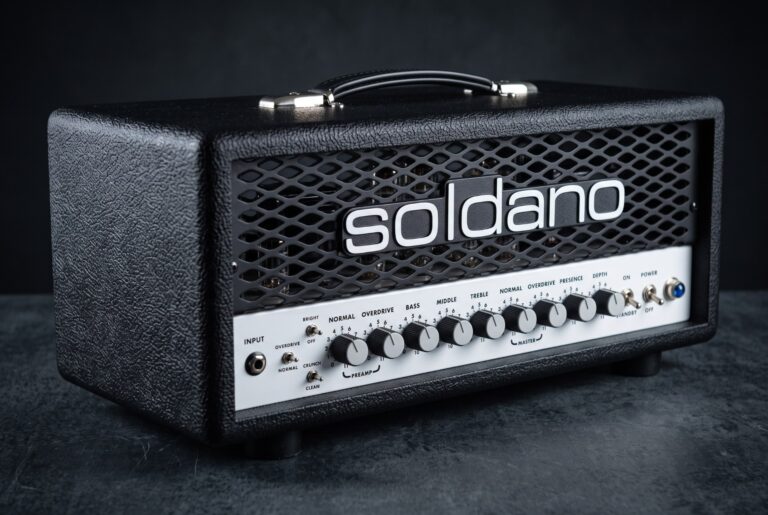
The Soldano SLO-100 is the boutique comparison. Also American, also 100 watts (the 6505 is 120W), also high-gain — but the SLO’s distortion is more refined and articulate, with less compression and more dynamic response. It costs roughly three times as much as a used 6505. The SLO rewards lighter picking attack and more nuanced technique; the 6505 will work with anything you throw at it at any volume. The SLO is the amp for players who have already mastered the 6505 sound and want to go deeper.
The Orange Rockerverb 50 MKIII is the British-EL34 perspective: warmer, darker, more compressed, onboard reverb, and half the wattage. The Rockerverb is not a direct genre competitor to the 6505 — it sits more comfortably in alternative rock, stoner metal, and post-hardcore than in death metal or djent. But for players who find the 6505’s high end too bright and its gain structure too compressed, the Rockerverb offers a different texture at similar price points.
Within Peavey’s own range, the choice between the 6505 (shared EQ) and the 5150 II / 6505+ (per-channel EQ) is the most consequential decision. If you need your rhythm tone and your lead tone to be tonally distinct — different amounts of bass, different high-end presence — the 6505+ is the correct purchase. If you want a single voice executed at two gain levels, the 6505 is the purer circuit.
Buying Guide: New, Used, and the “1992 Original” Reissue Question
The current Peavey 6505 lineup is somewhat confusing because of how Peavey has named its reissue products. The 6505 1992 Original (SKU 03619250, $1,699.99 new) is Peavey’s marketed recreation of the original circuit — it is not an original 1992 production unit, despite the name. It is manufactured to original specs with the shared EQ design, five 12AX7s, and four 6L6GCs. The “1992 Original” suffix is a product designation, not a vintage claim.
Original production 6505 heads (2005–2022 production, before the reissue program) are readily available used on Reverb for approximately $500–$900 depending on condition, included original footswitch, and tolex condition. Early 6505 heads from 2005–2008 are simply renamed 5150s with different faceplate graphics — the circuit boards are the same. Later production runs introduced minor component updates that the internet forum community has analyzed in detail, generally concluding that the sonic differences are negligible.
Key used-market inspection points:
- Power tubes: The 6L6GCs are the first thing to check. Ask when they were last replaced. A fresh set runs approximately $60–90 for a matched quartet. Factor this into your offer if the tubes are original.
- Preamp tubes: The 12AX7s last longer but do affect tone and noise floor. Tube 1 (first input stage) is the most influential on overall gain character. Many players upgrade V1 to a higher-gain tube like a JJ ECC83S or a lower-noise Mullard reissue.
- Tolex condition: The original tolex is fragile and shows wear quickly on touring units. Cosmetic damage does not affect function but affects price. Black tolex retouching products can clean up scuffs.
- Effects loop switching: The relay-switched effects loop is a known failure point on older 6505 heads. Test it — plug into the loop and confirm the footswitch engages and disengages cleanly without signal dropout or noise.
- Output impedance selector: Verify the 4/8/16 Ohm selector switch works in all three positions. This switch sometimes oxidizes on older units.
Ownership Notes: Living With the 6505
The 6505 at 120 watts is a genuinely loud amp. At stage volume with a 4×12 cabinet, it is capable of causing hearing damage in short exposures if the cabinet is pointing directly at you at close range. Use hearing protection in rehearsal rooms; it is not optional. The master Post Gain controls on each channel allow you to set gain structure independently of total volume, but at any setting where the power section is being driven, the SPL is substantial.
The amp generates significant preamp noise at high Pre Gain settings. A noise gate in the effects loop (not just in front of the amp) is the standard solution. The Boss NS-2 can run in a four-cable method with the 6505’s loop; the ISP Decimator G-String is the more transparent option for players who need the gate to track fast metalcore riffs accurately.
The 6505 was designed without reverb. Running a plate reverb or hall reverb in the effects loop for leads is standard practice. Short Room reverb settings (under 0.8 seconds decay) in the loop add air without turning rhythm tracks into mud. Delay in the effects loop (post-gain staging) tracks consistently because it is not affected by the gain staging of the preamp.
Tube bias on the 6505 should be checked every 6–12 months if you play regularly, and whenever you replace power tubes. The amp has adjustable bias; most owners set it “warm” (higher idle current) for more low-end bloom and compression, or “cool” (lower idle current) for tighter, more defined response. The Meridian, Mississippi factory set tubes to a specific specification that Peavey’s own tech notes define; the internet disagreement about “correct” 6505 bias is endless, but sticking to Peavey’s published cold-bias spec is the safe starting point.
Frequently Asked Questions
Is the Peavey 6505 the same as the Peavey 5150?
Yes, in terms of circuit design. When Eddie Van Halen left Peavey in 2004 and took the “5150” trademark with him, Peavey renamed the existing amp the 6505. The preamp, power amp, output transformer, and control layout are identical. The 6505 is the 5150 with a different name on the faceplate. If you own a 5150 from 1992–2004, you own the 6505 circuit.
What is the difference between the 6505 and the 6505+?
The 6505 has a shared three-band EQ that affects both channels simultaneously. The 6505+ (renamed from the 5150 II) gives each channel its own independent EQ, Presence, and Resonance controls. The 6505+ also uses six 12AX7 preamp tubes versus the 6505’s five, and has a slightly different gain structure. If you need two completely different tonal settings for clean and lead, the 6505+ is the more flexible choice.
What is the “6505 1992 Original” that Peavey currently sells?
It is a current-production reissue of the original 5150/6505 circuit, manufactured to the original shared-EQ specification. Despite the name, it is not a vintage instrument — it is built new, today, in Meridian, Mississippi, to the original spec. The “1992 Original” designation identifies the circuit generation, not the production year.
Can the 6505 do clean tones?
Clean-adjacent, but not genuinely clean. With the Rhythm channel’s Pre Gain set very low (2–3) and the Crunch and Bright switches both off, you can get a moderately clean, slightly compressed tone that works for rhythm parts. At any significant volume the amp adds harmonic saturation. Players who need pristine clean tones typically use a second amplifier or a clean-boosting DI signal blended in parallel. The 6505 is a high-gain amp; clean tone is not what it was designed to excel at.
What cabinets pair best with the 6505?
The most common pairing is a Peavey 6505 4×12 (with Sheffield 1200 or Celestion speakers depending on production run), a Marshall 1960A with Celestion G12T-75s, or a Mesa/Boogie 4×12 with V30s. The Mesa 4×12 is particularly popular because the V30’s midrange emphasis complements the 6505’s mid character. The choice between straight and slant cab affects the tonal dispersion onstage; slant cabs project slightly more high-frequency energy toward the player’s ear level, which some players find useful for monitoring their own lead tone.
Is the 6505 too much amp for a home studio?
At 120 watts, yes — without attenuation. A reactive load box (Two Notes Torpedo, Universal Audio OX, Rivera RockCrusher) between the 6505’s speaker output and the cabinet allows you to record at low volumes without changing the amp’s operating character. The alternative is the 6505 MH, a 20/5/1-watt three-power-level mini head version of the circuit that is genuinely usable at home volumes. Running the 6505 full head without attenuation at bedroom volumes means the power amp is barely engaged and the tone is dominated entirely by the preamp stages, which loses the amp’s most important tonal character.
Why do so many metal records from the 2000s and 2010s sound like the 6505?
Because they were recorded on one. The 5150/6505 circuit was ubiquitous in metalcore, death metal, and deathcore production for roughly fifteen years. Andy Sneap, Colin Richardson, Jason Suecof, and other key metal producers of the era all had 5150s or 6505s in their rack, and the amp’s particular combination of tight low end, mid-forward aggression, and compressed articulation became the reference point for the genre’s production aesthetic. When an amp is used on enough genre-defining records, it becomes the genre sound — which is simultaneously the 6505’s greatest legacy and the reason some players specifically look elsewhere to avoid sounding like 2007.
Is there a right way to approach the gain staging?
Yes. Think of Pre Gain as “how much distortion character from the preamp” and Post Gain as “how hard does that distortion hit the power section.” More Pre Gain adds more saturation and compression; more Post Gain adds more power amp bloom, sag, and volume. The interaction is non-linear — a high Pre Gain with a low Post Gain sounds tonally different from a low Pre Gain with a high Post Gain even at similar SPLs. Experiment with both controls across their full ranges rather than always defaulting to both at noon. The sweet spot for most modern metal is Pre Gain 5–7, Post Gain 5–7, with a noise gate in the loop.
Image credits
- Eddie Van Halen: Joe Bielawa, Wikimedia Commons, CC BY 2.0.
- Eddie Van Halen: Carl Lender, Wikimedia Commons, CC BY 2.0.
- Misha Mansoor: Markus Felix, Wikimedia Commons, CC BY-SA 3.0.
- Joe Satriani: Wikimedia user ‘Vtpeters’, Wikimedia Commons, CC BY-SA 3.0.
Latest News
Related
On This Day
Tuesday 10 November
From this week: