Tube Tone Without the Tubes: Inside the Blackstar Silverline Deluxe
The Blackstar Silverline Deluxe is a 100W digital head with six voices, TVP valve emulation, and ISF tone shaping. Specs, tones, and buying guide inside.
There is a moment in every gigging guitarist’s career when a valve amplifier stops feeling like a romantic partner and starts feeling like a difficult one. The power tubes expire mid-tour. The bias drifts in the heat. The transformers add kilograms you did not agree to carry. And the tech bill arrives just before rent. The Blackstar Silverline Deluxe is Blackstar’s attempt to end that relationship gracefully — a 100-watt digital modeling amp that genuinely sounds like it is not what it is. That is no small engineering achievement, and this article breaks down exactly how it was done, what it sounds like, and whether it belongs in your rig.
From Marshall’s Shadow to a Garden Shed in Northampton
Blackstar Amplification was founded in 2007 by four former Marshall employees: Ian Robinson, Bruce Keir, Paul Hayhoe, and Richard Frost. They spent two and a half years developing their first circuits in a garden shed in Northampton before unveiling the range at Frankfurt Musikmesse in March 2007. The company built its early reputation on the HT series — genuine EL34 tube amps with a forward, British character — and on two proprietary innovations that appeared on everything they made: the ISF (Infinite Shape Feature) tone control, and the TVP (True Valve Power) technology that followed.
ISF is a patented circuit that continuously varies the EQ network’s characteristic from American (tight bass, clear highs, scooped mids) to British (looser low end, more present upper midrange, warmer overall). It is not an additional eq band — it changes the centre frequencies and Q values of the existing bass, mid, and treble controls as it sweeps. Every player who has used it knows how much real estate it saves on a control panel: one knob that replaces a switch-bank of voicing options.
TVP came next. It is the engineering answer to a specific question: can a solid-state power section be made to behave like six different valve types, producing the sag, compression, and overdrive character of EL84, 6V6, EL34, KT66, 6L6, and KT88 tubes in a circuit that contains none of them? Blackstar’s answer, backed by a patent, is yes. The Silverline Deluxe is the most fully realised expression of that answer.
The Silverline series launched in late 2019 and sits at the top of Blackstar’s digital range. Unlike the brand’s ID series (which it supersedes for this tier), the Silverline uses a fourth-generation Analog Devices SHARC digital signal processor — the same platform that drives professional studio processors — to handle the preamp modelling. The result is a head or combo that Premier Guitar awarded Gear of the Year for 2020 in the standard version, with the Deluxe adding wattage, a more complete control set, and a stereo variant that remains unique in this price class.
The Lineup: Five Amps, One Architecture
The Silverline series runs five units from the same technological blueprint. The Standard is a 20-watt 1×10 combo. The Special is a 50-watt 1×12. The Deluxe comes as a 100-watt 1×12 combo, a 100-watt head, or a 200-watt stereo 2×12 combo. Every model uses identical voice and response controls, identical ISF implementation, and the same effects engine. The upgrade cost at each tier buys power, speaker configuration, and — in the stereo combo — a second full amp channel running simultaneously for true stereo effects. This review focuses on the Deluxe head and its matching 2×12 Celestion V-Type cabinet, which is how it performs at its ceiling.
Specifications
How TVP Actually Works
The six TVP settings are not EQ presets. They model the reactive behaviour of each output valve type — the way a power section compresses under pick attack, the rate at which it saturates, the frequency bias of its distortion character, and how it cleans up when you ease off the guitar’s volume knob. In a real valve amplifier, these characteristics emerge from the interaction of the transformer, the valve’s operating point, and the negative feedback loop. In the Silverline, the SHARC processor calculates those interactions in real time using models derived from measured valve behaviour.
In practice, the TVP switch behaves as Guitar World reviewer Nick Guppy described it: EL84 delivers the most compression and drive — the springy, harmonically dense character associated with AC30-territory sounds — and as you move up through 6V6, EL34, KT66, and 6L6, the compression eases and the bandwidth opens, arriving at KT88 with the biggest, most open response, the kind associated with high-headroom American amplifiers. You can run any of the six preamp voices through any of the six TVP settings. That is thirty-six combinations before you touch ISF, gain, EQ, or effects.
MusicRadar’s verdict on the TVP emulation was direct: the Silverline “feels like a living, breathing valve amp.” That claim withstands scrutiny from multiple independent reviewers. The reason it holds up is that most players judge an amp’s valve character by three things — how it cleans up with the guitar volume control, how it responds to pick dynamics, and whether the distortion has harmonic depth or sounds flat. The Silverline passes all three tests convincingly. Purely blind, most players will not correctly identify it as digital.
Six Voices: What They Actually Cover
Clean Warm is the humbucker platform. Wide low end, compressed highs, forgiving on the pick attack. Set the TVP to 6V6 or EL34 and you are in Fender Deluxe Reverb territory with a darker upper register. Set it to KT88 and it opens up to a large-format clean with real headroom. This is the voice for jazz chords, country chicken picking with single-coils swapped in, or anything requiring a clean signal strong enough to drive an overdrive pedal into the amp rather than through the amp.
Clean Bright has a little more gain, a tighter bass response, and an extended high register — the Fender Blackface architecture in digital form. Single-coils in a Strat respond beautifully here, with the ISF turned toward the American setting. The MusicRadar review singled this out as a natural partner for single-coil pickups.
Crunch and Super Crunch are the middle ground where the Silverline earns its keep for live performance. The dynamic behaviour here — the way the overdrive eases back as you roll down the guitar volume — is where TVP makes its most audible argument for the technology. Crunch on EL84 gives you a compressed, harmonically complex British crunch that sits in a mix the way an AC30 or early-plexi sits. Super Crunch on EL34 pushes into JCM800 territory: the kind of mid-forward, touch-sensitive overdrive that carries a Les Paul lead without an external boost. This is also where the ISF earns its keep: pushing it toward the British side adds upper-mid grit; pulling toward American adds definition and tightens the low end for a cleaner band mix.
OD1 and OD2 are the high-gain voices. OD1 is a conventional high-gain voice — thick, sustaining, manageable for lead work in hard rock and metal. OD2 has a mid-boosted character that Guitar World described as working better with single-coils: a TS-style shaping that keeps the note definition intact under heavy gain. Set OD2 on EL34 TVP and ISF toward British and you have one of the more convincing in-amp recreations of the pushed-EL34 metal tone without external pedals.
The Effects Engine
The Silverline runs three effects simultaneously — one modulation type, one delay, and one reverb. Each category has four options selectable by the adjacent knob. Modulation covers chorus, flanger, phaser, and tremolo. The delay and reverb types are not model-specific in the available documentation, but reviewers consistently single out the spring reverb emulation as the standout — “gooey spring reverb,” in PG reviewer Joe Gore’s phrase. The modulation, delay, and reverb controls are three separate activation buttons with a shared effects-level control, which means you cannot independently set levels for each category without going into the Insider software. That is the main ergonomic constraint in the effects section.
The effects count — twelve total — is the area where the Silverline consistently gets knocked by reviewers who compare it to Line 6 or Fractal products at higher price points. The Catalyst 100 (see Line 6 Catalyst 100) offers eighteen effects with a more sophisticated routing architecture. The Spider V 60 MkII (see Line 6 Spider V 60 MkII) offers over seventy effect algorithms. Blackstar’s counter-argument, made implicitly in the design, is that the core amp tones are better than anything in those ranges at equivalent prices — and the effects are the cherry, not the cake. Both reviewers and the market have largely agreed with that position.
Famous Players: An Honest Account
Gus G, Neal Schon, Richie Sambora, and Jared James Nichols are listed as Silverline Deluxe players. This is the same artist roster that appeared for the Blackstar HT Stage 60 MkII and the Blackstar HT Club 40 MkII. The artists are real Blackstar endorsers. The SKU-level attribution is not.
Gus G (see Gus G gear guide), the Greek shredder known for his work with Ozzy Osbourne, is documented on the Blackstar Series One 200 and his own Blackfire 200 signature amplifier — both high-powered tube heads. No primary source places him on a Silverline Deluxe. His high-gain, extended-range playing context also maps poorly to a 100W digital head when a purpose-built tube signature amp is available at no extra cost to him as an endorser.
Neal Schon (see Neal Schon gear guide and extended profile), the Journey co-founder, is affiliated with Blackstar at the brand level. No primary source from Equipboard, Premier Guitar rig rundowns, or manufacturer pages places him on a Silverline Deluxe specifically.
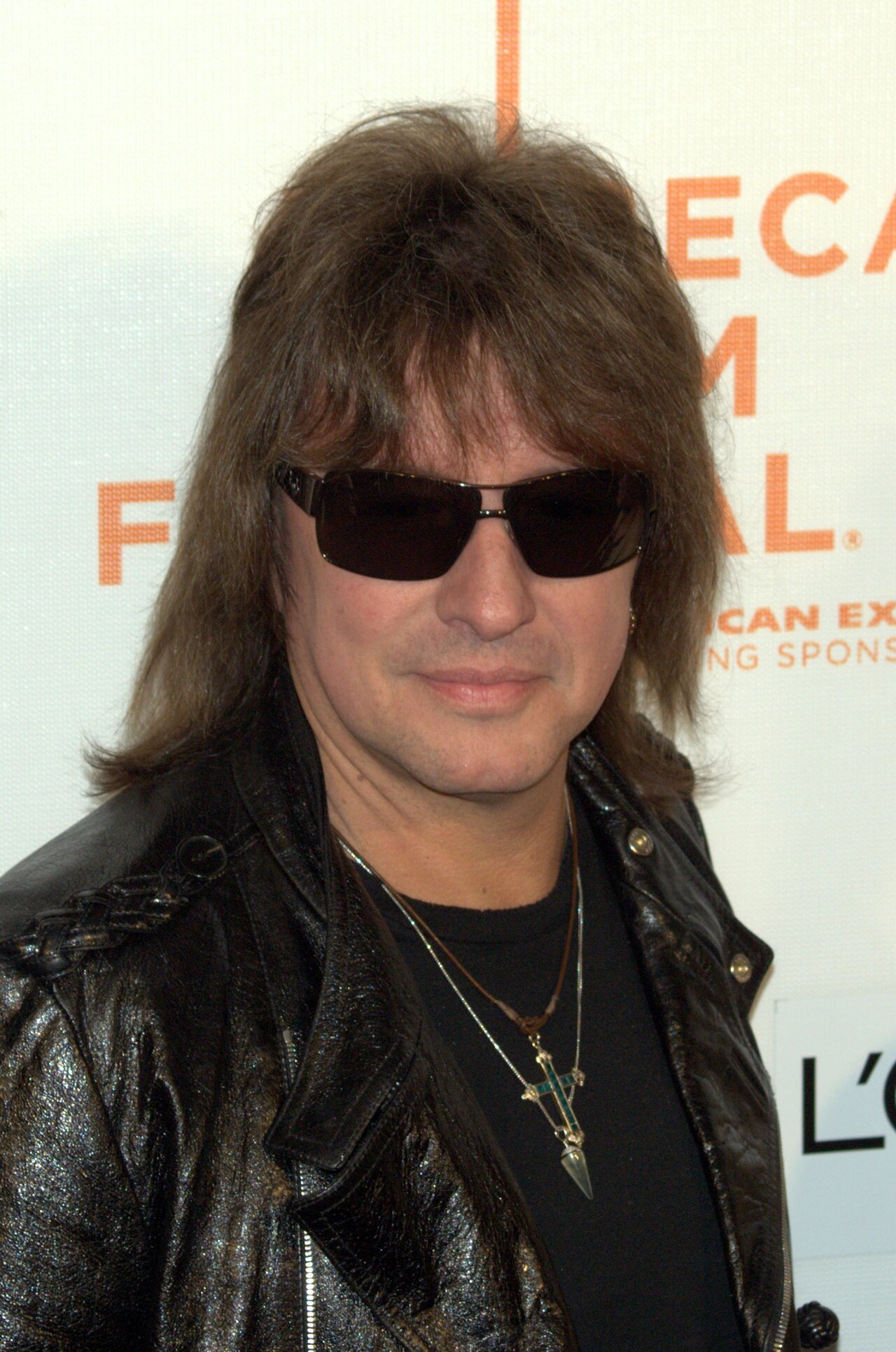
Richie Sambora (see Richie Sambora gear guide), the former Bon Jovi lead guitarist, is documented on the Blackstar Series One 1046L6, the Artisan 100, and the HT-20 Studio head — all tube-based products from different generations and price points. The Silverline Deluxe does not appear in any verified Sambora rig documentation.
Jared James Nichols has his own Blackstar signature amplifier: the JJN-20R MkII, a 20-watt EL84-based combo — a genuine tube amp, a completely different product. His documented touring rig uses that instrument, not a Silverline. Blackstar’s artist page for Nichols links to his signature amp, not the Silverline series.
The closest documented connection between a recognisable artist and the Silverline series comes from a different SKU: Phil Collen of Def Leppard has been filmed playing a Silverline Stereo Deluxe (the 2×100W 2×12 combo variant) during guitar lesson and demonstration videos. That SKU is not the subject of this article, but it confirms the series is genuinely used at the professional level for recording and demonstration work — the Stereo Deluxe’s dual-channel capability is a natural fit for a guitarist who wants true stereo effects in a compact package.
The brand has a strong artist programme built on tube amps (Series One, Artisan, HT, signature instruments). The Silverline is the brand’s digital flagship, but the artist programme has not been redirected toward it in the same way. Equipboard lists one professional artist across all Silverline SKUs — Phil Collen on the Stereo Deluxe, via community submission from a YouTube clip. For a working guitarist, this is not a reason to avoid the amp. It is a reason to understand it as a player’s tool that earns its following through direct experience rather than headline association.
Tone Recipes and Settings
Recipe 1: British Crunch Platform (like Angus Young‘s mid-period AC/DC tone)
Voice: Crunch. TVP: EL84. Gain: 5–6. Bass: 6, Mid: 7, Treble: 5. ISF: fully British. Volume: 6. Presence: 5. Resonance: 5. No modulation. Delay: off. Reverb: spring, level 20%. This setting uses the EL84 compression and the Crunch voice to recreate the spongy, pushed feel of a class-A amplifier driven into its sweet spot. The ISF toward British adds the upper-mid presence that cuts through without adding treble harshness. Roll the guitar’s volume back to 6 for the clean-ish rhythm passages; push back to 10 for leads. A humbucker-equipped guitar fills the midrange more than a Strat here — if using single-coils, open the TVP to 6V6 for a slightly less compressed response.
Recipe 2: Plexi-Adjacent Lead (like Slash‘s mid-gain singing sustain)
Voice: Super Crunch. TVP: EL34. Gain: 7. Bass: 5, Mid: 6, Treble: 6. ISF: two-thirds British. Volume: 7. Presence: 6. Resonance: 4. Modulation: chorus, level 15%. Delay: medium, level 20%. Reverb: room, level 20%. The EL34 TVP setting provides the voltage-amp compression and midrange push of a British 50W head. Super Crunch at Gain 7 gives enough sustain for long lead lines without the note blurring that begins in OD1. The chorus at very low level adds width without creating a choir-of-guitars shimmer — it is the spatial glue, not the character. This is the foundation for classic-rock lead work that needs to sit on top of a full band.
Recipe 3: High-Gain Modern Metal (like James Hetfield‘s downtuned rhythm approach)
Voice: OD1. TVP: KT66. Gain: 8. Bass: 4, Mid: 5, Treble: 6. ISF: centre to slightly American. Volume: 7. Presence: 7. Resonance: 3. No modulation. Delay: off. Reverb: off. The KT66 TVP setting provides more low-end tightness than EL34 while maintaining harmonic depth — it reduces the muddiness that a full-gain voice can create in a downtuned context. ISF toward American narrows the low end further. Low Resonance (3) cuts the cab’s low-frequency buildup at stage volume, which is the main reason high-gain tones sound better in the room than they do in isolated clips. This is the setting to start from for drop-D or D-standard rhythm work.
Recipe 4: American Clean with Pedals (the Silverline as a platform amp)
Voice: Clean Bright. TVP: 6L6. Gain: 2. Bass: 5, Mid: 5, Treble: 6. ISF: fully American. Volume: 7. Presence: 5. Resonance: 5. All effects off. This setting turns the Silverline into a pedal platform — a studio-quality clean that responds to overdrive pedals the way a good solid-state clean always has: predictably, consistently, without the colour of a valve preamp changing the pedal’s character. Put an Ibanez TS9 Tube Screamer in front of this voice on its lowest drive setting and you get an analogue-feeling mid-push that takes on the character of the TS9 rather than fighting the amp’s own voice. This is why the Silverline has attracted engineers who do not want a modeler — they want a controllable clean power stage that stays clean at volume.
Recipe 5: Vocal Jazz Lead (single-note clarity without shrillness)
Voice: Clean Warm. TVP: KT88. Gain: 3. Bass: 6, Mid: 7, Treble: 4. ISF: two-thirds British. Volume: 6. Presence: 3. Resonance: 6. Reverb: room or hall, level 35%. No modulation or delay. The KT88 opens the headroom ceiling and the Clean Warm voice darkens the upper register — together they produce a thick, round, voice-like clean that does not turn brittle when you dig in. Mid boosted at 7 gives the note the weight a jazz-box has naturally; Presence at 3 rolls off the upper-mid edge. This is the setting for a semi-hollow or full-hollow guitar playing chord melody through a single-coil or P-90, where the amp should be invisible and the guitar should be the event.
How It Compares
The Silverline Deluxe 100W head at $529.99 launch price puts it in a genuinely competitive bracket against both digital and tube options.
Against the Line 6 Catalyst 100, the Silverline wins on amp-voice touch response and TVP realism; the Catalyst 100 wins on effects breadth (eighteen effects vs twelve), routing flexibility, and the HX heritage that gives its voices a more complex modelling architecture. If you use effects heavily, the Catalyst is more capable. If you primarily use the amp as an amp and treat effects as secondary, the Silverline is more convincing.
Against the Boss Katana 50 Gen 3, the Silverline offers more wattage, more preamp voice articulation, and a more sophisticated power-amp emulation. The Katana is a better budget pick; the Silverline is a serious gigging tool.
Against the Blackstar HT Stage 60 MkII — the tube sibling — the comparison is philosophically interesting. The Stage 60 uses real EL34s and has a hybrid circuit (tube preamp stages, op-amp EQ sections). The Silverline head is lighter, requires no biasing, has six power-amp characters instead of one, has 128 presets instead of 12, and costs around the same as or less than the Stage 60. The Stage 60 sounds like a tube amp because it is one. The Silverline sounds like a tube amp because the engineering says it should. In a blind A/B at live volumes, experienced players have disagreed about which is which. That should tell you something about the state of digital amplification in 2020.
Against a used Fender Deluxe Reverb at similar price — the Deluxe Reverb sounds like nothing else. One voice, one reverb, one tremolo, glorious 6V6 clean power, no presets, no USB, no headphone out. The Silverline does more things well. The Deluxe Reverb does one thing perfectly. This is a question of who you are as a player, not of which amp is better.
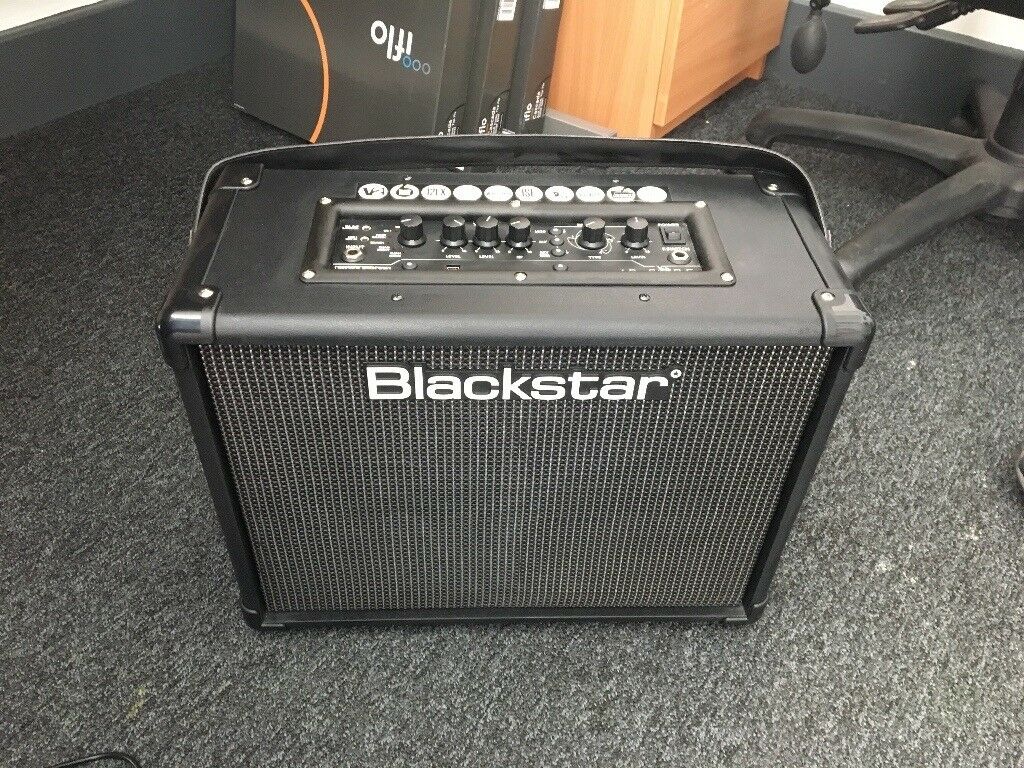
Against the Positive Grid Spark 40 and its successors, the Silverline is a stage amp and the Spark is a practice tool with smart features. They do not compete in the same context. A player who needs the Silverline does not need a Spark, and vice versa.
Buying Guide
The Silverline Deluxe is available in three configurations: the 100W head, the 100W 1×12 combo, and the 200W Stereo Deluxe 2×12 combo. The head requires a separate cabinet. Blackstar’s own matching 2×12 cabinet loaded with Celestion V-Types is the recommended pairing — it is voiced and loaded to match the amp’s output character — but any 4-ohm cab rated at 100W or more will work, and the emulated XLR/headphone out bypasses the speaker entirely for direct recording.
The 1×12 combo is the most practical choice for single-location gigging and recording. The Stereo Deluxe is the specialist option — genuinely useful for players running stereo effects rigs or who want the widest possible stereo image in the room. For most players, it is more amp than needed.
Used prices for the Silverline Deluxe head currently appear in the $350–$500 range. The series launched in late 2019 and has not been discontinued; availability of new stock varies by region. In markets where Blackstar has cleared the series to make way for newer DSP products (the ID:X series uses a different architecture), used prices have fallen to exceptional value territory. The amp’s DSP and software platform are mature — Insider compatibility and firmware support were maintained through the early 2020s, and the amp’s standalone functionality does not require ongoing software connectivity once dialled in.
The FS-10 footswitch is a near-essential purchase for live use. Without it, you have twelve presets accessible from the panel and a two-button latching switch that cycles between two channels. With the FS-10, you have 128 presets, all effects accessible per footswitch, and MIDI control integration for larger rigs. Budget $94.99 new or look for used units — the FS-10 is shared across Blackstar’s ID series, which means it appears frequently on the used market from ID owners who upgraded.
Ownership Notes
The Silverline Deluxe has no valves and therefore no bias to set, no valve lifespan to monitor, and no tube costs to factor into long-term ownership. This is the practical argument for digital amplification that rarely appears in tone discussions: the total cost of ownership over five years of regular gigging on a tube amp includes one to two full retube jobs, the occasional cap replacement, and at least one unexpected service call. On the Silverline, that budget goes to strings and capos.
The Insider software significantly extends the amp’s functionality but is not required for daily use. The front-panel controls handle everything a live gig needs. Insider is useful for building patch libraries, sharing sounds with other Silverline users via the online community, and reconfiguring the MP3 in and phones out as an effects loop — a hidden function that removes the Silverline’s biggest stated limitation (no dedicated effects loop) and makes it compatible with studio-grade rack effects. Check the current Blackstar website for OS compatibility before downloading Insider on a newer Mac; early builds had macOS compatibility issues that were patched in subsequent versions.
At 100 watts into a 2×12 Celestion V-Type cabinet, the Silverline is genuinely loud — loud enough for any venue that does not require a full front-of-house PA system. The emulated XLR output works well for direct-to-PA gigging without a cabinet, which makes the head an attractive option for touring players who fly and rent backline: bring the head, rent the cab.
The MDF cabinet is lighter than equivalent plywood construction and acoustically consistent. It is not what boutique builders use, but it is what keeps the weight at 9.6 kg for a 100W head — a significant practical advantage over equivalent tube heads that typically run 15–20 kg with transformers.
FAQ
Is the Blackstar Silverline Deluxe a true tube amp?
No. It contains no valves of any kind. It is a 100W solid-state digital modeling amplifier. The TVP (True Valve Power) technology emulates the behaviour of six valve types digitally using a fourth-generation SHARC DSP chip. Multiple independent reviewers have found it convincingly valve-like in blind listening conditions, but its internal architecture is entirely solid-state.
What is the difference between TVP and the voice selector?
The voice selector controls the preamp character: how much gain, what frequency emphasis, and what saturation curve the signal follows before it hits the power stage. TVP controls the simulated power amp’s behaviour: how the amplifier sags and compresses under load, which valve type’s dynamics it reproduces. These are independent, multiplicative controls — six voices times six TVP settings gives thirty-six base tonal combinations before EQ, ISF, or effects are applied.
Can the Silverline Deluxe be used as a recording interface?
Yes. The USB port allows direct recording into a DAW — Mac, PC, and via appropriate adapter iOS/Android — using the Insider software or as a standard audio interface. The emulated line out (also configurable as a headphone out) provides a cab-simulated direct signal that works without a connected speaker cabinet. The USB connection also enables reamping, meaning you can record a dry guitar signal and process it through the amp’s circuits after the fact.
Does the Silverline Deluxe have an effects loop?
Not in the standard configuration. However, the Insider software allows the phones/line out and the MP3/line in to be reconfigured as a series effects loop send and return. This is a software-unlocked hardware capability, not an analogue loop — signal passes through the SHARC DSP — but it functions correctly for the purpose of inserting external effects between the preamp and the power section.
What is the FS-10 footswitch and do I need it?
The FS-10 is Blackstar’s multi-button programmable footswitch ($94.99/£69), compatible with the Silverline series and earlier ID series amps. It extends the Silverline’s preset recall from 12 (front-panel accessible) to 128 and gives foot-switchable control over all three effects categories. For rehearsal and home use, it is unnecessary. For live performance with more than two distinct sounds, it is functionally essential. A simple latching footswitch (not included) allows switching between two channels only.
How does the Silverline Deluxe compare to the Silverline Stereo Deluxe?
The Stereo Deluxe is a 2×100W combo with two separate amplifier channels running in true stereo. Both units share the same voice, TVP, ISF, and effects architecture. The Stereo Deluxe outputs its effects in genuine stereo across two speakers, which is particularly useful for chorus, ping-pong delay, and wide reverb tails. The standard Deluxe is a mono amplifier with a single signal path. Unless you are building a stereo rig or specifically need the imaging of a stereo effects chain through two speakers in the room, the standard Deluxe is more than sufficient and costs less.
Is the Silverline Deluxe still in production?
As of this writing, Blackstar’s current digital flagship range has shifted toward the newer ID:X and Beam series. The Silverline Deluxe may be available as new-old-stock from retailers who still hold inventory, but production status varies by region. This makes the used market the primary access point for most buyers, with used head prices currently in the $350–$500 range depending on condition and included accessories. The amp’s core functionality requires no ongoing software support for standalone use.
What speakers are in the Silverline Deluxe combo, and can they be swapped?
The Silverline Deluxe combo is loaded with a Celestion V-Type speaker. The V-Type is a modern Celestion designed for high-wattage applications: warm British character with a round midrange and extended high-frequency response compared to a Vintage 30. Speaker replacement is possible and the MDF cabinet is acoustically neutral enough not to penalise a different driver — players who prefer a Vintage 30’s upper-mid push or a Creamback’s smoother top end have performed the swap with positive results. Standard cabinetry and speaker connector; no modifications required beyond normal speaker replacement procedure.
Image credits
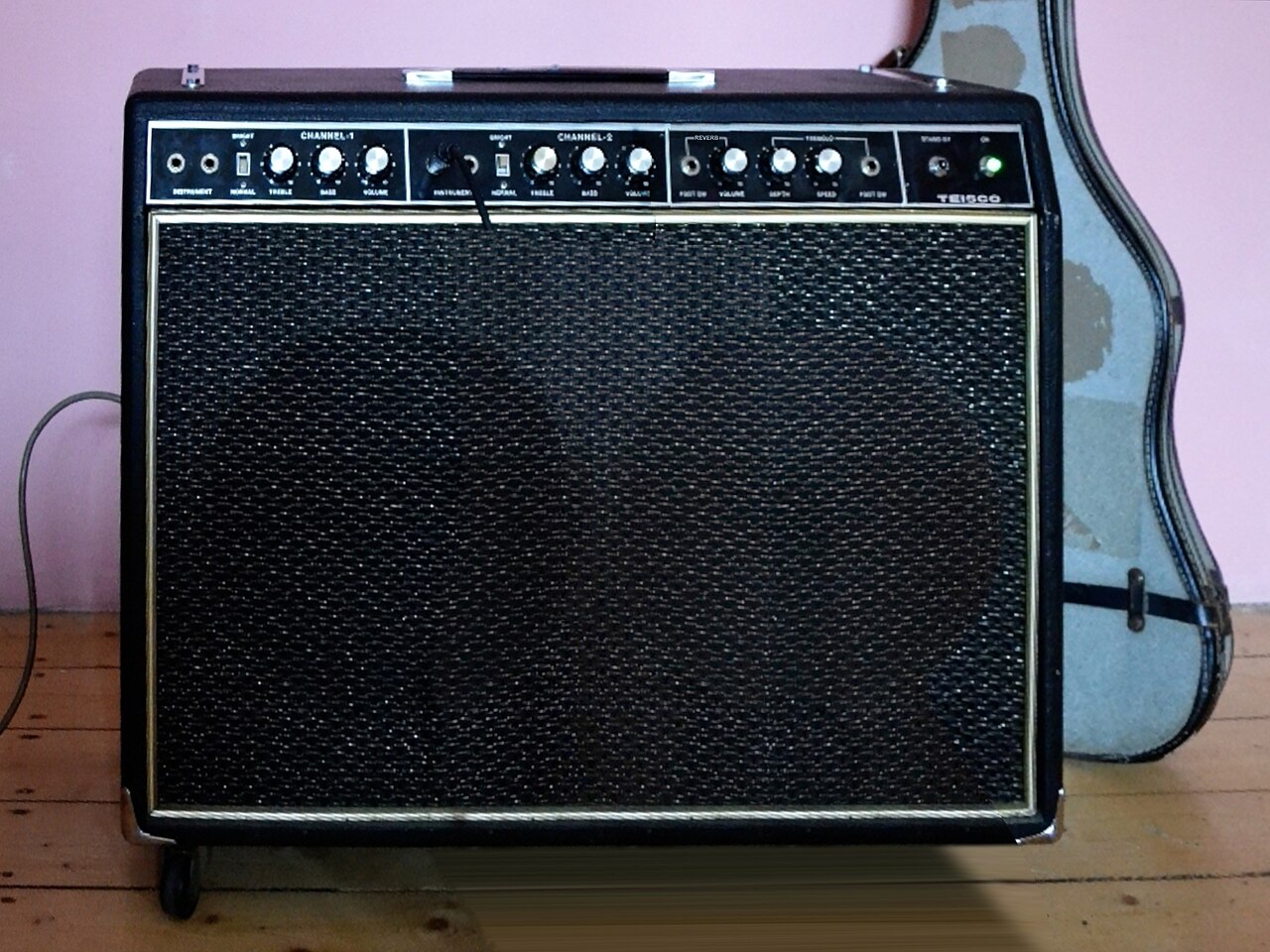
- A tube combo amp: Teisco & Framus.jpg: DeLerkim derivative work: User:Clusternote, Wikimedia Commons, CC BY-SA 3.0.
- A Blackstar ID:Core 40 V2 combo amp: Morriscollege420, Wikimedia Commons, CC BY-SA 4.0.
- Richie Sambora: David Shankbone, Wikimedia Commons, CC BY 3.0.
Latest News
Related
On This Day
Tuesday 10 November
From this week: