The Cleveland Doctor: How Mike Zaite’s MAZ 18 Jr. NR Became Boutique Royalty
Hand-wired in Cleveland: the Dr. Z MAZ 18 Jr. NR blends AC30 chime with Plexi bite in 18 EL84 watts. Full specs, tone recipes and buying guide.
Somewhere in suburban Cleveland in the early 1990s, a medical electronics technician with grease under his fingernails and a garage full of vacuum tubes was about to get the phone call that would end his day job. Mike Zaite had been hand-building guitar amplifiers on the side for a few years, selling his first designs out of the same workshop where he’d repaired hospital equipment during the week. He called himself Dr. Z — a nod to his medical-electronics background and a surname that started with the right letter. The business was modest. Then Joe Walsh plugged into one of his amps, and nothing was ever quite the same.
The amplifier that sits at the centre of Dr. Z’s catalogue today is the MAZ 18 NR Mk.II — known among players and retailers as the MAZ 18 Jr. NR in its Ultra Lite 1×12 combo configuration. It is, by any honest measure, one of the most satisfying 18-watt EL84 combos ever made in the United States. It is hand-wired, it is loud, it rewards pedals, it breaks up with the kind of harmonic richness that sends players to internet forums at 2 a.m. comparing note-on sensations. It also won Guitar Player’s Editors’ Pick Award and the Reader’s Choice Award for Combo Amp of the Year on its original release. None of that happened by accident.
This is the full story: where the amp came from, what it actually does, who verified uses it, and what you need to know before buying one new or used.
A Medical Man Builds an Empire
Mike Zaite is the son of a television repairman from Cleveland, Ohio. He learned to work with vacuum tubes as a teenager, fixing CRT televisions and PA systems in his father’s shop, and eventually trained as a medical electronics technician — the kind of work that puts you inside X-ray machines and hospital monitoring equipment rather than guitar amplifiers. He was playing drums in bands on the side and, like many technically-minded musicians, became interested in what was actually happening inside the amps his guitarist friends were using.
Dr. Z Amplification was founded in 1988. Zaite’s first commercial amplifier was the Carmen Ghia, an 18-watt single-channel head with nothing but a volume knob and a tone control — a design philosophy that told you everything about where the brand was headed. The pre-amp used a 12AX7 and a 5751, the output stage ran two EL84s, and the whole thing was hand-wired in Cleveland. It remains in production today.
The company’s turning point arrived in 1990. Zaite provided Joe Walsh — guitarist for the Eagles, former James Gang force of nature, one of the most revered tone-seekers in rock history — with an SRZ-65 model amplifier. Walsh’s response was enthusiastic enough that in 1994 he called Zaite directly to order several more amps to use on the Eagles’ Hell Freezes Over World Tour, one of the most commercially successful reunion tours of the decade. Zaite quit his job at GE immediately. The following year a Guitar Player review of the SRZ-65 put Dr. Z in front of the boutique amplifier market at the precise moment when players were beginning to seek out hand-built alternatives to mass-market production heads. A Guitar Player review in the mid-1990s was not a social-media mention — it was a career-making event for a small shop.
The MAZ family arrived as the company’s expanded response to the EL84 amp market. Where the Carmen Ghia was minimal by design, the MAZ amps offered a fuller control set — Volume, Treble, Mid, Bass, Cut, and Master Volume — while retaining the EL84 output stage character that defined the Ghia. The original MAZ 18 included a tube-driven reverb circuit. The Non-Reverb (“NR”) variant removed the reverb tank entirely, which tightened the gain character, reduced compression slightly, and freed up what would have been the reverb circuitry’s headroom for the dry signal. Dr. Z himself has described the MAZ 18 NR as his personal favourite: “one of the best values in a hand-wired amp.”
The MAZ Family, the NR Distinction, and the “Jr.” Naming
The naming requires a brief explanation because it has caused genuine confusion in the used-market listings. The MAZ 18 is the reverb-equipped version. The MAZ 18 NR is the non-reverb version. The “Jr.” or “Junior” designation — used extensively by Reverb, Humbucker Music, and other dealers — refers specifically to the Ultra Lite (LT) 1×12 combo cabinet rather than the Studio combo. Both the Studio and LT versions use the identical MAZ 18 NR circuit; the difference is entirely in the cabinet form factor.
The Studio combo (19¼” × 19½” × 10½”, 38 lbs) uses a smaller-footprint closed cab. The LT combo (22½” × 20⅛” × 10″, 40 lbs) uses a wider, shallower Ultra Lite cabinet built from imported Italian poplar — slightly heavier but wider, with a more open acoustic volume around the speaker. The head configuration (19″ × 9¾” × 9½”, 32 lbs) is the lightest option for players running external cabs. Dr. Z’s own product page consolidates all configurations under “MAZ 18 NR Mk.II” without using “Jr.” — the Junior branding came from dealers and has stuck in the secondhand market.
The Mk.II designation marks the current production generation. Improvements over the original included a new voicing capable of cleaner American-style cleans as well as heavier crunch, a post-phase inverter master volume (PPIMV — which allows the output tubes to work at any volume level without needing to play at stadium volumes to engage power-amp saturation), the Italian poplar Ultra Lite cabinet, and the switch from standard new-production EL84s to NOS Russian mil-spec 6N14N tubes. The 6N14N is a Soviet military-specification equivalent of the EL84, built to tighter tolerances and rated to approximately twice the service life of standard commercial production EL84s. This is not marketing copy: 6N14N tubes are genuinely more consistent batch-to-batch, and for an amp this dependent on output-tube character, consistency matters.
Specifications
| Parameter | Specification |
|---|---|
| Power Output | 18 Watts |
| Output Tubes | 2 × 6N14N (NOS Russian mil-spec EL84 equivalent) |
| Preamp Tubes | 3 × 12AX7 |
| Rectifier | 1 × 5AR4 |
| Controls | Volume, Treble, Mid, Bass, Cut, Master Volume |
| Speaker Outputs | 4Ω, 8Ω, 16Ω |
| Effects Loop | Yes (series) |
| EQ Bypass | Yes — footswitchable; variable boost footswitch included |
| Standard Speaker Options | Celestion G12H-30, Celestion Creamback M65 (upcharge options: Celestion Blue, Celestion Gold, Celestion Cream, Celestion Vintage 30, Celestion Greenback, Celestion G12-65, Eminence Z12) |
| Configurations | Head / 1×12 Studio Combo / 1×12 LT (“Jr.”) Combo / 2×10 LT Combo |
| Dimensions — Head | 19″ W × 9¾” H × 9½” D, 32 lbs |
| Dimensions — 1×12 Studio Combo | 19¼” W × 19½” H × 10½” D, 38 lbs |
| Dimensions — 1×12 LT (“Jr.”) Combo | 22½” W × 20⅛” H × 10″ D, 40 lbs |
| Dimensions — 2×10 LT Combo | 22½” W × 20⅛” H × 10″ D, 45 lbs |
| Current MSRP — Head | $2,399 (effective August 2026) |
| Current MSRP — 1×12 LT Combo | $2,749 |
| Current MSRP — 1×12 Studio Combo | $2,749 |
| Built | Cleveland, Ohio, USA (hand-wired) |
Famous Players — Setting the Record Straight
Brad Paisley, Joe Walsh, John Fogerty, and Keith Urban are listed as MAZ 18 Jr. NR players. All four are real people with real connections to Dr. Z Amplification. None of them is confirmed per-SKU on the MAZ 18 NR specifically by a primary source. This is a meaningful distinction .
Joe Walsh is the reason Dr. Z exists as a professional amplifier company. Without the 1990 SRZ-65 placement and the 1994 Eagles World Tour commission, Mike Zaite would likely still be repairing hospital equipment. Walsh remains on Dr. Z’s “Patients of Dr. Z” roster to this day. Z-Talk forum threads from the mid-2000s report Walsh being spotted using “a Maz 18 w/reverb” — the reverb-equipped MAZ 18, not the NR — alongside a Fender amp. His dedicated signature collaboration with Dr. Z is the Z-Master, a recreation of his beloved 1957 Tweed Bandmaster which he had given to Pete Townshend in the early 1970s and spent decades regretting. The Z-Master (2018) is Walsh’s actual documented signature instrument from Dr. Z. Using Walsh as a MAZ 18 NR player is a reasonable brand association. Using him as a confirmed per-SKU MAZ 18 NR endorser is not supported by primary sources. Read more about Joe Walsh’s gear history here.
Brad Paisley has one of the most extensively documented relationships with Dr. Z of any working musician. The collaboration began around 2006 when Zaite and the late Ken Fischer of Trainwreck Circuits built custom amps for Paisley — designs that were never taken into commercial production because Fischer died that same year. After the 2010 Tennessee floods destroyed large portions of Nashville’s musical infrastructure, including instruments and amplifiers belonging to Paisley, Zaite replaced his amps and built the Z-Wreck — its circuit heart is a Fischer-designed output transformer — for the Dr. Z production line. Paisley has used the Mini Z, the RX ES, the Z-Verb, and the Z-Wreck extensively, and the DB4 (designated as “Doc and Brad’s fourth amp collaboration”) was built specifically with him. His Equipboard documentation — sourced from photos on his own official website and his guitar tech’s on-camera explanations — lists all of those models. The MAZ 18 NR does not appear. Paisley is a profound and long-term Dr. Z loyalist. He is not a confirmed MAZ 18 NR player.
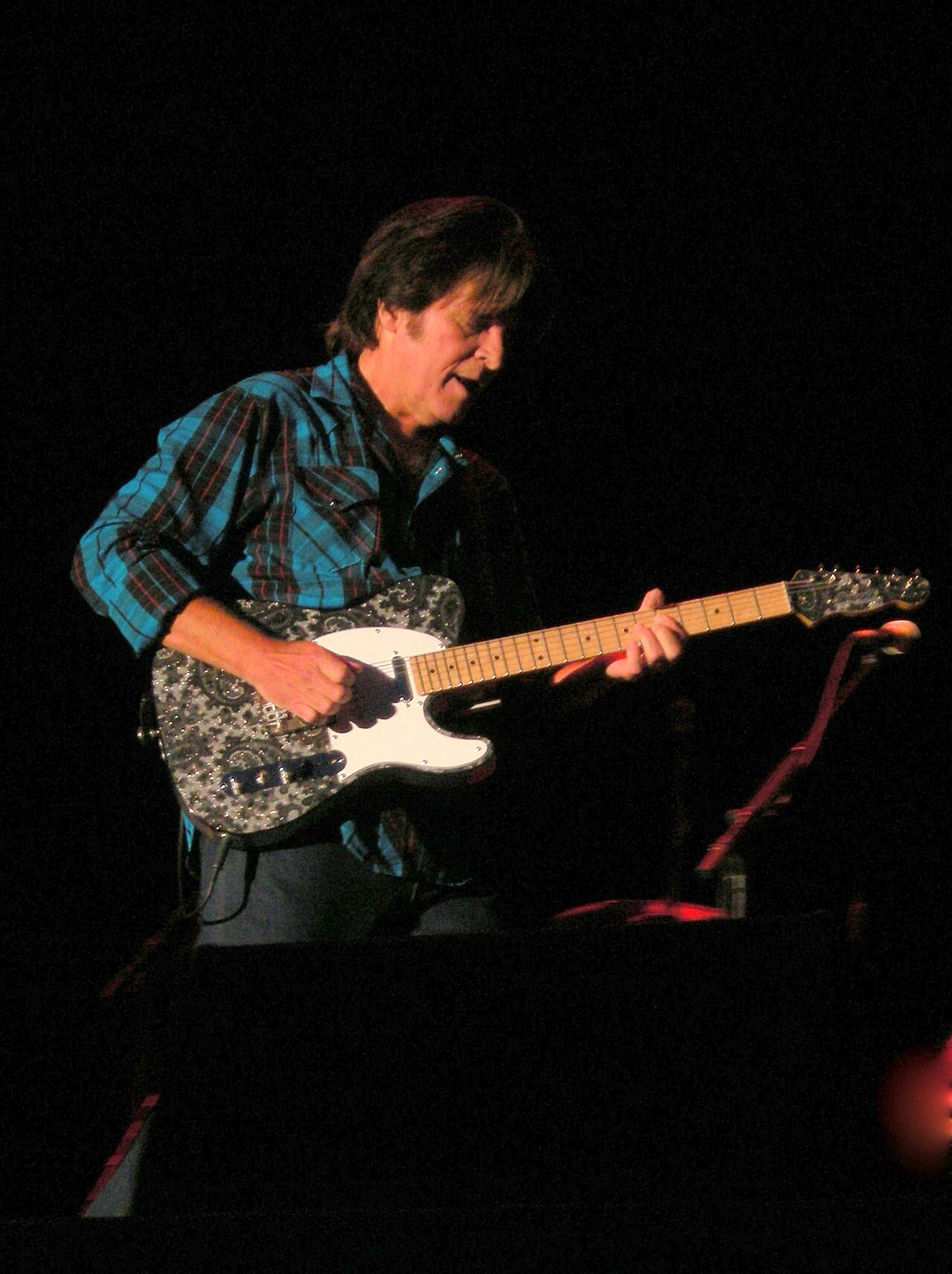
John Fogerty appears on the “Patients of Dr. Z” roster and is a genuine brand user. His documented Dr. Z amplifier, per a Premier Guitar Rig Rundown in which his guitar tech walked through the live setup, is the Z-Wreck head — used to amplify his Telecasters. Fogerty and the Z-Wreck make obvious sense: the Z-Wreck’s Trainwreck-adjacent output transformer and KT88 power tubes deliver the kind of aggressive, snarling top end that has defined Fogerty’s live tone since the Creedence years. The MAZ 18 NR is a different amp in a different power range. John Fogerty’s gear is covered here.
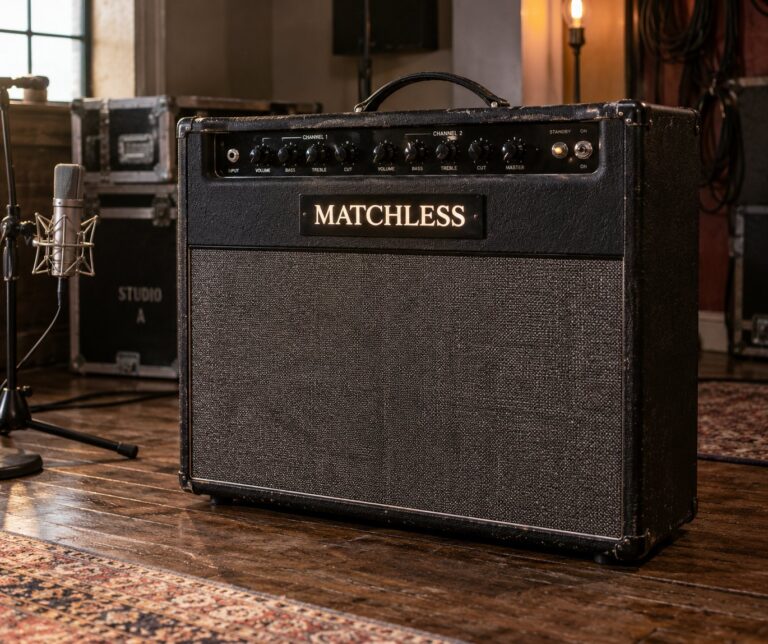
.Urban does not appear on Dr. Z’s “Patients of Dr. Z” artist page at all. His Dr. Z connection is the ZEQD-Pre — a preamp unit co-designed by Dr. Z (Mike Zaite) and EarthQuaker Devices, not a standalone amplifier. Urban’s main touring amplifiers are Matchless DC30 2×12 combos and a 2002 Marshall JTM45 reissue. Linking him to the MAZ 18 Jr. NR is not supportable by any primary source.
The players who are actually confirmed on the MAZ 18 Jr. NR per Equipboard documentation with identifiable sources are as follows: Stefan Babcock, rhythm guitarist and vocalist for Canadian punk band PUP, explained his signal chain in a tweet and was documented in the November 2022 issue of Guitar World (in coverage of the band’s album THE UNRAVELING OF PUPTHEBAND) as running the MAZ 18 Jr. amplifier. This is the cleanest per-SKU confirmation from a primary source. Joe Hawley of Tally Hall is documented on Equipboard. Joey Kneise appears in a photographed live setup (Flickr sourced).
The brand-level context is the honest one here: the MAZ 18 NR is used by players across styles because it handles single coils and humbuckers equally well, because it takes pedals beautifully, and because at 18 watts it sits at the intersection of enough headroom to stay clean in a mid-sized room and enough output-tube engagement to sound like a recording when you push it. The Doyle Bramhall II, Warren Haynes, and Mark Knopfler connections you’ll find circulating in amp forums are Dr. Z brand associations — Warren Haynes and Mark Knopfler are both on the brand roster — but specific amp models for touring players at that level require per-tour documentation to pin down. Treat the “Patients” page as a calling-card list, not a per-SKU specification sheet.

Circuit, Controls, and How the MAZ 18 NR Actually Works
The MAZ 18 NR is a single-channel, Class A-biased (the output stage runs in push-pull but is voiced in the Class A manner with cathode bias), EL84-powered amplifier with a 5AR4 tube rectifier. The 5AR4 introduces a slight sag into the power supply under heavy transient loads — the voltage drops a little when you hit a chord hard, and recovers over a few milliseconds. This is the characteristic “bloom” of rectifier-tube amps: the initial attack is marginally softened, the sustain tail is enhanced. If you’ve played a vintage Vox AC30 and noticed how notes seem to breathe, you’ve heard a similar effect.
The three 12AX7 preamp tubes handle the gain structure, tone shaping, and phase inversion. The tone stack (Treble, Mid, Bass) is a passive network — it cuts rather than boosts, which is the correct way to understand it. Setting all three controls at noon is not flat; it’s scooped. Removing the tone stack entirely via the EQ Bypass footswitch bypasses all three controls and hits the output tubes with a fuller, fatter signal that has more apparent midrange. The EQ Bypass is not merely a loudness boost; it changes the frequency balance. Most players find the bypassed tone more aggressive and direct — it’s the amp without any tone-stack losses in the signal path.
The Cut control is unique to Dr. Z’s design vocabulary and is the control that consistently surprises new owners. Dr. Z describes it as “a tone knob for the output tubes.” Technically it is a high-frequency bleed network in the output stage — turning it clockwise removes treble content after the power tubes have added their character. This is different from the treble control in the tone stack, which acts before the power tubes. A fully clockwise Cut removes harshness from an overdriven output stage without dulling the front-end chime; a fully counter-clockwise Cut opens the output stage to its fullest brightness. Practical use: set the Treble and Mid to taste for your preferred clean tone, then dial the Cut to manage how much edge the amp produces when you dig in. Players often find the Cut sitting somewhere between 9 and 11 o’clock.
The Master Volume is a post-phase inverter master volume (PPIMV), which was one of the key Mk.II improvements. In older designs without a PPIMV, the only way to get meaningful output-tube saturation was to run the amp loud — at volumes that empty rehearsal rooms. The PPIMV allows the output tubes to work at any output level; you can dial in saturated output-tube tone at bedroom levels, which was not possible with the original MAZ 18 NR. The trade-off is that very low Master Volume settings can slightly alter the feel of the amp — the interaction between preamp and power section is different at a quarter watt than at ten watts — but for most playing environments this is a non-issue.
Five Tone Recipes
1. Telecaster Jangle-and-Chime (Single Coil Clean)
Pair with a Fender Stratocaster or Telecaster. Volume at 7, Treble at 6, Mid at 5, Bass at 5, Cut at 10, Master at 4. EQ Bypass off. This is the classic EL84 shimmer — open, musical top end with enough mid presence to sit in a mix without fighting the bass guitar. The Cut fully open keeps the output stage bright. Add a Tube Screamer with the drive at zero and the level boosted to push the preamp into early breakup.
2. Humbucker Edge-of-Breakup (Les Paul Blues)
Pair with a Gibson Les Paul Standard with PAF-voiced pickups. Volume at 5, Treble at 5, Mid at 6, Bass at 6, Cut at 7, Master at 5. The amp stays clean in the attack and breaks up on sustained notes — the 6N14N tubes’ NOS character gives the cleans a glassy quality and the crunch a harmonic density that standard EL84 combos don’t quite match. No effects needed; this is the amp and guitar doing the work.
3. Indie Punk — The Stefan Babcock Setting
Volume at 8, Treble at 7, Mid at 6, Bass at 5, Cut at 9, Master at 6. EQ Bypass off. This is a driven, mid-forward sound — bright enough to cut through a mix, present enough in the mids to sound thick even under a full drum and bass arrangement. A relatively high Volume setting pushes the preamp tubes. A modest Master setting controls stage volume. For PUP-style rhythmic punk this is the territory: punchy, slightly ragged, controlled.

4. British Crunch (Lead Tone, EQ Bypass)
Volume at 6, Treble at 6, Mid at 6, Bass at 5, Cut at 8, Master at 5. Engage the EQ Bypass footswitch. The bypassed tone stack removes the passive losses and feeds the output tubes a fuller signal — suddenly the amp sounds more aggressive, the sustain lengthens, the midrange fills out. This is the built-in lead channel: use the EQ Bypass as your solo switch. Works particularly well with humbuckers and an overdrive at the front end for additional gain.
5. Big Room Pedal Platform (Clean, Headroom)
Volume at 4, Treble at 6, Mid at 5, Bass at 6, Cut at 11, Master at 7. The higher Master setting with lower Volume keeps the preamp clean while the power stage has more headroom than at lower Master positions. The open Cut means nothing is rolling off the output stage. Into this clean platform, run your reverb, delay, and modulation effects — the amp becomes an extremely clear amplification stage for your pedal chain. This is the mode in which the MAZ 18 NR competes with amps twice its wattage rating for sheer presence and definition. Pair with a Tube Screamer as a lead voice on top of the clean foundation.
Five Amps Worth Comparing
Fender Deluxe Reverb (22 Watts, 6V6)
The Fender Deluxe Reverb is the other 20-ish watt 1×12 combo that boutique buyers always compare to the MAZ 18. The critical differences: 6V6 tubes versus EL84 (American tightness versus British mid-push), and the Deluxe has built-in spring reverb while the NR doesn’t. For Fender-flavoured cleans the Deluxe is still the reference standard. For players who want reverb already inside the cab, the MAZ 18 Mk.II (with reverb) is the closer comparison. The MAZ 18 NR is the right choice when you want the external-pedal signal chain to have the final word on all modulation.
Vox AC15 (15 Watts, EL84)
The Vox AC15 is the canonical EL84 point of comparison. The MAZ 18 NR is explicitly designed to cover similar ground — “blending the pristine voice of an AC30 with the heftier bite of a Plexi” is how Dr. Z’s own literature frames it. The AC15’s top-cut control is the ancestor of Dr. Z’s Cut control. But the MAZ 18 NR has more gain on tap, a fuller control set, a PPIMV for volume management, an effects loop, and NOS power tubes. The AC15 wins on heritage and cult status. The MAZ 18 NR wins on modern usability. The Vox is also cheaper.
Matchless DC30 (30 Watts, EL84)
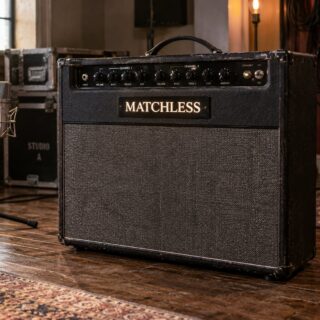
The Matchless DC30 — Keith Urban’s preferred amp — is what the MAZ 18 NR grows into if you double the power and add a second channel. The DC30 is a more demanding amp to dial in, rewards more technically complex playing, and costs significantly more. The MAZ 18 NR is more immediately usable and pedal-friendly. Both are hand-wired American boutique EL84 designs. If you find the MAZ 18 NR covers 90% of your tonal territory and you want to know what the next 10% costs, it costs a lot.
Bad Cat Cub 15R (15 Watts, EL84)
The Bad Cat Cub is one of the most direct functional competitors to the MAZ 18 NR. It runs EL84s, has a similar wattage target, and occupies comparable tonal territory. Forum consensus (including via Equipboard analysis) is that the Cub breaks up earlier and at lower volume than the MAZ 18 NR — the NR is described by its own users as “painfully loud” above the noon position on the Master. If you’re buying for a bedroom and will almost never play above 9 o’clock, the Cub’s earlier breakup might suit you. If you need to gig without a PA, the NR’s additional headroom is the practical choice.
Marshall JCM800 2203 (100 Watts, EL34)
The Marshall JCM800 is included not as a functional equivalent but as the context for understanding where the MAZ 18 NR sits. The JCM800 is 100 watts, EL34-powered, British-voiced, and its high-gain channel defines a specific era of rock. The MAZ 18 NR’s Plexi-adjacent character is the lighter-gain, earlier-breakup version of that same British mid-push — the amp a player reaches for when they want the DNA without the volume and the gain structure. Many players who own both use the JCM800 for studio or large-stage work and the MAZ 18 NR for clubs, rehearsals, and recordings where 18 watts is already more than enough.

Buying Guide — New, Used, and What to Inspect
New pricing as of August 2026 (from Dr. Z’s own pricing page, effective 8/10/2026): the MAZ 18 NR Mk.II Head is $2,399. The 1×12 LT Combo (the “Jr.”) and the 1×12 Studio Combo are both $2,749. The 2×10 LT Combo is also $2,749. Speaker upgrades to Celestion Alnico Blue, Gold, or Cream carry a $279–$294 upcharge per speaker; the standard speaker is the Celestion G12H-30 or Creamback M65 depending on configuration and ordering date. The variable boost footswitch is included in the price.
Used prices for the original MAZ 18 Jr. NR (pre-Mk.II) run between approximately $900 and $1,400 depending on condition and speaker, with the Celestion Blue–loaded versions commanding the upper end. Mk.II examples in clean condition trade between roughly $1,400 and $1,900. The PPIMV and NOS tube spec of the Mk.II are meaningful upgrades: if you’re deciding between an original and a Mk.II used example at a similar price, the Mk.II’s master volume usability is worth paying more for.
What to inspect on a used example: the 6N14N (or standard EL84) output tubes are the highest-wear items. Budget for a retube if purchasing from a private seller — NOS 6N14Ns are available but add cost. Ask the seller to confirm the rectifier tube is a 5AR4 (some players swap to a solid-state rectifier for more headroom; this changes the feel of the amp significantly). Check the effects loop with a cable in both jacks to confirm it is functioning — a silent effects loop with a cable plugged in is a common symptom of a dirty or failing loop jack. Confirm the EQ Bypass footswitch is functioning: plug into both footswitch jacks and test the clean and bypassed sounds. If the cabinet is a pre-Mk.II example, check the baffle for any resonance against the speaker gasket — some original combos developed a slight rattle at moderate volumes.
Dr. Z amps are dealer-sold only; there is no direct-sales option from the manufacturer’s website. The dealer locator at drzamps.com lists authorized dealers who can order any configuration and speaker option. Lead times on custom builds vary.
Living with the MAZ 18 NR — Ownership Notes
On volume: the MAZ 18 NR is genuinely loud for an 18-watt amplifier. Users routinely report that pushing the Master Volume past noon produces enough output for a medium club without PA support. The PPIMV in the Mk.II helps significantly: you can get meaningful power-amp tone at practice volumes, which was not straightforward with the original. If you are playing in an apartment with noise-sensitive neighbours, add an attenuator or the Dr. Z Reactive Reducer ($299) between the amp and speaker. The Reactive Reducer preserves some of the speaker interaction that a pure resistive attenuator removes.
On the NR decision: the most common question about this amp is whether buyers should choose the NR over the reverb-equipped MAZ 18 Mk.II. The reverb version costs $350 more and includes a tube-driven spring reverb tank. The NR version is slightly more open in its gain structure and works more cleanly with reverb pedals — because there is no onboard reverb circuit in the signal path, there is nothing to interfere with external reverb. If your pedalboard already has a reverb pedal you love, the NR is the correct choice. If you prefer a single-box solution with onboard reverb, the MAZ 18 Mk.II is the correct choice. The circuit difference beyond the reverb is minimal.
On tubes: the NOS Russian mil-spec 6N14N is the factory-specified output tube. These are significantly harder to find than standard new-production EL84s, but they are available. Matched pairs from reputable vendors (Brent Jessie, Antique Radio Supply, Jim McShane) run approximately $30–$60 per matched pair. If the amp is retubed with standard EL84s rather than 6N14Ns, it will sound slightly different — subjectively a little looser and earlier-breaking. Neither is wrong. The factory spec is the starting point; experimentation is permitted.
On speakers: the G12H-30 is the default and is a very good match — its ceramic magnet and 100dB sensitivity give the amp brightness and presence that fills small venues. The Celestion Creamback M65 (65W, ceramic, 97dB) is a slightly warmer option that handles pushed output stages without hardening at the top end. The Celestion Blue (15W alnico, 100dB) is the most Vox-adjacent choice — the alnico compression adds a bloom to notes that takes the amp toward AC30 territory — but at 15W handling, the Blue is not designed for long-term use with the amp running hard into breakup. The Celestion Gold (50W alnico) is a safer alnico choice if you want the warmth without the power-handling compromise. Speaker upgrades are among the highest-return modifications on this amp.
Frequently Asked Questions
What does “NR” stand for in the MAZ 18 NR?
Non-Reverb. The MAZ 18 NR is the reverb-free version of the MAZ 18. Removing the reverb circuit tightens the gain character slightly and leaves the amp’s full signal headroom for the dry signal path. Players who use pedalboard reverb prefer the NR; players who want a single-box solution prefer the reverb-equipped MAZ 18 Mk.II.
What is the difference between the MAZ 18 NR and the MAZ 18 Jr. NR?
The circuit is identical. “Jr.” is a dealer designation for the Ultra Lite (LT) 1×12 combo cabinet, as distinct from the Studio combo. Both use the same MAZ 18 NR amplifier circuit with 2× 6N14N output tubes, 3× 12AX7 preamp tubes, and a 5AR4 rectifier. The LT cabinet is slightly wider and built from lighter Italian poplar.
Is 18 watts enough for live use without a PA?
For clubs up to approximately 200–300 capacity, yes. The MAZ 18 NR is described by its own users as “painfully loud” above noon on the Master Volume. Miked through a PA it is appropriate for any venue. The 18-watt EL84 format is loud in the same way a Vox AC30 is loud: these amps do not apologise for their output. A 4×10 rock band drummer will test the limits, but a jazz or blues trio or a singer-songwriter can gig this amp comfortably without PA support.
Does the MAZ 18 NR take overdrive pedals well?
Exceptionally well. The single-channel design with a clean-to-edge-of-breakup voicing makes it a textbook pedal platform. The effects loop allows time-based and modulation effects to sit after the preamp gain stage. The clean input impedance and responsive dynamics mean that a Tube Screamer, a Klon-derivative, or a fuzz sounds as clear on the MAZ 18 NR as on any amp in its price class.
What are the main differences between the original MAZ 18 Jr. NR and the current Mk.II?
The Mk.II added a post-phase inverter master volume (PPIMV), allowing meaningful output-tube saturation at low volumes. It also updated the voicing to cover a wider range from pristine clean to heavier crunch, switched to the Italian poplar Ultra Lite cabinet, and specified NOS Russian mil-spec 6N14N output tubes rather than standard EL84s. The original was and remains a good amplifier; the Mk.II’s PPIMV is a significant practical improvement for home and studio players.
Is the Cut control the same as a presence control?
Not quite. A presence control typically acts as a high-frequency boost in the negative feedback loop of the output stage. Dr. Z’s Cut control is a high-frequency bleed in the output stage — it reduces treble content that the output tubes have already contributed. Turning the Cut clockwise removes brightness; counter-clockwise opens the full brightness of the output stage. It is tonally more dramatic than most presence controls and responds very differently to different speaker choices.
What is the used-market price range for the MAZ 18 Jr. NR?
Pre-Mk.II examples in good condition sell for approximately $900–$1,400 depending on speaker and condition. Mk.II examples in clean condition trade between roughly $1,400 and $1,900. Celestion Blue–equipped versions command a premium. Budget separately for a retube ($30–$60 for a matched pair of 6N14Ns) if purchasing used from a private seller.
How does the MAZ 18 NR compare to a Vox AC30?
Both run EL84 output tubes; both use a Top Cut (Dr. Z calls it “Cut”) control; both aim for the British chime sound. The AC30 is higher-powered at 30 watts, has a distinctly British normal-channel character, and relies heavily on its Alnico Blue speakers. The MAZ 18 NR runs 18 watts, has a more versatile tone stack, adds a PPIMV for volume management, includes an effects loop, and uses American-made wiring and transformers. The AC30’s sound is partly determined by its specific speaker pairing in a way the MAZ 18 NR is not — the NR can be reconfigured with multiple speaker options, making it more adaptable but less defined by a single characteristic voice.
Image credits
- A guitarist on stage with an amp behind: Bex.Walton, Wikimedia Commons, CC BY 2.0.
- Brad Paisley: Crisco 1492, Wikimedia Commons, CC BY-SA 4.0.
- Warren Haynes: Frank Schwichtenberg, Wikimedia Commons, CC BY-SA 3.0.
- John Fogerty: Edaen, Wikimedia Commons, CC BY 3.0.
Latest News
Related

On This Day
Monday 9 November
From this week: