The Carr Mercury V Is What Happens When a Boutique Builder Refuses to Choose Between Marshall and Fender
The Carr Mercury V squeezes Marshall stack fire into a 40-lb pine box. PtP-wired, 16W, 6V6-powered, with attenuator and spring reverb.
The argument has been running since roughly 1963: do you want clean, springy American glass or grinding, compressed British grunt? Fender or Marshall? Blackface or Plexi? For half a century, players chose a camp and pitched their tent.
Steve Carr, a guitarist-turned-engineer who started building amps in a barn outside Chapel Hill, North Carolina in 1998, never found that binary satisfying. His solution — worked out over twenty-odd years and a full product line of hand-wired, North Carolina yellow pine combos — crystallises most clearly in the Mercury V. Sixteen watts. Two 6V6GT power tubes. A preamp circuit that genuinely replicates the gain architecture of a bridged, modded four-input British stack. A built-in attenuator that takes the whole machine from rehearsal thunder to near-silence. Spring reverb that sounds like it was plucked from a 1965 blackface. And every component, every wire, every transformer hand-fitted in Pittsboro, North Carolina.
When Vintage Guitar reviewed the original Mercury in June 2003, their headline called it “Tone of the Gods.” When Premier Guitar’s Joe Gore reviewed the Mercury V in 2017, he said it was “simply one of the finest-sounding amps I’ve ever played.” That’s fourteen years apart and the verdict didn’t change. This article explains exactly what it is, what it does, and whether it’s worth the price of entry in 2026.
Steve Carr and the Birth of a North Carolina Amp Company
The origin story is almost deliberately anti-corporate. In the summer of 1998, Steve Carr — guitarist, electronics enthusiast, former amp repairman in Chapel Hill — had an idea: take the audiophile-grade components from his home hi-fi system and put them inside a guitar amp. The resulting signal path would be cleaner, more dynamic, more responsive than the mass-market alternatives. He built the first amp, the Slant 6V, in a barn without running water. By fall of 1998 he’d made his first two sales.
Two years later, in 2000, Carr Amplifiers moved from the barnside to a former chicken hatchery in Pittsboro, NC. That facility, about twenty miles from Chapel Hill, is where every Carr amp is still made today. The phone number on the website — 919.545.0747 — is a local Chatham County number. No outsourcing, no overseas sub-assemblies beyond individual components. The transformers are custom-wound to Carr’s spec in the USA. The cabinets are built from local North Carolina yellow pine, dovetail-jointed and finished in-house.
The original Mercury debuted in 2003: an 8-watt 1×12 combo that earned the “Tone of the Gods” designation from Vintage Guitar on the strength of its top-shelf components, wide voicing range, and an early adoption of the then-unusual built-in attenuator. The platform was well regarded enough that Carr revisited it a decade and a half later with a substantially expanded design: double the power, expanded gain architecture, and a richer feature set. The Mercury V was reviewed by Premier Guitar in May 2017, and by Vintage Guitar that same July. The V designation signals the lineage connection but also the step-change — this is not a simple reissue or spec bump.
Specs: What You’re Actually Getting
Pricing note: Carr’s own price list (marked “Effective 1/1/2024”) shows $3,340 for the combo and $3,240 for the head. The Mercury V product page currently lists $3,670 and $3,560 respectively — a $330 delta. This is the same class of documentation artefact seen repeatedly in boutique amp land: a listed price sheet that hasn’t caught up with current production pricing. Confirm with an authorised Carr dealer before ordering. Custom colours add $100; two-tone adds $150; exotic finishes (tweed, brown gator, black gator) add $200.
The Circuit: Why the Mercury V Sounds the Way It Does
The key to understanding the Mercury V is the dual-volume architecture. Vintage Marshall amps — specifically the plexi-era four-input models — had two channels, each with its own input pair and volume control. Players discovered early on that you could “jumper” the two channels by plugging a short patch cable between an input on Channel 1 and one on Channel 2, then running the guitar into the remaining open input. Running both channels simultaneously produced more gain, more harmonic complexity, and a different tonal character depending on which inputs you chose. Slightly later, some mod shops rewired the channels in series rather than parallel — this paved the way for the high-gain amps of the 1980s.
Steve Carr built all of this into a single toggle switch. In Parallel mode (the default), each Volume control operates its own dedicated tube gain stage — the guitar runs through both simultaneously, and the relative levels of the High and Low Volume controls shape the blend. Back off one, and you’re running a single-stage with the character of that voice. Wind both up and you get the classic “jumpered” parallel richness, with more texture in the harmonics and a slight thickness to single notes. The Parallel mode keeps the amp at ’60s Marshall to early ’70s levels of gain — responsive, dynamic, right at the edge of breakup when you push it.
Flip to Series mode and the architecture changes fundamentally. Now the guitar enters the High Volume gain stage first, and the output of that stage feeds directly into the Low Volume gain stage before hitting the tone stack and output section. Two preamp stages in cascade. The gain multiplies instead of blending, and the Mercury V crosses into genuinely modern crunch and roar. Joe Gore at Premier Guitar wrote that the Series mode in the Mercury V delivers everything “from crunchy to apocalyptic.” That’s accurate — this is where the amp earns its “Brit beast” billing.
Layered on top of this is the three-position Boost switch. Position 1 is conservative — approximately ’60s blackface Fender or early Marshall headroom, clean and articulate with a soft top end. Position 2 steps into hotter territory: something like a metal-panel Marshall or a hot-rodded Fender combo, with the midrange pushed and the attack sharpened. Position 3 brings high-gain sizzle — Carr calls it “British ’60s thru ’90s output tube overdrive,” which covers a lot of ground but points toward the compressed, harmonically saturated sustain of modded Marshalls, JCM800 territory and beyond.
The mathematics of the combination are significant: two Parallel/Series modes times three Boost positions equals six distinct base gain characters, each of which is further shaped by the dual Volume balance and the three-band EQ. This is not six channels with separate controls — it’s one thoughtfully designed circuit that reveals its range through the interaction of a small number of well-chosen parameters.
The power stage uses a pair of 6V6GT tubes, which places the Mercury V firmly in mid-century Fender sonic territory regardless of the preamp character. The 6V6 compresses warmly and smoothly, rolling off at the top end and thickening the mids in ways that the EL34s and KT66s in large British amps do not. The result of that mid-Atlantic architecture — British preamp gain structure, American power stage character — is an amp that can get closer to classic Marshall voicing than most Fender-derivative designs while sounding warmer and less stiff in the compression than a true Marshall. Joe Gore noted it precisely: “The Mercury V displays classic 6V6 response: warmly rounded tones, super-smooth transition to overdrive at relatively modest levels, and magnificent dynamic response.”
The reverb is all-tube throughout — tube-driven send, tube-recovery circuit — and Premier Guitar’s reviewer singled it out as “gorgeous-sounding.” The MOD spring tank gives a lush, dimensional wash without the metallic clang of cheaper tanks. The Line Out is post-power-amp rather than post-preamp, and Carr’s circuit tailors it to simulate speaker roll-off, meaning it’s genuinely useful for recording directly or running dry to a PA without a separate cab-sim unit.
The oblique baffle board is a detail worth mentioning: it angles the speaker slightly upward rather than firing straight forward at ankle level. For a combo player without a stand, this materially changes the listening experience — particularly in a small room where the amp is on the floor. You hear the amp, not just feel it.
Famous Players: Who Actually Uses the Mercury V
The Carr artists page lists around forty names, including Billy Gibbons of ZZ Top, Keith Richards, Eric Johnson, Jorma Kaukonen, Nels Cline, Richard Thompson, Alex Kapranos of Franz Ferdinand, Jeff Tweedy of Wilco, Paul Simon, Neko Case, Joe Perry of Aerosmith, and Jim Campilongo. This is an impressive roster by any measure. It is also, as documented at Carr’s own website, a brand-level list — the page shows artist names and photos without specifying which models they use.
The one Mercury-specific documented connection is Bill Frisell. Multiple published accounts confirm that Frisell encountered a Carr Mercury at Tucker Martine’s Flora Recording & Playback studio in Portland, Oregon, subsequently acquired one of his own, and used it as one of two primary amplifiers on his 2021 album Valentine — running it alongside a vintage Gibson GA-18 with effects including a Line 6 DL4 Delay Modeler and a Strymon Flint reverb/tremolo pedal. The Valentine Mercury use is documented in Vintage Guitar and in Frisell’s Premier Guitar feature. Note that these references are specifically to the original Carr Mercury model; whether Frisell has since moved to the Mercury V is not confirmed from a primary source. Given that the Mercury V supersedes the original in Carr’s current lineup and shares the same essential circuit platform, the connection stands as the closest documented Mercury lineage use — but it should be described honestly as such rather than stated as a confirmed Mercury V endorsement.
Why is the Mercury V artist documentation thin at the model level? A few structural reasons. First, Carr explicitly does not run a traditional endorsement programme — artists who appear on the page bought their amps, at full price or close to it, and chose them for tonal reasons. There is no marketing retainer incentivizing social posts or gear-list mentions. Second, the Mercury V’s strong suits — point-to-point build quality, quiet noise floor, attenuator range, and rich studio-quality tone — are exactly the qualities that make it a recording amp. Players who use it primarily in a studio context are less visible on stage rigs and less likely to show up in Rig Rundown videos. Third, at $3,300–$3,700 it occupies the same territory as a Two-Rock or Matchless: players own them quietly and play them hard, without press releases.
Tone Recipes: Five Settings Worth Knowing
1. Cocked Wah British Clean (Parallel, Boost 1)
Parallel mode. Boost in position 1. High Volume at 6, Low Volume at 3. Treble at 6, Mid at 5, Bass at 5. Reverb at 3. This delivers the bright-channel forward clarity of a mid-’60s Marshall with a Fender Stratocaster single-coil — that signature cocked-wah cut that defined British Invasion rhythm playing. The 6V6 keeps the top end from getting brittle. Roll your guitar volume back to 7 and you’re in perfectly clean territory; push to 10 and the amp just starts to exhale. Add light reverb for a studio shimmer. Use the neck pickup for something closer to warm jazz presence.
2. Bluesbreaker Snarl (Parallel, Boost 2)
Parallel mode. Boost in position 2. High Volume at 7, Low Volume at 5. Mid at 7 (the boost point is critical — the mid control has enough range to push into overdrive on its own at high settings). Bass at 4. Treble at 5. Reverb at 2. With a Gibson Les Paul Standard, this reproduces the 1966 John Mayall’s Bluesbreakers texture that Vintage Guitar’s Ray Wuolo specifically called out — compressed, harmonically loaded, with a thick midrange bloom on sustained notes. Dynamic playing matters here: light pick attack stays on the cleaner side, hard attack opens into crunch. An Ibanez TS9 Tube Screamer in front compresses and further warms the midrange rather than adding raw distortion.
3. AC30 Liverpool Chime (Parallel, Boost 1, Filter’Tron)
Parallel mode. Boost position 1. High Volume at 7, Low Volume at 2 (mostly single-stage). Treble at 7, Mid at 4, Bass at 3. Reverb at 4. Ray Wuolo’s Vintage Guitar review documented this specifically: with a Gretsch fitted with Filter’Tron humbuckers, the Mercury V delivers “remarkable top-boost AC30 Liverpool chime.” The treble-forward EQ plus the resonant Creamback speaker mimics the Vox top-boost character without the sag and sponge of actual EL84s. The 6V6 bottom end gives it more authority than an AC15. This is a recipe for jangly arpeggios, early Beatles-adjacent chord work, and anything where you want articulation over raw power.
4. JCM-Adjacent Roar (Series, Boost 2)
Series mode. Boost position 2. Both volumes at 7. Treble at 6, Mid at 6, Bass at 5. No reverb. Attenuator engaged to bring the room volume down while keeping the power stage saturated. This is the closest the Mercury V gets to a Marshall JCM800 2203 — compressed, sustain-heavy, harmonically dense on single-note leads. The Creamback speaker’s ceramic magnet keeps the top-end articulate rather than woolly. The self-biasing 6V6s give the saturation a slightly warmer quality than EL34s; less scooped, more midrange-forward. Use the neck pickup of a Les Paul or the bridge pickup of a Strat; both work in different ways.
5. Whisper-Level Studio Drive (Series, Boost 3, Attenuator)
Series mode. Boost position 3. High Volume at 8, Low Volume at 7. Attenuator fully engaged (near-0W). All EQ at 5. Reverb at 5. Line Out engaged to recording interface. This is the Mercury V’s party trick: power tube distortion and spring reverb at bedroom volume, sent directly to tape. The Carr circuit tailors the line out to simulate speaker roll-off, so what reaches the interface already sounds like a miked cab rather than a raw preamp signal. Joe Gore described the whisper-level settings as “astonishingly good, humming with true power-tube distortion.” This is not a soak or emulation — the real 6V6s are working hard; the attenuator dumps the excess power as heat rather than sound. It is genuinely the amp’s full character at conversation volume.
Comparisons: How the Mercury V Fits the Boutique Landscape
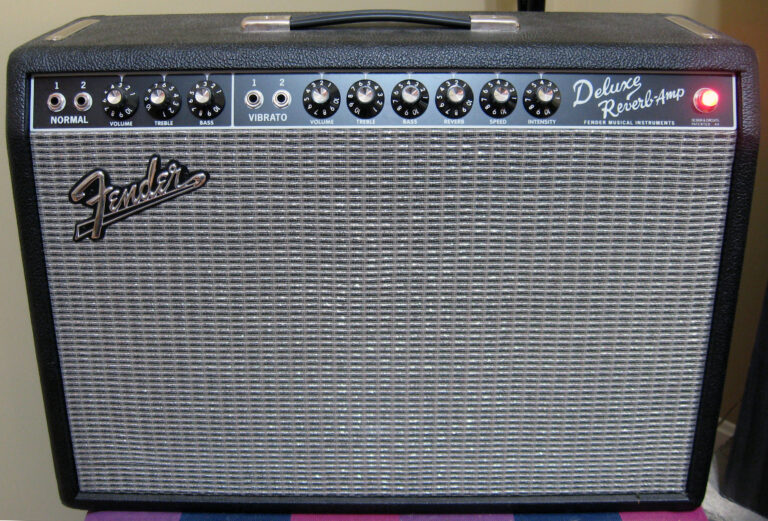
vs. Fender Deluxe Reverb
The Fender Deluxe Reverb is the obvious reference point: same 6V6 power stage, same spring reverb, similar wattage territory. The Deluxe is a single-channel, fixed-voicing amp with a much simpler architecture and a $1,200–$1,400 street price. The Mercury V offers the Deluxe’s tonal DNA plus British gain staging, a Series mode that takes it to JCM-adjacent saturation, and an attenuator the Deluxe doesn’t have. The Deluxe wins on simplicity, price, and the authentic American-clean snap of the stock bias point. The Mercury V wins on range, build quality, and any situation where you need more than one tonal character from a single amp. If all you want is blackface clean with reverb, buy the Deluxe and bank the difference. If you need that clean AND British crunch AND attenuated studio drive, the Mercury V is doing the work of three amps in forty pounds of pine.
vs. Tone King Imperial MKII
The Tone King Imperial MKII is the Mercury V’s closest structural rival: similar wattage (20W vs 16W), similar price territory ($2,695 vs ~$3,340–$3,670), built-in attenuator (the Ironman II, which has more attenuation steps and a wider range than the Carr), two-channel design with blackface and tweed voicings, reverb and tremolo. The Imperial MKII uses 6V6GT power tubes as well. Key differences: the Imperial MKII has two explicitly separate channels (Rhythm and Lead), reverb on both channels, bias-modulated tremolo, and deeper attenuation (down to −36dB). The Mercury V has deeper gain range in the Boost-3/Series combination, a more complex dual-volume architecture that rewards adjustment, and a purer point-to-point signal path (the Imperial MKII is mostly PCB). Both are excellent. The Mercury V suits players who want to explore gain architecture through control interaction; the Imperial MKII suits players who want two distinct named channel characters.
vs. Tone King Gremlin
The Tone King Gremlin is the entry-level boutique option in this wattage territory: 5W, $1,395, a single KT66 power tube, Volume and Tone only, no effects loop, no reverb. It is stripped down by design — a home and studio amp that is deliberately not trying to do everything. The Mercury V is $1,900+ more expensive and has spring reverb, an attenuator with more range, a dramatically wider gain architecture, and more controls. The Gremlin sounds excellent within its one-thing window. The Mercury V sounds excellent across a much wider window. If you are a studio player who needs a small, controlled, beautiful sound, the Gremlin earns its place. If you need that and high-gain British crunch and stage-ready volume, you need the Mercury V.
vs. Two-Rock Classic Reverb Signature
The Two-Rock Classic Reverb Signature ($5,299–$5,740) occupies a higher price bracket with a different tonal target: more clean headroom, a single-channel design with a gain structure switch rather than a Boost/Series architecture, thicker aluminum chassis, proprietary output transformer. The Two-Rock is a studio A-list boutique amp built for the highest-end session and touring rigs. The Mercury V is more immediately tactile and interactive — the gain architecture is genuinely playable in real-time, the price is more accessible, and the smaller cabinet is easier to transport. For the player who records in serious commercial studios, the Two-Rock may be the right call. For the working musician who wants to own one amp that does everything, the Mercury V is the more practical tool.
vs. Marshall JCM800 2203
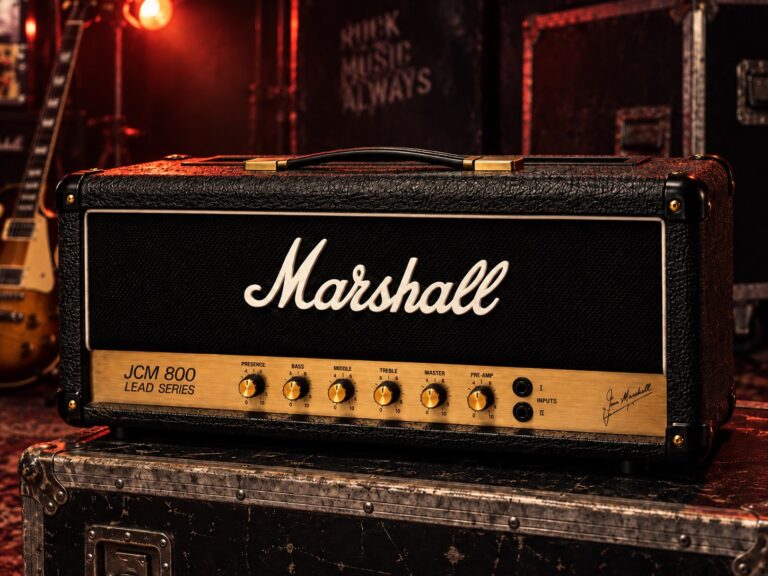
The Marshall JCM800 2203 is the canonical high-gain British amp head — 100 watts, master volume, no built-in attenuator, serial effects loop, EL34 power tubes, head-only. It is the reference tone for arena rock rhythm and lead from the late 1970s through the 1990s. The Mercury V can approach JCM800 territory in Series mode with Boost at position 3, but the 6V6 power stage means the compression character and the harmonic texture are genuinely different — warmer, more rounded, less scooped. The JCM800 has more raw headroom and a harder edge in the power stage; the Mercury V has more tonal versatility and can be used at home volume without an external load box. Players who specifically want 100W EL34 roar should buy a JCM800 and an appropriate attenuator. Players who want British character in a more flexible, self-contained package should look at the Mercury V.
Buying Guide
New
Carr Amplifiers is a small shop — the website suggests lead times, though the exact current wait should be confirmed with a dealer. Authorised dealers can be found via the Carr website’s dealer list. Custom colours at $100–$200 extra are worth considering at this price level, as the amp is likely to be with you for many years. The standard jet-black tolex with white piping is handsome enough, but the two-tone and exotic-finish options are distinctive without being outrageous.
Confirm current pricing with a dealer before ordering — the gap between the official price list ($3,340 combo) and the product page ($3,670 combo) suggests one or the other has not been updated. The difference is roughly $330, which is meaningful at this price point.
Head vs. Combo
The Mercury V Head ($3,240–$3,560 depending on source) saves approximately $100 over the combo and cuts the weight from 40 lbs to 30 lbs. The head requires an external 8-Ohm cabinet; the Creamback M65 in the combo combo is voiced specifically for the Mercury V’s circuit, so cab choice matters. Carr’s own North Carolina pine cabs, if available separately, are the obvious match. The combo’s angled baffle is a genuine advantage for small-room and floor use — if you are regularly gigging without a cabinet stand, the combo orientation is worth the weight penalty.
Used
The Mercury and Mercury V are both held in high regard and rarely appear on the used market at significant discounts. Reverb listings from late 2024 and 2025 show Mercury V combos selling in the $1,800–$2,500 range, reflecting the 2017-era street price of $2,530. This is the attractive used proposition: the circuit is identical, the build quality is extremely durable, and the Creamback speaker is replaceable if needed. When buying used, verify: (1) the speaker is the original Creamback M65 or a comparable 8-Ohm replacement; (2) the 6V6 tubes have been checked or replaced — the Mercury V is self-biasing (cathode biased) so tube replacement does not require re-biasing with test gear; (3) the spring reverb works cleanly at all reverb knob positions; (4) the attenuator engages and releases cleanly — a static-laden attenuator switch is the most common wear point reported by Mercury V owners.
What the Mercury V Does Not Have
No footswitch jack. No effects loop. No channel switching via pedal. No tremolo. The front panel controls operate in real time, and the gain architecture requires manual switch interaction. For a player who needs to toggle between clean and lead on a footswitch mid-song, this is a genuine limitation that the Tone King Imperial MKII solves. For the studio player, the recording/home player, or the gigging musician who sets a single working tone for each set, the lack of a footswitch is not a problem. Know your use case before you commit.
Ownership Notes
Biasing: The Mercury V uses cathode-biased (self-biasing) 6V6GT tubes. You can swap 6V6GT tubes without a bias adjustment procedure — just make sure you’re using matched pairs from a reputable tube vendor. Common replacements include Groove Tubes, JJ, Tung-Sol, or Electro-Harmonix 6V6GT. The character of each brand varies slightly: Tung-Sol tends brighter and tighter; JJ is warmer and slightly looser in the low end; Electro-Harmonix falls between. None require any technical intervention beyond the swap.
Cabinet: The North Carolina yellow pine is a resonant, lightweight wood that contributes to the Mercury V’s particular air and detail. It is durable but not immune to impact damage. The dovetail joinery is strong — stronger than the glued butt joints in most production combos — but the cabinet should be protected from extreme humidity swings. Carr provides a cover; use it.
Line Out: The post-power-amp line out with speaker roll-off simulation is one of the Mercury V’s most practical features for home players and studio musicians. It can be used with or without the attenuator engaged. When running the line out to an interface, engage the attenuator to bring the acoustic output down and adjust the attenuator level to taste — the line out signal remains consistent regardless of the attenuator position.
Reverb: The all-tube reverb is lush and dimensional. At extreme Reverb knob settings it can feed back — this is a feature of the tube-recovery circuit, not a fault. A hard physical impact on the amp while the reverb is active will produce a loud spring crash — normal for any spring reverb, less forgiving in this tube-recovery circuit than in solid-state reverb recovery designs. Carry it carefully.
Noise floor: Reviewers consistently note the Mercury V’s quiet noise floor even with the guitar unplugged. This is partly the quality of the Solen and Jupiter caps in the signal path and partly the military/NASA-spec power supply components Carr specifies. Expect significantly less hum and hiss than in most production amps at this gain level.
FAQ
What does “Mercury V” mean — is the V for five?
No — it’s a stylistic designation rather than a generation number, linking it to Carr’s Mercury platform while signalling a larger, expanded design. The original Mercury was an 8-watt amp. The Mercury V runs 16 watts and adds the dual-volume architecture, three-position Boost, Series/Parallel toggle, and a more developed attenuator with line out. The V echoes the automotive naming Carr favours across the range — Skylark, Rambler, Impala, Mercury — and nods to the muscle of the platform without committing to a literal version number.
Is point-to-point wiring actually better than PCB?
It is not universally better, but it has specific advantages in this application. PtP construction allows individual components to be replaced without specialised SMD rework equipment — a failed capacitor or resistor can be desoldered and replaced with hand tools in a home workshop. It also distributes heat across a three-dimensional component layout rather than concentrating it on a flat board, which can extend component lifespan. The downside is that PtP amps are more labour-intensive to build (contributing to their price) and harder to troubleshoot without documentation. Carr’s PtP work is described as meticulous, but PG’s Joe Gore noted it “looks like something out of Dante’s Inferno” on first inspection — meaning it is dense and hand-fitted rather than the tidy grid layout of a mass-market build.
Does the Mercury V have a footswitch?
No — there is no footswitch jack on the Mercury V. The Series/Parallel toggle and Boost switch are panel-mounted only, operated by hand. The amp is designed as a studio and small-venue tool where you set a working tone and play it, not a stage amp intended for mid-song channel switching. If you need footswitch-accessible channel changes, the Tone King Imperial MKII is the nearest comparable amp with that feature.
Can I use extension cabs with the Mercury V?
Yes — there is an 8-Ohm speaker out on the rear panel. You can run the combo with an external 8-Ohm cabinet in addition to or instead of the internal Creamback (check whether the internal speaker disconnects when an external cab is connected, or whether both run simultaneously — this varies by amp model). Using the head version with an external cab is the more natural approach for live situations where you want to raise the speaker height or run a larger cabinet. Impedance matching to 8 Ohms is required.
Why are there two Volume controls instead of Gain and Volume?
Because the design mimics the architecture of a vintage Marshall four-input amp. Those amps had High and Low inputs on each channel — the Low input had a -6dB pad relative to the High input. Running both channels in Parallel means the balance between High Volume and Low Volume shapes the tonal blend: more High Volume gives a brighter, more forward character; more Low Volume gives a darker, more rounded character. In Series mode the levels determine how hard each gain stage hits the next, controlling the saturation depth. It is a more interactive and more nuanced system than a simple Gain/Volume structure, rewarding player experimentation.
What kind of guitarist is the Mercury V designed for?
The player Carr described as the target is the guitarist who is tired of choosing between American and British tones — who wants Fender-quality clean dynamics, Marshall-quality gain range, studio-grade quiet performance, and portable format, all in one box. In practice, the Mercury V is well-suited to studio musicians and serious recording players who need one amp that does everything at controlled volumes; working club players who gig without a PA engineer and need an amp that sounds excellent anywhere in the room; and boutique tone enthusiasts who will explore the gain architecture across a wide range of sounds over years of ownership.
Is the 2017 Premier Guitar review still relevant in 2026?
Yes — the Mercury V has not been redesigned since its introduction. The circuit, the component choices, and the basic specifications remain the same. Prices have increased: the 2017 street price was $2,530 for the combo; current pricing is $3,340–$3,670 depending on source. But the amp Joe Gore reviewed and called “one of the finest-sounding amps I’ve ever played” is the same amp you would receive today, built in the same Pittsboro facility from the same point-to-point hand-wired approach.
How does the Mercury V compare to the original Carr Mercury?
The original Mercury (2003–era) was 8 watts with a simpler single-channel architecture and the basic attenuator concept but fewer switching options. The Mercury V doubles the power output to 16 watts, introduces the dual-volume High/Low control architecture, adds the three-position Boost switch and the Series/Parallel toggle, and expands the line out functionality. The core 6V6 power stage character, the North Carolina pine cabinet, the point-to-point construction philosophy, and the Celestion speaker choice are all continuous across both generations. The Mercury V is more than twice as flexible as the original while retaining everything that earned the “Tone of the Gods” designation in 2003.
Image credits
- Fender Deluxe Reverb: DlxReverbFront, Wikimedia Commons, CC BY-SA 3.0.
- Marshall JCM800 2203: GuitarGangsters AI-generated reference illustration, not a photograph.
