Three Switches, All the Tone: The Fractal Audio FM3 Mark II Turbo
Fractal Audio FM3 Mark II Turbo — Cygnus X2 specs, verified players, tone recipes, and buying advice for the compact Fractal floor unit.
There is a moment every gigging guitarist eventually hits: the pedalboard that made sense in theory arrives at the venue as an infrastructure project. Amp heads require speaker cabinets. Speaker cabinets require roadies. Roadies require budgets that the gig does not provide. At some point, the honest question becomes whether you are moving sound or moving furniture.
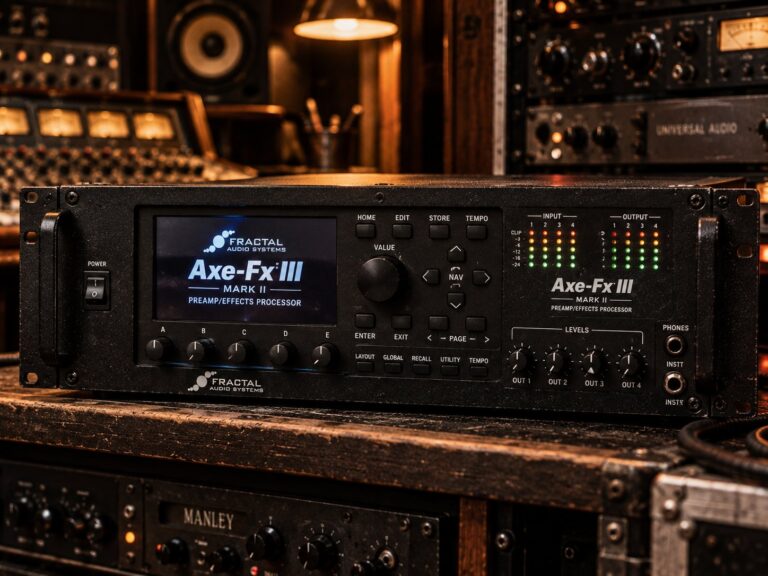
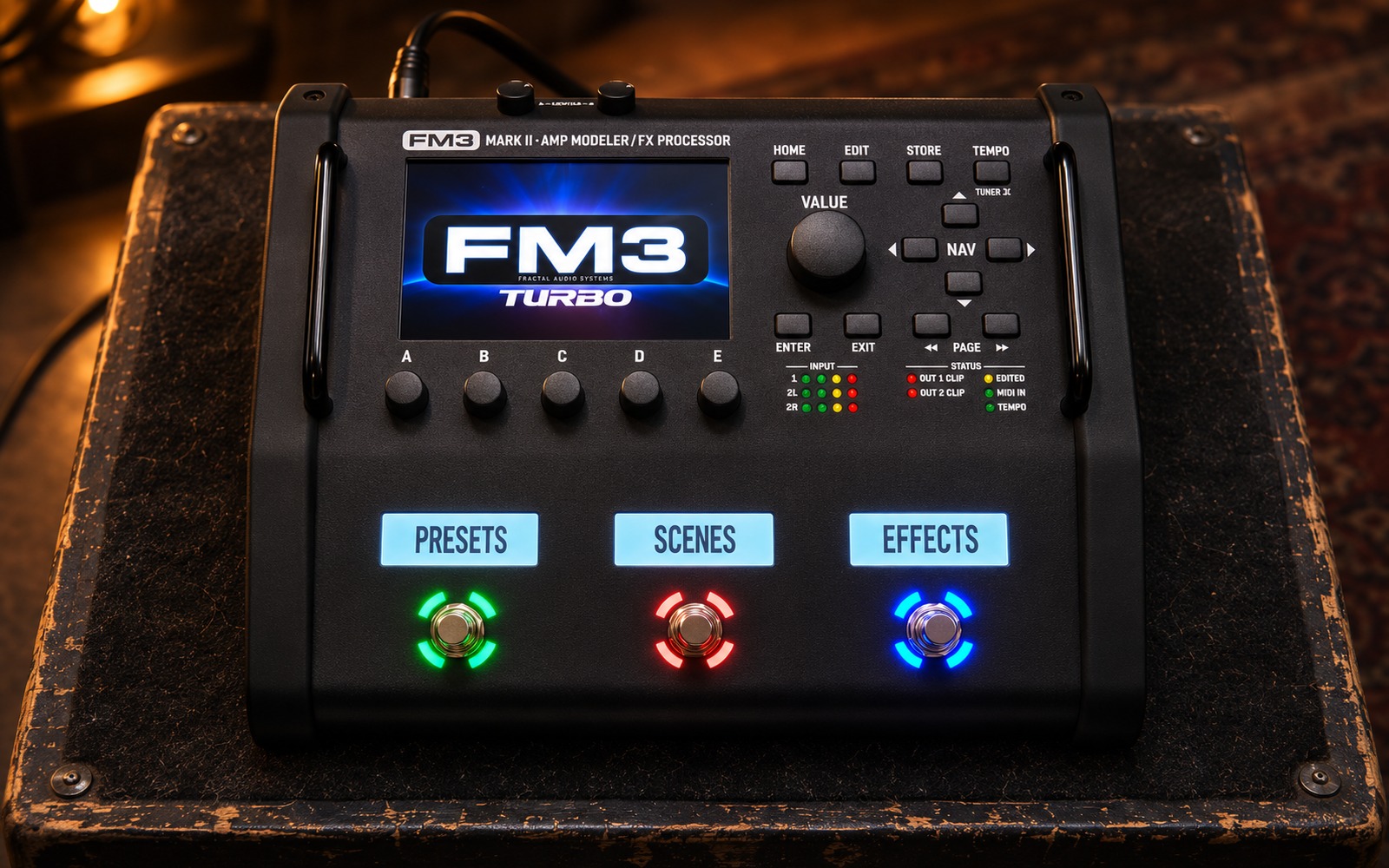
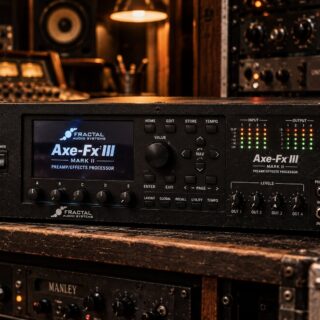
The Fractal Audio FM3 Mark II Turbo is the answer a lot of working players landed on. It is a steel floor unit not much larger than a hardcover book, yet it carries inside it the same Cygnus X2 amp modeling engine that powers the Axe-Fx III — Fractal’s flagship rack preamp that John Petrucci, Steve Vai, and Metallica rely on for major-label tours and multi-million dollar productions. The FM3 is not a stripped-down budget version. It is the same technology in a smaller body with three footswitches instead of a rack, and a price that lands at $1,099.99 direct from Fractal Audio.
Released in July 2023 as the successor to the original FM3 and the intermediate FM3 Mark II, the Mark II Turbo iteration added more than ten percent additional DSP headroom through its upgraded processor, plus larger and more readable footswitch displays that were among the most frequent complaints about the original. The bones — the modeling engine, the effects library, the I/O set, the steel chassis — remain the architecture of a machine built to replace every amplifier, cabinet, and pedalboard you own, and actually get away with it.
From Cliff Chase’s Garage to Plaistow, New Hampshire
Fractal Audio Systems was founded by Cliff Chase, a self-described gear obsessive who had spent years frustrated by the gap between what digital modeling promised and what it actually delivered. The early 2000s digital amp simulators processed guitar signal mathematically — they approximated the behavior of tube circuits without simulating the circuits themselves. The result was something guitarists described as sounding “in the ballpark” on a recording and distinctly wrong when played through a loud system in a room.
Chase’s approach was different. Rather than approximate the output of a tube amplifier statistically, he modeled each component in the circuit: each tube stage, each transformer, each interaction between preamp and power section. The result was the Axe-Fx Ultra, released in 2007, which landed in the professional community with the force of an event. Guitarists who had spent decades insisting that nothing digital would ever touch the feel of a real amp found themselves unable to describe what was wrong with it, because nothing was.
The product line evolved rapidly. The Axe-Fx II arrived in 2011 with substantially more processing power. The Axe-Fx III appeared in 2018 with the Cygnus modeling architecture, a step-change improvement in how the component-level simulation handled the dynamic interaction between guitar signal and power amp saturation. The FM3 launched in 2019 as the first floor-unit version — three switches, the same engine, a backpack-friendly chassis. The FM9 followed in 2021 with nine switches and more DSP headroom. The Mark II Turbo generation updated both floor units in 2023 with the current Griffin processor architecture.
Fractal Audio operates from Plaistow, New Hampshire — 4 Wilder Drive, Unit 14 — and sells directly to customers in the United States and Canada through shop.fractalaudio.com, with international distribution handled by regional dealers. There is no distribution middleman on US sales, which is part of how the company keeps the FM3’s price where it is for a unit of this specification.
Specifications: What’s Inside the FM3 Mark II Turbo
| Specification | FM3 Mark II Turbo |
|---|---|
| Price (direct) | $1,099.99 |
| Released | July 2023 |
| DSP Architecture | 3-Core “Griffin” (1× ARM + 2× SHARC+) + dedicated GPU |
| DSP vs. Original FM3 | 10%+ more processing headroom |
| Modeling Engine | Cygnus X2 (component-level circuit simulation) |
| Amp Models | 300+ (full Axe-Fx III library, subject to FM3 block/DSP limits) |
| Factory Cab IRs | 2,200+ |
| User IR Slots | 1,024 |
| Speaker Simulation | DynaCab™ + UltraRes™ |
| Presets | 512 |
| Scenes per Preset | 8 |
| Channels per Block | 4 |
| Footswitches | 3 (variable-color LED ring + mini LCD display each) |
| Switching | Gapless (presets and scenes) |
| Expansion | FASLINK II → up to 2× FC-12 or FC-6 controllers |
| Expression Inputs | 2× ¼” TRS (each with dual-switch support) |
| USB Audio | 4×4 (recording, playback, re-amping) |
| Main Outputs | 2× stereo (Humbuster™ TRS) |
| Additional I/O | S/PDIF out, headphone out, stereo input pair |
| MIDI | In + Out/Thru (5-pin DIN) |
| Editor Software | FM3-Edit (Mac/PC, free) |
| Firmware | Free updates ongoing |
| Build | Steel chassis with protective endcaps |
| Manufacturer | Fractal Audio Systems, Plaistow NH 03865 |
The three footswitches each carry a variable-color LED ring and a small LCD display showing the switch function — a significant usability improvement in the Mark II Turbo versus the original FM3, where the text on those displays was difficult to read in a dark stage environment. Each switch supports both tap and hold functions with independently programmable behaviors across eight different switch “layouts,” and the Views feature in the firmware multiplies this further, creating a virtual twelve-button controller within a three-button physical footprint.
The FASLINK II expansion port is worth understanding because it changes the FM3’s practical character completely. Connected to an FC-6 foot controller and an EV-2 expression pedal — a configuration the Fractal community has nicknamed “OMG9” — the FM3 gains six additional switches and a dedicated expression pedal for a total that rivals the FM9 in live usability. The FC-6 costs $499.99, the EV-2 costs $199.99, which puts the “OMG9” rig at roughly $1,800 — essentially the FM9’s price in two separate purchases. Whether that modularity is a feature or an inconvenience depends on how you tour.
Cygnus X2: The Engine Underneath
The FM3’s competitive position rests on understanding what Cygnus X2 actually does differently from rival technologies. There are three broad approaches to digital amp modeling: mathematical approximation (the early 2000s method), profiling (capturing the output behavior of a real amp, as Kemper does), and neural capture (training an AI model on the output of a real amp, as Neural DSP’s Quad Cortex and similar products do). Fractal uses none of these.
Cygnus X2 builds a virtual circuit. Every tube stage in a modeled amplifier is individually simulated at the component level — the behavior of the transformer, the interaction between preamp and output stage, the way the power supply sags under heavy load. When you turn the treble knob on a virtual Marshall 1959 Plexi inside the FM3, it does not cross-reference a lookup table of how the output changed when someone turned a Plexi’s treble knob. It recalculates the behavior of the circuit in real time as if the component had changed.
The practical consequence is that modeled amps respond dynamically to the guitar signal in ways that profiled or captured amps do not. Pick harder and the virtual power section compresses in the same way a real power section would. Roll off the guitar’s volume knob and the amp cleans up. Play a ringing chord and let it decay — the subtle compression and bloom that characterizes a great tube amp in the room happens inside the FM3, not as an approximation but as the result of the circuit actually doing what the circuit does.
DynaCab adds a further layer to speaker simulation. Rather than simply convolving the guitar signal with a static impulse response of a miked cabinet, DynaCab models the dynamic behavior of the speaker — the way a cabinet sounds differently at different volumes and with different amounts of driver excursion. The visual mic-on-cab interface in the firmware lets you drag a virtual microphone around a virtual speaker cone and hear the high-frequency falloff as it moves toward the edge, exactly as a real engineer hears it. The 2,200+ factory cabs cover decades of miked speaker measurements from sessions and studios; the 1,024 user slots accept third-party IRs widely available for free or from commercial producers.
Famous Players: The Fractal Ecosystem and the FM3 Specifically
This is where honest journalism earns its keep. The FM3’s position in the Fractal ecosystem requires a clear distinction between the Fractal brand and the FM3 specifically — because the most famous Fractal users in the world are documented on the Axe-Fx III rack preamp, not on any floor unit.
James Hetfield and Kirk Hammett of Metallica are among the most documented Fractal converts in rock history, but their rig is specifically the Axe-Fx III. Guitar World confirmed this in an interview with Metallica’s guitar tech Chad Zaemisch: Hetfield’s live sound is modeled from his Mesa/Boogie amps with a Diezel component, and Hammett’s from his Fortin Meathead and Mesa/Boogie Dual Rectifier — all running through Axe-Fx III rack units sending direct to the board, with Mesa 2:Ninety power amps driving onstage 4×12 cabinets purely for monitoring and feedback. No FM3 appears anywhere in the Metallica rig.
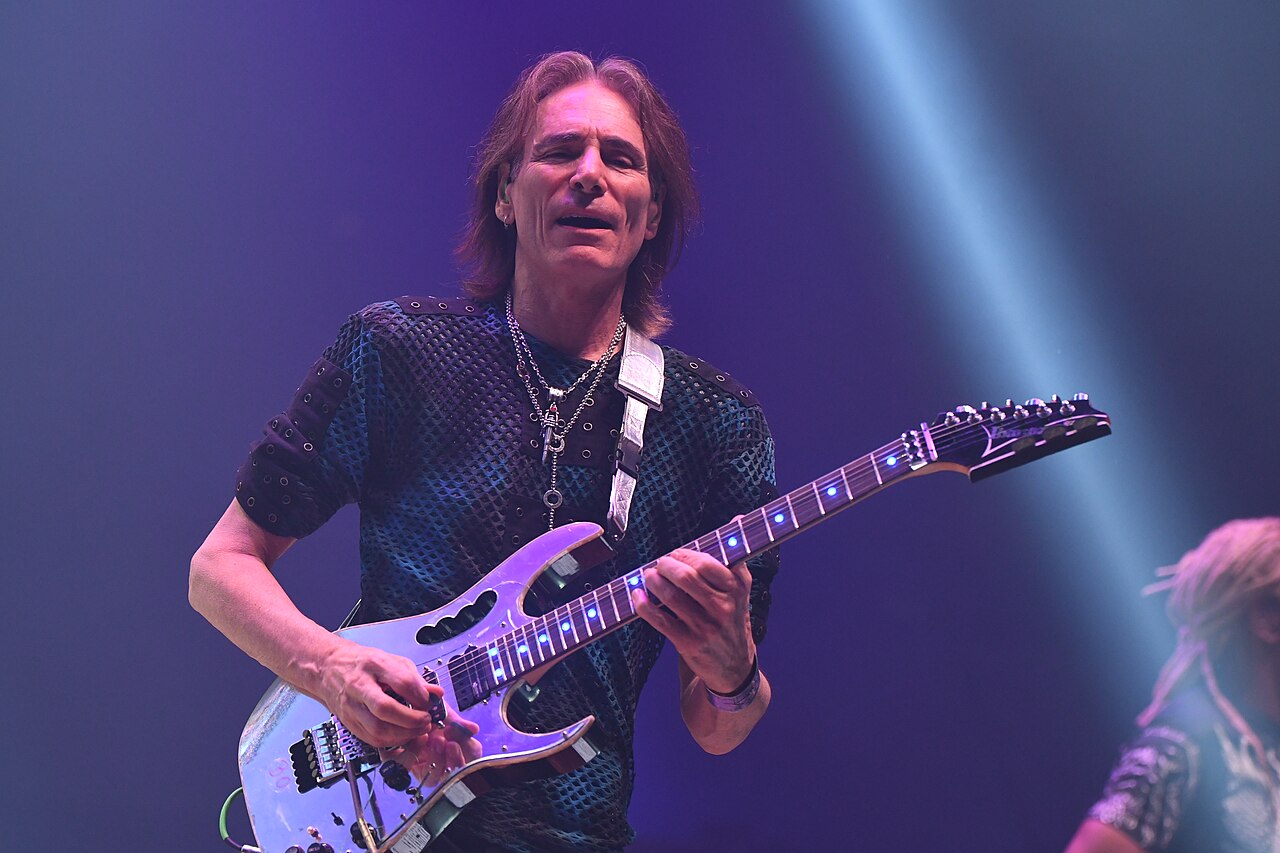
The same applies to John Petrucci (Dream Theater), Steve Vai, and Misha Mansoor (Periphery) — all verified Axe-Fx III users on primary sources including Premier Guitar Rig Rundowns and Fractal’s own artist materials. And Guthrie Govan is verified on the FM9 (not the FM3) by a Premier Guitar Rig Rundown with The Aristocrats published August 11, 2022. All five artists named against the FM3 belong, by primary source, to other units in the Fractal family. This is the brand-vs-SKU separation problem in its clearest form: the FM3 is part of the same ecosystem, runs the same engine, and benefits from the same endorsement halo — but none of those five artists are documented FM3 floor unit users.
The artists actually confirmed on the FM3 by primary source are a different and interesting group.
Troy Van Leeuwen (Queens of the Stone Age) is documented on the FM3 via a Premier Guitar Rig Rundown video — at the 31:47 mark, Van Leeuwen’s pedalboard is shown with the FM3 handling most of his signal processing alongside a pair of Eventide H9s, with two hand-wired Vox AC30s as the amplification backbone. Van Leeuwen is not running the FM3 as a standalone amp replacement — he is using it as a sophisticated effects hub inside a hybrid rig.
Jake Kiszka (Greta Van Fleet) is confirmed on the FM3 via the same source — the Premier Guitar 2021 Rig Rundown filmed at FirstBank Amphitheater in Franklin, Tennessee. At the 11:36 mark, Kiszka’s FM3 appears in his rig specifically for stereo wah processing. The younger Kiszka’s tone obsession and period-authentic sound preferences make his interest in the FM3’s vintage modeling library entirely logical.
Devin Townsend is documented using an FM3 in a quarantine concert livestream — a practical choice that reflects exactly what the unit is designed for: full-quality Fractal processing without requiring an entire rack. Townsend’s main touring rig uses the Axe-Fx III, making the FM3 his portable-performance instrument.
Buck Dharma (Blue Öyster Cult) is confirmed as an FM3 live performance user via the Fractal Audio Systems Forum, with the additional note that Dharma uses the Axe-Fx III for recording — the same studio-live split as Townsend.
Miles Dimitri Baker (Ice Nine Kills) stated explicitly in Digital Tour Bus’s “Gear Masters Ep. 583” that he uses the FM3 as his main live amp while his bandmates run a Quad Cortex. Baker’s guitar tech maintains a backup Quad Cortex configured to support the entire band in case of any equipment failure — a real-world touring contingency plan that tells you something about the professionalism of FM3 users in heavy touring contexts.
The pattern across all confirmed FM3 users is instructive: they are players who need flagship-level Fractal tone in a physically smaller format, whether for a hybrid rig (Van Leeuwen), a specific effects application within a larger setup (Kiszka), or as a portable performance tool when the rack stays home (Townsend, Dharma).
Tone Recipes and Settings
Recipe 1: Classic American Clean — Session-Ready Twang
Start with the Fender Twin Reverb model (labeled “USA Clean” in the factory library). Input gain at 3, master at 6, treble at 6, mids at 5, bass at 5. Select a 2×12 Fender cab IR with a Royer 121 position at the cone edge — this softens the top end on the clean sparkle without muddying the low end. Add a light plate reverb (pre-delay 15ms, decay 1.8 seconds, mix at 18%). The result sits perfectly under vocals and above a mix without fighting anything. Bump treble to 7 and flick the bright switch for the full jangle. This tone covers country sessions, soul rhythm parts, and early Beatles clean comping without adjustment.
Recipe 2: British Crunch — Classic Rock Rhythm
Load the 1959 Super Lead Plexi model. Set input gain to 5.5, master volume to 7, presence at 7, treble at 7, mids at 4, bass at 5. Choose a 4×12 Greenback cab (diagonal top-corner mic position). Run a Tube Screamer-type overdrive block into the front at low gain with the level boosted — this tightens the low end and pushes the amp into its sweet spot without adding distortion on top. The result is the Keith Richards rhythm crunch, the AC/DC chunk before the studio compression, and the Zeppelin overdrive from the first two albums. Add a room reverb at 10% mix for a live-in-the-room feel.
Recipe 3: Modern High Gain — Tight and Brutal
Select the Mesa Dual Rectifier model (Modern Recto). Input gain at 7.5, master at 6, presence at 6.5, treble at 5.5, mids at 4.5, bass at 5. Pair with a Zilla 4×12 or Mesa Traditional 4×12 IR. Add a gate block early in the chain (threshold at -78 dB, attack instantaneous) to manage pick noise. A high-pass filter block at 80Hz removes the low-end woof that turns to mud in a full-band mix. The FM3’s DynaCab handles the speaker compression that makes the attack feel like a real miked cabinet, not a direct DI. This is your Tool, Periphery, and Mastodon territory — modern high-gain that stays articulate under fast picking.
Recipe 4: Edge-of-Breakup Blues — Touch Dynamics
Use the Fender Deluxe Reverb model. Input gain at 7, master at 8, treble at 6, mids at 5.5, bass at 4. Engage the virtual amp’s tremolo at 4.5Hz and depth at 25%. The key to this recipe is the FM3’s volume-sensitivity: roll your guitar’s volume to 6 and the tone cleans up completely; hit the strings hard at volume 10 and the amp breaks up naturally. This is the tone that makes or breaks a dynamic player — Albert King’s sweet spot, Buddy Guy’s Chicago aggression, and Gary Moore’s Dublin lament all live in this transition zone. Add a 1×12 Jensen cab IR and light spring reverb at 15% mix. No compressor, no boost — guitar volume control does all the work.
Recipe 5: Ambient Post-Rock — Cinematic Swells
Start with a clean amp model at low input gain (3) and high master volume (8) — the Matchless DC30 model works beautifully here. Route an expression pedal to control the input level block, essentially creating a volume swell without touching the guitar. Stack a lush stereo shimmer reverb (pre-delay 30ms, decay 6 seconds, pitch shift +1 octave at 20% mix) with a ping-pong delay (500ms, 3 repeats, feedback at 55%, wide stereo spread). The volume swell into this reverb-delay wash is the architecture of Explosions in the Sky, Mogwai, and early Sigur Rós. Assign scene switching to toggle between a dry clean tone and this full ambient state with gapless switching — the transition is seamless.
Comparisons with the Competition
FM3 Mark II Turbo vs. Fractal Audio FM9 Mark II Turbo
The FM9 costs $1,799.99 — $700 more — and delivers nine onboard footswitches and additional DSP headroom. For a player running complex parallel routing with multiple amp blocks simultaneously, the FM9’s DSP advantage matters. For the majority of gigging applications (amp + overdrive + modulation + delay + reverb running in series), the FM3 handles the signal chain without constraint. The FM3 becomes the FM9 in footswitching terms the moment you add an FC-6 for $499.99, though you are then at $1,600 for a two-piece rig versus $1,800 for the FM9’s integrated design. If you gig weekly and need single-unit reliability, buy the FM9. If you value portability and play smaller venues, the FM3 makes more sense.
FM3 Mark II Turbo vs. Neural DSP Quad Cortex
The Quad Cortex ($1,349) uses neural capture technology — training an AI model on the output of a real amp — rather than Fractal’s component-level circuit simulation. The practical difference: neural captures sound remarkable but respond to knob changes as static captures, not as reactive circuits. The Quad Cortex’s touchscreen interface is faster for live editing than the FM3’s encoder-and-display approach. The FM3’s simulation responds dynamically to playing nuance in a way that neural capture fundamentally cannot. Both are professional-grade tools. The choice depends on whether you prioritize workflow speed (Quad Cortex) or playing feel and circuit accuracy (FM3).
FM3 Mark II Turbo vs. Kemper Profiler Head
The Kemper ($1,799 head, $2,799 with powered version) uses profiling: it captures the actual output of a real amp in your possession, building a model from measured behavior. The result is an extraordinarily accurate reproduction of that specific amp — better than any model for capturing a known, specific real amp. The FM3 cannot profile your grandfather’s 1964 Deluxe Reverb. What it can do is model every classic amp ever made from component-level simulation without requiring you to own the originals. For access to breadth of amp variety without real amps, the FM3 wins. For capturing a prized specific real amp with maximum fidelity, the Kemper wins.
FM3 Mark II Turbo vs. Line 6 Helix Floor
The Helix Floor ($1,499) runs the HX modeling engine — component-level modeling like Fractal’s, but implemented differently and on a single SHARC DSP for the signal processing. The Helix offers twelve footswitches in a single integrated unit with an excellent color touchscreen and one of the most intuitive routing interfaces in the industry. The FM3’s Cygnus X2 engine is widely considered the more refined modeling technology for feel and touch response, especially in high-gain territory. The Helix is faster to program and more immediately giggable out of the box. If you care more about workflow than ultimate feel, the Helix is competitive. If ultimate tonal realism is the priority, the FM3 is ahead.
FM3 Mark II Turbo vs. Line 6 POD Go
The POD Go ($599.99) is the entry point to HX modeling at roughly half the FM3’s price. It runs the same HX engine as the Helix but with reduced block count (nine blocks vs. Helix’s thirty-two), no MIDI DIN, no balanced XLR outputs, and a smaller cab IR library. Against the FM3, the POD Go is a different category: the FM3 is Fractal’s professional-tier Cygnus X2 implementation, the POD Go is Line 6’s entry to HX modeling. The FM3 is the more capable instrument at almost double the price. Players who want to audition the modeler format before committing at the FM3’s price level often start here — but the upgrade path is not direct.
Buying Guide
The FM3 Mark II Turbo is available new at $1,099.99 directly from Fractal Audio at shop.fractalaudio.com, with availability in the United States and Canada. The company typically ships within one business day. International buyers should contact regional Fractal dealers — pricing varies by country and import costs.
On the used market in 2026, original FM3 units (first generation, 2019–2020) sell for $600–800 depending on condition and included accessories. The FM3 Mark II (non-Turbo) appears in the $750–900 range. FM3 Mark II Turbo units appear at $850–1,000 when they surface, which is relatively rare — players who invested in the Turbo generation tend to hold them. The firmware is identical across Turbo units regardless of when they were manufactured, so a used FM3 Mark II Turbo from 2023 runs the same software as one purchased today.
What to verify on a used unit: inspect the footswitches for LED ring degradation (they can develop dead zones after heavy use); check the expression pedal input jacks with a known good TRS cable; connect to FM3-Edit and confirm the unit accepts firmware updates cleanly; and verify the unit has not been dropped by checking all four endcap corners for stress cracks. The steel chassis is durable but not indestructible.
The complete FM3 rig requires additional investment beyond the unit itself. A pair of FRFR (Full Range Flat Response) powered speakers for live use — Headrush FRFR-112 ($299), Line 6 StageSource L2t ($699), or the Fractal-endorsed Friedman ASC-10 ($599) are common choices — or alternatively a power amplifier into a traditional guitar cabinet if you prefer a more conventional stage feel. The EV-2 expression pedal ($199.99) is a significant quality-of-life addition. The FC-6 controller ($499.99) or FC-12 ($749.99) extends the footswitch count for players who find three switches limiting in a live context. Humbuster-wired TRS-to-TS cables (sold by Fractal and third parties) are required to take advantage of the Humbuster outputs’ common-mode hum rejection.
Ownership Notes
The FM3’s factory presets are functional demonstrations of what the unit can do, not starting points for live performance. Every experienced FM3 owner says this. The presets are built to showcase the range of the technology — huge reverbs, dramatic modulation effects, clean-to-death-metal dynamic range — and most are dialed for studio headphone listening. Download free preset packs from the Fractal community forum (forum.fractalaudio.com) or build from blank presets using FM3-Edit. The edit software is the correct way to work on the FM3 — the front panel interface is workable but the computer-based visual routing editor makes complex preset building significantly faster.
The gapless switching feature introduced in the Mark II generation addresses the most serious practical limitation of the original FM3. Preset changes no longer produce the characteristic brief silence of earlier modeling units — switching from a clean preset to a lead preset is instantaneous, with no pop, no dropout, and no moment of dead air that would be audible in a live performance. Scenes within a preset are also gapless, allowing eight distinct tonal states within a single preset with smooth transitions between them.
The 4×4 USB audio interface functionality is seriously underused by the majority of FM3 owners. Connected to a computer via USB, the FM3 presents as a four-input, four-output audio interface at up to 192kHz — the processed stereo output on inputs 1 and 2, a dry DI capture on inputs 3 and 4 for re-amping later. For home recording, this eliminates the need for a separate audio interface entirely. For studio work, the re-amp capability means you can record a dry DI track on location and apply the FM3 processing retroactively in post, changing the amp, cab, and effects after the fact without re-tracking the performance.
Output routing matters more on the FM3 than most players initially realize. The two stereo output pairs allow independently routed signals — direct to FOH on Output 1 and to a stage monitoring wedge on Output 2, each with different EQ and IR settings optimized for their destination. The cab simulation can be disabled on Output 2 for connecting to a guitar cabinet via a power amplifier, allowing hybrid rig configurations where the FM3 drives both a traditional cabinet for stage feel and a direct feed to the PA for the house sound.
Frequently Asked Questions
What is the difference between the FM3, FM3 Mark II, and FM3 Mark II Turbo?
The original FM3 (2019) used the first-generation Griffin DSP architecture. The FM3 Mark II (2021) updated the hardware with minor improvements. The FM3 Mark II Turbo (July 2023) is the current production version — it adds more than ten percent additional DSP headroom over the original FM3 through the upgraded Griffin Turbo processor, and significantly enlarges the footswitch LCD displays (character height roughly doubles, with a bolder font) for better stage readability. All three run the same Cygnus X2 firmware; the Turbo version handles more complex presets without hitting processing limits.
Can the FM3 run Axe-Fx III presets?
Yes, within limits. The FM3 can run presets designed for the Axe-Fx III provided they stay within the FM3’s block count and DSP budget. Most single-amp presets transfer without issue. Complex presets with multiple simultaneous amp blocks, extensive parallel routing, or very high per-block DSP demands may exceed the FM3’s headroom and require simplification. The FASLINK II connection and FM3-Edit software both display DSP usage in real time, making it straightforward to identify where a preset is exceeding the FM3’s limits.
Does the FM3 support third-party IRs?
Yes. The FM3’s 1,024 user IR slots accept standard WAV impulse responses from any source — commercial IR producers, free community packs from the Fractal forum, or IRs captured from your own physical cabinets using the FM3’s own re-amp workflow. Third-party IRs are one of the most effective ways to personalize the FM3’s tone, and the quality range available from producers like Celestion, York Audio, OwnHammer, and the Fractal community is extensive.
What FRFR speakers work best with the FM3?
The FM3 is agnostic about FRFR brands — any flat-response powered speaker that accurately reproduces the full frequency range of an electric guitar (80Hz to 10kHz) will work. Popular live choices include the Headrush FRFR-112 (affordable, compact), the Line 6 StageSource L2t (the original “Full Range Experience” speaker Fractal users championed), the Mission Engineering Gemini series (designed specifically for modeler use), and the Friedman ASC-10. For home use, studio monitors at any price point perform the same function. The goal is a speaker that does not color the tone — the FM3’s cab simulation is doing that work, and a colored speaker applies two speaker signatures to the signal simultaneously.
How does the FM3 handle switching in a live context with only three footswitches?
More capably than you might expect. Each footswitch supports tap and hold functions — a tap might activate a boost, a hold might change to a completely different scene. Eight switch layouts allow you to access completely different sets of switch assignments by holding two switches simultaneously. The Views feature multiplies the effective footswitch count further. Many players find three switches adequate for uncomplicated repertoire. Players with complex set-lists typically add an FC-6 (six additional switches) via FASLINK II, creating the nine-switch “OMG9” configuration. This is a common real-world setup: the FM3 for portability and processing, the FC-6 for footswitch reach.
Can the FM3 be used as a studio recording interface?
Yes, and it is excellent for this purpose. The 4×4 USB audio interface presents two channels of processed stereo output (your amp model + effects) and two channels of dry DI simultaneously. In a DAW, you record the processed sound on tracks 1–2 and the raw DI on tracks 3–4. If you change your mind about the tone after tracking, load the DI into the FM3 via re-amping and apply new processing. Many FM3 owners use no other audio interface for guitar recording work. The unit also handles computer audio playback for headphone practice or DAW monitoring.
What expression pedals work with the FM3?
Any expression pedal with a ¼” TRS output works with the FM3’s two expression inputs — Roland EV-5, Boss FV-500, Dunlop DVP4, and many others. Fractal’s own EV-2 ($199.99) and EV-1 ($299.99) are designed specifically for FM3 compatibility and include a built-in switch that can be mapped independently from the pedal sweep, but they are not required. Each of the FM3’s two expression inputs also accepts a dual-switch adapter, effectively giving you two switches per jack from a single connection.
Is the FM3 suitable for bass guitar?
Yes. The FM3’s amp model library includes dedicated bass amp and cabinet models — the Ampeg B-15NF Portaflex and SVT are among the most accurately modeled bass amps in the digital format. Bassists in cover bands and touring acts use the FM3 for the same reasons guitarists do: consistent tone from venue to venue, no amplifier logistics, professional I/O for direct-to-desk delivery. The 4×4 USB interface captures bass DI cleanly for re-amping. The main practical consideration is that bass-frequency content pushes DSP harder on some block configurations — the Turbo’s additional headroom helps.
Image credits
- Top image: GuitarGangsters AI-generated reference illustration, not a photograph.
- Steve Vai: Wojciech Pędzich, Wikimedia Commons, CC BY 4.0.
- A pedalboard full of colourful pedals: Skimel, Wikimedia Commons, CC BY-SA 4.0.
- A guitarist using an effects pedal on stage: Shixart1985, Wikimedia Commons, CC BY 2.0.
Latest News
Related
On This Day
Monday 9 November
From this week: