Boss SD-1 Super OverDrive: The $60 Pedal That Has Lived on Every Serious Pedalboard Since 1981
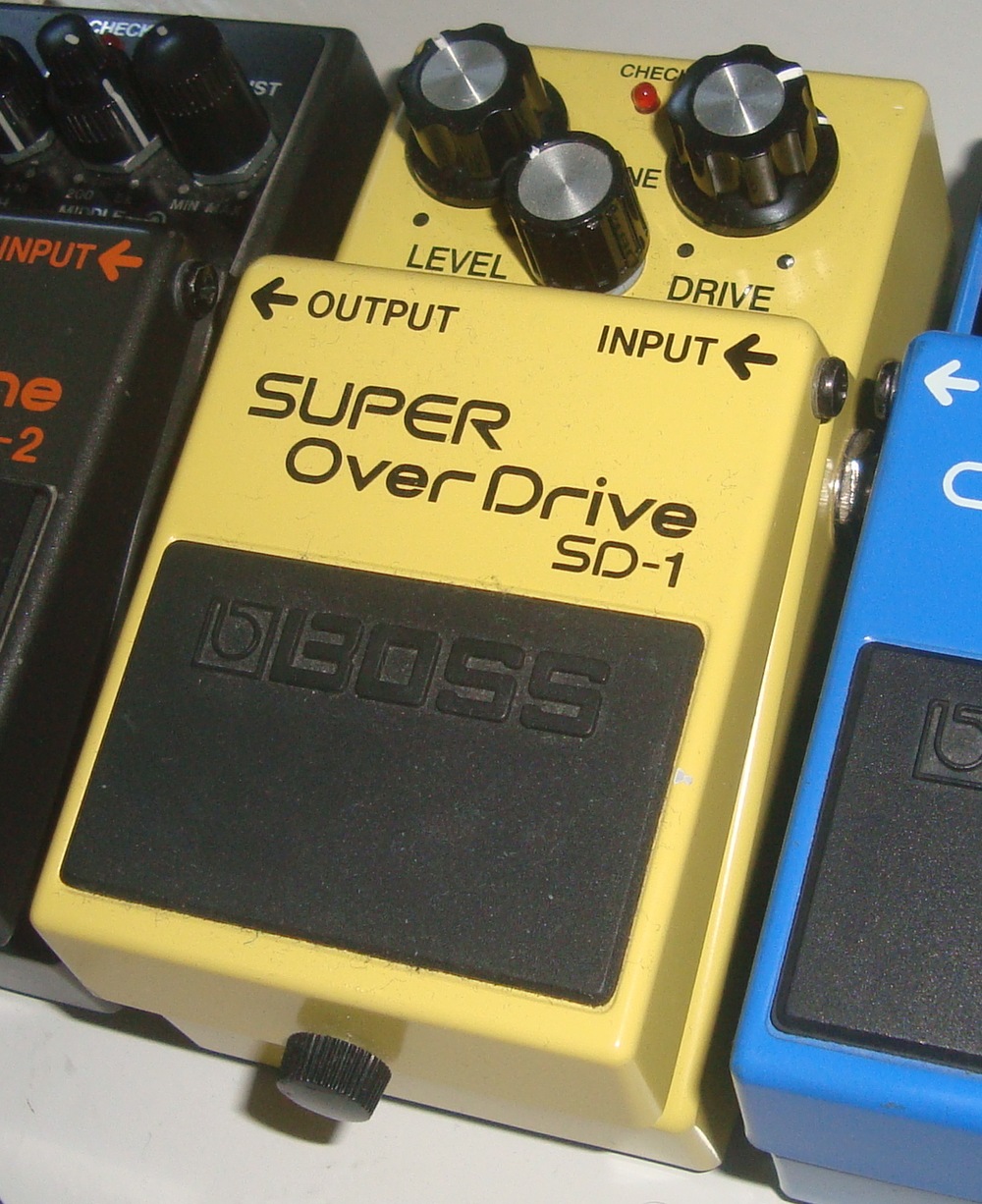
Boss SD-1 Super OverDrive, cropped from a photograph of three Boss pedals. Photo: “Boss fx pedals” by David J (sebilden), CC BY 2.0 (https://creativecommons.org/licenses/by/2.0/). Cropped to retain the complete featured pedal, resized and JPEG re-encoded; neighboring pedal edges remain. Source: https://www.flickr.com/photos/sebilden/13108107374/
Boss SD-1 Super OverDrive deep dive: 1981 origin story, asymmetrical clipping explained, Zakk Wylde and Josh Homme settings, buying guide, and full FAQ.
It costs less than a tank of gas. It weighs less than a sandwich. Its circuit has not changed in four-plus decades. And yet, if you were to pull every SD-1 Super OverDrive off the professional touring rigs of the world tomorrow, the collective howl from rock, metal, and alternative guitarists would be audible from space. The Boss SD-1 is not a compromise pedal. It is not what you buy when you cannot afford the fancy boutique overdrive. It is what Zakk Wylde ran through his JCM800s on No More Tears. It is what Josh Homme stacks with a Boss GE-7 to build the impossibly heavy, yet inexplicably clear QOTSA crunch. It is what The Edge has had on his ever-expanding pedalboard since the Boy tour in 1981. The SD-1 is not a stepping stone. It is the destination.
This is the full GuitarGangsters deep-dive on the Boss SD-1 Super OverDrive — its lineage, its circuit secrets, its legends, and exactly why this yellow brick has outlasted trends, fads, boutique movements, and five decades of gear journalism telling you something better has arrived.
The OD-1 Problem and the SD-1 Solution
To understand the SD-1, you have to go back to 1977. Boss released the OD-1 Overdrive that year, and it was genuinely revolutionary — one of the first compact pedals to seriously attempt to replicate the sound of a pushed tube amplifier. The OD-1 used a patented asymmetrical soft-clipping circuit, meaning the positive and negative peaks of the incoming waveform were clipped differently, generating a richer harmonic texture that other drive pedals of the era could not match.
The problem was simple: the OD-1 had no tone control. Two knobs — Level and Overdrive — full stop. For players who needed to carve the high end down on a bright Stratocaster or push more bite through a dark-sounding humbucker guitar, there was no adjustment available. “Some felt the sound of the OD-1 was too sweet and that the frequency range was insufficient,” designer Kanji Kubo said in The BOSS Book. “This is why we added the tone control to the SD-1.”
Meanwhile, the market was moving. In 1979, Ibanez released the Tube Screamer. Crucially, Ibanez used symmetrical clipping — partly to sidestep Boss’s asymmetrical clipping patent — and the result was a different character: warmer, more compressed, famously midrange-focused around 720Hz. The Tube Screamer became the dominant overdrive pedal of the early 1980s.
Boss’s response arrived in 1981: the SD-1 Super OverDrive. It kept the OD-1’s yellow compact chassis, kept the patented asymmetrical soft-clipping architecture, and added the crucial Tone control that the OD-1 lacked. Boss also refined the circuit — the SD-1 uses two diodes to clip the waveform’s positive peak and a single diode for the negative peak, making the clipping even more asymmetrical than the OD-1, generating more even-order harmonics alongside odd-order ones. The result was a fuller, more midrange-present sound than the OD-1, with a “slightly jagged, granular” quality that Guitar Player later called the SD-1’s defining tonal character.
The SD-1 has been in continuous production since 1981. Its circuit has not changed. Boss discontinued the OD-1 in July 1985. The SD-1 did not need to be discontinued. It just kept selling, kept touring, and kept showing up on professional pedalboards for the next four-plus decades.
The Circuit: Why Asymmetry Matters
Understanding the SD-1 means understanding the difference between symmetrical and asymmetrical clipping, because this distinction is the whole story of why the pedal sounds the way it does.
When a guitar signal gets amplified and pushed past the linear range of a circuit, the peaks of the waveform get flattened — “clipped.” Symmetrical clipping, as used by the Ibanez Tube Screamer and many other overdrives, clips both the positive and negative peaks of the waveform identically. This produces a warm, compressed, relatively smooth distortion dominated by odd-order harmonics. It is what most players associate with the “classic overdrive” sound.
Asymmetrical clipping, the SD-1’s approach, clips the two peaks unevenly. The SD-1 does this by using two diodes on the positive side of the waveform and one diode on the negative side. Because each diode drops a slightly different amount of voltage, the positive and negative peaks are clipped at different thresholds. This generates both even-order and odd-order harmonics — a richer, more layered harmonic structure. As Boss article author Michael Molenda noted, this behavior more closely replicates what happens in a tube amplifier’s push-pull output stage, where no two tubes are ever perfectly matched and both types of harmonics are naturally present.
In practice, this means the SD-1 has a slightly more complex, “alive” distortion character than the Tube Screamer. It feels less compressed, less pillowy. Players describe it as more present, more forward, with a natural mid-push centered around 800Hz — slightly higher and more aggressive than the TS9’s 720Hz bump. It also has less bass roll-off than both the OD-1 and the Tube Screamer, producing a fuller low-end response that gives the pedal more body at high-gain settings.
The circuit also places the asymmetrical clipping earlier in the signal path than most overdrives, contributing to the “jagged, granular” quality in the attack of each note that players either love immediately or find slightly too aggressive. Most find they love it.
One more note on the SD-1’s circuit: the Tone control is genuinely interactive. Unlike passive tone controls that just bleed high frequencies to ground, the SD-1’s Tone circuit boosts and cuts the high-frequency band actively, giving it a wider swing than the knob travel might suggest. Rolled fully back, the SD-1 gets genuinely dark and smooth. Rolled fully forward (Josh Homme territory), it becomes a snarling treble booster. This range is one of the SD-1’s less-celebrated engineering virtues.
Specifications
Famous Players: Who Actually Used It and How
Zakk Wylde — The JCM800 Beast
Of all the SD-1’s celebrated users, Zakk Wylde’s relationship with the pedal is the most visceral and the most direct. During the recording and touring behind Ozzy Osbourne’s No More Tears (1991), Wylde’s signal chain ran from a Les Paul Custom through a Dunlop Jimi Hendrix Wah, then a Dunlop Rotovibe, then an SD-1 Super OverDrive, then a Boss CH-1 Super Chorus — all before splitting to dual Marshall JCM800 100-watt heads. The SD-1 was not a subtle presence in this rig. With active EMG pickups driving the input hard and the JCM800 already running at the edge of its range, the SD-1 pushed the amp into a savage, compressed, singing sustain that defined the early Zakk Wylde tone. His typical setting — Level 6.5, Tone 5, Drive 6.5 — used the pedal as a genuine overdrive stage rather than a pure boost, letting the SD-1’s own clipping contribute to the final sound alongside the amp’s saturation.
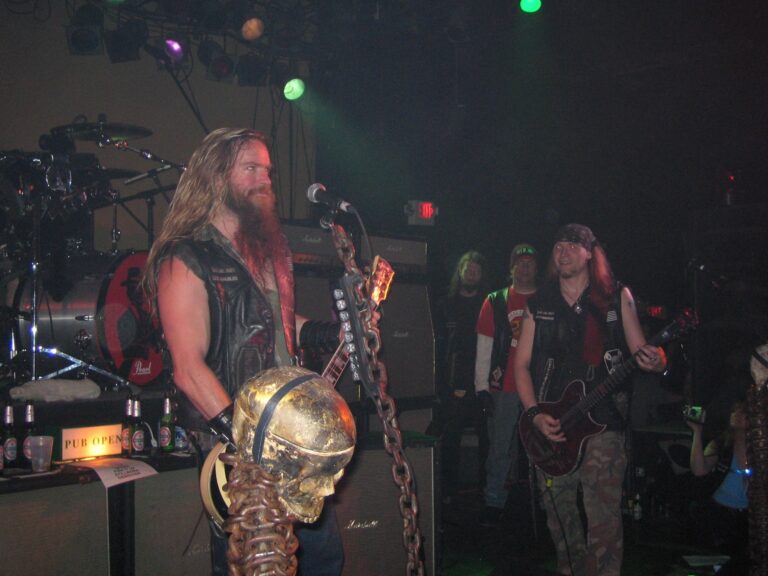
When Zakk joined the Dunlop artist roster, the SD-1 was replaced in his live rig by the MXR ZW44 Berserker Overdrive, designed to replicate the same fundamental function. But the No More Tears era sound — that compressed, harmonically rich, articulate metal lead tone that influenced an entire generation of heavy players — was built on the SD-1. Full Zakk Wylde gear guide here.
Eddie Van Halen — The Intelligent Boost
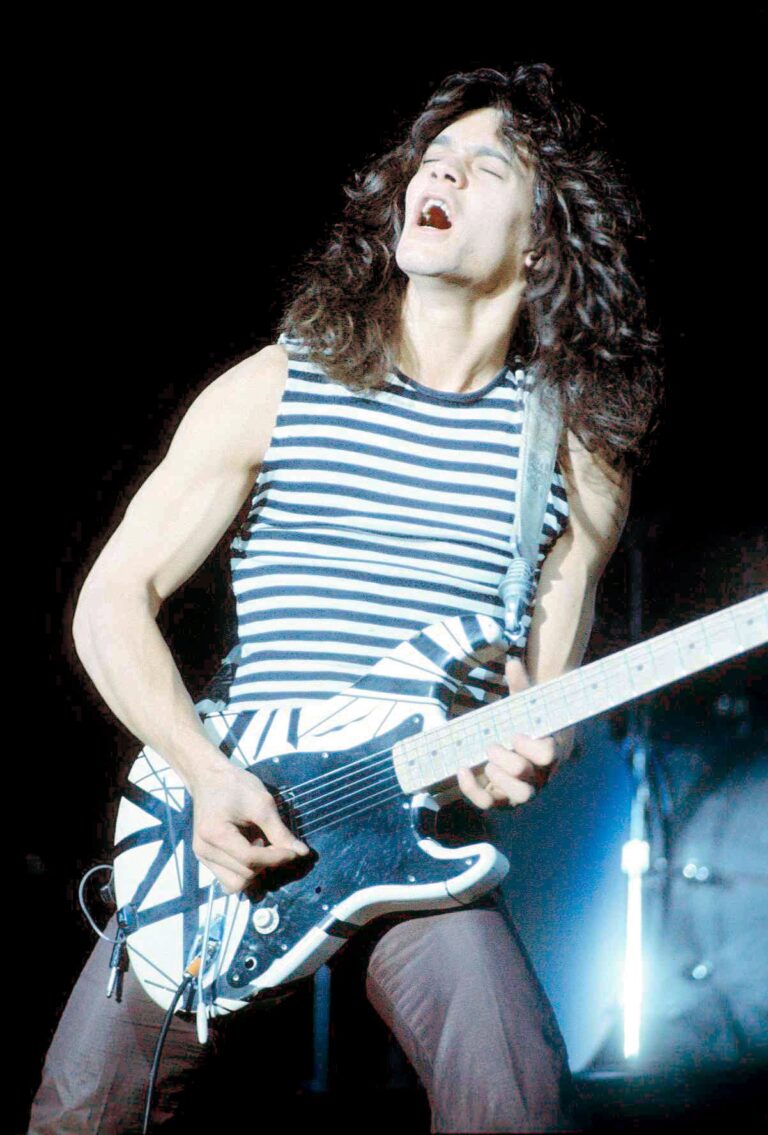
Eddie Van Halen’s relationship with the SD-1 is less about distortion and more about signal management. EVH used the SD-1 primarily as a clean boost before his Marshall amplifiers — Drive at minimum, Level at maximum, Tone set to taste. At these settings, the SD-1 contributes almost no clipping of its own; instead, it increases the signal level going into the Marshall’s preamp stage, which causes the amp itself to saturate harder and respond more immediately to picking dynamics. This technique — using an overdrive pedal at near-zero gain to push an already-distorted amp — is one of the most widely copied approaches in rock guitar, and Eddie was among the early practitioners who demonstrated its effectiveness on some of the biggest stages in the world. The Boss 40 Years article (articles.boss.info) and Boss official documentation name Eddie Van Halen explicitly as a notable SD-1 user. Full Eddie Van Halen gear guide here.
Josh Homme — The Treble Booster Reinvented
Josh Homme’s SD-1 technique is probably the most counterintuitive setting in the pedal’s history, and it is also the most influential on how a new generation thinks about the SD-1’s capabilities. Homme, characteristically tight-lipped about gear, did reveal his approach: he sets the Drive all the way down to zero and both the Tone and Level all the way up to maximum. This transforms the SD-1 from an overdrive pedal into a functionally different device — a high-gain treble booster, closer in spirit to the vintage Rangemaster treble boosters used by ’60s British players than to any modern overdrive circuit.
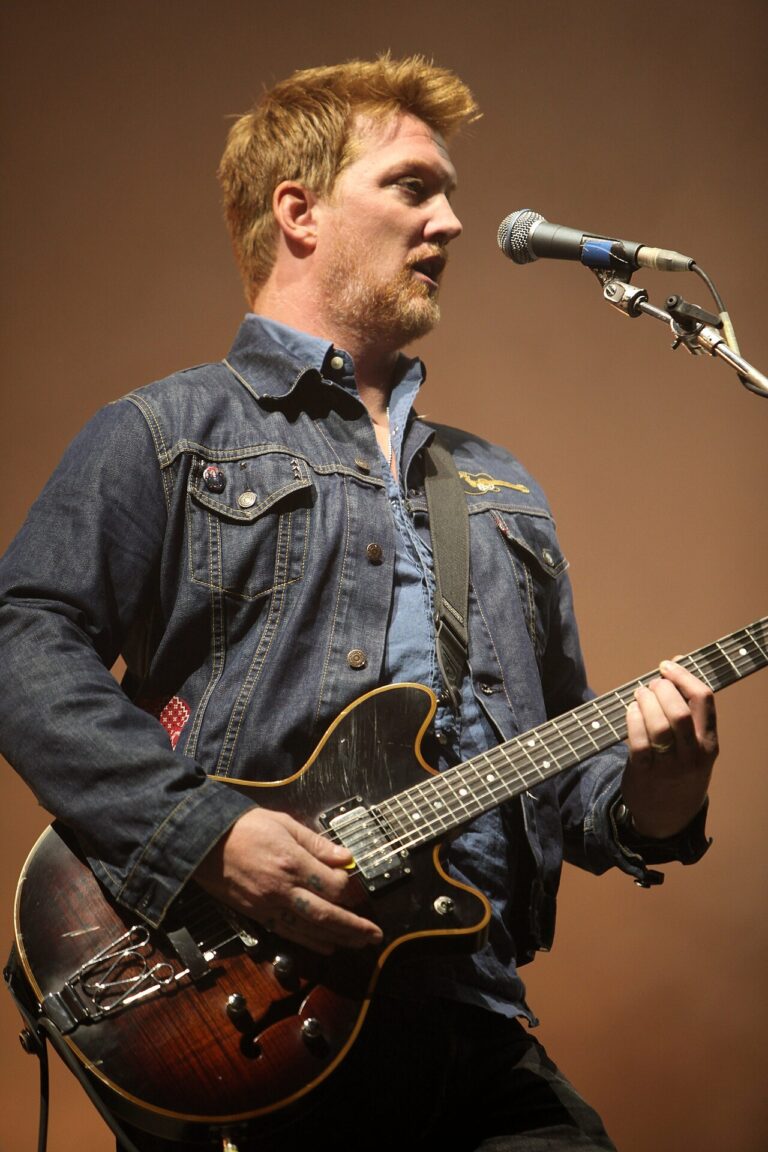
In Homme’s rig, this SD-1 operates alongside a Boss GE-7 graphic EQ that further boosts the 400Hz midrange band. The signal then hits a vintage Ampeg amplifier with its own distinctive midrange peak. The combined effect is a tone that is simultaneously massive in the low-mids and razor-sharp in the upper frequencies — the exact quality that makes Queens of the Stone Age guitar sound like it is coming from a much larger and more expensive rig than it actually is. At a documented Troubadour show, Homme’s entire pedalboard was: an Ernie Ball volume pedal, an old beat-up SD-1, a Way Huge Aqua Puss analog delay, and a Whirlwind Selector A/B box. Four pedals. That was the QOTSA tone machine. Full Josh Homme gear guide here.
John 5 — Double Up
John 5, best known for his work as lead guitarist for Mötley Crüe, takes a maximalist approach to the SD-1 — he runs two of them on his pedalboard, stacked. When he wants high-gain pinch squeals and extreme harmonic content, he engages both simultaneously, pushing his amp into saturation levels that the SD-1 circuit alone would not reach. John 5 has also been documented using the SD-1W Waza Craft version, which Boss officially lists as one of the SD-1W’s artist ambassadors alongside Mike Stern, Steve Vai, John Petrucci, and Billy Duffy. His Boss-dominated pedalboard also includes the CH-1 Super Chorus, OC-5 Octave, NS-2 Noise Suppressor, and DD-8 Digital Delay. His SD-1 use is confirmed by Boss official documentation and multiple rig rundown sources.
Other Notable SD-1 Alumni
The Boss official 40 Years article lists Kirk Hammett among the SD-1’s users during Metallica’s Kill ‘Em All days, when he was using the pedal to boost into high-gain Marshall territory before the band had access to rack-based preamps. The Edge has had an SD-1 on his pedalboard continuously since the latter stages of the Boy tour in 1981 — it appeared more recently in a Premier Guitar Rig Rundown — making it one of the longest-running verified pedal-plus-player relationships in rock history. Jimmy Page used an SD-1 during his tenure in The Firm. David Gilmour plugged into one for his 1984 solo album About Face. Prince adjusted his SD-1 on camera during the “Manic Monday” music video. Jack White used one at a White Stripes appearance on BBC’s Top of the Pops in 2002. Steve Vai, Richie Sambora, Mark Knopfler, Warren DeMartini, Jason Becker, Jonny Greenwood, Robert Smith, Bruce Kulick, Brad Whitford, and Tracii Guns are all listed as SD-1 users in Boss official documentation. Even bassist John Paul Jones has been documented with one in his rig.
The Guitar World article by Chris Gill (January 2023) notes the full breadth of the player list: “The pedal’s list of users is huge, but it is probably best known for its impact on hard rock and metal guitar during the ’80s… it is a favorite of adventurous players like John Frusciante, Jonny Greenwood, Josh Homme, Robert Smith and Jack White to the more refined sounds of Lindsey Buckingham, Tommy Emmanuel, Mark Knopfler and Lee Ritenour.” Guitar Magazine called it one of only a handful of pedals to achieve “truly iconic status.”
Tone Recipes and Settings
Recipe 1: Zakk Wylde Metal Boost (Level 6.5 / Tone 5 / Drive 6.5)
Start with the Drive at 6.5, Level at 6.5, and Tone at noon (5). Plug into a Marshall JCM800 or similar British-voiced amp with the amp’s gain already running medium-high. The SD-1’s own clipping combines with the amp’s preamp distortion for a stacked, harmonically dense lead tone with strong sustain and the characteristic SD-1 midrange cut. This is the No More Tears setting — full overdrive mode, not a clean boost. Works best with humbuckers, especially active EMGs, which have a hot output that drives the SD-1 harder. Roll the Tone slightly forward for more bite in a band mix; roll it back slightly for solo playing on a bright-voiced amp.
Recipe 2: Josh Homme Treble Booster (Level 10 / Tone 10 / Drive 0)
Drive fully counterclockwise, Level fully clockwise, Tone fully clockwise. This disengages most of the SD-1’s own clipping while simultaneously increasing the signal level dramatically and adding a significant treble emphasis. The result is not clean — the boosted signal will drive any amp into natural overdrive — but the character of that distortion comes entirely from the amp rather than the SD-1. Works best with a mid-forward amplifier (vintage Ampeg, AC30, or most EL84-based combos). For Homme’s specific tone, add a GE-7 EQ pedal after the SD-1 with the 400Hz slider boosted +3 to +5 dB.
Recipe 3: EVH Clean Boost (Level max / Tone noon / Drive min)
Drive counterclockwise to minimum, Level clockwise to maximum, Tone at noon or to taste. This is the EVH approach: use the SD-1 purely as a buffer and signal booster, letting the amp do the actual work. The SD-1 at near-zero Drive passes a hotter signal to the amp without adding significant coloration of its own. Any Marshall- or Plexi-style amp will respond with noticeably more breakup, more compression, and more sustain. This technique is most effective in front of an amp that is already running at moderate gain — it pushes it over the edge. At zero gain, the SD-1’s buffered bypass also conditions the signal slightly, reducing some of the high-frequency loss that occurs on longer cable runs.
Recipe 4: Classic Rock Amp Push (Level 6 / Tone 4 / Drive 5)
This is the all-purpose SD-1 setting for pushing a medium-gain British amp into classic rock territory. Drive at 5, Level at 6, Tone slightly darker at 4 to tame the SD-1’s natural brightness on single-coil guitars. This setting works across a wide range of amps — JCM800, JTM45, Vox AC30, Fender Bassman — and delivers the textbook “amp on the edge of breakup, pushed by a good overdrive” tone. Useful for rhythm playing where the amp’s dynamics need tightening without losing the natural amp character.
Recipe 5: Fender Clean Platform Crunch (Level 5 / Tone 6 / Drive 6)
On a clean Fender-style amp that would otherwise not distort at gigging volumes, the SD-1 with Drive at 6, Level at 5, and Tone at 6 delivers a useful medium-gain rock crunch that retains more of the SD-1’s own character. The asymmetrical clipping is audible here — the slightly jagged, harmonically rich quality of the distortion. This is less “amp pushed into saturation” and more “SD-1 as standalone overdrive.” Works particularly well with single-coil pickups, which benefit from the SD-1’s midrange push and do not mud up as quickly as humbuckers at high Drive settings.
Comparisons and Internal Links
SD-1 vs Ibanez TS9 Tube Screamer
This is the fundamental overdrive debate, and it has been running since 1981. The TS9 Tube Screamer uses symmetrical clipping, which generates primarily odd-order harmonics — the result is warm, compressed, and smooth. The TS9’s midrange peak sits around 720Hz and is famous for cutting through a mix with a focused, creamy quality. The SD-1’s asymmetrical clipping adds even-order harmonics to the mix, producing a broader harmonic texture that sounds less compressed and more “alive” but also more aggressive. The TS9 is the choice for players who want a more polished, smooth lead tone; the SD-1 is for players who want more harmonic complexity, more aggression, and less compression. The TS9 rolls off more low end; the SD-1 retains more bass for a fuller sound at the same gain settings. Neither is objectively better — they are genuinely different tools.
SD-1 vs Boss DS-1 Distortion
The Boss DS-1 uses hard-clipping rather than soft-clipping, which means the waveform peaks are cut flat rather than curved. Hard clipping produces a more aggressive, buzzing, “square wave” character with significantly more gain on tap. The DS-1 is a distortion pedal; the SD-1 is an overdrive. The practical difference: the SD-1 works with an amp’s natural character, interacting with and enhancing the amp’s own saturation. The DS-1 imposes its own distortion character more forcefully. For players using clean-headroom amps who want maximum gain from a single compact pedal, the DS-1 delivers. For players using amps that already break up and want to enhance rather than replace that character, the SD-1 is the right tool.
SD-1 vs Klon Centaur
The Klon Centaur — now going for thousands used — was designed to be as transparent as possible, preserving the guitar and amp’s natural tone while adding subtle harmonic enhancement. The Klon routes clean signal alongside processed signal and blends them, resulting in a boost-to-overdrive character that does not dramatically recolor the source. The SD-1 is a more opinionated pedal: it has its own midrange character, its own clipping texture, and it will color the signal perceptibly even at low Drive settings. The Klon is for transparency; the SD-1 is for character. Many pro boards run both — the SD-1 as a working overdrive and a Klon-style circuit as a clean boost for solos.
SD-1 vs SD-1W Waza Craft (2014)
The SD-1W Waza Craft is Boss’s premium reimagining of the original, with upgraded components and two modes. Standard mode is close to the original SD-1 but with a smoother, more refined tone control response that reduces some of the original’s sharper high-end bite. Custom mode adds more warmth, more low end, more sustain, and softer mids — less bare-knuckle, more boxing-glove, in Michael Molenda’s description. The SD-1W is the choice for players who want the SD-1 architecture in a more refined package; the original SD-1 is for players who want that specific, slightly raw asymmetrical character and are happy to pay $60 rather than $150. John 5, John Petrucci, Billy Duffy, Steve Vai, and Mike Stern are documented SD-1W users. The SD-1W does not make the original obsolete — it offers a different take on the same idea.
Buying Guide
The Boss SD-1 is arguably the easiest pedal purchase in rock guitar. New units retail for $59 to $69 USD depending on retailer and current pricing — roughly the same price as two Subway foot-longs. Used units are equally common and sell for $25 to $50 in excellent condition, because millions of units have been sold over four decades and most of them still work perfectly. Boss compact pedals are famously durable; the only things that typically fail on well-used SD-1s are the output jack from mechanical stress and the battery clip from age. Both are easy and cheap to replace.
The SD-1W Waza Craft runs $149 to $169 new and is found used in the $100 to $130 range. It is a meaningful upgrade in component quality and adds the Standard/Custom mode switch, but it does not render the original obsolete. Buy the original first. If you find yourself wanting more refinement, upgrade to the Waza Craft. If the original’s character is exactly what you wanted, you just saved $90.
The 40th anniversary inverted-color edition (black body, yellow lettering) from 2021 is a collector’s item but uses the same circuit as the current production model. No tonal advantage — purely aesthetic. If you find one in the wild at regular SD-1 prices, it is a cool conversation piece. Do not pay a premium for it.
One practical note: because the SD-1 is so inexpensive and so widely available, it is also one of the most commonly counterfeited Boss pedals. A real SD-1 has the serial number on the base plate, a solid-feeling footswitch, and the distinctive yellow Roland/Boss paint finish. Counterfeits often have softer footswitch action, printing irregularities on the panel, and sometimes a hollow sound to the chassis. If you are buying used from an individual rather than a reputable dealer, check the serial number format and compare the panel printing against Boss’s official photos.
Ownership Notes
The SD-1 runs on 6 mA of current — genuinely negligible. It will barely register on any pedalboard power supply. A single 100mA output on a standard isolated power brick can run more than a dozen SD-1s simultaneously. No exotic high-current power supply required.
The buffered bypass is worth understanding. Unlike true bypass pedals that completely remove themselves from the circuit when disengaged, the SD-1’s electronic buffered bypass keeps its input buffer active even when the pedal is off. This is actually an advantage in longer signal chains — the SD-1’s buffer drives cable capacitance more effectively than a passive true bypass switch, preserving high-frequency content that would otherwise bleed to ground over long cable runs. This is partly why Eddie Van Halen found the SD-1 useful even in signal-management roles beyond pure overdrive. The flip side: a buffered bypass pedal early in the chain can interfere with vintage fuzz circuits (like Fuzz Face types) that are designed to see the guitar’s direct pickup impedance. If you are running a Fuzz Face-style fuzz after the SD-1, consider placing the fuzz before the SD-1 in the chain, or switch to a true bypass unit between them.
Stack behavior is one of the SD-1’s most rewarding characteristics. Running an SD-1 into another already-driven stage — whether that is a pushed tube amp, a second overdrive pedal, or an amp channel with gain active — produces a complex interaction where both clipping stages contribute harmonics. This is the Zakk Wylde principle and the Josh Homme principle in different directions: more gain (Zakk), or different frequency emphasis (Josh). Experiment with the SD-1 both before and after your primary drive pedal; the results can differ dramatically.
The Tone control’s range is broader than its travel suggests. Many players who dismiss the SD-1 as “too bright” have never rolled the Tone control back past 10 o’clock. Conversely, many players who find it “too dark” have it sitting at noon. The sweet spot varies significantly by guitar and amp combination — take the time to dial it in rather than assuming noon is neutral.
Frequently Asked Questions
When was the Boss SD-1 Super OverDrive released?
1981. Boss released the SD-1 as a direct competitor to the Ibanez Tube Screamer (1979) and as an upgrade to its own OD-1 Overdrive (1977). The SD-1 added a Tone control and refined the asymmetrical clipping circuit of its predecessor. It has been in continuous production since and remains unchanged in circuit design from its original 1981 version.
What is the difference between the SD-1 and the Ibanez TS9 Tube Screamer?
The fundamental difference is in the clipping architecture. The TS9 uses symmetrical clipping (odd-order harmonics only) for a warm, compressed, smooth overdrive character. The SD-1 uses asymmetrical clipping (both even and odd harmonics) for a broader harmonic texture that sounds more complex and slightly more aggressive. The SD-1 also retains more low-end than the TS9. Neither is superior — they produce genuinely different tonal characters suited to different playing styles and amp combinations.
How did Zakk Wylde use the Boss SD-1?
Zakk Wylde ran an SD-1 in full overdrive mode — Level 6.5, Tone 5, Drive 6.5 — into dual Marshall JCM800 100-watt heads during the Ozzy Osbourne No More Tears era (1991). His Les Paul Custom with active EMG pickups drove the SD-1’s input hard, and the pedal’s own clipping combined with the JCM800’s preamp distortion for the compressed, singing, harmonically dense lead tone associated with that period of his career. He later replaced the SD-1 with the MXR ZW44 Berserker Overdrive when he joined the Dunlop artist roster.
What is Josh Homme’s Boss SD-1 setting?
Josh Homme uses the SD-1 as a treble booster rather than a traditional overdrive: Drive fully counterclockwise (zero), Tone and Level both fully clockwise (maximum). This setting adds virtually no clipping from the SD-1 itself but dramatically boosts the signal level and high-frequency content, effectively functioning like a vintage treble booster. In his rig, this is combined with a Boss GE-7 graphic EQ boosting 400Hz and a vintage Ampeg amplifier with its own midrange character. The combination produces the thick, clear, brutally loud QOTSA guitar tone with surprisingly minimal equipment.
Did Eddie Van Halen really use a Boss SD-1?
Yes. Boss’s official 40 Years of the SD-1 article (articles.boss.info) explicitly names Eddie Van Halen as a notable SD-1 user. EVH used the pedal primarily as a clean signal boost — Drive at minimum, Level at maximum — in front of his Marshall amplifiers, pushing the amp harder without the pedal itself adding significant clipping. He also used the SD-1 as a buffer and signal booster on stages requiring long cable runs. The SD-1 was not EVH’s primary distortion source (that came from the amp itself), but it was a documented tool in his rig.
What is the Boss SD-1W Waza Craft and how does it differ from the original?
The SD-1W Waza Craft, released in 2014, is Boss’s premium version of the SD-1 with upgraded components and two operating modes. Standard mode is a refined version of the original SD-1 circuit with a smoother tone control response. Custom mode adds more warmth, more low-end weight, and more sustain, with softer mids — a less aggressive, more rounded character. The SD-1W is not a replacement for the original but a variant. It lists for approximately $149 to $169 new. Notable SD-1W users include John 5, John Petrucci, Billy Duffy, Steve Vai, and Mike Stern.
Is the Boss SD-1’s buffered bypass a problem?
For most rigs, no — the SD-1’s buffer is actually an asset, preserving high-frequency content on longer cable runs and driving subsequent pedals more effectively than a passive true bypass switch. The one scenario where it can cause problems is if you are running a vintage-style Fuzz Face or similar silicon/germanium fuzz circuit immediately after the SD-1. These fuzzes are designed to see the high impedance of a guitar pickup directly, and a buffer in front of them changes their tone and feel significantly. The solution is to place any such fuzz before the SD-1 in your signal chain.
Is the Boss SD-1 good for metal?
Absolutely, when used correctly — which is typically as a boost into a high-gain amplifier rather than as a standalone distortion source. The Zakk Wylde approach (SD-1 into a cranked JCM800) produces a compressed, harmonically saturated metal tone. At high Drive settings, the SD-1 can also produce usable metal distortion into a clean amp, though it lacks the gain ceiling of dedicated metal distortion pedals like the Boss HM-2 or MT-2. The SD-1’s asymmetrical clipping gives metal rhythm tones a tighter, more articulate character than many symmetrically clipping overdrives, which can sound muddier at high gain with fast palm-muted passages.
Image credits
- Top image: Boss fx pedals by David J (sebilden). CC BY 2.0. Cropped to retain the target pedal and resized for web.
- Josh Homme: Rama, Wikimedia Commons, CC BY-SA 2.0.
- Zakk Wylde: Joanna Corwin, Wikimedia Commons, CC BY-SA 3.0.
- Eddie Van Halen: Carl Lender, Wikimedia Commons, CC BY 2.0.
Latest News
Related
On This Day
Wednesday 11 November
From this week: