The $5,000 Pedal Built on a Folding Card Table: Inside the Klon Centaur Professional Overdrive
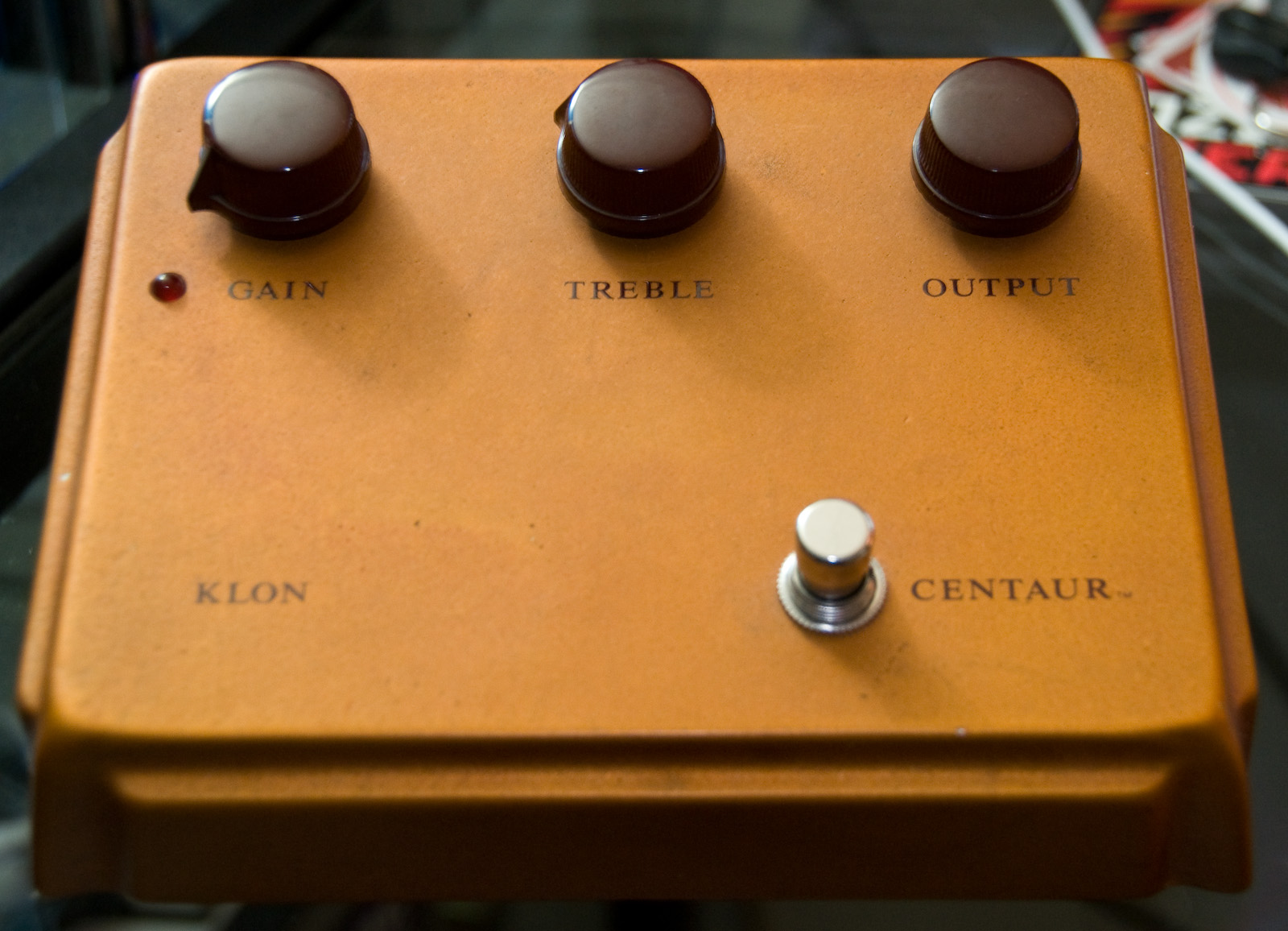
Klon Centaur, as identified by the photographer. Photo: “Klon Centaur” by ArtBrom, CC BY-SA 2.0 (https://creativecommons.org/licenses/by-sa/2.0/). Source image unchanged. Source: https://www.flickr.com/photos/art-sarah/2867531448/
The Klon Centaur Professional Overdrive is guitar's most legendary pedal. History, circuit, famous users Jeff Beck and John Mayer, plus how to find one today.
There is a folding card table in the Boston-area apartment of Bill Finnegan, and on that table, over the course of fifteen years, one man assembled roughly eight thousand guitar pedals by hand. Not in a factory. Not with a team. Just Finnegan, his components, and an obsessive determination to build something that the guitar world didn’t yet know it needed.
The result — the Klon Centaur Professional Overdrive — became arguably the most mythologized stompbox in the history of electric guitar. It has been described as “the ’59 Les Paul of pedals” (that’s Joe Perry’s line). It regularly sells for between $2,000 and $5,000 on the used market, sometimes more. Its circuit has been dissected, cloned, argued about on forums, and reverse-engineered so many times that the original “secret” has long since evaporated into the internet. And yet, somehow, the real thing still commands prices that make grown guitarists cry.
This is not a review. The Klon Centaur has been out of production since 2009 and you can’t buy one new. This is a feature — a deep dive into where the Centaur came from, what it actually does to your signal, why players from Jeff Beck to Warren Haynes to John Mayer put it on their boards, and how to chase its character whether you’re working with an original, a KTR, or one of the dozens of excellent clones that Finnegan’s invention inspired.

The Quest That Became a Legend: Bill Finnegan and the Birth of the Centaur
The Klon Centaur was born out of frustration. Bill Finnegan, a Boston native, had a problem: he played a Telecaster through a Fender Twin Reverb, and he wanted to add some juice between them — a little push, a little sweetness — without fundamentally changing what he heard when he plugged in clean. He tried the obvious option first. The Ibanez Tube Screamer was the go-to boost pedal of the era, and it’s excellent. But it wasn’t what Finnegan wanted. The TS9’s 700-Hz midrange hump and inherent warmth made his tone noticeably different when engaged. He wanted something that boosted without coloring, that thickened without smearing, that worked with his guitar and amp rather than on top of them.
So in 1990, he started building one. He enlisted help from Fred Fenning, a friend and MIT graduate (Fenning passed away before the pedal ever went to market), and a student from MIT who contributed early in the development. What followed was four years of iteration — tweaking, testing, playing, discarding, and rebuilding — until Finnegan arrived at a circuit he believed in.
The Klon Centaur first went on sale in 1994, priced at $329. That was expensive for a guitar pedal in 1994. Finnegan built every unit by hand and could only produce so many. He sold them primarily through word of mouth and through ads in the back of guitar magazines. Players who tried one tended to buy one. And those who couldn’t get their hands on one — well, they told their friends, and the legend grew.
What helped was where Finnegan was based. Boston had a thriving club scene, and significant touring acts came through regularly. Finnegan would bring pedals to soundchecks, introduce himself to guitarists, and let the pedals speak for themselves. Warren Haynes, then leading Gov’t Mule, recalled getting his first Centaur exactly this way. “He came by our soundcheck and gave me one,” Haynes told Ultimate Guitar in 2024. “I liked it a lot.” Joe Perry and Brad Whitford of Aerosmith were also among the very first wave of Klon owners — Perry described himself and Whitford as being “some of the first guys” to get them, and each acquired three or four units.
Finnegan covered every circuit board he built with thick black epoxy, a deliberate attempt to protect his design from reverse engineering. It worked — for a while. Eventually, patient and determined cloners chipped away the goop, traced the circuit, and published their findings. But by that point, the Klon had already earned its reputation through its sound alone, not its secrecy.
Horsie and Non-Horsie: Understanding the Two Eras
Collectors make an important distinction between two physical generations of the Klon Centaur. The earlier “Horsie” units, produced from 1994 through approximately 2000, feature the iconic centaur figure — half man, half horse — silkscreened on the front panel beneath the knobs. These are the most recognizable Klons, the ones that appear in magazine photographs and on famous pedalboards. They came in both gold (far more common) and silver finishes, with silver commanding a meaningful premium among collectors.
From roughly 2000 onward, Finnegan transitioned to the “Non-Horsie” version — a cleaner, less decorated enclosure with a “PROFESSIONAL OVERDRIVE” plate and the Klon name, but without the centaur graphic. These later units also came in gold and silver, and are equally well-regarded sonically. The circuit evolved slightly across the full production run, but the fundamental design remained consistent. If anything, late production Non-Horsie units benefit from Finnegan’s accumulated expertise over years of hand-building.
Production ended in 2009 after approximately 8,000 total units across both eras. Finnegan wasn’t being coy about stopping — he simply didn’t want to hand-build pedals indefinitely, and he recognized that the growing used-market prices meant his creation was being passed around as collectibles rather than being used as tools. He had set out to build a working pedal, not a trading card.
What the Circuit Actually Does: Charge Pumps, Clean Blends, and Germanium Diodes
The Klon Centaur’s circuit is original — it wasn’t based on existing overdrive designs, and it incorporates a few elements that were genuinely unusual when Finnegan designed it. Understanding these elements explains why the pedal sounds the way it does.
The first key piece is the charge pump. The Centaur runs on a standard 9V power supply or battery, but internally it uses a MAX1044 voltage doubling IC to raise the operating voltage to 18V. This higher rail voltage dramatically increases headroom — the amount of signal the circuit can handle cleanly before distortion begins. At 18V, the op-amp at the heart of the design can swing its output much wider before clipping, which means low-gain settings stay very clean while the dynamic response at higher gain settings remains musical and unhysteretic. This is a fundamentally different approach from most 9V overdrive designs, and it contributes substantially to the Centaur’s characteristic “openness.”
The second unusual element is the parallel clean blend. Unlike most overdrive pedals, which process the entire guitar signal through their gain and clipping stages, the Klon splits the signal into two paths. One path goes through the gain stage and is clipped by diodes. The other path travels straight through the circuit, clean and unprocessed. At the output, these two signals are recombined. The result: no matter how high you turn the Gain knob, there is always clean signal mixed into the output. Your low end, your attack transients, your picking dynamics — they pass through untouched, while the clipped, harmonically enriched signal adds body and sustain on top. This is the primary reason the Centaur sounds more “transparent” than conventional overdrive designs. It is not truly transparent — but it preserves elements of your tone that other pedals sacrifice.
The clipping is handled by 1N34A germanium diodes. Unlike the more common silicon diodes used in designs like the Tube Screamer, germanium diodes have a significantly lower forward voltage (approximately 0.35V versus 0.7V for silicon). This lower threshold means the diodes conduct — and therefore clip — at lower signal levels, producing a softer, more gradual onset of saturation. The character of germanium clipping leans slightly warmer and less aggressive than silicon, which reinforces the Centaur’s characteristic smoothness even at higher gain settings.
The op-amp, for all the mystique surrounding the Centaur’s circuit, is the decidedly non-exotic TL072 — a standard, widely available dual op-amp found in countless studio and guitar applications. This is worth emphasizing: the Klon Centaur does not sound the way it does because of rare or unobtainable components. It sounds the way it does because of intelligent circuit design.
The Treble control is a high-frequency shelving EQ that allows the player to compensate for or accentuate the brightness of the overdriven signal. At noon it’s roughly neutral; clockwise adds upper-mid presence; counter-clockwise rolls back the top end for warmer tones at higher gain settings. The Output knob controls the final level before bypass. The Gain knob, perhaps counterintuitively, controls the balance between the clean and clipped signals rather than operating as a simple gain stage — at very low settings, almost entirely clean signal reaches the output, while higher settings bring more of the clipped signal into the blend.
One last circuit feature worth knowing: the Centaur has a buffered bypass. When the pedal is switched off, the guitar signal still passes through part of the circuit — specifically a buffer stage. This is not a flaw; it is by design. Finnegan’s buffer is widely considered one of the best-sounding buffers in the guitar pedal world, and many players report that their entire rig sounds better with the Centaur in the chain regardless of whether it’s actively engaged. For players who use long cable runs or large pedalboards, the Centaur’s always-active buffer can meaningfully improve signal integrity.
Specifications
Famous Players: Verified
Jeff Beck
Jeff Beck was a Klon Centaur user for a significant stretch of his later career — confirmed across multiple primary sources including Premier Guitar rig documentation and a well-documented piece of guitar history involving Joe Perry. Perry, who had accumulated three or four early Centaurs alongside Brad Whitford as among the very first owners, gave one of his original Klons to Beck at the Rock and Roll Hall of Fame soundcheck in 2009 — the all-star performance for Beck’s induction. “I want to adjust the karma here,” Perry told Beck, referencing an accidental theft that had occurred decades earlier involving a Colorsound fuzz on Aerosmith’s early Boston tour. Beck “was pretty surprised to get it,” Perry recalled in a 2023 interview with Total Guitar.
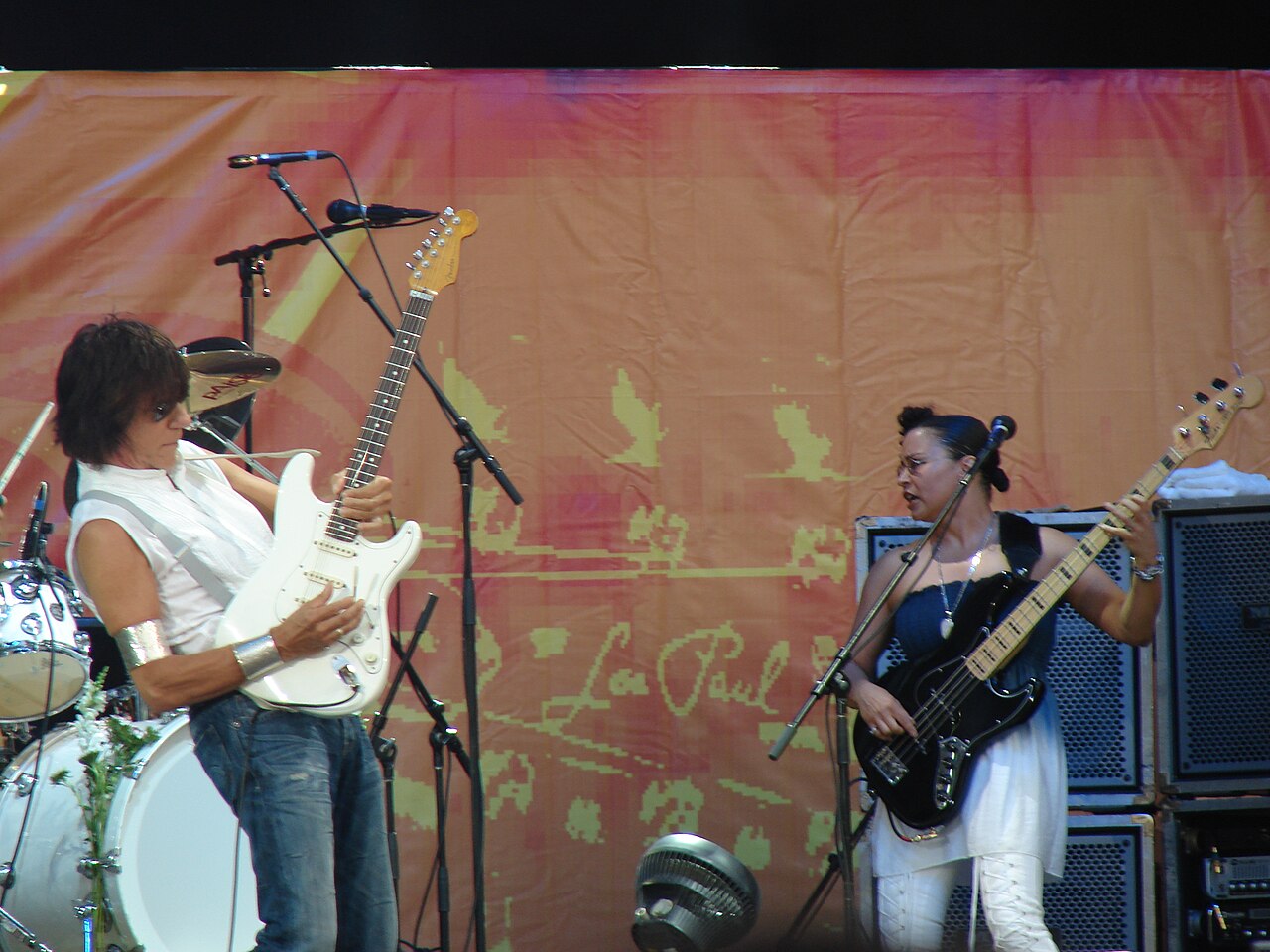
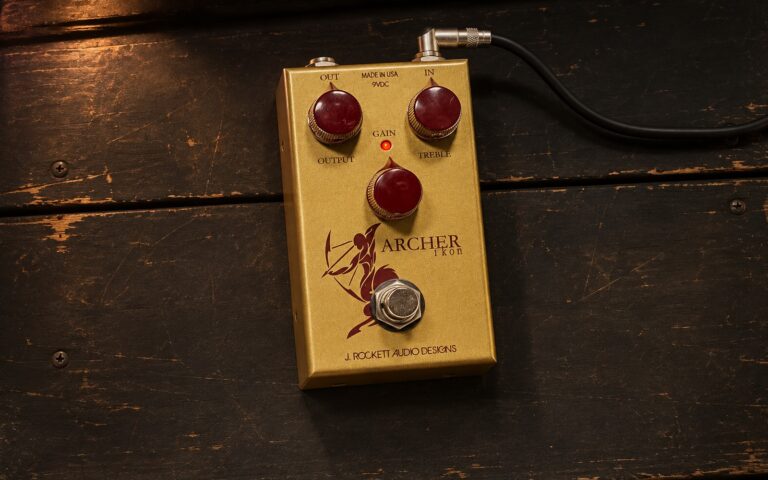
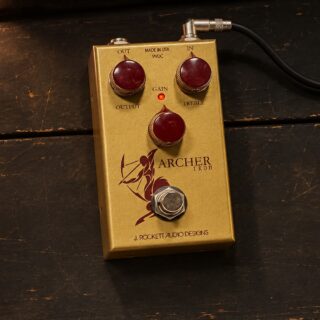
Beck subsequently kept the Centaur on his pedalboard for years. Premier Guitar documented him using it on his Brian Wilson tour alongside a Snarling Dogs wah, a Hughes & Kettner Rotosphere, a Way Huge Aqua-Puss delay, and an MXR Carbon Copy — a characteristically spare, purposeful pedalboard. His guitar tech confirmed that Beck “loves the Klon” and that it had been a fixture for the duration of that period. Later in his career, Beck transitioned to the J. Rockett Archer (a Klon-circuit clone designed partly with his input), but the years of original Centaur use are well established. Read our Jeff Beck gear guide for full signal chain detail.
Joe Perry
Joe Perry and Brad Whitford were among the earliest Klon Centaur owners — not just among the first to buy them, but among the first people Finnegan found for his pedals in Boston. Perry described having three or four original Centaurs and called the pedal “the ’59 Les Paul of pedals” — high praise from a guitarist who has owned the actual article. The Aerosmith connection to the Klon’s early history is genuine and significant. See our Joe Perry gear guide for his complete signal chain across Aerosmith’s decades.

Warren Haynes
Warren Haynes’s relationship with the Klon Centaur is unusually well documented because Haynes himself has discussed it in depth — most recently in a December 2024 interview with Guitar Player. He received his first Centaur from Finnegan directly, at a Gov’t Mule soundcheck in Boston. “He had been working on it for, I think about a year and a half, on a way to get your sound to boost without changing it,” Haynes recalled. “The Klon did that even better to the extent that you couldn’t detect any difference in the tone if you set it that way.”
Haynes used the Centaur as a pure level boost for years — “One of his Tube Screamers was just to get on top of the band but not have your tone change… I used it that way for a long time.” He now uses it with slightly more Gain and warmer Treble. “The way I’ve been setting it now is where it’s a little warmer and a little gainy-er, and it’s great.” Haynes owns both a gold and silver Centaur. On the original’s sky-high prices: “I don’t think anything’s worth the price they put on it these days, but it’s a great pedal.” Eighty percent of his tone comes straight from guitar and amp; the Klon accounts for a meaningful portion of the remaining twenty. Full Warren Haynes gear breakdown in our guitarist guide.
John Mayer
John Mayer is one of the most-documented Klon Centaur users in the modern era, and his specific settings are publicly known thanks to a remarkable moment during a 2022 Sob Rock tour show in Toronto. Fan Raul Nieto brought his own Klon Centaur to the front row; at the end of the show, Mayer took the pedal, walked back to his own board to consult his settings, dialed Nieto’s Centaur to match, marked the knob positions on the chassis, and signed it. The documented Mayer settings: Gain at 11 o’clock, Output at 11 o’clock, Treble at 1 o’clock — a moderate low-gain boost with a touch more brightness than noon. His Klon is also confirmed through a John Mayer band-owned Centaur (serial #2035) that appeared on Reverb, and through a 2010 Guitarist Magazine interview where Mayer stated: “Right now it’s the Klon Centaur. It’s the kindest, most satisfying distortion — it’s the best ‘loud’ I’ve heard.”
Nels Cline
Nels Cline’s use of the Klon Centaur is consistent with the pedal’s appeal to players who want their amp pushed without their tone compromised. As the lead guitarist of Wilco, Cline operates in a sonic world where clarity and dynamics matter enormously — overdriven but articulate, experimental but musical. Multiple sources confirm the Centaur among his tools. Our Nels Cline gear guide has the full picture of his experimental pedalboard alongside the Wilco-specific Nels Cline gear feature.
Matt Schofield
UK blues guitarist Matt Schofield used the Klon Centaur for a significant period as his primary clean boost — “for a long time,” in his own words via his website, deployed purely for level rather than gain, pushing his already-stellar amp tones without intervention. He was one of the players who used the Centaur exactly as Finnegan intended: maximally transparent, minimally colored, purely a volume push. Schofield has since moved to a Vemuram Jan Ray as his boost — “the first thing to come along that made me pull the Klon off the board” — which itself speaks to the Centaur’s long reign. That the Jan Ray displaced it is not a slight: the Jan Ray is widely regarded as one of the finest overdrive pedals of the 2010s.
Tone Recipes and Settings
Recipe 1: The Pure Level Boost (Warren Haynes Classic Approach)
This is the Centaur used as Finnegan originally intended — a way to get louder without getting different. Set Gain to its lowest position (fully counter-clockwise, approximately 7 o’clock). Set Treble at noon. Set Output above unity — how far depends on how loud you need to get, but start at 2 o’clock and adjust to taste. With these settings, the Centaur adds barely perceptible harmonic sweetness while delivering meaningful volume increase. Your amp does the work; the Klon just gets you there.
This works best with a tube amp already producing some natural breakup. The signal push from the Centaur nudges the amp further into its sweet spot without adding pedal character. Haynes used this approach with a Les Paul into Marshall-style amps and Soldano-voiced power sections. The result: same tone, bigger sound. Start here before you explore anything more complex.
Recipe 2: The John Mayer Lead Boost
Mayer’s documented settings are an excellent starting point for a musical low-gain boost with a touch of chime: Gain at 11 o’clock, Output at 11 o’clock, Treble at 1 o’clock. The slightly elevated Gain setting brings more of the clipped signal into the blend without the sound becoming overtly “driven.” The Output at 11 o’clock is slightly below unity — Mayer compensates for this with his amp’s own gain structure and uses the Klon more for its tonal character than for raw volume increase. The Treble at 1 o’clock adds a touch of sparkle that flatters single-coil guitars, particularly Stratocasters and PRS Silver Skys.
This is a brilliant setting for pushed clean tones on the edge of breakup — not full overdrive, but not clean either. Think the edge of note bloom, where every pick attack has weight and every string bend sings with sustain. A Fender Deluxe Reverb or Super Reverb on the edge of breakup responds particularly well.
Recipe 3: Warm Gainy-er Blues
This is Warren Haynes’s current preferred approach — “a little warmer and a little gainy-er” than the pure level boost. Set Gain at 9-10 o’clock, Treble at 11 o’clock (slightly darker than noon), Output adjusted to above-unity volume. The result is a subtle but palpable harmonic richness — not quite overdrive, but not clean either. Individual notes take on a slight bloom and sustain that pulls from deep in the tubes rather than the pedal circuit.
This setting works well for blues-rock soloing where you need your notes to sustain without sounding artificially compressed. A Les Paul into a moderately hot amp — Haynes favors Mesa/Boogie and Gibson amp combinations — will yield a response that feels more like amp saturation than pedal coloring. That’s the Centaur’s cleanliest trick: making you forget the pedal is there.
Recipe 4: The Full Gain Texture Push
The Centaur is not a high-gain pedal, but it has more gain on tap than many players realize. Set Gain at 2-3 o’clock, Treble at noon to 1 o’clock, Output at unity. At these settings, the clipped signal begins to dominate the clean blend, and the germanium diodes’ soft saturation character becomes the defining texture. The result is warm, harmonically dense overdrive with excellent note separation and dynamics — not the compressed, saturated character of a silicon-diode drive, but something more open and musical.
Think of this as a light crunch setting rather than a heavy drive. It responds beautifully to picking dynamics: dig in and you get bite; back off and it clears up. Stacking this setting into a Tube Screamer TS9 or the Boss DS-1 after it creates layered, touch-sensitive gain structures that are difficult to achieve with any other combination.
Recipe 5: The Stacked KTR / Clone Setting
If you’re running a Klon KTR or a quality clone (see Buying Guide below), the same principles apply. The KTR uses the same circuit as the original Centaur with the addition of a switch for buffered or true bypass. For the stacked approach: run the Klon/KTR at Gain 9 o’clock, Output at unity, Treble noon into a second drive pedal — a Pro Co RAT 2 or a TS9 — set for moderate gain. The Klon’s clean blend acts as an anchor, preserving the low-end definition that the second pedal might otherwise compress away. This is the secret to thick, heavy rhythm tones that remain articulate and punchy regardless of gain level.
Signal Chain Placement and Interaction
The Klon Centaur goes before your amplifier input in almost every context. Unlike some pedals, the Centaur was designed to work with your amp’s own gain stages — it’s pushing the amp to work harder, not replacing what the amp does. The sequence that works in the vast majority of rigs: guitar → tuner → wah → Klon → additional overdrive/distortion → modulation → amp.
The buffered bypass deserves specific mention in the context of signal chain design. The Centaur’s buffer is essentially always active, even when the pedal is switched off. This matters for two reasons. First, it means the Centaur conditions your signal from the moment it’s in your chain, which can genuinely improve tone across the board, particularly in rigs with long cable runs or many true-bypass pedals. Second, it means the Centaur does not have the loading issues with vintage Fuzz Faces and germanium fuzzes that some buffered pedals exhibit — the Klon’s buffer is well-matched to fuzz inputs. Unlike the Boss DS-1, whose buffered bypass can cause impedance mismatches with germanium fuzzes, the Centaur plays nicely before most fuzzes in the chain.
Placement relative to a wah pedal: put the Klon after the wah for the standard approach. Klon before wah gives a more filtered, slightly less vocal sweep. Neither is wrong — experiment with your specific wah and amp combination. The Dunlop GCB95 Cry Baby and the Centaur work well together in either order, with the standard wah-first sequence delivering the more conventional response.
The Centaur stacks exceptionally well with other pedals because of its clean blend. When you run the Centaur into a driven amplifier, the amp’s own saturation characteristics interact with the pedal’s clean-blended signal in ways that feel more like the guitar is working with the amp than any pedal pushing anything. This is the genuine functional difference from other overdrive approaches and is why players who “don’t use pedals” often keep a Klon on their board.
Comparisons: How the Centaur Sits in the Overdrive Landscape
Klon Centaur vs. Ibanez TS9 Tube Screamer
This is the comparison that defined the Centaur’s original identity. The TS9 Tube Screamer adds a pronounced 700-Hz midrange hump that pushes lead lines forward in a mix and adds warmth to single-coil pickups — but it also clearly colors the guitar’s tone. The Centaur does not boost mids in the same way. Its parallel clean blend preserves the guitar’s original frequency balance while adding harmonic complexity. Warren Haynes’s testimony is the clearest expression of this difference: he loved the TS9’s function but found the Klon did the same job “without changing the tone,” which for him was decisive.
For a Strat through a clean amp: the TS9 makes it warmer and pushes it toward a midrange-forward blues character. The Centaur makes it bigger and sweeter while keeping it sounding like that specific Strat through that specific amp. Both are valid. Neither is “better.” The question is whether you want pedal character or amp character.
Klon Centaur vs. Boss BD-2 Blues Driver
The Boss BD-2 Blues Driver is a high-gain, asymmetrically clipping drive pedal designed to emulate the character of overdriven tube amplifiers. It is expressive and touch-sensitive, particularly good with single-coil guitars, but it adds significant color and compression at higher settings. The Centaur at equivalent gain settings will sound noticeably more open, more dynamic, and less “like a drive pedal.” The BD-2 is the better choice when you want that classic overdriven character. The Centaur wins when you want your amp to be the drive engine and the pedal to merely feed it.
Klon Centaur vs. Klon KTR
The KTR, released in 2012, uses the same original Centaur circuit in a smaller enclosure with SMD (surface-mount) components rather than through-hole. Finnegan has stated clearly that the circuit is identical. Most serious players who have used both confirm that the difference — if any — is below the threshold of meaningful impact in a live or studio context. The KTR adds a buffered/true-bypass switch that the original Centaur lacked. Used KTRs are available in the $279–$350 range, representing the closest available approximation to the original without entering collector-territory pricing. For working players, the KTR is the pragmatic choice.
Klon Centaur vs. Clones
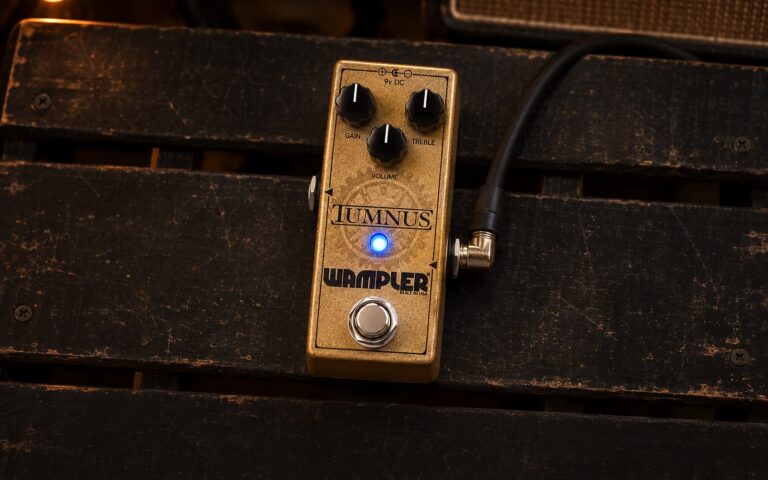
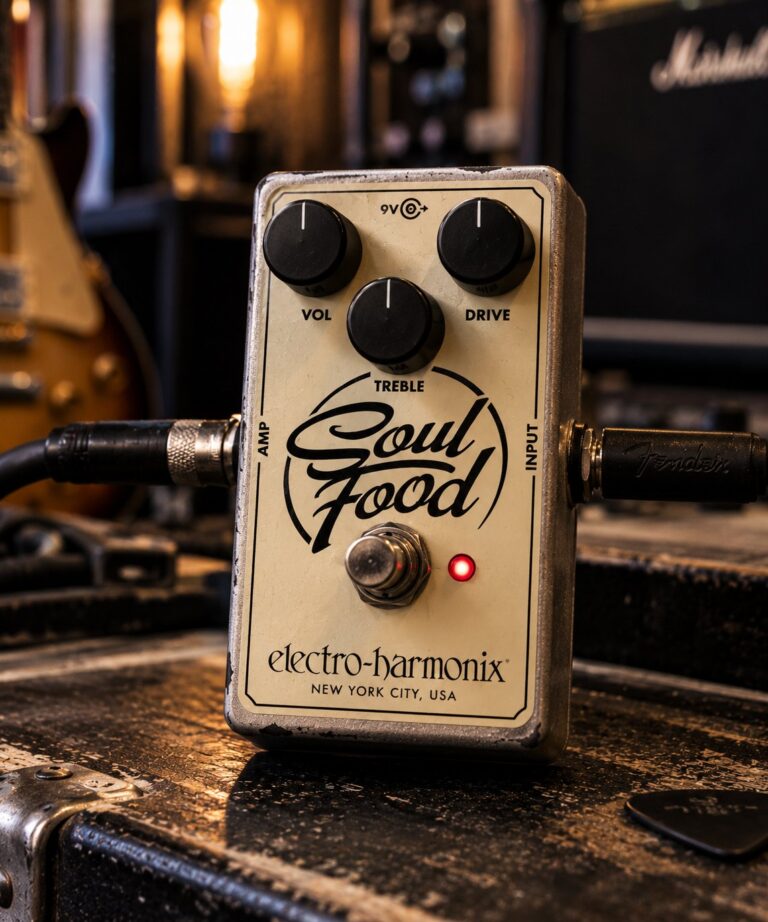
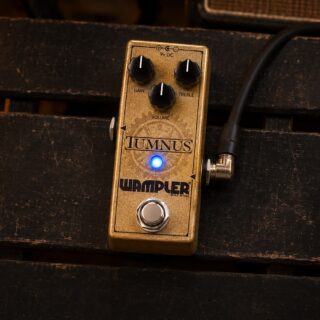
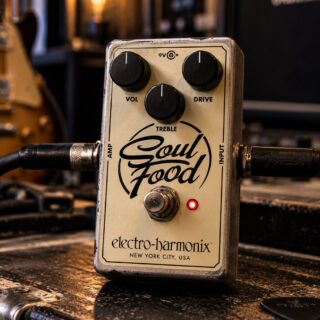
The clone market for Klon-type pedals is vast and genuinely impressive in quality. The EHX Soul Food ($55–65) captures the essential clean-blend architecture at a fraction of the price. The Wampler Tumnus ($99) and Tumnus Deluxe ($149) offer additional EQ flexibility. The J. Rockett Archer ($149–$179) — the pedal Jeff Beck switched to from his original Centaur — is a widely trusted Klon-circuit design. The Ceriatone Centura and Warm Audio Centavo ($149–$199) are among the most circuit-accurate clones available. All deliver the core Klon experience: parallel clean blend, germanium-ish clipping character, excellent buffering, and that characteristic “glass amplification” of your rig’s existing voice.
The Klon KTR: Finnegan’s Authorized Continuation
After discontinuing the Centaur in 2009, Finnegan spent three years developing a more producible successor. The Klon KTR launched in 2012, initially with some controversy — it was smaller, used surface-mount components, and looked nothing like the iconic original. Players were skeptical.
The skepticism evaporated relatively quickly once people played them. The core circuit is identical to the Centaur, including the charge pump, the parallel clean blend, and the germanium diode clipping. The KTR adds a small switch on the side for toggling between buffered and true bypass — a genuinely useful feature for players who want to leave the buffer out of their chain when the pedal is disengaged. The enclosure is significantly smaller than the Centaur but built to high quality standards. The KTR retailed around $299 when available from Finnegan directly, and remains available periodically through authorized channels and used markets, typically in the $279–$375 range depending on condition and availability.
For a guitarist who wants the Klon circuit without paying collector prices, the KTR is the honest answer. Finnegan built it. The circuit is the same. The tone is the tone.
Buying Guide: Original, KTR, or Clone?
The right choice depends entirely on what you’re optimizing for.
If you want a working guitar pedal and are not concerned with resale value or provenance: buy a quality clone. The EHX Soul Food at $55–65 is the entry point; it captures the essential character with minor compromises on detail. The J. Rockett Archer, Wampler Tumnus, Ceriatone Centura, or Warm Audio Centavo ($99–$199) take you very close to the KTR experience. Test several if you can — the Klon topology sounds subtly different from builder to builder due to component choices in the clipping stage.
If you want the authentic circuit in a working player’s tool: buy a used Klon KTR ($279–$375). The circuit is identical to the original, Finnegan made it, and it’s a fraction of the Centaur’s price. This is the best value proposition in the Klon family for actual use.
If you want an original Centaur for the experience, the history, or the investment: budget accordingly. Non-Horsie units in excellent condition with original box typically fetch $2,000–$4,000. Horsie units command $3,000–$5,000, with silver Horsies at the top or beyond that range. Silver examples in any good condition should be authenticated carefully — there are reproductions in circulation. Buy from known and reputable sellers with verifiable provenance. Serial number documentation and original boxes add meaningfully to value and authenticity confidence.
What to listen for when auditioning any Klon-type pedal: run it with Gain at minimum, Output above unity, Treble at noon. Does it sound like more of your guitar and amp? Is there a slight sweetness and warmth that wasn’t there before? Does it feel more dynamic and responsive, not less? If yes, you have the Klon character. If it sounds like a pedal was turned on, something is off.
Living with the Centaur: Ownership Notes and Practical Details
The Centaur’s buffered bypass operates at all times, even when the pedal appears switched off. This is by design and beneficial in most rigs. The one exception: players running a very short cable run from guitar to amp with no other pedals, who prefer the “plug-straight-in” character of a completely unbuffered signal. In that specific context, a KTR with its bypass switch on true-bypass mode, or a clone offering true bypass, would be the technically purer choice. But in a real-world pedalboard context, the Centaur’s buffer is a feature.
The Treble control interacts strongly with the Gain setting. As you increase Gain, the overdriven signal becomes slightly brighter and more pronounced in the upper mids — rolling Treble counter-clockwise compensates for this and maintains warmth at higher gain levels. At lower Gain settings, Treble at noon or slightly clockwise adds presence that keeps the boosted signal from sounding too dark or compressed. This interaction is worth spending time with before landing on your settings.
Output level on the Centaur can go well above unity gain — the Output knob has significant range. Be careful when testing with unfamiliar amplifiers; at maximum Output the Centaur can push an amplifier input stage very hard, which may produce unexpected results (usually not bad results, but potentially loud ones). Start with Output at noon and adjust from there.
The Centaur’s current draw is low by modern pedal standards — it runs efficiently and is happy on any quality 9V regulated supply. Avoid noisy or unfiltered supplies; because the charge pump is sensitive to supply noise, poor power can introduce hum that wouldn’t appear in other pedals. A high-quality isolated supply (such as a Strymon Zuma, MXR Iso-Brick, or similar) is the appropriate choice for any Centaur or KTR.
For direct recording, the Centaur needs a speaker simulator or amp modeler after it — it is a guitar pedal, not an amp simulator, and going direct into a DAW produces a thin, un-cabinet-compensated signal. Used before a quality amp sim plugin or hardware solution like the Walrus Audio ACS1, the Centaur performs extremely well in direct recording contexts, contributing the same warmth and bloom it provides live.
FAQ
What makes the Klon Centaur sound “transparent”?
The Centaur is not truly transparent — it does alter your signal. But it uses a parallel clean blend that mixes unprocessed, un-clipped signal with the overdriven signal at the output. This means your guitar’s original frequency balance and attack transients are always present, even at high gain settings. Most overdrive pedals process the entire signal through their clipping stage; the Centaur does not. That distinction is the source of its “transparent” reputation.
Is the Klon KTR really the same circuit as the original Centaur?
Yes, according to Bill Finnegan himself. He has stated publicly that the KTR uses the same original Centaur circuit, the same charge pump, the same diode clipping, and the same operational principles, adapted to surface-mount component form. The KTR adds a buffered/true-bypass switch that the original lacked. Blind tests conducted by multiple trusted gear reviewers have found no meaningful tonal difference between original Centaurs and KTRs.
Why do original Klon Centaurs cost so much?
Limited supply meets sustained demand. Only approximately 8,000 units were ever built, and Finnegan has no intention of resuming production of the original. Collector culture around boutique pedals, combined with the Centaur’s genuine sonic merit, genuine historical significance, and genuine endorsement from high-profile players, keeps prices elevated. The fact that the KTR exists and sounds the same — and that excellent clones exist for under $200 — doesn’t dampen the original’s appeal among collectors who value provenance alongside performance.
What are the differences between Horsie and Non-Horsie Klons?
The primary difference is cosmetic. Horsie units (approximately 1994–2000) feature the centaur figure on the front panel; Non-Horsie units (~2000–2009) use a cleaner typographic layout without the horse/man graphic. Both came in gold and silver. The circuit evolved incrementally across the full production run but remained fundamentally identical. Silver Horsies command the highest collector values, followed by gold Horsies, then silver Non-Horsies, then gold Non-Horsies.
How should I use the Klon Centaur’s Gain knob?
At its lowest setting, the Gain knob routes almost entirely clean signal to the output — the Centaur functions as a pure buffer/booster. As you turn it up, more clipped, harmonically enriched signal blends with the clean path. Maximum Gain is still not a high-gain sound by conventional pedal standards; think warm, germanium-flavored light crunch rather than anything approaching distortion. The most versatile range is 7–11 o’clock, which gives you everything from a transparent volume boost to a present, harmonically rich push.
Does the Klon’s buffer cause problems with vintage fuzz pedals?
Less than you might expect. The Centaur’s buffer has high input impedance and is generally compatible with vintage germanium fuzzes when placed before them. The more significant buffered-bypass impedance issues arise with certain other pedals that have lower input impedances. If you run a Fuzz Face-type circuit and notice the Centaur interacting poorly with it, try placing the fuzz first in the chain — though in most cases the Centaur’s buffer is benign. If in doubt, the KTR’s true-bypass switch eliminates the variable entirely.
What’s the best affordable Klon clone?
Several are excellent for different purposes. The EHX Soul Food ($55–65) is the most affordable and highly usable entry point. The J. Rockett Archer ($149–179, also available as the “Archer Ikon”) is widely considered among the most sonically accurate and was Jeff Beck’s choice when he moved off original Centaurs. The Wampler Tumnus ($99) and Tumnus Deluxe ($149) offer additional flexibility. For circuit accuracy and component quality, the Ceriatone Centura is frequently cited alongside the Archer as the most faithful Centaur recreation. The Warm Audio Centavo offers strong value at around $149. Try them before buying if possible — the differences are subtle but real.
Can I use the Klon Centaur in an effects loop?
You can, but it’s not the intended use case and usually not the best result. The Centaur is designed to push a tube amp’s input stage — its interaction with the amp’s preamp section is part of what makes it sound the way it does. In an effects loop, it operates after the preamp, which changes its function from “pushing the amp” to “adding coloration in the post-preamp stage.” Some players use it in loops to add warmth to clean amp channels during solos; this can work but delivers a different character than the standard front-of-amp placement. Start with the standard placement and only experiment with effects loop use if that context genuinely doesn’t serve you.
Image credits
- Brad Whitford: Davidwbaker, Wikimedia Commons, CC0.
- Jeff Beck: Alex G from Puteaux, France, Wikimedia Commons, CC BY 2.0.
- Warren Haynes: Frank Schwichtenberg, Wikimedia Commons, CC BY-SA 3.0.
- Top image: Klon Centaur by ArtBrom. CC BY-SA 2.0. Source image unchanged.
Latest News
Related
On This Day
Monday 9 November
From this week: