Gary Richrath Guitars & Gear: The REO Speedwagon Architect’s Complete Rig
Gary Richrath guitars gear — Les Paul and Marshall JMP deep-dive for the REO Speedwagon architect's warm arena rock tone, Phase 90, and complete rig explored.
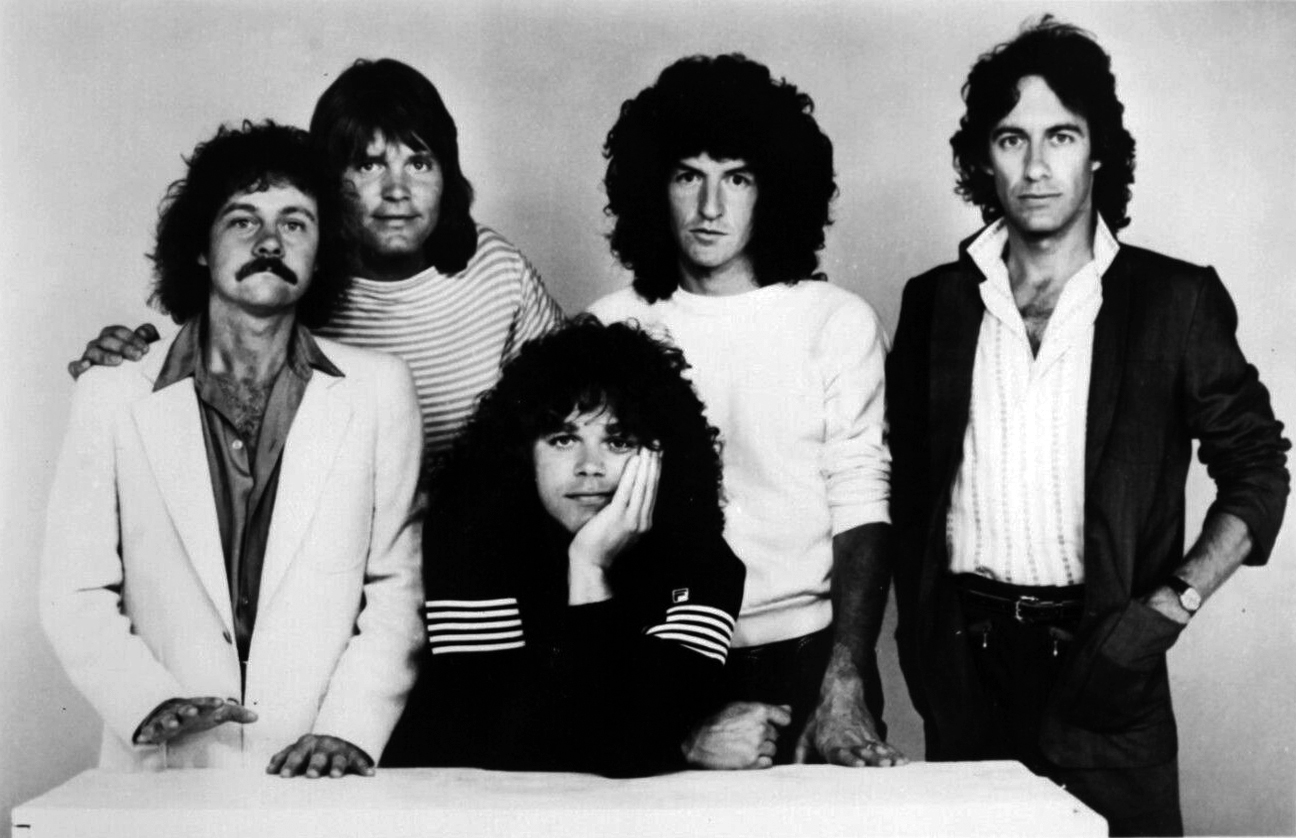
Epic Records press photo / public domain
Investigate Gary Richrath guitars gear and you find the equipment behind one of American hard rock’s most commercially successful and critically undervalued guitar legacies — the Illinois guitarist who built REO Speedwagon from a regional Midwestern bar band into one of the best-selling rock acts of the late 1970s and early 1980s, who wrote or co-wrote most of the band’s classic material, and whose Les Paul-driven tone became the defining sound of a specific kind of American arena rock that existed between the hard rock of the early 1970s and the polished pop metal of the mid-1980s. Richrath is not fashionable, has never been fashionable, and never tried to be — he was a working guitarist who played for the music and the audience rather than for critical approval, and his equipment reflected that practical, music-first philosophy throughout his career.
The Journey
This guide covers Richrath’s complete equipment picture: the Gibson Les Pauls that gave him his warm, powerful tone, the Marshall amplification he used to fill arenas, the effects chain he deployed consistently across two decades of recording and touring, and the playing approach of a guitarist who understood instinctively that accessibility and quality were not opposing values. Understanding Gary Richrath’s gear is understanding how a committed, technically accomplished guitarist chose equipment to serve the music he was making rather than to announce his sophistication.
Background
Gary Richrath was born on October 18, 1949, in Peoria, Illinois — the quintessential Middle American city that has given its name to the cultural mainstream in phrases like “will it play in Peoria?” His formation as a guitarist reflected this Midwestern background: rooted in the American rock and roll tradition, influenced by the British blues rock that had swept through American music in the late 1960s, and shaped by the specific demands of playing in bars and clubs for audiences who wanted to dance and drink and be entertained without necessarily caring about the guitarist’s theoretical sophistication.
Richrath joined REO Speedwagon in 1970, when the band was already formed but had not yet found the combination of personnel and musical direction that would lead to their commercial success. He became the band’s primary musical architect — writing songs, developing the guitar approach that would become central to their sound, and maintaining the blues-rock foundation that kept the band musically grounded even as their commercial ambitions grew. The partnership between Richrath and vocalist Kevin Cronin, which defined the band’s classic period, was a productive creative tension between Richrath’s hard rock instincts and Cronin’s pop songwriting sensibility.
The band’s career trajectory was unusual: they built a massive following through relentless touring in the Midwest before achieving significant national recognition, creating the kind of deeply loyal regional fanbase that major-label promotion rarely builds as effectively. By the late 1970s, REO Speedwagon was one of the biggest live acts in America even before their commercial breakthrough — the live album You Can Tune a Piano, But You Can’t Tuna Fish (1978) and the studio album Nine Lives (1979) demonstrated a band at the peak of its live power and studio confidence.
The commercial breakthrough came with Hi Infidelity (1980) — the album that became one of the best-selling rock records of the era, spending 15 weeks at number one on the Billboard 200 and producing multiple Top 10 singles. Richrath’s guitar work on the album was somewhat subdued relative to the band’s earlier, harder-edged material — the production prioritised Cronin’s vocals and the pop accessibility of the hooks — but the guitar tones remained identifiably his, and the harder-rocking tracks on the album showed his Les Paul-through-Marshall approach in its most polished form.
His departure from REO Speedwagon in 1989 ended the classic period of the band’s creative output. The subsequent years were marked by personal difficulties, and he died on July 13, 2015, at the age of 65. His contribution to American rock guitar — substantial, specific, and genuinely distinctive — deserves more recognition than the mainstream critical dismissal of arena rock has historically allowed it.
Gary Richrath Guitars Gear: The Complete Rig
Guitars
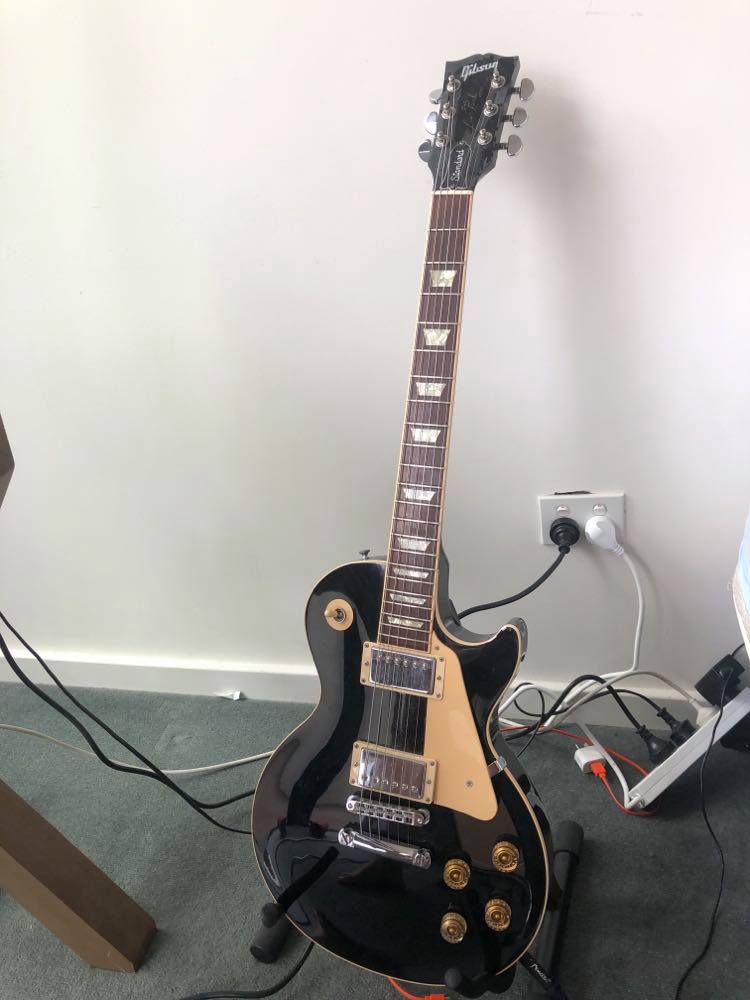
Gary Richrath was a committed Gibson Les Paul player throughout his REO Speedwagon career — a guitarist who found the instrument that served his musical vision and stayed with it through decades of touring, recording, and changing musical fashions. His relationship with the Les Paul was not the collector’s obsession with specific vintage instruments but the working musician’s commitment to a platform that delivered the tone and playability his music required.
His primary instruments were Gibson Les Paul Standards — both vintage late-1950s examples and the Les Paul reissues that Gibson produced through the 1970s and 1980s. The late-1950s Les Paul Standard, with its combination of mahogany body and neck, carved maple top, and original PAF humbucker pickups, remains the most sought-after electric guitar in history for reasons that Richrath understood practically rather than historically: these instruments have a specific combination of warmth, sustain, and harmonic complexity that serves blues-rooted rock guitar better than almost any alternative. The PAF humbuckers in genuine vintage examples typically measure 7.5k to 8.5k ohms DC resistance, wound with plain enamel wire on Alnico II or Alnico V rod magnets, and they respond to pick attack with a dynamic sensitivity that higher-output replacements sacrifice in favour of uniform output level.
He also played extensively with Gibson Les Paul Custom models — the “black beauty” configuration with ebony fingerboard, multi-ply binding, and three-pickup layout. The Les Paul Custom’s ebony fingerboard, compared to the rosewood of the Standard, produces a marginally brighter, tighter attack that gave his rhythm playing an additional definition and precision. The three-pickup configuration — neck, middle, and bridge humbuckers — expanded his tonal palette compared to the two-pickup Standard, giving him access to middle-pickup and combined-pickup tones that the Standard didn’t provide.
His Les Pauls were typically equipped with either original PAF pickups (in vintage instruments) or period-correct replacements including DiMarzio Super Distortion humbuckers in some configurations. The DiMarzio Super Distortion, introduced in 1972 as the first mass-market replacement humbucker, measures approximately 13.7k to 16.4k ohms DC resistance — significantly higher output than original PAF units — and uses ceramic magnets rather than the Alnico types found in vintage pickups. The ceramic magnet and high output produce a more aggressive, compressed tone with stronger midrange emphasis and less dynamic range than low-output Alnico pickups. For arena rock applications where consistent, powerful output was more important than dynamic nuance, the Super Distortion’s character was appropriate; for more nuanced studio work, original PAF-equipped instruments were preferable.
A Fender Stratocaster appeared in his live and studio rig for specific applications — particularly the cleaner, more single-coil-oriented material that the Les Paul’s humbucker character didn’t suit. The Stratocaster’s three-pickup configuration and vibrato system offered specific tonal and performance options not available on the fixed-bridge Les Paul, and Richrath incorporated it selectively rather than as an alternative primary instrument.
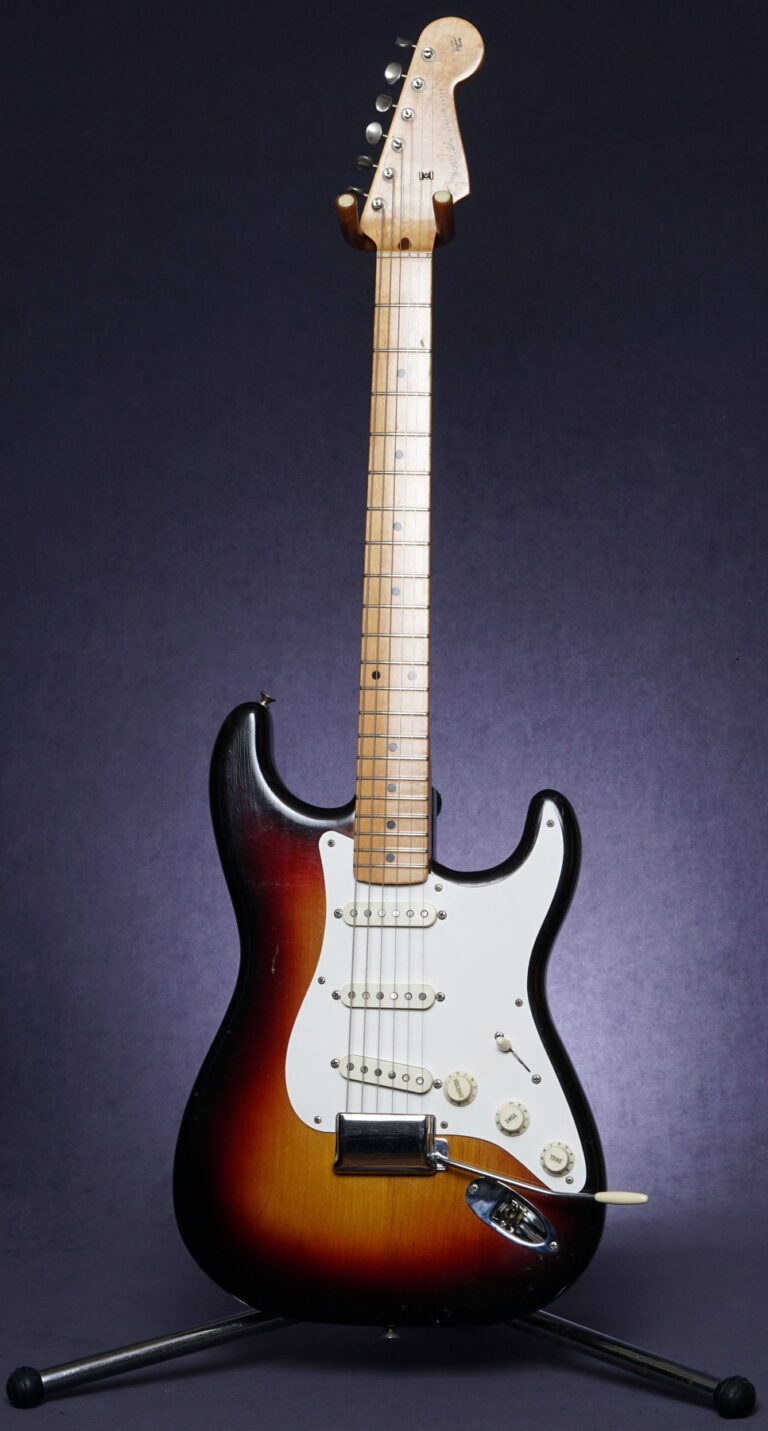
String gauges ran medium-heavy — typically .010–.046 or .011–.050 on the Les Paul — providing the string tension and mass that his bending technique and the warm, sustained tone of his playing required. His pick was a medium-to-heavy Dunlop or Fender celluloid type, with an attack angle that favoured the warm, rounded attack character of his fundamental tone over the sharper, more percussive attack that harder picks produce.
Amps
Gary Richrath’s amplification was straightforwardly rooted in the British valve tradition — Marshall heads and cabinets, run at volumes appropriate for arenas — with occasional American amplifier use for specific studio applications. His approach to amplification reflected his approach to everything else: identify what works, understand why it works, and use it consistently rather than chasing fashionable alternatives.
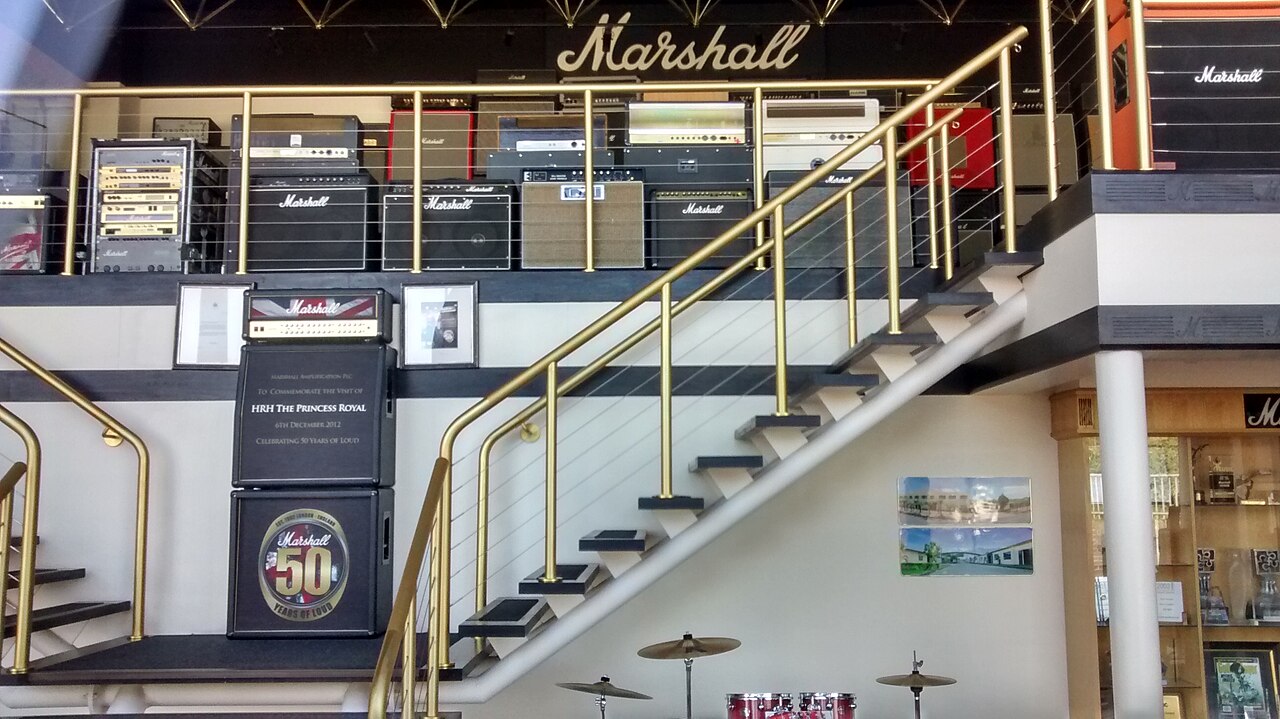
His primary amplifiers were Marshall JMP 100-watt heads — the aluminium-panel variant that followed the Plexi-panel Super Leads and preceded the JCM800 series. The JMP’s four EL34 output valves at 100 watts, running into 4×12 speaker cabinets, produced the combination of volume, midrange authority, and natural output-stage overdrive that arena rock required. Richrath ran the JMPs at working volume — high enough that the EL34 output stage was contributing its characteristic compression and harmonic richness — which gave his Les Paul tone the warmth and sustain that his playing required without the excessive preamp gain that later high-gain amplifiers would provide.
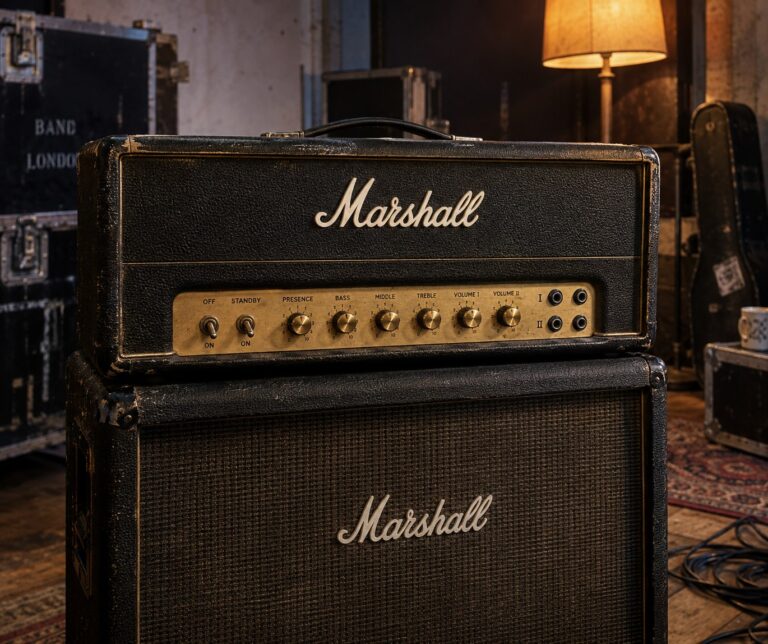
He used Marshall 4×12 cabinets loaded with Celestion G12H-30 speakers — the 30-watt ceramic-magnet Celestion that replaced the 25-watt Greenback in higher-power applications. The G12H-30’s higher power rating allowed it to handle the output of a driven 100-watt Marshall head without the power compression that the 25-watt Greenback experienced when pushed, while maintaining the midrange character and natural compression of Celestion’s ceramic-magnet speaker design. In arena contexts where the speaker system was handling significant continuous power over long performances, the G12H-30’s headroom advantage over the Greenback was practically important.
He ran multiple Marshall heads simultaneously in his arena touring configuration — the standard approach for large-venue rock in the 1970s and 1980s, where the combination of volume and visual impact of a large amp wall was both practically necessary and stylistically expected. Multiple heads feeding multiple 4×12 cabinets in a stereo or parallel configuration gave him the coverage and volume that arenas of 10,000 to 20,000 capacity required, and the visual spectacle of a large Marshall wall was an accepted part of the arena rock aesthetic.
For specific studio applications requiring different tonal character, Richrath used Fender amplifiers — particularly the Fender Twin Reverb for cleaner, more American-character passages. The Twin’s 6L6-based circuit, running at 85 watts with significantly more clean headroom than a driven Marshall, produced the warm, clean American tone that specific studio applications required without the Marshall’s natural drive character. The contrast between the Marshall’s driven British tone and the Fender’s clean American character gave him tonal range in recording contexts that a single amplifier couldn’t provide.
Effects
Richrath’s effects chain was consistent and purpose-driven — the same tools, applied with the same musical logic, across the REO Speedwagon decade. He was not an experimenter with effects but a professional who had identified the tools that served his music and used them reliably and effectively.
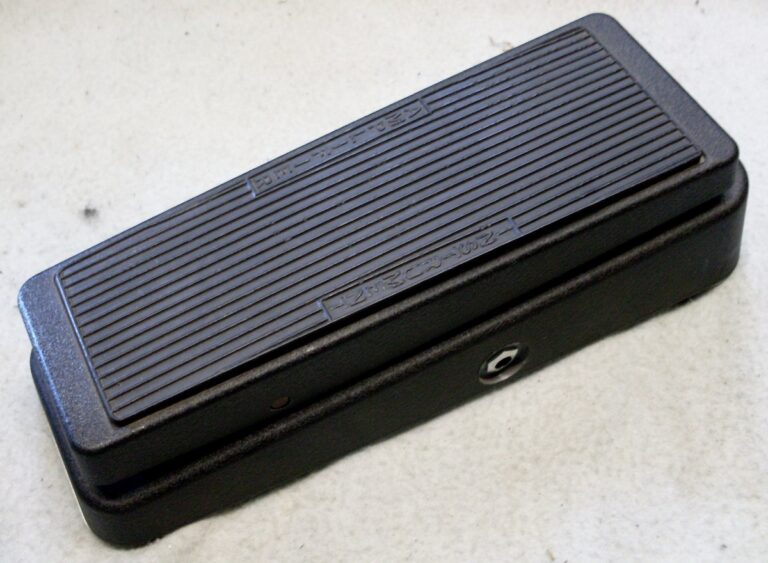
A wah pedal — the Dunlop Cry Baby in its standard configuration — appeared regularly in his live and studio work. His wah use was conventional but effective: swept actively for specific lead passages where the vowel-filter effect added expressiveness, and occasionally used as a fixed filter to add midrange presence to rhythm passages. His technique was clean and musical rather than excessive — the wah as a colour tool rather than a crutch.
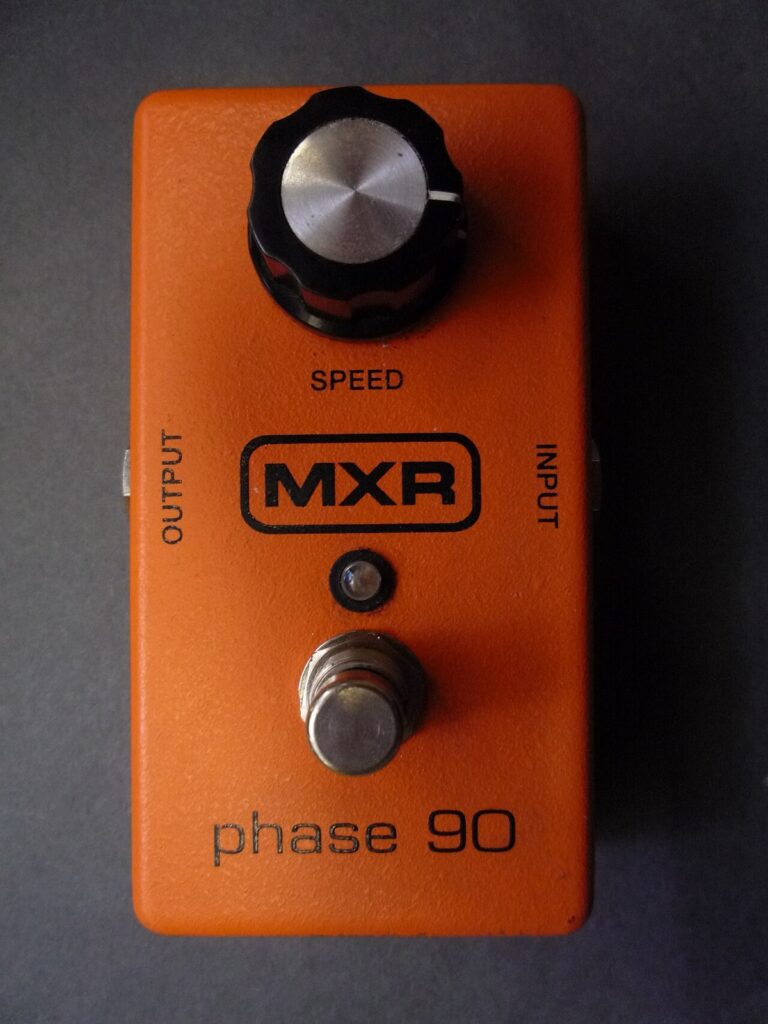
A MXR Phase 90 phaser — the original script-logo version with the warm, musical phase sweep — was a consistent element of his clean and lightly driven playing. The Phase 90’s single-stage phase shift circuit produced a sweeping modulation that added dimensional interest to sustained chords and clean passages without the artificial quality of chorus or the pitch variation of vibrato. For the more melodic, radio-friendly material that dominated REO Speedwagon’s commercial peak, the Phase 90 added the harmonic movement that the production required without disrupting the accessibility of the performances.
A Boss CE-1 Chorus Ensemble appeared in his studio rig for specific chord-doubling and thickening applications — the CE-1’s analogue bucket-brigade delay circuit producing a warmer, more complex chorus effect than later digital implementations. For the layered guitar arrangements on the band’s studio recordings, chorus was a practical tool for creating the impression of multiple guitar tracks from a smaller number of recorded parts.
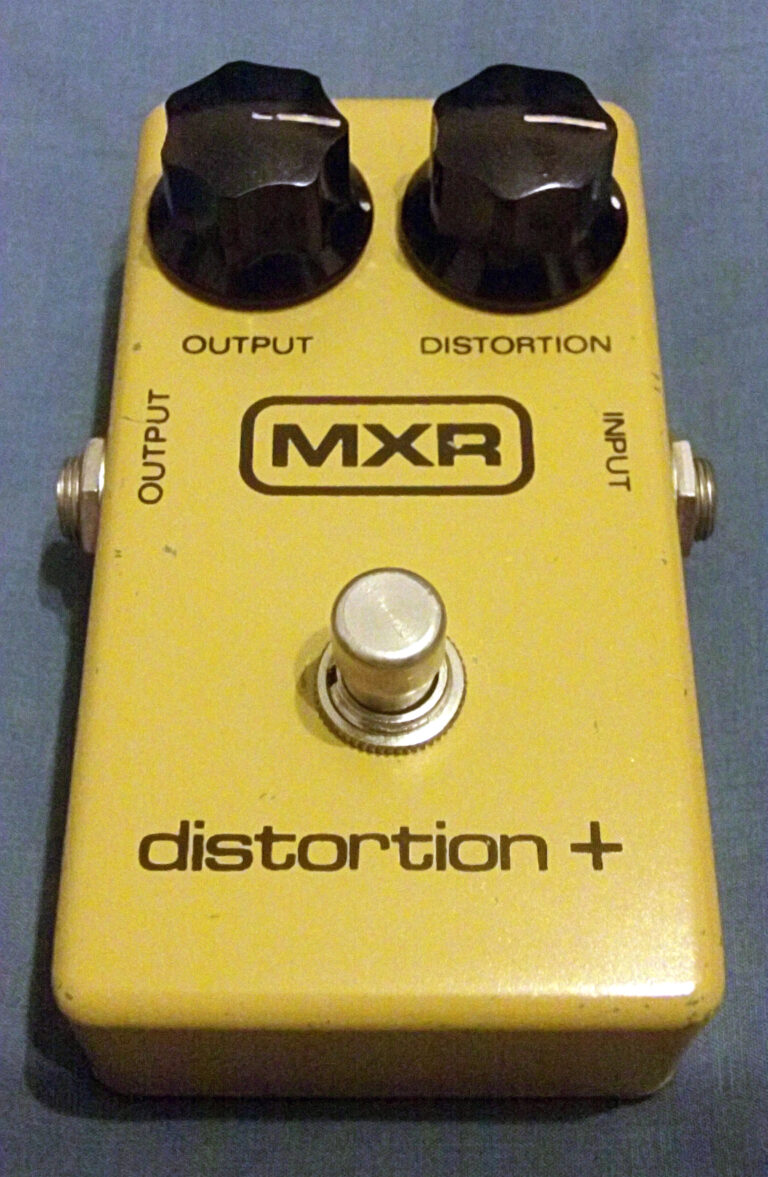
An MXR Distortion+ — the early MXR overdrive/distortion pedal using an operational amplifier circuit to produce a medium-gain overdrive with a specific bright, cutting character — appeared in his chain for specific applications where additional gain was required before the Marshall’s input stage. The Distortion+ has a particular quality of early-stage breakup that complements rather than overwhelms a driven valve amplifier, adding a smooth front-end crunch that suits melodic hard rock lead playing.
A volume pedal provided dynamic control in live performance — allowing him to swell notes from silence for specific textural effects and to control overall output level during set transitions without adjusting amplifier settings. For the kind of sustained, arena-scale performance that REO Speedwagon delivered, precise real-time volume control was a practical requirement rather than a tonal luxury.
Playing Style & Tone Philosophy
Gary Richrath’s playing is defined by accessibility and conviction — two qualities that are individually common but genuinely rare in combination. His playing was accessible in the sense that it was immediately understandable to a wide audience: the vocabulary was rock guitar vocabulary, the emotional register was direct and unhidden, and the technical elements served the music rather than displaying themselves. His conviction was equally important: he played every note as if it mattered, with the physical commitment of a musician who understood that half-hearted playing produces half-hearted music regardless of how technically correct it is.
His lead playing drew on the American rock tradition — pentatonic vocabulary with blues inflection, bending and vibrato as primary expressive tools, a sense of melodic completion in his phrases that distinguished his solos from mere technical display. He was not an innovator in the technical sense — his vocabulary was the shared vocabulary of American blues rock — but he deployed that vocabulary with a specific emotional quality and a specific tonal character that made his playing immediately identifiable. The warm, sustaining Les Paul tone through the driven Marshall, combined with his specific vibrato technique and his approach to phrase construction, produced a sound that was unmistakably his even when the individual musical elements were borrowed from a shared tradition.
His rhythm playing was the foundation of REO Speedwagon’s live sound — the driving, chord-based rhythm work that provided the harmonic and rhythmic support for Cronin’s vocals and for the band’s overall ensemble dynamic. Rhythm guitar in a hard rock band is frequently undervalued in discussions of guitar playing, but it is often the most musically important element of the performance, and Richrath’s rhythm work was consistently excellent: locked with the rhythm section, harmonically appropriate, and rhythmically energetic without being busy or intrusive.
His songwriting contribution deserves mention alongside his playing: he wrote or co-wrote most of REO Speedwagon’s most enduring material through the band’s commercial peak, including “Riding the Storm Out,” “Roll with the Changes,” “Keep Pushin’,” and “Take It on the Run.” This compositional work reflects the same values as his guitar playing — directness, emotional accessibility, and technical accomplishment in service of musical goals rather than of technical display. The guitar riffs that anchor these songs are memorable without being complex, which is a more difficult compositional achievement than it appears.
Tonally, Richrath’s philosophy was direct and practical: the Les Paul through the Marshall, at the right volume and with the right settings, produces the sound he needed, and the right settings were the ones that served the song rather than the ones that showcased his equipment’s capability. This music-first equipment philosophy is common among the best working musicians and relatively rare among guitar enthusiasts, and it produced results that were consistently good across a range of musical contexts and production styles.
How to Sound Like Gary Richrath
Guitar Approach
A Gibson Les Paul Standard with PAF-style humbuckers — Alnico II in the neck for warmth, Alnico V in the bridge for cut — is the starting point. Medium-heavy strings (.010–.046) provide the sustain and bending authority that his technique required. For the arena rock material that defined his commercial period, DiMarzio Super Distortion pickups in the bridge position produce the higher-output, more compressed character that the larger Les Paul Custom delivered in his rig; for the earlier, more blues-rooted material, original-spec PAF humbuckers are more appropriate.
The most important technical element to develop is consistency — Richrath’s playing was not characterised by technical fireworks but by the reliable delivery of musically appropriate, emotionally committed playing across a wide range of material and performance conditions. The discipline to play what the song needs rather than what would be most impressive is a form of musical maturity that requires specific development.
Amp Approach
A Marshall JMP or equivalent (JCM800 for the later period), run at a volume where the EL34 output stage is starting to work, with G12H-30 or Greenback speakers in a 4×12 cabinet. Keep the EQ settings moderate — Richrath’s tone was not achieved through extreme EQ but through the combination of Les Paul warmth and Marshall character at appropriate volume levels. The MXR Phase 90 adds the dimensional quality to clean passages that his studio work employed, and the Cry Baby wah provides the lead guitar colour for specific passages.
| Control | Setting | Notes |
|---|---|---|
| Volume (Input 1) | 6–7 | Working volume — EL34 compression zone |
| Treble | 6 | Moderate — Les Paul provides warmth, G12H adds some brightness |
| Middle | 7 | High mids — classic American arena rock requires mid presence |
| Bass | 5 | Moderate bass — Les Paul adds low-end naturally |
| Presence | 5–6 | Moderate presence for live projection |
| Phase 90 (clean) | Medium speed | Adds dimension to clean chord work |
| Distortion+ (optional) | Low-medium gain | Front-end boost for lead passages |
Influence & Legacy
Gary Richrath’s legacy suffers from the critical dismissal that arena rock as a genre has historically received — the tendency to equate commercial success with artistic compromise and to value difficulty and obscurity over accessibility and craft. This dismissal, applied retrospectively to REO Speedwagon and specifically to Richrath’s contribution, misses something important: the ability to write songs that connect with millions of listeners while maintaining genuine musical quality is not a lesser achievement than the ability to write songs that connect with a sophisticated minority. Both require musical intelligence; they simply deploy that intelligence in different directions.
Within the specific tradition of American Midwestern hard rock — the school of bands that built their careers through relentless touring and recording in the period before MTV changed how musical success was achieved — Richrath is a central figure. His ability to translate blues-rock guitar into a format accessible to arena audiences without losing the musical substance that made the blues tradition worth transmitting is the specific achievement that the dismissal of arena rock obscures. The guitar work on “Riding the Storm Out” or “Roll with the Changes” is not sophisticated in the way that jazz harmony or progressive rock complexity is sophisticated, but it is musically accomplished in ways that direct and accessible music requires — the right notes, at the right moment, with the right emotional commitment, delivered through equipment that serves the music.
His influence on subsequent American rock guitarists — particularly the generation that came up in the late 1970s and 1980s playing in bar bands across the Midwest and South — is substantial if difficult to quantify. The specific combination of Les Paul warmth, Marshall drive, and melodic rock vocabulary that Richrath deployed with such consistency became a template for American hard rock that many subsequent players absorbed without necessarily knowing the source. His ghost is in the rig of every American rock guitarist who reaches for a Les Paul and a Marshall and plays with melodic directness and emotional commitment.
For players exploring the American classic rock tradition that Richrath represents, the rigs of Neil Schon — who developed a parallel approach to melodic, Les Paul-driven American hard rock in the Journey context — and Eric Bell, whose Irish interpretation of the same Les Paul-blues-rock vocabulary offers a transatlantic comparison, provide useful context. The broader tradition of Midwestern and American hard rock guitar is illuminated by Michael Bloomfield‘s work, which shows the blues roots from which the arena rock tradition descended.
Riding the Storm Out: The Richrath Sound in Context
“Riding the Storm Out” — written by Richrath and released on REO Speedwagon’s 1973 album of the same name — is perhaps the purest single document of his guitar approach in its most fully realised form. The track is a hard rock piece built around a memorable guitar riff, with Richrath’s Les Paul through a driven Marshall delivering the combination of warmth and authority that the song’s emotional content required. Understanding what makes the guitar work on this track effective illuminates both his equipment choices and his musical approach more clearly than any amount of abstract description.
The opening riff is built on the Les Paul’s warmth and the Marshall’s natural drive — the specific combination of mahogany-body resonance, PAF humbucker output, and EL34 saturation that produces notes with both physical authority and harmonic complexity. The riff’s specific melodic shape — ascending intervals that create tension, held notes that build anticipation, a rhythmic pattern that locks with the drums — is a model of how to construct a rock guitar riff that serves both the song structure and the energy level the band is trying to sustain. It is not a technically impressive riff; it is a musically correct riff, which is the much harder thing to achieve.
The guitar solo in the track demonstrates Richrath’s approach to the most important single moment in a hard rock song — the guitar solo as emotional climax. His approach is to build through the solo rather than to front-load the most impressive playing at the beginning: the opening phrases establish melodic material, the middle section develops and intensifies it, and the conclusion brings the intensity to its peak before returning to the riff. This developmental approach to solo construction, which reflects the same instincts as classical melodic development, produces solos that feel satisfying rather than merely impressive — solos that have an internal logic and a directional sense that distinguishes them from technically accomplished but musically directionless playing.
The guitar tone in the solo is the Les Paul-through-Marshall at its most characteristic: warm, sustaining, with the natural harmonic richness of driven EL34 output valves giving each bent note a complex overtone structure that simple distortion doesn’t replicate. The vibrato — wide, emotionally committed, applied to held notes with total physical conviction — is the specific element that gives the playing its emotional impact. It is the technique of a player who has absorbed the blues tradition deeply enough that the emotional vocabulary of that tradition informs every sustained note he plays, even in a hard rock context that is stylistically quite distant from the acoustic Delta blues at the tradition’s root.
The Touring Guitar: Reliability and Consistency Under Pressure
REO Speedwagon’s approach to building their career — relentless touring, hundreds of dates per year across the Midwest and gradually expanding nationally — placed specific demands on Richrath’s equipment that studio-focused players rarely have to consider. The guitar, the amplification, and the effects all had to work consistently across conditions that ranged from large, professionally equipped arenas to small bars with marginal electrical systems and no proper stage. Equipment that performed flawlessly in the studio but unreliably in these conditions was not useful equipment for Richrath’s purposes.
The Gibson Les Paul earned its position as his primary instrument partly because of its reliability in these conditions. The Les Paul’s construction — mahogany body and neck joined with a substantial glue joint, hardware selected for durability, electronics mounted in ways that resisted the vibration and physical shock of constant transport and frequent stage setup and teardown — is fundamentally robust in ways that more delicate instruments aren’t. The set neck joint, while it makes the neck irremovable if broken (unlike the Fender bolt-on designs that can be replaced in the field), is less prone to the joint instability that can develop in bolt-on necks under the stress of constant travel. The tune-o-matic bridge and stop tailpiece, while not adjustable for intonation as easily as a Fender’s individual saddles, are mechanically simple and robust in ways that more complex bridge designs aren’t.
The Marshall amplifiers were similarly chosen partly for reliability. Marshall’s point-to-point or printed circuit board construction, while not as audiophile-grade as some competitors, was practical and repairable in the field — Marshall amplifiers were ubiquitous enough that spare parts and qualified technicians were available in most cities where major touring bands performed, which was a practical consideration for a band that was touring 200 or more dates per year. The specific failure modes of EL34 output valves — which are predictable and repairable — were less problematic in a touring context than more exotic tube types that required specialist parts.
The effects chain was similarly chosen for reliability and consistency: MXR pedals of the 1970s had a reputation for durability under touring conditions, and the specific units Richrath used — the Phase 90, the Distortion+ — were among the most robust and consistent effects available at the time. The Cry Baby wah’s mechanical construction, while not the most sonically refined wah available, was mechanically straightforward and repairable in the field. The volume pedal, similarly, was a robust mechanical unit that could be serviced and maintained without specialist knowledge.
This emphasis on reliability and consistency — equipment that worked the same way every night, that could be repaired when it failed, and that delivered predictable results across a wide range of performance conditions — is not a glamorous consideration in the context of guitar gear discussion, but it is a genuinely important one for working musicians. Richrath’s equipment choices reflected the practical realities of his professional life as much as his musical preferences, and the specific combination of Les Paul, Marshall, and robust MXR effects that characterised his touring rig was optimised for the specific demands of that professional life. That his equipment choices also produced excellent music — the warm, authoritative Les Paul tone through the driven Marshall, the MXR Phase 90 adding dimension to clean passages — was the result of equipment choices that served both practical and musical requirements simultaneously, which is the ideal outcome for any working musician’s gear decisions.
Hi Infidelity and the Commercial Peak: Guitar in a Pop Context
Hi Infidelity (1980) presents an interesting case study in how Gary Richrath’s guitar playing adapted to the demands of commercial pop production while maintaining enough musical substance to remain satisfying to listeners who cared about the guitar. The album’s enormous commercial success — spending 15 weeks at number one and producing multiple Top 10 singles — was achieved through a production approach that prioritised Cronin’s vocals and the accessibility of the hooks over the hard-rocking guitar work that had characterised the band’s earlier material. Richrath’s adaptation to this context, while commercially productive, represented a genuine creative challenge.
His guitar tone on the album is noticeably more polished than on earlier records — the recording captures the Les Paul-through-Marshall combination with more high-frequency definition and less of the natural roughness that characterised the band’s live sound, reflecting both the more refined production approach and the different microphone placement and room treatment of the recording environment. The Marshall’s natural drive is present but less dominant than in the live context, with the production bringing the clean and lightly driven passages more to the fore.
The harder-rocking tracks on the album — particularly “Keep On Loving You” is actually a power ballad, but tracks like “In Your Letter” show Richrath’s guitar work in a context that required serving the commercial production without losing the essential character of his playing. His ability to adapt — to deliver playing that was appropriate for the album’s commercial ambitions while maintaining the musical quality that had always characterised his work — reflects a professional maturity and musical intelligence that is as impressive in its way as the more obviously demanding hard-rock playing on earlier records.
The guitar solos on Hi Infidelity are shorter and more focused than on earlier albums — a concession to the commercial production approach that prioritised song length and radio format compatibility. But within their compressed time frame, they are effectively constructed: melodically coherent, emotionally appropriate, and technically accomplished without being self-indulgent. The specific challenge of delivering a musically satisfying solo in eight or twelve bars — the duration that commercial radio formats allowed — is different from the challenge of building an extended improvisation over many minutes, but it is a genuine challenge that requires specific musical intelligence and technical control.
The guitar tone on these abbreviated solos is the Les Paul-through-Marshall combination in its most refined form — the warmth and sustain of the mahogany-and-maple construction, the harmonic complexity of the EL34 output stage, and the specific midrange character of the Celestion G12H-30 speakers all contributing to a sound that projected clearly in the commercial production context without losing the warmth that made it distinctively Richrath’s. The DiMarzio Super Distortion pickups that he used in some configurations on this album provided the higher output and compressed character that suited the album’s denser production, while the neck pickup of the Les Paul — whether PAF or Super Distortion — maintained the warmth that his melodic playing required. The equipment served the music, the music served the production, and the production served the audience. That chain of service, maintained consistently through a significant career transition, is the definition of professional musical integrity.
The DiMarzio Super Distortion’s role in Richrath’s rig deserves specific technical examination, because it illustrates a broader point about pickup choice and musical context that goes beyond individual preference. The Super Distortion was introduced in 1972 specifically to address the need for higher output and more consistent gain staging that the emerging hard rock and heavy metal styles required — styles in which the dynamic range of a PAF humbucker was less musically useful than the uniformly high output of a ceramic-magnet, high-output replacement. At approximately 13.7k to 16.4k ohms DC resistance — roughly double the output of a typical PAF — the Super Distortion hits the amplifier’s front end with a signal that immediately pushes the preamp toward saturation, compressing the dynamic range and producing a more uniformly driven tone. In the arena rock context of the late 1970s and early 1980s, where consistent, powerful output across a large venue was the primary requirement, this character was an advantage rather than a limitation. For the more nuanced studio work and the earlier, more blues-rooted material, the PAF’s dynamic sensitivity was preferable. Richrath’s use of both — PAF-equipped vintage Les Pauls for some applications, Super Distortion-equipped instruments for others — reflects a practical musical intelligence: the right pickup for the right musical context, understood specifically rather than generally. That specific understanding is as much a part of his equipment legacy as the specific instruments and amplifiers he used, and it is as instructive for guitarists thinking about their own equipment choices as any of the more glamorous aspects of his rig.
Gary Richrath’s legacy is the legacy of a musician who played for the music and the audience rather than for critical approval, who built a career through the unglamorous work of consistent quality rather than through moments of spectacular innovation, and who left behind a body of recorded and live work that represents a specific and valuable approach to the electric guitar in the service of accessible, emotionally direct rock music. The guitar community’s gradual reassessment of arena rock — recognising the craft that went into its best examples while maintaining appropriate critical distance from its worst — has begun to give Richrath the recognition his contribution warrants. His equipment, chosen and used with the practical intelligence of a professional musician who understood exactly what he needed and why, was central to that contribution. The Les Paul through the Marshall, at the right settings and the right volume, in the right song with the right emotional commitment — that combination, deployed with Richrath’s consistency and conviction across two decades of recording and performing, is a more significant musical achievement than its commercial associations might suggest, and it deserves to be assessed on those terms rather than simply dismissed as arena rock and left there.
Frequently Asked Questions: Gary Richrath Guitars & Gear
What guitars did Gary Richrath play?
Gary Richrath’s primary instruments were Gibson Les Paul Standards and Les Paul Customs, used throughout his REO Speedwagon career. He used both vintage late-1950s Les Pauls with original PAF humbuckers and reissue models with period-correct or replacement pickups including DiMarzio Super Distortion units. He also used a Fender Stratocaster for specific applications. His consistent preference for Gibson Les Pauls reflected the warmth, sustain, and tonal authority that the instrument provides for blues-rooted rock guitar.
What amp did Gary Richrath use?
His primary amplifiers were Marshall JMP 100-watt heads, run into Marshall 4×12 cabinets loaded with Celestion G12H-30 speakers. He ran multiple heads simultaneously in his arena touring configuration. For studio work requiring a different character, he used Fender Twin Reverb amplifiers for their cleaner, American-character tone. His amplifier philosophy was consistent with his overall approach: use the right tool for the musical context, understand why it’s the right tool, and use it consistently.
What is REO Speedwagon’s most important album?
Hi Infidelity (1980) was the band’s commercial peak — one of the best-selling rock albums of the early 1980s. But the earlier live album You Can Tune a Piano, But You Can’t Tuna Fish (1978) is arguably more representative of Richrath’s guitar playing at its most powerful and direct, capturing the band’s live energy before the commercial polish of the later studio productions moderated their harder-rocking instincts.
What effects did Gary Richrath use?
His key effects included a Dunlop Cry Baby wah, an MXR Phase 90 phaser (original script-logo version), a Boss CE-1 Chorus Ensemble for studio work, an MXR Distortion+ for front-end gain boost, and a volume pedal for dynamic control in live performance. His effects chain was consistent and purposeful — the same tools applied with the same musical logic across his REO Speedwagon career.
Did Gary Richrath write REO Speedwagon’s songs?
Richrath wrote or co-wrote most of REO Speedwagon’s most enduring material through the band’s classic period, including “Riding the Storm Out,” “Roll with the Changes,” “Keep Pushin’,” and “Take It on the Run.” His songwriting contribution was as significant as his guitar playing in defining the band’s musical identity, and the guitar riffs that anchor these songs — memorable, direct, and emotionally immediate — reflect the same musical values as his playing approach.
Why did Gary Richrath leave REO Speedwagon?
Richrath departed REO Speedwagon in 1989 under circumstances involving creative differences and personal difficulties that had developed over several years. The departure ended the classic period of the band’s creative output and was followed by a period of personal challenges for Richrath. He continued playing and recording in subsequent years before his death in 2015.
How does Gary Richrath fit into the American hard rock tradition?
Richrath occupies a specific position in American hard rock as one of the principal architects of Midwestern arena rock — a style that built its audience through relentless touring rather than media exposure, that valued directness and emotional accessibility over complexity or critical sophistication, and that produced some of the most commercially successful rock music of the late 1970s and early 1980s. His specific contribution was the combination of blues-rooted Les Paul guitar playing with melodic songwriting sensibility that gave REO Speedwagon their specific sound — harder and more guitar-driven than pure pop rock but more melodically accessible than heavy metal.
Genre:
Hard Rock / Classic Rock
Decades:
1970s | 1980s
Image credits
- Top image: Epic Records press photo, Wikimedia Commons, public domain.
- The Marshall Amplification showroom with a staircase and amplifier stacks: Kris1973, Wikimedia Commons, CC BY-SA 4.0.
- Gibson Les Paul Standard: DonnyBurger1974, Wikimedia Commons, CC BY-SA 4.0.
- Fender Stratocaster: Lightburst, Wikimedia Commons, CC BY-SA 4.0.
- Marshall 1959 Super Lead Plexi: GuitarGangsters AI-generated reference illustration, not a photograph.
- Dunlop Cry Baby: Roadside Guitars, Flickr, CC BY-SA 2.0.
- MXR Phase 90: Roadside Guitars, Wikimedia Commons, CC BY-SA 2.0.
- MXR Distortion+: tpeck111, Wikimedia Commons, CC BY-SA 3.0.